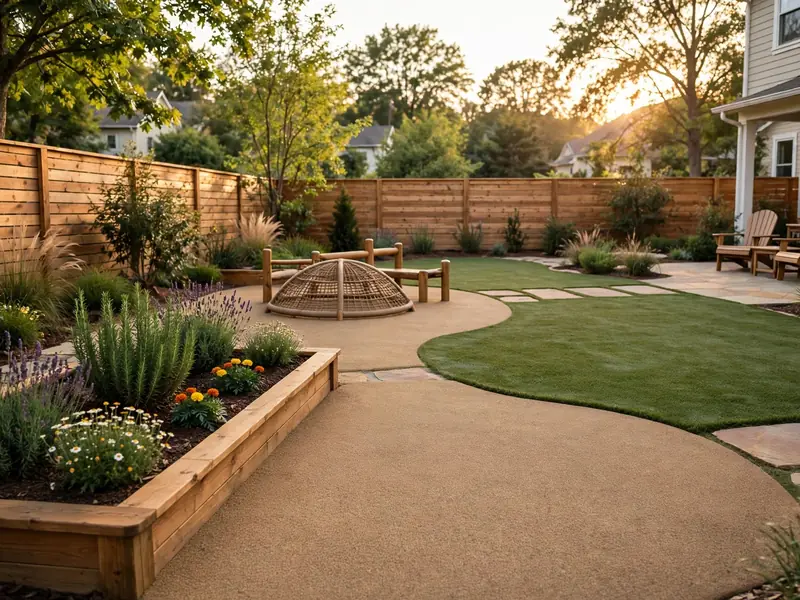
Every parent knows the feeling: you sit down outside with a coffee, and within minutes you are back up — checking a wobbly bench, a cluster of berries at toddler height, a corner of the yard you simply cannot see. A garden full of small, hidden hazards keeps one adult permanently on guard duty, and nobody actually relaxes out there.
The fix is not watching harder; it is designing the hazards out. When the plants are safe to touch, the landings soft, the storage locked and every corner visible from a patio chair, supervision turns back into sitting down — the yard itself does the guarding, quietly and constantly, for you.
Below are 21 safety-first ideas that make a backyard genuinely friendly for children, and calmer for everyone else: practical changes to planting, surfaces, storage and sight lines. Most need only a weekend and basics you may already own, and every one doubles as a good-looking design choice.
The Kid-Friendly Formula That Keeps Safe Looking Fun
- Hazards out before features in: the friendliest yard is first an audit, plants, edges, storage and water checked before any play begins.
- Soft where they land, firm where you walk: surfacing matched to the activity beats any single material everywhere.
- Grown-up sight lines everywhere: if an adult cannot see a spot from the seating area, that spot gets changed, not the child watched harder.
- Rules the yard enforces itself: latches that self-close, gear with a home and depths kept shallow protect without lectures.
For example: berries swapped for safe shrubs along the play edge (hazards out), bark under the climber and pavers on the path (matched surfacing), the hedge trimmed below window height (sight lines), and a self-latching pool gate (self-enforcing rule) make one garden a parent can actually sit down in.
| # | Idea | Best For | Budget |
|---|---|---|---|
| 1 | Non-Toxic Plant Choices Along Every Play Edge | Beauty without berry risks | Low to mid |
| 2 | Pool and Pond Barriers That Lock Every Time | Water, respected | Mid to high |
| 3 | Soft Fall Surfacing Matched to Equipment Height | Landings that forgive | Mid |
| 4 | Sight-Line Trimming: Bushes Below Window Height | No blind corners | Low |
| 5 | Rounded, Sanded Edges on Every Wooden Build | Splinter patrol, retired | Very low |
| 6 | First Aid and Sunscreen Station by the Back Door | Small hurts, handled fast | Low |
| 7 | Splinter-Free Decking and Sealed Timber Finishes | Bare feet approved | Mid |
| 8 | Locked Storage for Tools, Chemicals and Fuel | Curiosity, safely denied | Low to mid |
| 9 | Stable, Anchored Furniture That Cannot Tip | Climbers meet solid pieces | Low |
| 10 | Non-Slip Surfaces on Steps and Wet Zones | Rainy-day grip | Low to mid |
| 11 | A Monthly Fence Walk for Nails, Gaps and Rot | Ten minutes of prevention | Very low |
| 12 | Allergy-Smart Planting Away from Play Zones | Fewer sneezes, more play | Low |
| 13 | Trampoline Rules Board and a One-at-a-Time Rule | Bounce without pile-ups | Very low |
| 14 | Fire Pit Safety Ring and a Spark Screen | Warmth with a boundary | Mid |
| 15 | Safe Water Play Depths: Shallow by Design | Splash without depth risk | Low |
| 16 | Pet and Play Zones with Their Own Gates | Everyone’s territory clear | Mid |
| 17 | Helmet and Gear Hooks Set at Child Height | Habits within reach | Low |
| 18 | A Seasonal Audit of Outdoor Toys for Breaks | Retire the cracked and sharp | Very low |
| 19 | A Gate Chime That Sounds When It Opens | An extra set of ears | Low to mid |
| 20 | Cool Surface Checks: Metal and Dark Plastic at Noon | No scorched slides | Very low |
| 21 | Emergency Number and Address Sign at the Gate | Help that finds you fast | Very low |
1. Non-Toxic Plant Choices Along Every Play Edge
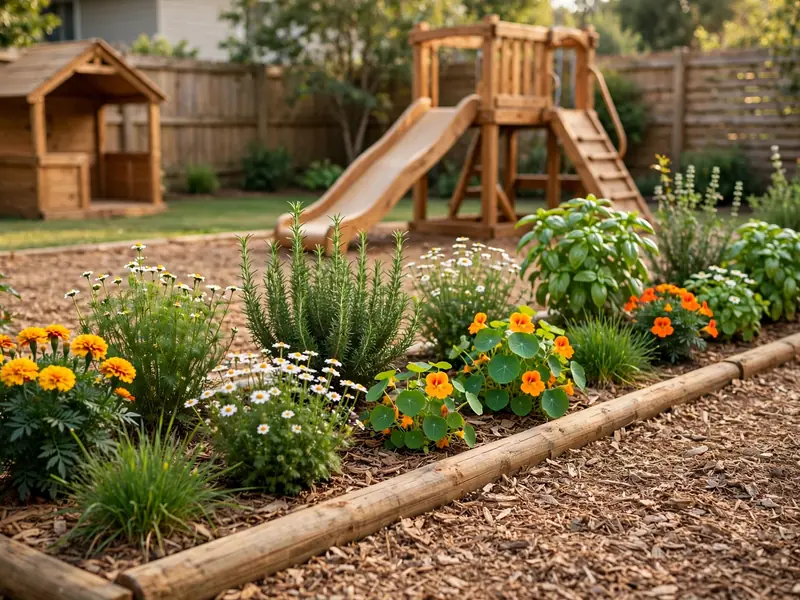
Start where small hands actually grab: the planting along paths, sandboxes and climbing frames. Swap anything with tempting berries or irritant sap for plants that shrug off curious fingers — lavender, lamb’s ear, marigolds and ferns along the fence, with blueberry bushes near the gate so picking something becomes a treat instead of a worry. Keep the palette simple: silvery green foliage, purple and yellow flowers, repeated in threes.
Get the look:
- Main piece: a row of child-safe shrubs and perennials edging every play area
- Supporting piece: edible blueberry bushes planted near the gate
- Texture or material: soft lamb’s ear and fern fronds at toddler height
- Finishing touch: a small wooden sign naming each plant for little readers
2. Pool and Pond Barriers That Lock Every Time
Water asks for the calmest system in the yard: a barrier that closes and latches itself, every single time. Fence pools and ponds on all four sides, at least four feet (1.2 m) high, with a self-closing gate and a latch mounted high, beyond toddler reach. For ponds, a rigid black mesh grid just below the surface holds the same promise where a fence would crowd a small garden. Slim powder-coated aluminium disappears into the planting instead of shouting about danger.
Color note: Powder-coat the fence charcoal or white to echo the house trim, and the barrier reads as architecture rather than a warning. Plant soft grasses inside the line so the view across the water stays gentle.
3. Soft Fall Surfacing Matched to Equipment Height
Falls are part of play; hard landings do not have to be. Match the surface under each piece of equipment to its fall height: engineered wood fibre or bark mulch at least 30 cm (12 in) deep under climbers and swings, poured rubber or thick rubber mats under lower platforms, and firm, even pavers only where feet travel, never where bodies land. Rake loose surfacing weekly so the cushioned depth stays where little knees need it.
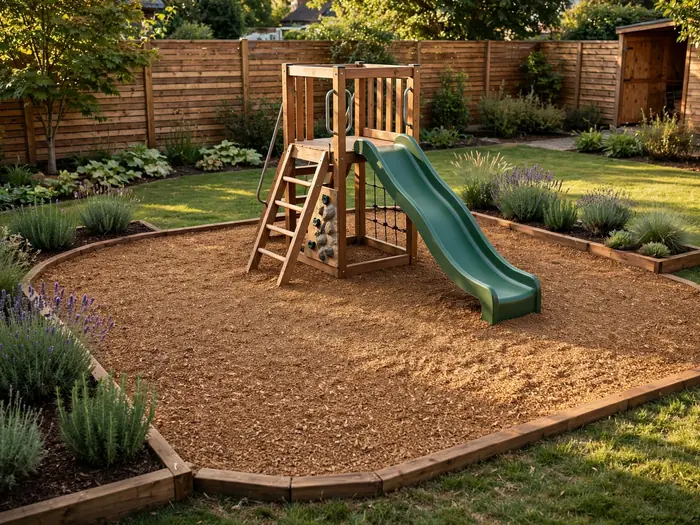
Texture note: Loose bark feels springy and smells like a forest floor, poured rubber reads smooth and modern in terracotta or slate, and the contrast quietly marks where running ends and landing begins.
4. Sight-Line Trimming: Bushes Below Window Height
Blind corners are where worry lives, so trim the garden until the whole yard reads from one chair. Keep every shrub along paths and play edges below window height — roughly 90 cm (3 ft) — and lift tree canopies above adult eye level, so the space between becomes one clear band of view. Replace a tall hedge at the patio corner with a low lavender border: the same green edge, with nothing hidden behind it. From the kitchen window and the patio seat alike, every metre of the yard stays in sight.
Best for: yards with dense planting, side returns or any corner an adult cannot see from the house.
5. Rounded, Sanded Edges on Every Wooden Build
Run one slow lap of the yard with your palm open, at child height, and sand whatever catches. Bench corners, planter edges, the rim of a raised bed: a few passes with 120-grit paper and a round-over by hand turn each into a soft curve. Seal afterwards with a child-safe, water-based finish in a clear matte, so the wood stays pale, smooth and splinter-free through the season. The job takes an afternoon, costs almost nothing, and quietly retires the tweezers from the kitchen drawer.
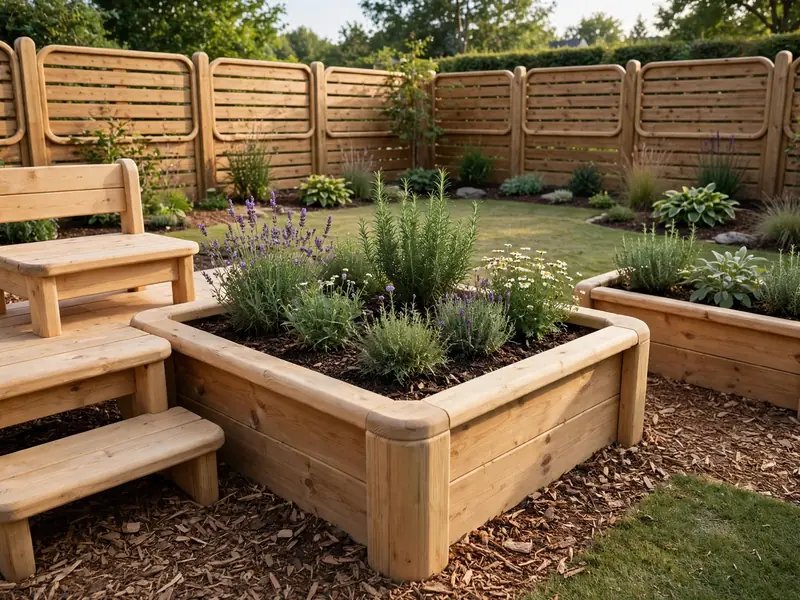
Space note: Work at knee-to-waist height first — that is the band small foreheads and palms meet — then check anything a climbing child can reach from a bench or planter.
6. First Aid and Sunscreen Station by the Back Door
Scrapes and sunburn end more play sessions than anything dramatic, so give first aid a fixed home. Mount a shallow cedar cabinet or a lidded woven basket on the wall beside the back door, stocked with plasters, antiseptic wipes, tweezers and two pump bottles: sunscreen and water. Add a small rubbish pocket so used wipes never reach the lawn. Everything sits at adult hand height, reachable in seconds — which is exactly the point when a small knee meets gravel.
Fit check: Stand at the far end of the yard and time the walk back — the station should be under twenty seconds away, the same thinking behind calm backyard ideas for kids that keep help close and play uninterrupted.
7. Splinter-Free Decking and Sealed Timber Finishes
Bare feet are the dress code of childhood summers, so the deck has to earn them. Choose composite boards or smooth, tight-grained timber, seal it with a child-safe, water-based finish, and sand any raised grain back each spring. A pale, weathered finish — soft grey or warm honey — keeps the surface cooler underfoot than dark stain and hides scuffs gracefully. Finish the edges with a rounded nosing profile, and the platform reads calm and complete, like a room that happens to have sky for a ceiling.
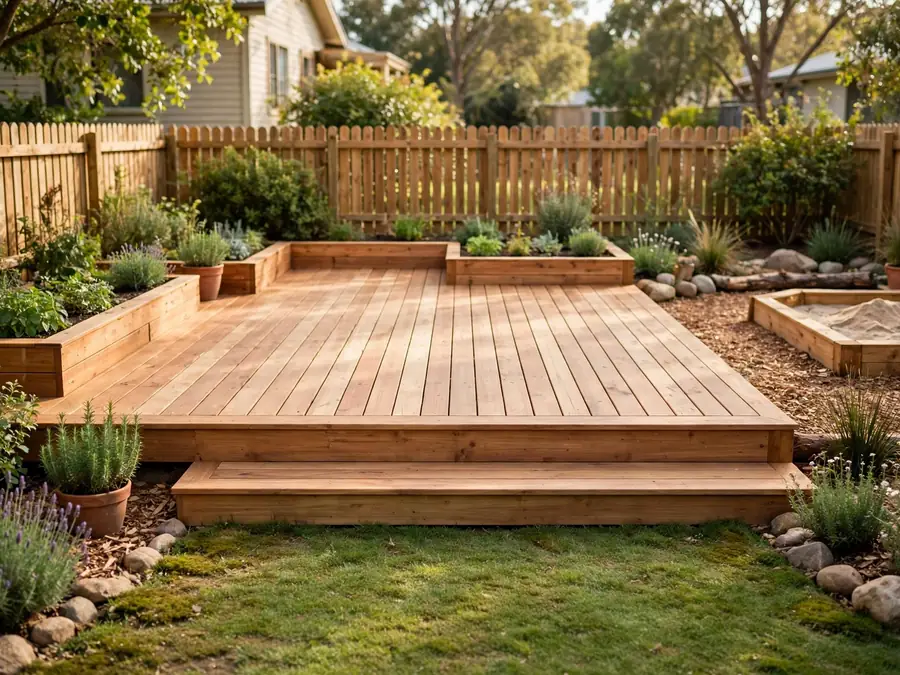
Style note: A matte, clear finish shows the grain instead of gloss, and the deck photographs like a Scandinavian terrace — safety work nobody will ever read as safety work.
8. Locked Storage for Tools, Chemicals and Fuel
The most interesting cupboard in any yard is the one holding sprays, fuel and sharp edges, so give it a lock children cannot argue with. A tall, ventilated storage cabinet in sage green or charcoal, fixed to the wall, keeps chemicals, fuel and tools on high shelves; the mower and strimmer live in a small shed with a padlocked hasp. Keys hang just inside the kitchen door, never in the lock. What small hands cannot reach or open stops being a conversation entirely.
Easy swap: Trade the open garage shelf for one lidded, lockable deck box in weatherproof resin — the same storage, one click of a latch, and a whole category of worry quietly disappears.
9. Stable, Anchored Furniture That Cannot Tip
Children read every bench as a climbing frame, so choose furniture that treats climbing as a certainty. Pick low, wide-based pieces in solid timber or powder-coated steel, anchor tall items — storage benches, shelving, even the parasol — to the deck or a ground stake, and skip glass tops entirely. A heavy teak bench with broad feet looks better than a flimsy set anyway, and it will not shift a millimetre when three children stand on it to watch an ice-cream van pass.
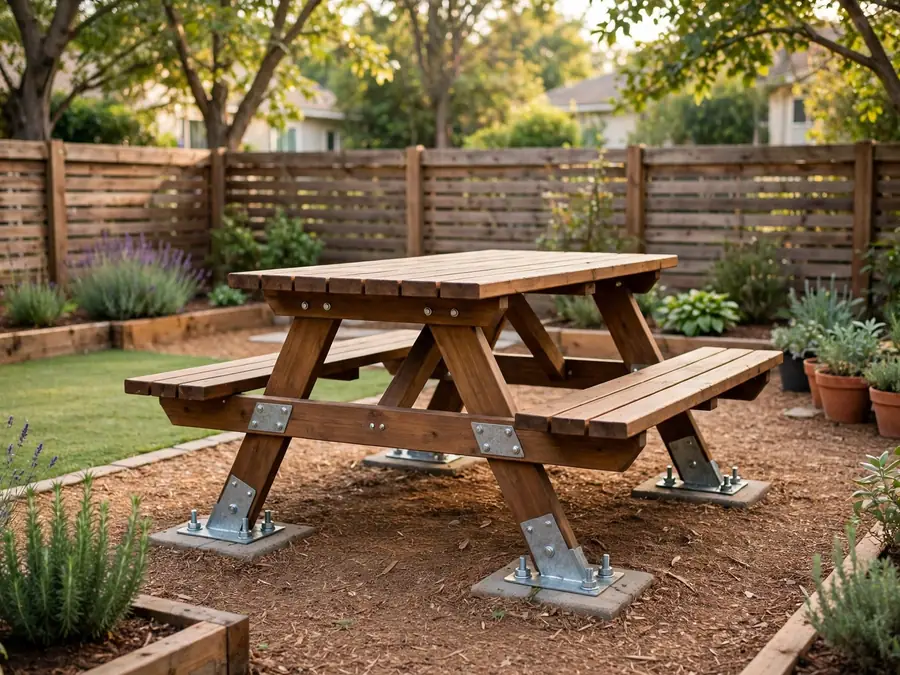
Seasonal swap: In winter the anchored bench becomes the viewing seat for frosty mornings, cushions stored and all — one of those everyday child safety habits that quietly run all year, not just in swim season.
10. Non-Slip Surfaces on Steps and Wet Zones
Steps, the path by the water butt and the patch beside any splash zone are where smooth shoes meet smooth surfaces. Fix it at ground level: adhesive grit strips in a matching tone on deck steps, textured rubber mats in warm grey under taps and water play, and broom-finished or exposed-aggregate concrete on paths instead of polished slabs. The changes are invisible — the same palette, just grippier — and wet-weather dashes across the yard stop ending in skids.
Why it works:
- Grip sits exactly where feet land wet, so protection happens without resurfacing the whole yard
- Tone-matched strips and mats keep the garden looking designed, not padded
- Calm, steady footing means adults stop hovering at the steps altogether
11. A Monthly Fence Walk for Nails, Gaps and Rot
Once a month, walk the fence line slowly, coffee in one hand and a short checklist on your phone. Look for popped nail heads, splintered or rotting boards, gaps a small dog — or a determined toddler — could test, and latches that no longer click shut on their own. Hammer, sand and tighten as you go: a board that moves gets a screw, a gate that drifts gets its hinge adjusted. Ten unhurried minutes, and the boundary quietly stays a boundary.
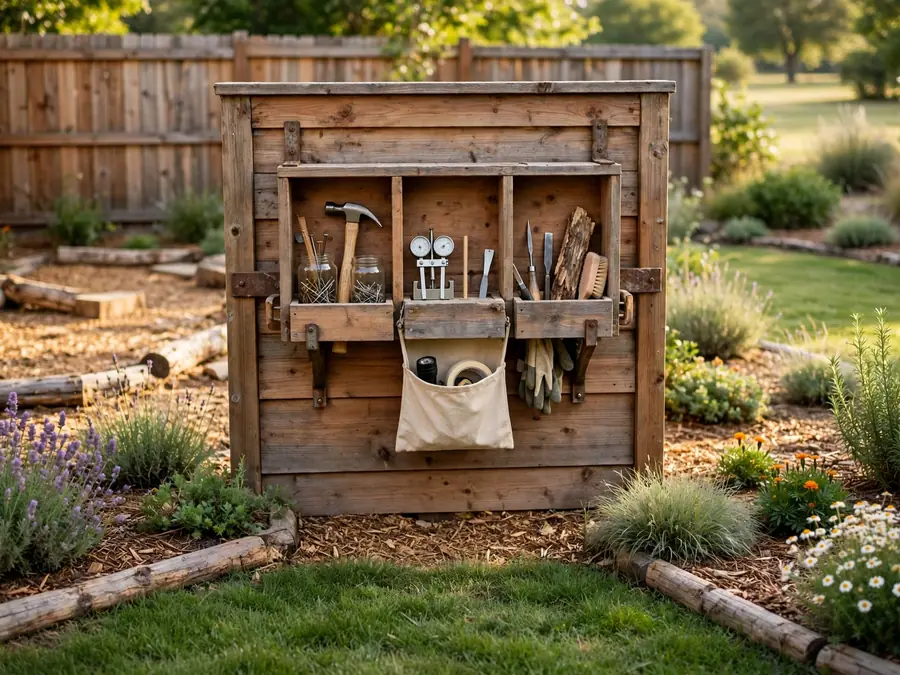
Budget note: The whole routine costs nothing but the coffee — screws and sandpaper come from the odds-and-ends drawer, and catching one rotten board early saves replacing a whole panel later.
12. Allergy-Smart Planting Away from Play Zones
Pollen-heavy blooms and bee-favourite flowers are pleasures best kept a little distance from the sandbox. Plant the nectar-rich beds — lavender drifts, buddleia, big open dahlias — along the far fence and around the adult seating, where they can be enjoyed without sharing airspace with play. Near play zones, lean on foliage instead: hostas, ferns, ornamental grasses and herbs like rosemary and thyme, which perfume the air without filling it. It pairs happily with backyard playground ideas planned around open, visible space — everyone breathes easier, literally.
The formula: foliage planting beside the play zones + flower beds along the far fence + scented herbs edging the paths.
13. Trampoline Rules Board and a One-at-a-Time Rule
A trampoline stays friendly when its rules are visible and impossible to miss. Paint or print a rules board — white lettering on sage green or navy — fixed to the frame at child eye height: one jumper at a time, no flips, shoes off, zip closed. Add a matching frame pad and a ladder that hooks away when no adult is around. The rules stop being a parent’s nagging and become part of the furniture.
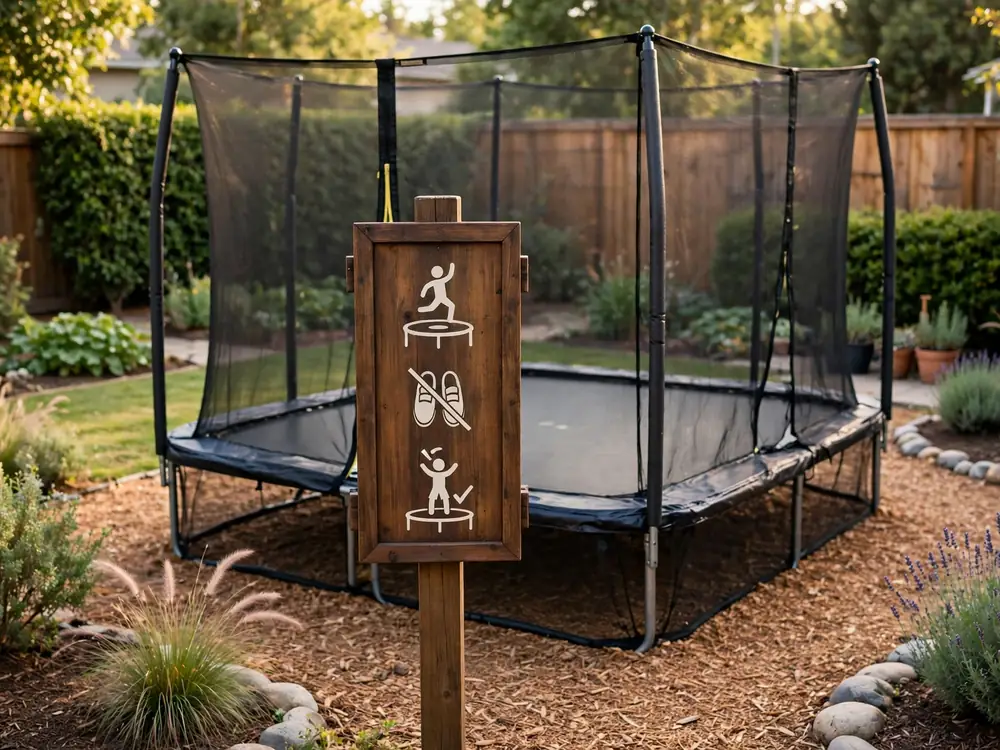
Get the look:
- Main piece: a weatherproof rules board on the frame at child height
- Supporting piece: a colour-matched frame pad and a hook-away ladder
- Texture or material: sealed board, rounded corners, rust-proof fixings
- Finishing touch: a shoe basket waiting beside the ladder
14. Fire Pit Safety Ring and a Spark Screen
A fire pit earns its place in a family yard when its boundary is built in, not remembered. Set the bowl inside a ring of pale gravel or stone at least 60 cm (2 ft) wide, add a fine-mesh spark screen that lives on the pit rather than beside it, and place seating outside the ring, so the edge is physical rather than negotiated. A stone or steel surround doubles as an adult footrest once the children are in bed and the evening turns grown-up.
Color note: Pale gravel and weathered steel read light and calm against green lawn, and the pale ring shows up clearly at dusk — the boundary announces itself without a single warning sign.
15. Safe Water Play Depths: Shallow by Design
Water play does not need depth to delight; it needs movement. Keep everything ankle-shallow by design: a water table at toddler height, a gentle spray arch or splash pad with no standing water at all, and a shallow channel — about five centimetres deep — where leaf boats can race. If a paddling pool comes out, choose a small, rigid-sided one, empty it the moment play ends, and store it tipped upright so it can never quietly collect rain.
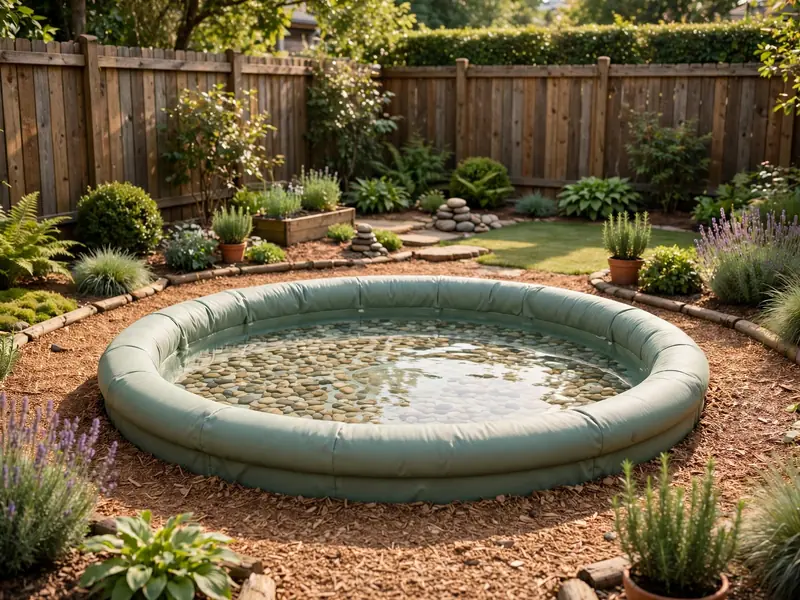
Texture note: Smooth moulded plastic, warm decking underfoot and the sparkle of moving water give all the sensory pleasure of a pool, with none of its still, silent depth.
16. Pet and Play Zones with Their Own Gates
Dogs and children adore each other and occasionally still need a door between them. Give the pet its own gated side patch — shade, a water bowl, and a digging spot of loose soil it is allowed to excavate — with a self-closing gate matching the children’s areas, so either side can open without the other emptying out. The play lawn stays free of surprises underfoot, the dog keeps a small kingdom of its own, and visits between the two happen on purpose.
Best for: homes where a dog, toddlers and a love of bare feet all share one garden.
17. Helmet and Gear Hooks Set at Child Height
Helmets only protect when they are actually worn, and they get worn when reaching them is effortless. Fix a row of sturdy hooks or a low cubby rail on the wall by the gate, at roughly 90 cm (3 ft) — one labelled spot each for helmet, knee pads and bike lock. Paint the hooks in bright, cheerful colours and the safety gear becomes part of the going-out routine, like shoes by the door. What has a home at their height gets used without a single reminder.
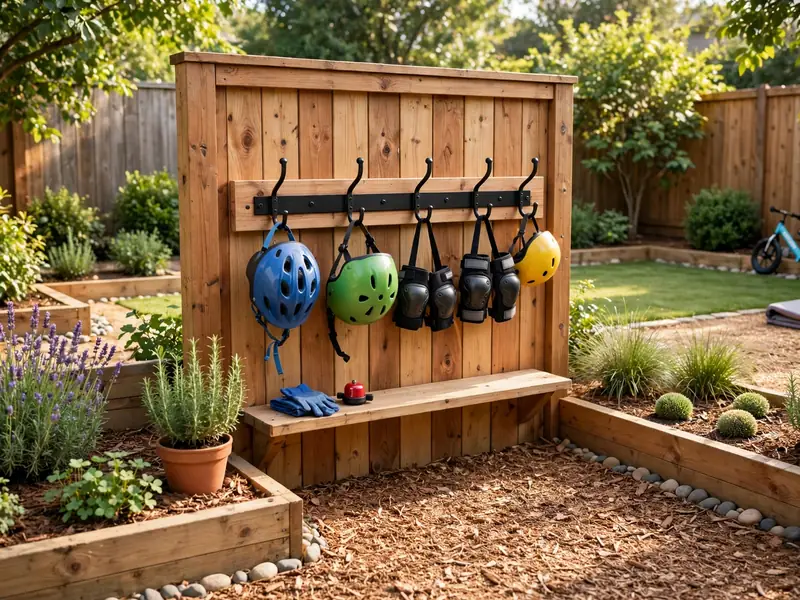
Space note: Keep the rail clear of the gate’s swing and at least a scooter’s length from the path, so grabbing a helmet never means stepping into moving garden traffic.
18. A Seasonal Audit of Outdoor Toys for Breaks
Outdoor toys age in sunshine: plastic turns brittle, ropes fray, and cracked edges sharpen quietly. Twice a year — first warm weekend, last warm weekend — spread everything on the lawn and sort it honestly: keep, repair, retire. Squeeze hollow plastic for cracks, tug ropes and straps, and check swing seats and see-saw handles for splits. The retired pile leaves that same day, not to a corner of the shed. Children accept “it broke” far more easily than adults expect.
Fit check: If a toy fails the squeeze, tug or flex test, it goes — the same honest audit suits simple landscaping front yard ideas, where tired edging and cracked pots get retired before they trip anyone.
19. A Gate Chime That Sounds When It Opens
The best safety devices feel like information, not alarms. Fit a small wind-chime-style gate chime — or a discreet electronic ding at the back door — that sounds whenever the garden gate opens, and an adult glancing up becomes a habit rather than a worry. Choose a soft, pleasant tone, in brushed steel or warm wood to match the gate hardware. It works like an audio sight line: you simply always know, without having to watch.
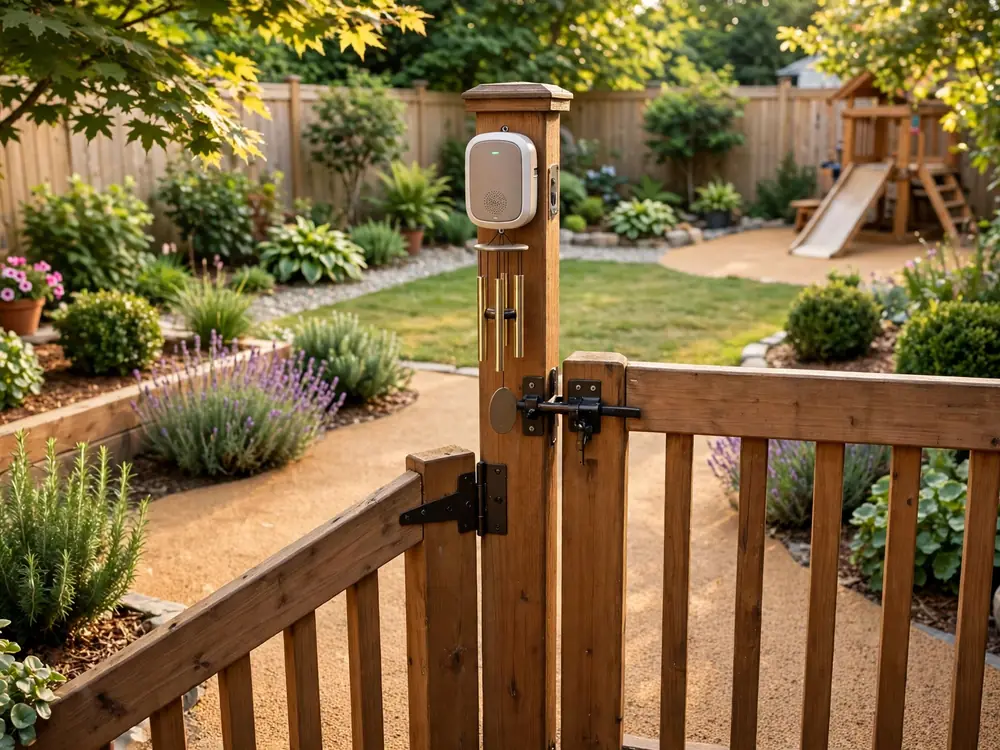
Style note: A chime chosen like door furniture — warm brass or blackened steel — makes the gate feel finished, and the safety it adds stays politely invisible.
20. Cool Surface Checks: Metal and Dark Plastic at Noon
At noon in July, a dark plastic slide can be genuinely too hot for bare legs, and metal swing seats are not far behind. Build the check into the day: one flat palm on the slide, the swing seats and any dark stepping stones before play starts. Add a cream canvas shade sail over the worst offenders, choose lighter colours when equipment is replaced, and keep one simple family rule — hot surfaces wait for evening — and the afternoon stays burn-free.
Easy swap: Trade the dark slide’s afternoon shift for morning play, and stretch a cream shade sail above it — the same equipment, an entirely cooler experience.
21. Emergency Number and Address Sign at the Gate
If help is ever needed, it should not have to hunt for the house. Mount a clear, weatherproof sign just inside the gate with the home address in large print, the emergency number, and one line an older child or a babysitter can read aloud to a dispatcher. Use dark lettering on a white or cream board, easy to spot from the path and softly lit by the porch light at night. It takes ten minutes to make and, with luck, is never read in earnest.

Seasonal swap: In winter, the same board earns a torch location and the grit bin’s spot added beneath — one small sign that keeps being useful as the yard’s hazards change costume.