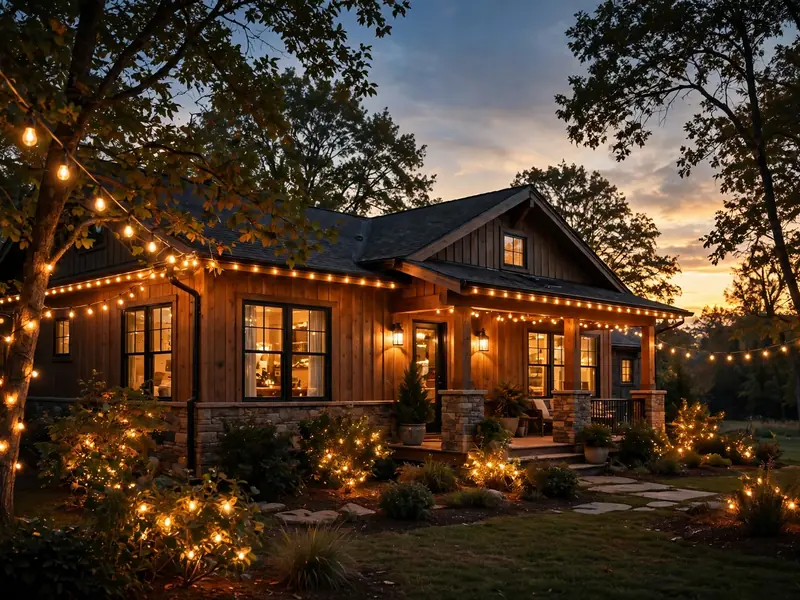
LED strands are efficient, cheap to run and everywhere — and yet many people stand in front of them feeling oddly cold, because the Christmas they remember glowed amber, dimmed softly and gave off a whisper of warmth. Blue-white glare flattens red bows, washes out greenery and turns a porch into a petrol station forecourt. The problem is rarely the decorating; it is the light itself, and no amount of ribbon fixes the wrong temperature.
Incandescent light earns its keep when it is used deliberately: bulb sizes matched to viewing distance, every strand kept in the same warm amber family, and timers and dimmers quietly managing the heat and the bill. Treated as a system rather than a habit, filament light is warm on purpose and practical by design.
Here are 14 ideas built on real filament bulbs — C9 rooflines, cafe strands, twinkle minis and one crowning star — each with the honest care notes incandescents ask for, from load limits to the spare-bulb tin that saves the evening.
The Incandescent Formula That Keeps Warm Looking Practical
- Bulb size follows distance: big C9s read from the street, small minis reward the close view; mixing them backwards wastes both.
- Warm is the whole point: keep every strand in the same amber family so the glow feels like firelight, not signage.
- Respect the load: count strands per circuit the way the box instructs, and let timers carry the discipline.
- Spares are part of the look: a labeled tin of bulbs and fuses keeps one dead socket from dimming a whole run.
For example: C9 warm bulbs along the roofline (street scale), mini incandescents woven in the porch garland (close view), everything on two circuits with timers (load respected), and a tin of spare bulbs by the door (ready repairs) give the full vintage glow without the vintage headaches.
| # | Idea | Best For | Budget |
|---|---|---|---|
| 1 | C9 Retro Bulbs for the Big Vintage Roofline | The street-scale classic | Mid |
| 2 | Warm Mini Incandescents Woven Through the Tree | Firefly depth indoors | Low |
| 3 | Twinkle Bulbs Scattered Every Fifth Socket | A gentle, living sparkle | Low |
| 4 | Edison-Style Cafe Strands over the Patio | Bistro warmth outdoors | Mid |
| 5 | Multi-Color C7 Strands Along the Fence | The retro rainbow, ordered | Mid |
| 6 | Incandescent Icicles for a Real Drip Glow | Icicles that shimmer warm | Mid |
| 7 | A Dimmer Dial for a Softer Evening Glow | Mood, adjustable | Low |
| 8 | Filament Bulb Lanterns Hung Through the Front Tree | Jewels in the branches | Low to mid |
| 9 | Garland Strands Lit with Incandescent Minis on the Mantel | The hearth’s halo | Low |
| 10 | Spare Bulb and Fuse Kit in a Labeled Tin | Repairs in minutes | Very low |
| 11 | Timers That Split the Load Across Circuits | Warmth without tripped breakers | Low |
| 12 | Colored Bulb Clusters Inside Garden Lanterns | Jewels along the path | Low |
| 13 | One Incandescent Star as the Roof Peak Topper | The crowning filament | Mid |
| 14 | Mixing Incandescent Warmth with Cool LED, on Purpose | Two temperatures, one plan | Low |
1. C9 Retro Bulbs for the Big Vintage Roofline
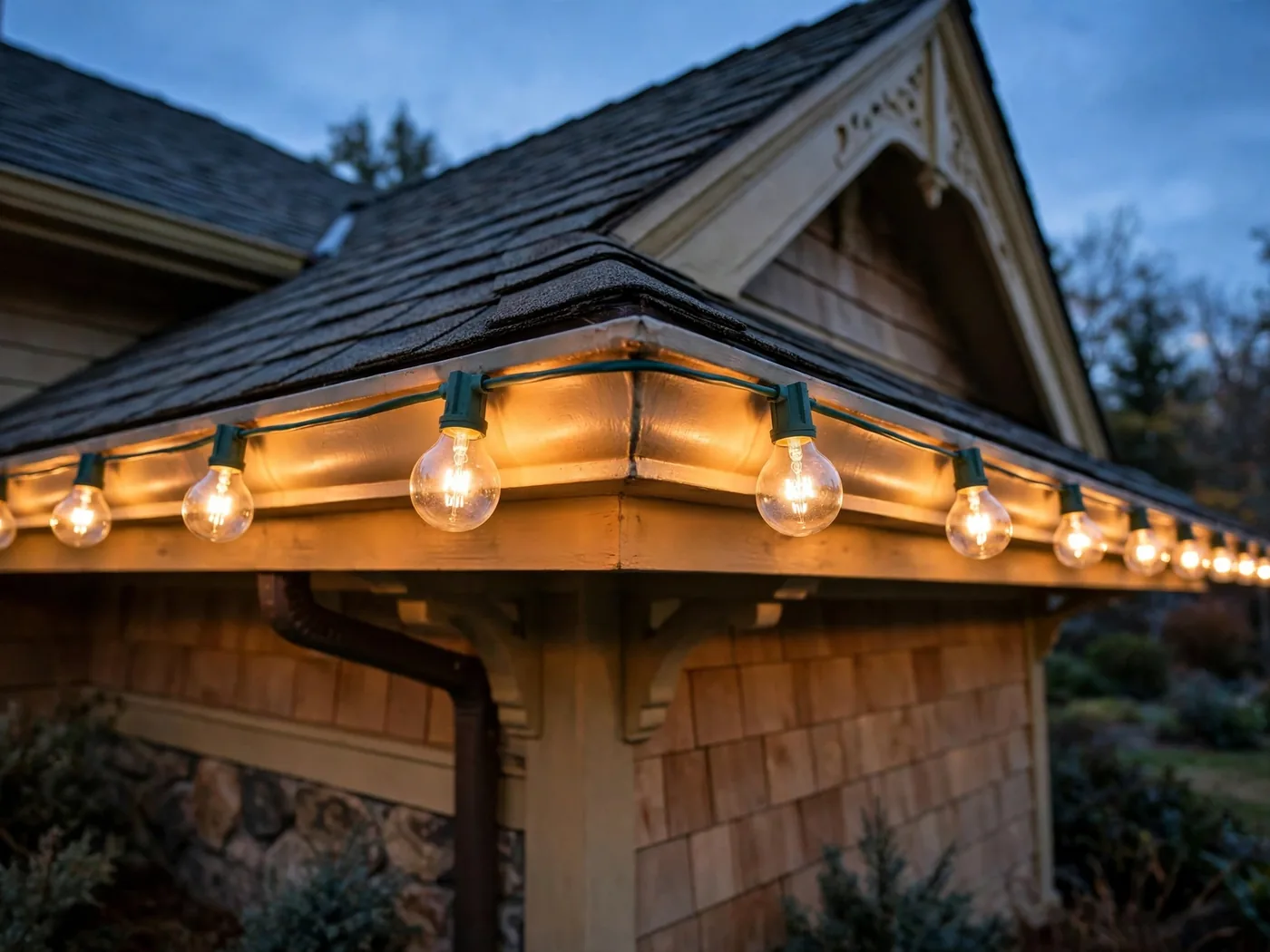
Clip a run of C9 bulbs along the front gutter, sockets 12 inches apart and bulbs upright, so the 2.5-inch teardrop shapes read clearly from the street. Choose transparent warm-white C9s whose filaments show as tiny orange threads, or mix in a few soft red for the full retro postcard. Screw each bulb in until snug, fix every socket with an all-in-one shingle clip, and keep the run one straight line rather than swags — the even rhythm is the whole vintage charm.
Why it works:
- Bulbs sized for the street stay crisp and legible from a moving car.
- Real filament glow flatters brick, wood and snow alike.
- One straight, even run reads calm instead of blinking-sign busy.
2. Warm Mini Incandescents Woven Through the Tree
String 100-count warm mini incandescents deep inside the tree first, then add a second strand near the tips, so the tree glows from within instead of wearing a dotted outline. Push some bulbs right against the trunk where branches are bare, and let others sit at the ends of branches beside glass balls. The tiny 2.5-volt bulbs burn cooler per socket than C9s but the strand still warms up, so keep tinsel and paper ornaments a few centimetres from the densest clusters.
Budget note: Minis are the cheapest filament glow going: buy two extra 100-count strands in the January sales, because one spare strand rescues a dark patch faster than hunting a single dead bulb.
3. Twinkle Bulbs Scattered Every Fifth Socket
Restring one plain warm strand with twinkle bulbs swapped into every fifth socket, and the whole run starts to breathe — four steady bulbs, one slow blink, repeated down the porch rail or across the mantel garland. Twinkle minis carry a tiny flasher inside the bulb itself, so no controller is needed; just count sockets as you go and mark each fifth with a bit of tape first. Keep the pattern honest and even: random twinkles look like faults, while a steady rhythm reads as deliberate magic.
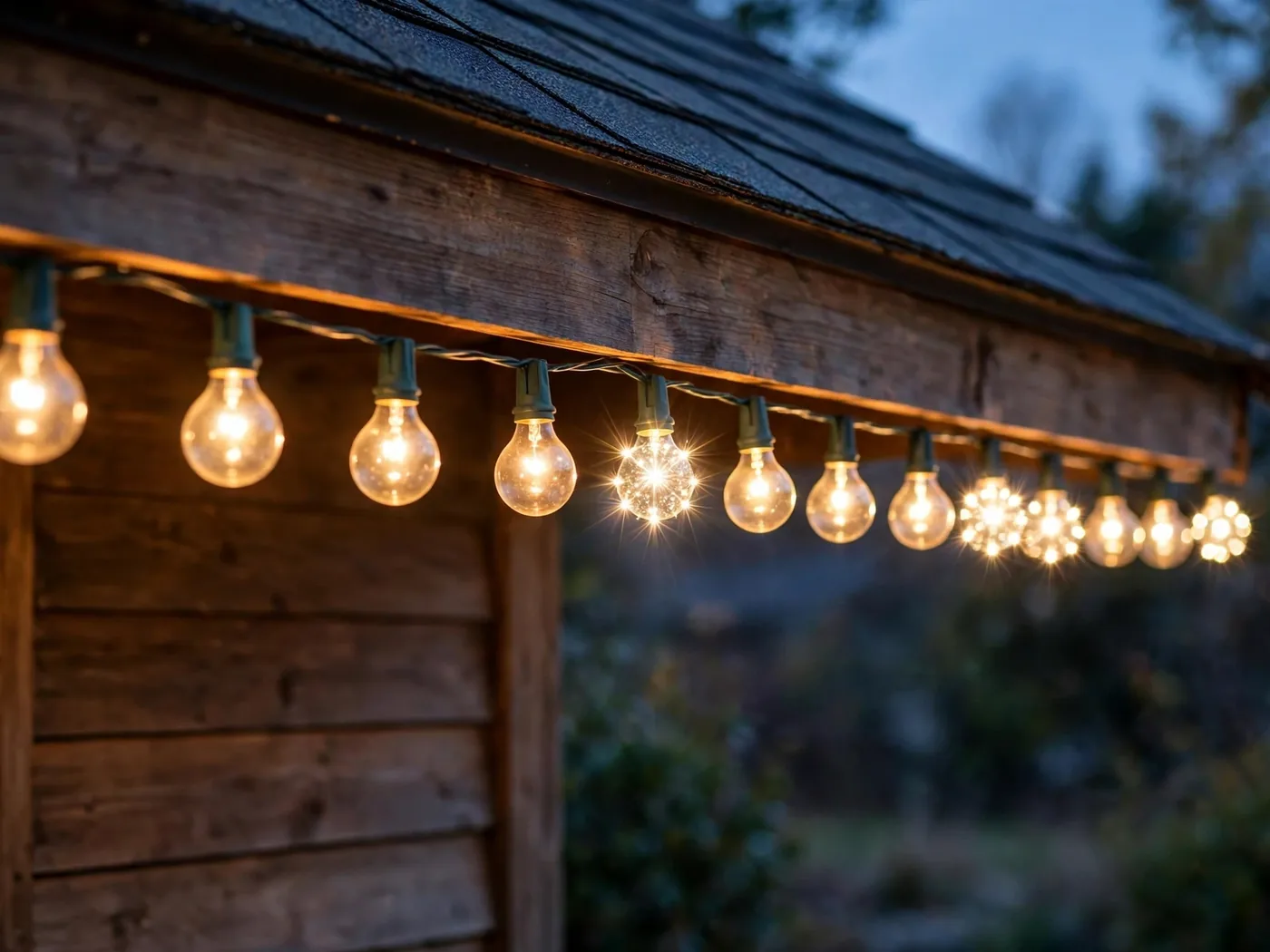
The formula: one warm 100-count mini strand + twinkle bulbs in every fifth socket + an even, counted rhythm from end to end.
4. Edison-Style Cafe Strands over the Patio
Swag two 48-foot cafe strands of ST38 Edison-style filament bulbs across the patio, anchoring them to the house wall and a pergola post so no bulb hangs lower than 7 feet. The clear globes show their squirrel-cage filaments like lantern flames, turning a plain slab into a bistro. They pair naturally with the rest of our christmas yard decor ideas, since the patio turns into the yard’s warm, lamplit room.
Get the look:
- Main piece: two 48-foot cafe strands, ST38 Edison globes
- Supporting piece: guide wire carrying the weight, not the cord
- Texture or material: clear glass over braided black cord
- Finishing touch: a dropped end lighting the serving table
5. Multi-Color C7 Strands Along the Fence
Screw C7 bulbs in a repeating red, green, gold, blue sequence along the top rail of the front fence, one bulb every 12 inches, all the same transparent finish so the colors read as siblings. C7s are the middle size — about 2 inches tall — big enough to register from the sidewalk, small enough that five colors stay cheerful rather than gaudy. Mount sockets on the house side of the rail, sheltered from direct rain, and count your sequence before you climb down.
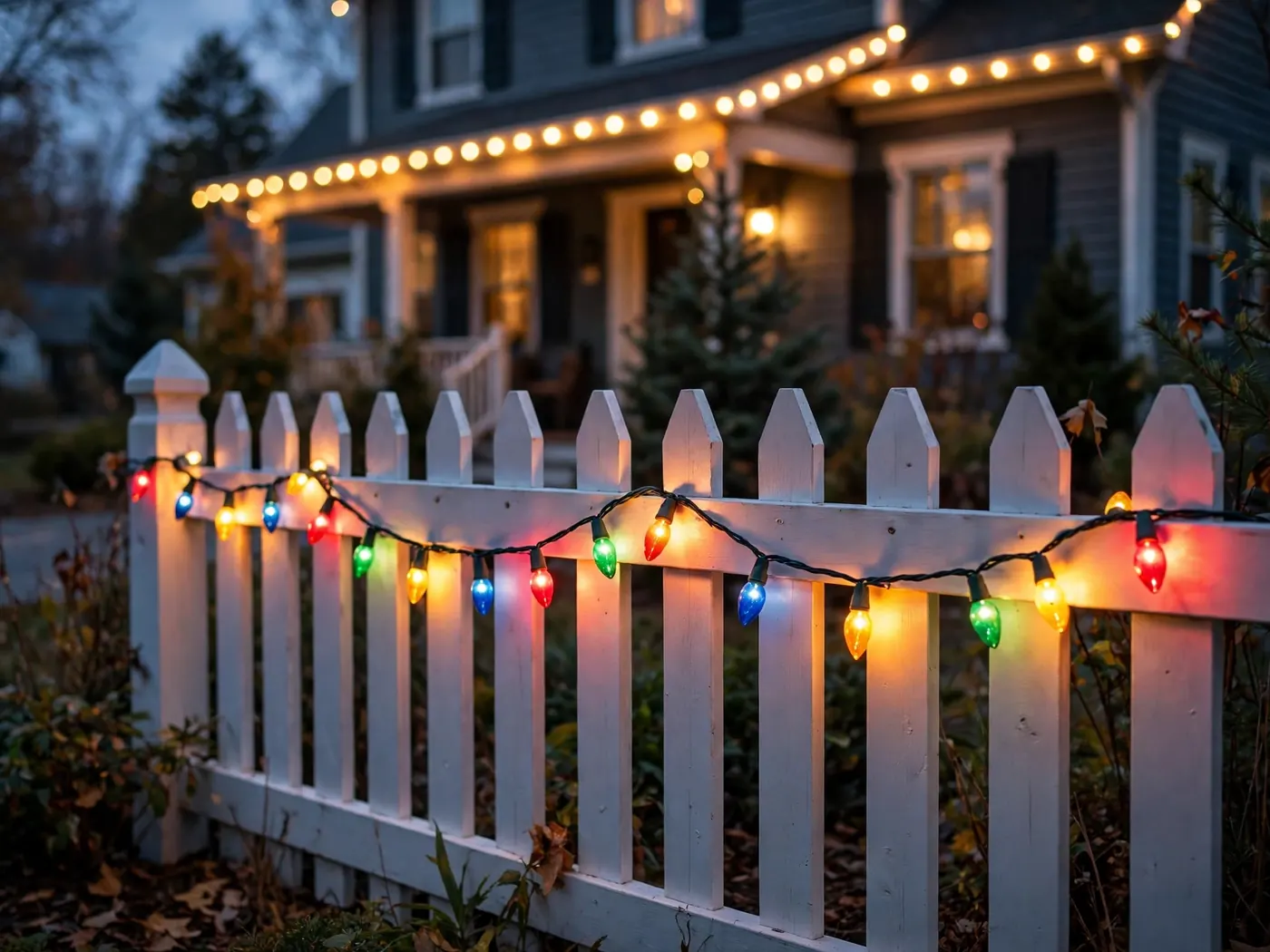
Color note: Transparent jewel tones are the honest vintage palette — each bulb glows its own saturated color instead of wearing a painted coat, and warm amber spacers between repeats keep the rainbow from shouting.
6. Incandescent Icicles for a Real Drip Glow
Hang incandescent icicle strands along the eaves with drops alternating 12, 18 and 24 inches, each drop a short run of minis on white wire. The charm of a real incandescent light bulb in icicle form is the drip of warmth: every drop glows amber at its core and fades toward the tip, nothing like the flat blue-white of cheap LED icicles. Space the drops unevenly on purpose — real icicles never march in step — and let two or three longer drops frame each window.
Texture note: Warm filaments inside clear drops read as glowing honey against matte winter surfaces — frosted glass, dull brick and flat snow all borrow the shine and look richer beside it.
7. A Dimmer Dial for a Softer Evening Glow
Plug the tree and mantel strands into a plug-in incandescent dimmer — the sliding kind rated for the strand’s wattage — and the whole room gains a volume knob. Full brightness for decorating and photos, then slide down to about 60 percent for dinner, when the filaments deepen to candle-amber and the bulbs stop competing with faces. Dimming also cools the bulbs and stretches their life, the rare trick that makes incandescents both prettier and cheaper to run. Mark your favorite setting with a pencil line.
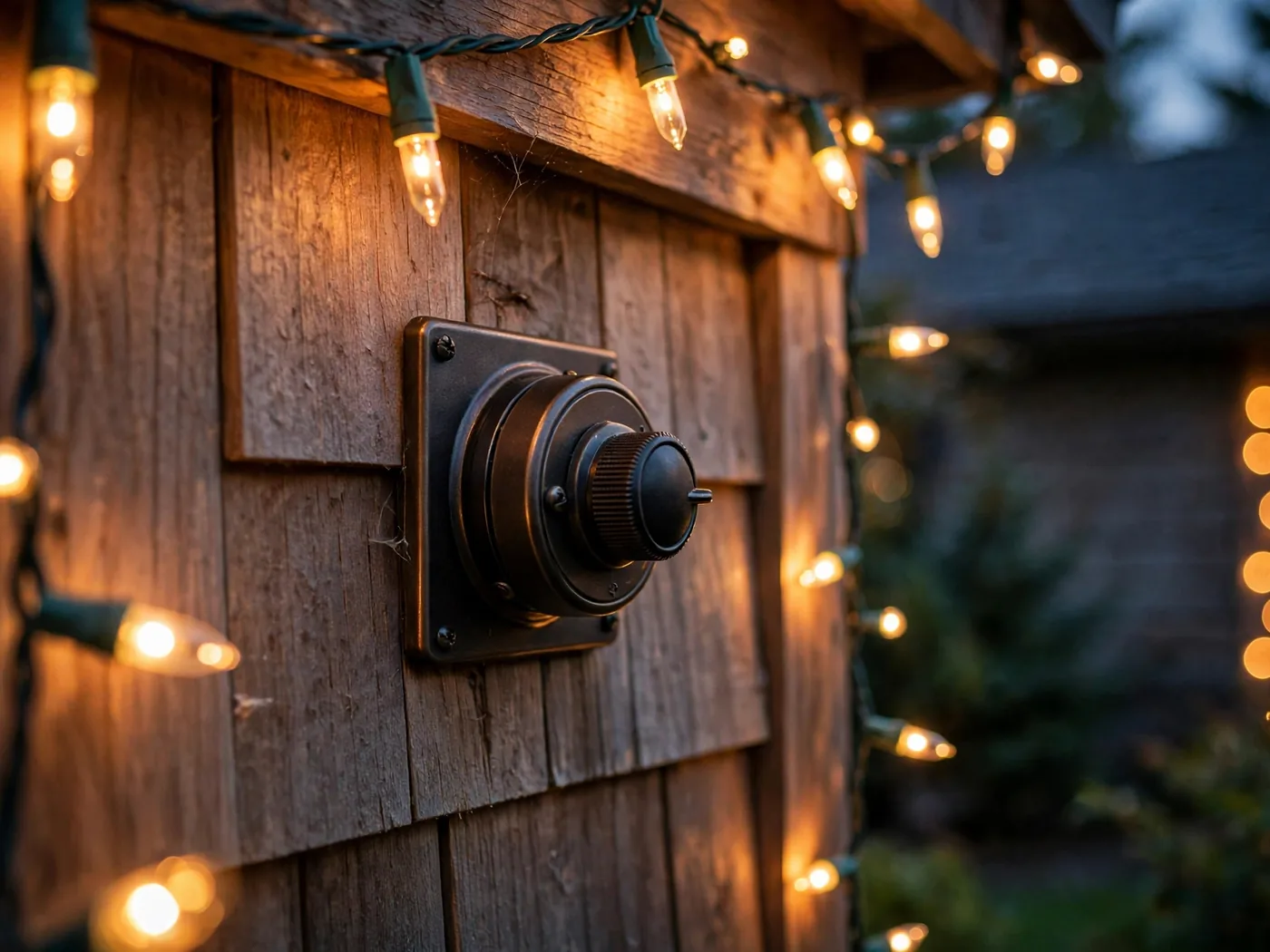
Best for: One-room holiday hosts who want the tree at photo brightness by day and candlelight level by dinner.
8. Filament Bulb Lanterns Hung Through the Front Tree
Hang six black metal lanterns, each holding one clear G40 filament globe, from the front yard tree at heights between 5 and 8 feet, spaced so no two share a branch line. Where the tree stands near the drive, the lanterns rhyme with the lit entry in our christmas garage door decor ideas, carrying the same warm globes from branches to doorway. Use outdoor-rated cord sets, loop the cords along branches back to the trunk, and keep every globe at least a hand’s width from twigs and dry leaves.
Space note: Six lanterns fill a medium tree; add one lantern per extra metre of canopy width, and never crowd two onto one branch.
9. Garland Strands Lit with Incandescent Minis on the Mantel
Lay a plain cedar garland along the mantel, then weave a 50-count strand of warm minis through it in loose S-curves, bulbs resting on top of the greenery rather than buried inside. Keep the strand’s plug end at the mantel’s right corner so the cord drops straight down beside the fireplace, out of sight. The minis’ small glass — each about an inch tall — suits the close range of a hearth, where C9s would glare; tuck one bulb beside each stocking hook so the stockings catch a private pool of light.
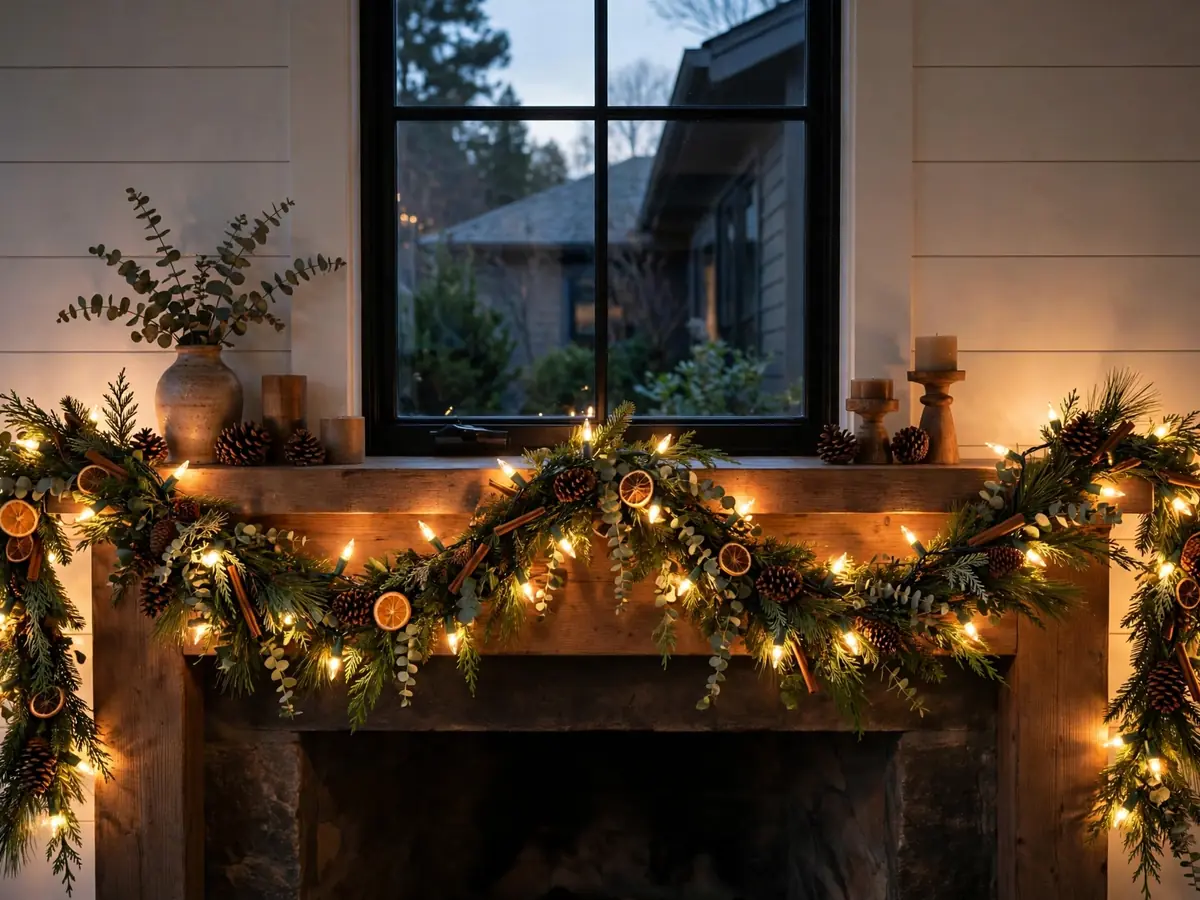
Fit check: Lay the strand along the mantel first and confirm bulbs sit clear of stocking hooks, framed photos and anything paper within 5 centimetres.
10. Spare Bulb and Fuse Kit in a Labeled Tin
Assemble the kit before anything goes up: a flat biscuit tin holding ten spare C9s, ten minis, six twinkle bulbs, a blister pack of strand fuses and one spare plug fuse, each type in its own labeled zip bag. The tin lives by the front door with the tape and spare clips, so a dark socket at 6 p.m. is a two-minute fix, not a ladder-and-rummage expedition. Test every spare bulb in a working socket in November; a tin of dead spares is just tidier disappointment.
Style note: The labeled tin is the invisible detail that keeps every other display looking intentional — a strand with one dark gap reads as neglect, however beautiful the rest.
11. Timers That Split the Load Across Circuits
Divide the display into two timer families: roofline and fence on the garage circuit at dusk-to-11, tree and mantel on a living-room circuit at 4-to-10. Most incandescent strands allow only three connected end-to-end (check the box: the limit is printed there), so timers fed from separate outlets stop one long chain from silently overloading a single run. Mechanical timers with chunky pins survive cold porches better than touch panels, and their click is a small nightly reassurance that the load is being minded.
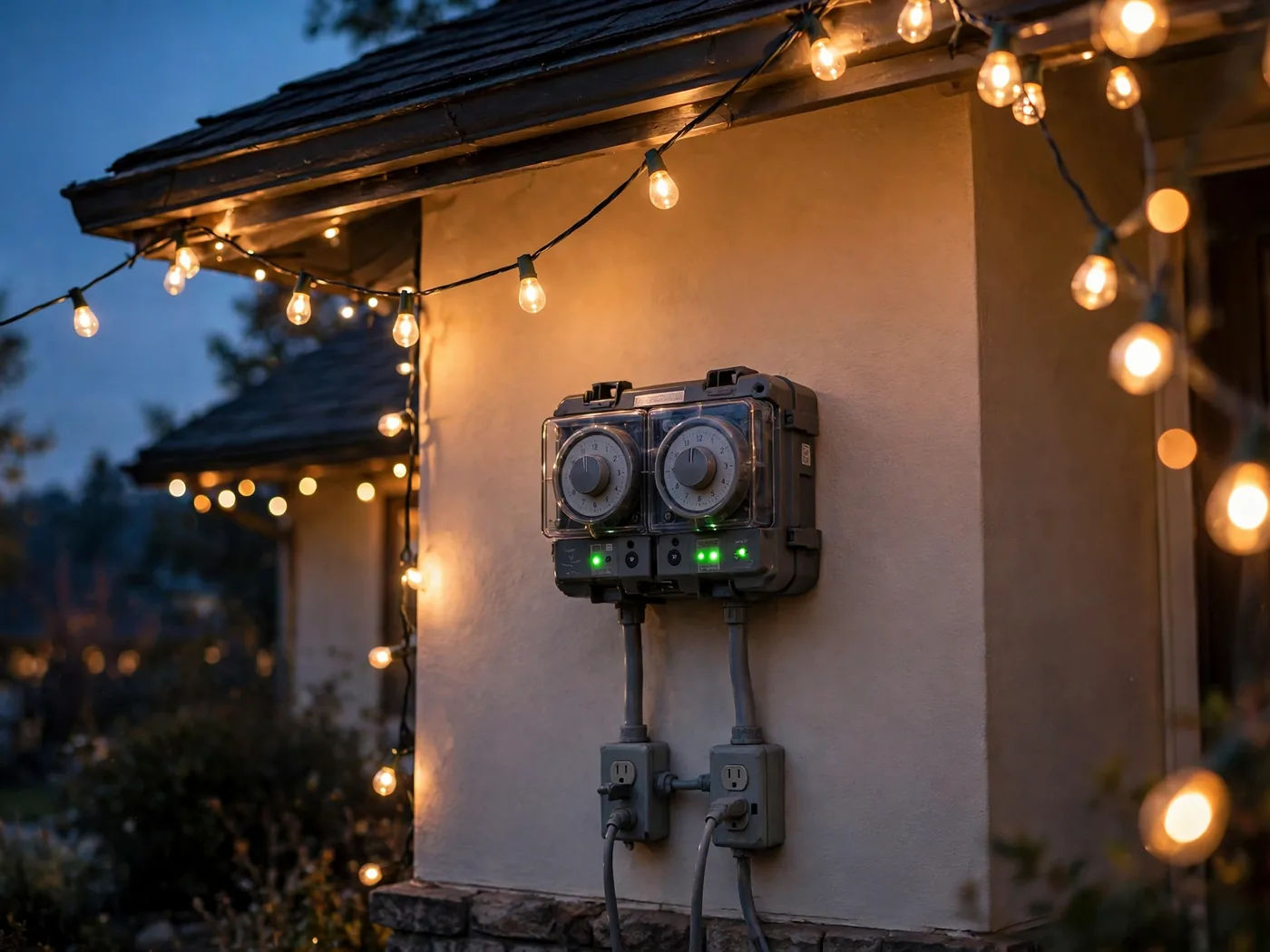
Easy swap: Swap one mechanical timer for a dusk-to-dawn photocell plug on the roofline only, and that run lights itself on the darkest evenings without a schedule.
12. Colored Bulb Clusters Inside Garden Lanterns
Set four garden lanterns along the front path, each holding a cluster of three C7 bulbs — ruby, emerald and gold — wired on short socket drops, their colors pooling on the gravel like spilled jewels. On the last evening they earn their keep as the path lighting in our christmas eve decor ideas, guiding guests from car to door in warm pools instead of porch-glare. Keep lantern glass vented at the top, because three incandescent bulbs in a closed box build real heat, and set each lantern on stone, never on mulch.
Seasonal swap: In spring, swap the jewel C7s for clear warm bulbs and the same lanterns become soft path lights for evening garden parties.
13. One Incandescent Star as the Roof Peak Topper
Mount one star, about 60 centimetres across, built from a strand of warm C7s on a wire frame, against the gable peak above the porch. A single filament-lit star does the job a dozen inflatables cannot: it gives the whole house one focal point, visible the length of the street, and its amber outline echoes the roofline C9s below like a full stop echoing a sentence. Fix it with two gutter clips and a safety line to the vent stack, wired into the roofline timer.
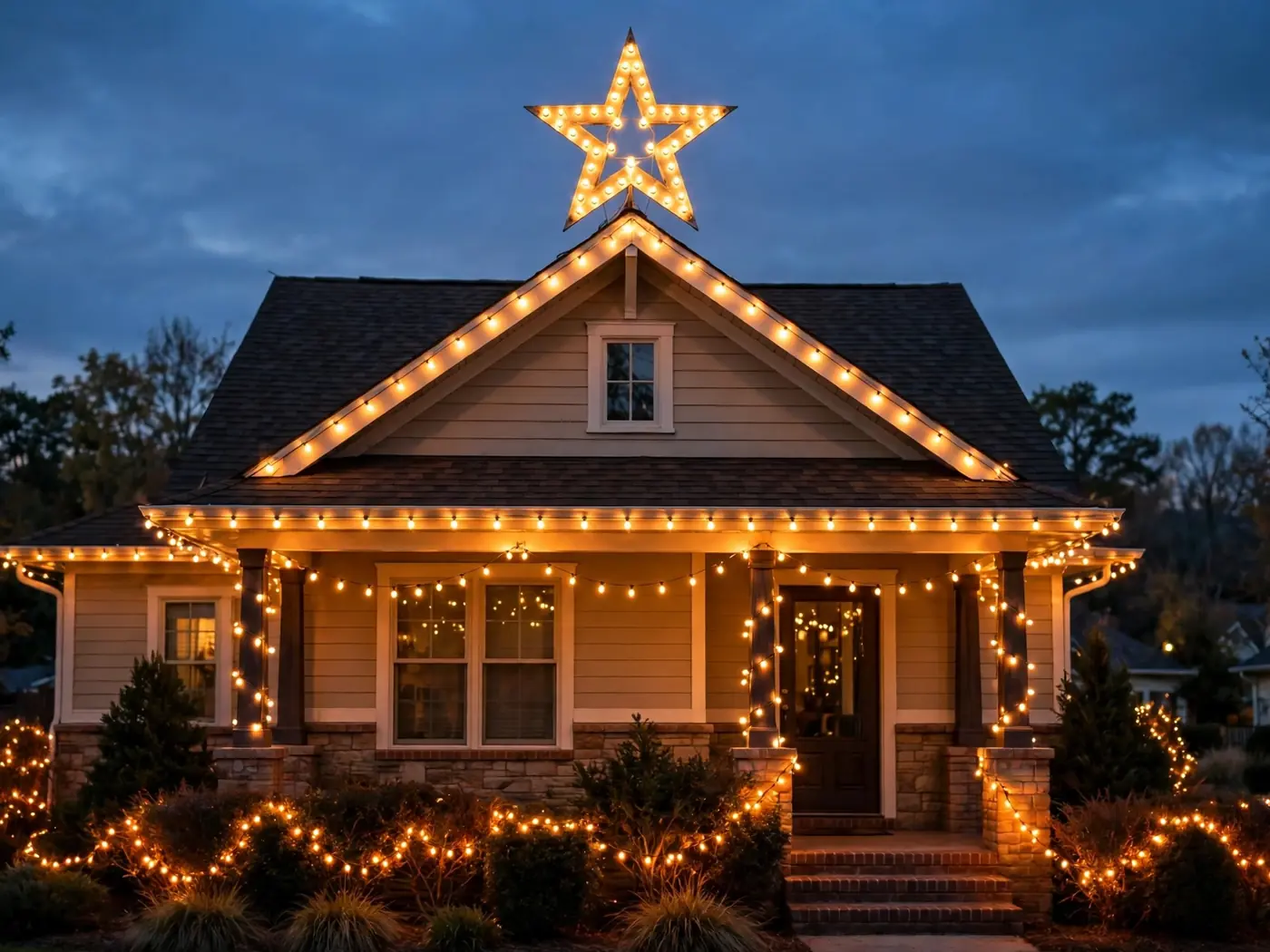
Why it works:
- One lit shape at the highest point organizes everything below it.
- C7 scale matches the viewing distance of a roof peak.
- Amber filament light keeps the symbol warm, not neon.
14. Mixing Incandescent Warmth with Cool LED, on Purpose
Use each technology where it wins: incandescent minis and C9s anywhere eyes linger — tree, mantel, porch — and warm-white LEDs (2700K, the warmest bin) for the far fence line and high eaves where nobody stands close. The trick is discipline: never mix the two on the same run or the same bush, where the eye compares them socket by socket and the LED turns blue by contrast. Kept in separate zones, the blend is invisible from the street and the bill stays sane.
Budget note: Put the filament budget where faces gather and let LEDs carry the distant runs — most homes cut the lighting bill by a third while keeping every close-up glow real.