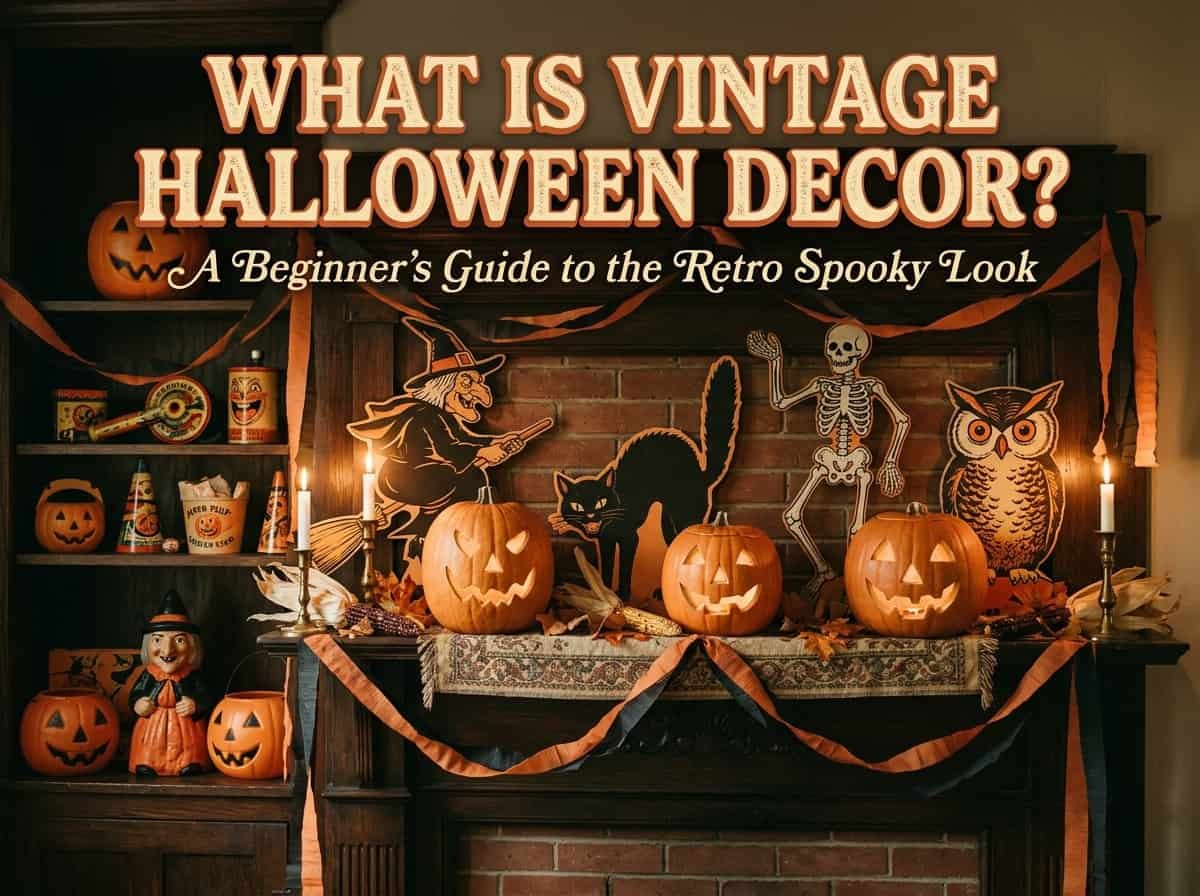
Every September, the Halloween aisles fill with glossy plastic skeletons and glowing everything, and somehow every porch on the street ends up looking the same. If you have ever felt that store-bought spooky doesn’t match the cozy, slightly mysterious mood you actually want, you are not alone.
Vintage Halloween decor offers another path. Its charm comes from soft colors, handmade-looking details, and a little imperfection: the feeling of a decoration with a story rather than a barcode.
This beginner’s guide explains what vintage Halloween decor really is, where the look came from, how to recognize it, and how to bring it home without spending a fortune or turning your house into a museum.
What Is Vintage Halloween Decor?
Vintage Halloween decor means decorations made decades ago, usually from paper, cardboard, tin, glass, or early plastics, that carry the simple, slightly whimsical look of earlier Halloweens. The term is also used for new pieces designed to echo that style, which is why the phrase covers both true originals and retro Halloween decor made today.
Vintage vs Retro vs Antique: What’s the Difference?
These three words get mixed up constantly, and knowing them helps you search smarter and avoid overpaying.
| Term | Typical Meaning | Halloween Example |
|---|---|---|
| Antique | Generally considered about 100 years old or older | Early paper die-cuts from the early 1900s |
| Vintage | Older than roughly 20 years, but not antique | Mid-century tin noisemakers or pulp lanterns |
| Retro | Made recently, styled after an older era | A new garland printed in a 1950s design |
Dealers don’t always use these terms strictly, so treat the table as a general guide. A seller’s description matters less than what you can see in the photos.
Beginner Note: If a listing says “vintage style” or “retro,” it is usually a newer piece. That is not a bad thing, just something to know before you pay a collector’s price.
A Quick History of Vintage Halloween Decorations
Early 1900s: Paper and Die-Cut Decorations
Early Halloween decorating was simple and mostly paper. Die-cut cardboard figures, crepe paper streamers, and printed party goods let families dress up a room for a gathering without much cost. These pieces are delicate, which is part of why surviving examples feel special.
1930s to 1950s: Beistle and Tin Noisemakers
By the middle of the century, companies such as Beistle were known for producing paper Halloween decorations, and tin noisemakers added the sound of the holiday: clackers, shakers, and rattles for trick-or-treat nights. Colors were bold but friendly, and the characters were more playful than frightening.
1960s to 1970s: Blow Molds and Plastic Decor
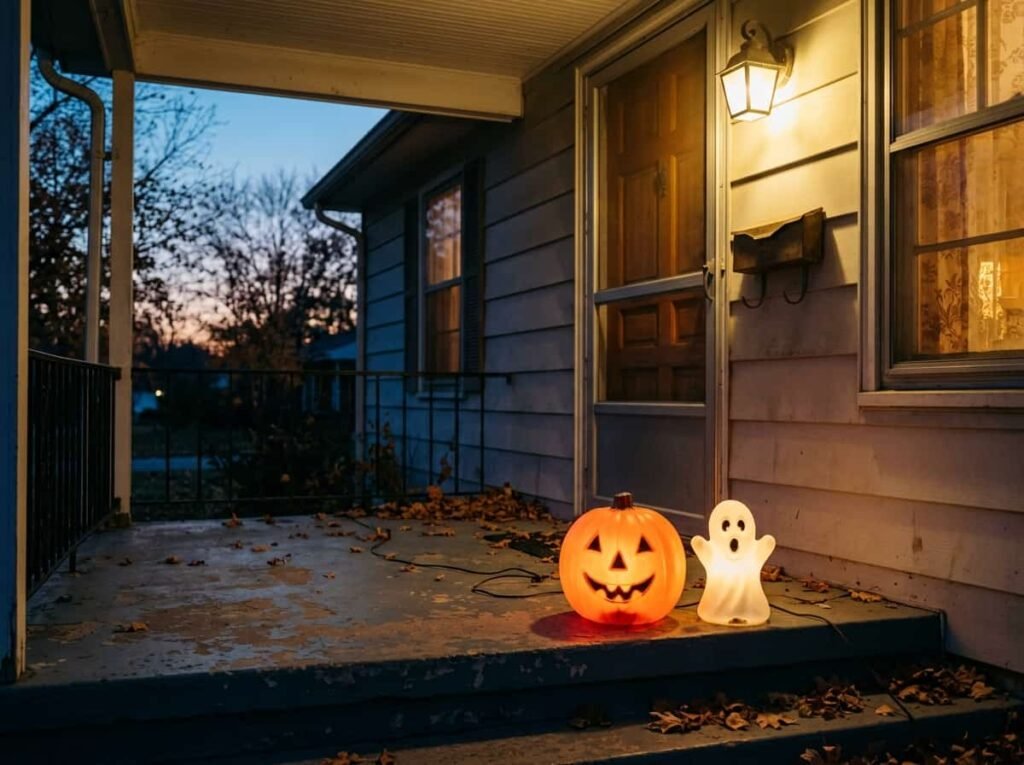
Plastic changed the look again. Blow mold pumpkins, ghosts, and cats could be lit from within and left on a porch, giving Halloween a glowing, cartoon-like personality. Many people picture this era first when they hear “retro spooky.”
Key Features of the Vintage Halloween Look
Classic Colors: Orange, Black, and Muted Tones
The palette is the quickest way to spot the style. Orange and black are the backbone, but they tend to appear slightly faded or warm, often softened with cream, olive, mustard, or dusty purple. Nothing is neon, and that restraint is what makes the look feel calm instead of loud.
Common Motifs: Black Cats, Jack-o’-Lanterns, Witches, and Skeletons
Vintage Halloween motifs lean cheerful. Black cats arch their backs with wide eyes, jack-o’-lanterns grin rather than snarl, witches look more storybook than scary, and skeletons often dance. This friendly spookiness is a big part of the appeal.
Materials Used: Paper, Cardboard, Tin, and Glass
Real vintage pieces rely on humble materials. Paper and cardboard give soft, matte surfaces, tin adds simple painted or printed metal, and glass appears in ornaments and small novelties. These textures photograph beautifully and add depth that smooth modern plastic can’t match.
Popular Types of Vintage Halloween Decor
Paper Die-Cuts and Garlands
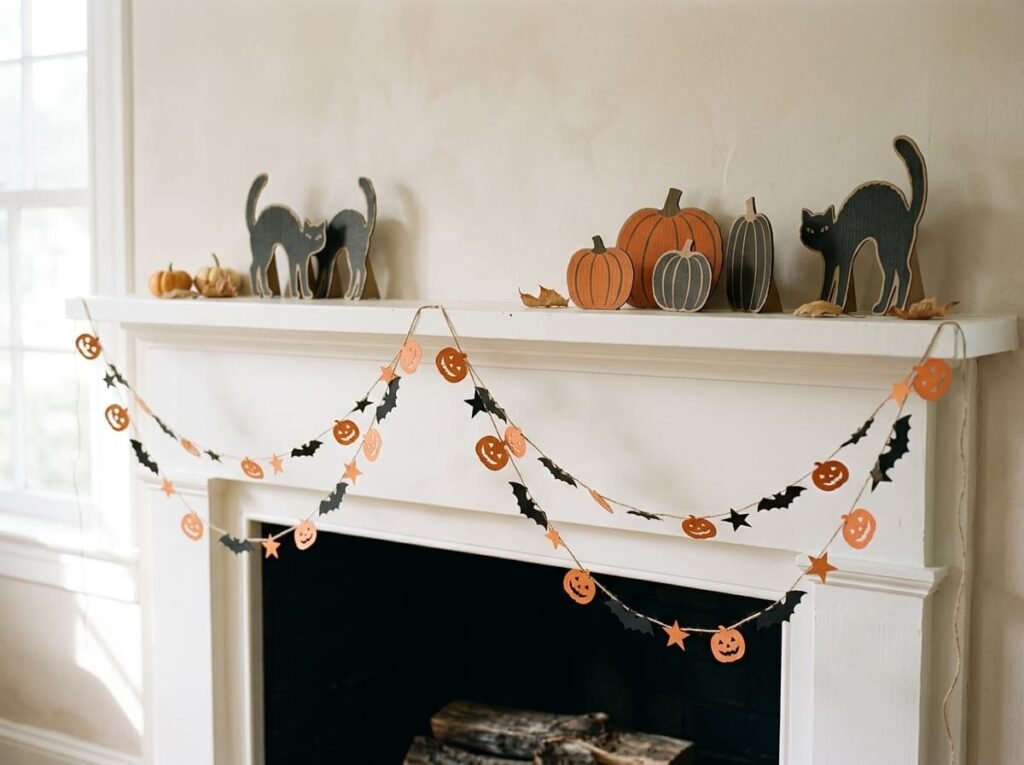
Die-cuts are the easiest entry point. A string of paper pumpkins or a cardboard black cat tucked into a bookshelf instantly sets the mood. They are lightweight, easy to display, and usually the most affordable way to start.
Pulp and Papier-Mâché Jack-o’-Lanterns
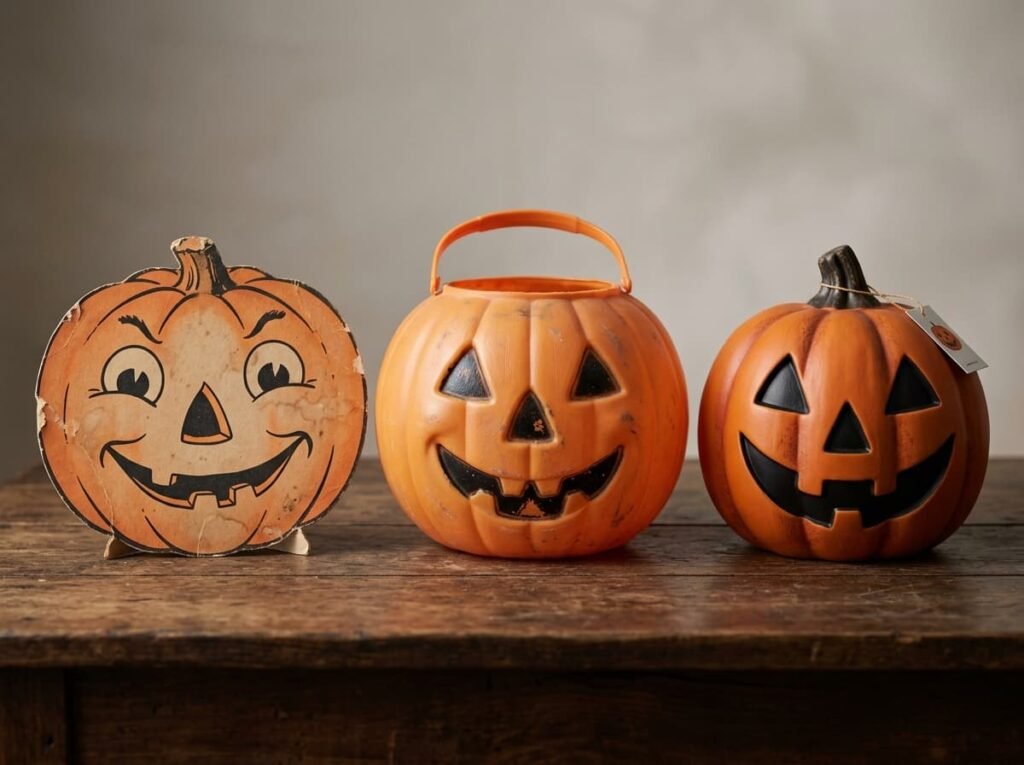
These molded pumpkins and lanterns have a charming, slightly rough surface and a hollow body that can hold a small light. Many were made in Europe, and their faces often have more personality than mass-produced decor. They tend to be a favorite among collectors.
Tin Noisemakers and Toys
Tin noisemakers and toys bring color and a bit of nostalgia. Even when the paint is worn, they make great mantel accents or party favors to display in a small bowl or on a tray.
Blow Mold Decorations
Blow molds are the bold, glowing option. They suit porches, entryways, and garden beds, and they offer a quick hit of retro style for people who prefer bigger statement pieces to delicate paper.
Vintage Halloween Postcards and Printables
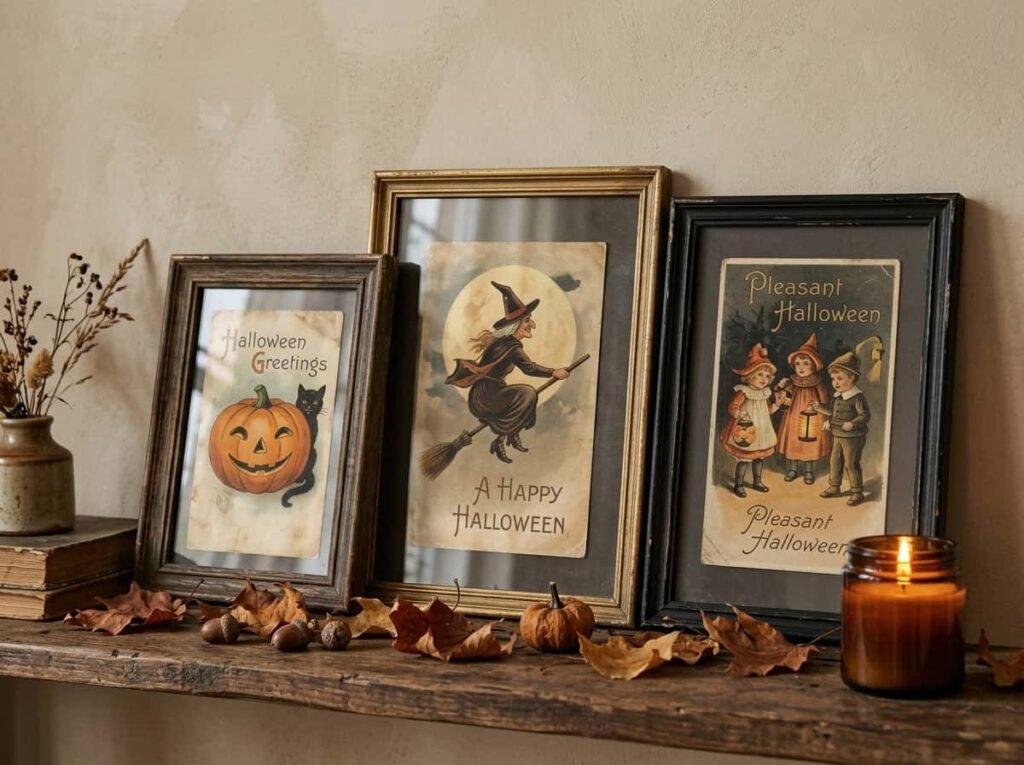
Old Halloween postcards show whimsical illustrations of children, witches, and pumpkins in soft color. If original cards are out of budget, printable vintage-style artwork lets you frame the same look for a few dollars and a bit of paper.
How to Style Vintage Halloween Decor at Home
Mantel and Shelf Displays
Start with a base layer such as a garland or a runner, then add two or three taller pieces like a pulp pumpkin or a framed print. Leave breathing room between items. Vintage pieces look best when each one can be seen.
Pro Tip: Group decorations in odd numbers, such as three or five, and vary heights. It makes a small display look intentional and layered.
Porch and Entryway Ideas
Keep delicate paper indoors and use sturdier items outside. A pair of blow molds beside the door, a lantern on the step, and a simple wreath create a welcoming porch without clutter. A single focal point usually works better than covering every surface.
Dining Table and Party Setups
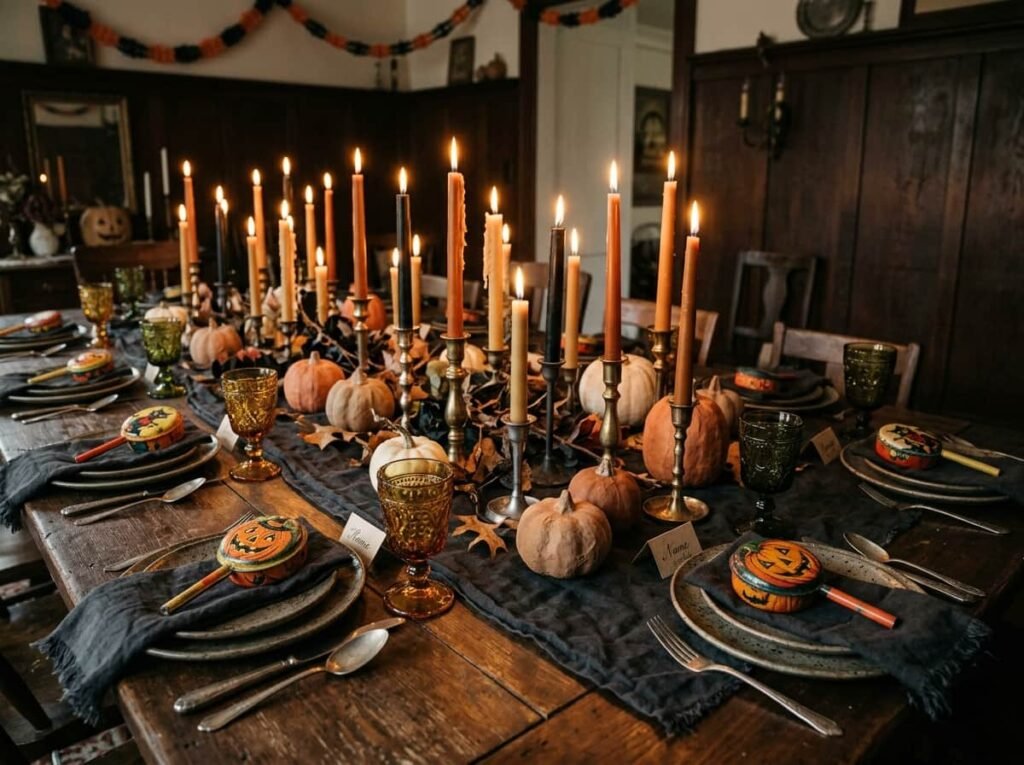
For a Halloween dinner, layer a plain linen runner with a few small pieces: a paper garland across the center, tin noisemakers as favors, and candles for glow. The vintage look comes through in the details, so the table can stay simple.
Where to Find Vintage Halloween Decor
Etsy and eBay
Online marketplaces offer the widest selection. Search by item type, such as “pulp jack-o’-lantern” or “Halloween die-cut,” rather than just “vintage Halloween,” and study every photo and the seller’s description of condition.
Thrift Stores, Flea Markets, and Estate Sales
In-person shopping is slower but more rewarding, and prices can be friendlier. Look through seasonal boxes, holiday bins, and tables of mixed novelties. Estate sales in early autumn can be especially good for older holiday items.
Vintage-Style Reproductions
If originals are hard to find or too fragile for daily display, reproductions give you the look with less worry. Many are made with the same colors and shapes as older pieces and are perfect for porches, kids’ parties, or anywhere items might get bumped.
Real Vintage vs Reproduction: What Beginners Should Know
Neither is “better” in every case. Real vintage pieces carry age, wear, and history, while reproductions offer lower prices, cleaner condition, and easier replacement. The best approach for most beginners is to mix both.
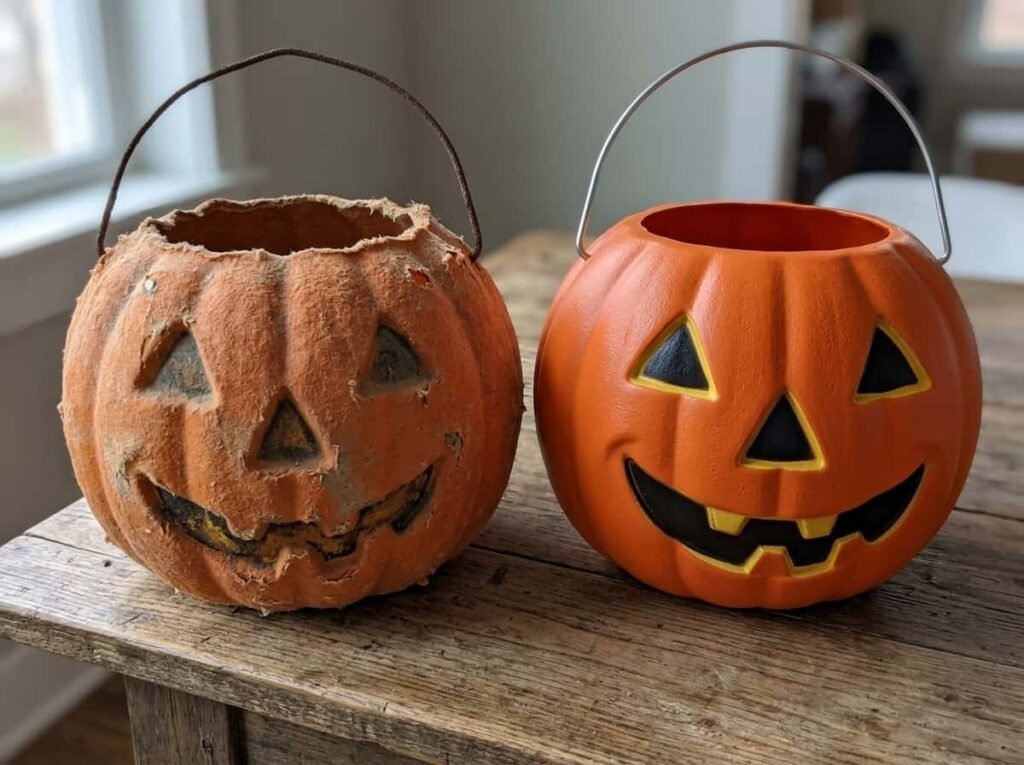
Be honest with yourself about the goal. If you want to collect, learn what to look for and buy from sellers who describe condition clearly. If you just want the style, a reproduction is a perfectly good choice and saves you the stress of protecting something delicate.
Tips for Buying and Caring for Vintage Pieces
What to Check Before You Buy
A few quick checks can save disappointment later:
- Condition: Look for tears, cracks, crushed areas, and missing parts.
- Smell: Heavy musty or smoky odors can be hard to remove.
- Repairs: Ask whether the piece has been repaired or repainted.
- Photos: Request extra photos of the back, base, and any damage.
- Price: Compare similar listings before committing.
How to Store and Protect Delicate Paper Decor
Store paper pieces flat or loosely layered with acid-free tissue in a sturdy box, away from heat, damp, and direct sunlight. Avoid plastic bags that trap moisture. When displaying, keep paper out of windows where strong light can fade colors.
Frequently Asked Questions
How old does decor have to be to count as vintage?
A common rule of thumb is about 20 years or older, with anything near 100 years often called antique. Sellers use these labels loosely, so judge each piece by its condition and details rather than the word alone.
Is vintage Halloween decor valuable?
Some pieces are sought after by collectors, but value depends on rarity, condition, and demand, and it varies widely. Many pieces are affordable, so it makes sense to buy what you love rather than treating decor as an investment.
Can I mix vintage and modern Halloween decor?
Yes, and it often looks best that way. Pick a shared color palette, such as muted orange, black, and cream, and let one or two vintage pieces serve as the focus while simpler modern items fill in around them.
Final Thoughts
Vintage Halloween decor is less about owning the rarest piece and more about choosing warmth, charm, and a little nostalgia over noise. This week, pick one spot, like your mantel or entry table, and style it with a single vintage or vintage-style piece, a garland, and a candle. Notice how much calmer and more personal it feels.