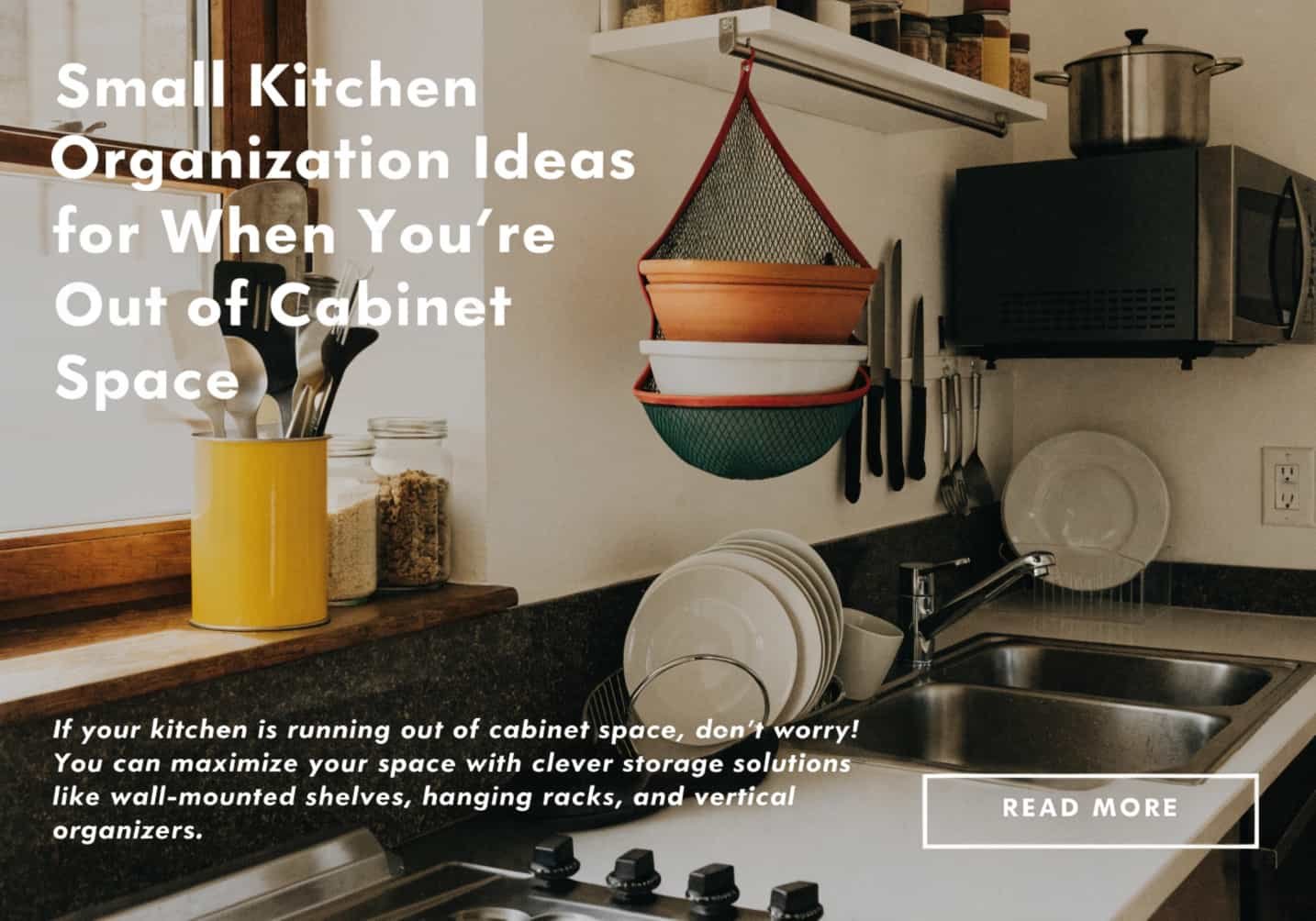
If you’ve ever stood in your kitchen holding a mixing bowl with nowhere to put it, you already know the struggle. Small Kitchen Organization Ideas have a way of filling up fast, and once every cabinet is packed, it feels like there’s simply no room left to breathe. The good news is that running out of cabinet space doesn’t mean you’re stuck. It just means it’s time to think outside the box a little. Over the years, I’ve rearranged my own cramped kitchen more times than I can count, and I’ve learned that the real fix usually isn’t buying more stuff. It’s using the space you already have in smarter ways. These ideas below are simple, budget-friendly, and don’t require ripping out a single cabinet.
Go Vertical First — Your Walls Are Free Cabinet Space
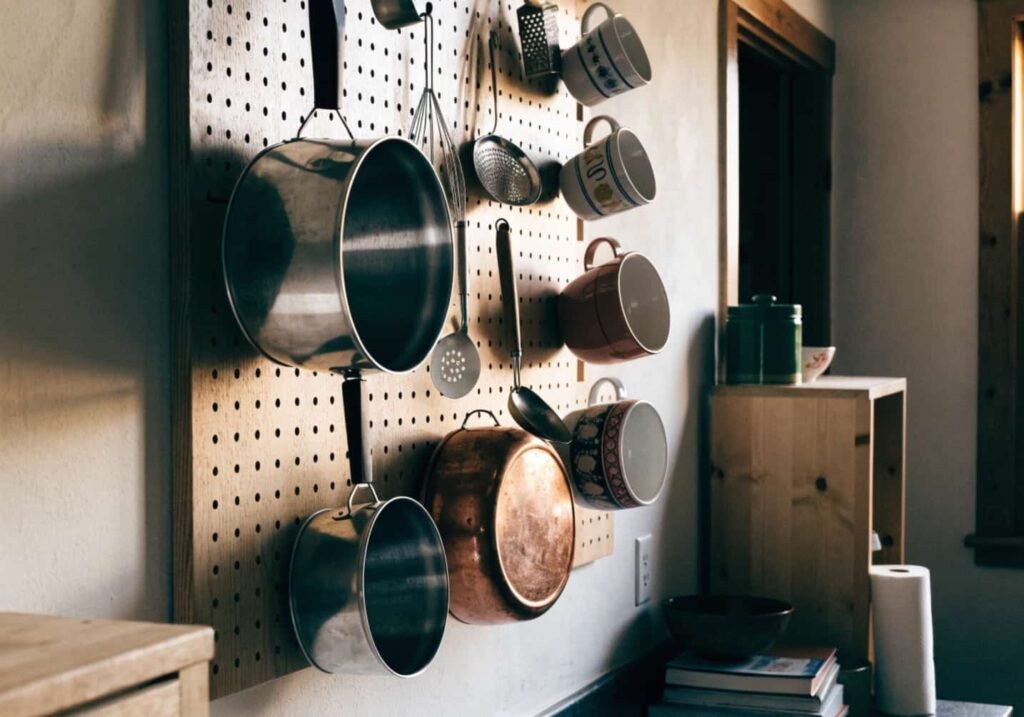
Most people forget that walls are basically free real estate. When my cabinets filled up, I started hanging pegboards and floating shelves, and it honestly changed everything. You can store mugs, spices, small pans, and even cutting boards up there without touching a single cabinet shelf. A pegboard from a hardware store costs less than fifteen dollars and gives you total control over where things go. Floating shelves work well too, especially above the counter where you’d otherwise have wasted wall space. The trick is to use hooks, small baskets, or thin shelves so nothing feels heavy or bulky. Once you start looking at your walls as storage instead of just decoration, you’ll be surprised how much extra room you actually have.
Magnetic Strips for Knives and Spice Tins (Ditch the Drawer)
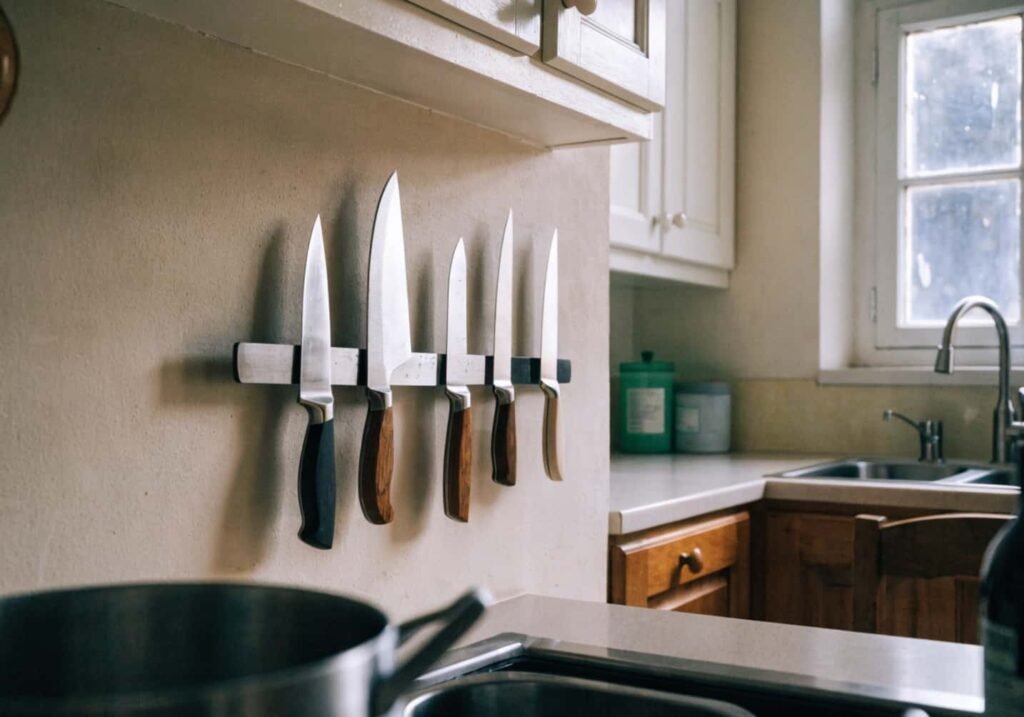
Knife drawers are a nightmare in small kitchens. They eat up space, and honestly, digging through a drawer full of blades is not exactly safe either. A magnetic strip mounted on the wall solves both problems at once. I put one up next to my stove years ago, and my knife drawer has been empty ever since. You can also use small magnetic tins for spices, which stick right onto the strip or even the side of your fridge. It’s a small change, but it clears out an entire drawer and makes cooking faster since everything is right there in view. Plus, there’s something satisfying about seeing your knives lined up neatly instead of buried under spatulas and can openers.
The Inside-of-Door Trick: Turn Cabinet Doors into Storage
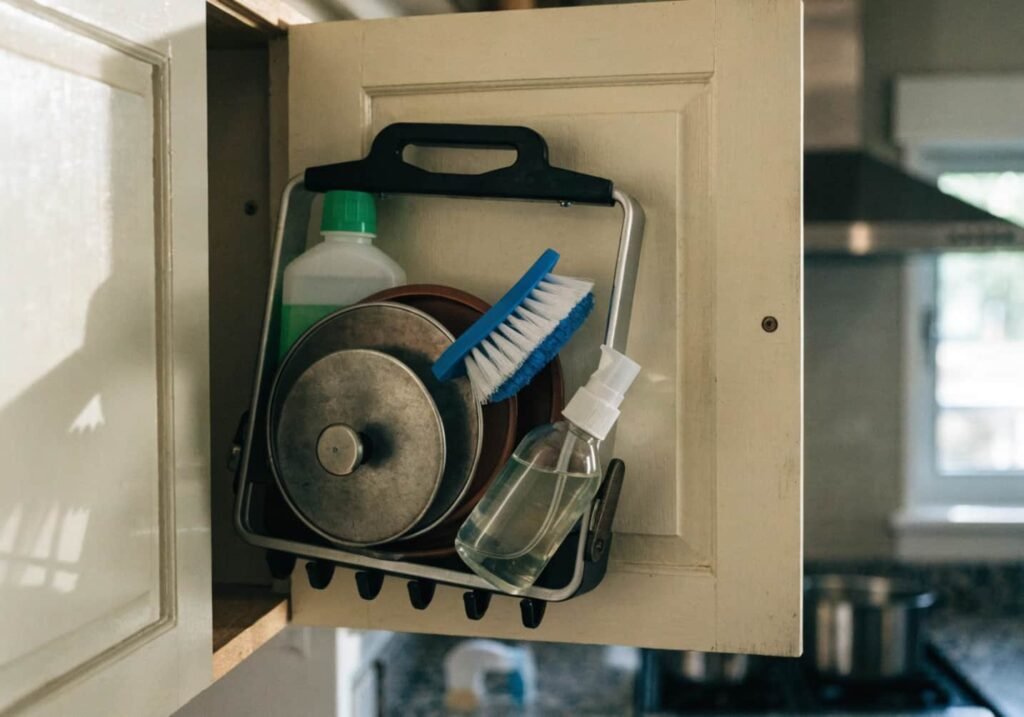
This one feels like cheating in the best way. The inside of your cabinet doors is basically empty space that nobody thinks about. Adding small racks or hooks there can hold cutting boards, lids, foil rolls, or even cleaning supplies under the sink. I added a simple over-the-door rack under my sink for sponges and gloves, and it freed up so much room below. You can find adhesive hooks or small tension racks for just a few dollars, and they don’t damage the cabinet doors either. It’s one of those upgrades that takes ten minutes but makes a noticeable difference every single day you’re cooking or cleaning.
Stackable Risers to Double Your Shelf Capacity
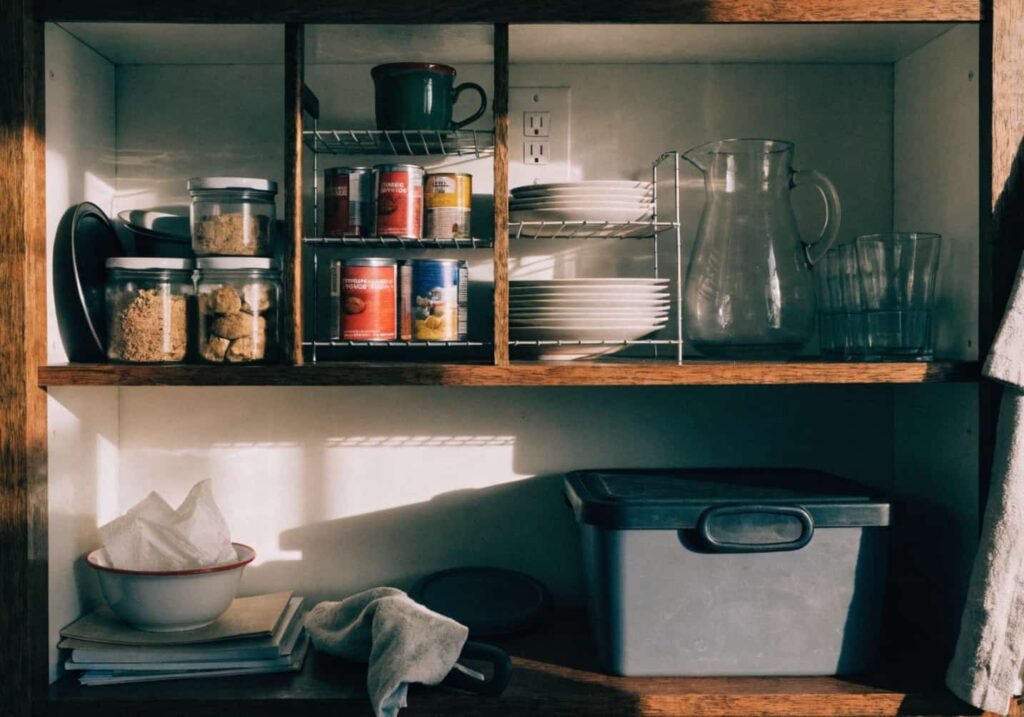
If your shelves have a lot of wasted air space above your plates or cans, stackable risers are a simple fix. They basically let you use the empty gap above your dishes to store a second layer of items. I use one for canned goods, and it doubled how much fit on that single shelf. Risers are inexpensive, usually made of wire or plastic, and they don’t require any installation. You just place them on the shelf and start stacking. It sounds too simple to make a real difference, but once you see how much extra space appears, you’ll wonder why you didn’t do it sooner.
Hang Pots and Pans from a Ceiling Rail or Hooks
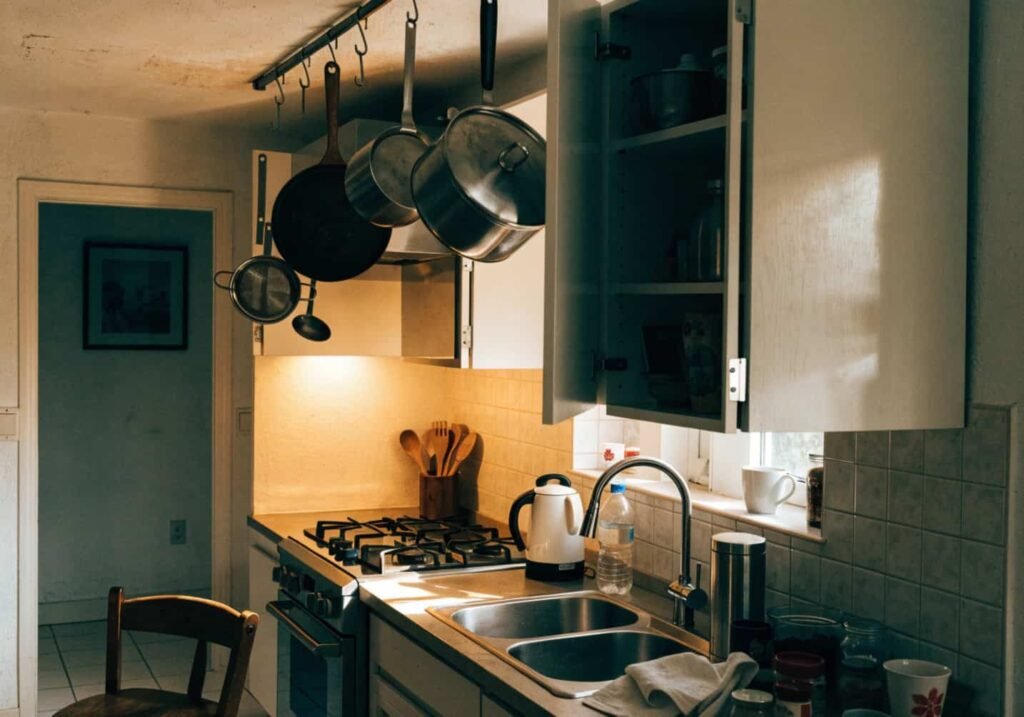
Pots and pans take up more space than almost anything else in a small kitchen. A ceiling-mounted rail or hanging rack solves this by lifting them completely out of your cabinets. I was hesitant to install one at first because I thought it would look messy, but it actually turned into a nice visual feature in my kitchen. You just need a sturdy rail and a few S-hooks to get started. Not only does this free up cabinet space, it also means you’re not digging through a stack of pans every time you need the one at the bottom. It’s a small investment that pays off every time you cook dinner.
Rolling Carts as Mobile “Extra Cabinets”
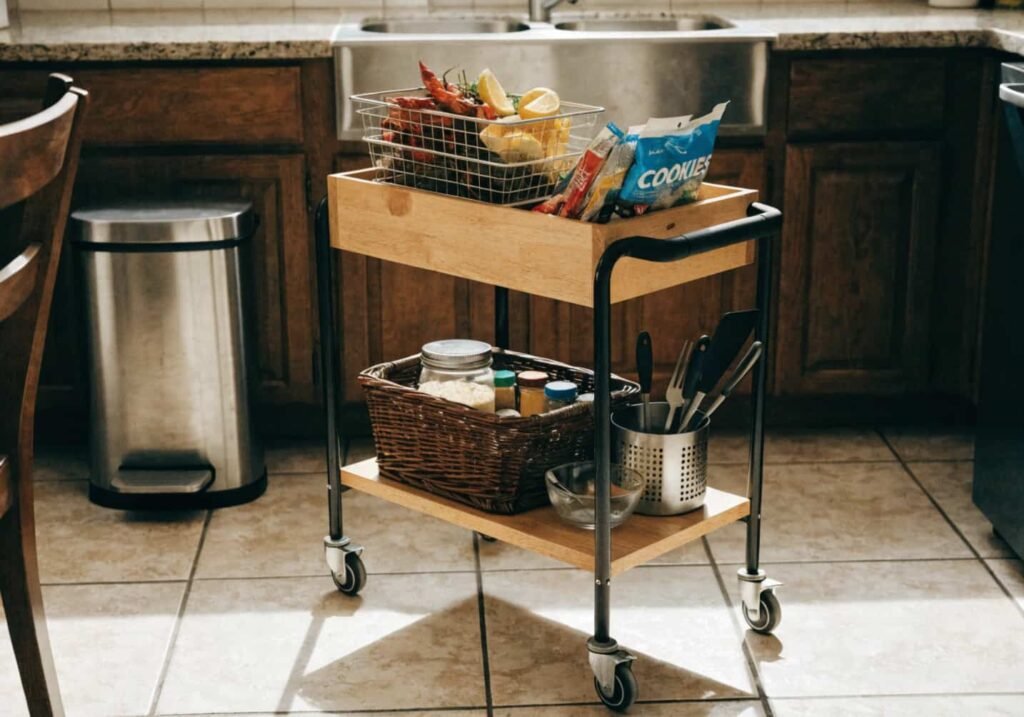
A rolling cart might be the closest thing to adding a whole new cabinet without any construction. I picked up a simple three-tier cart, and it instantly became extra pantry space for snacks, oils, and baking supplies. The best part is that it moves wherever you need it, whether that’s next to the stove while cooking or tucked into a corner afterward. Carts like this are easy to find at furniture stores or even big box retailers, and they usually cost less than a small cabinet upgrade would. If your kitchen has any open floor space at all, even a narrow strip, a rolling cart can turn that empty spot into real storage.
Under-Sink Zones Nobody Uses Properly
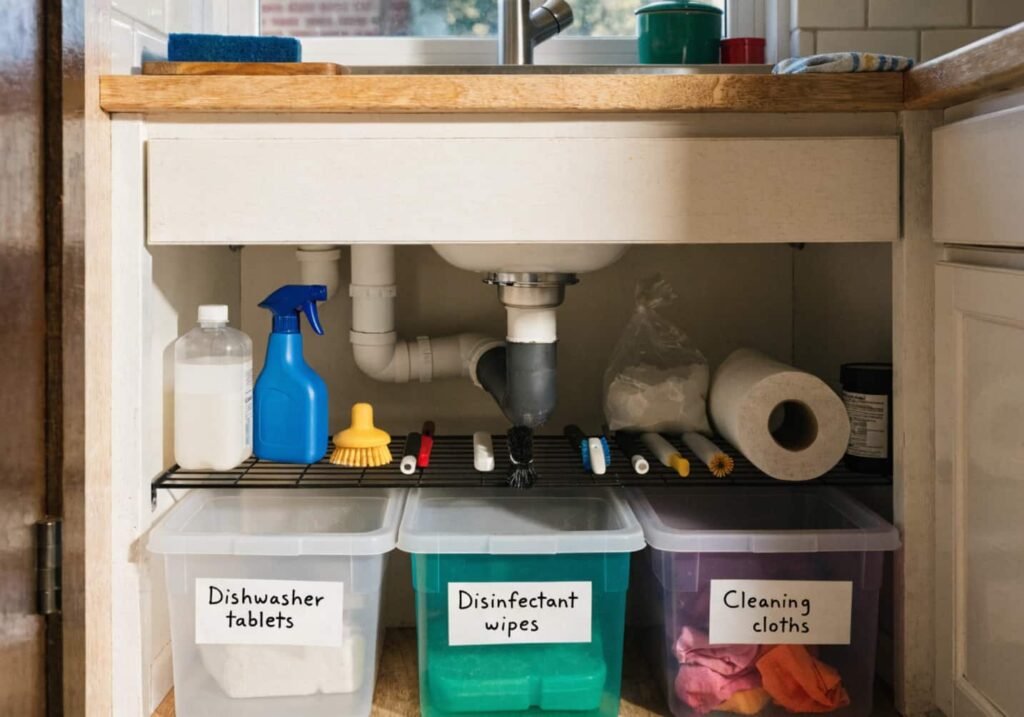
The area under the sink is usually just a pile of bottles and rags shoved together with no real order. With a few small changes, it can actually become one of the most useful spots in the kitchen. I added a simple wire shelf under mine, which basically doubled the space by creating two levels instead of one deep, messy pile. Stackable bins also help separate cleaning supplies from trash bags or extra sponges. Since this area is usually curved around pipes, it helps to measure first before buying organizers. Once it’s set up right, you’ll actually be able to find what you need instead of digging through a jumble every time.
Drawer Dividers for Lids, Trays, and Cutting Boards
Flat items like lids, trays, and cutting boards are some of the hardest things to store neatly. They tend to slide around and end up stacked in a way that makes grabbing the one you need a whole ordeal. Drawer dividers, or even a simple file organizer turned sideways in a cabinet, solve this problem fast. I use a metal divider originally meant for baking sheets, and it holds cutting boards upright so I can just slide one out without moving anything else. This trick works especially well in a shallow drawer where deep stacking isn’t practical anyway. It’s a small fix, but it saves a surprising amount of frustration during meal prep.
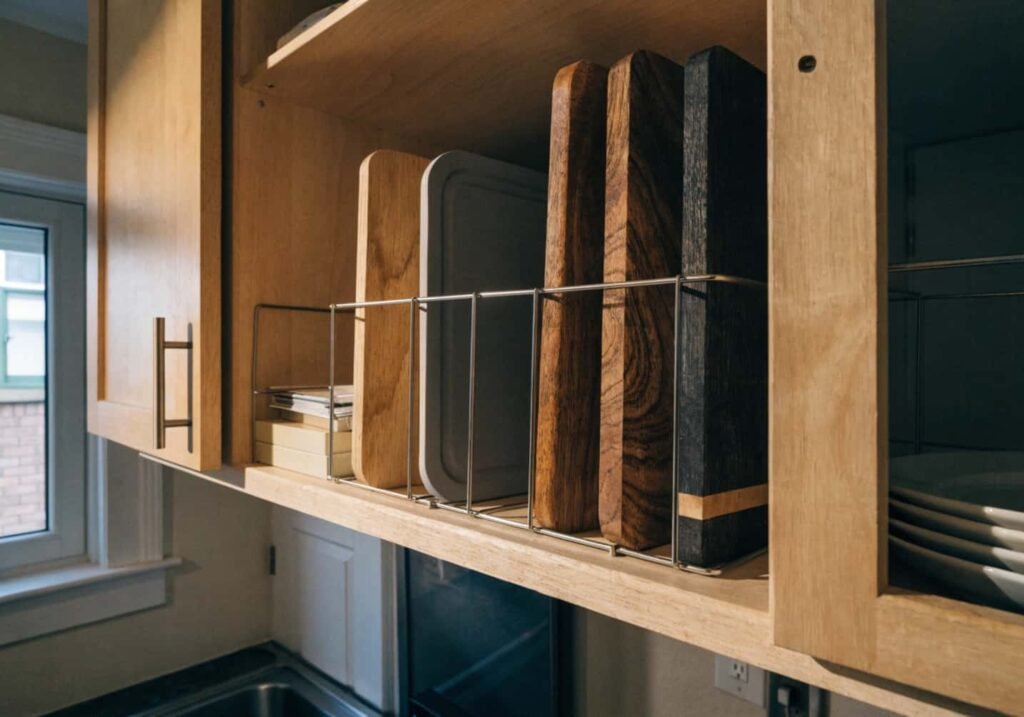
Tension Rods Inside Cabinets for Vertical Baking Sheet Storage
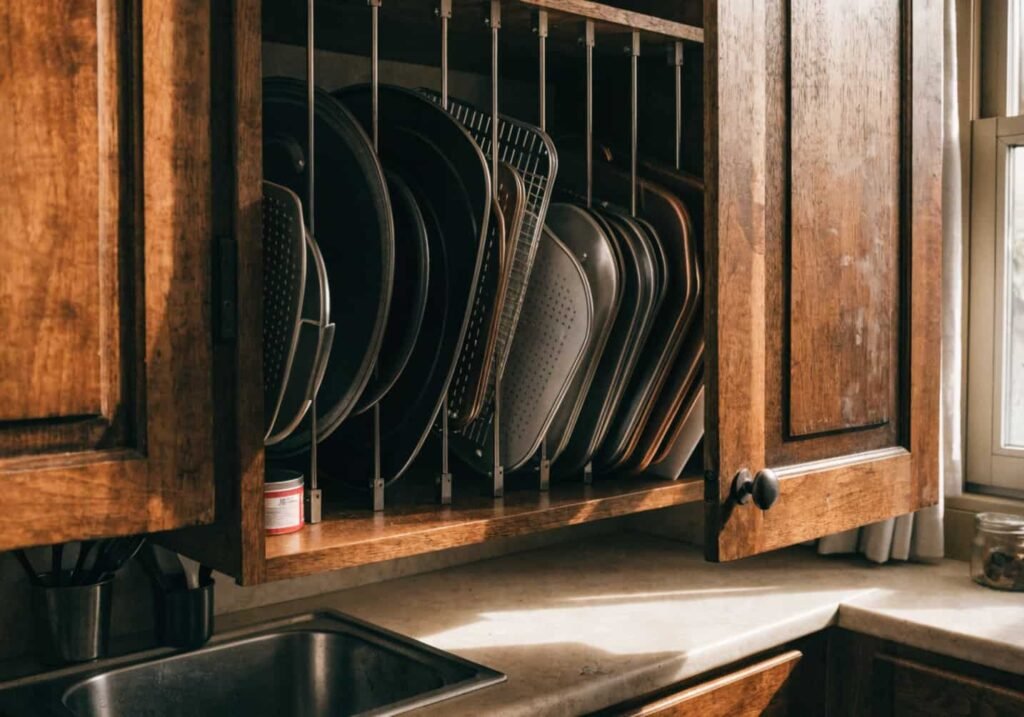
Tension rods are usually meant for curtains, but in a kitchen, they work as makeshift dividers inside a cabinet. By placing one or two rods vertically, you create narrow slots that hold baking sheets, muffin tins, and cutting boards upright instead of stacked flat. I found this trick almost by accident, and it turned one chaotic cabinet into an organized little station. The rods cost around eight dollars each and take just a minute to install since they simply press into place with tension, no tools needed. It’s one of those ideas that feels almost too simple, but it solves a problem that flat stacking just can’t fix.
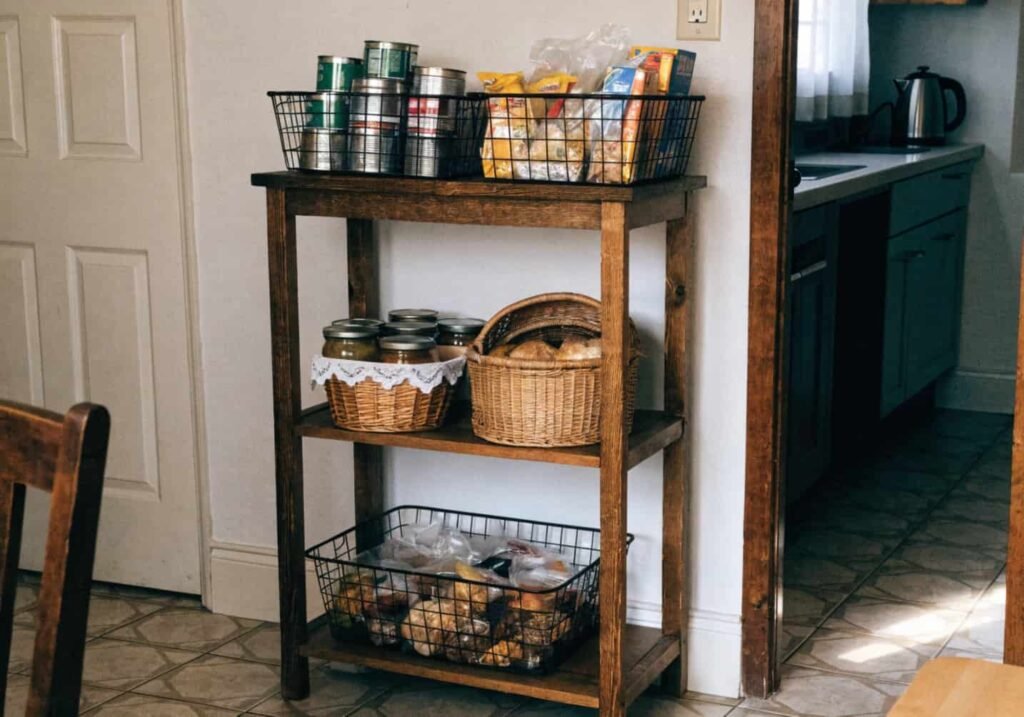
Repurpose a Bar Cart or Bookshelf as a Pantry
If your kitchen truly has no more cabinet space left, sometimes the answer is outside the kitchen entirely. A small bookshelf or bar cart placed just outside the kitchen doorway can hold canned goods, snacks, or extra dishware. I turned an old bookshelf from a thrift store into a mini pantry, and it barely cost anything since I already had it sitting around. Baskets on each shelf keep things from looking messy and make it easy to pull out what you need. This idea works especially well for apartments or older homes where kitchens were built small and cabinets are limited by design rather than choice.
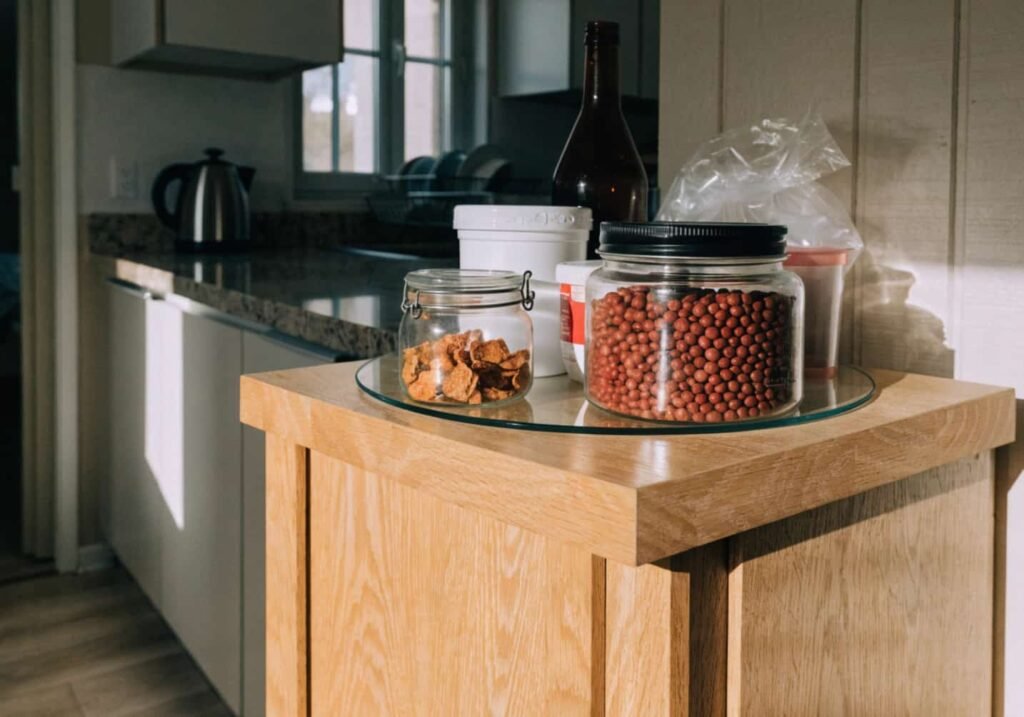
Corner Space? Use a Lazy Susan or Pull-Out Bin
Corner cabinets are notorious for wasting space because of how awkward they are to reach into. A lazy susan helps a little, letting you spin items into view instead of reaching blindly into the back. That said, I’ll be honest, lazy susans aren’t perfect since round shelves don’t always fit square corners well. A pull-out bin system tends to work even better because it slides the whole shelf out toward you instead of relying on spinning. Either option is a major upgrade from just cramming things into a dark corner and forgetting what’s back there. If your budget allows it, testing both to see which fits your cabinet shape best is worth the extra effort.
Over-the-Sink or Over-Stove Shelving You’re Ignoring
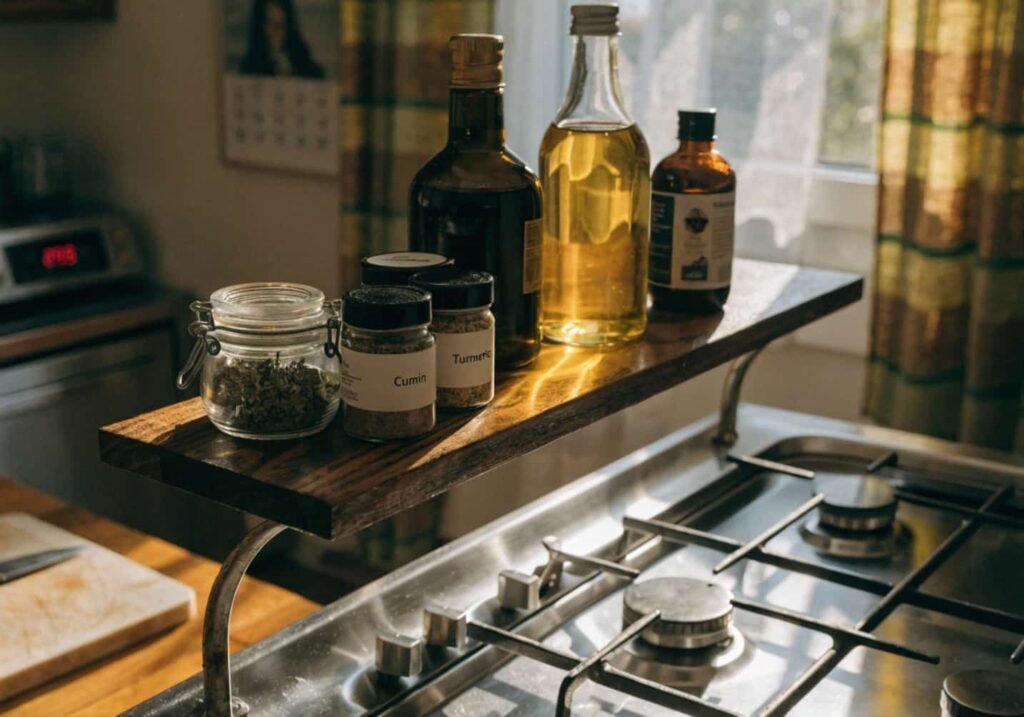
The space right above your sink or stove often sits completely empty, which is a shame in a small kitchen. Adding a slim shelf there can hold spices, oils, or dish soap, keeping everyday items within reach without taking up counter space. I installed a small shelf above my stove for oils and seasonings, and it made cooking so much smoother since I’m not constantly opening cabinets mid-recipe. Just be mindful of heat and steam when choosing what to store there, since some items don’t do well with constant moisture nearby. A simple wood or metal shelf, mounted securely, can turn dead air space into one of the most functional spots in the kitchen.
Declutter Rule: If It’s Used Once a Year, It Doesn’t Live in the Kitchen
Sometimes the real problem isn’t a lack of space, it’s too much stuff crammed into too little room. That fondue set you used once three years ago probably doesn’t need prime cabinet real estate. I started following a simple rule: if I haven’t used something in the last twelve months, it moves out of the kitchen entirely, either into storage elsewhere or out of the house completely. This single habit freed up more space in my kitchen than any organizer or gadget ever did. It’s not always easy to let go of things, especially gifts or items you think you might need someday, but a smaller kitchen simply can’t afford to hold onto “maybe” items forever.

Final Thoughts
Running out of cabinet space in a small kitchen can feel frustrating, but it’s rarely a dead end. Once you start looking at walls, doors, corners, and even the space above your stove as potential storage, the whole kitchen starts to open up. None of these ideas require a renovation or a big budget. Most of them cost less than twenty dollars and take under an hour to set up. Try picking just one or two ideas this weekend and see how much of a difference they make. Sometimes the smallest changes end up being the ones that actually stick.