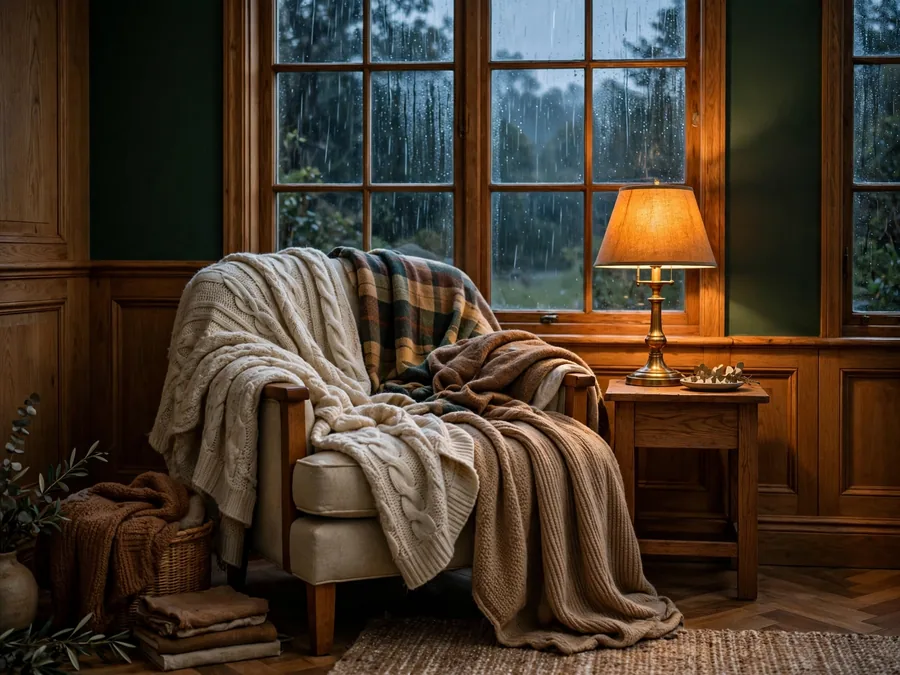
The ceiling light is on, the blanket is thin, and the rain against the window sounds like weather happening to somebody else. Most rooms fail at coziness in small, fixable ways: light that falls from overhead instead of pooling low, layers that look warm but trap no air, and nothing warm to hold. None of it needs new furniture. It needs attention paid to the senses, one at a time.
A real forest at dusk feels calm because everything arrives low and layered: light filtered through leaves, sound softened by damp ground, air that smells of pine and wet bark. Guides to the cozy forest look usually start with moody colour and furniture swaps, but the comfort underneath is smaller and more physical. Build one low pool of warm light, give your body real weight to rest under, and let scent and sound do the quiet work.
The 13 ideas below work in any room you already have, and most ask for things sitting in your cupboards right now: a spare sheet, a saucepan, a hot water bottle, the throw folded over the sofa arm. A few suggest one good purchase instead of three cheap ones. Start with whichever sense feels most neglected tonight.
The Cozy Forest Formula That Keeps Small Comforts Looking Deliberate, Not Cluttered
- Start at skin level: Build comfort from what touches you first — sheet, socks, blanket weight — before spending on anything you only look at.
- Keep light low and amber: Work in deep green, bark brown and warm gold at lamp height or below, the way dusk sits under a tree canopy.
- Answer the cold spot, not the room: Find where cold actually gets in — a window edge, a bare floor, a chilly bathroom — and fix that one place.
- Make every layer removable: Choose comforts you can carry, fold or switch off, so the room returns to normal in two minutes flat.
In practice, that looks like this: a moss-green cushion nest under the front window, a warm-white lamp glowing at knee height beside it, a heavy wool blanket across your legs, and the smell of a pine simmer pot drifting in from the kitchen.
| Idea | Best For | Key Material |
|---|---|---|
| One Low Lamp, One Pool of Light | Dark evenings | Amber bulb |
| Weight You Can Feel, Air You Can Breathe | Restless sleepers | Weighted blanket |
| A Cushion Nest Under the Rain Window | Rainy afternoons | Floor cushions |
| A Simmer Pot That Scents One Room | Grey weekends | Pine sprigs |
| Rain Sounds at Conversation Level | Racing minds | Small speaker |
| The Sheet That Saves the Wool Blanket | Sensitive skin | Cotton percale |
| A Lantern You Carry From Room to Room | Renters | Rechargeable lantern |
| Warm Feet on a Heated Pad | Cold floors | Heated foot pad |
| A Carafe That Keeps the Drink Hot | Slow readers | Insulated carafe |
| The Hot Water Bottle Goes In First | Cold beds | Rubber bottle |
| One Wood-Wick Candle for the Crackle | Quiet nights | Wood wick |
| A Warm Towel Waiting After the Bath | Chilly bathrooms | Thick cotton towel |
| The Grey-Daylight Nap | Rainy days off | Heavy blanket |
1. One Low Lamp, One Pool of Light
Switch off the ceiling light and put one lamp where you actually sit: on a low side table, a stool, or even the floor beside the chair. Fit it with a warm amber bulb and a shade that pushes light down and out at knee height instead of up at the ceiling. The circle it makes, about 4 feet across, becomes the room’s campfire. Everything inside it reads green, brown and gold; everything outside can stay in shadow. It flatters a carefully styled forest living room, but it works just as honestly in a plain rental bedroom.
The formula: low lamp + warm amber bulb + light pooled at sitting height.
2. Weight You Can Feel, Air You Can Breathe
A weighted blanket earns its keep in a bed or reading nest, where its job is pressure, not decoration. Choose one in deep green or bark brown, spread over legs and torso. Underneath, keep a duvet or wool throw: the weight settles you, the layers warm you. On a sofa, a 50×60 inch weighted throw does the same for one person. The honest catch is heat — in a warm room it can feel like too much by midnight.
Fit check: Aim for roughly a tenth of your body weight — about 15 pounds at 150 pounds — and test over your legs first: a firm hug, never a pin-down.

3. A Cushion Nest Under the Rain Window
Pick the window that catches the most rain and build the nest under it: two firm floor cushions, 24 inches square, one stood upright against the wall as a backrest, and finish with a heavy faux fur throw folded across the top — the West Elm throw at $119 has the weight and pile to stay put. Sit low, glass beside your shoulder, so rain runs down at eye level while you read. Keep the sill clear except for a mug.
Space note: You need about 3 feet of depth from the wall; with a radiator under the window, leave 6 inches of air behind the cushions.
4. A Simmer Pot That Scents One Room
A saucepan of water on the lowest heat — two pine or fir sprigs, the peel of one orange, a cinnamon stick, a few cloves — scents a room the way a path smells after rain. Keep it where you are sitting; a slow cooker on warm does the job without a flame. Top the water up every hour so it steams instead of boiling dry, and let it fade naturally rather than refreshing it all evening. The scent stays in one room — the point. It asks a little watching — its only real cost.
Best for: Grey weekend afternoons in any room where you’ll stay put an hour or more.
5. Rain Sounds at Conversation Level
Real rain is the ideal, but a recording through a small speaker does most of the work. Place the speaker near the window, not near your head, and set a steady rain track at a level you can talk over without raising your voice. The actual weather still comes through underneath it, so the room sounds deeper rather than fake. Skip the dramatic thunder tracks if they startle you; steady rain is the point, not the storm. Use the best small speaker you own; a phone speaker sounds thin.
Easy swap: Trade the rain track for a crackling-fire recording in deep winter, and the same corner turns from wet woods to hearthside.

6. The Sheet That Saves the Wool Blanket
Wool is the warmest blanket layer going, and the itchiest. The old fix still works: a smooth cotton percale sheet folded over the wool blanket’s top edge, so cotton touches your skin while the wool insulates one layer out. The sheet catches skin oils and sweat, so the wool needs washing far less often — a mercy, since wool hates washing. Pick sage or stone for the sheet, so the nest still reads forest rather than hospital. It adds one item to the laundry — the whole trade-off.
Texture note: Percale feels cool for the first minute, then warms through; flannel feels warm instantly but pills faster under heavy wool.
7. A Lantern You Carry From Room to Room
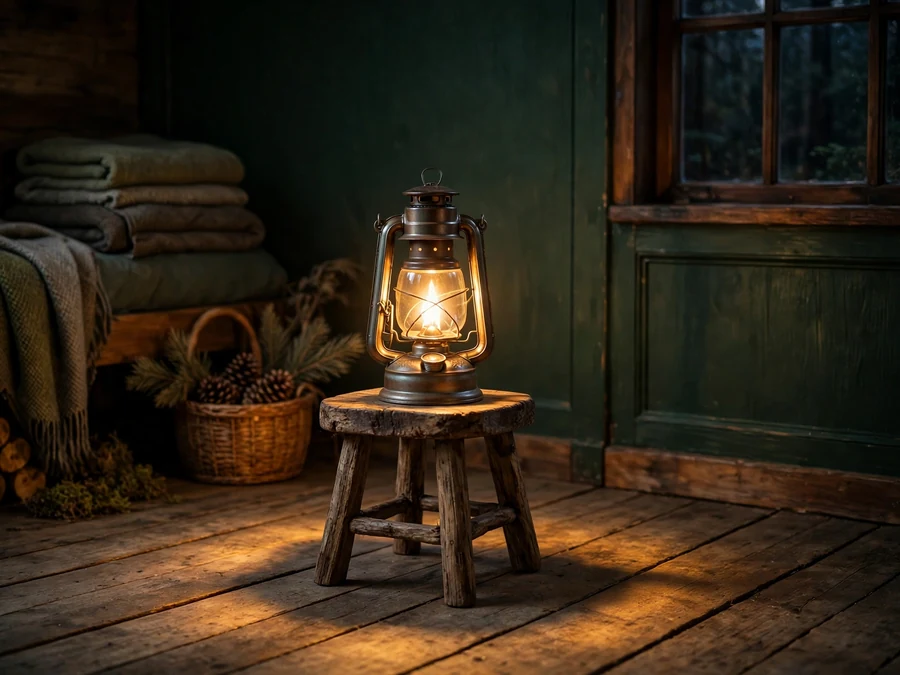
A rechargeable lantern with a warm, dimmable glow is comfort you can relocate. Set it on the bathroom counter during a bath, carry it down the hall at midnight, bring it back when you settle again. Look for a metal or glass body in black, brass or deep green, 8 to 10 inches tall, and charge it weekly by the door. You do not need a whole forest home scheme — one lantern gives any room the moving, firefly part of the effect, nothing wired or drilled.
Style note: A caged or smoked-glass shade softens the glare, so the light feels found rather than fitted.
| Layer (bottom to top) | Material | What It Does | Weight / Size Guide |
|---|---|---|---|
| Against the skin | Cotton percale sheet | Stops wool itch, washes easily | One flat sheet |
| Middle warmth | Wool or wool-blend blanket | Traps air, breathes with you | About 3–4 lb, throw size |
| Top weight | Weighted blanket or faux fur | Pressure that settles you | Roughly 10% of body weight |
| Weighted size check | Glass bead or cotton fill | Matches blanket to body | 120 lb → 12 lb; 150 lb → 15 lb; 200 lb → 20 lb |
| Feet only | Hot water bottle or heated pad | Targets the coldest point | 2-liter bottle |
8. Warm Feet on a Heated Pad
Cold feet will undo every other layer in this list. Slide a heated foot pad — the flat, fleece-covered under-desk kind — beneath the blanket at the foot of the bed or under your feet at the sofa, and run it on low for the first hour. Wear thick wool socks on bare feet, not over cotton socks, so warmth stays in without sweat. The pad warms one spot for very little electricity, though it does tether you to that seat.
Why it works:
- Warm feet tell the whole body the cold is handled
- Heat stays in the lowest, coldest layer of air
- One small appliance replaces a room of heating
9. A Carafe That Keeps the Drink Hot
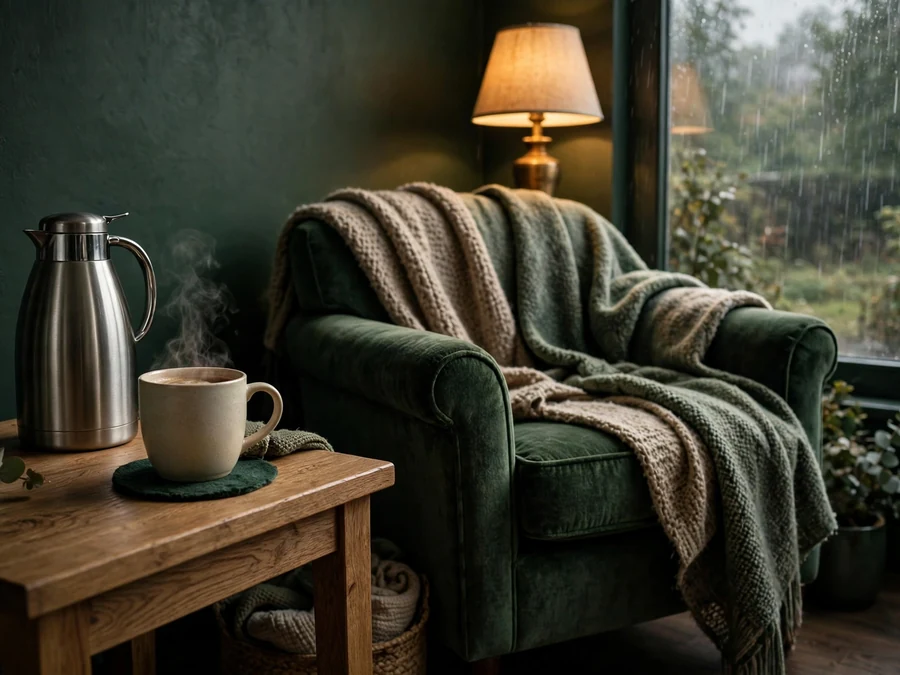
Tea made at the start of a chapter should not be cold by the end of it. Fill a 1-liter insulated carafe — steel, or glass in a cork or wood sleeve — and keep it on the side table, so refills never mean a trip to the kitchen. A small mug warmer under the cup holds last sips at drinking temperature. It is a tiny ceremony, and ceremonies make an evening feel chosen rather than collapsed into. Descaling now and then is its only upkeep.
Get the look:
- Main piece: 1-liter insulated carafe
- Supporting piece: mug warmer
- Texture or material: brushed steel, cork, ceramic
- Finishing touch: one deep-green linen coaster
10. The Hot Water Bottle Goes In First
Twenty minutes before you sit or sleep, fill a rubber hot water bottle just off the boil, wrap it in a wool cover, and tuck it into the nest or bed where your back or feet will land. You arrive at a spot already warm instead of spending the first half hour heating it with your own body. Once settled, move it to your lap or lower back. One rule: check the rubber for cracks each season, and never put your full weight on it.
Budget note: A covered bottle costs a few dollars and one kettle of water, yet can out-warm an electric blanket running all evening.
11. One Wood-Wick Candle for the Crackle
One candle, chosen for its sound. A wood-wick candle crackles as it burns, like a fire in miniature, and that small noise changes a silent room more than extra light. Set it on a heat-safe tray on the side table, in a cedar, pine or amber scent, and let it be the only flame; one is atmosphere, five is a shrine. Trim the wick to about 1/8 inch before lighting so it crackles instead of smoking. Never leave it burning in an empty room — blow it out when the evening ends.
Color note: Amber candlelight deepens greens, warms pale wood, and makes even plain cream blankets look richer.

12. A Warm Towel Waiting After the Bath
On a rainy evening, the coldest moment of the day is stepping out of a hot bath or shower. Ten minutes before, drape your towel — the thickest cotton one you own, in white, stone or moss — over a heated towel rail or a warm radiator. With neither, hang it on the bathroom door where shower steam reaches it. Wrap up warm first, dress second. A heated rail is a real expense; the radiator version costs nothing and works nearly as well.
Seasonal swap: In summer, swap the warmed towel for a damp flannel chilled in the fridge — the same small ritual, reversed for heat.
| Kit Piece | Where It Lives | Refresh When |
|---|---|---|
| Wool socks and slippers | Basket beside your seat | Air socks after each wear |
| Insulated carafe and favorite mug | Side table | Descale once a month |
| Simmer pot ingredients | Bowl on the kitchen counter | Fresh peel and sprigs each time |
| Rain playlist and small speaker | Window side of the room | Nothing — it just waits |
| Lantern, charged | Hook by the door | Charge once a week |
| Wood-wick candle and matches | Tray beside the nest | Trim wick to 1/8 inch before lighting |
13. The Grey-Daylight Nap
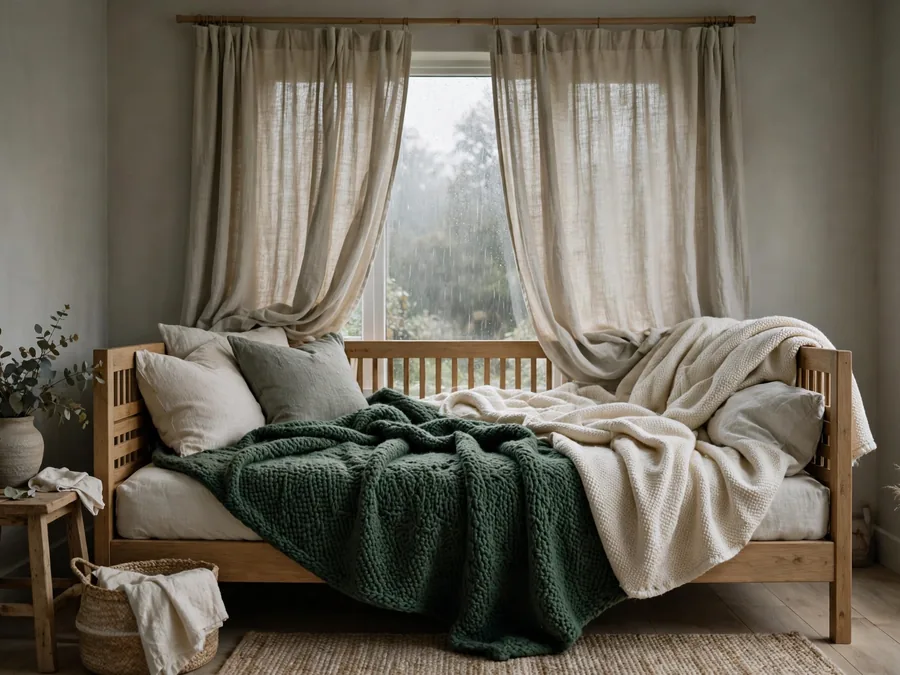
Some rainy afternoons are for sleeping through, and grey light is good at it. Close the curtains only halfway, so the room stays dim but not black, pull the heaviest blanket you own over a sofa or daybed, and keep the room on the cool side — a nap under real weight in cool air lasts longer than one in a warm fug. Set an alarm for about 40 minutes so you surface before the deep-sleep grogginess sets in. It is the one idea here that works because the weather is bad, which rather redeems the weather.
Best for: A day off when the rain starts before lunch and clearly plans to stay.
Keep One Corner Ready for the Next Grey Day
The trick to all of this is readiness. Comfort that has to be assembled from three rooms and a charger hunt rarely happens; comfort that lives in one basket, one tray and one charged lantern happens every wet evening without a decision. Pick the corner you already drift to — the same small kit that turns any spare corner into a forest room of your own — and give it the lamp, the layers and the carafe. The forest part was never really the green. It is the habit of making one small place feel sheltered on purpose.
Your one next step: Tonight, before you sit down, move one lamp low beside your favorite seat, put the kettle on for the carafe, and lay the heaviest blanket you own across that seat. Live with just that for one rainy evening, and notice which sense asks for help next.