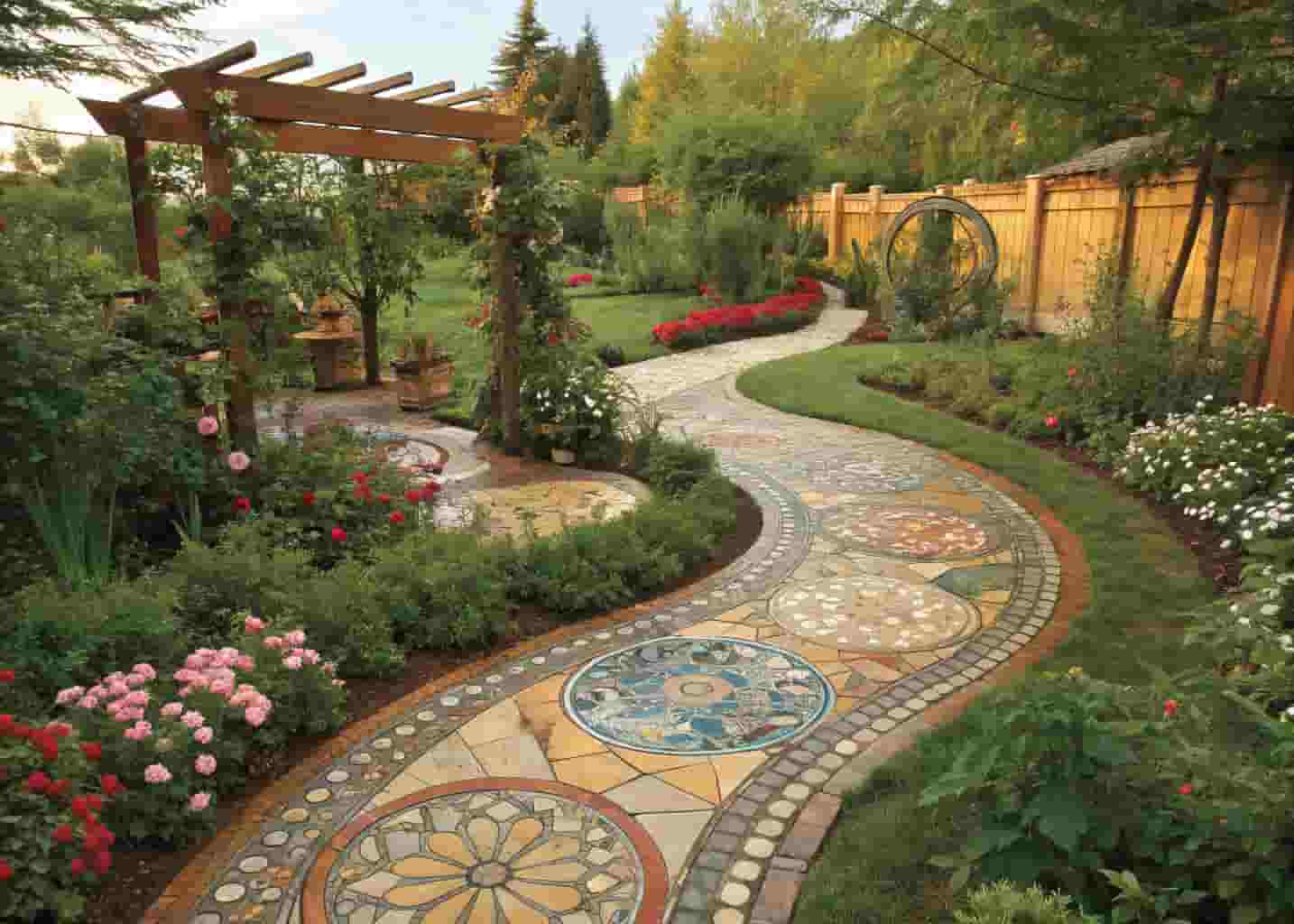
A Mosaic Garden Path is more than just a way to walk from one place to another. It sets the mood of your entire backyard. And when that path is made with mosaic tiles or broken pieces of colorful stone, it becomes something people stop and stare at. I remember seeing my neighbor’s backyard for the first time — she had laid a simple mosaic path using old broken plates and pebbles, and honestly, it looked like something out of a magazine. That moment made me fall in love with mosaic garden paths. If you’ve been thinking about giving your backyard a real upgrade, this article is going to give you 17 ideas that are creative, doable, and absolutely stunning.
Stepping Stone Mosaic Path
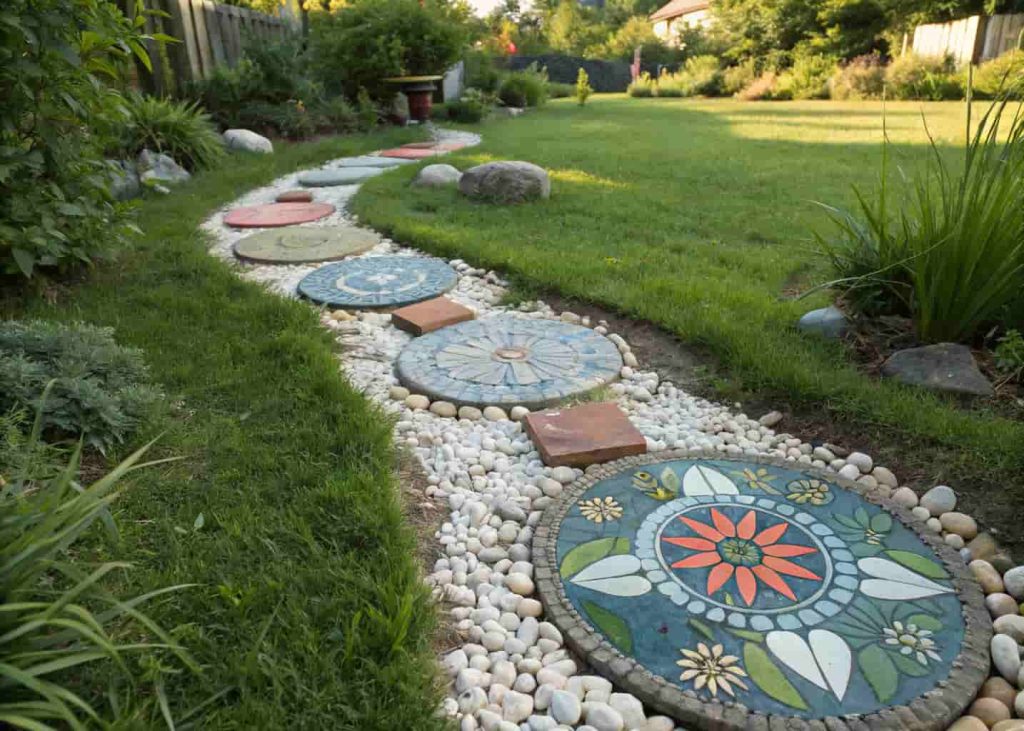
Stepping stone paths are one of the most classic and beginner-friendly ways to add mosaic art to your garden. You can buy plain concrete stepping stones and decorate them yourself using broken ceramic tiles, glass pieces, or colorful gravel. Each stone becomes its own little piece of art. Space them evenly through your garden, and surround them with ground cover plants or small pebbles to complete the look. The best part is you can do one stone at a time, which makes the whole project feel less overwhelming. Many families even turn this into a weekend activity where kids can help design their own stone. It is budget-friendly, fun, and the results are always unique.
Broken Plate Mosaic Walkway
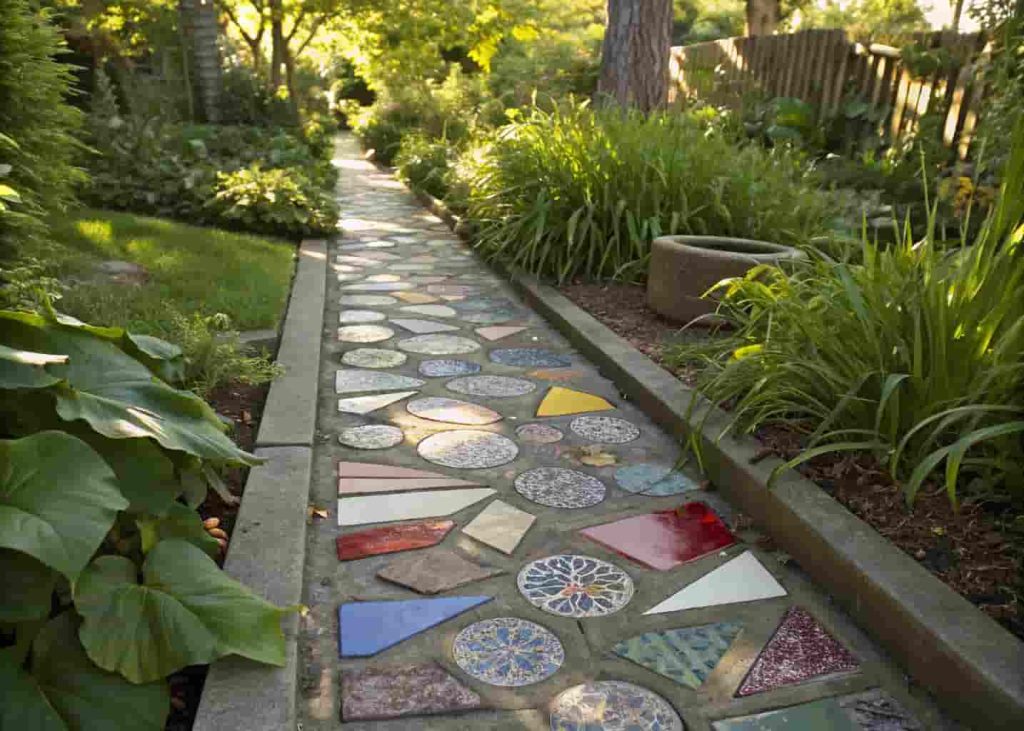
If you have old plates sitting in your kitchen that are chipped or cracked, do not throw them away. Those broken pieces can become the most beautiful garden path you have ever seen. This idea has been around for generations, and it works because the irregular shapes of broken ceramic create a natural, organic pattern that looks expensive but costs almost nothing. You simply embed the pieces into cement or mortar along your garden walkway, arranging them by color or randomly for a more eclectic feel. A woman I read about online used her grandmother’s old china plates for this project, and the result was both stunning and deeply personal. It turned a simple path into a memory.
Pebble Mosaic Garden Path
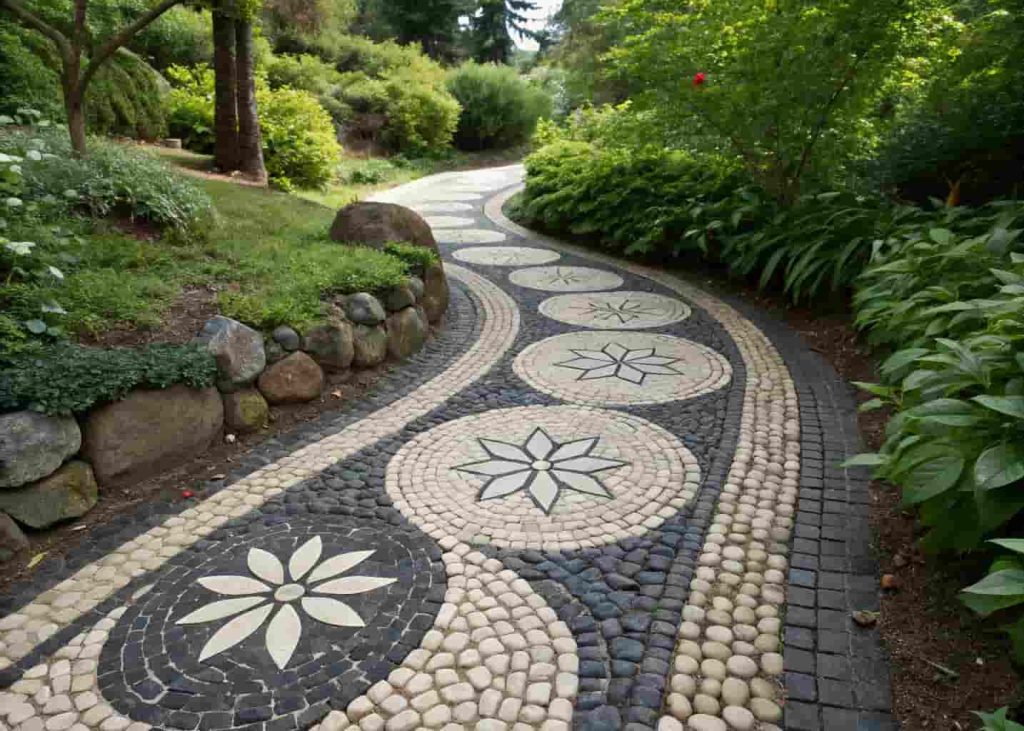
Pebble mosaic paths have a timeless, almost Mediterranean feel to them. You use small smooth river pebbles in different shades — white, black, grey, brown — and arrange them into patterns directly into wet mortar. You can create swirls, flowers, geometric shapes, or just random beautiful patterns. This style of path has been used in gardens across Europe and Asia for hundreds of years, and it still looks absolutely gorgeous today. The texture also adds a natural grip underfoot, which makes it practical as well as pretty. If you live somewhere that gets rain, a pebble mosaic path drains well and handles moisture much better than flat tiles. It truly combines function with beauty.
Colorful Glass Tile Mosaic Path
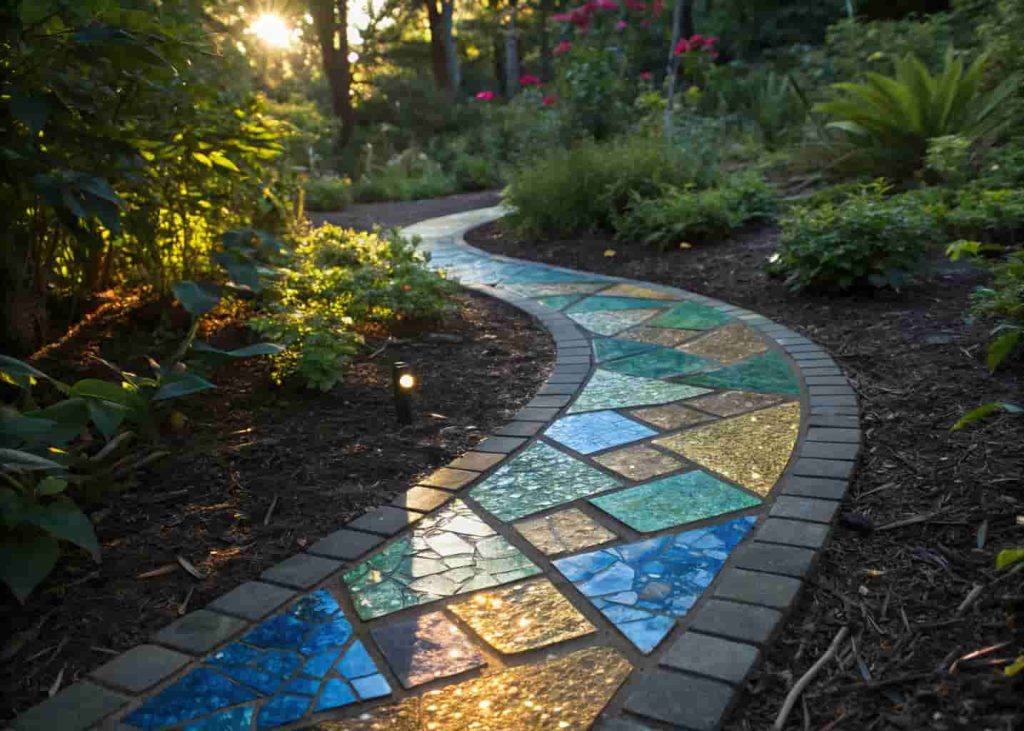
Glass tiles catch light in a way that no other material can. When the sun hits a glass tile mosaic path, it almost looks like the ground is sparkling. You can use glass tiles in deep blues, greens, reds, and golds to create a path that genuinely looks magical, especially in the late afternoon when the sunlight is low. This works best for shorter paths or decorative sections of a garden rather than long functional walkways, because glass can get slippery when wet. Use textured glass tiles for better grip. Pair the path with surrounding dark mulch or deep green plants, and the colors will really pop. It is one of those ideas that makes guests stop walking and actually look down at the ground in amazement.
Mandala Mosaic Centerpiece Path
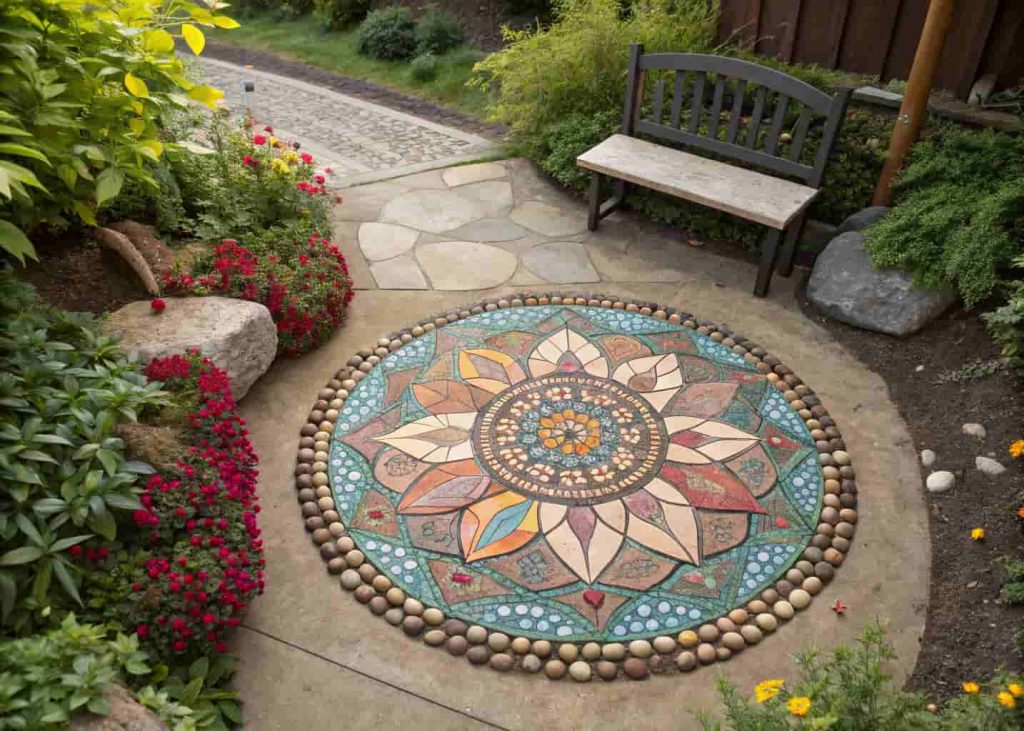
Instead of a straight path, imagine a circular mandala mosaic design set into the center of your garden or at the end of a walkway. This works as both a path feature and a focal point. You create the mandala using small tiles, pebbles, and glass pieces, building outward from a central design. It takes more planning than a simple path, but the result is breathtaking. People who visit your backyard will immediately be drawn to it. You can keep the colors earthy and natural, or go bold with deep purples, oranges, and golds. Place a garden bench nearby so people can sit and actually appreciate the detail up close. This idea is perfect for anyone who wants their garden to feel like an art gallery.
Recycled Bottle Bottom Path
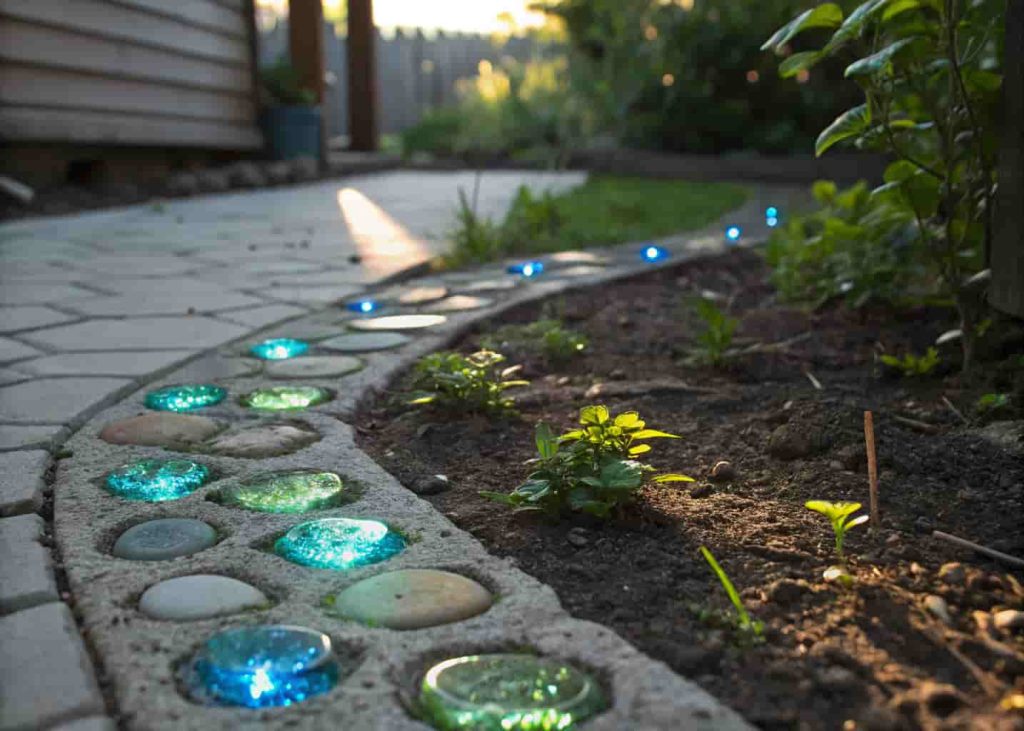
This one is creative and eco-friendly at the same time. The bottoms of glass bottles, when cut and embedded in mortar, create stunning jewel-like circles of color in a garden path. Blue wine bottles, green beer bottles, and clear glass all work beautifully. When sunlight passes through them, they glow like stained glass windows on the ground. It is honestly one of the most creative recycling projects you can do in your backyard. The trick is to cut the bottles safely and embed them deep enough so the surface stays level and safe to walk on. This path idea is a real conversation starter. Every single person who sees it for the first time asks the same question — wait, are those bottle bottoms?
Flagstone and Mosaic Combo Path
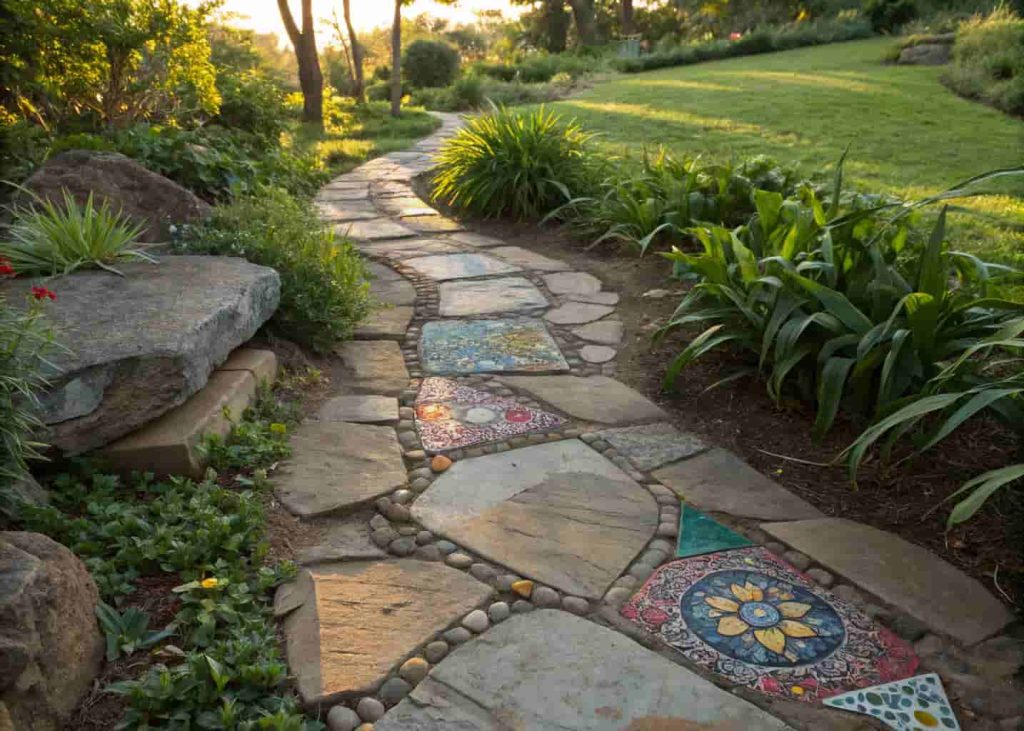
Flagstone paths are already popular in backyards, but when you fill the gaps between the large flat stones with colorful mosaic tile work, the whole thing gets elevated to a completely new level. The flagstones give the path structure and durability, while the mosaic pieces in between add personality and color. You can keep the mosaic sections subtle with natural tones, or go bold with bright contrasting colors. This combination also works well practically because the flagstones take most of the foot traffic while the mosaic sections are protected in the gaps. It is a great option for people who want a path that is both sturdy and beautiful. The contrast between the rough natural stone and the detailed mosaic creates a really satisfying visual balance.
Floral Pattern Mosaic Path
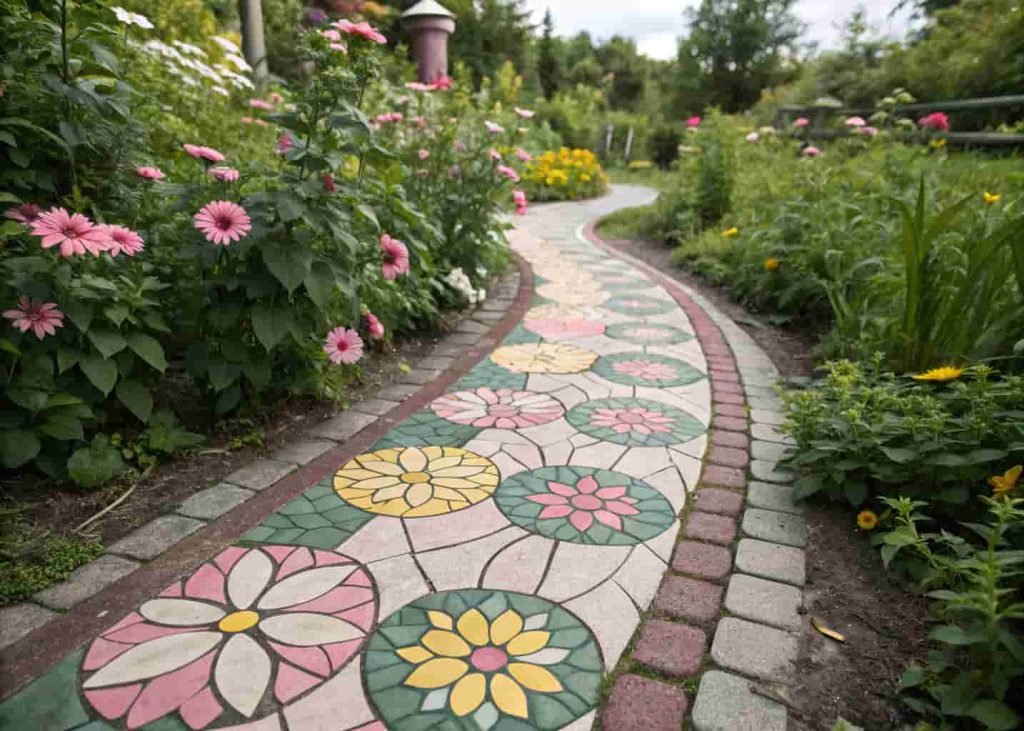
Flowers belong in a garden, and not just in the soil. A mosaic path with floral patterns brings that same beauty down to ground level. You can design simple daisy shapes, sunflowers, or roses using colored tiles and grout, repeating the pattern along the full length of the path. This works especially well in cottage-style or English garden designs where everything feels lush and blooming. The path essentially becomes an extension of the garden itself. Choose tile colors that match or complement the actual flowers growing nearby for a really cohesive look. Soft pinks, yellows, and greens tend to work best for a natural floral feel. It is the kind of detail that makes a backyard feel thoughtfully designed from every angle.
Black and White Geometric Mosaic Path
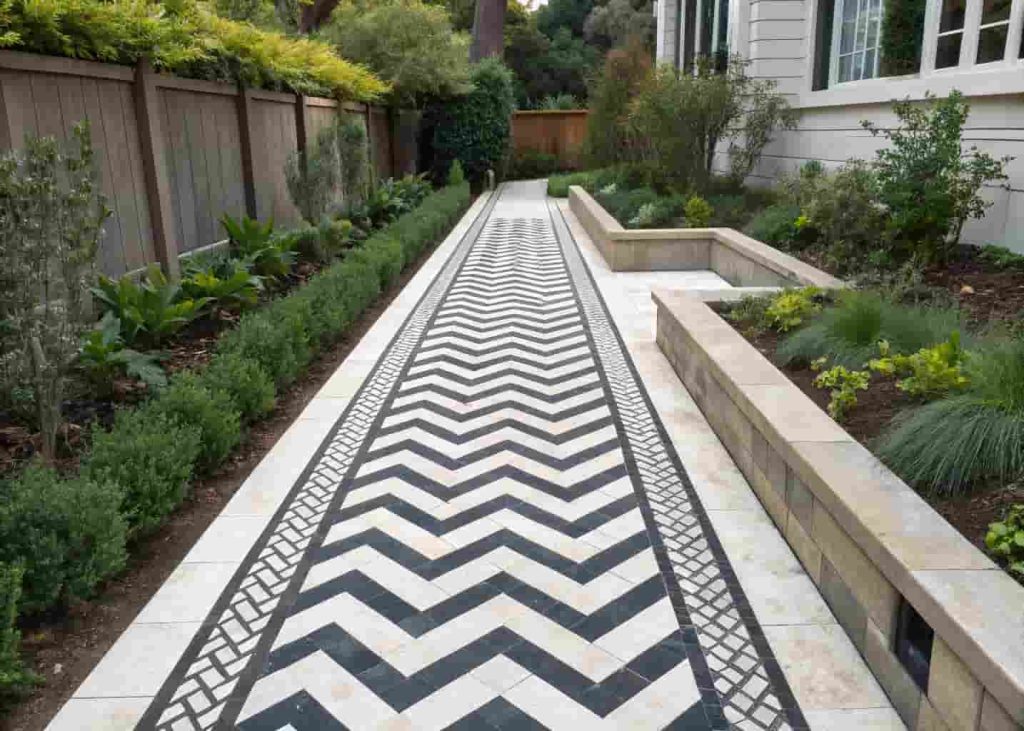
Sometimes simple is stunning. A black and white geometric mosaic path uses bold shapes — diamonds, chevrons, hexagons, or checkerboard patterns — to create something that looks sharp and sophisticated. This style works especially well in modern or minimalist gardens where the design is clean and intentional. The contrast between black and white is timeless, and it never goes out of style. You can use black slate pieces and white marble chips, or simple black and white ceramic tiles. Keep the surrounding garden elements simple so the path itself becomes the star. A few carefully placed potted plants or a clean stone border are all you need. This is the kind of path that looks like it belongs in a luxury home, even if you built it yourself on a weekend.
Woodland Creature Mosaic Path
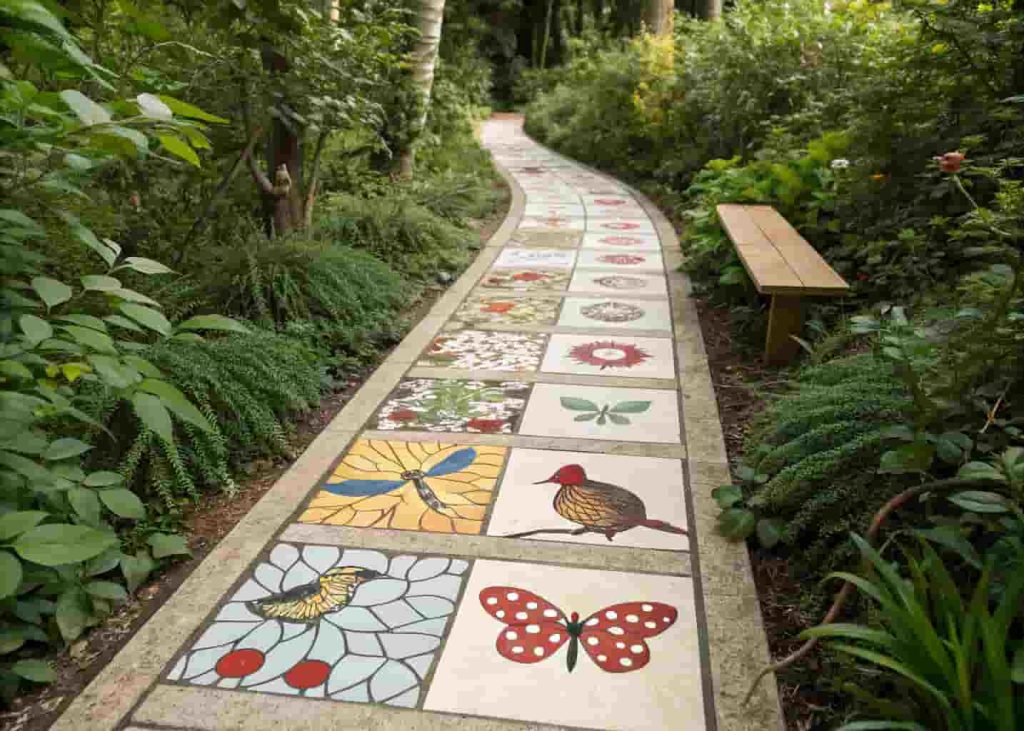
Imagine walking down your garden path and seeing little birds, butterflies, frogs, and mushrooms made from mosaic tiles embedded along the way. This idea is absolutely magical, especially in family gardens where kids spend time outside. Each creature can be placed at intervals along the path, like little surprises waiting to be discovered. You can use bright colors for a playful feel or more natural earthy tones for something that blends with the garden environment. This style requires a bit more artistic skill or planning, but you can find simple templates online and trace the shapes before filling them in with tile pieces. Children absolutely love this kind of path, and it makes the garden feel like a storybook world.
Mediterranean Blue Mosaic Path
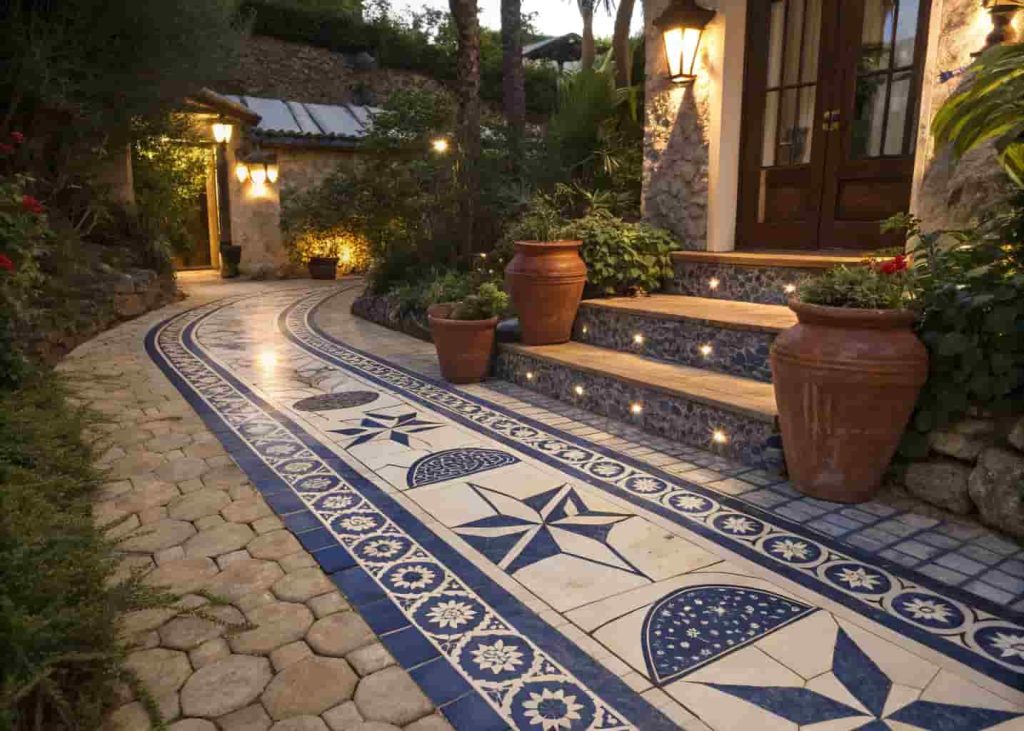
There is something about deep cobalt blue and white that instantly makes you feel like you are somewhere warm and beautiful — like the coast of Greece or southern Spain. A Mediterranean-style mosaic path uses these two colors in traditional patterns like stars, waves, and interlocking circles. It works beautifully in gardens with terracotta pots, olive trees, or lavender plants nearby. The style is bold but not overwhelming, and it creates a really strong sense of place in your backyard. If you have ever wanted your garden to feel like a vacation destination, this is the path idea for you. Pair it with a small outdoor dining set and some string lights, and your backyard will become the most relaxing spot you have ever owned.
Coin Mosaic Pathway
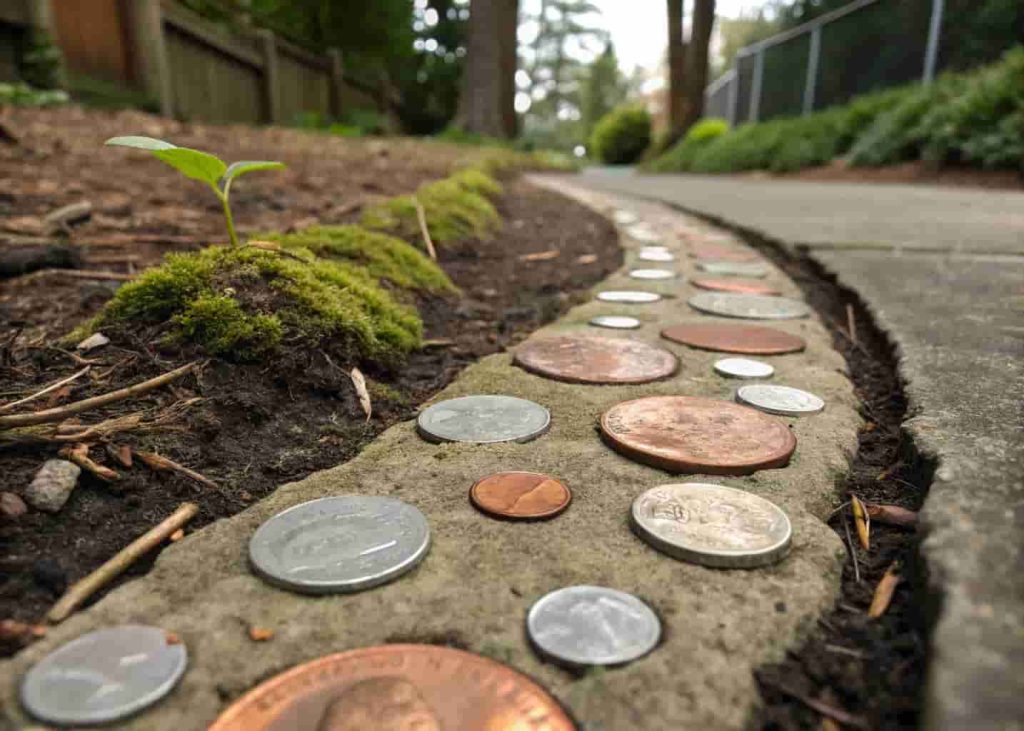
Old coins embedded in cement make for one of the most unique and eye-catching garden path ideas out there. You can use old pennies, foreign coins from travels, or a mix of different currencies to create a path that is literally paved with memories. Arrange them randomly for a scattered effect, or organize them by color — copper pennies in one section, silver coins in another — for a more structured look. Over time the coins develop a beautiful patina that actually makes them look even better outdoors. This is also a great way to use coins that have been sitting in a jar doing nothing. It is deeply personal, totally unique, and guaranteed to spark a conversation every single time someone walks through your garden.
Sunburst Mosaic Garden Entry Path
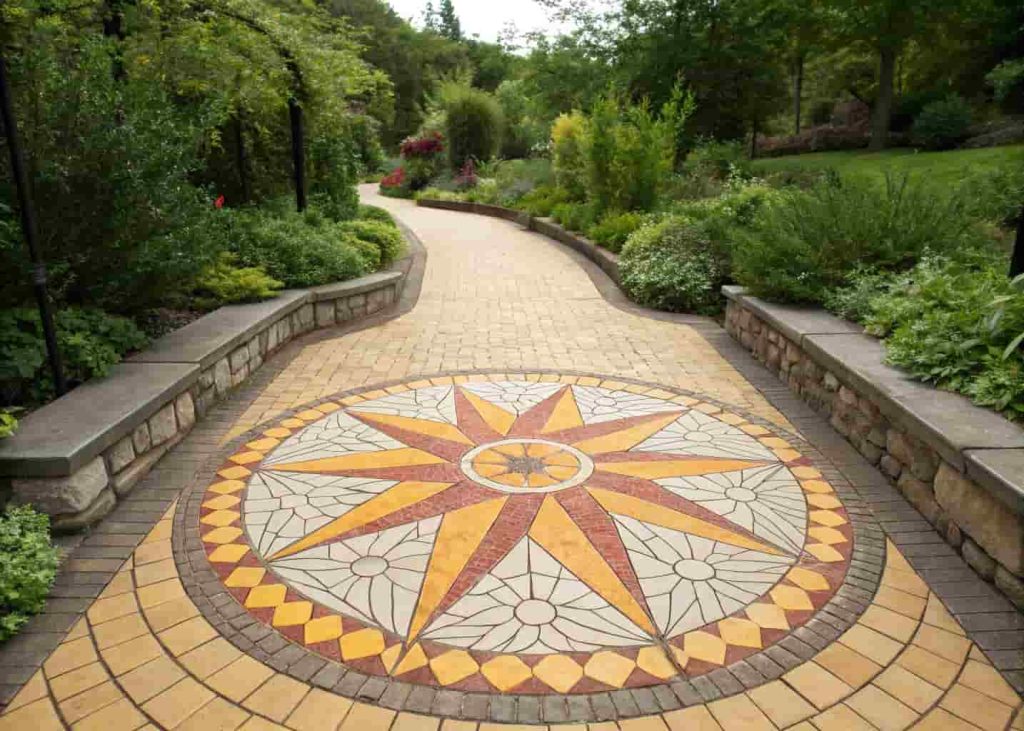
The entry to your garden deserves something special. A sunburst mosaic design — where tiles radiate outward from a central point like rays of the sun — creates a dramatic and welcoming focal point right at the entrance. You can use warm yellows, oranges, and golds for a true sunburst look, or go with cool blues and greens for something more subtle. This design works best as a circular or semicircular feature at the start of a garden path, almost like a welcome mat made of art. It immediately tells guests that this backyard was designed with care and creativity. Even a simple version of this design with basic tile pieces looks impressive because the radiating pattern draws the eye naturally and creates a real sense of energy.
Vintage Map Mosaic Path
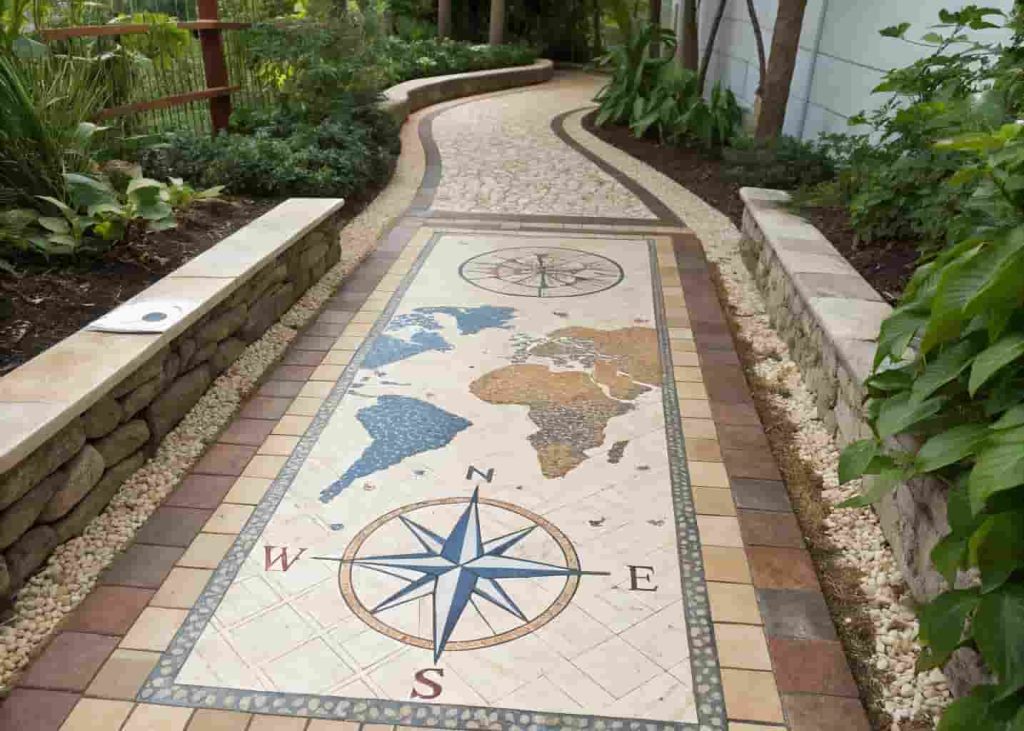
If you love travel or history, a vintage map mosaic path is one of the coolest things you can add to your garden. Using blue, beige, and brown tiles, you can recreate the look of an old world map or a nautical chart right on your garden floor. It takes planning and some artistic patience, but the finished result is unlike anything else. You can feature specific continents, countries you have visited, or just create a general antique map feel with decorative compass roses and wave patterns. This kind of path tells a story about who you are and what you love. It works especially well in larger garden spaces where you have room to spread the design out fully without it feeling cramped or rushed.
Rainbow Striped Mosaic Path
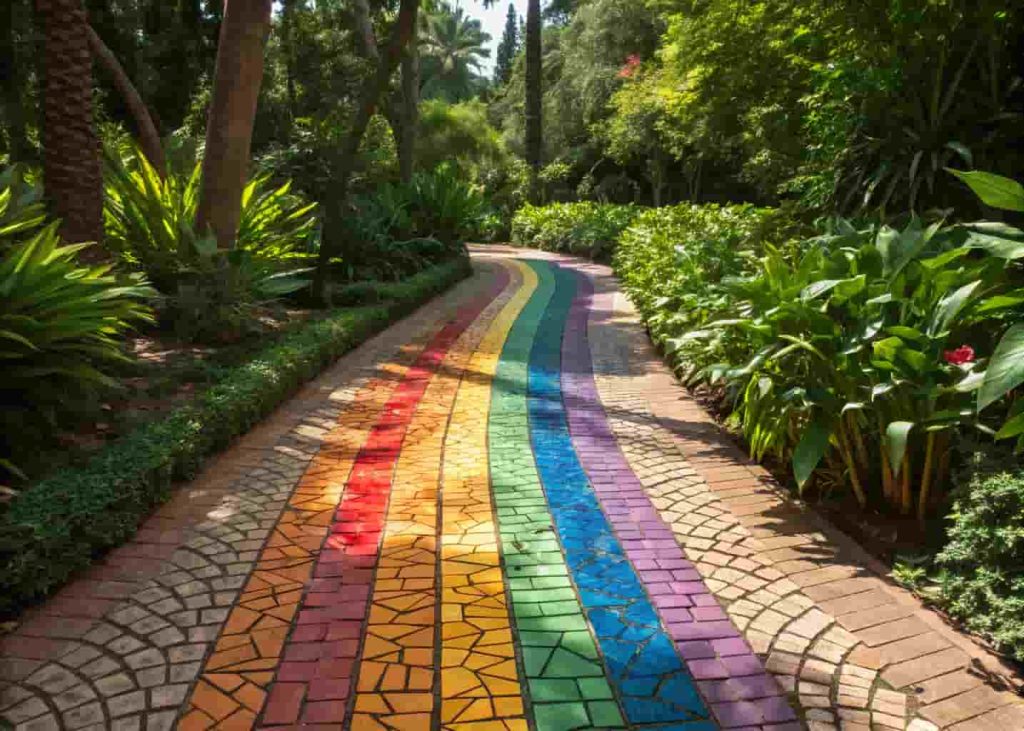
Bold, fun, and full of life — a rainbow striped mosaic path is exactly what it sounds like. Bands of red, orange, yellow, green, blue, and purple tiles run across the width of the path in repeating stripes. It is playful and energetic, making it perfect for family gardens, children’s play areas, or anyone who just wants their backyard to feel joyful and bright. This is one of the easiest mosaic path designs to plan because the pattern is straightforward — just follow the color order and keep your lines clean. Use grout in a neutral grey or white to let the colors stand out. The path looks incredible on a sunny day and adds instant cheerfulness to any outdoor space, no matter the size.
Leaf Imprint Mosaic Path
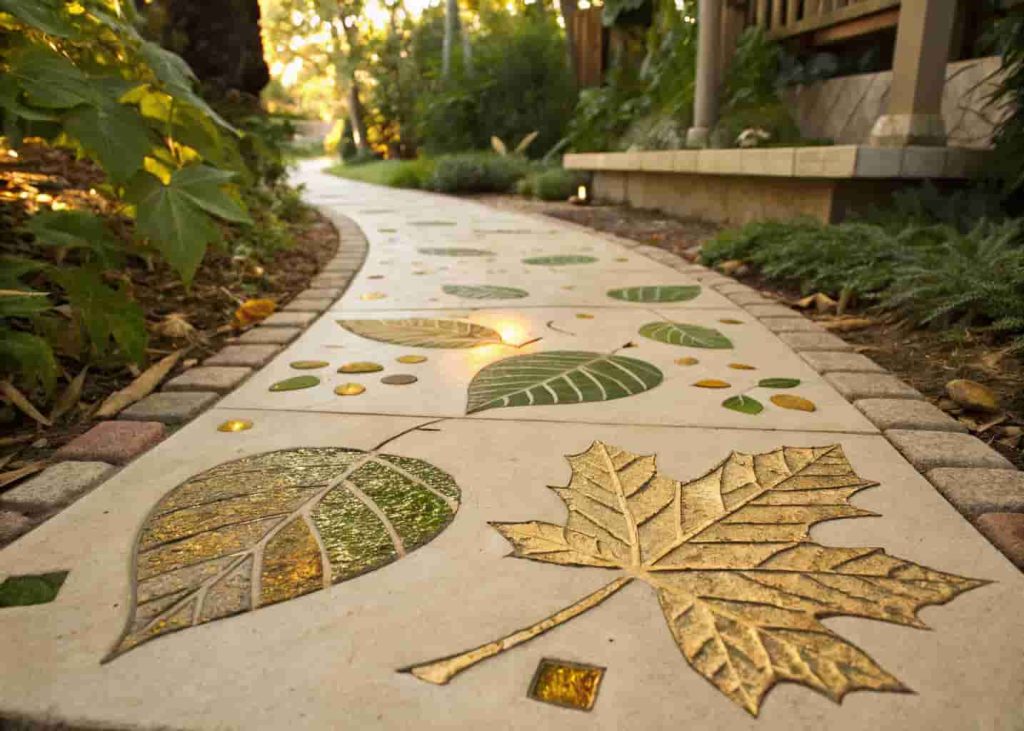
Nature is already full of beautiful patterns, so why not bring them directly into your path design? Leaf imprint mosaic paths use actual leaves pressed into wet cement to create natural impressions, which are then filled or highlighted with mosaic tile pieces and colored grout. The result is organic, earthy, and incredibly beautiful. Large tropical leaves, maple leaves, or fern fronds all create stunning impressions. You can leave the imprints plain or fill them with gold, copper, or green tile fragments to make them really stand out. This idea connects the path visually to the garden around it in a really natural way. It is also a wonderful project to do in autumn when interesting leaves are easy to find on the ground everywhere around you.
Conclusion
A mosaic garden path is one of the best investments you can make in your backyard. It does not have to be expensive or complicated. Whether you start with a single stepping stone or plan an entire walkway from scratch, every bit of mosaic work you add brings color, personality, and life to your outdoor space. The 17 ideas in this article cover everything from simple pebble designs to elaborate map-inspired masterpieces, so there is truly something here for every skill level and every budget. Pick the idea that excites you most and just start. Your dream backyard is one mosaic path away.