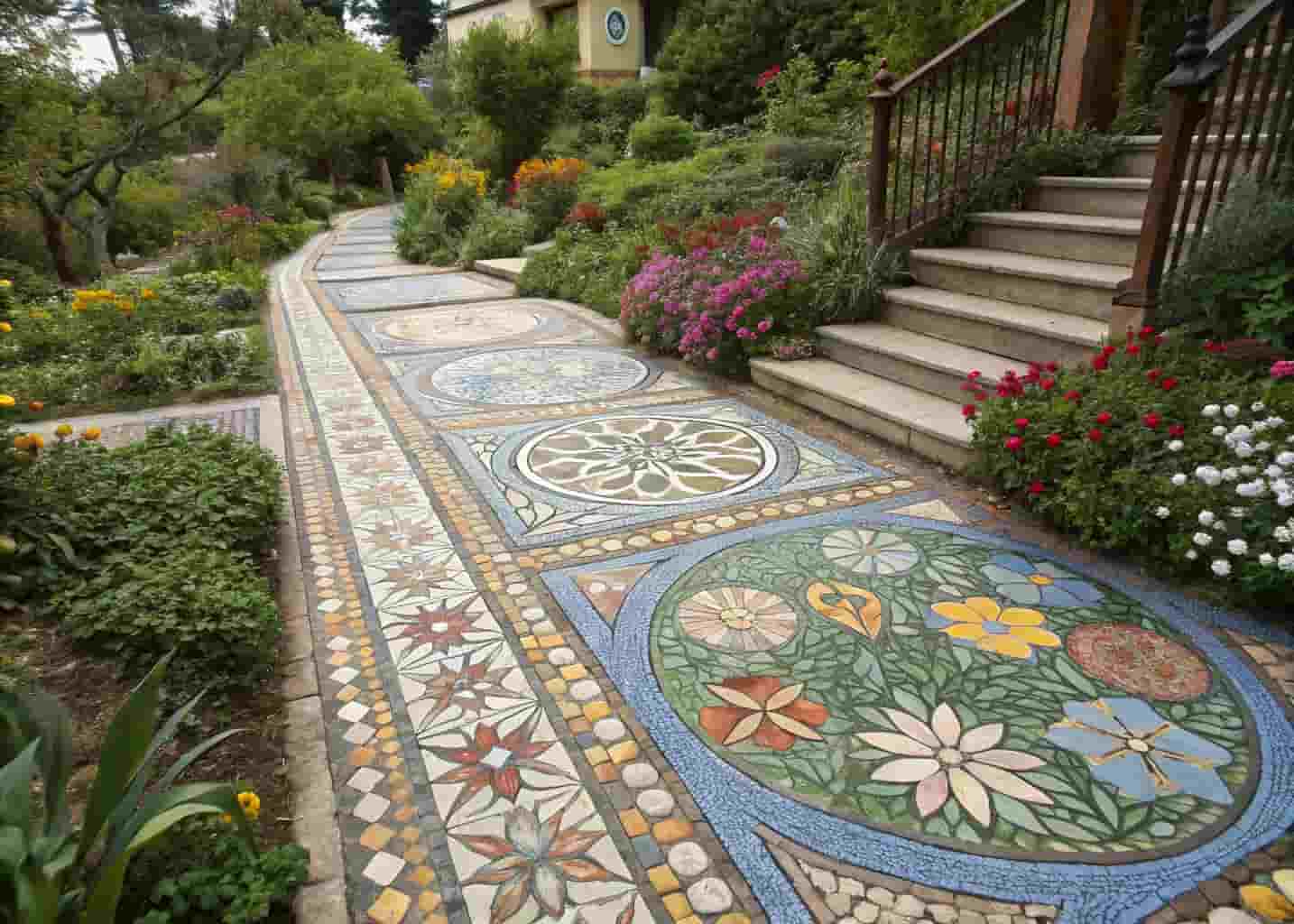
What Makes Mosaic Gardens So Special?
There is something magical about walking into a garden that has mosaic art in it. The colors catch the light, the patterns draw your eyes in, and suddenly your outdoor space feels like it belongs in a magazine. I remember visiting a neighbor’s backyard years ago and being completely stopped in my tracks by a simple mosaic stepping stone path she had made herself. It was not fancy or expensive. It was just colorful broken tiles arranged with care. But it made the whole garden feel alive. That is exactly what mosaic designs do — they add personality and warmth to any outdoor space, big or small. Whether you have a large garden or just a tiny balcony, there is always room for mosaic art.
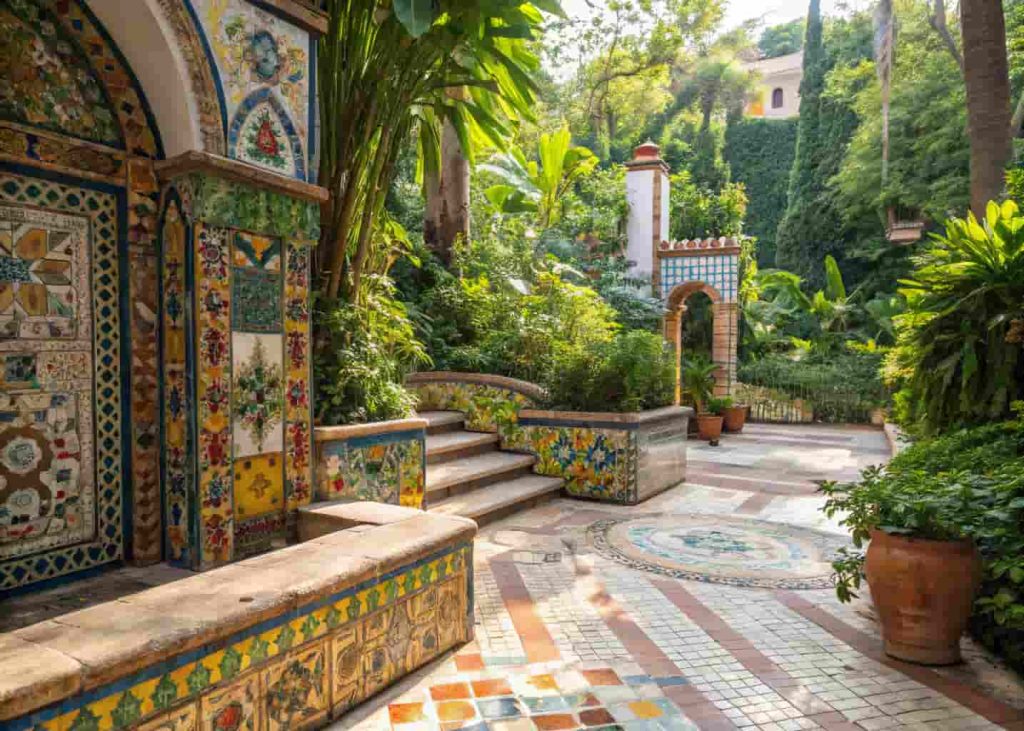
Mosaic Stepping Stone Pathways
One of the easiest ways to bring mosaic art into your garden is through stepping stone pathways. You lay down flat stones or concrete circles and decorate the top surface with broken tile pieces, glass, or even old china plates. The result is a walkway that feels like a piece of art under your feet. I have seen homeowners use their old kitchen tiles for this — tiles they were about to throw away — and the finished path looked absolutely stunning. The trick is to keep the grout lines clean and seal everything properly so the design lasts through rain and sun. You can go with a simple floral pattern, a geometric design, or even mix colors randomly for a fun, boho look that suits casual garden styles.
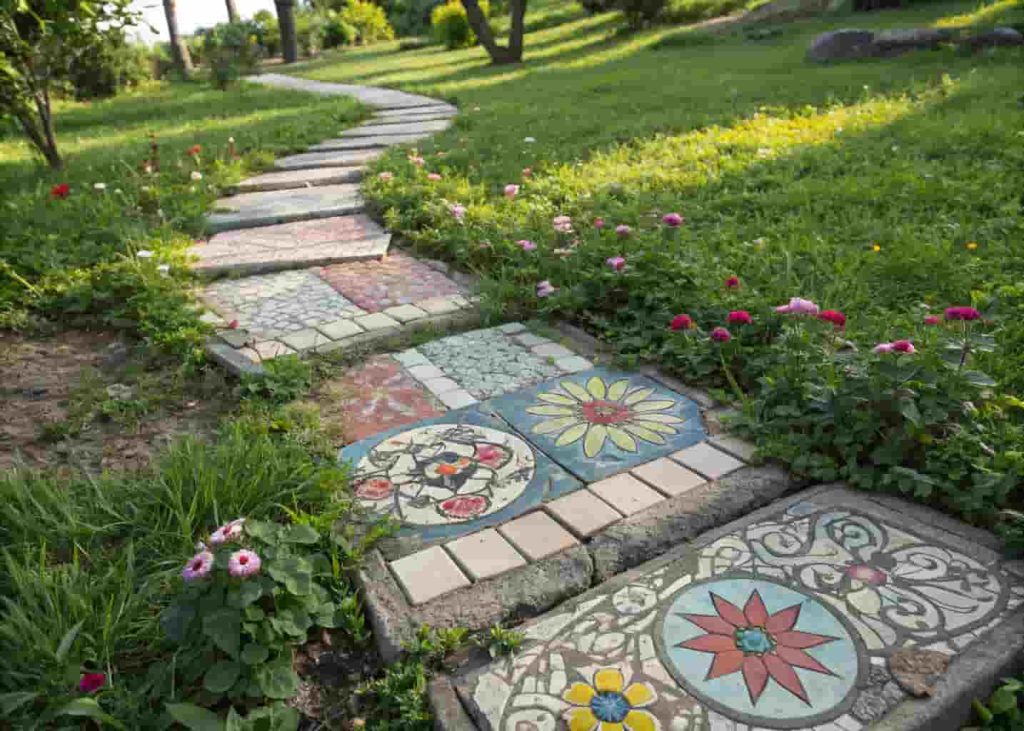
Mosaic Garden Wall Art
Blank garden walls are a missed opportunity. A mosaic mural on an exterior wall can completely transform how your outdoor space feels. Think of it like hanging a painting, except this one never fades, never gets ruined by rain, and only looks better as the years go by. You can commission a local artist or even do it yourself with a bag of tile adhesive and some broken ceramics from a thrift store. Popular designs include sunflowers, peacocks, abstract waves, and geometric shapes. One family I read about covered their entire back garden wall with a blue and green ocean scene mosaic. Their kids helped place the tiles. Now it is not just wall art — it is a family memory that greets them every morning.
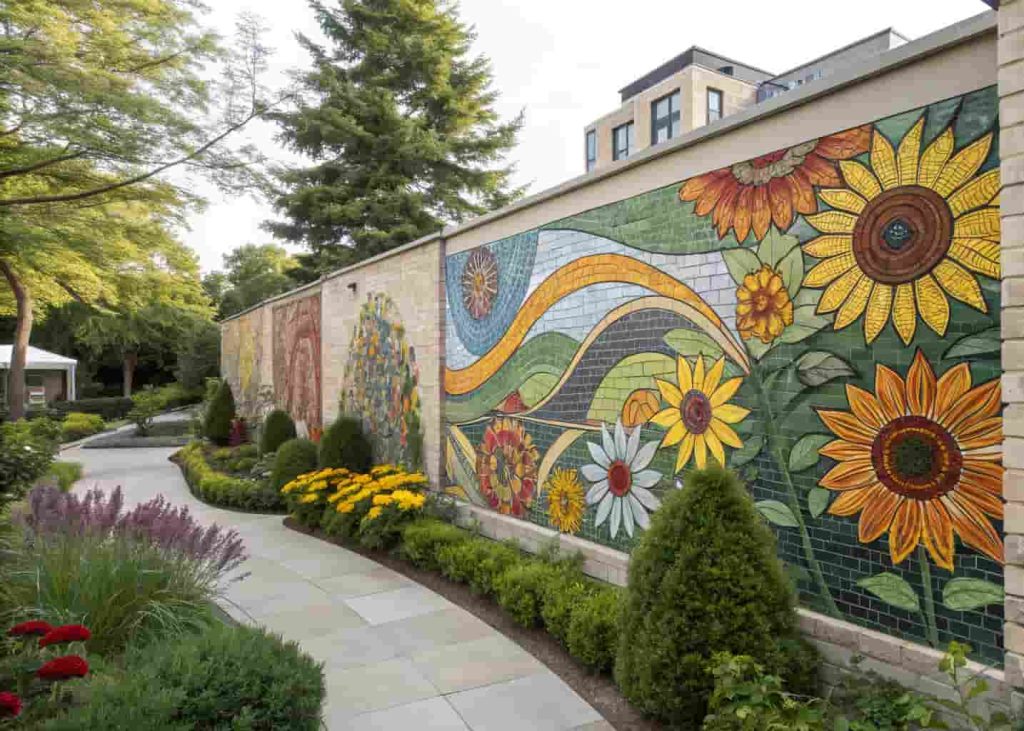
Mosaic Garden Planters and Flower Pots
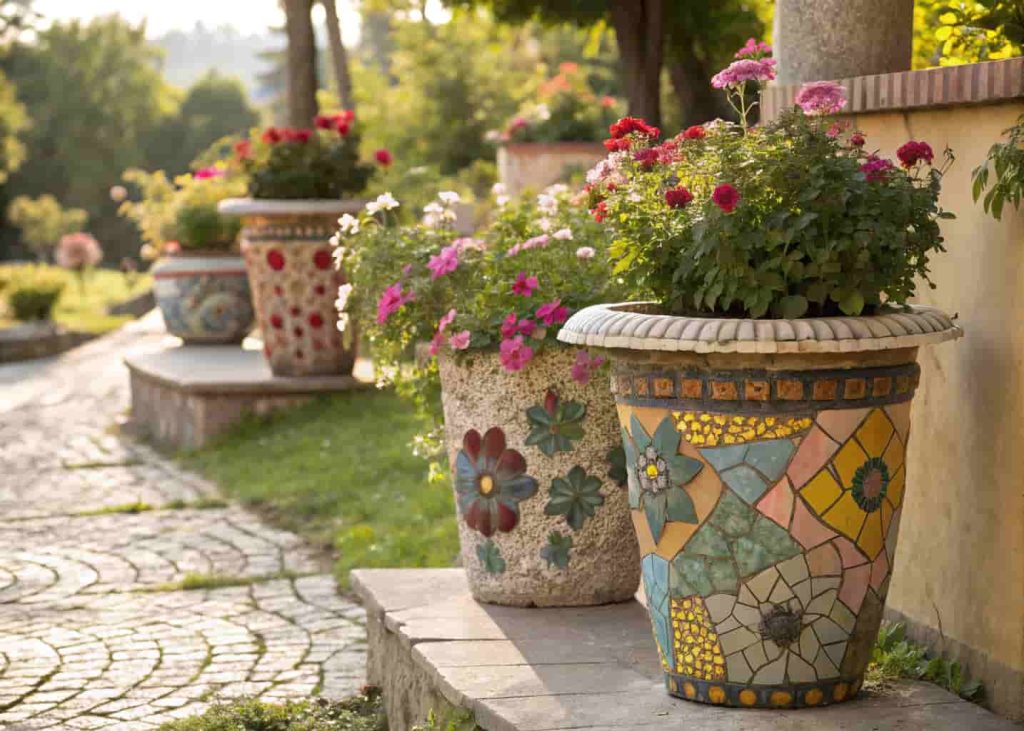
Plain terracotta pots are fine, but a mosaic-covered planter is something else entirely. Covering your garden pots with mosaic tile work is one of the most beginner-friendly projects you can try. All you need is a plain pot, tile adhesive, broken ceramic or mirror pieces, and grout. The whole thing can be done in an afternoon. When you place these decorated pots around your garden — filled with bright flowers or trailing vines — the combination of the mosaic and the plant life creates a look that feels expensive and curated. You can match the colors of your tiles to the flowers inside the pot for a really polished result. Or go completely wild with clashing colors if your garden style is more relaxed and eclectic. Either way, it works beautifully.
Mosaic Bird Baths
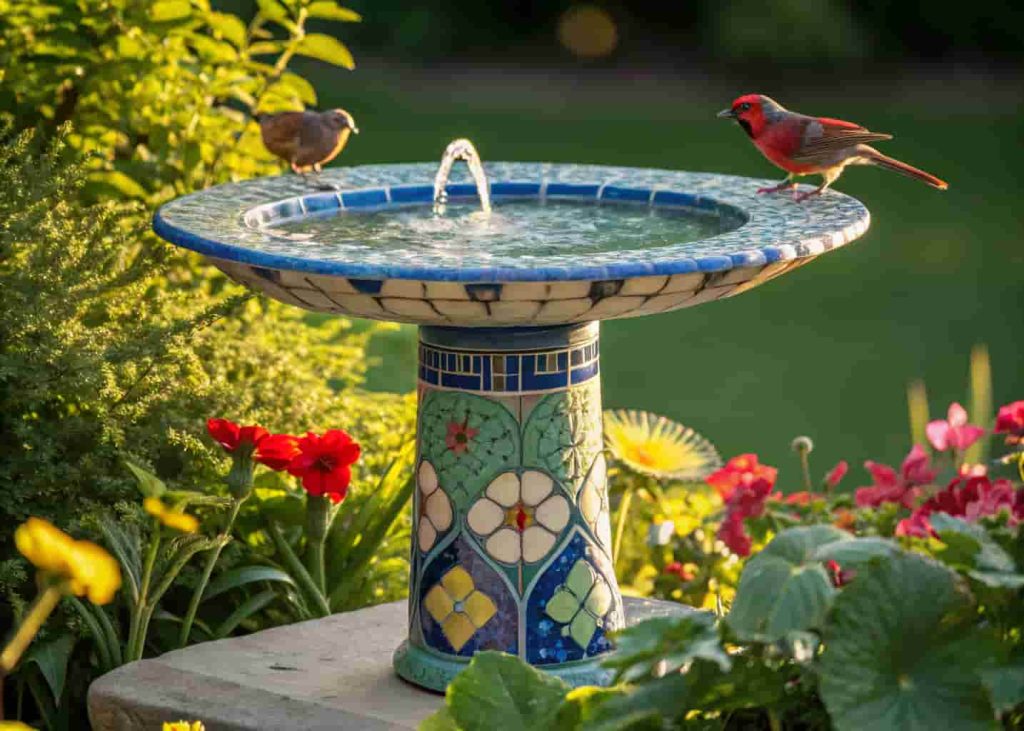
A bird bath is already a lovely garden feature. Add mosaic tile work to it and it becomes a true centerpiece. Mosaic bird baths catch sunlight in a way that plain ones simply cannot. The tiles reflect and shimmer, and when birds actually come to splash around in the water, the whole scene looks like something out of a storybook. You can find plain concrete bird bath bases at most garden centers for very little money. Then it is just a matter of applying your tile work to the outside and the rim. Blues and greens work beautifully for a water theme. Some gardeners add small mirror pieces to the design so the light bounces off in different directions throughout the day. It is the kind of detail that makes people stop and look twice when they visit your garden.
Mosaic Garden Benches
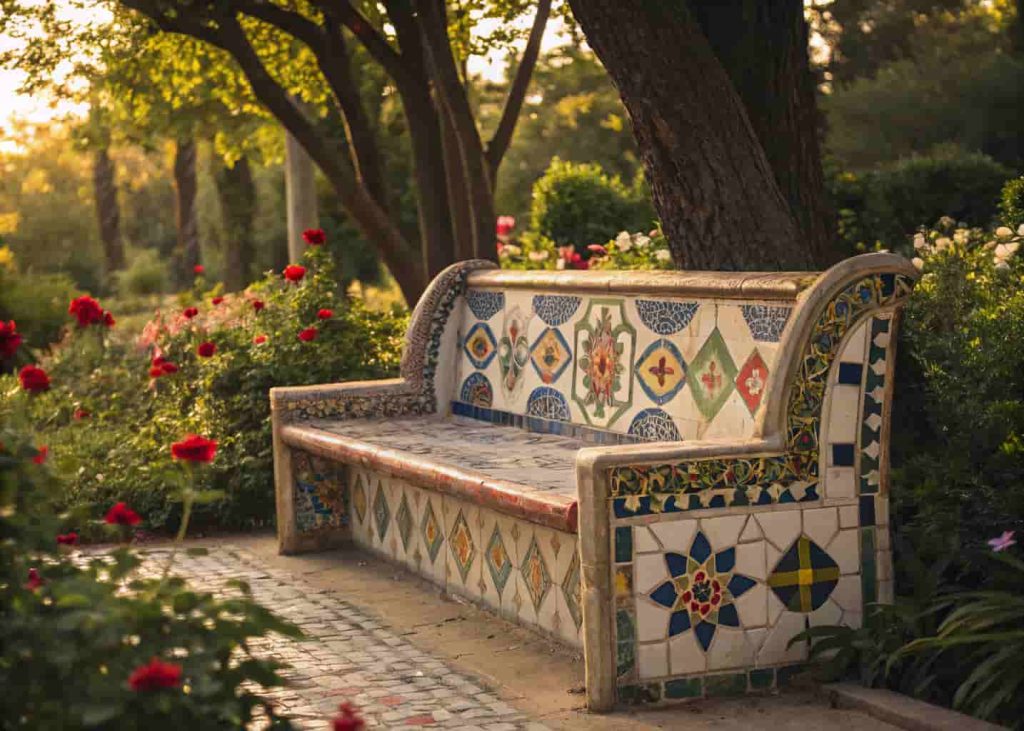
Imagine sitting on a garden bench that is itself a work of art. Mosaic benches are incredibly popular in Mediterranean-style gardens, and for very good reason. They add color, character, and a sense of place to any seating area. You can buy a plain concrete bench and decorate it yourself, or look for artisan-made mosaic benches if budget allows. The seat surface should use smooth, rounded tile pieces so it is comfortable to sit on — that is something beginners sometimes forget. The sides and legs are where you can go more creative with raised or irregular pieces. I once saw a mosaic bench in a public garden in Spain that had been made by local schoolchildren using hand-painted tiles. Every tile told a small story. It made sitting there feel like reading a book with your eyes.
Mosaic Water Features and Fountains
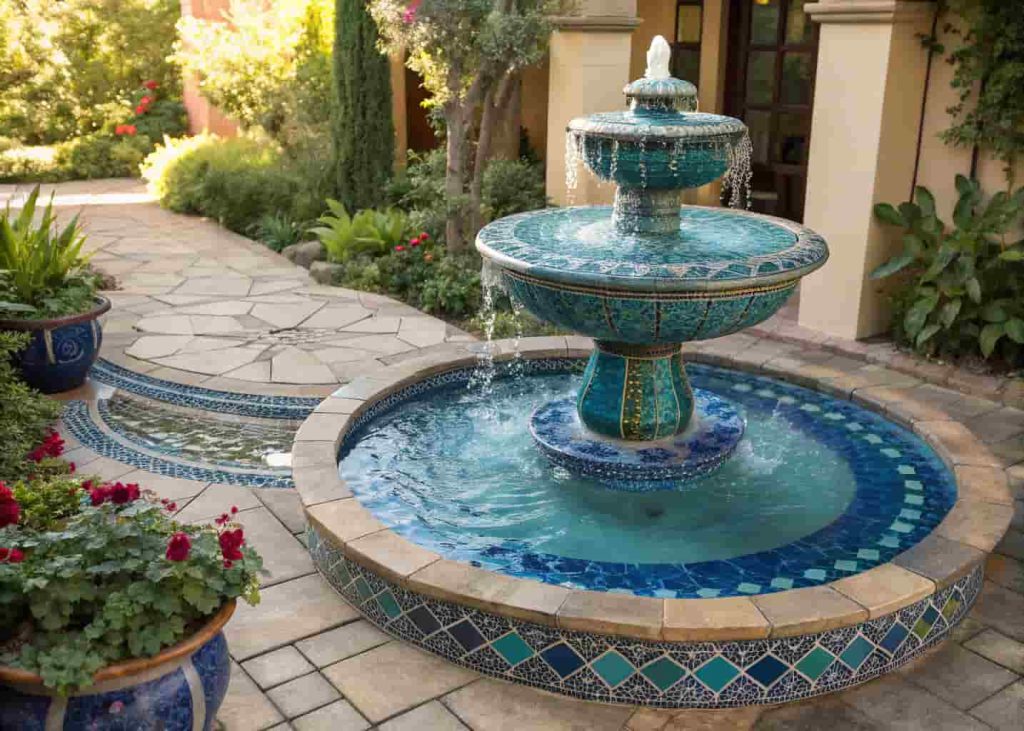
Water and mosaic tiles are a match made in heaven. The movement of water over a mosaic surface creates a constantly shifting pattern of light and color that is almost hypnotic. Garden fountains, small water walls, and even simple water bowls can be given a mosaic treatment to make them truly spectacular. The tiles used for water features need to be rated for wet conditions — glass tiles and vitreous mosaic tiles are the best choices here because they do not absorb water and will not crack in winter. Blues, aquas, turquoise, and silver work especially well because they reinforce the feeling of water even when the fountain is switched off. If you have a small garden, a compact mosaic wall fountain takes up almost no floor space but adds enormous visual impact.
Mosaic Patio Floor Designs
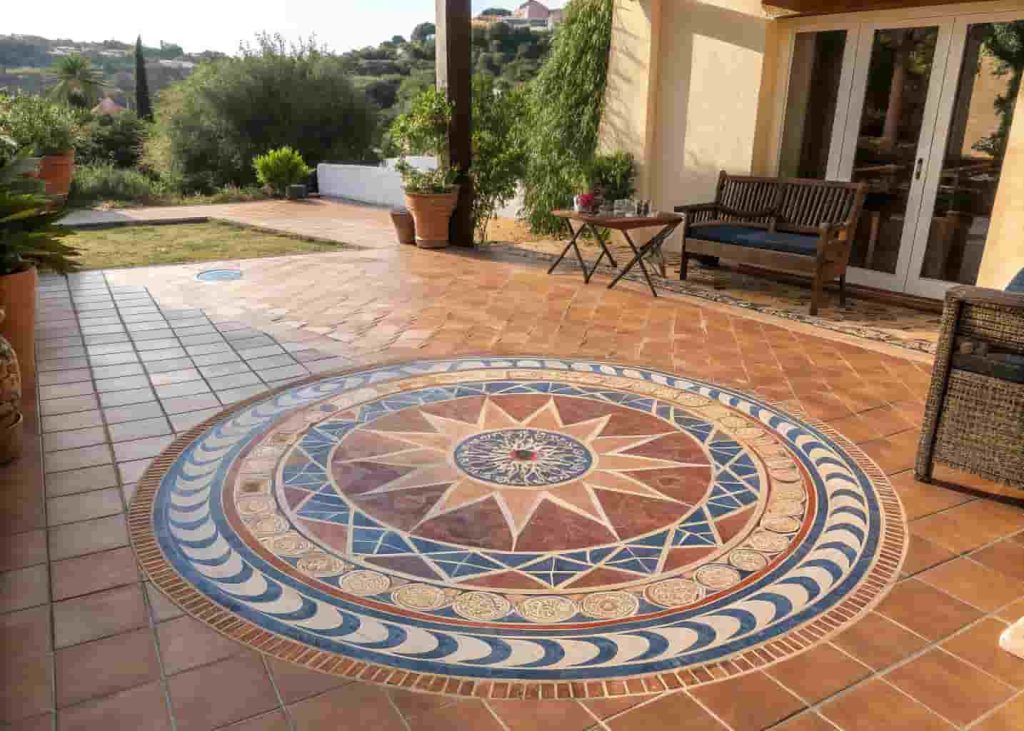
Turning your patio floor into a mosaic canvas is one of the most dramatic things you can do to an outdoor space. It sounds like a big project and yes, it does take some planning, but the payoff is extraordinary. A patio with a central mosaic medallion or a decorative mosaic border looks like something from a luxury villa. You do not have to tile the whole floor. Even a single focal point mosaic in the center of a plain stone or concrete patio changes the entire energy of the space. Many homeowners choose a mandala, compass rose, or floral burst design for the center. The surrounding patio stays simple so the mosaic gets all the attention. This works especially well for outdoor dining areas where people are sitting and have time to appreciate the detail beneath their feet.
Mosaic Raised Garden Beds
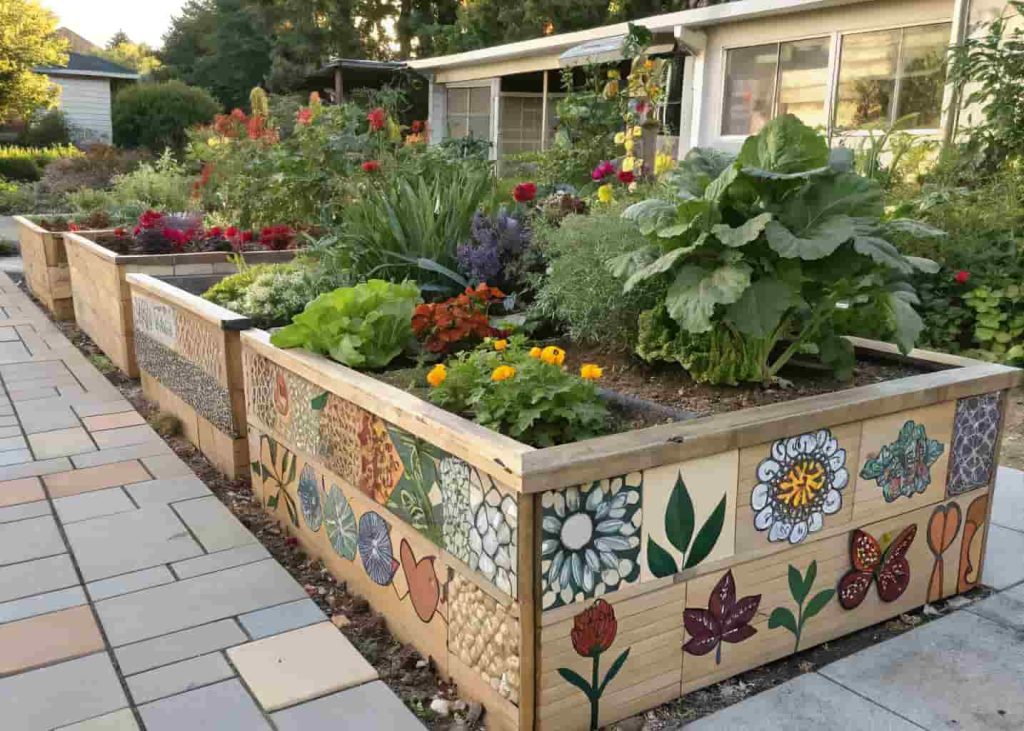
Raised garden beds are practical and common, but they do not always look beautiful. Applying mosaic tile work to the exterior walls of a raised bed is a creative way to make something functional also become decorative. You can use broken ceramic tiles, glass pieces, or even pebbles embedded in mortar to create patterns on the outside faces of the raised bed. Since the plants growing inside draw the eye upward, the mosaic on the sides acts as a beautiful frame. Geometric border patterns, vine designs, and repeating color blocks all work well on the long flat surfaces of a raised bed. This is also a great project to involve kids in since the stakes are low — if a tile piece is not perfectly placed, nobody will notice once the plants are growing tall and bushy above.
Mosaic Outdoor Table Tops
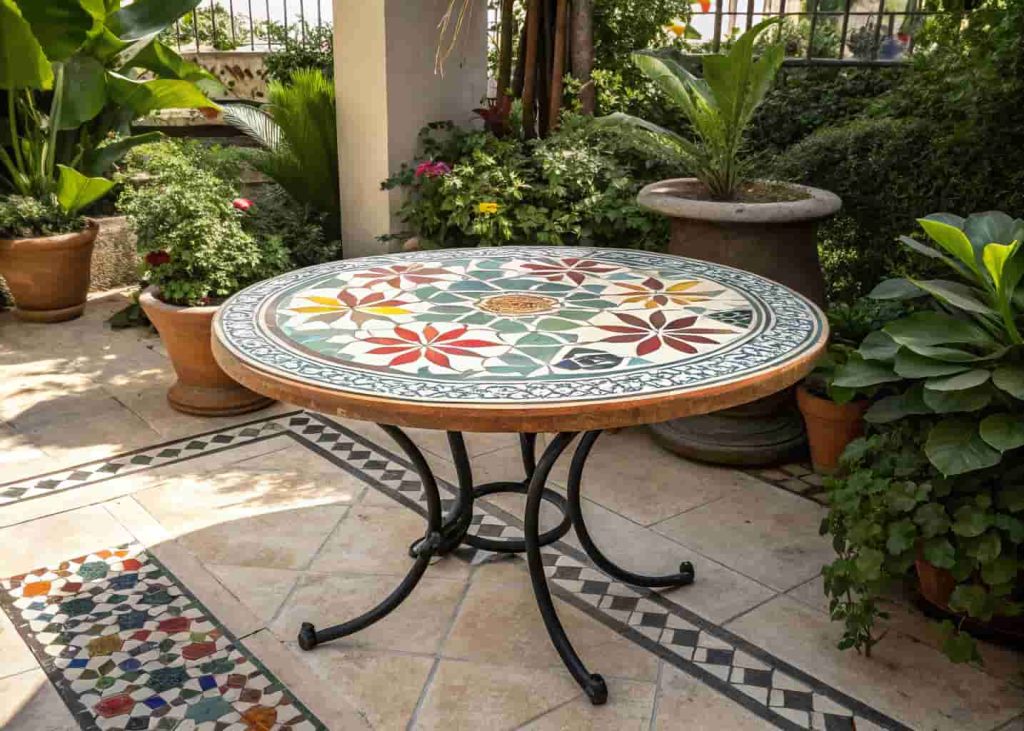
An outdoor dining or coffee table with a mosaic top is both beautiful and practical. Mosaic surfaces are naturally durable, weather-resistant, and easy to clean with a damp cloth. You can buy an old metal or wooden table frame from a secondhand shop and create your own mosaic top for very little cost. The key is to use outdoor-rated tile adhesive and grout and to seal the finished surface properly. Design choices are endless — you might go for a Moroccan-inspired geometric pattern, a bold sunburst in the center, or a simple border of small colored tiles around a plain central field. Once it is done and sealed, this table will outlast almost any other outdoor furniture you own. Rain, sun, cold — mosaic surfaces simply do not care.
Mosaic Tree Surrounds and Garden Borders
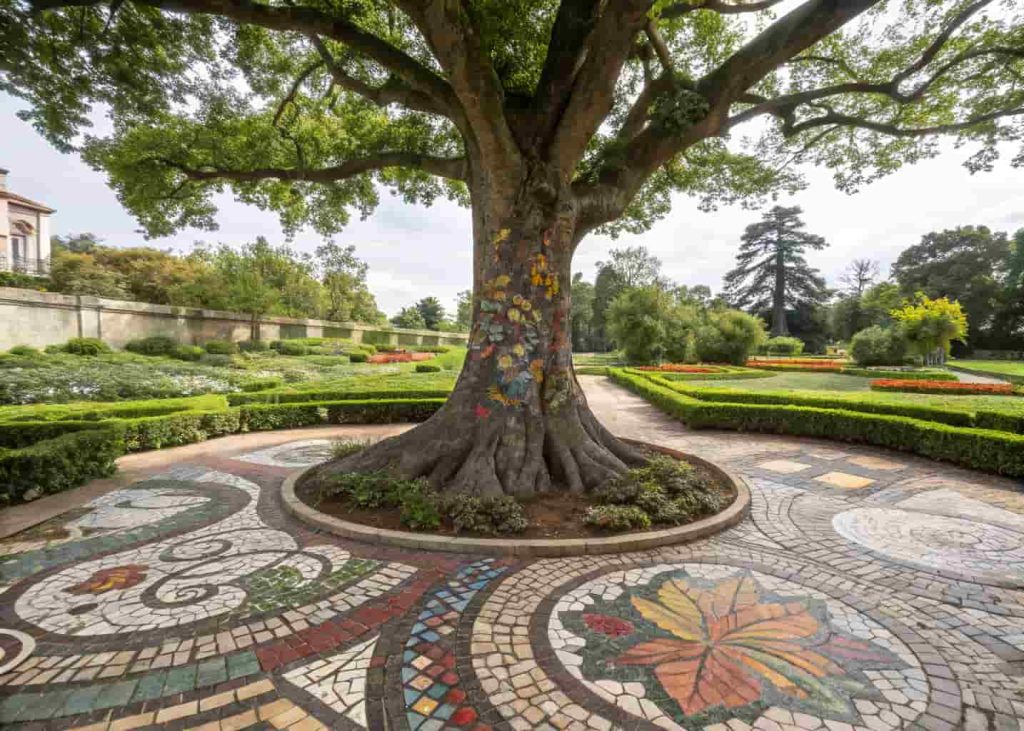
The base of a large garden tree is usually just a circle of bare soil or mulch. But wrapping that tree base with a mosaic tile surround turns it into a stunning focal point. You create a low circular border using concrete or brick, then tile the inner and outer surfaces with mosaic work. The design can echo the shapes of leaves or roots, or go fully abstract with bold colors that contrast against the tree bark. Garden borders — the low edging that separates beds from pathways — can also get the mosaic treatment. Even a simple repeating pattern of blue and white tiles along a garden border edge gives the whole space a more finished, intentional look. These small details are what separate a pretty garden from a truly memorable one.
Mosaic Garden Signs and House Number Plaques
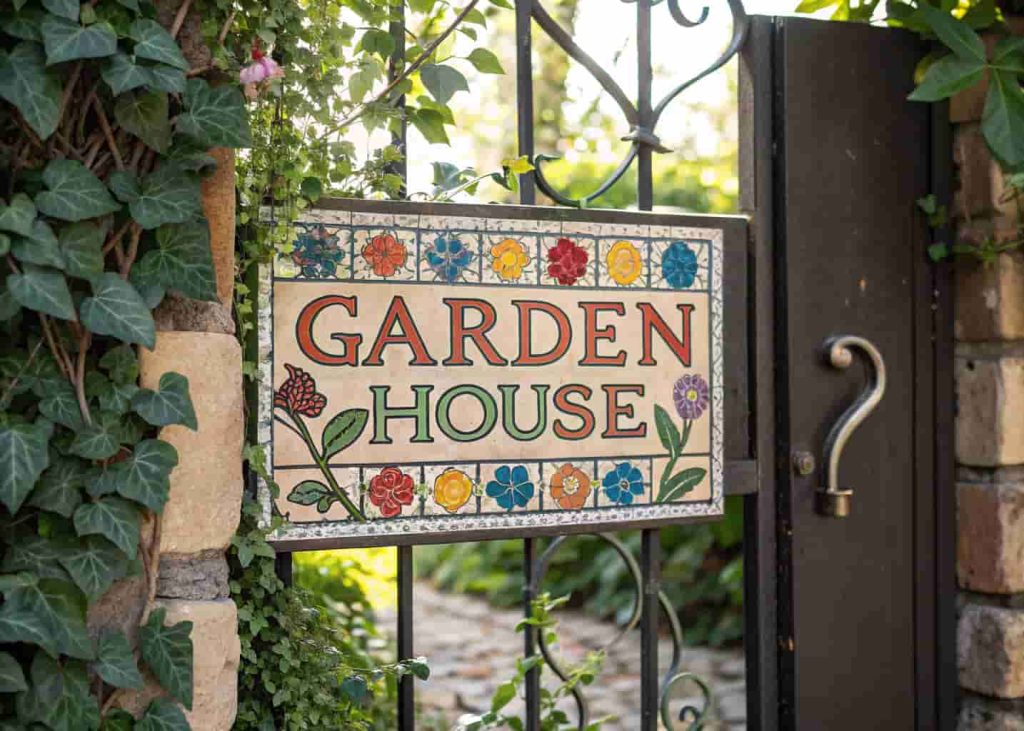
This one is small in size but big in impact. A custom mosaic sign for your garden — whether it is your house number, the name of your home, or simply a welcome message — is a charming detail that visitors notice immediately. These are also one of the most accessible mosaic projects for beginners because the surface area is small and manageable. You can work on a piece of wood, a ceramic tile base, or a concrete plaque. Spell out numbers or letters using contrasting tile colors, then fill the background with a complementary pattern or plain grout. Seal it well, mount it near your garden gate or front door, and enjoy the compliments. I have seen homeowners sell these at local markets too — once you make one, you will want to make more because they are genuinely addictive to create.
Conclusion
Mosaic garden designs are one of those rare things that look expensive but do not have to be. You can start with something as small as a single decorated pot or stepping stone and work your way up to a full garden wall mural over time. The beauty of mosaic is that it rewards patience and creativity more than it rewards money. Broken tiles, old crockery, glass beads — materials that would otherwise end up in the bin can become something genuinely beautiful when placed with intention. Every garden is different, and that is exactly why mosaic works so well outdoors. It can be tailored to fit your space, your style, and your story. So pick one idea from this list, gather your materials, and start small. Your garden will thank you for it.