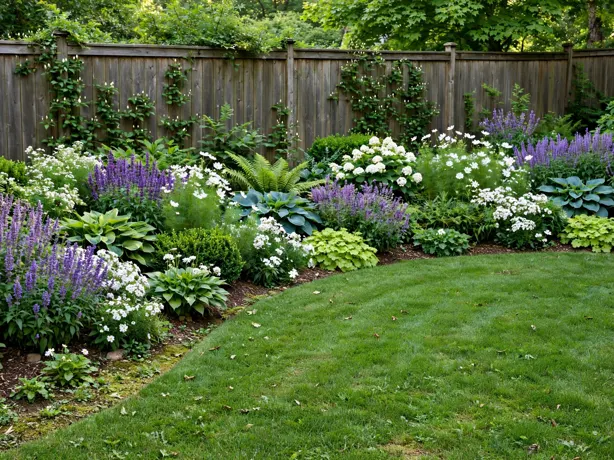
Backyard gardens usually disappoint in one of two ways. Either a few lonely beds float in a sea of lawn, each one too small to make any impression, or the beds fill up with impulse plants bought one at a time until the garden demands work every single weekend. Both problems come from planting without any plan for structure.
The gardens that stay lush follow one principle: structure first. Backbone shrubs and strong perennials hold the shape of every bed, repeated plants in real drifts create the full look, and the thirsty, fussy plants live only in groups where they are easy to reach and water.
This list gives you 35 backyard garden beds and borders that layer height, bloom and foliage for a rich, finished look. Every design uses plants in groups you can buy on one nursery trip, and each one is planned so upkeep stays at a single light weekly pass with a bucket and a pair of pruners.
The Backyard Garden Formula That Keeps Planting Beds Looking Lush
- Backbone before bloom: set evergreen shrubs and strong perennials first so the bed holds its shape in every month.
- Plant in drifts, not singles: groups of three, five or seven of one plant give the lush, designed look and are easier to care for.
- Group by thirst: put water-lovers together near the tap and drought plants together far from it, so watering is one route, not a rescue mission.
- Leave one colour pocket: keep one small area for annuals you replant each season, so experimenting never disturbs the whole garden.
For example, a fence border with green yew at the back, drifts of purple salvia and white daisies in the middle, and a low edge of catmint at the front stays full from spring to frost with one annual pocket by the gate.
| # | Idea | Best For | Budget/Effort |
|---|---|---|---|
| 1 | Cottage Border Along the Fence | Long plain fences | Medium cost / one weekend |
| 2 | Sunny Perennial Drift Bed | Hot sunny beds | Medium cost / one weekend |
| 3 | Shade Garden Under Trees | Dark tree corners | Medium cost / one weekend |
| 4 | Raised Bed Vegetable Rows | Grow-your-own beginners | Medium cost / one weekend |
| 5 | Curved Island Flower Bed | Lawns with no beds | Medium cost / one afternoon |
| 6 | Blue and Purple Cool Border | Calm colour lovers | Medium cost / one afternoon |
| 7 | Hot-Color Summer Border | Bold summer shows | Low cost / one afternoon |
| 8 | Spring Bulb Layered Bed | Gardens dead until May | Low cost / one afternoon |
| 9 | Autumn Foliage and Berry Bed | Gardens flat by October | Medium cost / one afternoon |
| 10 | Ornamental Grass Screen Bed | Boundaries needing height | Medium cost / one afternoon |
| 11 | Rose Bed with Low Underplanting | Rose lovers, bare soil | Medium cost / one weekend |
| 12 | Wildflower Meadow Corner | Unused lawn corners | Low cost / one afternoon |
| 13 | Formal Boxwood Parterre Bed | Neat classic tastes | Higher cost / one weekend |
| 14 | Tropical-Look Bold Leaf Bed | Exotic look fans | Medium cost / one afternoon |
| 15 | Drought Bed with Silver Foliage | Dry sunny ground | Low cost / one afternoon |
| 16 | Scented Bed by the Patio | Evening sitters | Low cost / one afternoon |
| 17 | Berry and Fruit Bush Bed | Edible landscaping fans | Medium cost / one afternoon |
| 18 | Evergreen Winter Structure Bed | Gardens empty in winter | Medium cost / one weekend |
| 19 | Dahlia and Annual Color Bed | Cut-flower colour fans | Low cost / one season bed |
| 20 | Fern and Hosta Shade Border | Deep shade edges | Medium cost / one afternoon |
| 21 | Climber-Covered Fence Bed | Bare fence lines | Medium cost / one weekend |
| 22 | Native Plant Bed | Wildlife-friendly yards | Low cost / one afternoon |
| 23 | Tiered Slope Planting Bed | Sloping backyards | Medium cost / one weekend |
| 24 | Circular Centerpiece Bed | Round focal spots | Medium cost / one afternoon |
| 25 | Deep Border Made Easy | Borders too shallow | Low cost / one afternoon |
| 26 | Succulent and Sedum Sun Bed | Hot dry sun traps | Low cost / one afternoon |
| 27 | Woodland Edge Bed | Tree-line boundaries | Medium cost / one weekend |
| 28 | Mini Orchard Row Bed | Fruit tree dreamers | Higher cost / one weekend |
| 29 | Seaside Salt-Tolerant Bed | Coastal gardens | Medium cost / one afternoon |
| 30 | Dark Foliage Drama Bed | Bold contrast lovers | Medium cost / one afternoon |
| 31 | Pastel Spring Bed | Soft colour fans | Low cost / one afternoon |
| 32 | Chartreuse and Lime Bright Bed | Dull shady beds | Low cost / one afternoon |
| 33 | Long-Bloom Perennial Bed | All-season colour seekers | Medium cost / one weekend |
| 34 | Winter Stem and Bark Bed | Winter interest gaps | Medium cost / one afternoon |
| 35 | Mixed Shrub Backbone Bed | New empty gardens | Higher cost / one weekend |
1. Cottage Border Along the Fence
Run this border 5 to 6 feet deep along the fence so the layers have room to breathe. At the back, plant hollyhocks and blue delphinium ‘Pacific Giant’ in loose groups of three for height against the boards. Fill the middle with pink shrub roses, purple coneflower and white phlox ‘David’, spaced 18 inches apart so they knit together by midsummer. Edge the front with lavender ‘Hidcote’ and catmint ‘Walker’s Low’ in a wavy line, and scatter a few self-seeding nigella through the gaps so the planting always looks generous rather than placed.
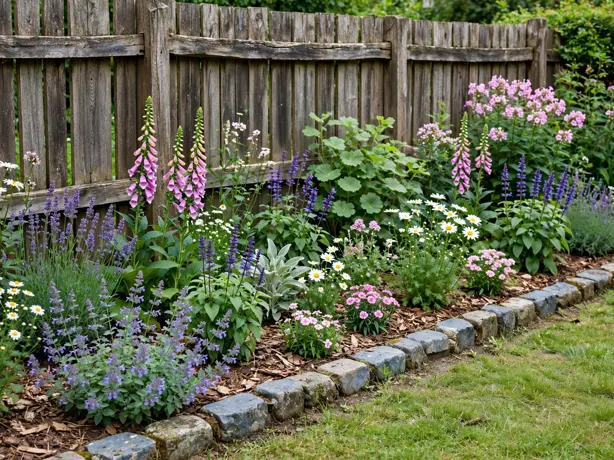
Best for: A long, plain back fence that needs softening from spring through fall without weekly fuss.
2. Sunny Perennial Drift Bed
Give the bed full sun and a 30-foot run along the back fence, then plant just four perennials in long, overlapping drifts. Start with purple coneflower ‘Magnus’ in a drift of seven, followed by black-eyed Susan ‘Goldsturm’ in five and Russian sage in five at the back. Thread white gaura through the front in groups of three so the drifts spill into each other and the bed reads as ribbons of color from the patio. Finish with 2 inches of shredded bark mulch to hold moisture between waterings.
Space note: Drifts need width more than depth — a 4-foot-deep, 20-foot-long bed shows the ribbons better than a short, deep square.
3. Shade Garden Under Trees
Under mature trees the soil is dry and root-filled, so plant tough shade perennials in generous groups and water them through their first two summers. Set hosta ‘Patriot’ in drifts of five at the front, pink astilbe ‘Vision’ in the cooler middle, and ostrich ferns at the back, rising 3 feet against the trunks. Top with 3 inches of leaf mold each fall to feed soil the roots keep robbing.
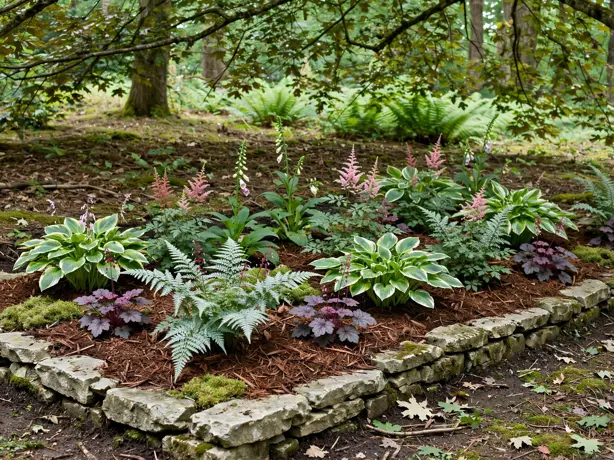
Planted this way, the dark corner becomes one of those cozy garden ideas that guests drift toward after dinner.
Fit check: Dig a test hole first — if roots fill the top 6 inches, add 4 inches of soil on top instead of digging down.
4. Raised Bed Vegetable Rows
Build two or three cedar beds, each 4 by 8 feet and 12 inches deep, and plant them in strict rows for a kitchen-garden border along the sunny fence. Run tomatoes down the center line, peppers in front of them, and a double row of lettuce and radishes at the sunny edge where they are easy to pick. Fill the corners with marigolds and a row of bush beans along the back; the repetition of straight rows makes vegetables read as an ornamental border.
Style note: Keep every bed the same height and cap the corners with flat cedar boards — the uniform frames are what lift rows of vegetables into a designed border.
5. Curved Island Flower Bed
Cut a kidney-shaped island about 12 by 6 feet in the middle of the lawn and plant it in concentric layers. Stand one clump of miscanthus ‘Morning Light’ at the center for height, ring it with daylily ‘Stella d’Oro’ spaced 15 inches apart, and finish with a front edge of catmint that spills softly onto the grass. Viewed from the house, the island should peak in the middle and melt at the edges, with no bare soil showing by June. It gives a plain lawn a destination without touching the fences at all.
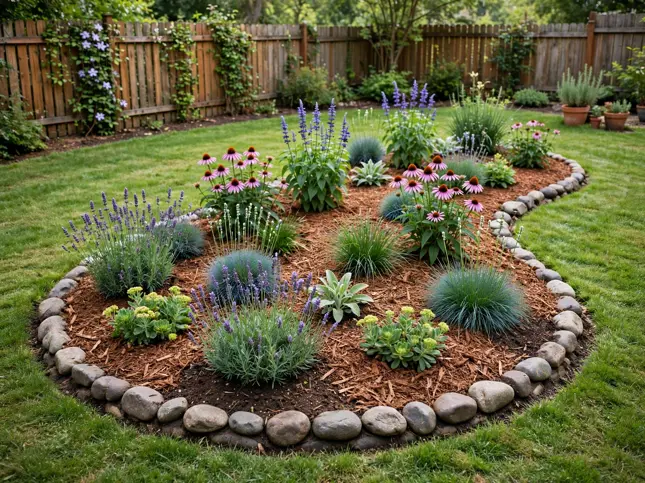
Easy swap: Trade the catmint edge for low lavender if you want a tidier, more formal outline.
6. Blue and Purple Cool Border
Build the whole border from one cool palette: delphinium ‘Blue Bird’ and Siberian iris at the back, salvia ‘May Night’ and hardy geranium ‘Rozanne’ through the middle, and lavender ‘Munstead’ along the front edge. Keep the bed 5 feet deep so the blues can be planted in drifts of five, and weave in a little silver artemisia foliage to stop the purples turning muddy. Water once a week deeply rather than little and often, and the border will hold its calm, hazy look from May to September.
Seasonal swap: When the delphiniums finish, let violet asters and blue monkshood carry the same palette into fall, so the border never changes its color story.
7. Hot-Color Summer Border
Plant this border in full sun from perennial plants that thrive on heat: crocosmia ‘Lucifer’ with arching red spikes at the back, helenium ‘Moerheim Beauty’ in rusty orange through the middle, and marigold-orange blanket flower along the front. Add red dahlia ‘Bishop of Llandaff’ in groups of three for dark foliage contrast, spacing everything 12 to 18 inches apart. By July the strip glows like embers against the green lawn.
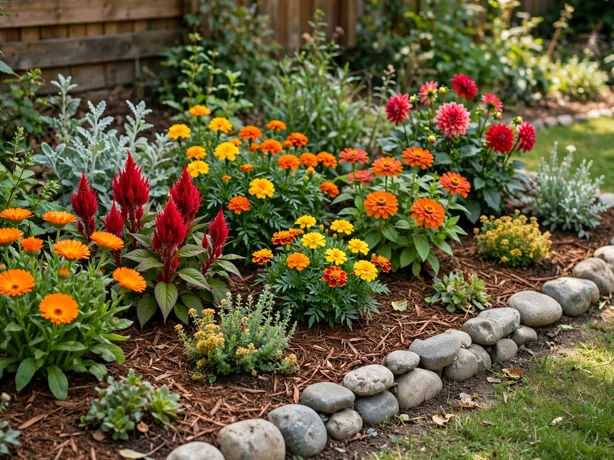
Why it works:
- Red, orange and gold are neighbors on the color wheel, so the mix looks deliberate.
- Every plant peaks in the same hot weeks, so the show arrives all at once.
- Dark dahlia foliage rests the eye between the flower masses.
8. Spring Bulb Layered Bed
Fix a bed that sits empty until May by layering bulbs through it in fall. Push tulips ‘Apeldoorn’ in at 8 inches deep, daffodils ‘Ice Follies’ at 6 inches, then crocus and grape hyacinths at 4 inches, all in clusters of ten between the perennials. Plant the layers in the same holes, one above another, and the bed erupts in waves from March to May. As the bulb leaves fade, the waking perennials grow up and hide the mess.
Budget note: Buy bulbs in the big mixed bags sold each fall — the per-bulb price drops by half, and mixed clusters look more natural than matched sets.
9. Autumn Foliage and Berry Bed
Make fall the bed’s best season instead of its fade-out. Plant oakleaf hydrangea at the back, where its leaves turn wine red in October, purple beautyberry in the middle with violet berries on bare stems, and winterberry holly along the front for red berries that hold into winter. Underplant with autumn fern, whose new fronds come up copper in spring and deepen to green, and tuck in a few clumps of sedum ‘Autumn Joy’ for dusty pink flower heads in September. By October this becomes the bed you show visitors first.
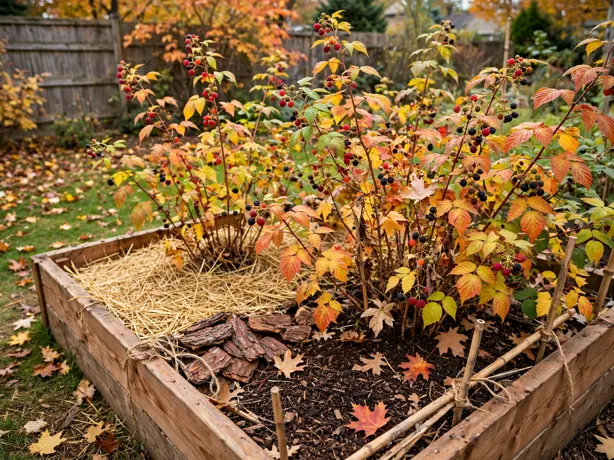
The formula: oakleaf hydrangea for fall color + purple beautyberry for mid-bed berries + winterberry holly for a red front finish
10. Ornamental Grass Screen Bed
Turn a plain boundary into a soft green screen with three grasses planted in staggered rows. Set feather reed grass ‘Karl Foerster’ upright at the back every 3 feet, fountain grass ‘Hameln’ in the middle row, and tufted hair grass along the front so the bed moves in layers. The plumes rise from June to frost, and the dry stems stand through winter, and the screen never fully disappears.
Get the look:
- Main piece: Feather reed grass ‘Karl Foerster’ along the back
- Supporting piece: Fountain grass ‘Hameln’ in the middle row
- Texture or material: Fine, arching grass blades with soft seed plumes
- Finishing touch: A 3-inch bark mulch strip at the feet
11. Rose Bed with Low Underplanting
Roses look bare at the base, so underplant them and the whole bed changes. Set hybrid tea or shrub roses 3 feet apart in a sunny bed, then carpet the soil beneath with hardy geranium ‘Rozanne’, which flowers blue from June to frost, and edge the front with lavender ‘Hidcote’. The underplanting hides the roses’ plain lower stems, shades out weeds, and keeps the bed in flower between rose flushes, which is why this pairing anchors so many low-maintenance garden ideas lists. Your roses will never look underdressed again.
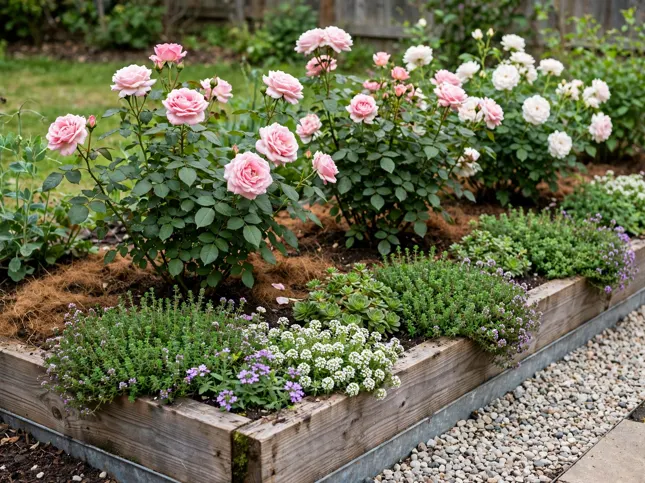
Color note: Blue geranium and lavender sit quietly under any rose color, but the pairing sings hardest under pink and cream blooms.
12. Wildflower Meadow Corner
Take one unused lawn corner, at least 10 by 10 feet, and sow it as a loose meadow instead of mowing it forever. Scatter a native wildflower and grass mix in fall — purple coneflower, black-eyed Susan, little bluestem and side-oats grama — and let it grow to knee height. Cut it once in late fall and remove the clippings so the soil stays lean, which is what wildflowers prefer. Paths are just a mown strip through the middle. Kids will claim the mown path as their own runway within a week.
Texture note: Fine grass seed heads make a soft haze that sets off the bold, flat faces of the coneflowers and Susans.
13. Formal Boxwood Parterre Bed
Lay out four rectangles, each 6 by 4 feet, edged with boxwood ‘Winter Gem’ clipped to 12 inches, and leave an 18-inch gap between the squares. Fill two squares with white shrub roses ‘Iceberg’, two with purple lavender ‘Hidcote’, and set one clipped boxwood cone at the center crossing where the paths meet. The geometry does the decorating, so the planting can stay simple and repeat forever. Clip the boxwood twice a year, in late spring and early fall, and deadhead the roses as you pass.
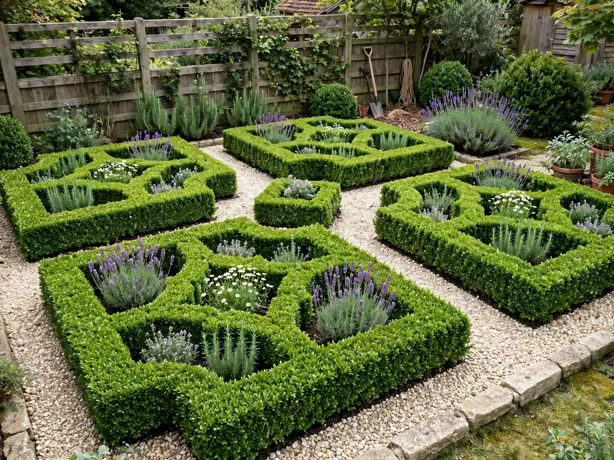
Best for: A flat, sunny center lawn where you want year-round structure you can see from the house.
14. Tropical-Look Bold Leaf Bed
Hardy plants can fake the tropics if you give their leaves room. Set hardy banana ‘Musa basjoo’ at the back of a sheltered bed, cannas ‘Tropicanna’ in the middle at 2-foot spacing, and elephant ear ‘Colocasia esculenta’ where the soil stays moist. Weave hosta ‘Empress Wu’ through the shady front edge for leaves a foot wide, and water deeply twice a week in summer — big leaves are mostly water. The banana and elephant ears die back in cold winters but regrow from the roots.
Space note: Allow 3 feet around each banana and colocasia — a bed under 8 feet wide will look cramped by August no matter how small the plants start.
15. Drought Bed with Silver Foliage
On hot, dry ground, build the bed around silver foliage that reflects the sun. Plant lavender ‘Grosso’ in a drift of seven, artemisia ‘Silver Mound’ in front of it, lamb’s ear along the edge, and sedum ‘Autumn Joy’ for late flowers. Mulch the whole bed with pea gravel instead of bark; it keeps crowns dry and stops the silver leaves rotting in wet spells. Once the plants settle in their first summer, this bed asks for water only in long droughts.
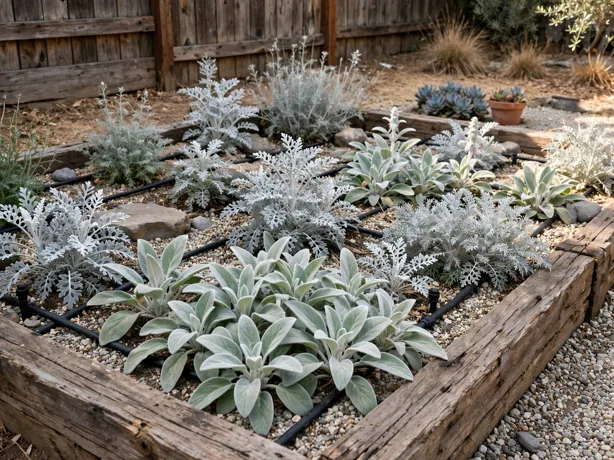
Fit check: Test drainage before planting — dig a 12-inch hole, fill it with water, and plant only if it empties within the hour.
16. Scented Bed by the Patio
Plant scent where people sit. Along the patio edge of the bed, run a front row of lavender ‘Hidcote’ where ankles brush it, then lilies ‘Casa Blanca’ in the middle for evening perfume, and night-scented stock sown in patches between them. Add scented-leaf geraniums in the corners; their leaves release rose and lemon scent whenever they are touched. Keep the bed within a few feet of the chairs, because fragrance fades fast with distance. On still evenings the whole patio smells like a perfumery with the chairs already pulled up.
Style note: The trick is height placement — low scent at ankle level, lilies at nose level — so perfume arrives in layers as you settle in.
17. Berry and Fruit Bush Bed
Give one sunny bed over to fruit and it will feed you from June to October. Plant blueberry ‘Bluecrop’ in a row of three at the back, red currant bushes in the middle, and a strawberry edge along the front where the berries are easy to spot. Run raspberry canes in a single line behind the currants, tied to two horizontal wires on posts, and mulch everything with pine needles, which blueberries love. Net the bed only when the fruit colors up.
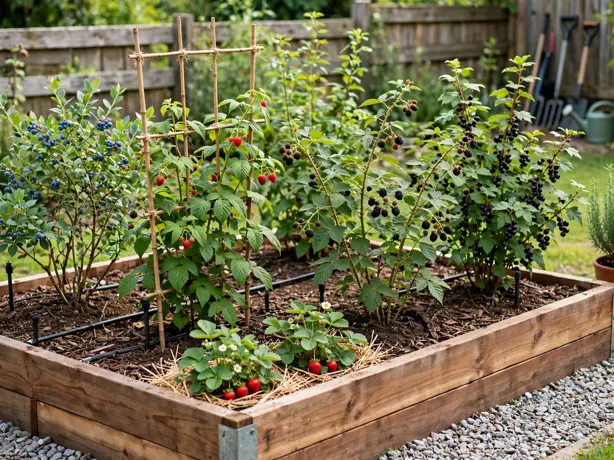
Easy swap: Trade the strawberry edge for alpine strawberries — smaller fruit, but they crop for months and never send runners into the path.
18. Evergreen Winter Structure Bed
Pack one bed with evergreen bones: yew ‘Hicksii’ at the back corners, three boxwood balls through the middle, holly ‘Blue Princess’ for red berries, and a front carpet of hellebores that flower in February. Nothing in the bed is deciduous, so its shape in January matches its shape in June. Mulch with dark bark to make the greens look deeper. When the rest of the garden is bare sticks, this bed still looks furnished.
Seasonal swap: In spring, tuck white tulips and snowdrops between the evergreens — they flower, fade and vanish without disturbing the structure.
19. Dahlia and Annual Color Bed
This is the one bed you are allowed to replant every year. Fill it with dahlias in rows by height — tall ‘Café au Lait’ at the back, mid-height ‘David Howard’ in the middle, dwarf ‘Gallery’ types at the front — and thread zinnias and cosmos between them for cutting flowers. Stake the rows as you plant, mulch well, and lift the tubers in fall if your winters are cold.
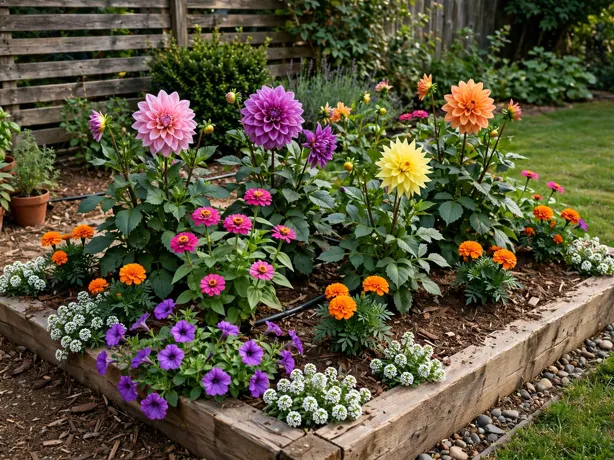
Why it works:
- Annuals bloom for months because cutting and deadheading keep new buds coming.
- Rows by height mean every flower gets light and air, so mildew stays low.
- One bed holds all the experimenting, leaving the rest of the garden settled.
20. Fern and Hosta Shade Border
For the border that gets almost no sun, ferns and hostas are the reliable pair. Alternate hosta ‘Sum and Substance’ with ostrich ferns down the shady side of the house, then repeat with smaller hosta ‘Patriot’ and Japanese painted ferns toward the front. The big chartreuse leaves light the gloom while the ferns add airy height behind them. Keep the bed mulched with leaf mold and water in dry spells; slugs are the only real enemy, so set beer traps in spring.
Budget note: Hostas divide freely every three years, so one bought plant becomes three — fill half the border from divisions and spend only on the ferns.
21. Climber-Covered Fence Bed
Train climbing rose ‘New Dawn’ and clematis ‘Jackmanii’ alternately along the fence, one plant every 6 feet, and underplant the bed at their feet with salvia ‘May Night’ and a front edge of lavender to shade the clematis roots. Weave the stems along the fence panels as they grow and tie in new shoots monthly. By the second summer the fence disappears behind flowers. It earns its place in any roundup of spring garden ideas when the first roses and clematis open together in May.
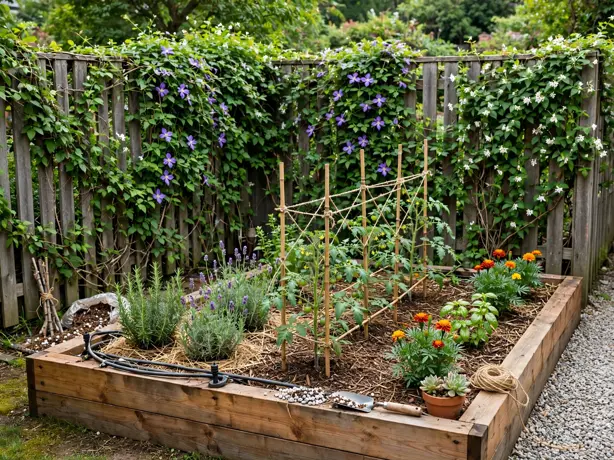
The formula: climbing rose and clematis on the fence + salvia through the middle + lavender shading the roots at the front
22. Native Plant Bed
Plant a bed that belongs to your region and the wildlife follows on its own. Use purple coneflower and blazing star through the middle, little bluestem grass at the back for winter structure, and wild columbine with coreopsis along the front. Sow or plant in drifts of five, water for the first season only, and leave the seed heads standing until spring for the birds.
Get the look:
- Main piece: Drifts of purple coneflower, five plants per drift
- Supporting piece: Blazing star spikes repeated through the middle
- Texture or material: Fine bluestem grass behind bold daisy-shaped flowers
- Finishing touch: Seed heads left standing until spring cleanup
23. Tiered Slope Planting Bed
Plant a slope in three horizontal tiers and it stops looking like a problem. Put ornamental grasses ‘Karl Foerster’ along the top tier, daylilies ‘Happy Returns’ across the middle where they hold the soil with dense roots, and creeping phlox plus low juniper on the bottom tier to spill over the edge. Each tier gets one main plant repeated end to end, so the slope reads as stripes instead of a scramble. From the bottom of the hill it looks like a planted staircase in bloom.
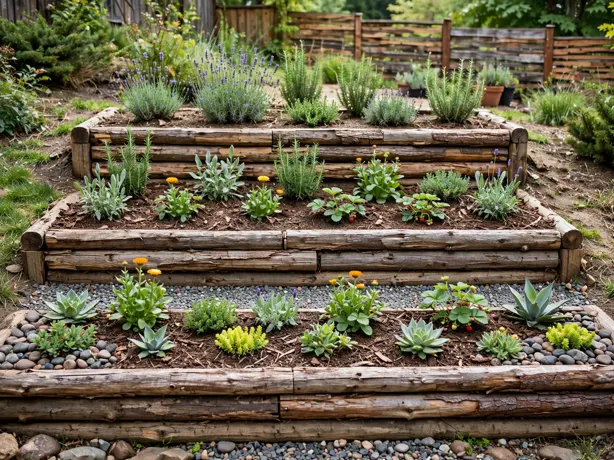
Color note: Keep each tier one color — cream plumes above, yellow daylilies mid-slope, blue phlox below — and the stripes read clearly from the patio.
24. Circular Centerpiece Bed
A round bed earns its keep when it looks good from every side. Make it 10 feet across, set one tall fountain grass ‘Morning Light’ at the exact center, ring it with purple salvia at 18-inch spacing, and finish with a neat outer ring of lamb’s ear. Walk around it as you plant and check the rings stay even; a circle shows every wobble. Mulch the rings with dark bark so the circles read from the house.
Texture note: The fine, misty grass center contrasts with the salvia’s stiff spikes and the lamb’s ear’s felted mats, so the texture alone carries the bed between flowerings.
25. Deep Border Made Easy
Most borders fail because they are too shallow to layer. Fix yours by moving the lawn edge forward until the border is 8 to 10 feet deep, then plant in three true layers: shrubs like viburnum at the back, perennials in drifts in the middle, ground cover at the front. Drop flat stepping stones into the bed every few feet so you can reach the back row without compacting the soil. One weekend of digging buys you a border that finally looks like the magazines.
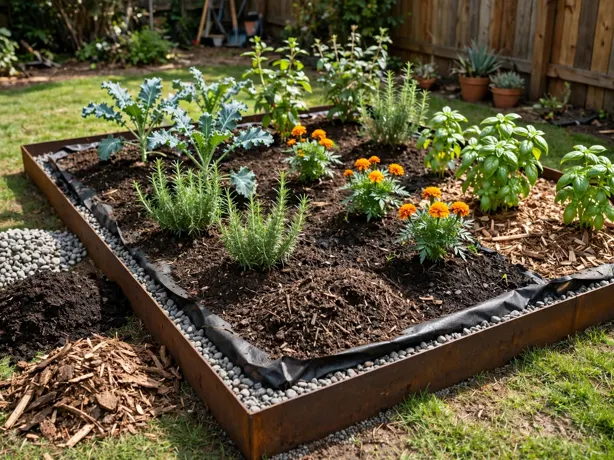
Best for: A long, thin fence border that has always looked skimpy no matter what you planted in it.
26. Succulent and Sedum Sun Bed
Where the soil is thin, hot and poor, succulents do the work other plants refuse. Spread 4 inches of gritty soil over the bed, then plant sedum ‘Dragon’s Blood’ as a red-green carpet, rosettes of hens and chicks in clusters of seven, and taller sedum ‘Autumn Fire’ at the back for late pink flowers. Top with pea gravel pushed right up to the crowns. These plants store their water in their leaves, so the bed thrives on rainfall alone. It thrives exactly where other beds give up.
Space note: Succulents spread slowly, so plant at half the spacing the label suggests — the carpet closes in one season instead of three.
27. Woodland Edge Bed
Where the lawn meets the tree line, plant a bed that copies the woods. Set rhododendron and azalea at the back against the trunks, Solomon’s seal and ferns through the middle, and a front carpet of wild ginger that spreads to close the soil. Add a few foamflower for spring white at the edge. Nothing here needs staking, spraying or dividing — just a yearly top-up of leaf mulch, which the trees provide themselves. It turns the mowing edge into the most peaceful corner you own.
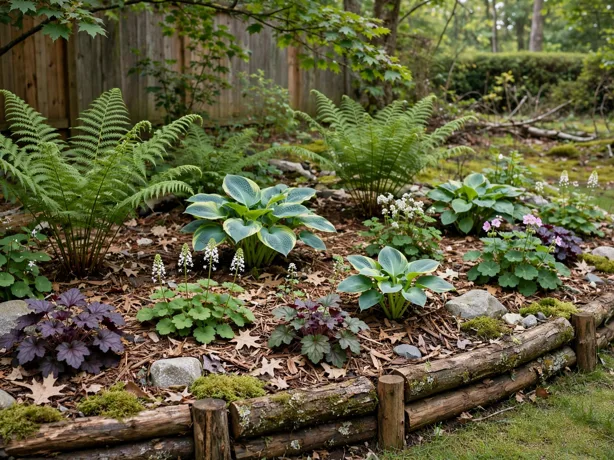
Fit check: Count the hours of dappled light first — this planting needs at least three hours of sun flecks, or swap the azaleas for more ferns.
28. Mini Orchard Row Bed
A row of dwarf fruit trees planted in one long bed reads as an orchard without needing an acre. Space dwarf apples ‘Liberty’ and ‘Enterprise’ 8 feet apart down a 4-foot-wide mulched strip, keep each tree to one clear trunk with a low branch canopy, and underplant the strip with chives and alpine strawberries to keep the soil covered. The straight line of trunks gives the whole garden a rhythm to lean on. You will pick apples on your way past every fall morning.
Style note: The uniform mulch strip and evenly spaced trunks are the whole design — let one tree lean or one gap form and the orchard spell breaks.
29. Seaside Salt-Tolerant Bed
Plant rugosa roses at the back for scent and red hips, sea holly ‘Blue Hobbit’ through the middle, and thrift in tight cushions along the front edge where the wind hits hardest. Weave blue fescue through in drifts of five for movement, and mulch with coarse sand or fine shingle instead of bark, which only blows away. Everything here tolerates salt spray, thin soil and the watering can staying in the shed. Seaside gardeners finally get a bed that looks better the windier it gets.
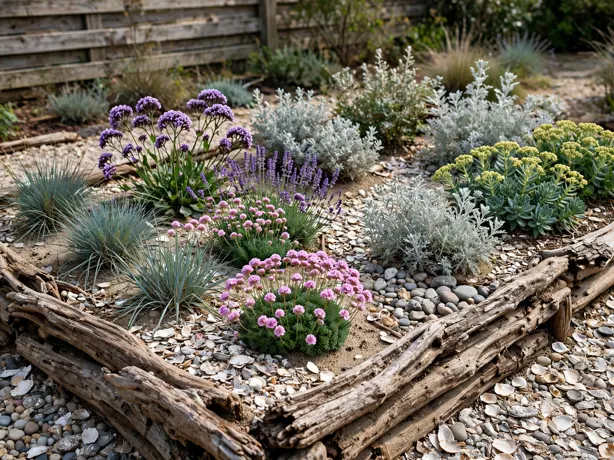
Easy swap: Swap the rugosa roses for bayberry if deer visit — the foliage is aromatic, salt-proof and never on the menu.
30. Dark Foliage Drama Bed
Dark foliage makes every flower near it look brighter. Build the bed on purple smoke bush at the back, ninebark ‘Diabolo’ in the middle, and heuchera ‘Plum Pudding’ along the front, with black mondo grass tucked at the very edge. Add dark dahlia ‘Karma Choc’ in summer groups of three for near-black flowers. Keep the palette disciplined — purple, plum and bronze only — and plant one white-flowering drift beside the bed to sharpen the contrast.
Seasonal swap: In spring, before the shrubs leaf out, run dark tulips ‘Queen of Night’ and purple fritillaries through the bed for the same drama in miniature.
31. Pastel Spring Bed
A spring bed in pastels wakes the garden after winter. Layer pink hyacinths at the front for scent, blush tulips ‘Angelique’ in drifts of ten through the middle, and pale pink peonies at the back to take over in May. Fill the gaps with forget-me-nots, whose blue foam ties the pinks together, and underplant everything with white daffodils for brightness on grey days. Edge it with grape hyacinths for a blue front line.
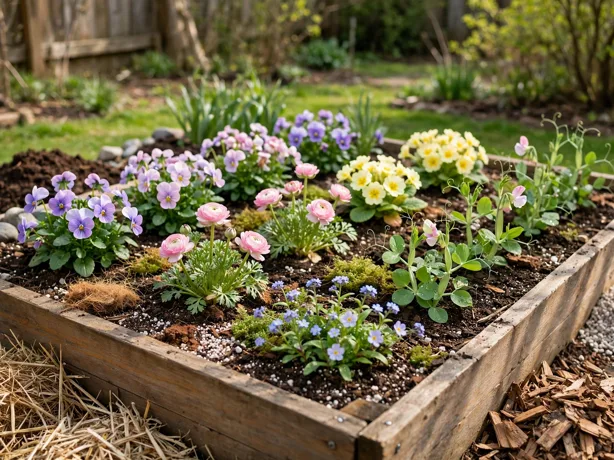
Why it works:
- Pastels share one soft value, so nothing jars when five flowers bloom at once.
- Bulbs, peonies and forget-me-nots peak in sequence, stretching the show for ten weeks.
- Pale colors glow in spring’s low light instead of washing out.
32. Chartreuse and Lime Bright Bed
Brighten a dull shady bed with leaves the color of lime juice. Plant golden hosta ‘Sum and Substance’ in the middle where its huge leaves catch any stray light, hakone grass ‘Aureola’ spilling at the front, and heuchera ‘Citronelle’ in groups of five for citrus mounds. Lady’s mantle threads through everything, foaming with chartreuse flowers in June. The bed needs no colorful flowers at all; the foliage does the lighting work from April to October. Neighbors will ask what you planted long before anything blooms.
Budget note: Lady’s mantle self-seeds for free and hakone grass divides well, so after the first spring your only spend is mulch.
33. Long-Bloom Perennial Bed
The secret to a bed that never has a bare month is a relay team. Open with Siberian iris and lupines in May, hand over to salvia ‘May Night’ and catmint for June, then coneflower and black-eyed Susan through high summer, and finish with asters and sedum into October. Plant each runner in drifts of at least five at 18-inch spacing so every handover is visible, and cut each drift back as it fades to make room for the next. One bed like this carries the whole garden’s calendar.
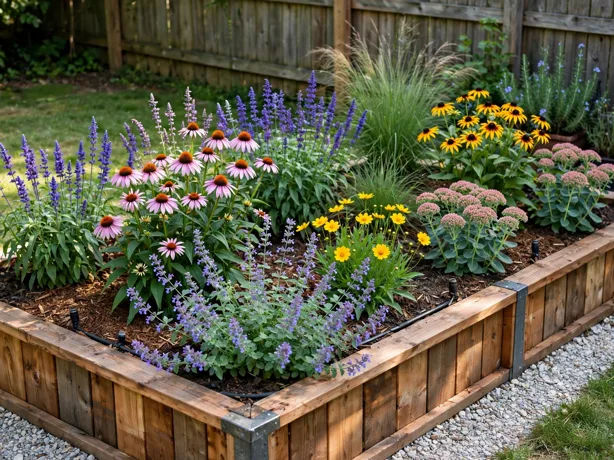
The formula: iris and salvia for the spring leg + coneflower and rudbeckia for summer + asters and sedum for the fall finish
34. Winter Stem and Bark Bed
Cluster three white-barked birch stems at the back of the bed, plant red-twig dogwood ‘Cardinal’ through the middle for scarlet stems after leaf fall, and carpet the front with hellebores and snowdrops. The bark and stems carry the bed from November to March, lit best by low afternoon sun. Cut a third of the dogwood’s oldest stems each spring to force the brightest new red growth.
Get the look:
- Main piece: Cluster of three white birch stems
- Supporting piece: Red-twig dogwood ‘Cardinal’ in the middle
- Texture or material: Peeling white bark against smooth scarlet stems
- Finishing touch: Hellebores and snowdrops at the front edge
35. Mixed Shrub Backbone Bed
When a garden is brand new and empty, shrubs are the fastest route to lush. Stagger the bed in a zigzag: yew and viburnum ‘Summer Snowflake’ at the back, hydrangea ‘Annabelle’ and spirea ‘Goldflame’ through the middle, and low deutzia along the front. Space shrubs at two-thirds of their label spread so they meet in three years without crowding, and fill the temporary gaps with annuals for the first two summers. It is the bed to plant first, because everything else you add later will lean on its bones.
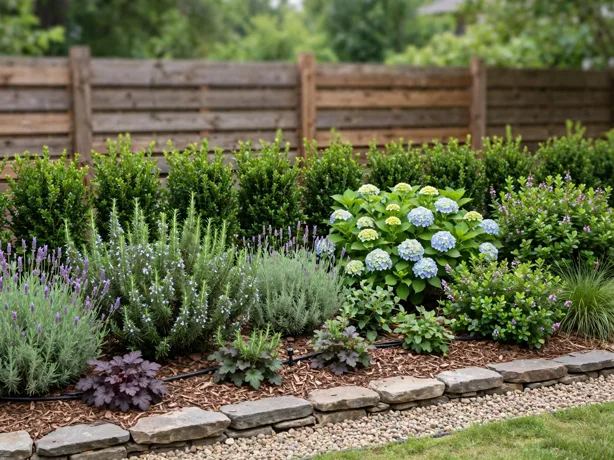
Color note: Keep the shrub palette green and white with one gold accent, and the young bed looks calm and planned instead of spotty.