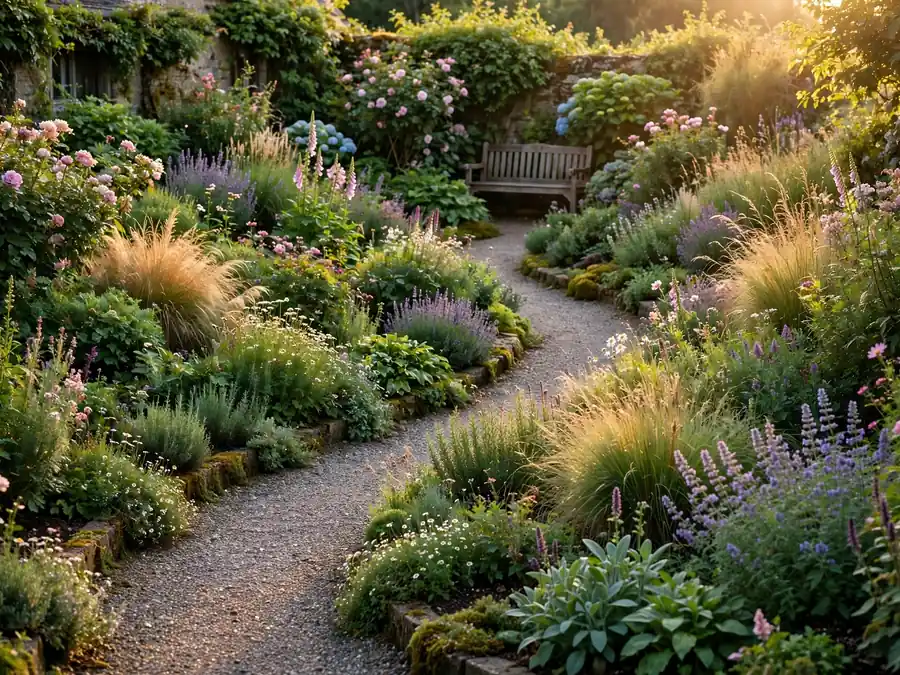
Many gardeners know the feeling: the beds look lovely from the kitchen window, tidy and full of color, yet nobody ever actually sits in them. The only seat is on the patio, facing the garden like a picture, so the planting becomes scenery instead of a place. Weeks pass where the most time spent among the flowers is a quick weeding session with a bucket in hand.
The gardens that get lived in share one habit: the seat goes inside the planting, not outside it. Guides to a truly cozy garden keep returning to the same move — planting gathered close around a chair, scent and texture within arm’s reach, and low green edges that suggest walls. Once a seat is surrounded on two or three sides, a bed stops being a border and starts behaving like a room.
Below are 17 cozy garden ideas that make that change with plants first. Every one works with a basic bench or chair, a few well-chosen perennials, and edging you can plant in an afternoon — no poured concrete, no retaining walls, and no hard landscaping crew required.
The Cozy Garden Formula That Keeps Planting Beds Looking Like Rooms
- Start with the seat, then plant around it: place one bench or chair where you want to linger, and build every planting decision outward from that spot.
- Keep colors deep and close: lean on layered greens with cream, plum, and dusty purple flowers so the space feels enclosed rather than exposed.
- Plan for real weather and real bodies: allow 24 inches of clear space in front of every seat for legs, and accept some damp foliage brushing after rain.
- Leave one layer changeable: keep a single pot, cushion, or seasonal planting near the seat that can be swapped as the year turns.
Put together, it looks like this: a 4-foot weathered teak bench set on a small gravel pad, backed by 5-foot miscanthus, flanked by plum-purple sedum and cream echinacea, with a low germander edge, 10 inches tall, running along the front of the bed.
1. Tuck the Bench Into the Bed Itself
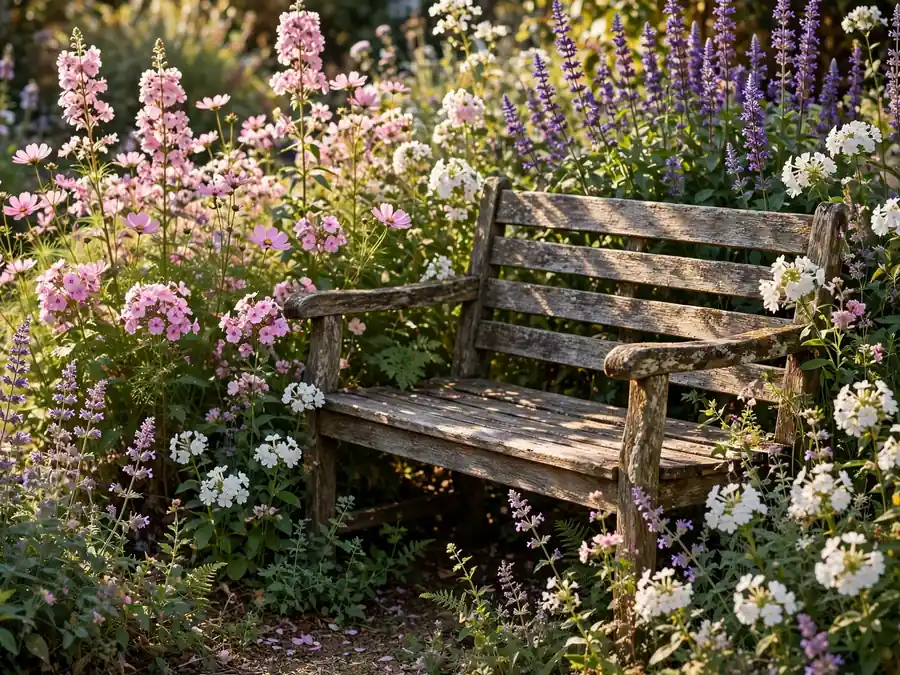
Instead of facing the bed from the path, pull a simple 4-foot teak or cedar bench right into it. Widen one section of planting to 6 feet deep, level a patch of ground, and set the bench so mounded perennials rise on three sides: catmint spilling at the left end, a rounded clump of Russian sage behind, and hardy geraniums softening the front corners. From the seat, flowers sit at knee and elbow height, close enough to touch, and the rest of the garden becomes the view. The trade-off is honest: after rain, you will brush damp leaves getting in and out.
The formula: one 4-foot bench + mounded perennials on three sides + a level gravel patch underfoot.
2. Plant a Scent Pocket at Sitting Height
Scent only works up close, so plant it where a seated person’s head and hands actually are. At one end of a bench, tuck in a sweet box shrub, perfuming the air in late winter; at the other, a dwarf lilac, 30 inches tall, blooming at nose height in May. Fill the base with scented geraniums in 10-inch terracotta pots, releasing fragrance whenever a hand brushes past. The pocket follows the same quiet cozy garden aesthetic of greens first, color second.
Why it works:
- Fragrance is planted at 24 to 30 inches, exactly where it can be noticed.
- Two shrubs take turns, so some scent is present from winter into summer.
- Potted geraniums can be moved or replaced the moment they tire.
3. Grow Grass Curtains Instead of Walls
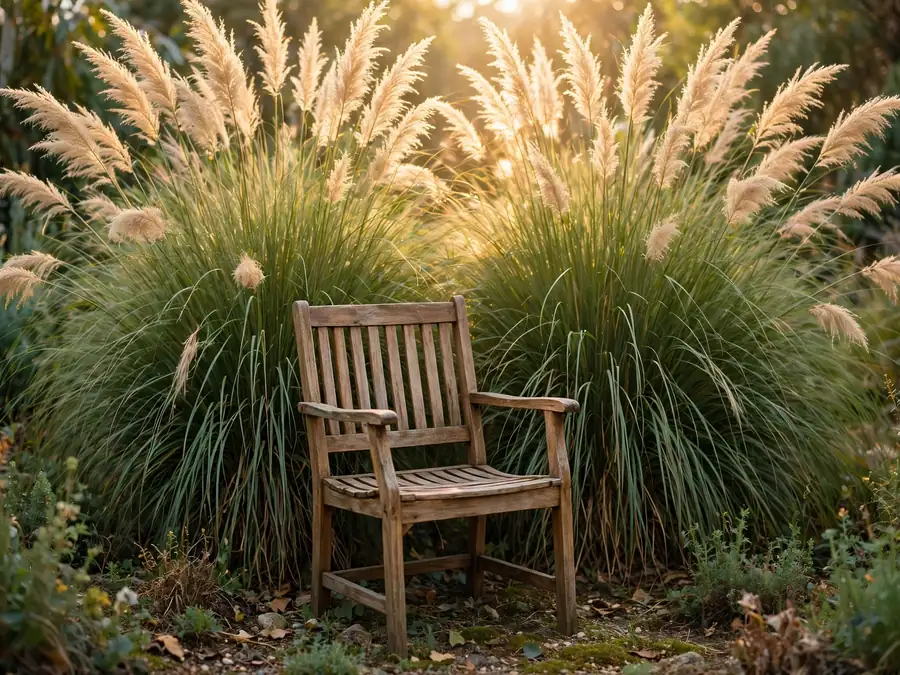
A row of tall ornamental grasses behind and beside a seat gives the hush of a wall with none of the building. Plant three feather reed grasses in a loose arc 18 inches behind a garden chair, then add one miscanthus ‘Gracillimus’, reaching 5 to 6 feet, at the open side. The blades filter breeze, blur the neighbors, and turn gold from September onward. The honest downside: grasses flop after heavy storms and need one hard cut back each late winter.
Texture note: fine, upright blades against the soft mounds of perennials in front keep the corner layered — airy at the top, dense and cushiony at seat level.
4. Leave the Seed Heads Standing Around Your Seat
Autumn coziness is already growing in most beds; it just gets cut down too early. Ring a favorite chair with plants that hold their shape after flowering: purple coneflower with its dark seed cones, stonecrop ‘Autumn Joy’ turning from pink to rust, and black-eyed Susan seed heads standing through frost. Left standing, they give the seat texture, catch low evening light, and feed goldfinches within a few feet of where you sit. The trade-off is a slightly untidy look by tidy-garden standards — this corner will read wild, not manicured, from October until the spring cleanup.
Seasonal swap: in spring, the same ring becomes alliums and early tulips; the seat stays put, only the planting around it changes costume.
| Plant Around the Seat | Mature Height | The Job It Does |
|---|---|---|
| Miscanthus ‘Gracillimus’ | 5 to 6 feet | Soft living wall behind the seat |
| Sweet box | 3 to 4 feet | Winter scent at the seat’s end |
| Purple coneflower | 2 to 3 feet | Seed heads and birds at knee height |
| Germander | 8 to 12 inches | Low green edge that reads as a wall base |
5. Edge the Bed With a Low Green Baseboard
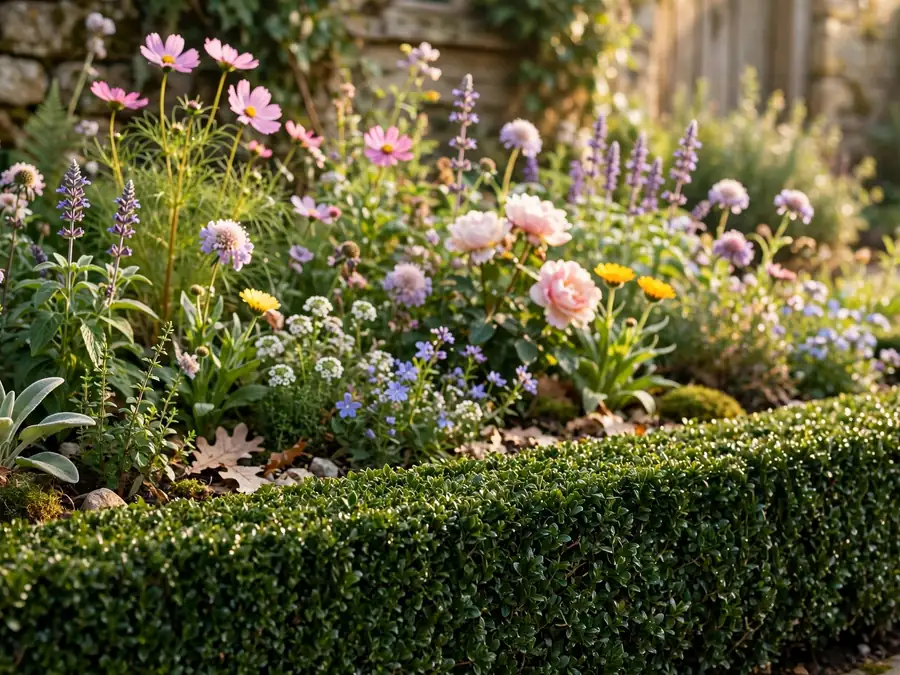
Rooms feel like rooms partly because of their baseboards, and a bed can borrow the trick. Along the front of the planting beside a seat, run a single row of germander or dwarf inkberry, spaced 12 inches apart and clipped into one mound 8 to 12 inches tall. The line is low enough to step over, yet the eye reads it as a boundary, making the space inside feel deliberately enclosed. It asks for two light trims a year, and young plants look gappy their first season.
Space note: keep the edge a full 24 inches in front of the bench legs, so feet rest on clear ground and the green line stays uncrushed.
6. Claim a Morning Perch That Faces East
Pick the bed that catches the first sun and give it the day’s first seat: a small black iron chair and a 14-inch side table set at the bed’s east edge, facing the light. Plant the view deliberately — golden amsonia, cream shasta daisies, and a drift of purple aster for fall — so the 7 a.m. coffee comes with something in flower from May to October. Dew is the honest catch: cushions live in a lidded box beside the chair, and the iron stays cold until the sun reaches it. If your mornings are rushed and precious, this is the seat that protects them.
Best for: anyone whose only quiet minutes happen before the house wakes up.
7. Let a Small Tree Plant the Shade for You
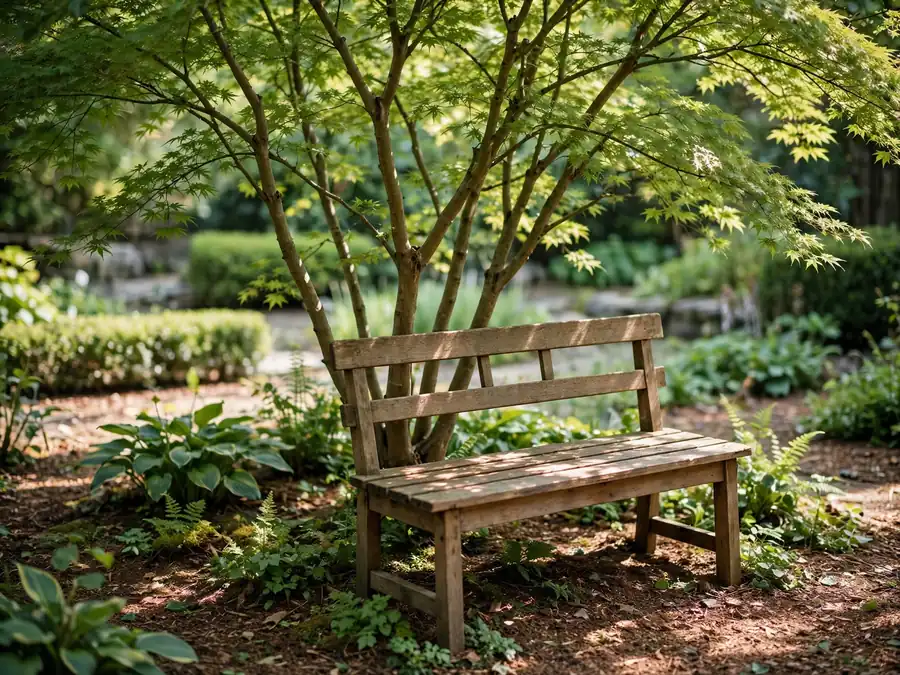
Shade does not have to arrive on posts. One multi-stem serviceberry, planted 8 to 10 feet from a bench, grows into a light, airy canopy that dapples the seat by its third or fourth summer, drops white blossom overhead in spring, and turns amber in fall. Underplant the circle beneath with ferns and foamflower so the shade reads as planting, not an empty patch. The trade-off is time: for two summers, a canvas umbrella fills in while the branches grow.
Fit check: before fixing the bench, stand at the spot at noon in June and confirm the young tree’s mature spread — 15 to 20 feet across — will shade the seat without swallowing the bed behind it.
8. Soften the Path Edge Until It Disappears
The walk to a garden seat feels abrupt when the path edge is a hard line. Plant woolly thyme and creeping Jenny in the 6-inch strip where bed meets stone, plugs 8 inches apart, and let them spill over the pavers until the boundary blurs. Every footstep on the thyme releases scent, quietly marking the moment of arrival. It is slow work — a full season before the spill looks generous — and the first year needs weeding while the plugs knit. Barefoot evening walkers forgive both flaws quickly.
Texture note: tiny soft leaves creeping over cool, hard stone give the feet two textures in one step, which is exactly what makes the corner feel finished.
9. Plant Whites That Wake Up at Dusk
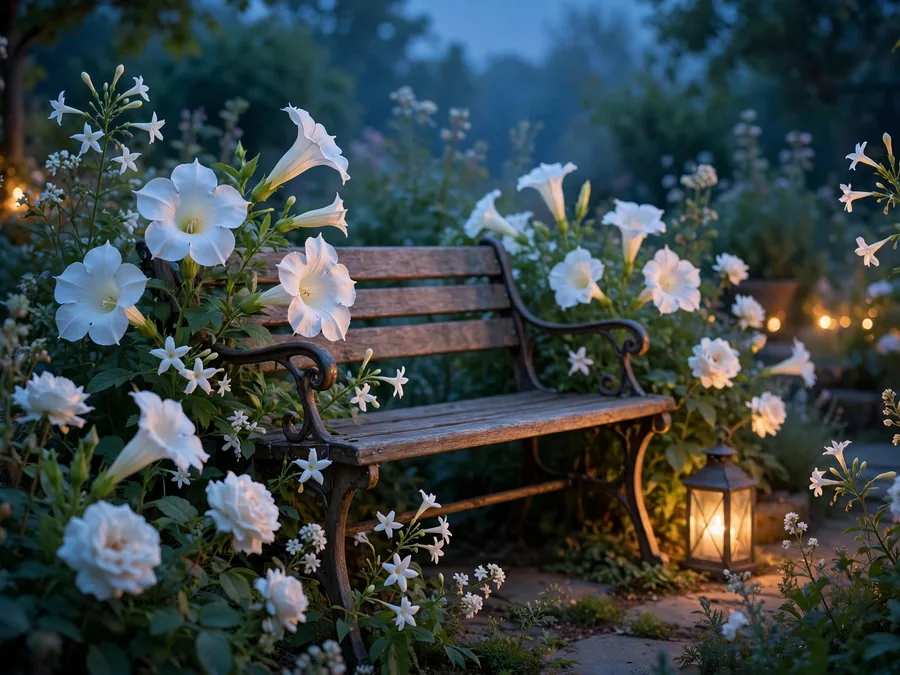
Some gardens are only visited after dinner, and pale flowers are planted for exactly that hour. Around an evening chair, group white flowering tobacco, evening primrose, and a pot of night-scented stock in creams and palest blush, backed by dark inkberry so the blooms seem to float as light fades. Their scent strengthens after sunset, turning a ten-minute sit into a ritual. Planning this corner early pays off — sketching it alongside your other spring garden ideas gets the dusk planting in before summer. Annuals, honestly, mean replanting each year.
Color note: whites and creams hold the last of the light while purple and red flowers go dark, so the seat stays visible and inviting an hour longer.
10. Set a Trough of Brush-Past Herbs at the Seat’s End
Put touch within reach. A galvanized trough from Terrain at $58, about 25 inches long, sits on short bricks at the end of a bench, planted tight with rosemary, lemon thyme, and pineapple sage. Every time someone sits down, a hand drifts across the foliage and the scent does the rest. Keep the soil gritty and the trough in full sun, and accept that pineapple sage is tender: in cold climates it is an annual treat, replaced each spring.
Budget note: spend once on the trough itself, then fill it with small herb starts and divisions from friends’ gardens — the planting inside rarely needs to cost more than a bag of compost.
| Low Border Plant | Finished Height | Trimming It Asks For |
|---|---|---|
| Germander | 8 to 12 inches | Two light clips a year |
| Dwarf inkberry | 12 to 18 inches | One shaping trim in spring |
| Creeping thyme | 2 to 4 inches | A shear after flowering only |
| Lady’s mantle | 10 to 14 inches | Deadhead once in midsummer |
11. Lay a Small Gravel Pad Inside the Planting
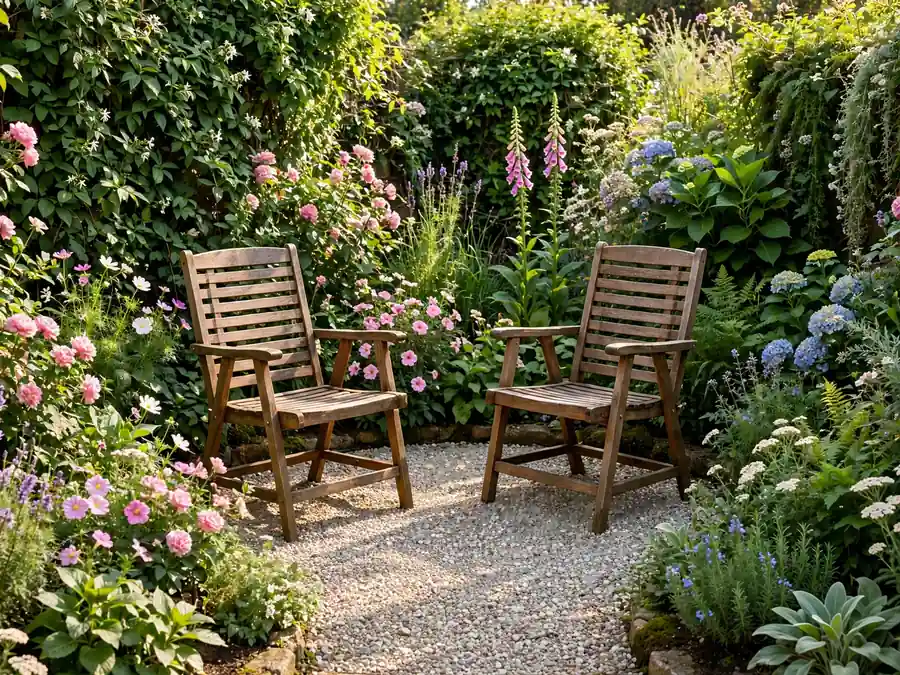
A seat dropped straight onto soil always feels temporary. Instead, clear a 5-by-5-foot square inside a wide bed, edge it with steel strip, and fill it with 2 inches of pea gravel over landscape fabric. Set two weathered wood chairs on the pad, and let beds close in on three sides with hydrangea, catmint, and tall verbena. The honest cost: gravel migrates, so expect to rake stray stones back yearly.
Get the look:
- Main piece: two weathered wood chairs on a 5-by-5-foot gravel pad
- Supporting piece: a cut stump or stone side table between them
- Texture or material: pea gravel underfoot, steel edging holding the line
- Finishing touch: tall verbena planted at the pad’s corners to soften the square
12. Face the Bench Toward the Berries
Give a seat something alive to watch. Angle a bench toward a winterberry shrub and a chokeberry planted 8 feet away, where red berries glow from September into winter. Birds work the branches in plain view, turning a five-minute sit into twenty. Back the bench with dark evergreen foliage so the berry color pops, and keep binoculars in the cushion box. The trade-off is seasonal: in high summer the berries are still green and the view is quieter. For households that take tea outside in cold months, this seat earns its keep.
Style note: it is the contrast that lifts this one — scarlet berries against deep green, seen from a still, plain bench that refuses to compete.
13. Build a Fern Hollow in the Shade You Already Have
Every garden has one dim corner where lawn sulks. Plant it instead: ostrich ferns at the back reaching 3 feet, hosta ‘Patriot’ in the middle, and Japanese forest grass spilling at the front. Set a single slatted chair in the middle of the green, with bark mulch underfoot. The air feels cooler here on a hot afternoon, and the layered leaves muffle the street. Slugs, honestly, will find the hostas first — crushed-shell mulch around the crowns keeps damage modest.
Get the look:
- Main piece: one simple chair in the corner’s center
- Supporting piece: ostrich ferns forming the back layer
- Texture or material: bark mulch underfoot, white-edged hosta leaves for light
- Finishing touch: Japanese forest grass fringing the front
14. Keep a Snipping Seat Beside the Cutting Bed
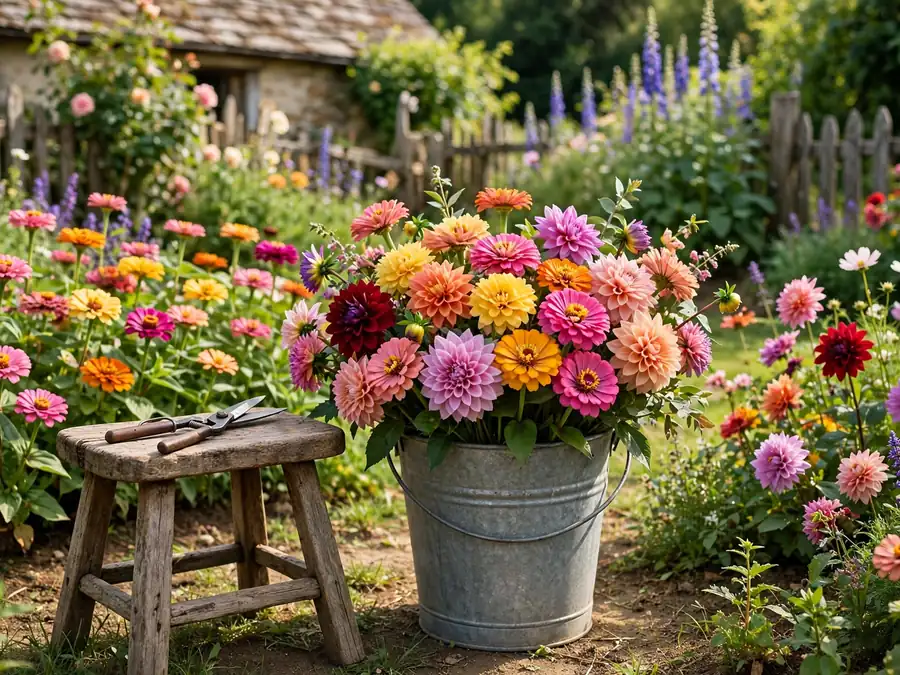
A cutting bed earns a seat of its own. Place a sturdy stool and a galvanized bucket at the end of a row of zinnias, cosmos, and dahlias in coral, burgundy, and cream, and the evening round becomes: sit, snip the day’s best stems, arrange them in the bucket, carry them in. The seat turns a chore into the garden’s most pleasant ten minutes, and the bed stays groomed because it is constantly harvested. Dahlias ask for staking and lifting in cold zones — the highest-maintenance corner here, and the one that fills the house with flowers.
Easy swap: trade the dahlias for sunflowers and celosia if you want the same armfuls of cut flowers with almost no staking or fuss.
15. Face Two Chairs Across a Narrow Bed
Conversation needs its own floor plan. Set two chairs facing each other across a planting strip just 30 inches wide, filled with a low river of catmint and calamint blooming blue from June to September. Each chair gets a green backdrop — a mounded shrub 2 feet behind it — so both sitters feel enclosed, and the flowers between them sit low enough to talk over. It is a layout borrowed from living rooms: people relax when the distance feels chosen, not accidental.
Fit check: aim for 4 to 5 feet between the chair fronts; stretch your legs — your shoes should nearly reach the planting edge without crushing it. A playful whimsical garden ideas list might add statues, but this corner needs nothing more.
| Time of Day | The Seat to Use | Plant Beside It |
|---|---|---|
| Early morning | East-facing perch | Amsonia and shasta daisies |
| Hot afternoon | Fern hollow chair | Ostrich ferns and hostas |
| Dusk | Evening whites chair | Flowering tobacco and night-scented stock |
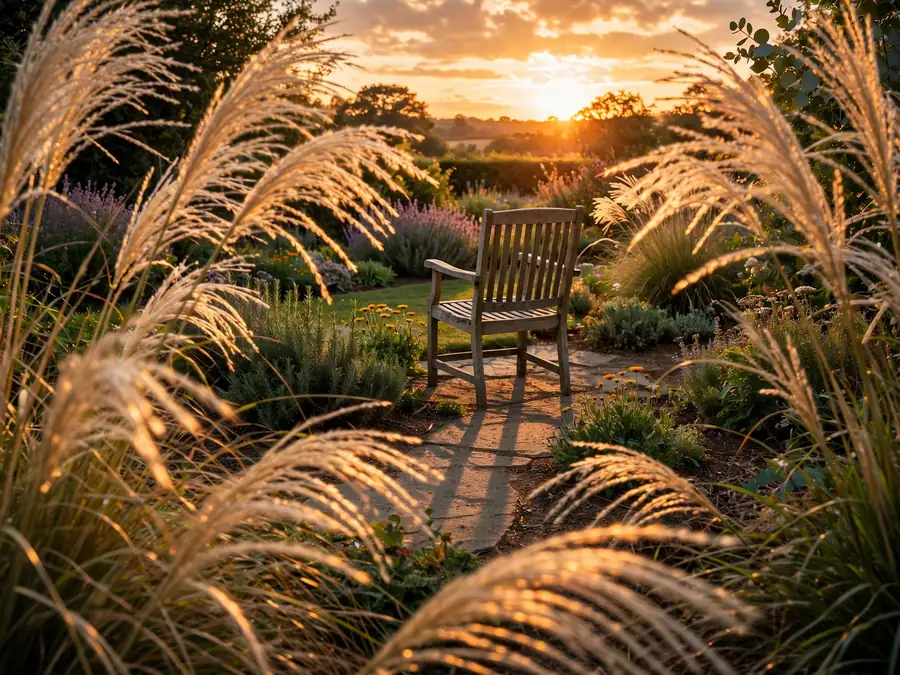
| Sunset | West-facing single chair | Miscanthus plumes for backlight |
16. Angle a Seat Toward the Fall Color
Most seats are placed for summer and abandoned by October. Angle one chair toward the garden’s autumn performers instead: an amsonia turning clear gold, a compact sumac with orange-red leaves, and purple New England asters at their feet. From mid-September the view does all the decorating, and a folded wool throw over the chair arm handles the chill. The catch: this corner looks ordinary in June — green on green — which is why it feels like a discovery when the color arrives.
Seasonal swap: in May, swing the same chair a quarter turn to face the peonies and iris; one seat, two seasons of starring views.
17. End the Day in the Last-Light Chair
Reserve one single chair for the day’s final fifteen minutes, facing west at the end of a bed. Plant miscanthus and switchgrass 3 feet in front of it, slightly to the sides, so the low sun comes through the plumes rather than into your eyes. A low stump beside the chair holds a mug, and nothing else is invited. The ritual is the point: the garden gets a closing time, and so do you. Windy evenings scatter seed from the grasses, a small untidiness most people accept.
Why it works:
- Backlit plumes turn plain grass into the evening’s main event.
- A fixed chair and a fixed hour make the habit effortless to keep.
- One seat, facing one view, keeps the corner calm instead of busy.
Start With One Seat, Then Let the Plants Close In
None of these corners asks for a redesign. Each begins with a chair or bench you probably already own, placed inside the planting instead of in front of it, and lets scent, texture, low edges, and planted shade do the enclosing that walls and fences usually get hired for. Choose the idea that matches the hour you are most likely to sit — the morning perch, the fern hollow, the last-light chair — and let the rest of the garden stay exactly as it is for now.
Your one next step: this weekend, carry one chair into your favorite bed, sit in it for ten full minutes at the time of day you would actually use it, and only then decide what to plant around it.