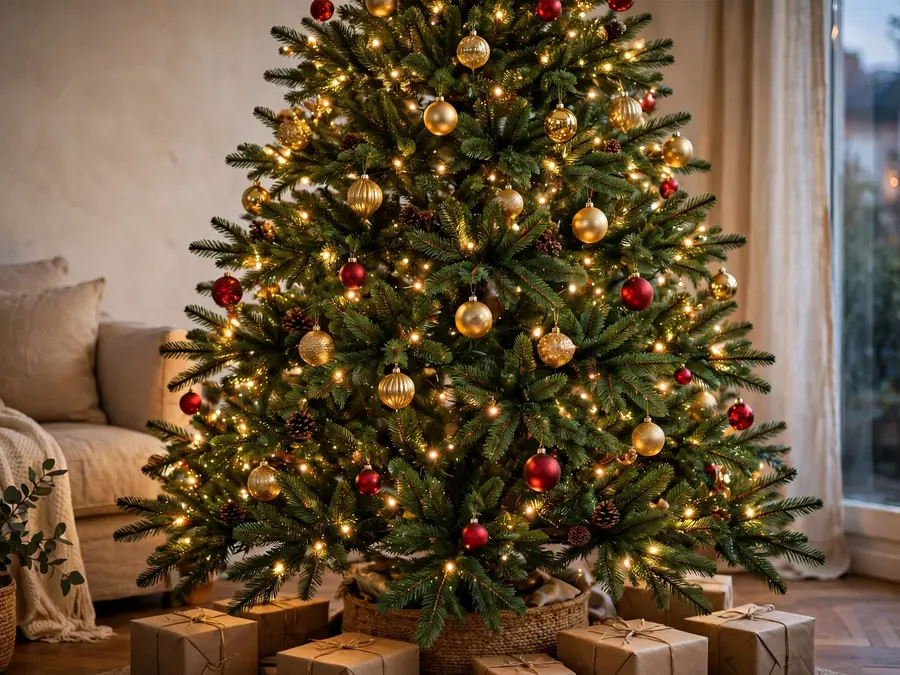
The difference between an artificial tree that fools your guests and one that screams “plastic” comes down to a handful of numbers printed on the box. The artificial Christmas tree has come a long way from the bottle-brush models of the 1960s: molded needle tips, hinged branches and dense pre-lit canopies mean the best modern trees are hard to tell from a fresh-cut fir until you touch them. The trick is knowing which specs actually produce that effect, and which are just marketing.
This guide works the way good buying guides should. First, the five numbers that decide how a tree looks, fits and lasts. Then the honest cost-per-year math against a real tree. Then fifteen tree types grouped by what you actually need — realism, a small room, a tight budget, or a flocked and colored look — each with the specs worth paying for and the ones you can skip.
How to Choose: The Five Numbers That Matter
Ignore the adjectives on the box (“luxurious,” “designer,” “ultra-realistic”) and check these five measurements instead. Together they predict fullness, fit and realism better than any photograph.
- Height. Measure your ceiling and subtract about 6 inches for the topper, plus an inch or two of stand. An 8-foot ceiling suits a 7.5-foot tree at most; a 7-foot tree is safer and looks less cramped. Leave the same clearance thinking for your statement tree toppers, which can add 8–12 inches on their own.
- Diameter. A full 7.5-foot tree is usually 52–59 inches wide at the base. Measure the floor spot, not just the ceiling: the lowest branches need roughly 6 inches of clearance from walls and furniture on every side.
- Tip count. Tips are what your eye reads as fullness. For a 7.5-foot full tree, look for 1,200 tips or more; under 800 usually looks sparse no matter how long you fluff. Slim trees need fewer tips because the same count is packed into a narrower shape.
- PE vs PVC. PE (polyethylene) tips are molded from real branches, so each needle has shape and texture — this is where realism comes from. PVC tips are flat cut strips: cheaper, less lifelike up close. Many good mid-priced trees mix PE on the outer, visible branch ends with PVC deeper inside where nobody sees it.
- Pre-lit vs unlit. Pre-lit saves real time and looks evenly spaced, but when a section fails years later, repairs are fiddly. Unlit trees cost less and let you replace or upgrade lights anytime. If you go pre-lit, a 7.5-foot tree should carry at least 500 bulbs, and LED bulbs outlast incandescent ones by years.
Real vs Artificial: The Cost-Per-Year Math
Run the numbers on a ten-year window, because that is a realistic lifespan for a decent artificial tree. A fresh-cut tree typically costs $70–$100 each year depending on size and region, so ten Christmases of real trees add up to roughly $700–$1,000 — before stand replacements, disposal bags and the annual price creep.
A good mid-range artificial tree costs $250–$400 once. Spread over ten years, that is $25–$40 per year. Add a $25 storage bag and the electricity both tree types share, and the artificial tree breaks even somewhere in year three or four, then saves money every year after. The honest caveats: a cheap $100 artificial tree may only look good for four or five seasons, which pushes its cost per year back up near $25 anyway, and if you simply love the smell and ritual of a real tree, no spreadsheet settles that. But on cost alone, artificial wins from about year four onward.
Here is the whole picks section at a glance — the six tree families, what they are made of, how real they look, and what they usually cost.
| Tree Type | Tip Material | Realism | Typical Price Range | Best For |
|---|---|---|---|---|
| Classic Realistic | Full PE | Highest | $300–$600+ | The main living-room tree |
| PVC Budget | PVC | Basic | $50–$120 | First trees and playrooms |
| Slim / Pencil | PE or PVC | Medium | $80–$250 | Apartments and corners |
| Flocked | PE or PVC with flocking | High, snowy look | $150–$450 | White winter themes |
| Pre-Lit Colored | PVC | Medium | $120–$300 | Bold color schemes, fast setup |
| Tabletop | PE or PVC | Medium | $25–$80 | Desks, sideboards, kids’ rooms |
Most Realistic
Full PE Fraser Fir
This is the benchmark for realism: every outer tip is molded PE, shaped from actual Fraser fir branches, with the species’ signature layered, upswept branch structure and deep green color. The branches are spaced the way a real fir grows, so ornaments hang inside the canopy instead of perching on a solid green cone. It is the heaviest, priciest type here, and it rewards patient fluffing — open each branch, then fan every tip.
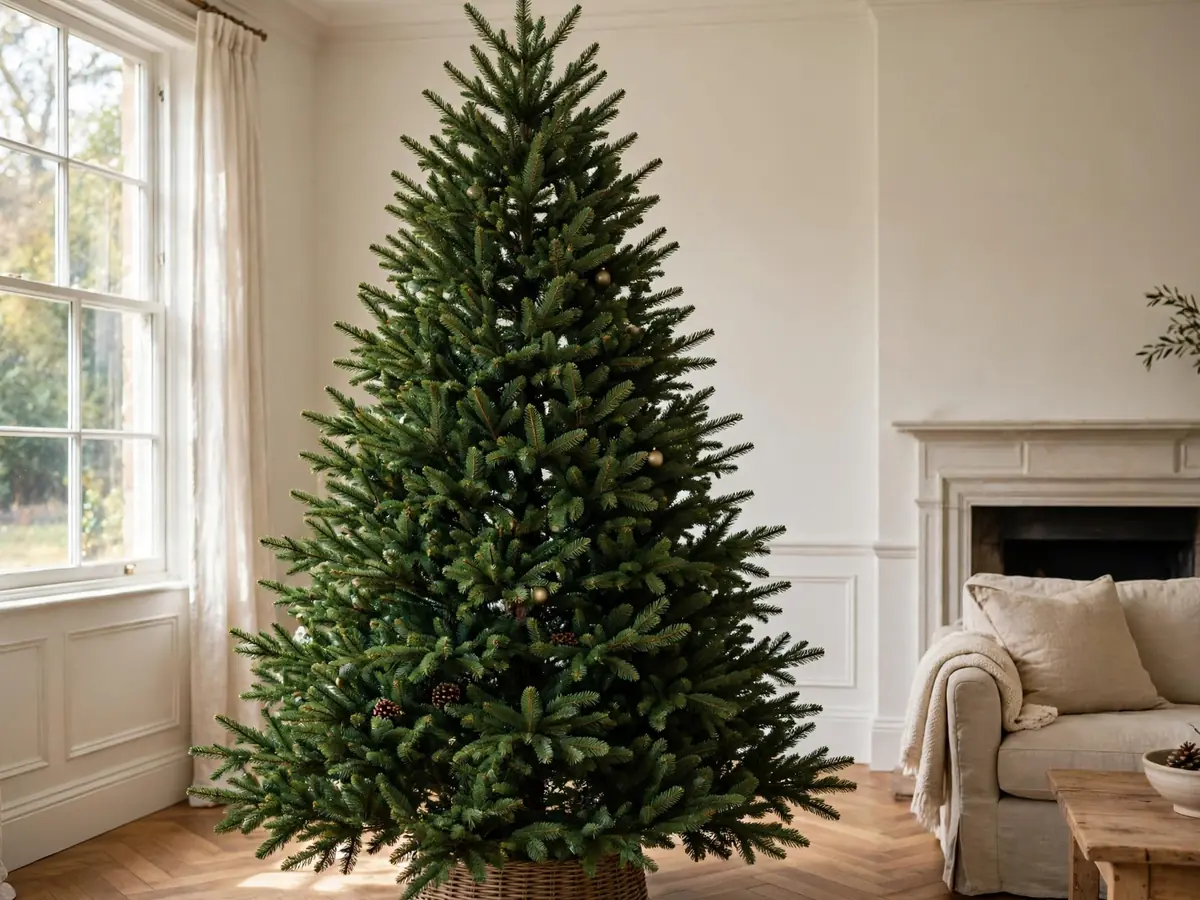
Best for: the main living-room tree in a home that decorates heavily and keeps a tree for a decade.
Key specs: 7.5 ft · 55–59 in diameter · 1,400+ PE tips · hinged branches · unlit or LED pre-lit.
Mixed PE and PVC Blue Spruce
The smart-money realistic tree. PE tips do the visible work on the outer branch ends, while cheaper PVC fills the interior where it only needs to block see-through gaps. The blue spruce coloring — a blue-green with silvery new growth at the tips — is distinctive and hides the artificial look better than plain green, because your eye reads the color variation instead of the material. From couch distance, most guests will not spot the difference from a full-PE tree costing twice as much.
Best for: buyers who want 90 percent of the realism for about half the price.
Key specs: 7.5 ft · 52–56 in diameter · 1,200+ tips, at least half PE · hinged branches.
Downswept PE Douglas Fir
Douglas fir branches droop softly downward, and this molded-PE version copies that habit faithfully. The downswept shape leaves natural pockets between branch layers, which is exactly what oversized ornaments, ribbon and floral picks need. It suits relaxed, nature-led decorating — woodland ornaments, pinecones, burlap — and pairs beautifully with the softer Christmas tree themes built around texture rather than glitter. Needles are a medium green, slightly lighter than a Fraser, and the overall silhouette reads gentle rather than formal.
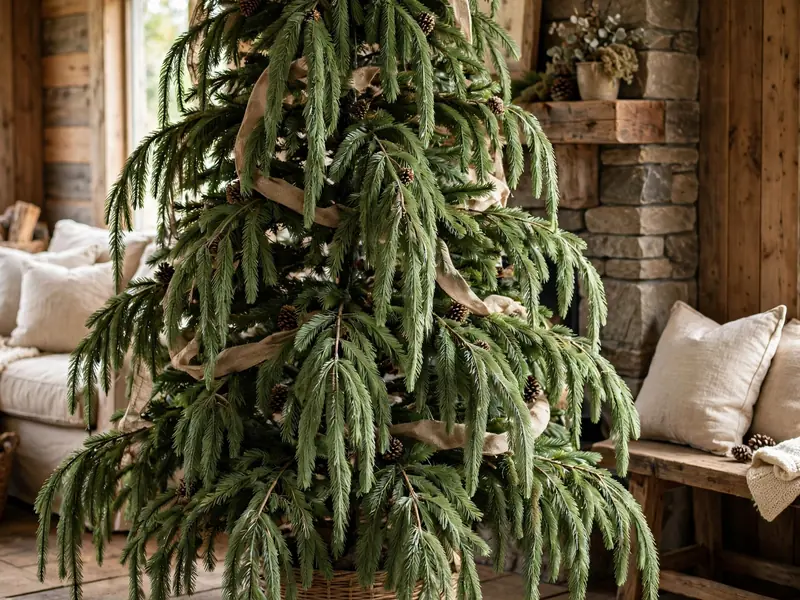
Best for: ornament collectors and rustic or woodland decorating styles.
Key specs: 7.5 ft · 54–58 in diameter · 1,300+ PE tips · hinged branches · generous branch spacing.
Sparse Alpine Fir
The deliberate exception to the tip-count rule. Alpine-style trees copy young mountain firs: a visible trunk, branches in separated tiers, and lots of air between them. The low tip count is the design, not a flaw — it shows off a curated ornament collection one piece at a time and lets light travel through the tree. This style photographs beautifully and suits Scandinavian and minimalist rooms. It is a poor choice if you own hundreds of ornaments or want a lush, full look.
Best for: minimalist and Scandinavian rooms, and small ornament collections worth showing off.
Key specs: 6–7.5 ft · 40–46 in diameter · 600–900 tips by design · visible trunk wrap or real-wood pole.
Small Spaces and Apartments
Slim Pencil Spruce
The pencil tree solves the most common apartment problem: plenty of height, almost no floor. At 24–30 inches wide, a 7-foot pencil spruce fits the corner beside a sofa, a hallway nook or a narrow entryway where a full tree would swallow the room. Because the tips are packed into a narrow column, even a modest tip count looks full. Decorating tip: this silhouette loves vertical styling — one long ribbon cascade and ornaments concentrated on the outer face.
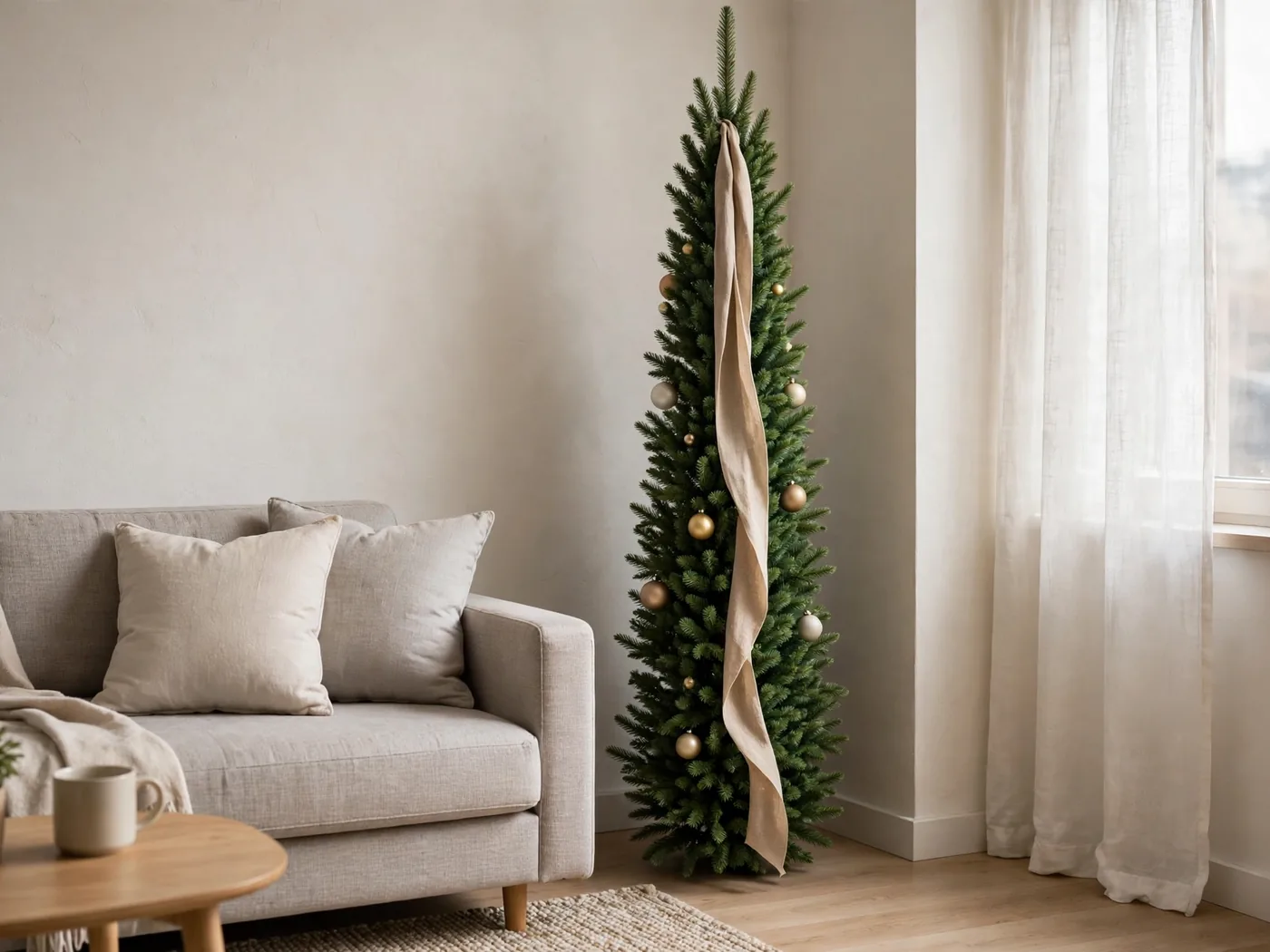
Best for: apartments, hallways, and second trees in bedrooms or dining rooms.
Key specs: 6–7.5 ft · 24–30 in diameter · 800+ tips for 7 ft · lightweight, easy to store upright.
Flat-Back Half Tree
A half tree is exactly what it sounds like: a full-looking front with a flat back that sits flush against the wall, using half the floor depth of a normal tree. From anywhere in the room it reads as a complete tree. It is the right answer for a tree that must stand in a walkway, between a wall and a sofa, or in a studio where every inch of depth is spoken for. Check the stand design — the best versions have an extended flat base that resists tipping.
Best for: studios, tight living rooms and trees placed in walkways.
Key specs: 6–7.5 ft · full width 40–48 in · depth roughly half the width · wall-side stand.
Tabletop Fir
A 2–3 foot tree that lives on a sideboard, desk, kitchen counter or a child’s dresser. The better tabletop firs use the same molded PE tips as full-size trees, just scaled down, and come in a weighted pot or burlap-wrapped base that hides the stand entirely. They are also the lowest-commitment way to add a tree to a bedroom or home office. Battery-operated micro lights suit them best — no cord trailing off the furniture.
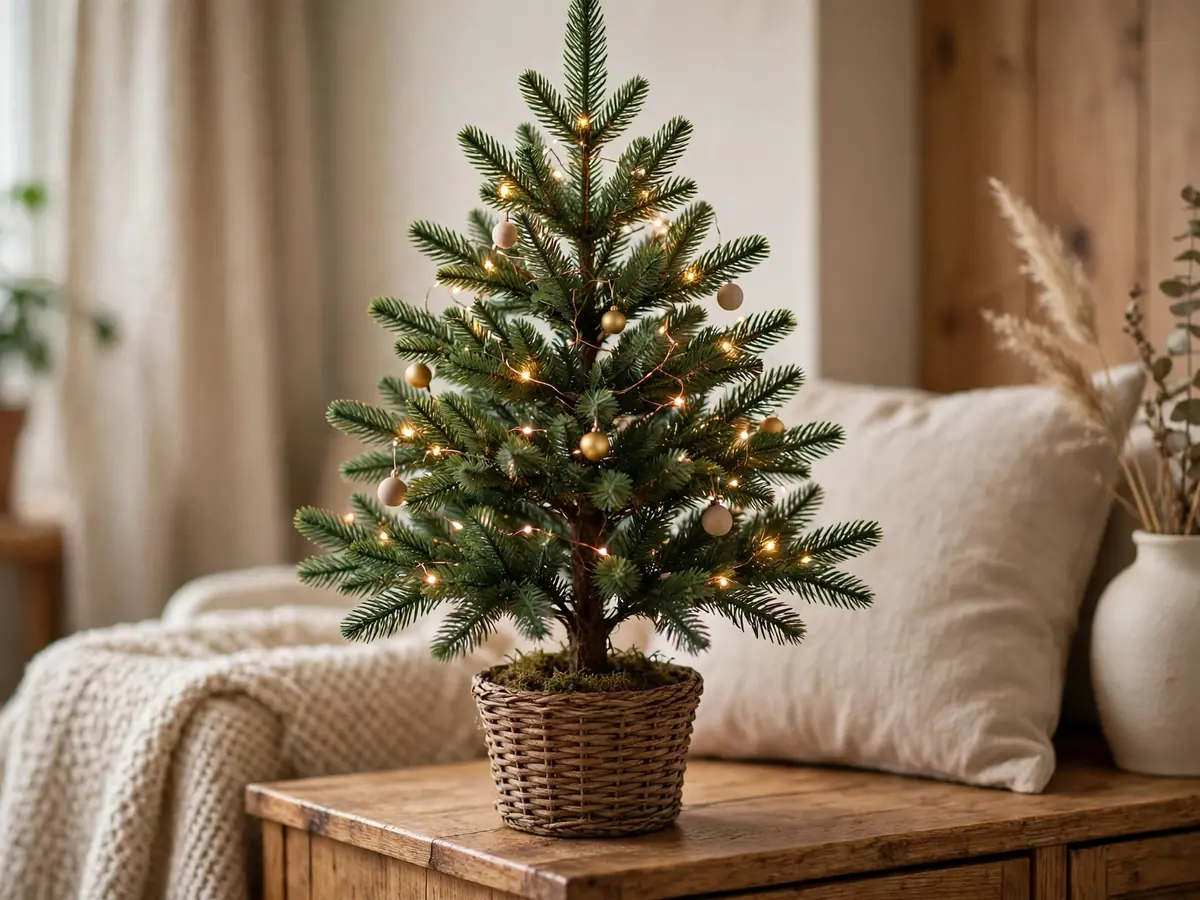
Best for: desks, sideboards, kids’ rooms and anyone adding a second or third tree.
Key specs: 2–3 ft · 16–22 in diameter · potted or weighted base · PE tips if budget allows.
Quarter Corner Tree
The corner tree takes the flat-back idea one step further: two flat sides meet at a right angle, so the tree tucks into a 90-degree corner and presents a rounded, full face to the room. It reclaims the single most wasted spot in most living rooms. Decorate the visible face only, which means your ornament collection stretches further, and the corner placement keeps branches out of traffic entirely — a quiet bonus in homes with toddlers and dogs.
Best for: living-room corners and rooms where wall space is free but floor space is not.
Key specs: 6–7 ft · two flat wall sides · corner-shaped stand · full-face tip density.
Budget-Friendly
Classic PVC Pine
The under-$100 staple found in every big-box store each November. Flat PVC needles will never fool anyone up close, but at this price that is not the job — the job is a full, green, cheerful tree for a first apartment, a dorm or a playroom. Fluffing matters more here than on any other type: spread every branch tip in a star pattern and the tree gains a third more visual fullness. Keep expectations set and it over-delivers.
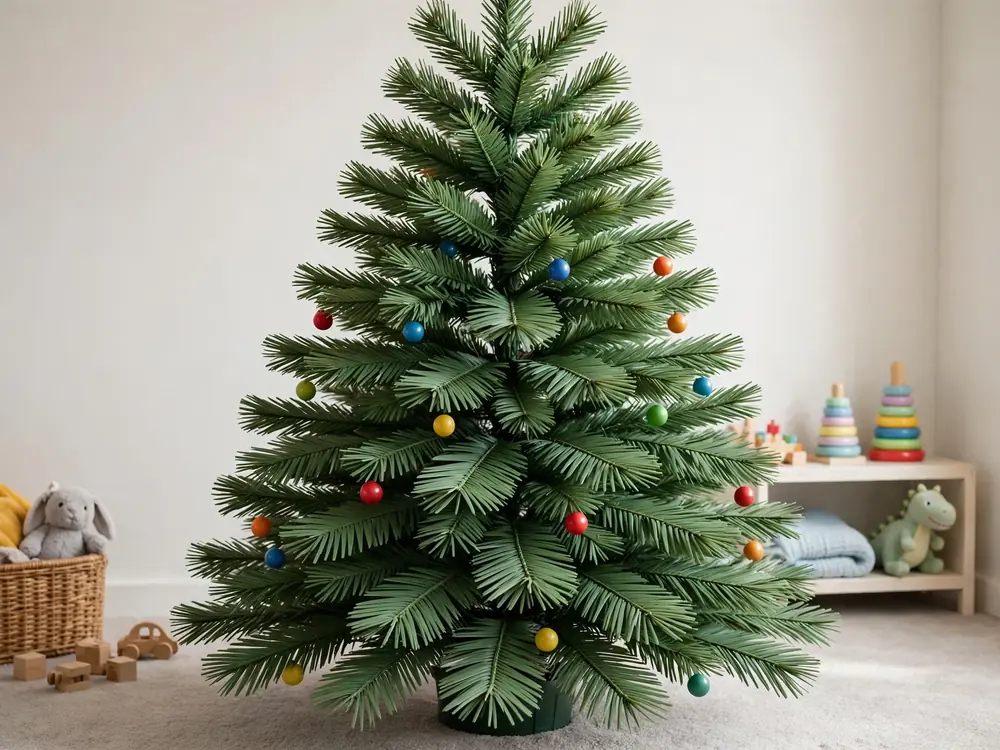
Best for: first trees, playrooms and tight budgets that still want a full-size tree.
Key specs: 6–7.5 ft · all PVC · hook-in or hinged branches · typically under $100.
Unlit Hinged Spruce
The budget pick for people who plan to keep a tree for years. Skipping factory lights cuts the price significantly, and hinged branches — which fold up with the section for storage — make setup a ten-minute job instead of a forty-minute one. Add your own LED string lights for a fraction of the pre-lit premium, and when a string eventually fails you replace a $15 strand, not a tree. Look for a metal stand and a tip count of at least 1,000 at 7.5 feet.
Best for: patient decorators who want durability and replaceable lights on a budget.
Key specs: 7.5 ft · 1,000+ tips · hinged sections · metal stand · unlit.
Entry-Level Pre-Lit Fir
For anyone who wants to unbox, plug in and decorate in one evening, this is the cheapest route to a pre-lit tree. Needles are PVC and the light count is modest — usually 300–500 bulbs at 7.5 feet — so the glow is gentle rather than blazing. Read the warranty before buying: at this price the lights are the weak point, and a two- or three-year light warranty is worth a small premium over a no-name equivalent.
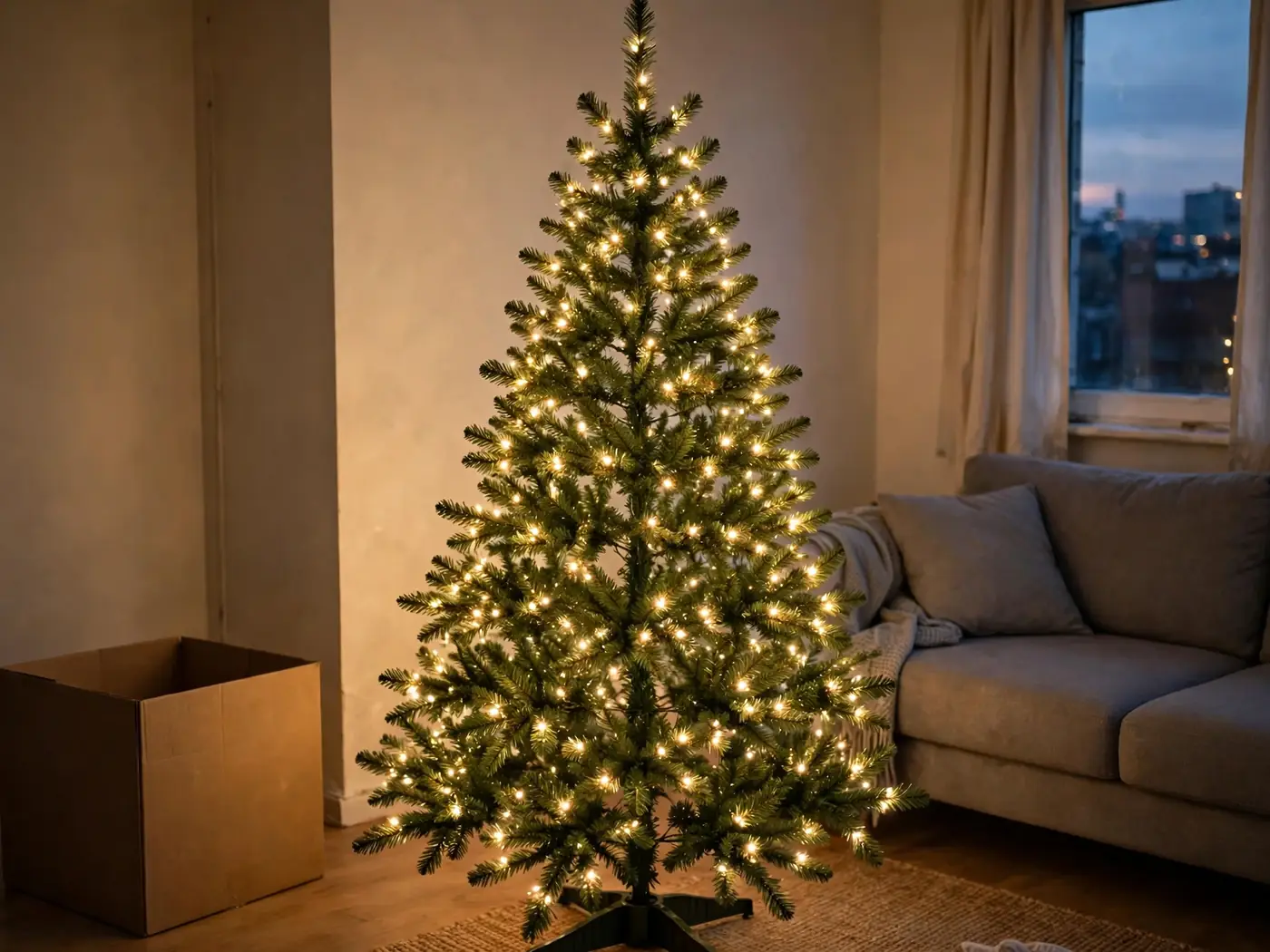
Best for: first apartments and anyone who values one-evening setup over realism.
Key specs: 6–7.5 ft · PVC tips · 300–500 pre-lit bulbs · check the light warranty.
Flocked and Colored
Heavily Flocked Snowy Pine
The full winter-wonderland tree: branches coated in thick white flocking that mimics fresh, heavy snow. It is the most dramatic backdrop for red, gold or all-white ornaments, and it lights a room on its own. Two honest warnings. Flocking sheds — expect white dust on the floor at setup and takedown every year, and keep a vacuum nearby. And flocked branches are stiffer, so heavy ornaments belong on the inner branch, close to the trunk.
Best for: snowy, white-and-metallic themes and anyone who wants the tree itself to be the spectacle.
Key specs: 7.5 ft · heavy flocking over PE or PVC · warm-white lights show best · budget setup time for shedding cleanup.
Lightly Frosted Spruce
The compromise flock: just the outer tips are dusted white, as if the tree caught the first frost of the season. You keep most of the green, most of the realism, and only a fraction of the shedding. Frosted trees pair well with natural decor — wood, rattan, linen — where a heavily flocked tree can look too theatrical. If you like the snowy idea but live with dark floors that show every white speck, this is your tree.
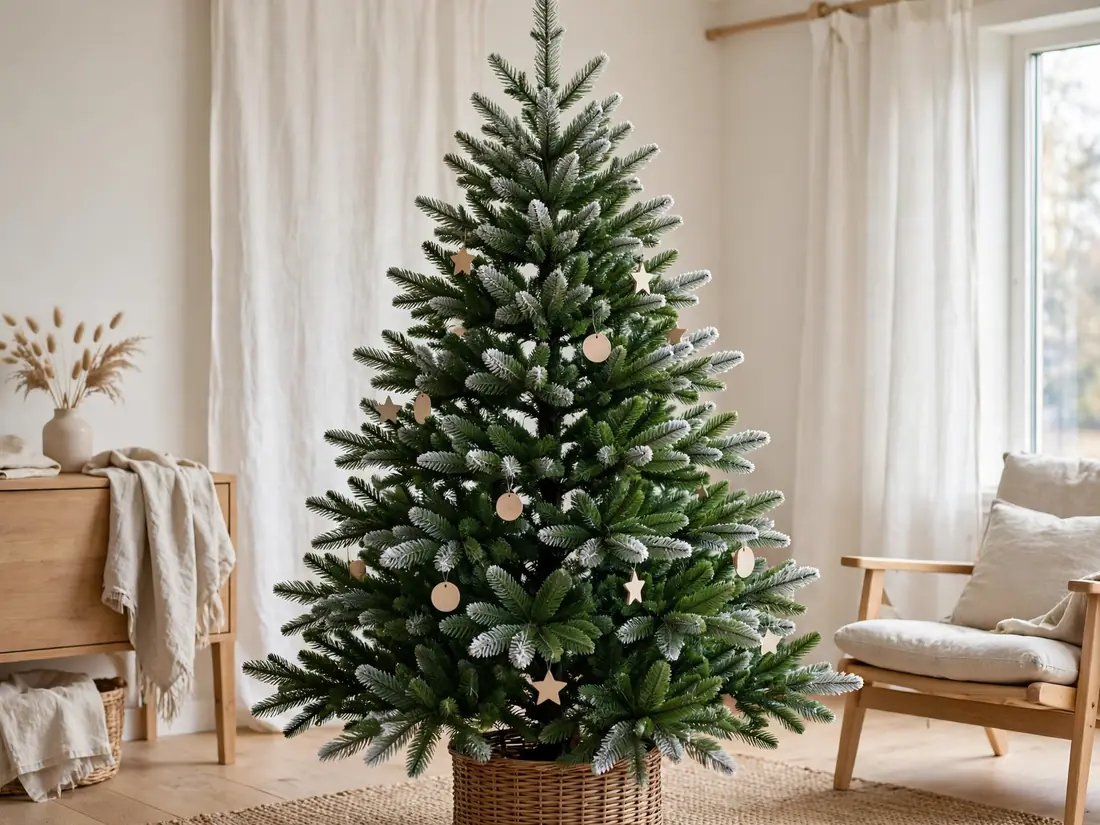
Best for: natural and Scandinavian styles, and flock-curious buyers worried about mess.
Key specs: 6–7.5 ft · tip-only flocking · green base color still dominant · light shedding.
White PVC Tree
A white tree is a color strategy, not a novelty. The bright neutral canopy makes colored ornaments look more saturated, metallics look cleaner, and pastel schemes — blush, mint, baby blue — finally read the way they do in photographs. White trees also suit retro and pop decorating themes that a green tree fights against. Choose warm-white lights to keep the branches creamy rather than blue-grey, and store the tree bagged and out of sunlight, because white PVC yellows with UV exposure over the years.
Best for: pastel, retro and modern color schemes, and ornament collections in bold colors.
Key specs: 6–7.5 ft · white PVC · warm-white lights · needs a storage bag kept out of sunlight.
Black Statement Tree
The boldest pick on this list. A black tree turns gold, silver and jewel-tone ornaments into something genuinely glamorous, doubles as Halloween decor in October, and photographs like a magazine shoot. It does need more light than a green tree — plan on extra light strings or a pre-lit model with a high bulb count, because black branches absorb light instead of reflecting it. In a small or dark room it can read heavy; in a bright, modern space it is unforgettable.
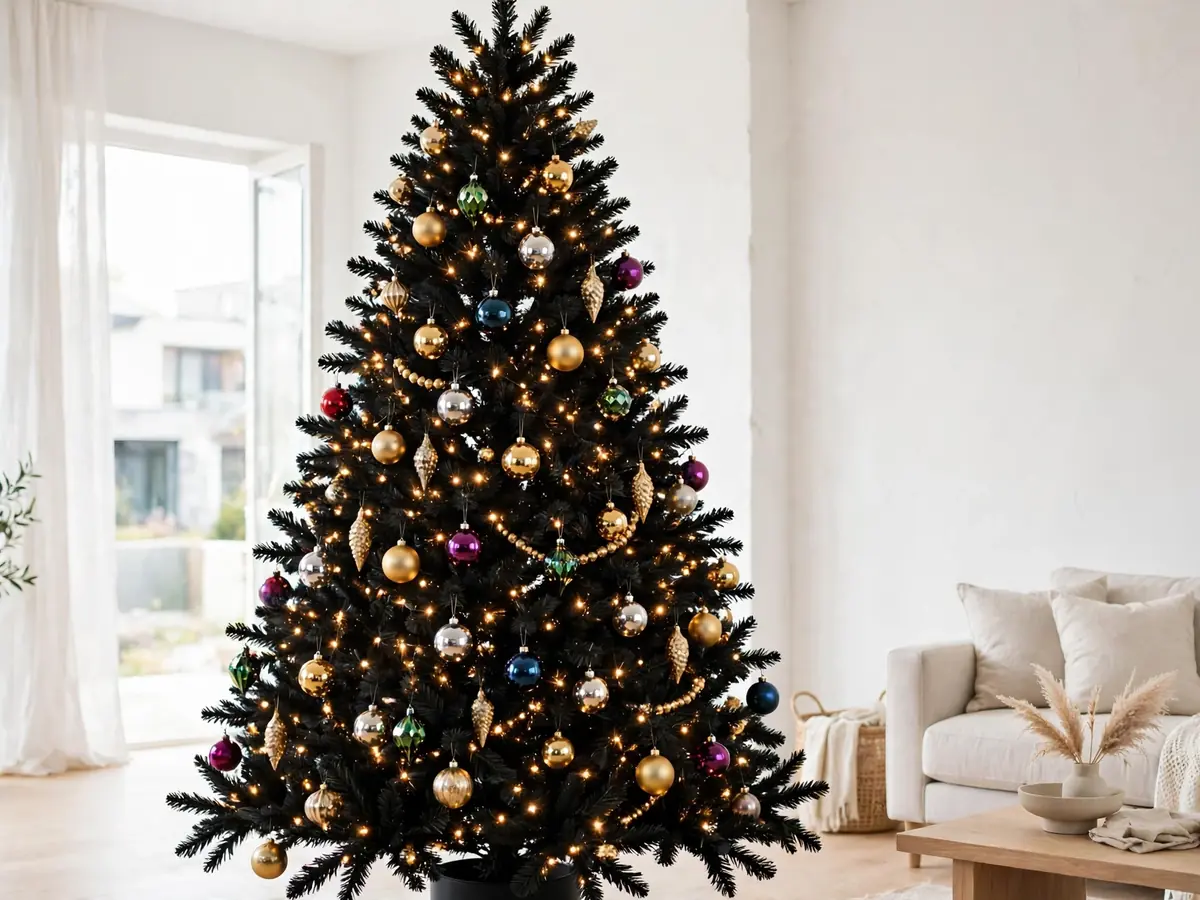
Best for: glam and modern themes, metallic ornaments, and two-holiday use.
Key specs: 6–7.5 ft · black PVC · high light count essential · metallic ornaments show best.
Troubleshooting: Dead Light Sections, Leaning and Patchy Branches
A dead section on a pre-lit tree. Work in order: check the plug and the fuse in the plug head first, then wiggle each bulb in the dead section — one loose or dead bulb can kill a series-wired section. Most pre-lit trees include spare bulbs and fuses in the box. If the section stays dark, run a separate light string through that area this year and decide about repair in January, not mid-December.
A leaning tree. The usual cause is a section pole not fully seated, or a stand screw pattern tightened unevenly. Strip the tree, reseat each section with a firm twist, and tighten stand screws in rotation, a little at a time. A tree leaning at the trunk joint on a sloped floor can be leveled with a thin shim under one stand foot.
Patchy, see-through branches. Almost always a fluffing problem, not a tree problem. Work bottom to top, pull each branch down and out, then separate every tip into a V or star. Fill remaining gaps by hanging your largest ornaments deep inside the canopy, near the trunk, where they block the see-through line to the pole.
Pet and Toddler Proofing
An artificial tree removes the real-tree hazards — no toxic sap water, no needle shedding to eat — but it adds a few of its own. Anchor the tree: a heavy stand, a discreet fishing-line tether to a wall hook, or a corner placement all stop a climbing cat from bringing the whole thing down. Hang unbreakable ornaments on the bottom third and keep glass, hooks and small detachable pieces above toddler reach; use ribbon or fabric loops instead of wire hooks on low branches. On flocked trees, discourage chewing — flocking is not food, and a persistent chewer is a reason to choose an unflocked tree. Finally, cover or route cords along the wall so there is nothing tempting to bite or trip over at floor level.
FAQ
How long does an artificial tree last?
A mid-quality tree kept boxed or bagged in a cool, dry spot typically looks good for seven to ten years. The tree itself rarely wears out first — pre-lit light sections and crushed-from-storage branches are what age it. Storing sections without crushing them, and fluffing patiently each year, is what gets a tree to the long end of that range.
Are pre-lit trees worth it?
If you value fast setup and evenly spaced light, yes — pre-lit saves 30–45 minutes of stringing every year. If you plan to keep the tree a decade or like changing light colors, unlit is the safer buy, because lights are the component most likely to fail first and the hardest to repair on a pre-lit tree.
How do I store an artificial tree?
Compress each section gently, branch tips pointing the way they grew, and store sections in a zippered tree bag rather than the original box, which usually tears by year two. Keep the bag somewhere temperature-stable — a closet or under-bed space beats a hot attic, which can make PVC brittle and white trees yellow.
Can I put an artificial tree outside?
Only if it is rated for outdoor use. Indoor trees have unprotected plugs and metal parts that rust and short in wet weather. For a porch tree, choose an outdoor-rated model or keep an indoor tree under a deep covered porch, plugged into a GFCI outlet, and bring it in during storms.
Whichever type you choose, judge it by the five numbers, fluff it like you mean it, and finish the base properly — a tree this well chosen deserves one of these Christmas tree skirt ideas rather than a bath towel. Buy the best tree your budget reaches this year, and it will quietly pay you back every December for a decade.