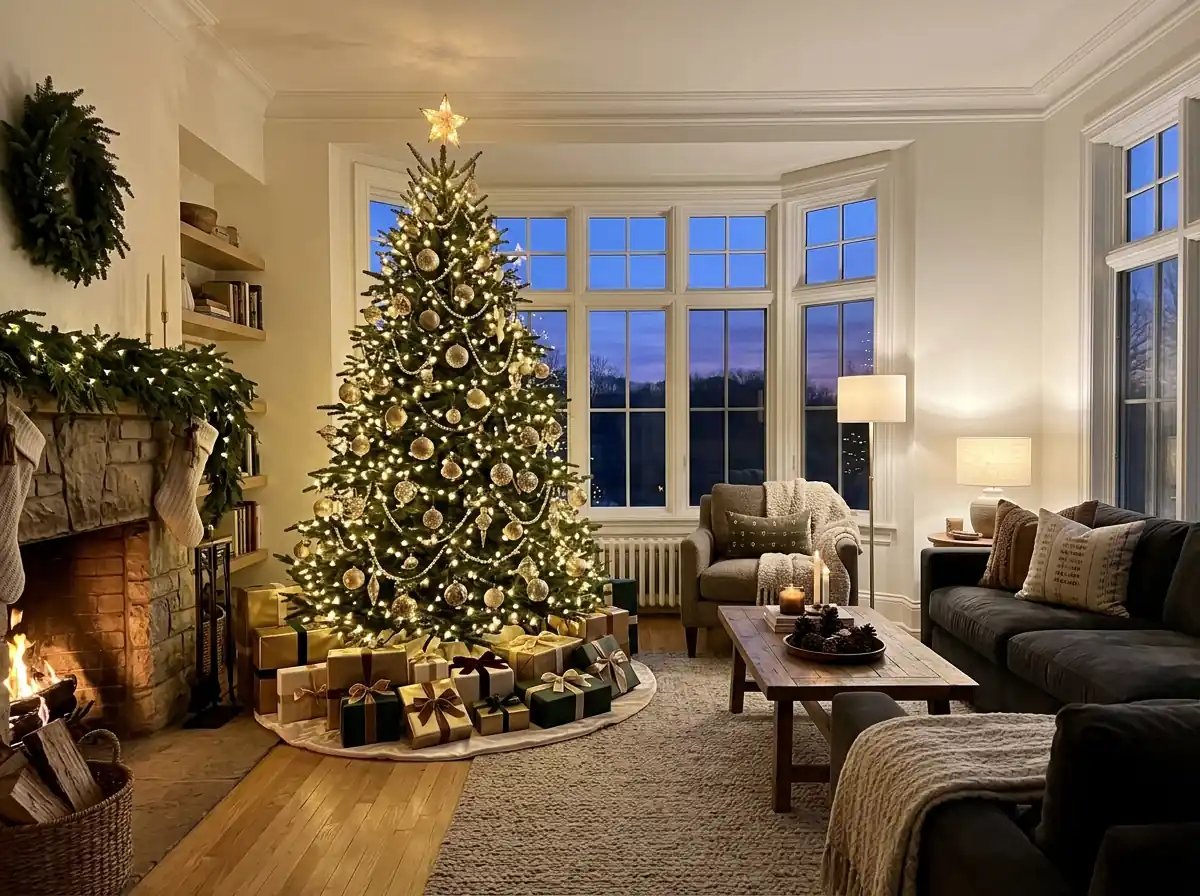
The tree is up by six, the lights are on by seven, and by nine you are standing on the step stool with a box of mismatched ornaments in one hand and no real plan in the other. That is how most trees end up decorated: whatever came out of the box first, placed wherever there was a gap, until the whole thing looks busy instead of finished.
A themed tree fixes that without any extra shopping. A theme is just a decision made once — a palette, a small family of materials, and one or two shapes that repeat — and every ornament after that either fits the decision or stays in the box. The tree reads as one idea instead of forty small ones, and it photographs the way it looks in real life: calm, deliberate, and pulled together.
The eight themes below are the fresh directions for 2026, and each one runs on ornaments most homes already half-own. None of them needs a matching set bought new. If the tree itself is the weak point — sparse branches show through and swallow small ornaments — it is worth seeing Christmas tree decorating themes in real homes before blaming the decor.
Decide the Story Before You Hang a Single Bauble
Every strong theme is built the same way, whatever the style. Work through these four points before the first ornament leaves the box:
- Pick two or three colors, maximum: a palette is what makes a tree read as a theme; a fourth color is the moment it slips back into random.
- Repeat one material everywhere: wood, glass, metal, or flowers — one texture carried through the whole tree ties unlike ornaments together.
- Vary size, not style: large pieces deep in the branches, small ones at the tips; the shapes can differ, the family cannot.
- Match the finish to the theme: the topper and the skirt are part of the story, not an afterthought added on Christmas Eve.
It also helps to start with the right tree. A dense, realistic base carries any theme you put on it, which is why the Balsam Hill BH Fraser Fir at 6.5 ft, $649, keeps showing up in styled rooms: the branch tips hold heavier ornaments without drooping, and the layered shape gives deep placement somewhere to live. A thinner tree can still work, but it narrows your theme choices — delicate themes survive it, heavy rustic ones usually do not. Once the base is settled, the themes below are mostly about editing what you own, and the wider Christmas decor trends 2026 are leaning the same way: fewer colors, more texture, one clear idea per tree.
1. Woodland Forest: The Tree That Smells Like a Walk Outside
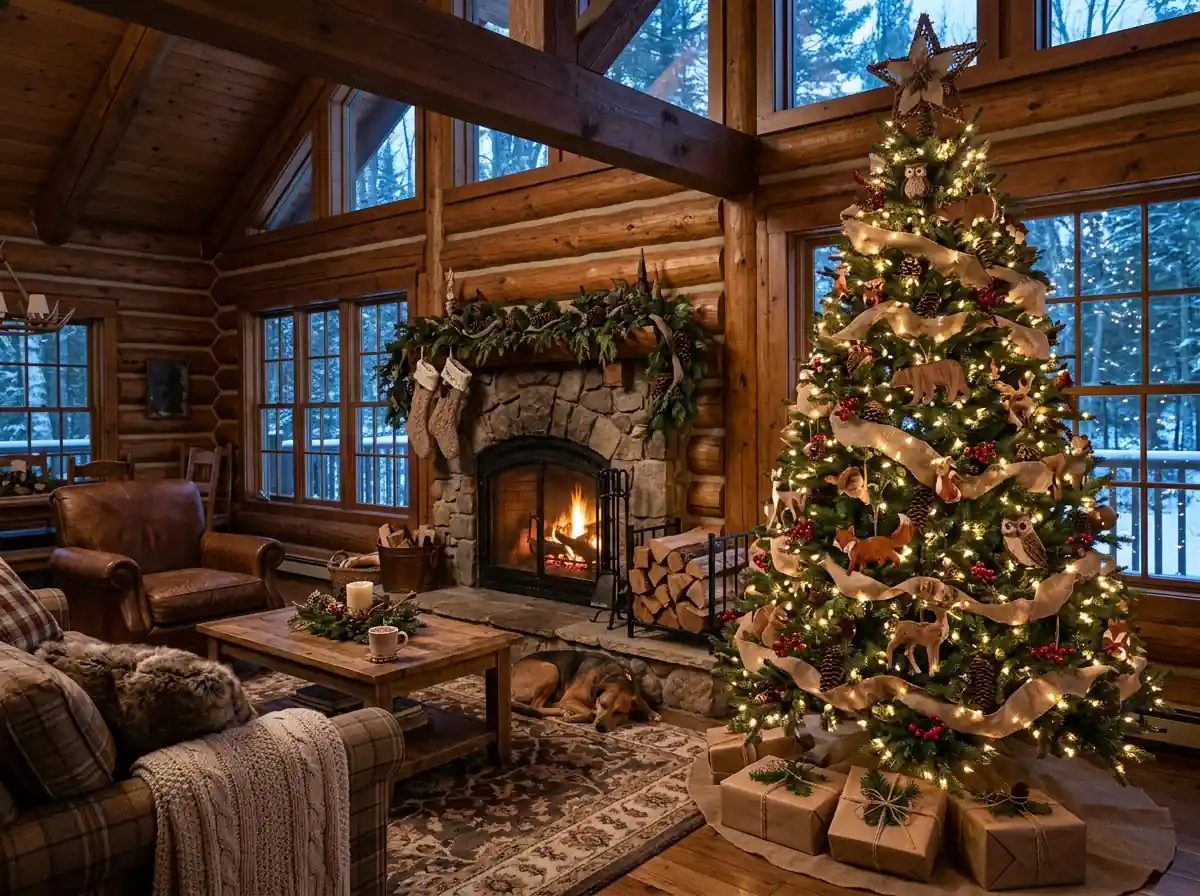
Carved wood ornaments do the heavy lifting here — small deer, mushrooms, owls, and simple turned-wood shapes — with real pinecones wired onto the branches between them, points facing out. Keep glass to a minimum and skip anything felt or plush; the look is gathered, not crafted. A woven willow skirt and a simple wooden star on top finish it. The honest trade-off is weight and storage: real cones are bulky, they shed, and a box of them takes twice the shelf space of baubles.
2. Coastal: Driftwood, Shells, and Sea Glass
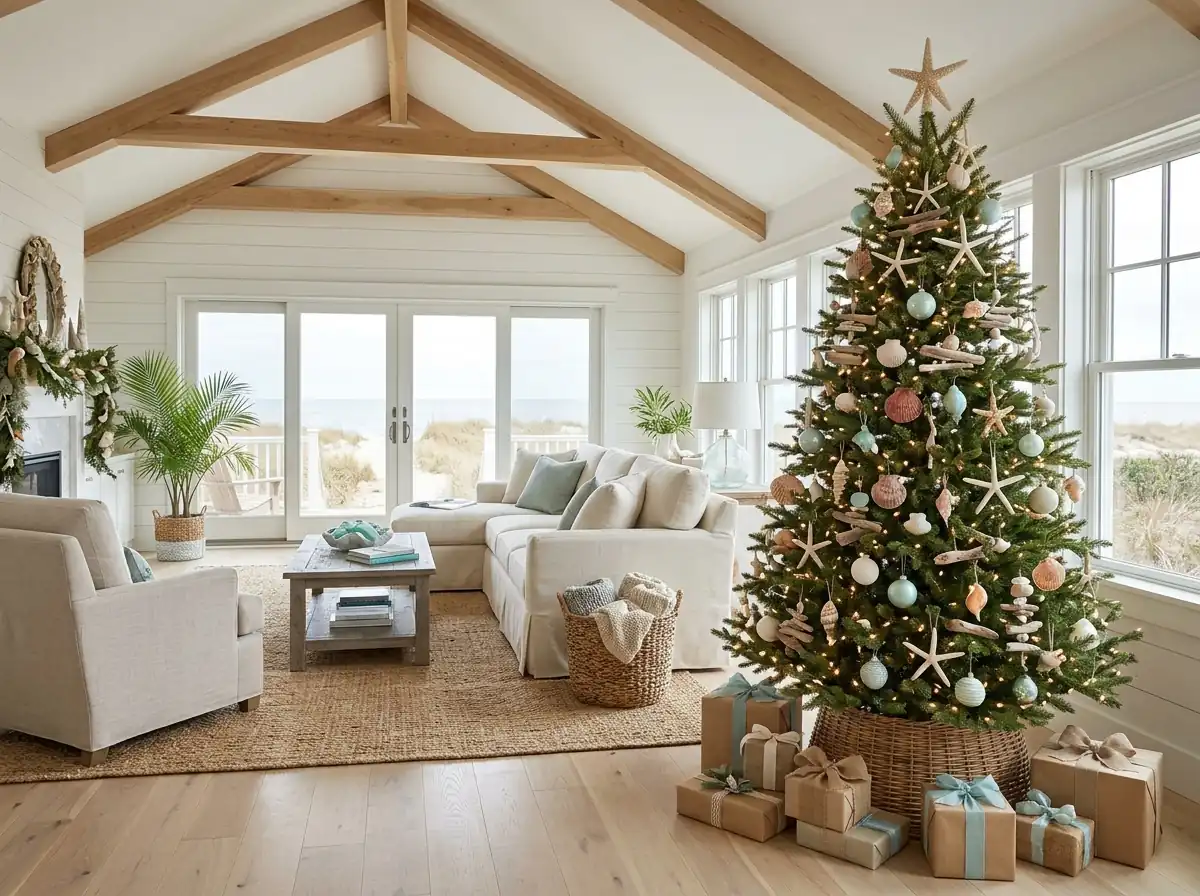
Swap the tinsel for a driftwood garland — short pieces strung on twine — and hang shells, starfish, and sand dollars where the baubles would go. The color comes from glass: sea-glass blue-green ornaments in frosted finishes that catch light the way water does. A natural linen skirt or a rope-wrapped collar keeps the base sandy and plain, and a starfish makes a better topper here than any star. The catch is fragility: real shells chip in storage and crack if the tree comes down in a hurry, so this theme asks for careful packing every January.
| Your home | Best-fit theme | Why it fits |
|---|---|---|
| Small apartment | Champagne Metallic or Black & White Graphic | One tight palette reads deliberate instead of cramped |
| Family home with young kids | Woodland Forest | Natural pieces forgive drops, and half the decor can be gathered outside |
| Formal living room | Victorian Heirloom | Lace, glass and candlelight match furniture that is already dressed up |
| Light, beachy rooms | Coastal | It extends the room’s existing colours instead of fighting them |
3. Champagne Metallic: One Family, Every Finish
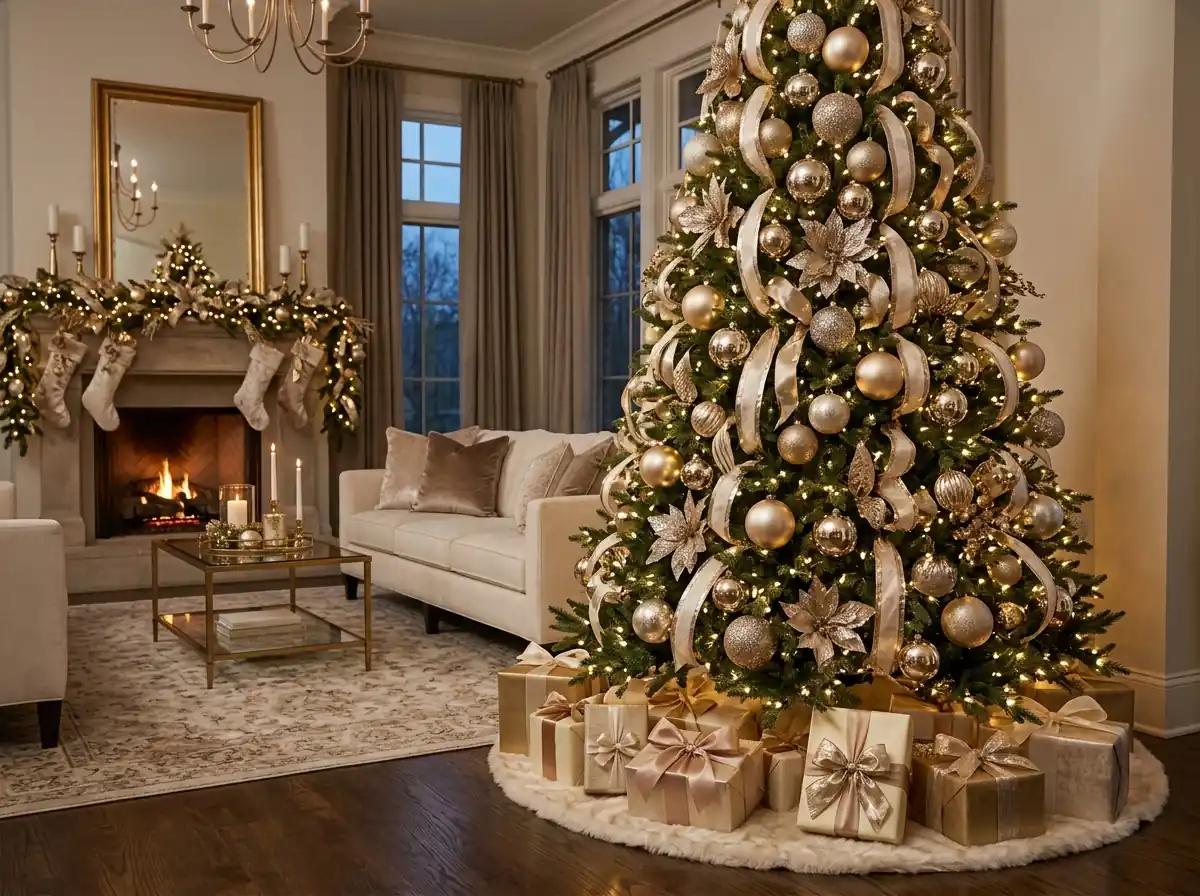
This theme is discipline disguised as glamour. Only metallic baubles go on the tree — gold, champagne, and silver mixed freely — but in every finish available: shiny, matte, glittered, and hammered. The variety of surface does the work that color does on other trees. A mirrored or crystal-beaded skirt echoes the shine at the base, and a metallic star topper keeps the line unbroken. Word of warning: metallics show every fingerprint and every gap in the branches, so this is the least forgiving theme for a sparse tree or a rushed decorating session.
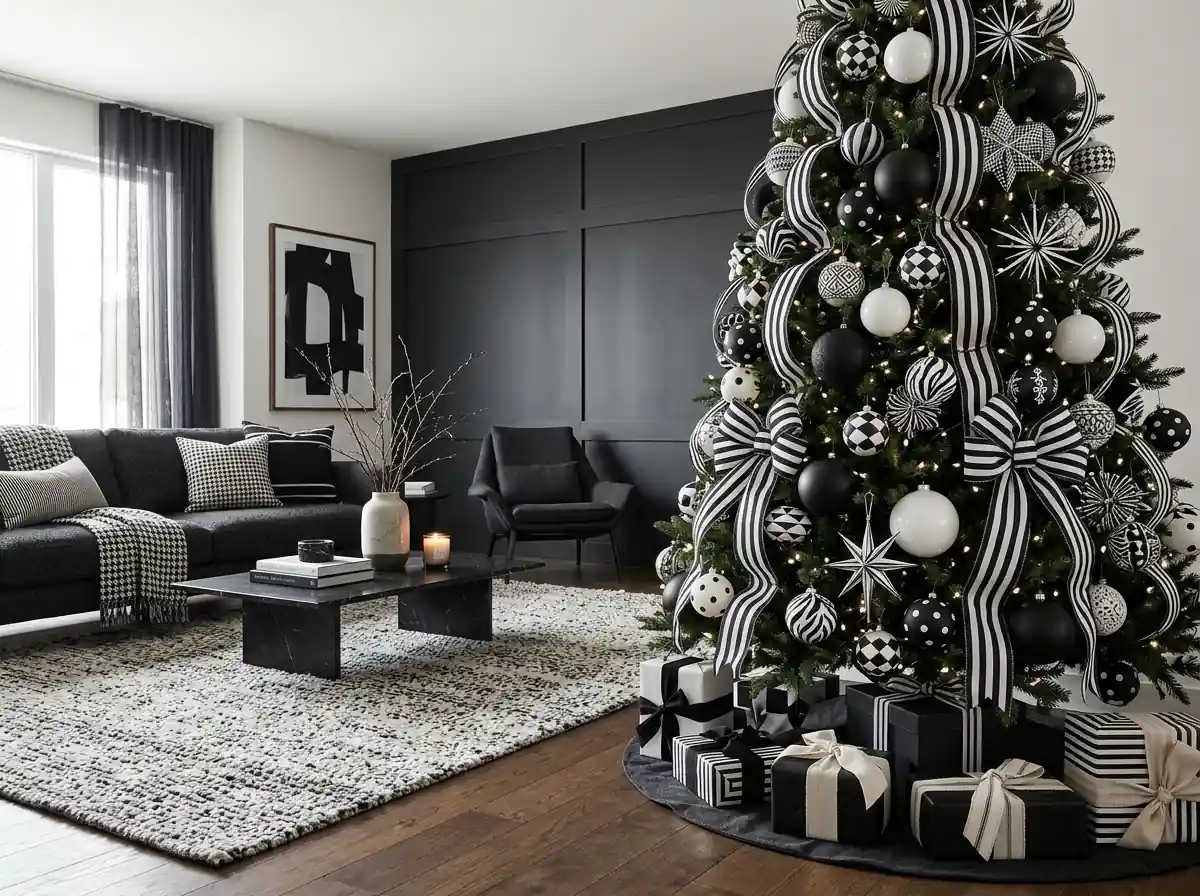
4. Black & White Graphic: Contrast as the Whole Idea
Monochrome baubles only — matte black, glossy white, and clear glass — hung in deliberate blocks rather than scattered evenly. Add wide black-and-white striped ribbon run vertically, and the tree turns architectural, closer to a piece of graphic design than a decoration. A white skirt and a black star topper hold the contrast to the floor. It is the boldest theme on this list and the easiest to tire of: there is no warmth to soften it, so homes that love cozy usually move on after one season.
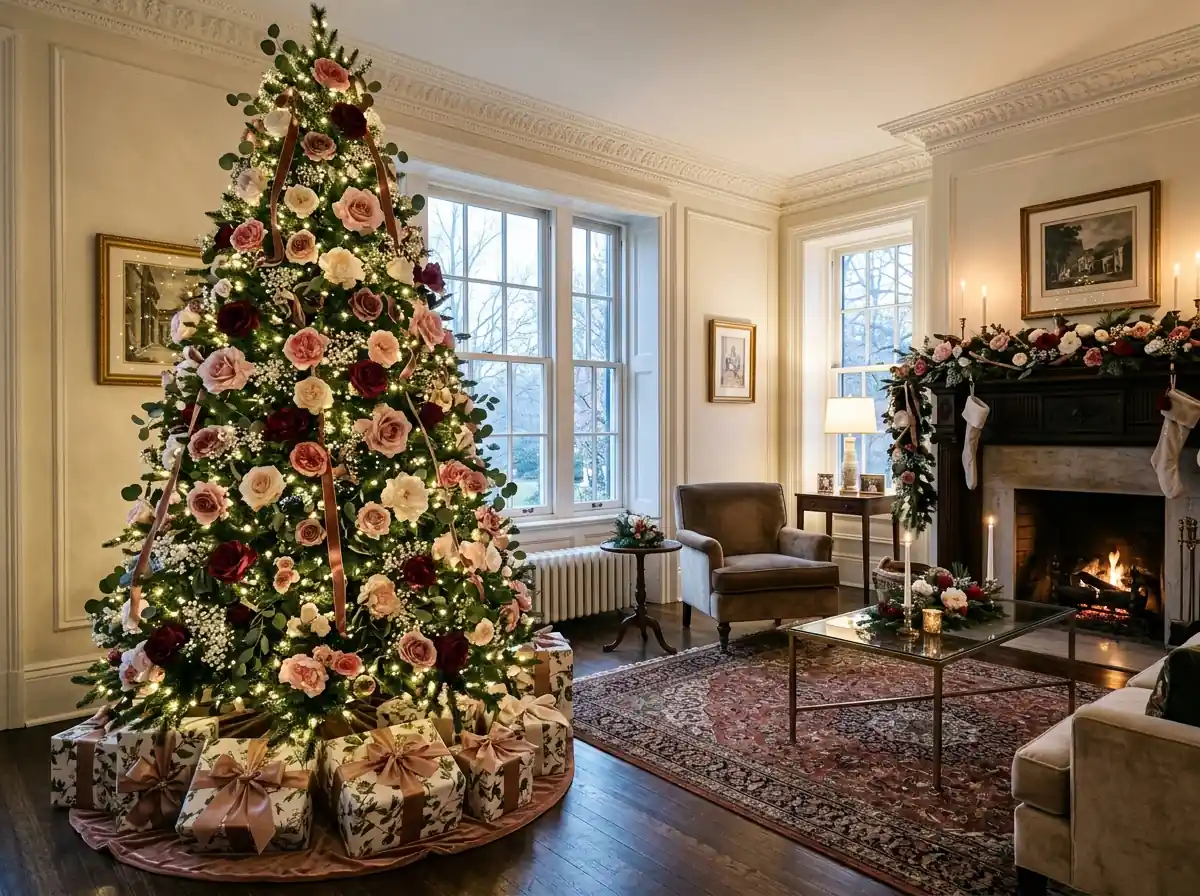
5. The Florist’s Tree: Blooms Where Baubles Should Be
Silk roses and peonies, tucked deep into the branches on short stems, turn the tree into an arrangement. Work in clusters of three, mixing one large bloom with smaller buds, and let a few simple glass baubles in blush or cream fill the gaps the flowers miss. A satin skirt in a dusty floral tone and a small floral pick as the topper finish the illusion. In most homes this is the theme guests ask about — and the one that takes longest to build, because flowers placed too evenly look artificial, and getting the randomness right takes patience.
| Theme | Palette | Key pieces |
|---|---|---|
| Woodland Forest | Bark brown, moss, cream | Carved wood ornaments, pinecones, wooden star |
| Coastal | Sea-glass blue-green, sand, white | Driftwood garland, shells, frosted glass |
| Champagne Metallic | Gold, champagne, silver | Mixed-finish metallic baubles, mirrored skirt |
| Black & White Graphic | Black, white, clear | Monochrome baubles, striped ribbon, black star |
| The Florist’s Tree | Blush, cream, leaf green | Silk roses and peonies, floral pick topper |
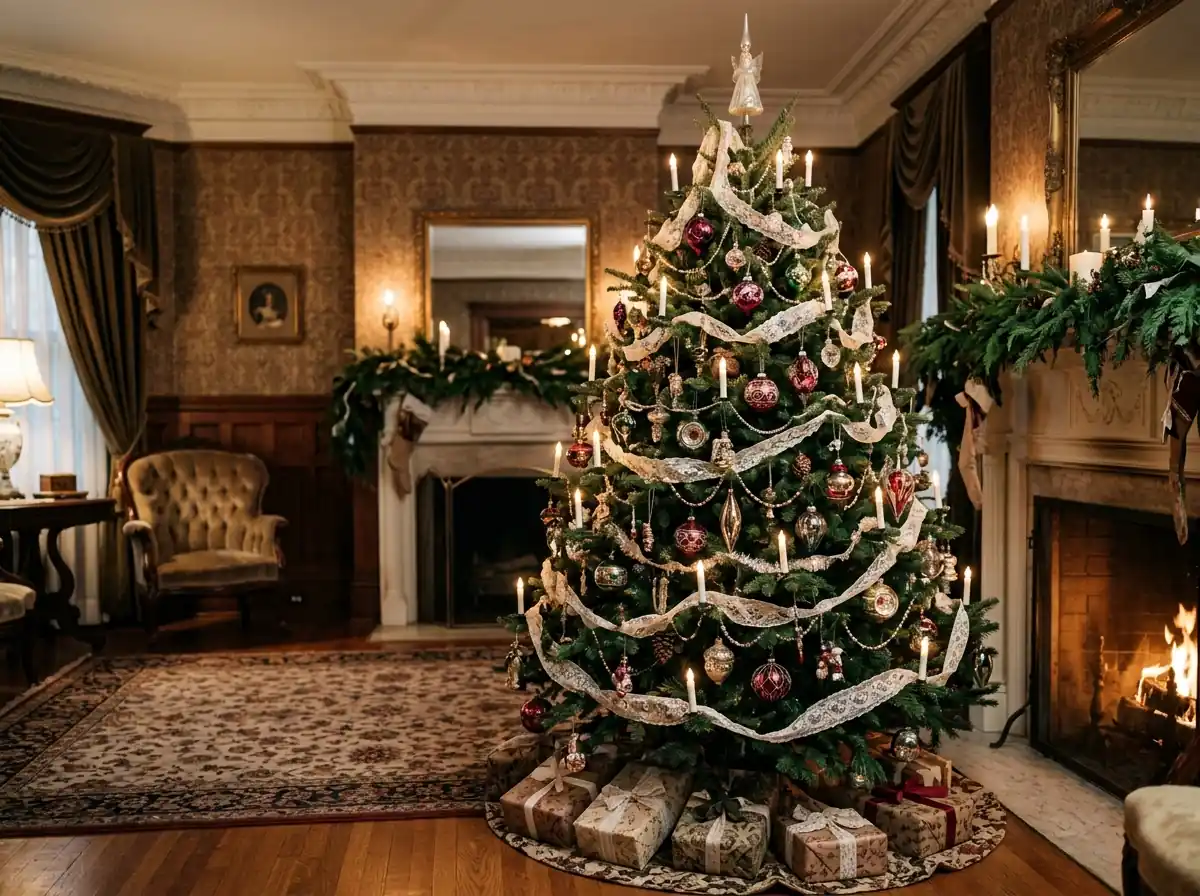
| Victorian Heirloom | Deep red, antique gold, ivory | Lace trim, candle clips, glass finials |
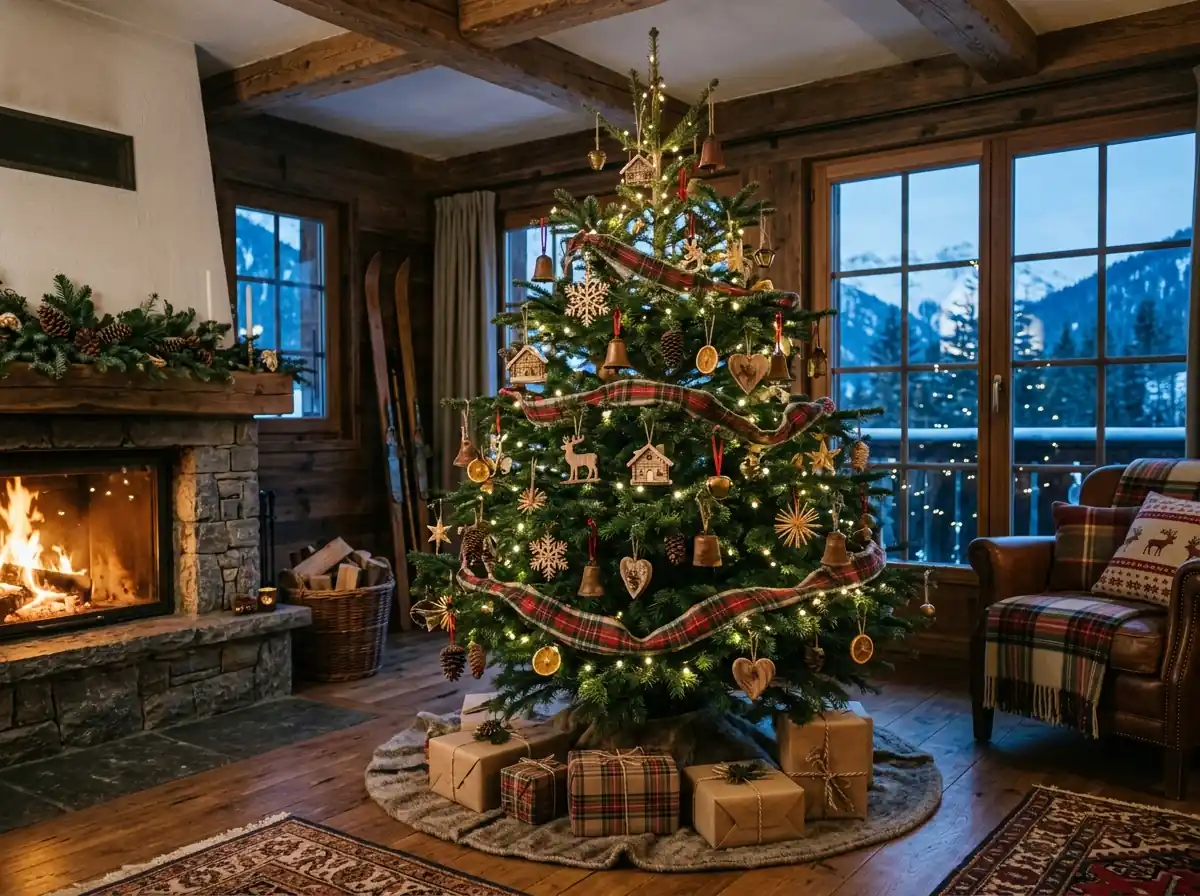
| Alpine Chalet | Natural wood, cream, warm red accents | Wood ornaments, wool garland, cowbells |
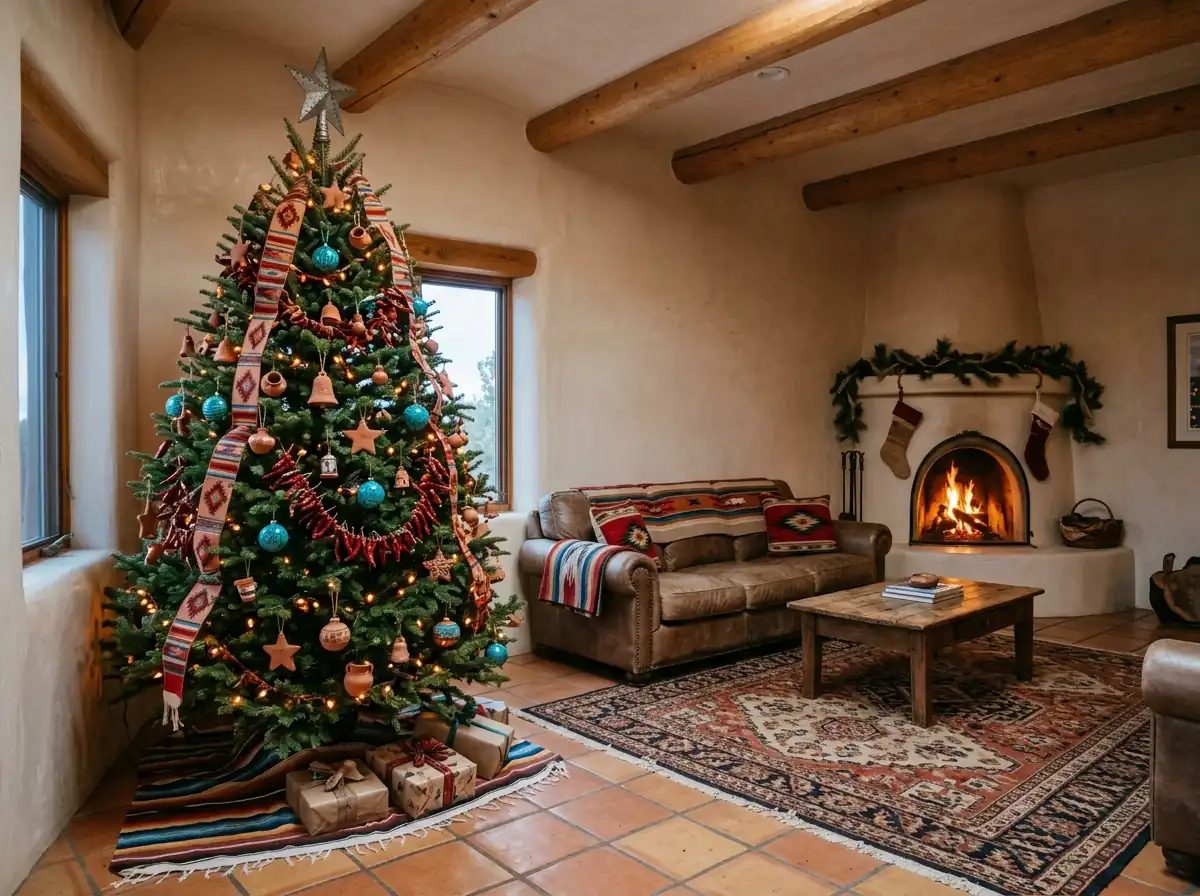
| Desert Southwest | Terracotta, turquoise, warm sand | Clay ornaments, turquoise glass, woven skirt |
6. Victorian Heirloom: Lace, Candlelight, and Glass Finials
This is the tree of inherited things: lace ribbon edging the branches, candle clips holding small tapered candles (unlit, or LED versions where children are near), and long glass finial ornaments that catch the light like icicles. Colors stay deep and warm, and nothing plastic survives the edit. A velvet skirt and an ornate glass finial topper complete it. The trade-off is upkeep — lace yellows, candle clips need straightening every time the tree is brushed past, and real heirloom glass is one knock away from gone. Anyone drawn to the retro Christmas aesthetic will find this its most formal cousin.
7. Alpine Chalet: Wool, Wood, and Small Bells
Natural wood ornaments — carved hearts, stars, and simple animals — hang alongside a cream wool garland looped loosely rather than pulled tight. Small cowbells on leather ties add the one sound this theme allows itself, a soft knock when the tree is touched. Finish with a felt or woven skirt in cream and a plain wood star. The downside is sourcing: real wool garland costs more than tinsel and moths will find it in storage if it is packed away unwashed and unsealed.
8. Desert Southwest: Terracotta Heat in Midwinter
The warmest palette on the list: terracotta clay ornaments, turquoise glass, and warm sand tones in the ribbon and skirt. Small clay shapes — suns, stars, simple birds — hang from leather cord, and a woven blanket-style skirt in sand and rust grounds the tree. A terracotta star or a small clay sun makes the topper. It suits rooms that already run warm in color, and it is honest to admit it fights with cool-toned furniture: against grey sofas and blue walls, the orange notes can look stranded rather than stylish.
| Starting theme | Swap these pieces | Theme you land on |
|---|---|---|
| Woodland Forest | Add wool plaid, small bells and chunkier wood pieces | Alpine Chalet |
| Champagne Metallic | Trade half the ornaments for silk and faux blooms | The Florist’s Tree |
| Black & White Graphic | Soften with cream lace and warm candle-style lights | Victorian Heirloom |
9. Starry Night: Navy, Silver and a Sky Full of Stars
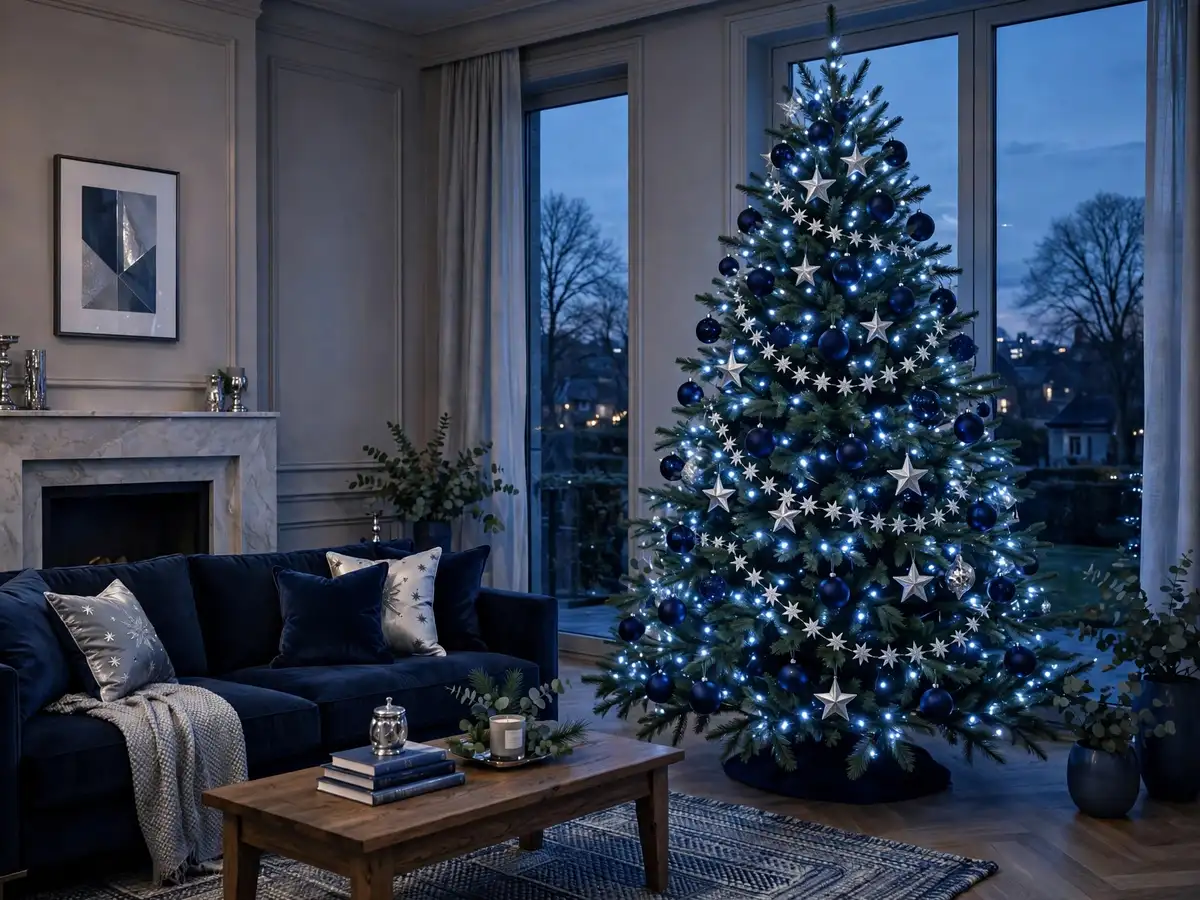
Start with deep navy baubles — matte ones low and inside the branches, shinier ones out at the tips where they catch the light. Silver does the sparkling: star ornaments in two sizes, a fine star garland spiralled through the tree, and cool white lights tucked deep so the tree glows like a clear winter sky.
Finish with a large silver star on top, and keep every other colour out — the restraint is what makes it feel like night. The trade-off is darkness: navy swallows light, so in a small room this tree can read almost black after dark and needs a lamp or candles nearby for company.
Whichever theme you choose, the topper and skirt are where it either lands or falls apart, so pick those two pieces with the theme, not after it — the guide to statement tree toppers and tree skirts walks through the best pairings. Your one next step: stand in front of your ornament boxes tonight, pull out everything that fits a single palette, and count it. If you have thirty pieces that agree with each other, you already own a theme — the rest is just editing.