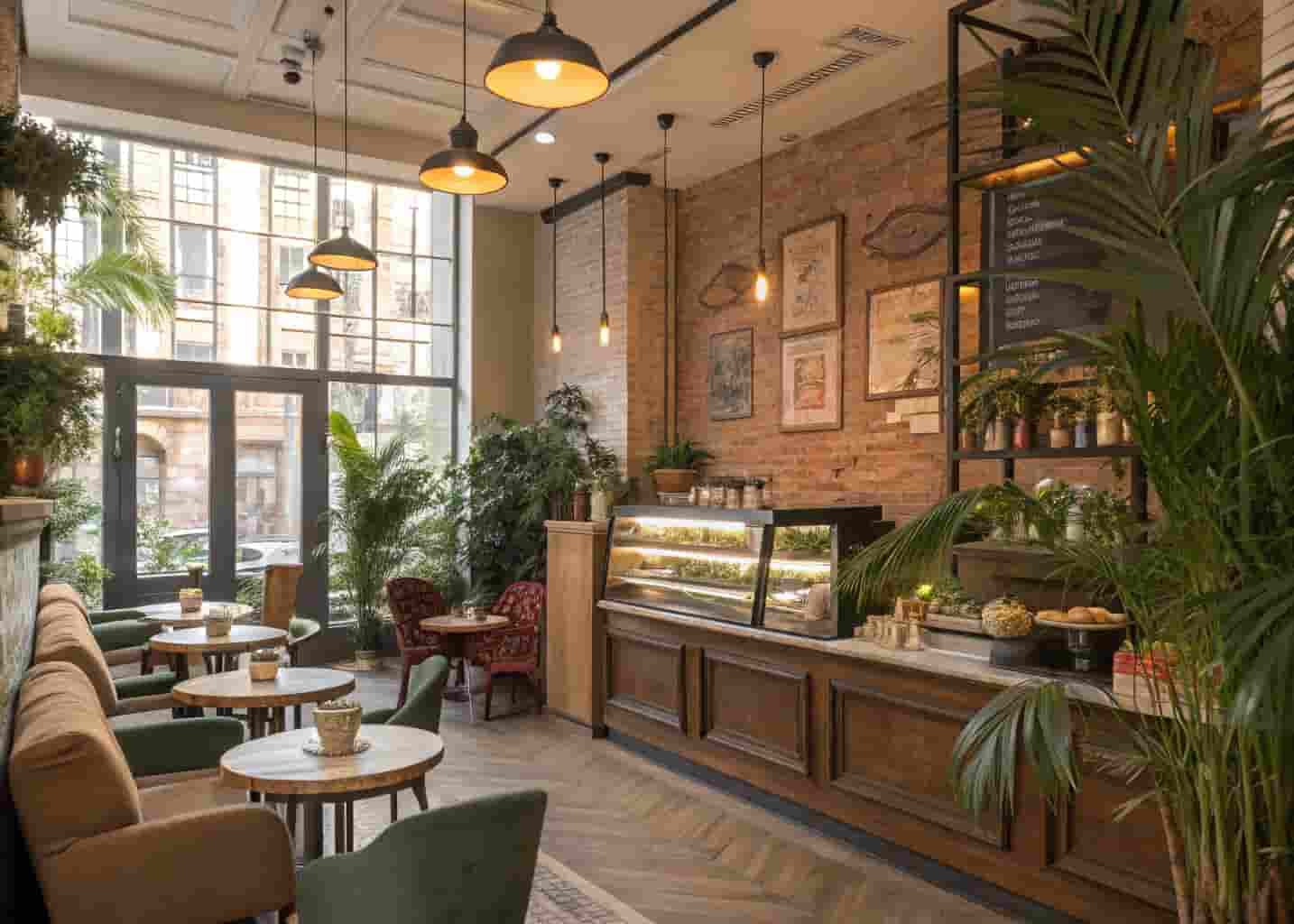
There’s something magical about walking into a Cafe Aesthetic and instantly feeling your shoulders drop. The noise outside fades. You find a corner seat, wrap your hands around a warm mug, and suddenly everything feels okay. That feeling doesn’t happen by accident. It’s designed — sometimes carefully, sometimes just by a cafe owner who really understood what makes people feel at home. If you want to bring that same energy into your own space, whether it’s a home corner, a small coffee shop, or even a workspace, these tips will help you get there.
Warm Lighting Makes Everything Feel Softer
Bright white lights belong in hospitals, not cafes. If there’s one thing that ruins a cozy atmosphere faster than anything else, it’s cold, harsh lighting. Warm bulbs — anything in the 2700K to 3000K range — cast a golden glow that makes the whole room feel like a hug. Think Edison bulbs hanging from the ceiling, small table lamps tucked into corners, or even candles on the tables in the evening. I once visited a little cafe in Lahore that used nothing but fairy lights and a few warm floor lamps, and it felt more relaxing than any fancy restaurant I’ve been to. Lighting really is everything.
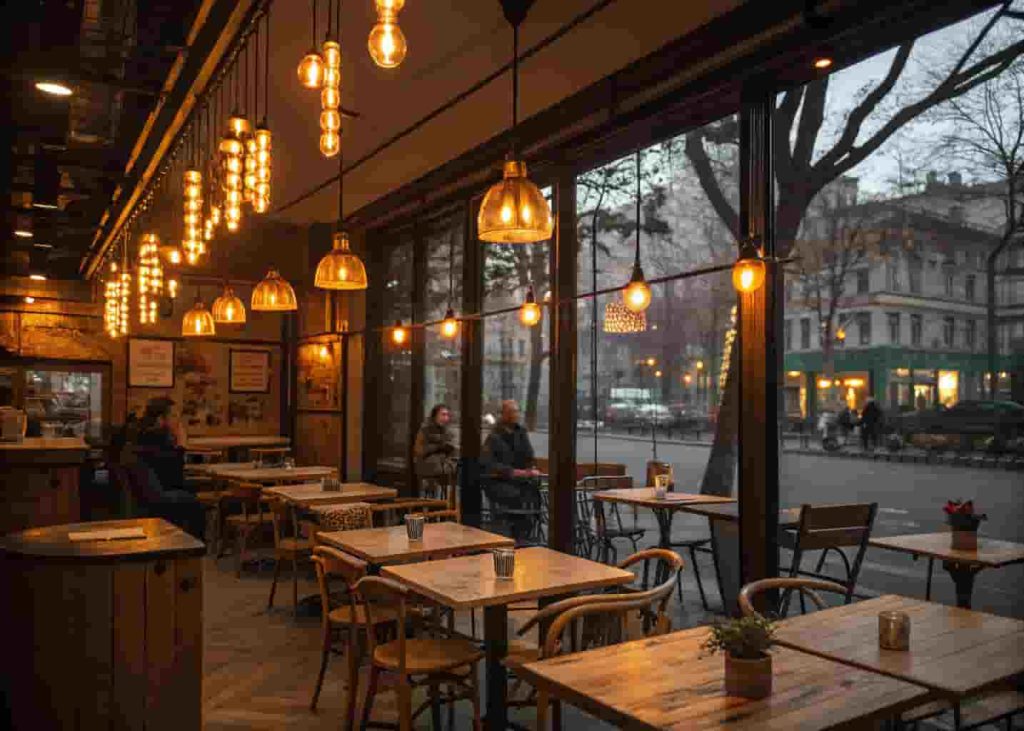
Natural Wood and Earthy Tones Set the Mood
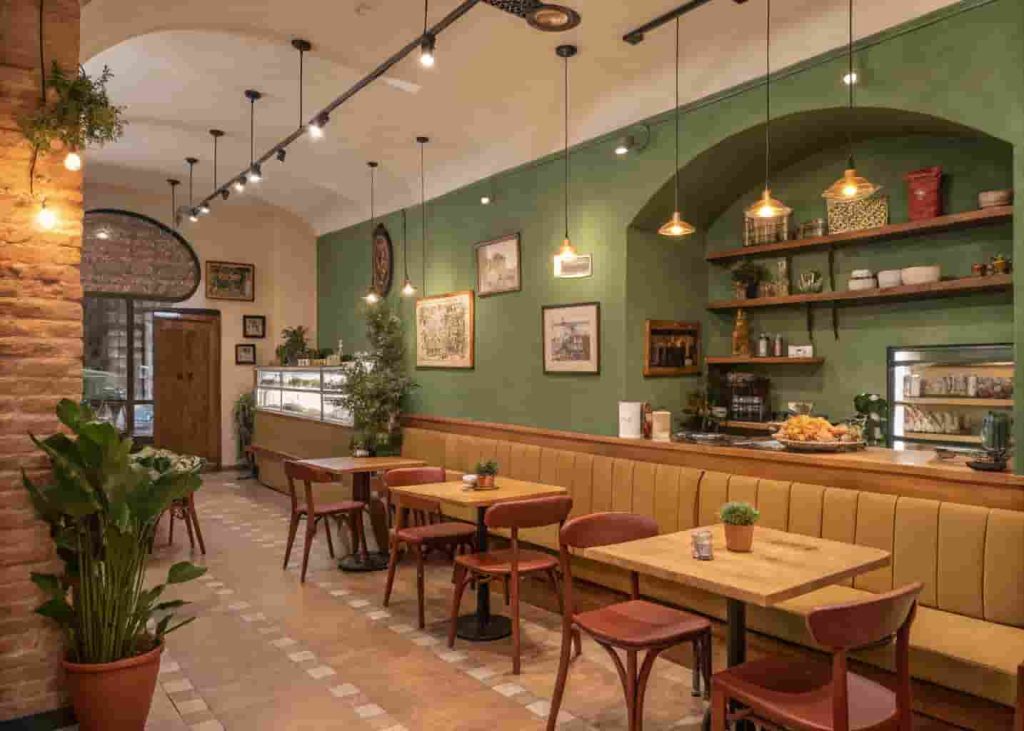
When you look around a relaxing cafe, you’ll almost always notice wood. Wood tables, wooden shelves, maybe even wooden walls or ceiling beams. There’s a reason for this. Natural materials feel grounded and calm. They don’t fight for your attention. Pair that with earthy tones — warm browns, soft creams, dusty greens, terracotta — and you’ve got a color palette that just breathes. Avoid too much white or grey if you want warmth. A soft olive green wall behind a wooden bookshelf full of old books? That’s the dream. It feels lived-in, honest, and genuinely inviting.
Add Plants — Lots of Them
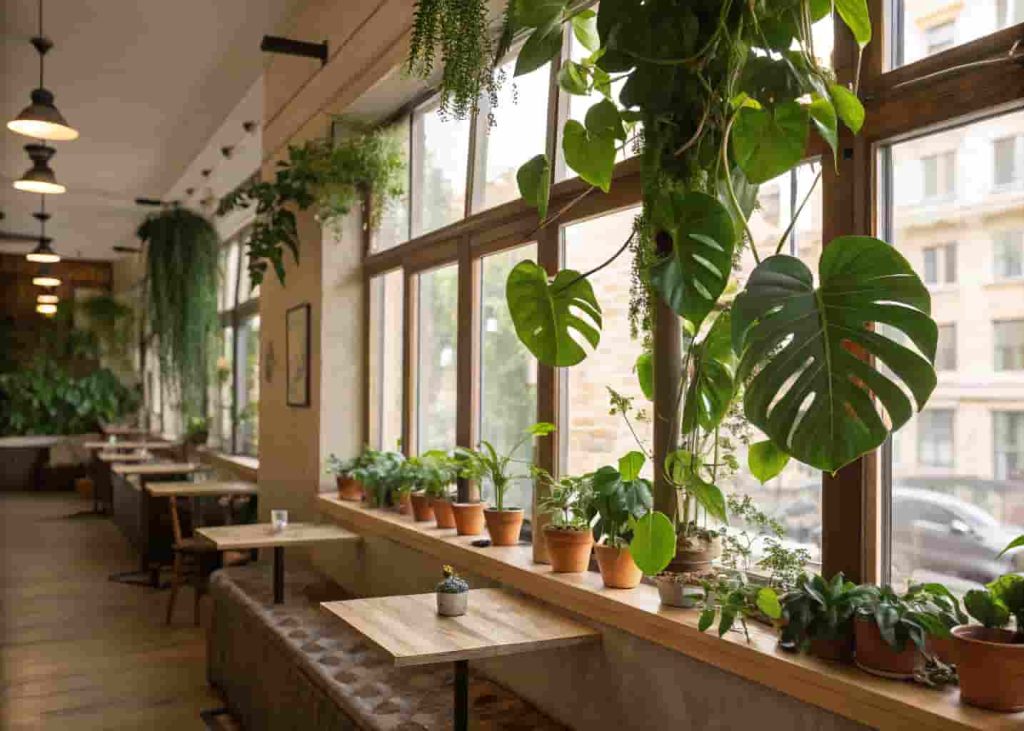
Plants are underrated in cafe design. A few trailing pothos hanging from the ceiling, a big monstera in the corner, some small succulents on the windowsill — they all add life to a space. Not fake life, real life. Plants soften hard edges. They add color without being loud. They even clean the air a little. More than anything, they remind us of the outdoors, and there’s something deeply relaxing about being around growing things. You don’t need to spend a lot. Even a few cheap, easy-to-care-for plants like spider plants or ivy can completely change how a room feels within a week.
Comfortable Seating Is Non-Negotiable
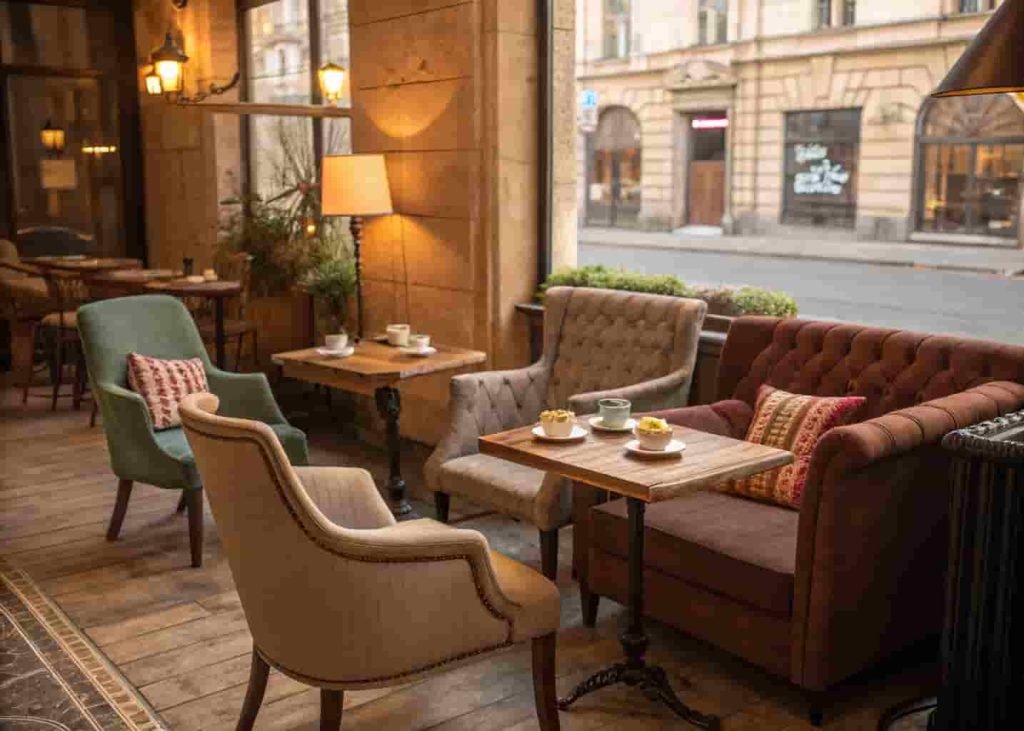
Hard plastic chairs are fine for fast food. For a relaxing cafe, you need seating that makes people want to stay. Think cushioned chairs, soft armchairs, small sofas in the corner, or wooden benches with thick seat pads. Mix it up a little. Not everyone wants to sit the same way. Some people want a proper table and chair setup for working. Others want a low sofa and coffee table to just lounge. Giving people different seating options makes the space feel more personal, more thoughtful. It says, “We thought about you when we set this up,” and that matters more than people realize.
Keep the Background Music Soft and Intentional
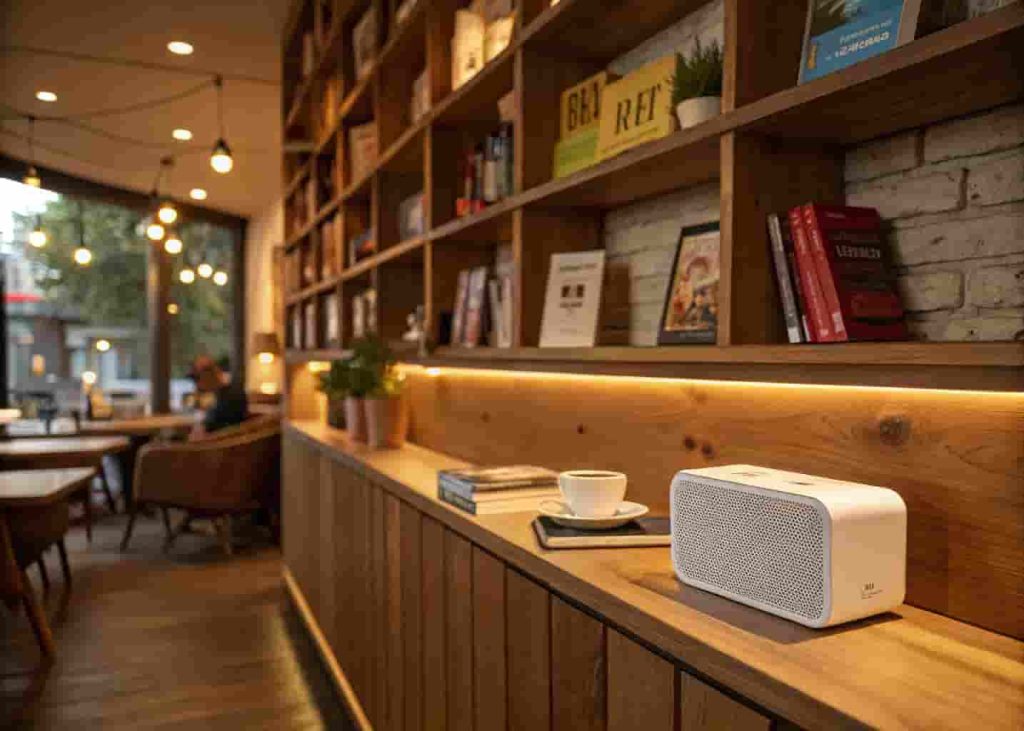
Music in a cafe can make or break the mood. Too loud and it’s stressful. Too quiet and it feels awkward. The sweet spot is background music that you can hear but don’t have to focus on — something that fills the silence without demanding your attention. Acoustic guitar, lo-fi beats, soft jazz, gentle indie — these all work well. The genre matters less than the volume and vibe. I’ve been in cafes playing classical piano at a low volume on rainy afternoons, and it felt like the whole space was designed for that exact moment. That’s what good music does in a cafe. It completes the atmosphere.
Use Scent to Create a Signature Experience
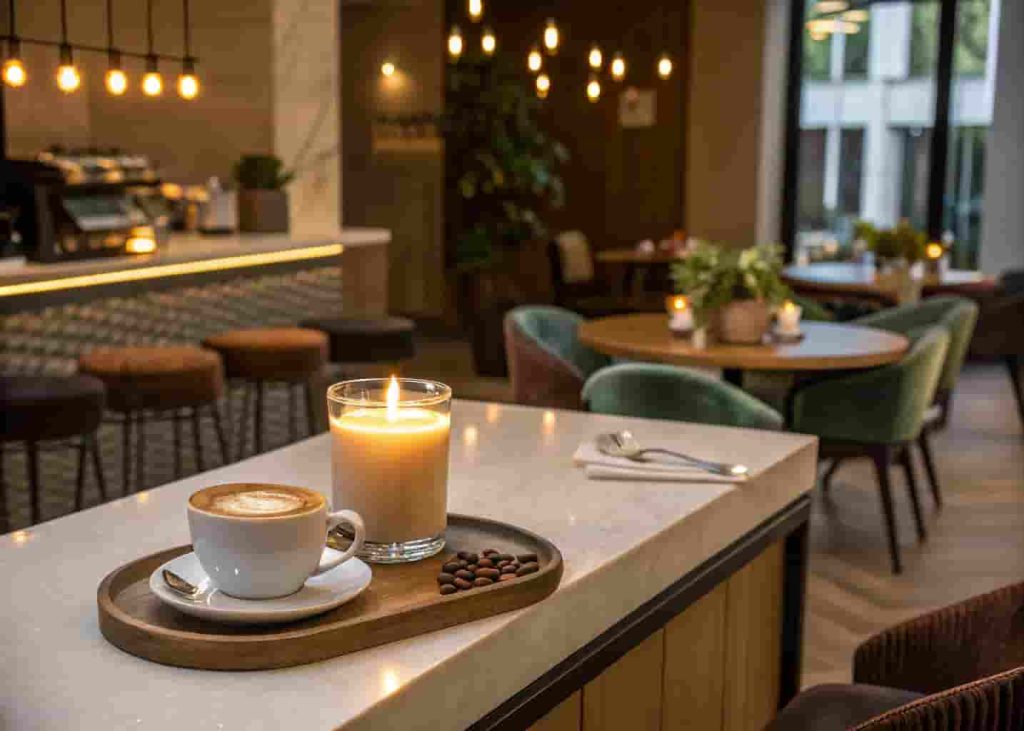
We don’t talk about smell enough when it comes to cafe design, but it might be the most powerful tool you have. The human brain links smell to memory and emotion faster than anything else. A cafe that smells of fresh coffee, cinnamon, and maybe a hint of old books or cedar wood creates an experience that stays with people. You don’t need to be overwhelming about it. A subtle scented candle, a diffuser with warm vanilla or sandalwood, or simply the natural smell of fresh baked goods is enough. The goal is to make people breathe in and feel something the moment they walk through the door.
Bookshelves and Small Decorative Details Tell a Story
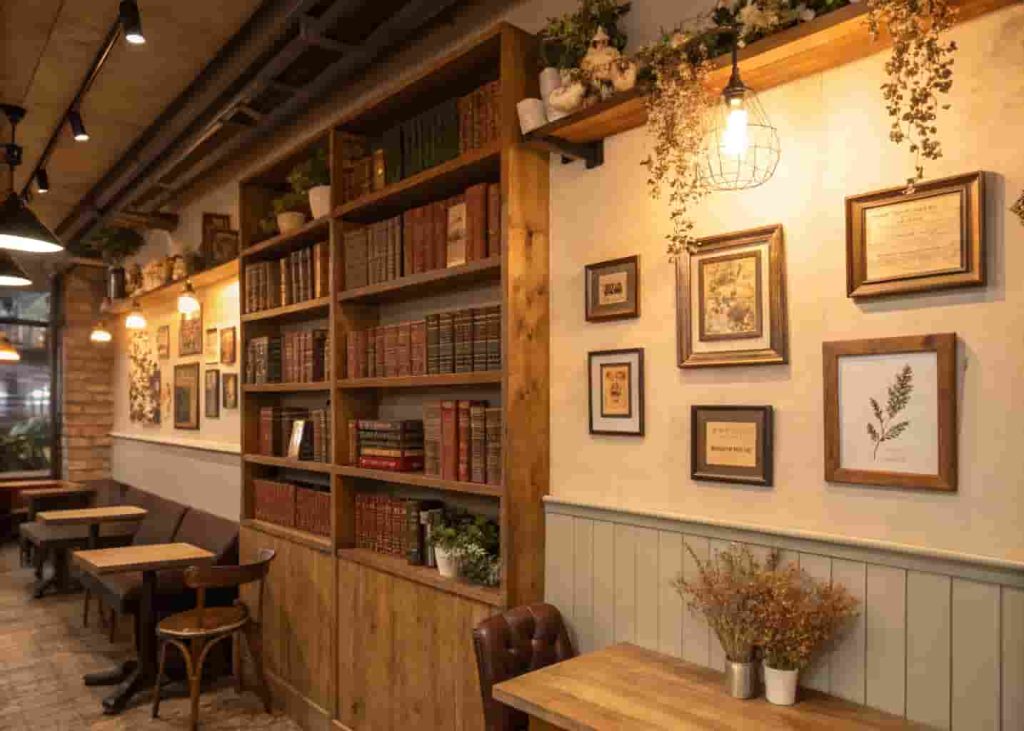
A bare wall is a missed opportunity. Cafes that feel truly special have little details everywhere — a stack of old books, a vintage clock, a small framed print, a few dried flowers in a glass vase. These things tell a story. They make the space feel like it belongs to someone with taste and personality, not just a blank template. Bookshelves are especially great because they add warmth, texture, and give people something to look at. You don’t need a huge budget for this. Thrift stores, old markets, and even things you already own can create a layered, interesting look that feels intentional and personal.
Natural Light During the Day Changes Everything
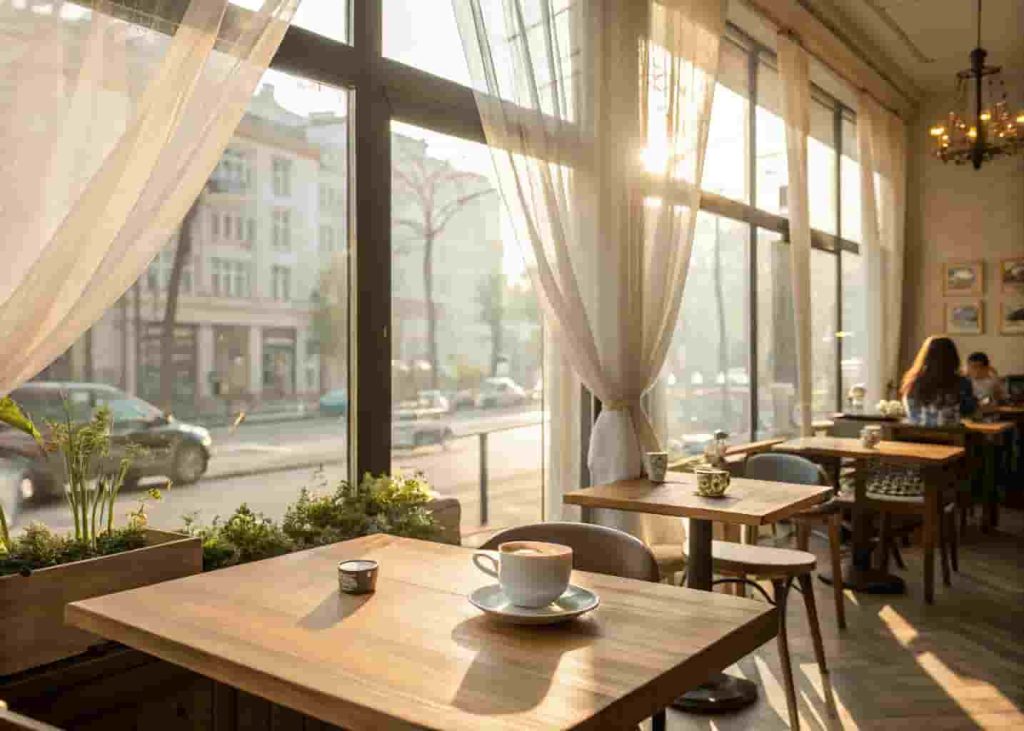
There’s no substitute for real sunlight. If your cafe has windows, use them. Don’t block them with heavy curtains or big signs. Let the light come in. In the morning, natural light streaming through sheer curtains onto a wooden table with a cup of coffee is one of the most peaceful things a person can experience. It connects the indoor space to the world outside. Even on cloudy days, that soft diffused light feels gentle and calm. If you’re designing a space and you have a choice, always prioritize windows. A good window seat with a view of a street or a small garden is worth more than almost any other design feature.
Minimize Clutter and Let the Space Breathe
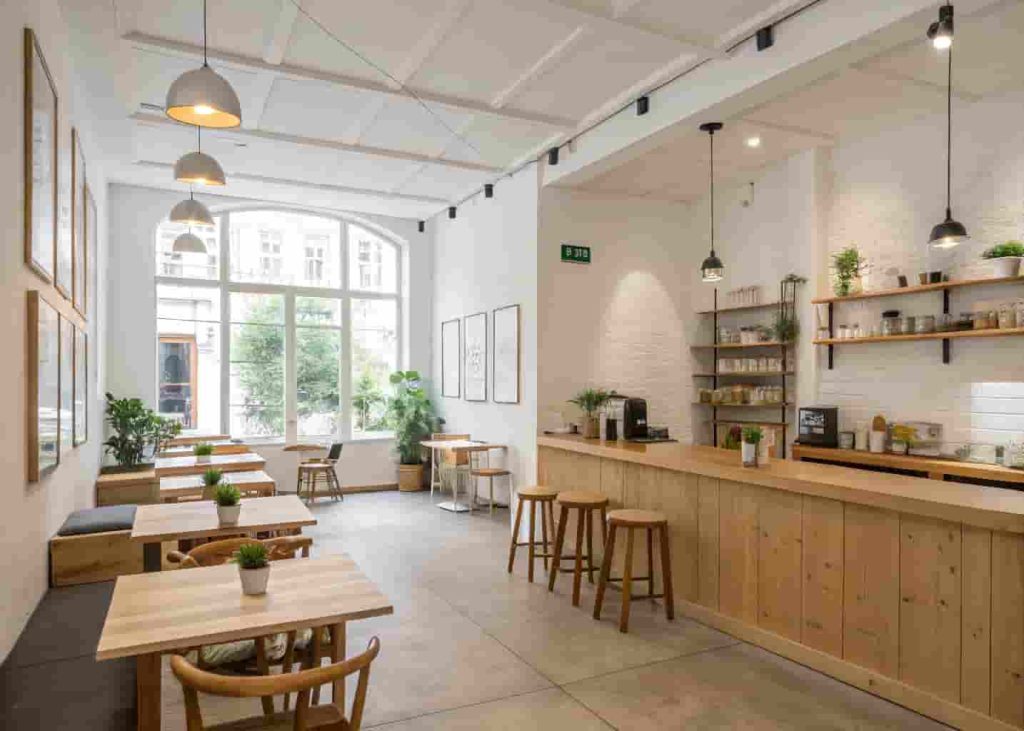
One of the biggest mistakes people make when designing a cozy space is overdoing it. More stuff does not mean more cozy. A relaxing atmosphere needs room to breathe. Keep surfaces relatively clear. Don’t crowd shelves. Leave some negative space in your layout. A room that’s too full feels chaotic, even if everything in it is individually beautiful. Think of it like a good sentence — the pauses matter as much as the words. In a well-designed cafe, your eye moves around the room and always finds somewhere comfortable to rest. That feeling of spaciousness, even in a small room, is what makes people exhale when they walk in.
A Chalkboard Menu Adds Charm and Character
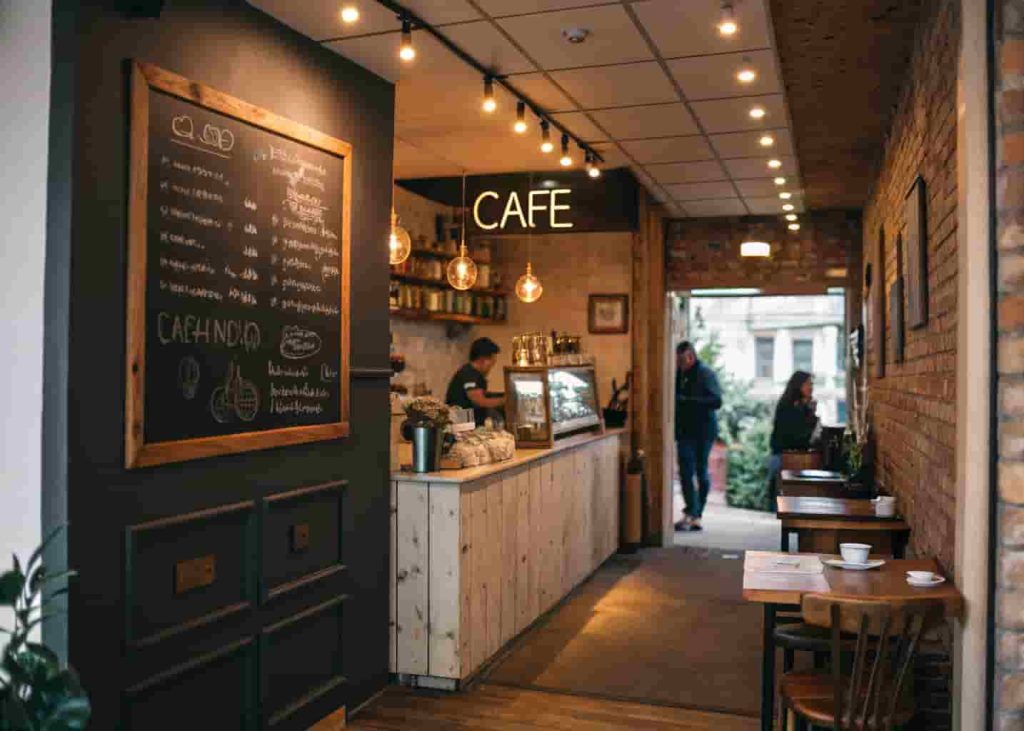
There’s something about a chalkboard menu that immediately makes a cafe feel authentic. It says handmade, local, personal. It’s not trying too hard. Whether it’s on a big wall behind the counter or a smaller board near the entrance, chalkboard menus add texture, creativity, and a human touch to the space. The slightly imperfect handwriting, the little drawings next to the drinks, the way the menu can change day to day — it all contributes to that feeling of a real place, not a corporate chain. Even in a home setting, a small chalkboard in the kitchen can bring that same warm, casual cafe energy into your daily routine.
Create a Corner That Feels Like It Was Made Just for You
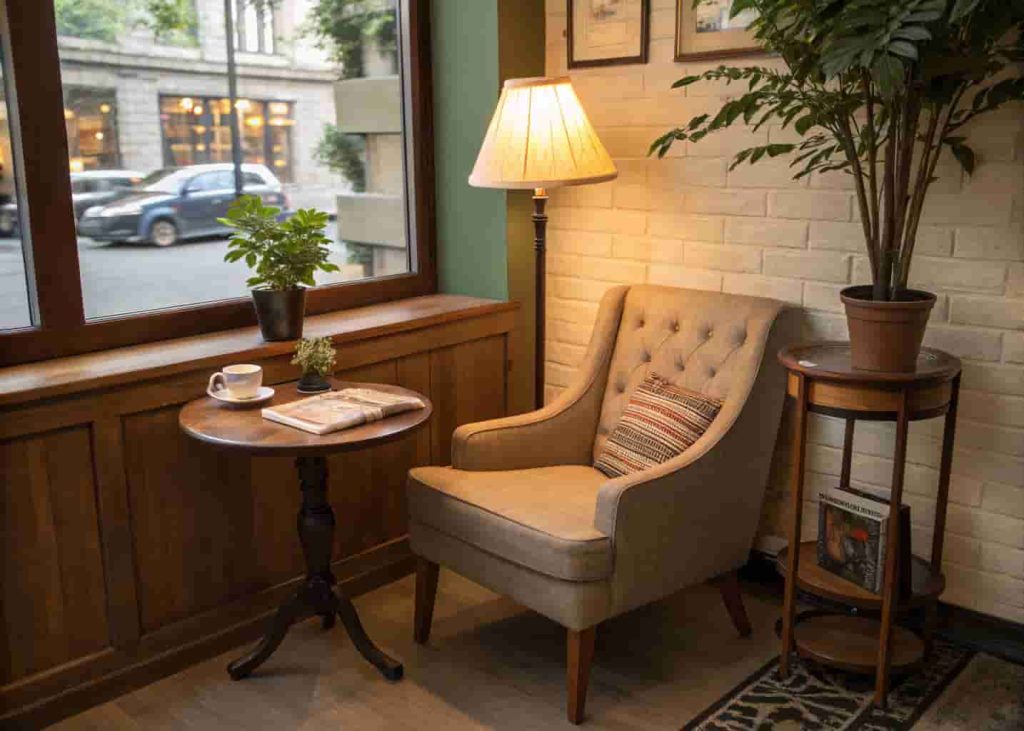
Every great cafe has at least one spot that people fight over — a window seat, a tucked-away armchair, a small table under a warm lamp. The trick is intentional corner design. Take one corner of your space and give it extra attention. Add a comfortable chair, a small side table, a reading lamp, maybe a plant or two nearby. Make it feel like a destination within the room. When people walk in and see that corner, they want it. And even if someone else is sitting there, the fact that it exists makes the whole cafe feel special. It signals that this place cares. That someone thought about what it feels like to sit there for an hour. That makes all the difference.
Conclusion
Creating a relaxing cafe atmosphere isn’t about having a big budget or hiring a professional designer. It really comes down to paying attention to how a space makes people feel. Warm lighting, natural materials, comfortable seating, a little greenery, and thoughtful small details — these things work together to create an environment where people slow down, stay longer, and actually enjoy being present. Whether you’re running a cafe, designing a corner of your home, or just trying to understand why some spaces feel so much better than others, these tips give you a solid starting point. Start with one or two changes, see how they feel, and build from there. A truly relaxing space is always worth the effort.