Introduction: A Pigeon Fit for Royalty
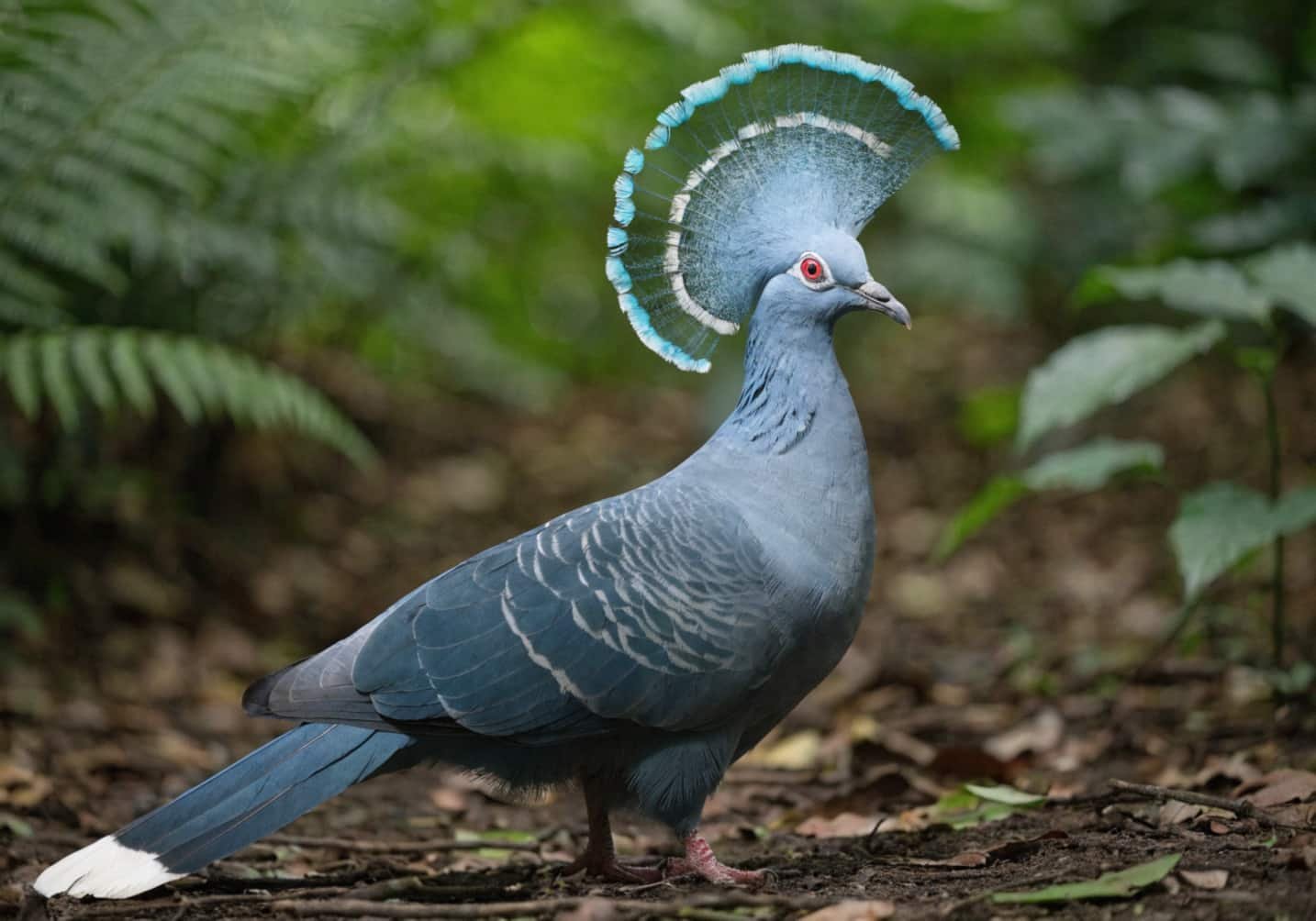
The first time I saw a picture of this bird, I honestly couldn’t believe it was actually a pigeon. Most of us grow up thinking pigeons are those grey, dusty birds sitting on window ledges, cooing away and eating leftover crumbs. Then you see the Victoria Crowned Pigeon, and your whole idea of what a pigeon can be just flips upside down. This bird looks like it walked straight out of a painting, wearing a delicate lace crown and glowing in shades of blue you didn’t know existed in nature. Honestly, once you look at this bird, it’s hard to picture the word “pigeon” the same way again. In this article, we’re going to explore everything about this stunning creature, from where it lives to why it carries such a royal name.
Where Is the Victoria Crowned Pigeon Found?
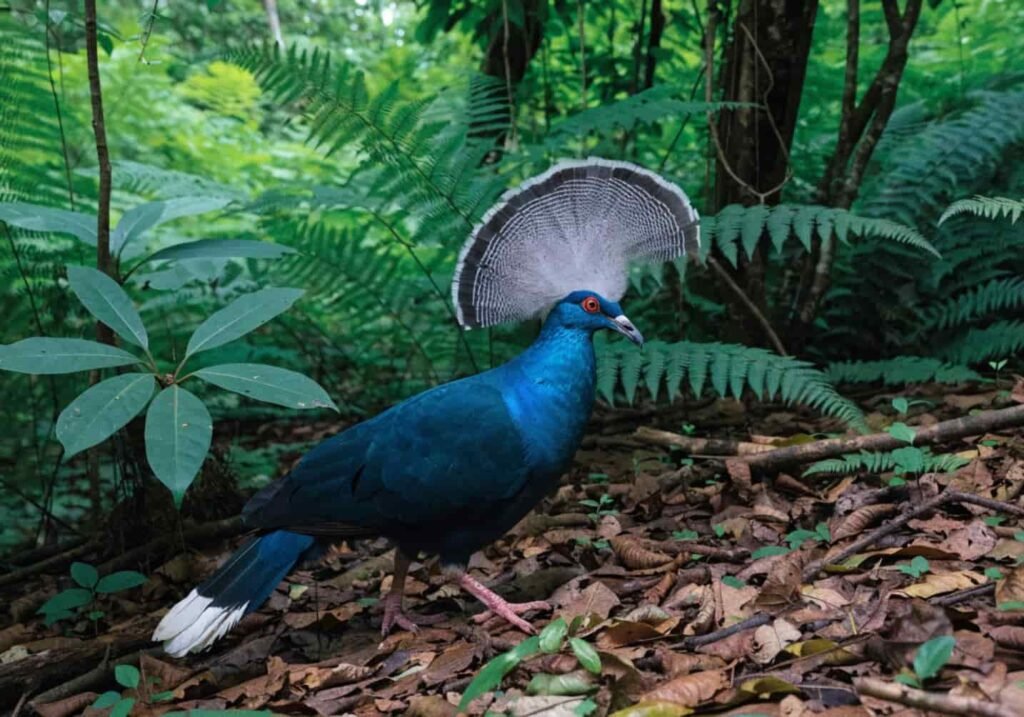
Deep in the dense rainforests of New Guinea, close to the ground, this beautiful bird can be seen wandering about, and that dense jungle is its true home. This pigeon isn’t something you’ll spot in your backyard or local park. It belongs to the lowland and swamp forests of New Guinea, along with a few nearby islands. The humid, thick jungle environment suits it perfectly because it offers shade, food, and plenty of hiding spots from predators. Unlike many birds that prefer flying high above the canopy, this one likes staying close to the ground, wandering through leaf litter in search of food. But there’s more to this story than just its looks, its choice of home tells us a lot about how specialized and sensitive this species really is to its environment.
Physical Appearance: The Crown, Colors & Size
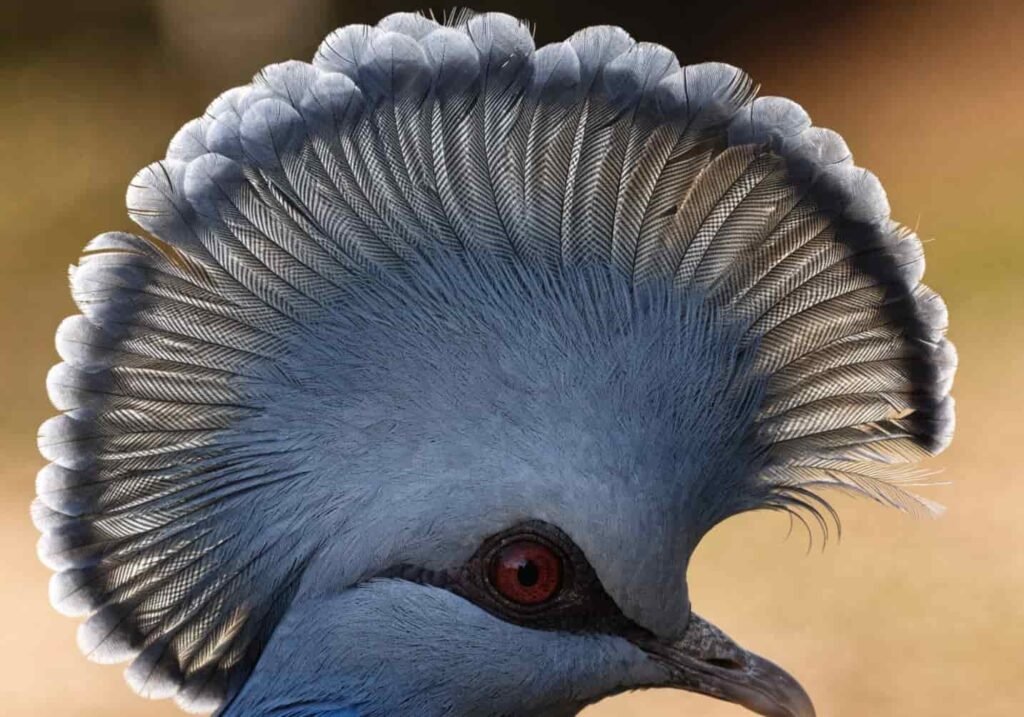
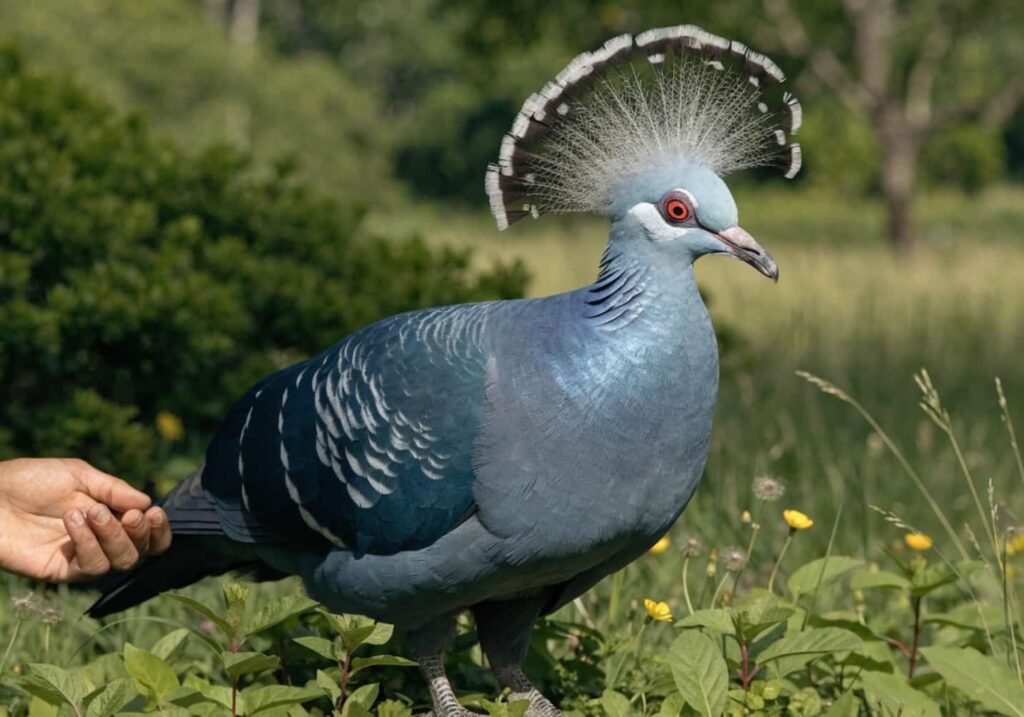
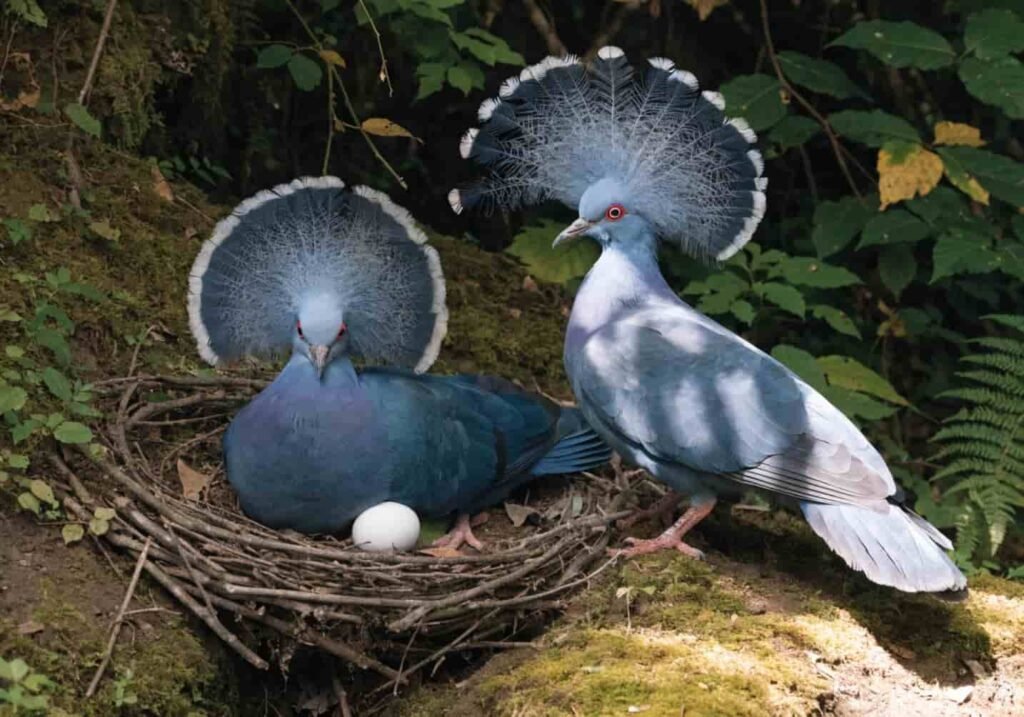
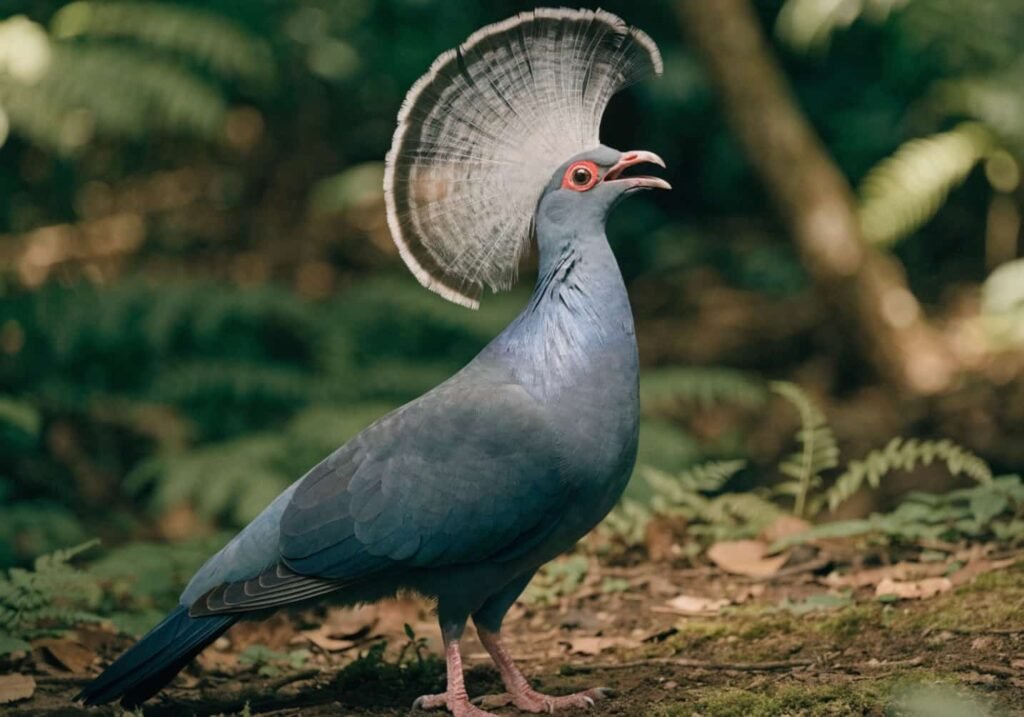
Its crest looks like something straight out of a Victorian-era crown, and that’s exactly why this bird earned the name “crowned pigeon.” The moment you look at this bird, your eyes go straight to that fan-shaped crest sitting proudly on its head, made of delicate lace-like feathers. Its body is covered in deep blue feathers that shimmer slightly under sunlight, while a maroon patch sits on the chest like a badge of honor. Then there are those deep red eyes, staring back at you with an almost human-like curiosity. Can a pigeon really be beautiful enough that people mistake it for royalty? This one clearly proves that it can. Its overall look is so majestic that many people mistake it for a peacock relative rather than a pigeon.
Why Is It Called “Crowned”?
Here’s what’s interesting: the name isn’t just a poetic exaggeration, it’s literally describing what sits on top of this bird’s head. That fan-shaped crest looks so much like an old royal crown that early explorers and naturalists couldn’t resist naming it after royalty. The bird was actually named in honor of Queen Victoria, which adds another layer to its regal identity. Every time this crest opens up, especially during courtship or when the bird feels alert, it looks even more dramatic, almost like it’s showing off on purpose. Locals in New Guinea have long admired this feature too, often describing the bird in ways that reflect its noble appearance. It’s rare for a name to fit an animal this perfectly.
The Largest Pigeon in the World
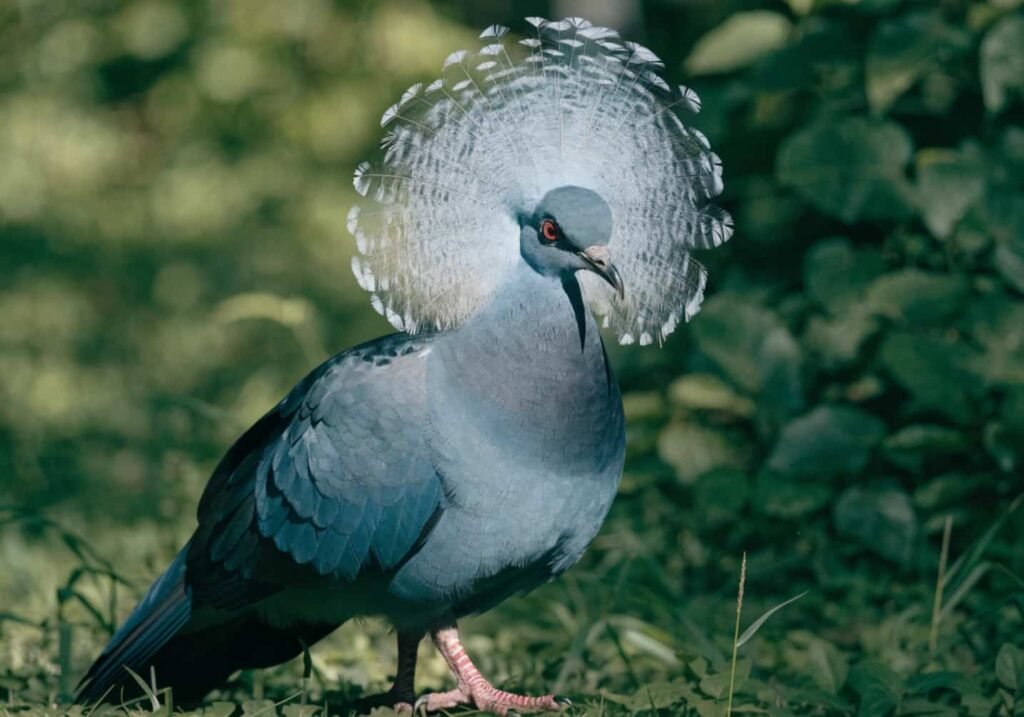
Most people imagine pigeons as small, quick little birds, but this one completely breaks that stereotype. The Victoria Crowned Pigeon can grow up to 74 centimeters in length and weigh around 2.4 kilograms, making it the largest living pigeon species on the planet. To put that into perspective, it’s roughly the size of a turkey, which honestly feels a bit unbelievable the first time you hear it. Its size isn’t just for show either; being this large helps it avoid smaller predators and gives it a commanding presence on the forest floor. Now let’s talk about how habitat shaped this size, because living in a resource-rich rainforest with fewer aerial threats allowed this bird to evolve into such an unusually large pigeon over time.
Habitat and Natural Environment
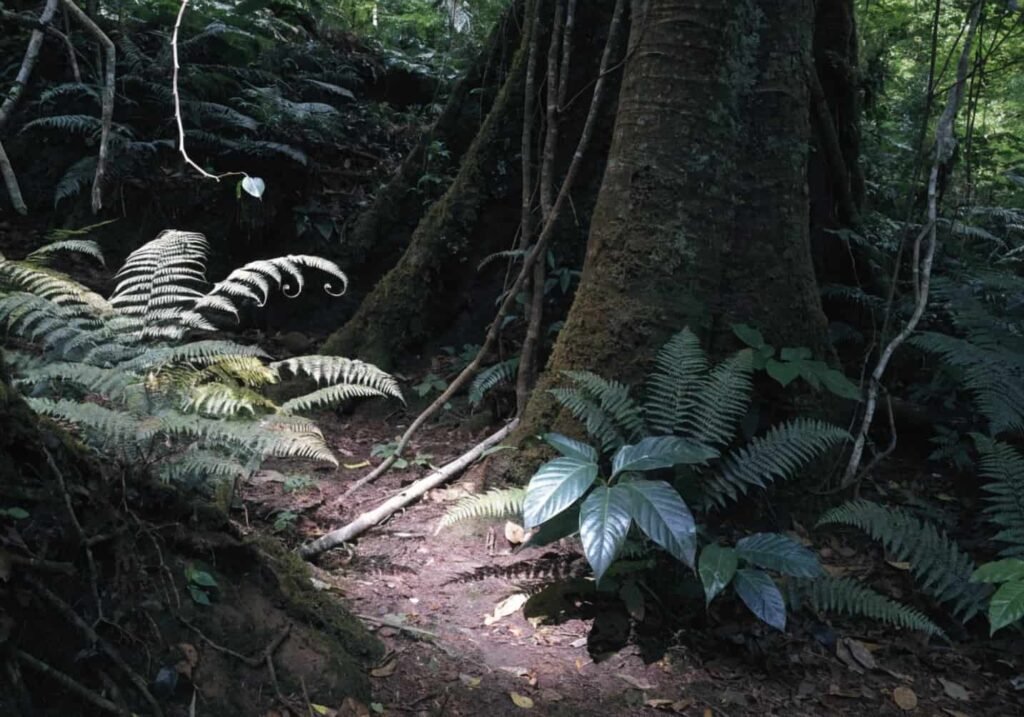
This pigeon thrives in lowland tropical rainforests, mangroves, and occasionally swampy areas where the ground stays moist and food is plentiful. It prefers dense vegetation that offers cover from predators while still allowing easy movement across the forest floor. Rainfall plays a huge role here too, since the humid climate supports the fruits, seeds, and insects that make up its diet. Unlike birds that adapt easily to human settlements, the Victoria Crowned Pigeon depends heavily on undisturbed forest, which makes habitat loss a serious concern for its future. Walking through its natural home, you’d notice how quiet and shaded everything feels, almost like the forest was designed specifically for a bird that prefers calm, hidden corners over open, exposed spaces.
Diet: What Does This Pigeon Eat?
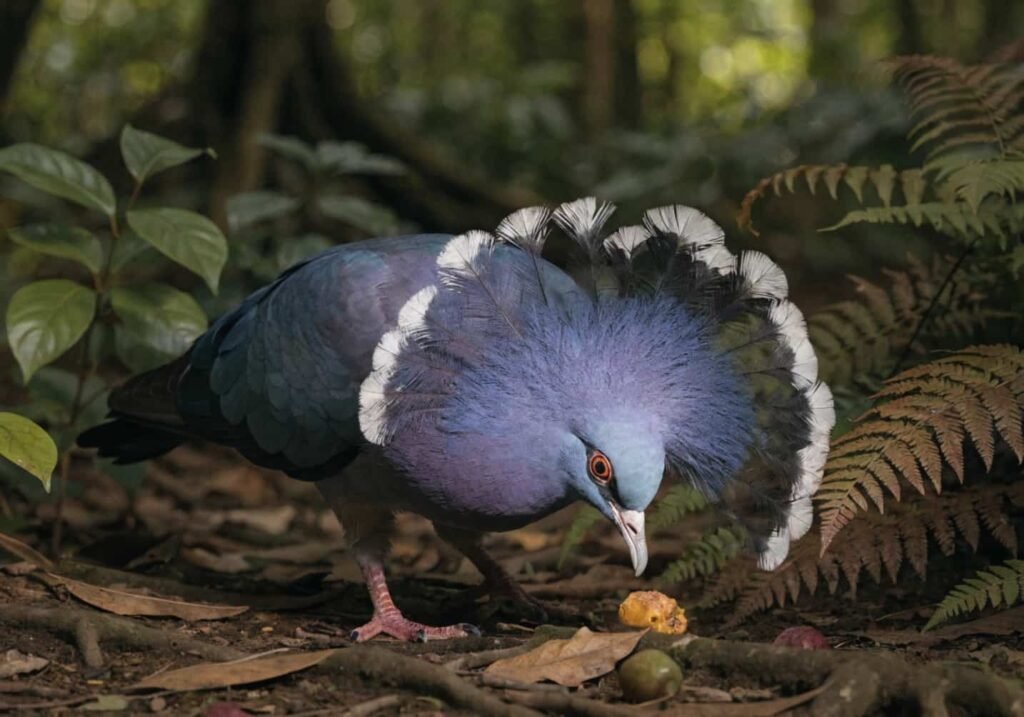
Despite its royal appearance, the Victoria Crowned Pigeon has fairly simple eating habits. It mostly feeds on fallen fruits, seeds, and berries scattered across the forest floor, along with the occasional insect or small invertebrate. Fig trees are a particular favorite, and you’ll often find these pigeons gathering wherever fruit has recently dropped. Foraging happens mostly during early morning and late afternoon, when the forest is cooler and quieter. Watching one forage, you’ll notice a slow, deliberate walk, almost like it’s carefully inspecting every leaf before deciding what’s worth eating. This unhurried feeding style fits its overall personality, calm, confident, and in no rush to prove anything to anyone watching.
Behavior and Daily Life
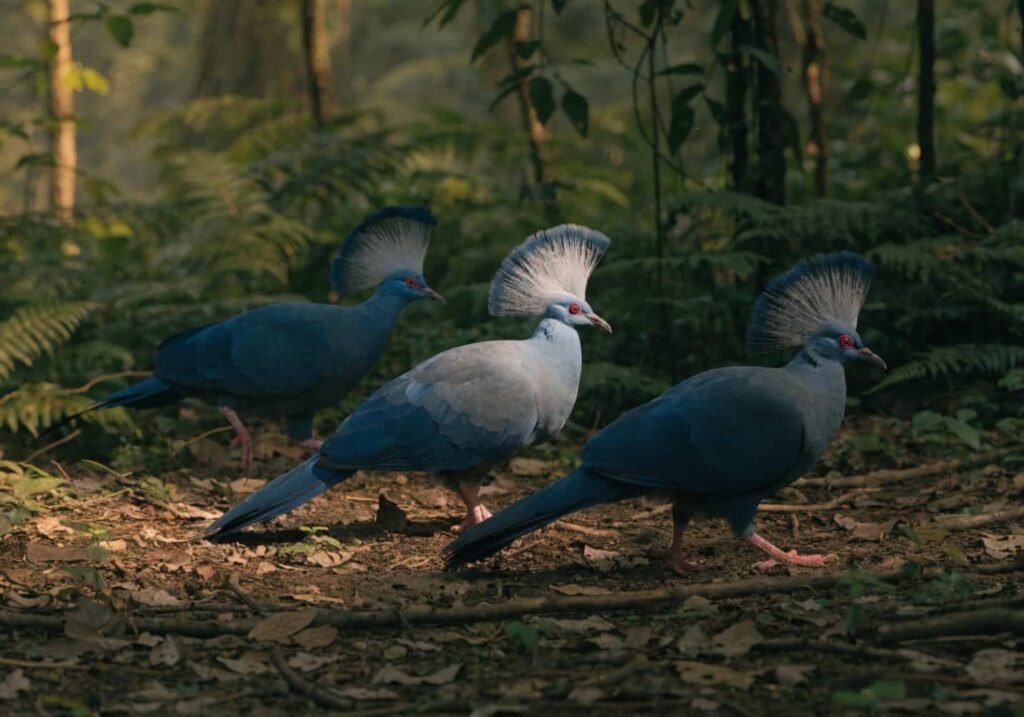
These pigeons are mostly ground dwellers, spending the majority of their day walking rather than flying. Flight is usually reserved for escaping danger or reaching a low branch to roost at night. They tend to move in small groups or pairs, staying alert to sounds around them since predators are always a possibility in dense forest environments. Despite their calm nature, they can be surprisingly cautious, freezing in place at the slightest unfamiliar noise. Their days follow a fairly predictable rhythm: foraging in the early hours, resting during the midday heat, and becoming active again as the sun starts to set. There’s something oddly peaceful about how unbothered they seem, almost like they’ve mastered the art of taking life slow.
Breeding and Family Life
Breeding season brings out an entirely different side of this bird. Males perform bowing displays, spreading their tail feathers and raising their crest to impress a potential mate, almost like a mini royal ceremony playing out in the forest. Once paired, the female typically lays just a single egg, which both parents take turns incubating for around a month. After hatching, the chick stays dependent on its parents for several weeks, relying on them for food and protection. What’s touching is how dedicated both parents remain throughout this process, sharing responsibilities almost equally. It’s a small reminder that even in the wild, teamwork and patience go a long way in raising the next generation.
Sounds and Communication
Unlike the soft, familiar coo of city pigeons, the Victoria Crowned Pigeon produces a deep, booming call that can travel quite far through the forest. This low-frequency sound is often compared to a distant drumbeat, used mainly to communicate with mates or warn others of nearby danger. Some describe it as almost eerie when heard for the first time in a quiet jungle setting. Beyond vocal calls, body language plays a big role too, especially the raising of the crest, which can signal alertness, excitement, or courtship intentions. This combination of sound and visual signals shows just how expressive and socially aware these birds actually are, far more complex than their calm exterior might suggest.
Threats, Predators & Conservation Status
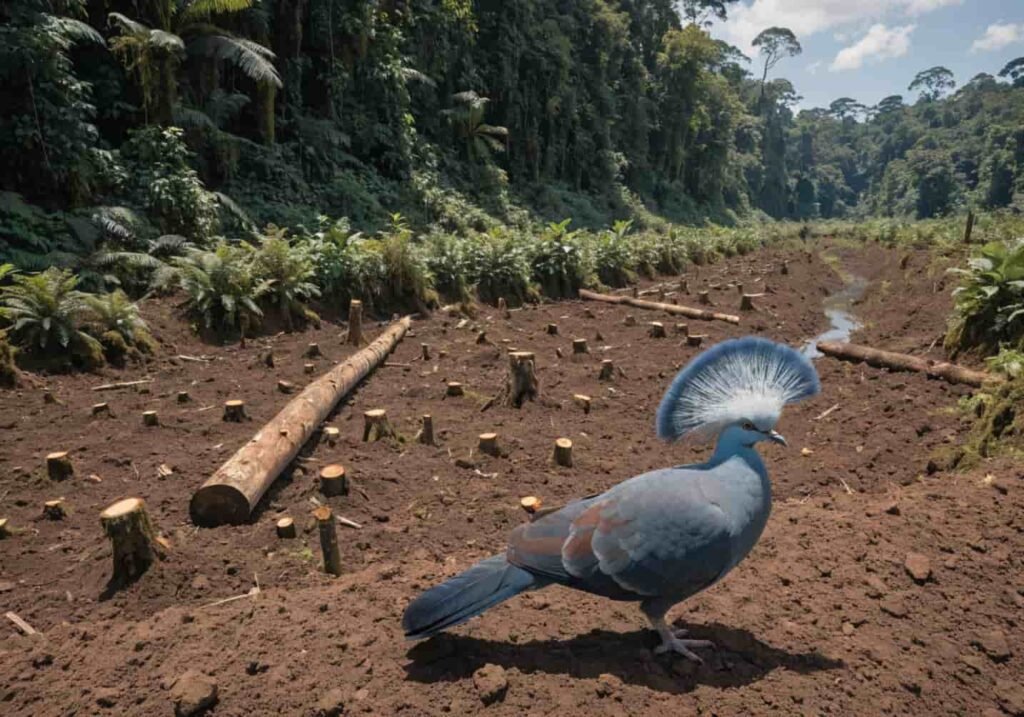
Sadly, this beautiful bird faces real challenges in the wild. Habitat destruction from logging and land clearing has significantly reduced the forest areas it depends on. Hunting has also played a major role, since its large size and striking feathers have historically made it a target. Natural predators like snakes, monitor lizards, and birds of prey add another layer of risk, especially to eggs and young chicks. As a result, the Victoria Crowned Pigeon is currently listed as Near Threatened, with conservation groups working to protect remaining habitats and regulate hunting. It’s a sobering reminder that beauty alone doesn’t guarantee survival, and without continued protection efforts, future generations might only see this bird in pictures.
Conclusion: Why This Pigeon Deserves the Spotlight
At the end of the day, the Victoria Crowned Pigeon isn’t just another bird species tucked away in a distant rainforest. It’s proof that nature still has surprises left, even in creatures we think we already understand. From its crown-like crest to its deep blue feathers and gentle, unhurried personality, everything about this bird feels special. It challenges the ordinary idea of what a pigeon looks like and reminds us why protecting wild habitats matters so much. Next time someone mentions pigeons, maybe this is the image that should come to mind instead of the grey ones on city streets. This bird truly deserves its royal name, and honestly, it deserves a lot more attention too.