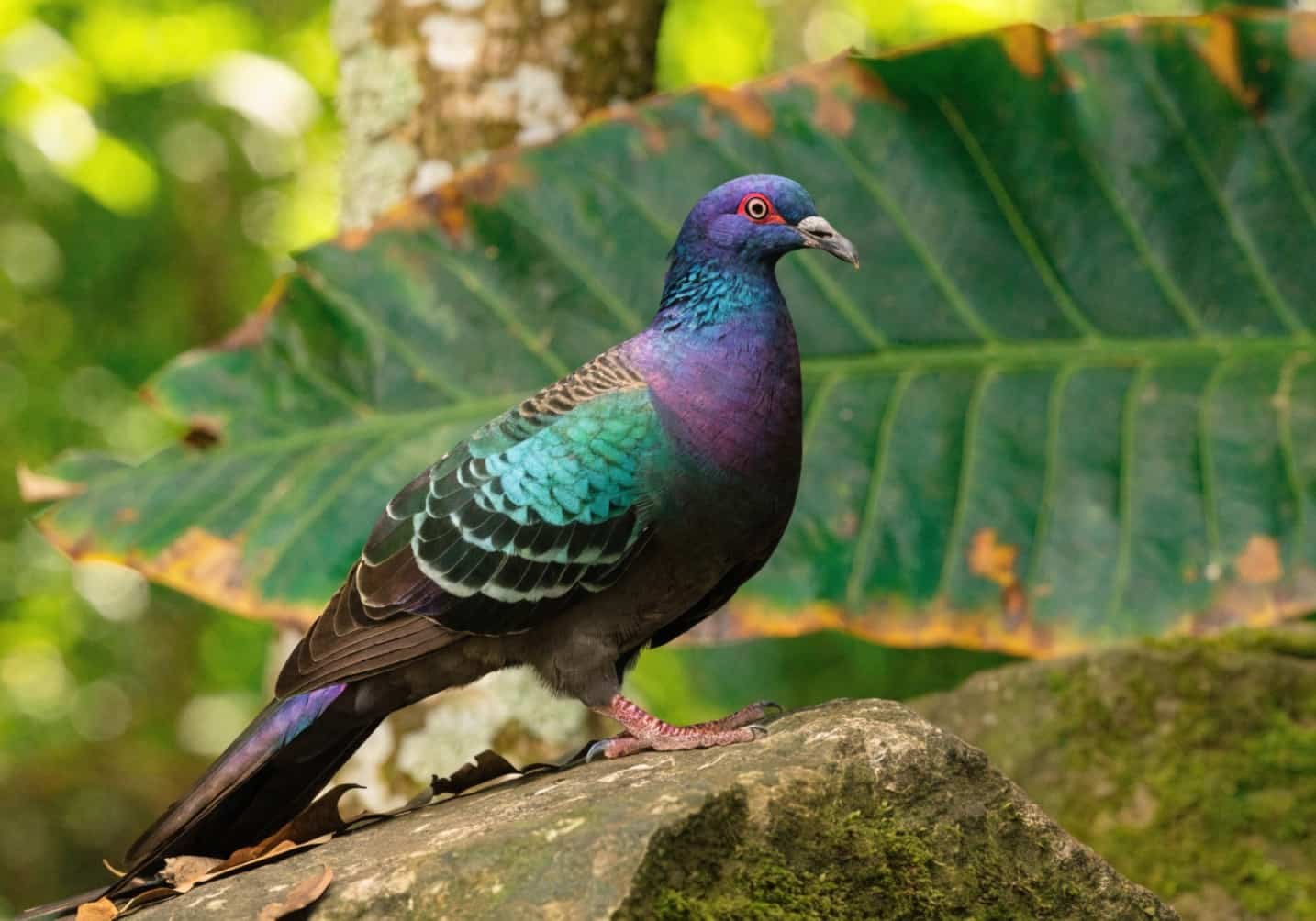
Introduction: The Bird That Looks Like a Rainbow
Picture this. A quiet little island, early morning, the sun just starting to climb over the trees. Dew is still sitting on the leaves, and the forest is barely awake. Then, out of nowhere, a burst of green, blue, and copper flashes across the clearing like someone spilled a bottle of liquid metal on the ground. That’s not a parrot. That’s not some rare fantasy bird you only see in a nature documentary. That’s a pigeon. Yes, a pigeon, from the same family as the ones you see outside a coffee shop picking at breadcrumbs. Except this one looks like it walked straight out of a painting and simply decided to stay in the real world. Meet the Nicobar pigeon. Once you know its full story, you will never look at a plain city pigeon the same way again.
What Is a Nicobar Pigeon?
So what exactly is this bird? Its scientific name is Caloenas nicobarica, and here’s something that makes it instantly special. It’s the only living species left in its entire genus. No brothers, no sisters, no close cousins sharing its exact branch on the family tree. It stands completely alone in that sense. It belongs to the wider pigeon and dove family, called Columbidae, the same group that gives us the common street pigeon. But putting it in the same sentence as a street pigeon almost feels unfair. It’s a bit like calling a peacock just another chicken. Technically correct, but it misses the entire point. This bird carries a kind of quiet uniqueness that most people never expect from something labeled a pigeon. It’s proof that even a familiar bird family can hide a total showstopper.
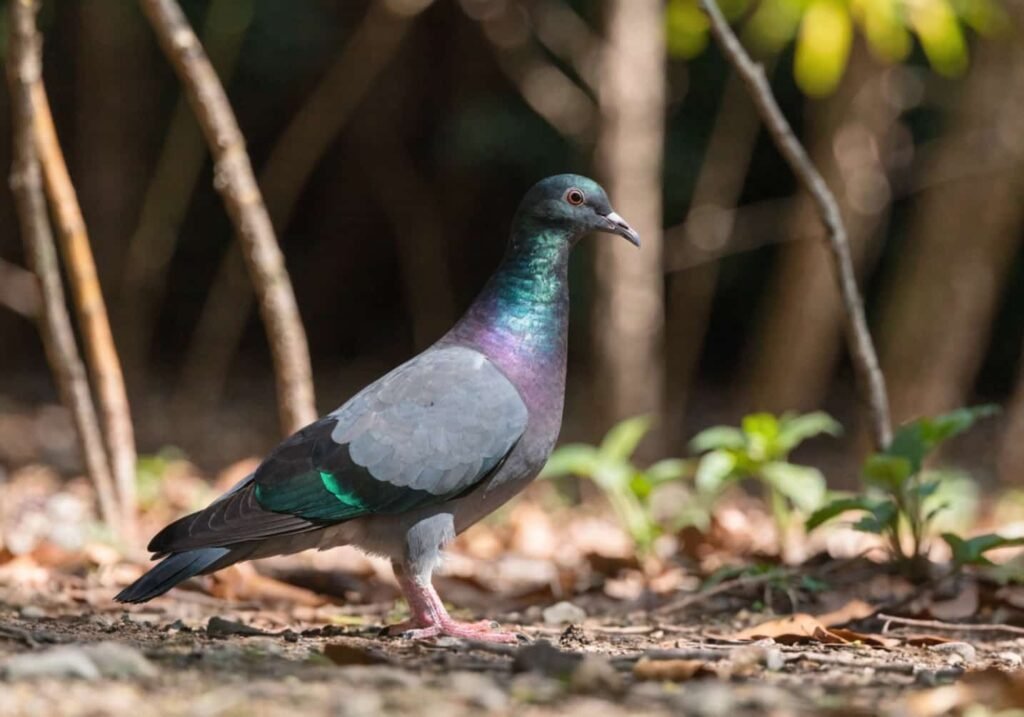
Where Does It Live? Islands and Habitat
The Nicobar pigeon takes its name from the Nicobar Islands, but honestly, its real home stretches much further than that one place. You can find it scattered across small islands and coastal forests running from the Andaman and Nicobar Islands, through the Malay Archipelago, and further out toward the Solomon Islands and Palau. Here’s the interesting part though. This bird never really settles in one place for long. It’s nomadic by nature. Flocks move from island to island chasing food, sometimes traveling in groups of up to eighty five birds at once. So don’t picture it living quietly on one island its whole life. Picture it as a constant island hopper, always chasing the next good meal. Dense lowland forests, quiet coastal thickets, and untouched islets are its comfort zone. The moment humans, noise, or deforestation move in, this bird simply moves out.

The Secret Behind Its Shimmering Feathers
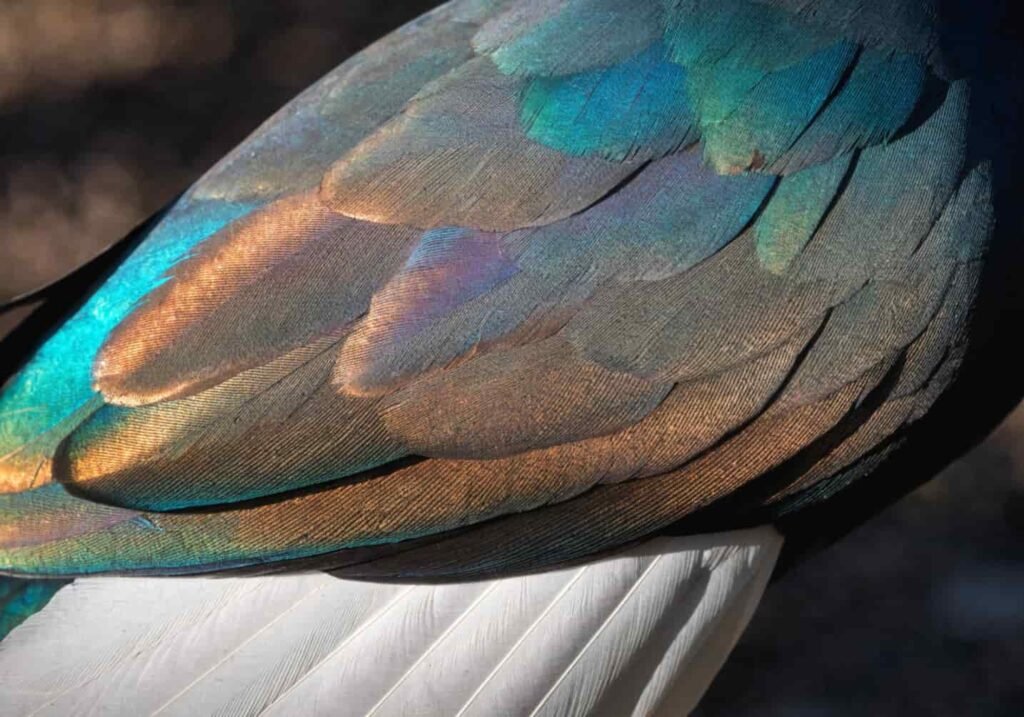
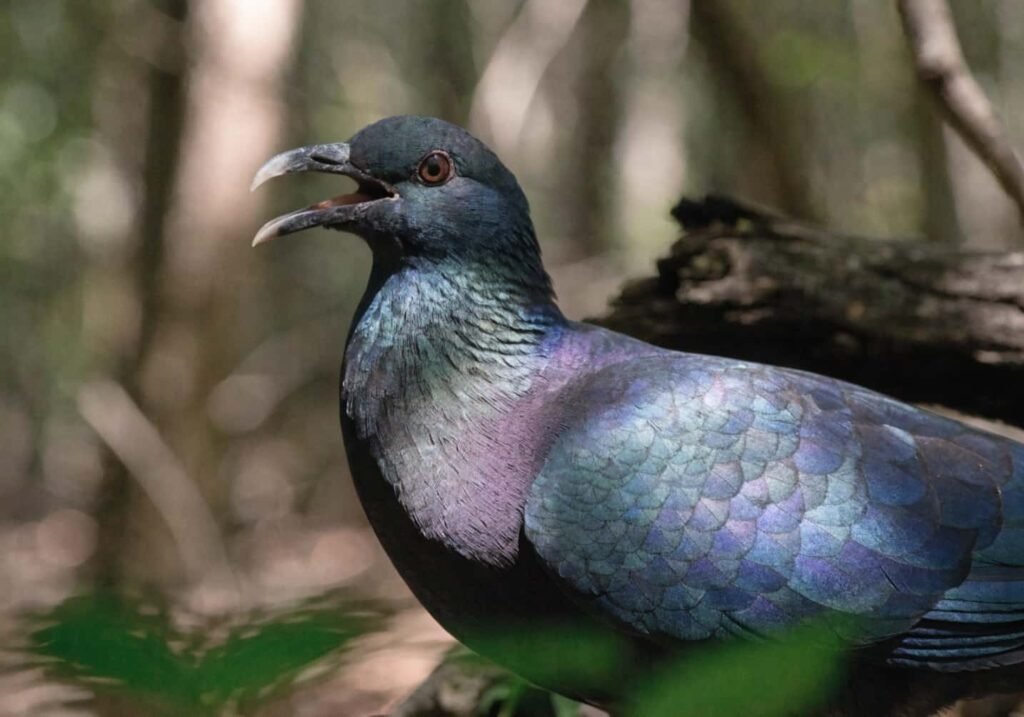
Now let’s talk about the part everyone actually comes here for, those unbelievable feathers. The shine you see isn’t paint and it isn’t dye of any kind. It’s completely structural. The feathers are built in a way that bends and scatters light naturally, so depending on the angle the sun hits it, the same exact bird can look green one moment and deep copper blue the next. It’s a bit like watching a soap bubble shift color as it floats through the air, except this one has a heartbeat and walks around on two legs. Do you know its color actually changes with the sunlight throughout the day? And then, almost like a joke from nature, it carries a plain snow white tail that glows against all that shimmer. It feels like nature painted a masterpiece and left one small corner untouched on purpose.
A Living Link to the Extinct Dodo
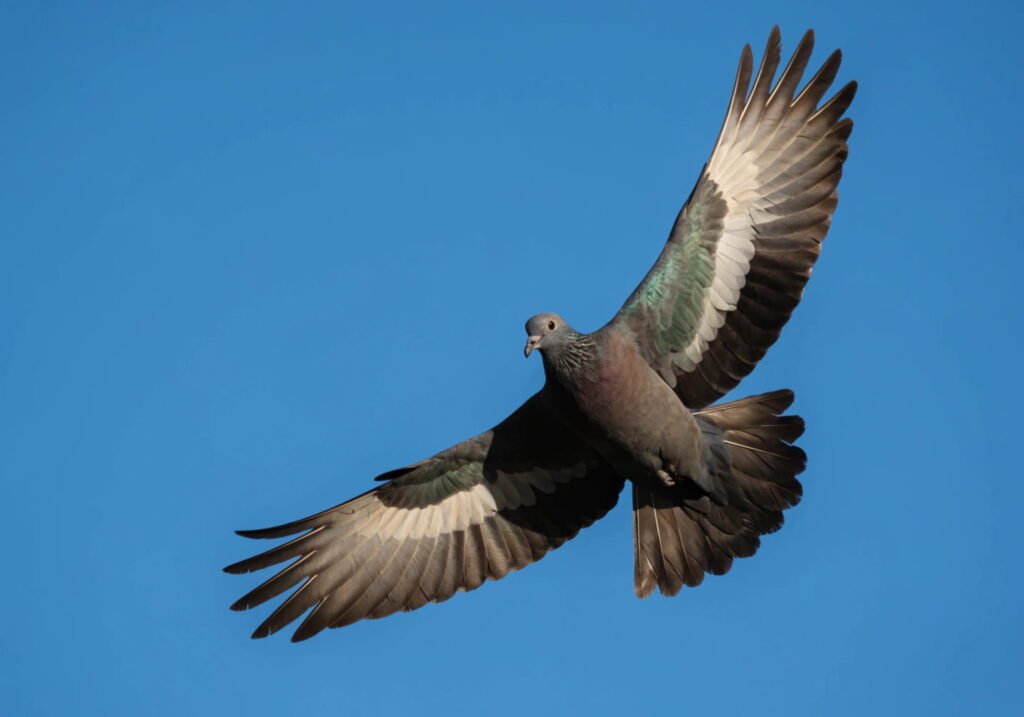
Here’s the part that gives this bird real weight beyond just looking pretty. The Nicobar pigeon is considered the closest living relative of the dodo, the flightless bird from Mauritius that disappeared centuries ago and became a worldwide symbol of extinction caused by humans. Genetic studies done on old preserved dodo specimens confirmed this connection, placing the Nicobar pigeon and the also extinct Rodrigues solitaire on the very same family branch as the dodo. Just think about that for a second. This bird walking around some remote island right now carries the closest living echo of a creature we only know from old sketches and museum bones. Scientists actually study its body and behavior to understand how the dodo might have lived and moved. Unlike the dodo though, this bird still flies just fine, covering long distances between islands with ease.
Size, Shape & Unique Physical Traits
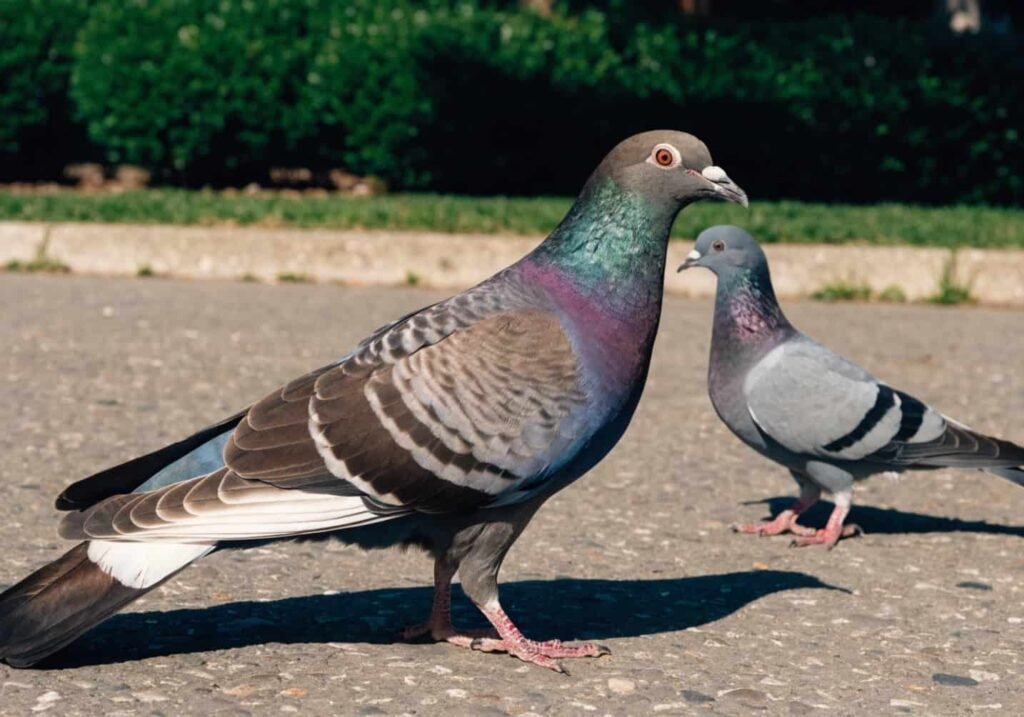
This isn’t a small, dainty little bird at all. The Nicobar pigeon actually holds the title of being the largest living pigeon species in the world today. It can grow close to a foot and a half in length and weigh somewhere around one to two pounds, noticeably heavier and bulkier than your average park pigeon. Its beak is short but very strong, perfectly built for cracking open tough seeds and nuts that would be a real struggle for most other birds. Inside its body, it also carries something genuinely surprising, a hard gizzard stone strong enough to grind nuts that would need a hammer for a human to crack. Sadly, people have hunted these birds partly because of that stone, since it gets used in jewelry, which connects directly to the struggles this species faces today.
Diet and Feeding Habits
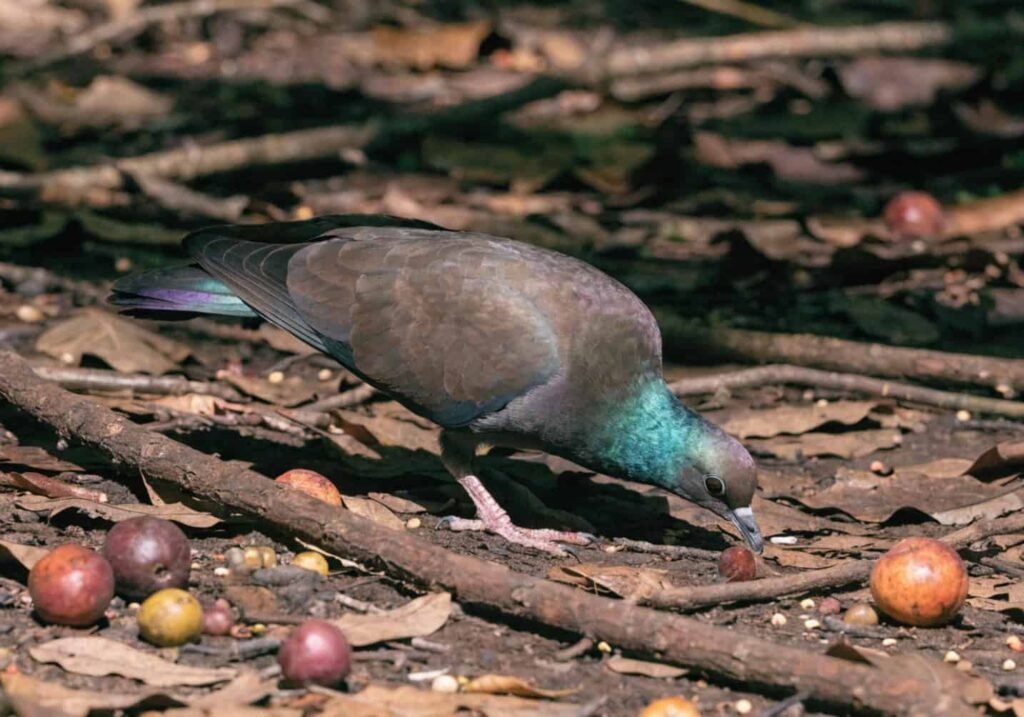
Despite all that flashy appearance, the Nicobar pigeon spends most of its everyday life doing something fairly ordinary, walking around on the forest floor searching for food. It’s an omnivore, which means it eats fallen fruit, seeds, buds, and sometimes small insects or invertebrates it happens to come across while foraging. That strong beak paired with its tough internal gizzard stone lets it crack open seeds that most other birds simply cannot handle. And here’s a nice side effect of its eating habits. By eating fruit and constantly moving between islands, it ends up spreading seeds far and wide across different forests. In a way, it quietly works as one of the forest’s unpaid gardeners, helping new plants grow in places it visits without even realizing the favor it’s doing for the ecosystem.
Daily Behavior and Flock Life
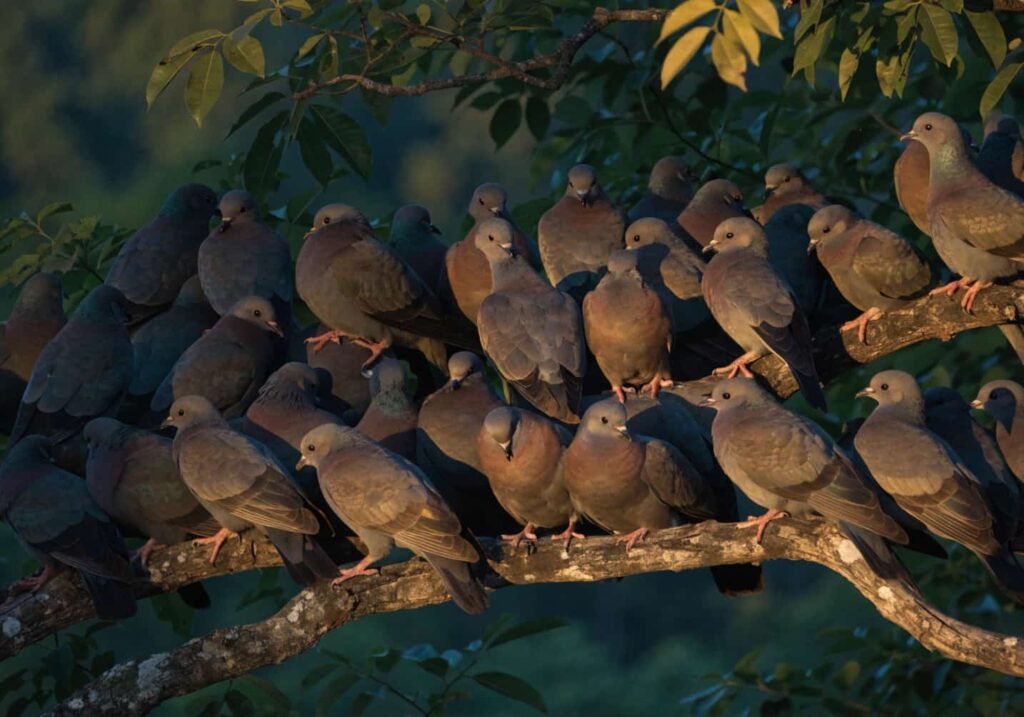
These birds are naturally social and rarely enjoy being alone for long. They roost and feed together in groups, sometimes forming flocks stretching up to eighty five individuals, and they move between islands as one unit rather than wandering off on their own. Most of the daylight hours are spent foraging quietly on the ground, but once evening starts to settle in, they head up into the trees to rest safely away from ground level predators. There’s a steady rhythm to their whole day. Down at dawn to search for food, up at dusk to sleep safely, repeated island after island and day after day without much change. Watching a flock move together almost feels like watching a small, colorful community going about its daily routine with quiet purpose.
Nesting, Eggs & Reproduction
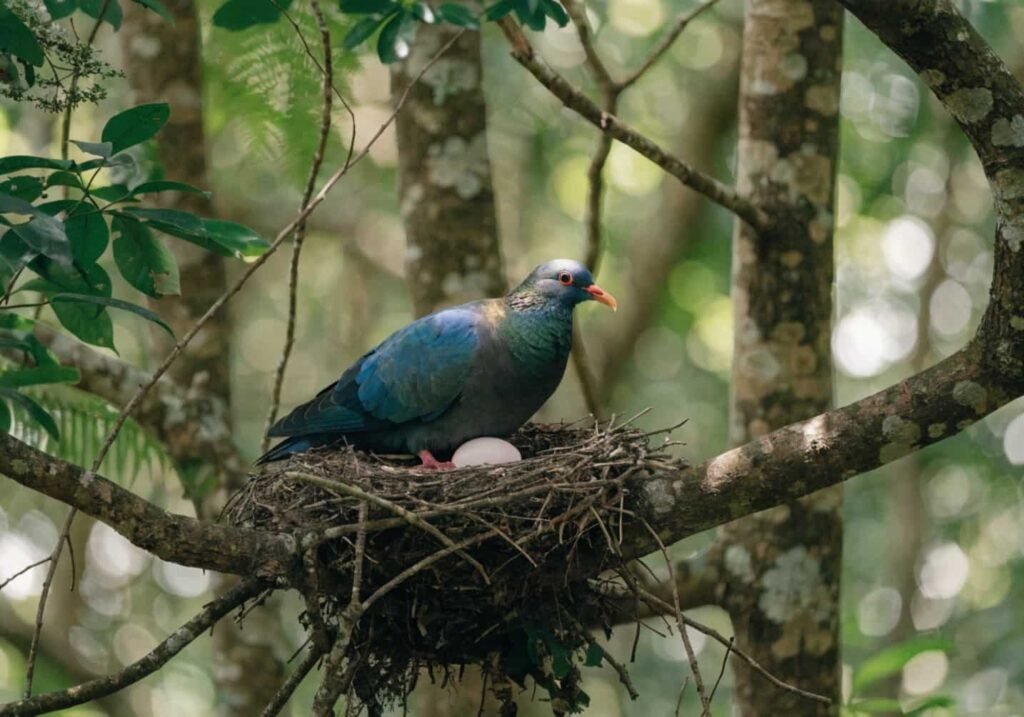
Before mating even begins, there’s a small courtship routine that plays out between pairs. The male usually starts things off with a deep, repeated cooing sound, puffing himself up and displaying proudly to catch the female’s attention. It’s not loud or dramatic like a peacock spreading its tail feathers, but it’s steady and patient in its own quiet way. Nicobar pigeons are not fast breeders at all. They usually nest in colonies on small, undisturbed islands, often picking sites that stay away from ground predators as much as possible. Most pairs lay just a single egg per clutch, and both parents typically share the responsibility of incubating and raising that one chick together. Since their reproductive pace is so slow, every single egg genuinely matters for the future of the species.
Voice and Communication Style
Their everyday voice is a soft, deep cooing sound, mostly used during courtship and to stay connected with the rest of the flock while moving around. But here’s a strange little party trick this bird keeps up its sleeve. When startled or threatened by a predator, a Nicobar pigeon can let out a sound that resembles a pig grunting, which honestly catches most people off guard the first time they hear it. This unusual sound is its way of confusing or startling a predator just long enough to buy itself a few extra seconds to escape. It’s a small but clever survival trick, showing that even a calm, quiet looking bird can have a surprising defense mechanism hidden away for emergencies.
Dangers, Predators & Conservation Efforts
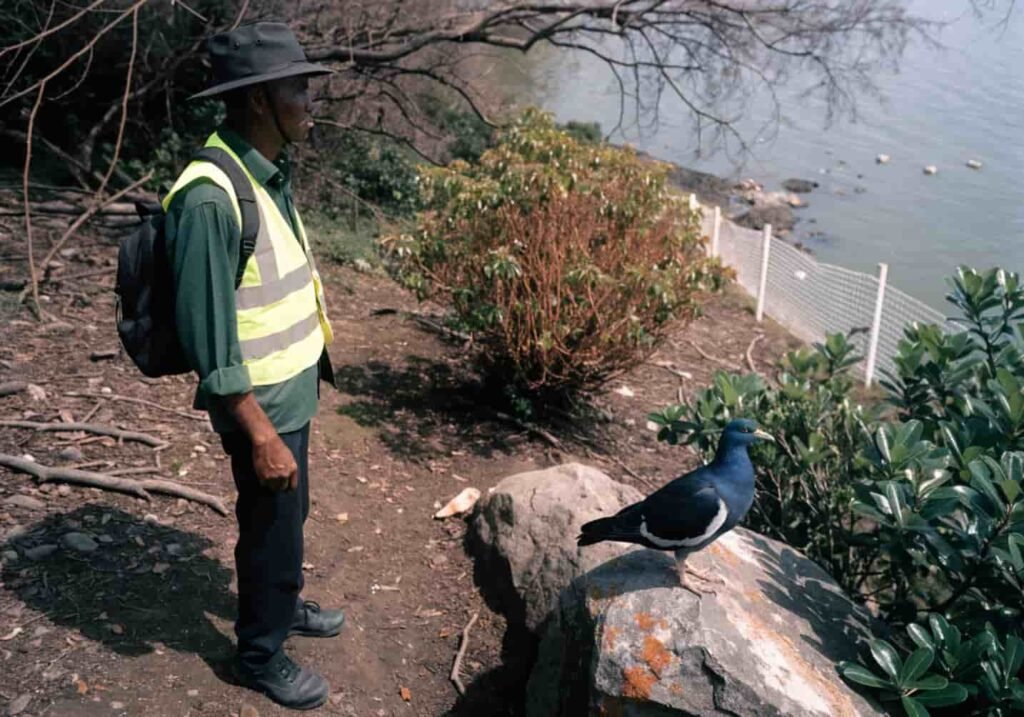
This is where the story gets a lot heavier. The Nicobar pigeon is currently listed as Near Threatened, and the pile of threats stacking up against it sounds painfully familiar if you already know the dodo’s story. Habitat loss from island forests being cleared, hunting for food, capturing birds for the pet trade, and once again that gizzard stone being collected for jewelry are all pushing the species toward real danger. Invasive predators make things even worse. Rats, cats, and other animals introduced onto nesting islands can destroy ground level nests and eggs easily, since this bird never evolved proper defenses against that kind of pressure. Conservation groups are working hard to protect remaining nesting islands and push back against illegal hunting, but enforcement across scattered, remote islands remains genuinely difficult and the pressure has not eased up much.
Final Thoughts: A Rainbow Worth Protecting
Here’s the honest and slightly uncomfortable truth sitting underneath this whole story. If the Nicobar pigeon disappears one day, we won’t just lose a colorful bird from our planet. We will lose the very last living thread connecting us to the dodo, and we will end up telling almost the exact same extinction story all over again, just with a different name attached to it this time. This bird is proof that nature still has a few living rainbows left, tucked quietly away on small islands most people will never get the chance to visit in their lifetime. Whether that rainbow keeps shimmering for future generations to see, or slowly fades into old museum specimens and photographs just like the dodo did, depends entirely on the choices being made to protect it starting right now.