Meet the Mandarin Duck
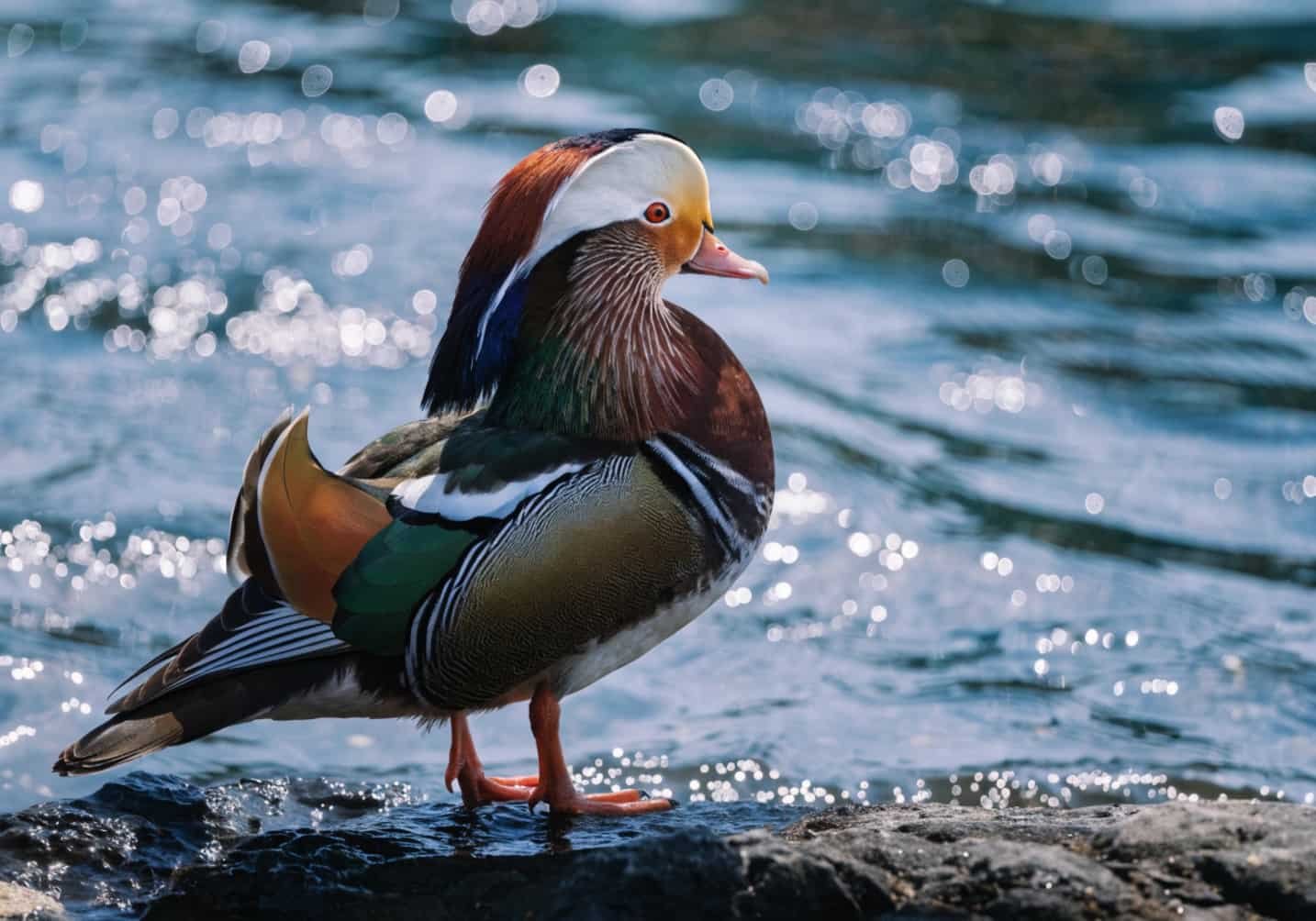
If you’ve never seen a Mandarin Duck up close, get ready to be amazed. Honestly, the first time I saw a photo of one, I thought someone had photoshopped it or painted it by hand. That’s how unreal its colors look. This small duck, native to East Asia, is often called one of the most beautiful waterfowl on the planet, and once you see it swimming across a calm pond with its orange “sails” catching the light, you’ll understand why. It’s not just pretty; it’s almost artistic. Birdwatchers travel long distances to spot one in the wild. In this article, we’re going to dive deep into everything about this stunning bird, from its origins to its love life, its diet, and the myths built around it over centuries.
Where Do Mandarin Ducks Come From?
Mandarin Ducks originally come from East Asia, mainly China, Japan, Korea, and parts of Russia near the Amur River. For centuries, they’ve been part of local folklore, poetry, and even royal gardens. Interestingly, ancient Chinese paintings often featured this duck as a symbol of romance, long before Western bird watchers even knew it existed. Over time, the species spread beyond Asia, mostly because people admired them so much that they were brought to Europe and later to parts of North America as ornamental birds for parks and private ponds. Some escaped or were released, and small wild populations eventually formed in places like the UK. So while their roots are Asian, you can now spot them in surprising corners of the world too.
What Makes Them So Colorful?
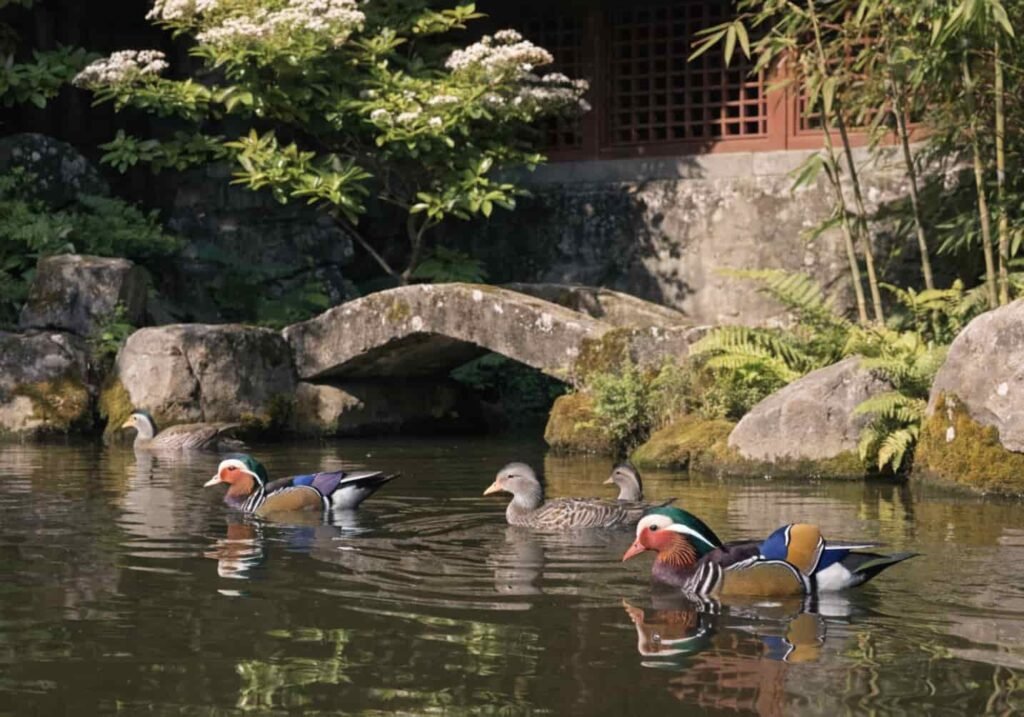
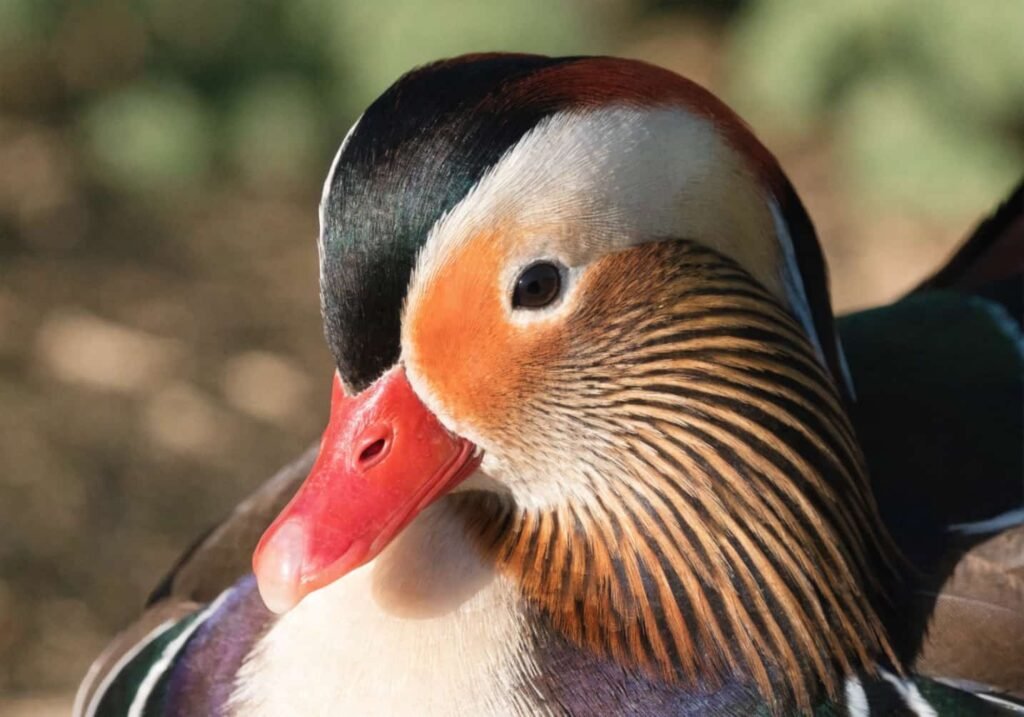
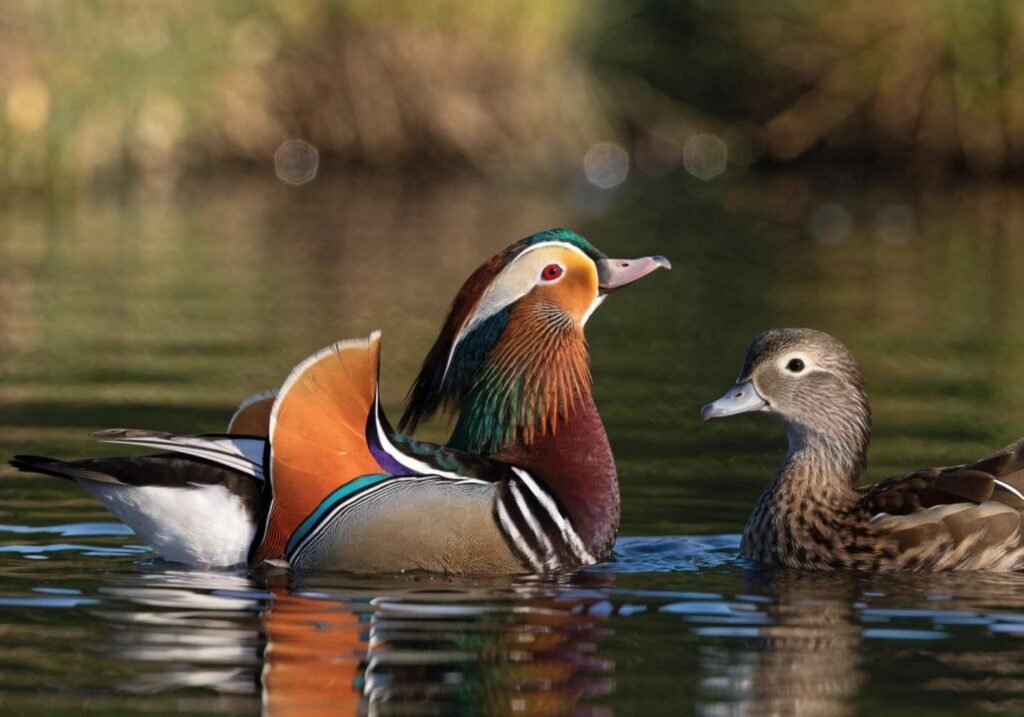
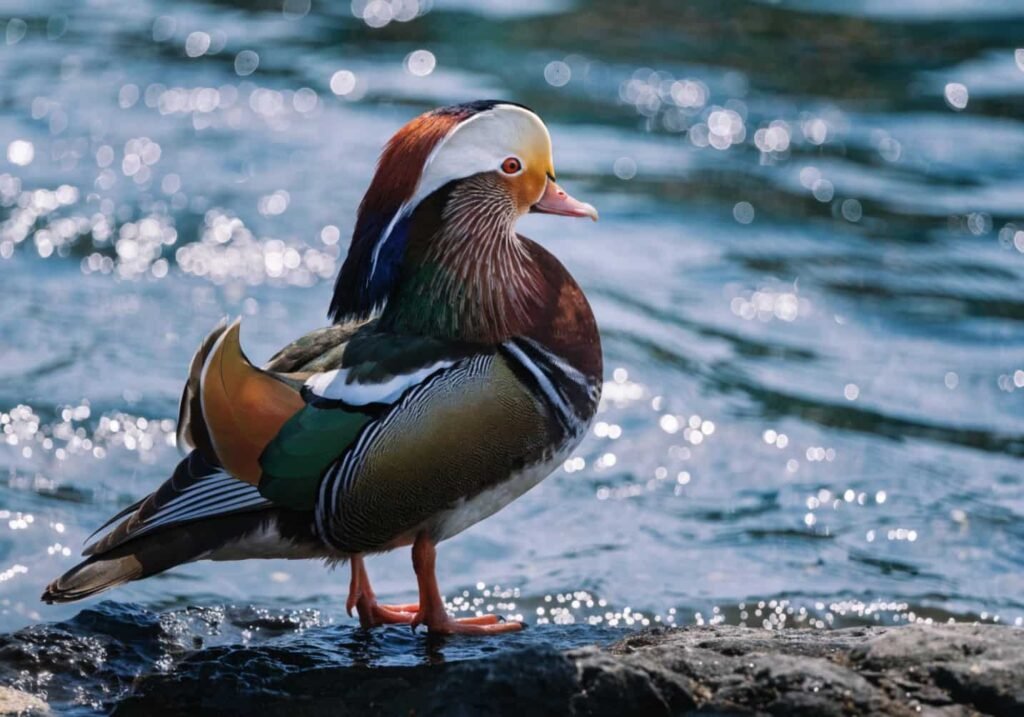
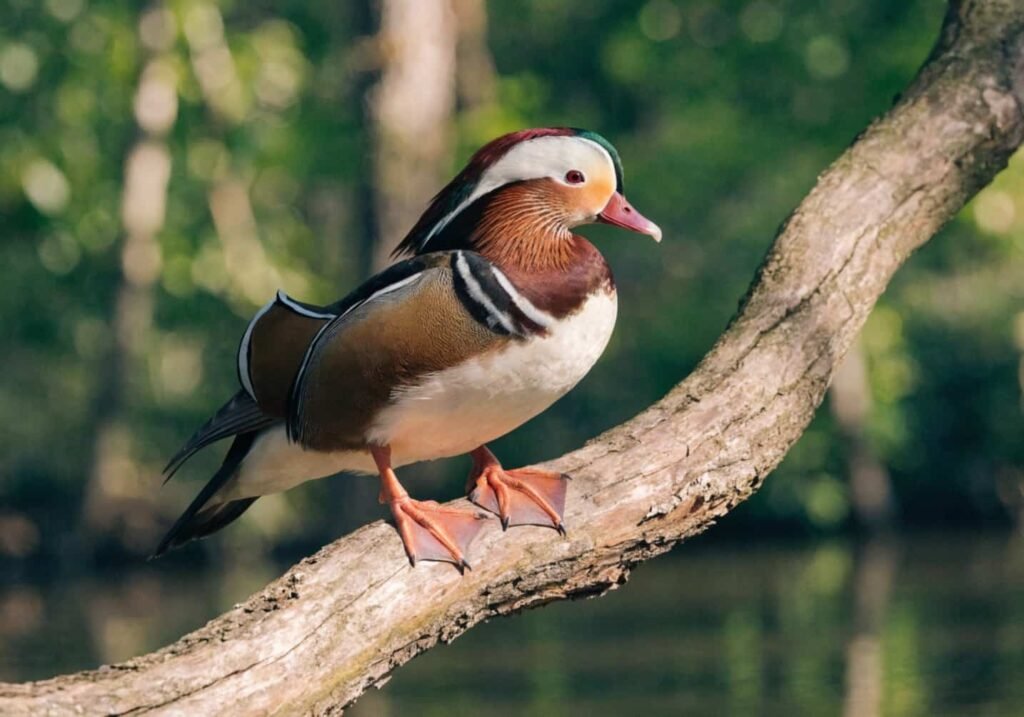
Now here’s the thing, the male Mandarin Duck looks like it was designed by an artist who couldn’t decide on just one color palette. It has a bright orange face patch, a deep green and purple head, a fan-shaped orange “sail” on its back, and a chestnut-colored chest. But that’s not all, its beak is a soft red, and its eyes are outlined like they’ve got natural eyeliner. This isn’t random. These colors come from a mix of pigments and structural coloration, meaning some shades change slightly depending on how light hits the feathers. It’s less like paint and more like nature’s version of shimmer. No wonder people often mistake photos of it for digital art.
Male vs Female: Why the Huge Color Difference?
Here’s something that surprises a lot of people. Female Mandarin Ducks look almost nothing like the males. They’re mostly gray-brown, with a white ring around the eye and soft speckled patterns on their chest. Why such a big difference? It comes down to survival. Females need to sit on eggs and blend into their surroundings, so bright colors would actually put them in danger from predators. Males, on the other hand, use their flashy looks purely to attract a mate during breeding season. Once mating season ends, male Mandarin Ducks actually molt and lose most of their bright colors for a while, looking almost female-like. Nature really does play it smart here.

Natural Habitat: Where Mandarin Ducks Live Today
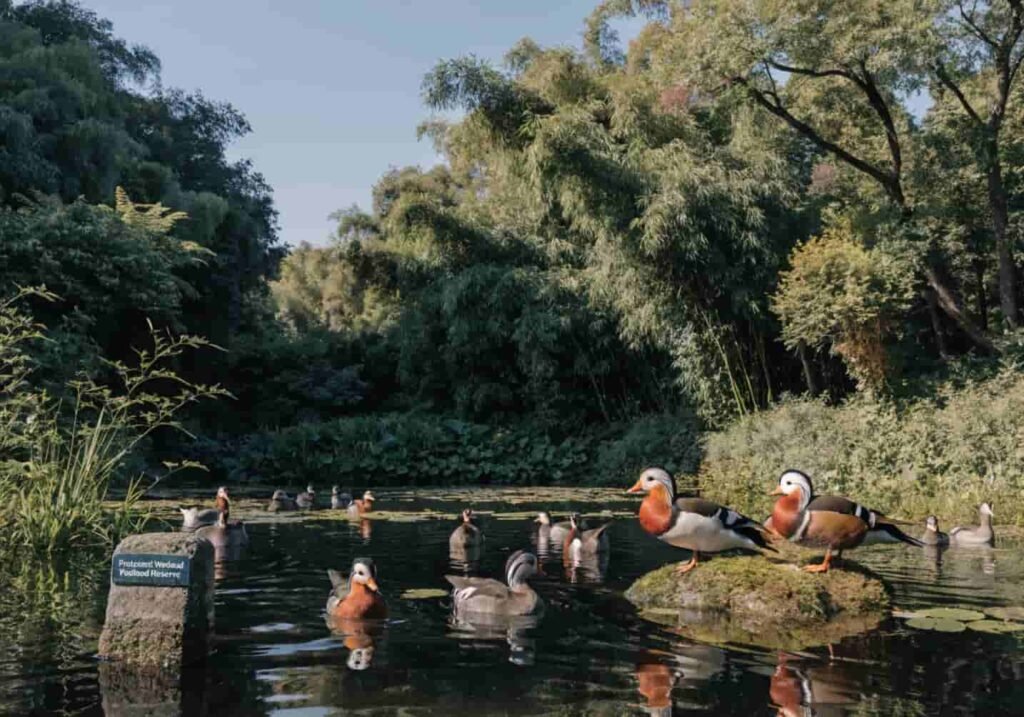
Mandarin Ducks love calm freshwater areas surrounded by trees. Think slow-moving rivers, quiet ponds, and wooded wetlands. They’re especially fond of areas with overhanging branches because, unlike most ducks, they actually nest in tree holes rather than on the ground. That’s right, they’re strong fliers and can perch on branches with ease. Their natural range covers China, Japan, Korea, and parts of Russia, but as mentioned earlier, small wild populations now exist in the UK and Western Europe too. They prefer regions with mild climates and enough tree cover for nesting and shelter. If you ever visit a quiet forested lake in autumn, keep your eyes open, you might just get lucky.

Diet and Feeding Habits
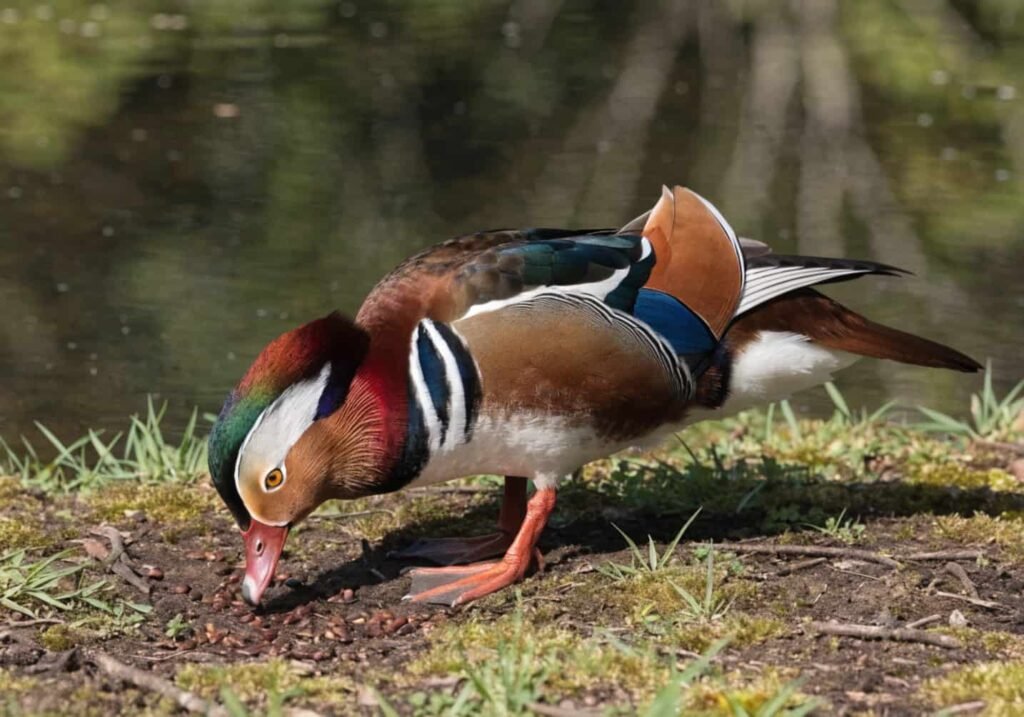
Mandarin Ducks aren’t picky eaters, which honestly makes life easier for them. During the warmer months, they mostly munch on seeds, grains, and small aquatic plants. But when autumn and winter roll in, their diet shifts toward acorns and beechnuts, since these forests provide plenty of fallen nuts on the ground. They’ll also happily eat small insects, snails, and even tiny fish when the opportunity comes up. This flexible diet is actually one reason they’ve adapted so well to different environments, including parks where people sometimes feed them bread (though that’s not great for their health). In the wild, their feeding pattern shifts with the seasons, always following whatever food source is easiest to find.
Behavior and Daily Life
Mandarin Ducks are generally shy and cautious birds. They prefer quiet, undisturbed areas and tend to avoid loud, crowded spaces. Have you ever noticed how some birds seem constantly alert? That’s exactly how Mandarin Ducks behave, always scanning their surroundings for danger. They’re most active during early morning and late afternoon, resting during the hottest parts of the day. Socially, they usually stay in small groups, though during winter they may form slightly larger flocks for safety. Despite their shy nature, they’re surprisingly good fliers and can take off quickly from water if startled. Their daily routine basically revolves around feeding, resting, and staying alert, simple but effective survival behavior.

Mating Rituals and the Meaning Behind Their Colors
This is where things get interesting. Male Mandarin Ducks don’t just rely on looks, they actually perform little displays to impress females. This includes head movements, feather fluffing, and swimming in specific patterns to show off their colors. The brighter and more vibrant a male looks, the more attractive he appears to potential mates, since it signals good health and strong genetics. Females tend to choose partners carefully, often observing several males before picking one. It’s basically nature’s version of a dating show. And here’s a fun twist, despite the flashy competition, Mandarin Ducks are known for forming close pair bonds, at least for one breeding season, sometimes longer.
Breeding Season and Raising Ducklings
Breeding season usually falls in spring, and this is when female Mandarin Ducks get busy building nests, often inside tree cavities close to water. It might sound risky, nesting several feet above the ground, but it actually protects the eggs from ground predators. Once the ducklings hatch, something amazing happens within just a day or two. The mother calls them from below, and the tiny ducklings jump straight out of the nest hole, tumbling down to the ground or water without getting hurt. It’s a wild sight if you ever catch it on video. After that daring first leap, the mother leads them straight to water where they quickly learn to swim and feed on their own.

Mandarin Ducks in Culture and Symbolism
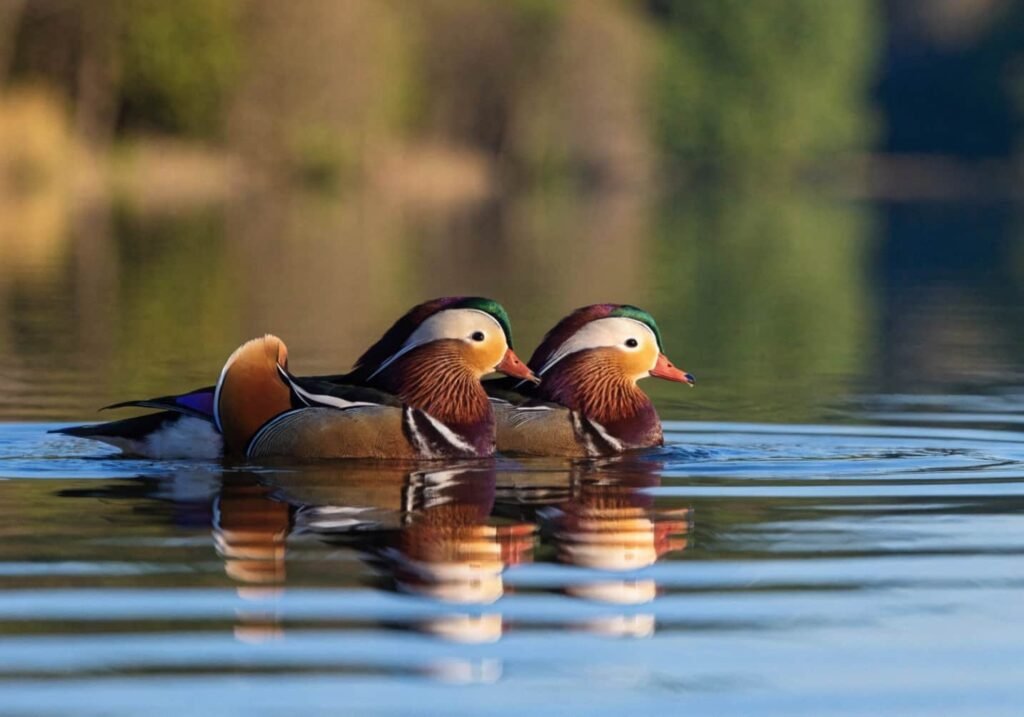
In Chinese culture, Mandarin Ducks are a powerful symbol of love, loyalty, and marital happiness. They’re often gifted as a pair in wedding decorations or artwork, representing the idea of two people staying together through life’s ups and downs. Interestingly, this belief comes from the observation that these ducks are usually seen swimming in pairs, though scientifically they don’t always mate for life like people assume. Still, the symbolism has stuck around for centuries. In Japan and Korea too, the bird holds similar romantic meaning. You’ll often find Mandarin Duck imagery on wedding gifts, paintings, and even jewelry, a small but meaningful nod to lasting companionship.
Are Mandarin Ducks Endangered?
Good news here. Mandarin Ducks are currently listed as a species of least concern by conservation organizations. Their population, especially in China and parts of Russia, has actually been recovering over recent decades thanks to habitat protection efforts and reduced hunting pressure. That said, habitat loss from deforestation and wetland destruction remains a long-term concern in some regions. Conservationists continue monitoring their numbers closely, since forest loss could eventually affect their nesting sites. Overall though, compared to many other exotic bird species facing serious decline, Mandarin Ducks are doing relatively well right now. It’s a rare bit of good news in the world of endangered wildlife conversations.
Fun Facts About Mandarin Ducks
Let’s lighten things up with some quick fun facts. Did you know male Mandarin Ducks temporarily lose their bright colors after breeding season, a process called “eclipse plumage”? Also, despite being ducks, they’re excellent perchers and can grip tree branches thanks to their sharp claws, something most ducks simply can’t do. Another interesting one, their scientific name is Aix galericulata, and “galericulata” actually refers to a cap or hood, likely inspired by their head feathers. And here’s a cute one, Mandarin Duck ducklings can jump from nests nearly 10 feet high without injury. Nature really designed these birds with some surprising survival tricks built right in.
Conclusion: Why This Bird Fascinates Bird Lovers Worldwide
At the end of the day, it’s easy to see why the Mandarin Duck captures so much attention. It’s not just about looks, though those colors are stunning. It’s the whole package, the symbolism, the surprising behaviors, the tree-nesting habits, and the fact that it still thrives despite habitat challenges. Honestly, birds like this remind us how wildly creative nature can be. Whether you’re a serious birdwatcher or just someone who stumbled on a photo online and got curious, the Mandarin Duck has a way of pulling people in. Next time you’re near a quiet wooded pond, keep your eyes peeled, you never know when one of these colorful creatures might swim right into view.