Introduction: What Is a Spoonbill?
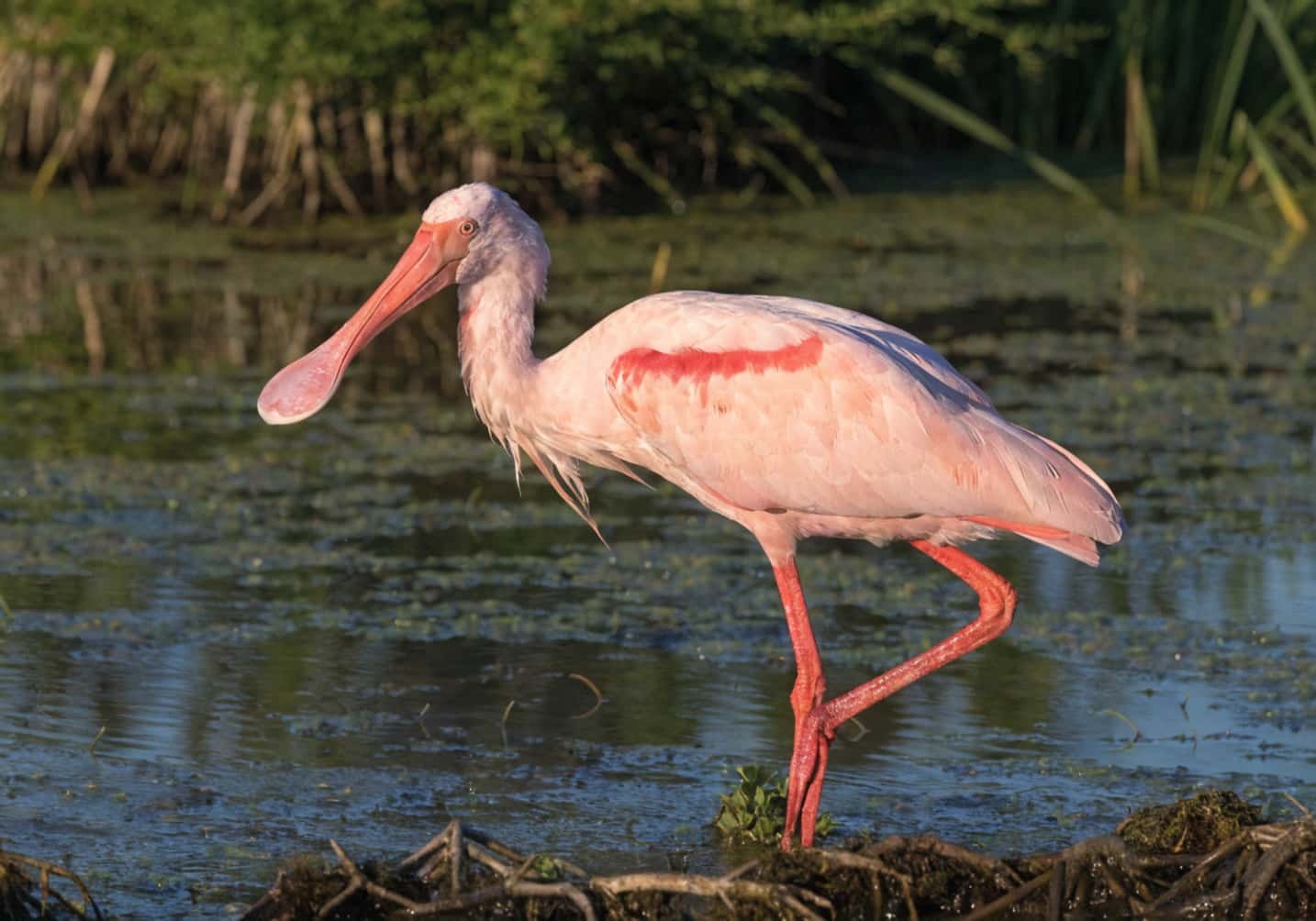
If you’ve never seen a Spoonbill Bird up close, picture a tall wading bird with a bill that looks like someone attached a flat spoon to its face. That’s honestly the first thing everyone notices. Spoonbills belong to the same bird family as ibises, and six species are found across different continents. They’re not rare in the sense of being hidden away — you’ll spot them wading through shallow water in wetlands, lagoons, and marshes almost everywhere except Antarctica. What makes them stand out isn’t just the bill, though. It’s the way they move, slow and deliberate, sweeping their heads side to side like they’re searching for something they lost. Once you understand what that motion is actually doing, the whole bird starts to make a lot more sense.
Origin and Types of Spoonbills Around the World
There are six recognized species of spoonbills, and each one has carved out its own corner of the planet. The Roseate Spoonbill lives across the Americas, from Florida down through South America, and it’s the pink one most people picture. The Eurasian Spoonbill spreads across parts of Europe, Asia, and North Africa. Then you’ve got the African Spoonbill, the Royal Spoonbill and Yellow-billed Spoonbill in Australia and New Zealand, and the Black-faced Spoonbill, which is honestly one of the rarest birds you could hope to see. What’s interesting is that these species evolved separately but ended up with nearly identical bills — nature clearly found a design that works and kept reusing it. That’s called convergent evolution, and spoonbills are a textbook example of it, even though nobody planned it that way.
Physical Appearance: Why the Spoon-Shaped Bill?
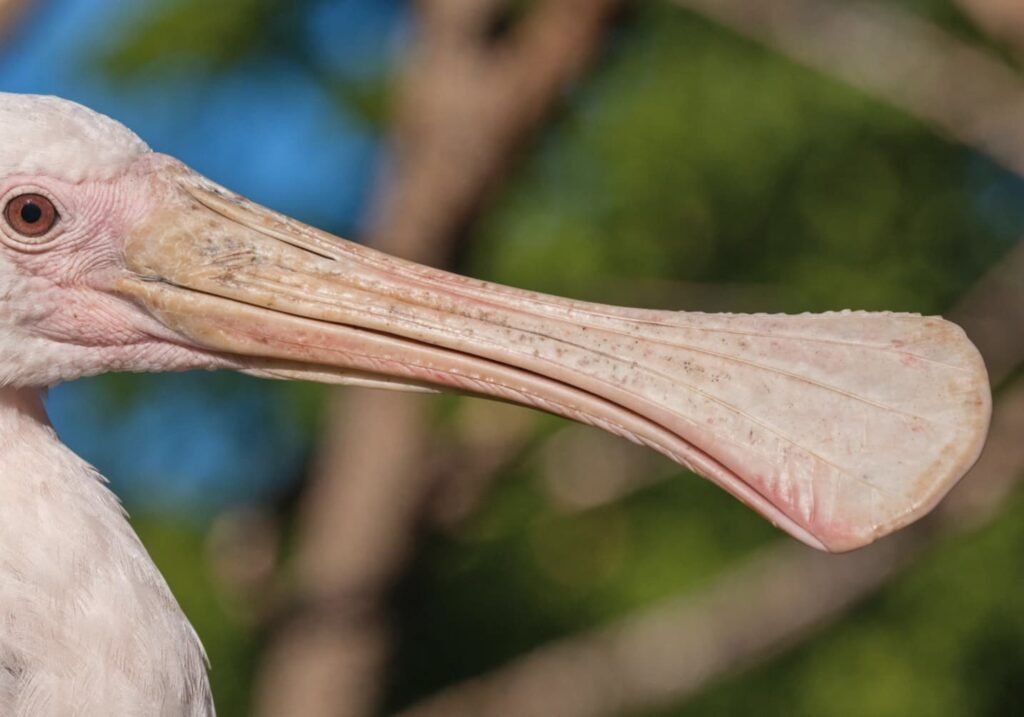
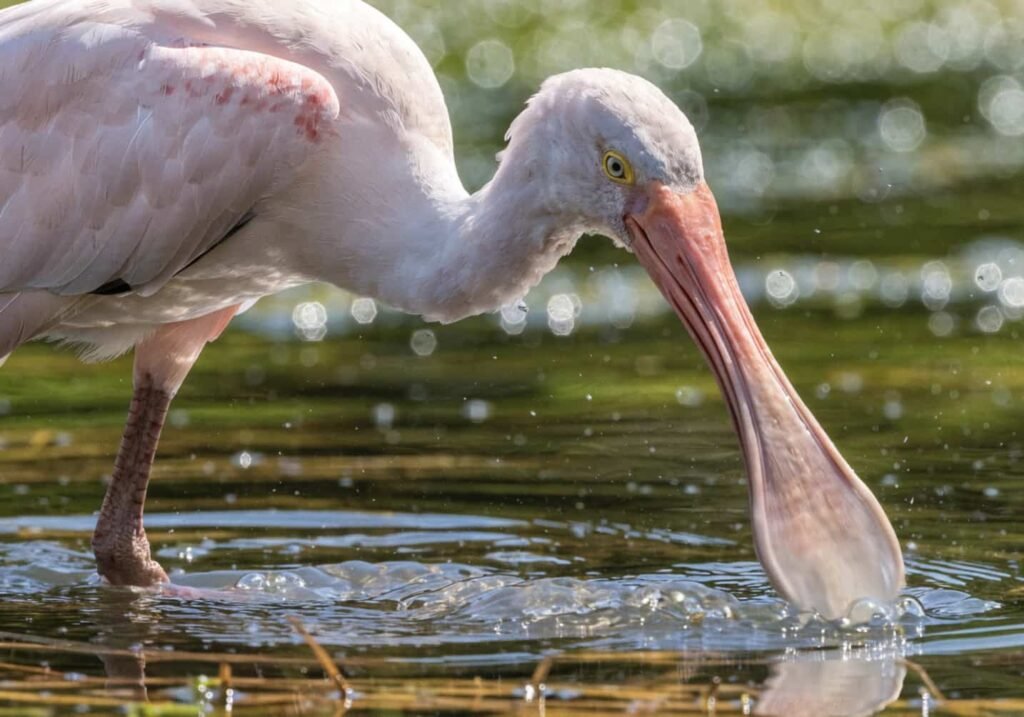
Here’s the interesting part. That flat, rounded bill isn’t just for show — it’s basically a feeding tool that took millions of years to perfect. The tip is wider and more sensitive than the rest of the bill, packed with nerve endings that can detect the tiniest movement in murky water. When I first saw a photo of a spoonbill years ago, I honestly thought someone had photoshopped a spatula onto a heron. Turns out, that shape lets the bird feel for prey without even needing to see it clearly. Spoonbills stand around 30 to 34 inches tall, with long legs built for wading and a wingspan that can stretch past four feet. Everything about their build, really, points back to one job: finding food in water where eyesight alone wouldn’t cut it.
Color Variations: Pink, White, and Everything In Between
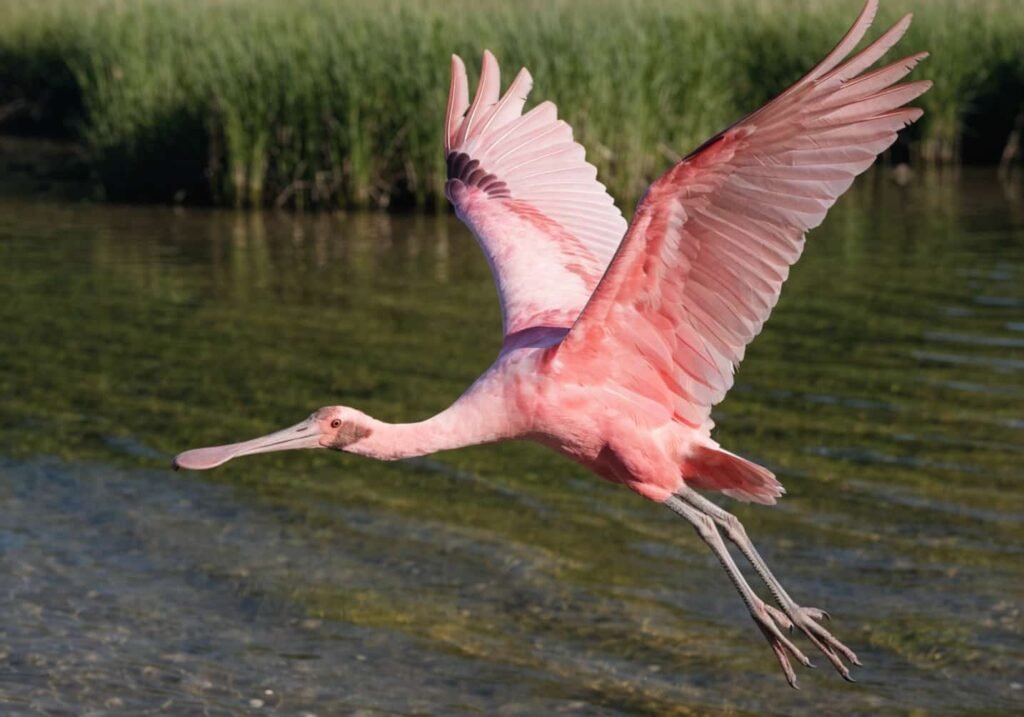
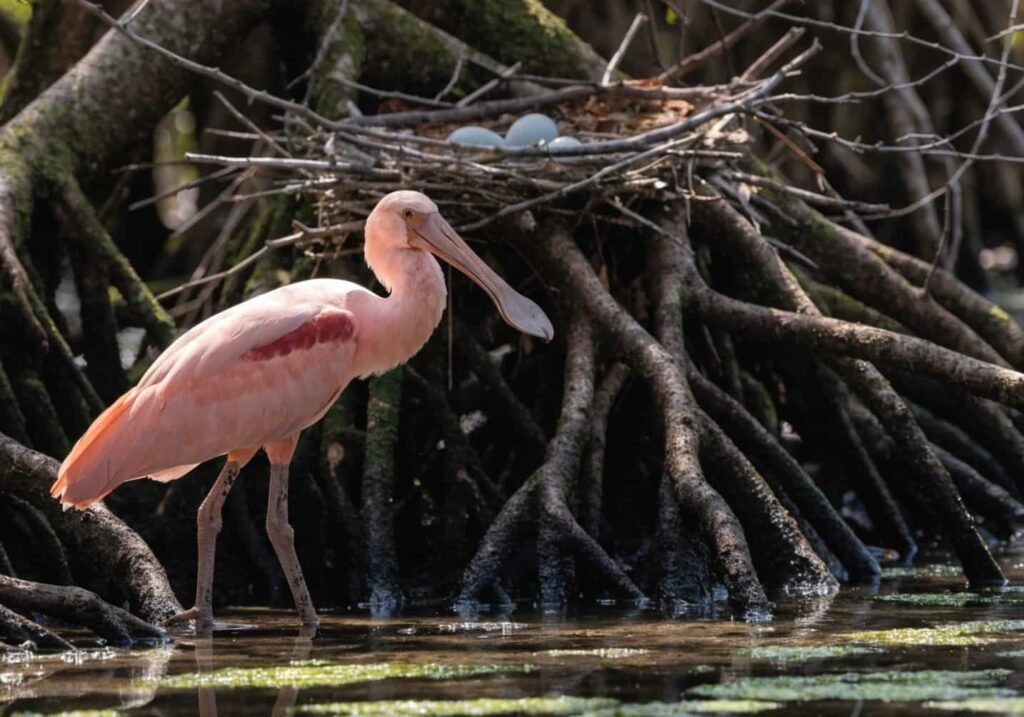
Not every spoonbill wears the same coat. The Roseate Spoonbill is the showstopper here, with feathers ranging from soft blush pink to a deep, almost coral shade, and honestly, seeing one in flight against a blue sky is something you don’t forget. That pink color doesn’t come from genetics alone — it comes from their diet. Shrimp and other crustaceans contain pigments called carotenoids, and the bird absorbs these over time, which is the exact same reason flamingos are pink too. Meanwhile, the Eurasian and African species stick to plain white, and the Black-faced Spoonbill has, well, a black face against white plumage. So if you ever see a pale, washed-out pink spoonbill, it might just mean its diet has been lacking lately. Color, in this case, tells a story about what the bird’s been eating.
Natural Habitat: Where Spoonbills Are Found
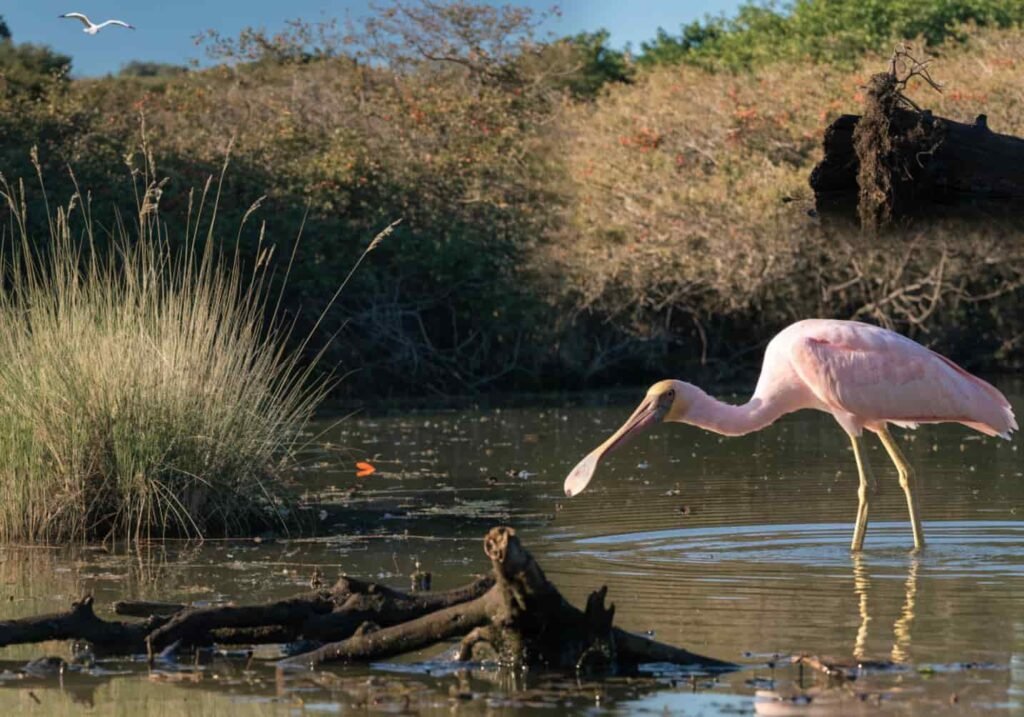
Spoonbills aren’t picky about continents, but they are picky about water depth. You’ll find them in coastal lagoons, mangrove swamps, freshwater marshes, and mudflats — basically anywhere shallow water meets soft mud or sand. In the United States, Florida’s coastal wetlands are a hotspot, especially places like the Everglades. Over in Asia, the Eurasian Spoonbill favors reed beds and river deltas. What ties all these locations together is depth — spoonbills need water shallow enough to wade through comfortably, usually somewhere between a few inches and about knee-height for the bird. Too deep, and their feeding technique simply doesn’t work. That’s also why habitat loss hits them so hard; drain a wetland or dredge a lagoon, and you’ve removed the exact conditions this bird depends on to survive.

Diet and Feeding Behavior (How That Spoon Bill Works)
Now, this is where it gets fascinating. Spoonbills feed by walking slowly through shallow water and swinging their open bill side to side in a steady sweeping motion. The moment that sensitive bill tip touches something — a small fish, a shrimp, an insect larva — it snaps shut almost instantly. They’re not hunting by sight the way herons do; they’re hunting by touch, which means they can feed just as well in murky, silty water as in clear water. A single spoonbill might sweep its bill hundreds of times during one feeding session, often working alongside other spoonbills in a loose group. Ever wondered why they always seem to be in constant motion, never quite still? That’s the answer — stillness doesn’t catch dinner for a spoonbill. Movement does.
Daily Behavior and Social Life
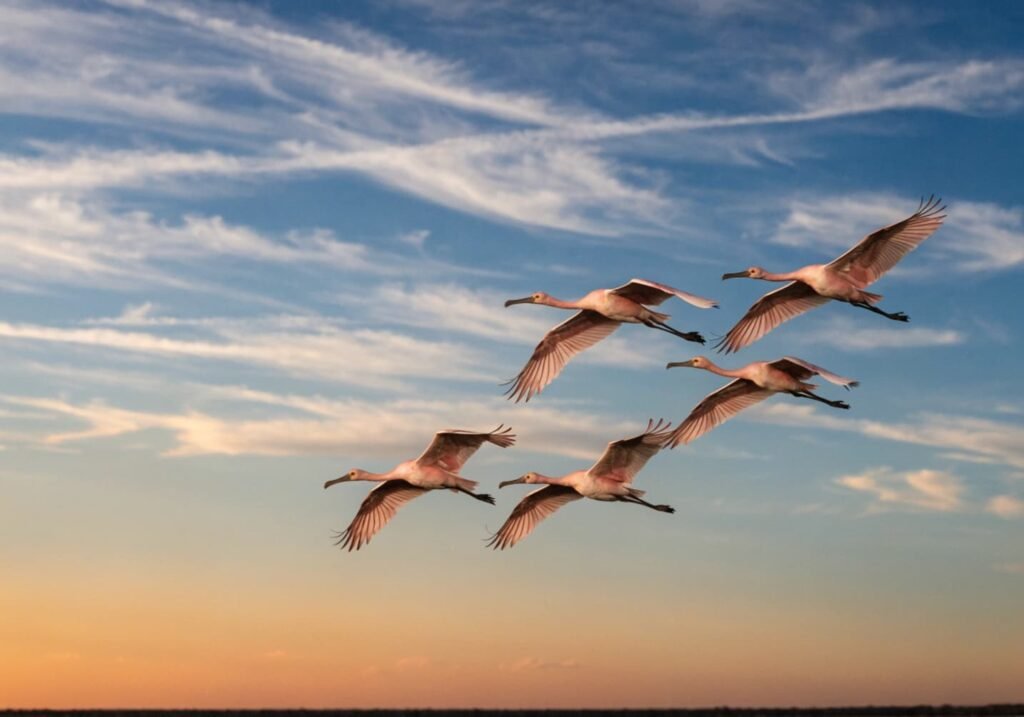
Spoonbills are social birds, and they rarely do things alone. You’ll usually spot them in small flocks, sometimes mixed in with herons, egrets, or ibises, all sharing the same feeding grounds without much fuss. Mornings and evenings tend to be their busiest feeding windows, while the hottest part of the day is often spent resting, preening, or standing on one leg in the shade — a pretty common wading-bird habit, actually. They communicate through low grunts and bill-clattering sounds rather than elaborate songs, which makes sense given how much time they spend with their heads underwater. During flight, spoonbills fly in a distinctive diagonal line formation, necks stretched straight out, legs trailing behind. It’s a calm, almost graceful sight, especially at sunset when their pink feathers catch the fading light and seem to glow.
Breeding Season and Nesting Habits
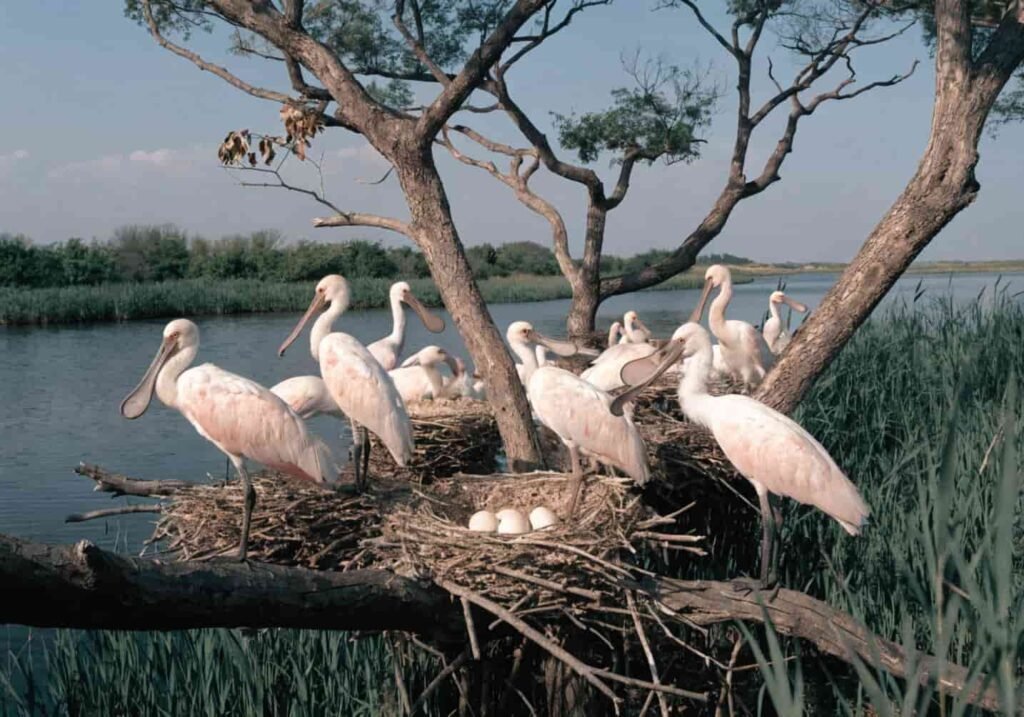
Breeding season varies by region, but generally spoonbills nest during the warmer months when food is plentiful. They’re colonial nesters, meaning dozens or even hundreds of pairs will build nests close together, often in trees, mangroves, or reed beds near water. Both parents pitch in on nest-building, using sticks, twigs, and reeds to form a sturdy platform. It’s not a quiet process either — colonies can get loud, with birds calling out and jostling for the best spots. A female typically lays two to five eggs per clutch, and both parents share incubation duties, taking turns so one is always out foraging. This shared responsibility is actually pretty common in wading birds, but watching it happen in person, with one parent flying off just as the other settles in, still feels oddly coordinated for a bird.
Life Cycle: From Egg to Adult Spoonbill
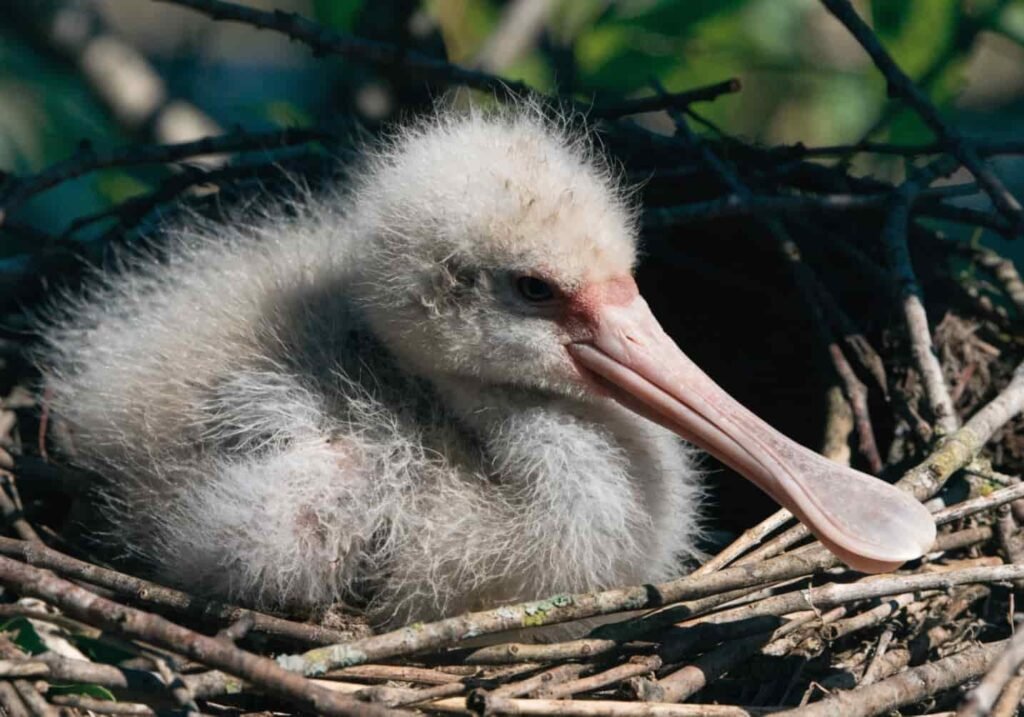
Spoonbill eggs take roughly three to four weeks to hatch, and the chicks that emerge look nothing like their parents at first — no pink feathers, no spoon-shaped bill, just a fuzzy, awkward-looking hatchling with a straight beak. That famous spoon shape develops gradually over the following weeks as the chick grows. Young spoonbills stay in the nest for about five to six weeks before fledging, relying entirely on their parents for food during that time. Once they leave the nest, it can take up to three years before a spoonbill reaches full breeding maturity and develops its complete adult coloring. In the wild, spoonbills can live anywhere from 10 to 15 years, though some individuals in protected reserves have been recorded living even longer than that.
Spoonbills vs Flamingos: Common Confusion Explained
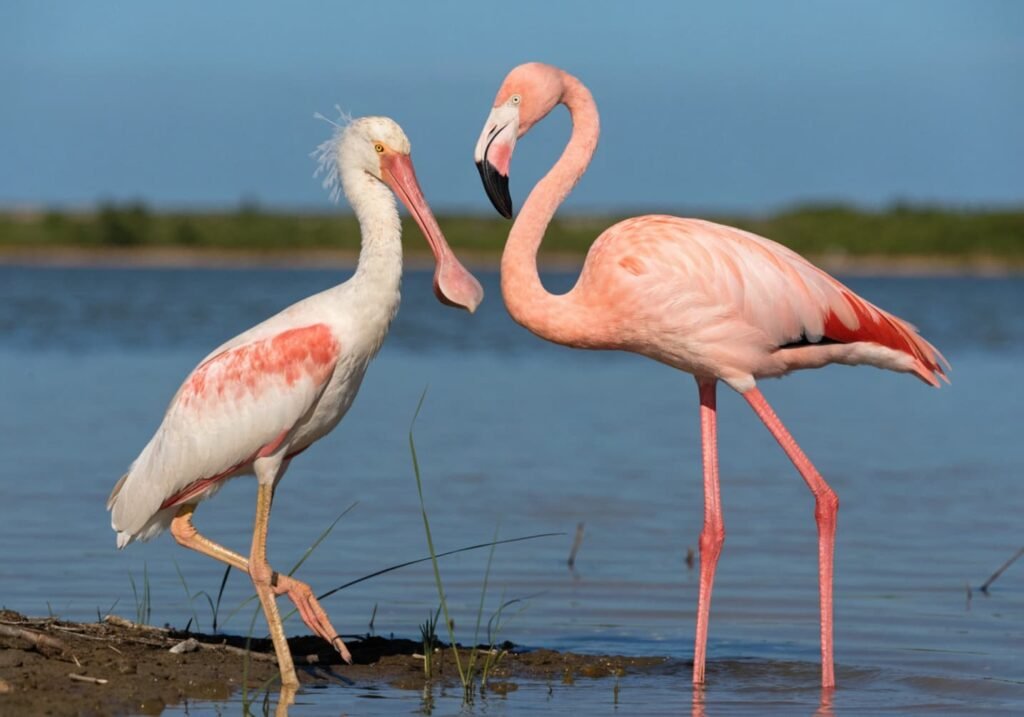
People mix these two up constantly, and honestly, it’s understandable — both are tall, pink, long-legged wading birds that stand in shallow water. But that’s really where the similarities end. Flamingos belong to a completely different family, and they feed with their bill held upside down, filtering water through comb-like structures. Spoonbills, on the other hand, keep their bill right-side up and sweep it side to side, snapping shut on contact with prey. Flamingos also tend to stand on one leg far more often and gather in much larger flocks, sometimes thousands strong. Body shape differs too — flamingos have a distinctive curved neck and bent-back knee look, while spoonbills carry a straighter, more upright posture. So next time someone points at a spoonbill and calls it a flamingo, you’ll know exactly how to correct them.
Predators and Survival Challenges
Life isn’t easy for a spoonbill, even in a healthy wetland. Eggs and chicks face threats from raccoons, snakes, and larger birds like crows or birds of prey that raid nesting colonies when parents are away. Adult spoonbills have fewer natural predators thanks to their size, but they’re not entirely safe either — eagles and large hawks have been known to target them, especially during flight. Beyond predators, the bigger challenge these days comes from us. Habitat destruction, pollution, and disturbance near nesting colonies push spoonbills out of areas they’ve used for generations. Climate change adds another layer, shifting water levels and altering the timing of food availability. It’s a strange thing to realize, but for a bird this well-adapted to its environment, the fastest-changing threat isn’t a predator at all — it’s habitat itself.
Conservation Status: Are Spoonbills Endangered?
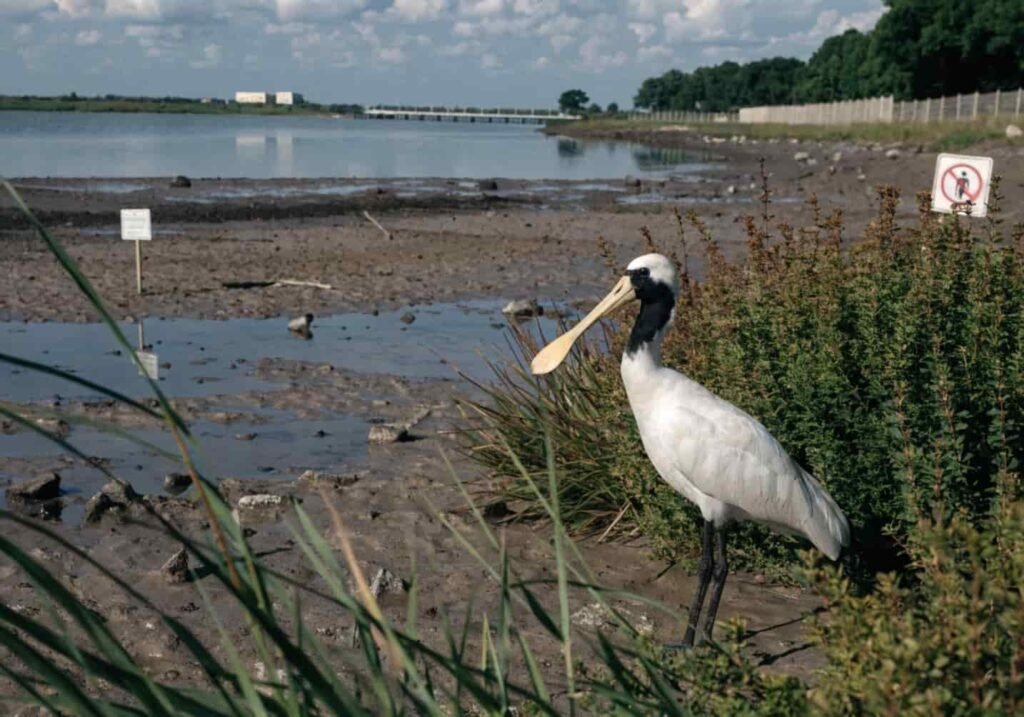
Not all spoonbill species face the same level of risk, and that’s worth clearing up. The Roseate, Eurasian, African, Royal, and Yellow-billed spoonbills are generally listed as species of least concern, though populations are declining in certain regions due to wetland loss. The real concern is the Black-faced Spoonbill, which is classified as endangered, with a global population that was once down to just a few hundred birds decades ago. Conservation efforts across East Asia, including protected wetland reserves and international monitoring programs, have helped that number climb back up over the years, though it’s still nowhere near stable. Wetland protection remains the single biggest factor in spoonbill survival across every species. Lose the wetlands, and you lose the birds — it really is that direct a relationship, no matter how adaptable the species might otherwise be.
Conclusion: Why the Spoonbill Deserves More Attention
Spoonbills don’t get nearly the attention they deserve. Flamingos hog the spotlight, ibises get folded into cultural symbolism, but spoonbills just quietly go about their business, sweeping their strange, wonderful bills through shallow water day after day. There’s something genuinely humbling about a bird that’s evolved such a specific, effective tool for survival, and then built an entire lifestyle around it — social, colonial, adaptable across six species and every continent but one. Whether it’s the pink blush of a Roseate Spoonbill catching the evening light or the quiet resilience of the Black-faced Spoonbill clawing its way back from near extinction, these birds have stories worth knowing. Next time you’re near a wetland, keep an eye out. You might just catch one mid-sweep, doing what it’s done for millions of years, largely unnoticed and completely unbothered by it.