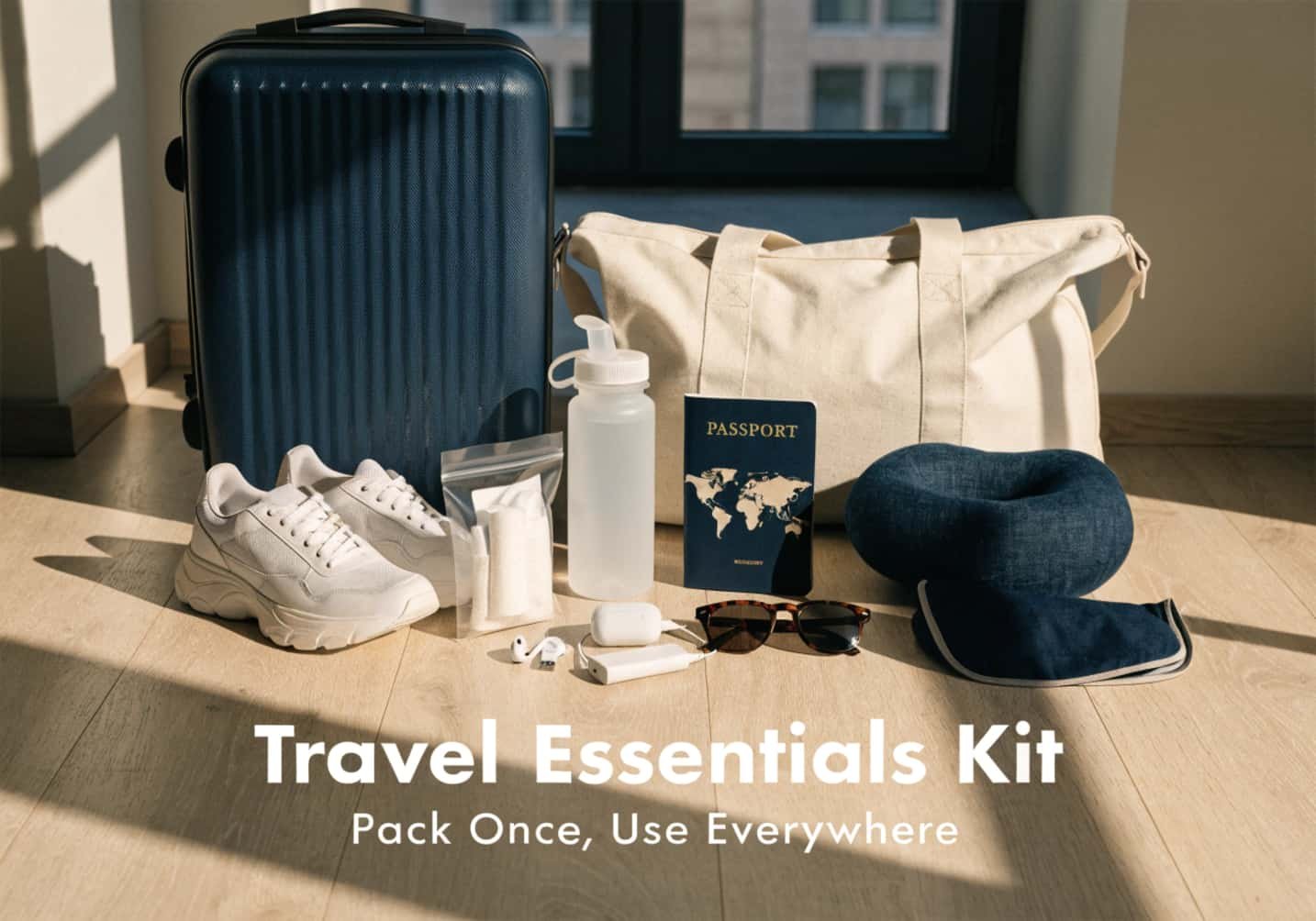
Three hours delayed, phone at two percent, lips cracked from the cabin air, and you’re digging through your backpack looking for anything that might help. Sound familiar? Most of us have lived through that exact moment at least once. The good news is you never have to go through it again. A dedicated flight essentials kit fixes this problem for good. You build it one time, keep it packed, and grab it before every single trip without thinking twice. No more last-minute scrambling at the airport pharmacy or forgetting your charger at home. This article walks you through exactly how to build that kit and keep it working for years.
Why Every Flyer Needs a Dedicated Essentials Kit
Think about the difference between a flight where you’re prepared and one where you’re not. Without a Travel Essentials Kit, you’re that person asking a stranger for a charger cable or paying eight dollars for a tiny bottle of water past security. With a kit, you sit down, plug in your headphones, apply some lip balm, and settle in like it’s nothing. That contrast is the whole point of this article. A dedicated kit isn’t about buying more stuff. It’s about never having to think about these small annoyances again because everything you need is already zipped up and ready. Frequent flyers know this trick well, and it’s time casual travelers caught on too.
The One-Time Setup: Building a Kit You’ll Reuse Forever
Here’s the part people skip and regret later. Building this kit properly the first time means you never have to rebuild it again. Start with a pouch you actually like carrying, then fill it with items that don’t expire quickly or that you can swap out easily. My own kit has stayed mostly the same for two years now. I just refill the toiletries and swap batteries when needed. Set aside thirty minutes this weekend, lay everything out on your bed, and pack it like you’re never going to think about it again. That mindset shift, from “packing for this trip” to “packing forever,” changes everything.
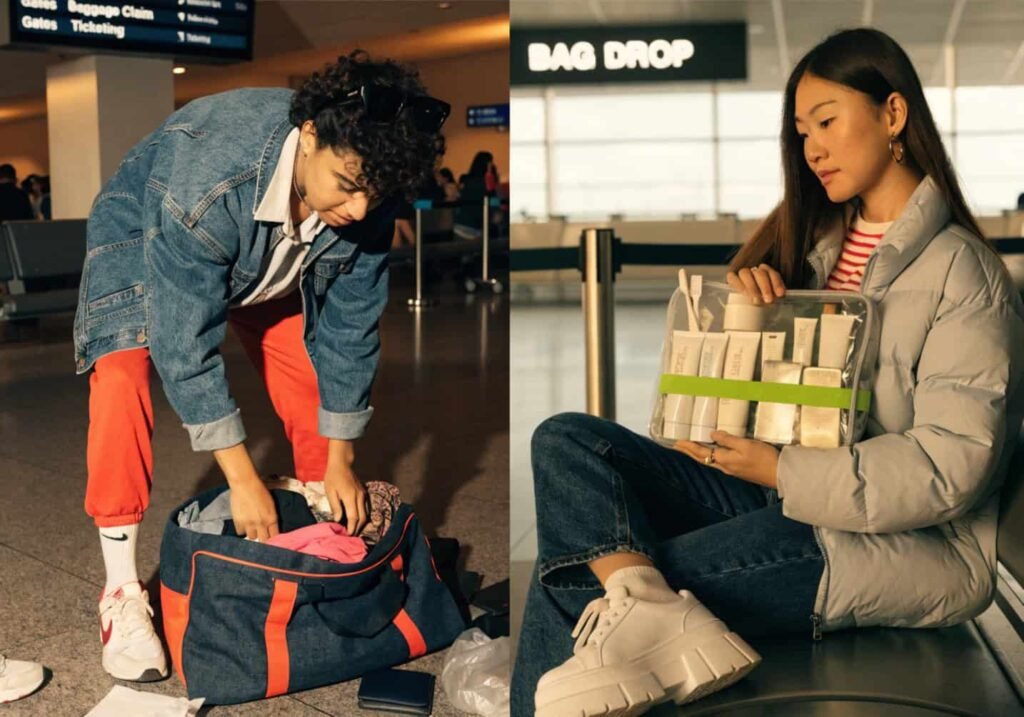
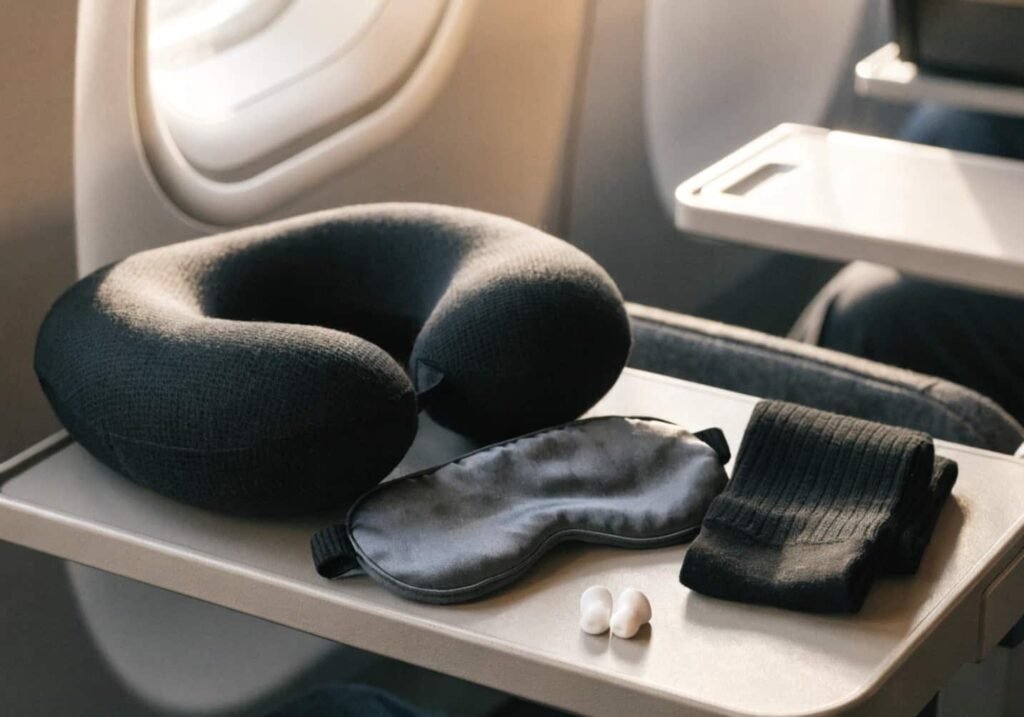
Must-Have Comfort Items for Long-Haul Flights
Comfort items are what separate a bearable flight from a miserable one. A compact neck pillow that actually folds small, a pair of compression socks, and an eye mask are the three items I never skip. Add a light scarf or wrap since planes get cold no matter the season. Earplugs help too, especially on flights with crying babies or loud engines near the back rows. None of these items are expensive, and none take up much room. The trick is choosing versions that pack flat instead of bulky ones that eat up your bag space. Comfort doesn’t need to be complicated, it just needs to be planned.
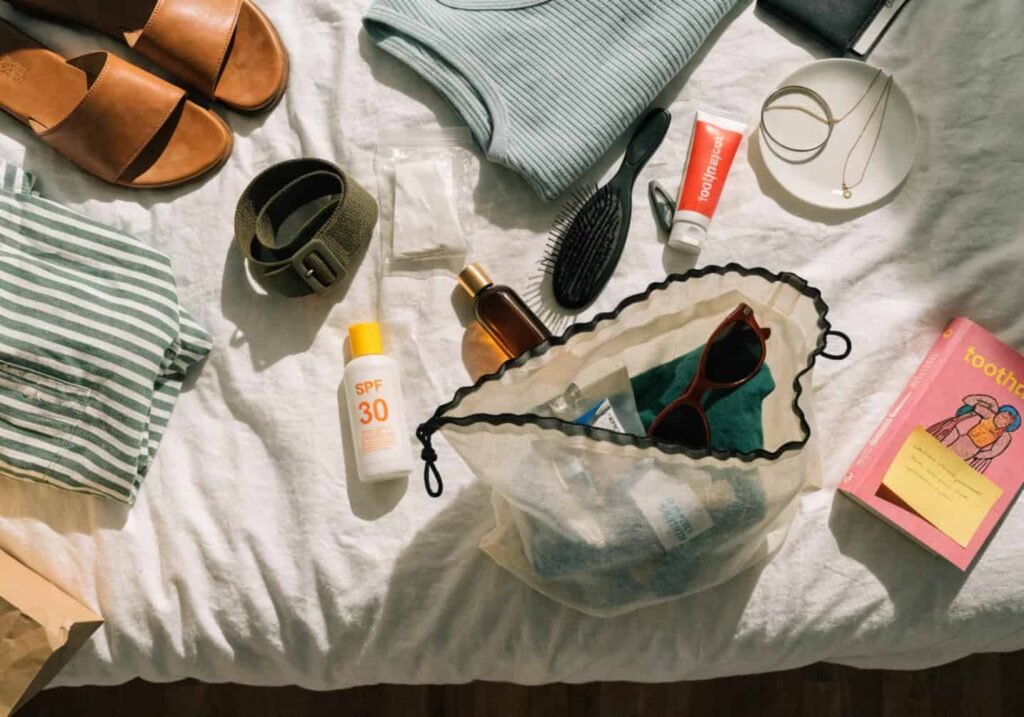
TSA-Friendly Toiletries That Belong in Your Kit
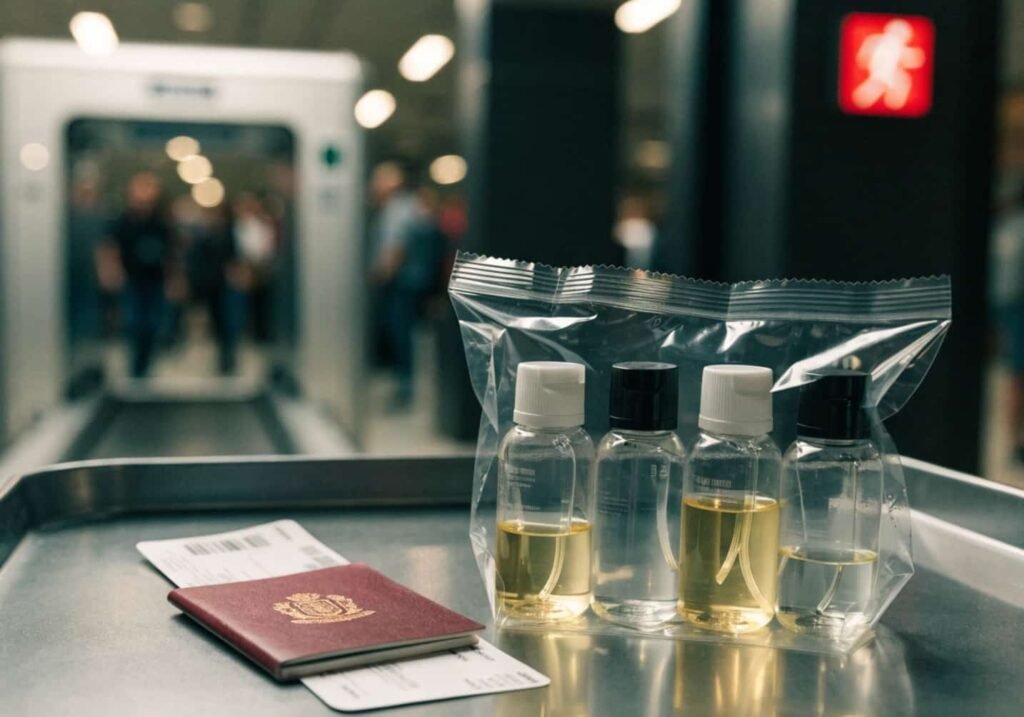
Under the current TSA 3-1-1 rule, each liquid or gel container must hold 3.4 ounces or 100 milliliters or less, and all of them need to fit inside a single quart-sized clear bag. Stick to that rule strictly so you’re never pulled aside for a bag check. Pack travel-size hand sanitizer, toothpaste, a small deodorant, and a solid or bar version of soap if you want to skip liquids altogether. Solid toiletries are a smart move because they never leak and never count against your liquid limit. Keep this bag separate from the rest of your kit so it’s easy to pull out fast at security.
Tech Essentials Every Flight Kit Should Include
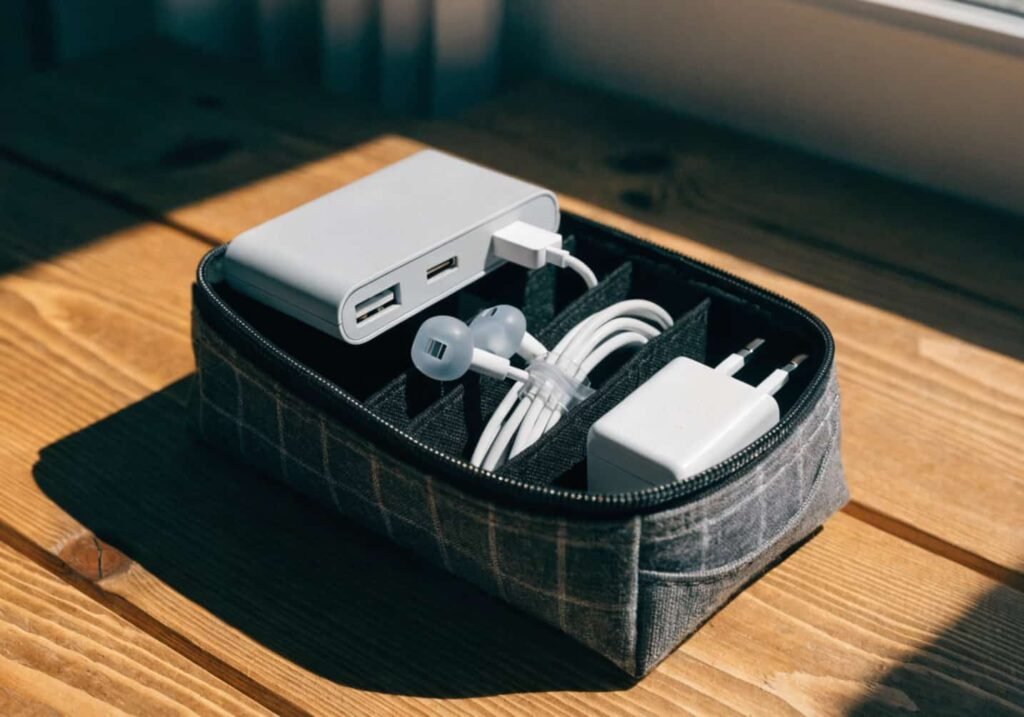
A dead phone during a delay is one of the most frustrating things that can happen while traveling. Keep a fully charged portable power bank in your kit at all times, along with a short charging cable that won’t tangle with everything else in your bag. A pair of wired earbuds is a smart backup in case your wireless ones die mid-flight, since not every seatback screen supports Bluetooth. Universal plug adapters matter too if you’re flying internationally. I personally keep a small tech pouch inside my main kit just for these items, so I’m never digging through toiletries to find a charger.
Snacks and Hydration: What to Pack for the Skies
Airport food is expensive and airline snacks are often just a small bag of pretzels. Pack a few protein bars, some trail mix, or dried fruit that won’t melt or crush easily in your bag. An empty collapsible water bottle is a game changer since you can fill it up after security instead of buying bottled water at inflated prices. Staying hydrated also helps with the dry cabin air that makes long flights feel worse than they need to. I always toss in a couple of electrolyte packets too, especially for long-haul trips where the air conditioning really dries you out by hour six.
Entertainment Picks to Survive a Delayed or Long Flight
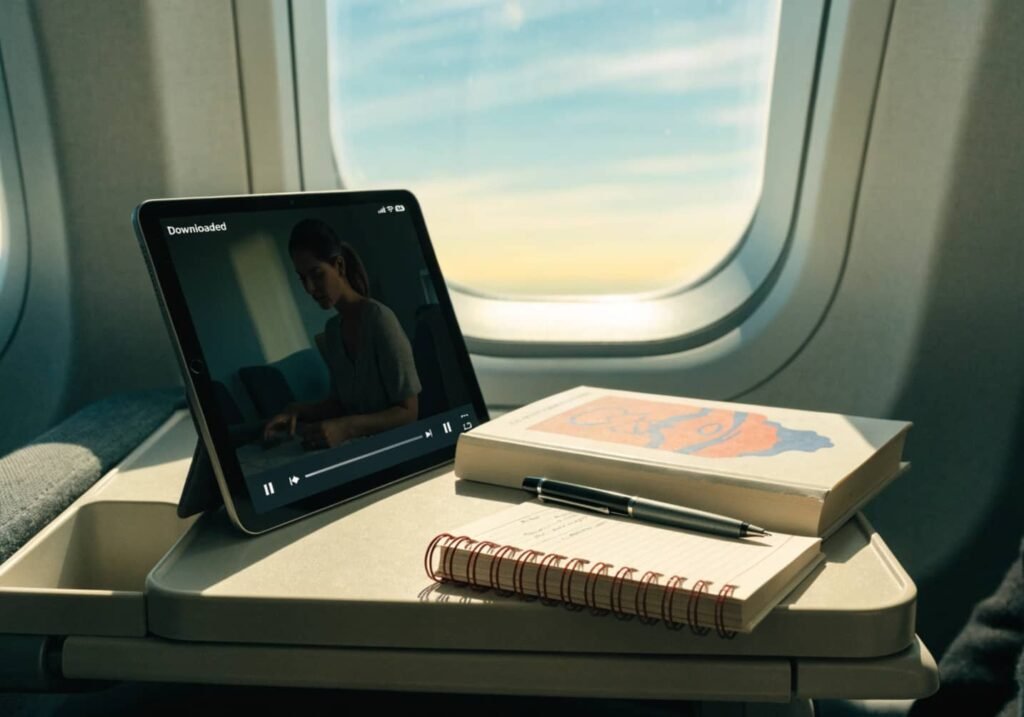
Delays happen, and staring at the departure board for three hours gets old fast. Download a couple of shows or movies to your phone or tablet before you leave home, since airport wifi is often unreliable. A physical book or e-reader is a solid backup that doesn’t need charging. I like keeping a small notebook too, just for jotting down thoughts or making lists during downtime. Puzzle books or a deck of cards can turn a boring layover into something almost enjoyable, especially if you’re traveling with someone else. The goal is having at least two entertainment options so you’re never stuck with nothing to do.
Health and Hygiene Items You’ll Be Glad You Packed
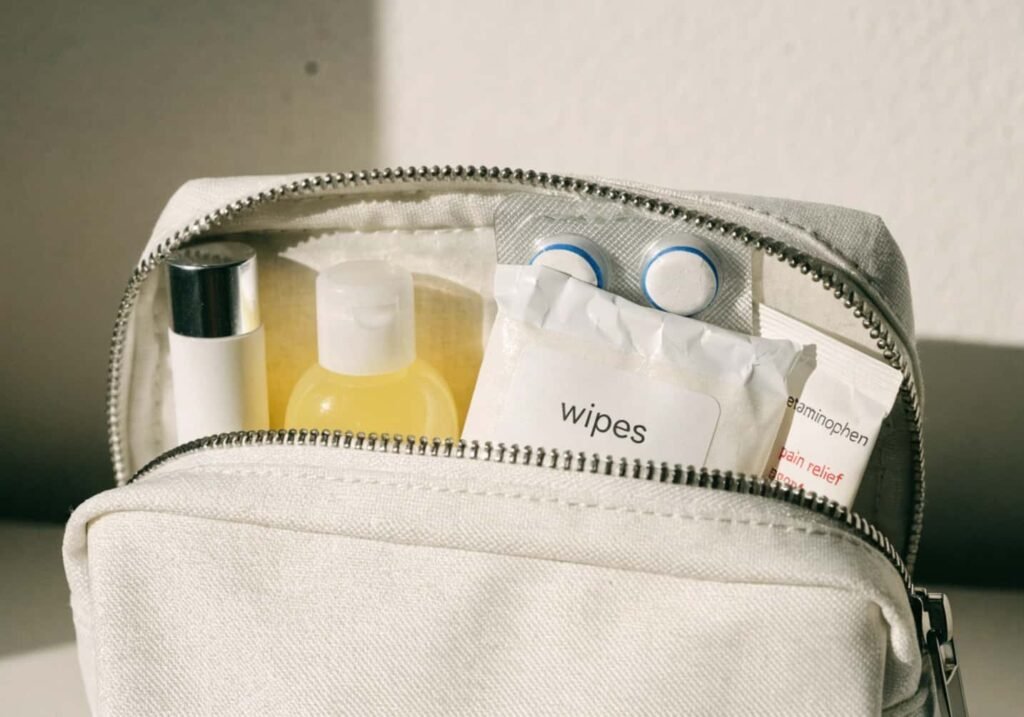
Cabin air is notoriously dry, and it does a number on your skin, eyes, and throat. Pack a small tube of SPF-infused lip balm since dry lips crack faster under pressurized air, and the SPF helps if you’re near a window seat for hours. Add a mini hand lotion, saline nasal spray, and a few sheets of face-cleansing wipes for long flights. Pain relievers, motion sickness tablets, and a couple of bandages round out the kit nicely. I also keep a small pack of tissues since planes rarely have enough in the bathroom. These tiny items feel unnecessary until the one time you desperately need them.
Choosing the Right Pouch or Organizer for Your Kit
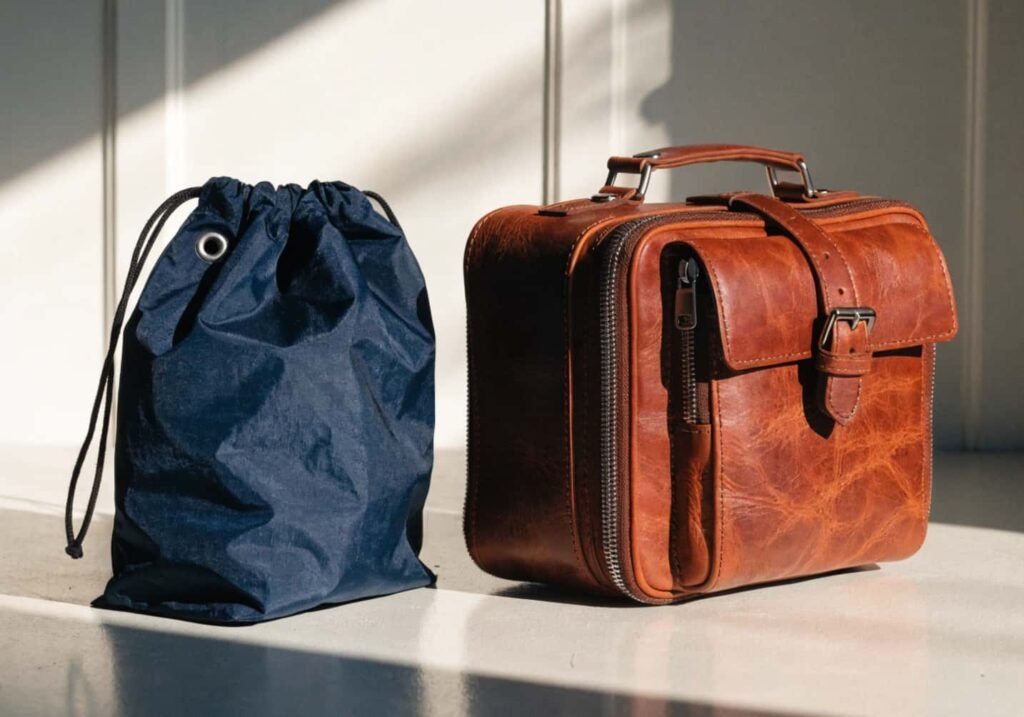
The pouch you choose matters more than people think. Look for something with multiple compartments so toiletries, tech, and snacks don’t all mix together in one chaotic pile. A clear or mesh pouch makes security checks faster since agents can see what’s inside without you unzipping everything. Budget shoppers can find a solid nylon organizer for under fifteen dollars, while premium travelers might prefer a structured leather or hard-shell case that holds its shape better over time. Whatever you pick, make sure it’s washable, since spills happen more often than you’d expect on a bumpy flight or a rushed morning packing session.
Refill and Restock: Keeping Your Kit Flight-Ready
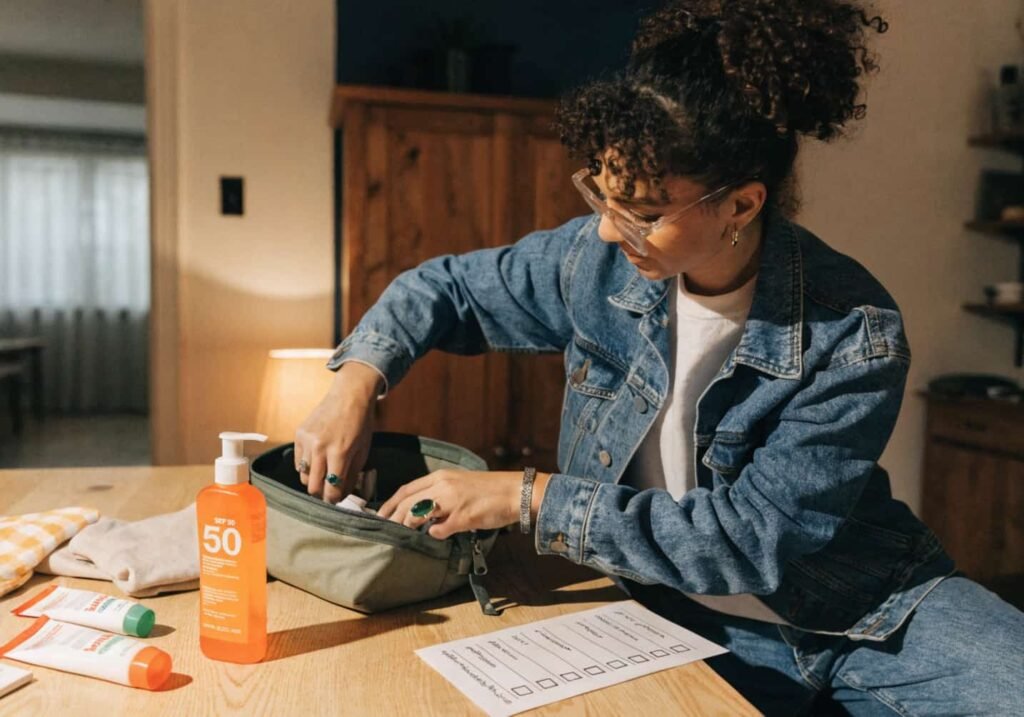
A kit only works if it’s actually ready when you need it. Set a reminder every couple of months to check expiration dates on medications and refill any toiletries you used up on your last trip. Keep a small checklist taped inside your closet or saved on your phone so restocking takes five minutes instead of thirty. I personally do a quick check the night before every trip, just glancing through each compartment to make sure nothing’s missing. This habit alone has saved me from arriving at the airport without hand sanitizer or with a dead power bank more times than I can count.
Seasonal Swaps: Adjusting Your Kit for Different Climates
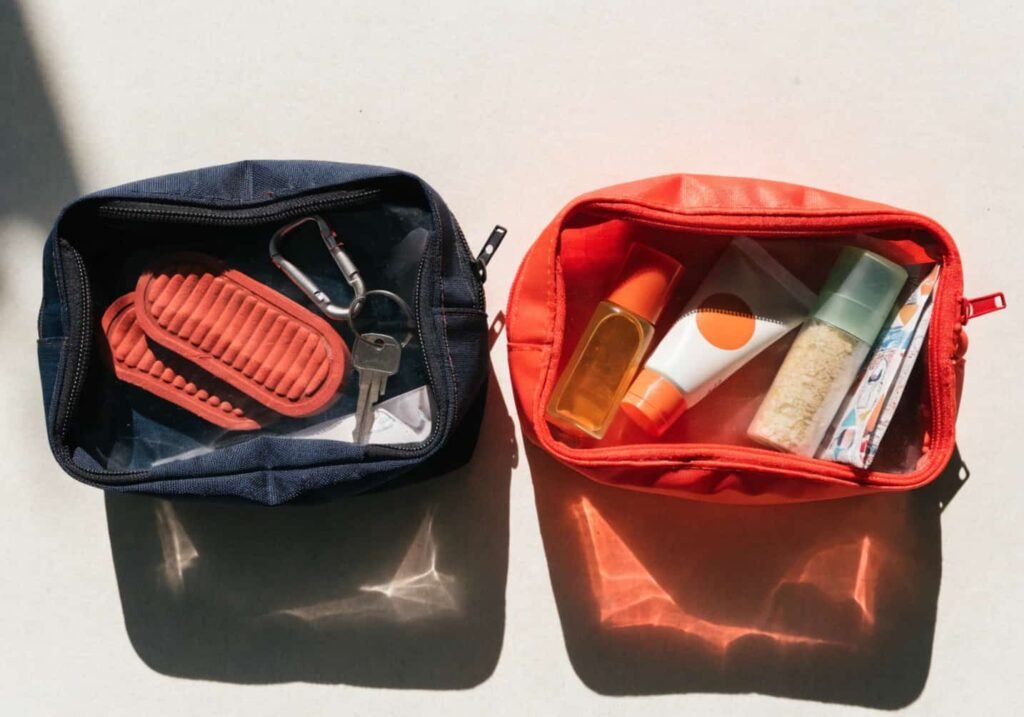
Your kit shouldn’t stay exactly the same all year round. Winter trips call for a heavier lip balm, hand warmers, and maybe a thicker pair of socks since layovers in cold airports get uncomfortable fast. Summer trips need extra sunscreen, a cooling face mist, and lighter fabrics if you’re headed somewhere humid. I keep a small seasonal bag separate from my core kit, so swapping items takes two minutes instead of repacking everything from scratch. This small adjustment means your kit actually fits the trip you’re taking instead of being a generic one-size-fits-all setup that ignores where you’re actually flying to.
Mistakes to Avoid When Packing a Reusable Flight Kit
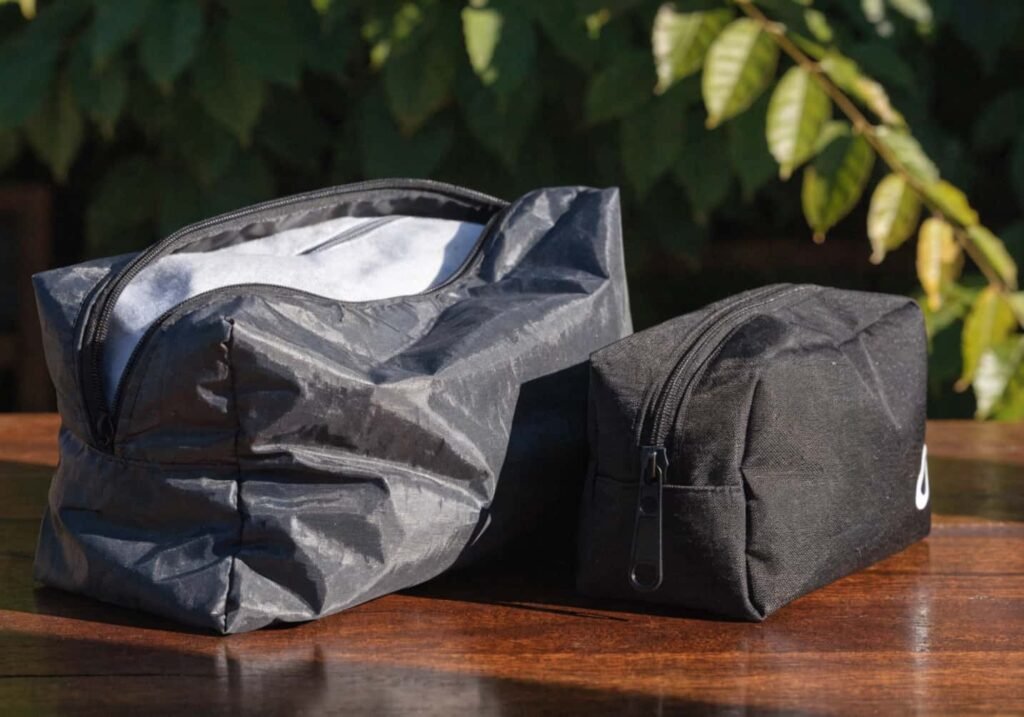
The biggest mistake people make is overpacking the kit until it barely zips shut. Keep it lean and only include what you’d actually reach for mid-flight. Another common mistake is forgetting to check liquid limits, which leads to items getting tossed at security. Don’t pack anything that expires quickly without a reminder to replace it, and avoid cheap zippers that break after a few trips since you’ll end up rebuilding the whole kit sooner than planned. Lastly, don’t bury your most-used items at the bottom. Keep lip balm, sanitizer, and your charger near the top where you can grab them fast.
The Final 5-Item Checklist Before You Board
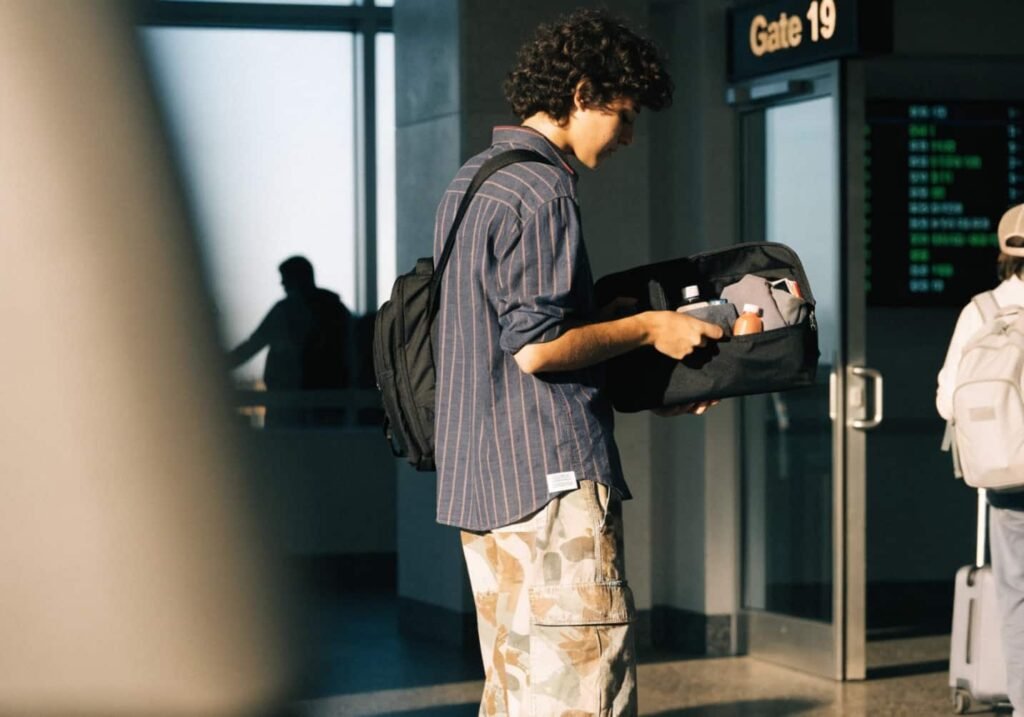
Before you walk through the gate, do a quick five-item check. Power bank charged, lip balm and hand sanitizer within reach, water bottle filled, downloaded entertainment ready, and your toiletry bag pulled out for security. This tiny ritual takes under a minute but saves you from that panicked feeling of realizing you forgot something once you’re already in the air. I do this check every single time now, standing right at the gate while waiting to board. It’s become second nature, and honestly, it’s the difference between a smooth flight and a frustrating one.
Frequently Asked Questions
Can I bring a full-size toiletry kit on a flight? Not in your carry-on. Full-size liquids over 3.4 ounces need to go in checked luggage. Your carry-on toiletries must fit the 3-1-1 rule.
How often should I restock my flight kit? Every two to three months is a good rhythm, or right after each trip if you used up any items.
Is a budget kit really enough for long-haul flights? Yes, a budget kit covers the essentials just fine. Premium versions mostly add durability and slightly better materials, not better function.
Do I need different kits for different seasons? Not a full separate kit, just a small add-on bag with seasonal items you swap in and out.
Conclusion
Building a flight essentials kit once and reusing it forever isn’t complicated, it just takes a little upfront effort. Once it’s packed, you stop thinking about packing altogether and start actually enjoying your trips more, even the delayed and uncomfortable ones. Grab a pouch today, gather these items over the weekend, and set yourself up so every future flight starts calm instead of chaotic. Your future self, sitting comfortably at gate B12 with a charged phone and soft lips, will thank you for it.