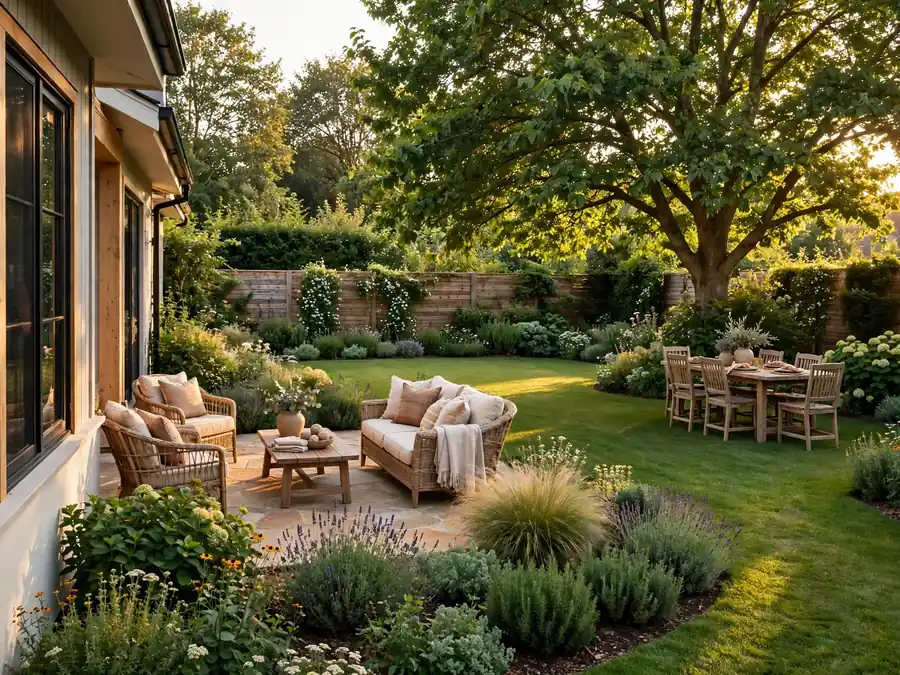
A plain backyard can feel like a waiting room with grass: one open rectangle, a fence on every side, and nothing that gives anyone a reason to sit down and stay. Most people walk out, look around, and drift back inside within minutes.
The yards that hold people longest are not the ones with the biggest projects. They are the ones divided into a few small, finished-feeling zones, with softened edges and at least one spot that works after dark. Guides to cozy backyard ideas often start with a build, but the order matters more than the budget: floor first, edges second, details last.
Below are 20 cozy backyard ideas that turn an empty, exposed yard into a place people linger, using zones, ground cover, and movable pieces. Most of them start with basics you may already own: chairs, pots, a table, and an afternoon.
The Backyard Formula That Keeps a Bare Yard Looking Like a Retreat
- Give every zone a floor: a gravel pad, a mow strip, or a rug-weight change underfoot tells people where one space ends and another begins.
- Repeat one warm palette: stick to wood tones, warm gray, and one accent color across cushions, pots, and metal so scattered pieces read as one yard.
- Plan for the real hour of use: most yards get used after work, so shade for late afternoon and light at knee height matter more than midday looks.
- Keep one layer movable: throws, cushions, and a portable screen come out for guests and go back in, so the yard can flex between play and quiet.
For example: a warm gray gravel pad by the back door, two acacia chairs with rust cushions facing inward, a charcoal side table between them, and three terracotta pots softening the fence corner behind.
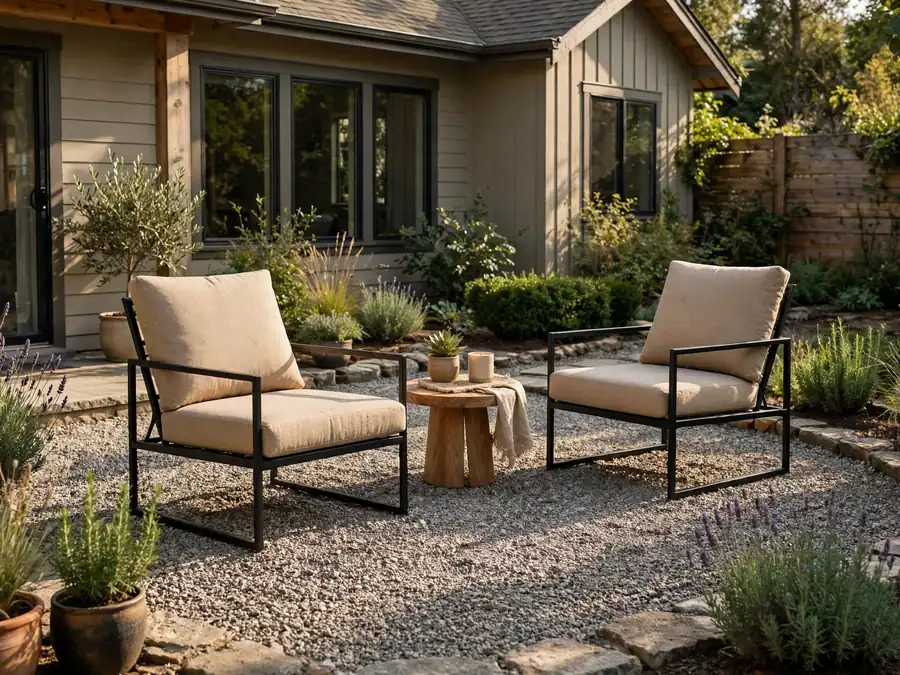
1. Anchor the Yard With One Gravel Lounge Pad Near the House
Start where the house meets the grass. Spread a gravel pad 10 by 12 feet and 2 inches deep over landscape fabric, in warm gray pea gravel, and rake it level. Set two weatherproof lounge chairs in acacia or charcoal resin wicker on the pad, angled toward each other, with a 16-inch round metal side table between them. The pad gives the yard a floor, so the seating reads as a place instead of furniture dropped on grass. Gravel does crunch underfoot and shift over time, so rake it level again each month.
Color note: Warm gray gravel against green lawn, plus one rust-toned cushion per chair, keeps the palette calm and grounded without going flat or gray-on-gray.
2. Face the Seating Inward Around a Low Center Table
On the pad or flat lawn, turn every seat toward the middle instead of lining chairs along the fence. A three-seat outdoor sofa such as the IKEA NÄMMARÖ, at $650, anchors the group; add two armchairs opposite and a low table, 16 inches high, in the center. Keep 3 feet between chair fronts and table edge. Seats facing a fence feel like storage; seats facing each other feel like conversation. Lawn wear under the table legs is fixed with flat pavers. Most backyard oasis ideas follow the same inward-facing logic.
Get the look:
Main piece: three-seat outdoor sofa, light-stained wood
Supporting piece: two armchairs angled in
Texture or material: smooth acacia, woven cushions
Finishing touch: low table, one potted herb
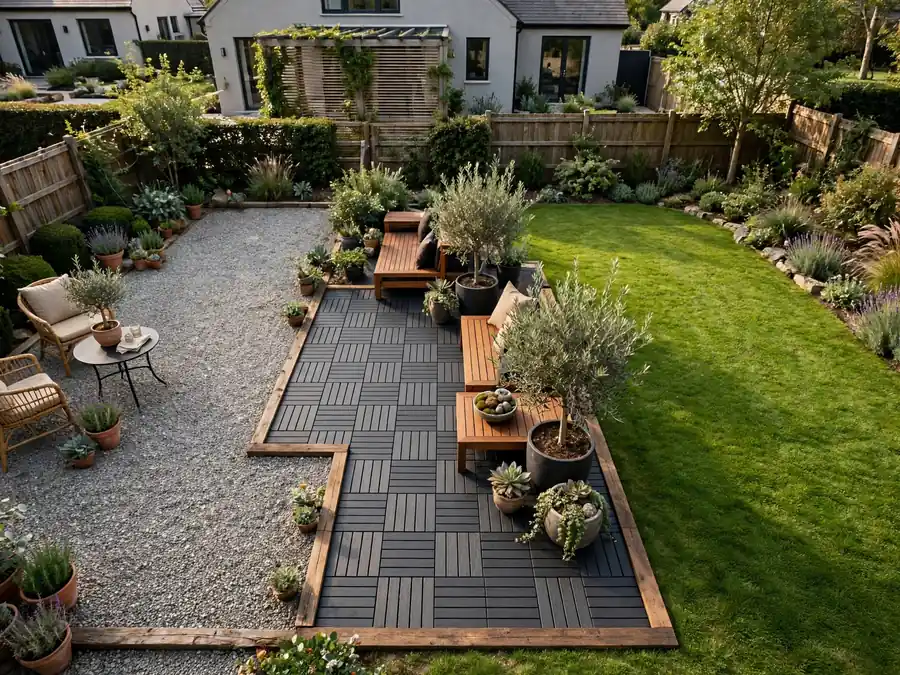
3. Mark Three Zones With Changes Underfoot, Not Walls
Divide the yard into a lounge zone, a dining or games zone, and an open play zone using only what is underfoot. Lounge sits on gravel, dining on deck tiles or a second gravel shape, play on plain lawn. Each change of surface tells people where they are without a single fence or hedge. Keep at least 4 feet of clear lawn between zones so movement stays easy. The honest catch: gravel migrates onto grass, so steel or stone edging along each shape is worth the effort at the start.
Space note: In a 40-foot-deep yard, give the lounge a third, dining a quarter, and leave the rest open; zones under 8 feet across stop feeling usable.
4. Soften the Back Fence With a Deep Mulch Border
A bare fence line is the biggest reason a yard feels exposed. Run a mulch border 24 to 30 inches deep along the back fence in dark brown shredded bark, then set three large terracotta pots on it, spaced unevenly, with tall grasses in them. The dark band and pot bases hide the fence’s bottom rail, so the eye reads planting instead of barrier. Mulch fades and thins each year, so expect a top-up bag each spring. If the fence still towers, the pots buy time while slower shrubs fill in.
Texture note: Rough shredded bark against smooth pot sides and fine grass blades gives the border three textures, which is what makes it read as finished.
| Zone | Ground | Anchor piece | Edge treatment |
|---|---|---|---|
| Lounge | Warm gray gravel pad | Sofa and two armchairs | Steel edging strip |
| Dining | Deck tiles or second gravel shape | Table for six | Pots at two corners |
| Play | Open lawn | Toy basket and blanket | Mow strip border |
| Quiet corner | Mulch and stepping pads | Two lounge chairs | Large pot behind the chairs |
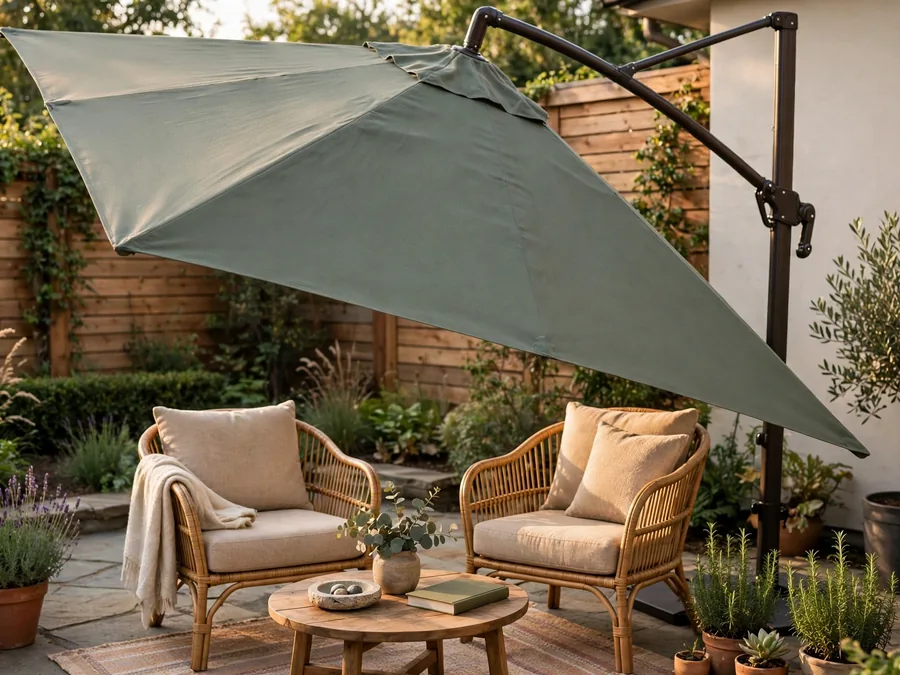
5. Tilt an Offset Umbrella Over the Lounge Corner
Shade the lounge corner with one offset umbrella instead of a structure. Set the weighted base just off the pad’s west corner, so the pole stands beside the seating rather than in the middle of it. The curved arm reaches over both lounge chairs, and the 10-foot canopy in sand-colored polyester tilts toward the low afternoon sun, so shade lands on laps, not on the fence. Offset umbrellas catch wind more than center-pole ones, so fill the base fully and close the canopy when gusts pick up.
Budget note: An offset umbrella costs more than a center-pole model, but a fraction of a framed pergola, and one canopy can swing between the lounge pad and the dining table.
6. Edge the Lawn With a Mow Strip That Reads as a Border
Lay a flat mow strip of brick or concrete pavers, one brick wide, where lawn meets borders and fence lines. Set the pavers flush with the soil so the mower wheel runs over them and no string trimming is needed. The crisp line makes the whole lawn look deliberately shaped, and a shaped lawn reads as a room floor rather than leftover space. Brick costs more than concrete, and both need re-leveling where soil settles, but one finished edge along the longest side changes how tidy the yard feels.
Fit check: Before laying the full run, set 6 feet of pavers and mow over them once; if the mower scalps or bounces, drop the strip half an inch lower.
7. Set Two Lounge Chairs at an Angle in the Quiet Corner
Pick the corner farthest from the back door and play zone, and set two deep lounge chairs there at a 45-degree angle, backs to the fence. Add a shared side table, a folded throw over each chair back, and one large pot behind them to close the gap to the fence. Angled chairs feel like a retreat: nobody sits with a back to the whole yard. The downside: this corner gets the least traffic, so cushions gather dew and need dry storage nearby. For anyone who reads outside, this becomes the seat that is always claimed first.
Style note: Matching the two throws exactly is the detail that lifts this corner; one shared color makes two ordinary chairs look planned.
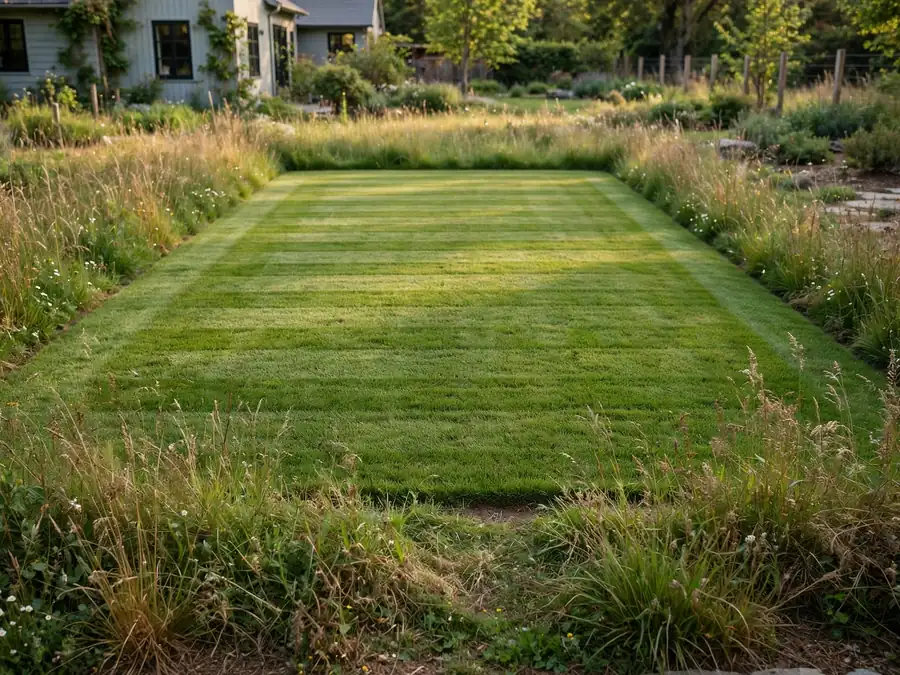
8. Mow a Smaller Lawn Panel and Let the Edges Grow Longer
Mow only the central lawn panel short and neat, a clear rectangle, and let a border of grass 12 to 18 inches wide grow a few inches longer around it. The neat panel becomes the yard’s floor and the longer edges its frame, like a rug indoors, with nothing bought or built. Keep it big enough for play. The trade-off: the long edges need one careful trim a month to read as meadow edge rather than neglect, and formal yards may dislike it.
Why it works:
- A sharp mow line gives the lawn a deliberate shape
- Longer edges soften the fence base without beds
- The panel grows or shrinks with one mowing change
9. Tuck a Dining Table Under the Tree’s Edge
If the yard has one tree, place the dining table at the edge of its canopy, not mid-lawn. A rectangular table for six in charcoal metal or stained wood sits half in dappled shade, with two chairs on the lawn side and a bench on the tree side. Plates stay cooler, nobody stares into the sun at dinner, and the tree does the work of a ceiling. Fallen leaves and bird visits are the honest cost, so keep a small hand brush on the table. On weeknights the same spot doubles as an outdoor desk surprisingly well.
Easy swap: Trade the bench for two chairs and the table becomes a games table for cards or homework, nothing else moved.
10. Give Kids a Defined Play Patch, Not the Whole Lawn
Claim one sunny rectangle of lawn, roughly 10 by 14 feet, as the play patch, and mark it with nothing more than a low storage basket at one corner and a washable outdoor blanket that lives there. Balls, ride-on toys, and a small pop-up goal stay inside the patch, which quietly gives the rest of the yard back to the adults. Grass wears thin where play concentrates, so rotate the patch to a fresh rectangle each season. When children are small, a defined patch is also easier to watch from the lounge chairs than a whole scattered yard.
Best for: Families who want the lounge and dining zones to survive daily play without fences, gates, or a permanent play structure.
| Item | Cozy measure | Why it matters |
|---|---|---|
| Gravel lounge pad | 10 by 12 feet, 2 inches deep | Fits a sofa, two chairs, and a table without crowding |
| Seat-to-table gap | About 3 feet | Drinks stay in reach and knees stay comfortable |
| Mulch fence border | 24 to 30 inches deep | Deep enough for pots to hide the fence base |
| Clear path between zones | At least 4 feet | People cross the yard without squeezing past chairs |
| Play patch | About 10 by 14 feet | Big enough for games, small enough to rotate yearly |
11. Warm the Far Corner With a Single Chiminea
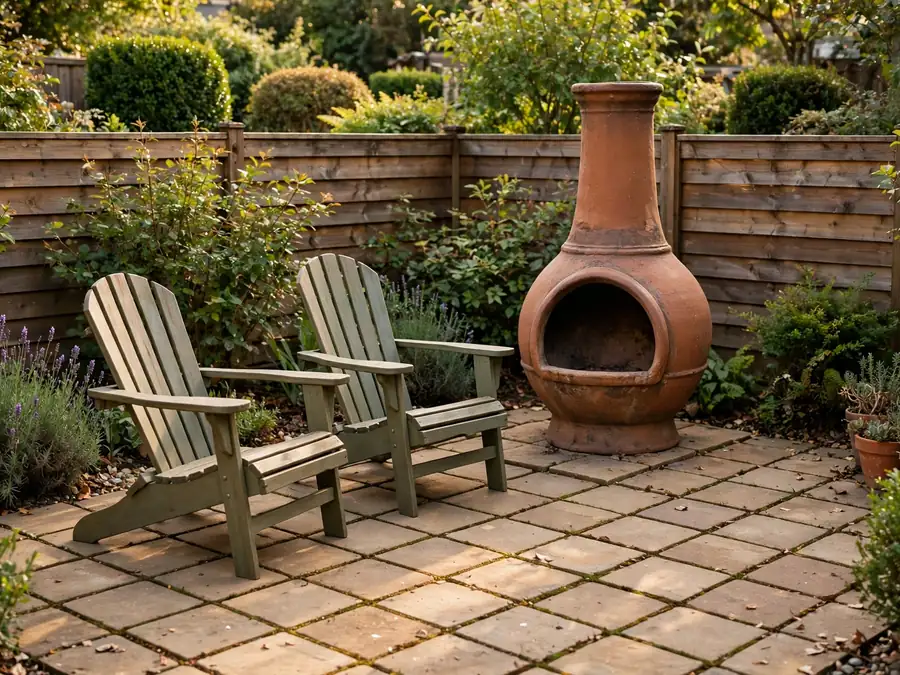
One small fire source is enough for the whole yard when it sits in the quiet corner rather than the center. Place a cast-iron or clay chiminea on a 3-foot square of pavers, at least 10 feet from the fence and any overhanging branches, with the two lounge chairs pulled into a loose half-circle in front of it. The enclosed body throws heat forward, contains sparks better than an open bowl, and takes up far less room. Clay chimineas crack if they get soaked and frozen, so a cover is not optional in wet winters.
The formula: chiminea on pavers + two lounge chairs angled in + one basket of throws within arm’s reach
12. Ring the Yard With Low Light at the Border
Evening coziness comes from the edges, not one bright light by the door. Push solar stake lights, about 12 inches tall with warm-white bulbs, into the mulch border and along the mow strip every 6 to 8 feet, low enough to outline the yard, not light it like a pitch. Two short lantern posts mark the lounge pad corners. Solar stakes fade on cloudy weeks and cheap sets dim within a season, so buy spares of the same model. This low ring lets outdoor living spaces keep working after sunset with no wiring at all.
Seasonal swap: In fall, swap half the stakes for amber-toned ones; the warmer ring suits early evenings, and the plain set returns in spring.
13. Repeat One Plant in Threes Along the Fence Line
A yard feels planted rather than decorated when one plant repeats. Choose one sturdy ornamental grass and set it in groups of three clumps along the fence, 5 to 6 feet between groups. Repetition gives the long fence a rhythm, so the eye travels instead of stopping at bare boards. One plant type also means one watering and pruning routine. The catch is patience: grasses look thin the first season and knit together in the second, so buy the largest clumps you can for the most visible stretch.
Color note: Feathery green plumes against a dark fence, repeated without variation, keep the long view restful; save bright flower color for pots near the seats.
14. Carve a Morning-Coffee Spot on the East Side
Most yards get planned for evenings, but a tiny morning spot earns its keep daily. On the side that catches first sun, set a round bistro table, about 24 inches across, with two folding chairs in black metal against the fence. Add one pot of something green at the table’s base and stop there. The set takes under 4 square feet of border, folds flat for winter, and a few stepping pads spare early risers a walk across wet grass.
Space note: Keep this spot a few steps from the back door; a morning seat needing a long walk across the yard stops being used.
15. Turn One Fence Bay Into a Movie Wall on Warm Nights
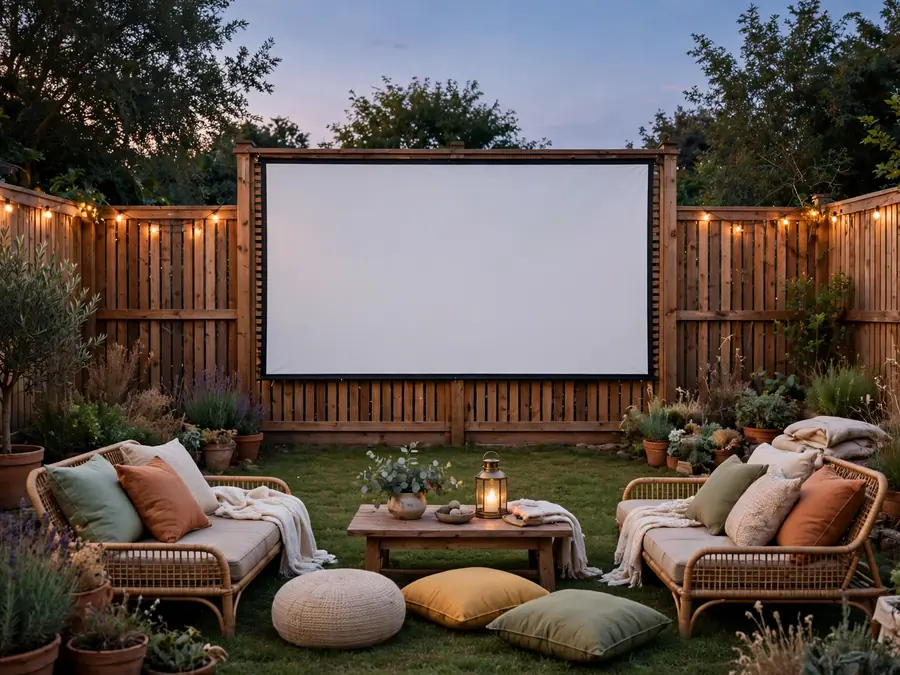
Stretch a plain white outdoor screen across one fence bay, roughly 8 feet wide, and set a low projector on the center table about 10 feet back. Floor cushions go in front, the sofa behind them, blankets over the chair arms. The fence stops being the yard’s weakest feature one evening a week. Wind ripples the screen and street noise competes, so keep it a fair-weather treat. On movie nights the lawn borrows the focal-point logic of fire pit landscaping screen in place of flame.
Get the look:
Main piece: white screen across one fence bay
Supporting piece: projector on the center table
Texture or material: smooth screen, rough boards, soft blankets
Finishing touch: ground lanterns at each end
16. Screen One Neighbor View With a Freestanding Panel
You rarely need privacy everywhere, only where the lounge chairs face a neighbor’s window or deck. Stand one freestanding slatted panel, about 6 feet tall and 4 feet wide, on wide feet or in gravel-filled planters, just behind the main seats. Slats in warm wood or charcoal metal block the direct sightline while letting air through, so the corner stays breezy. A single panel can topple in strong wind if its feet are light, so weight the base properly. One panel leaves the rest of the yard open, which is why it feels like a retreat detail, not a fortification.
Texture note: Slatted wood throws striped shadows across the gravel in late sun, adding pattern without a single extra object.
| Season | Swap in | Store away |
|---|---|---|
| Fall | Amber stake lights, extra throws, chiminea cover off | Offset umbrella on the windiest weeks |
| Winter | Cushion storage by the back door, panel weighted down | Cushions, screen, and clay chiminea if freezes are hard |
| Spring | Fresh mulch top-up, plain stake lights back in | Worn throws and faded cushions |
| Summer | Offset umbrella open, movie screen on weekends | Heavy blankets until evenings cool |
17. Keep a Throw-and-Cushion Basket by the Back Door
Coziness fails when the soft layer lives too far away. Stand one large lidded basket, about 24 inches wide, beside the back door, holding two outdoor throws and the spare lounge pillows. Whoever goes out first carries the basket to the pad; whoever comes in last brings it back. That single habit keeps textiles dry, which is what makes them last more than one season. Plastic boxes look purely practical, so a woven-look resin basket earns its place by the door. Households that adopt the basket routine use the yard on cool evenings instead of admiring it through the glass.
Budget note: One basket that keeps textiles dry saves replacing mildewed throws yearly, which out-costs the basket within two seasons.
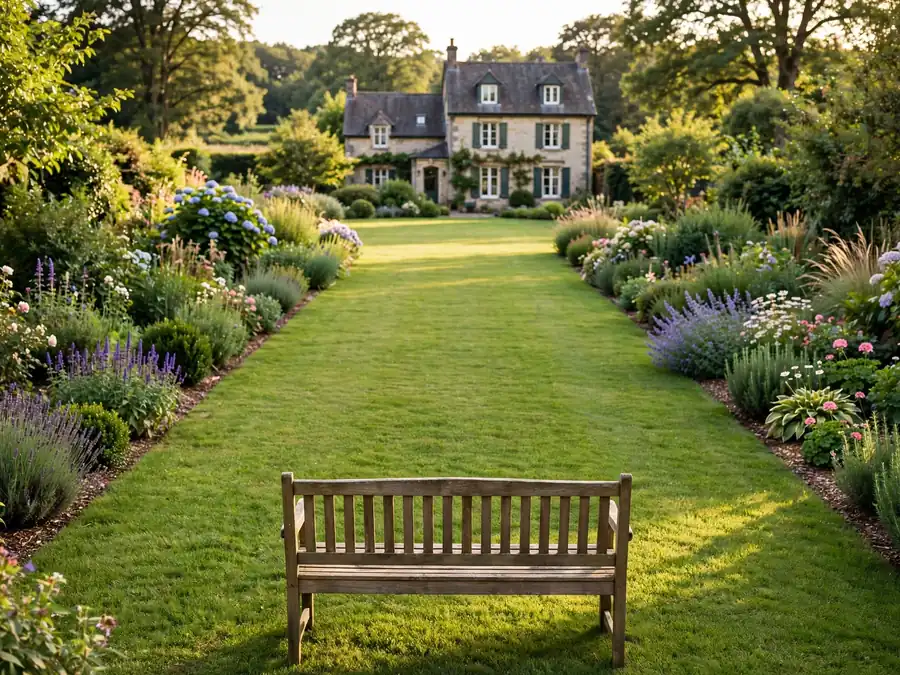
18. Set a Bench Facing Back at the House
Most seats face outward, so nobody sees the best view: the house, softened by its own yard. Set one simple bench, about 4 feet long in wood or black metal, at the far end of the lawn facing the house, back to the fence, a small pot at each end. It suits a quiet call or a guest wanting five minutes alone. Backless benches tire sitters, so keep this a short-stay seat and save the deep chairs for evenings.
Fit check: Stand at the bench spot and look at the house before buying; if a bin or a meter box fills the view, shift the bench 3 feet sideways until the view clears.
19. Fence a Shaded Dig-and-Nap Corner for the Dog
Give the dog its own patch and the lounge zones stop being a racetrack. Fence one shaded corner, 6 by 8 feet along the north fence, with 24-inch wire garden panels that press into the soil. Inside, dig a 3-by-3-foot pit and fill it with play sand for digging, and set a raised mesh cot in the deepest shade with a water bowl beside it. Dogs still test the flower beds, so bury a few treats in the sand until the patch wins. The corner gives up a slice of lawn, but every other zone stays calm.
Style note: Using the same brick edging as the mow strip makes the dog’s corner read as part of the yard.
20. Keep the Middle of the Lawn Open on Purpose
The last move is restraint: leave the center of the yard empty. No feature, no furniture, no ornament. An open middle makes the edge zones feel like rooms instead of clutter, gives gatherings somewhere to spill, and rests the eye on one clean sweep of green. Every object you resist placing there protects the work the other nineteen ideas did. The temptation returns each season as one more purchase, so decide once: the middle stays clear, and new pieces earn a place at the edges.
Color note: One uninterrupted field of green is the yard’s largest color block; keeping the border palette muted lets that green stay the calmest thing in view.
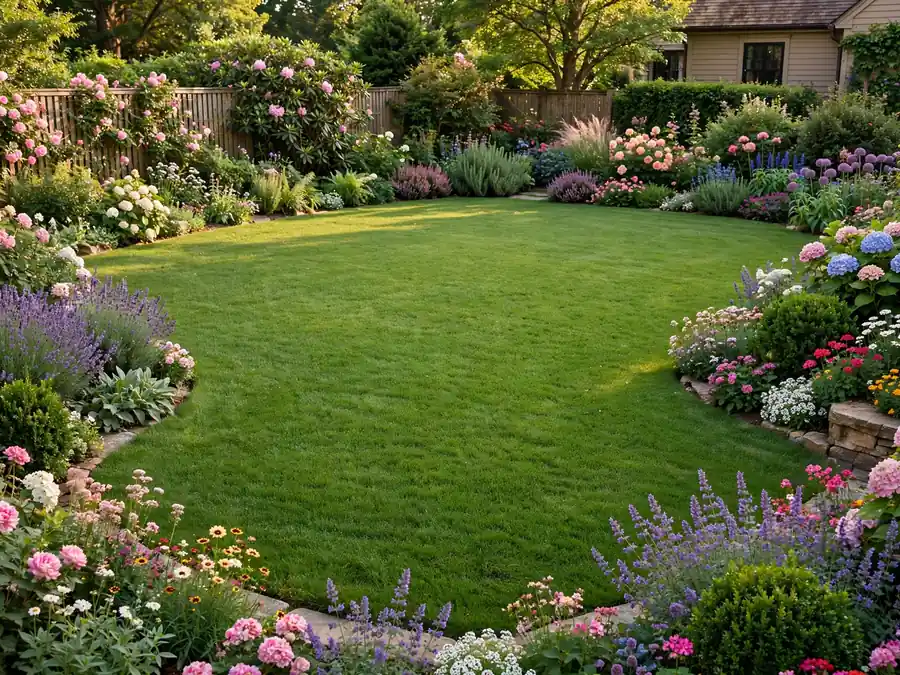
A Yard That Invites You Out Every Evening
A plain yard does not need a renovation; it needs a floor for its main zone, softer edges, light at the border, and one or two corners worth walking to. Start with the pieces that change how the whole space reads, the gravel pad and the fence border, and let the smaller comforts, the basket of throws and the offset umbrella, follow over a few weekends. Each idea above works on its own, so the yard improves in stages instead of waiting for one big finished day.
Your one next step: this weekend, rake out one 10 by 12 foot gravel pad by the back door, set two chairs and a small table on it facing each other, and sit there with a drink at the hour you would normally use the yard. If that one finished corner pulls you outside twice in the week, the rest of the yard has its plan.