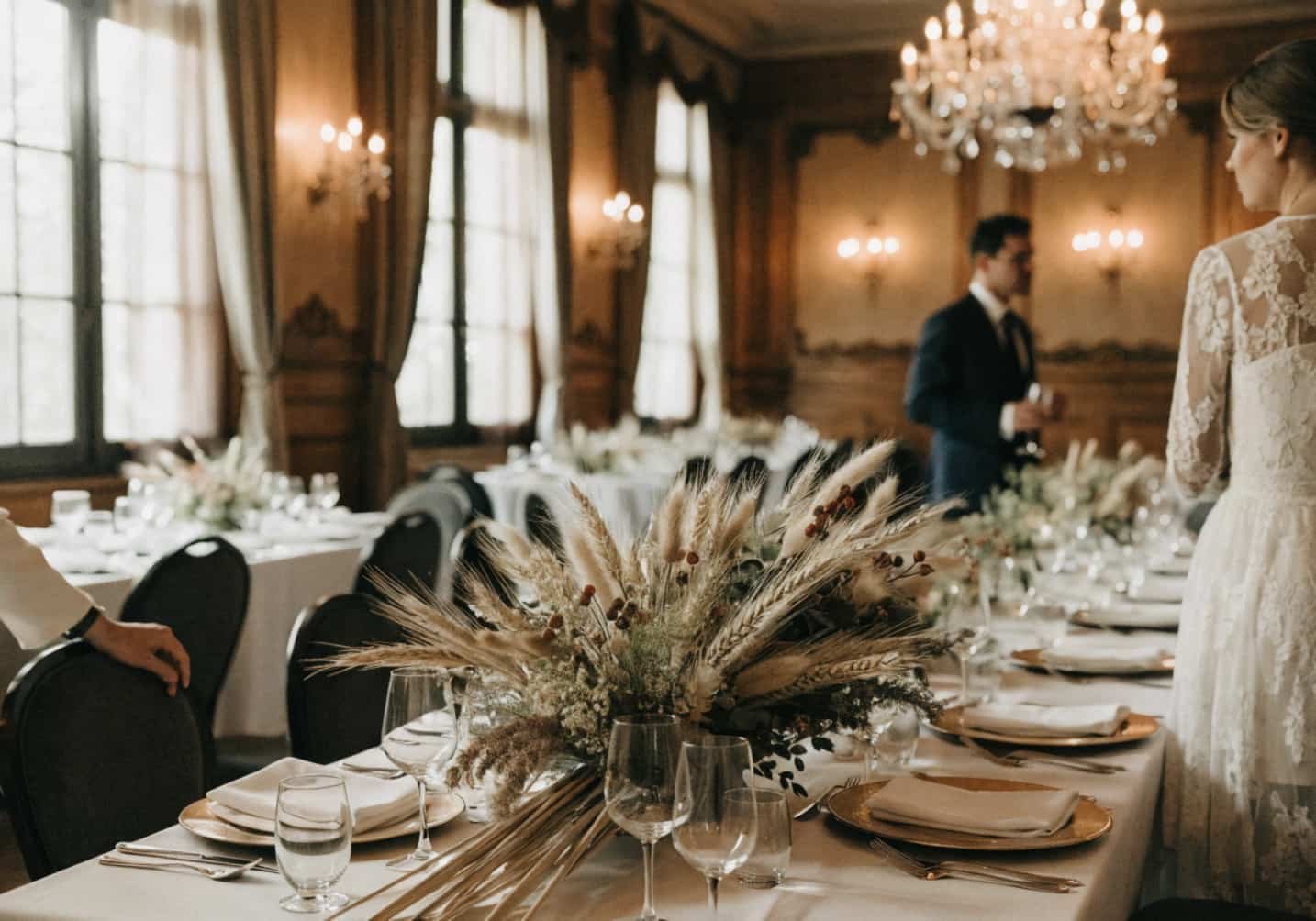
You said yes. The ring is on your finger, the date is picked, and now everyone keeps asking the same question: “So, what’s your theme?” Suddenly you’re staring at hundreds of Pinterest boards, feeling more confused than when you started. One minute you love the idea of a rustic barn wedding, the next you’re obsessed with a glamorous black-tie affair. Sound familiar? You’re not alone. Most couples freeze at this stage because there are too many pretty options and not enough clarity on how to actually choose. This guide breaks the process down into simple steps, so instead of guessing, you’ll make a decision that actually fits your venue, your budget, and most importantly, the two of you.
Step 1 – Start With Your Vision as a Couple
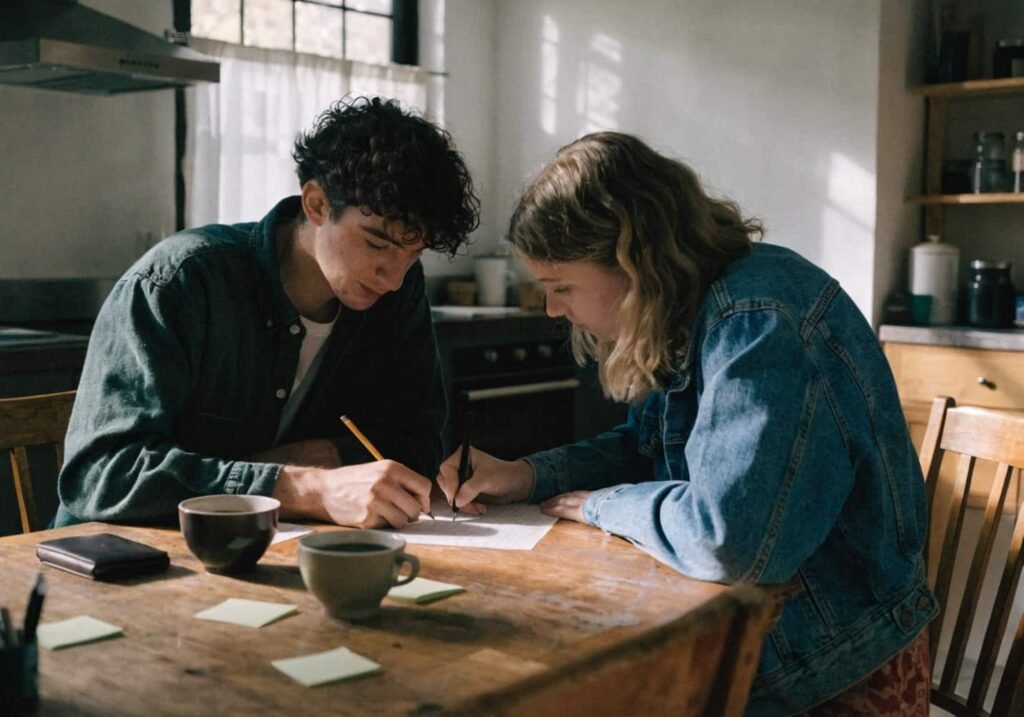
Before you touch a single Pinterest board, sit down together and talk about what kind of celebration you actually want to feel like. Do you picture a relaxed backyard party with string lights and laughter, or a formal ballroom evening with candles and a live band? This step isn’t about colors or flowers yet, it’s about mood. A wedding theme is really just an extension of the atmosphere you want your guests to walk into. Skipping this step is exactly why so many couples end up overwhelmed later, because they start picking decor before they’ve agreed on the feeling behind it. Talk honestly, even if your ideas don’t match at first. That’s normal, and it’s actually where the fun part begins.

Questions to Ask Each Other Before Deciding
This is where you get specific. Ask each other things like: “What’s one wedding we’ve been to that we still talk about, and why?” or “Do we want guests to feel relaxed, or do we want a wow-factor moment?” These small conversations reveal a lot more than scrolling through inspiration photos ever will. Another good one is asking whether either of you has a strong emotional pull toward a certain place, culture, or memory that could shape the whole event. Sometimes the best themes aren’t discovered online at all, they come from a shared memory, like the beach where you got engaged or the season you first met. Write your answers down. You’ll be surprised how quickly a direction starts to form once you actually say things out loud instead of just thinking them.
Step 2 – Consider Your Venue’s Natural Style
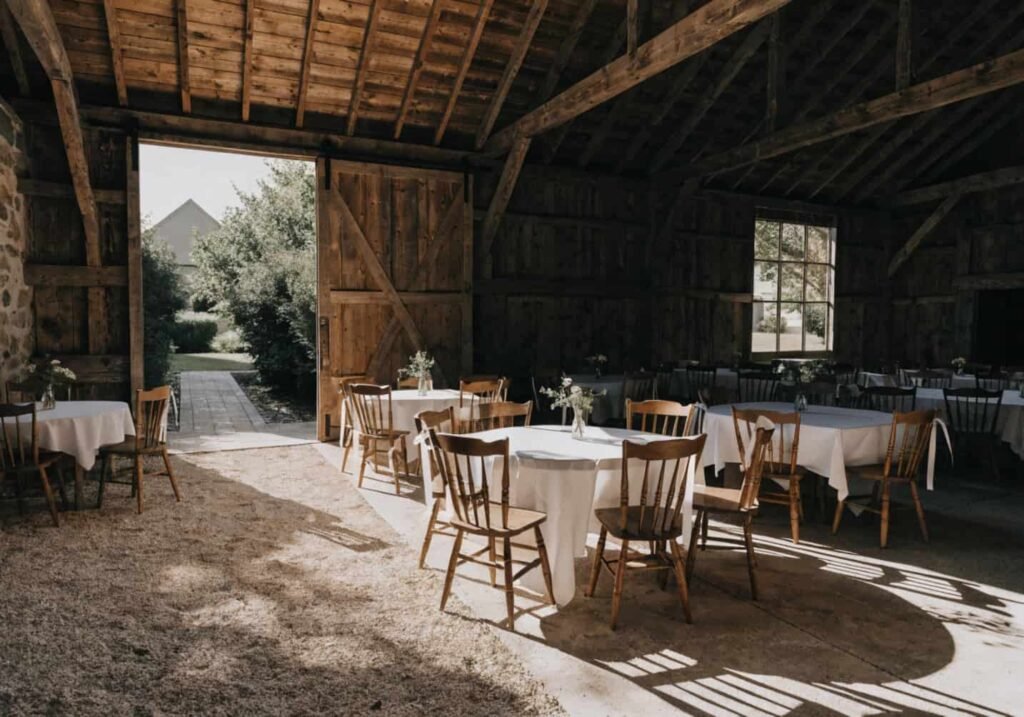
Here’s something a lot of couples get wrong: they choose a theme first and a venue second, then spend months trying to force the two together. It usually works better the other way around. Your venue already has a personality, whether it’s a rustic wooden barn, a modern rooftop, or a garden full of greenery. Instead of fighting that personality, use it. If you’ve already booked a space, walk through it again with fresh eyes and ask what it’s naturally telling you. A stone courtyard practically begs for a romantic, old-world feel. A sleek hotel ballroom leans toward elegant and classic. Working with your venue instead of against it saves money, reduces stress, and almost always looks more put-together in photos.
Indoor vs Outdoor Venue Considerations
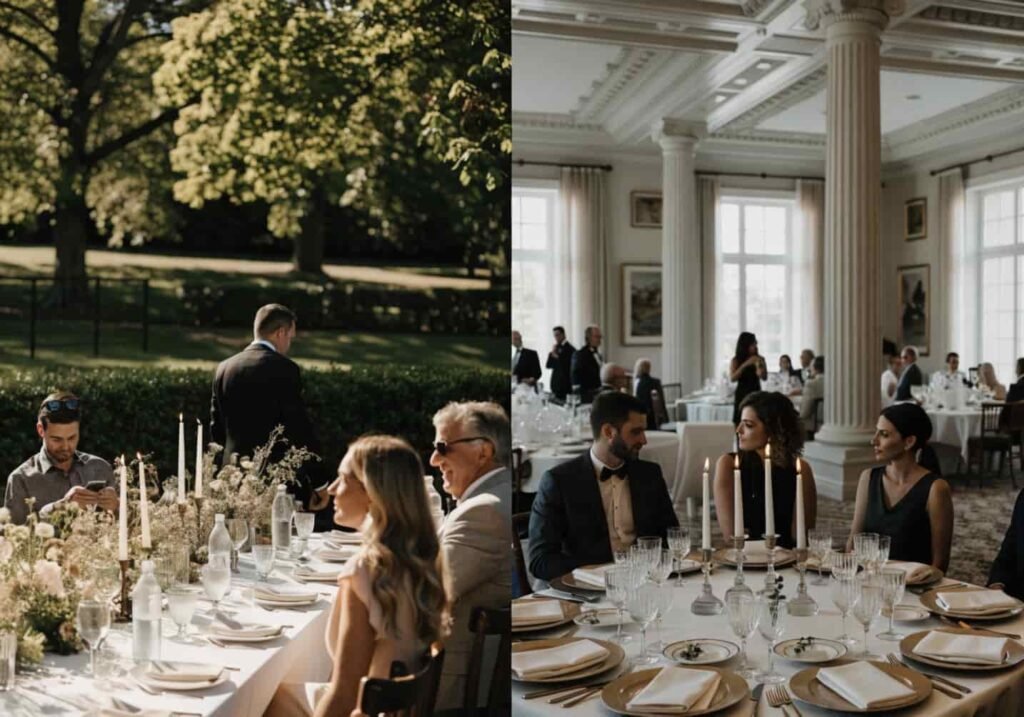
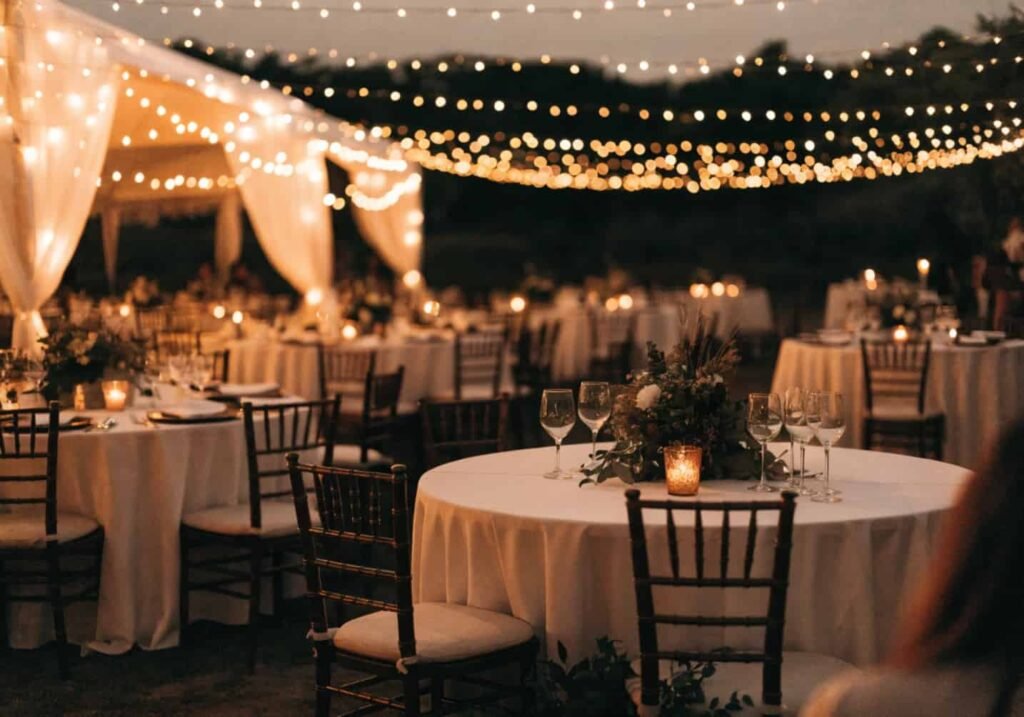
Indoor and outdoor spaces come with completely different rules, and your theme needs to respect that. Outdoor venues give you natural beauty for free, think trees, sunsets, open sky, but they also come with weather risks and lighting that changes throughout the day. Indoor venues offer more control over temperature and lighting, but you’ll often need to build the atmosphere from scratch with drapery, lighting fixtures, and decor since the space itself may feel more neutral. If you’re torn between the two, think about your guest list size and the season you’re getting married in too. A summer outdoor wedding in blazing heat might sound romantic on paper, but it’s a very different experience for your guests than a cool spring evening under string lights.
Working With (Not Against) Your Space
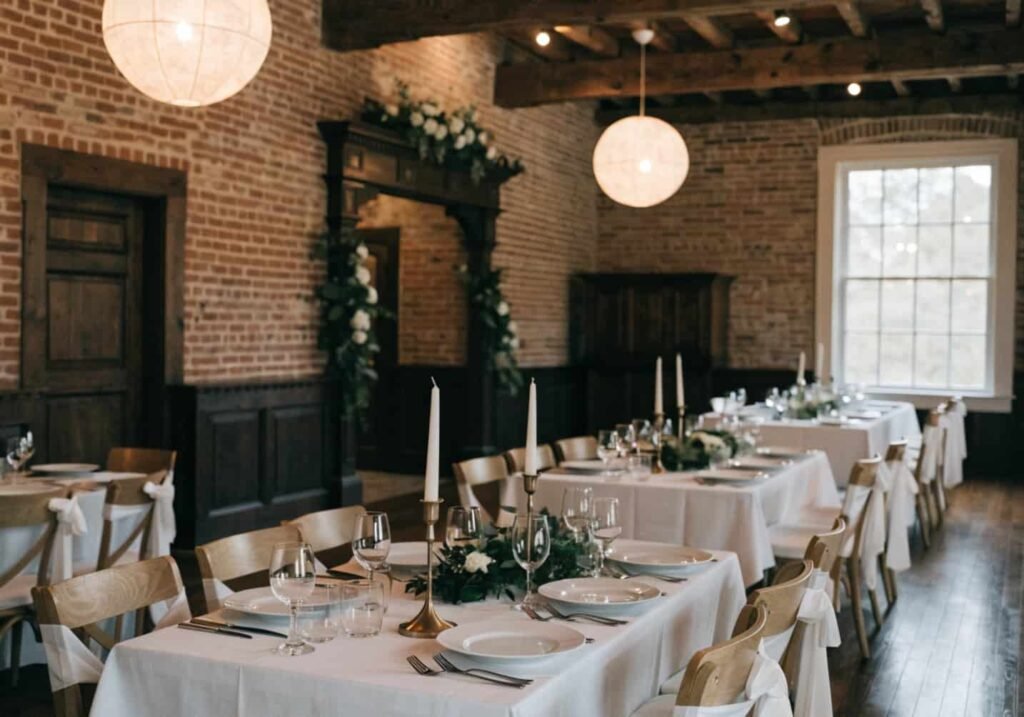
If your venue already has strong architectural details like exposed brick, wooden beams, or ornate ceilings, don’t try to cover them up with a theme that clashes. Instead, pick colors and decor that complement what’s already there. For example, a modern industrial loft doesn’t need heavy floral overload, it actually looks better with minimal, clean styling that lets the space breathe. On the other hand, a plain hotel conference room might need a bit more transformation through lighting, linens, and backdrops to bring your theme to life. The couples who get the “wow” reaction from guests almost always worked with their space’s existing strengths rather than trying to completely disguise them. It’s less work, and honestly, it looks more intentional too.
Step 3 – Set a Realistic Budget for Your Theme
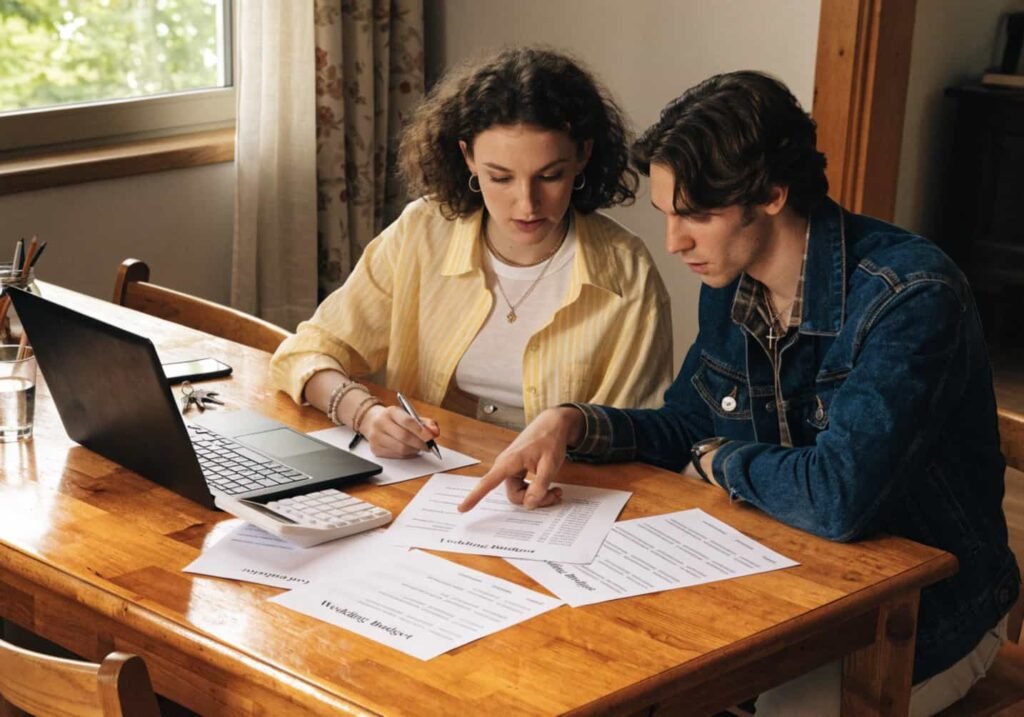
Some themes are naturally more expensive than others, and it’s better to know this early than to fall in love with something you can’t afford. A theme built around fresh flowers everywhere, custom lighting, and imported decor will always cost more than one built around greenery, candles, and simple linens. This doesn’t mean expensive themes are better, it just means you need to be honest about what your budget can realistically support. Sit down and figure out roughly what percentage of your total wedding budget you’re willing to spend on decor and styling. Once you have that number, it becomes much easier to filter out themes that sound beautiful in photos but would eat up money you need for other priorities like catering or photography.
Which Themes Cost More vs Less
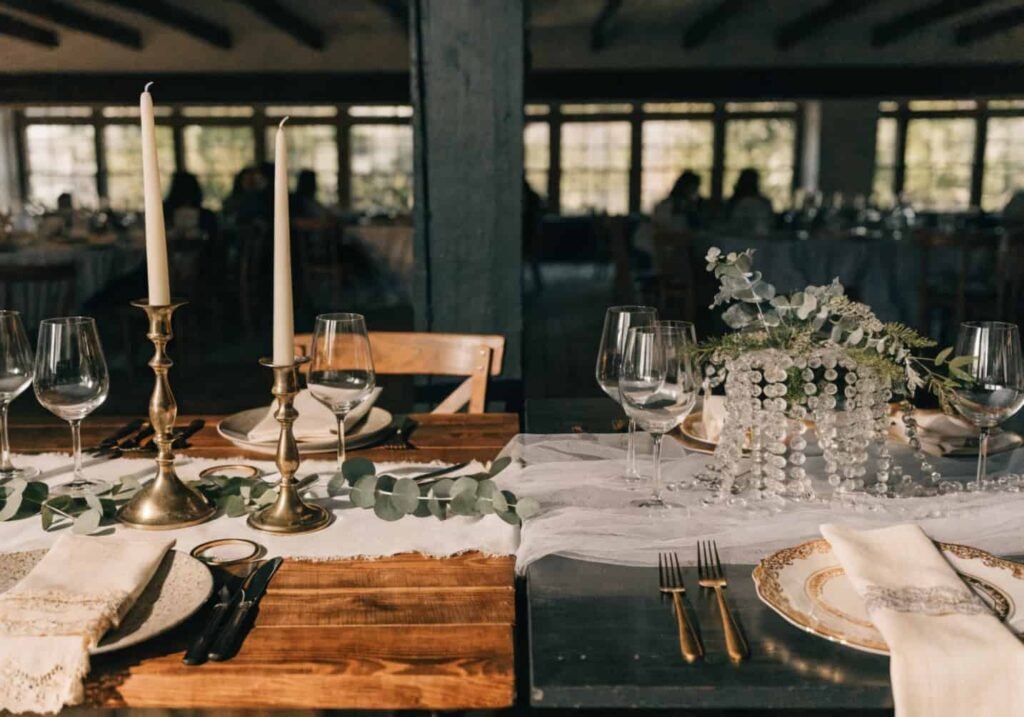
Generally speaking, themes that rely heavily on fresh florals, imported fabrics, or custom-built structures tend to sit on the higher end of the budget. Think lush garden themes with floral archways, or glamorous themes with crystal chandeliers and gold detailing. On the more affordable side, themes like rustic, bohemian, or minimalist modern often use natural elements, candles, greenery, and simple textiles that are easier on the wallet without looking cheap. A good trick is mixing elements, maybe you splurge on one statement piece like a floral backdrop for photos, but keep the rest of the decor simple and budget-friendly. This way you still get that dreamy, expensive-looking moment without draining your entire decor budget on every single table.
Step 4 – Think About the Season and Time of Day
Your reception’s season and time of day should heavily influence your theme choice, even if you don’t realize it yet. A cozy, candlelit autumn theme feels completely wrong for a bright noon wedding in July, and a fresh, pastel spring theme can feel oddly out of place at a winter evening event. Think about what naturally happens around you during your wedding month. Are the trees blooming? Is it dark by 6pm? These small details actually shape how your theme will look and feel on the actual day, not just in the photos you saved online. Couples who ignore this often end up disappointed when their beautiful summer-inspired decor looks strange under the gray light of a November afternoon.
Matching Theme to Weather and Lighting
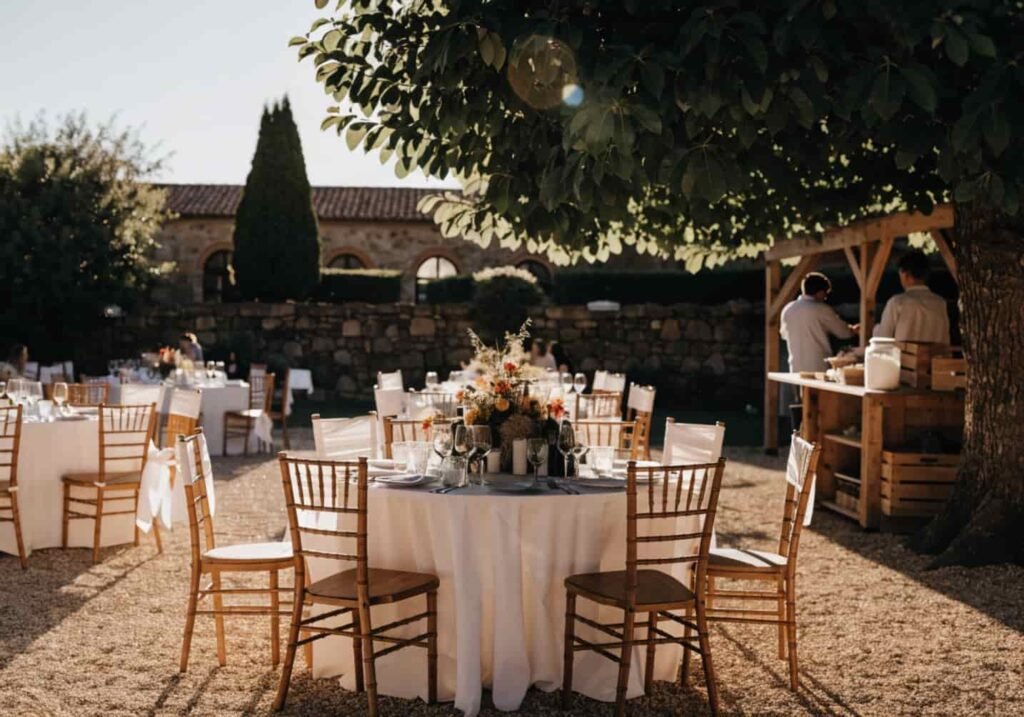
Lighting changes everything about how a theme looks in real life. A romantic candlelit theme shines at an evening reception but can feel underwhelming in bright afternoon sun. Similarly, pastel and light color palettes look stunning in soft daylight but can appear washed out under warm string lights at night. Think about what time your reception actually starts and ends, then choose colors and decor elements that will hold up under that specific lighting. If you’re getting married somewhere with unpredictable weather, it also helps to have a backup plan for outdoor elements so your theme doesn’t fall apart if it suddenly rains. Planning around light and weather isn’t the most exciting part of the process, but it saves a lot of last-minute stress.
Step 5 – Reflect Your Personalities and Story
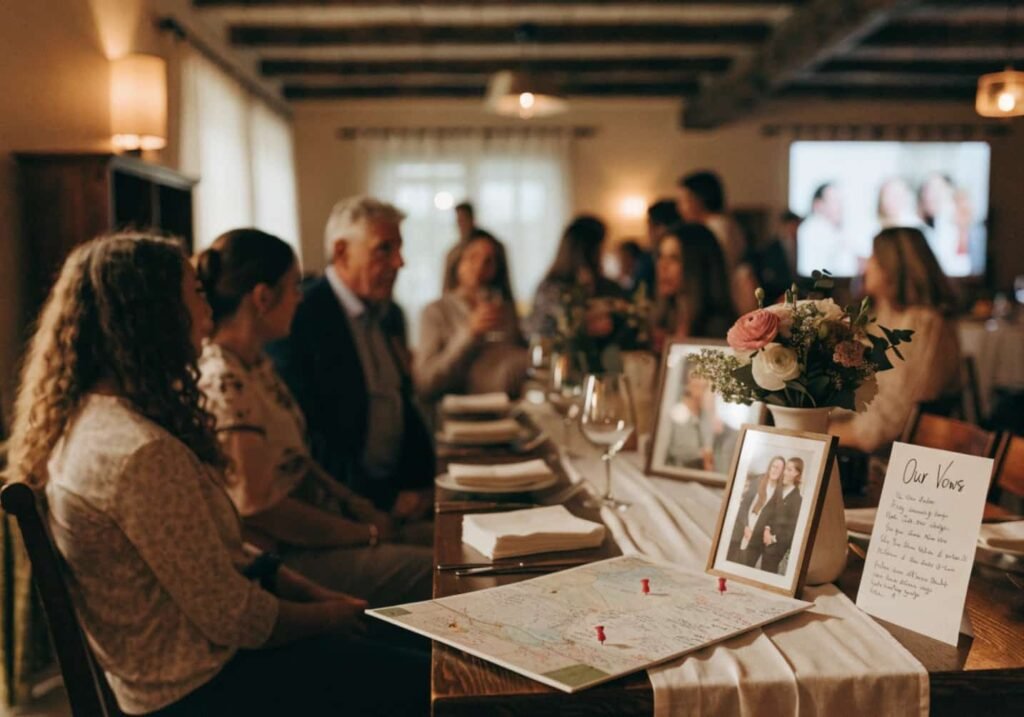
The best wedding themes don’t just look pretty, they actually tell a story about the couple getting married. Maybe you both love travel, and small map details or destination-inspired touches feel meaningful throughout your reception. Maybe you met in college, and there’s a subtle way to honor that without making it kitschy. This is what separates a wedding that feels personal from one that feels like it was copied straight off a trend list. Ask yourselves honestly, does this theme reflect who we are, or are we just following what’s popular right now? There’s nothing wrong with liking a trend, but the weddings people remember most are the ones where you can feel the couple’s personality in every little detail.
Adding Personal Touches Without Overdoing It
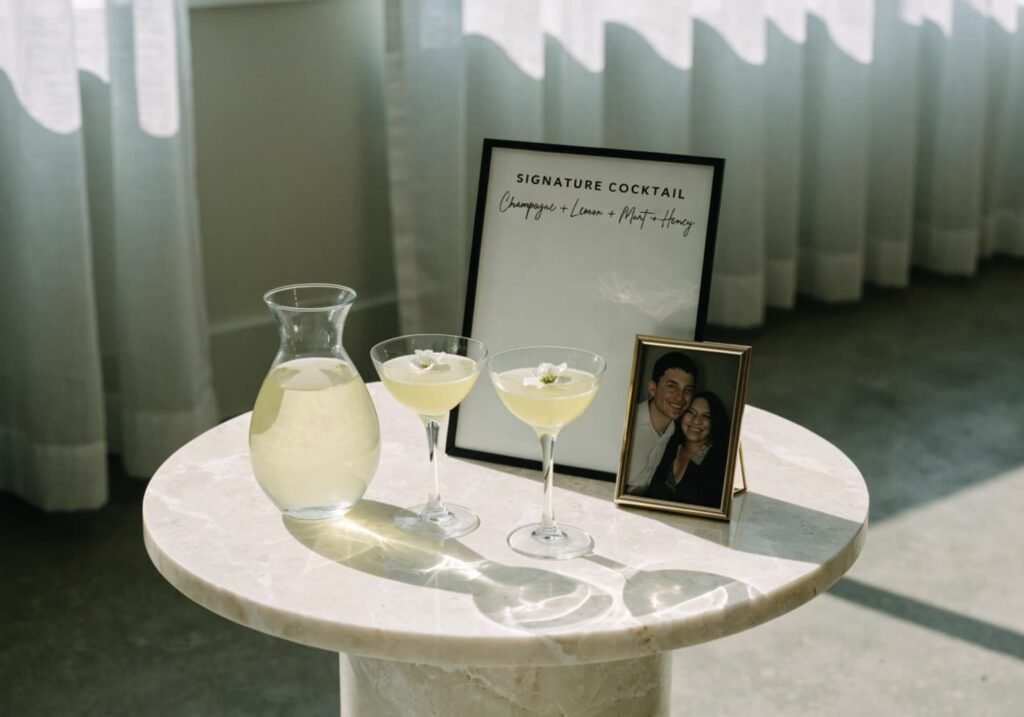
Personal touches are wonderful, but they can quickly become overwhelming if you try to include every single meaningful detail at once. Pick two or three elements that matter most, maybe a signature cocktail named after your dog, a playlist filled with songs from your relationship, or a small display of photos from your years together. Let those pieces shine instead of scattering ten different personal ideas across the venue where none of them really stand out. A simple story here helps: one couple insisted on including everything meaningful to them, from family heirlooms to travel souvenirs to handmade signs, and the space ended up feeling cluttered instead of heartfelt. Less really can be more when it comes to personal decor.
Step 6 – Narrow Down Your Top 3 Theme Options
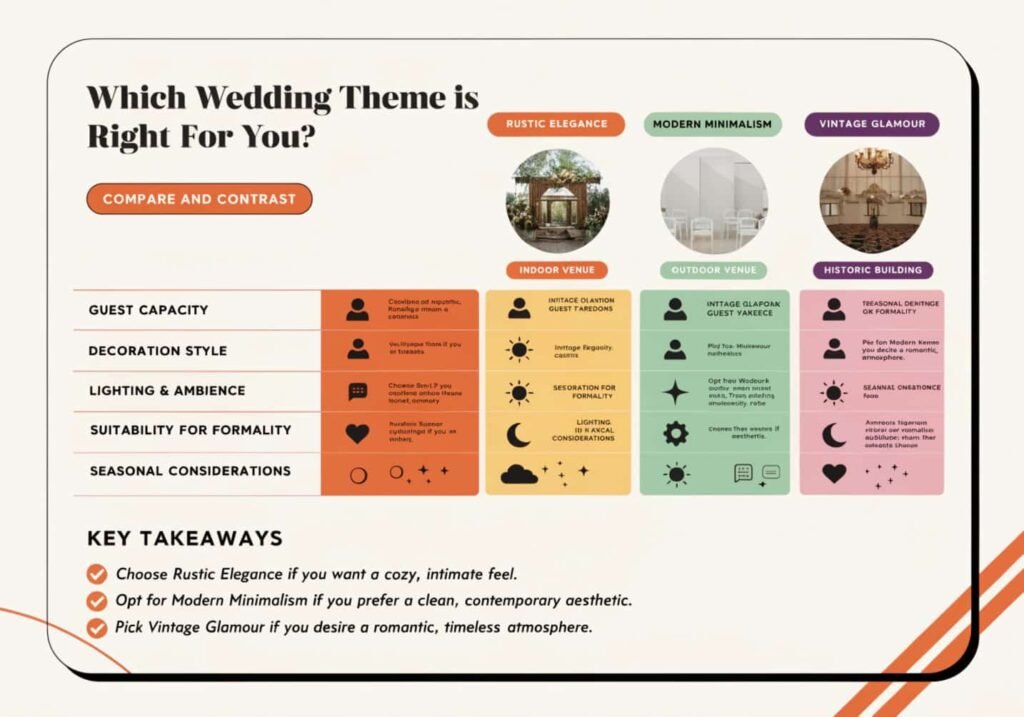
By this point you’ve probably got a shortlist forming naturally, even if it doesn’t feel that way yet. Go back through everything you’ve discussed, your vision, your venue, your budget, the season, and your personal story, then pick the three themes that keep showing up again and again. Write them down side by side. Don’t worry about picking the perfect one immediately, the goal here is simply narrowing hundreds of possibilities down to a manageable few. This step alone removes a huge amount of stress because instead of an endless scroll of options, you’re now comparing just three real choices. Most couples find that once they narrow it down this far, one option naturally starts to feel more right than the others.

A Simple Comparison Method to Decide
A helpful trick here is creating a basic comparison chart with your top three themes listed across the top and categories like budget fit, venue fit, season fit, and personal meaning listed down the side. Rate each theme honestly in every category, even if it’s just a simple yes, maybe, or no. This removes emotion from the equation for a moment and lets you see clearly which theme checks the most boxes. Sometimes the theme you were most excited about on Pinterest actually scores lowest once you’re honest about budget or venue compatibility, and that’s okay. This exercise isn’t about killing your dreams, it’s about making sure the dream you choose is one you can actually pull off beautifully on your wedding day.
Step 7 – Test Your Theme With a Mood Board
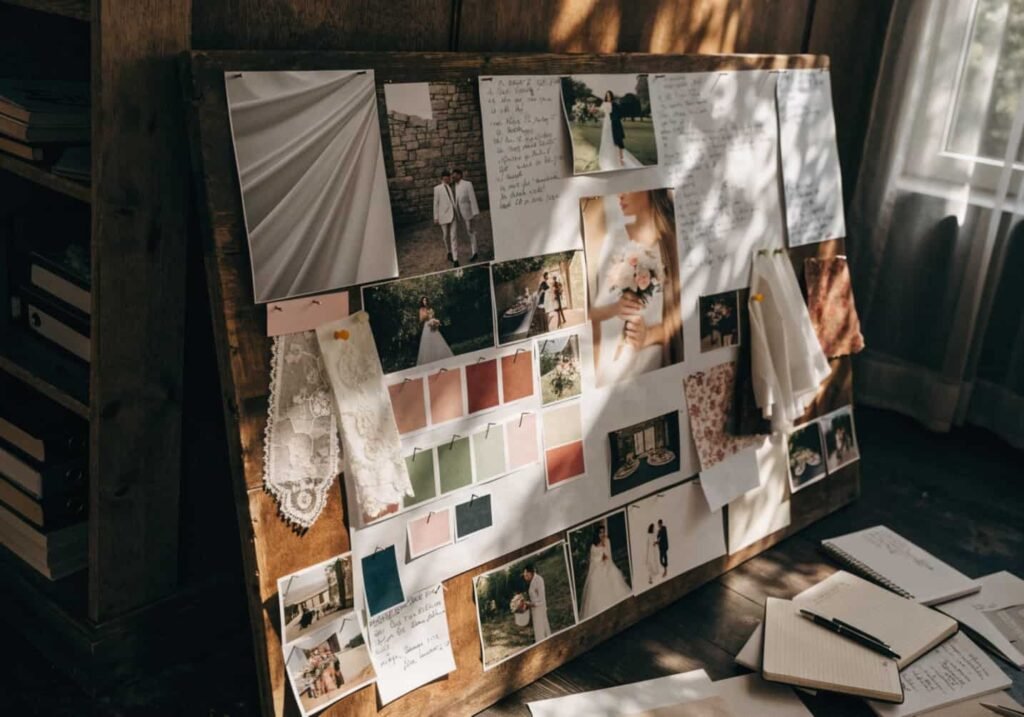
Once you’ve landed on a top choice, don’t commit blindly, test it visually first. A mood board pulls together colors, textures, and images so you can see how everything looks together before spending a single rupee or dollar on decor. This step catches problems early. Maybe two colors you loved separately actually clash badly together, or maybe the overall feel looks more formal than you intended. Seeing it all in one place gives you a much clearer picture than imagining it in your head. It also gives your vendors something concrete to work from, which makes communication so much smoother later in the planning process.
Tools to Visualize Before Committing
You don’t need fancy design software to build a mood board, plenty of free tools like Pinterest, Canva, or even a simple corkboard with printed photos work perfectly well. The goal is to physically or digitally see your color palette, textures, and key decor pieces side by side. Some couples also find it helpful to visit a decor rental showroom or ask their florist for a small sample arrangement before finalizing everything. Seeing fabric swatches under actual venue lighting, rather than on a bright phone screen, can completely change how a color reads. This small extra step before committing can save you from an expensive surprise on the actual wedding day.

Step 8 – Get Feedback From Your Vendors
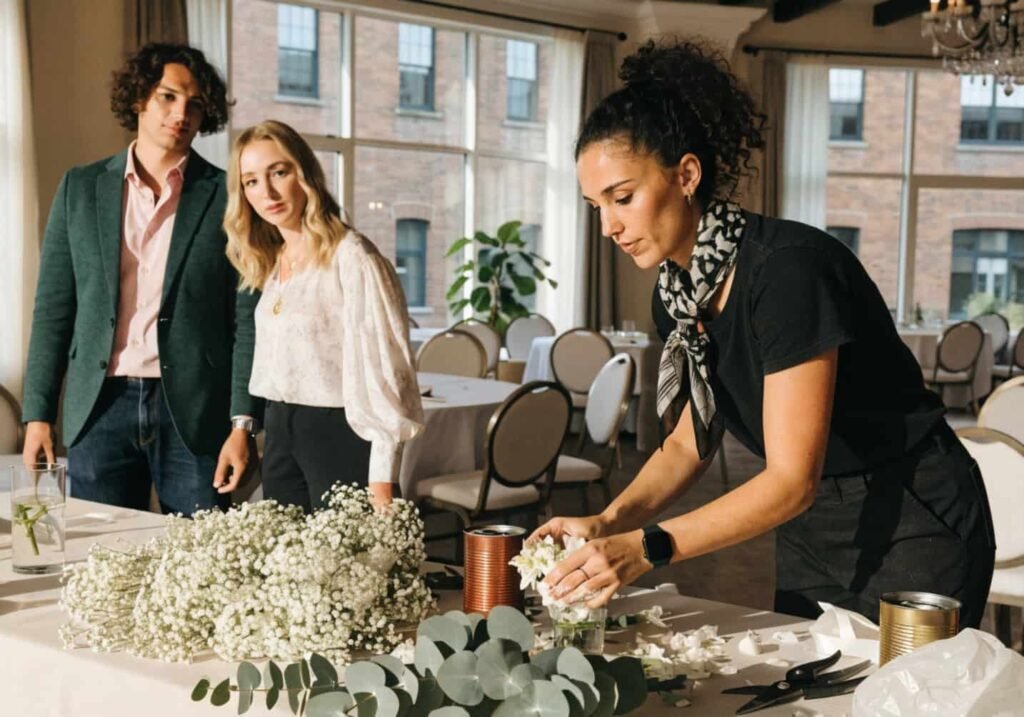
Your wedding planner, florist, or decorator has seen dozens, maybe hundreds, of weddings come together, and their feedback is genuinely valuable at this stage. Share your top theme and mood board with them before locking anything in. They can tell you almost instantly whether something is realistic within your venue and budget, or whether certain elements might need adjusting. Vendors also often know creative workarounds you’d never think of on your own, like using uplighting instead of expensive floral installations to create a similar dramatic effect for less money. Don’t treat this step as optional. A quick conversation here can save you from costly mistakes discovered too late in the planning timeline.

Why Your Planner or Decorator’s Input Matters
Planners and decorators aren’t just there to execute your vision, they’re also there to protect it from common pitfalls. They know which flowers wilt quickly in certain climates, which lighting setups actually photograph well, and which decor trends tend to look cheap in person despite looking great online. Trust their experience, but don’t be afraid to push back gently if something feels off from your original vision either. The best results come from a genuine back-and-forth conversation, not from blindly following every suggestion or ignoring professional advice entirely. One couple almost picked all-white florals for a summer outdoor wedding until their florist warned them the flowers wouldn’t survive the heat, saving them from a wilted disaster.
Common Mistakes to Avoid When Choosing a Theme
Even with the best intentions, couples fall into predictable traps when choosing a theme. One common mistake is picking a theme purely because it’s trending online without checking whether it actually fits the venue or season. Another is trying to please everyone, parents, friends, social media, instead of focusing on what the couple themselves actually wants. Overloading the space with too many decor elements is another frequent issue, turning what should feel elegant into something visually chaotic. Some couples also forget to consider their guests’ comfort, choosing an aesthetic that looks stunning in photos but leaves people uncomfortable in extreme heat or cold. Avoiding these mistakes early saves both money and stress later in the planning journey.
Final Checklist Before You Commit to a Theme
Before you officially lock in your theme, run through one last checklist. Does it match your venue’s natural style? Does it fit comfortably within your budget without stretching too thin? Have you considered the season and lighting at your actual reception time? Does it genuinely reflect who you are as a couple, rather than just following a trend? Have your vendors confirmed it’s realistic to execute well? If you can answer yes to most of these, you’re in a strong position to commit confidently. Save this checklist somewhere handy, print it out or keep it on your phone, so you can reference it whenever doubt creeps back in during the planning process.
FAQs on Choosing a Wedding Reception Theme
A lot of couples ask similar questions during this stage, and it helps to have quick, honest answers. How far in advance should we choose our theme? Ideally around nine to twelve months before the wedding, giving vendors enough time to prepare. Can we mix two themes together? Absolutely, many beautiful weddings blend elements from two styles as long as the colors and mood stay cohesive. What if we can’t agree on a theme? Go back to Step 1 and focus on shared memories or values instead of individual preferences, a middle ground usually appears. Is it okay to change our minds later? Yes, just try to finalize things at least a few months out so vendors have time to adjust.
Conclusion: Trust Your Gut, Not Just Trends
At the end of the day, the “right” wedding reception theme isn’t the one with the most Pinterest saves or the one your favorite influencer used last month. It’s the one that feels like you when you walk into the room. Trends come and go, but the memory of your reception should always feel personal, comfortable, and true to your story as a couple. Simple, right? Not quite, but now you have a clear path forward instead of an overwhelming pile of options. Take your time, involve the people who know your venue and vendors best, and trust that quiet gut feeling when something finally clicks into place. That feeling is usually the answer you’ve been looking for all along.