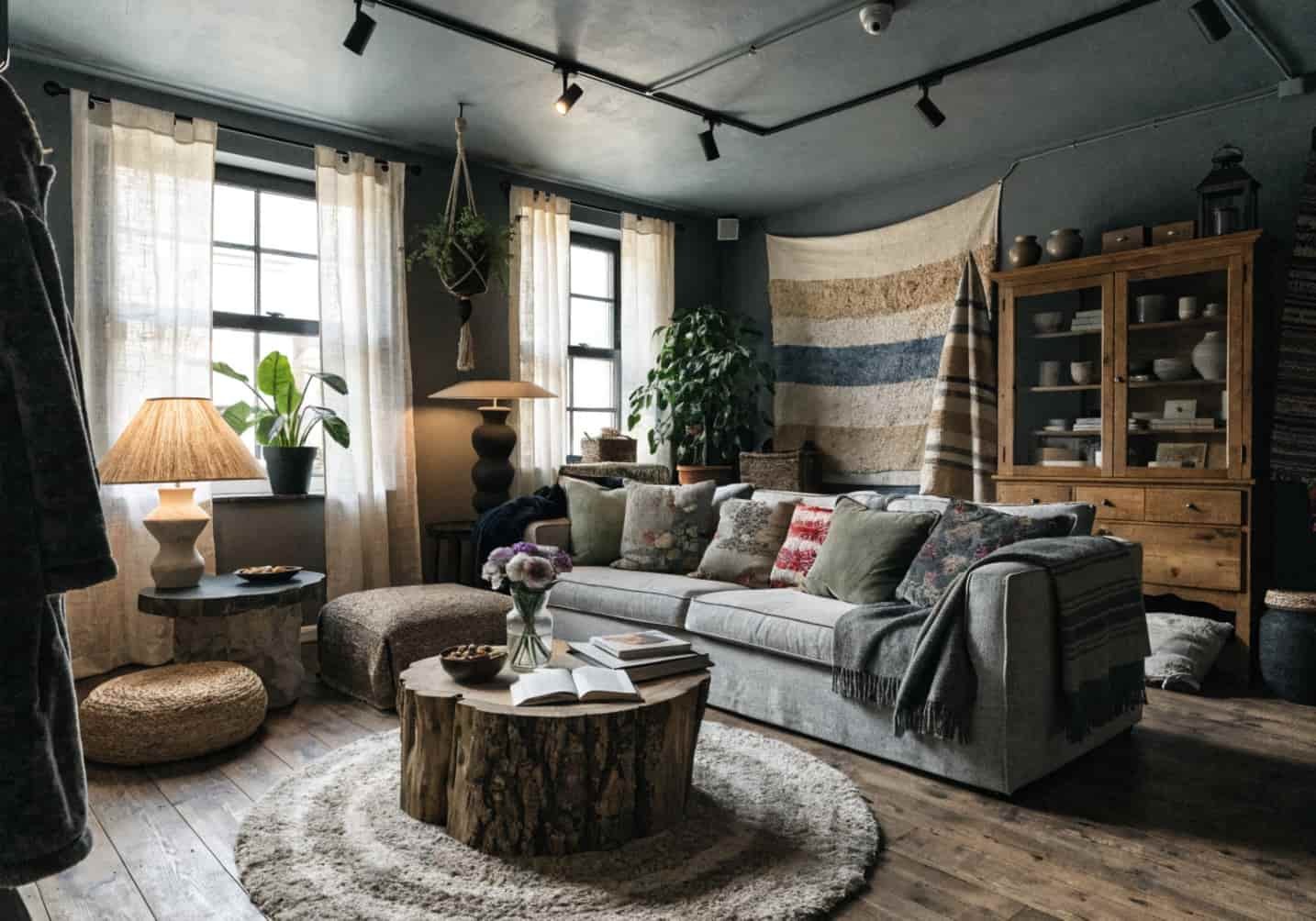
Grey gets written off a lot in Boho Living Room Grey circles, like it’s the enemy of warmth. But that’s only true if you treat it like a cold, flat backdrop instead of a starting point. A grey wall or grey sofa isn’t the problem — it’s what you do around it. Boho is about texture, story, and things that feel collected over time, not bought in a single trip. Grey actually makes a great base for that because it doesn’t compete with your rattan chair or your rust-colored pillows. It just sits back and lets everything else shine. Think less “showroom,” more “well-traveled home.” This guide walks through exactly how to make a grey living room feel warm, textured, and personal instead of sterile.
Why Grey Gets a Bad Rap in Boho Spaces (And Why It Shouldn’t)
Grey often gets blamed for making a room feel cold, but the real issue is usually what’s paired with it. A grey sofa next to bare white walls and no texture is going to feel flat — that’s not grey’s fault, that’s a styling gap. Boho spaces thrive on contrast: smooth against rough, light against dark, old against new. Grey actually handles that contrast better than most neutrals because it doesn’t pull focus. It lets a jute rug or a carved wood mirror do the talking. Grey doesn’t have to feel cold. It just needs the right company. Once you start layering in natural materials and warm tones, grey stops feeling like an office wall color and starts feeling like the quiet backbone of a room that has personality everywhere else.
Start With the Grey You Actually Live With — Warm vs. Cool Tones
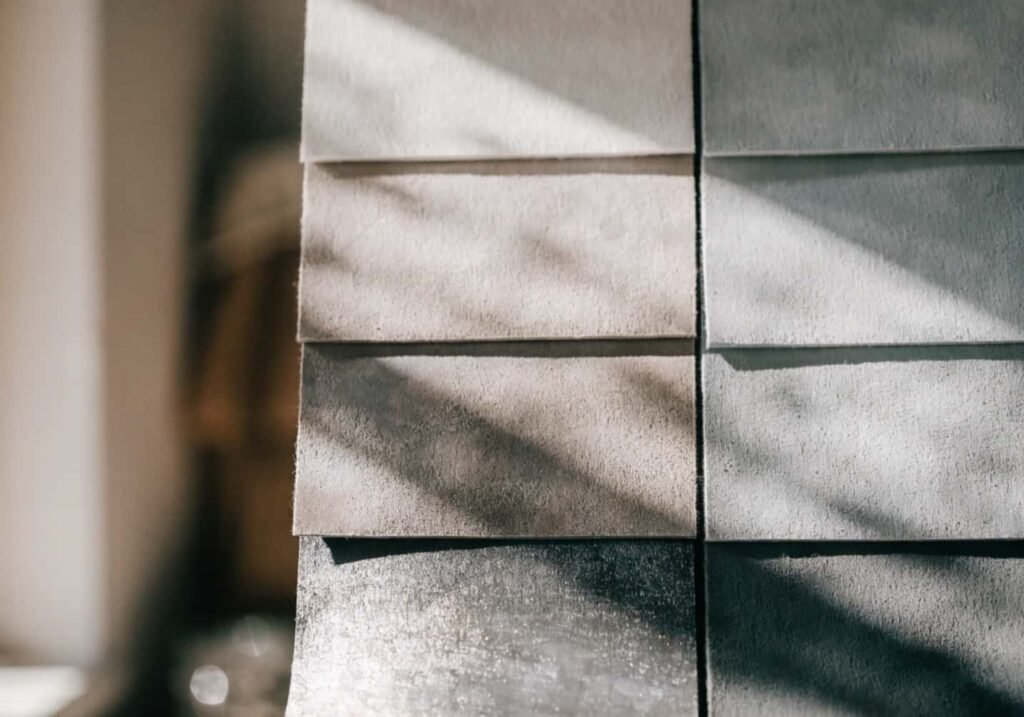
Not all greys behave the same way, and this is where a lot of boho rooms go wrong before they even start. Cool greys — the ones with blue or green undertones — can feel a little clinical if you don’t warm them up fast. Warm greys, sometimes called “greige,” already lean toward beige or taupe, so they meet boho halfway. I’d pick a warm dove grey over a cool charcoal any day for boho spaces. Before you buy paint or a new sofa, look at your grey in both morning and evening light, because it shifts more than people expect. Picture your grey sofa with a rust-colored throw pillow — that’s the shift you’re working toward. Once you know which grey you’re actually living with, every other decision in the room gets easier.
Layering Texture: The Real Secret Behind “Lived-In” Boho
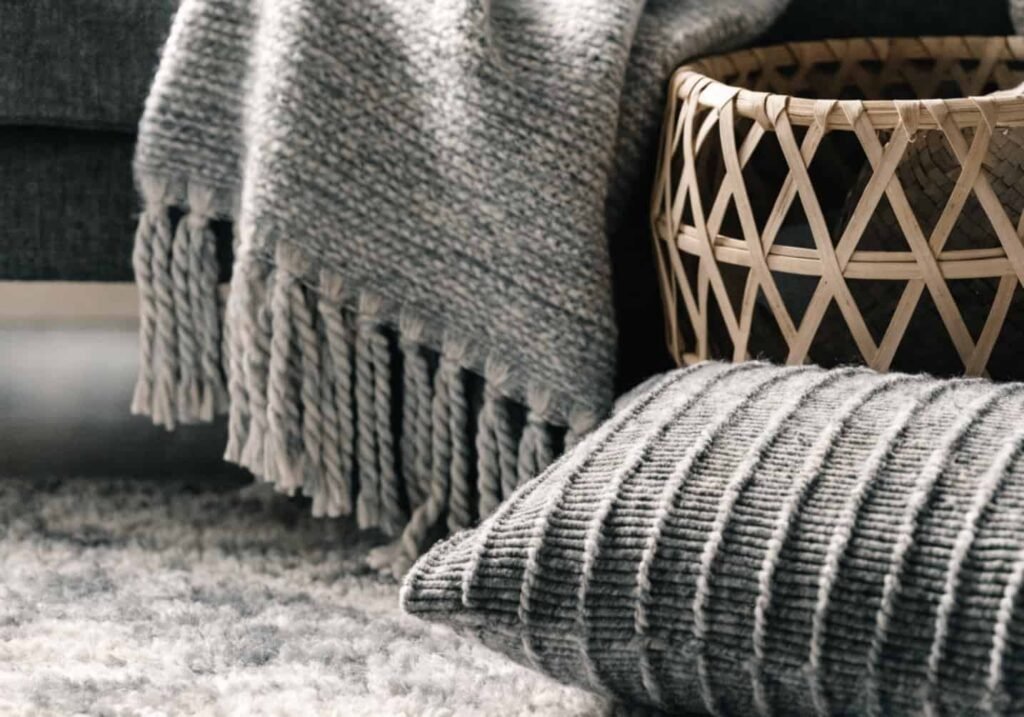
Texture is the thing that separates a boho room from a plain grey room, full stop. Smooth grey linen on a sofa needs something rough sitting next to it — a chunky knit throw, a woven pouf, a rattan side table. The contrast is what makes a space feel touched by hand instead of ordered from a catalog. Don’t stop at one texture either. Stack a few: a nubby wool rug under a smooth leather ottoman under a fringed throw pillow. That layering is what makes people want to sit down and stay a while. Add it slowly, don’t overwhelm the room at once. Start with one textured piece, live with it for a week, then add the next. That slower pace is honestly how most real boho rooms come together anyway.
Rugs That Do the Heavy Lifting in a Grey Room
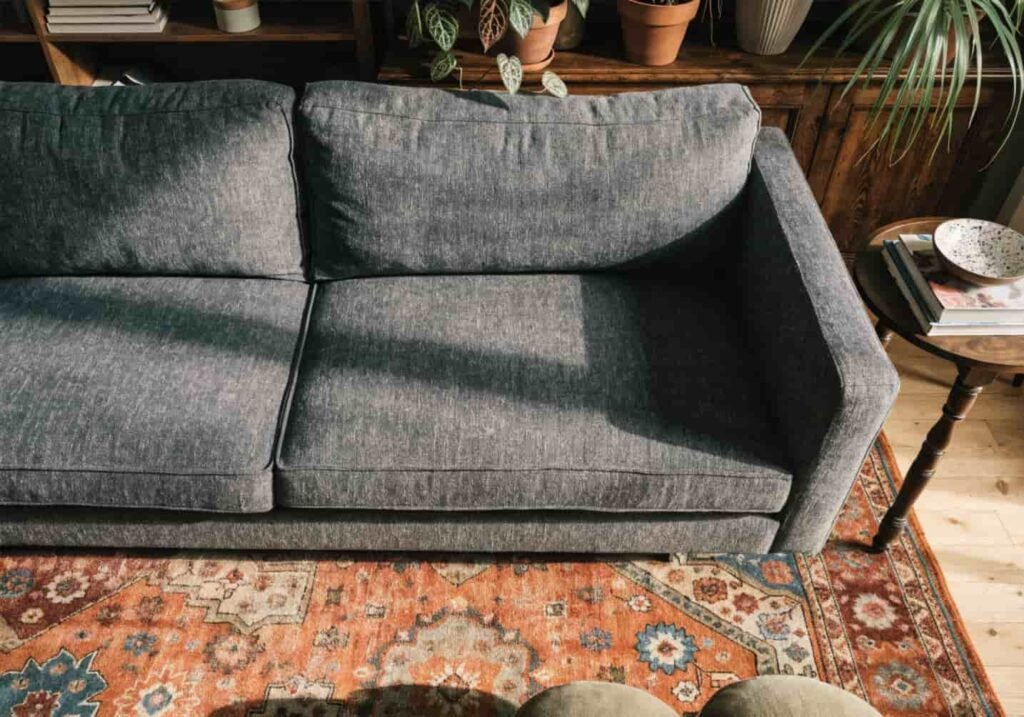
A rug is probably the single hardest-working piece in a grey boho room. It’s the layer that grounds everything else and gives your eye somewhere warm to land. Vintage-style Persian or Moroccan rugs work especially well here because their faded, worn-in patterns already carry that lived-in feeling boho is chasing. A jute or sisal rug underneath a smaller patterned rug adds even more depth without making the floor feel busy. If your grey sofa feels a little flat on its own, a rug with rust, mustard, or terracotta tones will pull warmth up into the whole room. Don’t be afraid of a rug that looks a little imperfect — frayed edges and faded spots are part of the charm, not a flaw to hide.
Mixing Wood Tones So the Room Doesn’t Feel Flat
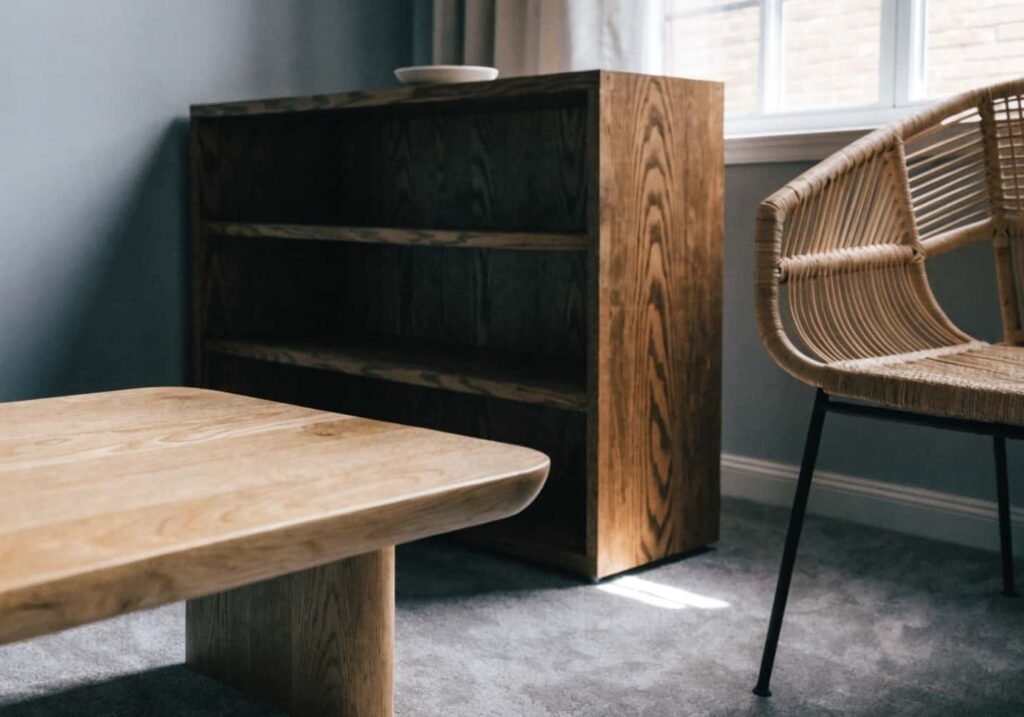
People get nervous about mixing wood tones, but in a grey boho room, it’s actually one of the easiest ways to add warmth fast. A light oak coffee table next to a dark walnut bookshelf isn’t a clash — it’s variety, and boho rooms love variety. The trick is having at least one connecting element, like matching metal hardware or a shared warm undertone, so the mix feels intentional instead of random. Rattan and cane furniture count here too, since they read as a lighter, textured wood tone that softens the grey around them. If your room only has one wood piece right now, that’s your sign to add a second in a different tone. It breaks up the grey without adding a single new color to the palette.
Plants as the Missing Piece Most Grey Rooms Skip
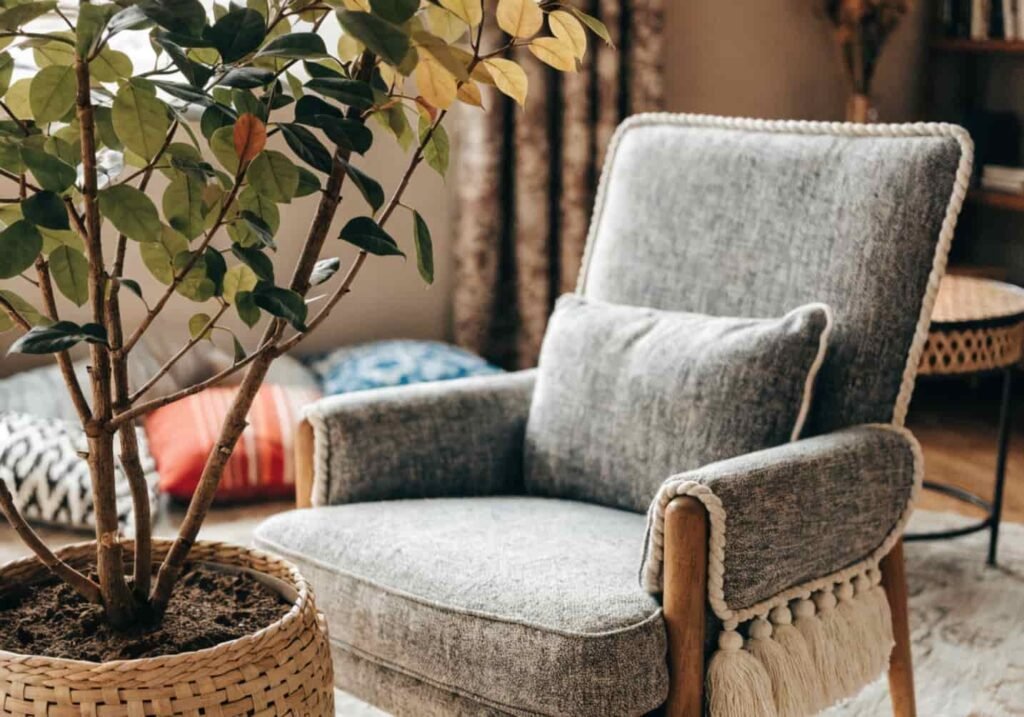
A grey room without plants is missing its easiest fix. Green is one of the few colors that sits naturally against grey without fighting it, and plants bring in movement and life that furniture just can’t. A tall fiddle leaf fig in the corner, a trailing pothos on a shelf, a cluster of small potted succulents on the coffee table — any of these change the whole feel of the room in minutes. You don’t need a green thumb either. Even one healthy plant in a woven basket planter does more for a grey boho room than another throw pillow would. Picture your grey armchair with a leafy plant beside it — that gap you’re imagining is exactly what’s usually missing.
Where to Add Warmth Without Losing the Grey Base
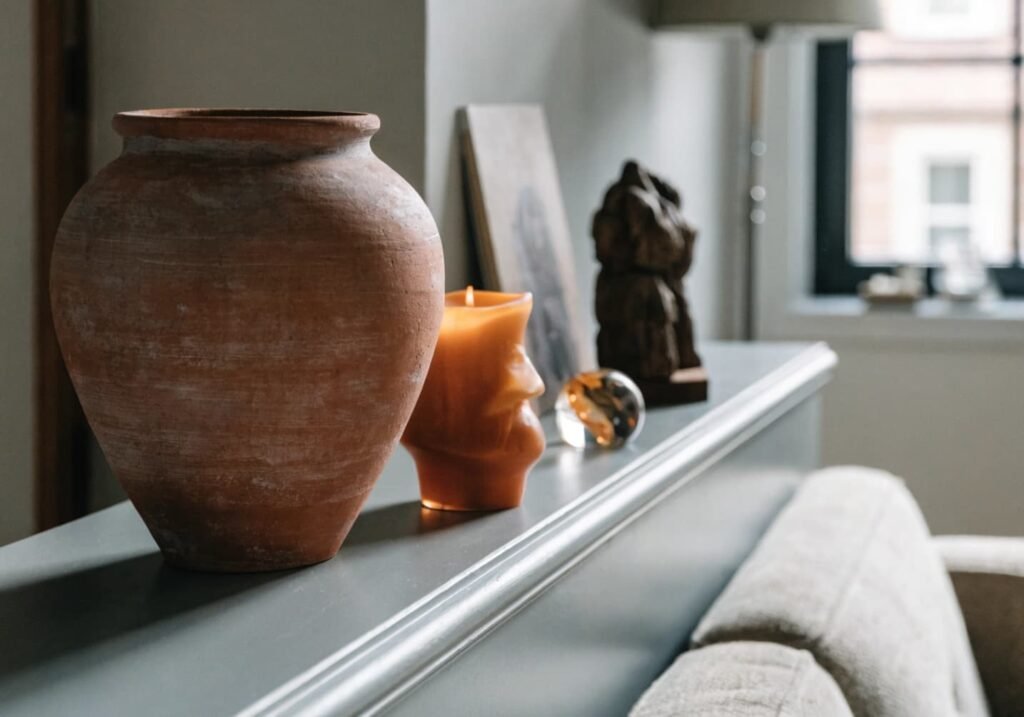
The goal isn’t to cover up the grey — it’s to warm it up while keeping it as the quiet base of the room. Terracotta, rust, mustard, and burnt orange all work beautifully as accent colors because they sit on the opposite end of the color wheel from grey’s coolness. Bring these in through pillows, a throw blanket, or a piece of art rather than big furniture, so you can change them out easily later. A single rust-colored vase on a shelf can do more work than you’d expect. Keep the big pieces — sofa, rug base, walls — neutral, and let the small, swappable items carry the warm color. That way the room stays flexible as your taste shifts over time.
Wall Art and Textiles That Bring in Boho Personality
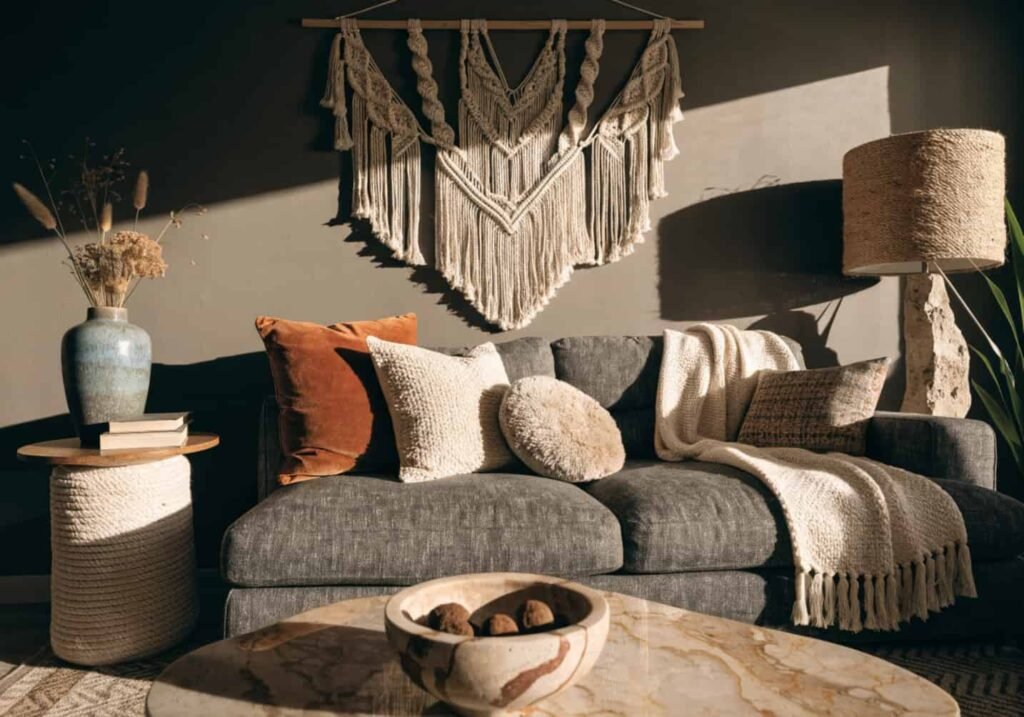
Walls and textiles are where a boho grey room gets to show some real personality. Macrame wall hangings, woven tapestries, or a gallery of mismatched frames all add pattern and warmth without touching the paint color. Look for art with earthy tones or hand-drawn, imperfect linework — it fits the boho feel better than anything too polished or symmetrical. Textiles matter just as much here: a patterned throw draped over the sofa arm, or curtains in a natural linen with a subtle print, soften the grey without overwhelming it. If you’re not sure where to start, pick one statement piece — a large macrame hanging works well — and build the rest of the wall around it slowly.
Small Grey Living Rooms: What Changes, What Stays the Same
A small grey living room follows the same rules, just with a lighter hand. You still want texture, plants, and warm accents, but every piece needs to earn its spot since there’s less room to work with. Choose a lighter, warmer grey for small spaces so the walls don’t close in visually. Multi-purpose furniture, like a storage ottoman that doubles as a coffee table, keeps the room from feeling cluttered while still allowing texture through its woven or leather surface. Mirrors help too, bouncing light around and making the grey feel airier rather than heavy. The mistake most people make in small rooms is skipping texture to “keep it simple” — but texture is actually what keeps a small grey room from feeling empty instead of cozy.
Real Rooms That Prove Grey and Boho Actually Work Together
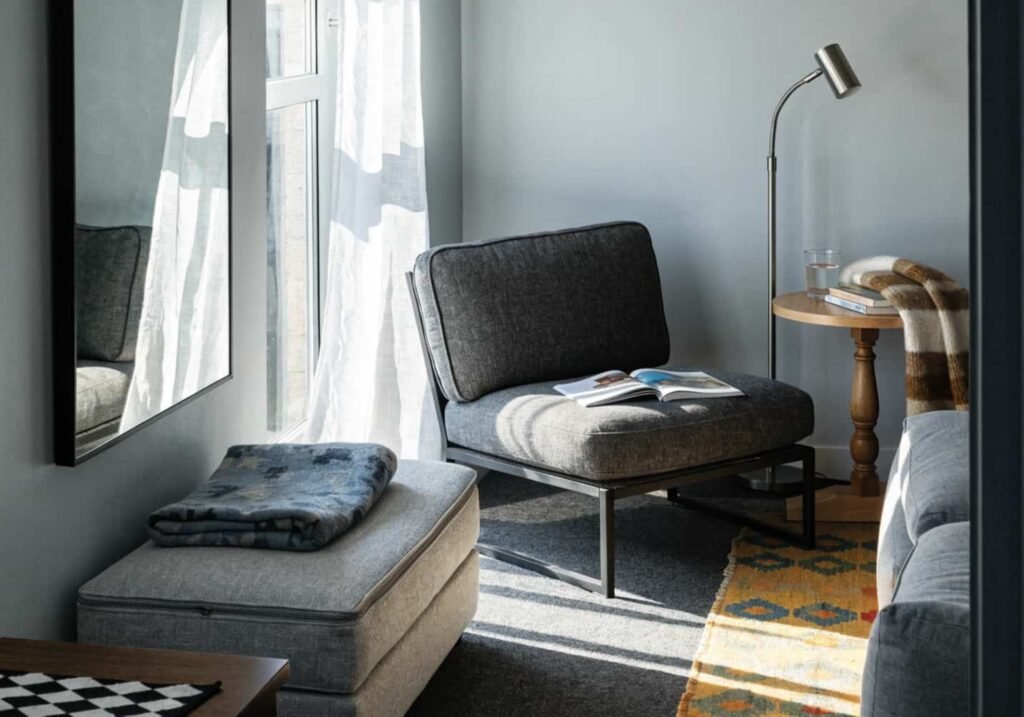
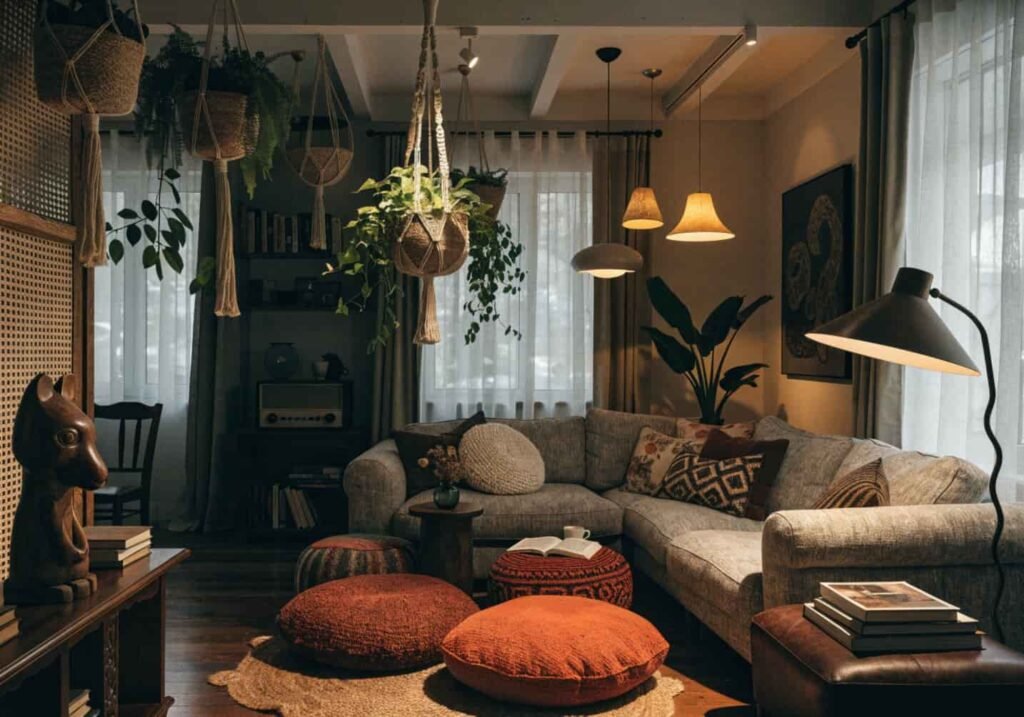
The best proof that grey and boho belong together is seeing it done well in an actual room, not just described in theory. A grey sectional with a stack of patterned floor cushions, a jute rug, and a wall of hanging plants shows exactly how the balance works in practice. Another good example is a grey accent wall paired with a rattan daybed, layered vintage textiles, and warm brass lighting — nothing about it feels cold once it’s finished. What these rooms have in common is restraint on the grey and generosity everywhere else: texture, plants, warm accents, and a few imperfect, well-loved pieces. That’s really the whole formula, and it holds up whether the room is large or small.
Conclusion
Grey doesn’t hold a boho living room back — it gives it room to breathe. The moment you stop treating grey as a finished look on its own and start treating it as a base for texture, plants, warm accents, and a few well-loved pieces, the whole room shifts. It stops looking staged and starts looking like somewhere people actually live. Start small: one textured throw, one plant, one rug with a little warmth in it. The room builds itself from there.