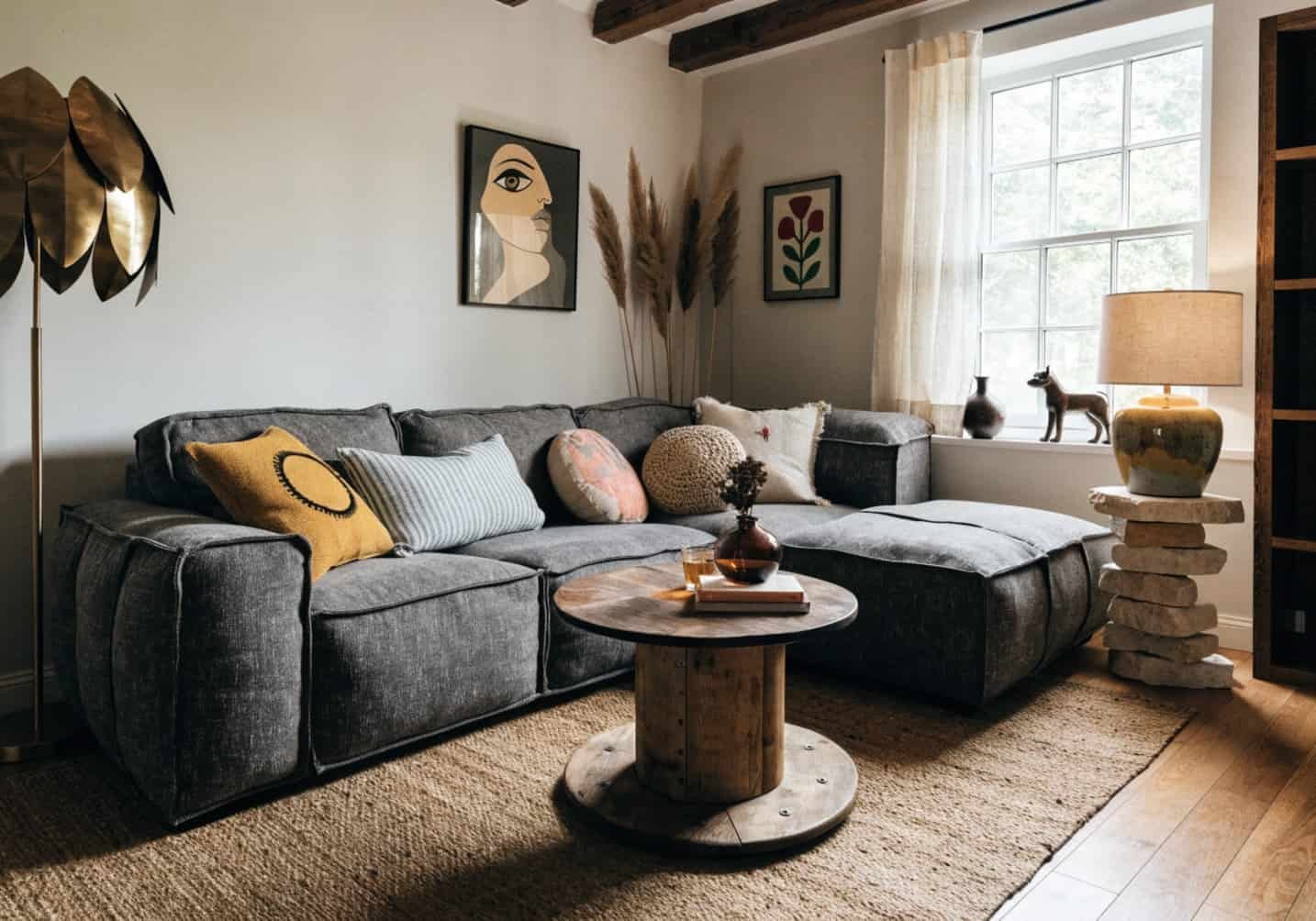
Boho Living Room Grey Couch gets a bad reputation in boho circles. People think grey is boring, too corporate, too “safe” for a style built on color and texture. But that’s actually why grey works so well here. Think about it like a blank canvas at an art fair — the canvas isn’t the star, but nothing gets painted without it. A grey sofa gives your rugs, pillows, plants, and wall hangings a stage actually to shine instead of fighting for attention. In this guide, I’m walking through every boho flavor — minimalist, maximalist, coastal, earthy, modern, vintage, and small-space — so you can find the exact combo that fits your living room and your personality, plus a few mistakes to dodge along the way.
Why Grey Couches Are the Perfect Boho Base
Boho design lives and dies by contrast — rough jute against smooth velvet, warm terracotta against cool ceramic, bold pattern against plain wall. Grey is what design people call a “neutral neutral.” It’s not warm like beige and not cold like white, so it plays fair with every color family you throw at it: rust, mustard, sage, burnt orange, even jewel tones like emerald or deep blue. Imagine a small apartment corner with a secondhand grey couch, a stack of patterned cushions, and one big leafy plant leaning toward the window. That’s a whole mood built on almost nothing. A grey sofa also hides everyday life better than white or cream — pet hair, coffee spills, sunlight fading — which matters if your living room actually gets lived in. My personal favorite thing about grey is how forgiving it is when you change your mind about your color scheme six months later.
Minimalist Boho: Clean Lines Around a Grey Sofa
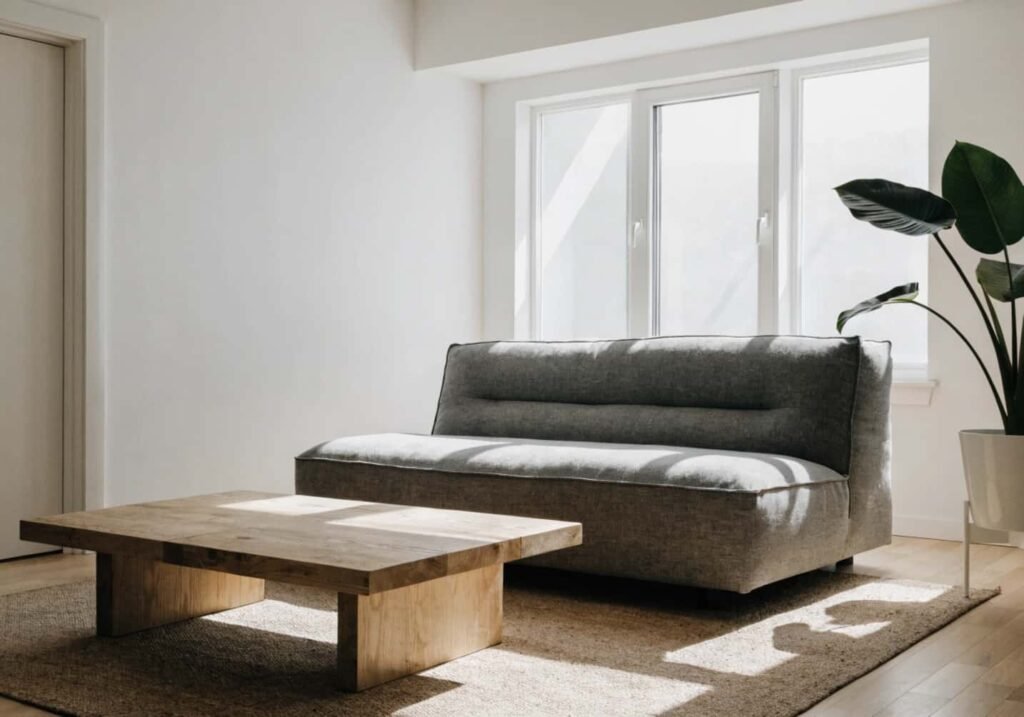
Picture a living room where every object earns its spot — one grey couch, one low wooden coffee table, one oversized plant, and nothing else fighting for your eye. That’s minimalist boho in a nutshell. It borrows boho’s love of natural materials but drops the clutter, so a grey sofa becomes the calm center of the room instead of one piece among fifty. Skip the layered rugs here — one flatweave rug in a soft oat or stone color is enough. Add two or three cushions max, ideally in raw cotton or linen, and let the negative space do the talking. Unlike maximalist boho, minimalist boho keeps color intentionally quiet, leaning on texture instead of pattern to create interest. A single rattan pendant light overhead finishes the look without shouting for attention.
Maximalist Boho: Layering Color and Pattern on Grey
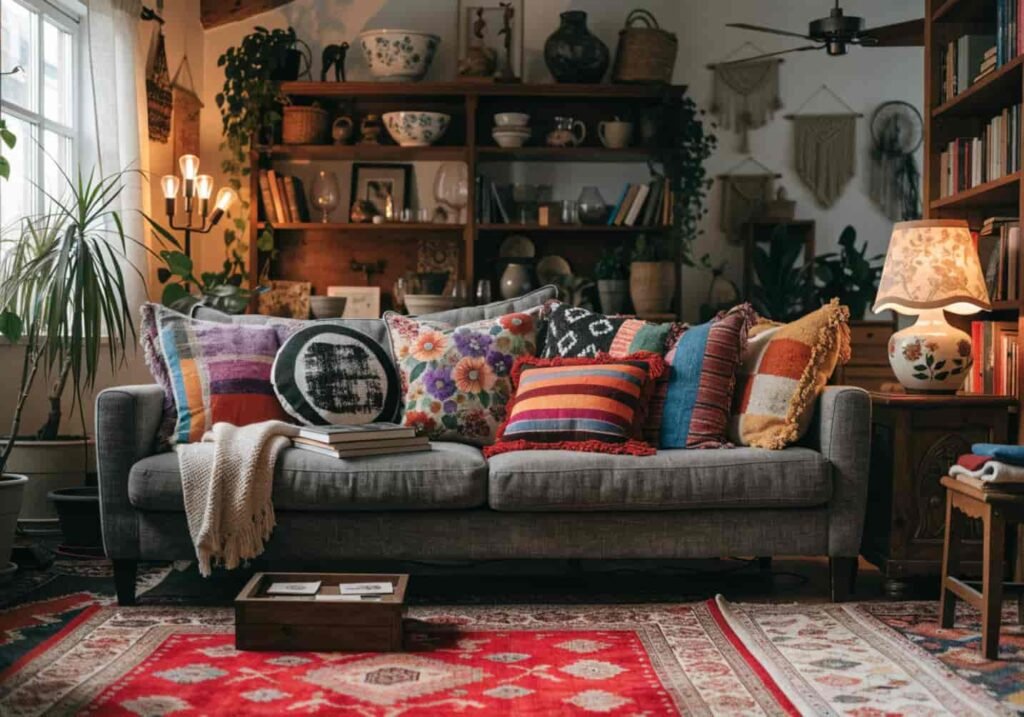
Now flip everything. Maximalist boho treats the grey couch like a dance floor and throws every guest onto it — Moroccan-print cushions, a Persian-style rug layered over jute, a wall of macrame and framed prints, maybe a velvet throw in burnt orange draped across the back. Here’s where it gets fun: because grey is neutral, it never clashes no matter how loud you go with color. Start with three or four pattern families that share at least one common color, then pile them on the sofa without worrying about perfect symmetry. A gallery wall behind the couch, mismatched vintage lamps, and a low brass side table finish the layered, lived-in feeling this style is known for. That said, keep the walls simple if the couch is doing this much work — one loud element at a time.
Coastal Boho: Light, Airy Looks with a Grey Couch
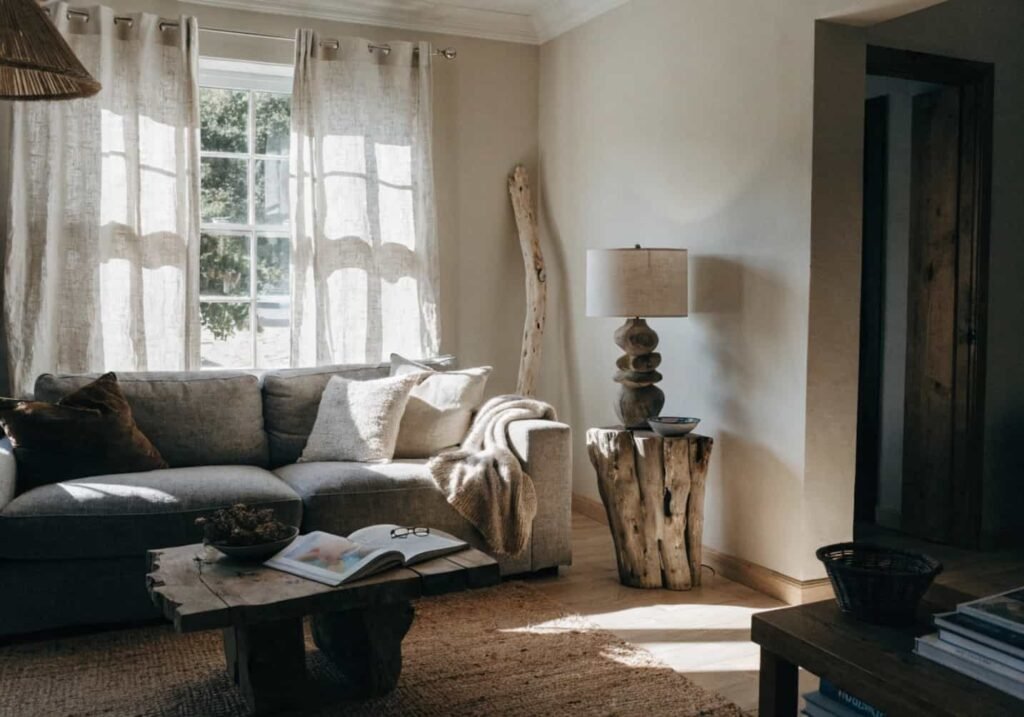
Coastal boho is where grey feels most at home, almost like it was born there. Think driftwood side tables, linen curtains billowing slightly in the breeze, a rattan chair pulled up beside the sofa, and light pouring in from every direction. The palette stays soft — sandy beige, seafoam, whitewashed wood — with the grey couch acting like a foggy morning sky behind a beach scene. A jute rug underfoot and a couple of oversized woven baskets for blankets keep the texture story going without adding visual noise. If you lean more minimal, skip the shell decor and let the natural materials speak instead. Unlike earthy boho’s deep, saturated tones, coastal boho stays pale and breezy throughout, which makes it especially good for small or dim rooms that need to feel bigger and brighter than they are.
Earthy Boho: Warm Neutrals and Natural Textures
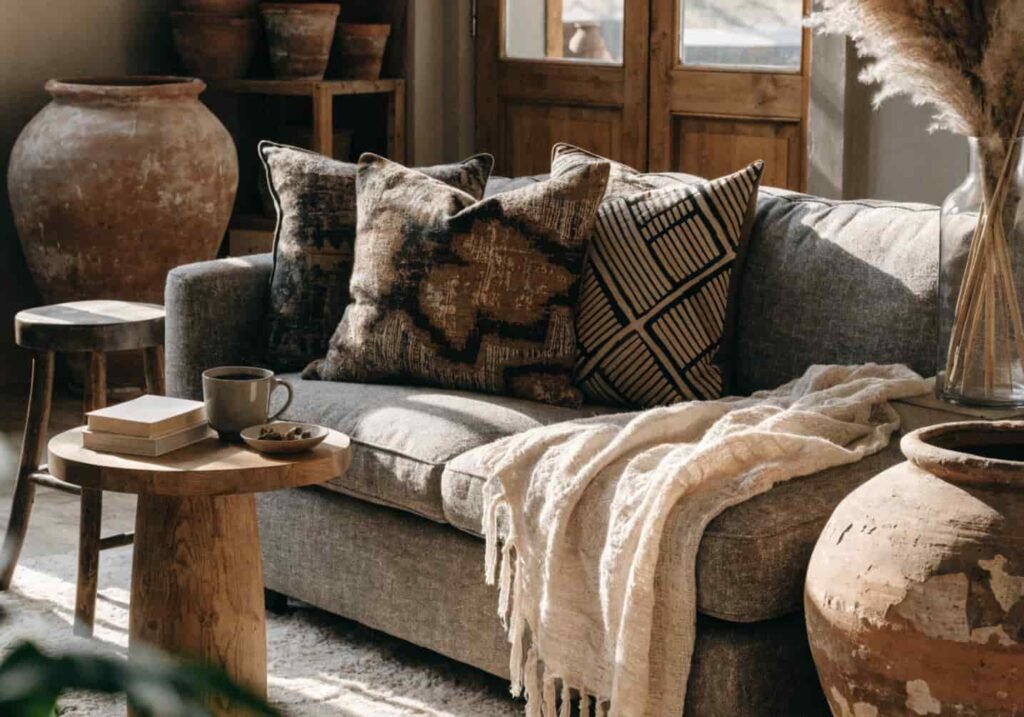
Earthy boho pulls the opposite direction from coastal — deeper, warmer, closer to the ground. Terracotta pots, clay-toned cushions, mudcloth throws, and unfinished wood furniture surround the grey couch like it’s sitting in a sun-baked courtyard. The trick is picking a grey with a slight warm undertone rather than a cool, blue-grey, since it blends more naturally with rust and clay colors. A chunky knit throw in camel or rust, a stack of woven baskets, and dried pampas grass in a ceramic vase round out the look fast. My personal favorite combo here is a warm dove-grey sofa with rust cushions and a single big terracotta planter in the corner — it feels grounded without trying too hard. Unlike coastal boho’s pale palette, earthy boho leans into saturation, and that’s exactly what makes it feel warm instead of washed out.
Modern Boho: Sleek Simplicity Meets Grey
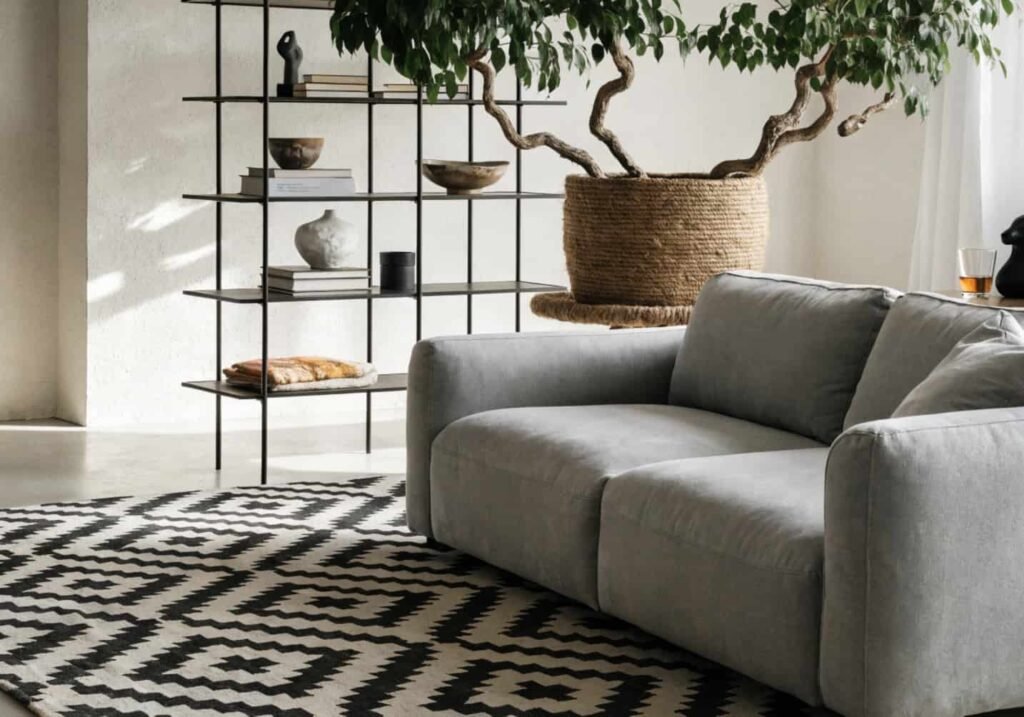
Modern boho takes the free-spirited textures of traditional boho and pairs them with cleaner furniture lines — think a low-profile grey sofa with sharp edges instead of an overstuffed vintage shape. Metal accents show up here more than in other boho styles: black iron shelving, brass floor lamps, a geometric-patterned rug instead of a busy floral one. The plants stay structural too, like a fiddle leaf fig or snake plant instead of trailing pothos everywhere. This is boho for people who love the warmth of natural materials but still want a room that photographs cleanly. A grey couch with wooden legs, one statement rug, and a handful of curated objects on open shelving is really all it takes. Unlike vintage boho’s thrifted, mismatched charm, modern boho stays curated and a little more restrained on purpose.
Vintage Boho: Thrifted Charm Against a Grey Backdrop
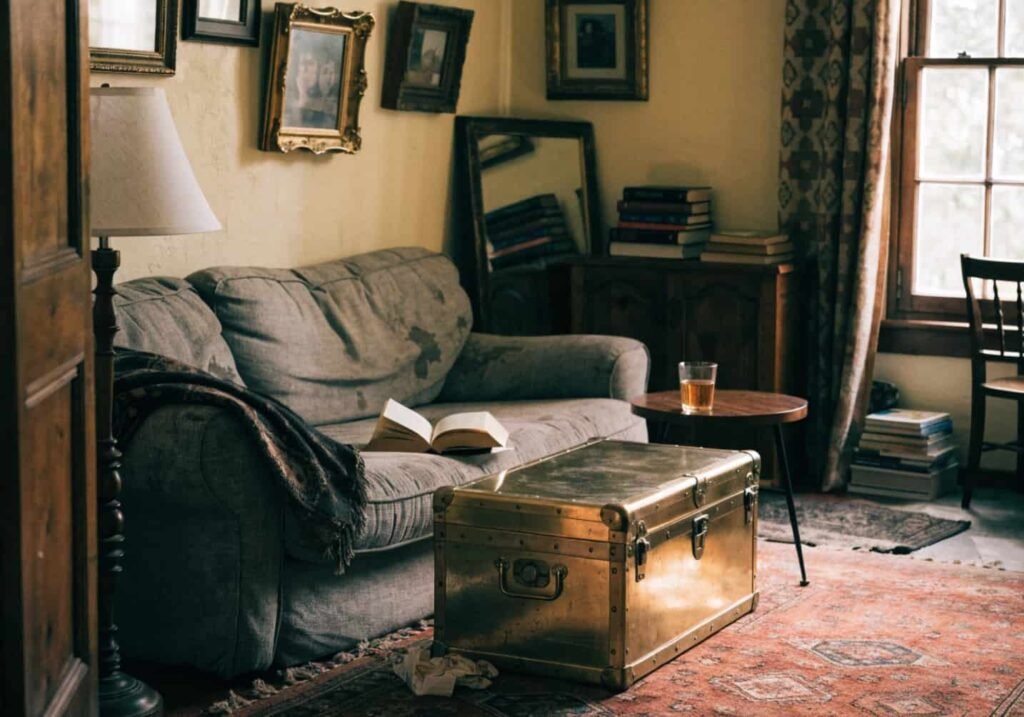
There’s something about a worn grey couch that makes secondhand furniture look intentional instead of random. Vintage boho leans hard into that — a scuffed brass trunk as a coffee table, a chipped ceramic lamp, an old Persian rug with faded colors, a wall hung with mismatched frames from different decades. Imagine walking into a room and not being able to tell if the owner collected everything over ten years or found it all at one lucky flea market — that confusion is the whole point. A grey couch with slightly worn or slipcovered upholstery fits this look better than something crisp and new. Add a crocheted throw, a stack of old books doubling as a side table, and one bold vintage textile like a kilim cushion. That said, keep at least one or two newer pieces in the mix so the room reads styled rather than simply old.
Small-Space Boho: Styling a Grey Couch in Tight Rooms
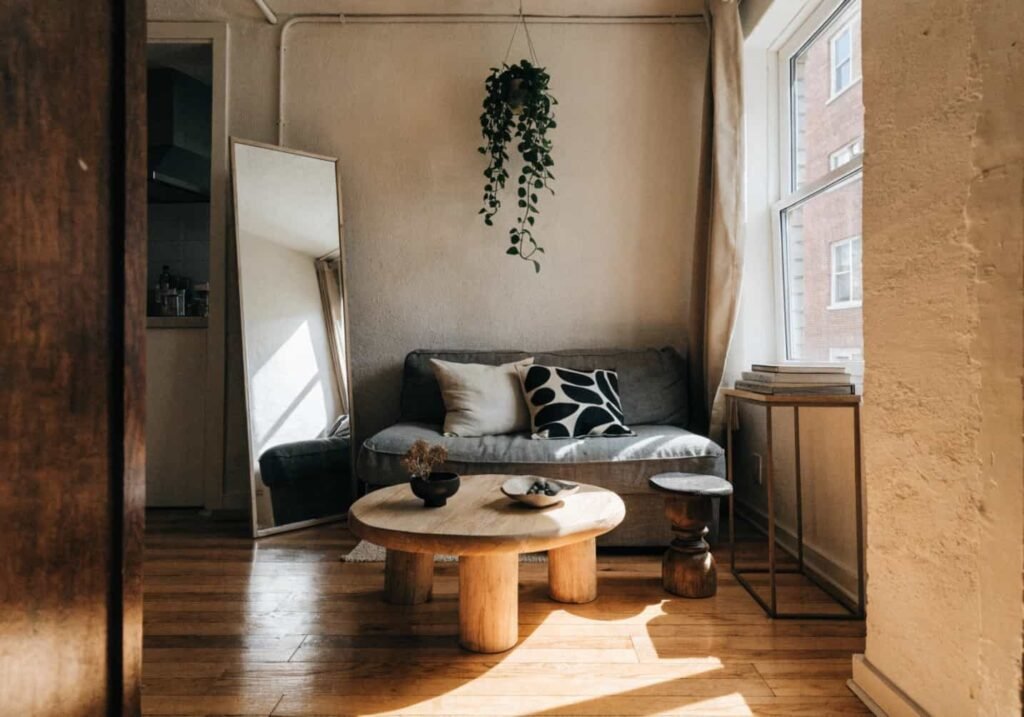
Small rooms are where a lot of boho styling goes wrong, mostly because people try to cram in every texture at once. Here’s the fix: pick a grey couch in a lighter shade to keep the room feeling open, then layer texture vertically instead of horizontally — a tall leaning mirror, a floor-to-ceiling macrame hanging, a tall plant in the corner — rather than spreading decor across every surface. A single medium-sized rug that doesn’t touch the walls will make the floor feel bigger, not smaller. Skip oversized furniture entirely; a loveseat-sized grey sofa with slim wooden legs lets light travel underneath it, which tricks the eye into reading the room as more open. If you lean more minimal by necessity, that’s actually an advantage in small spaces — fewer, better pieces always beat a cluttered corner in a tight room.
Boho Rugs and Throws That Complement Grey
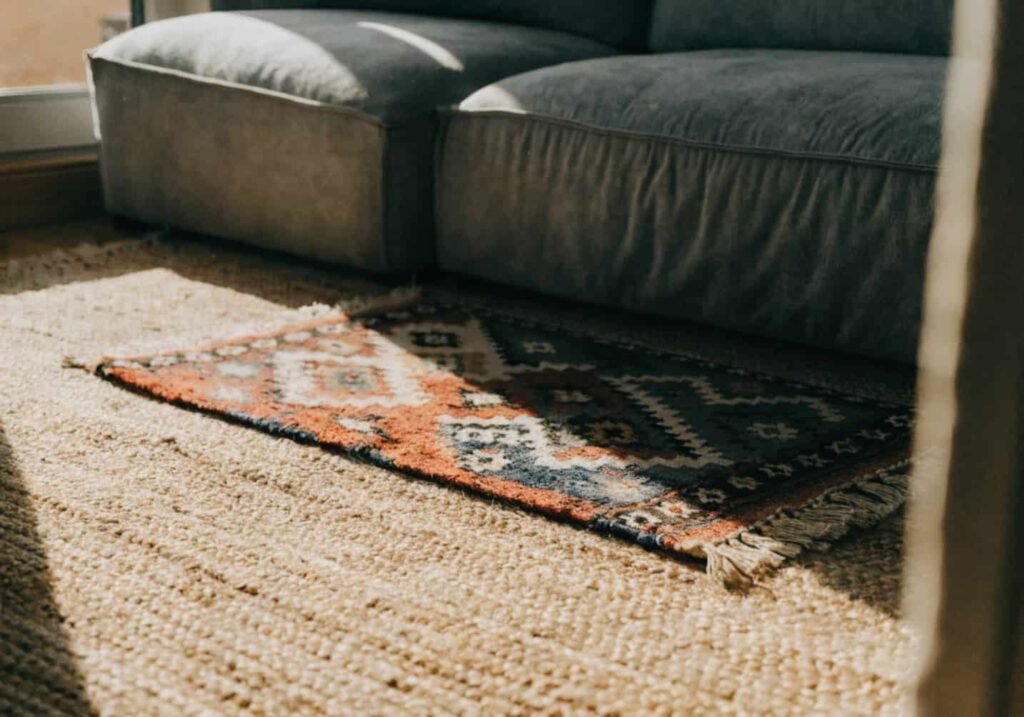
Rugs and throws do more heavy lifting in boho rooms than almost any other piece, and a grey couch makes picking them a lot easier since almost nothing clashes. Jute and sisal rugs bring texture without adding color, which works well under any of the styles above. For pattern, Moroccan Beni Ourain rugs with their cream-and-black geometric design sit beautifully against grey without competing with cushion colors. Throws are where you can experiment more freely — a chunky cream knit for earthy or vintage rooms, a striped Mexican-style blanket for maximalist spaces, or a simple waffle-weave throw for coastal or minimalist setups. Layer a smaller patterned rug on top of a larger plain one for instant depth, a trick that works in almost every boho style covered here. Unlike solid-color throws, textured ones photograph better and just feel nicer against skin on a lazy Sunday.
Choosing Accent Colors That Pop Against Grey
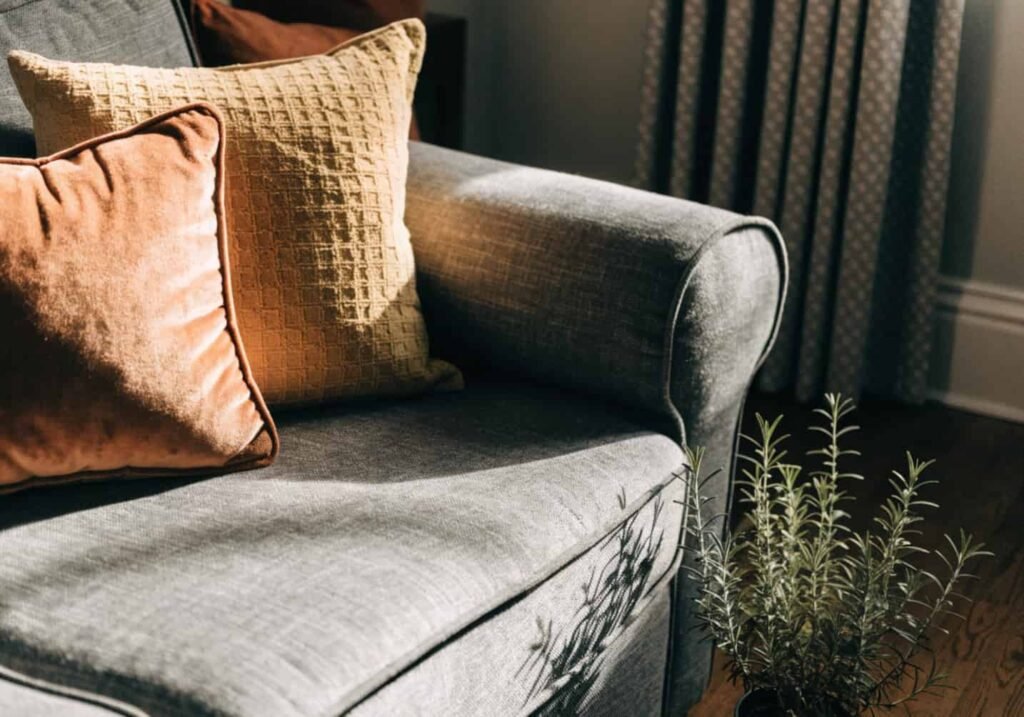
Grey plays well with almost every color, but a few combinations genuinely sing. Warm terracotta and rust bring instant coziness and work across earthy, vintage, and maximalist rooms alike. Mustard yellow adds a retro touch that pairs surprisingly well with cooler grey tones. Sage and olive green feel calm and natural, echoing the plants that show up in nearly every boho room anyway. For something bolder, deep emerald or burnt orange cushions against a charcoal-grey couch create real visual punch without needing much else in the room. A good rule of thumb: pick one dominant accent color and one supporting color, then repeat both at least three times around the room — a cushion, a throw, a small vase — so the eye reads it as a deliberate palette instead of random splashes of color.
Common Mistakes to Avoid with a Grey Boho Couch
The most common mistake is going too matchy — pairing a grey couch with an all-grey room, which flattens the boho warmth right out of the space. Another one is overcrowding a small room with too many rugs, throws, and plants at once, which reads as cluttered instead of curated. People also forget lighting; boho rooms lean heavily on warm, layered light sources like table lamps and string lights, and skipping those leaves even a well-decorated room feeling flat and cold. Choosing a couch fabric that’s too formal, like a stiff velvet in a very cool grey, can also fight against boho’s relaxed, natural feel. Last one: don’t forget plants entirely just because you’re focused on textiles. A room full of gorgeous rugs and cushions but zero greenery will always feel a little incomplete in a boho space.
Quick Style Guide: Pick Your Boho-Grey Combo
If you’re still not sure where to start, here’s the shortcut. Want calm and uncluttered? Go minimalist boho with a light grey couch and one big plant. Love bold color and pattern? Maximalist boho with a charcoal or mid-grey base gives you room to layer freely. Craving beachy and bright? Coastal boho with a light, cool-toned grey sofa fits best. Want warmth and grounding? Earthy boho with a warm-undertone grey couch and terracotta accents does the job. After something cleaner and more curated? Modern boho with sleek grey furniture and metal accents. Chasing character and history? Vintage boho with a worn or slipcovered grey couch delivers instantly. And if space is tight, small-space boho with a lighter grey loveseat and vertical styling tricks will make the room feel twice as big.
Conclusion
A grey couch isn’t the boring choice people assume it is — it’s actually the smartest one. It lets you change your entire mood, from breezy coastal mornings to warm earthy evenings, without ever buying a new sofa. Whichever style pulls you in, start small: one rug, one throw, one plant, and build from there. The best boho rooms never look finished on purpose, and that’s exactly the point.