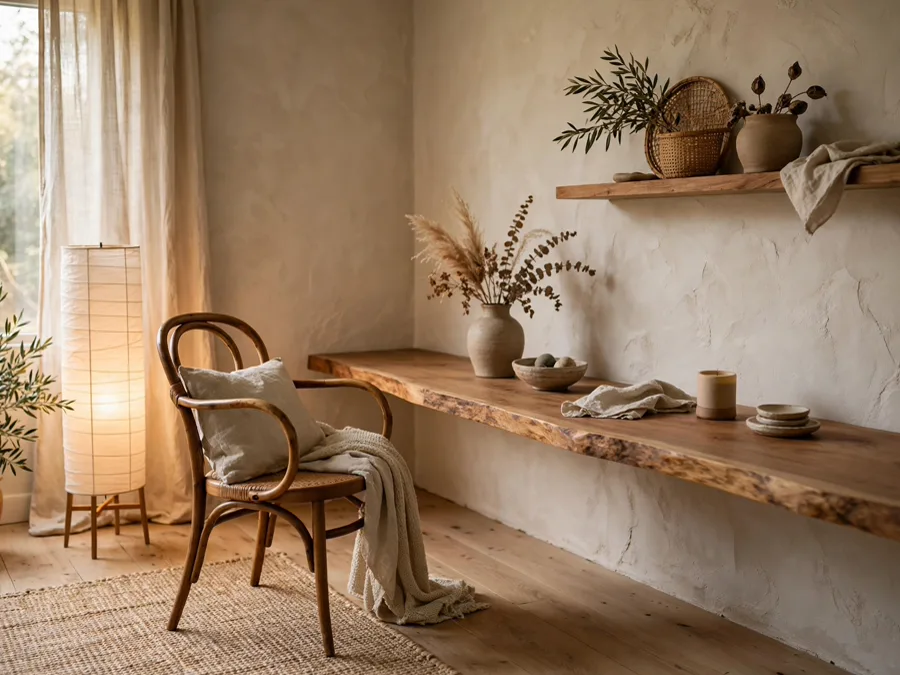
Your saved photos are full of pale, peaceful rooms — and none of them look like your home. The sofas are sculptural, the wood is perfect; your living room has a radiator, a toy basket and the chair everyone fights over. Inspiration that ignores real life is just decoration for your phone.
You do not need more rules, or a bigger budget. You need better examples. The natural minimalist designers below never chased trends; each repeated a few honest habits — wood, light, touch, restraint — until they became a whole way of making rooms.
The trick is to borrow like a cook, not a copier. Never lift a whole look. Take one useful detail — how a lamp softens a corner, how one board becomes a table — and cook it with what you own. One borrowed detail changes a room more than a copied scheme.
The seven names ahead could hardly differ more: a quiet English designer, a Tokyo thinker, a German editor, a woodworker, a sculptor, a French pioneer and a Finn who bent wood like fabric. That variety is the point — somewhere in it is your home’s missing habit.
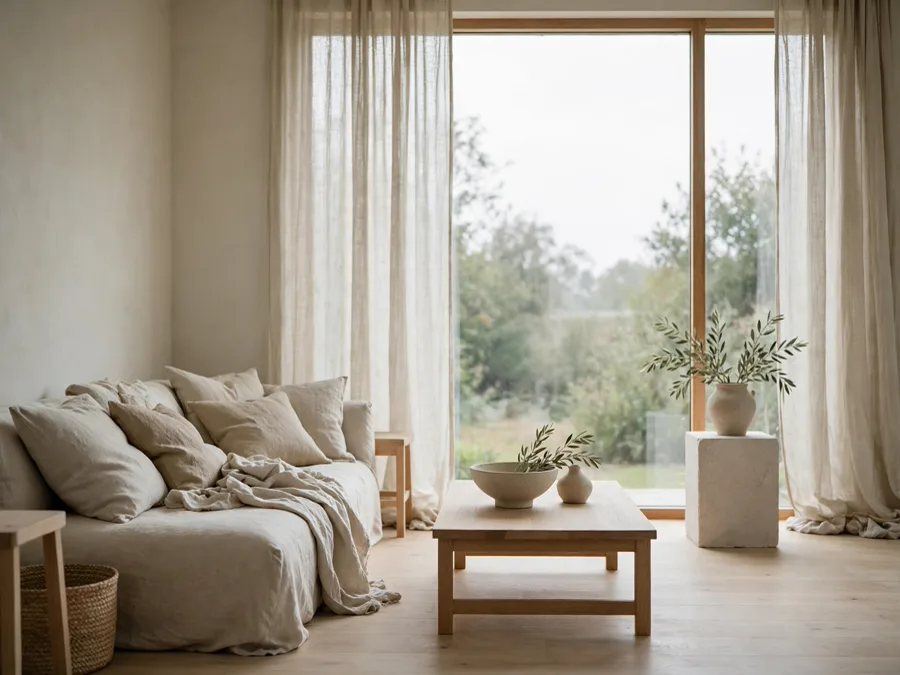
What Makes a Natural Minimalist Icon Worth Following?
Plenty of designers make one beautiful room. An icon worth following does something rarer: the same approach shows up in everything they touch, so you study the pattern instead of memorizing furniture.
When the method repeats, it becomes portable. You stop needing the exact chair and start seeing the decision behind it — why this wood, why this height, why this much empty space. Look for these five things:
- A short material list — wood, stone, linen, paper, clay
- Honest surfaces that show their making, from bare grain to natural fiber rugs
- One recognizable habit, repeated until it becomes a signature
- Shapes and heights chosen for the body first, the photograph second
- Comfort treated as part of the design, never as clutter
Learn to spot those five, and your first question in any lovely room changes from “Where did they get that?” to “Why does that work so well?”
| Icon | Best Inspiration For | The Detail Worth Borrowing |
|---|---|---|
| Jasper Morrison | Everyday objects that disappear | The ordinary version, perfectly made |
| Naoto Fukasawa | Calm rooms that invite touch | Curves your hand expects to find |
| Dieter Rams | Editing a room down honestly | Ask what each object earns |
| George Nakashima | One honest piece of wood | Let one board’s grain lead |
| Isamu Noguchi | Soft light and gentle shapes | Paper glow instead of harsh glare |
| Charlotte Perriand | Flexible rooms that adapt | Furniture that moves as life changes |
| Alvar Aalto | Warmth in wood and waves | Bent curves that welcome people in |
Jasper Morrison and Naoto Fukasawa Make the Ordinary Feel Exactly Right
Jasper Morrison is the champion of what he calls the super normal: the chair, jug or lamp so well judged that you stop noticing it. His objects favor familiar shapes — a plain chair, a simple stool — refined until nothing is left to improve. No drama, no novelty; things that feel as if they always existed.
Borrow it by upgrading the ordinary instead of hunting the unusual. Choose the simple version of what you need — a plain oak side table, an unadorned lamp — judged by how quietly it works. In a hallway crossed twenty times a day, that calm beats any statement piece.
Naoto Fukasawa designs from the other direction: he watches what people already do. His work fits behavior so naturally that using it feels like remembering something: a curve where a hand lands, a surface where a cup wants to sit. His rooms feel gentle because nothing fights your habits.
At home, copy the attention, not the objects. Walk one room and notice where things pile up, where you reach, where you hesitate. Move the hook, small table and reading light to meet those habits, and the room feels designed — it finally matches your day.
Fit note: the details your body uses most — seat heights, table edges, switch reach — should feel easy before they look minimal. If a piece looks calm but fights your hand, it fails his test.
Your routines feel the difference before guests ever see it.
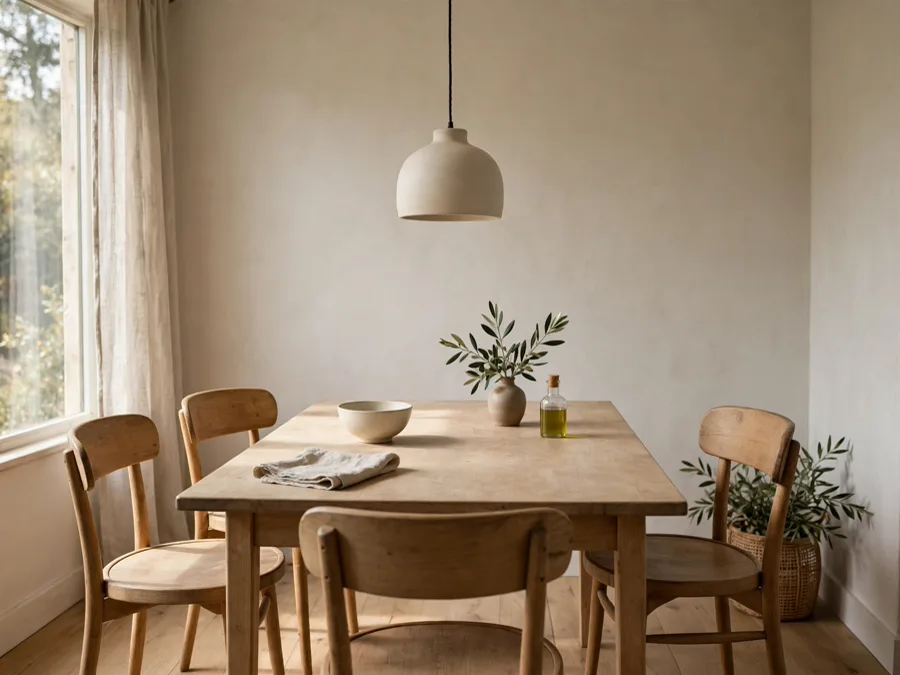
Dieter Rams and George Nakashima Believe Honesty Is the Decoration
Dieter Rams spent his career asking one hard question of every object: does it earn its place? His standard — less, but better — produced shelves, devices and rooms stripped of the merely decorative, yet never cold, because what remains is useful and built to last. Nothing shouts; everything works.
Borrow the audit, not the austerity. Twice a year, question every item on one surface: used weekly? genuinely liked? honest about what it is? What fails, leaves. What stays gets space around it — space makes ordinary things look considered.
| Situation | Base Pieces | Why It Works |
|---|---|---|
| Crowded bookshelf | Books you reread, one vase | Everything left has a reason |
| Coffee table chaos | One small stack, one bowl | Clear surfaces read as calm |
| Entryway pile-up | Wall hooks, one lidded basket | Only daily things stay visible |
| Kitchen counter sprawl | Tools you touch daily, only | The rest earns cupboard space |
In a family home, the audit is not about emptiness — it is about everything still pulling its weight.
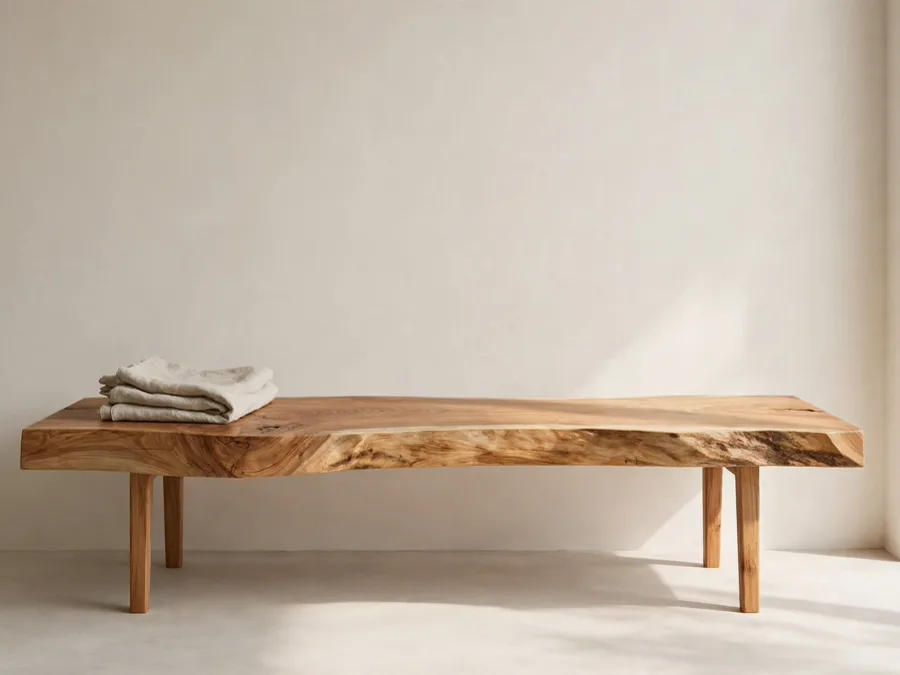
George Nakashima answered that question from the forest’s side. A master woodworker, he let each tree lead: boards kept their live, wandering edges, cracks were honored rather than hidden, and the grain — never paint, never fuss — became the entire decoration. One table could carry a whole room.
You do not need his workshop to borrow this. It is one of the few minimalist decor changes that asks for patience instead of money: save for, or hunt secondhand, one piece of wood with visible grain — a bench, a headboard, a thick shelf — and let it be the room’s most interesting thing.
Budget note: one honest board beats five imitation pieces. Salvage yards and older solid furniture often hide real grain for less than new veneer.
One piece of wood with a story furnishes a room in a way no matching set can.
Isamu Noguchi and Charlotte Perriand Shape Rooms Around the Body
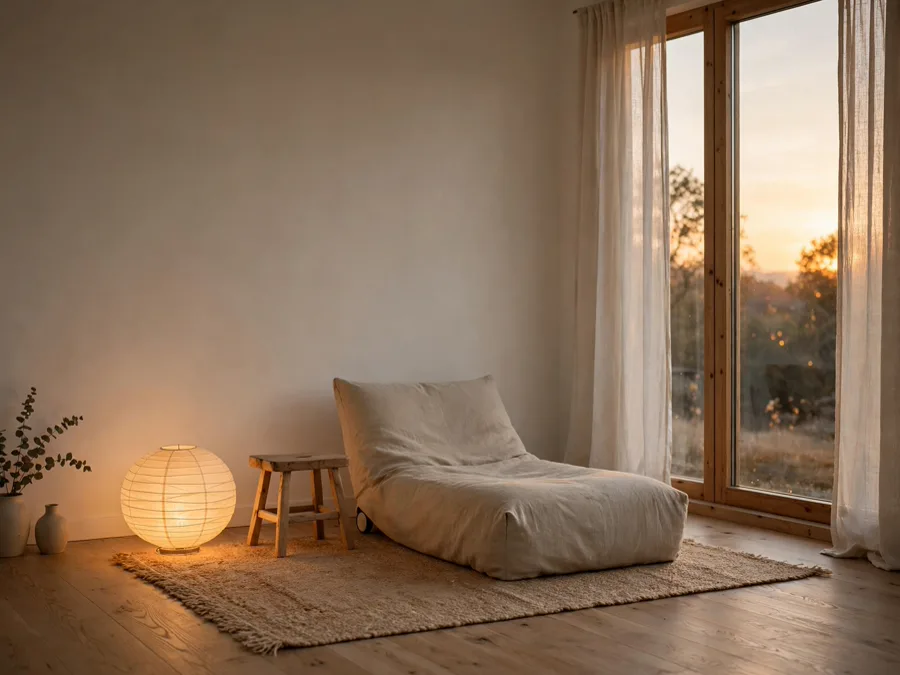
Isamu Noguchi was a sculptor who wanted his art lived inside, not just looked at. His paper lanterns — soft spheres of warm light — turned the harsh ceiling bulb into something closer to moonlight, and his low, rounded tables feel carved by water. His rooms glow before they impress.
The borrowable part is the light, not the legend. Swap one hard overhead light for a soft, shaded glow at sitting height — a paper-style pendant, a frosted globe — and a plain room gains his warmth.
Evening is when we actually live in our rooms; Noguchi designed for that hour first.
Charlotte Perriand designed furniture for real bodies in real, often small, rooms. In an era of heavy, fixed furniture, she championed pieces that swivel, fold and reconfigure — low benches, movable storage, chairs built for leisurely evenings. Comfort, for her, was a modern idea.
Borrow the flexibility. Choose the sofa you can shift, the stool that becomes a side table, the shelf that divides a room today and opens it tomorrow. Pieces that move with your life mean rearranging instead of replacing.
Comfort upgrade: before buying anything fixed, live with the flexible version a week. A movable footstool or lamp usually teaches you what the room needed.
In a home hosting toddlers, teenagers and grandparents within one decade, adaptable furniture is furniture that stays.
Alvar Aalto Proves Modern Rooms Can Be Warm
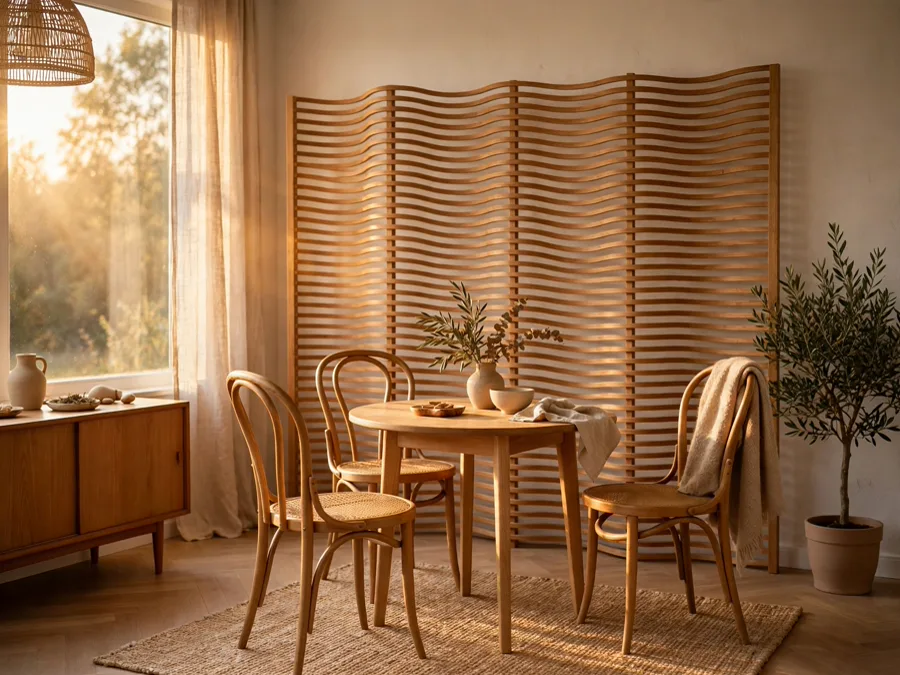
Alvar Aalto looked at the straight lines of early modern design and softened them. He bent plywood into waves, shaped chair backs around the human hand and spine, and filled buildings with warm wood and room-slowing curves. His wavy forms are not decoration; they are hospitality.
His lesson may be the easiest to borrow: against the straight lines of a normal room — the sofa back, the shelf edge, the door frame — add one honest curve. A bentwood chair, a round side table, a wavy-edged mirror. One curve changes the temperature of everything around it.
If your rooms feel correct but not kind, Aalto is your icon: he shows that warmth is a shape, not a shopping list.
Copy the Principle, Not the Room
A gentle warning first: the famous rooms attached to these names were staged, lit and budgeted by professionals. The woodworker’s table sits in perfect silence; yours will hold homework, keys and a fruit bowl. Copy the silence itself and you will feel like a failure by Tuesday.
What survives real life is never the object; it is a relationship. The profiles share the same four — proportion, one big calm piece outweighing five busy ones; contrast, grain against plain and glow against shadow; repetition, one wood or curve returning; and balance, weight spread so a room feels settled.
So name what caught your eye before shopping for it. The emptiness around the bench, or the bench? The warmth of the light, or the lamp? Nine times out of ten it is the relationship — and relationships rebuild with furniture already owned.
| Instead of Copying This | Borrow This Principle |
|---|---|
| The exact sculptural chair in the photo | One strong shape, everything else quiet |
| A whole matching furniture set | Familiar shapes, chosen slowly, one by one |
| Bare surfaces that cannot hold a mug | Clear space around a few daily things |
| The famous lamp at its famous price | Soft shaded light at sitting height |
| A room arranged only for photographs | Layouts tested by real hands and habits |
Borrow principles and the copy-shopping stops — you stop chasing objects and start building your own taste.
Build Your Own Style Formula From the Icons You Like
Do not marry one icon. The happiest rooms mix two or three: Rams to edit, Nakashima for one beloved piece of wood, Noguchi for evening light. Restraint from one, warmth from another, softness from a third.
Formula: honest wood furniture you already own + plain linen and wool in undyed tones + one soft sculptural light + a single branch or stone where the eye lands first.
Then change only one part at a time — swap the light, deepen the wood tone, soften the textiles — and live with it a week before touching anything else. That slow rhythm is how simple minimalist decor stays yours, not a copy of someone else’s calm.
In the end, the best icon is not the most famous one; it is the one who helps you understand what you already like.
Frequently Asked Questions
Do I need designer furniture to borrow these ideas?
No. Every icon here is famous for a method, not a shopping list — an editing habit, a respect for wood, a softer light. A secondhand oak table borrows more honestly than an expensive copy of a famous chair.
With kids, pets and clutter, is this realistic?
More than most styles, yes. Rams’s audit keeps only what earns its place, Perriand designed for lived-in rooms, and honest materials forgive wear better than glossy ones. Start with one surface, not the whole house.
Which icon should I start with?
Pick the one whose rooms made you exhale. If clutter is your pain, start with Rams; if rooms feel cold, start with Aalto or Noguchi. One icon, one habit, one room is a complete beginning.
How do I keep natural materials from looking rustic or messy?
Repetition and breathing room do the work. Keep the palette short — one or two woods, undyed textiles — and give each piece space around it. The same pine shelf looks rustic in a crowd and minimalist on its own.
How many of these icons should I follow at once?
Two or three is plenty: one for restraint, one for warmth, one for comfort. More than that, the lessons start arguing — and your rooms will show it.