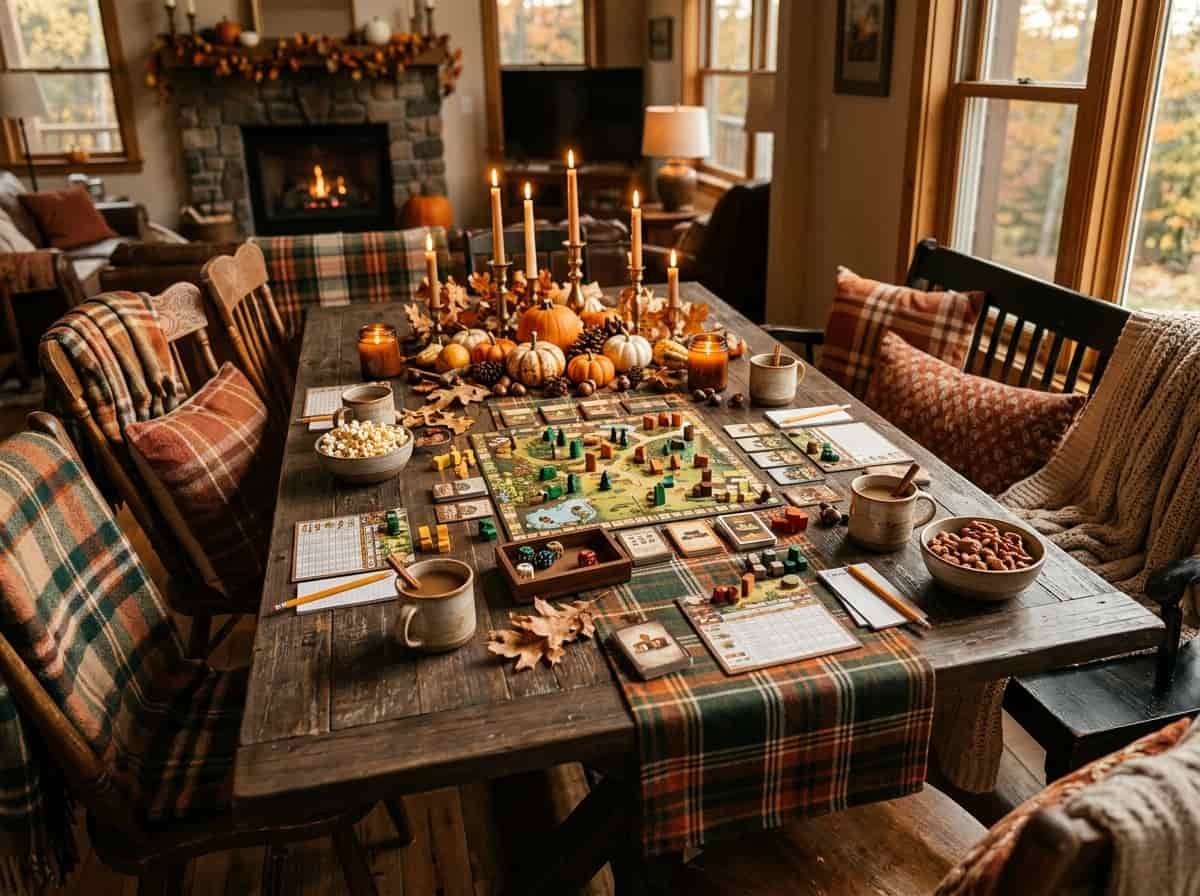
You set out a few mini pumpkins, a candle, and a scatter of faux leaves, and then game night starts. Within ten minutes someone has knocked over the candle, the leaves are stuck to the cards, and half the decor ends up in a pile on the sideboard. Pretty and playable don’t always get along.
The fix isn’t more decor. It’s a better approach. Once you understand how to style a fall game table around the way people actually sit, reach, and play, the whole thing comes together without fuss, and it still looks like you planned it.
Why a Layered, Low-Profile Look Works
A game table is a working surface first and a display second. That’s the principle behind everything in this article: decor should frame the play, not compete with it.
When you keep the center and edges flexible, you get a table that feels styled before the game and still functions during it. Think of it like dressing a stage. The set looks great, but the actors still need room to move.
This is why low, layered pieces beat tall, fragile ones. Texture does the heavy lifting, so you don’t need many objects to make the space feel like autumn.
Start With the Surface
Everything else sits on top of your base, so begin there. Before you add a single pumpkin, decide what the table surface is going to be.
| Item | What to Look For | Why It Works |
|---|---|---|
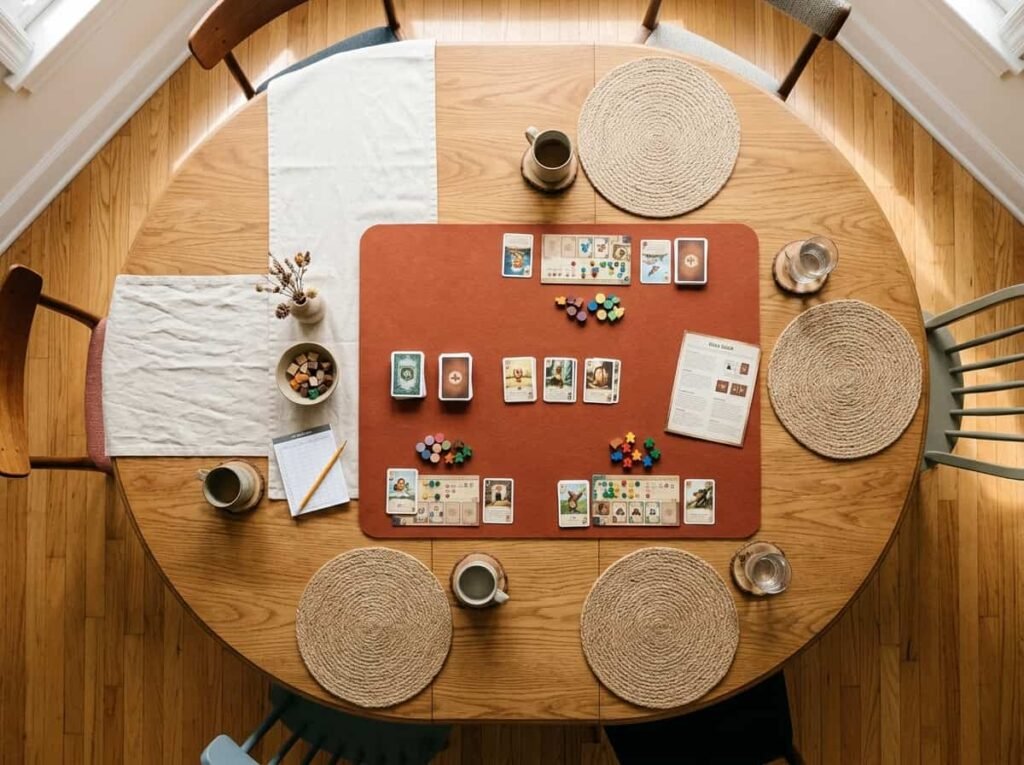
| Table runner | Linen, cotton, or burlap in a muted tone | Adds texture without covering the whole playing area |
| Felt or game mat | A solid color like rust, forest green, or deep brown | Protects the table and gives cards and dice a smooth surface |
| Placemats | Woven or leather-look, one per player | Defines each person’s space and keeps drinks off the board |
| Coasters | Wood, stone, or ceramic | Practical, and they quietly carry your fall palette |
Pro Tip: Lay your runner down the middle only if the game doesn’t need that space. For card games, run it along one side instead so players aren’t dealing onto fabric.
Color and Placement: Update the Old Rules
Fall doesn’t have to mean a wall of orange. Some of the old styling habits are exactly what make a game table feel cluttered.
| Old Rule | What Works Better Now |
|---|---|
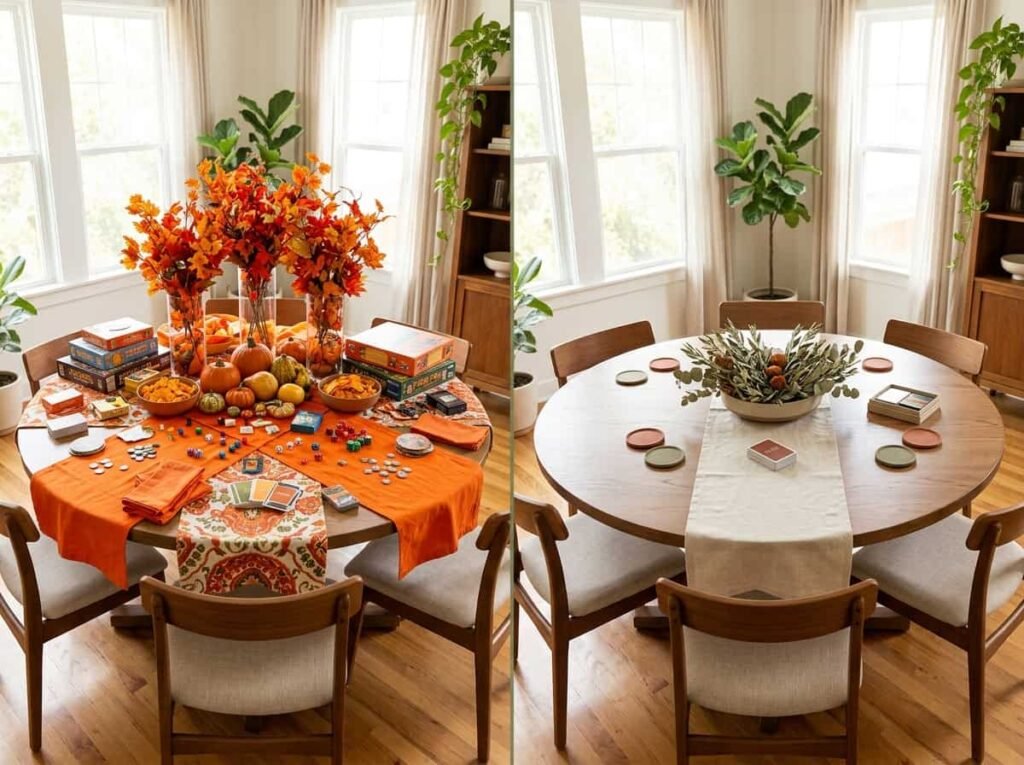
| Fill the center with a big centerpiece | Keep the center clear and use a low cluster to one side |
| Stick to bright orange and yellow | Mix muted rust, olive, cream, and deep brown |
| Match everything exactly | Repeat one or two colors in different textures |
| Use real candles everywhere | Use flameless candles near cards, paper, and elbows |
| Decorate every surface | Style the table and one nearby spot, like a shelf or console |
If you want more ideas for arranging pieces so everyone can still see each other across the table, these table centerpiece ideas show how to build a low, layered look that works just as well in autumn.
Balance Cozy Textures With a Playable Layout
The sweet spot is where soft meets practical. Soft things, like knit throws, wool, and plush cushions, make a room feel warm. Practical things, like hard coasters, trays, and bowls, keep the game moving.
Try this split: put the soft elements around the table, and keep the hard, functional ones on it. Drape a chunky knit blanket over a chair back, add a sheepskin to a bench, and tuck a pillow into a corner seat. Then keep the table itself uncluttered, with just a tray for snacks, a bowl for dice or tokens, and a few small touches.
That way, the cozy autumn table feels welcoming the second someone walks in, and nobody has to move a throw blanket off the Scrabble tiles.
Give One Element Permission to Stand Out
Here’s the rule I give every client: pick one star. If everything is decorative, nothing is. Choose a single piece to be the focal point, and let the rest support it quietly.
Your star could be:
- A small cluster of three pumpkins in different sizes and finishes
- A wooden tray with a candle and a few dried stems
- A bowl of pinecones or acorns in the center
- A single bold-colored runner
Once you’ve picked, hold back everywhere else. Keep supporting items neutral, and the star will look intentional instead of lost.
Keep It From Feeling Like a Craft Store Exploded
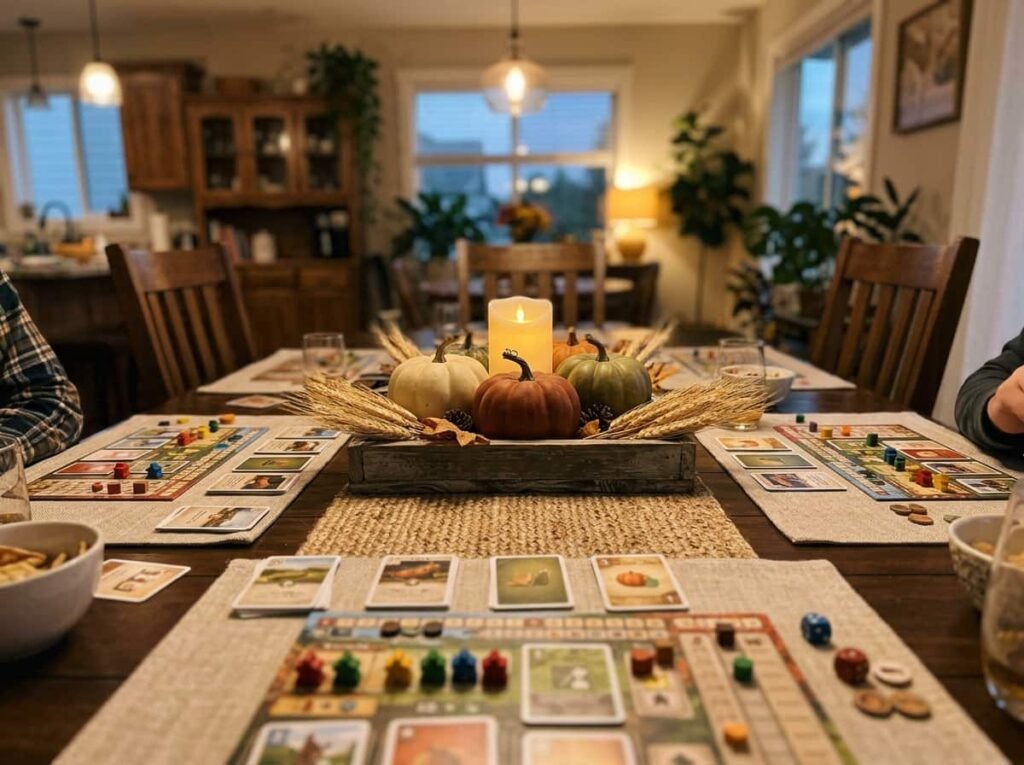
Fall decor piles up fast. If your table starts to feel crowded, use these quick swaps:
- If it feels too busy, try removing half the pieces and keeping only the ones in your main two colors.
- If it feels too orange, try swapping a few accents for cream, brown, or sage green.
- If it feels too themed, try replacing novelty items with natural ones like gourds, branches, or wood.
- If it feels too tall, try lowering everything under about eye level when seated.
- If it feels too fussy to play on, try moving the decor to a tray you can lift off in one go.
Build Your Own Repeatable Formula
Once you have a formula, you never have to start from scratch. Here’s the simple one I rely on: base + one focal piece + a finishing touch.
| Situation | Formula | Why It Works |
|---|---|---|
| Family game night | Felt mat + mini pumpkin trio + snack tray | Kid-friendly, sturdy, and easy to clear |
| Card night with friends | Linen runner on one side + flameless candles + wooden coasters | Leaves the center free for dealing |
| Board game afternoon | Placemats + low gourd bowl + knit throw on chairs | Cozy without crowding the board |
| Puzzle weekend | Neutral tablecloth + tray of dried stems + warm lamp nearby | Soft light and zero clutter on the puzzle |
| Hosting a small party | Runner + candle cluster + one seasonal accent per seat | Looks styled, still plays well |
Swap the pieces however you like. As long as you keep the structure, the table will look balanced every time.
Make It Softer and Easier
If styling feels like too much, strip it back. You don’t need a full setup to get the autumn feeling.
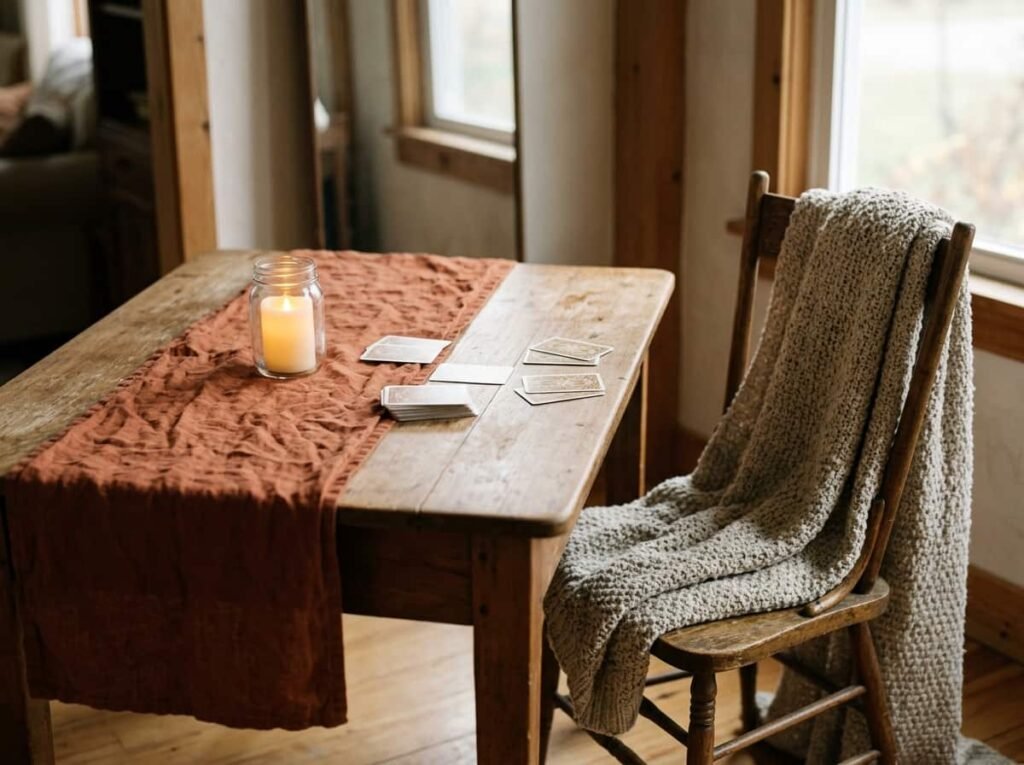
Try just two things: a warm-toned runner and one candle (flameless, if you’re playing cards). Add a throw blanket over one chair, and you’re done. It takes five minutes, and it still reads as a thoughtful fall game table.
Beginner Note: If you’re unsure where to start, choose one color from your existing decor, like rust or cream, and buy or pull out only pieces in that shade. A limited palette makes everything look like it belongs together.
The Budget Version
You don’t need to spend much to style a fall game table. Most of the best pieces are cheap, natural, or already in your home.
- Use real gourds, pinecones, and branches from outside
- Repurpose baskets, trays, and bowls you already own
- Make a few simple accents using dollar store crafts that look more expensive than they are
- Follow a DIY decor on a budget approach: stick to a tight palette and let texture do the work
When everything shares a color story, even the cheapest pieces look curated. That’s the real secret behind good fall game table decor, whatever your budget.
FAQ
What is a fall game table setup?
A fall game table setup is a game or dining table styled with autumn colors, textures, and small seasonal pieces, while still leaving enough room to play. It balances decor with function so the table looks good and works well.
Can beginners style a game table without it looking messy?
Yes. Start with one base layer, like a runner or felt mat, and one focal piece. Stop there. Fewer items almost always look better than more, especially when you’re just learning.
How do I make the centerpiece work better during games?
Keep it low and move it to one side or onto a lift-off tray. That way, nobody’s view is blocked, and you can clear it in seconds when the game needs the whole table.
Do I need expensive decor to make this work?
No. Natural items like gourds, pinecones, and branches, plus a few textiles you already own, are all you need. A consistent color palette matters far more than the price tag.
How do I decorate without making the table unusable?
Think in zones. Put decor on the edges, in the center on a movable tray, or on nearby surfaces, and keep the main playing area open. Use flameless candles around cards and paper to avoid accidents.
Final Thoughts
The best fall game table isn’t the most decorated one. It’s the one that feels warm when you walk in and still works when the dice start rolling.
Today, pick one base layer and one focal piece, set them on your table, and then play a round before adding anything else. You’ll know right away what stays and what goes.