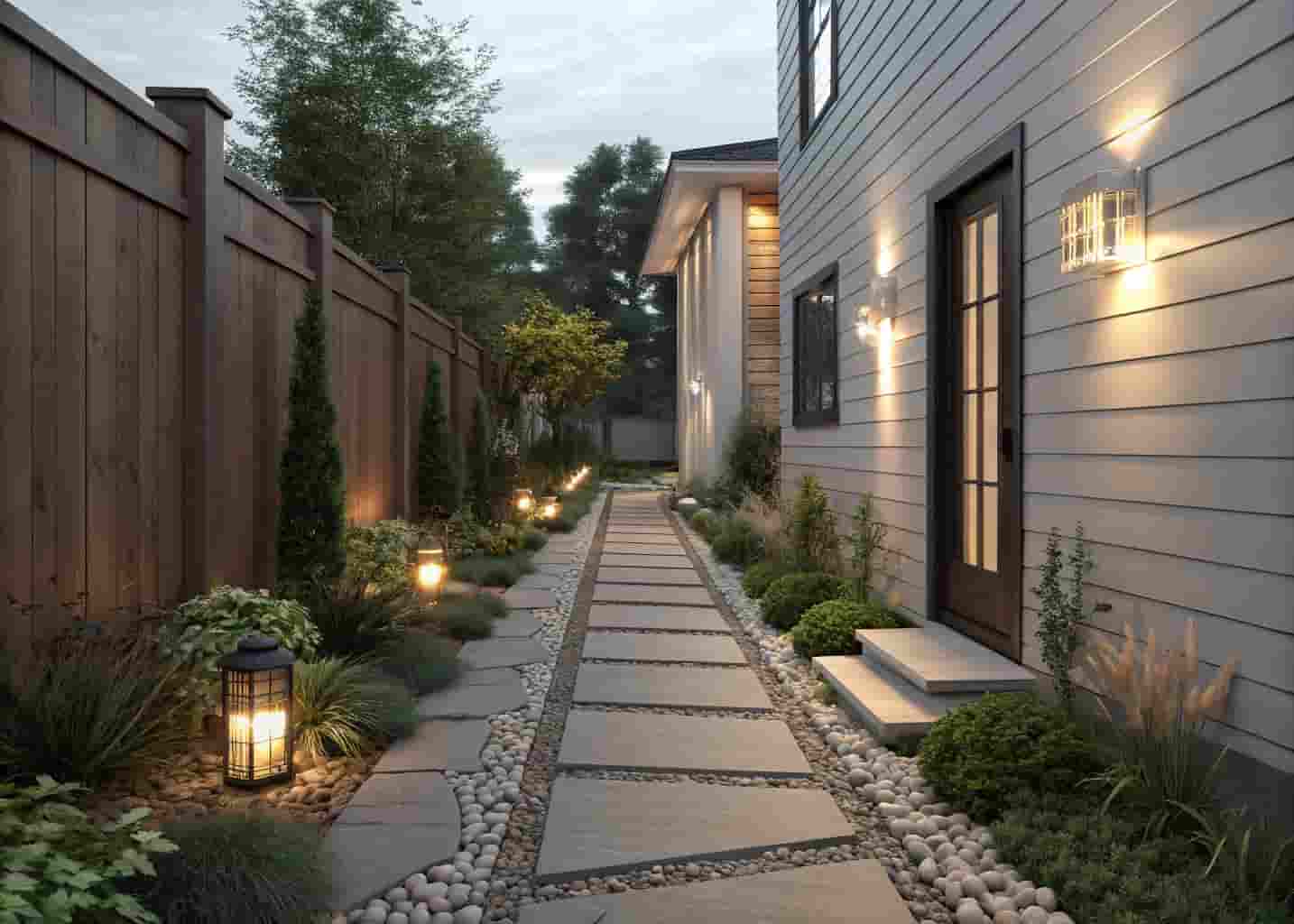
That skinny strip of land running along the Side House Walkway? Most people ignore it. They let it turn into a muddy mess, a gravel dump, or just dead grass that nobody ever walks on. But honestly, the side house walkway is one of the most underused spaces in the entire yard — and when you give it a little love, it can become something genuinely stunning. I transformed the side path at my own place a couple of years ago, and now it’s one of my favorite parts of the whole property. Guests always comment on it. It doesn’t take a huge budget or a landscaping degree. It just takes some inspiration and a solid plan. These 16 ideas will help you turn that forgotten strip into a beautiful, functional walkway you’ll actually enjoy every single day.
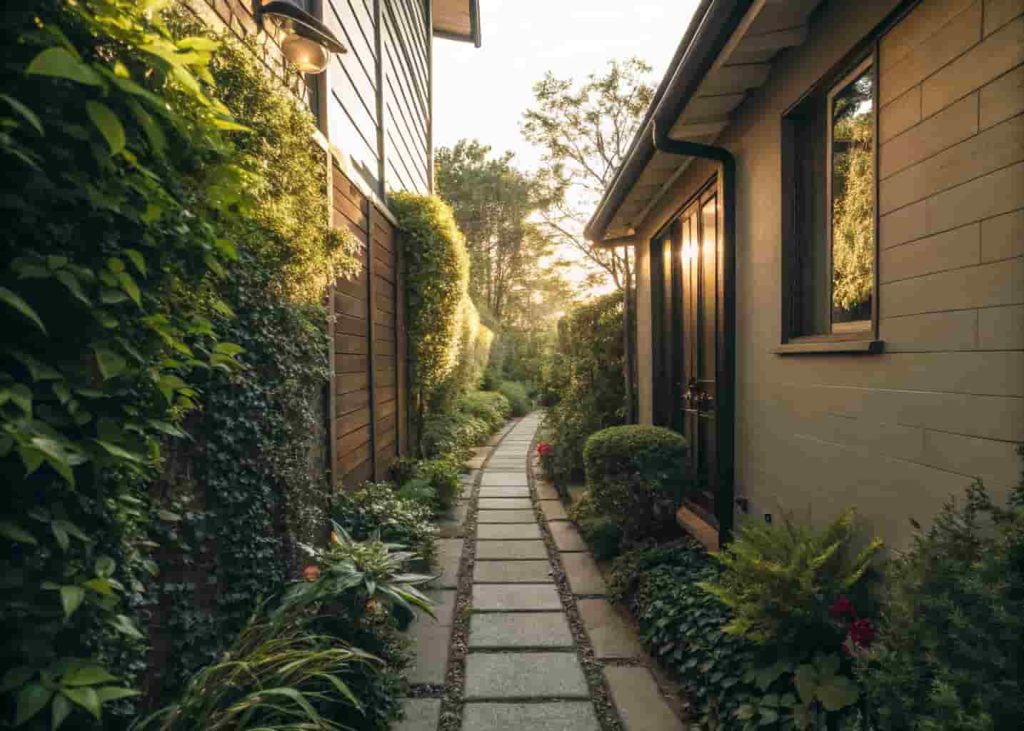
1. Flagstone Pavers With Creeping Thyme Between the Gaps
Flagstone is one of those materials that never goes out of style, and it works especially well in tight spaces. The irregular shapes fit together like a puzzle, and the natural gray and tan tones look warm and organic rather than stiff or formal. What really takes it to the next level is planting creeping thyme in the joints between the stones. This low-growing ground cover spreads slowly, fills in those gaps with tiny green leaves, and when you step on it, it releases the most amazing herby scent. It stays short, handles foot traffic reasonably well, and blooms with little purple flowers in late spring. The combination of rustic stone and soft greenery makes even a very narrow side house walkway feel intentional and well-designed. It’s a path that looks like it took years to develop naturally.
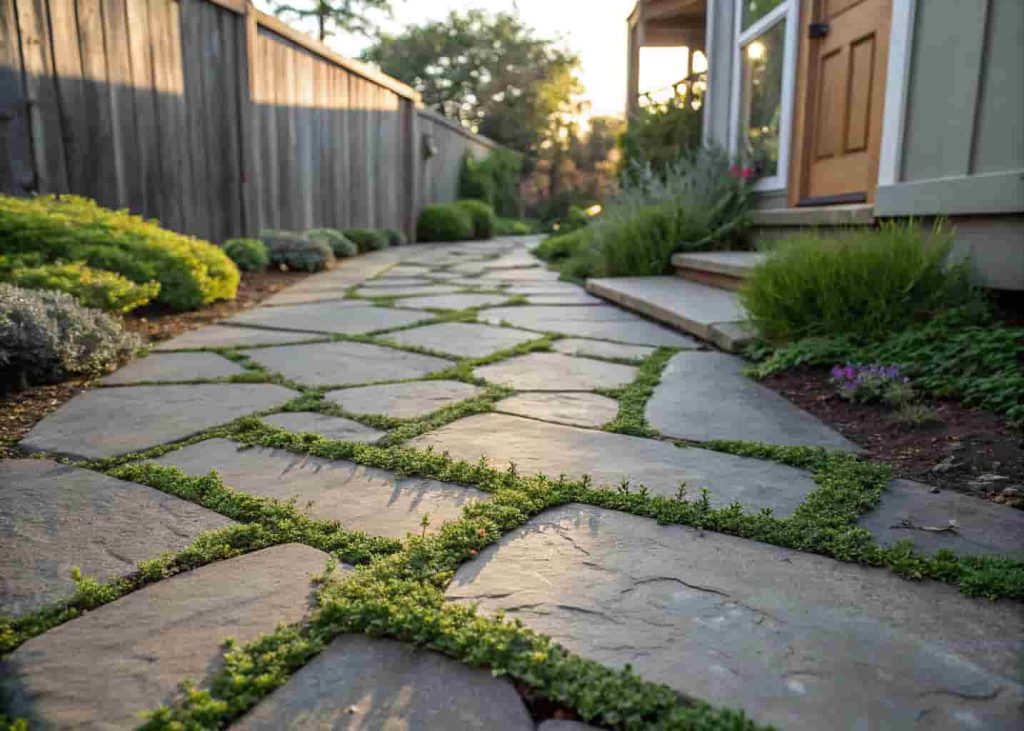
2. Gravel Path With Clean Steel Edging
Gravel paths have this relaxed, cottage-garden energy that works really well in side yards. The key to making gravel look polished instead of messy is the edging. Without it, gravel migrates everywhere — into your flower beds, onto the lawn, all over your shoes. But when you install clean steel or Corten edging on both sides of the path, something magical happens. The lines get crisp, the gravel stays put, and the whole thing looks deliberate and designed. Use pea gravel or crushed granite for the best walking surface — they compact slightly underfoot and don’t shift around too much. Add a weed barrier underneath before laying the gravel and you’ll save yourself hours of weeding every season. This is one of the most budget-friendly side house walkway options out there, and it installs in a weekend.
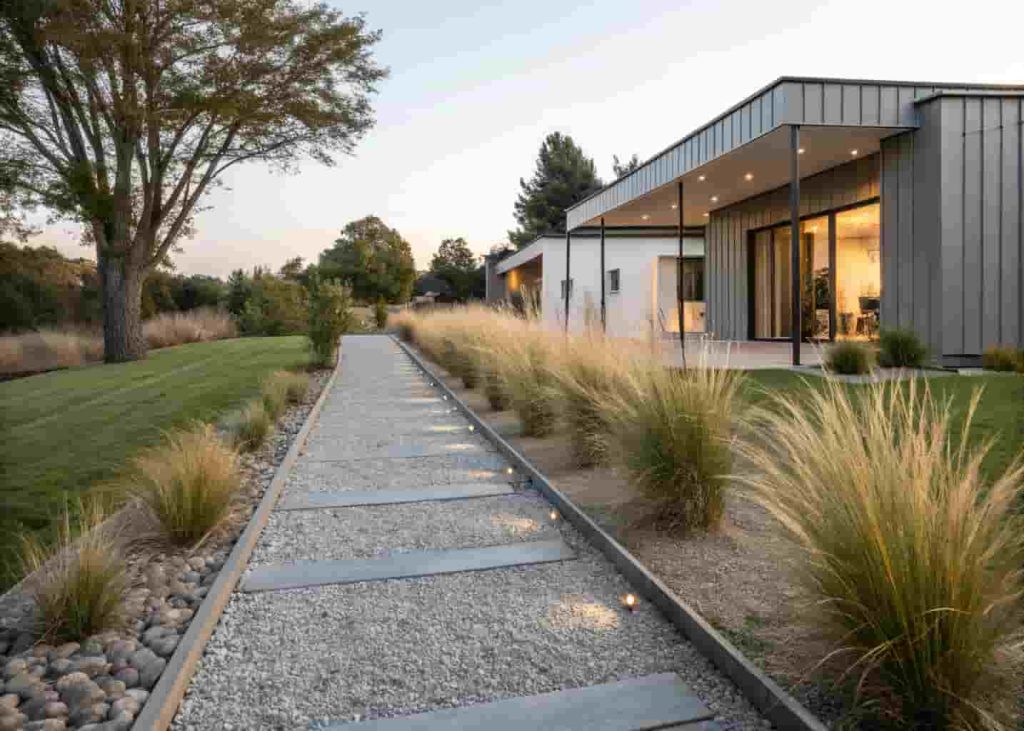
3. Brick Herringbone Pattern for Classic Charm
There’s something about a brick herringbone walkway that feels timeless. Maybe it’s the pattern — those bricks laid at 45-degree angles create a visual rhythm that draws your eye forward down the path. Maybe it’s the warm red and orange tones that glow in afternoon sunlight. Either way, it’s a classic look that suits traditional homes beautifully and adds serious curb appeal even to the parts of the house most people never see. You can use reclaimed bricks for an aged, storied look, or go with new clay bricks for clean, uniform lines. The herringbone pattern is slightly more work to lay than a simple running bond, but the result is worth every extra minute. Line both sides with low boxwood hedges or lavender and you have a side house walkway that looks like it belongs in an English garden.
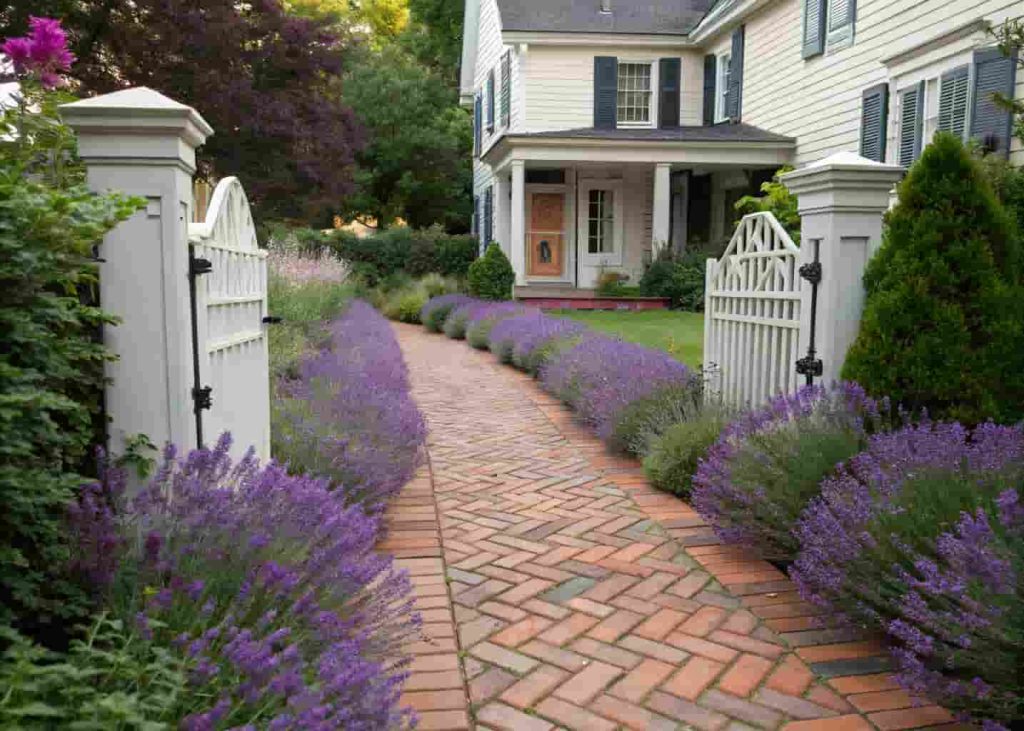
4. Wooden Sleeper Steps With Pebble Fill
If your side yard has even a slight slope, wooden sleeper steps are an incredibly practical and beautiful solution. These are thick, chunky pieces of timber — often reclaimed railway sleepers — laid horizontally across the path to create low, wide steps. Between each sleeper, you fill the space with smooth river pebbles or decorative gravel. The contrast between the dark, weathered wood and the light pebbles is really striking. It has a Japanese garden kind of feel — calm, structured, intentional. The sleepers anchor the path on sloped ground and prevent soil erosion, which is a real practical benefit beyond just looks. Make sure to use hardwood sleepers rated for ground contact so they last for years without rotting. This style works especially well on the side house walkway of older homes with more character and natural surroundings.
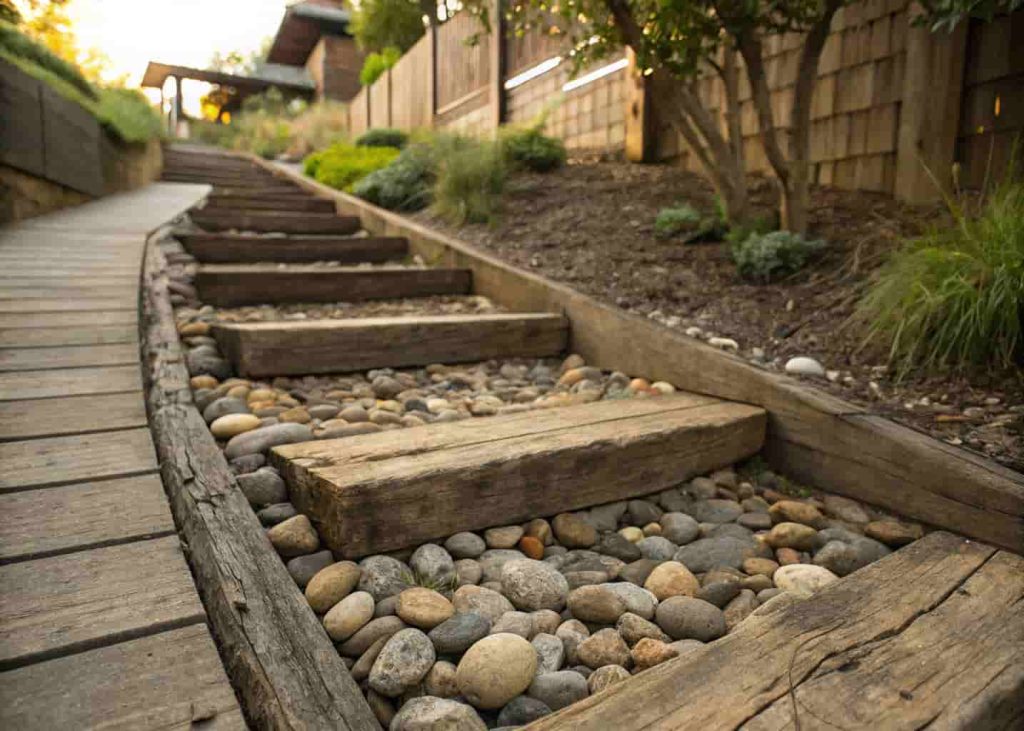
5. Concrete Stepping Stones With Moss Edges
This one has a dreamy, fairy-tale quality that I absolutely love. Large round or square concrete stepping stones are spaced evenly down the path, and over time — or with a little encouragement — moss grows around the edges and in the gaps between them. To speed up the process, you can actually paint a moss slurry (blended moss mixed with buttermilk) onto the concrete surface and it colonizes surprisingly quickly in shady, moist conditions. The result is a path that looks ancient and magical, like something you’d find in a secret garden. It suits the side house walkway of homes surrounded by mature trees or shaded by fences, where grass refuses to grow and the ground stays damp. Add a few ferns alongside the path and the whole scene comes together beautifully.
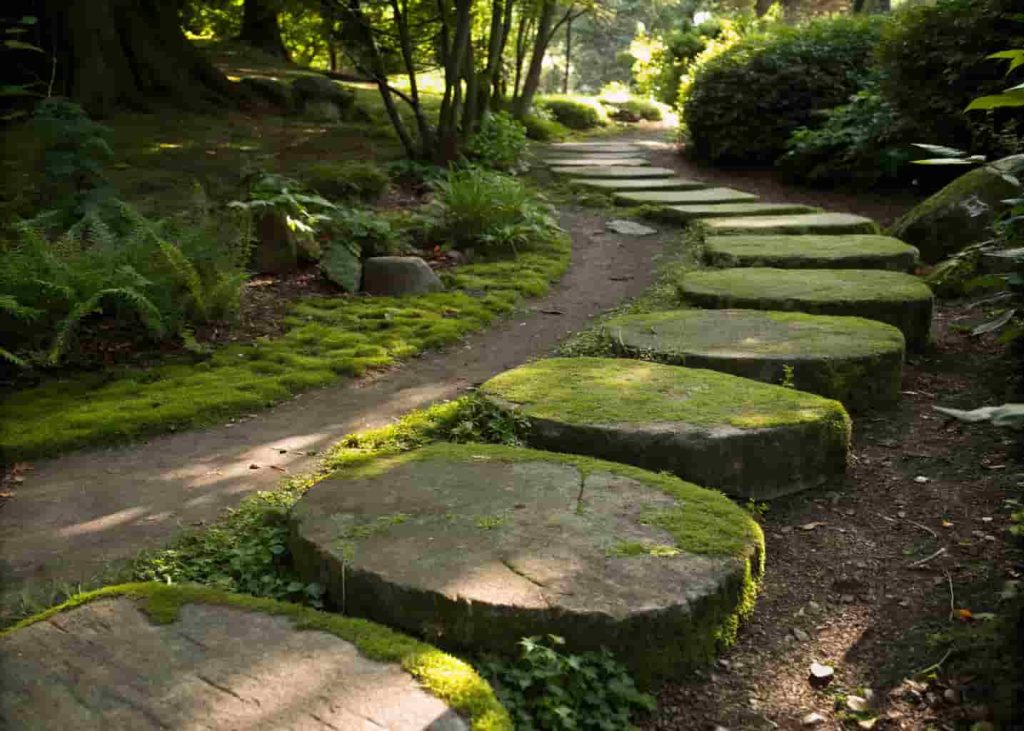
6. Narrow Raised Planter Beds Flanking the Path
When you build narrow raised planter beds on either side of your side house walkway, you accomplish two things at once — you define the path clearly, and you gain valuable growing space in an area that would otherwise just be empty. These raised beds don’t need to be wide. Even 12 to 18 inches is enough to grow herbs, strawberries, low ornamental shrubs, or cascading flowers like petunias and lobelia. Build them from cedar, treated pine, or even stacked brick, and fill them with good quality garden soil. The height of the beds adds structure and a sense of enclosure that makes the path feel more like a garden room and less like a forgotten side strip. I’ve seen this done with simple wooden boards painted white and the effect is genuinely lovely — clean, productive, and welcoming.
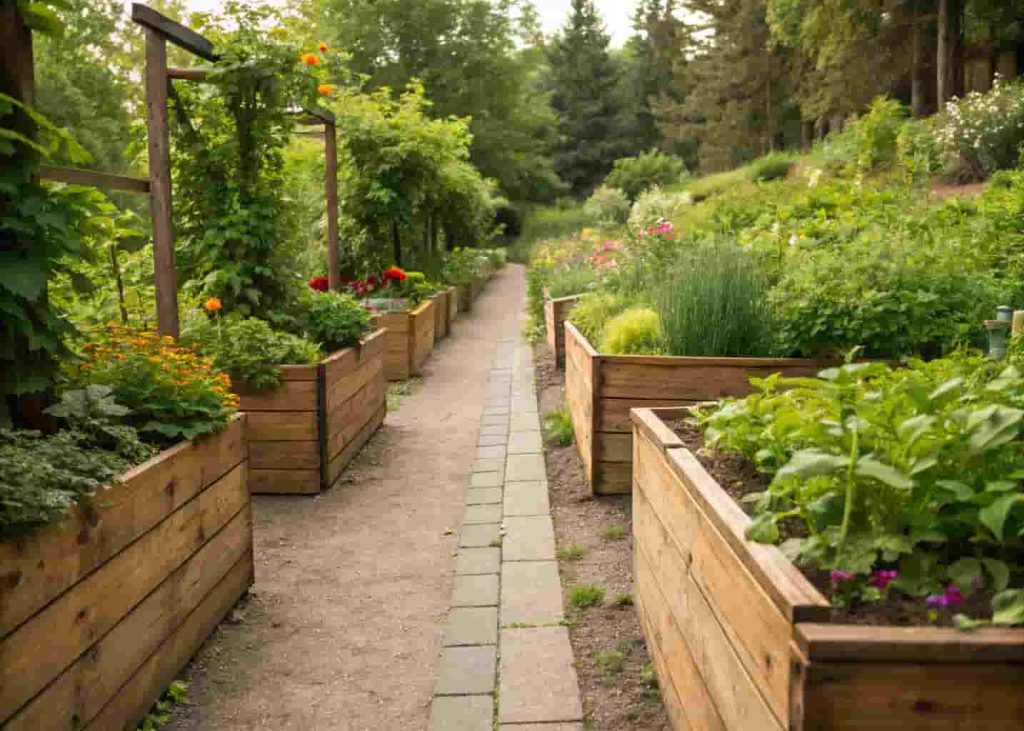
7. Pergola Tunnel Over the Walkway
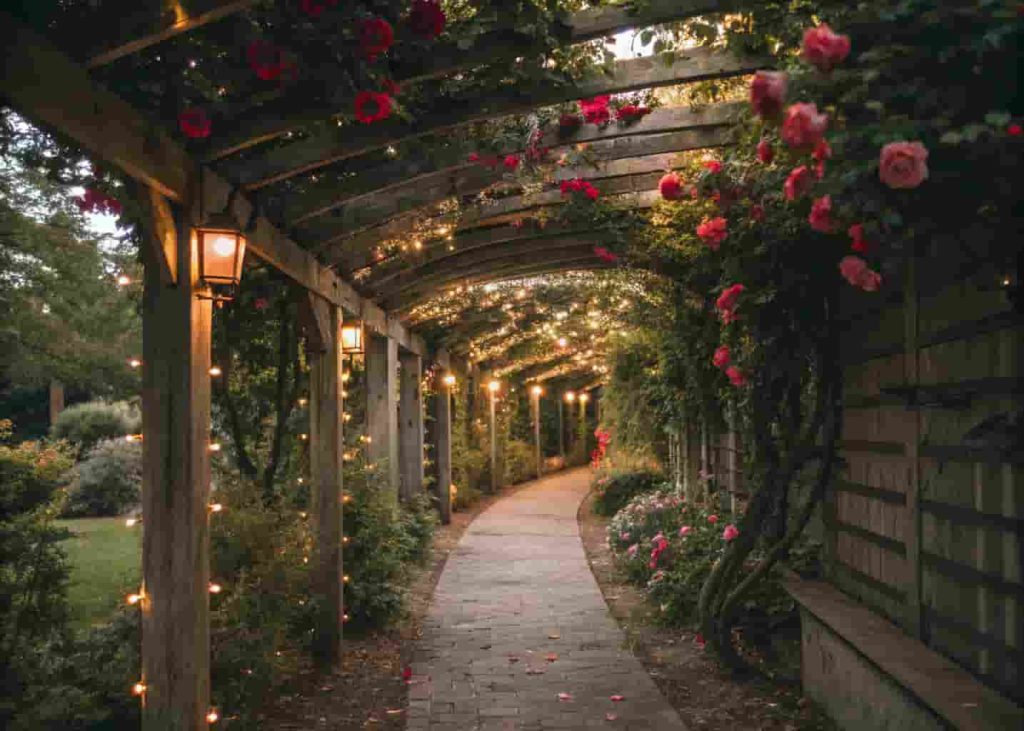
A pergola tunnel transforms your side house walkway from a simple path into an experience. Imagine walking through a series of wooden arches draped with climbing roses, wisteria, or jasmine. The scent alone is worth it. Building a simple pergola tunnel doesn’t require advanced carpentry skills — there are plenty of DIY arch kits available, and evenly spaced arches about 4 to 6 feet apart create that satisfying tunnel effect. Train climbing plants up the sides from the very first season and within two or three years, you’ll have a lush, green overhead canopy that blooms beautifully. This works on walkways as narrow as 3 feet wide and adds vertical height that makes the space feel larger. Light some solar fairy lights along the top for evenings and you have something genuinely enchanting.
8. Decomposed Granite With Stepping Stone Accents
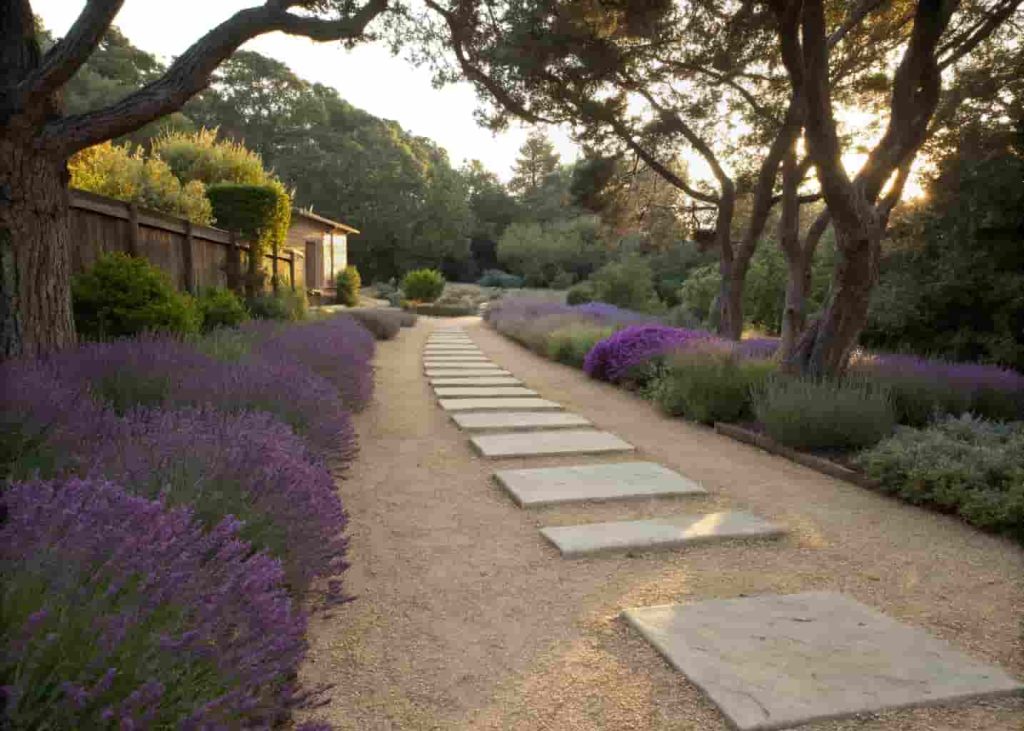
Decomposed granite — often called DG — is a fantastic material for side yard paths. It compacts firmly underfoot, drains well, and has a warm, sandy color that looks great alongside plants. On its own it makes a perfectly functional path. But add a few large stepping stones spaced through the middle and it becomes something more visually interesting. The contrast of solid stone against the fine-textured granite gives the eye something to follow, creates natural pacing as you walk, and breaks up what could otherwise feel like a plain gravel strip. Use larger format pavers like 18-inch or 24-inch squares for the best effect. Edge the whole path with landscape timber or metal edging to keep the DG from spreading. This combo works especially well with drought-tolerant planting like lavender, rosemary, and ornamental grasses on either side.
9. Black and White Pebble Mosaic Path
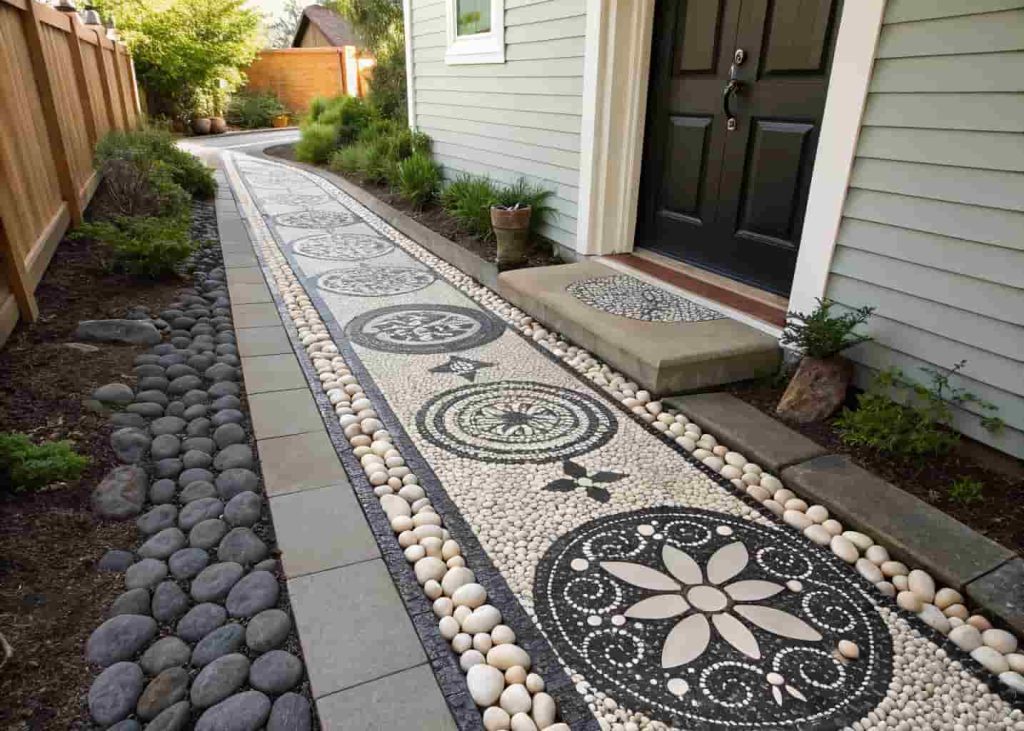
If you love handcrafted, artsy details, a pebble mosaic path is one of the most rewarding DIY projects you can tackle. Using black and white river pebbles, you can create geometric patterns, flowing waves, or even simple designs like spirals or leaf shapes directly in a mortar bed. The scale of a side house walkway is actually perfect for this kind of project — it’s manageable enough to complete yourself over a weekend or two, and the result is completely one-of-a-kind. No two pebble mosaic paths ever look exactly the same. A classic black and white checkerboard or diamond pattern is stunning and easier to plan than it looks. The finished surface is durable, slip-resistant, and incredibly low-maintenance. It also photographs beautifully, which is a nice bonus if you love sharing your garden online.
10. Lush Fern and Shade Plant Borders
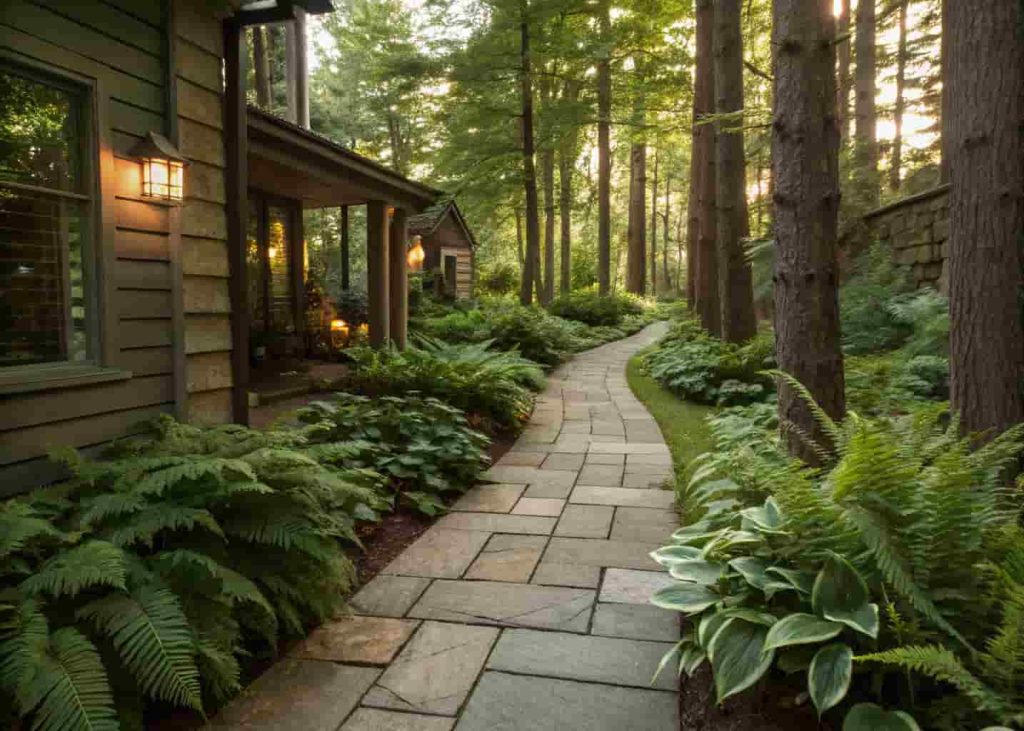
Sometimes the walkway material itself is secondary to the planting around it. If your side yard is heavily shaded — and many are, sitting between the house and a fence or wall — then leaning into that shade and creating lush fern borders is a stunning approach. Lay down simple concrete pavers or even smooth stepping stones, then plant the borders generously with ferns, hostas, astilbe, and hellebores. These plants love the low-light conditions that most other plants struggle in, and they create dense, layered greenery that makes the path feel like walking through a woodland. Ferns in particular have beautiful texture — those arching fronds sway gently in the breeze and give the path a soft, living quality that no hardscape alone can achieve. This is the side house walkway style for people who genuinely love plants.
11. Painted Concrete With Stencil Patterns
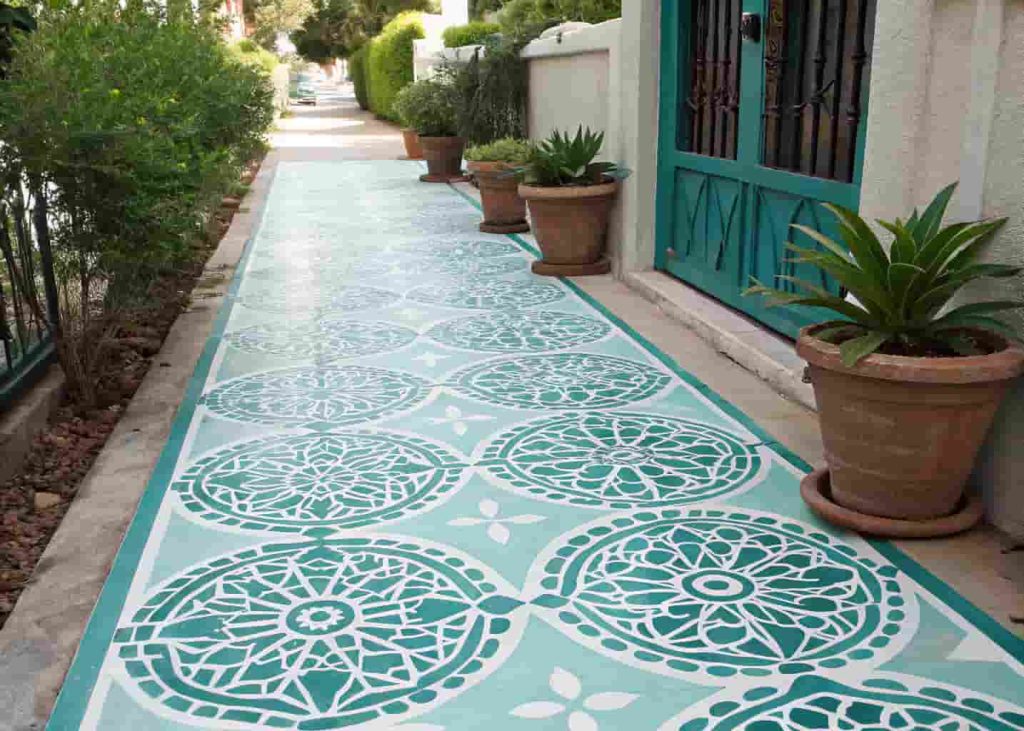
Here’s an idea that doesn’t get nearly enough attention — painted and stenciled concrete. If you already have a plain concrete side house walkway and the budget for a full renovation isn’t there right now, this approach is genuinely transformative at a fraction of the cost. Concrete patio paint comes in dozens of colors, and a good stencil can turn a flat gray slab into something that looks like Moroccan tile, geometric patterning, or even faux stone. Use exterior-grade paint and seal the finished surface with a clear concrete sealer so it holds up through rain, sun, and foot traffic. Deep teal and white, terracotta and cream, or classic black and white are all color combinations that photograph beautifully and elevate the whole side of the house. Add potted plants in matching tones along the edges and you’ve created something really special.
12. Japanese Zen Gravel With Bamboo Accents
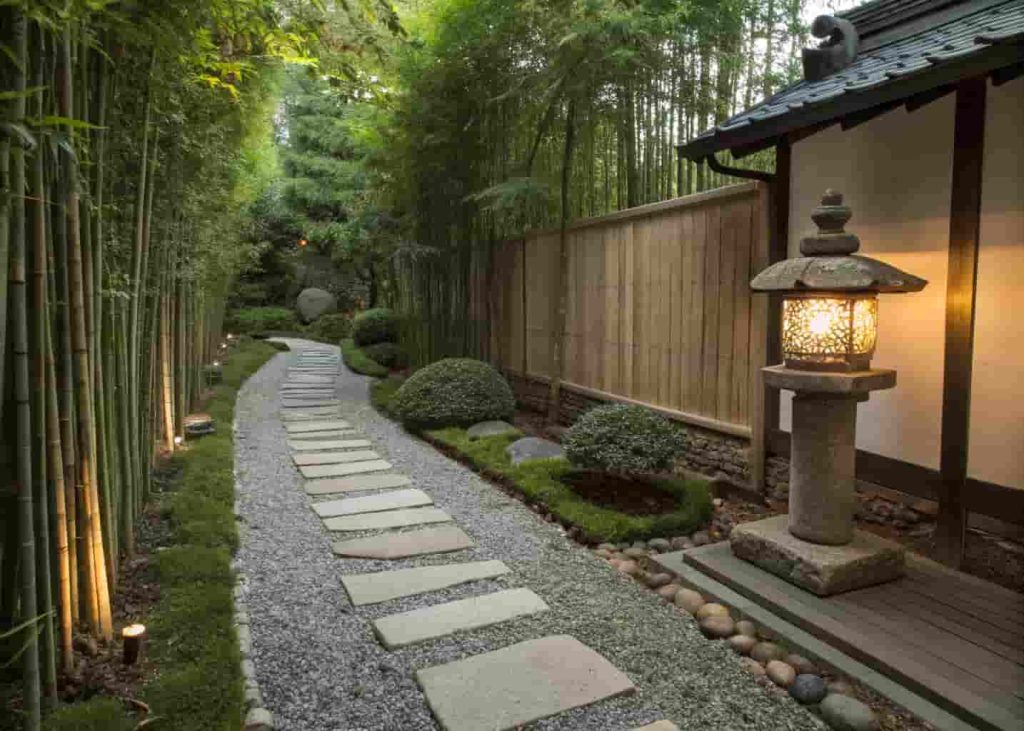
A Zen-inspired side house walkway is all about simplicity, intentionality, and calm. Raked white or pale gray gravel forms the base of the path. Simple flat stepping stones — ideally dark granite or slate — are placed with careful spacing. On the borders, clumping bamboo varieties (always use clumping, never running bamboo near the house) grow in tall, graceful columns that add height and privacy at the same time. Add a simple bamboo fence panel along the boundary wall and a stone lantern near the entrance of the path and the whole composition becomes cohesive and serene. This style is especially wonderful for homes where the side yard is visible from a window, because the view from inside is just as calming and beautiful as the path itself. It’s minimalist, but never boring.
13. Recycled Brick and Wildflower Border Combo
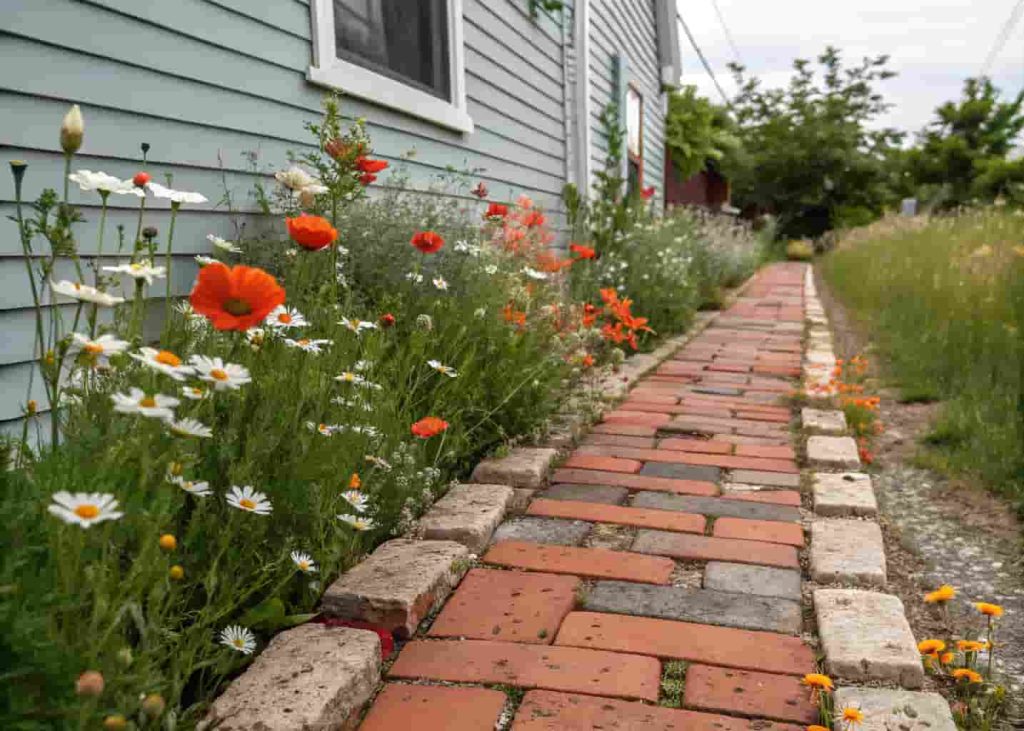
There’s a relaxed, cottage charm to recycled brick paths that feels warm and genuinely lived-in. Old bricks have irregular edges, varied colors, and a weathered texture that new materials can never quite replicate. Lay them in a simple running bond or stack bond pattern with a thin mortar joint, and edge the path with low metal edging to keep things tidy. Then comes the really fun part — plant wildflower seed mixes along both sides. Cornflowers, California poppies, ox-eye daisies, and cosmos are all easy-growing options that bloom in cheerful waves through spring and summer. They attract pollinators, they sway beautifully in the breeze, and they make the path feel like it belongs in the English countryside. This side house walkway style is especially charming photographed in golden hour light when the flowers glow orange and pink.
14. Modern Concrete Planks With Pebble Strips
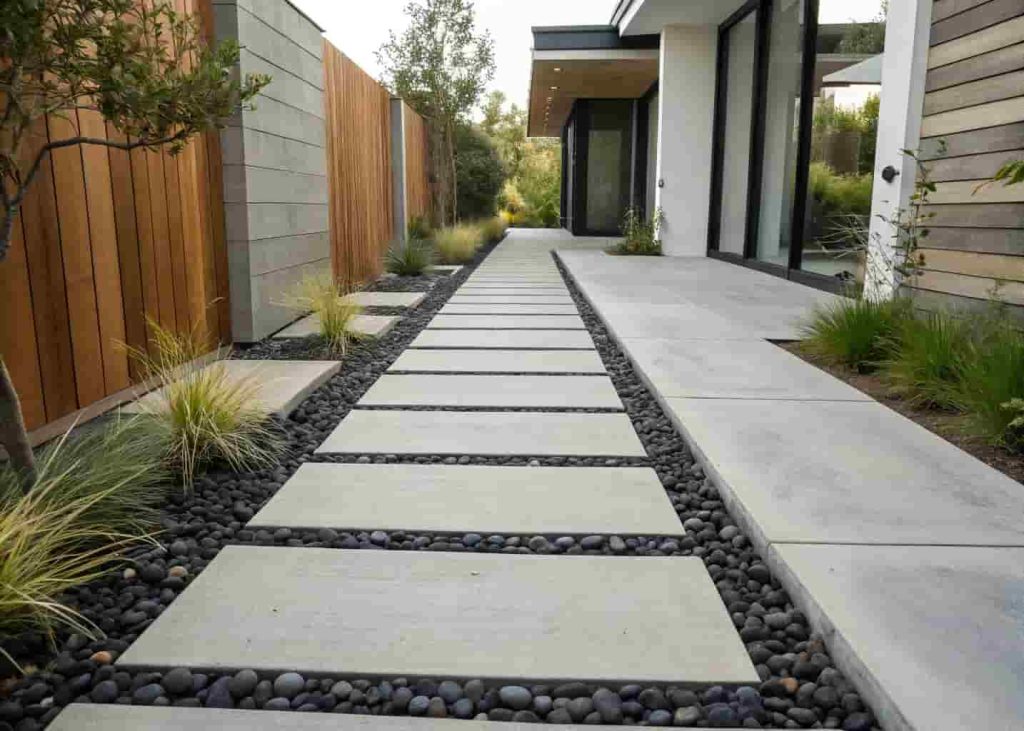
For homes with a modern or contemporary aesthetic, this design approach is clean, sharp, and really beautiful. Long, narrow concrete plank pavers — sometimes called plank pavers or linear pavers — are laid in a straight line down the path with thin strips of smooth black or white pebbles between each plank. The result is a sleek, architectural look that feels intentional and sophisticated. The pebble strips provide drainage, add texture, and break up what would otherwise be a solid gray surface. Pair this style with architectural plants like agave, phormium, or clipped box balls in low square planters at intervals along the path. Even solar-powered ground lights recessed between the planks look stunning at night. This is the side house walkway design for people who love clean lines and a polished, magazine-worthy exterior.
15. Tumbled Cobblestone With Cottage Planting
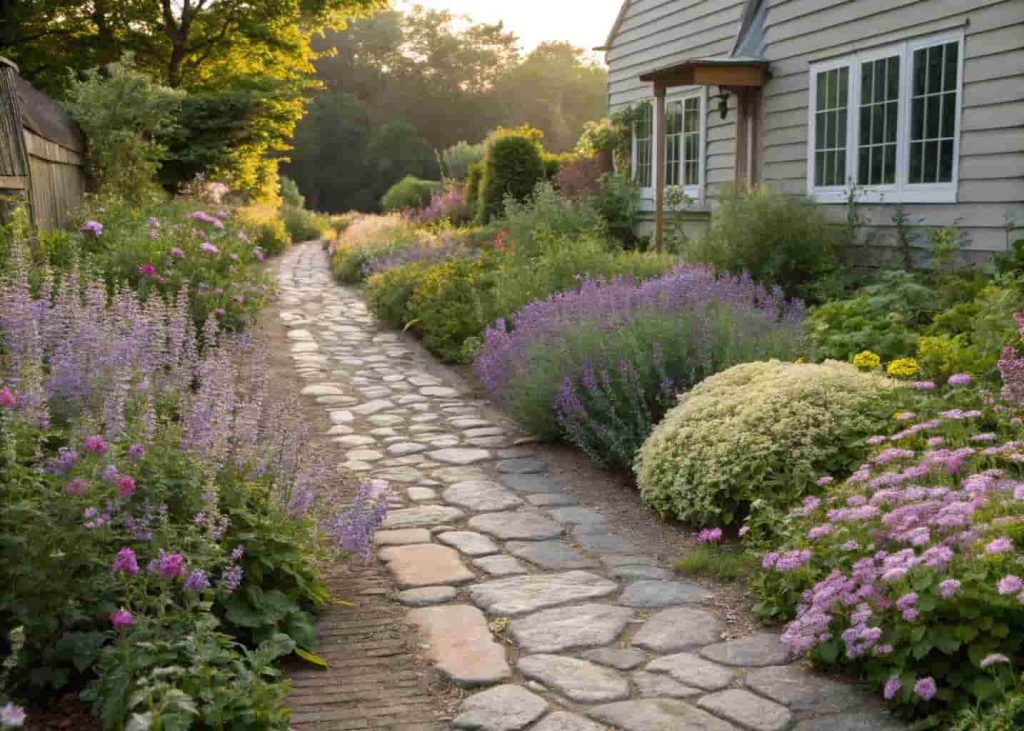
Tumbled cobblestones have a rounded, worn quality that makes them look like they’ve been there for centuries — even when they’re brand new. They come in a range of earthy tones from sandy beige to deep charcoal, and when laid in a simple random pattern, they create a beautifully textured surface that suits cottage and farmhouse-style homes perfectly. Because the surface is naturally uneven, pair it with soft, fluffy planting that softens the edges — catmint, alyssum, lady’s mantle, and low-growing hardy geraniums are all wonderful choices that spill gently over the edges of the path. This is the kind of side house walkway that makes the whole property look like it has history and soul. It’s also very practical — cobblestone handles high foot traffic with ease and weathers gracefully over time without looking tired.
16. Solar-Lit Stepping Stones for Evening Magic
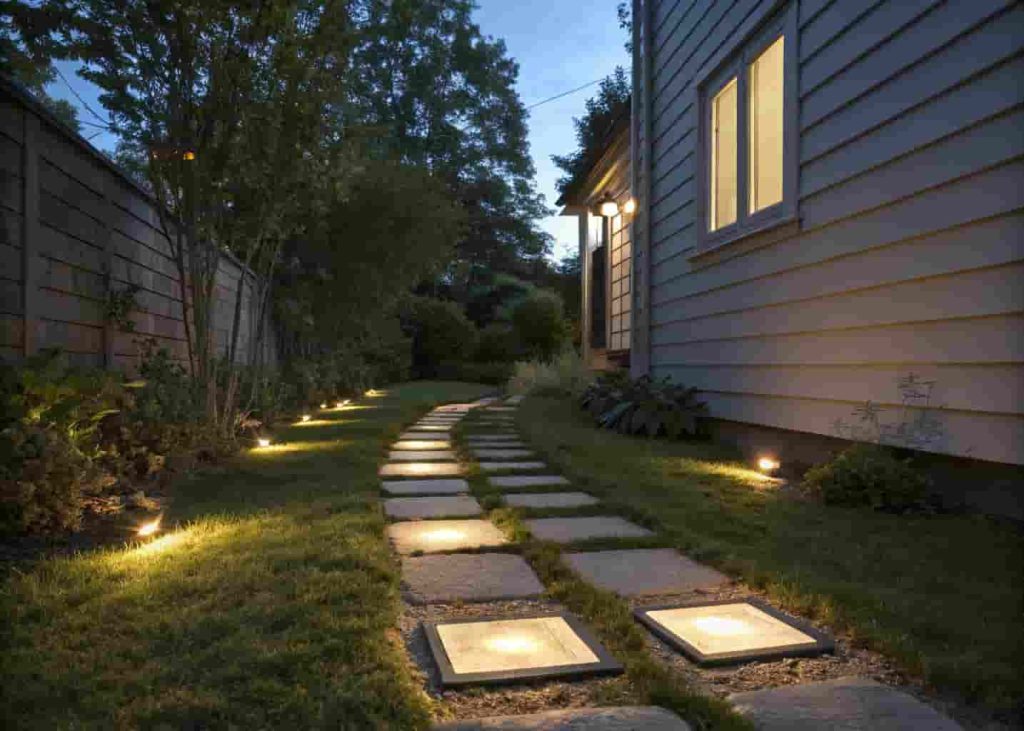
No matter which walkway style you choose, adding lighting takes it to a completely different level after dark. Solar-lit stepping stones are one of the easiest and most affordable ways to do this. These are flat pavers with solar panels embedded on the surface — they charge all day and glow softly through the night without any wiring required. Some have a white glow, others warm amber, and a few even shift colors slowly which creates a really lovely ambiance. Place them at regular intervals through your path so there’s always light underfoot, and add a few solar stake lights in the planting border to illuminate the plants from below. The side house walkway that looked simple and functional in daylight becomes something genuinely magical in the evening hours — softly glowing, inviting, and beautiful in a way that makes the whole house feel more alive.
Conclusion
The side house walkway doesn’t have to be an afterthought. With the right materials, a few plants, and a clear vision, even the narrowest strip of land can become one of the most charming parts of your entire property. Whether you go for the rustic warmth of tumbled cobblestone, the clean lines of modern concrete planks, or the dreamy enchantment of a pergola tunnel draped in roses, there’s a style here that fits your home and your personality. Start with what excites you most. Pick one idea, sketch it out, gather your materials, and just begin. The transformation that happens when you stop ignoring that side strip and start treating it with intention is genuinely remarkable — and completely worth every bit of effort you put in.