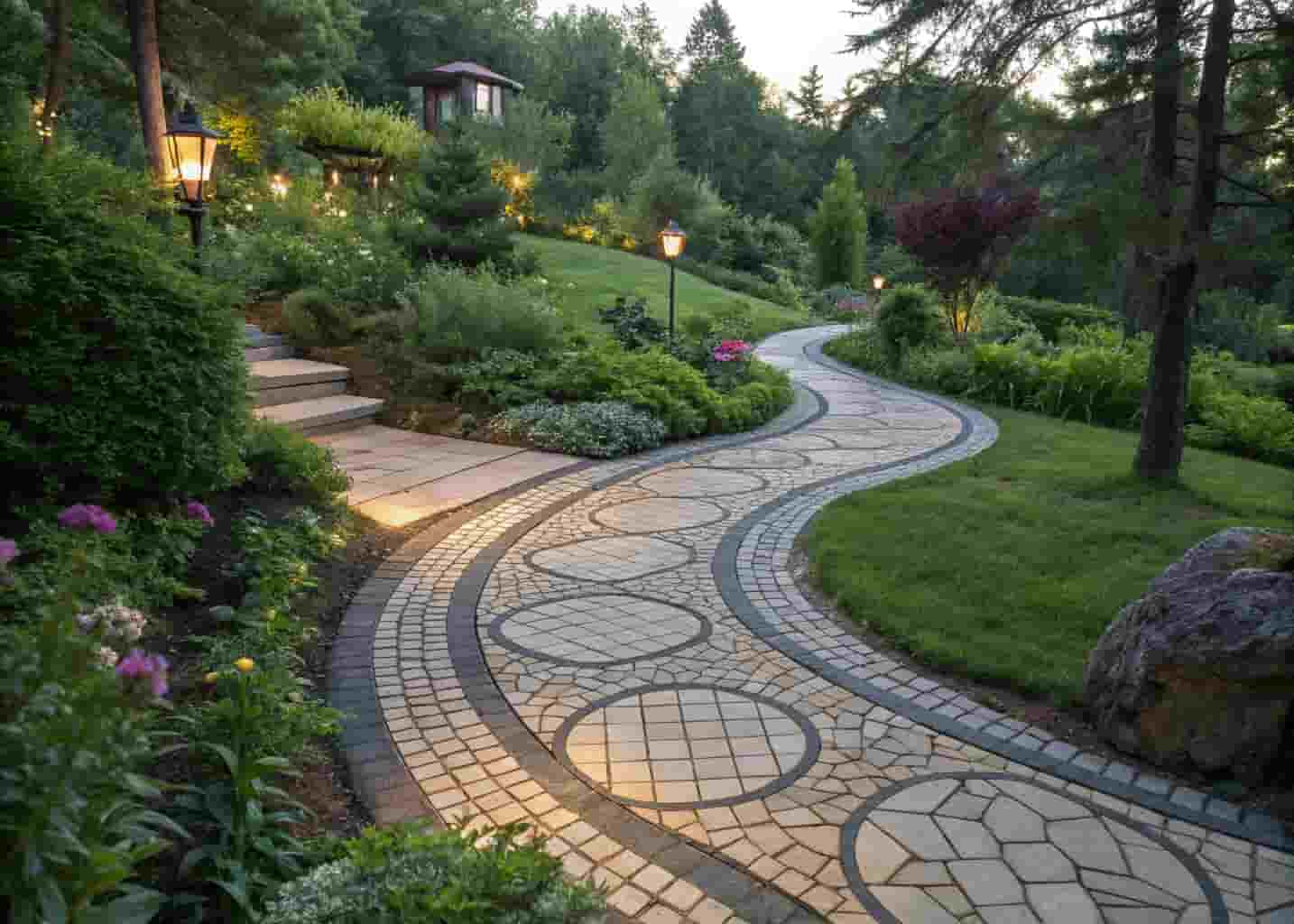
A well-designed Walkway Ideas does much more than just connect two points in your yard. It sets the tone for your entire outdoor space, creates a welcoming first impression, and adds real visual depth to your landscape. Whether you have a small front yard or a sprawling garden, the right walkway can completely transform how your property looks and feels. From classic brick paths to modern stepping stones, there are so many creative options to explore. In this guide, we are covering 14 walkway ideas that bring genuine character to your landscape, along with practical tips to help you choose the right one for your space.
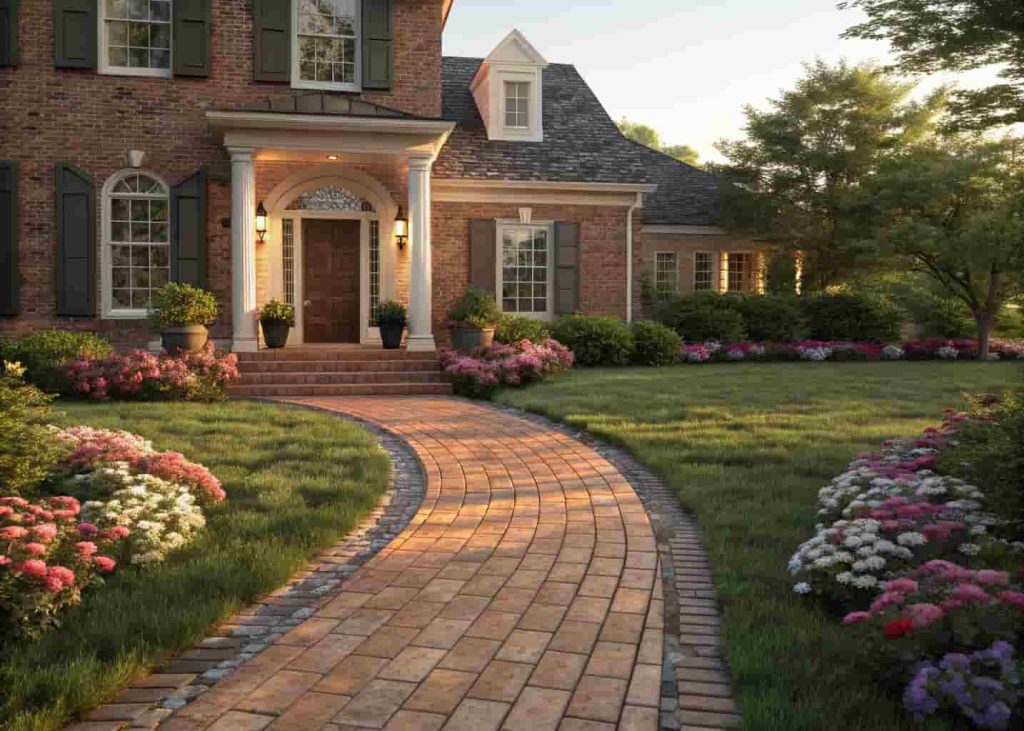
1. Classic Brick Walkway
A classic brick walkway never goes out of style. Brick is one of the most timeless materials you can use for an outdoor path, and it works beautifully with almost every home style — from traditional cottages to modern farmhouses. The warm reddish-brown tones of brick complement green lawns and colorful garden beds incredibly well. You can lay bricks in a straight pattern, a herringbone design, or even a running bond pattern to add visual interest. Brick is also durable and can handle heavy foot traffic for years without showing much wear. With proper edging and a solid sand base, a brick walkway stays level and looks polished all year long.
2. Natural Stone Stepping Stones
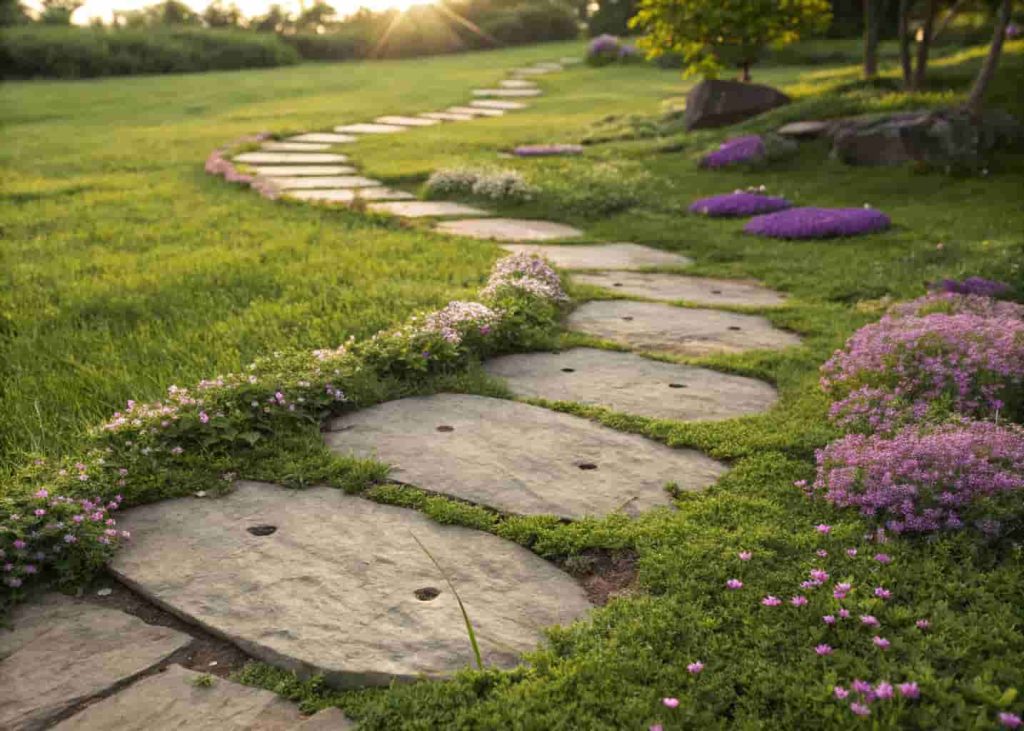
Natural stone stepping stones give your yard an organic, relaxed feel that is hard to replicate with any other material. Large flat stones like flagstone, bluestone, or slate placed at regular intervals through a lawn or garden create a beautiful path that looks like it belongs in the landscape rather than sitting on top of it. The gaps between the stones can be filled with ground cover plants like creeping thyme or moss, which adds even more texture and softness. This is one of the most popular garden walkway ideas because it is relatively affordable, easy to install yourself, and the natural variation in stone color makes every path look completely unique and full of personality.
3. Gravel Path With Clean Edging
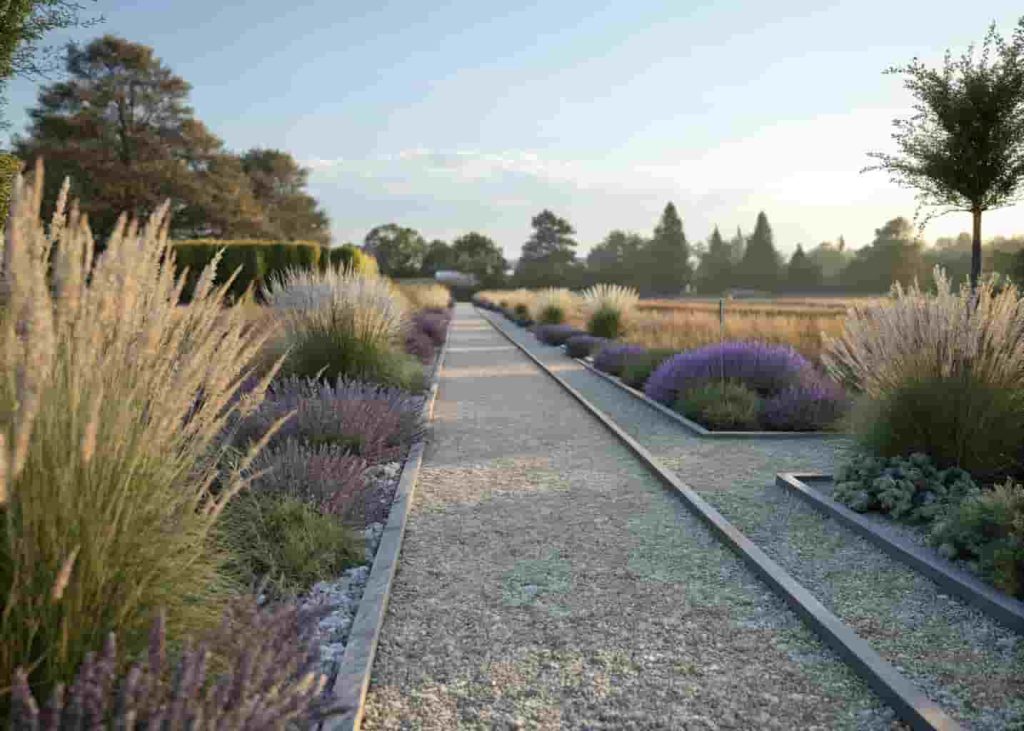
A gravel path is one of the most cost-effective and visually appealing landscape walkway ideas you can choose. Gravel comes in many colors and textures — pea gravel, crushed granite, river rock — so you have plenty of options depending on the look you want. The key to making a gravel path look polished and intentional is pairing it with strong edging. Metal edging, wooden boards, or even brick borders keep the gravel contained and give the path clean, defined lines. Gravel also drains rainwater quickly, which is a big practical bonus. Adding a layer of landscape fabric beneath the gravel helps prevent weeds from pushing through and keeps maintenance very low over time.
4. Concrete Pavers in a Modern Layout
Concrete pavers are incredibly versatile and one of the best options for a modern outdoor walkway. They come in a huge range of shapes, sizes, and finishes — from smooth polished slabs to textured surfaces that mimic natural stone. Large-format rectangular pavers laid in a linear pattern look especially striking in contemporary landscapes. You can mix different sizes to create a more dynamic design, or keep everything uniform for a clean, minimal look. Concrete pavers are strong, frost-resistant, and easy to replace individually if one ever cracks or shifts. They pair beautifully with ornamental grasses, low hedges, and simple garden lighting along the edges to complete the modern landscape walkway feel.
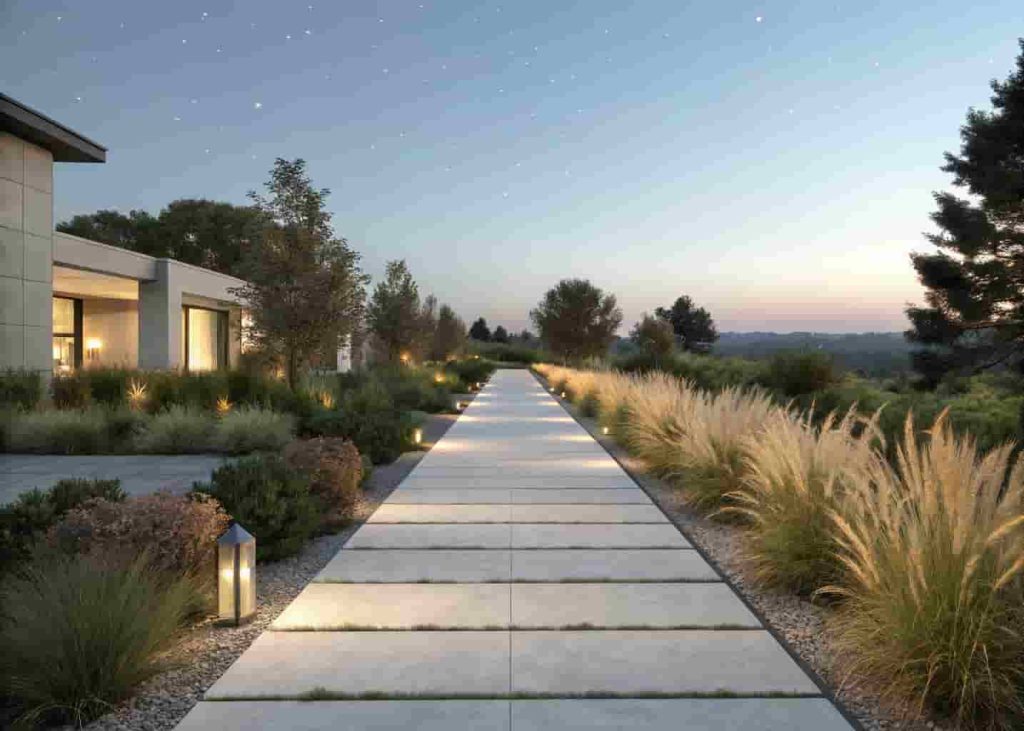
5. Flagstone Path Through a Garden
A flagstone walkway through a garden is one of the most beautiful and character-rich options available. The irregular shapes of flagstone pieces create a natural, puzzle-like pattern that looks artistic and intentional at the same time. You can set flagstone in sand or mortar, or even lay it directly into soil for a more informal look. When placed through a cottage garden or a lush perennial border, flagstone paths blend into the surroundings in the most effortless way. Soft plants like thyme, alyssum, or baby’s tears can be encouraged to grow in the cracks, softening the edges and making the whole walkway feel like it has always been part of the landscape.
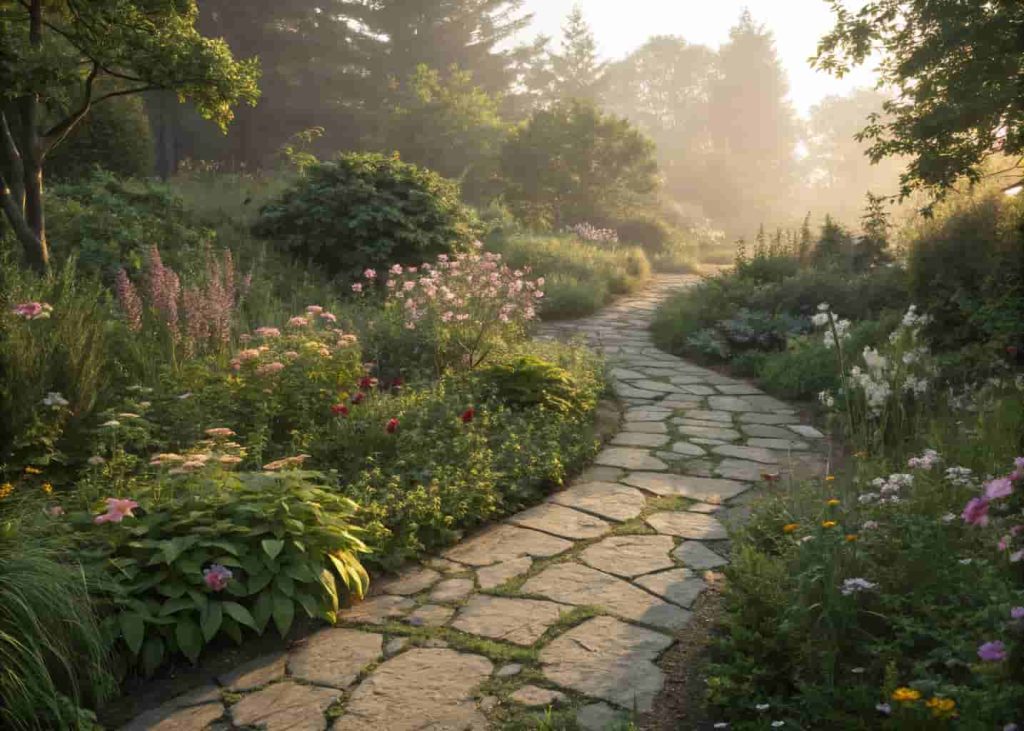
6. Wood Plank Walkway
A wood plank walkway brings warmth and a rustic charm to any outdoor space that few other materials can match. Wide wooden boards laid across a gravel or mulch base create a very inviting path that feels natural and cozy. This style works especially well in backyard gardens, near water features, or leading to a deck or patio area. Cedar and pressure-treated pine are the most popular choices because they hold up well against moisture and pests. To keep the look fresh, apply a weather-resistant stain or sealant every couple of years. Pairing a wood plank walkway with simple potted plants or lanterns along the sides adds even more warmth and personality to your outdoor landscape.
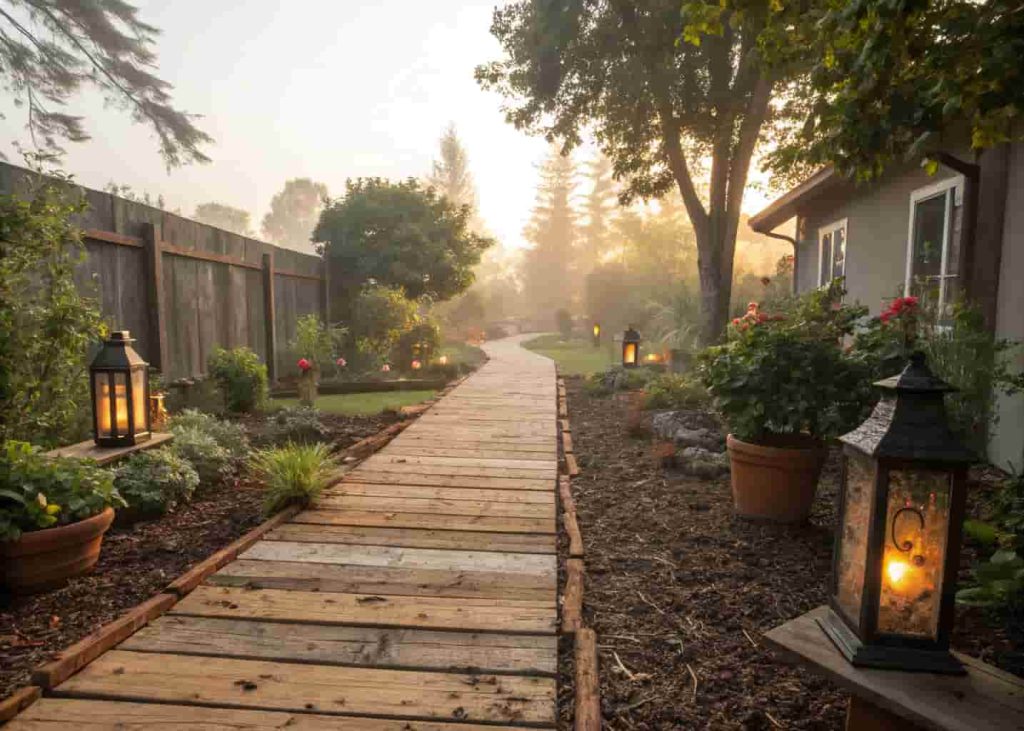
7. Mosaic Tile Pathway
A mosaic tile pathway is one of the most artistic and eye-catching walkway ideas you can add to your landscape. Colorful ceramic or glass tiles arranged in patterns — geometric designs, floral motifs, or even custom scenes — turn a simple path into a true outdoor art installation. This style works especially well in Mediterranean-inspired gardens, Spanish-style courtyards, or any outdoor space where you want to add bold personality and color. While mosaic tile paths require more planning and installation time than simpler options, the result is completely one-of-a-kind. Use weather-resistant tiles rated for outdoor use and seal the grout regularly to keep the colors vivid and the surface protected through changing seasons.
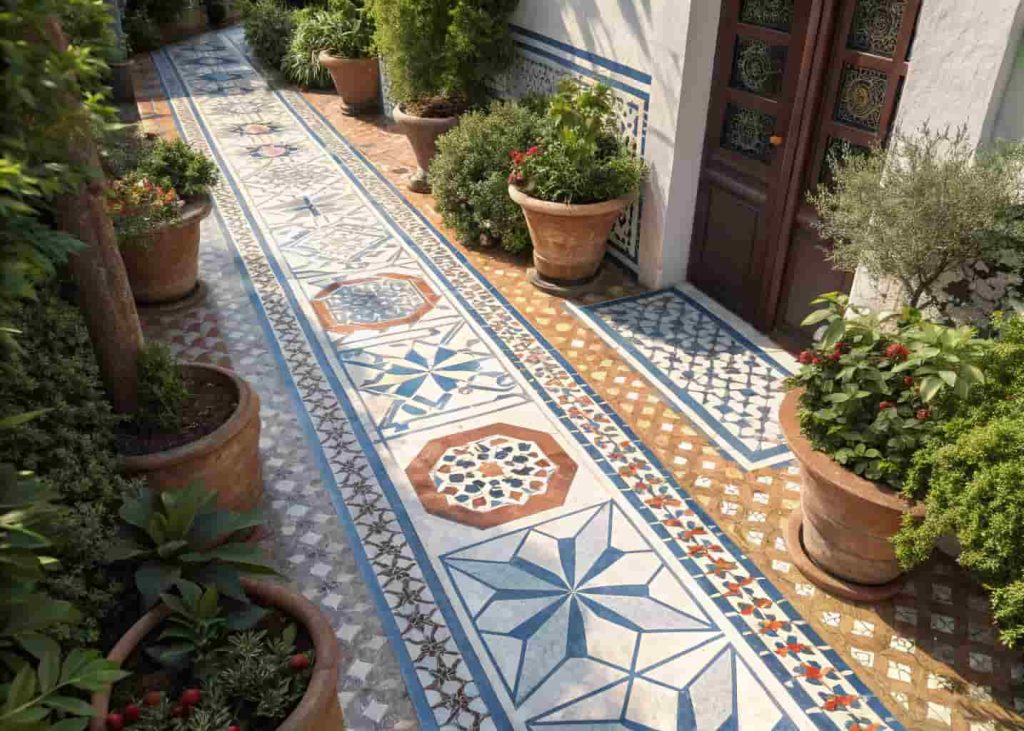
8. Mulch Path for a Natural Garden Feel
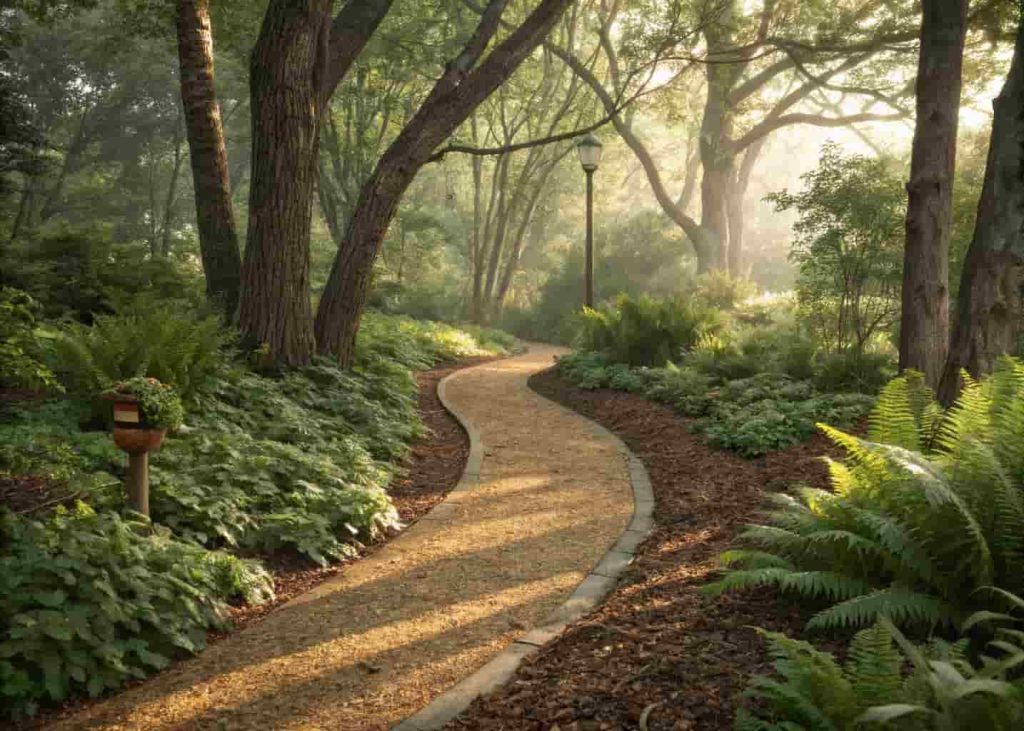
A mulch path is a wonderfully simple and affordable way to define walkways through a natural or woodland garden. Shredded bark, wood chips, or pine needle mulch laid a few inches deep creates a soft, cushioned surface that is comfortable to walk on and looks completely at home in a garden setting. Mulch paths are especially popular in raised bed vegetable gardens and naturalistic landscape designs where a formal paved surface would feel out of place. They suppress weeds, retain soil moisture, and break down over time to enrich the soil beneath. The main maintenance task is topping up the mulch once a year to keep the path looking fresh and full — a simple and low-cost job.
9. Reclaimed Brick or Cobblestone Path
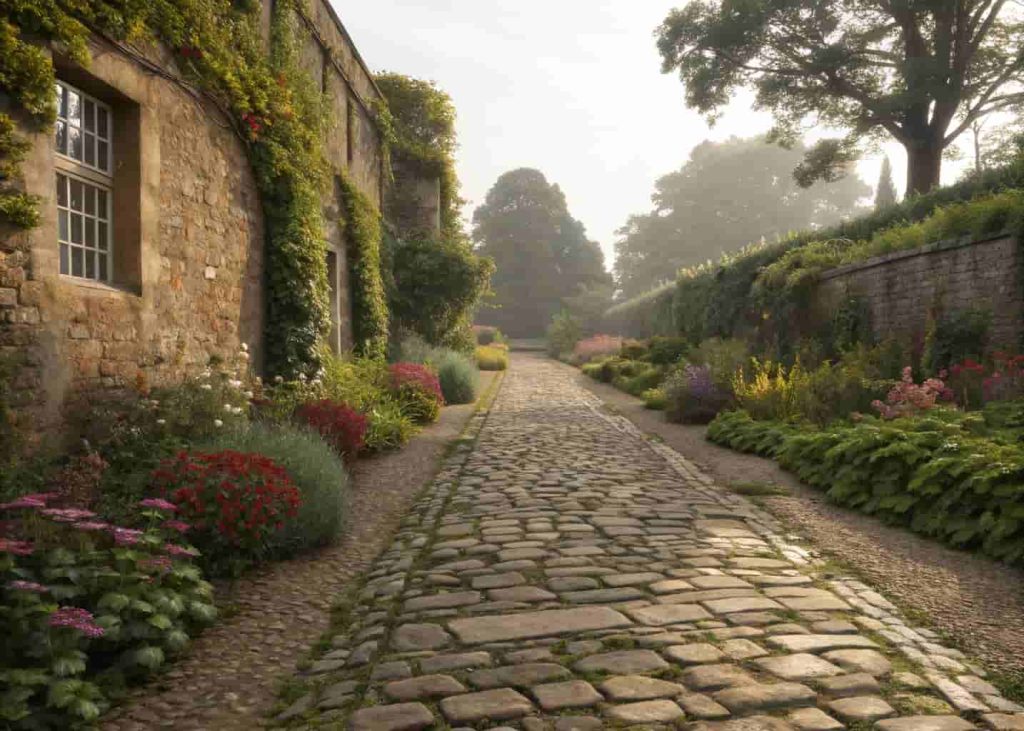
Using reclaimed brick or cobblestone for a garden walkway is a brilliant way to add history and texture to your landscape. Old bricks pulled from demolished buildings or cobblestones salvaged from urban streets bring a worn, authentic character that brand-new materials simply cannot replicate. The irregular surfaces and varied colors of reclaimed materials give the path a depth and richness that feels genuinely aged and special. This type of landscape path pairs beautifully with older homes, English-style gardens, and spaces where you want a sense of established elegance. Sourcing reclaimed materials is also an environmentally responsible choice, giving old materials a new life and reducing waste while creating something truly unique in your outdoor space.
10. Curved Grass Path Through the Lawn
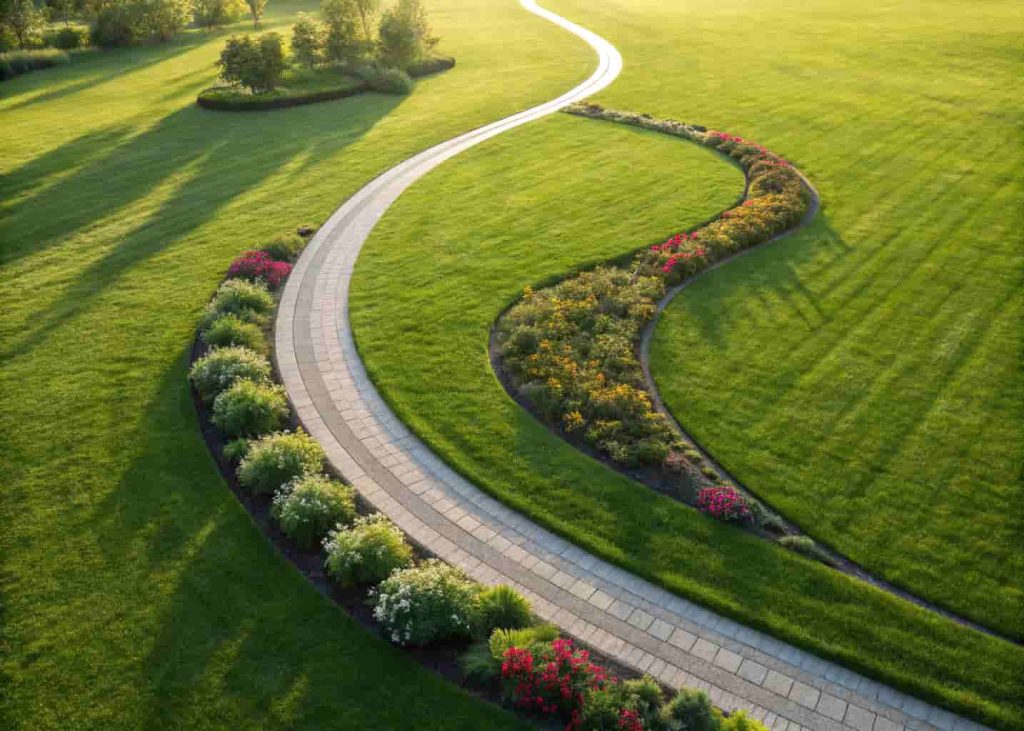
Sometimes the most elegant walkway idea is the simplest one — a gently curved path mowed into your lawn. By cutting a slightly lower, defined strip through the grass and edging it neatly on both sides, you create a natural walkway that flows through your landscape without any hard materials at all. This approach works beautifully in larger yards with open lawn areas, guiding visitors through the space in a relaxed, organic way. You can enhance the effect by planting low flower borders or shrubs along the edges to frame the grass path and give it more definition. It costs almost nothing to create, requires only your regular lawn mower, and results in a surprisingly refined and intentional look.
11. Concrete With Exposed Aggregate Finish
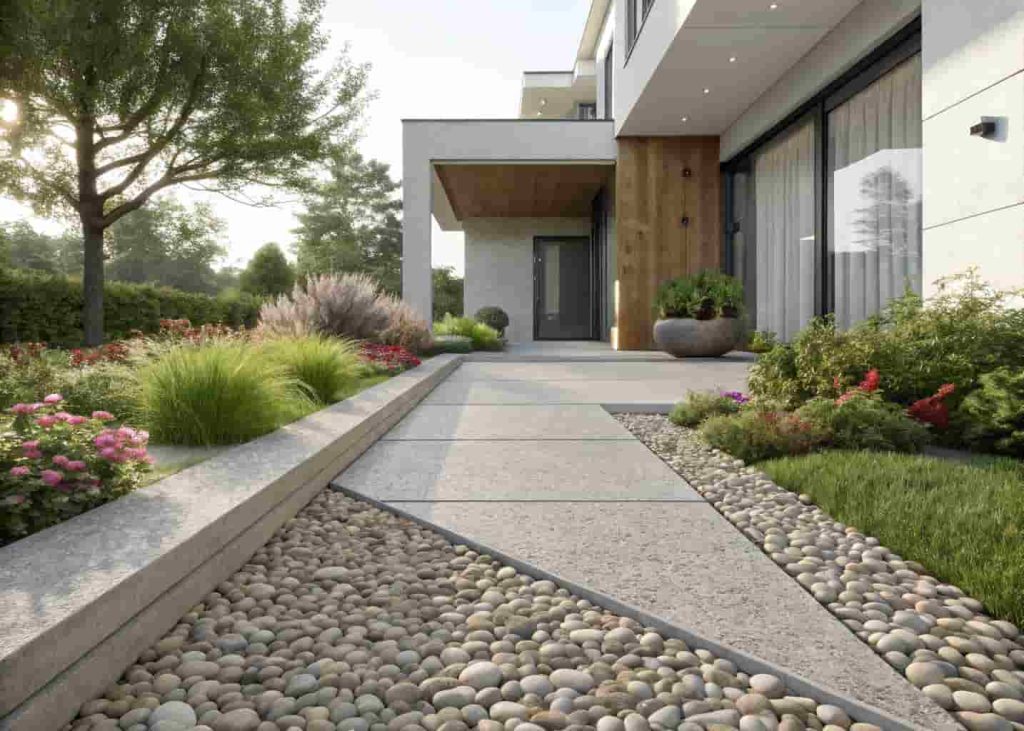
Concrete with an exposed aggregate finish is a great option for homeowners who want the durability of poured concrete but with much more visual texture and interest. The surface is created by embedding pebbles, shells, or decorative stones into the concrete and then washing away the top layer to reveal the aggregate beneath. The result is a slip-resistant, attractive surface with a natural pebbled look that stands up to heavy use and all weather conditions. You can choose aggregates in colors and sizes that complement your home’s exterior and garden palette. This is a particularly smart choice for front yard walkways and driveways because the surface is easy to maintain, holds up for decades, and always looks clean and polished.
12. Raised Wooden Boardwalk Style Path
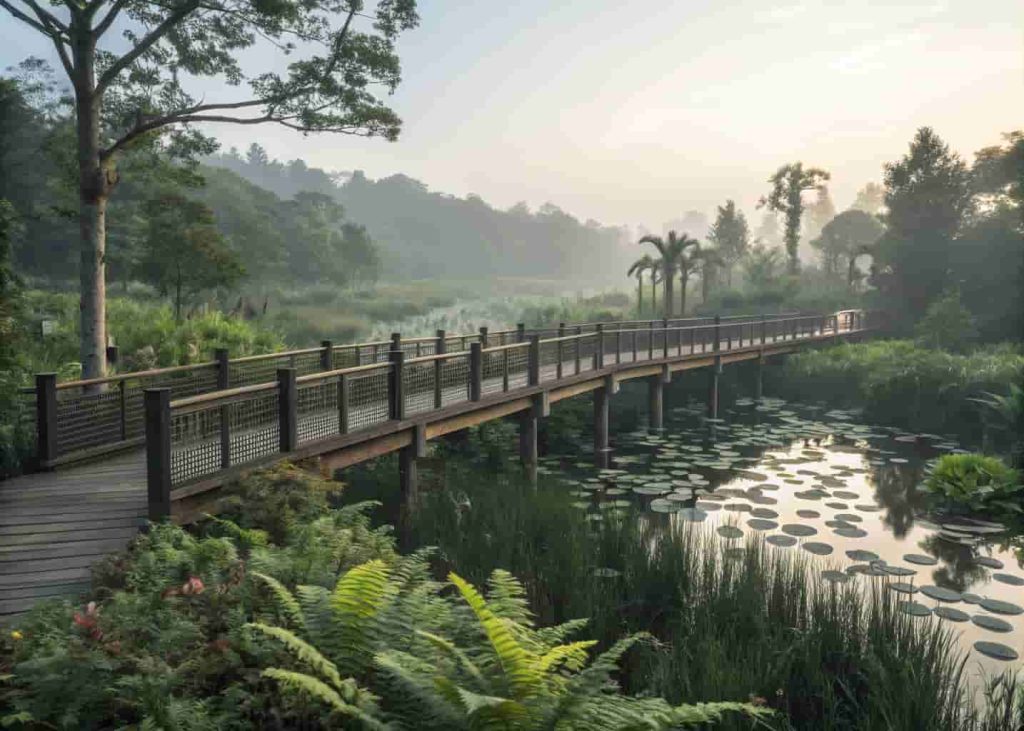
A raised wooden boardwalk-style walkway adds a very distinctive architectural element to a garden or backyard landscape. Elevated slightly above the ground on wooden sleepers or posts, this type of path creates a clear separation between the walking surface and the planting areas below. It works especially well in gardens with water features, rain gardens, or boggy areas where a ground-level path would be impractical. The elevated design also allows plants and ground cover to grow underneath and around the structure, creating a very lush and layered visual effect. Cedar or composite decking boards are the best material choices because they resist moisture and rot without requiring heavy ongoing maintenance, keeping the boardwalk looking great season after season.
13. Permeable Paver System With Planted Gaps
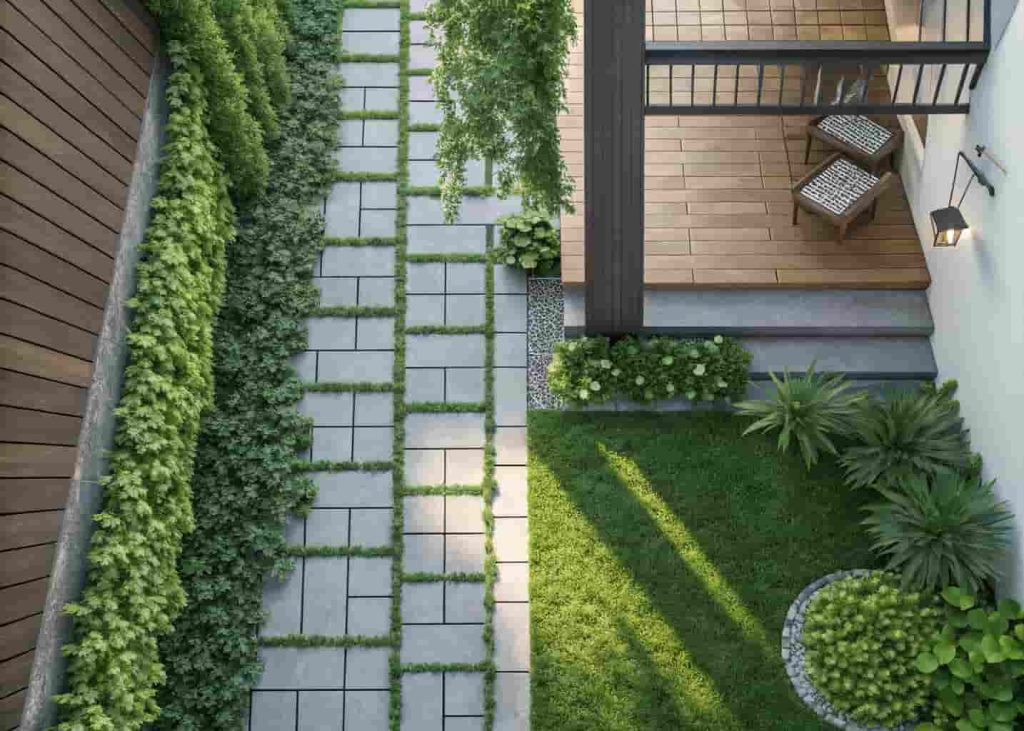
A permeable paver system with planted gaps between the stones is one of the most environmentally friendly and visually stunning landscape walkway ideas available today. These walkways use specially spaced pavers — concrete, natural stone, or porcelain — with deliberate gaps filled with low-growing plants, grass, or decorative gravel. The result is a path that looks beautifully green and alive rather than hard and solid. From an environmental standpoint, permeable systems allow rainwater to drain naturally into the soil, reducing runoff and supporting healthier gardens. Creeping plants like mazus, ajuga, or dichondra work especially well in the gaps. This style suits both modern minimalist landscapes and more relaxed cottage-style gardens, making it one of the most flexible options on this list.
14. Lighted Pathway With Landscape Stones
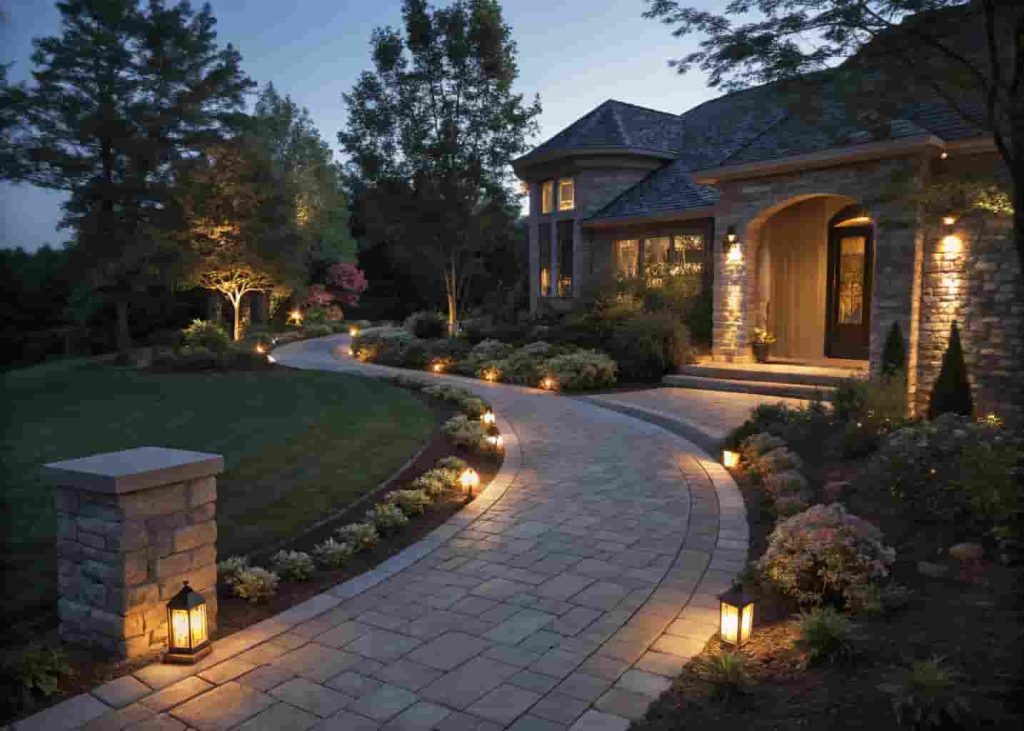
A lighted pathway using landscape stones and integrated lighting is one of the most dramatic and welcoming walkway ideas you can create. During the day, the stones and edging create a handsome, well-defined path. At night, low-voltage LED lights embedded along the edges or built into the stone caps transform the walkway into something truly spectacular. Solar-powered stake lights, recessed ground lights, or low bollard fixtures work perfectly alongside natural or manufactured stone paths. Good pathway lighting also improves safety by clearly marking the edges of the path after dark. Whether you are lighting the way from the driveway to the front door or creating a magical evening atmosphere in the backyard, a well-lit stone walkway makes a lasting impression on anyone who visits your home.
Conclusion
Your walkway is one of the first things people notice about your home, and it deserves just as much thought and creativity as any other part of your landscape design. Whether you go with the timeless look of brick, the natural beauty of flagstone, the warmth of wood planks, or the drama of a lighted stone path, each of these 14 walkway ideas has the power to add real character and curb appeal to your outdoor space. The best choice depends on your home’s style, your budget, and how much maintenance you are comfortable with. Start with one idea that excites you, plan it well, and you will end up with a landscape walkway that you genuinely love coming home to every single day.