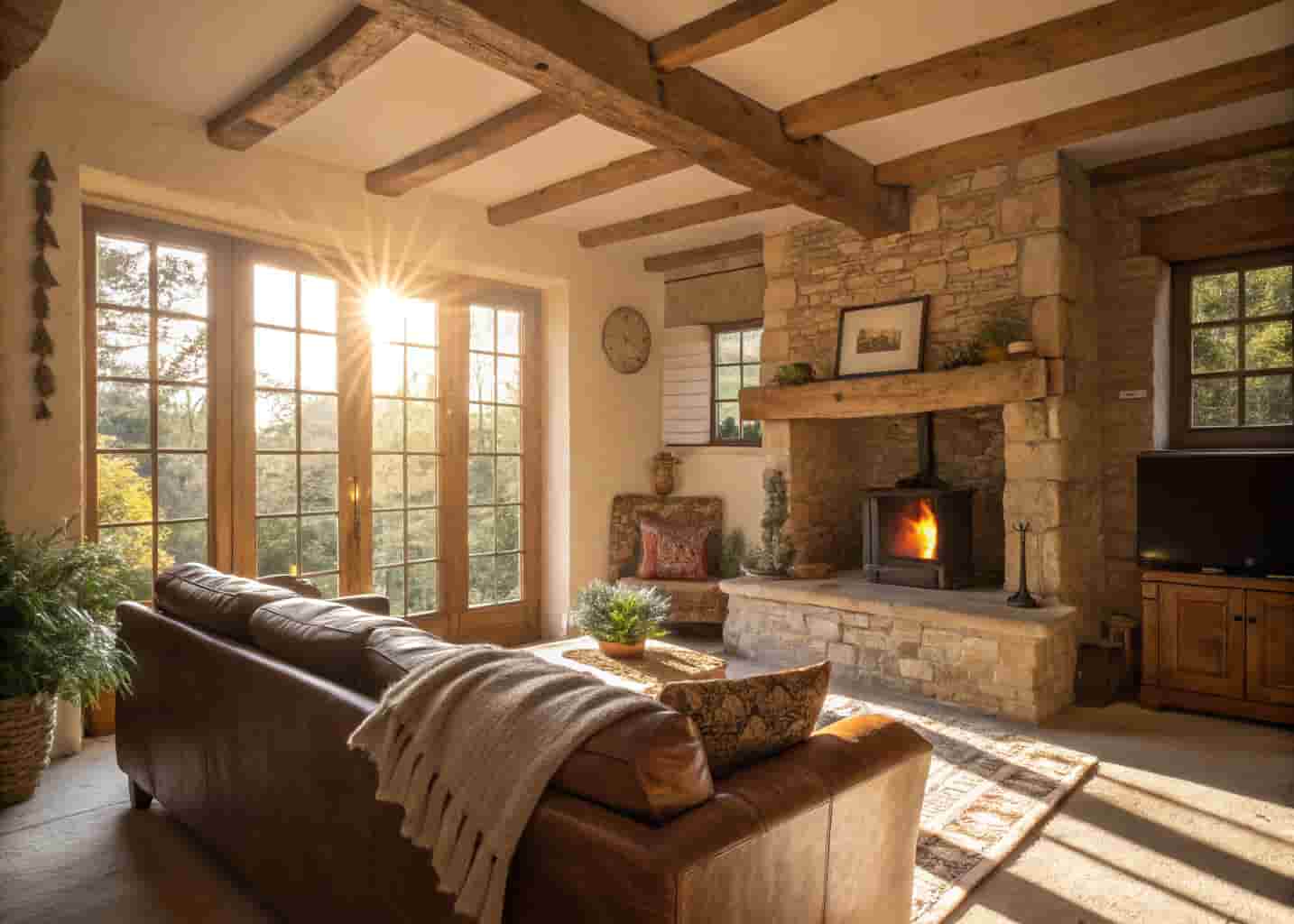
The rustic aesthetic has a way of making any space feel like a warm hug. There’s something about exposed wood, soft textures, and earthy tones that just makes you want to slow down, curl up, and stay a while. Maybe it’s the way a reclaimed wood shelf looks in morning light, or how a chunky knit throw draped over a worn leather chair makes even a Monday feel cozy. This style isn’t about perfection — it’s about warmth, character, and spaces that feel genuinely lived-in. Whether you’re redesigning a whole room or just adding a few pieces, rustic style gives you the freedom to layer things you love without everything needing to match perfectly. It’s forgiving, beautiful, and deeply personal.
Use Reclaimed Wood as Your Foundation
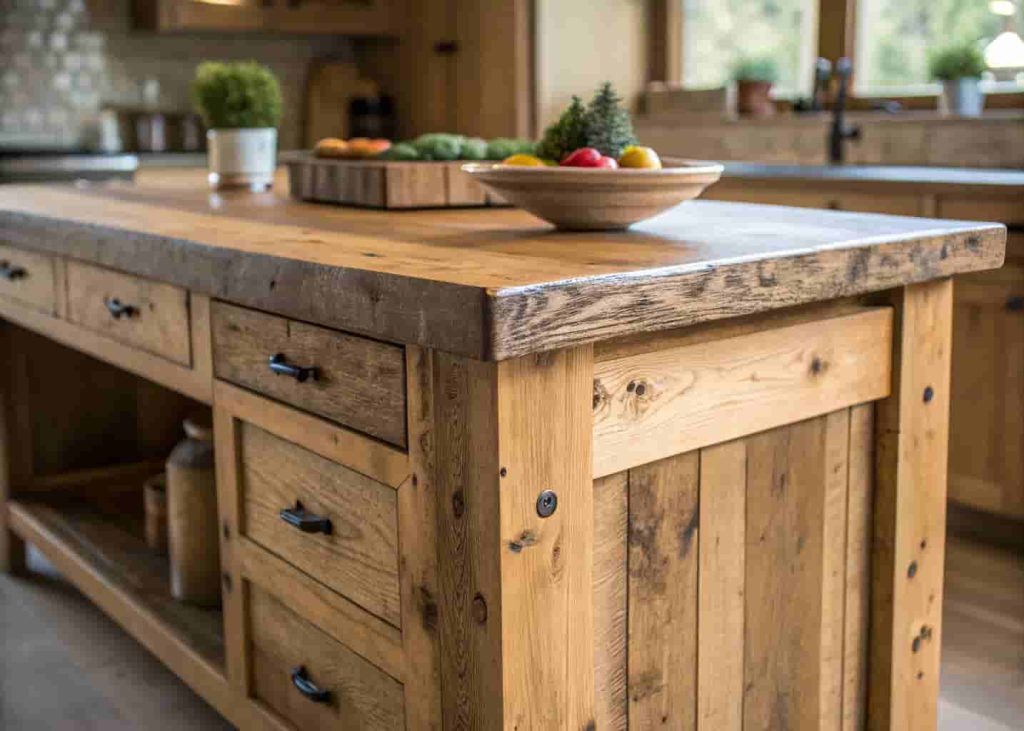
If there’s one material that defines the rustic aesthetic more than anything else, it’s reclaimed wood. Old barn boards, salvaged timber, and weathered planks carry this gorgeous history in their grain — every knot, scratch, and worn edge tells a story. Use it for a feature wall behind your bed, a chunky floating shelf in the kitchen, or even a DIY coffee table made from old pallets. My neighbor did her entire kitchen island in reclaimed wood, and it became the most talked-about feature whenever someone visited. The beauty of it is that no two pieces are the same, so your space ends up with a completely one-of-a-kind feel that new materials simply can’t replicate.
Layer Neutral and Earthy Tones
Color plays a huge role in pulling a rustic look together, and the secret is keeping your palette grounded in nature. Think warm whites, soft creams, caramel browns, dusty terracottas, and deep forest greens. These shades work the way the outdoors does — they layer naturally without clashing. Start with a neutral base on your walls, then build depth through textiles, wood tones, and ceramics. A creamy linen sofa next to a walnut side table with a terracotta vase on top — that combination just works. Don’t be afraid to mix warm and cool neutrals together either. Real nature does it all the time, and that slight tension between tones is actually what makes a rustic room feel alive rather than flat.
Bring in Cozy Textiles and Chunky Knits
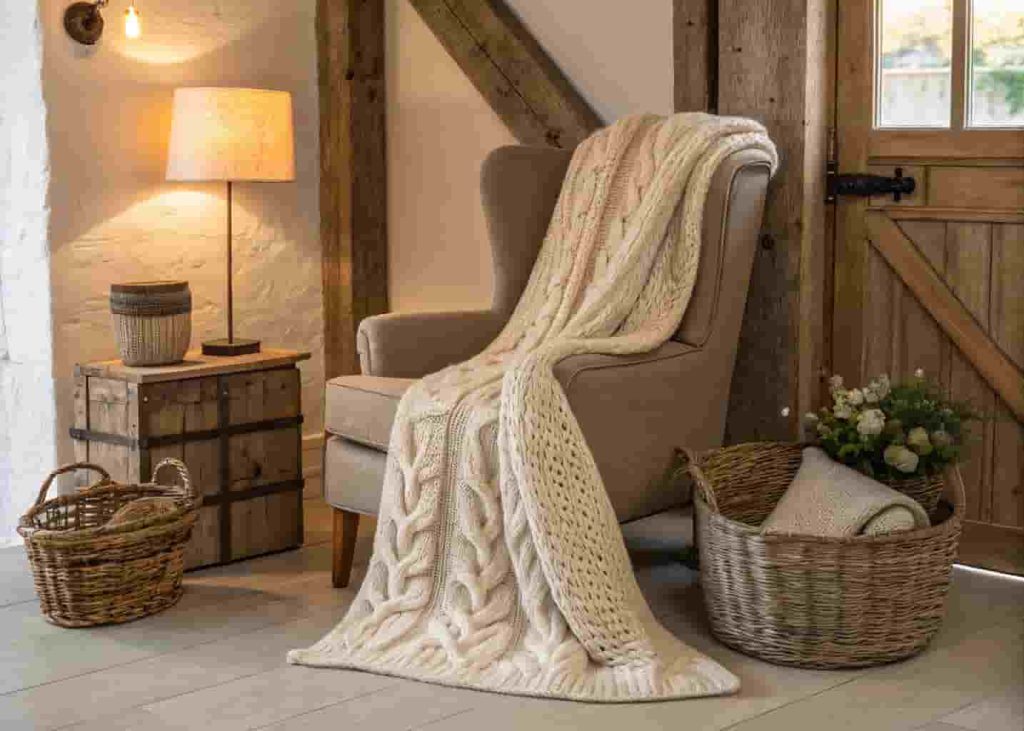
Texture is everything in a rustic space. Without it, even the most beautiful room can feel cold or unfinished. Chunky knit blankets, linen pillow covers, sheepskin rugs, burlap runners, and woven baskets all add that soft, touchable quality that makes a space feel genuinely cozy. Stack two or three throw pillows in different textures on your sofa — maybe a smooth velvet one next to a rough linen one next to a cable-knit one. It sounds like a lot, but it works. During winter, I basically just pile extra blankets on every surface and suddenly the whole house feels like a mountain cabin retreat. The tactile richness of layered textiles is one of the easiest and most affordable ways to bring rustic warmth into any room.
Add Wrought Iron and Aged Metal Accents
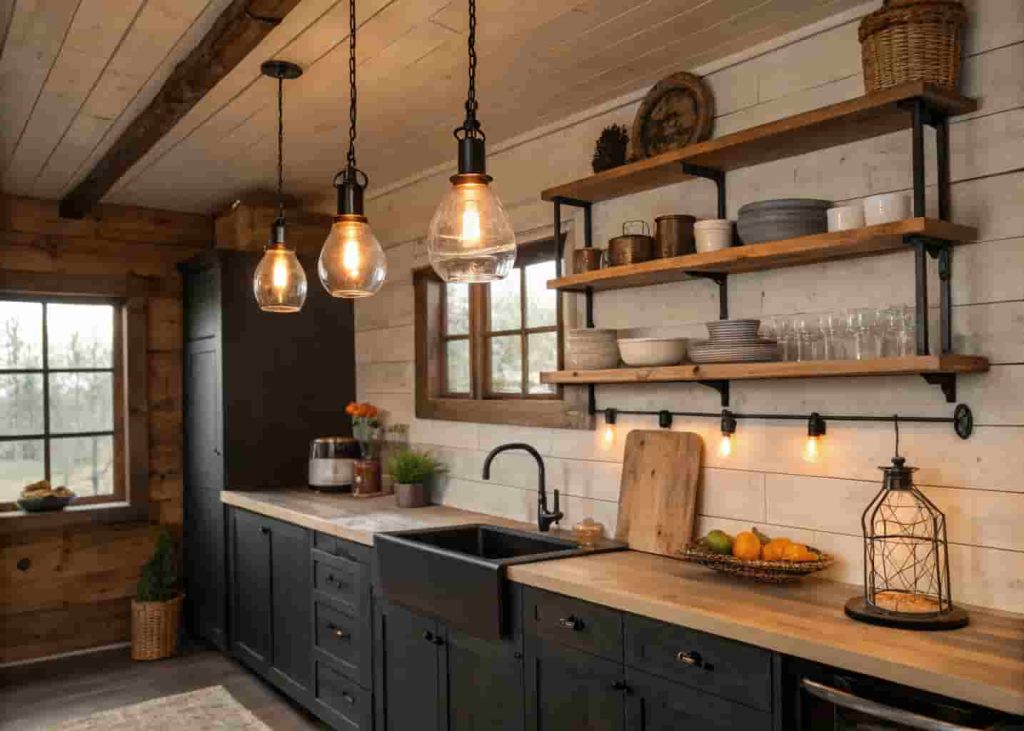
Rustic style isn’t all soft and woolly — it needs some hard edges too. Wrought iron, brushed bronze, aged brass, and blackened steel add that industrial-meets-farmhouse contrast that gives rustic rooms their character. Look for iron curtain rods, vintage-style cabinet hardware, metal light fixtures with Edison bulbs, or an old iron candelabra as a centerpiece. These pieces ground a room that might otherwise feel too soft or cottagecore. Even something as simple as swapping out shiny chrome drawer pulls for matte black ones can shift the whole mood of a kitchen. Metal accents also photograph beautifully, which is why you see them constantly on rustic Pinterest boards — they catch light in a way that feels dramatic without being over the top.
Style Open Shelving with Organic Objects
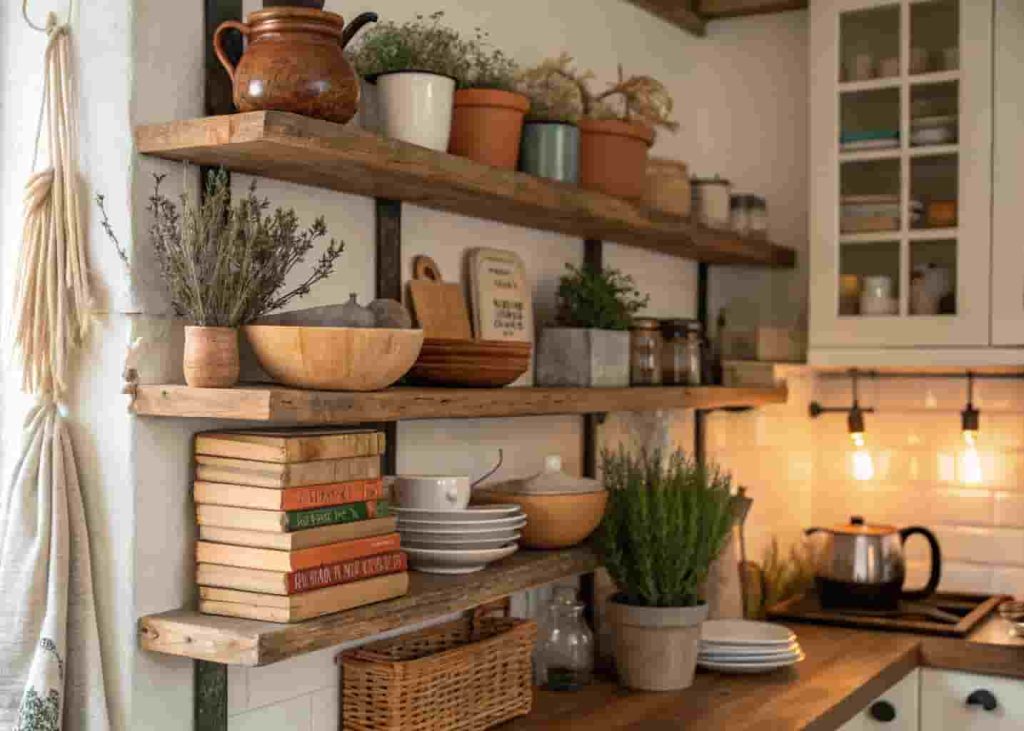
Open shelving is one of the most Pinterest-worthy elements of rustic home design — but the styling is everything. The trick is to mix functional pieces with natural objects in a way that looks collected over time rather than bought all at once from the same store. Group things in odd numbers, vary the heights, and leave a little breathing room between items. Wooden bowls, stacks of linen-bound books, dried herb bundles, hand-thrown pottery, small potted succulents, and a vintage tin or two — these are your rustic shelf staples. Think of each shelf like a little story rather than a storage solution. The best-styled rustic shelves look like they evolved naturally, because they did — one favorite find at a time.
Incorporate Stone and Brick Elements
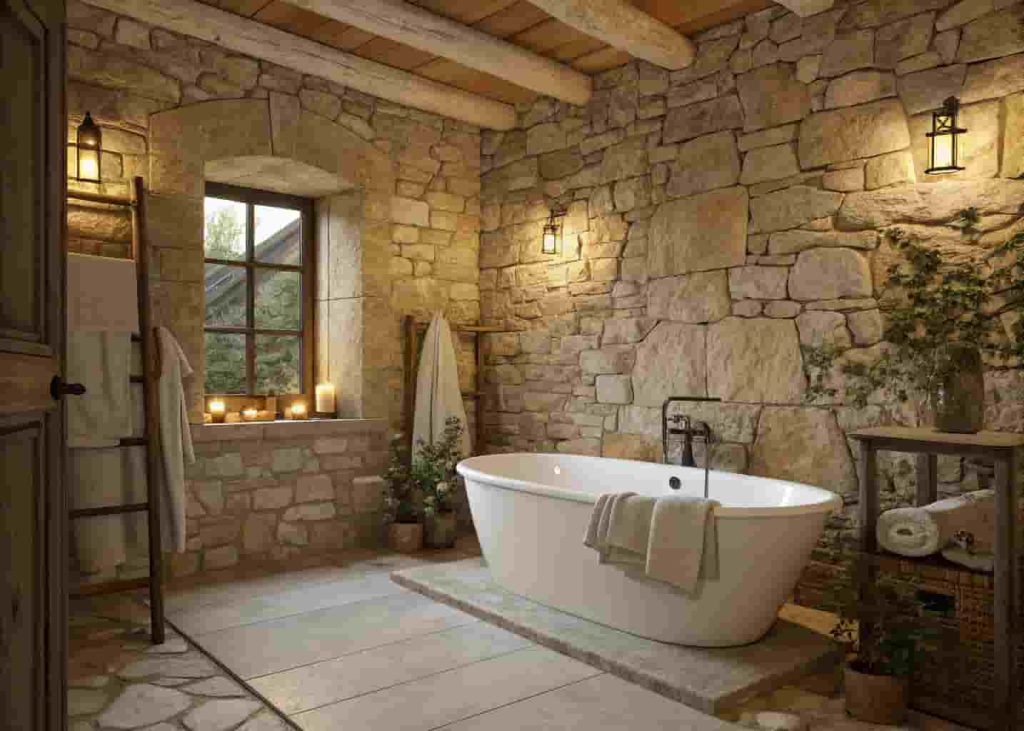
Nothing says rustic aesthetic quite like raw stone or exposed brick. These materials have a weight and permanence to them that instantly anchors a space. If you’re lucky enough to have an original brick wall, absolutely leave it exposed — maybe just clean it up and seal it lightly. No brick? A stone-surround fireplace, a pebble tile backsplash, or even a faux brick panel can get you there. Stone works brilliantly in bathrooms too, especially around a soaking tub or as a floor material. The rough, organic texture of natural stone against smooth white linens or soft cotton towels creates that beautiful contrast that defines so much of what people love about rustic interiors — the balance between raw and refined.
Style a Farmhouse Dining Table Setup
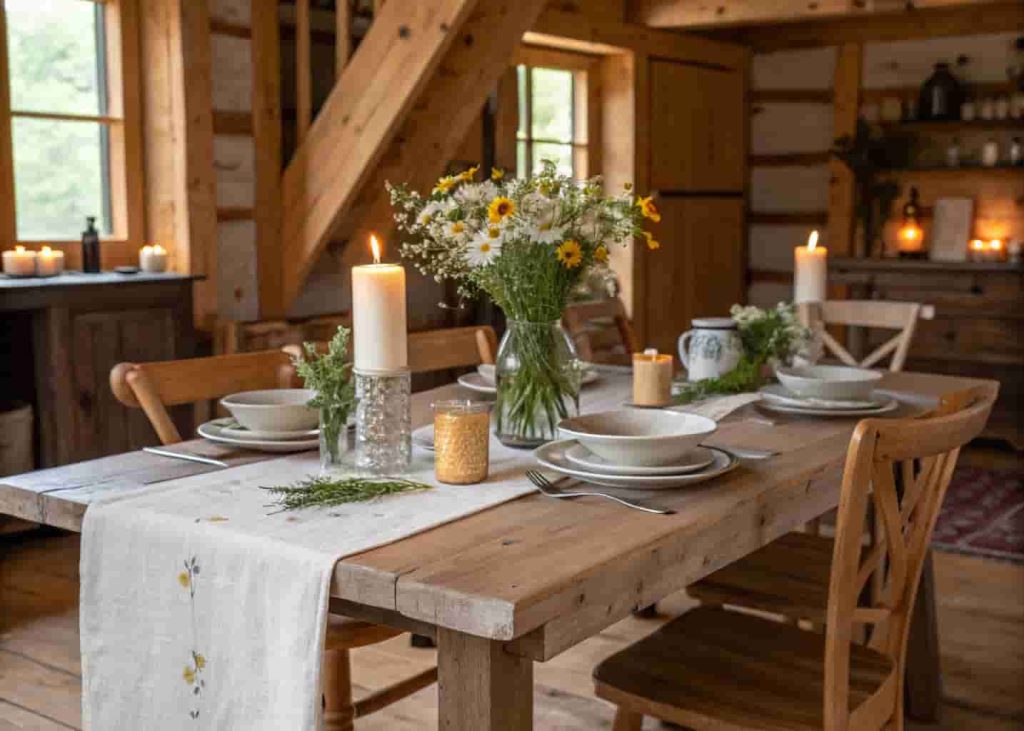
The dining table is the heart of a rustic home. A solid farmhouse table — ideally in a chunky, unpolished wood — sets the whole scene. Pair it with mismatched wooden chairs, a bench on one side, or even a couple of vintage stools. For the table itself, skip the formal placemats and go for something more lived-in: a linen runner down the center, a cluster of candles in varying heights, a mason jar filled with wildflowers, and simple ceramic plates in muted tones. Sunday dinners at a table like this just feel different. They feel slower. More intentional. A farmhouse dining setup isn’t just beautiful — it genuinely changes how you gather, eat, and talk around a meal together.
Use Vintage and Antique Finds
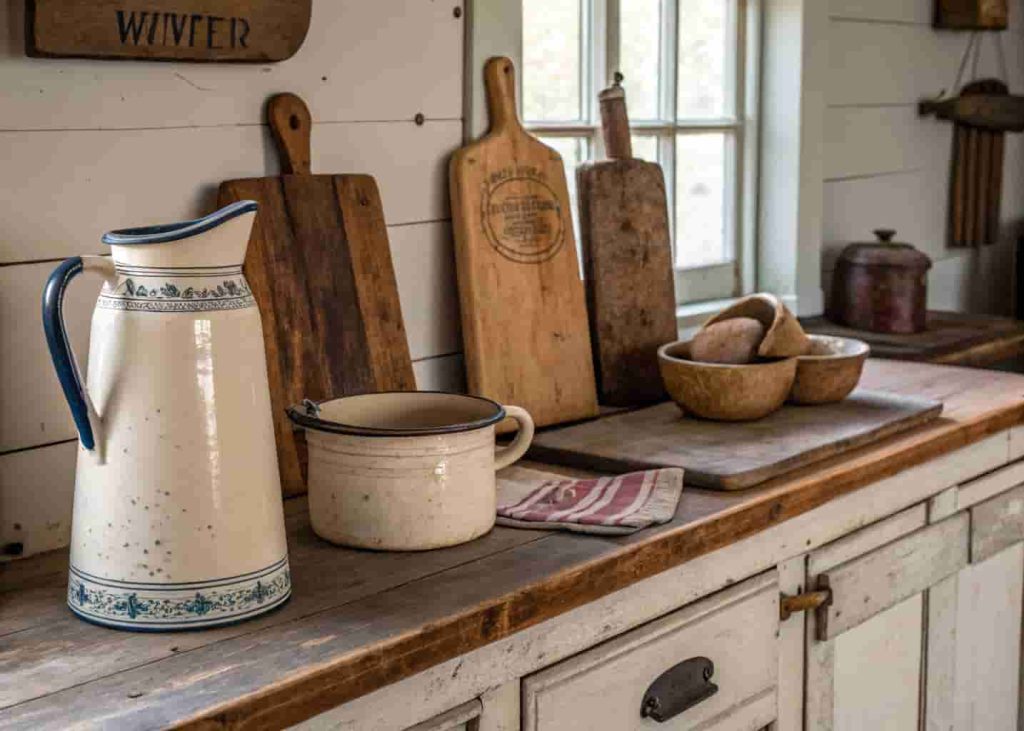
The rustic aesthetic thrives on pieces that carry a little age and personality. A vintage wooden ladder leaned against a wall becomes a towel rack. An old crate becomes a side table. A worn enamel pitcher becomes a vase. Thrift stores, flea markets, estate sales, and antique shops are absolute goldmines for these kinds of finds — and the best part is they cost very little. I once found an old wooden bread board at a garage sale for two dollars and it’s become one of my most-used kitchen pieces ever. These kinds of objects bring soul into a home that no brand-new piece from a big-box store ever quite manages. Imperfection is the point. Patina is the charm.
Decorate with Dried Botanicals and Natural Branches
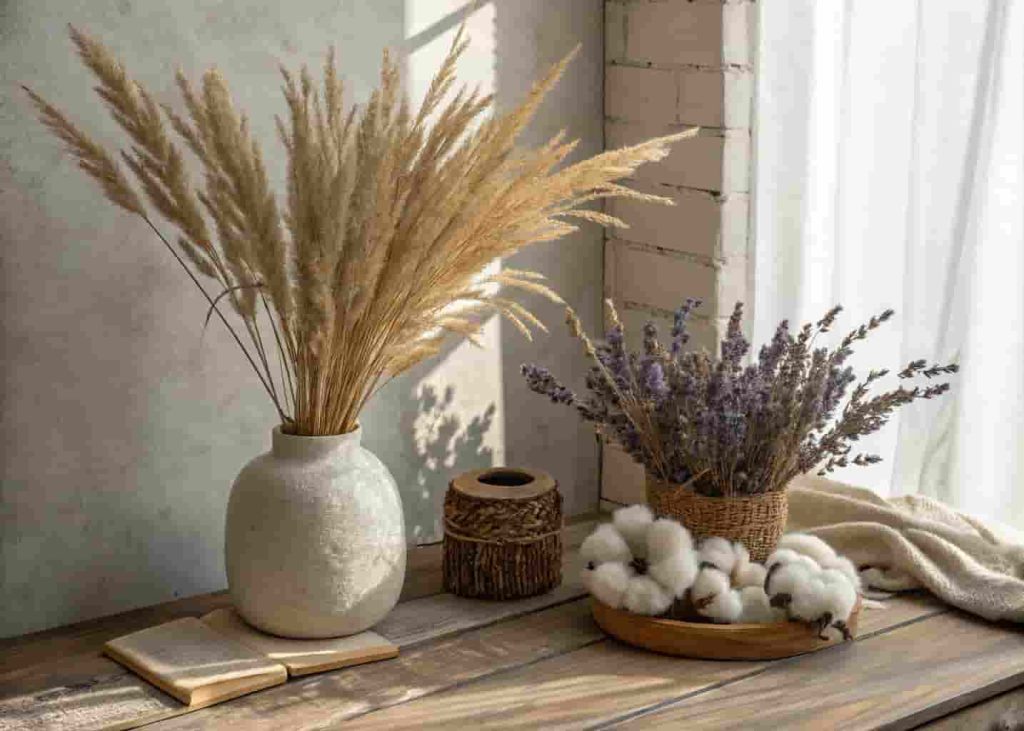
Dried flowers and botanicals are having a major moment in rustic design, and honestly, it makes perfect sense. They bring in that organic, earthy quality without the maintenance of fresh flowers. Pampas grass in a tall ceramic vase. A bundle of dried lavender tied with jute twine hanging in the kitchen. Eucalyptus branches in a wooden bowl. Cotton stems in an amber glass bottle. These elements are inexpensive, last for months, and add movement and softness to any shelf, table, or corner. They photograph absolutely beautifully too, which is why rustic flat lays on Pinterest almost always include some kind of dried botanical. Nature inside the home — preserved and styled — is one of the simplest expressions of rustic aesthetic done well.
Create a Cozy Reading Nook
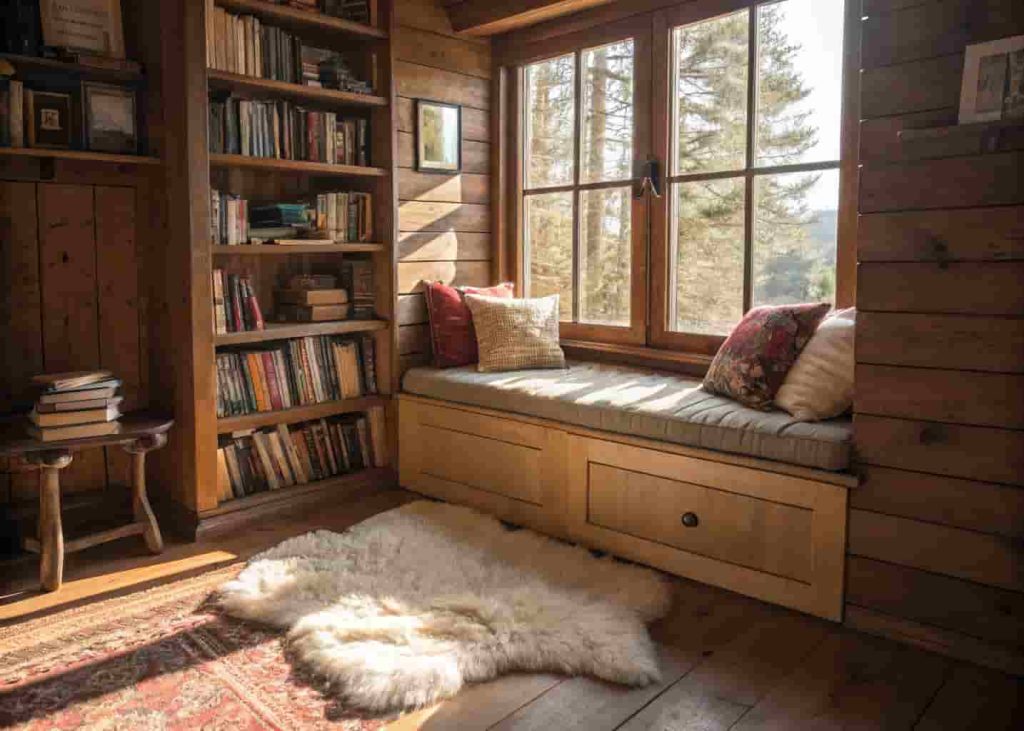
Every rustic home needs a reading nook — that one little corner designed purely for slowing down. It doesn’t need to be large. Even a window alcove with a cushioned bench, a couple of throw pillows, and a small wooden side table is enough. Add a basket of books nearby, a candle or a small table lamp with a warm bulb, and a soft blanket. That’s it. That’s the whole recipe. There’s something about the combination of natural light, soft textures, and a quiet corner that feels deeply restorative. A friend of mine converted the space under her staircase into a rustic reading nook with built-in wooden shelves and a sheepskin rug on the floor. It’s become the most-loved spot in her house.
Style a Rustic Bedroom Retreat
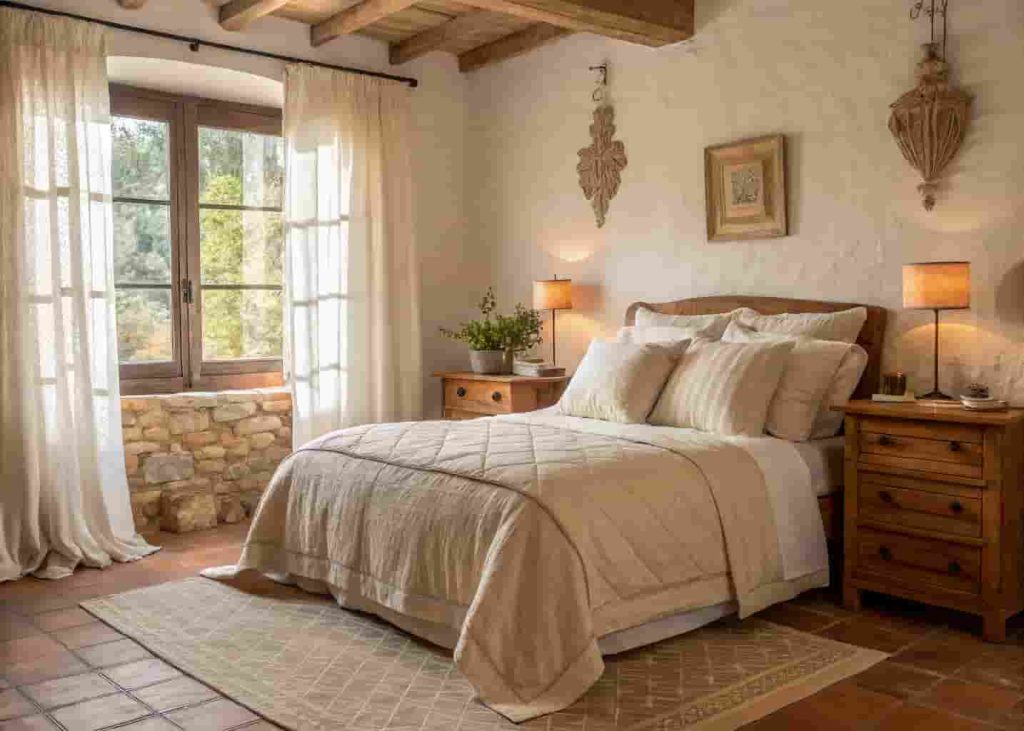
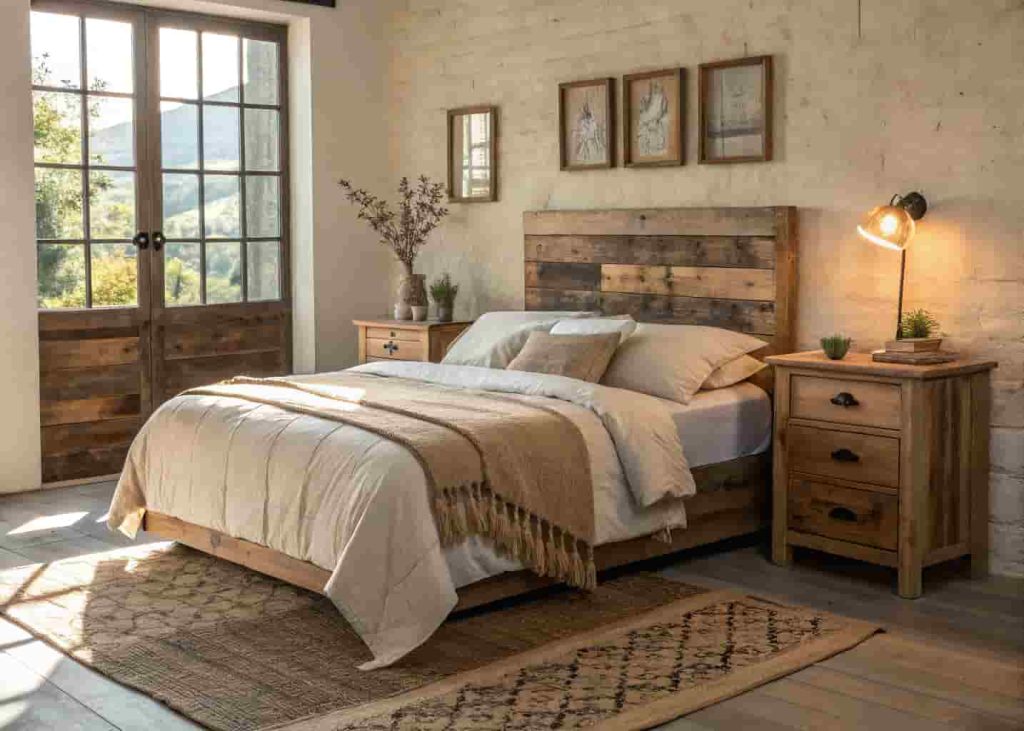
The bedroom is where the rustic aesthetic really earns its keep, because this is the room where comfort matters most. Start with linen bedding — it has that soft, slightly rumpled quality that feels effortlessly lived-in. Layer it with a chunky quilt or a woven blanket at the foot of the bed. Wooden nightstands with a simple lamp, a tray with a candle and a small plant, and maybe a vintage mirror or reclaimed wood headboard complete the picture. Keep the color palette quiet — creams, warm grays, soft sage — and let the textures do the work. A rustic bedroom should feel like checking into the world’s most beautiful cabin. Peaceful. Unhurried. Completely yours.
Hang Woven and Macramé Wall Art
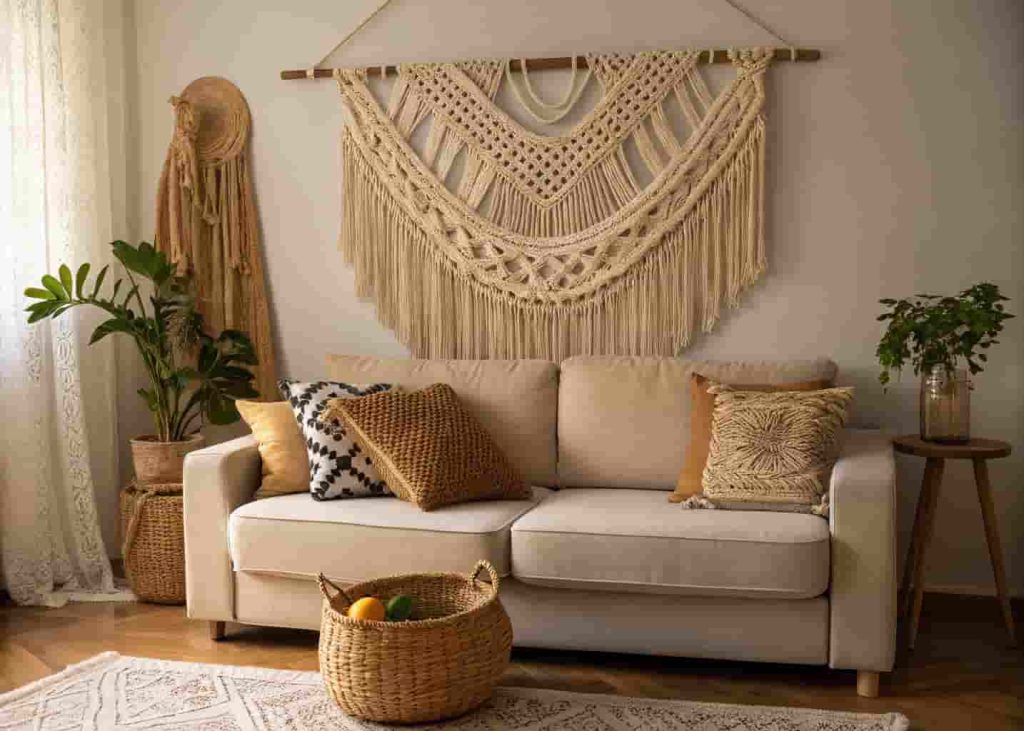
Wall art in a rustic space should feel handmade and organic — not printed and framed (though vintage botanical prints are always an exception). Macramé wall hangings, woven tapestries, and hand-stitched textile art all add incredible texture to a bare wall. A large macramé piece above a bed or sofa has an almost architectural quality — it fills the space the way a headboard or oversized painting would, but softly and with so much more personality. You can find stunning handmade pieces on Etsy from small makers who put real craft into their work, or if you’re the creative type, beginner macramé kits are surprisingly easy to work with. Either way, the result is a wall that feels warm, artful, and completely consistent with the rustic aesthetic.
Light It Up with Candles and Edison Bulbs
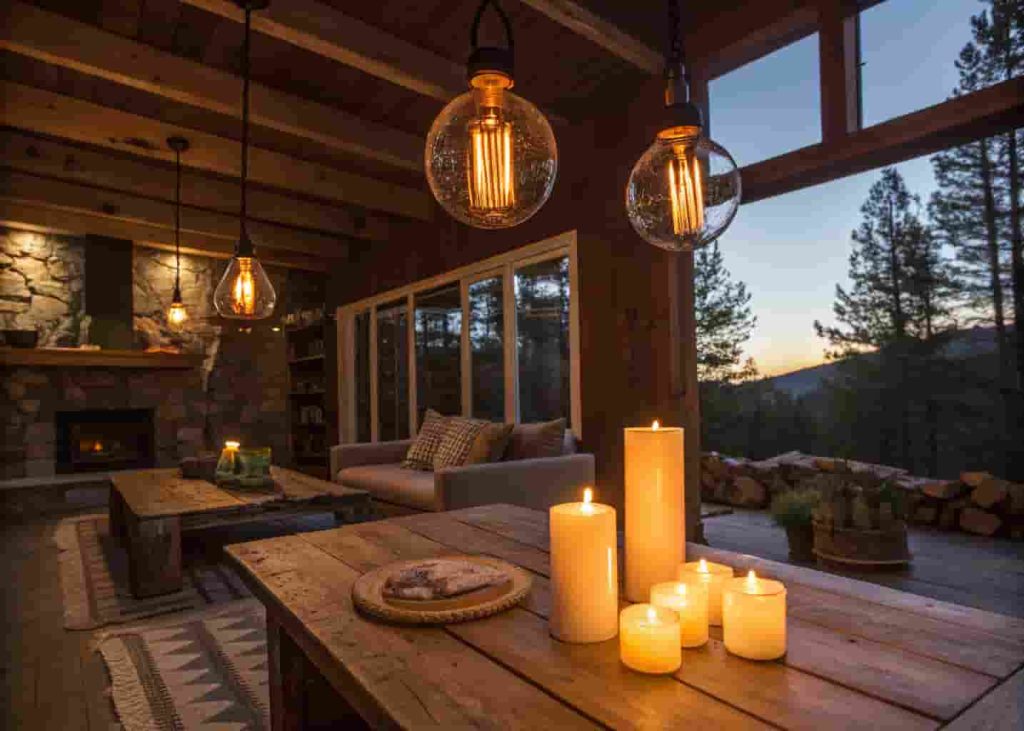
Lighting can make or break a rustic room. Bright white overhead lighting will flatten everything and make all your beautiful textures disappear. Instead, think warm, layered, and low. Edison bulbs in pendant fixtures or exposed filament bulbs in cage-style sconces give off that amber glow that makes wood tones sing. Candles are non-negotiable — cluster pillar candles on a wooden tray, tuck taper candles into iron candlesticks, or line your mantle with a mix of both. Fairy lights woven through branches or draped along open shelves add a soft twinkle that photographs like a dream. The goal is lighting that makes people feel like they’ve just walked into somewhere special — and warm, layered light is the fastest way to get there.
Add Greenery and Indoor Plants
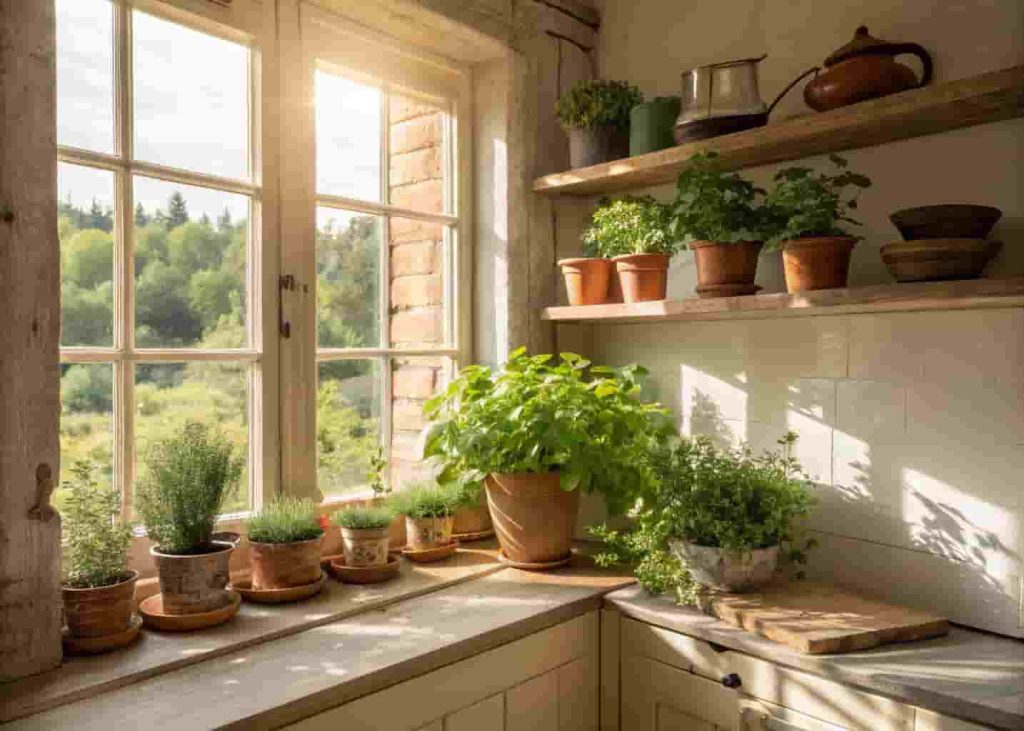
Plants are one of the most powerful tools in rustic decorating. They bring life, color, and freshness into spaces dominated by wood and stone, without ever feeling out of place. Big fiddle-leaf figs or olive trees in terracotta pots make bold statements in corners. Trailing pothos or ivy on open shelves adds a wild, organic drape. Fresh herb pots on a kitchen windowsill are both beautiful and practical — and they smell incredible while you’re cooking. Even a single small succulent in a handmade ceramic pot on a side table earns its place. Plants in rustic spaces should feel like they belong there naturally, almost as if they grew up alongside the wood and stone. Go for lush, go for layered, and don’t overthink the arrangement.
Style an Outdoor Rustic Space
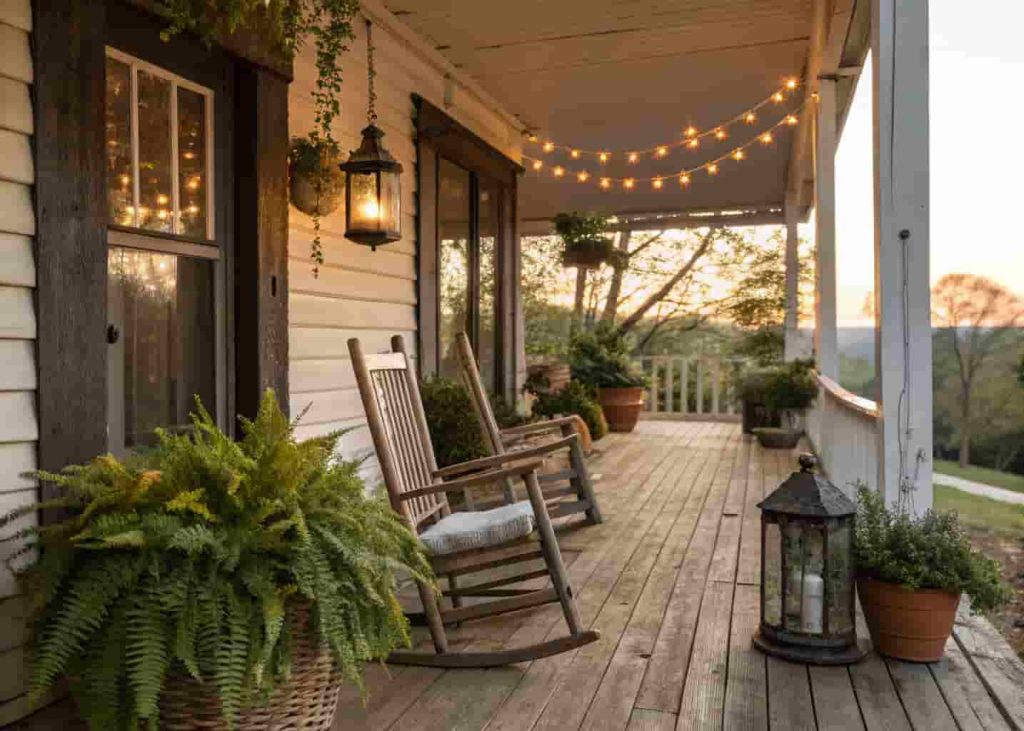
The rustic aesthetic doesn’t stop at the back door. A porch, patio, or even a small balcony can be transformed into an outdoor extension of that same cozy, natural feel. Weathered wooden furniture, a vintage metal lantern, a simple string of warm fairy lights overhead, and a few potted ferns or wildflowers create an outdoor room that feels every bit as intentional as the inside of your home. Add a worn wool blanket to a wooden chair for cool evenings and a tray with candles for after-dark gatherings. Some of the most beautiful rustic spaces I’ve ever seen were actually outdoor ones — a simple covered porch with two old rocking chairs and a view of trees is honestly the most perfect expression of this whole aesthetic. Simple. Real. Timeless.
Conclusion
The rustic aesthetic is one of those styles that actually gets better the more personal you make it. It’s not about buying a whole matching set or following a formula — it’s about layering pieces you love, choosing materials that feel honest, and creating spaces that make you breathe a little slower the moment you walk in. Start small if you need to. One reclaimed wood shelf. One chunky throw. One dried botanical in a ceramic vase. You’ll feel the difference immediately, and from there it just grows naturally — the way the best spaces always do. Rustic style is less about how a room looks and more about how it feels. And when it’s done right, it feels like home.