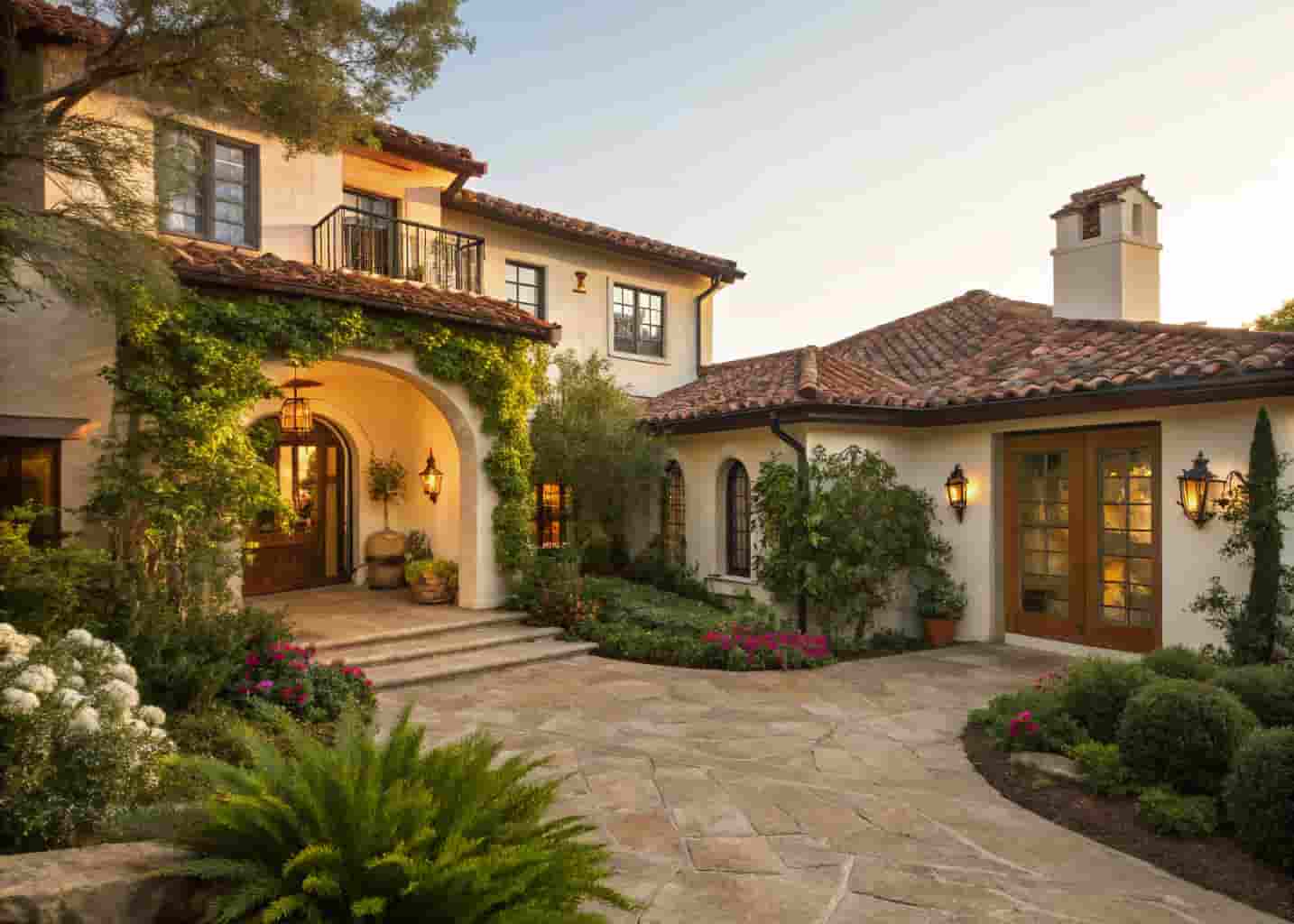
There is something about a Mediterranean villa exterior that just stops you in your tracks. Maybe it is the warm terracotta roof tiles glowing in the afternoon sun, or the way a wrought iron gate looks like it belongs in a painting. Whatever it is, this style has a way of making a house feel like a home — a real, lived-in, sun-soaked home. I remember the first time I drove through a neighborhood with a row of Mediterranean-style homes and literally pulled over to stare. The details were everything. And that is exactly what we are talking about today — the specific exterior details that take a Mediterranean villa from “nice house” to “wow, who lives there?”
The Magic of Terracotta Roof Tiles
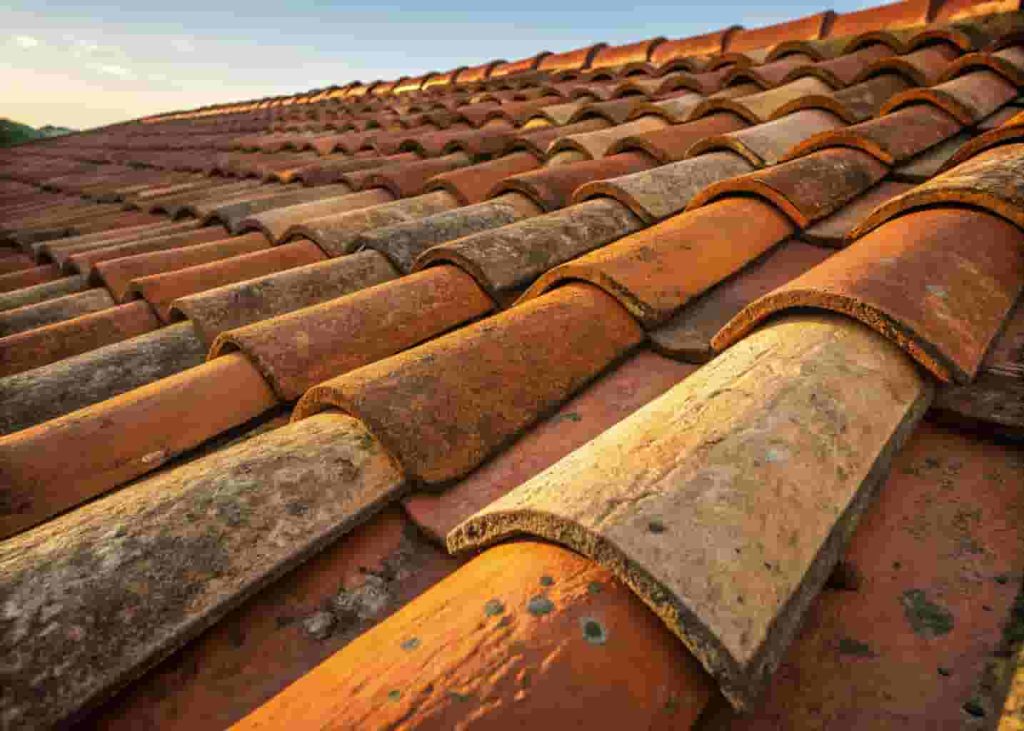
Nothing says Mediterranean villa exterior quite like a terracotta roof. Those rounded, barrel-shaped clay tiles have been used for centuries across Spain, Italy, Greece, and Southern France — and for good reason. They handle heat beautifully. They age even better. Over time, the color deepens and develops a patina that no paint color can fake. A brand-new terracotta roof looks lovely, but a twenty-year-old one looks like a piece of art. If you are building or renovating, do not skip this detail. Some homeowners try to cut costs with concrete tile lookalikes, and while they are fine, there is a warmth and texture to real clay that reads differently from the street. Pair them with white or warm cream stucco walls and you have already nailed the foundation of the whole look.
Stucco Walls Done Right
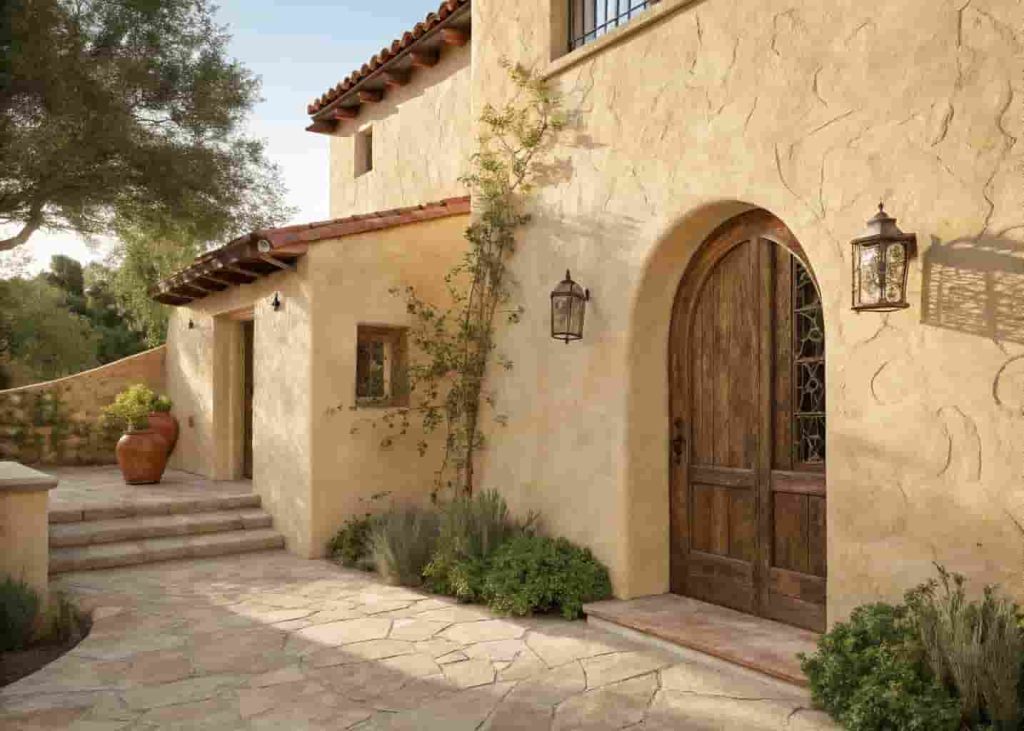
Stucco is the skin of a Mediterranean home. Smooth, slightly textured, and almost always in a warm neutral — think creamy white, soft sand, warm ivory, or pale ochre. The finish matters more than most people realize. A flat, overly perfect stucco finish can feel cold and modern. What you want for a true Mediterranean villa exterior is a hand-troweled or sand finish with just enough texture to catch the light and cast tiny shadows throughout the day. That subtle variation is what gives the wall life. It changes as the sun moves. It looks different at 8 in the morning than it does at 5 in the evening. Some homeowners also add a limewash technique over the stucco for an even more aged, European look. It is one of those details that photographs beautifully and makes the whole home feel like it has been there for generations.
Arched Doorways and Windows
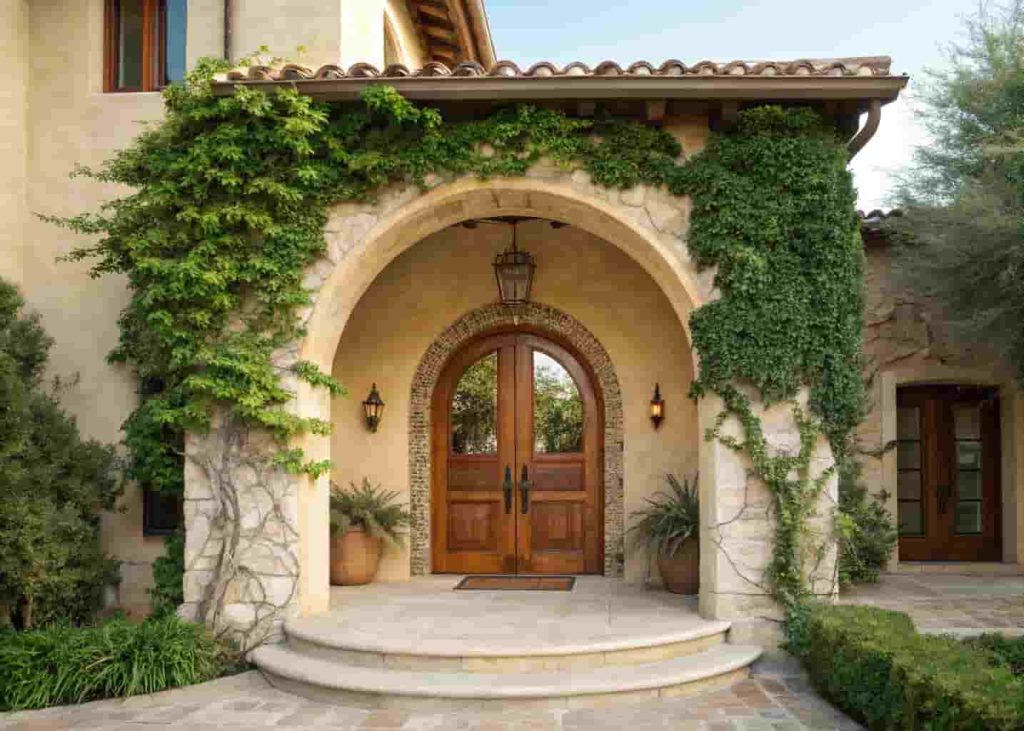
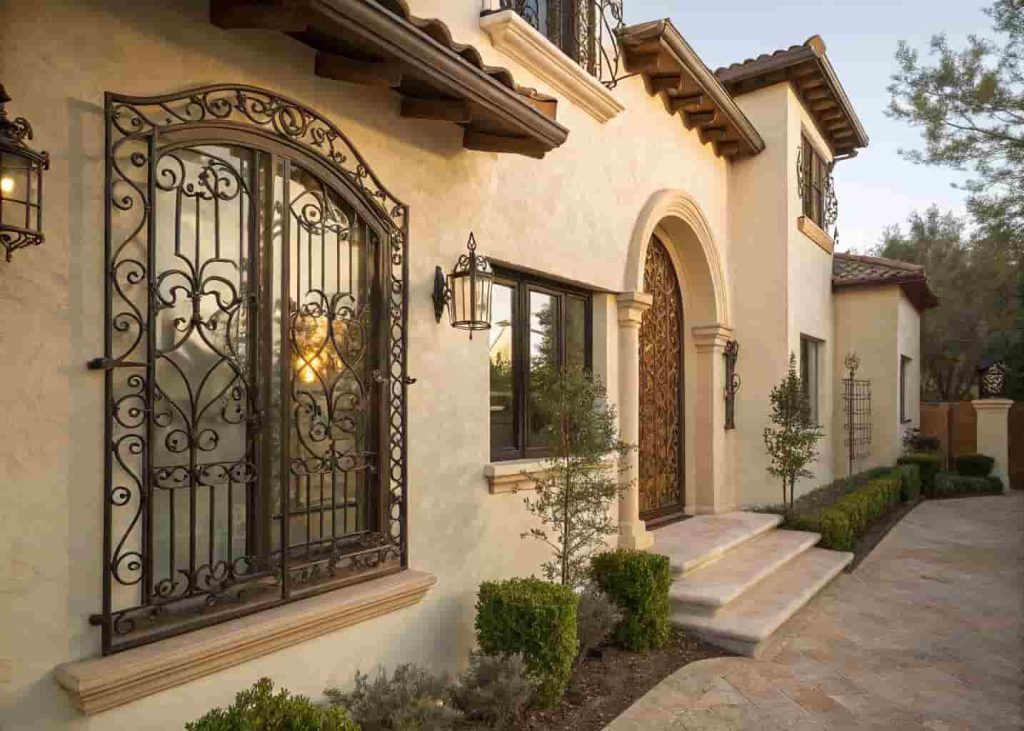
The arch is probably the single most recognizable detail of Mediterranean architecture. Walk past any home with arched windows or a curved front entry and your brain immediately registers “Mediterranean.” It is that strong of a visual cue. Arched openings soften the whole exterior. They make a home feel less boxy, more organic, almost like it grew out of the landscape rather than being placed on top of it. For a Mediterranean villa exterior, arches can appear over the front door, above windows, inside a covered porch or loggia, and even over a driveway gate. The key is consistency — if you use arches in one place, repeat them elsewhere so the design feels intentional. A tall, dramatic arch over the front entry paired with smaller arched windows flanking it creates a rhythm that is both elegant and welcoming.
Wrought Iron Accents
Wrought iron is the jewelry of a Mediterranean home. Window grilles, balcony railings, gate hardware, lantern-style light fixtures, and even door handles — all of these in wrought iron add a layer of craftsmanship and character that feels authentically Old World. The texture is important here. Machine-stamped iron looks flat. Hand-forged or hand-finished iron has a slightly uneven quality to it that is deeply appealing up close. On a Mediterranean villa exterior, wrought iron window grilles are one of my personal favorite details. They frame the windows beautifully, add a sense of security without feeling prison-like, and cast gorgeous shadow patterns on the stucco wall behind them when the sun hits just right. If a full gate or railing is out of budget, even simple wrought iron lantern sconces flanking the front door make a meaningful difference.
A Covered Loggia or Front Porch
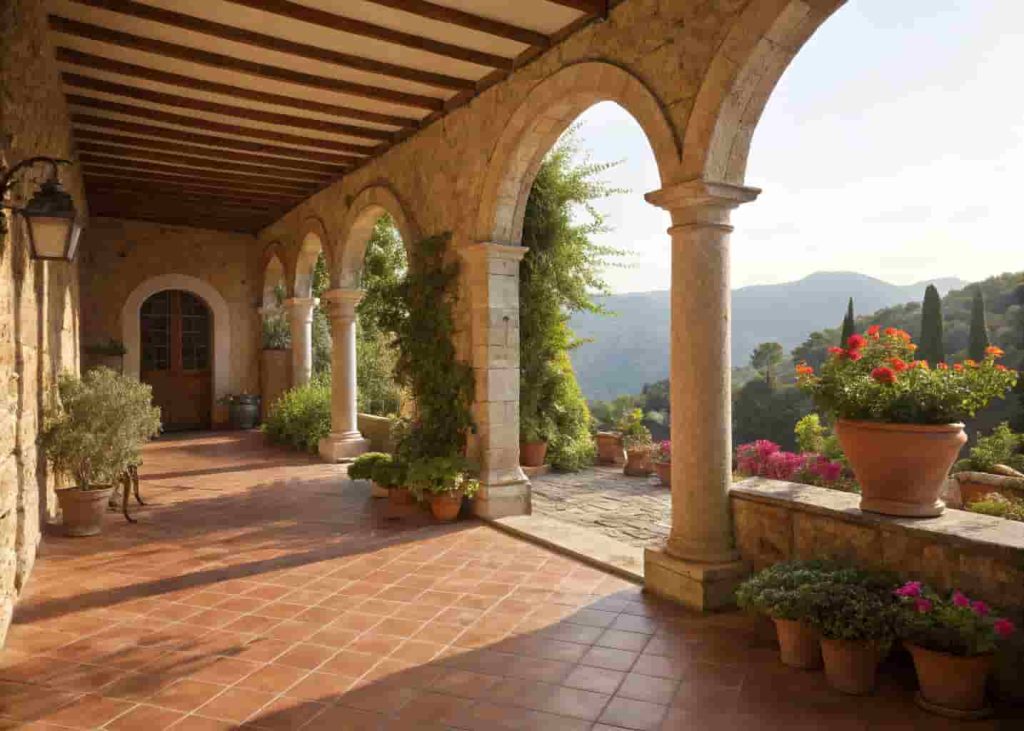
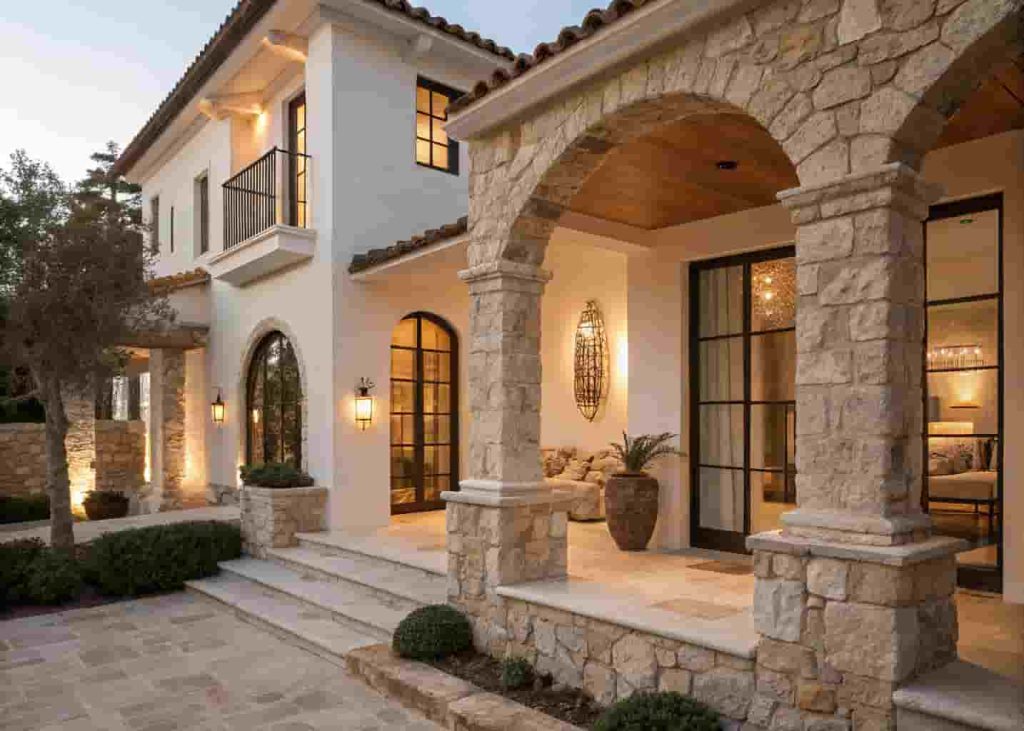
A loggia is essentially a covered outdoor room built into the structure of the house — open on at least one side, supported by columns or arches, and deeply connected to Mediterranean living culture. It is the space where you have your morning coffee, where guests linger after dinner, where the indoor and outdoor worlds blur together in the best possible way. From an exterior design standpoint, a loggia or covered front porch adds tremendous visual depth to a Mediterranean villa exterior. It creates shadow, dimension, and a sense of layering that a flat facade simply cannot achieve. The columns matter. Stone or plaster columns with simple capital details look far more authentic than basic wood posts. Add terracotta tile flooring inside the loggia, hang a simple lantern overhead, and put a pair of terracotta urns at the entrance — suddenly you have a space that looks like it belongs in Tuscany.
Courtyard Walls and Entry Gates
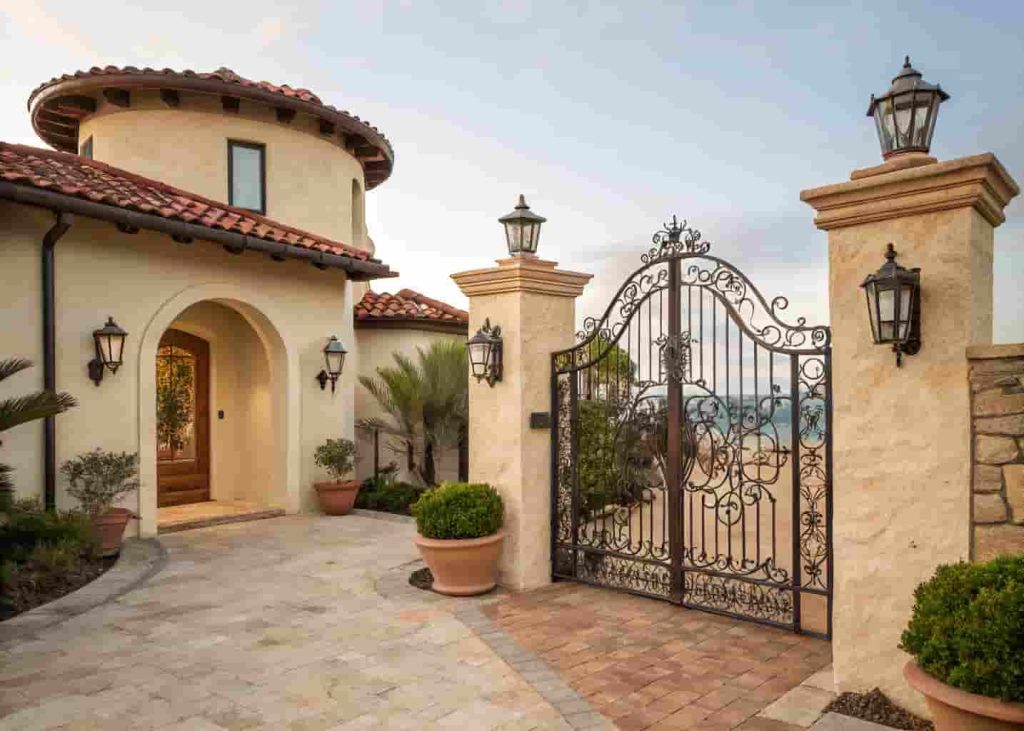
One of the most romantic features of Mediterranean architecture is the sense of arrival — that feeling of entering a private world. Courtyard walls and entry gates are central to creating that experience. A low stucco wall topped with terracotta coping tiles, broken up by a wrought iron gate, does something to a property that landscaping alone never can. It defines the boundary between public and private in a way that feels gracious rather than fortress-like. For a Mediterranean villa exterior, the entry gate is a huge opportunity for detail. Tall arched gates with hand-forged hardware, flanked by stone pillars with built-in lanterns, immediately set the tone before a guest even reaches the front door. Even a modest home can be elevated dramatically with a well-designed entry wall and gate. It signals intention. It says someone thought carefully about every inch of this property.
Terracotta and Mosaic Tile Details
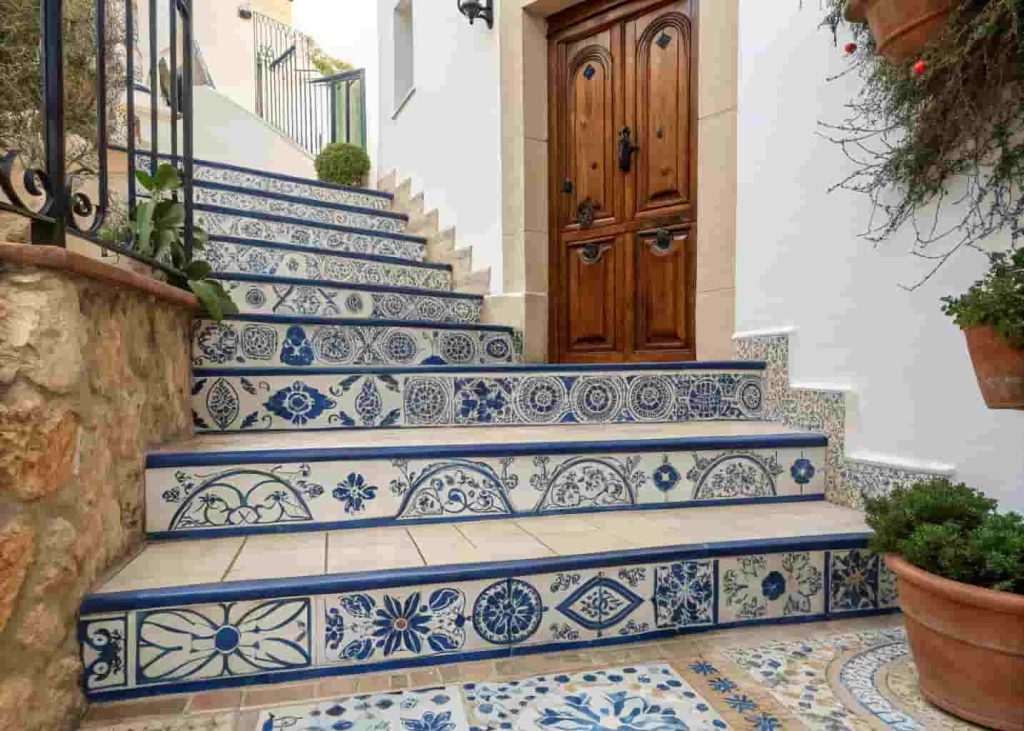
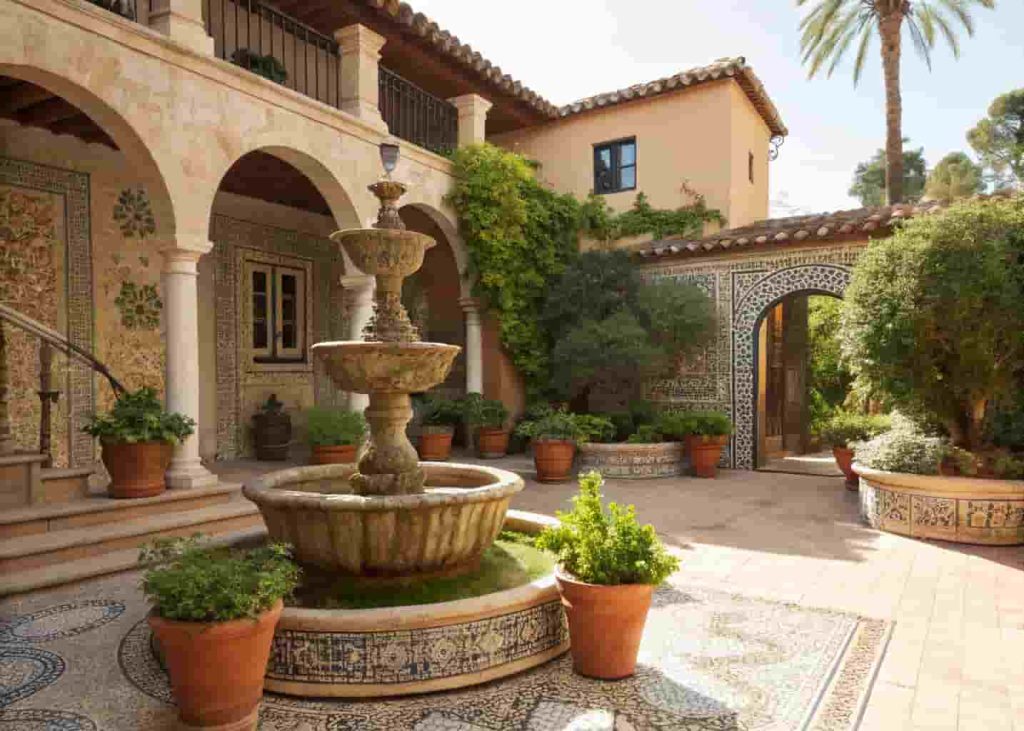
Tile is not just for bathrooms and kitchens. In Mediterranean architecture, decorative tile appears all over the exterior — framing doorways, edging stair risers, lining fountain basins, and accenting window surrounds. Hand-painted azulejo tiles from Portugal, colorful Talavera tiles from Mexico and Spain, and simple terracotta field tiles all feel right at home on a Mediterranean villa exterior. A staircase leading to a front door becomes a showpiece when each riser features a hand-painted blue and white tile pattern. A plain stucco wall becomes a focal point when a small mosaic medallion is set into it near the entry. These tile moments are small in scale but enormous in impact. They are the kind of detail that makes visitors stop and lean in for a closer look. They tell a story. And they age beautifully — often looking better with decades of sun and weather than they did on day one.
Stone Accents and Columns
Natural stone brings a grounded, ancient quality to a Mediterranean villa exterior that no other material quite matches. Stone appears in many forms in this style — as column bases, window and door surrounds, accent walls, fountain structures, and garden borders. Limestone is particularly popular because it has a soft, warm, slightly porous quality that suits the Mediterranean palette perfectly. It weathers beautifully and develops character with age. If a full stone facade feels like too much — or too expensive — stone accents at the corners of the house, around the front door, or as a base course along the bottom of the stucco walls can achieve a similar effect. Columns with stone bases and plaster shafts are a classic combination. The contrast between the rough-hewn stone and the smooth plaster creates the kind of textural layering that makes a facade endlessly interesting to look at.
Wooden Shutters and Doors
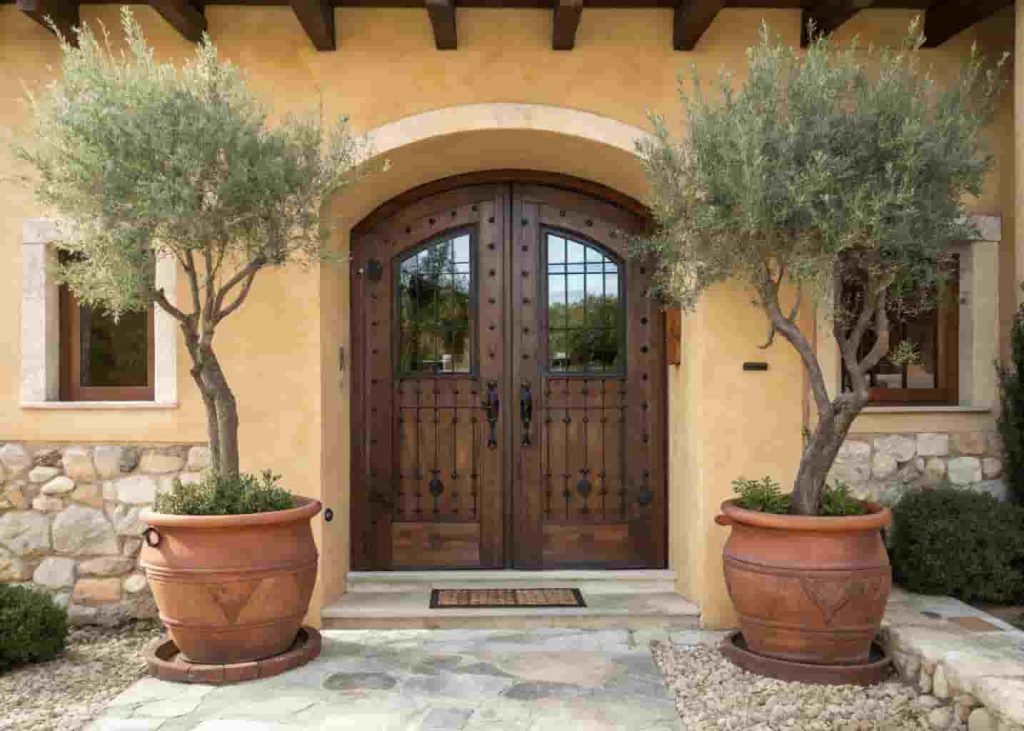
Wood brings warmth. On a Mediterranean villa exterior, solid wood shutters and doors are the details that make the whole composition feel complete. The shutters are functional — they block fierce summer heat and protect windows from coastal wind — but they are also purely beautiful. Traditional Mediterranean shutters are louvered, painted in colors like deep forest green, faded blue-grey, earthy brown, or classic black. They create a strong pattern rhythm across the facade, alternating between the warm stucco wall and the rich color of the shutter. The front door deserves special attention. A pair of tall, solid wood doors with hand-forged iron hardware, perhaps set within an arched surround and flanked by potted olive trees, is one of those details that photographs from across the street and looks incredible in every light. Dark walnut, reclaimed oak, or painted wood — all work beautifully in this style.
Outdoor Fountains and Water Features
Water has always been central to Mediterranean courtyard culture. The sound of a fountain in a garden or courtyard is one of the most soothing things imaginable, and visually, a well-designed water feature becomes an anchor point for the entire outdoor space. For a Mediterranean villa exterior, a wall-mounted lion’s head fountain spilling into a simple basin, or a central tiered fountain surrounded by terracotta pots and trailing vines, adds that finishing touch that makes the exterior feel complete rather than just pretty. Stone, terracotta, and hand-painted tile are the natural materials here. The scale does not have to be grand — even a modest wall fountain adds movement, sound, and a sense of place. It transforms a courtyard from a pretty outdoor space into an experience. Guests gather near it. Kids love it. And it photographs beautifully in every season.
Mediterranean Landscaping That Completes the Look
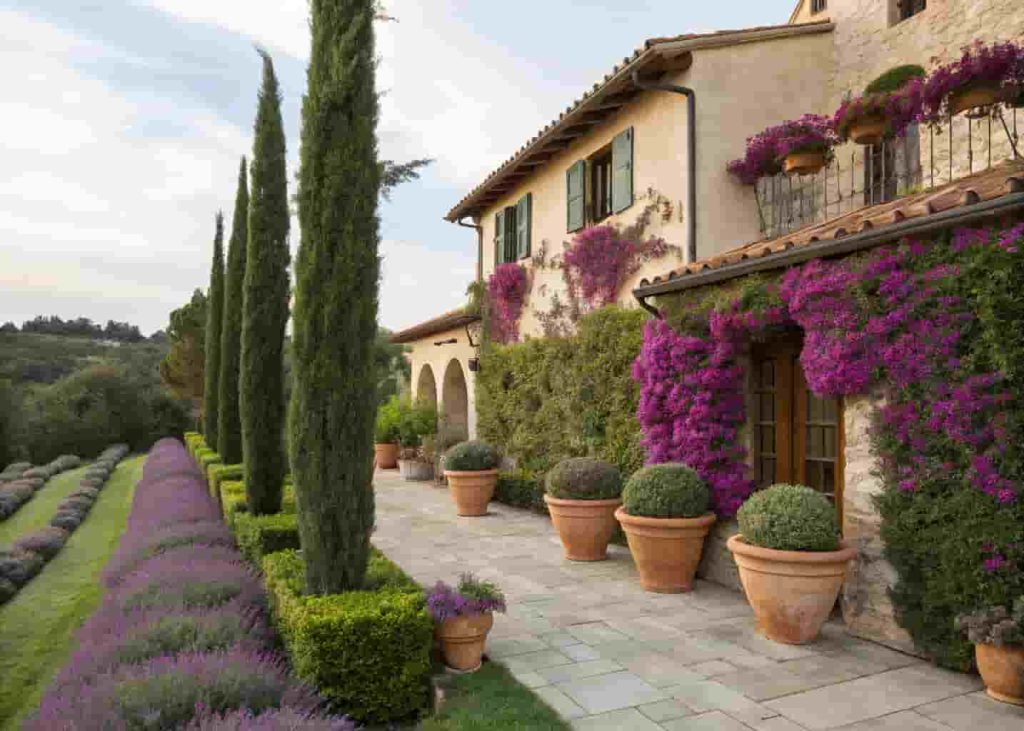
The landscaping around a Mediterranean villa exterior is not an afterthought — it is part of the architecture. The right plants do more than fill space. They reinforce the style, frame the home, soften the edges, and add layers of color and texture that change with every season. Think tall, slim Italian cypress trees standing like sentinels at the entry. Lavender borders lining a stone path. Olive trees in terracotta urns flanking the front door. Bougainvillea cascading over a stucco wall in shades of magenta and coral. Rosemary spilling over a garden border. These are the plants of the Mediterranean basin, and they feel exactly right against terracotta, stucco, and stone. They also tend to be drought-tolerant, which is a practical bonus. The goal is lush but not manicured — a little wildness, a little structure, the sense that things are growing happily on their own.
Outdoor Lighting That Sets the Mood
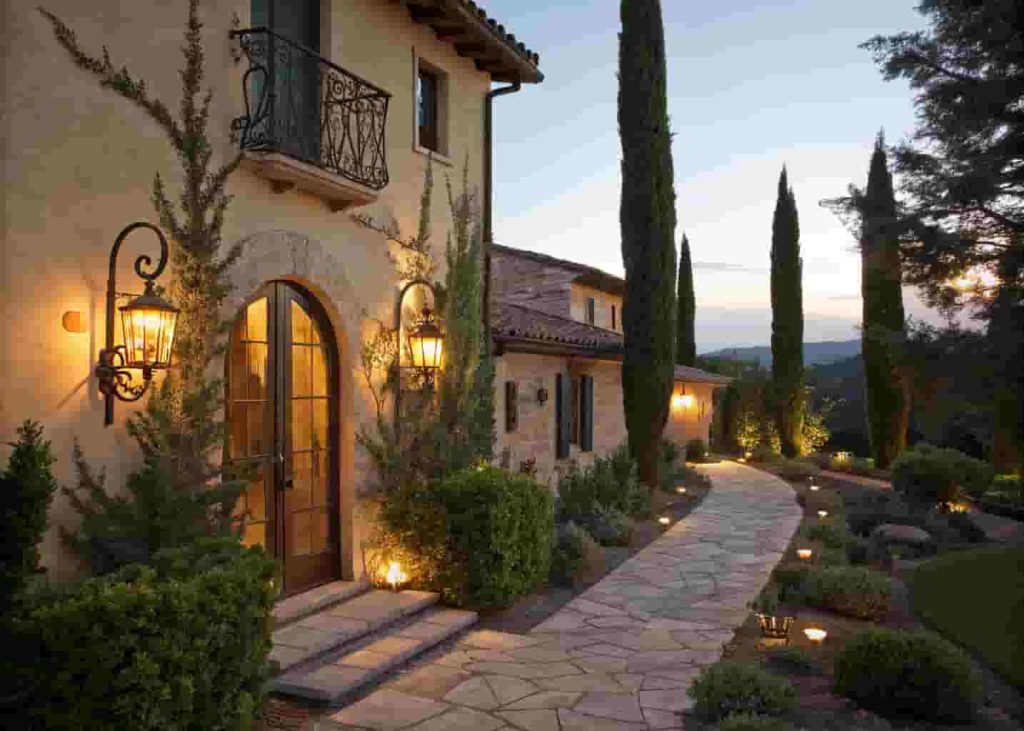
Lighting is the detail that most homeowners get right during the day and completely forget about at night. Good exterior lighting on a Mediterranean villa can make the whole home look like something out of a travel magazine after dark. The key is warm, low, layered light — not bright floodlights washing everything out. Wrought iron lanterns mounted on either side of the front door, path lights along a stone walkway, uplighting aimed at the base of a cypress tree, a soft glow illuminating an arched entry from below — these create atmosphere. Wall-mounted sconces with amber-toned bulbs cast the most beautiful warm pools of light on stucco and stone. Up-lighting a fountain or a particularly beautiful olive tree creates a focal point visible from the street. Good outdoor lighting makes the Mediterranean villa exterior just as beautiful at 9 PM as it is at noon, and that is the whole point of thoughtful design.
Conclusion
Every one of these details works together to create something bigger than the sum of its parts. That is the real magic of the Mediterranean villa exterior style — it is not about any single element but about the way terracotta, stucco, stone, iron, wood, water, and plants all speak the same visual language. You do not have to do all twelve at once. Start with the roof tiles. Add wrought iron sconces. Plant a pair of olive trees by the front door. Each detail you add brings the whole vision closer. Whether you are building from scratch, renovating an existing home, or just dreaming from your couch on a Tuesday night, these details are your roadmap to a home that feels genuinely warm, deeply beautiful, and completely timeless.