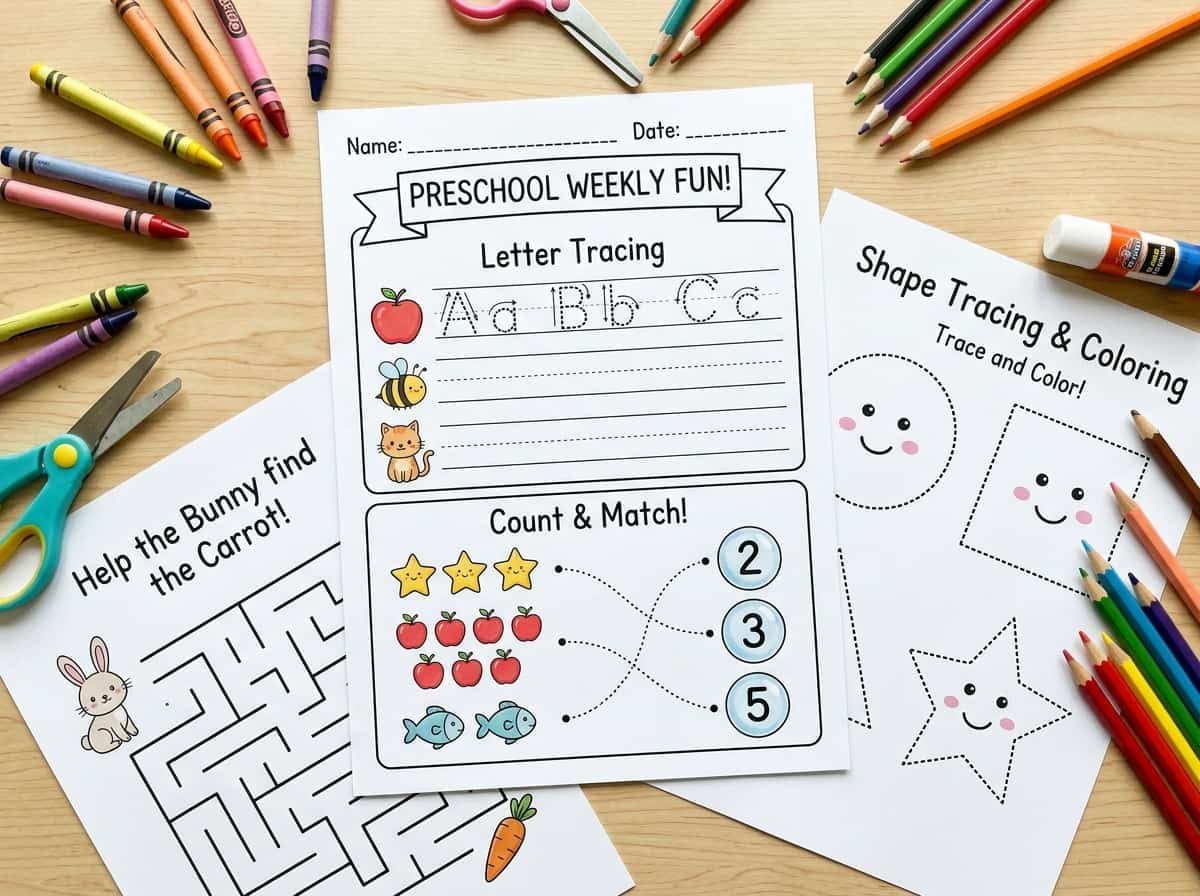
Every parent knows the feeling. It is a rainy afternoon, the toys are scattered everywhere, and your preschooler says, “I’m bored,” for the fifth time. You want something calm and useful, but you do not want another screen. That is where printable preschool worksheets come in. A few simple pages, a handful of crayons, and ten quiet minutes can turn a restless day into a happy learning moment. The trick is to treat worksheets as small games, not tests. This week, you can try letters, counting, shapes, tracing, and cutting activities that need nothing fancy. Grab your printer, sharpen a few pencils, and let’s make learning at home feel easy and fun.
Why Preschool Worksheets Work Best When They Feel Like Play
Preschoolers learn through their hands, eyes, and imagination. A worksheet works best when it feels like part of play, not a sit-still task. When a child circles the apple, colors the star, or places a sticker on a number, they are practicing focus, matching, and small muscle control without even noticing. Short pages help too. Three to five minutes of full attention beats twenty minutes of fussing. Let your child choose the page, the crayon color, or where to sit. That tiny bit of choice makes them feel proud and in charge. When the page ends, celebrate the effort, not the neatness. A wobbly line drawn with a big smile is a win.
Letter Recognition Worksheets for Little Learners
Start with letter recognition by keeping it friendly and visual. Look for pages that show one big letter with a few pictures that start with that sound, like a bee for B or a sun for S. Ask your child to point to the letter, say its sound, and color the matching pictures. Do not rush through the whole alphabet. Pick one or two letters each day and revisit them during snack time or on a walk. Letters in their own name are a great place to begin because they already mean something special. Hunting for those letters on cereal boxes and street signs makes the worksheet come alive.
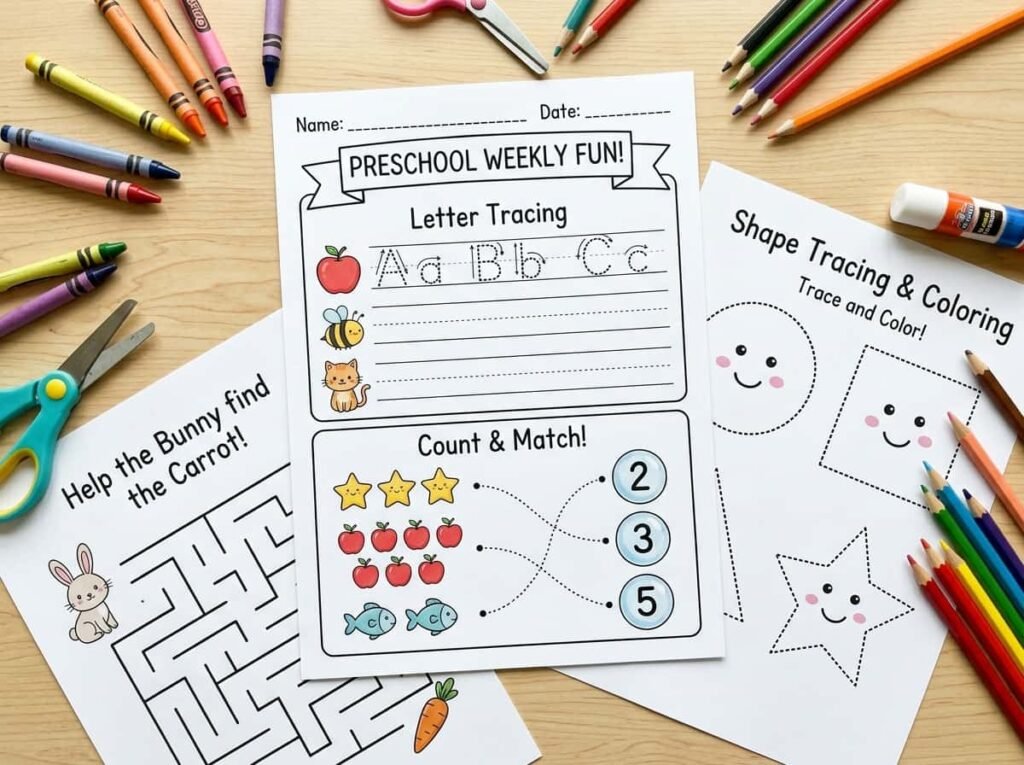
A simple trick is the letter hunt. Give your child a page full of mixed letters and a dot marker, a bingo dauber, or even a small sticker. Their job is to find every letter A and mark it. This turns reading practice into a treasure game. If the page feels hard, cover half of it with a sheet of paper so there is less to scan. Praise the searching, not just the finding. When your child gets tired, stop and come back tomorrow. Short, happy sessions build confidence far better than long, tiring ones, and confident kids are the ones who ask to do “one more page.”
Number and Counting Worksheets Kids Actually Enjoy
Counting worksheets work best when the numbers connect to real things. Choose pages with pictures of ducks, balloons, or ice cream scoops that your child can touch and count one by one. Let them use a finger or a crayon to tap each item so they learn that one number goes with one object. Then bring the idea off the page. Count the stairs, the spoons on the table, or the grapes on their plate. When counting feels like part of daily life, the worksheet becomes a fun way to show what they already know. Start with numbers one to five, then slowly stretch to ten.
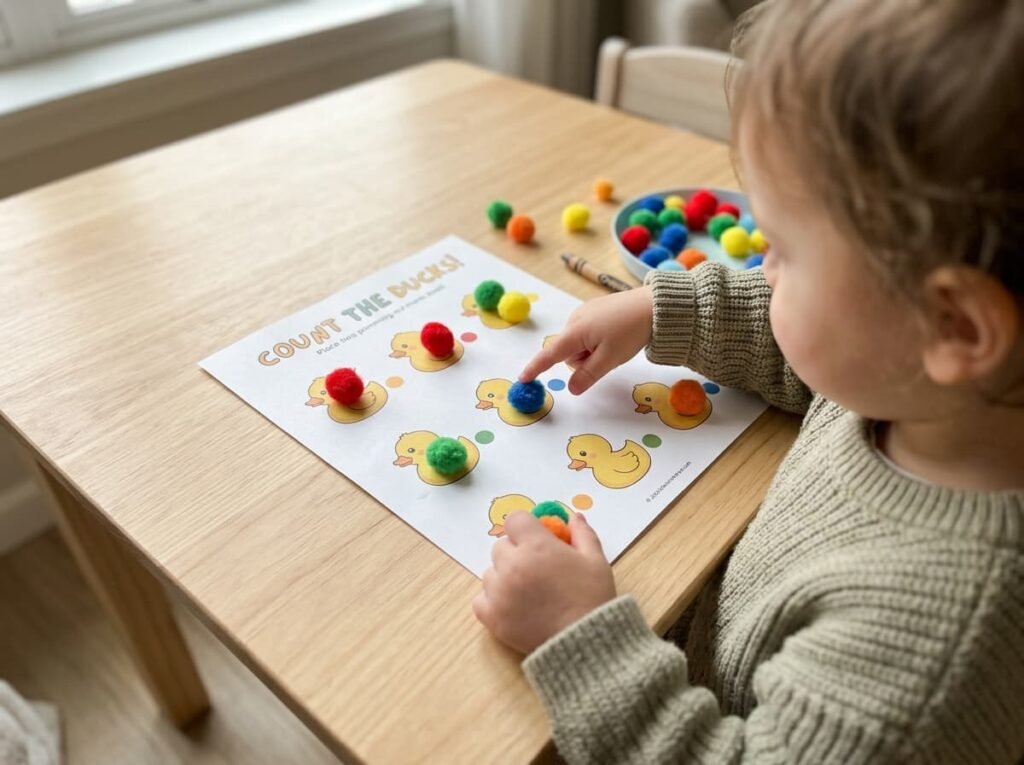
Add a little movement to keep things lively. Roll a large foam dice, count the dots, and then color that many stars on the page. You can also use small buttons, pom-poms, or dry beans as counters placed right on the worksheet. Tracing numbers is helpful, but do not worry about perfect shapes. Many preschoolers write numbers backward, and that is completely normal. Gently show the right path with your finger and let them try again. Dot-to-dot pages and simple “how many?” circles also make great quiet-time activities. The goal is comfort with numbers, so keep your tone light and cheerful.
Shape and Color Worksheets for Early Learning
Shapes and colors are some of the easiest early learning skills to practice at home. Pages that ask your child to color all the circles red and all the squares blue teach two ideas at once. Begin with circle, square, and triangle, then add rectangle and star when they feel ready. Talk about the shapes around your home: the round clock, the square window, the triangle slice of pizza. A shape walk around the house with a clipboard makes the page feel like a real mission. Let your child draw what they find. Seeing shapes in everyday things helps the lesson stick far longer than a page alone.
| Activity | What to Do | Why Kids Enjoy It |
|---|---|---|
| Color sorting | Color each object with the matching crayon | Feels like a fun puzzle |
| Shape hunt | Circle the shapes hidden in a busy picture | Works like a treasure search |
| Match-up lines | Draw a line from each shape to its twin | Quick and satisfying |
| Rainbow pages | Color the stripes in rainbow order | Bright and creative |
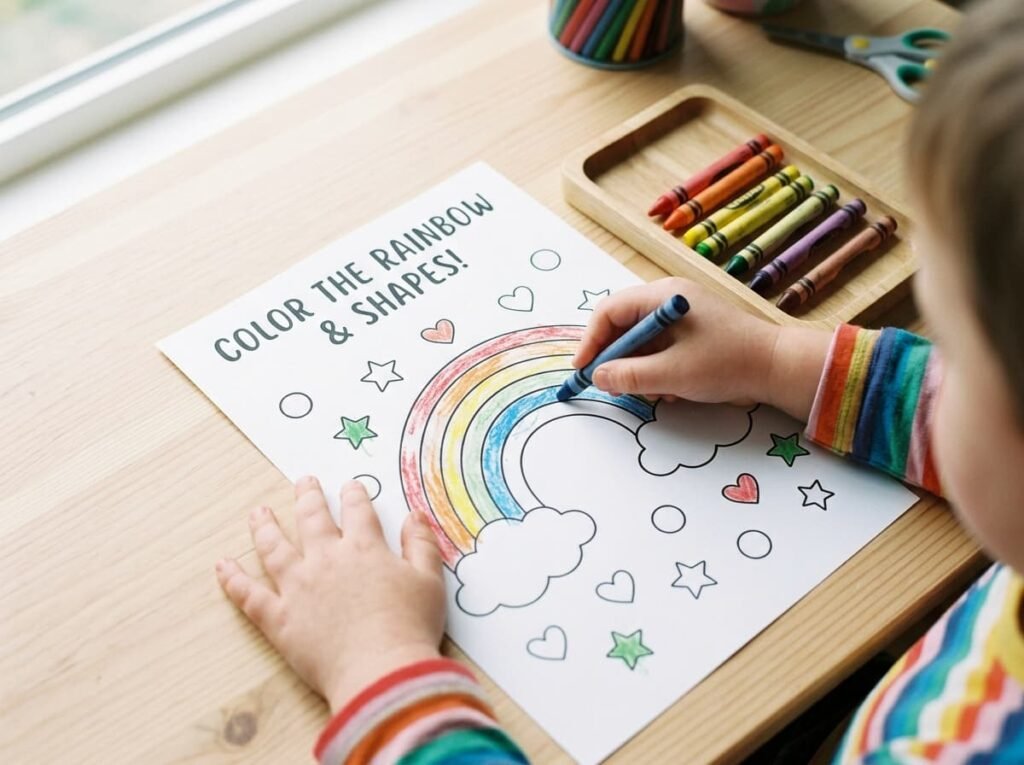
For color practice, rainbow pages and color-by-shape worksheets are a lovely choice. Offer a small tray with only the crayons you need so your child is not overwhelmed by a giant box. Name the colors out loud as they work, and ask simple questions like, “Which color should we use for the sun?” There are no wrong answers here, and a purple banana is perfectly fine for now. The goal is to help them name and notice colors, not to follow strict rules. Later, ask them to find three things in the room that match the color they just used. That small game doubles the learning in two minutes.
Pre-Writing and Tracing Worksheets for Tiny Hands
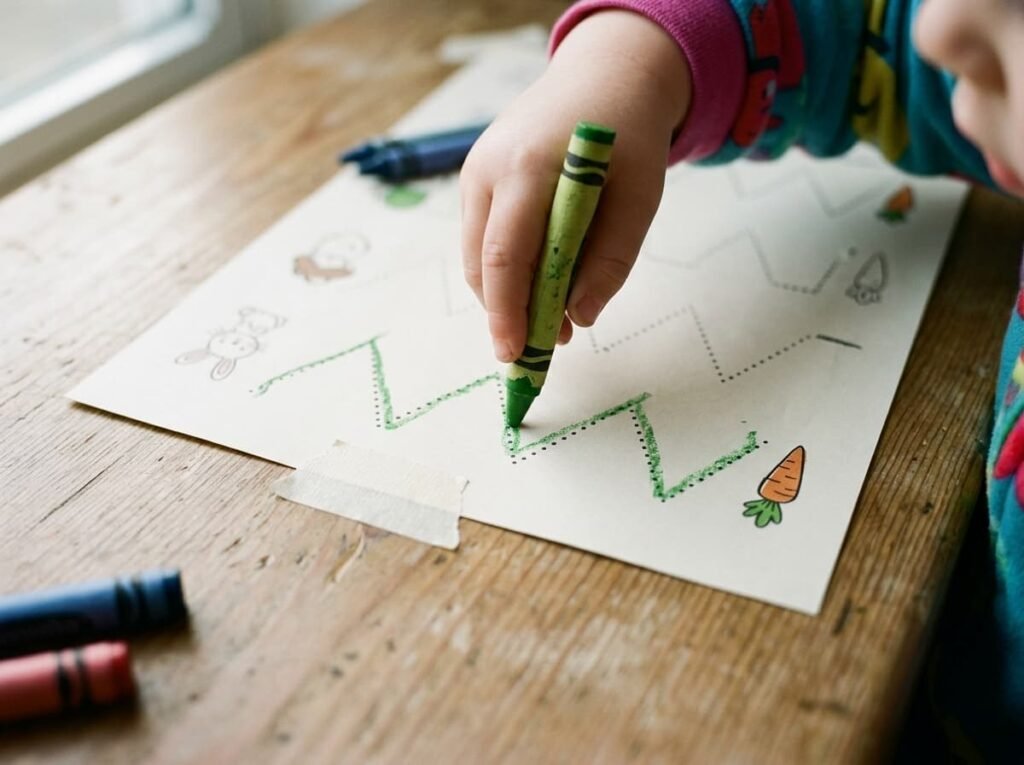
Before a child can write letters, their hands need practice making lines and curves. Pre-writing worksheets with straight lines, zigzags, loops, and waves are made for this. Think of them as little roads for a crayon to travel. Dotted trails leading to a cartoon animal or a snail’s shell make the task feel like a story. Use thick crayons or short pencils because they are easier for tiny fingers to hold. Pay attention to how your child holds the crayon, but do not fix it every time. Comfort comes first, and a relaxed grip grows stronger with practice. Keep the paper steady with a small piece of tape on the table.
If tracing feels frustrating, change the tool instead of the page. Try a dry-erase pocket with a marker, a finger in a tray of salt, or a paintbrush with water on a chalkboard. Moving the whole arm in big shapes helps warm up the hand before small shapes on paper. Always celebrate the starting point, because lines that begin at the top and move down or left to right build good habits early. If your child gets upset, take a break and revisit tomorrow. Tracing should stay gentle and pressure-free. A few wobbly lines today become steady ones in a few weeks, so patience truly pays off.
Simple Cut-and-Paste Worksheets for Fine Motor Skills
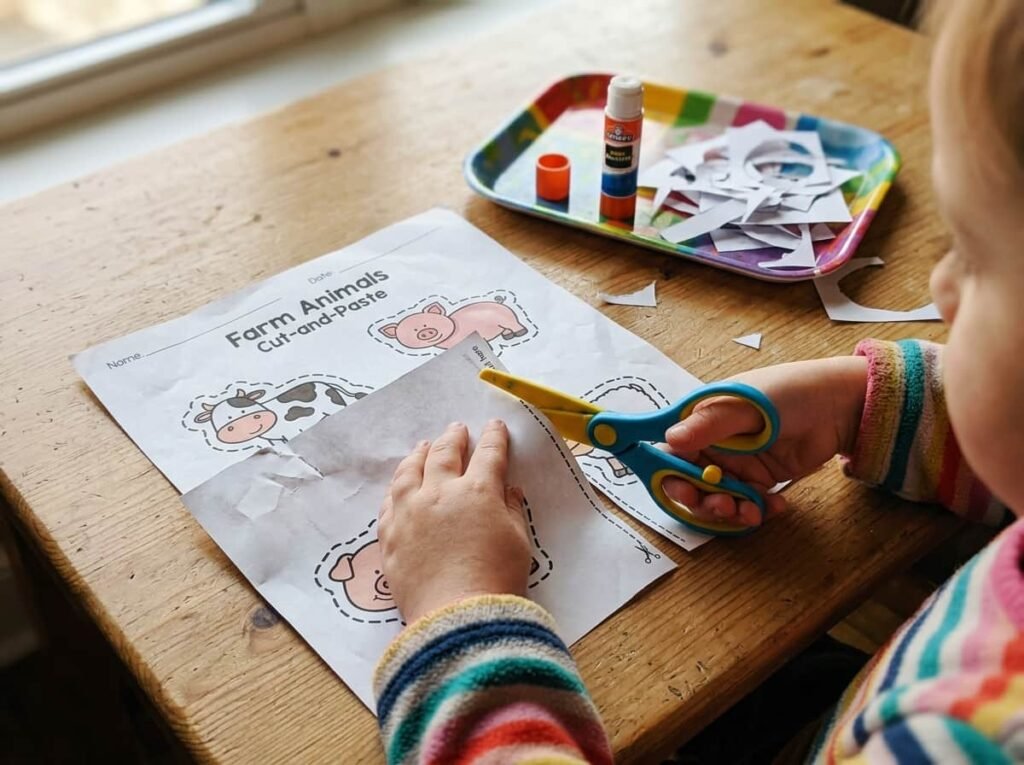
Cut-and-paste worksheets are wonderful for fine motor skills, which means the small muscles in the hands and fingers. Safe child scissors, a glue stick, and a page with simple shapes are all you need. Start with cutting along straight, thick lines, then move to gentle curves. Ask your child to cut out pictures and glue them where they belong, such as farm animals on a barn or healthy snacks on a plate. This builds sorting skills along with hand strength. Sit nearby, but let your child do the work. Messy edges and crooked glue are part of the process, and every snip makes those little hands stronger.
Make cutting easier by drawing a bold marker line to follow or by folding the paper gently first. Teach your child to hold scissors with the thumb up, like a little thumbs-up sign. If cutting is still hard, let them tear paper into pieces first and glue it into collage shapes. Tearing builds the same hand muscles and feels like play. Keep a small tray nearby for scraps so cleanup stays simple. A tiny dot of glue is plenty, and you can make a game of it by saying, “just a dot, not a lot.” When the page is finished, hang it on the fridge so your child sees how proud you are.
Easy Ways to Make Worksheet Time More Fun at Home
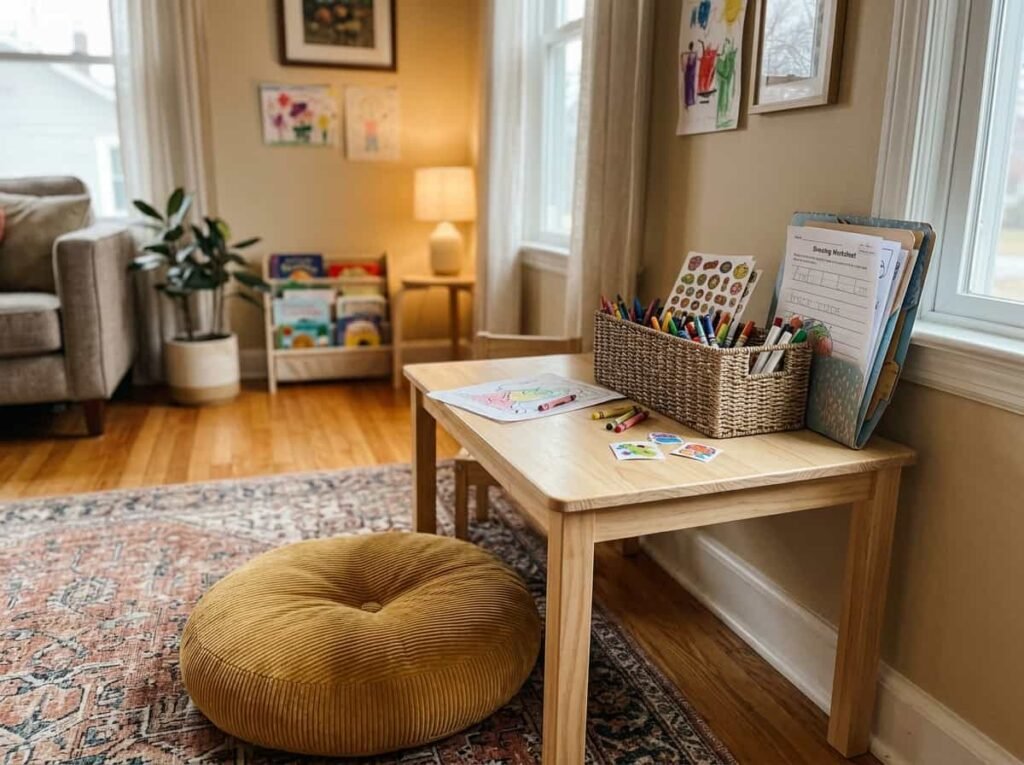
A few small changes can make worksheet time feel special. Set up a cozy spot with a tray, a cushion, and favorite crayons. Pick a regular time, like after breakfast or before quiet time, so your child knows what to expect. Keep finished pages in a folder with their name on it so they can see their own progress grow. Let a stuffed animal “check” the finished work, or give out a sticker for effort. Stay relaxed and curious, and avoid correcting every mistake. When your child feels safe trying, they try more. Learning at home should feel like time together, and the page is simply a fun reason to sit side by side.
Quick Tip: Keep a “worksheet basket” with crayons, a glue stick, kid scissors, and stickers. When everything is ready in one spot, your child can start right away and you skip the hunt for supplies.
A few more simple ideas to try this week:
- Use dot markers or stickers instead of crayons for a change of pace.
- Slide a page into a clear sleeve and use a dry-erase marker so it can be used again and again.
- Turn it into a story by giving the page a silly theme, like “help the bunny find the carrots.”
- Work together by doing a page of your own beside your child.
- End on a high note by stopping while your child is still happy.
How Often Should Preschoolers Do Worksheets?
For most preschoolers, one to three short worksheet sessions a day is plenty, and each one only needs ten to fifteen minutes at most. Many children do best with just one or two pages. Watch your child, not the clock. If they are smiling and asking questions, keep going a little longer. If they are rubbing their eyes or wandering off, it is time to stop. Mix worksheets with outdoor play, story time, music, and building with blocks, because a child’s learning grows from many kinds of activity. Worksheets are one tool in a big toolbox. Some days you may skip them completely, and that is perfectly fine. Consistency matters more than quantity.
Final Thoughts on Preschool Worksheets
Preschool worksheets are not about rushing your child toward school. They are small, happy moments that build confidence, focus, and curiosity. When you keep pages short, choose activities your child enjoys, and celebrate every attempt, you turn simple paper and crayons into real learning. This week, pick just one type of worksheet from this list, whether it is letters, counting, shapes, tracing, or cutting. Print two pages, set up a cozy spot, and try them together tomorrow morning. Notice what makes your child light up, then build on that. You do not need a perfect plan, only a little time, a smile, and a few crayons. Your preschooler will remember the fun long after the page is done.