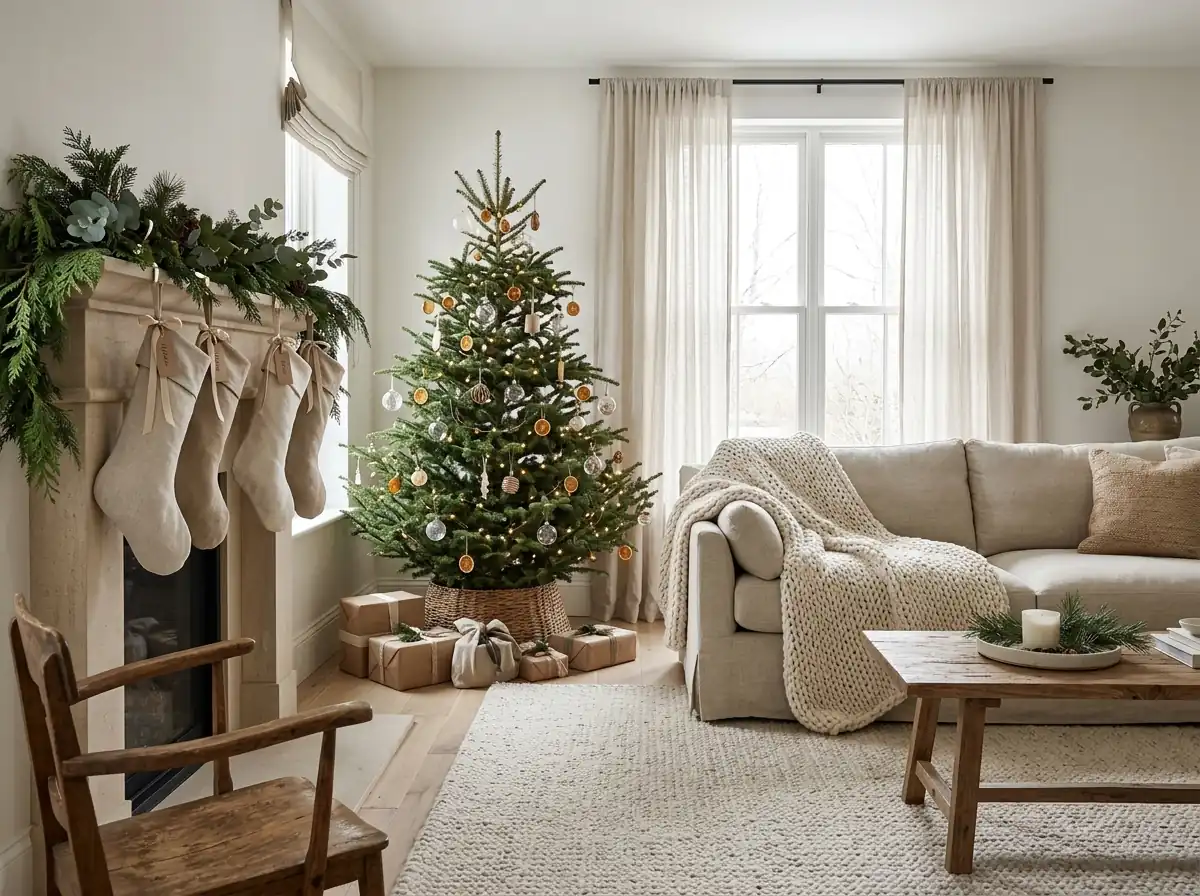
It is the second Saturday of December, the tree is up, and the living room already looks tired. Not untidy, exactly — just loud. Red ribbon on the banister, gold tinsel from three years ago, a box of bright baubles that clash with the sofa, and somewhere in the middle of it all, the calm Christmas you pictured back in November has quietly given up. Most homes do not need more decorations at that point. They need fewer, quieter ones.
That is the whole idea behind neutral Christmas decor. Instead of adding a color scheme on top of your everyday room, you decorate with the materials already in it — wood, linen, wool, glass, stone — and let texture do the work that color usually does. A clear glass bauble catches the tree lights just as well as a red one. A chunky knit throw in oatmeal says winter more honestly than a novelty cushion. The room still reads as Christmas, but it reads as your room first.
Space matters here too. Neutral decorating favors pieces that earn their footprint, and if your floor is already spoken for, this minimalist wall Christmas tree idea shows how far the less-is-more approach can go. Everything below follows the same thinking: nine quiet layers you can add one at a time, in any order, without buying a whole new set of decorations.
The Layering Rule That Keeps Neutral Decor Warm Instead of Empty
- Texture before shine: for every smooth or glossy piece, add something rough, woven, or matte beside it.
- Three materials, repeated: pick wood, one fabric, and one hard material, then repeat them in every room so the house feels connected.
- Warm light only: neutral colors turn grey under cool bulbs, so keep every string and candle in the warm range.
- One soft shine per room: a single gentle metallic moment is allowed — everything else stays matte.
Hold those four rules and the ideas below almost arrange themselves.
1. Build the Tree From Texture, Not Color
Start with the tree, because it sets the tone for everything else. Strip it back to two ornament families: clear glass baubles, which disappear into the branches and simply catch the light, and natural wood ornaments — beads, stars, simple turned shapes — which bring the warmth. Nothing colored, nothing themed. The effect is surprisingly rich, because your eye reads the layers of glass, wood, and green instead of a jumble of competing colors. It is also the cheapest tree you will ever dress, since clear glass and wood never date and mix happily with budget Christmas decor swaps in the rest of the room. The trade-off is real, though: a texture-only tree looks plain in daylight until the lights go on, so this approach belongs to homes that light the tree from late afternoon onward.
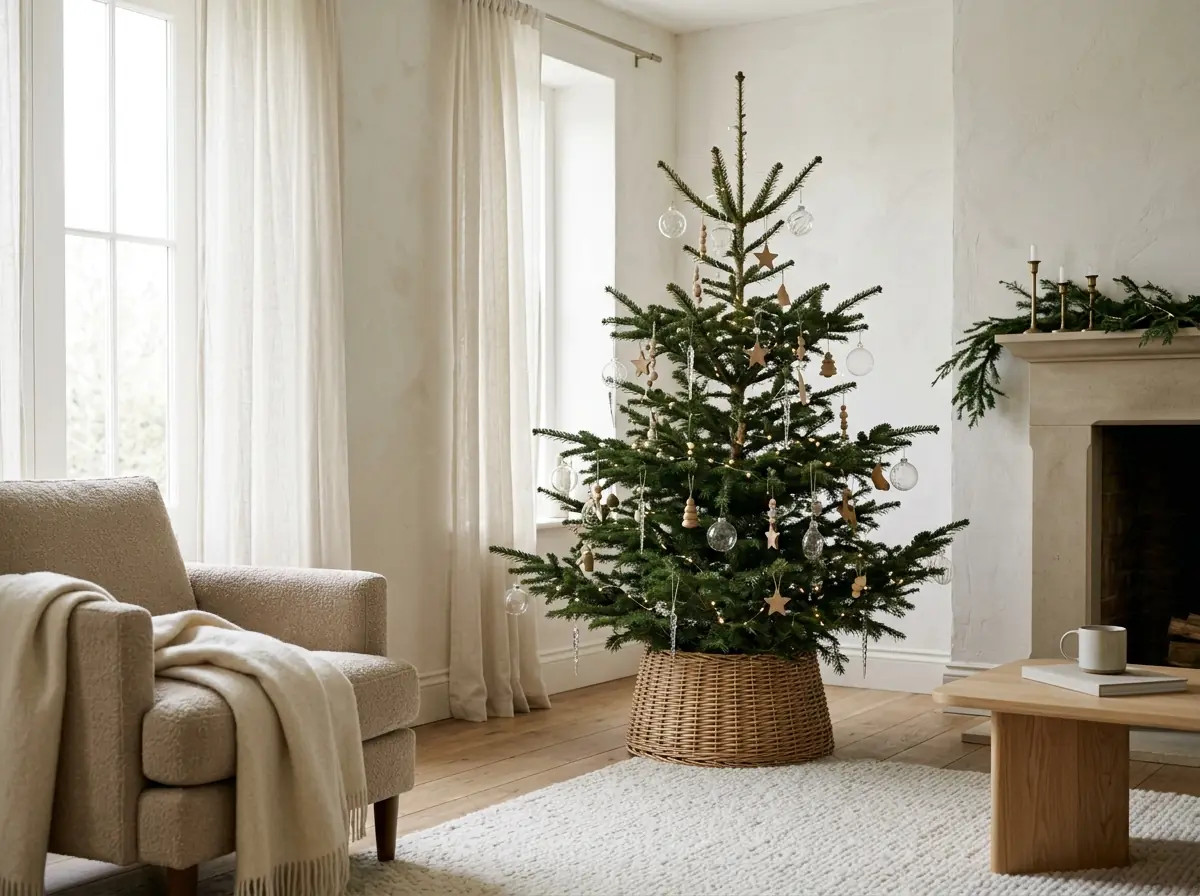
| Tree layer | Material | How much of the tree |
|---|---|---|
| Base layer | Wood, rattan and other matte naturals | Most of it — this is the calm background everything sits on |
| Middle layer | Matte ceramic and unglazed clay | A good middle share, spread evenly so no branch looks dressed twice |
| Top layer | Clear glass | A little, placed where it catches window light and candlelight |
2. Hang Unbleached Linen Stockings With Wooden Name Tags
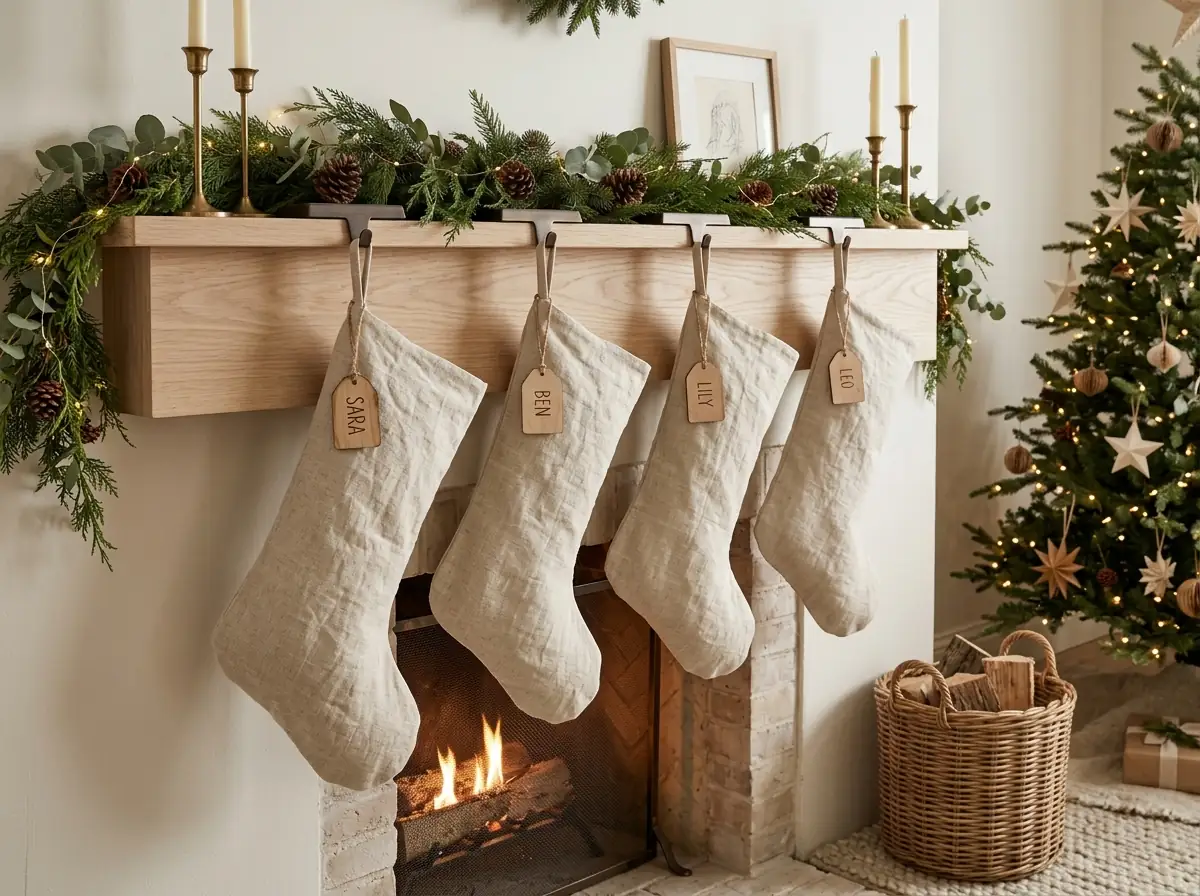
Swap the bright felt stockings for unbleached linen ones in a natural flax tone. Linen hangs with a soft slouch that suits a quiet mantel, and it pairs with almost anything — a stone fireplace, a painted shelf, a simple wooden peg rail. Finish each stocking with a small wooden name tag tied on with twine, one per person, so the set still feels personal rather than hotel-plain. The honest downside: linen creases in storage and looks best given a quick press before hanging, and the tags need ordering or making ahead, names and all, so this is a November job rather than a December one.
3. Stand Bare Winter Branches in a Stoneware Vase
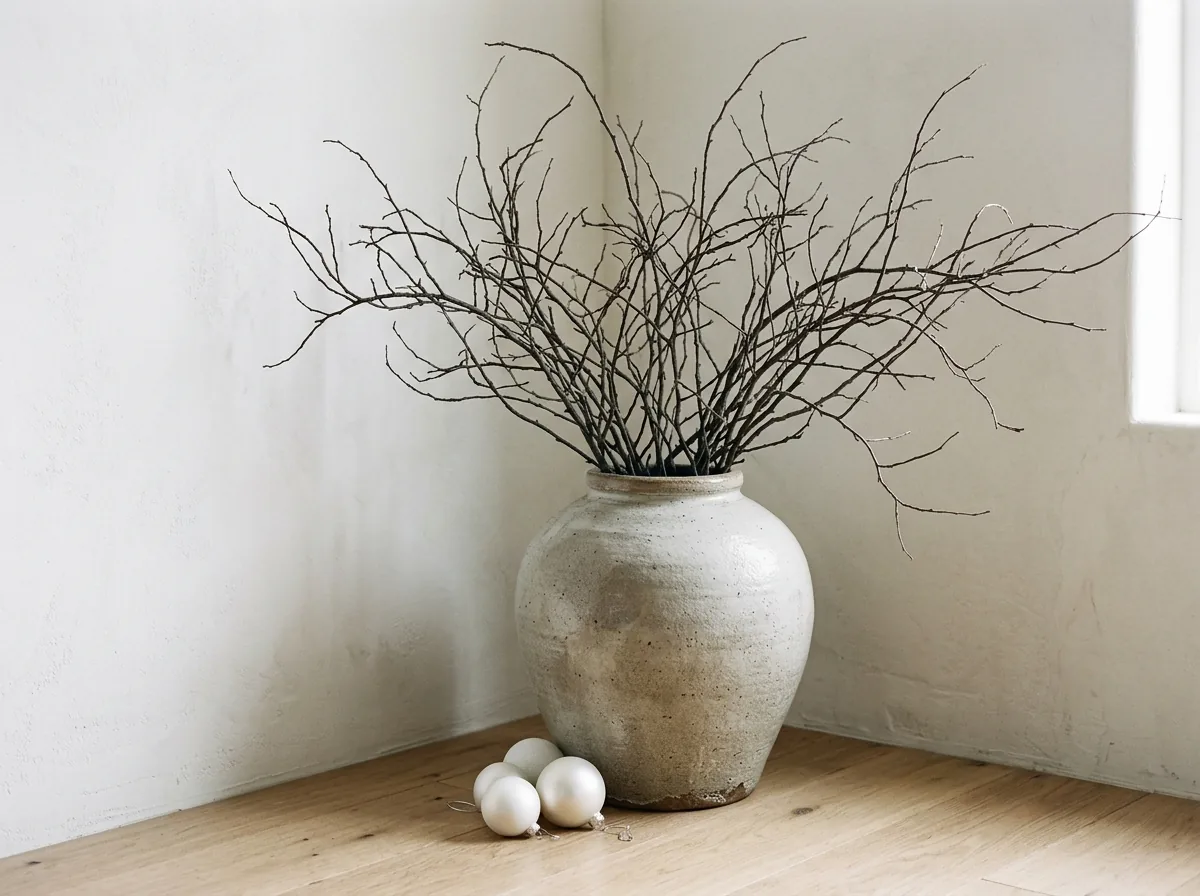
For the corner that a second tree would swamp, fill a heavy stoneware vase with bare winter branches — willow, birch, or whatever your garden prunings offer — and hang exactly three plain white baubles from them. That restraint is the point: three baubles read as deliberate, thirty read as a shrug. Stoneware matters here because its weight keeps tall branches steady and its matte, slightly rough surface is the texture this whole scheme runs on. In most homes this arrangement ends up the most photographed thing in the room. Just know that real branches drop the odd bit of bark and twig, so the vase earns a quick sweep around its base every few days.
4. Let Knit and Wool Textiles Carry the Sofa
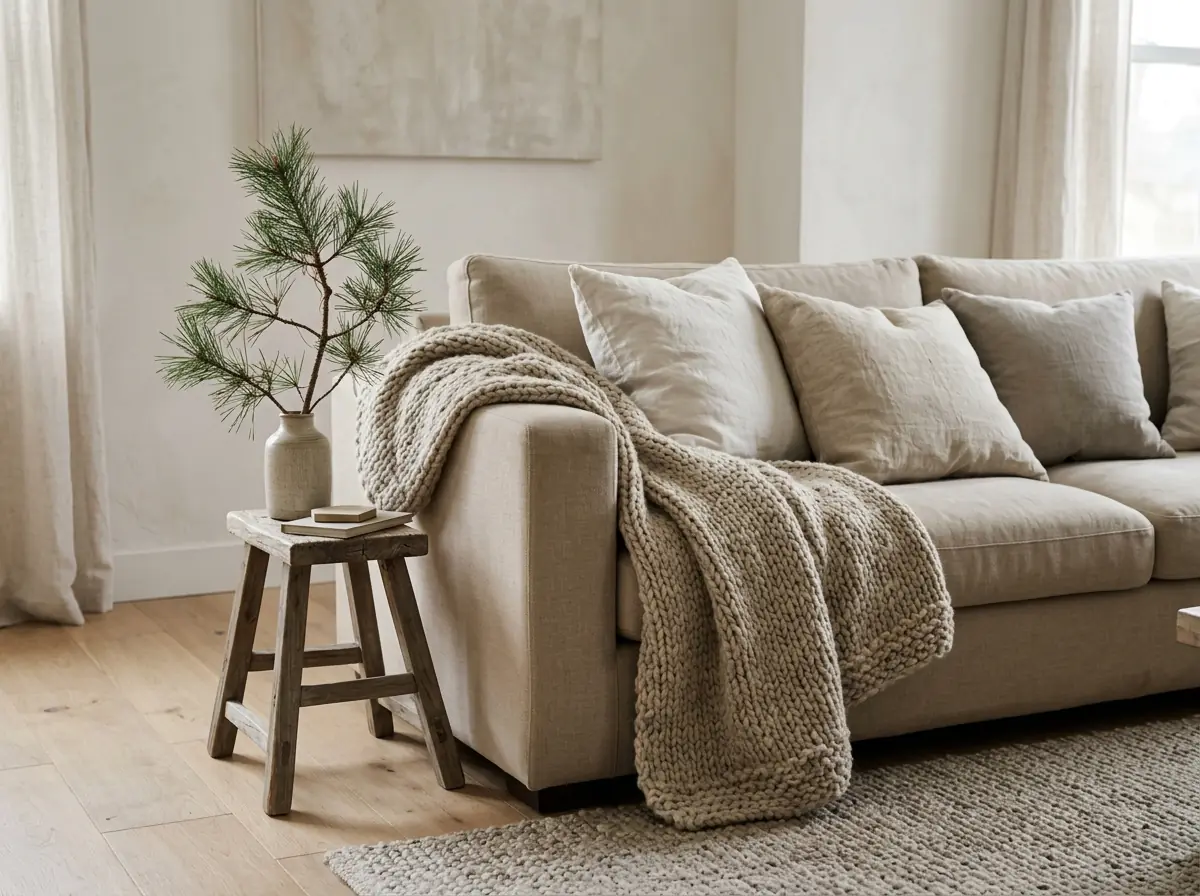
If the tree does the looking, the textiles do the feeling. One chunky oatmeal throw across the sofa arm and a pair of cushion covers in undyed wool or a simple knit will warm the room more than any ornament, and they connect Christmas to the rest of winter instead of boxing it into December. This is also where neutral decor quietly joins the Christmas decor trends shaping 2026, which keep circling back to natural fibres and handmade texture over novelty prints. The trade-offs are practical ones: chunky knits pill where they rub, real wool costs more than acrylic, and both want storing with care in January so they come back next year in good shape.
5. Set the Dining Table in Linen, Wood, and Beeswax
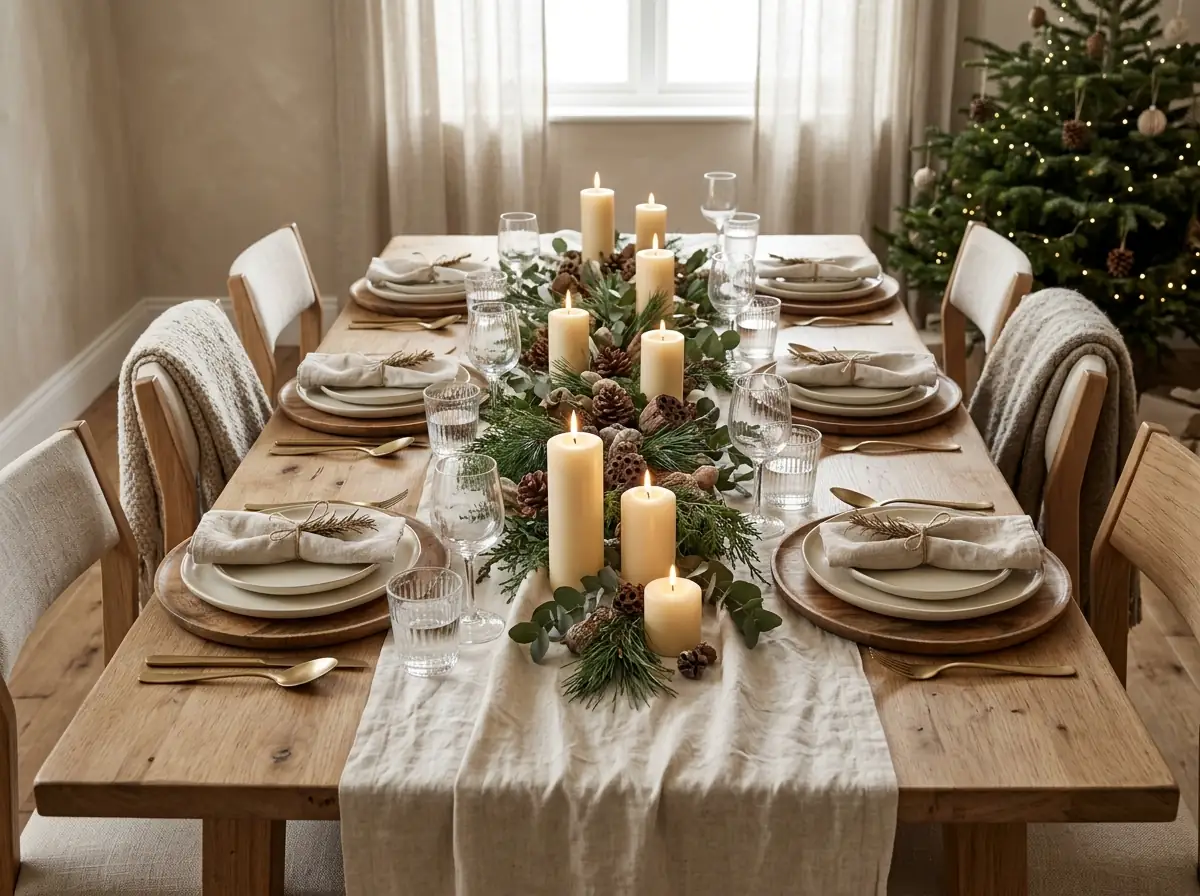
The dining table is where neutral decorating proves itself, because a calm table makes food look better and conversation feel slower. Run an undyed linen runner down the center, set wooden chargers under plain plates, and place beeswax pillar candles — in their natural honey tone, unscented — in a loose line down the middle. Nothing sparkles, nothing matches too hard, and the whole table glows rather than glitters. Be honest about the maintenance, though: linen shows every spill, beeswax drips if the pillars lean, and wooden chargers are hand-wash only. It is a beautiful table that asks for ten unhurried minutes of care afterward.
| Neutral layer | Material | Why it calms |
|---|---|---|
| Tree ornaments | Clear glass and natural wood | Catches light without adding color noise |
| Soft furnishings | Oatmeal wool and chunky knit | Adds warmth the eye can feel, not just see |
| Table setting | Linen, wood, natural beeswax | Glows softly instead of sparkling |
| Greenery and branches | Stoneware, bare branches, eucalyptus | Brings winter in without dressing it up |
6. Tuck Dried Grasses Into the Tree and Vases
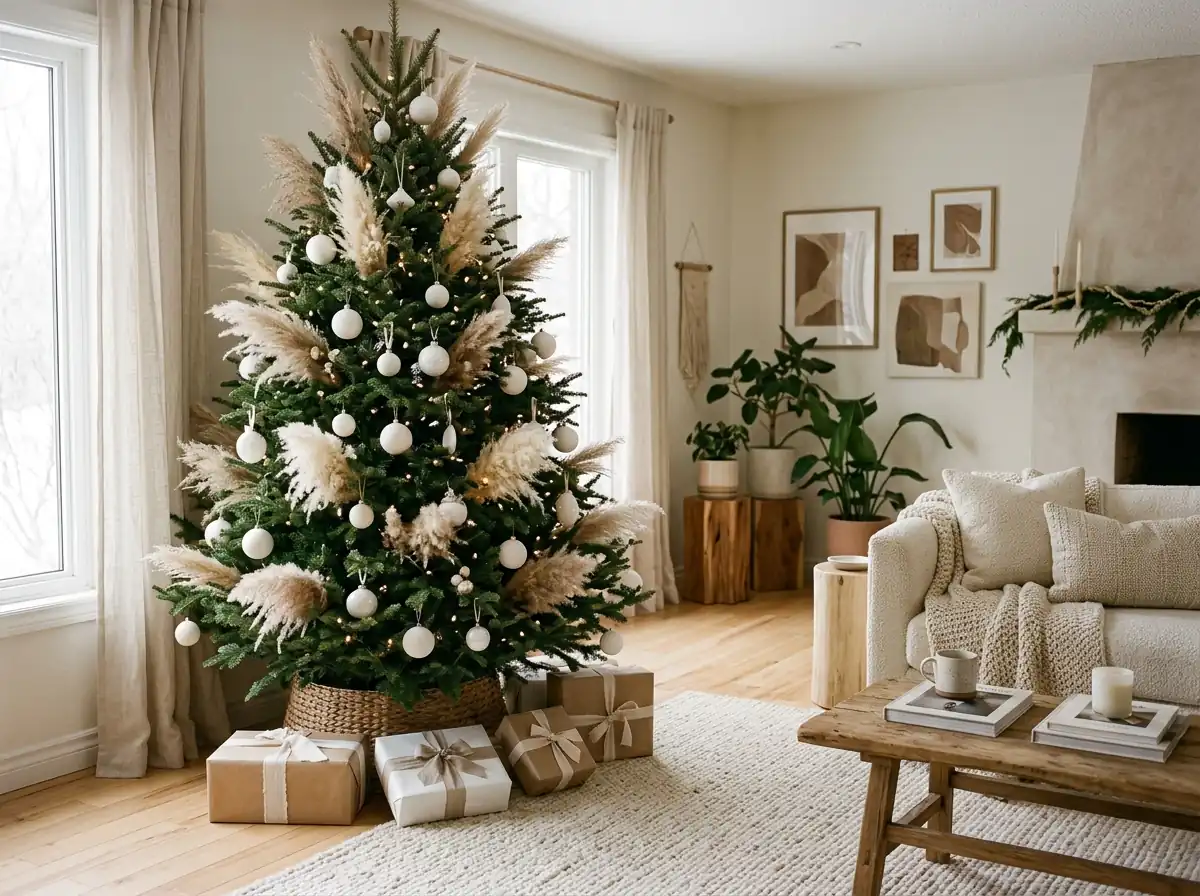
A few stems of dried grass — pampas plumes or soft bunny tails — change a neutral scheme from plain to styled in about a minute. Tuck two or three plumes into the tree where a branch gap shows, and stand the rest in vases you already own, cut at different heights. Their feathery texture fills the flat spots that matte decor can leave, and the warm straw tone sits perfectly between wood and wool. Two warnings come with them: dried grasses shed seeds as they age, so they are a one-or-two-season decoration rather than a forever one, and they are flammable, so keep every plume well away from candle flames and tree-light bulbs.
7. Choose Matte Ceramic Ornaments — With One Soft Exception
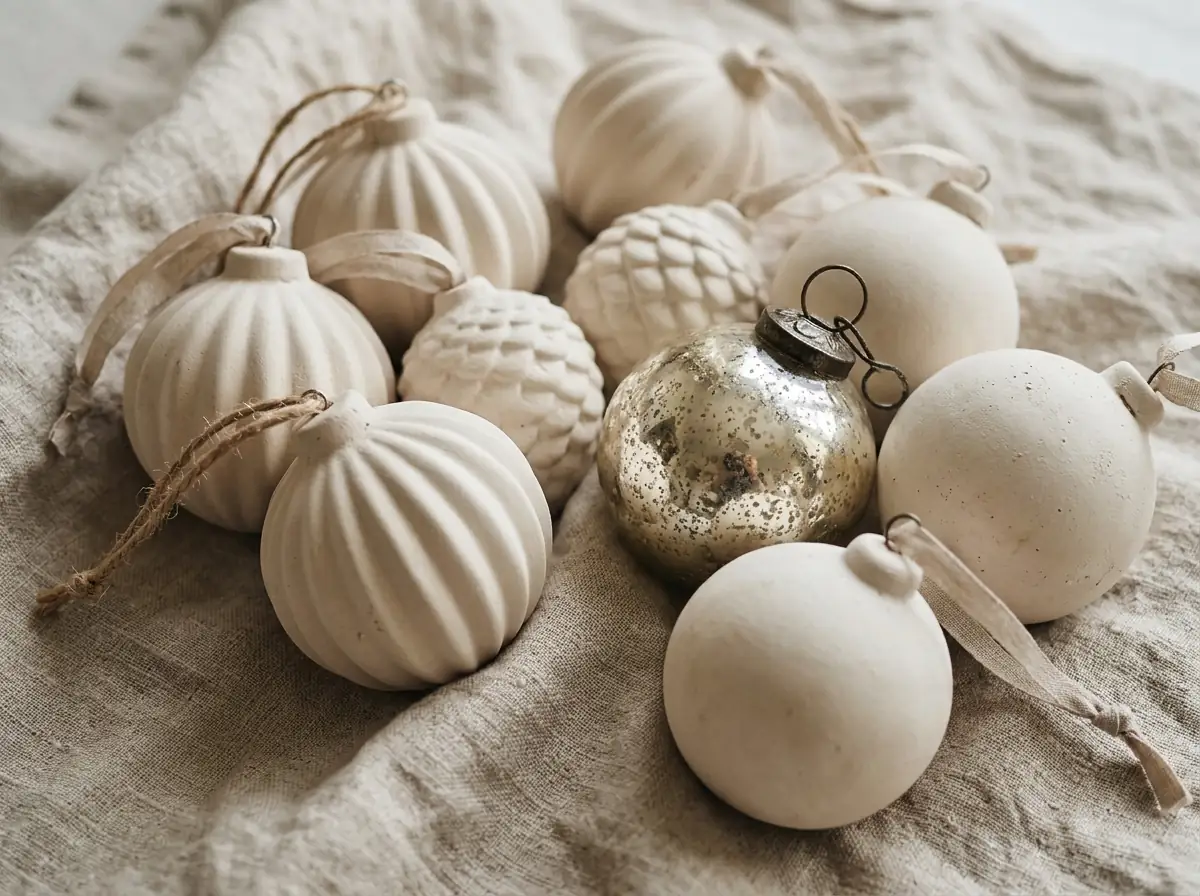
Matte ceramic ornaments in chalky white and stone are the backbone of a neutral tree: they read as small pieces of pottery, they do not reflect the room back at you in distorted miniature, and they mix with the glass and wood from the first idea without a murmur. Then allow the scheme its single moment of shine. The Threshold designed with Studio McGee Flat Cut Mercury Glass Ornaments, Set of 6, cost $20, and their soft, antiqued gleam is exactly the gentle exception a matte tree needs — muted, not mirror-bright, especially if you hang just the six low where the lights catch them. The trade-off with ceramic is fragility: it chips where glass would bounce, so these ornaments live on inner branches, away from passing sleeves and curious pets.
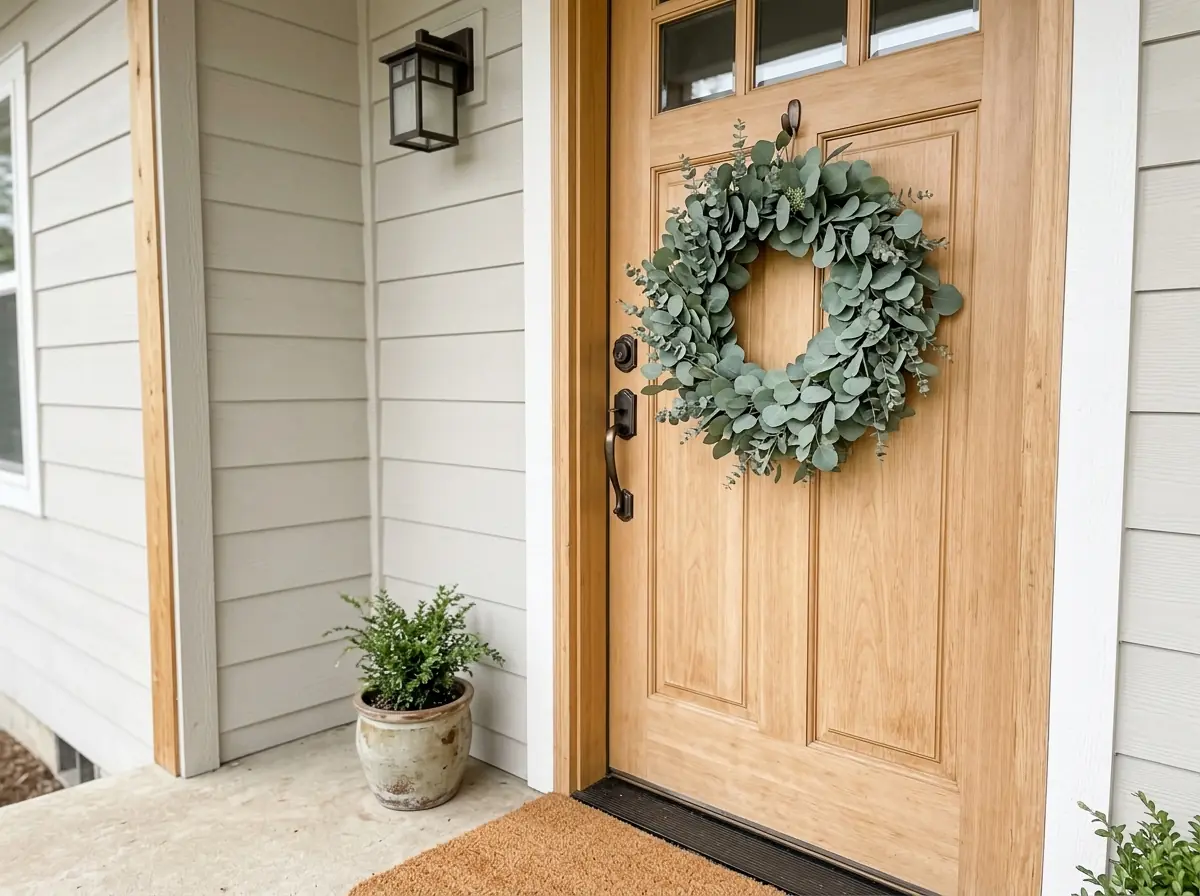
8. Hang a Plain Eucalyptus Wreath With No Bow
On the front door, skip the ribbon entirely. A plain eucalyptus wreath — silvery-green leaves on a simple base, nothing added — announces the season in the same quiet voice as the rooms inside, and it looks as right on a natural wood door as on a painted one. The absence of a bow is not a missing detail; it is the detail. Fresh eucalyptus does dry out over the season, dropping the occasional leaf and losing its scent by the New Year, so treat it as a fresh arrangement for December rather than a keepsake, or choose a good preserved version if you want it back next year.
| If the room still feels… | Likely cause | The one change to make |
|---|---|---|
| Cold | Too many smooth, hard surfaces in a row | Add one chunky knit or wool piece at sitting height |
| Flat | Every piece is the same pale tone | Deepen one item — a darker wood or a mid-tone cushion — and leave the rest |
| Empty | Pieces are spaced like a gallery, nothing grouped | Pull what you own into two or three close groups and clear the gaps between |
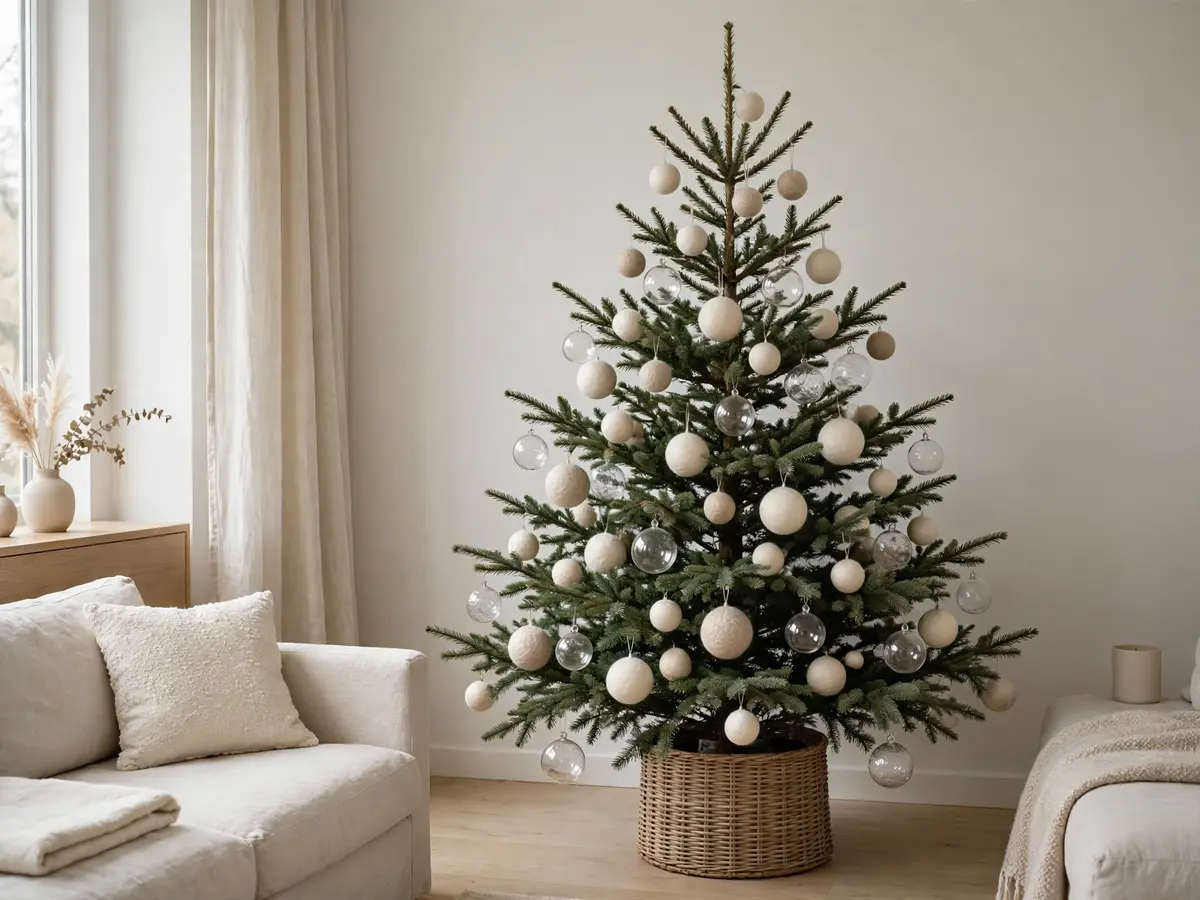
9. Hang Soft Wool Felt Ornaments for a Matte, Quiet Tree
Clear glass baubles catch the light, but a tree hung with nothing shiny can feel cold. Undyed wool felt ornaments fix that without adding color. Felt balls and flat stars in cream, oatmeal, and soft taupe hang with a matte, dusty finish that sits calmly against the glass, and the mix of rough and smooth makes the simplest tree look layered.
They are also the most forgiving ornaments in the box: light enough for thin branch tips, silent when they knock together, and safe around children and cats. The trade-off is that felt picks up dust and pet hair, and it needs a lint roller before going back into storage.
10. Drape a Sheepskin Over the Reading Chair
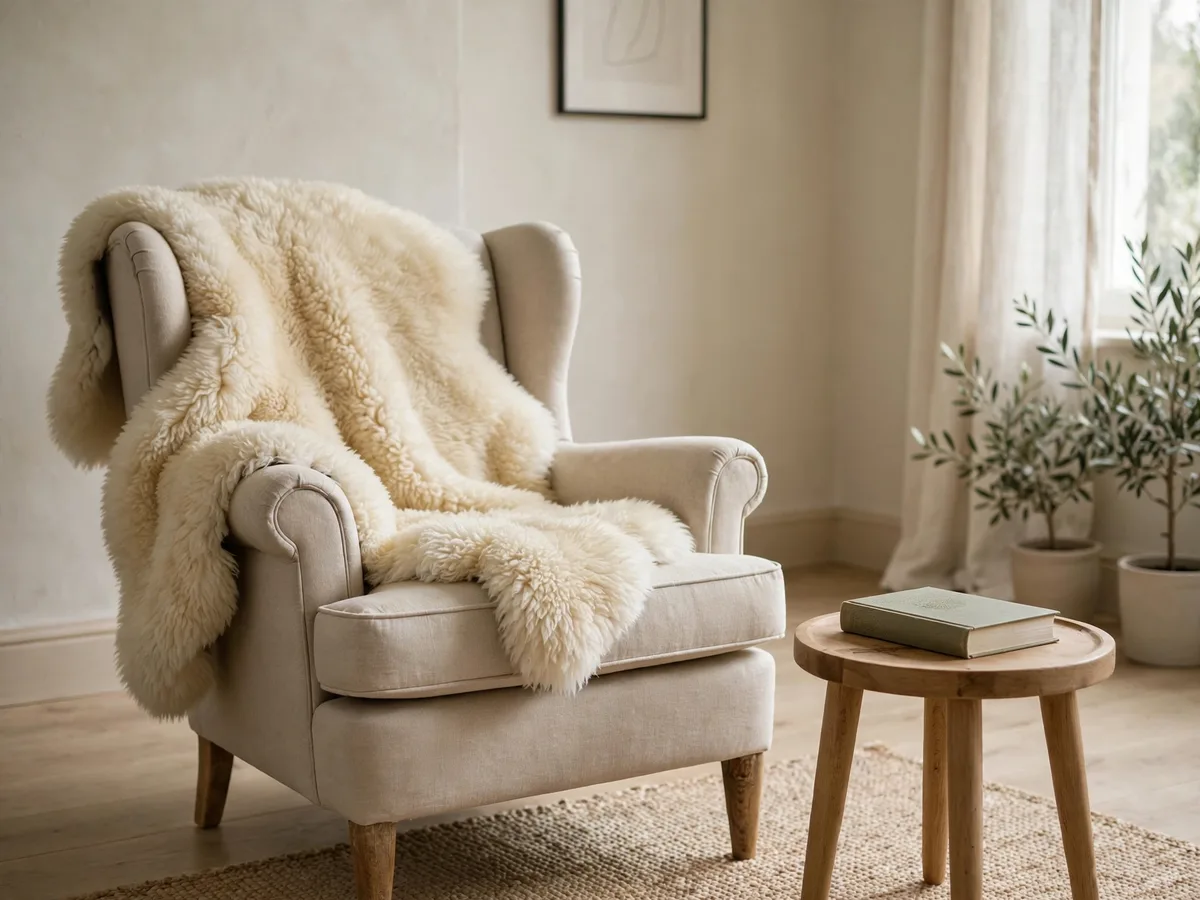
Every neutral room needs one spot that looks soft before you even sit down, and a cream sheepskin over the back of the reading chair does exactly that. The long pile adds warmth and shape without a single new color, so it suits the quiet palette perfectly. Tuck a plain linen cushion in front of it and the corner reads finished, not decorated.
Real sheepskin is warm and lasts for years; a good faux version costs less and can go in the wash. Either way, be honest about the upkeep: real skins need a shake and brush outside now and then, or the pile looks flat and tired.
11. Put Beeswax Tapers in Wooden Holders on the Mantel
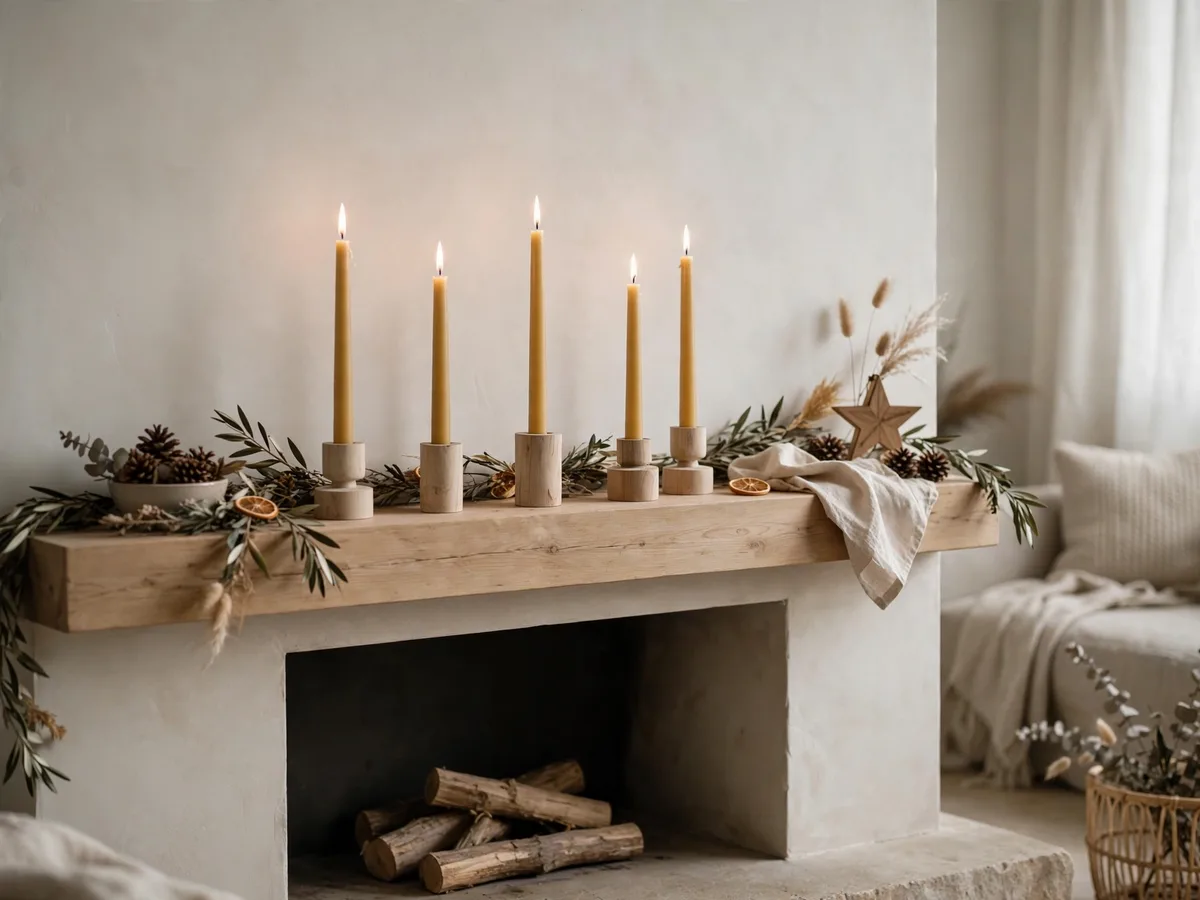
If the mantel still feels bare after the stockings go up, a short row of beeswax tapers in turned-wood holders is the calmest fix. The wax is the right color from the box, a warm honey-cream that matches the room without dye, and plain wood holders echo the branches elsewhere. Leave uneven spacing: a relaxed line beats a parade.
Beeswax gives off a faint honey scent as it burns, gentle enough for people who find fragranced candles too much. The trade-off is price and speed: beeswax tapers cost more than paraffin and burn faster, so save them for evenings in the room, and never leave them lit near the stockings.
12. Keep the Bedroom Almost Exactly as It Is
The calmest neutral Christmas touch is the one that barely happens. Make the bed in your usual white bedding, fold one oatmeal throw across the foot, and stand a single sprig of greenery in a small vase on the nightstand. That is all. The bedroom stays a place to wind down rather than another decorated surface to maintain, and the one green sprig against white and oatmeal says more than a shelf of ornaments would. If you do want a small tree moment in the room, the flat, space-saving kind covered in these paper Christmas tree ideas keeps the same uncluttered spirit. The only real downside of white bedding is the obvious one — it shows every mark, so December is not the month for breakfast in bed with coffee.
Start tonight with the tree, since it leads everything else: take every colored ornament off it, put them back in their box, and rehang only the clear glass, the wood, and the matte ceramic. Live with it lit for one evening before you decide anything needs adding back. In most homes, nothing does — and that quiet tree becomes the template for the whole house.