Small gardens usually fail by shrinking everything. Tiny pots, tiny plants and tiny beds scattered around like samples only make the plot feel smaller and busier, because the eye keeps stopping at dozens of little objects instead of resting on one clear picture.
The gardens that feel bigger follow the opposite rule: fewer, larger moves. One strong shape gives the plot a single clear outline, height gets used before floor space, and a limited palette of colors and materials repeats all the way to the edges.
These 25 small garden ideas give you the real sizes and spacing behind each trick, and most of them can be done with plants and basics that fit in the trunk of a car.
The Small Garden Formula That Keeps Tiny Plots Looking Bigger
- One big shape first: give the plot one clear main shape — a curve, a square, a single bed — before adding anything else.
- Height before floor: grow up walls, fences and shelves first, because vertical planting gives lushness without eating ground.
- Limit the palette: two or three colours and materials repeated everywhere read as one designed space, not clutter.
- Keep pieces movable: pots and crates on the ground layer can shift for sun, guests or a new idea, so nothing is a permanent mistake.
For example, a 4-by-5-metre plot with one curved bed of green shrubs and white flowers, a shelf wall of herbs and ferns, and three large white pots reads twice its size because every move is big and repeated.
| # | Idea | Best For | Budget/Effort |
|---|---|---|---|
| 1 | Corner Triangle Bed | Dead plot corners | Low cost / one afternoon |
| 2 | Vertical Shelf Planting Wall | Fences with no depth | Low cost / one afternoon |
| 3 | Tiered Pot Cluster Steps | Steps and level changes | Low cost / one hour |
| 4 | One-Metre Square Bed Grid | Tiny vegetable ambitions | Low cost / one afternoon |
| 5 | Mirror-Backed Bed Illusion | Dark narrow plots | Low cost / one hour |
| 6 | Ladder Planter Lean-To | Blank wall stretches | Low cost / one hour |
| 7 | Pocket Beds Between Pavers | Paved tiny yards | Low cost / one afternoon |
| 8 | Mini Lawn with Big Border Trick | Lawns dominating the plot | Medium cost / one weekend |
| 9 | Tall Back Row Height Illusion | Flat one-level plots | Low cost / one afternoon |
| 10 | Hanging Basket Rail Line | Railings and fences | Low cost / one hour |
| 11 | Single Tree Statement Tiny Garden | Plots needing one hero | Medium cost / one afternoon |
| 12 | Crate Stack Planters | Renters and movers | Very low / one hour |
| 13 | Curved Bed in a Square Tiny Plot | Boxy small gardens | Medium cost / one afternoon |
| 14 | White Pot Brightening Cluster | Shady small corners | Low cost / one hour |
| 15 | Mini Meadow in Two Square Metres | Wildlife lovers, no space | Very low / one afternoon |
| 16 | Espalier Wall Fruit Line | Fruit in no floor space | Medium cost / one weekend |
| 17 | Raised Sleeper Bed for a Tiny Plot | Poor thin soil plots | Medium cost / one weekend |
| 18 | Diagonal Paving Illusion Layout | Short square plots | Medium cost / one weekend |
| 19 | Fragrant Doorstep Micro Bed | Doorsteps with a strip | Very low / one hour |
| 20 | Pebble and Fern Micro Shade Garden | Gloomy tiny corners | Low cost / one afternoon |
| 21 | Rail Planters on the Fence | Fences at eye level | Low cost / one hour |
| 22 | Strawberry Tower Planter | Vertical fruit fans | Low cost / one hour |
| 23 | One-Bed Color Pop Garden | One-bed-only gardens | Low cost / one afternoon |
| 24 | Mini Wildlife Log Corner | Nature-loving small plots | Very low / one hour |
| 25 | Borrowed View Framing Trick | Plots near trees or views | Very low / one hour |
1. Corner Triangle Bed
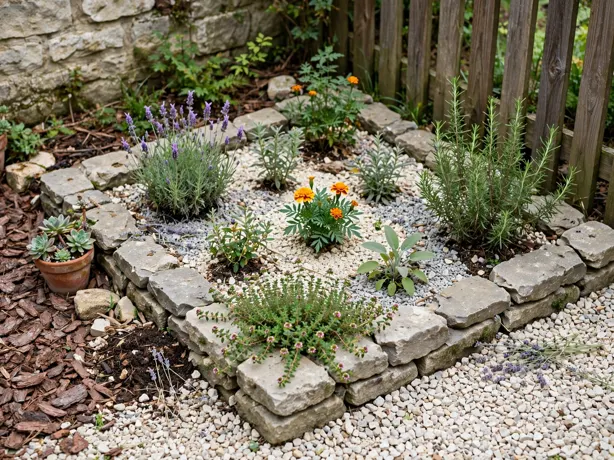
Take the dead corner where two fences meet and give it one bold triangle: sides 1.5 meters long, edged with a single row of bricks laid flat. Fill it in three heights — one small green yew cone, 60 centimeters tall, at the back point, three white heuchera in the middle band, and a low creeping thyme skirt, 20 centimeters deep, spilling over the front edge. The triangle’s sharp geometry reads as one deliberate shape, so the corner stops looking like leftover space and starts looking like the garden’s anchor point.
Easy swap: trade the thyme skirt for white alyssum in spring and the whole front edge brightens without changing the shape.
2. Vertical Shelf Planting Wall
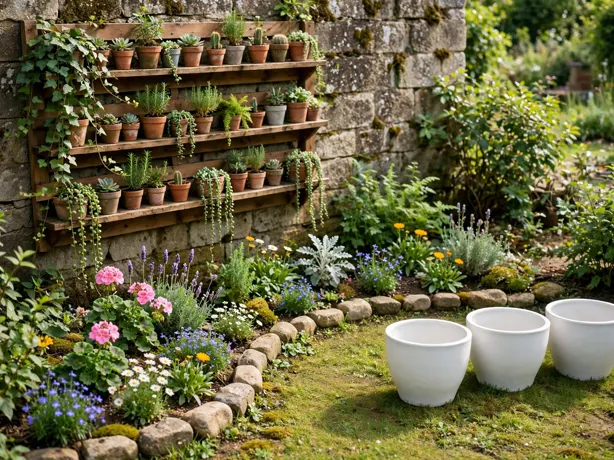
Fix three outdoor shelves, each 1.2 meters long and 25 centimeters deep, to the sunniest fence panel at 60, 110 and 160 centimeters high. Load them edge to edge: trailing rosemary and thyme tumbling from the top shelf, bushy basil and parsley in 15-centimeter terracotta pots along the middle, and shade-happy ferns in a row at the bottom. Two meters of wall now grows what a full bed would hold, while the floor underneath stays completely clear for feet, chairs and a barbecue.
Seasonal swap: in winter, replace the basil shelf with pots of winter pansies and small conifers so the wall never goes bare.
3. Tiered Pot Cluster Steps
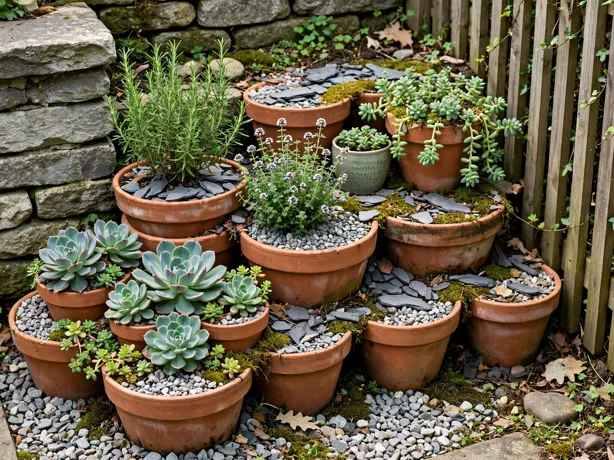
On any step, stoop or stack of crates, group five large pots, 12 to 16 inches wide, in a rising staircase: tallest at back, shortest at front. Plant one theme through all five: purple salvia behind, white gaura at the middle height, and silver dichondra trailing over the front rims. Any small yard garden inspiration shows the same rule: big pots in one color family read as one piece of furniture, and stepped heights fake depth that isn’t there.
Why it works:
- Five big pots read as one object, not five small distractions.
- The staircase of heights creates false depth in under a meter.
- One repeated planting theme keeps the cluster calm, not busy.
4. One-Metre Square Bed Grid
Mark out a single square, exactly 1 meter by 1 meter, and divide it into a nine-square grid with string. Plant one crop or flower per square — nine squares, nine choices: a tomato in the center, lettuce in two squares, marigolds in two corners, then basil, carrots, spring onions and one square of radish. A meter square looks intentional, like a designed tile set into the garden, and the tight grid forces close spacing that shades out weeds. It is the one vegetable patch that never makes a tiny plot look messy.
Budget note: the whole grid costs one bag of compost and a few seed packets, since the string and edging usually come from the shed.
5. Mirror-Backed Bed Illusion
Against the darkest fence, lean one outdoor acrylic mirror panel, 60 by 90 centimeters, tilted very slightly forward, and plant a bed just 40 centimeters deep in front of it. Fill the bed with glossy green leaves — hostas, ferns and one white hydrangea — spaced 30 centimeters apart. The mirror doubles every leaf and throws borrowed light back into the corner, so a bed less than half a meter deep feels like a lush border twice its width when you stand in front of it.
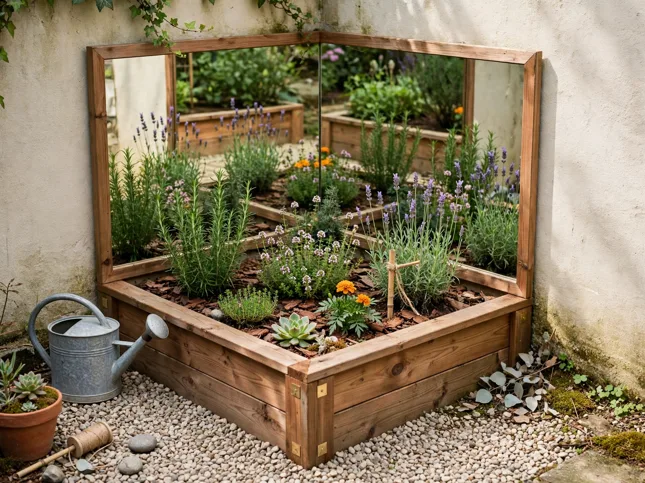
The formula: glossy fern and hosta mass + one white hydrangea focal point + acrylic mirror panel backdrop
6. Ladder Planter Lean-To
Lean a 1.8-meter wooden ladder planter against a blank wall at an angle, its four shelves narrowing as they rise. Put 8-inch pots of trailing nasturtiums on top, herbs on the middle two shelves, and one large fern at the base. Beside it, an apple tree trained flat in classic espalier style covers the same wall without taking one centimeter of floor. Barely 35 centimeters deep, it turns dead wall into four layers of garden.
Get the look:
- Main piece: 1.8-meter wooden ladder planter leaned against the wall
- Supporting piece: 8-inch pots of herbs on the middle shelves
- Texture or material: weathered wood shelves with matte terracotta pots
- Finishing touch: trailing nasturtiums spilling from the top shelf
7. Pocket Beds Between Pavers
Lift every fourth paver in a paved yard and fill the gaps with pockets of soil 20 centimeters wide, planted with creeping thyme, Irish moss and tiny sedums spaced 15 centimeters apart. Keep the pattern regular — one pocket every 60 centimeters in both directions — so the paving still reads as one clean grid, just softened. The green joints make a hard square of paving feel like a garden floor instead of a patio slab, and nothing grows high enough to catch a chair leg or a bare foot.
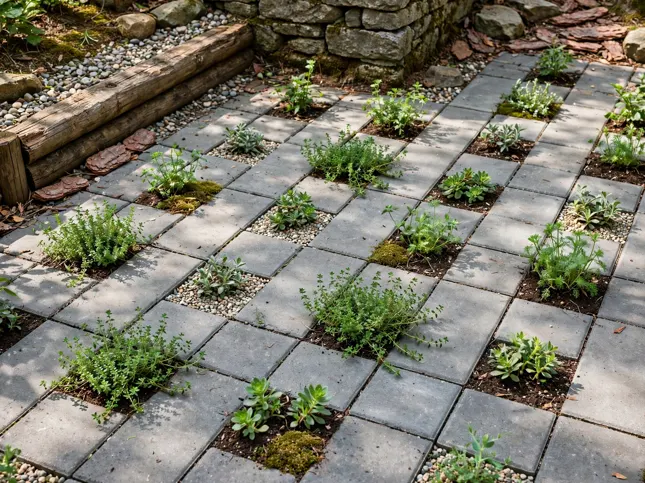
Color note: the planting stays in cool greens with only thyme’s pale pink flowers in June, so the grid looks calm and the paving color stays in charge.
8. Mini Lawn with Big Border Trick
Shrink the lawn on purpose: cut it down to one bold rectangle, say 2.5 by 3 meters, and give everything around it to a border at least 60 centimeters deep. Plant that border tall and full — green shrubs at the back rising to 1.5 meters, white and purple perennials in front. It sounds backwards, but a smaller lawn hemmed in by a big, deep border makes the whole plot read larger, because the eye measures a garden by the depth of its planting, not by the size of its grass.
Texture note: the trick needs contrast — fine, smooth lawn against loose, leafy border texture — so keep the grass edge cut razor sharp all season.
9. Tall Back Row Height Illusion
Fake a deep border in a shallow bed by putting the tallest plants hard against the fence: three columnar shrubs or 1.8-meter hollyhocks in a row, spaced 50 centimeters apart. In front of them, one row of medium plants at 80 centimeters, then a low 25-centimeter edge of lavender. Three clear height steps inside just 60 centimeters of depth convince the eye that the border runs far deeper than it does. Where there is no soil at all, sturdy planter box ideas raised on legs work the same stepped trick on plain paving.
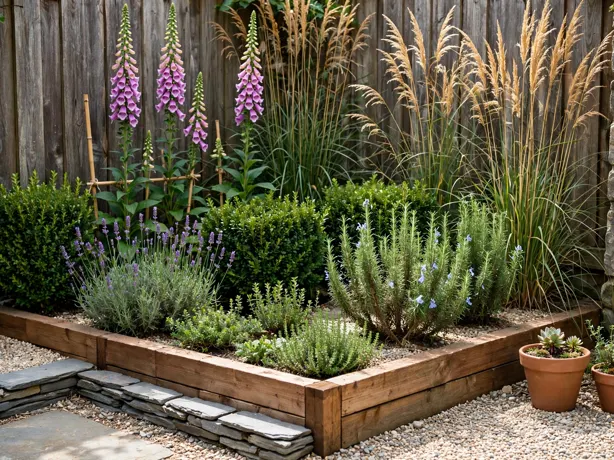
Best for: shallow beds under 60 centimeters deep along a fence or house wall.
10. Hanging Basket Rail Line
Run a line of six matching hanging baskets along a railing or fence top, spaced exactly 40 centimeters apart at eye level. Use generous 14-inch baskets filled with one repeated planting: ivy geraniums in a single color, trailing lobelia, and a skirt of green ivy. Hung at 1.6 meters, the whole flower show floats above the floor, so a plot too small for one real bed still gets a full band of color exactly where the eye lands first when you walk out the door.
Space note: the line uses zero floor and only 35 centimeters of air depth, yet delivers the flower power of a 2.5-meter border.
11. Single Tree Statement Tiny Garden
Give the whole plot to one beautiful small tree: a multi-stem amelanchier or a Japanese maple, in a 60-centimeter pot or one square meter of open soil. Underplant its circle with a single ground cover only — green pachysandra or white-flowering vinca — out to a 1.2-meter radius, and then stop. One hero at 3 meters tall organizes everything beneath it, and the calm, empty ring around it is exactly what makes a tiny garden feel like a designed courtyard instead of a pile of leftovers.
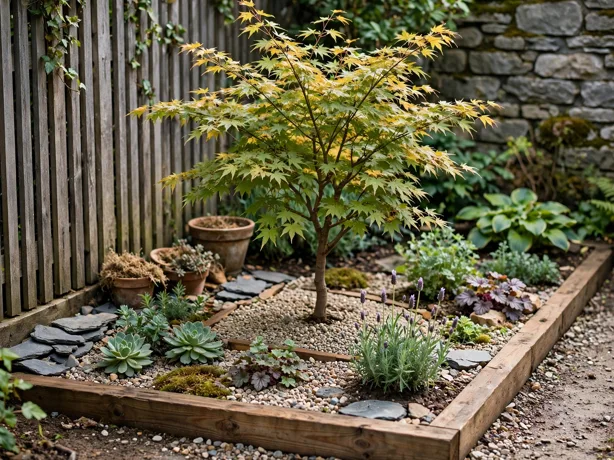
Fit check: pace out the 1.2-meter radius before planting; if the ring crowds a path or the door swing, drop to a slimmer multi-stem tree.
12. Crate Stack Planters
Stack five wooden crates in a pyramid — three on the ground, two on top — each lined with fabric and filled with compost. Plant the bottom crates with leafy greens and herbs, the top two with trailing strawberries and tumbling tomatoes, all inside a tight 60-by-60-centimeter footprint. The whole garden stays movable: the stack can turn toward the sun, split into singles when friends come over, or move house with you at the end of a lease. For renters, it may be the smartest square meter in the whole yard.
Style note: matching crates in one wood tone read as a built unit; mixed crates read as storage, so stain or paint them to match.
13. Curved Bed in a Square Tiny Plot
In a boxy square plot, cut one sweeping curved bed along two sides — 70 centimeters deep at its widest, narrowing to 40 — and let the lawn or gravel in the middle echo the curve. Plant the bed in long drifts of just two plants, green ornamental grasses and white echinacea, repeated from end to end. A curve breaks the box: the eye follows the long way around it, the square corners disappear, and the garden feels rounder, softer and measurably bigger than its fence lines suggest.
Easy swap: swap the white echinacea for purple salvia drifts and the same curve turns moodier without losing an inch of the illusion.
14. White Pot Brightening Cluster
Gather five large white pots, 14 to 18 inches across, into one tight cluster in the shadiest corner, rims nearly touching. Plant them all with light leaves: white-variegated hostas, silver brunnera and white impatiens. White pots bounce what little light the corner receives, and grouped tightly they read as a single piece of pale furniture, so the gloomiest square meter becomes the brightest spot in the garden. Spread the same five pots around the plot and every one of them would vanish into the shade.
Seasonal swap: for winter, trade the impatiens pots for white cyclamen and small silver conifers so the cluster keeps glowing in the cold months.
15. Mini Meadow in Two Square Metres
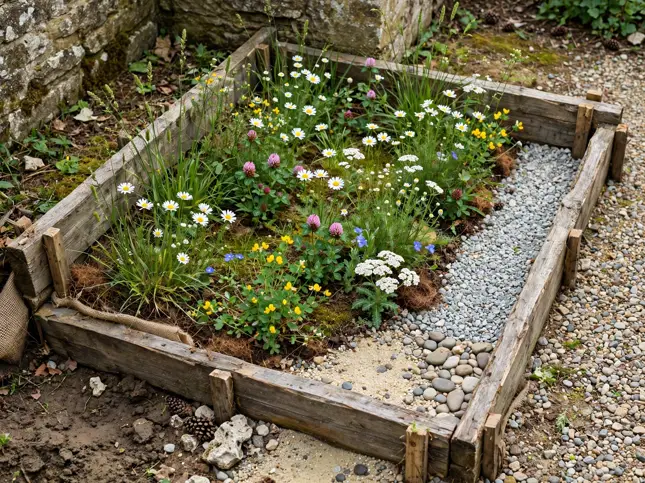
Sow one patch of meadow exactly 1 by 2 meters and treat it like a picture: a low timber edge on all four sides, and inside it cornflowers, red poppies and white oxeye daisies at full height, 60 to 80 centimeters. Two square meters is enough for the meadow effect — movement, bees, seedheads — without surrendering the garden. The straight frame is the trick; set a bench beside it and it holds its own beside the best patio garden decor ideas.
Why it works:
- The timber frame makes wild flowers read as a deliberate picture.
- Full-height plants in a tiny patch create surprising depth and movement.
- Two square meters feeds pollinators without costing the garden its lawn.
16. Espalier Wall Fruit Line
Train one apple or pear tree flat against a sunny wall on horizontal wires set 40 centimeters apart, running from 40 centimeters up to 2 meters high. The tree grows as a green ribbon only 20 centimeters deep, fruiting along every horizontal arm, while the floor below stays completely free. One wall line of fruit replaces a whole orchard row, and the regular, level pattern reads as living architecture — harvest and structure delivered in the same depth as a coat of paint on the wall.
Budget note: one young tree, wire and vine eyes cost less than a single large shrub, and the wall starts paying you back in fruit by year three.
17. Raised Sleeper Bed for a Tiny Plot
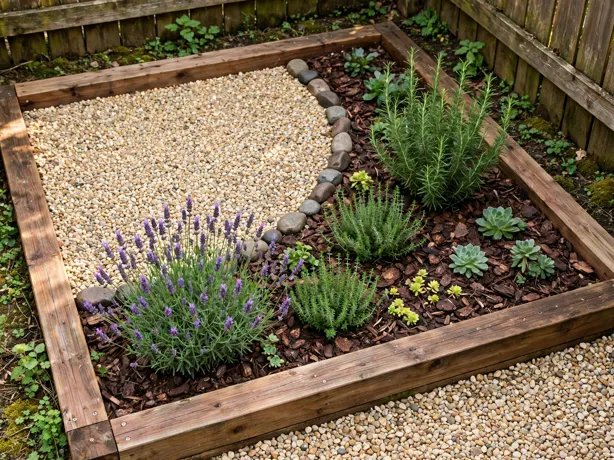
Build one raised bed from landscape sleepers, 2.4 meters long, 90 centimeters wide and two sleepers high — about 45 centimeters — and set it along the sunniest boundary. Fill the whole length with one layered planting: green shrubs at the back, a middle drift of purple salvia, and strawberries trailing over the front edge. One long, full bed beats four small ones every time; the raised height lifts flowers to waist level, so the garden feels planted on two levels instead of one flat layer.
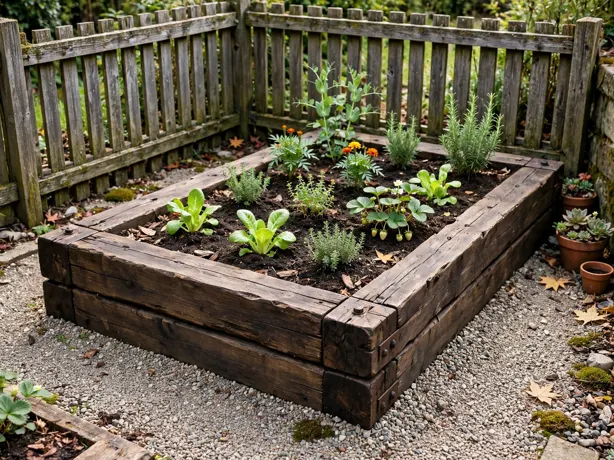
The formula: sleeper raised frame + layered shrub and salvia planting + strawberry edge spill
18. Diagonal Paving Illusion Layout
Relay pavers on the diagonal, points facing the house, instead of straight rows. A diagonal grid stretches a short plot: the longest sight line in a square runs corner to corner, and diagonal paving makes the eye travel that line. Use 60-centimeter pavers with 5-centimeter gravel joints, and keep planting to the edges so the diamond pattern stays unbroken from door to fence. The plot has not grown by a centimeter, yet every visitor will swear it has.
Get the look:
- Main piece: 60-centimeter pavers laid point-to-house on the diagonal
- Supporting piece: 5-centimeter gravel joints kept clean and level
- Texture or material: smooth pale stone against loose fine gravel
- Finishing touch: low green edging plants softening outer corners
19. Fragrant Doorstep Micro Bed
Use the narrow strip beside the door — often just 30 centimeters deep — for one row of scent: lavender ‘Hidcote’ spaced 25 centimeters apart, with one rosemary standing at each end. Every arrival brushes the foliage and releases the fragrance, so the smallest bed in the garden quietly does the most memorable work. Keep it to this single repeated row; a mixed planting in a strip this narrow turns to visual mush, while one plant repeated reads as a deliberate green ribbon guiding you to the door.
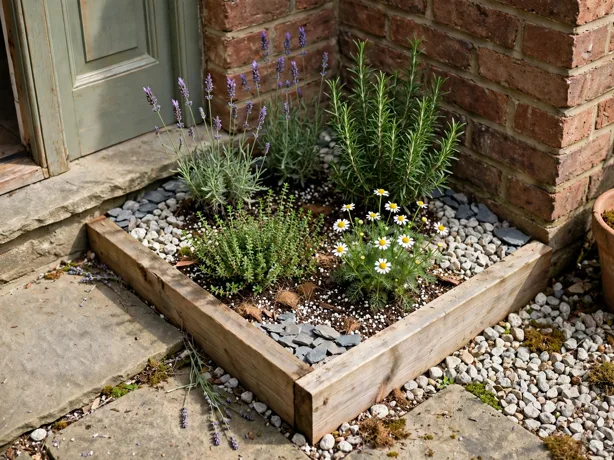
Color note: deep purple lavender flowers over silver-green foliage give the doorway a two-tone ribbon that looks planned from the street in every season.
20. Pebble and Fern Micro Shade Garden
In a gloomy corner of one square meter, spread pale pebbles 5 centimeters deep and plant three ferns through them: one tall Dryopteris at the back, two smaller aspleniums in front, spaced 30 centimeters apart. Add one flat white stone as a tiny focal point. The pale ground bounces the scarce light upward into the fronds, and the planting reads as a cool, calm vignette rather than the dark gap it used to be. Nothing here needs sun, mowing or much feeding beyond a spring tidy.
Texture note: the whole effect is texture — feathery fronds over smooth round pebbles — so skip flowers entirely and let the two surfaces carry the corner.
21. Rail Planters on the Fence
Hook four matching rail planters, each 60 centimeters long, along the top rail of the fence at eye level, spaced with 20-centimeter gaps. Fill all four with the same trailing mix — ivy, lobelia and trailing verbena in one color — so they read as a single floating flower band nearly 3 meters long. At 1.7 meters high the flowers sit right in the sight line from a garden chair, while the fence below stays free for bins, bikes or the bench that needs the floor.
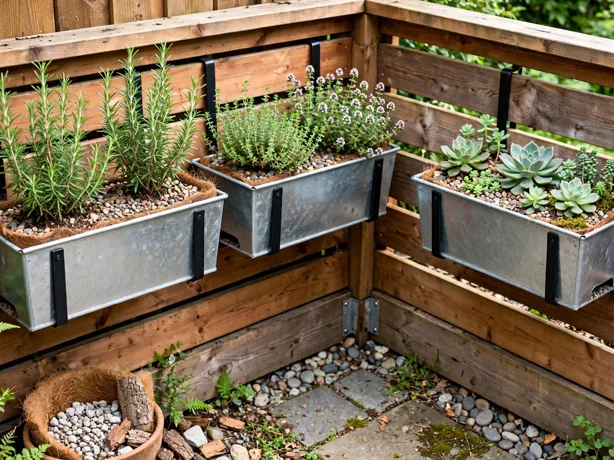
Best for: narrow plots where the fence is the main view from the house.
22. Strawberry Tower Planter
Stack four pocketed tower tiers — or four pots of shrinking size — into one column 1 meter tall on a 40-centimeter footprint, and plant strawberries in every pocket, up to twenty plants in all. The berries hang clean over the edges at picking height, safe from slugs and mud splash. One column delivers what a 2-meter strawberry bed would, and its green waterfall of leaves and red fruit becomes the vertical accent that a flat little plot usually lacks. Kids will check it every single morning in June.
Space note: twenty plants in 0.16 square meters of floor — the tower earns its footprint back roughly twelve times over in cropping space.
23. One-Bed Color Pop Garden
If the plot holds only one bed, make that bed unforgettable: 1.5 by 2 meters filled with a single saturated color — all scarlet dahlias, or all violet salvia — underplanted with one plain green ground cover. One bold block of color has far more presence than ten pastel mixtures squeezed into the same space; the eye reads it as a painting, and the rest of the plot can stay calm green lawn and gravel. Repeat the same color in one pot by the door and the whole garden suddenly looks coordinated.
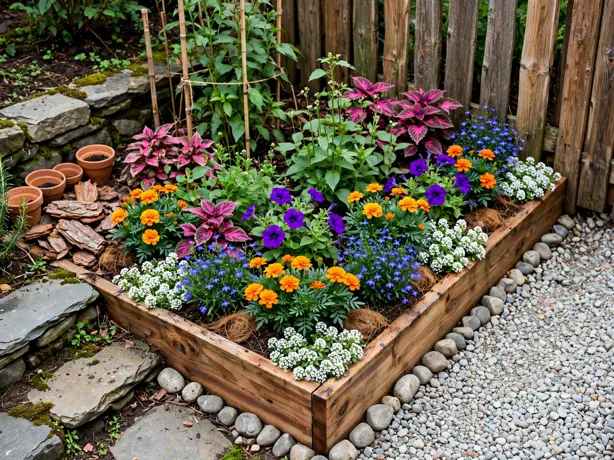
Fit check: stand at the door and check the bed fills your view at 3 meters wide or less; if it looks sparse, plant 20 percent closer.
24. Mini Wildlife Log Corner
Turn one half-meter corner into a wildlife stack: three short logs, 40 centimeters long, piled against the fence and drilled with holes of 2 to 10 millimeters for solitary bees, plus a shallow dish of water at the base. Plant one native foxglove and a clump of red valerian beside it. The corner costs almost nothing and occupies the least useful ground in the plot, yet it returns more life per square centimeter than any other feature — bees working by day, shelter for beetles and frogs below.
Style note: leave the logs silvered and rough rather than sanded; the weathered look is what makes the stack read as garden, not firewood pile.
25. Borrowed View Framing Trick
If a neighbor’s tree, a church spire or distant hills show above your fence, frame that borrowed view instead of hiding the boundary. Plant two green columns — clipped yew or tall ornamental grasses, 1.8 meters high — exactly 1.5 meters apart on the fence line, and keep the planting between them low, under 40 centimeters. The gap becomes a picture window: the eye travels straight through it to the view, the garden feels as deep as everything it borrows, and your own fence line disappears from the story.
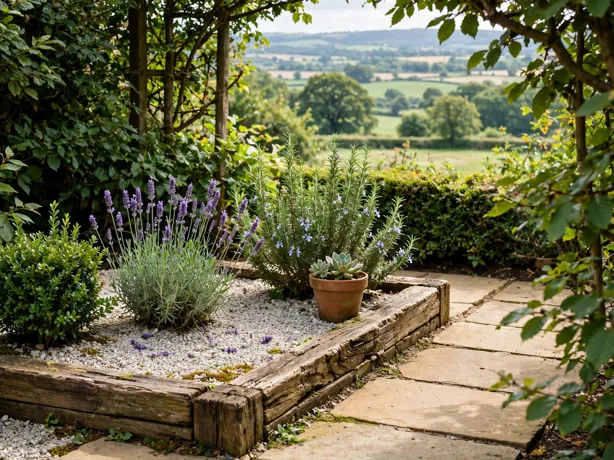
Easy swap: in a rented plot, swap the planted columns for two tall grasses in large pots and the frame moves when you do.