If you’ve spent any time scrolling kitchen boards lately, you’ve probably noticed the same handful of elements showing up again and again — fluted cabinet fronts, brass hardware gone slightly matte, a single trailing pothos on top of the fridge. “Aesthetic” kitchens aren’t really about trends in the traditional sense. They’re about a kitchen that photographs the way it feels to stand in it: calm, a little curated, not overly styled. Below are eleven ways to get there, with actual steps and product details instead of vague mood-board language.
1. What Makes a Kitchen Feel “Aesthetic”
The word gets thrown around a lot, but an aesthetic kitchen usually has three things in common: a limited color palette (rarely more than three main tones), visible texture, and negative space. That last one trips people up the most. A kitchen with every inch of counter covered in appliances and mail will never photograph well, no matter how nice the tile is. Before buying anything new, try clearing 70% of your counters for a week and see how different the room feels. Most people find they only actually use two or three small appliances daily — the coffee maker and maybe a toaster. Everything else can live in a cabinet.
2. Soft, Muted Color Combinations
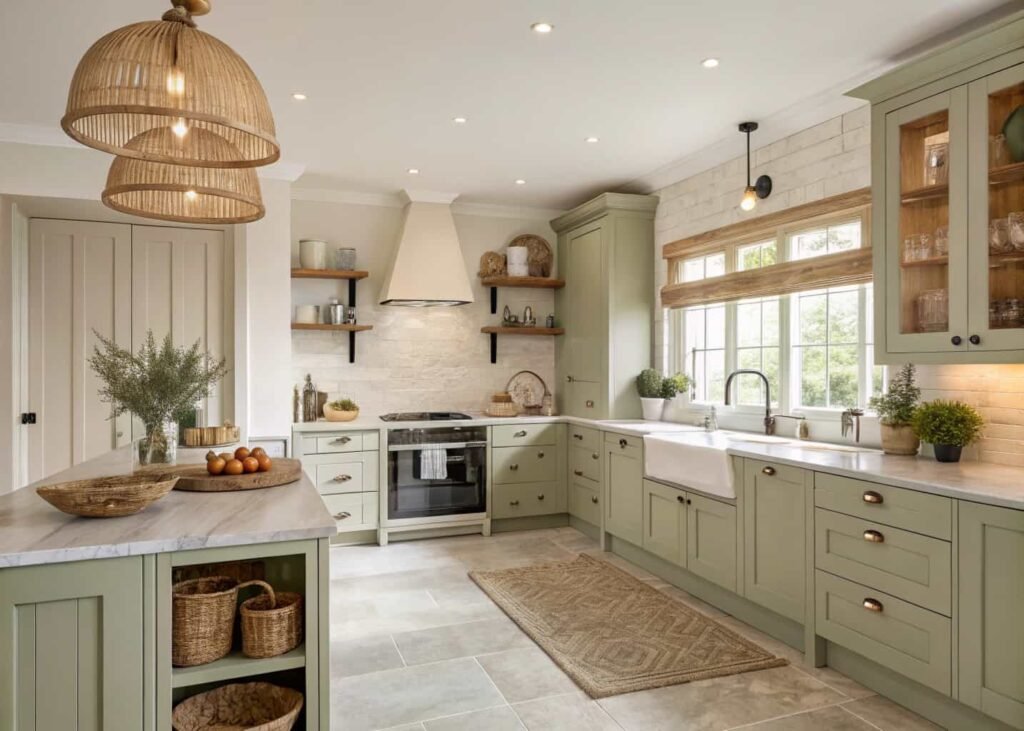
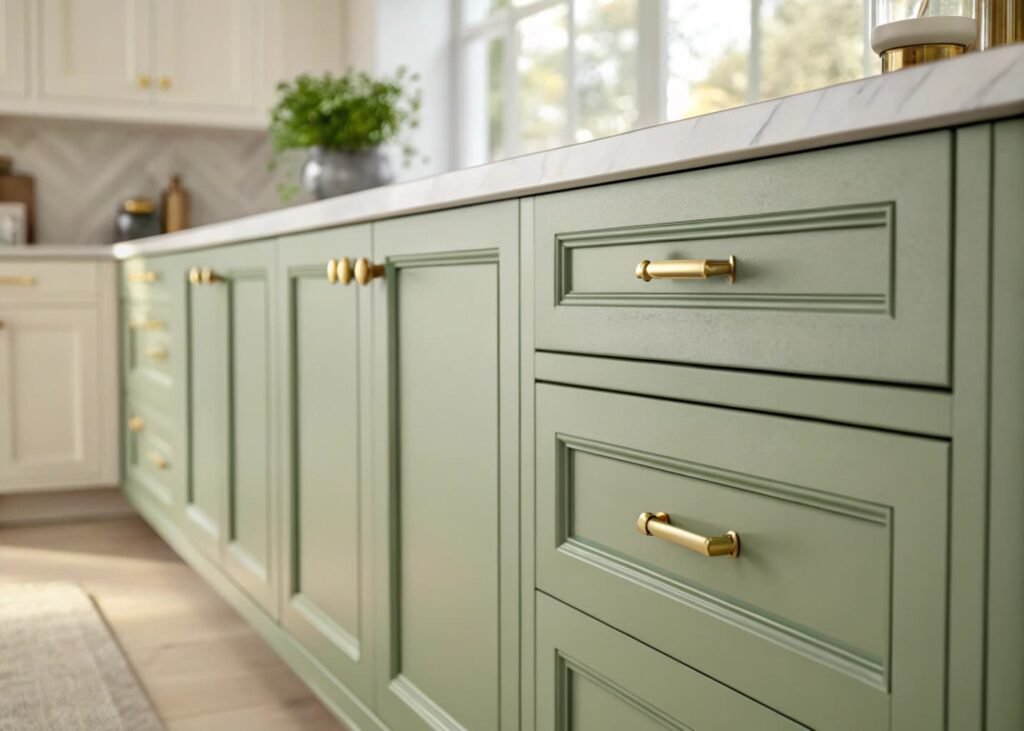
Stark white kitchens photograph flat under most home lighting — that’s part of why the muted, slightly dusty palette (sage green, warm greige, dusty terracotta, soft oat) has taken over. These colors have a bit of gray mixed in, which keeps them from looking too saturated or too sterile under both daylight and warm bulbs. A popular combination right now is a lower cabinet in sage or olive green paired with white or cream uppers and unlacquered brass hardware. If repainting cabinets isn’t in the budget, start smaller: paint just the kitchen island, or swap out cabinet hardware for something in a warm bronze or brushed brass finish, which runs anywhere from $4 to $15 per knob depending on the brand.
3. Open Shelving for an Aesthetic Display
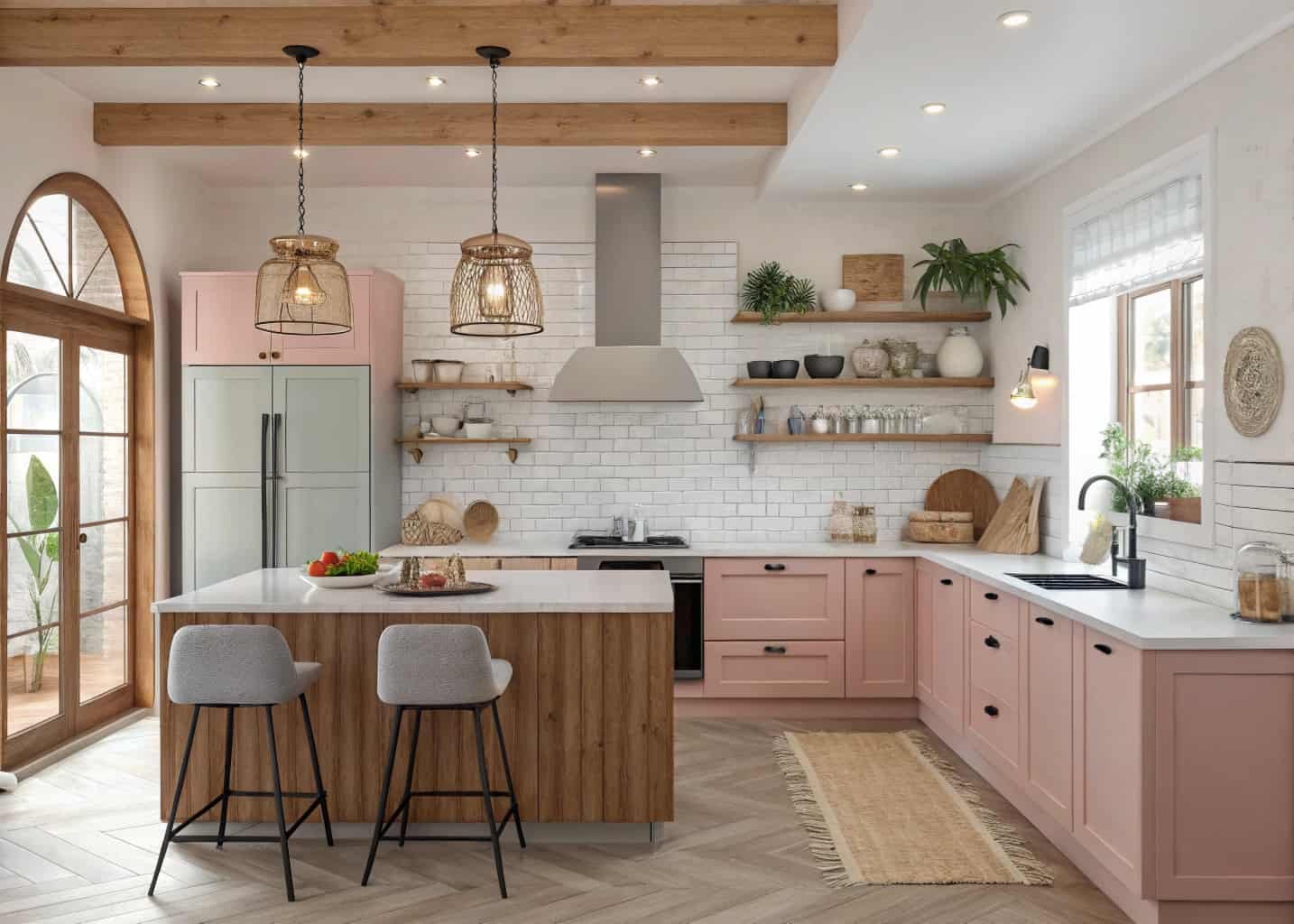
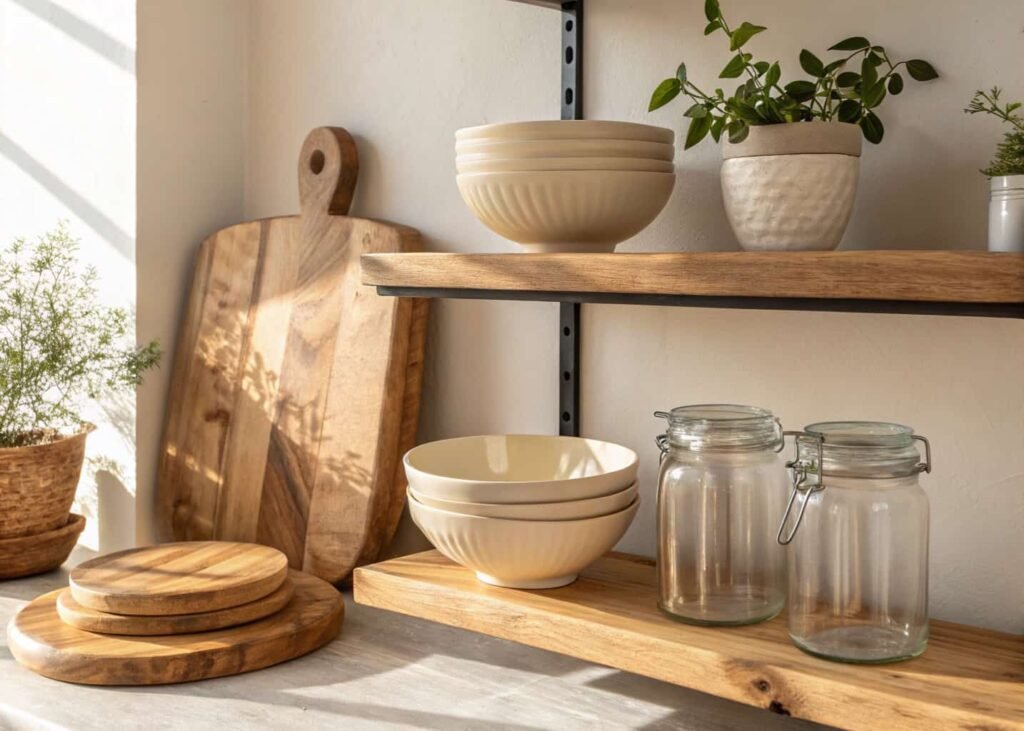
Open shelving gets a lot of hate from practical homeowners, and honestly, some of that criticism is fair — grease and dust do collect faster on open dishes than on ones behind a cabinet door. The trick people who actually live with open shelving use is to only display items that get used at least twice a week, so nothing sits long enough to gather dust. Group items by color and height rather than by category: a stack of cream bowls next to a wood cutting board next to two or three glass jars looks intentional, while a shelf crammed with every mug you own does not. Floating shelves in solid oak or walnut, roughly 24 to 36 inches long, are common because they read as more substantial than thin MDF versions.
4. Styling Countertops the Aesthetic Way
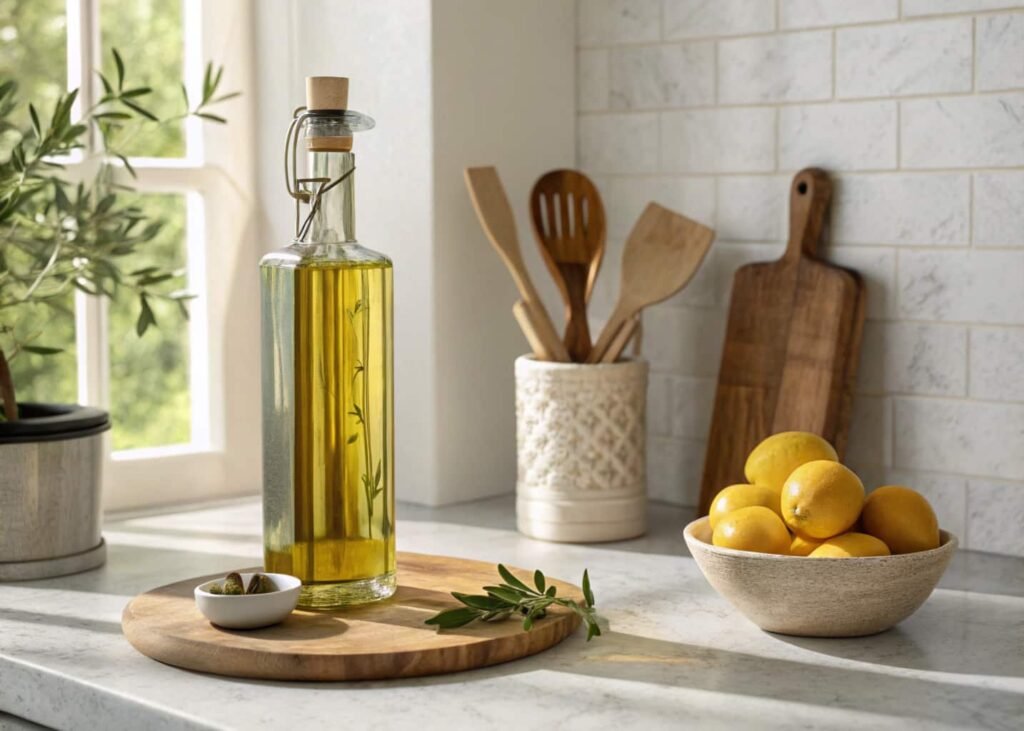
There’s a rule stylists use called the “rule of three” — group objects in odd numbers, usually three, of varying height. On a kitchen counter, that might look like a tall olive oil bottle, a mid-height crock of wooden utensils, and a shorter dish of garlic or lemons. Varying the height keeps the eye moving instead of landing on one flat row of stuff. Skip anything plastic if you can; swapping a plastic dish soap bottle for a $12–$20 ceramic or glass pump dispenser makes a bigger visual difference than people expect, since plastic tends to catch harsh reflections under kitchen lighting.
5. Aesthetic Lighting Choices
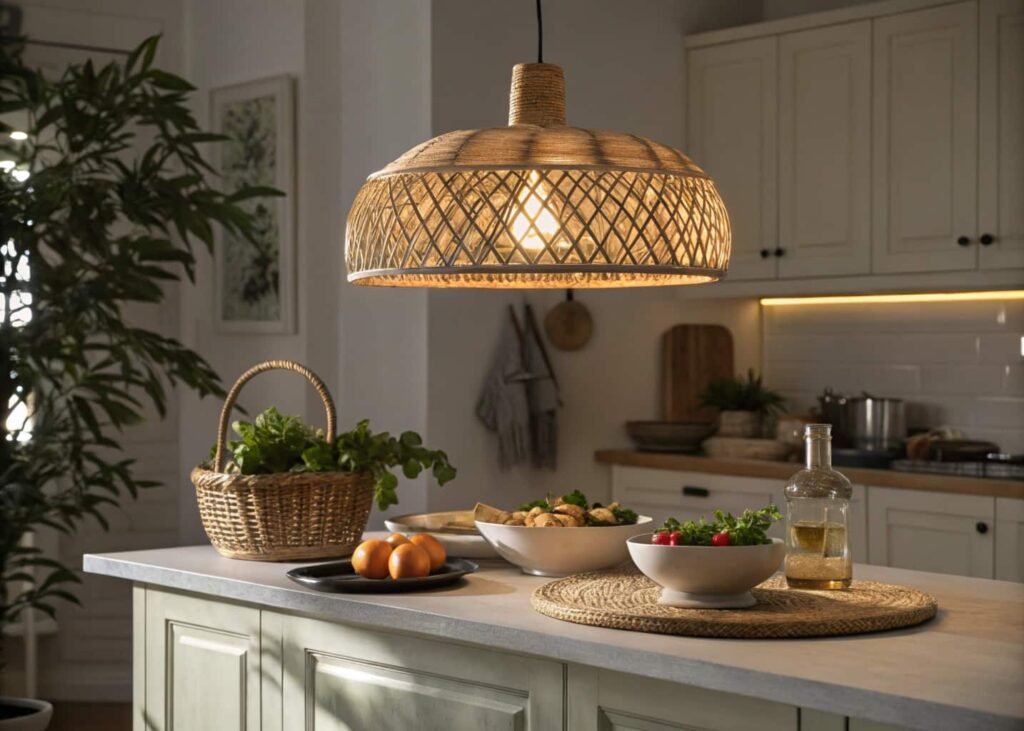
Overhead LED lighting is the single biggest reason kitchens look “un-aesthetic” in photos — cool-toned 4000K+ bulbs cast a flat, slightly blue light that makes wood tones look gray and skin tones look tired. Swapping to warm white bulbs (2700K–3000K) is the cheapest fix, usually under $10 per bulb. Beyond that, layered lighting matters more than one big fixture: a pendant light over an island, under-cabinet LED strips for counter tasks, and maybe one small lamp on open shelving for evening ambiance. Rattan or woven pendant shades have become popular specifically because they diffuse light softly instead of casting a harsh cone.
6. Adding Plants for an Aesthetic Touch
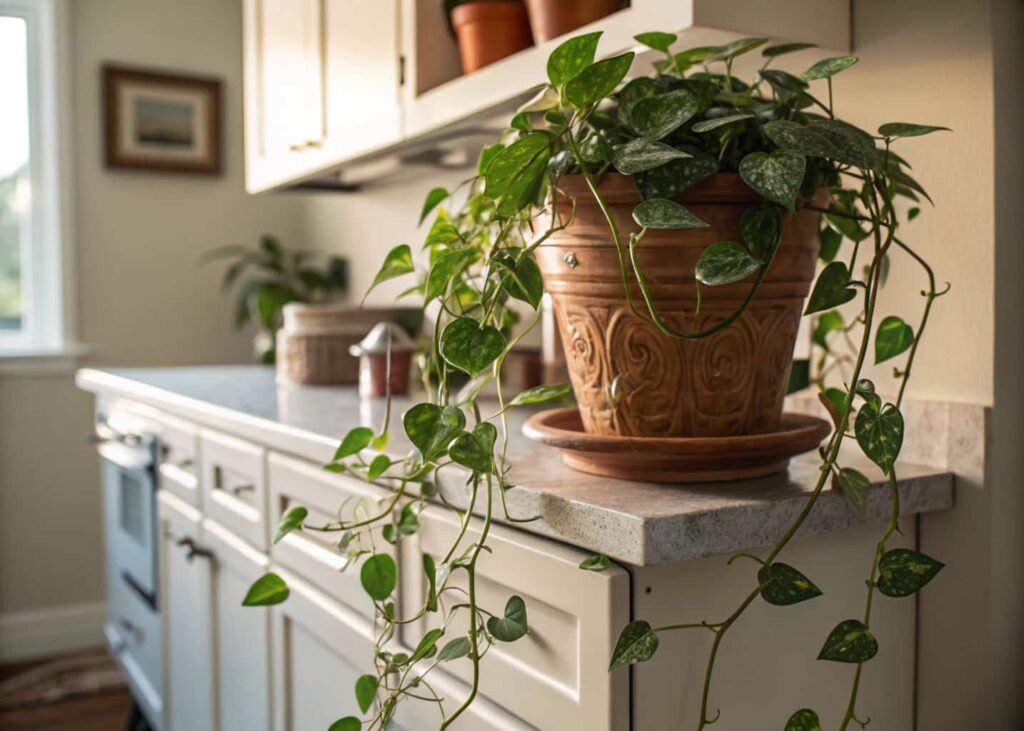
Kitchens are actually one of the harder rooms for plants — heat from cooking and inconsistent humidity stress out a lot of houseplants. Pothos, spider plants, and English ivy tolerate this better than most and don’t need direct sun, which matters since a lot of kitchen counters are away from windows. A trailing pothos on top of the fridge or cascading off an open shelf gives that slightly wild, lived-in look without needing much care — water it roughly once a week and trim it back when vines get leggy. If you genuinely can’t keep plants alive in a kitchen environment, a bundle of fresh herbs in a jar of water (basil roots easily this way) gives a similar green, textured look and you get to eat it eventually.
7. Aesthetic Tile and Backsplash Ideas
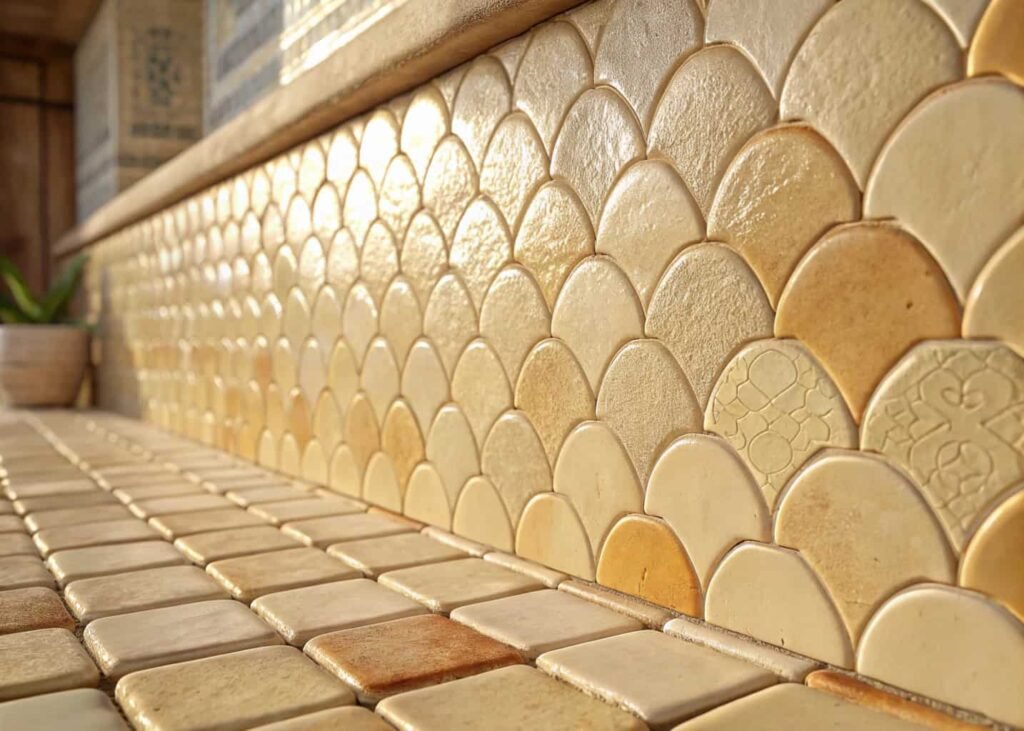
Zellige tile — the handmade Moroccan clay tile with slightly irregular edges and a glossy, variegated glaze — is behind a lot of the backsplashes people save on Pinterest, but it’s worth knowing it runs $15 to $30 per square foot before installation, considerably more than standard subway tile at $3 to $8. A cheaper way to get a similar hand-made look is a matte, slightly textured subway tile in an off-white or clay tone, laid in a vertical stack pattern instead of the standard brick offset — the pattern change alone makes a basic tile read as more design-forward. Grout color matters more than people think: a grout that closely matches the tile keeps the backsplash looking like one soft surface rather than a grid.
8. Curated Kitchenware Displays
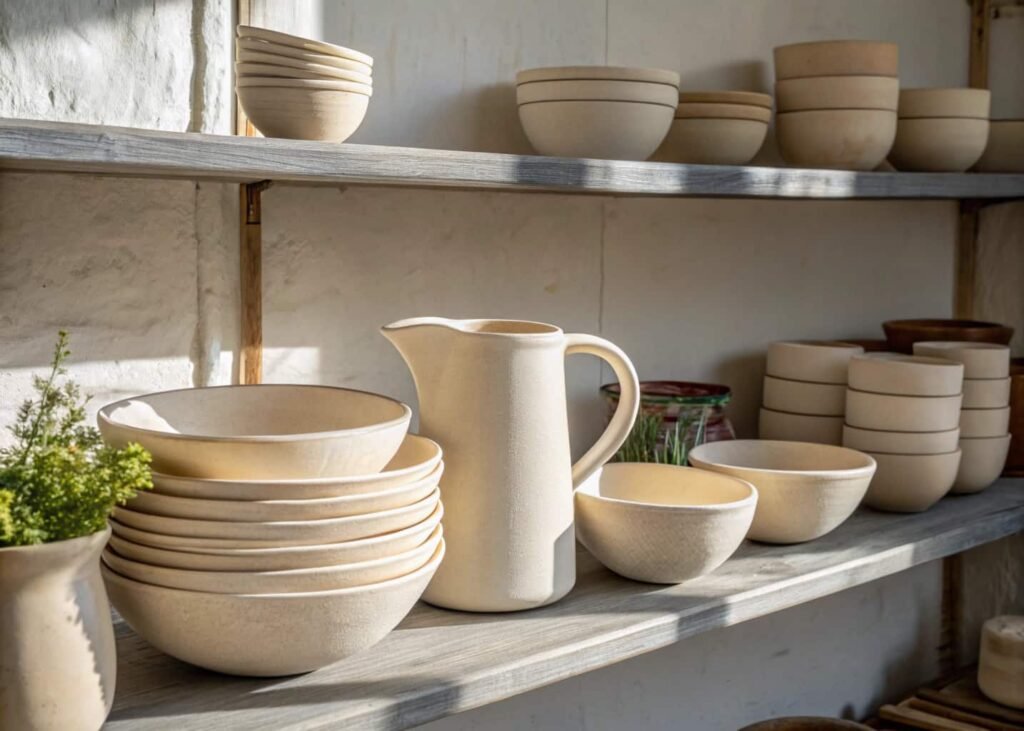
A good kitchenware display usually has a limiting rule behind it, even if it’s not obvious at first glance — same color family, same material, or same era. Someone collecting vintage Pyrex sticks to the pastel palette from the 1950s–70s rather than mixing in modern brights. If you’re starting from scratch, pick one material to anchor around, like unglazed terracotta or pale stoneware, and build outward from there. Secondhand shops and estate sales are genuinely the best source for pieces with character — a chipped vintage crock often photographs better than a brand-new one because the imperfection reads as authentic rather than staged.
9. Aesthetic Small-Space Kitchen Ideas
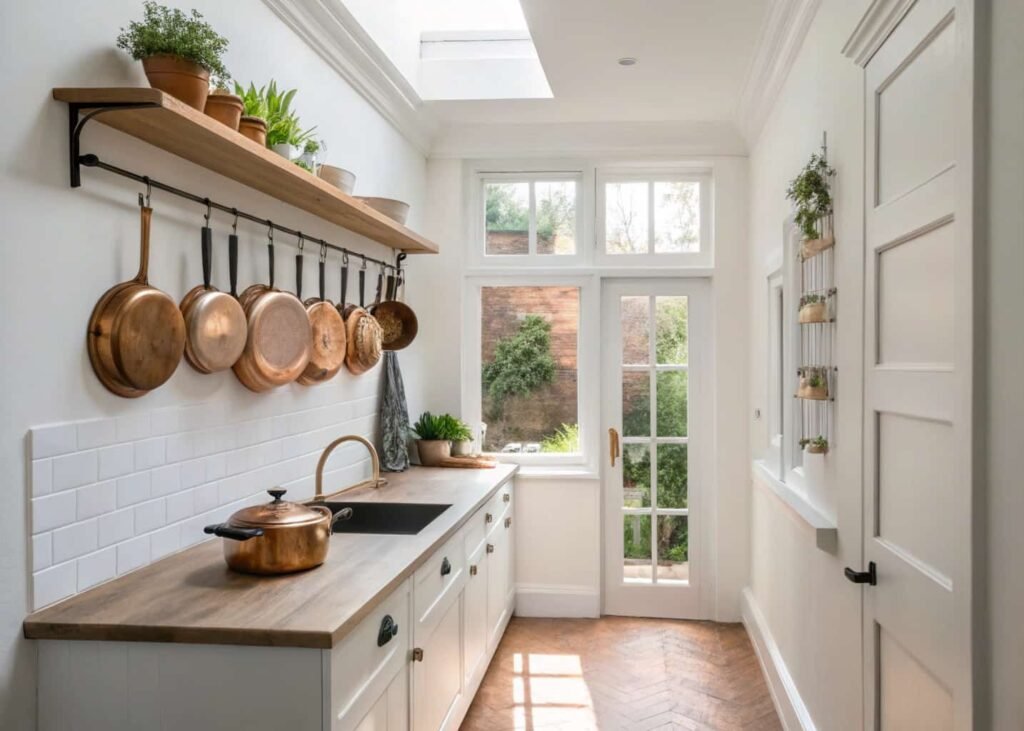
Small kitchens actually have an advantage here — fewer surfaces means less to style, and a cohesive look is easier to pull off. The move that works best in tight kitchens is vertical storage: a wall-mounted pot rail (roughly $20–$40) frees up cabinet space while turning your cookware into part of the decor. Mirrored or glass-front upper cabinets also help a small kitchen feel less cramped in photos by reflecting light back into the room. One thing to avoid: open shelving in a very small kitchen can backfire and make the space feel cluttered rather than airy, since there’s less wall to spread items across. In under 80 square feet, one styled shelf is usually enough — resist the urge to add a second.
10. Photo-Worthy Kitchen Corners
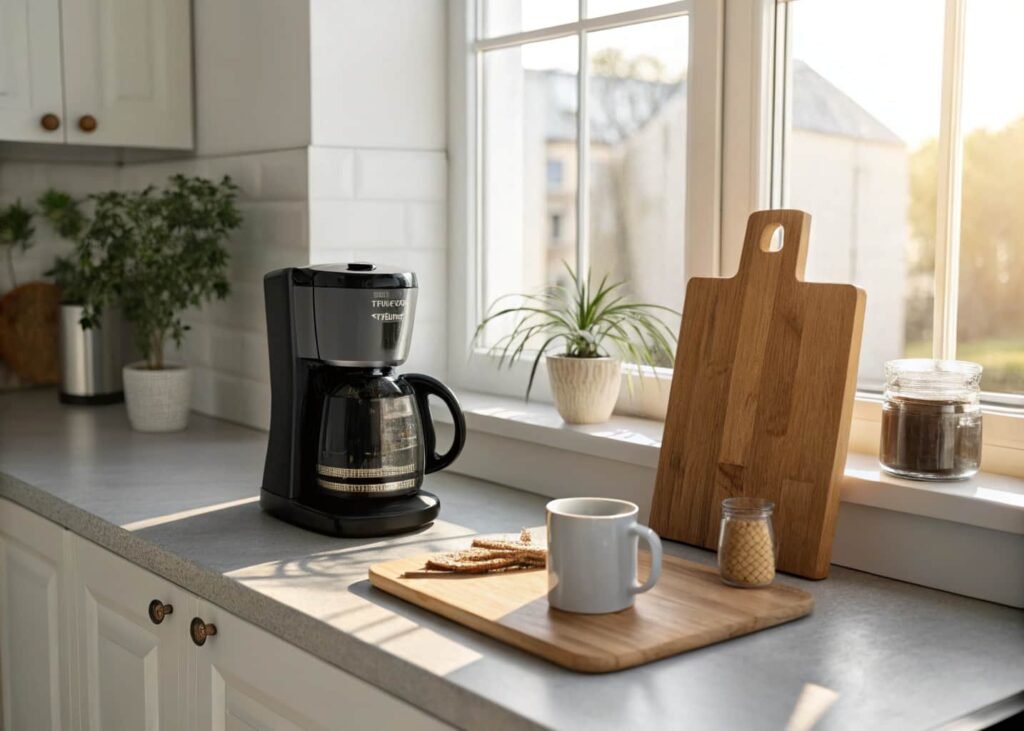
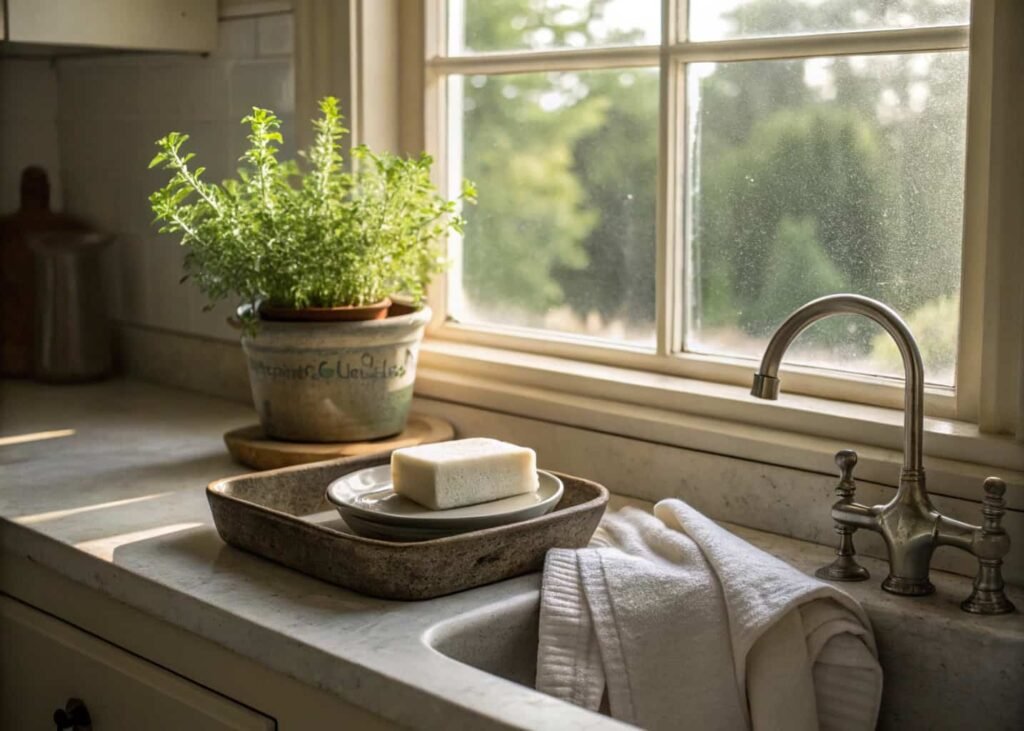
Not every corner needs to be camera-ready, but having one dedicated “vignette” makes a huge difference for anyone actually posting kitchen photos. A window above the sink with a small potted herb and a bar of soap in a ceramic dish is an easy one. A breakfast nook with a woven placemat, one mug, and morning light coming in works even better since it tells a small story instead of just showing objects. The detail that separates an amateur photo from a styled one is usually shadow — shoot near a window during soft morning or late afternoon light rather than under overhead lighting, which flattens everything and kills the texture you worked to create.
11. Final Tips to Keep the Aesthetic Consistent
The most common mistake isn’t picking the wrong colors — it’s picking three different aesthetics and mixing them in one small room. A farmhouse sink, mid-century brass fixtures, and a coastal blue backsplash can each look great alone but fight each other together. Choose one direction and let the rest of the room support it, even if that means leaving some walls or shelves emptier than you’d like at first. It’s also worth revisiting your styling every couple of months rather than treating it as a one-time project — swap seasonal produce in and out of bowls, rotate which mugs sit on the open shelf, change the plant if one starts to struggle. A kitchen that’s styled once and never touched again tends to look stale in photos within a few weeks, even if the bones are right.