How to Choose a Kitchen Decor Theme
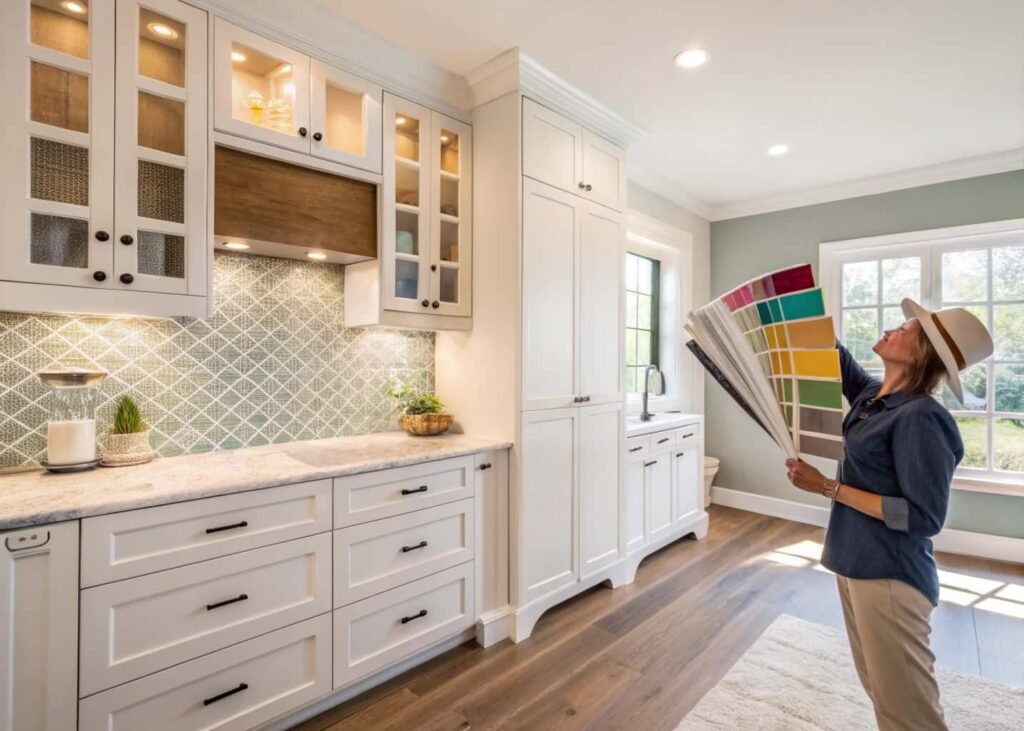
Most people pick a kitchen theme by scrolling Pinterest for twenty minutes and grabbing whatever caught their eye last. That works fine until you’re standing in the tile aisle at Home Depot with three different swatches and no idea which one actually fits your cabinets. A better starting point is your home’s existing bones — the flooring you’re not replacing, the natural light you get after 3pm, and the ceiling height. A galley kitchen with 8-foot ceilings and one small window is going to fight you if you try to force a moody industrial loft look with black steel and dark walnut. That same room does much better with Scandinavian or coastal palettes that lean light. Before picking a theme, walk through your kitchen and write down three things you’re not changing (cabinet boxes, flooring, window placement) and let those limits guide the theme instead of the other way around.
Farmhouse Kitchen Theme
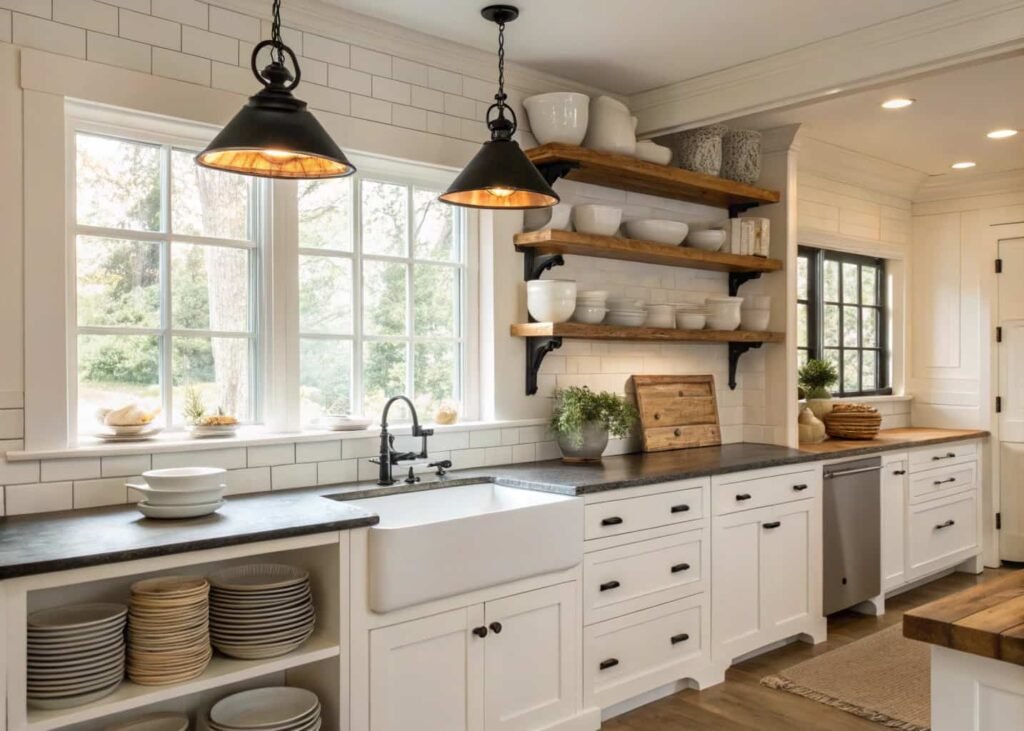
Farmhouse works because it hides wear well, which matters if you have kids or actually cook daily instead of just photographing the kitchen. The core formula is a white or off-white cabinet base (Sherwin Williams Alabaster SW 7008 or Benjamin Moore Simply White OC-117 are the two most common picks), a farmhouse apron sink in fireclay, and open shelving in stained oak or reclaimed wood holding everyday dishes instead of decor. Shiplap on one wall — real or MDF panel, roughly $2 to $4 per square foot — adds texture without a full renovation. The mistake people make is going too matchy: pairing white cabinets with white subway tile, white countertops, and white walls flattens the whole room. Break it up with a butcher block island counter or black iron pendant lights (three over a 6-foot island, spaced about 24 inches apart) to keep contrast in the space.
Coastal Kitchen Theme
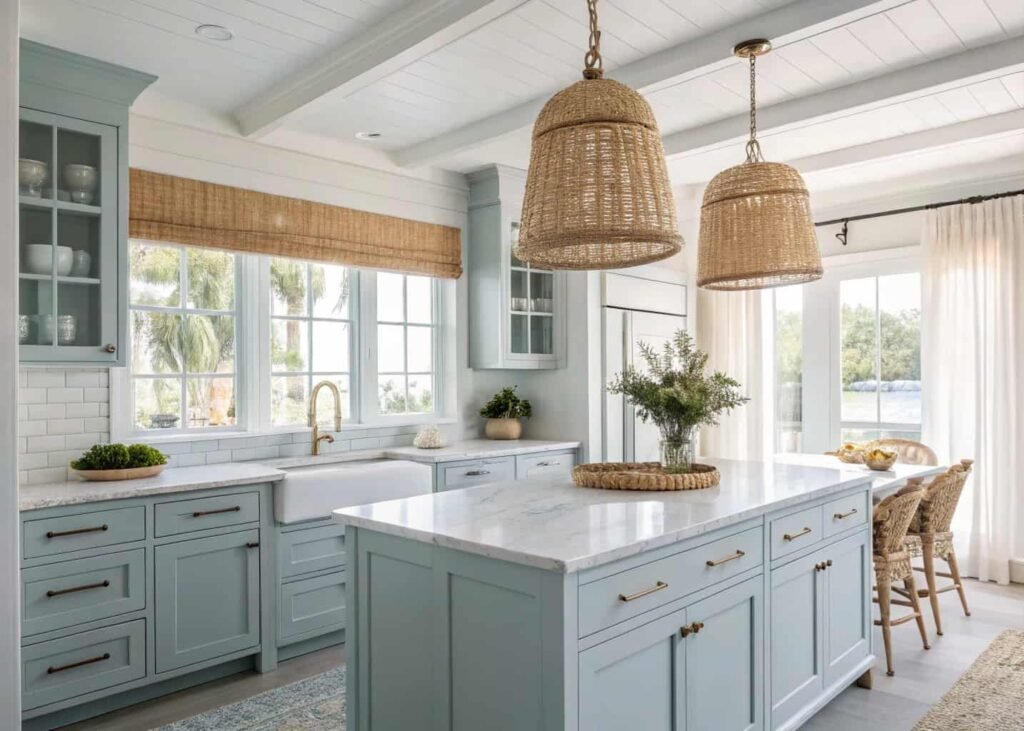
Real coastal decor is quieter than most people expect — it’s not seashells glued to picture frames, it’s about light, texture, and a narrow color range. Think whitewashed or pale blue-gray cabinets (Benjamin Moore Palladian Blue HC-144 is a reliable choice), woven rattan or seagrass light fixtures instead of metal, and countertops in a soft white quartz with light gray veining rather than stark white. Wood tones should stay light — whitewashed oak or bleached ash, not dark walnut, which pulls the room toward a completely different mood. One detail that separates convincing coastal kitchens from theme-park versions: linen or cotton window treatments instead of anything glossy, and brass or unlacquered hardware that’s allowed to tarnish naturally over a few years rather than staying shiny.
Modern Minimalist Theme
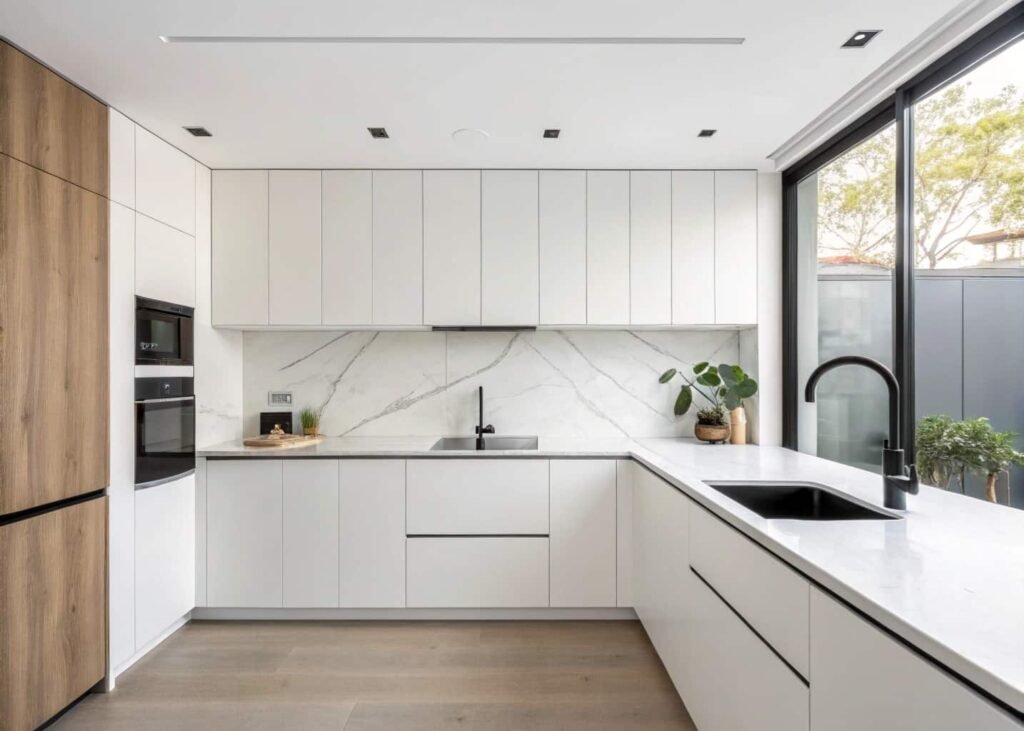
Minimalist kitchens live or die on storage planning, not paint color. If you don’t have enough cabinet and drawer space to hide small appliances, the “minimalist” look collapses within a month of actual use. The visual formula itself is simple: flat-panel (slab) cabinet doors, handleless or push-to-open mechanisms, a single dominant material for countertops and backsplash (often the same quartz slab run up the wall, called a waterfall or full-height backsplash), and a restrained palette of no more than three colors including your wall tone. Matte finishes photograph better than gloss here because gloss shows every fingerprint and water spot under kitchen lighting. Budget-wise, slab cabinets run noticeably higher than shaker style — expect 15 to 25 percent more per linear foot — so this theme is often more expensive to execute well than it looks.
Rustic Cabin Theme
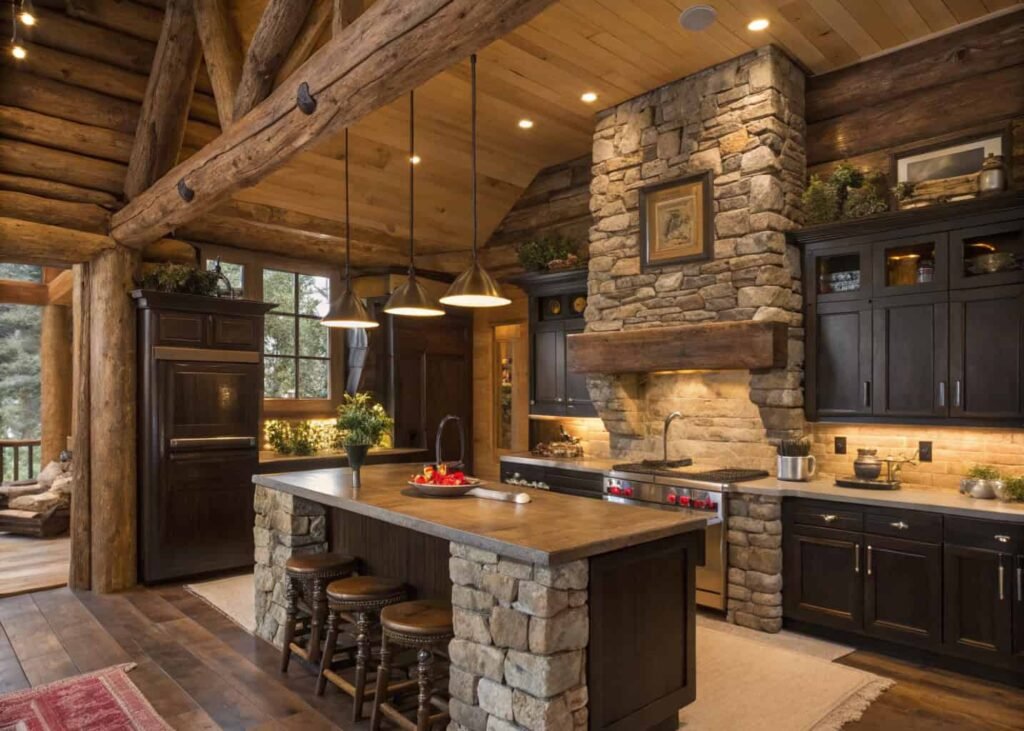
Rustic cabin decor uses raw, unfinished-looking materials but almost always needs a sealed, practical finish underneath so the kitchen still functions. Exposed wood beams, log or hewn-timber accents, and stone or brick backsplash (real stacked stone runs $15 to $30 per square foot installed; manufactured stone veneer is closer to $8 to $15) are the anchors. Cabinet color should stay in the brown-to-black range — stained knotty pine, dark walnut, or even black cabinets with visible wood grain. The corrective most articles skip: rustic doesn’t mean rough-cut everywhere. Pair one rugged element (a live-edge wood island counter, for example) with smoother surfaces elsewhere like a honed granite counter or matte black appliances, or the kitchen starts to feel unfinished rather than intentional.
Mediterranean Kitchen Theme
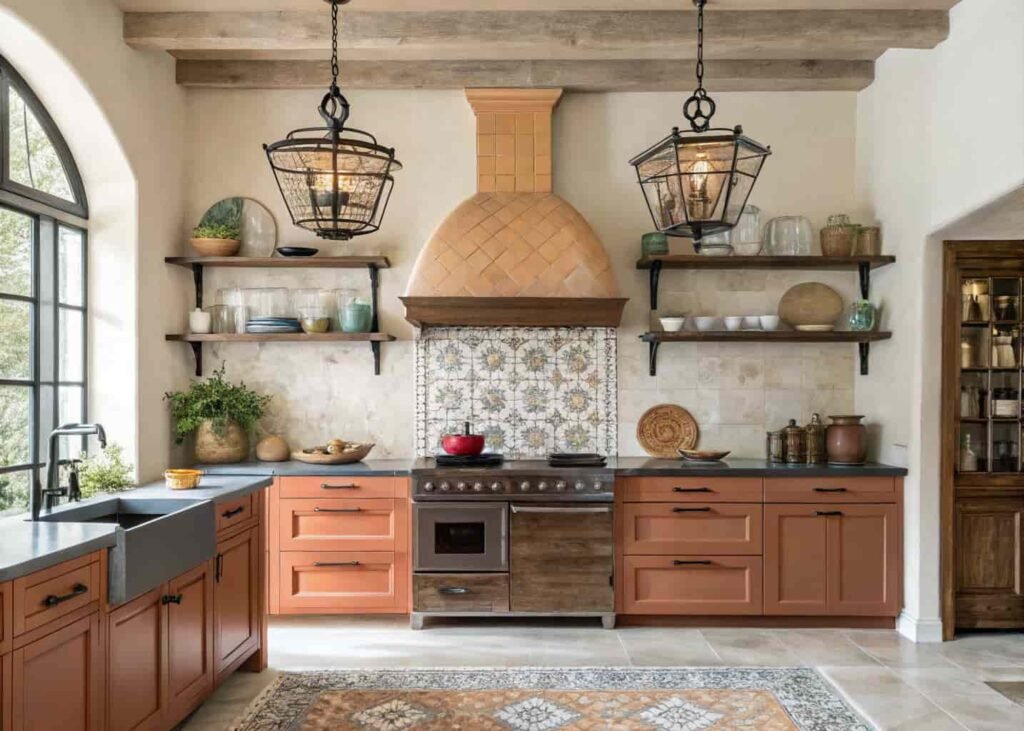
Mediterranean kitchens are built around terracotta, hand-glazed tile, and warm wood tones — and the tile is usually the part people underestimate on cost. Handmade zellige tile (the small, slightly irregular glazed squares associated with Moroccan and Mediterranean kitchens) runs $15 to $40 per square foot before installation, versus $3 to $8 for standard ceramic subway tile, because each piece is fired and glazed individually with visible variation. If the full zellige backsplash isn’t in budget, use it as a focal strip behind the range and standard tile elsewhere. Cabinet colors lean warm — terracotta orange, olive green, or a deep ochre yellow — paired with wrought iron light fixtures and wood open shelving. Arched cabinet openings or an arched range hood add the architectural signature of the style if your kitchen layout allows for it.
Industrial Loft Theme
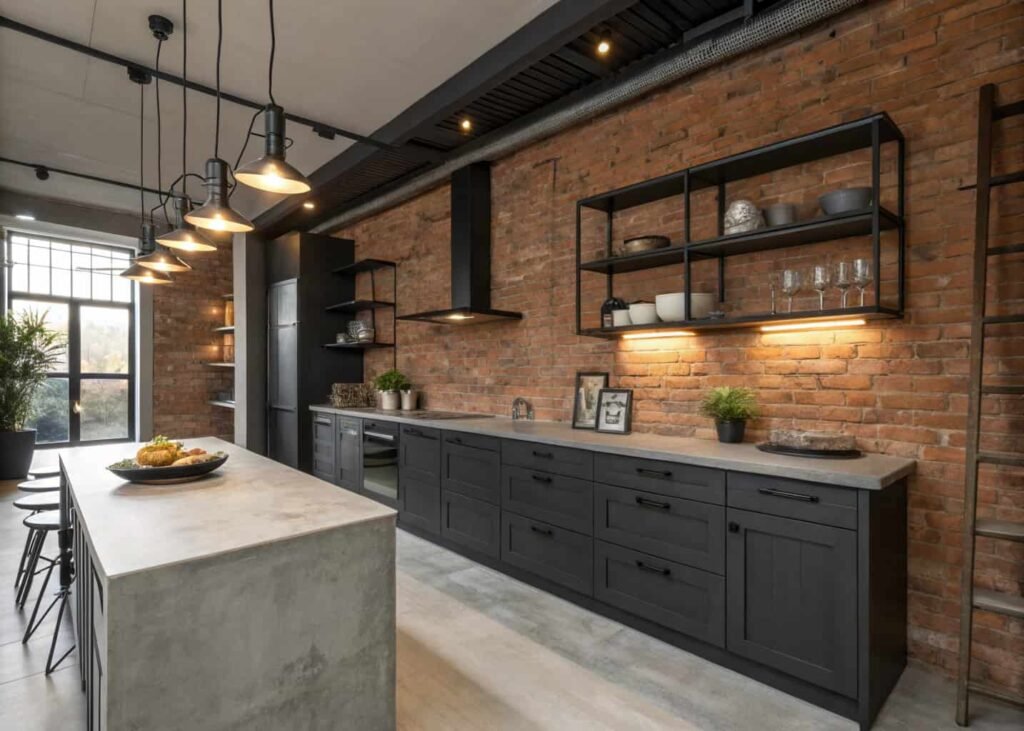
Industrial works best in kitchens that already have some of the bones for it — exposed brick, concrete floors, high ceilings, or visible ductwork. Trying to fake it in a standard suburban kitchen with drywall and carpet nearby usually reads as mismatched. Core materials: black or dark bronze metal shelving and light fixtures, concrete or butcher block counters, and cabinets in either raw wood, matte black, or exposed plywood with visible edge grain. Subway tile in a dark charcoal or matte black grout stands in for exposed brick when brick isn’t structurally there. Stainless steel open shelving (the kind used in restaurant kitchens, roughly $50 to $150 per shelf unit) is a fast way to add the look without demo work, and it’s genuinely practical for storing cookware within reach of the stove.
Vintage Retro Theme
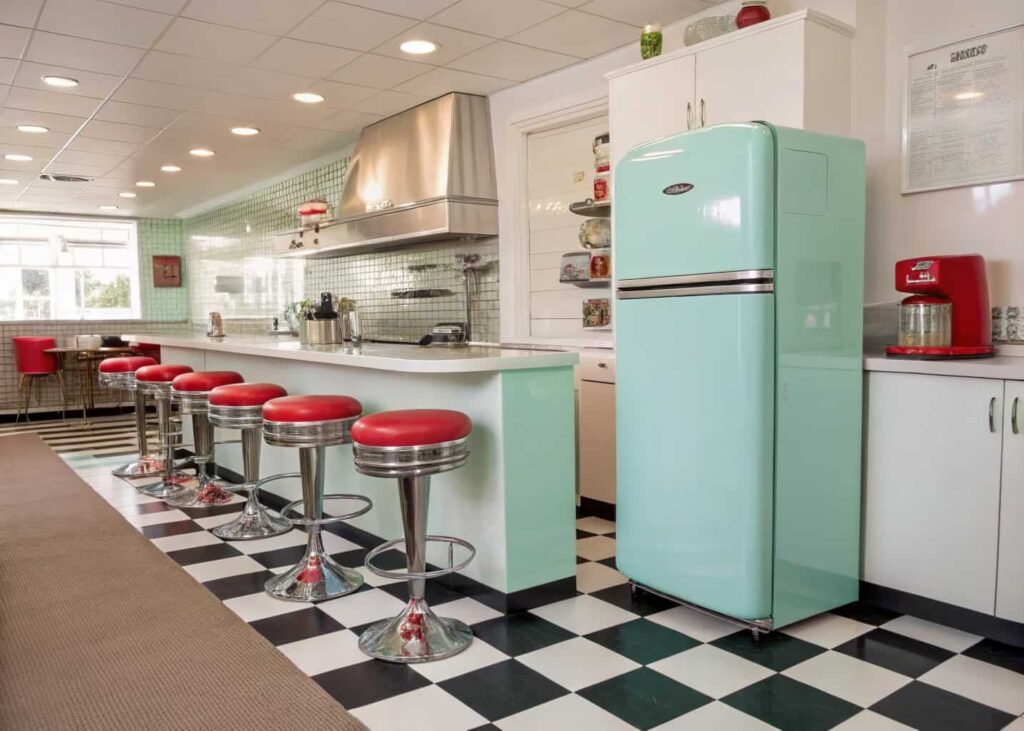
Retro kitchens split into two very different eras that people often blend without meaning to: 1950s diner-style (pastel appliances, checkerboard floors, chrome hardware) and 1970s retro (mustard yellow, avocado green, warm wood paneling). Pick one era rather than mixing both, or the room reads as costume rather than design. For the 1950s look, brands like Smeg and Big Chill make retro-styled refrigerators and ranges in colors like mint, pink, and pale yellow, priced from about $1,800 to $4,000+ for a fridge. For a more budget-friendly version, keep standard appliances in stainless or white and get the retro effect from checkerboard vinyl or linoleum flooring (often under $5 per square foot) and chrome-edged laminate counters, which were the actual original materials of the era.
Tropical Kitchen Theme
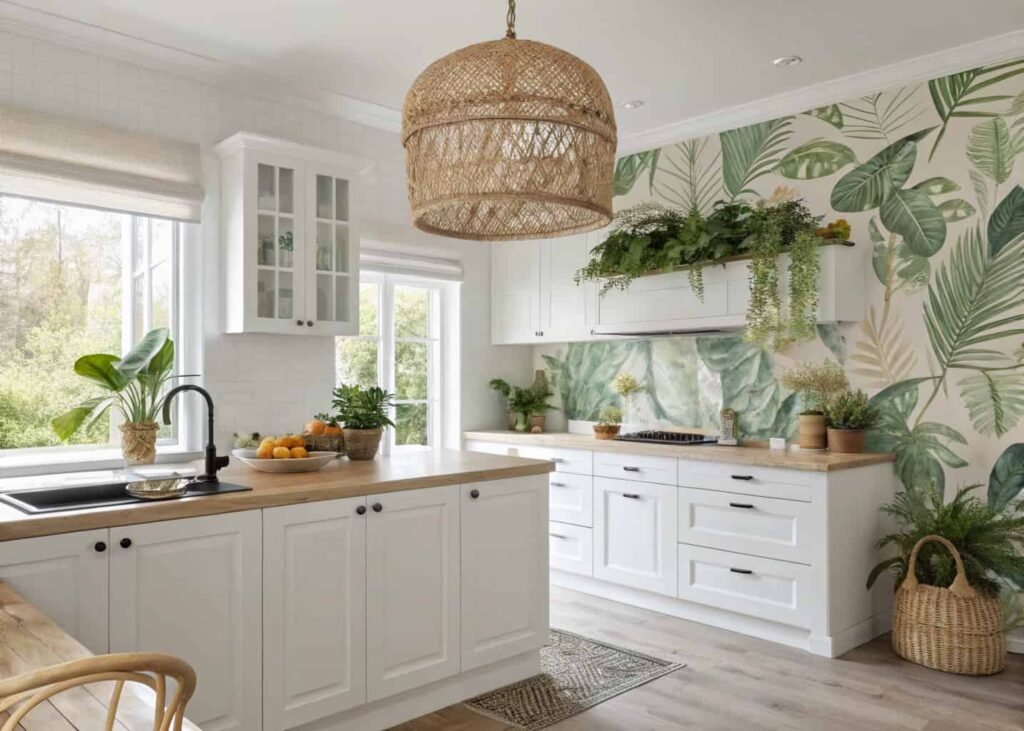
Tropical kitchen decor works through pattern and greenery more than structural changes, which makes it one of the more affordable themes to try without a renovation. Rattan and cane furniture, woven pendant lights, and botanical print wallpaper (removable peel-and-stick versions run $30 to $60 per roll) do most of the visual work. Cabinet color should stay light — white or pale wood — so patterned elements like a palm-print backsplash tile or wallpaper don’t compete with dark cabinetry. Live plants matter more here than in almost any other theme: a few potted plants that actually tolerate kitchen humidity and indirect light, like pothos or snake plants, do more for the look than most decor purchases. Avoid plastic tropical decor items (fake palm leaves, plastic pineapples) — they read as novelty rather than design.
Scandinavian Theme
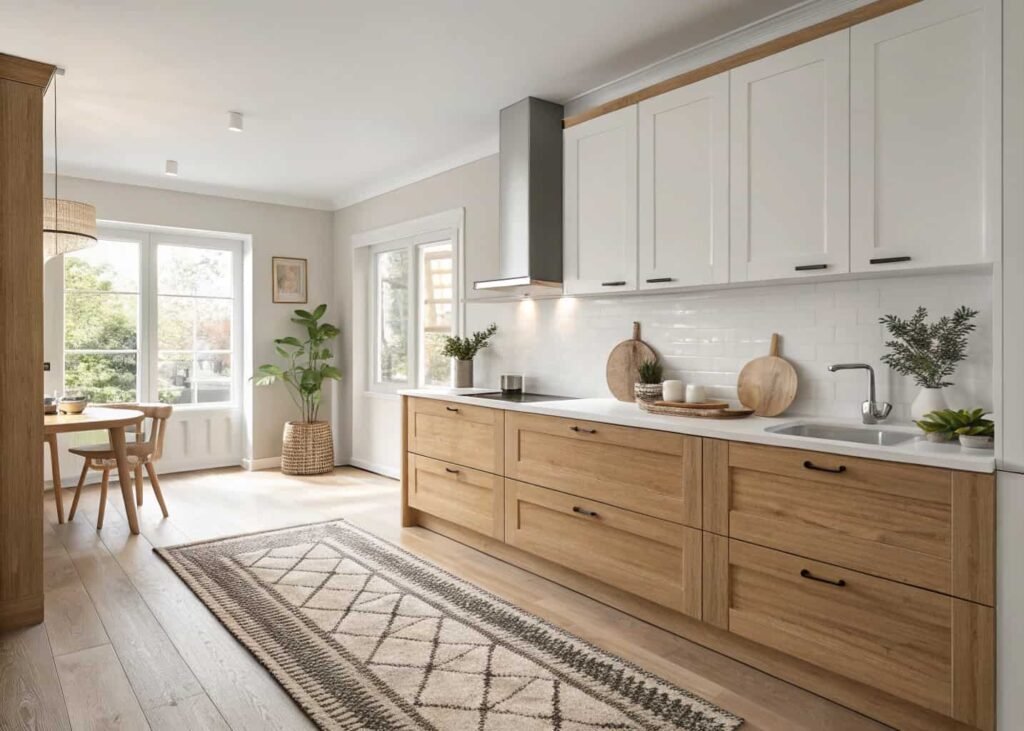
Scandinavian kitchens rely on light wood, white or pale gray walls, and function-first design where storage and hardware are chosen for use, not decoration. Cabinet fronts are usually flat or simple shaker in white, light oak, or pale gray, often from lines designed for exactly this look (IKEA’s SEKTION with VEDDINGE or ASKERSUND fronts is a common budget route, running roughly $3,000 to $6,000 for a full kitchen before appliances). Countertops stay light too — white quartz or butcher block rather than dark stone. What actually makes Scandinavian kitchens feel authentic instead of just “white kitchen” is deliberate negative space: fewer countertop items, cabinet interiors organized with drawer dividers, and one or two textured elements (a wool runner, a wood cutting board displayed, not stored) rather than a shelf full of decor objects.
Bohemian Kitchen Theme
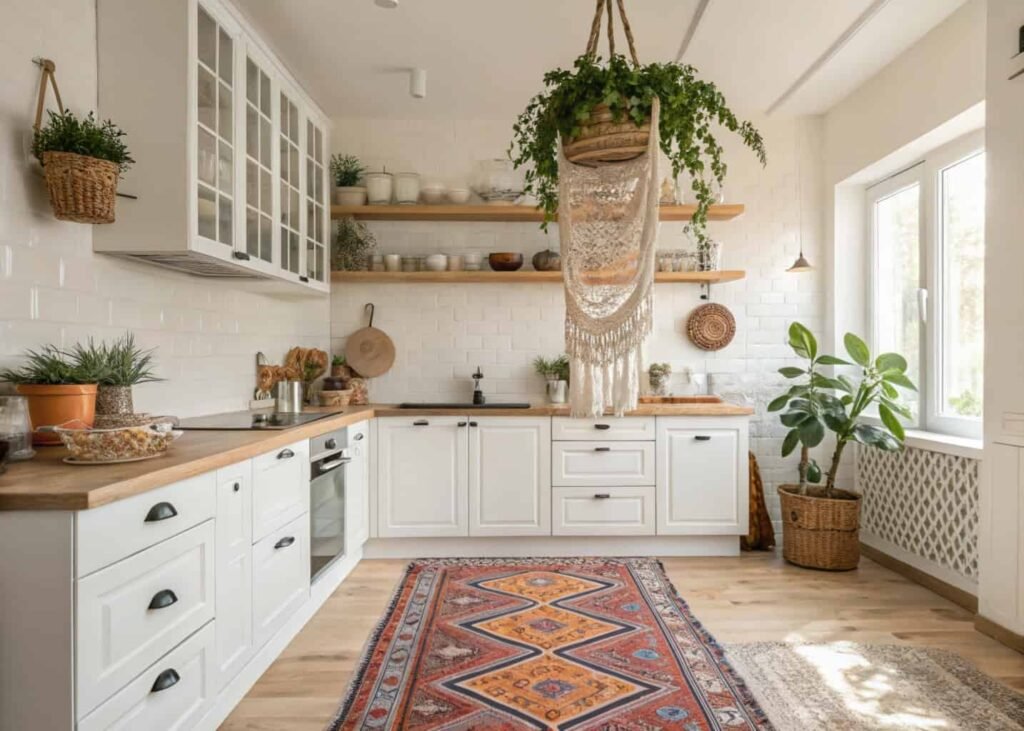
Boho kitchens get a bad reputation for looking cluttered, and that usually happens when every surface gets decorated at once. The theme actually depends on restraint in structure paired with richness in a few chosen spots. Keep cabinets and walls in a neutral base — white, warm white, or terracotta — then layer in pattern through a Moroccan or Turkish-style runner rug ($80 to $200 for a well-made vintage-look piece), macrame plant hangers, and mixed metal finishes (brass fixtures next to black hardware is fine here, unlike more matched themes). Open shelving works well because it lets you display a curated mix of ceramics and glassware instead of hiding it, but the word “curated” matters — pick 8 to 10 pieces you actually like rather than filling every shelf inch.
French Country Theme
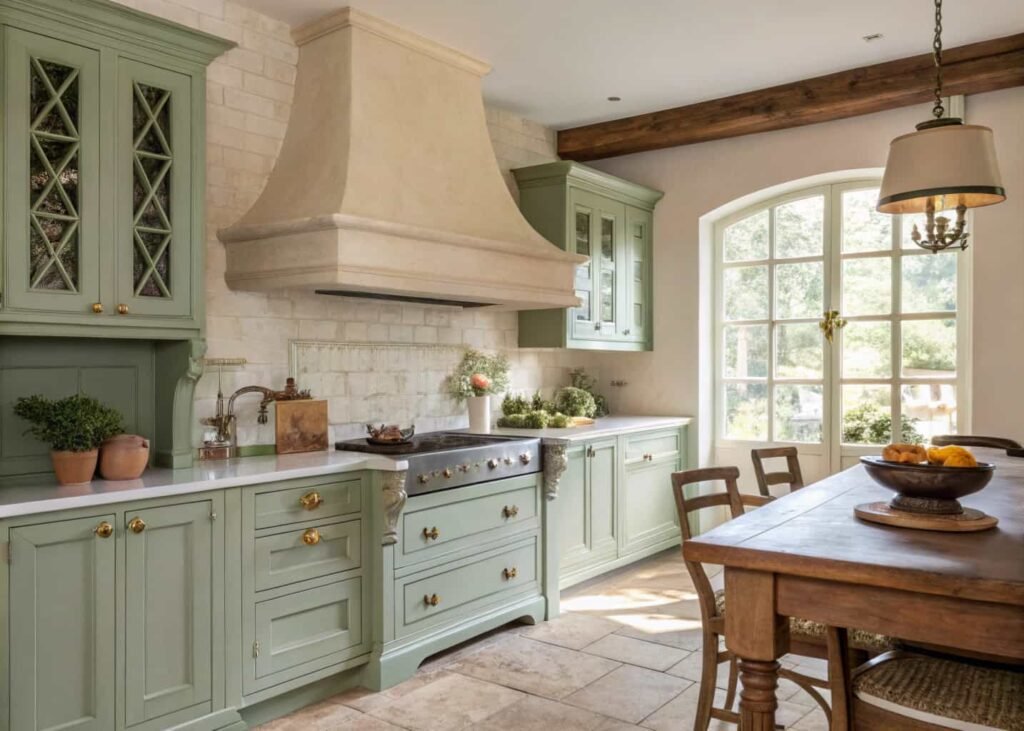
French Country is often confused with farmhouse, but the details separate them: farmhouse leans casual and utilitarian, French Country leans slightly more formal with curved lines, toile or floral fabric, and richer color like soft sage, buttery yellow, or muted blue rather than farmhouse’s white-and-black palette. Cabinet hardware tends toward ornate cup pulls or ring pulls in aged brass or bronze rather than plain bar pulls. A range hood with a curved or arched shape, sometimes plastered or stone-clad, is one of the clearest signature pieces of the style, alongside a farmhouse sink and a wood dining table pulled directly into the kitchen space rather than a separate breakfast nook. If a full plaster hood isn’t feasible, a curved wood hood cover painted to match cabinetry gets close to the same effect for a fraction of the cost.
Black and White Classic Theme
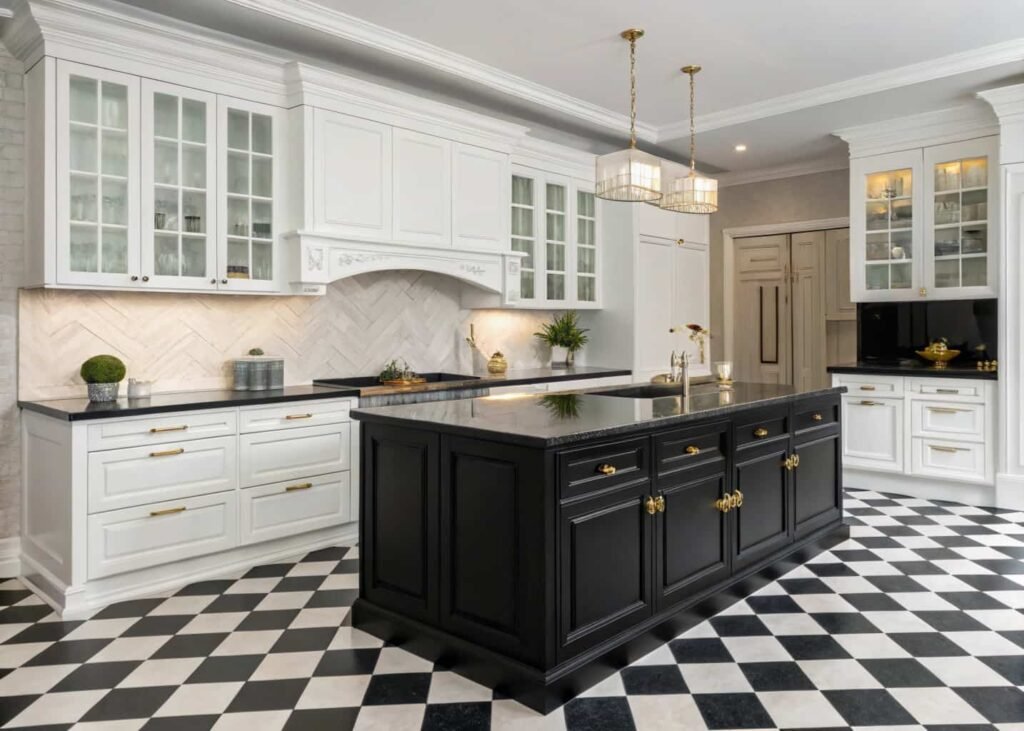
Black and white kitchens read as timeless because the palette doesn’t tie itself to a decade the way avocado green or millennial pink does. The trade-off is that with only two core colors, proportion does all the work — an all-black kitchen feels heavy and cave-like, while getting the ratio wrong the other way (say, 90% white with a few black accents) can look like it’s missing something rather than intentionally minimal. A common working ratio is roughly 60% white or off-white, 30% black, and 10% metal accent (chrome, brass, or matte black hardware). Classic executions use black lower cabinets with white uppers, or white cabinets with a black island as the single anchor piece, paired with black-and-white checkerboard or herringbone flooring, which has been a recurring element in this style since well before it trended again recently.
Mixing Two Themes Successfully
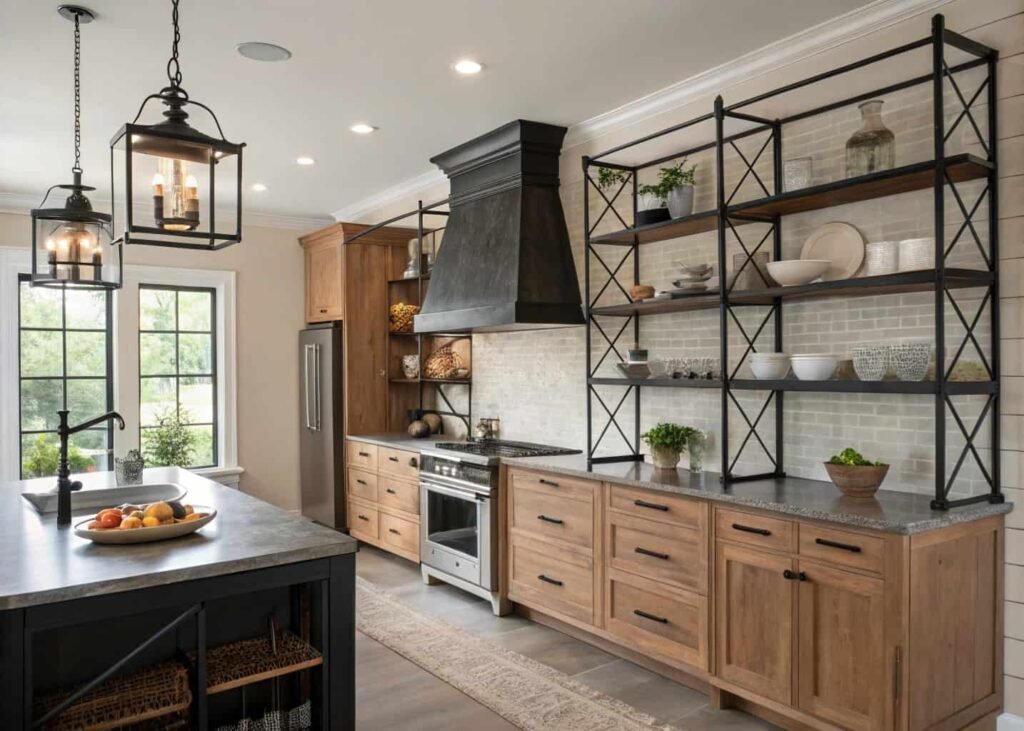
Most real kitchens aren’t a pure single theme — they’re two styles blended, usually because the homeowner likes one theme’s colors and another’s materials. The safest combinations share an underlying material or era: Scandinavian and Japandi (Japanese-Scandinavian) blend naturally because both use light wood and restraint. Farmhouse and industrial also pair well because both tolerate raw materials and imperfection. The combinations that usually fail are ones pulling from opposite formality levels at the same time — ornate French Country details next to raw industrial metal shelving tend to fight each other rather than blend. A working method: pick one theme for your fixed, expensive elements (cabinets, countertops, flooring) and let the second theme show up only in the swappable layer — lighting, hardware, textiles, and decor — so you can adjust the balance later without another renovation.
Sticking to Your Theme on a Budget
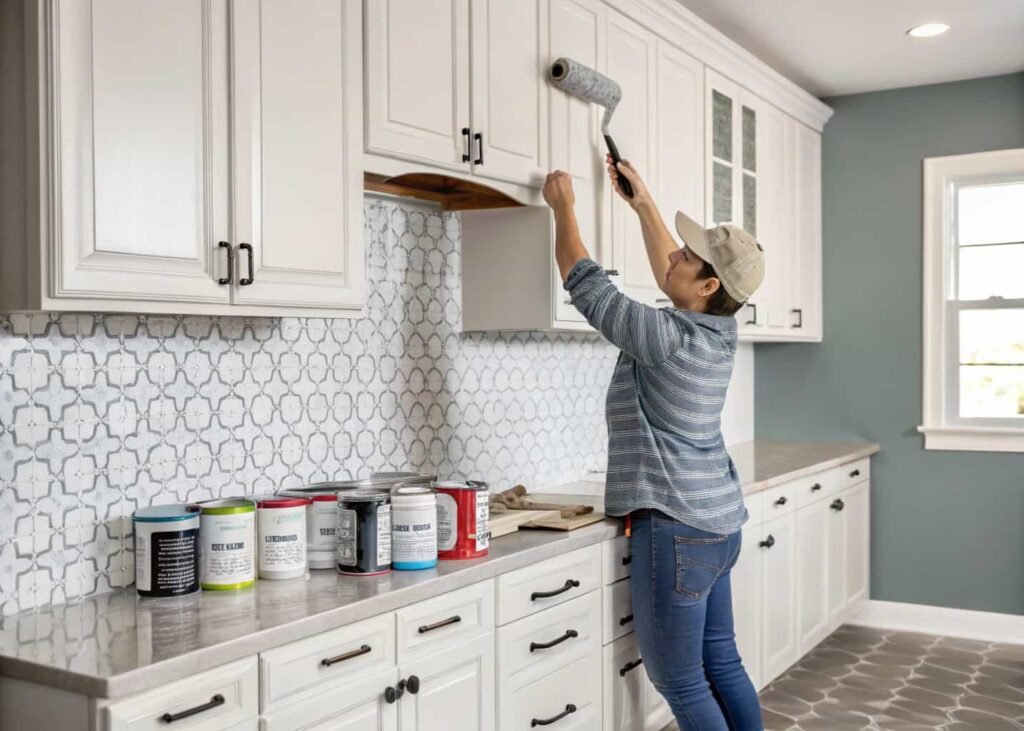
Full kitchen renovations easily run $25,000 to $60,000+ depending on region and cabinet quality, but most of a theme’s visual identity comes from a handful of swappable elements that cost far less. Cabinet hardware swaps ($3 to $15 per knob or pull) change the feel of existing cabinets more than people expect. Peel-and-stick tile backsplash ($8 to $20 per square foot installed by yourself, versus $25 to $50+ for professionally installed real tile) can carry an entire theme’s pattern language for a weekend project. Paint is still the single highest-impact, lowest-cost change — a gallon of cabinet-grade paint ($40 to $70) plus primer can shift a kitchen from one theme’s palette to another’s without touching the cabinet boxes themselves. The mistake to avoid is buying small decor items first; they don’t read as a theme until the bigger surfaces (cabinet color, backsplash, flooring) are aligned, so budget in that order — surfaces first, decor last.