Why Countertop Styling Matters
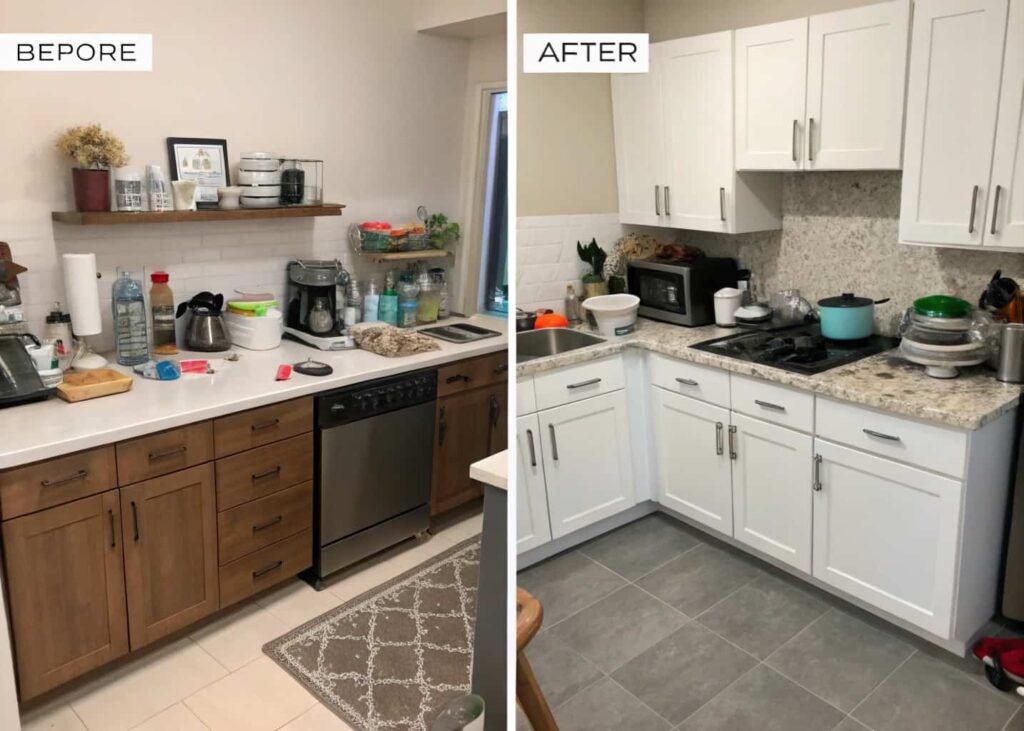
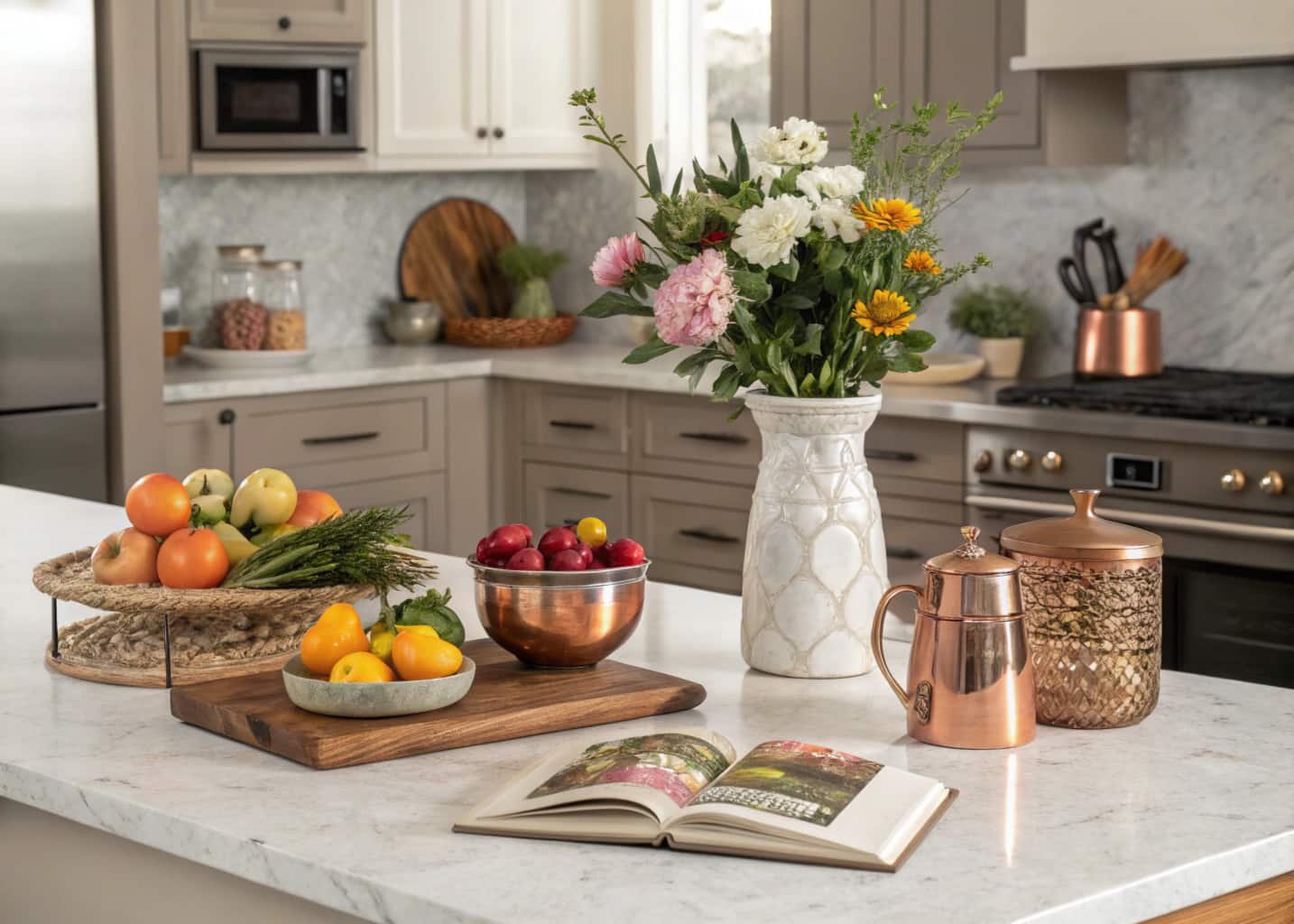
Your countertops are the first thing people notice when they walk into your kitchen, even before the cabinets or the backsplash. A cluttered counter makes the whole room feel smaller and messier than it actually is, while a well-styled one can make even a builder-grade kitchen look intentional. Interior designers often talk about the “kitchen triangle” for function, but there’s a styling version of that idea too — you want visual weight distributed across your counters instead of piled in one corner. Think of your countertop the way you’d think about a bookshelf: a few grouped objects at varying heights read as curated, while one long row of same-sized items reads as clutter. This matters more in open-concept homes, where your kitchen counter is basically part of your living room decor now, visible from the couch.
Choosing the Right Countertop Material
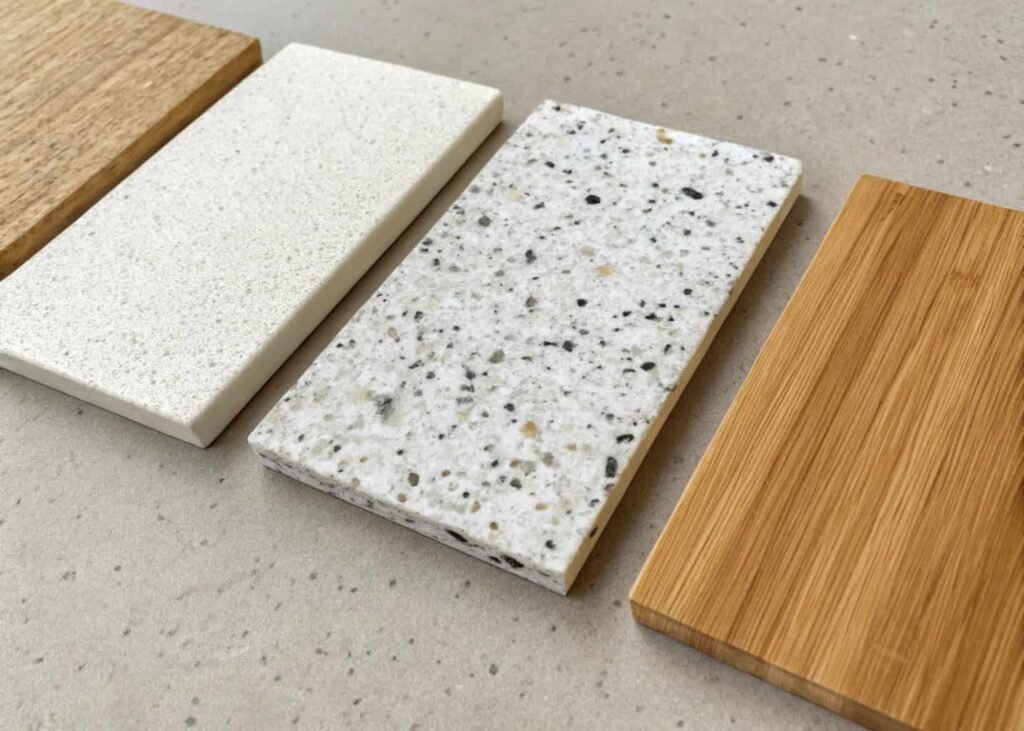
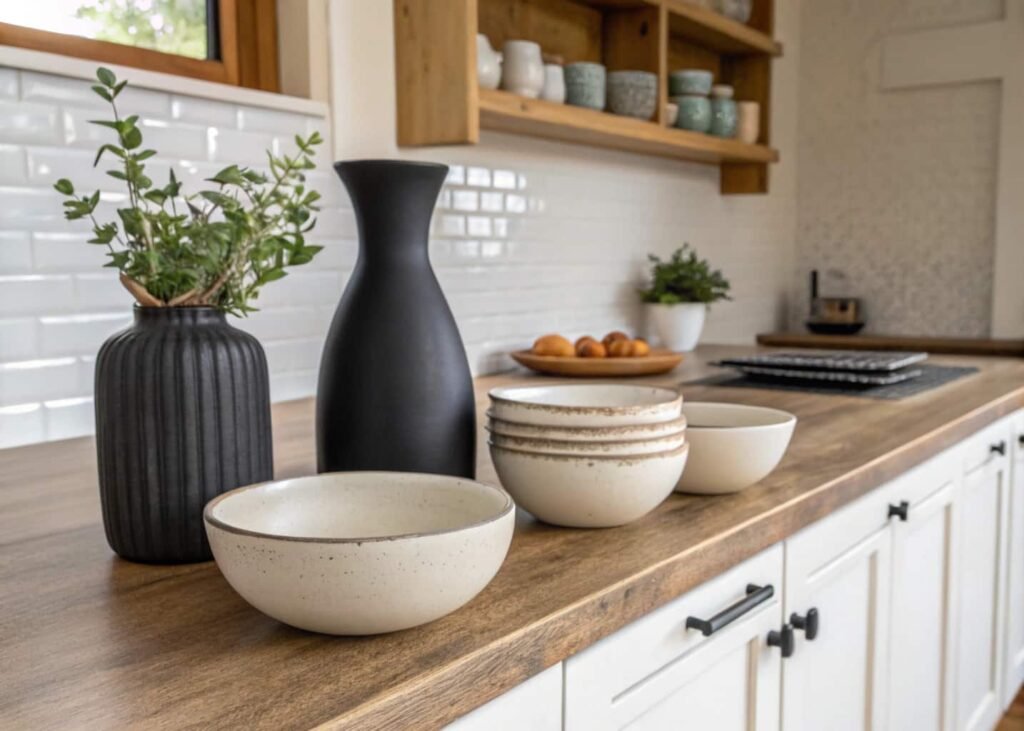
Before you style anything, the material underneath changes what actually looks good on top of it. Quartz (engineered stone) runs about $50 to $120 per square foot installed and has almost no veining variation, so it pairs well with bold, colorful accessories since the surface itself stays quiet. Granite, at roughly $40 to $100 per square foot, has natural movement in the stone, which means busy decor can start to compete with the counter instead of complementing it — stick to one or two accent colors max. Butcher block is the budget option at $30 to $70 per square foot but needs mineral oil conditioning every few weeks, so avoid leaving damp vases or planters directly on it; use a coaster or small tray as a buffer. If you’ve already got laminate, don’t fight it — lean into a more rustic, layered styling approach with wood and woven textures rather than trying to make it look like stone.
Styling with Cutting Boards and Trays
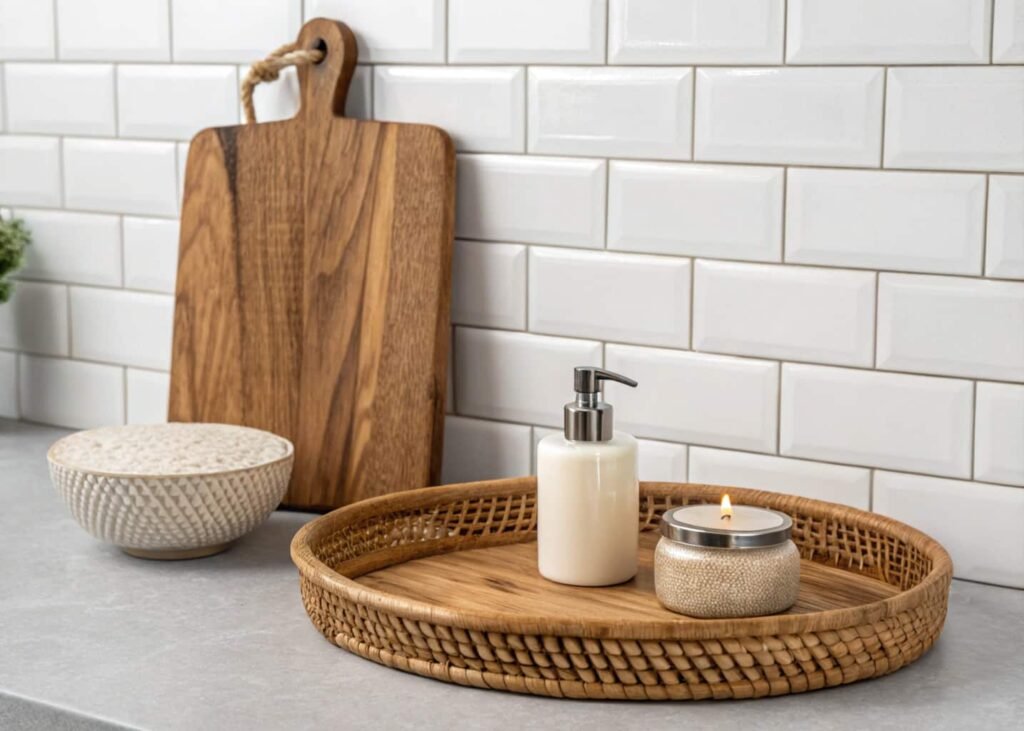
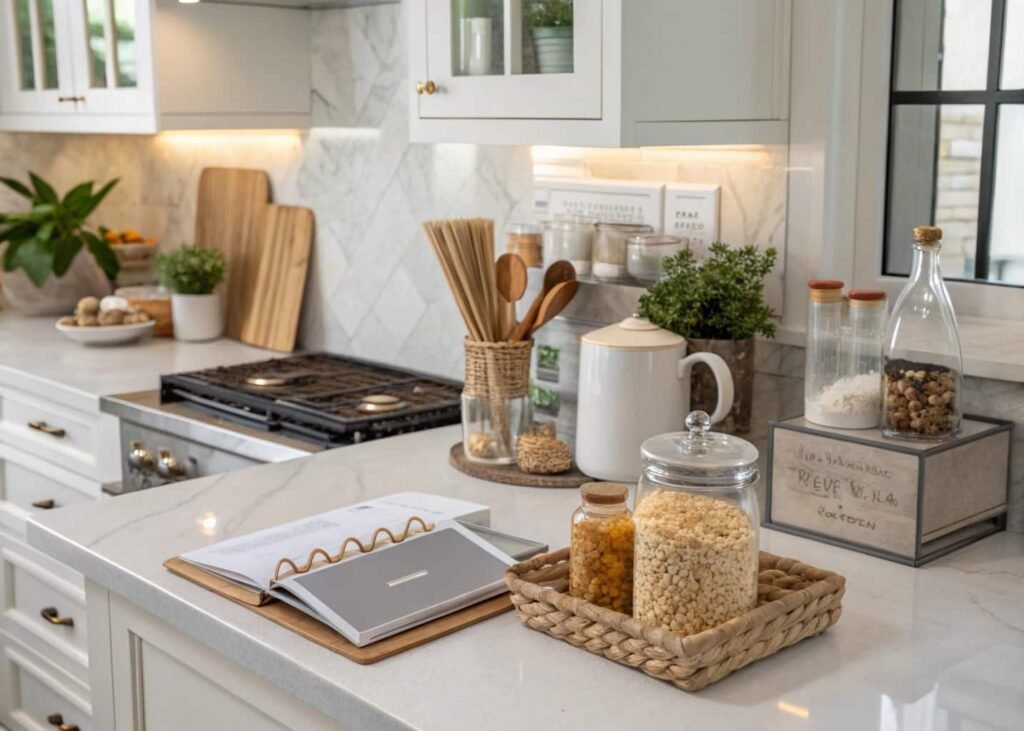
A leaning cutting board against the backsplash is one of the easiest styling tricks and it costs almost nothing if you already own one. Look for boards between 12 and 18 inches tall — anything shorter looks like clutter, anything taller starts blocking your upper cabinets. Round wooden trays (usually 10 to 14 inches) work as a “landing zone” for smaller items like a soap dispenser and a small candle, which keeps three or four objects from looking scattered. I use a cheap rattan tray on my own counter just to corral the stuff that would otherwise end up in a random pile by the sink, and it genuinely cuts down on visual noise. The trick nobody mentions: group items in odd numbers, usually three, since even numbers tend to read as too symmetrical and a little stiff.
Adding Greenery to Your Countertops
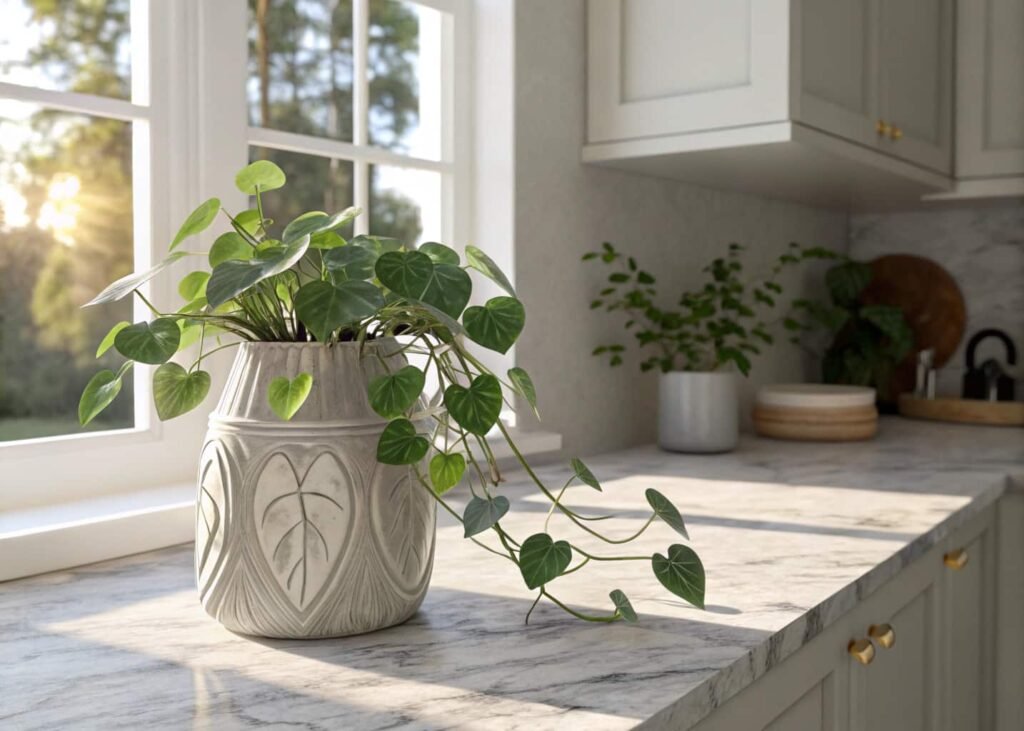
Live plants are the fastest way to make a kitchen counter feel less sterile, but not every plant belongs near heat and humidity. Pothos and snake plants tolerate the temperature swings near a stove far better than fussier options like fiddle leaf figs, which will drop leaves within weeks in that environment. Keep pots under 6 inches in diameter for counter use — anything bigger starts eating into your actual workspace. If you don’t want the maintenance, a well-made faux eucalyptus stem in a ceramic vase is hard to tell apart from real at counter distance, and it won’t rot near your sink. One genuine misconception: people assume herbs on the counter (basil, mint) are purely decorative, but they actually need direct light for at least 4 hours a day or they’ll get leggy and stop looking good within a couple of weeks — a north-facing counter usually isn’t enough.
Countertop Lighting and Accent Pieces
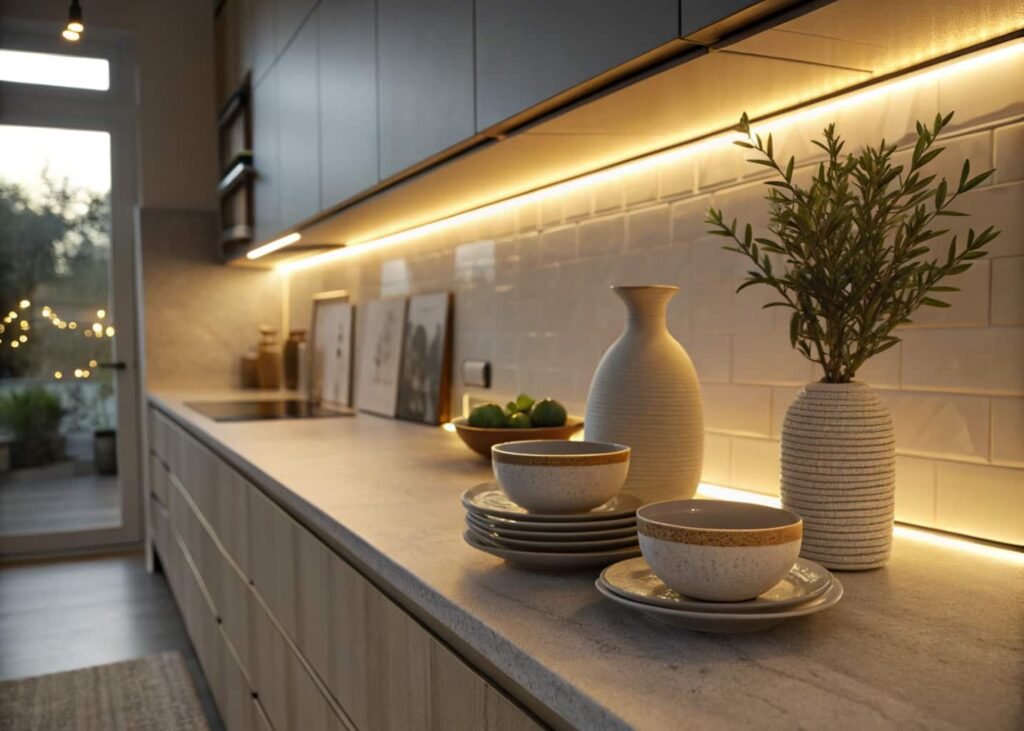
Under-cabinet LED strip lighting (usually $20 to $60 for a basic kit) does double duty — it’s functional task lighting and it makes anything you’ve styled underneath it look intentional at night. Warm white light, around 2700K to 3000K, flatters wood and ceramic tones far better than the cooler 5000K strips meant for workspaces. A small battery-operated pillar candle or a low-wattage table lamp on the far end of a long counter adds a warm focal point without needing an outlet nearby. Skip anything with an exposed cord crossing your workspace — it’s a hazard near water and it undercuts the whole point of styling the space.
Decorative Jars and Canisters
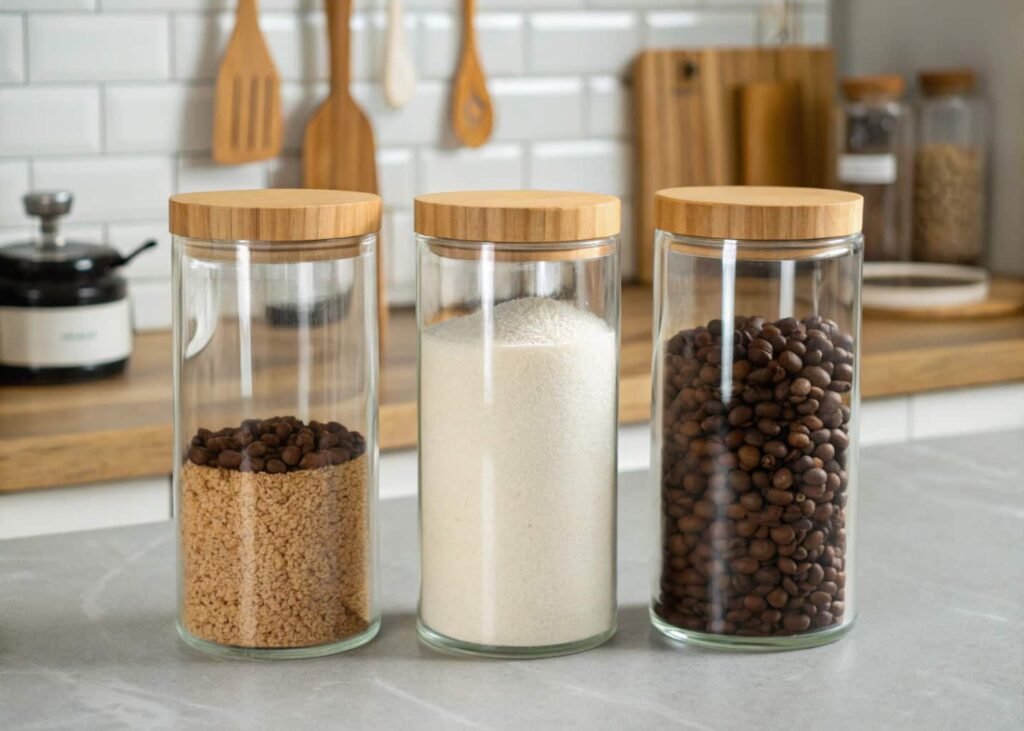
Matching canister sets (flour, sugar, coffee) do more visual work than almost any other single purchase because repetition of shape reads as organized even if the rest of the counter is a little busy. Glass canisters with airtight seals run $15 to $40 each and actually keep flour and sugar fresher than the bags they came in, so this is one styling choice that’s also functional. Limit yourself to three canisters max on open counter space — a full five-piece set usually belongs on a shelf, not the counter, unless your kitchen is genuinely large. Ceramic canisters hide contents better than glass if you’re not precious about what’s inside looking pretty.
Styling Around Appliances
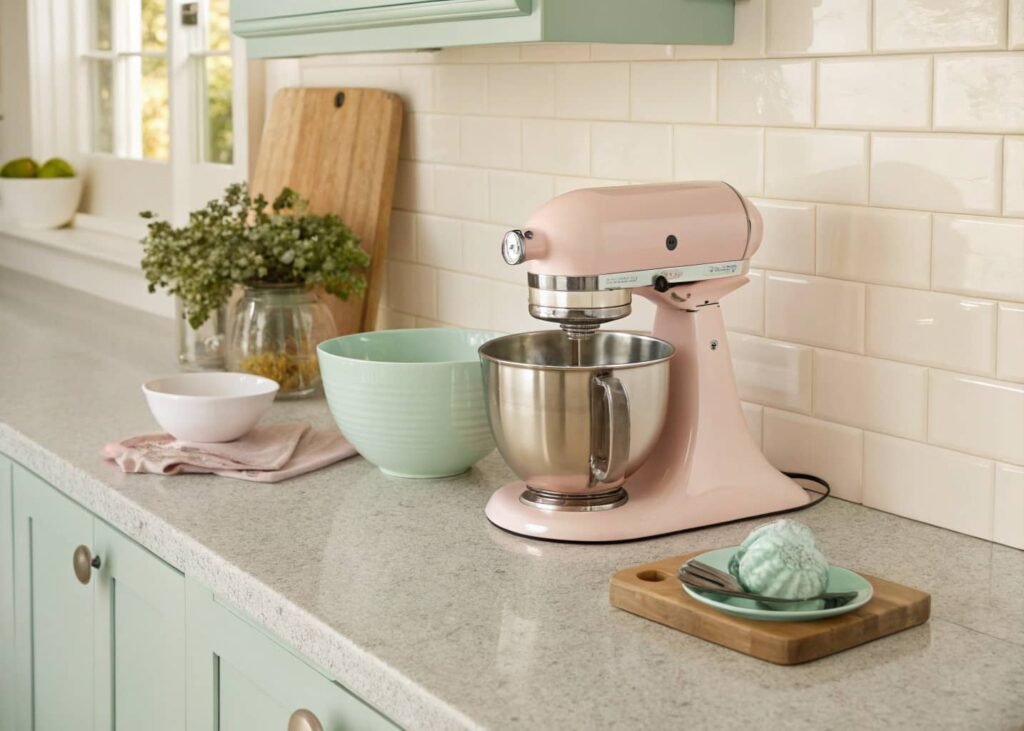
Your stand mixer, toaster, or coffee maker doesn’t have to be hidden to look good — color-matching it to one other object on the counter (a bowl, a tray) makes it look chosen rather than just sitting there. If you’ve got a big appliance like a stand mixer, anchor it in a corner and let it be the “tall” element in your grouping instead of fighting to hide it. Small appliances that get daily use (toaster, kettle) should stay out; anything used less than twice a week — a blender, a waffle iron — is better off in a cabinet since it just becomes visual clutter otherwise. A simple appliance garage with a tambour door, if your cabinets allow for it, costs about $150 to $400 to add and solves this problem permanently.
Countertop Decor for Small Kitchens
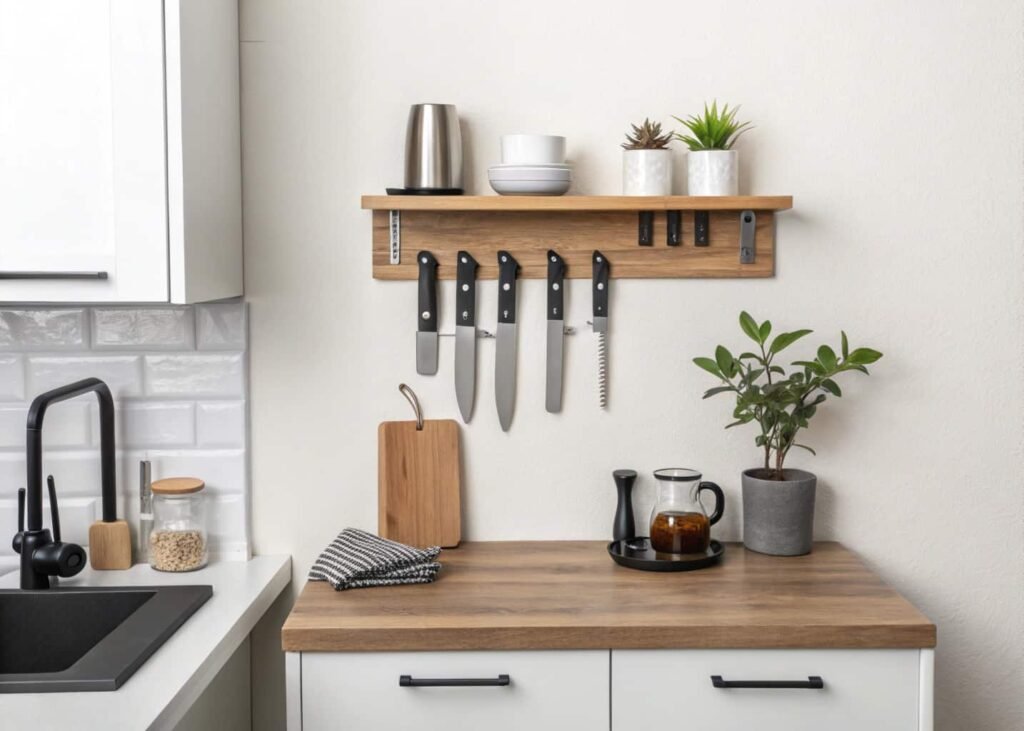
In a small kitchen, every styled object is competing directly with counter space you need for prep, so the math is different here than in a larger kitchen. Wall-mounted magnetic knife strips and hanging shelves free up several inches of usable counter while still giving you something visual to look at. Stick to a single grouping near the backsplash rather than spreading items across the whole counter — one styled zone reads as intentional, while several small groupings in a tight space just reads as cramped. A narrow bud vase (2 to 3 inches wide) takes up almost no room and still adds color without blocking your knife work.
Seasonal Countertop Decor Ideas
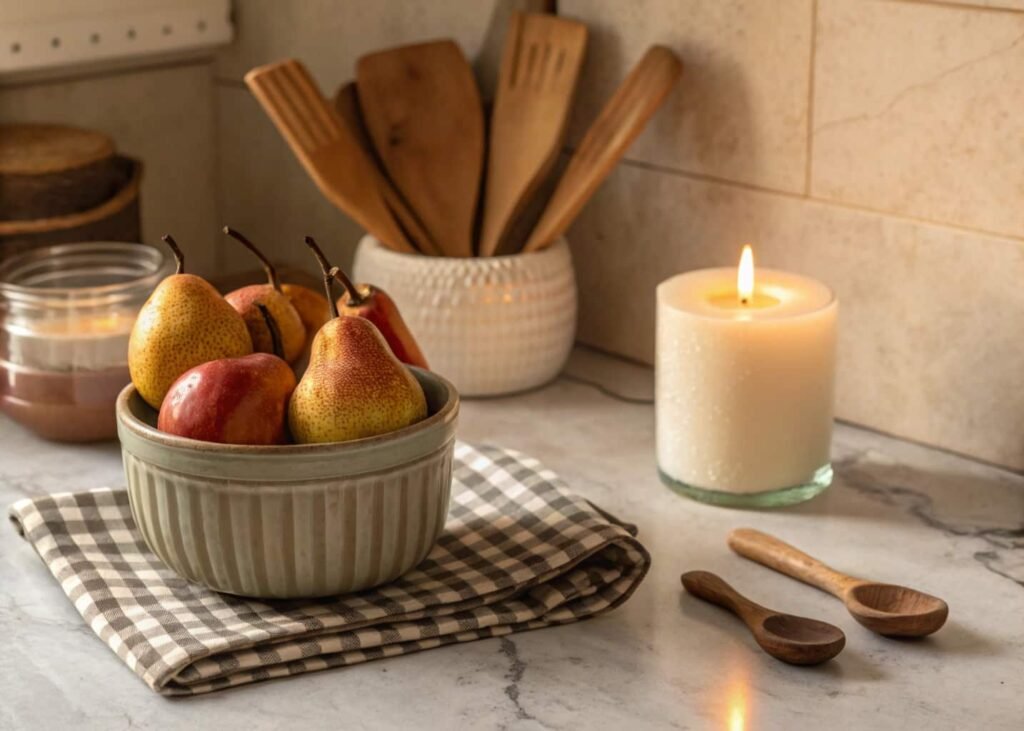
Swapping just two or three items seasonally keeps a kitchen feeling current without redoing the whole setup. In fall, a small pumpkin or a bowl of pears next to your existing canisters does the job. In summer, swap a heavier ceramic vase for something lighter — a clear glass one with fresh citrus or herbs works well and costs almost nothing. Avoid full seasonal displays that take over the whole counter; you’ll dread setting them up and taking them down every few months, and half-finished seasonal decor looks worse than none at all. Keep a small basket in a cabinet specifically for these rotating pieces so you’re not digging through storage every time the season changes.
Minimalist Countertop Styling
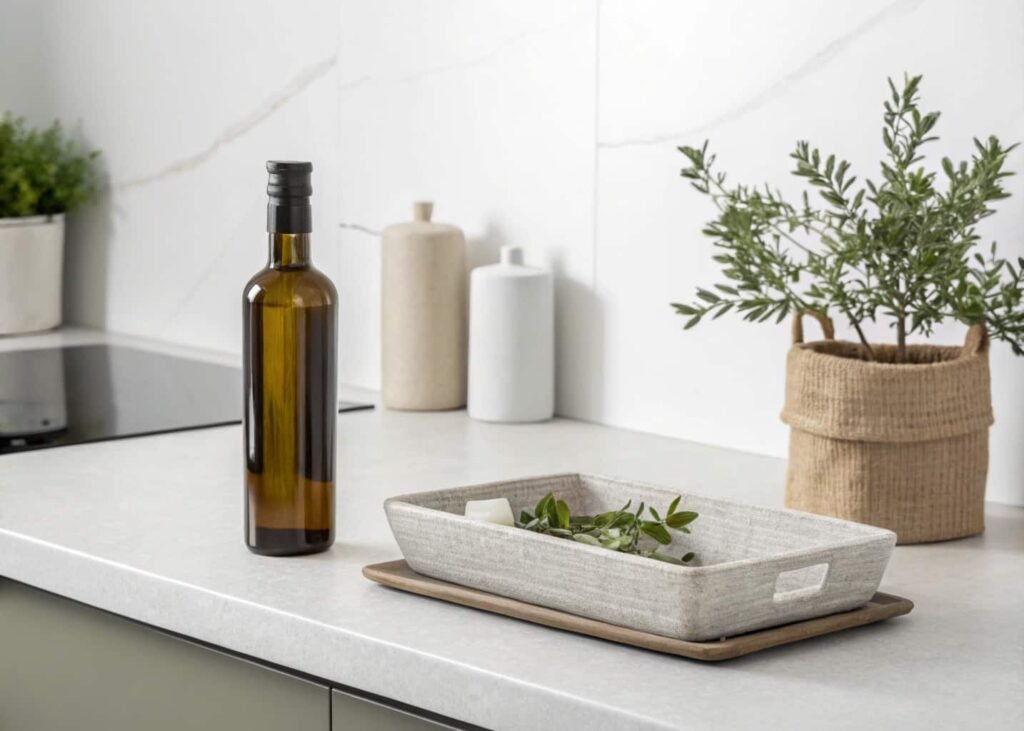
Minimalist styling isn’t about having nothing out — it’s about having exactly the right amount, usually 3 to 5 objects total per zone. A single olive oil bottle in a matte black or dark glass finish, one small plant, and a neutral tray covers most of what a minimalist counter needs. The mistake people make trying to go minimalist is picking objects that are too similar in shape and size, which ends up looking sparse instead of calm — vary the heights even within a small grouping. White, black, and one warm wood tone is usually enough of a palette; adding a fourth color tends to break the effect.
Maximalist Countertop Display Ideas
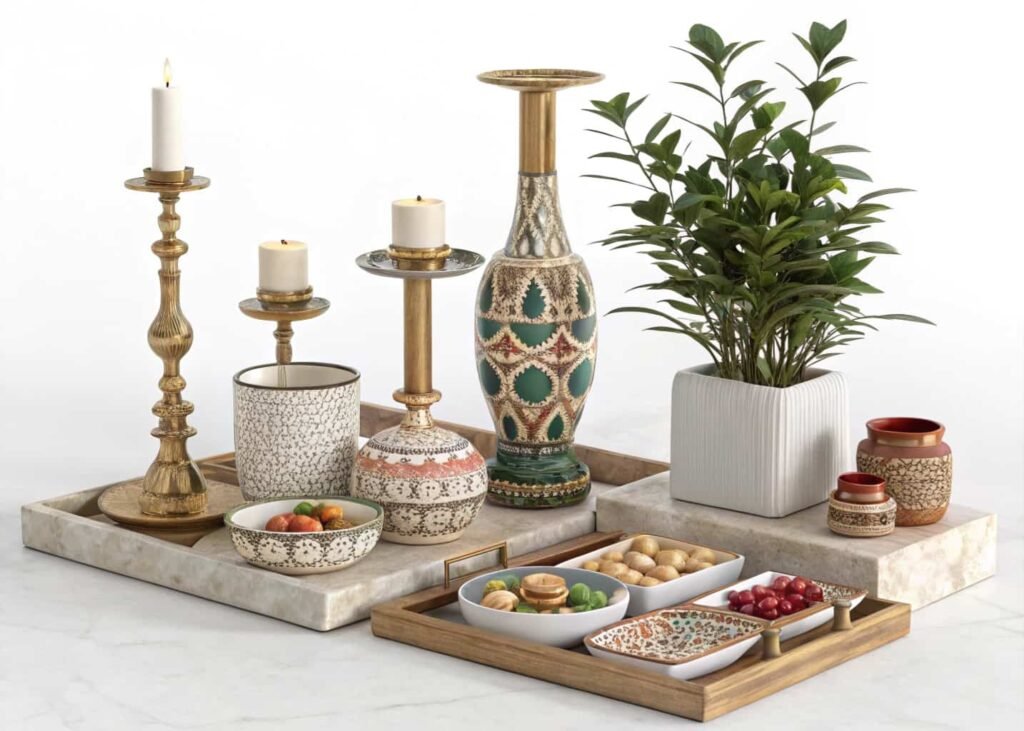
Maximalist counters work when there’s a unifying thread — a color palette, a material, or a theme — tying the pieces together, otherwise it just reads as mess instead of abundance. Layering height is the real technique here: a tall vase in back, a medium canister set in the middle, and small trinket dishes in front creates depth instead of a flat wall of stuff. Mixed metals (brass and matte black together, for example) read as curated maximalism when done in a 60/40 ratio, but an even split tends to look accidental rather than styled. This approach needs more counter space than most of the other styles here, so it works better in larger kitchens with 6 feet or more of clear counter run.
Keeping Countertops Functional While Styled
The biggest trade-off in countertop styling is that every object you add is one less inch of workable prep space, and pretending otherwise leads to decor that gets shoved aside within a week. A good rule: keep at least 24 inches of clear counter next to your stove and sink for actual cooking, and style the sections in between or at the far ends. Items you reach for daily (dish soap, hand towel) should be styled, not hidden — pick a soap dispenser and towel you actually like rather than treating them as items to conceal. If you find yourself moving the same decorative object out of the way every time you cook, it’s in the wrong spot, not a decor failure on your part.
Budget-Friendly Countertop Decor
You don’t need to spend much to make a real difference here. Thrifted ceramic bowls and vases (often $2 to $8 at secondhand stores) look identical to $40 retail versions once they’re styled with something in them. A $15 can of spray paint turns mismatched thrifted pieces into a matching set if you stick to one finish, like matte black or brass. Dollar-store glass jars with a hand-lettered label using a paint pen cost under $10 total for a full canister set. Skip trendy items that are only useful for one season — a $30 pumpkin-shaped dish you’ll use six weeks a year is a worse investment than a $30 neutral tray you’ll use year-round.
Common Countertop Styling Mistakes
The most common mistake is styling every inch of available counter instead of leaving breathing room — a counter with zero negative space looks cluttered no matter how nice the individual pieces are. Second is ignoring scale: a tiny 4-inch vase on a long 10-foot counter run just disappears, while a piece that’s too large overwhelms a small kitchen. Third, people forget that grease and steam from cooking will dull unsealed wood and matte finishes over time, so anything within 2 feet of the stove should be sealed or wipeable, not raw wood or unfinished ceramic. Last, matching every single object to the same color scheme actually looks less intentional than having one or two contrasting pieces — total color matching reads as store display, not a lived-in home.