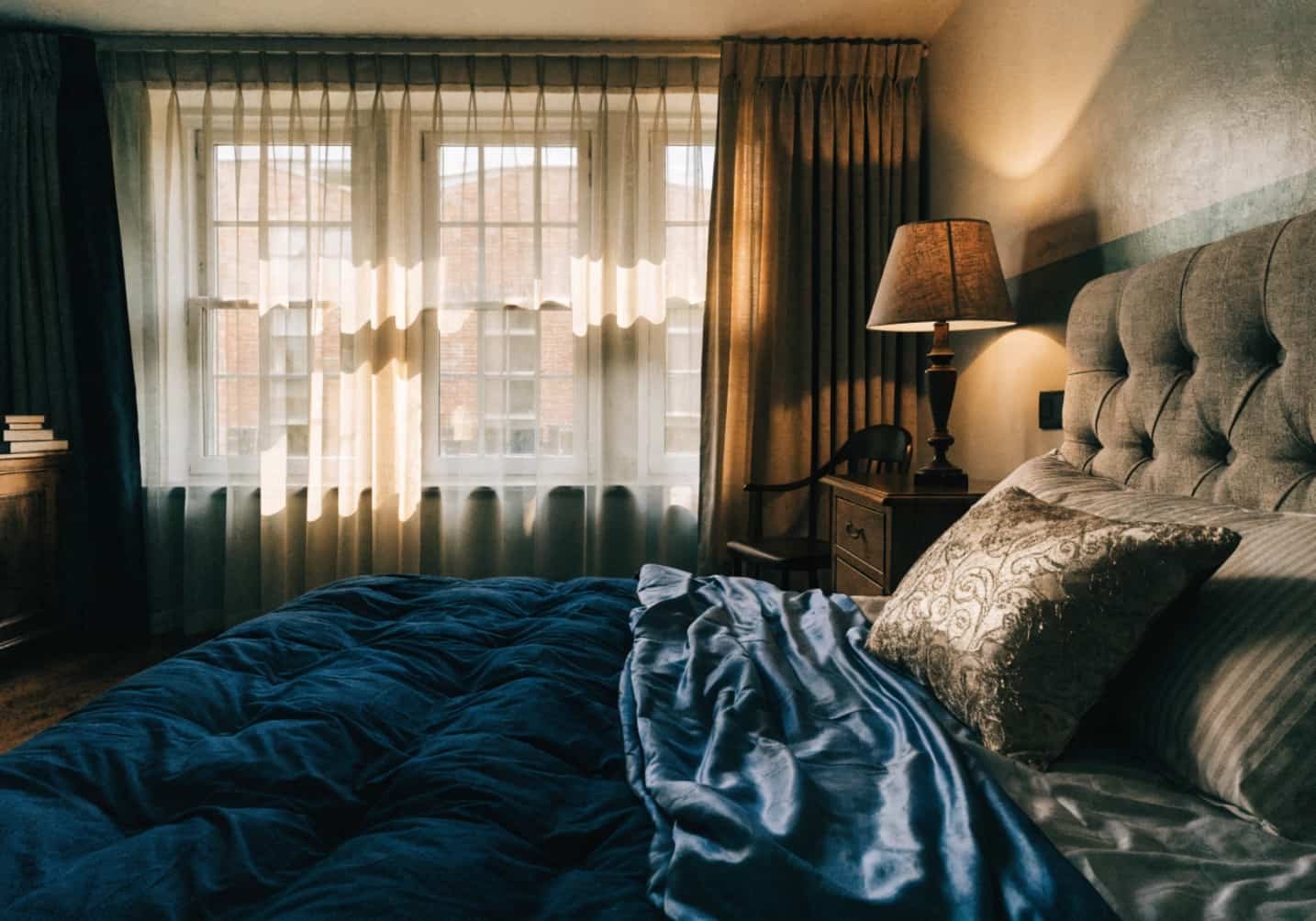
There’s a particular kind of Romantic Moody Bedroom that makes you want to slow down the second you walk in. The lights are low, the air smells like something warm and a little smoky, and everything feels soft to the touch. That’s the moody, romantic bedroom — not dark for the sake of being dark, but dark in a way that feels intentional, layered, and lived-in. I always tell clients that this style isn’t about buying more stuff. It’s about choosing fewer things that actually mean something, and letting shadow do half the design work for you. Unlike a bright, airy bedroom that wakes you up, a moody one wraps around you and asks you to stay a little longer.
What Makes a Bedroom Feel “Moody” and Romantic
If your bedroom feels flat and cold, this is where to start. A moody room isn’t about throwing black paint on every wall and calling it done — that’s a rookie mistake I made myself once. Real moodiness comes from contrast: dark tones against warm light, rough textures against smooth ones, silence against the flicker of a candle. It’s the difference between a room that feels stylish on Pinterest and one that actually makes you exhale when you walk in. Think of the way an old European hotel room feels — heavy curtains, low light, a little bit of mystery. That’s the target. You’re not decorating a bedroom so much as setting a scene, one that feels like it was made for slowing down at the end of a long day.
Start with a Deep, Rich Color Palette
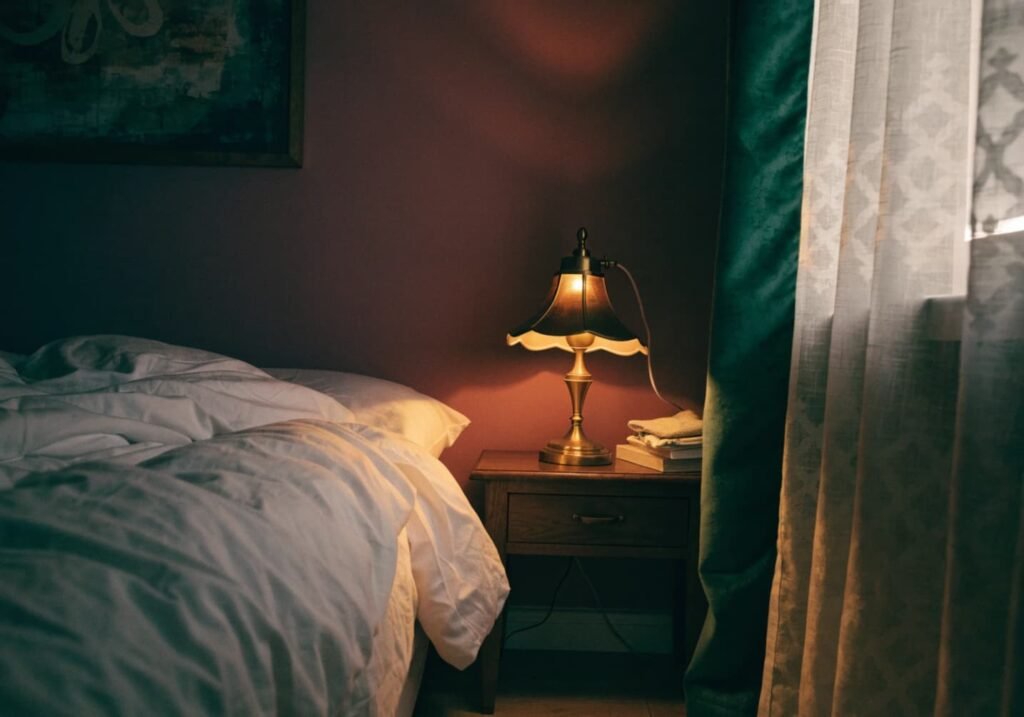
Here’s where it gets interesting — color is doing most of the emotional heavy lifting in a moody room. Think deep burgundy, forest green, charcoal, aubergine, or a warm chocolate brown. These aren’t “safe” colors, and that’s exactly the point. Sounds indulgent? That’s exactly the point. Paint one accent wall behind the headboard if a full room feels like too big a leap, and let the rest of the walls sit in a softer, complementary shade. I once worked with a client who was terrified of dark paint ruining resale value, and honestly, a moody accent wall behind the bed ended up being the first thing every guest complimented. Rich color doesn’t shrink a room the way people assume — with the right lighting, it actually makes it feel more intimate and expensive.
Layer Lighting for Warmth and Drama
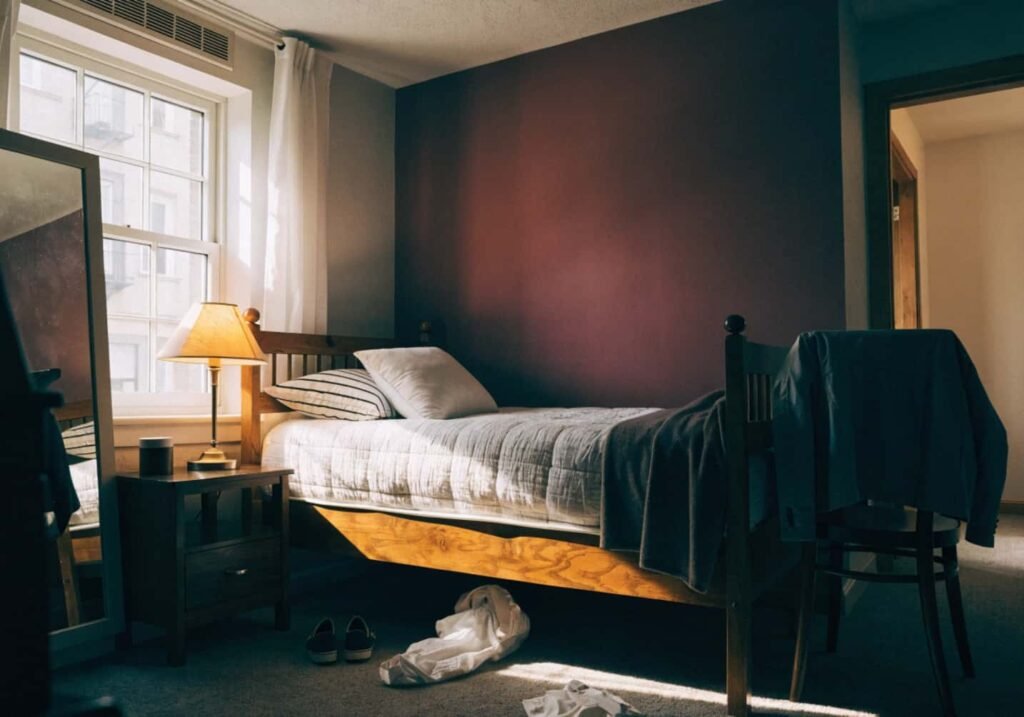
Overhead lighting is the enemy of romance — flip it off and your bedroom instantly feels like a hospital waiting room. That’s the trick nobody tells you: moody rooms rely on layered, low, warm light instead of one big ceiling fixture. Bring in a mix of sources — a dimmable bedside lamp, a floor lamp in the corner, maybe a small sconce near a reading chair. Warm bulbs, around 2700K, are non-negotiable here; cool white light will fight against everything else you’re trying to build. I always tell clients to physically sit in the room at night with just lamps on before committing to a layout. But don’t stop there — string lights tucked behind a headboard or draped along a shelf add that last flicker of softness that makes the whole room feel alive instead of just dim.
Choose Bedding That Feels Luxurious, Not Fussy
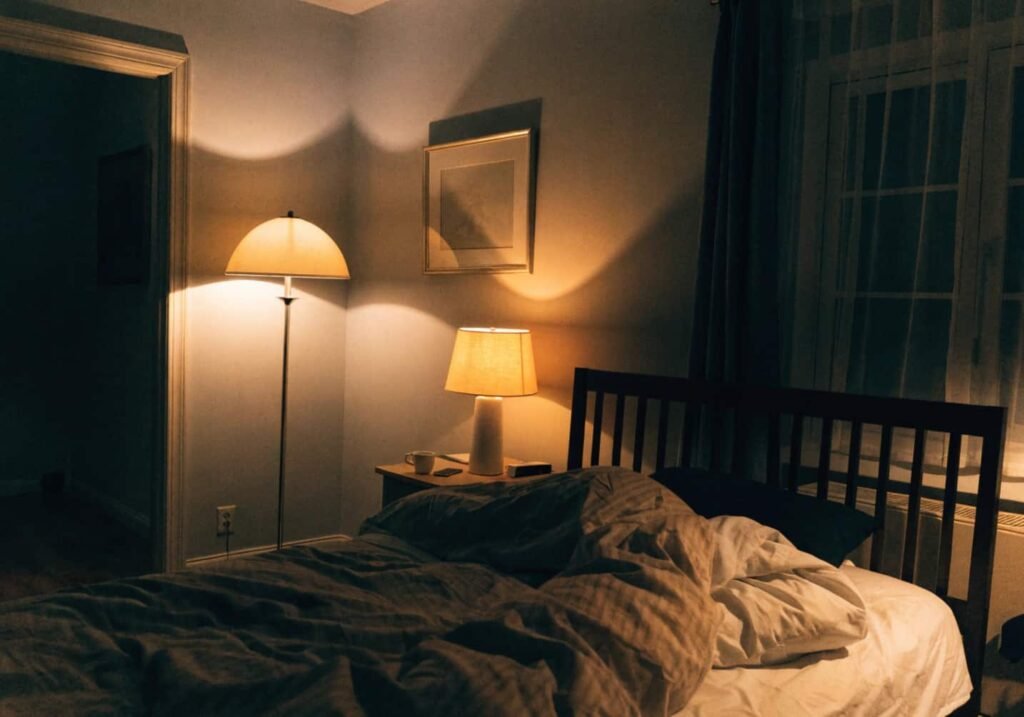
The bed is the heart of this whole room, so it earns the biggest investment of thought. Skip the matchy-matchy bedding sets and instead layer things the way a boutique hotel would — a heavier duvet in a deep color, a lighter throw folded at the foot, and pillows in slightly mismatched but coordinating tones. Linen and cotton sateen both work beautifully here because they hold color richly without looking stiff. The first time I tried this in my own room, I made the mistake of over-styling it with too many decorative pillows, and it ended up looking like a showroom instead of somewhere I’d actually want to sleep. Less structured, slightly rumpled bedding photographs better and lives better — it should look like it’s inviting you in, not warning you to keep it perfect.
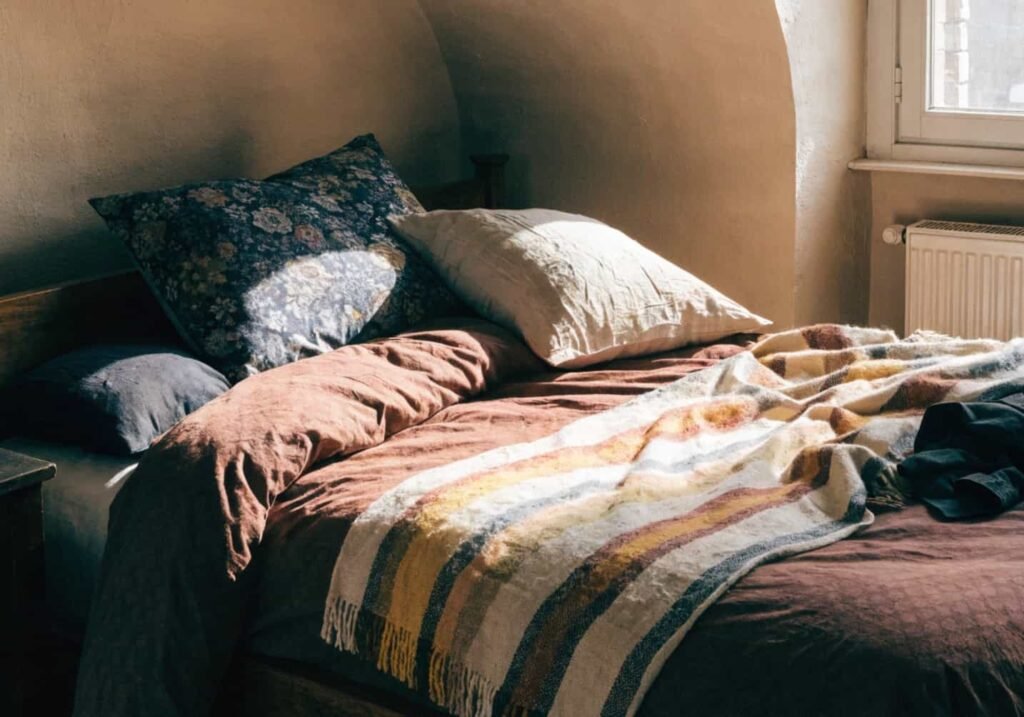
Add Candles and Soft Textures for Sensory Warmth
A moody room isn’t just something you look at — it’s something you feel and smell too. Flickering taper candles in brass holders on the nightstand do more for atmosphere than almost anything else on this list, and they cost next to nothing. Beyond candles, think about texture everywhere your skin might touch something: a bouclé bench at the foot of the bed, a chunky knit throw, a sheepskin rug underfoot. These small sensory details are what separate a room that photographs well from one that actually feels romantic when the lights go down. If your budget only stretches to one item this month, buy the candles first — the smell and the flicker do more work than a new piece of furniture ever will.

Bring in Velvet, Silk, and Other Touchable Fabrics
Fabric choice is where a lot of people play it too safe. Velvet curtains, a silk-blend throw pillow, a mohair blanket draped over a chair — these materials catch light in a way that flat cotton simply can’t, and that’s what gives a moody room its depth. A velvet headboard in a deep emerald or plum can genuinely become the focal point of the entire space without you needing to do much else. I’ll admit velvet intimidated me for years because it felt “too much,” but used in just one or two spots, it reads as intentional rather than over the top. The trick is restraint — one velvet piece, one silk piece, and let the rest of the room support them instead of competing for attention.
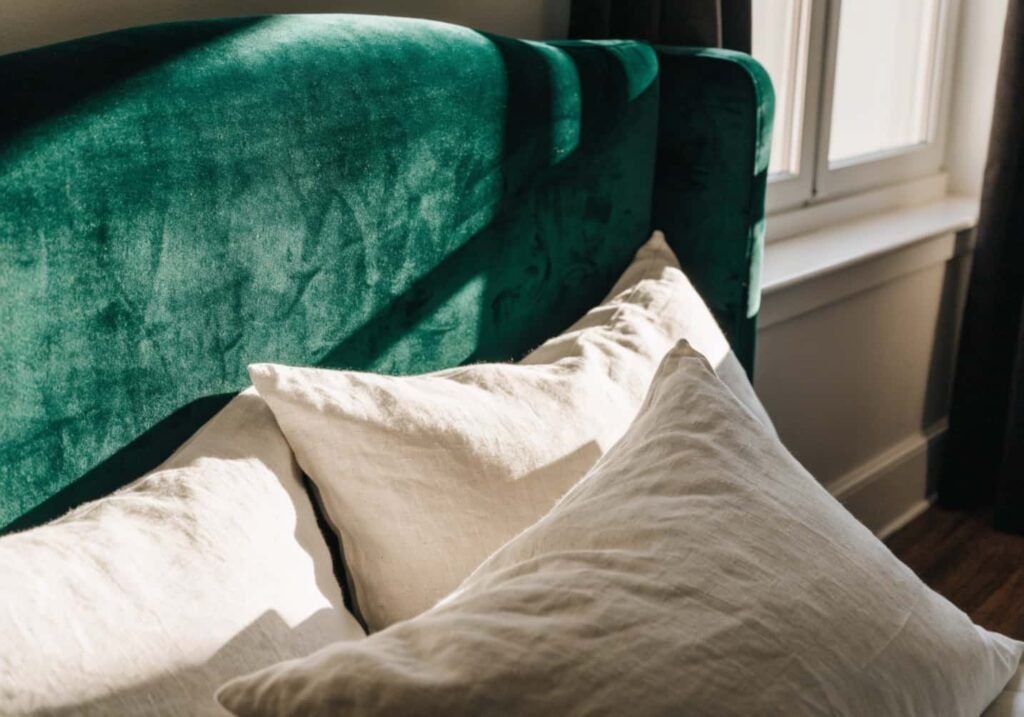
Use Statement Furniture to Set the Tone
You don’t need a full furniture overhaul, but one standout piece changes the whole feel of the room. This could be an antique dresser with brass hardware, a curved accent chair upholstered in a rich fabric, or a four-poster bed frame that adds height and drama without adding clutter. The goal is a single piece that draws the eye and anchors everything else around it. Unlike a bright, airy bedroom where furniture tends to blend into the background, moody design leans into shadow and contrast, so a bold silhouette actually works in your favor here. Secondhand and vintage shops are goldmines for this — a scratched-up antique nightstand with real character will always beat a flat-pack piece that looks like everyone else’s.
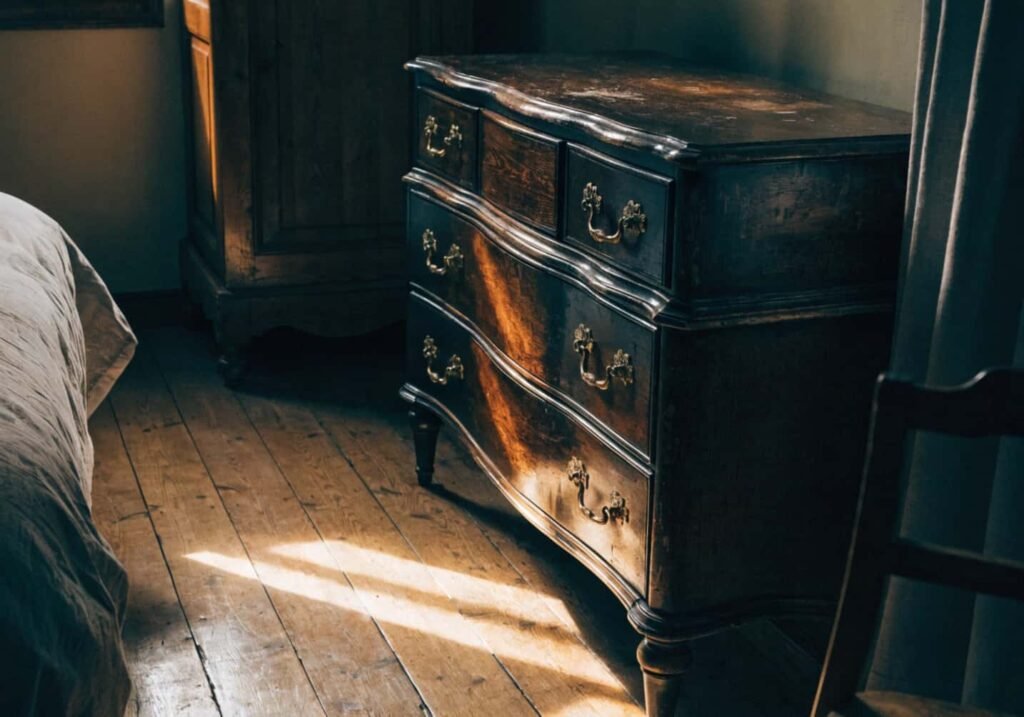
Keep Decor Minimal but Intentional
It’s tempting to fill every surface once the mood starts coming together, but that’s exactly where things can tip over into cluttered instead of cozy. Pick a handful of objects that actually mean something — a stack of well-loved books, a small vase with dried florals, a piece of art that stops you for a second when you walk past it. Every item should earn its spot. I once made my room too dark and too full at the same time, and it felt gloomy instead of cozy — the fix wasn’t more light, it was less stuff. Empty space isn’t wasted space in a moody room; it’s what lets the pieces you do choose actually breathe and be noticed instead of getting lost in the noise.
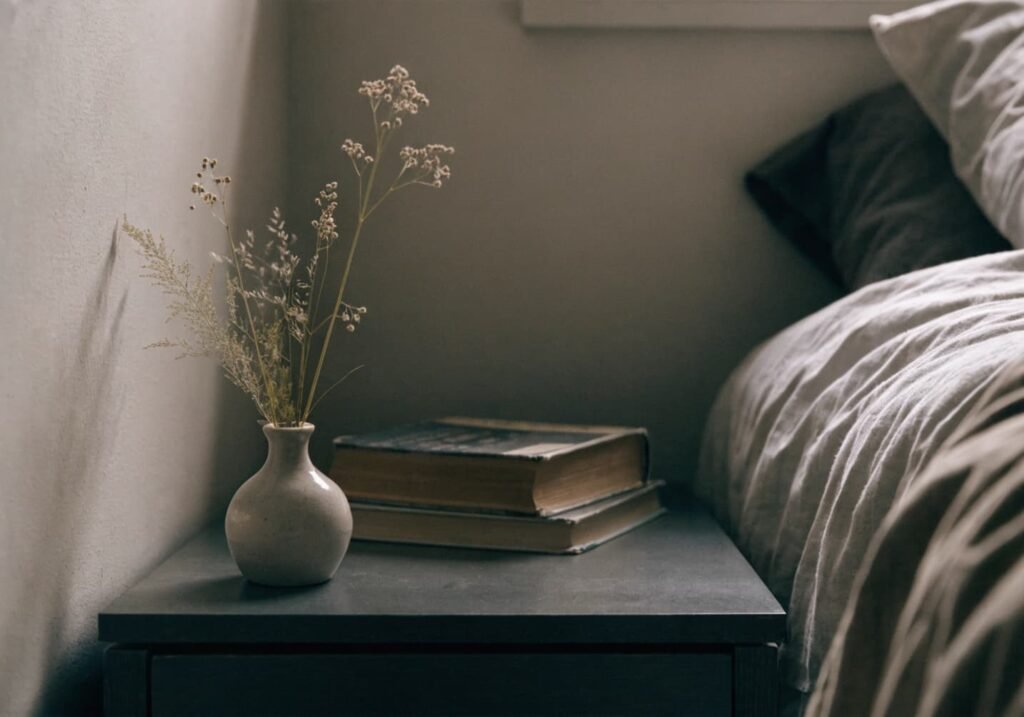
Scent and Sound: Finishing Touches That Set the Mood
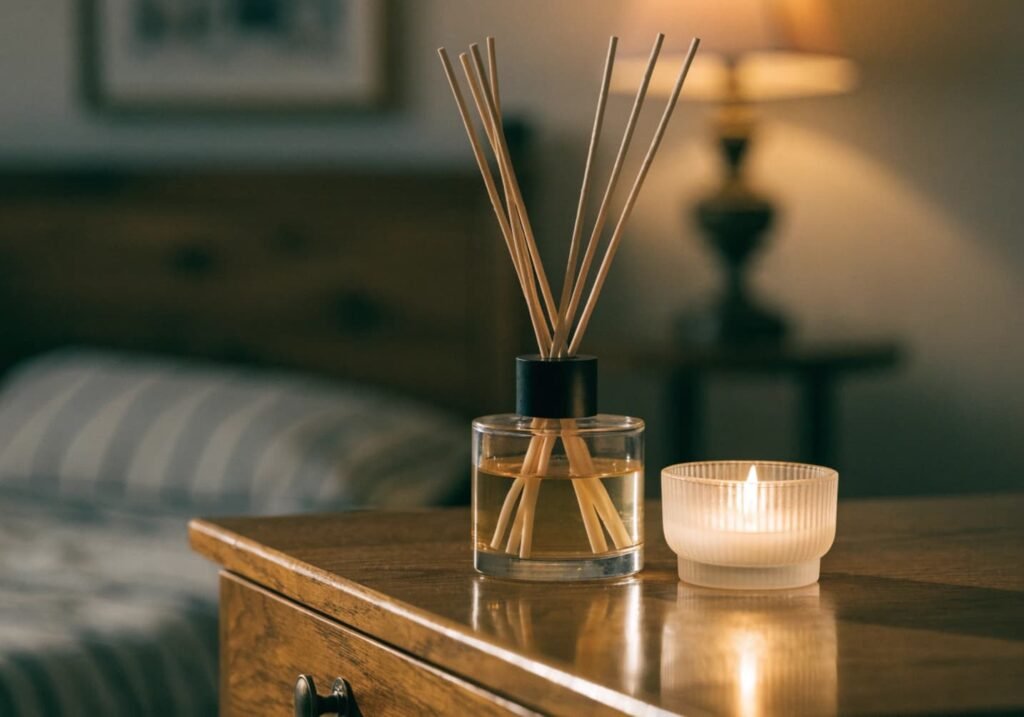
Sight isn’t the only sense that matters here. A warm, woody scent — sandalwood, amber, or fig — lingering in the room does something visuals alone can’t. Light a candle or run a diffuser twenty minutes before you actually spend time in the space, so the scent has settled in rather than hitting you all at once. Sound matters too, in a quieter way than most people think about. A soft playlist, the low hum of a fan, or even just the absence of noise from a phone left in another room all add to that slowed-down feeling you’re building. This is where it gets interesting — the room stops being something you just look at and becomes somewhere you actually want to spend unhurried time.
Common Mistakes That Kill the Romantic Vibe
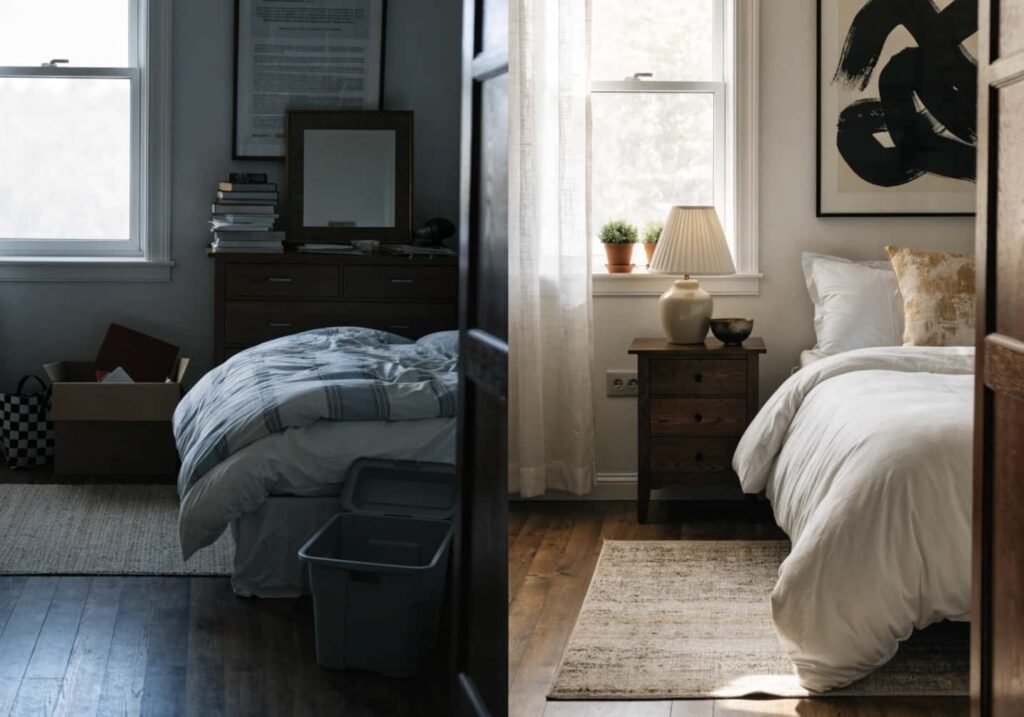
The biggest mistake I see, and one I’ve made myself, is going too dark too fast without enough warm light to balance it out — the room ends up feeling gloomy instead of intimate. The second is overhead lighting left on out of habit; it flattens every bit of atmosphere you just built. The third is buying a matched bedding set straight off a shelf instead of layering pieces, which tends to look staged rather than lived-in. And the last one is clutter disguised as “cozy” — too many candles, too many pillows, too many little trinkets fighting for attention. Moody design rewards patience and restraint far more than it rewards spending. Fix the lighting first, then the color, then let everything else follow slowly from there.
Conclusion
A romantic, moody bedroom isn’t built in one weekend trip to a home store — it’s layered slowly, through lighting you actually test at night, fabrics you want to touch, and a handful of pieces you genuinely love instead of ones that just fill space. Start with paint and lighting, since those two things carry most of the emotional weight, and let everything else follow at a pace that feels right for your space and your budget. The goal was never to make a room look perfect for a photo. It was to make a room you don’t want to leave.