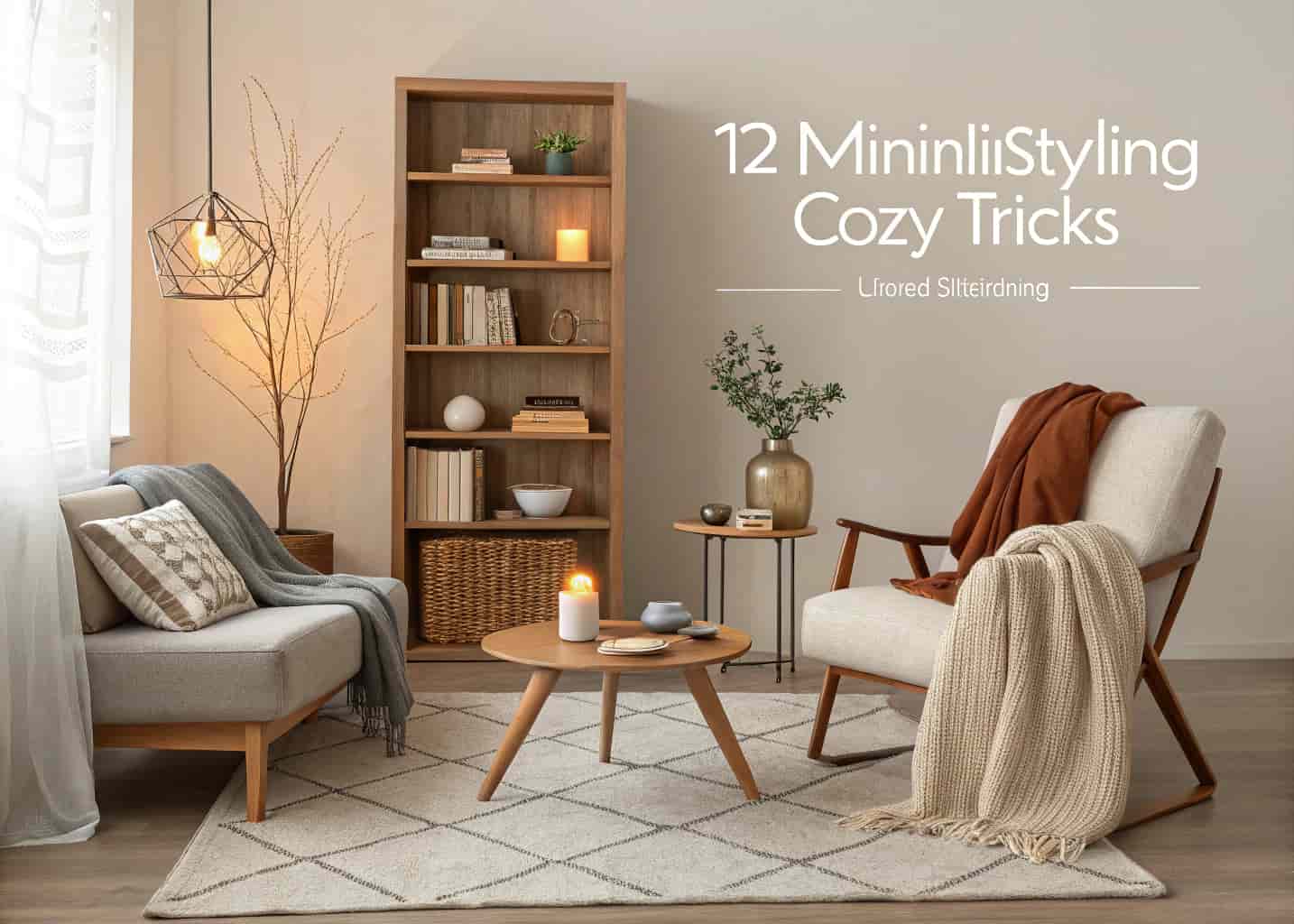
1. Layer Your Textures, Not Your Clutter
If there’s one thing every interior designer quietly swears by, it’s texture layering. It sounds fancy, but it’s really just mixing different materials — think a chunky knit throw on a linen sofa, a jute rug under a wooden coffee table. When I first tried this in my living room, the space instantly felt warmer without adding a single extra item. You’re not filling the room with stuff. You’re just making what’s already there feel richer and more alive. The trick is to keep colors neutral and let the textures do the talking. Three or four different textures in one space is the sweet spot.

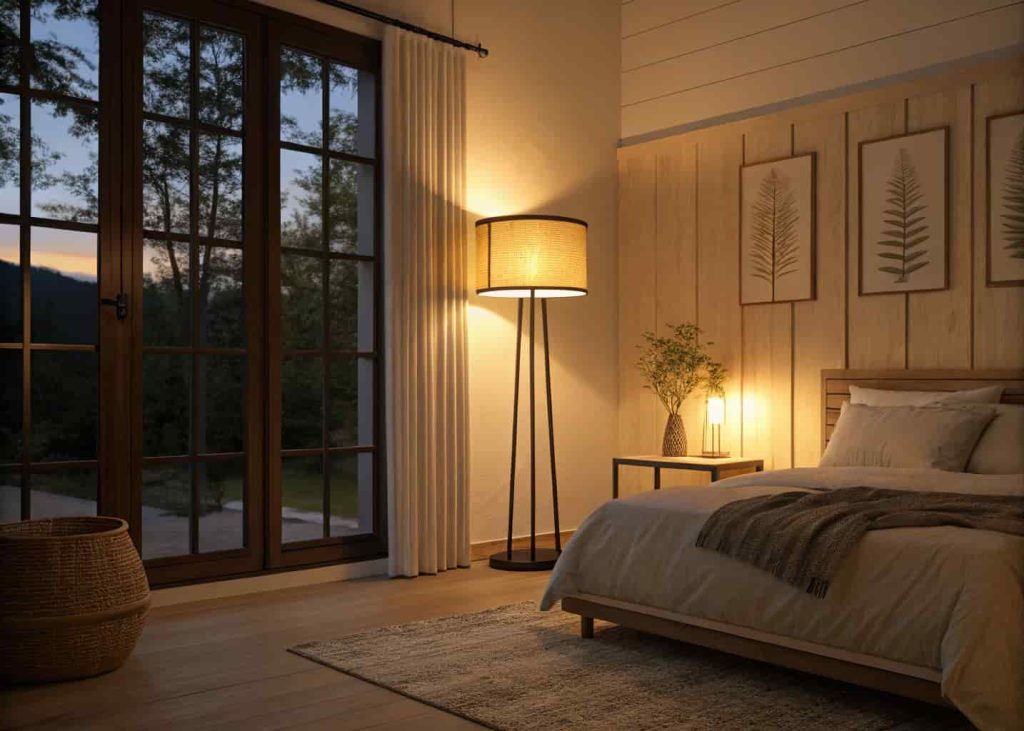
2. Warm Lighting Changes Everything
Forget overhead fluorescent lighting — that’s the fastest way to kill a cozy vibe. Designers always go for warm bulbs, layered at different heights. A floor lamp in the corner, a small table lamp by the couch, maybe some candles on the shelf. I made this swap in my bedroom last winter and honestly, the room felt like a completely different space. The key temperature to look for on bulbs is 2700K — that’s the warm amber glow that makes everything look like a hygge dream. When the light comes from multiple lower points instead of one harsh ceiling source, the whole room softens.
3. The “One Tray” Rule for Flat Surfaces
Every designer I’ve ever followed talks about styling flat surfaces — coffee tables, console tables, nightstands. And the one rule that actually works in real life is the tray trick. You grab a tray, wooden or woven, and you group a few small objects inside it. A candle, a small plant, maybe a book. Suddenly it looks intentional instead of random. I used to pile stuff on my coffee table and it always looked messy. The moment I put a round rattan tray down and kept just three things on it, people started asking what changed. Nothing changed. It just got organized.

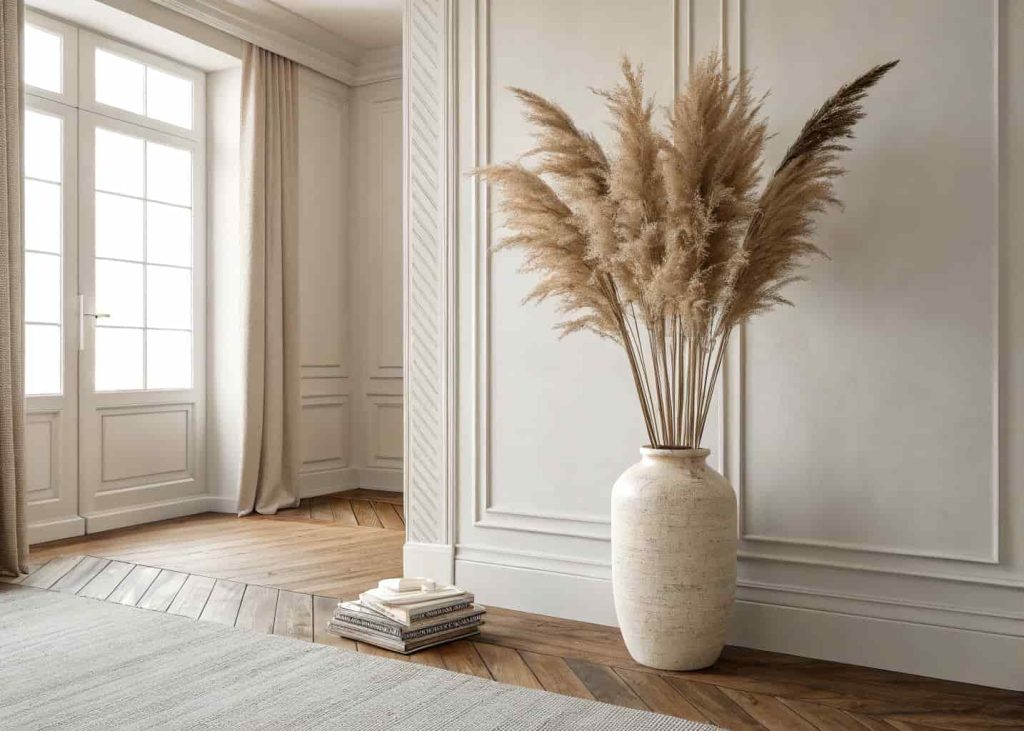
4. Bring in One Statement Natural Element
Designers rarely go overboard with plants or natural décor. Instead, they pick one strong natural element and let it breathe. A tall dried pampas grass arrangement in the corner. A large leafy monstera plant by the window. A twisted driftwood piece on a shelf. Just one thing. That’s what pulls the whole room toward feeling organic and lived-in without turning it into a jungle. In my own apartment, I brought in a single olive tree branch arrangement in a ceramic vase, and the room suddenly had this editorial quality that I’d been trying to fake with too many small plants before.
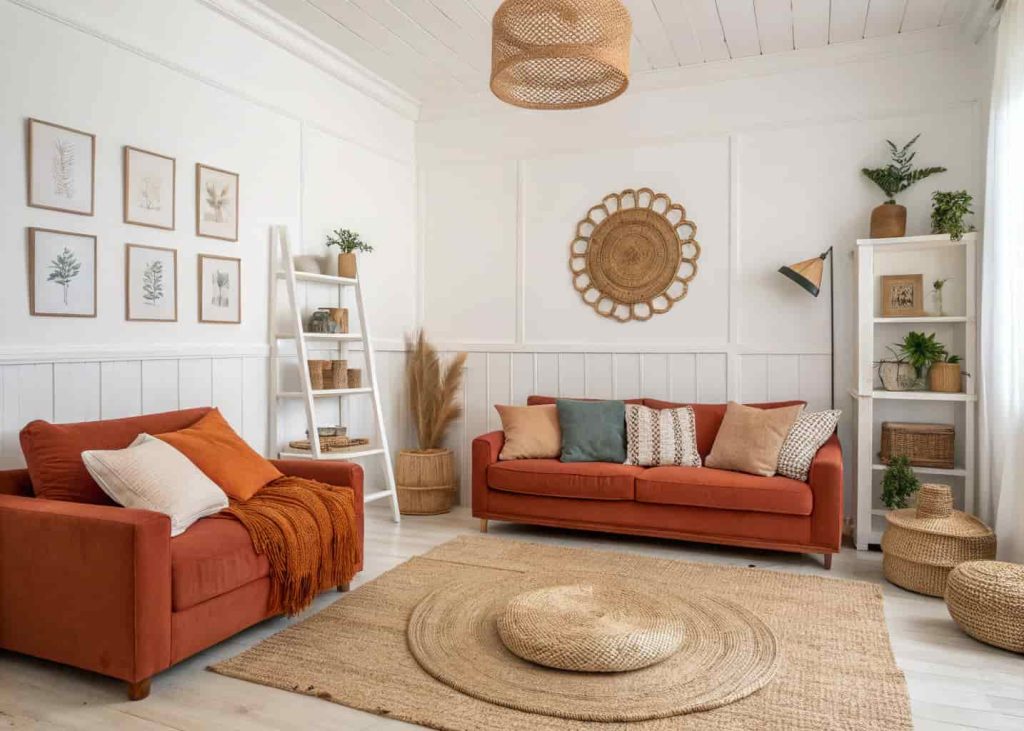
5. Stick to a 3-Color Palette Max
This is one of the most underrated rules, and it’s something designers apply without even thinking about it. Pick three colors for your space — one dominant, one secondary, one accent — and then stick to them everywhere. Walls, cushions, rugs, throws, even the ceramics on your shelf. When I finally stopped mixing random colors in my living room and committed to warm white, terracotta, and sand, the room stopped feeling chaotic. Three colors sounds limiting but it actually feels like freedom because everything suddenly goes together. You don’t have to overthink every purchase anymore.
6. Use Curtains That Touch the Floor
Most people hang curtains wrong — too short, too close to the window frame. Interior designers always hang curtains high and wide, letting them pool slightly on the floor. It makes the ceiling feel taller, the window feel bigger, and the room feel way more luxurious. When I switched from stubby curtains to linen panels that grazed the floor in my bedroom, the room felt like it doubled in size. Use light, flowing fabrics like linen or cotton in neutral shades — they filter light beautifully and add that softness that makes a room feel genuinely cozy instead of just decorated.

7. Add a Reading Nook, Even a Small One
You don’t need a whole room for a reading nook. Designers create tiny cozy zones inside bigger rooms — a corner with a cushioned chair, a side table, and a lamp. That’s it. It signals to your brain that this spot is for slowing down. Even a window bench with a few cushions works. I turned a neglected corner of my living room into a little reading spot with a secondhand armchair and a simple floor lamp, and it became the most used spot in my apartment. There’s something magical about having a dedicated space that feels like it belongs only to quiet moments.
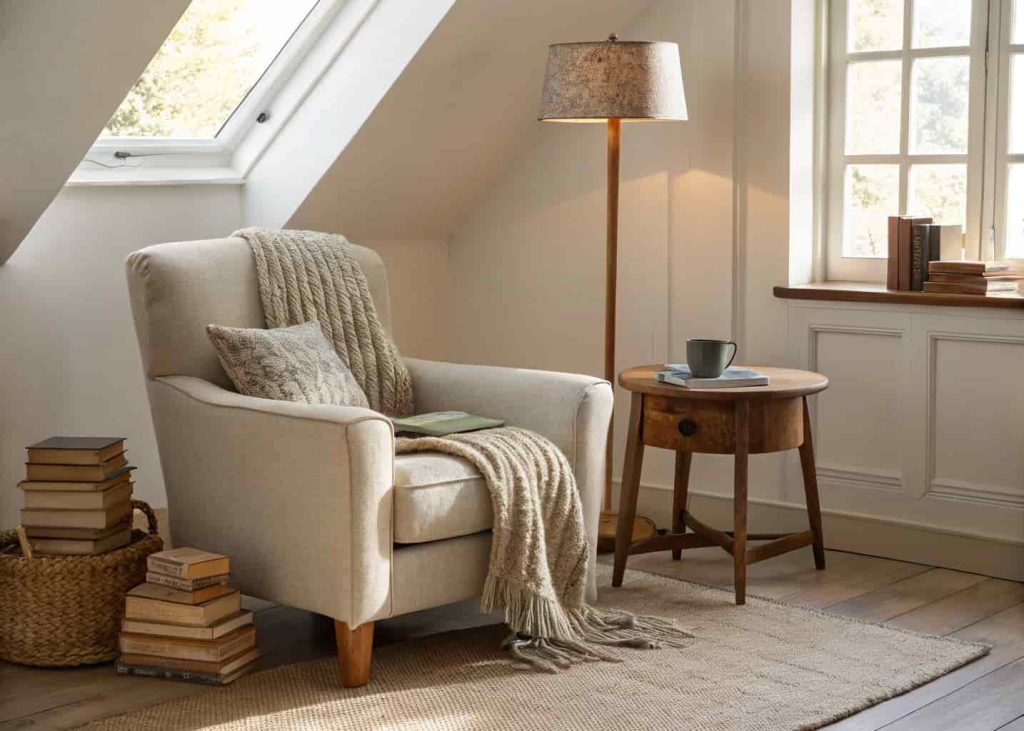
8. Choose Furniture With Legs
This one sounds almost too simple, but it makes a massive difference. Furniture that sits on legs — sofas, chairs, beds, storage units — creates visual breathing room between the floor and the piece. It makes a room feel lighter and more open even when it’s fully furnished. Designers almost never choose furniture that sits flush on the floor because it creates a heavy, closed-off feeling. I swapped out my old blocky bed frame for one with slim wooden legs and the whole bedroom felt airier immediately. For small spaces especially, this trick is basically magic — and it doesn’t cost extra.

9. Stack and Style Books Intentionally
Books are one of the most underused styling tools in a home. Designers don’t just put books on shelves randomly — they stack them horizontally, remove the dust jackets for a cleaner look, and use stacks as risers for other objects. A pile of three hardcovers with a small candle or crystal on top is a classic designer move. I started stripping the jackets off my coffee table books last year and the difference in how clean and curated the shelf looked was immediate. Don’t hide your books — just style them a little more deliberately, and they become part of the room’s character.

10. Lean Mirrors Instead of Hanging Them
A large leaning mirror is one of those tricks that instantly makes a space look more expensive and thoughtfully styled. Designers lean them against the wall rather than hanging them — usually in bedrooms or living room corners — because it feels casual, intentional, and very editorial. It also reflects light around the room, making the space brighter without adding any fixtures. I leaned a thrifted full-length mirror in my bedroom corner and within a week three people asked if I’d redecorated. It also makes small rooms feel significantly bigger because of the light bounce. The taller the mirror, the better the effect.

11. Keep One Wall Completely Empty
This one goes against what most people think — that every wall needs something on it. But designers know that negative space is just as important as the stuff you put in a room. Leaving one wall completely bare creates visual rest and makes the rest of your décor actually stand out. It also makes the room feel more spacious and deliberate. I had gallery wall art on every wall in my old apartment. The moment I cleared one wall entirely and painted it a soft warm white, the other walls suddenly looked purposeful. Empty space isn’t a mistake — it’s a choice. A confident one at that.

12. Scent as the Final Layer
This is the one trick most people forget entirely — and designers never do. Scent is the final layer of a cozy space. A room can look stunning, but if it smells like nothing or has that stale indoor air, the feeling isn’t complete. Designers recommend a consistent scent — a diffuser with cedarwood and vanilla, a beeswax candle, or even dried herbs on the shelf. I’ve used the same sandalwood reed diffuser for three years and visitors always comment on how my apartment feels different from theirs. Scent is memory. It’s mood. It turns a good-looking space into one that you genuinely want to stay in.

Conclusion: Cozy Doesn’t Mean Crowded
Here’s the thing about minimalist cozy styling — it’s not about having less. It’s about being more intentional with what you have. You don’t need to go out and buy anything new right now. Pick one trick from this list, try it this weekend, and see how your space shifts. Maybe it’s swapping the lightbulb. Maybe it’s clearing that one cluttered shelf and putting down a tray. Small changes in a home add up fast. The best-designed spaces in the world aren’t decorated by people with the biggest budgets. They’re put together by people who actually paid attention to how a room feels — not just how it looks.