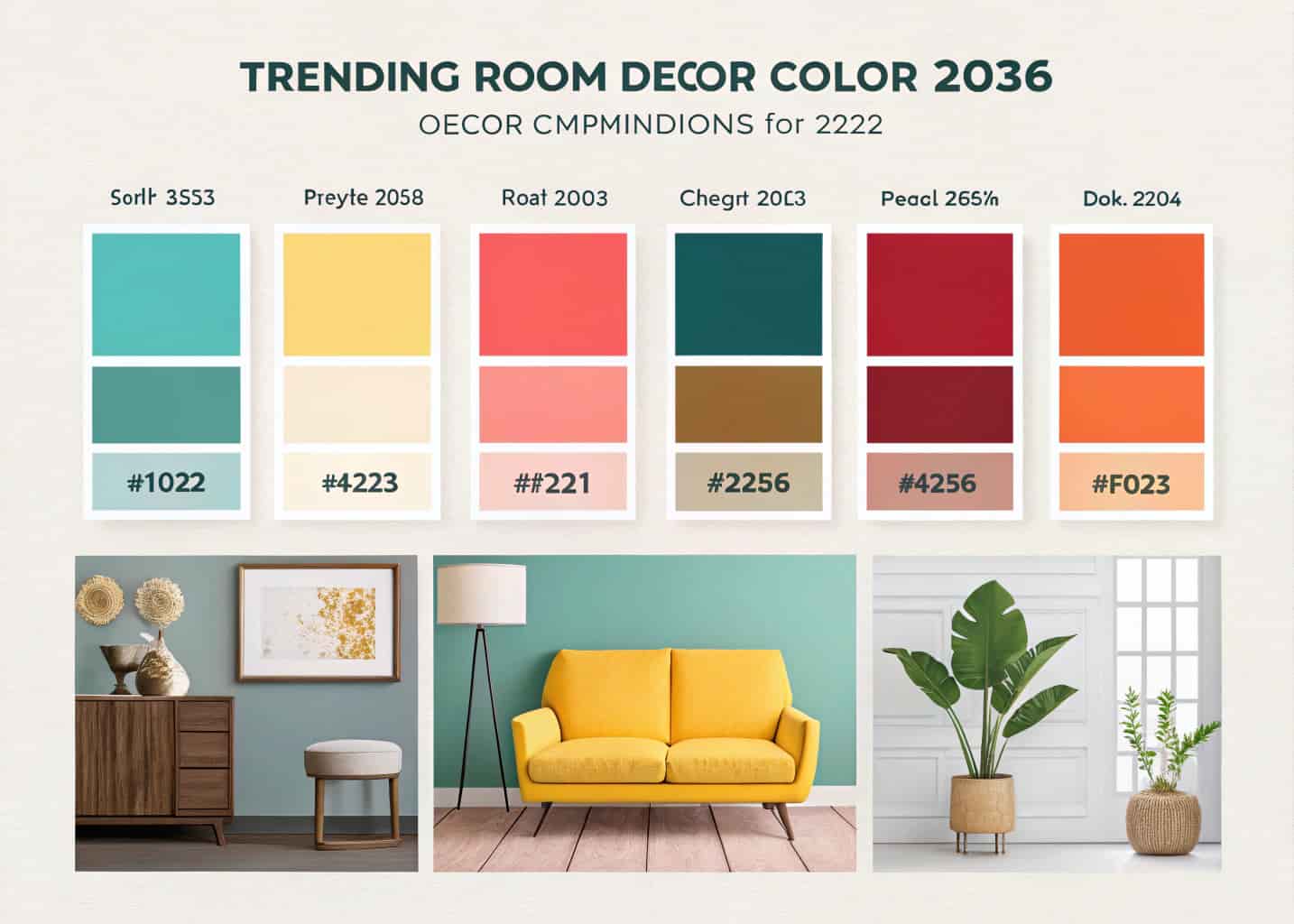
Room Decor Color is the fastest, most affordable way to completely transform a room. You don’t need new furniture or expensive renovations. Just the right combination of shades on your walls, cushions, and accessories — and suddenly your space feels like something out of a design magazine. Here are the 13 color pairings everyone’s talking about in 2026.
Terracotta and Warm Ivory
There is something about terracotta that just feels like home. It’s warm, earthy, and surprisingly versatile — it works beautifully in both modern apartments and older, more traditional homes. When you pair it with warm ivory, the combination feels cozy without being heavy. Think of the walls in warm ivory and one accent wall in terracotta, or terracotta cushions on a cream sofa. My cousin did this in her small bedroom last year, and the room went from feeling cold and plain to feeling like a boutique hotel stay. The trick is to keep the furniture light — wooden tones, natural rattan, or simple white pieces balance the richness of terracotta perfectly without making the room feel too dark.

Sage Green and Soft White
Sage green has been showing up everywhere for a couple of years now, and honestly, it deserves all the attention it gets. There’s something genuinely calming about this color — it’s green, but it doesn’t scream garden. It whispers spa. Paired with soft white walls or white linen curtains, it creates a living room or bedroom that feels like a deep breath. If you are someone who works from home and your workspace doubles as your relaxation zone, this combo is almost therapeutic. Add a few house plants, some light oak shelves, and you have a space that balances productivity and peace better than any productivity app ever could. No busy patterns needed — the color combo does all the talking.

Navy Blue and Brass Gold
If you want your room to feel like it belongs in an upscale boutique hotel in London or Paris, navy and brass is your combination. It’s bold, but it’s also timeless — this is not a trend that will look embarrassing in five years. Navy blue on the walls or as a deep sofa color brings an instant sense of elegance and sophistication. Add brass accents — think light fixtures, drawer handles, picture frames, or a brass floor lamp — and the whole room suddenly feels put together in a way that took way more effort than it actually did. The key is not overdoing the brass. Two or three brass pieces are luxurious. Ten brass pieces look like a furniture showroom. Use it like a seasoning, not the main ingredient.

Dusty Rose and Warm Grey
Dusty rose is not the bubblegum pink you might be picturing. It’s a softer, more muted shade — almost like pink that’s been left in the sun for a little while. When you pair it with warm grey, the result is quiet, romantic, and incredibly modern at the same time. This combination is beautiful in bedrooms because it wraps you in warmth without being overstimulating. Grey keeps dusty rose from feeling too sweet, and dusty rose keeps grey from feeling too cold or office-like. Together, they balance each other out perfectly. Use dusty rose for bedding or an accent wall, grey for the larger surfaces, and you’ll find yourself not wanting to leave your bedroom in the morning. Which, depending on your schedule, may or may not be a good thing.

Charcoal and Burnt Orange
This one is for the people who are tired of being told their home needs to be light and airy. Charcoal and burnt orange is dramatic, moody, and unapologetically bold. It’s perfect for a home office, a study, or a living room where you want real personality. Charcoal walls or furniture create a strong, grounded backdrop, and burnt orange cushions, throws, or art prints add just enough warmth to stop the room from feeling like a cave. It’s the kind of color combination that makes people walk into your space and immediately say “wow, this is different.” And in a good way — not the way someone says it when they’re being polite. If you have ever stayed in a moody design hotel with deep colors and accent lighting, this is how to recreate that feeling at home without a designer’s budget.

Olive Green and Cream
Olive green feels like autumn in the best possible way. It’s warm, earthy, and organic — the kind of color that makes a room feel grounded and connected to nature even if the nearest park is several blocks away. Paired with cream — not stark white, but a soft, warm cream — the combination creates a living space that feels relaxed and lived-in without looking messy or neglected. This is a great choice for open-plan kitchens and dining areas. Olive green kitchen cabinets against cream walls have been all over Pinterest and design blogs for a reason — it’s effortlessly stylish without trying too hard. Add some wooden cutting boards, a wicker bread basket, and some dried herbs hanging near the window, and you’ve basically created a set for a lifestyle cooking show.

Cobalt Blue and Pure White
There’s a reason why every Mediterranean-style home uses blue and white — it simply works. Cobalt blue is more intense than navy, more vivid and energetic, and when it hits against pure white, the contrast is clean, crisp, and immediately refreshing. This is an especially great combination for bathrooms, laundry rooms, or any space where you want to feel energized rather than relaxed. Think cobalt blue tiles paired with white grout, white vanity units, and maybe a cobalt blue vase on the shelf. It’s bold without being exhausting. Even just a few cobalt blue towels against white bathroom walls can change the entire mood of the room. Small swaps, big impact — that’s honestly the story of this entire color combination.

Blush Pink and Forest Green
This one surprises people every time. Blush pink and forest green should not work together — but they absolutely do. Blush pink is soft and feminine, forest green is rich and grounded, and when you put them in the same room, they create this unexpected harmony that feels both fresh and sophisticated. It works brilliantly in living rooms and home office spaces. A forest green sofa with blush pink cushions and a blush pink rug? Stunning. Alternatively, forest green plant pots scattered across a blush pink bedroom wall — the colors mirror nature in the most flattering way possible. Interior designers have been leaning into this pair because it photographs beautifully and feels genuinely original, unlike some combinations that look great in theory but flat in real life.

Warm Sand and Rust Red
If you love the feeling of being in the desert — all that warmth, those vast open spaces, the earthy rich tones — but you’re working with a small apartment rather than the Sahara, warm sand and rust red is your color palette. Sand is neutral and grounding, while rust red adds a pop of richness that’s neither aggressive nor delicate. This combination works particularly well in living rooms and dining areas where you want the space to feel warm and welcoming for guests. Use sand as your base color for walls and large furniture pieces, then bring in rust red through cushions, a statement armchair, a patterned rug, or artwork. The result is a room that feels like it has a story — textured, layered, and full of warmth without relying on heat from the radiator.

Slate Blue and Off-White
Slate blue is what happens when blue grows up. It’s not bright, not loud — it’s the kind of blue that belongs in a home library, a reading nook, or a calm and collected living room. It carries a quiet confidence. Paired with off-white rather than stark white, the whole combination softens beautifully. Off-white walls with slate blue furniture or slate blue walls with off-white bookcases and soft furnishings — both directions work equally well. This is a great choice if you love the idea of blue in your home but worry about it feeling cold. Slate blue has enough grey and warmth in it to avoid that clinical, cold feel you sometimes get with lighter or more vivid blues. The result is restful, elegant, and genuinely timeless.

Chocolate Brown and Caramel
Some people hear “brown” and immediately think of the 1970s in a bad way — all avocado green and harvest gold and mustard curtains. But chocolate brown and caramel, used the right way, is a completely different story. These tones are rich, warm, and indulgent — like the best cup of coffee you’ve ever had, translated into a room. Deep chocolate brown leather sofas or wooden panels paired with caramel-toned cushions, throws, and rugs create a space that feels genuinely luxurious and warm. It’s especially good in rooms that don’t get a lot of natural light — the warm tones do what pale walls can’t, which is make the space feel cozy rather than just dim. Add cream or ivory as a third neutral and the whole room breathes much better.

Muted Lavender and Warm Taupe
Lavender often gets dismissed as too feminine or too pastel — but muted lavender is entirely different from the bright purple you might be picturing. It’s hushed, dreamy, and deeply calming. When you pair it with warm taupe — a brownish-beige that feels grounded and natural — the result is a bedroom or meditation space that feels like it was designed specifically for unwinding. This is genuinely one of the most underrated color combinations of 2026. Interior designers are using it in high-end wellness spaces and luxury bedroom suites for exactly this reason. If you struggle with winding down at night, changing your bedroom to this palette might actually help — there is evidence that muted, cooler tones support relaxation more effectively than warm or bright ones. Worth trying before spending money on a sleep consultant.

Forest Green and Rich Black
This is the most dramatic combination on this list — and if used confidently, it is also arguably the most stunning. Forest green and rich black together create a space that feels grown-up, bold, and completely unapologetic. It’s not a look for everyone, and honestly, that’s part of its appeal. Think dark green velvet sofas against near-black walls, with brass or gold light fixtures as the accent — and suddenly you have a room that would not look out of place in a five-star hotel bar. This combination works best in rooms with good lighting — either natural light to counterbalance the depth, or intentional accent lighting like wall sconces, table lamps, or understated ceiling lights. If you’re ready to commit to a room that makes a real statement, this is the combination to choose in 2026.

Final Thoughts
Color is personal. No trend, no designer, and no article — including this one — can tell you exactly what will feel right inside your own home. What these 13 combinations offer is a starting point, a direction, a bit of courage to try something new. The best rooms are not the ones that follow every rule — they’re the ones where you walk in and immediately feel something.
Start small if you’re nervous. A throw pillow, a candle, a new cushion cover. Let the color into your space gradually and see how it feels before committing to an accent wall. And when you do commit? Do it fully. Half-hearted color choices rarely look as good as bold, intentional ones. Pick your combination, trust your gut, and make it yours.