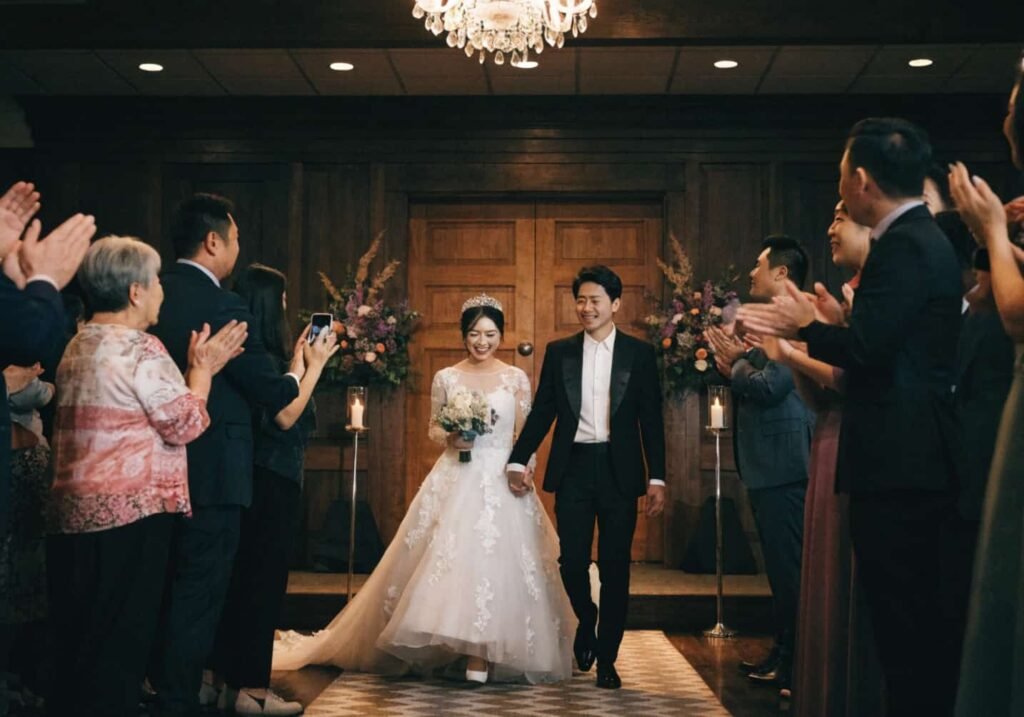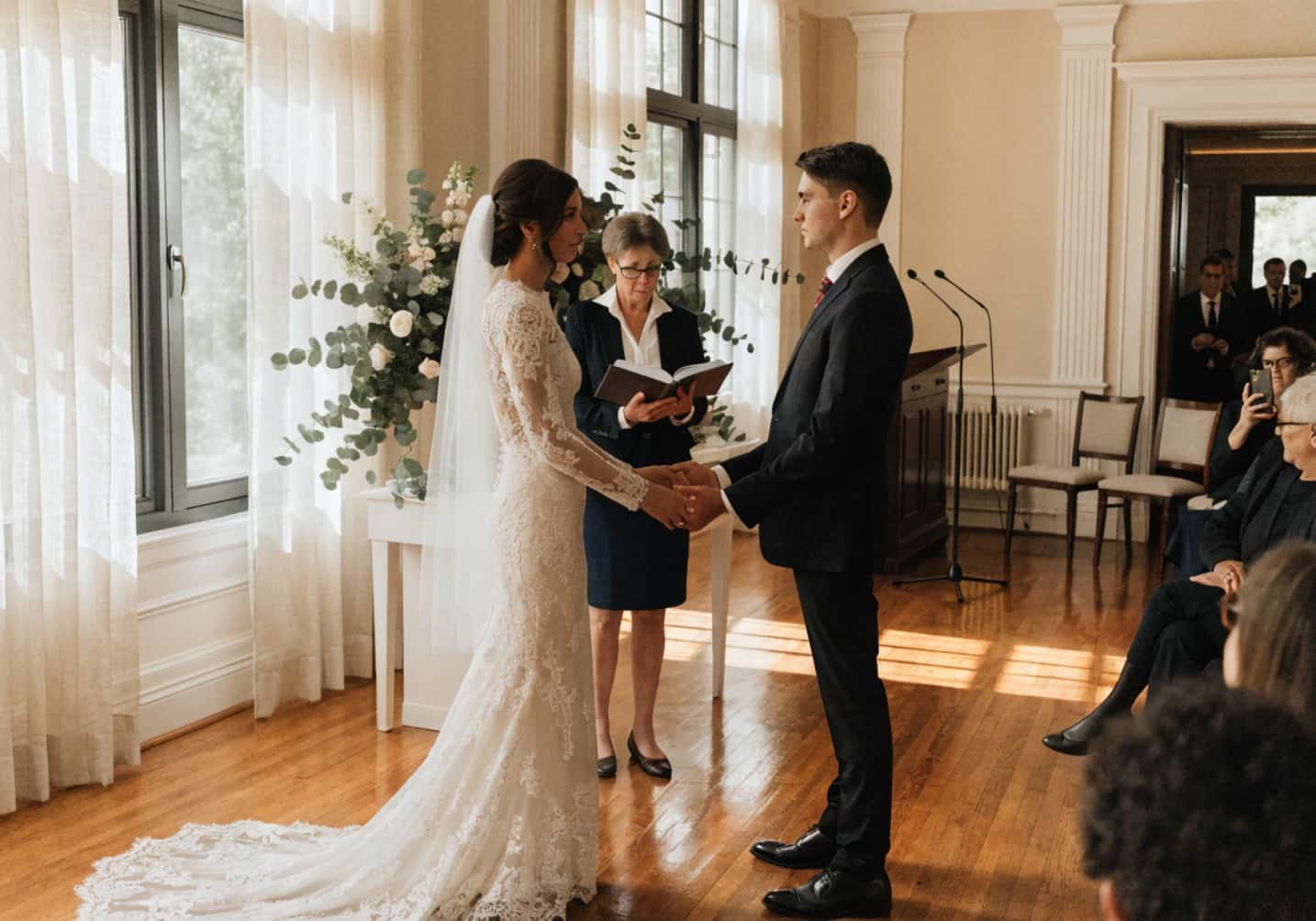
Indoor Wedding Ceremonies get dismissed as the “backup plan” for rain, but venues like restored barns, botanical conservatories, and old churches-turned-event-spaces are booking out a year in advance now specifically for their indoor ceremony rooms — not as insurance against weather. There’s a reason: you control the temperature, the acoustics, the light, and the guest experience down to the last variable. Outdoors, you’re negotiating with wind and sun angle. Indoors, you’re the one making the calls. This guide walks through what actually goes into planning one well, past the Pinterest-board stage.
Choosing the Right Indoor Space for Your Ceremony
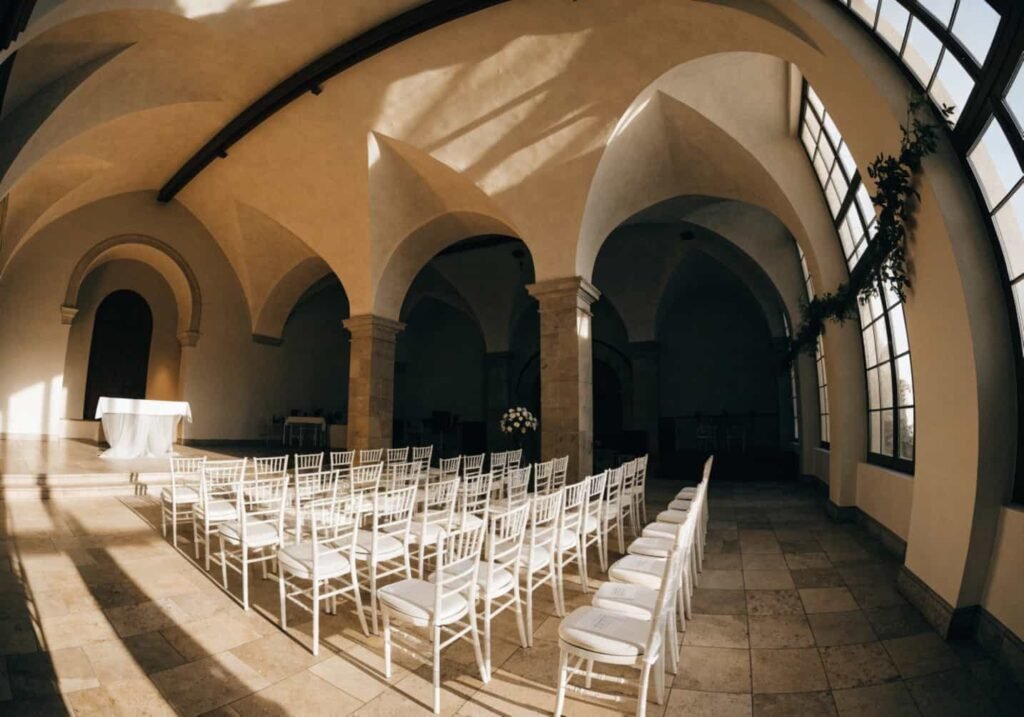
Square footage math matters more than most couples realize before they start venue hunting. A rough industry rule: budget 8–10 square feet per guest for theater-style seated ceremonies, and closer to 12–15 if you want an aisle wide enough for a wheelchair or a long train to pass comfortably (36 inches minimum, 48 is better). A room that “comfortably fits 150” on a venue’s website usually means 150 in cocktail-style standing, not seated with an aisle — always ask for the seated ceremony capacity specifically, not the reception capacity, because they’re rarely the same number. Ceiling height is the other thing people skip: anything under 10 feet will feel cramped the moment you add uplighting or hanging florals, and anything over 20 feet (like a lot of converted warehouses) needs deliberate lighting or the space swallows your guests visually.
Planning Space Around Your Guest List
Work backward from your final guest count, not forward from a venue you already love — this is the single most common planning mistake. Get RSVPs (or a firm estimate) before locking seating layout, because the difference between 80 and 120 guests can mean the difference between a 6-row and a 10-row aisle, which changes your florals budget, your runner length, and sometimes your entire room configuration. If you’re between two venue sizes, lean smaller: a slightly tight room reads as intimate and full; a half-empty large room reads as underattended, even with the same guest count. A good venue coordinator will show you a scaled floor plan (usually done in software like AllSeated or Social Tables) before you sign anything — if they can’t produce one, that’s a flag.
Seating That Keeps Guests Comfortable
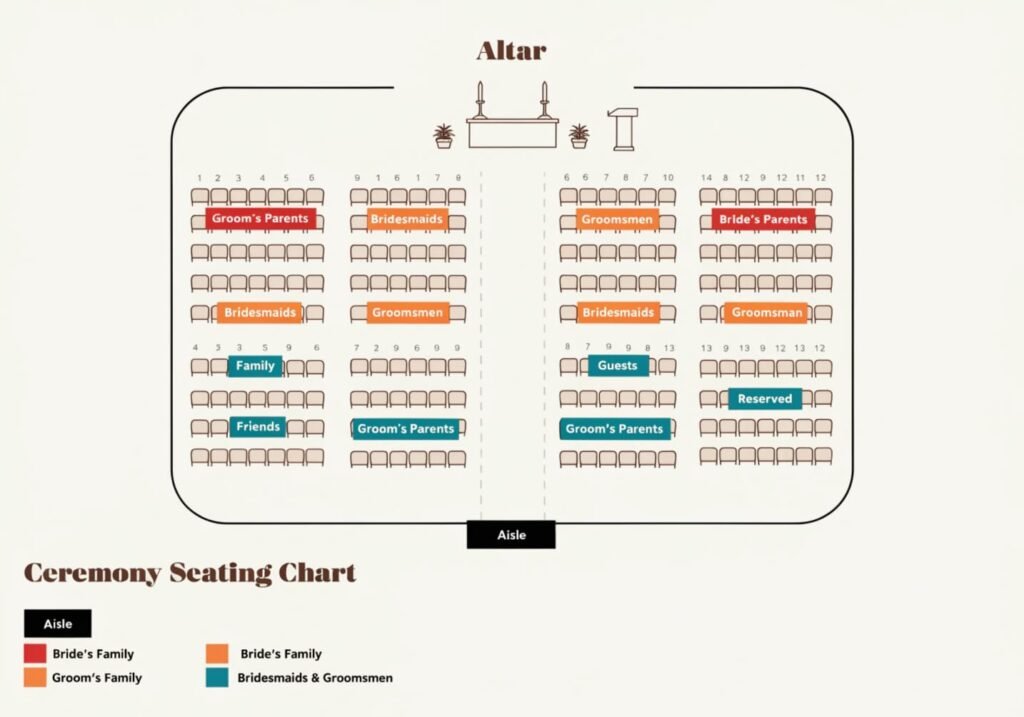
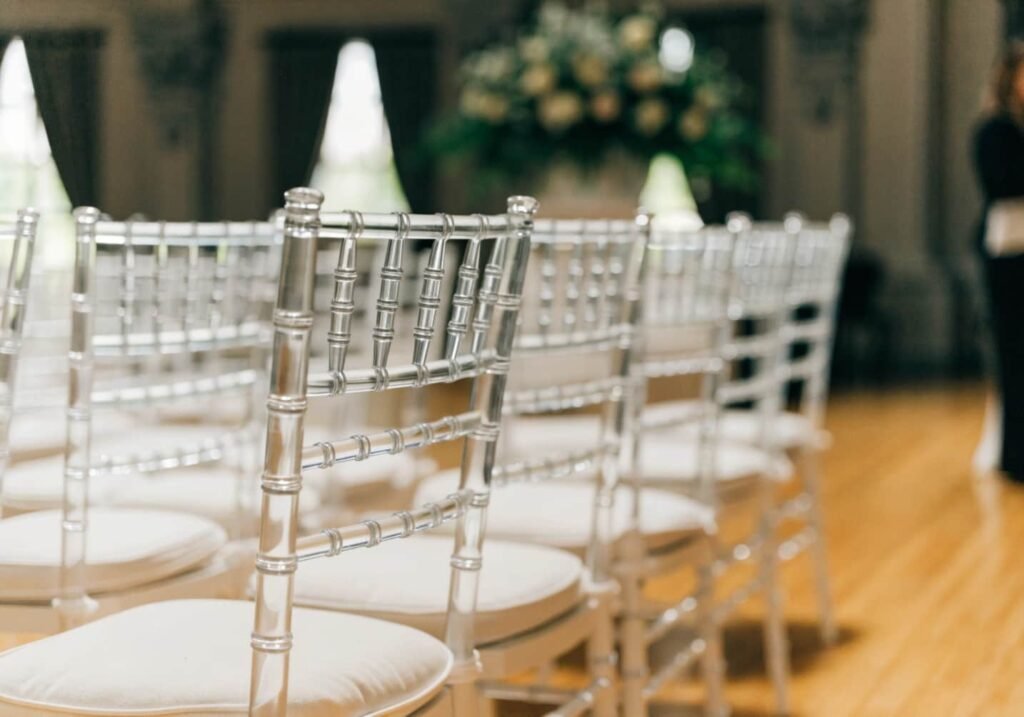
Chiavari chairs look great in photos but they’re genuinely uncomfortable for a 25–30 minute ceremony without a cushion — budget $2–4 per chair extra for cushions if your venue doesn’t include them. Row spacing should give at least 36 inches from the front of one chair to the back of the next; anything tighter and guests can’t cross their legs or get up without disturbing the whole row. If your ceremony is running past 30 minutes (multiple readings, a full religious rite, translation happening live), tell your florist and planner in advance so they don’t put your oldest relatives in folding chairs with no back support near the back of the room. Reserve the first two rows with ribbon or small signage, not just verbally telling ushers — verbal instructions get lost in the chaos of arrival.
Creative Setups for the Altar or Mandap
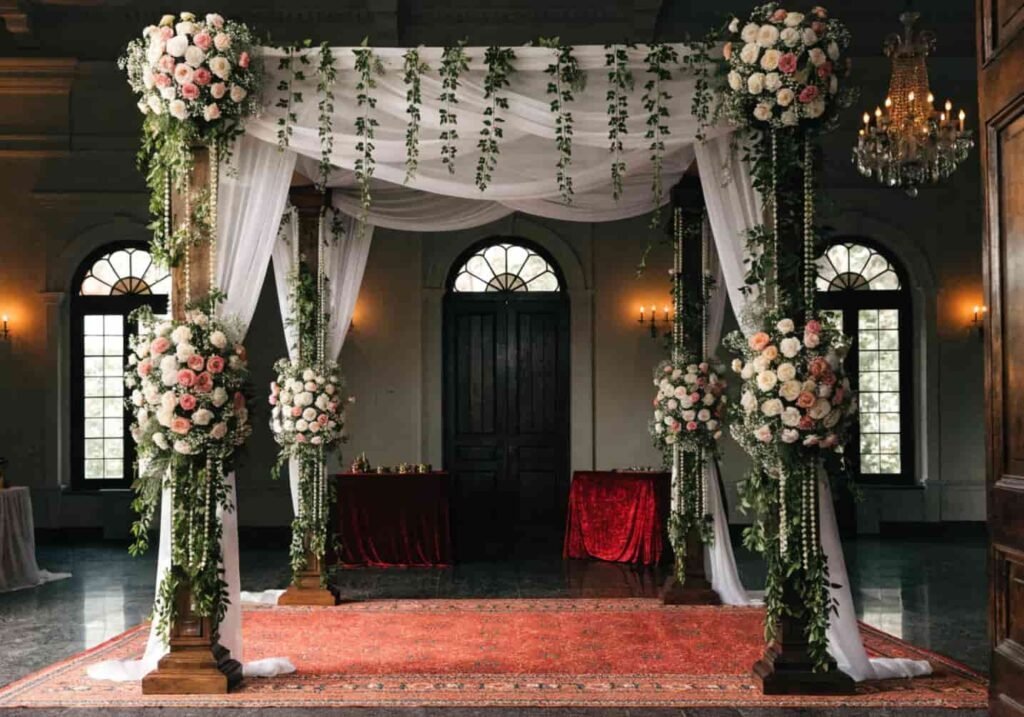
An indoor altar or mandap doesn’t need to be freestanding — using an existing architectural feature (a fireplace, a set of French doors, a stone archway) as your backdrop saves on structure rental and usually looks more intentional than an add-on arch plunked in an empty corner. If you are renting a structure, four-post mandaps and arches typically run $400–$1,500 depending on size and whether it’s drape, floral, or a mix; ask specifically whether the rental includes weighting or anchoring, because indoor venues often prohibit floor drilling and you’ll need sandbags or water-filled bases instead. Keep at least 8 feet of clearance behind the structure for the officiant, both sets of parents if they’re standing up front, and the photographer’s second shooter — this space gets forgotten constantly and photos end up cramped.
Simple Ways to Decorate the Aisle
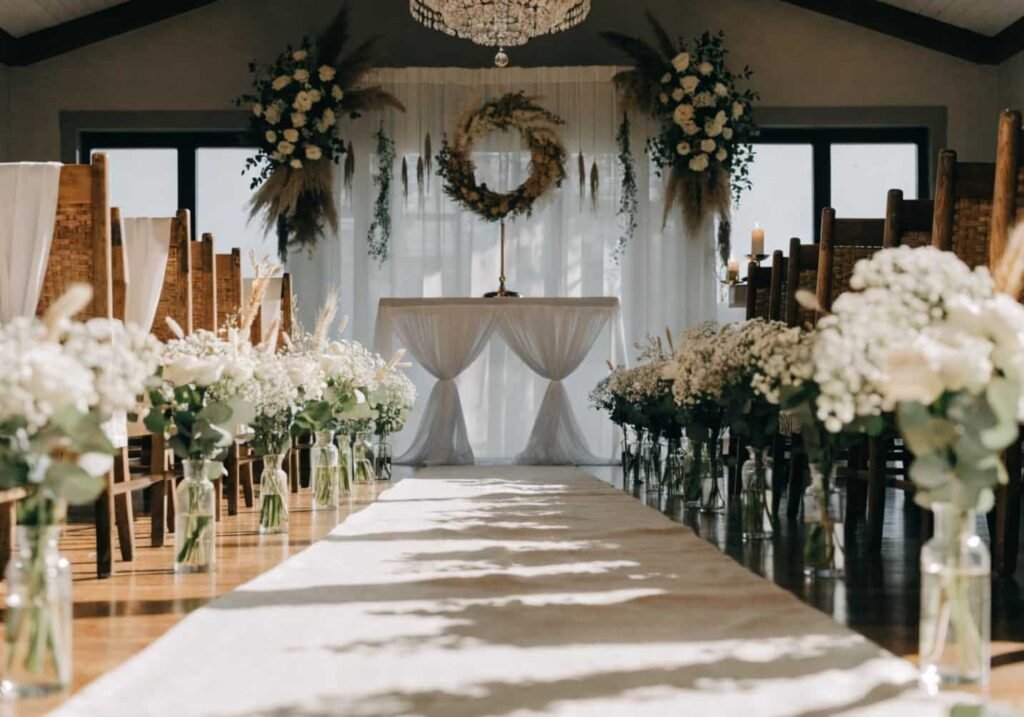
Skip the petals if your venue has hardwood or marble floors — rose petals get slippery underfoot fast, and more than one bride has nearly gone down on a polished floor. Ground runners (fabric, not paper) solve this and also protect rental flooring, which some venues require anyway. For a lower-cost aisle, alternating single stems in bud vases every third or fourth chair reads as intentional and costs a fraction of full floral aisle markers — figure $8–15 per stem versus $40–75 per full arrangement. If your aisle runs through a room with a lot of existing architectural detail (exposed brick, stained glass, ornate molding), resist over-decorating it; let the room do some of the work instead of competing with it.
Why Acoustics Matter More Than You Think
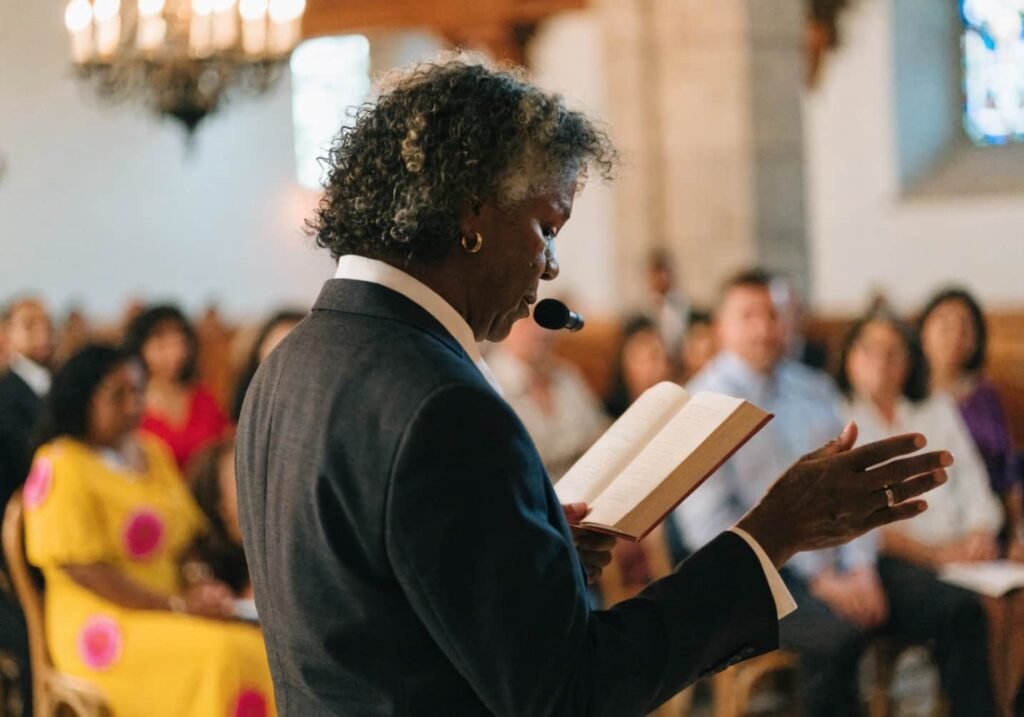
This is the section couples skip and regret. Rooms with hard, parallel surfaces — stone floors, high flat ceilings, bare walls — produce echo that makes vows genuinely hard to hear past the third or fourth row, even with a microphone. A lavalier mic on the officiant is the minimum; for rooms over 60 guests or with noticeable echo, add a second lav on the couple or a handheld for readings, because sound bouncing off hard surfaces means a single mic often isn’t enough. If you’re touring a venue and want to test this cheaply, clap once in the empty room — if you hear a distinct echo tail after the clap, plan on renting acoustic panels or heavier drape, or ask the venue whether soft furnishings (drapes, carpet runners, upholstered chairs) can be added for the ceremony. This is also why a lot of experienced officiants ask for a sound check the morning of, not just at rehearsal — HVAC systems and empty-vs-full room acoustics behave differently.
Best Angles for Photography and Videography
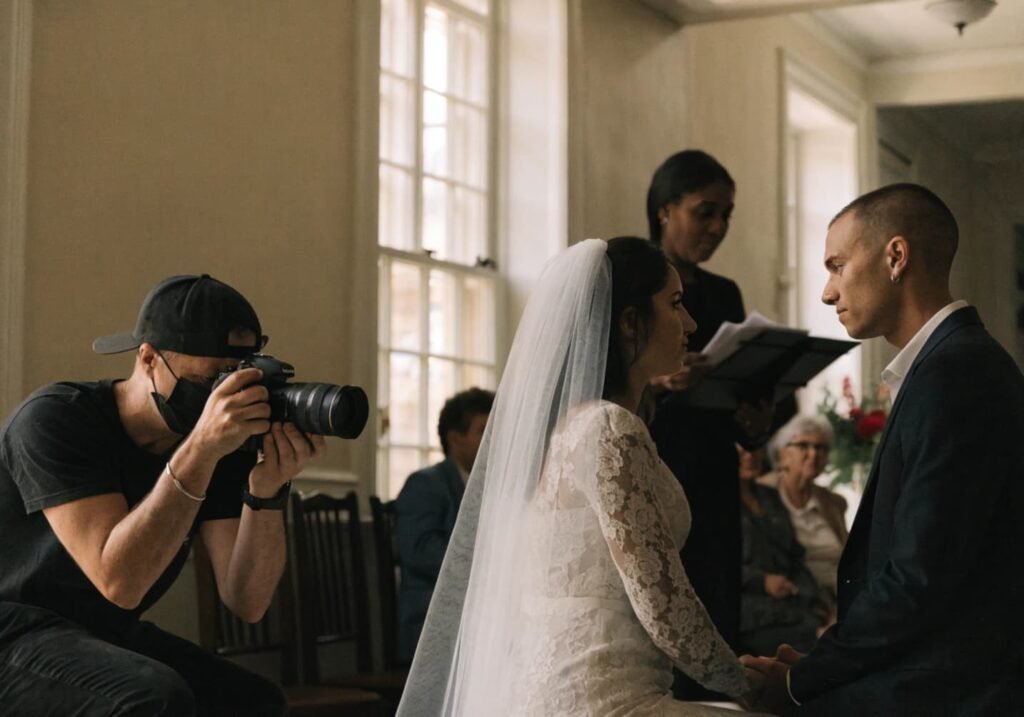
Ask your venue where the sun hits at your actual ceremony time, not just what the room looks like on a tour at a different hour — a west-facing wall of windows can turn into unusable backlight glare at a 4 p.m. summer ceremony. Photographers generally want the couple facing away from direct light sources (windows, big overhead fixtures) so guests’ faces aren’t lost in silhouette in wide shots. A 45-degree angle between the aisle and the altar, rather than a straight head-on approach, gives photographers a three-quarter profile of the couple during vows instead of only ever shooting the backs of their heads — worth discussing with your planner when the layout is still flexible. If a second shooter needs to get behind the altar for reaction shots of the couple facing guests, confirm that clearance space early, not the week of.
Lighting That Makes the Ceremony Feel Special
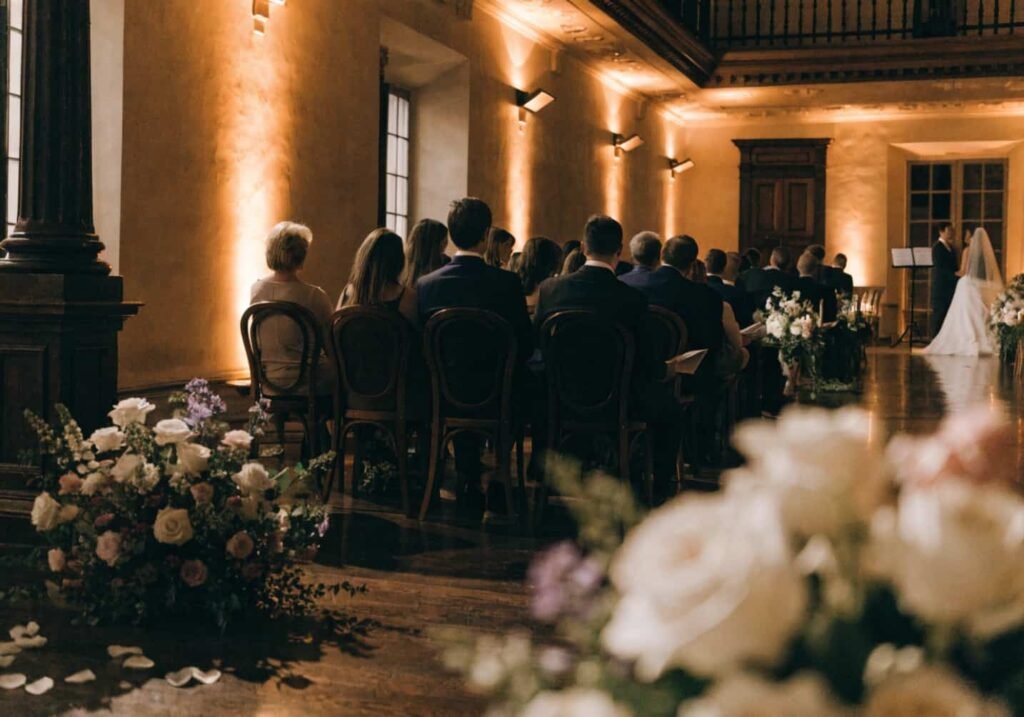
Warm white (2700K–3000K) reads as romantic on camera and to the eye; anything closer to 4000K+ daylight bulbs will look sterile and slightly clinical in photos, even if it seems fine in person. If your venue’s overhead lighting is fixed and can’t be dimmed or swapped, uplighting along the walls (battery-powered LED units, usually $25–40 per fixture to rent) is the cheapest fix and can change the entire mood of a room without touching the ceiling fixtures. Candles are gorgeous but check your venue’s fire code before you plan around them — a lot of historic buildings only allow flameless LED candles, and real flame is often restricted to enclosed hurricane glass at minimum. Time your lighting cues with your ceremony’s actual flow: if there’s a unity candle or ring exchange moment you want highlighted, a spotlight or pin light cue matters more than blanket ambient lighting.
Coordinating the Officiant and Vows
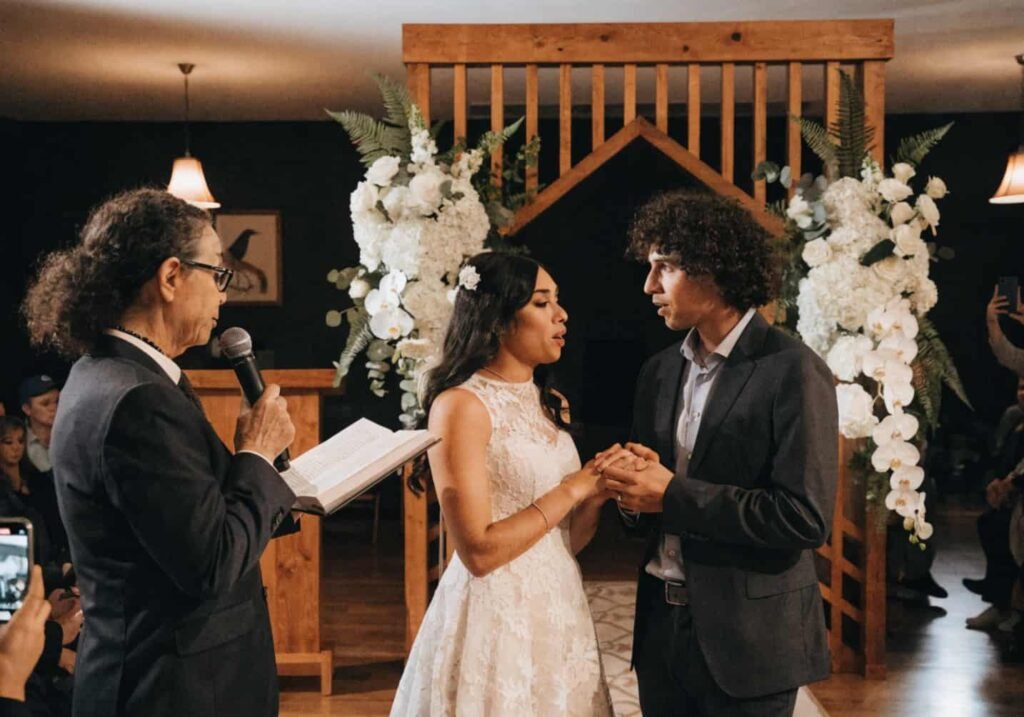
Send your officiant the exact room layout and mic setup at least two weeks out, not the day of — a lot of miscommunication happens because officiants plan their pacing assuming they’ll be heard clearly, and only find out about echo or a dead mic zone at rehearsal, when it’s too late to adjust. If you’re blending cultural or religious elements led by more than one officiant or family member, write out a simple run-of-show with names and timing (even just five lines: processional, welcome, readings, vows, pronouncement) and give it to everyone involved, including your DJ or musician who needs cues for music timing. Vow length is worth discussing honestly too — indoor ceremonies with attentive acoustics can support longer, quieter vows that would get lost outdoors; that’s actually one of the real advantages of going indoors that doesn’t get talked about enough.
Planning Ceremony Timing and Flow
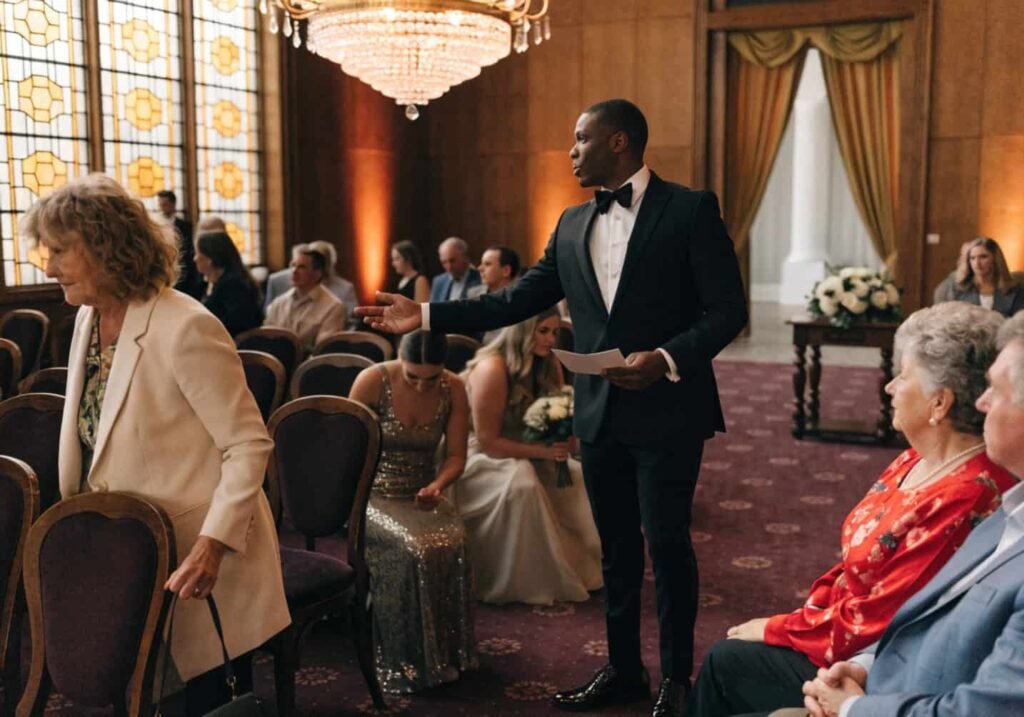
A seated indoor ceremony for 100–150 guests typically needs 20–30 minutes for guest seating alone, which is the number most timelines underestimate. Build in a 10-minute buffer before your stated start time specifically for late arrivals and bathroom breaks — indoor venues rarely have anywhere for people to “hang around outside” the way an outdoor ceremony does, so latecomers disrupt the room more noticeably. If you’re doing a same-room ceremony-to-reception flip (common in hotel ballrooms and some barns), your vendor team needs a hard 45–60 minutes for turnover, which usually means a cocktail hour elsewhere is mandatory, not optional — confirm this with your venue before assuming your guests can just “wait outside the room.”
Guest Comfort and Amenities to Plan For
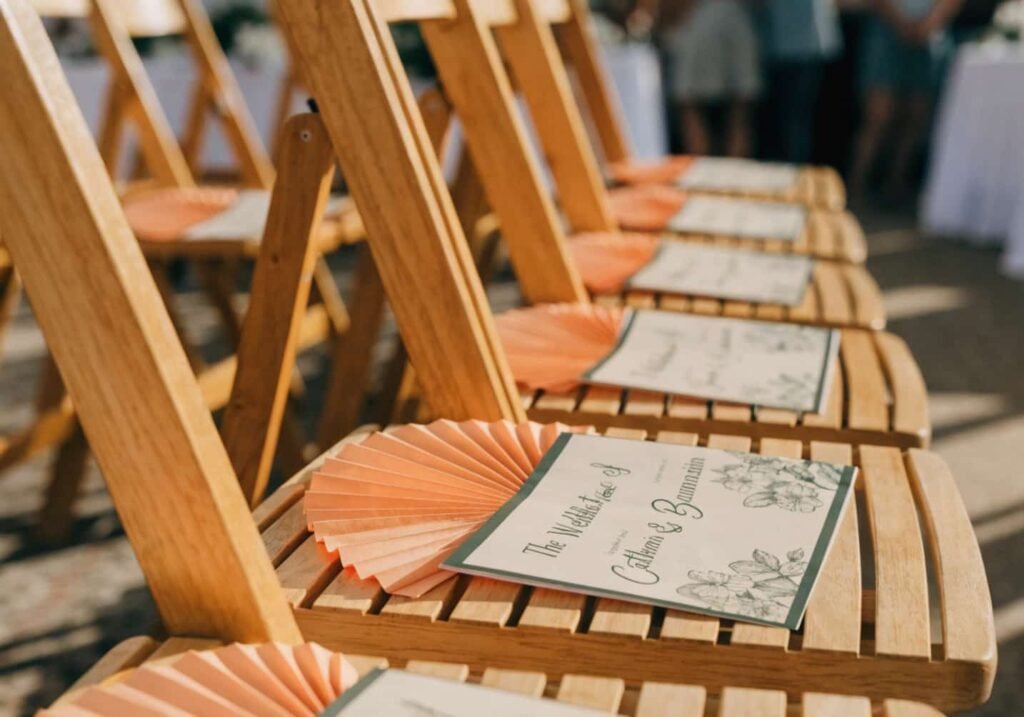
Temperature control is the number one complaint at indoor ceremonies, and it’s almost always because the room was set at a comfortable temperature for an empty space, not one that will hold 100+ bodies generating heat for half an hour. Ask your venue to lower the thermostat by a few degrees below what feels comfortable on your walkthrough — a packed room warms up fast, especially with lighting equipment running. Have a program or fan on hand in warmer months (a lot of couples order these as favors anyway, roughly $1–2 each in bulk), and make sure there’s a clearly marked accessible restroom and at least one aisle wide enough for mobility devices. Coat check matters more indoors in cold-weather months than people plan for — a rack and a designated staffer, even informal, saves guests from piling coats on empty chairs.
Honoring Cultural or Religious Rituals
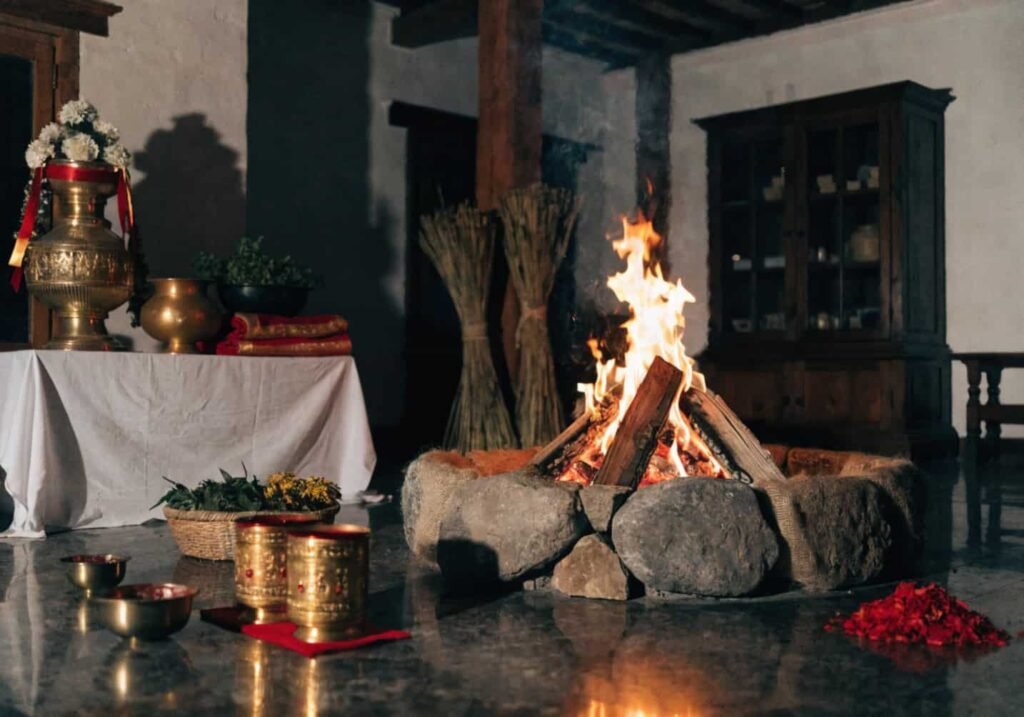
Indoor venues need to accommodate specific ritual requirements that outdoor spaces sometimes can’t — a fire ceremony (like a Hindu havan) needs proper ventilation and often a fire-safe surface, which not every indoor venue is licensed or equipped for, so confirm this explicitly before booking, not after. Space for ritual objects (a unity table, a ketubah signing table, a mandap’s four corner posts) should be mapped into the floor plan from the start, not squeezed in later — these elements often need their own footprint plus room for family members to stand nearby. If multiple traditions are being blended into one ceremony, walk the full sequence with both families ahead of time; ceremony flow disagreements are far more common — and far more emotionally loaded — than most couples expect going in.
Transitioning Smoothly Into the Reception
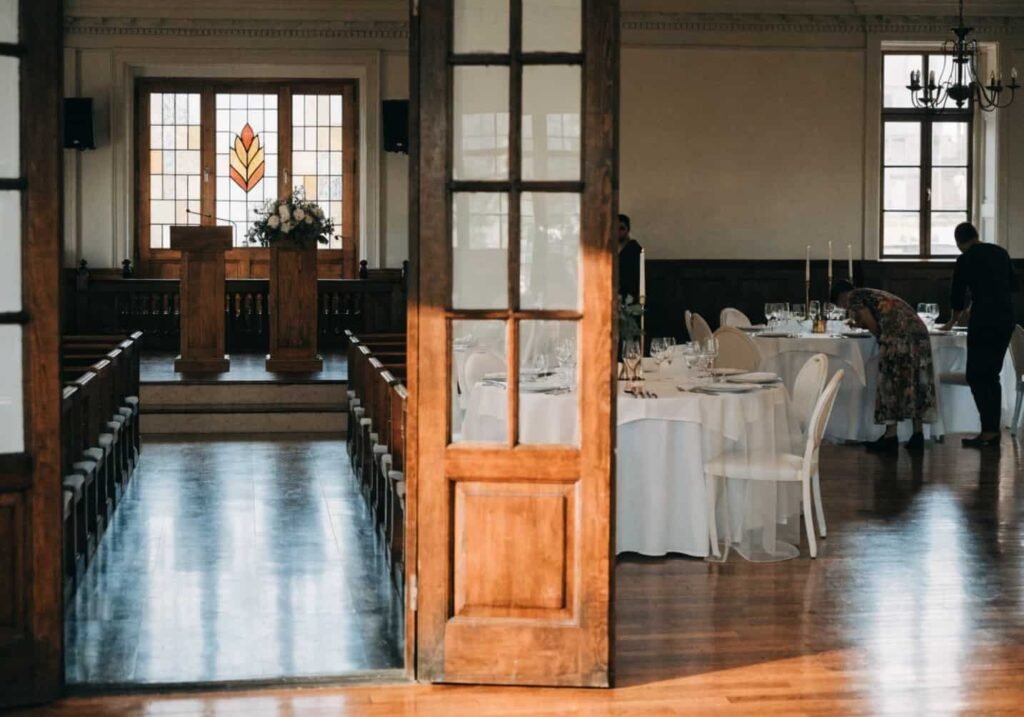
If the reception is in a different room of the same venue, guests need clear, staffed direction — a sign is not enough when there’s wine involved and people are chatting. Assign at least one staffer or usher per transition point specifically to redirect guests, especially at multi-room venues where the “obvious” path isn’t obvious to first-time visitors. Cocktail hour length should match your turnover needs exactly: if your team needs 45 minutes to flip a ceremony room into reception seating, your cocktail hour needs to be 45 minutes, not 30, or your catering team will be finishing setup as guests walk in. Have your DJ or band ready with transition music the moment doors open — dead air during a room switch is when a ceremony’s atmosphere visibly deflates.
Small Touches That Make the Ceremony Memorable
Skip the generic “unplugged ceremony” sign wording and have your officiant say it briefly instead — verbal requests get honored more consistently than signage, which people scroll past while texting. A short, specific detail tied to the couple (a grandparent’s handkerchief, a reading in a language that matters to the family, a song played on entry that means something rather than the standard processional pick) does more for how a ceremony feels than an extra floral upgrade will. Keep the final moment simple: a clean pronouncement, a clear cue for the recessional music, and a planned pause for photos at the end of the aisle before the room erupts into applause and movement — that 10-second pause is where most of the best candid photos actually happen.