Every wedding venue decorator I’ve ever talked to says the same thing: the couples who end up happiest with their venue aren’t the ones who spent the most — they’re the ones who planned the layout before they picked a single flower. Decor is 30% shopping and 70% logistics. Once you accept that, the rest gets a lot easier.
This isn’t a “10 dreamy ideas” list. It’s a working guide — what actually holds up on the day, what’s worth the money, and what most people get wrong.
Things to Think About Before You Start Decorating
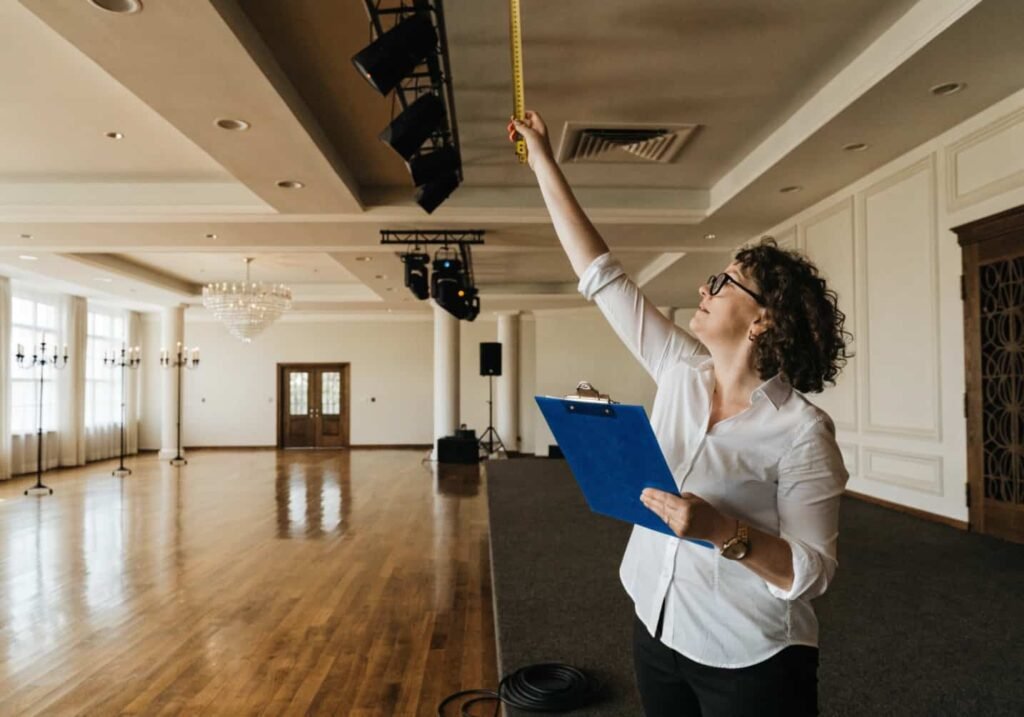
Before you order a single yard of fabric, walk the venue at the same time of day your event will actually happen. A hall that looks warm and golden at 4 PM can turn flat and yellow-lit by 8 PM under its own overhead lights. This one check saves more decor budget than any Pinterest board.
Also get the exact ceiling height and door widths in writing from the venue manager, not an estimate. Backdrop structures, hanging installations, and drape panels are ordered by the foot — a 2-foot miscalculation on a 12-foot backdrop is a 15- 20% cost difference, and it’s the most common reason DIY installations fall apart on delivery day.
Lastly, ask what’s already included — some banquet halls include basic chair covers, stage skirting, or a standard mandap frame in the rental. Decorating “from scratch” when half the structure is already provided is how budgets balloon by 40% for no visual gain.
Making a Statement at the Entrance
The entrance is the only decor guests experience one-on-one, walking through slowly, phones out. That’s worth disproportionate attention relative to its size.
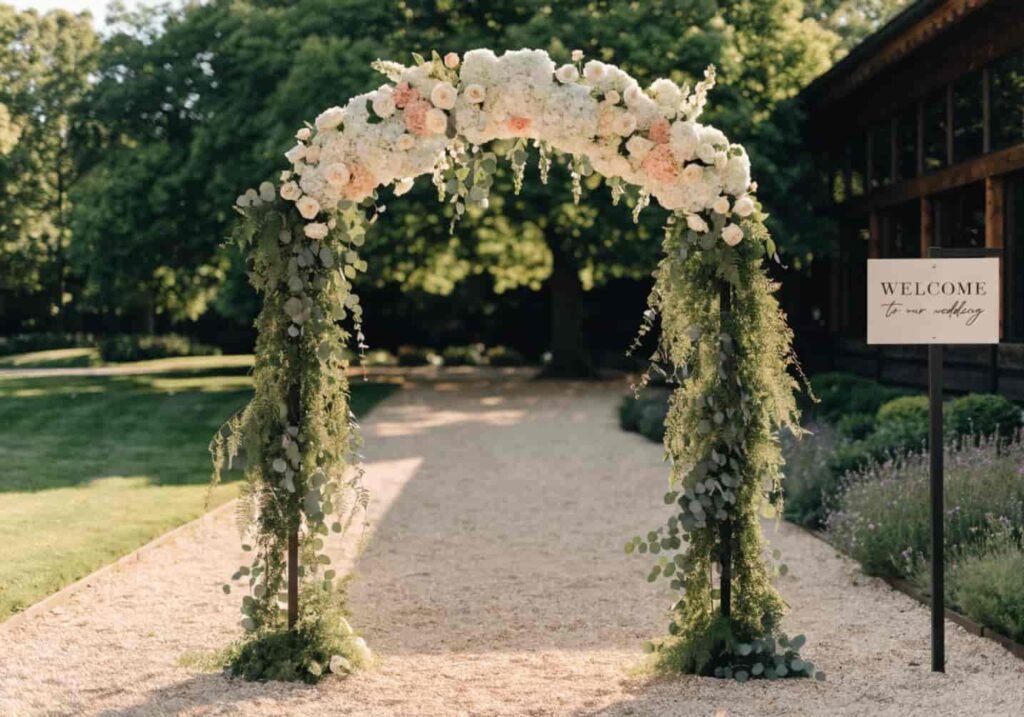
A floral arch costs less than people assume if you build it in layers: a metal or bamboo frame (often rentable for $30-60), then fresh flowers concentrated only at eye level and the top curve, with greenery — jasmine vine, eucalyptus, or areca palm leaves — filling the rest. This “focal cluster” technique is what florists use to make a full arch look expensive when only 30% of it is actual flower cost.
If fresh flowers aren’t in budget, artificial hydrangea and rose panels (sold by the roll now, not just individual stems) have gotten convincing enough that from six feet away — the distance most entrance photos are taken from — nobody can tell.
Creative Ideas for Stage or Mandap Decor
The stage is the background of every formal photo taken that day, so it needs to read well both up close and from fifty feet away — two very different design problems.
Up close, texture matters: layered drapery, fresh garlands, or a mix of pampas grass and roses. From a distance, only silhouette and color block matter — which is why a lot of expensive detailed stage work photographs as a flat blur in wide shots. The fix professionals use: keep the overall color palette to two or three tones maximum, and let one element (a hanging floral chandelier, an oversized backdrop panel, a canopy of drapes) dominate the silhouette. Everything else supports it.
For a mandap, four-pillar structures with hanging marigold strings or orchid garlands remain the most cost-efficient option, since marigolds are sold by the kilogram and typically run cheaper than imported flowers by a wide margin.
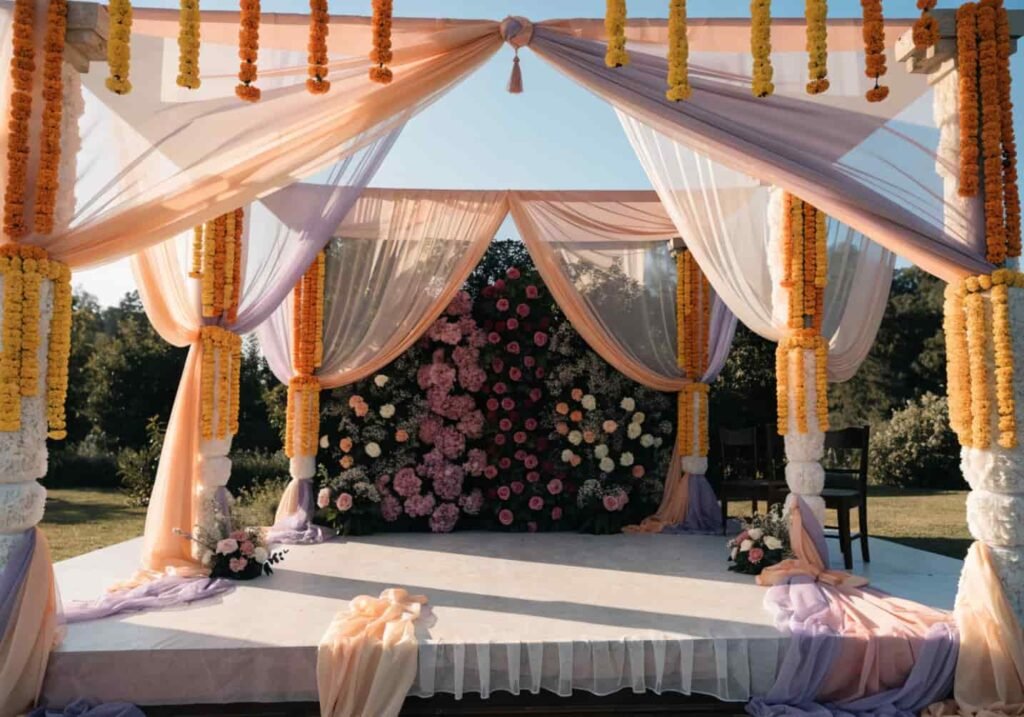
Table Settings and Centerpiece Ideas
Centerpieces get over-designed more than almost any other element, mostly because couples design them sitting down at a mock-up table, forgetting that real guests will be talking across the table to each other.
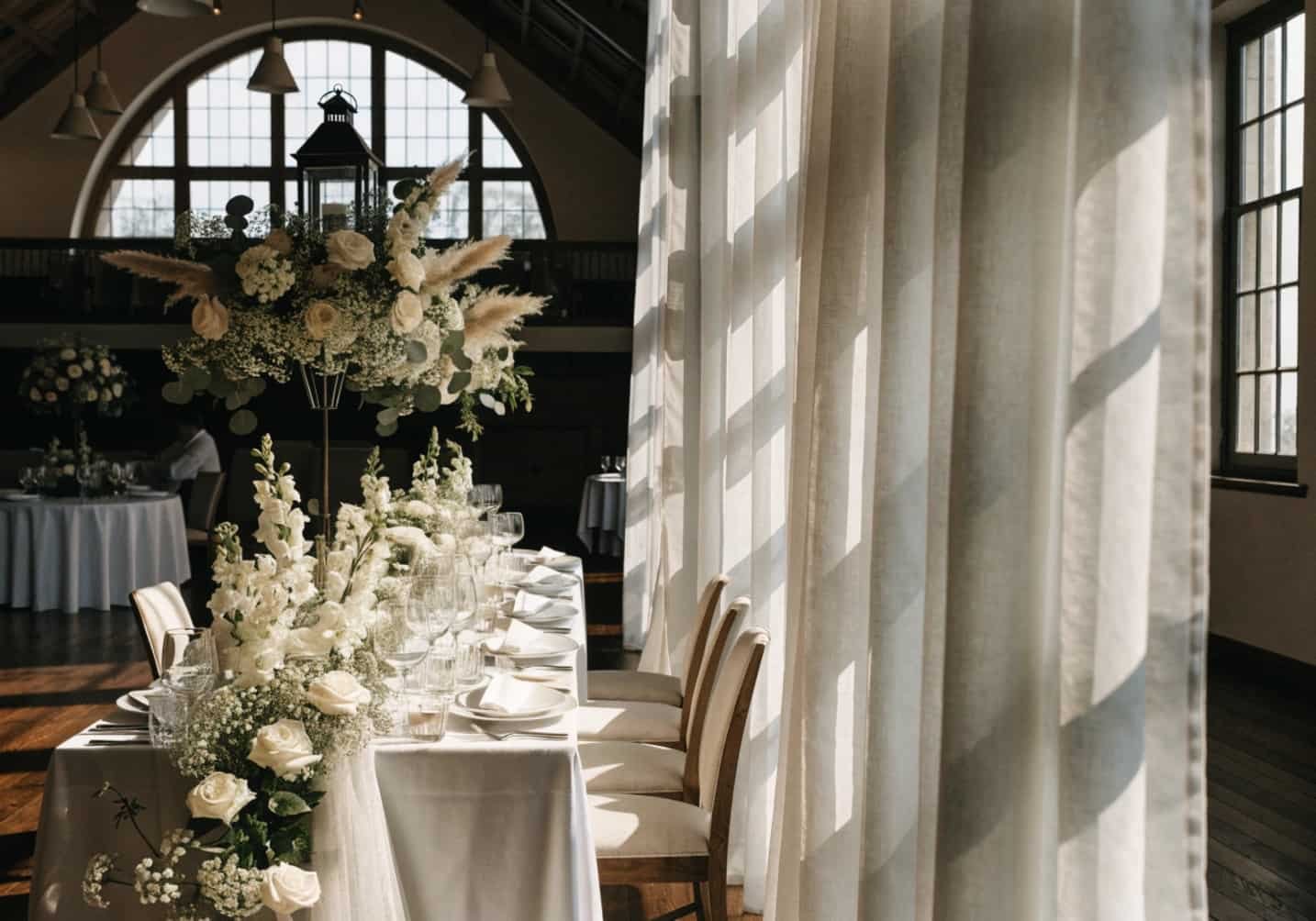
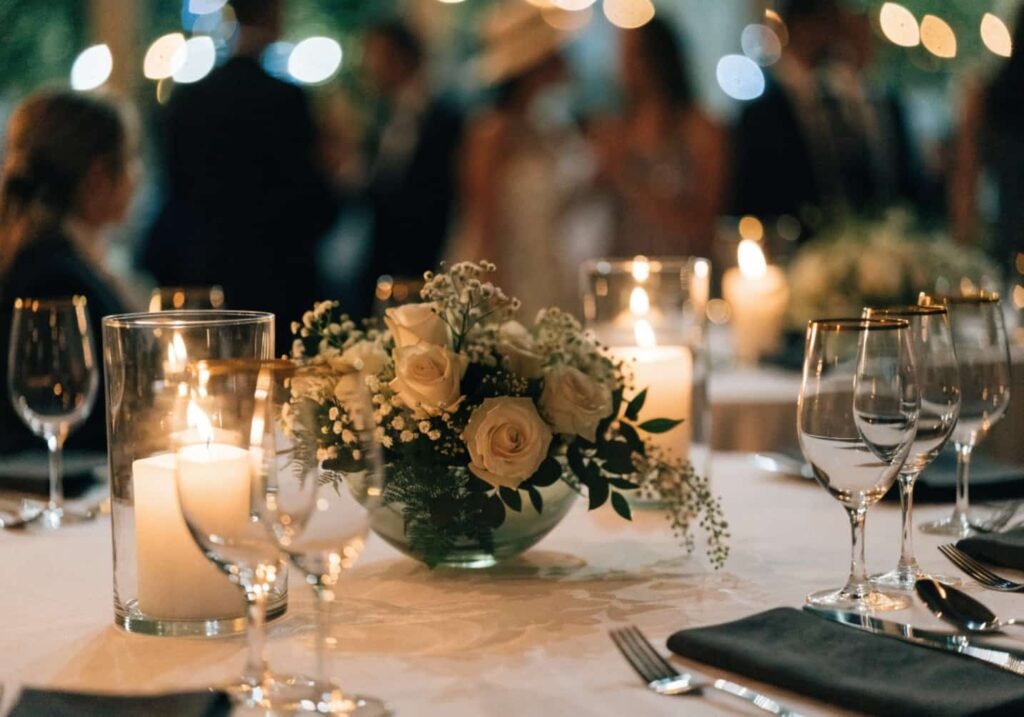
The rule florists actually use: nothing above 14 inches or below 6 inches in the direct sightline zone. Tall arrangements need a slim vase neck so people can see through the stems, not around a solid mass of foliage. Low arrangements — a cluster of votive candles, a shallow bowl of floating flowers, a runner of greenery — avoid the problem entirely and cost less.
Mixing 2-3 centerpiece heights across different tables (not each table having an identical version) also reads as more intentional and higher-end in photos, even though it costs the same or less than uniform repetition.
Choosing the Right Flowers
Seasonality changes price more than any other single factor in flower decor — sometimes by 50% or more for the same stem. Roses and carnations are available and reasonably priced almost year-round. Peonies, on the other hand, have a narrow window (roughly April to June in most regions) and cost significantly more outside it because they’re flown in.
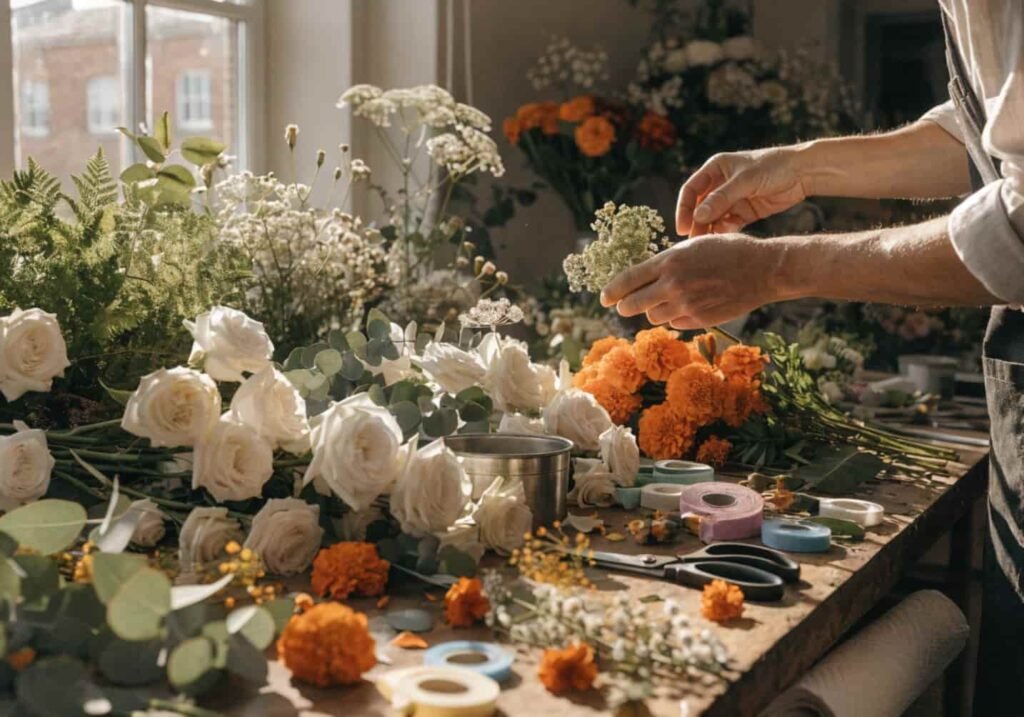
A trick worth knowing: mixing 70% locally-available, in-season flowers with 30% “statement” imported flowers gives you the visual richness of an expensive arrangement without the full expensive-arrangement bill. Put the imported flowers where cameras focus — the bouquet, the mandap centerpiece — and use local flowers for volume everywhere else, like garlands and aisle decor.
Also worth asking your florist directly: which flowers wilt fastest in your venue’s climate. Tuberoses and gardenias brown quickly in heat and direct sun; marigolds and orchids hold up far better through a long outdoor ceremony.
Using Fabric and Drapery Effectively
Drapery is the cheapest square-footage of visual impact you can buy at a wedding, but it’s also the easiest to get wrong — sagging, wrinkled, or hung too tight and looking stretched rather than soft.
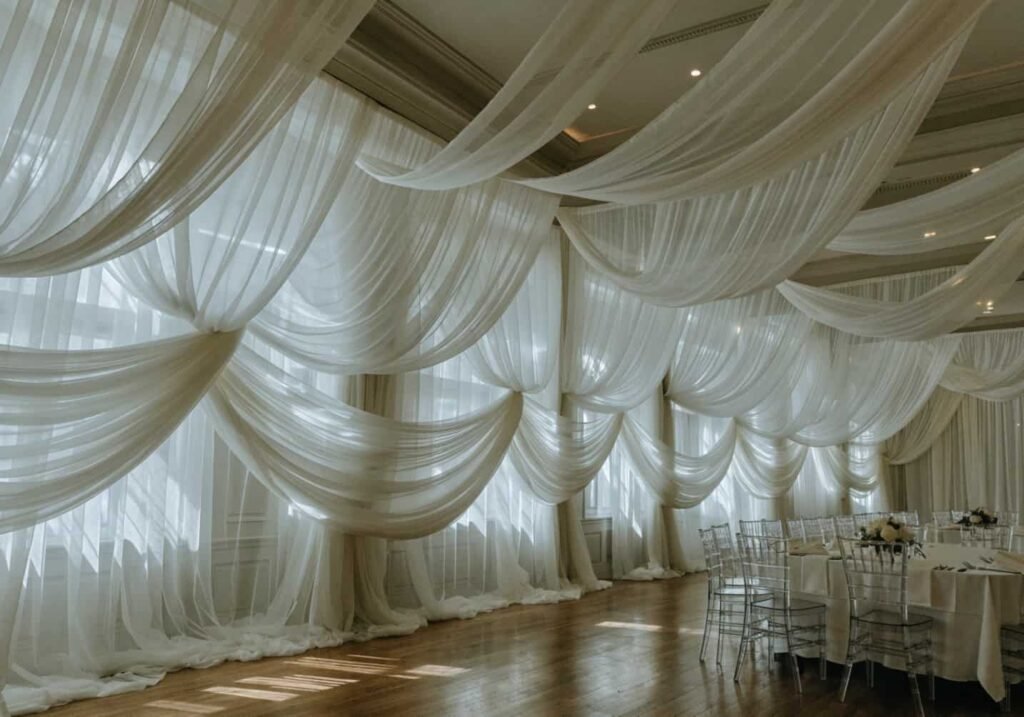
The trick is fullness, not fabric quality. A drape hung at 1.5x to 2x the width of the space it’s covering (so a 10-foot backdrop uses 15-20 feet of fabric) creates natural folds that catch light and shadow. Hung flat at 1:1, even expensive silk looks like a bedsheet. Georgette and chiffon are the go-to budget fabrics because they hold folds well and photograph as soft and airy; heavier fabrics like velvet look richer but need proper rigging to avoid pulling at the hanging points.
Ceiling drapery — swathes of fabric across the top of a hall — genuinely changes how a rented banquet space feels, because it hides exposed ceiling fixtures and lowers the visual height of a room that often feels too tall and empty otherwise.
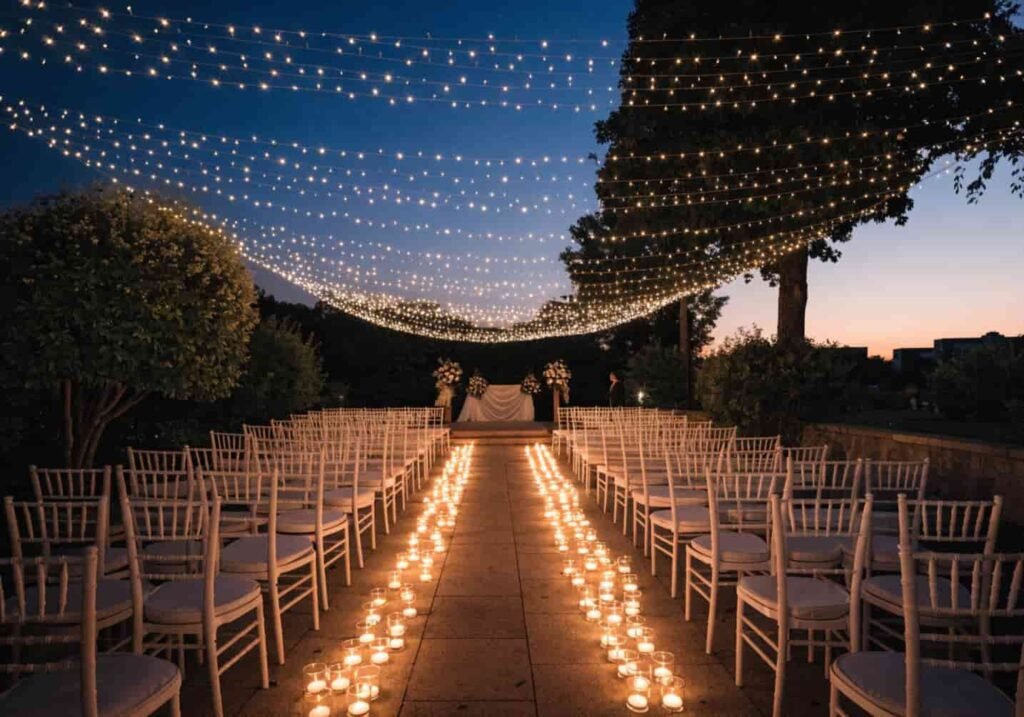
Fairy Lights and Candles for Ambiance
Lighting decisions matter more after sunset than any floral choice, and most people budget for it last, which is backwards.
Warm white (2700K-3000K) fairy lights read as romantic; cool white or daylight-toned string lights (above 4000K) read as clinical, almost like construction lighting, in wedding photos. This one number is worth checking on the product listing before you buy or rent.
For candles, real flame creates a flicker and warmth LED candles still can’t fully replicate, but many venues restrict open flame indoors for insurance reasons — always confirm this before ordering. If real candles aren’t allowed, flameless LED pillar candles with a built-in flicker function are close enough that guests rarely notice from normal viewing distance, and they solve the wind problem entirely for outdoor setups.
DIY Decor Ideas That Save Money
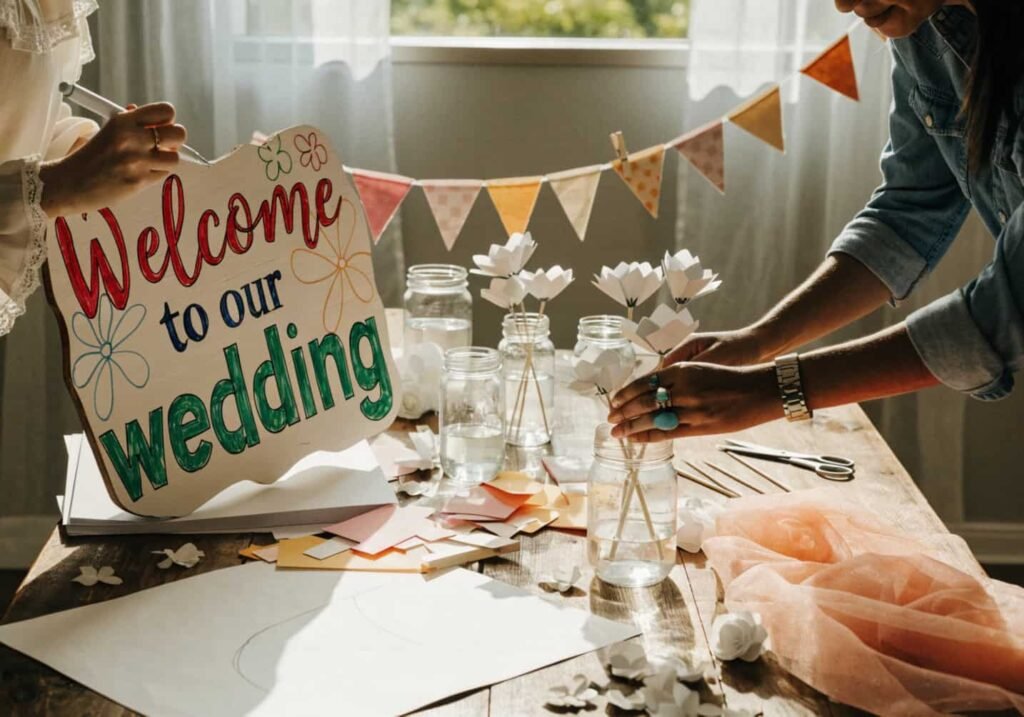
DIY decor saves real money on labor-intensive but low-skill items — think mason jar candle holders, hand-painted welcome signs, paper flower garlands, or fabric bunting. It rarely saves money on anything requiring rigging, height, or structural support, because a failed DIY backdrop that collapses mid-event costs more in stress and last-minute rental fees than just hiring it out originally.
A good rule: DIY the things guests hold or take home — favor boxes, place cards, small centerpiece jars. Rent or hire out the things guests stand under or walk past — arches, stage structures, hanging installations.
One detail that’s genuinely underused: buying decor items that double as functional items afterward — wooden crates that become shelving, string lights that go up in a bedroom, glass jars that become kitchen storage — effectively lowers the real cost of decor since it isn’t a single-use expense.
Theme-Based Decoration Inspiration
A theme works best as a restraint, not an addition — it should tell you what to say no to, more than what to add. A “rustic” theme means saying no to metallic sequins and crystal chandeliers, even if they’re beautiful, because mixing them breaks the visual language guests read instinctively.
Practical theme pairings that hold up well: rustic with burlap, wood crates, and wildflowers; minimalist with a restricted 2-color palette and negative space instead of dense florals (which also happens to be one of the cheapest themes to execute well); royal or regal with deep jewel tones, gold accents, and heavier drapery; and boho with macramé, pampas grass, and warm earth tones.
The mistake to avoid: picking a theme from a photo taken in a completely different climate or venue type. A boho desert setup with pampas grass and exposed wood looks wrong indoors in a marble banquet hall — the materials fight the space instead of working with it.
Seasonal Decor Options to Consider
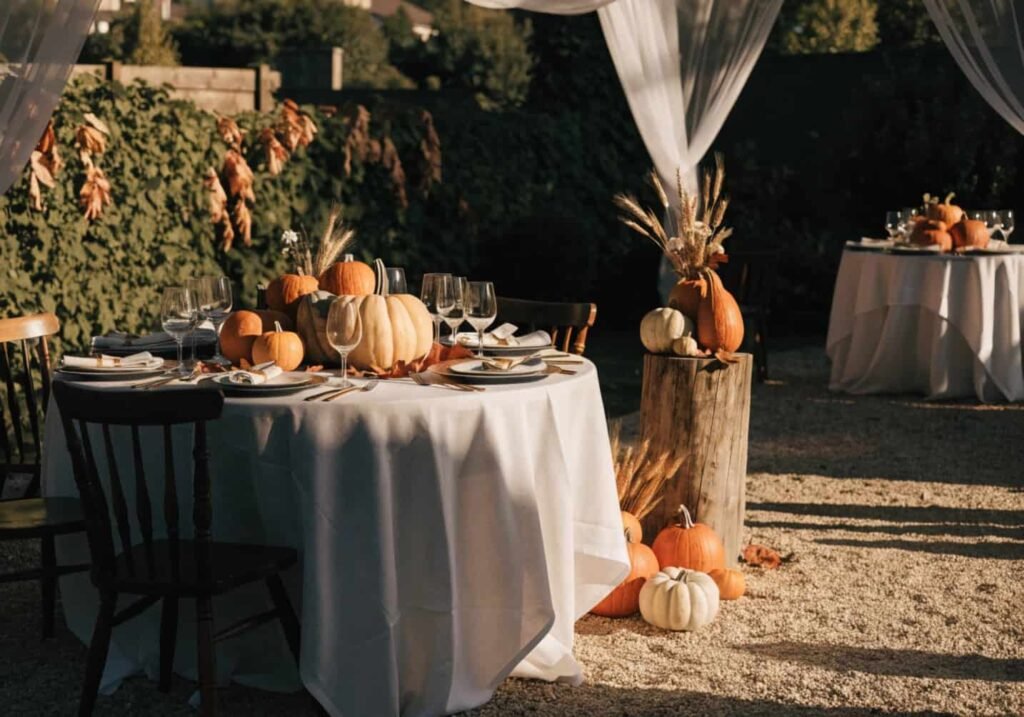
Decor should respond to what the season is actually doing to your venue, not just what flowers are available. Summer weddings need decor that survives heat — avoid dense floral installations that wilt by hour three, and lean on fans disguised as decor elements (paper fan backdrops, palm leaf arrangements) that are functional as well as decorative.
Winter and monsoon weddings need a plan for indoor-outdoor transitions — covered walkways decorated as intentionally as the main venue, so guests moving between spaces don’t hit a visually “dead” corridor. Autumn decor gets an easy win from using actual seasonal produce — pumpkins, dried leaves, wheat stalks — which costs less than flowers and photographs distinctively.
Spring is the most forgiving season decor-wise since flower availability is at its widest, but it’s also the most competitive booking season, so vendor prices for the same flowers can run higher purely from demand, not scarcity.
Adding a Photo Booth or Selfie Corner
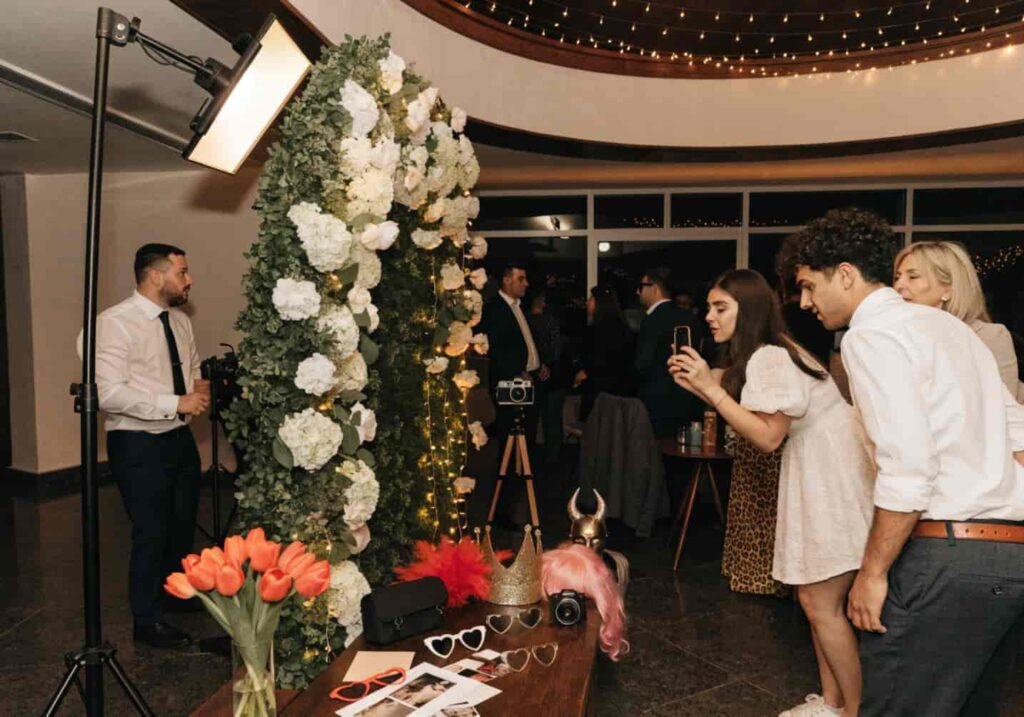
A photo booth only works if it’s placed somewhere with actual foot traffic — near the bar, the entrance, or between the ceremony and reception areas — not tucked in a corner nobody walks past. Placement matters more than how elaborate the backdrop is.
Backlighting is the detail most people skip and regret. A backdrop lit only from the front creates harsh shadows on faces in every photo; adding even one soft light source behind or beside the booth fixes this for the cost of a single extra light fixture.
Props are worth including only if they match the theme — generic novelty props (giant sunglasses, foam fingers) tend to date photos badly within a couple of years, while theme-matched props (florals, fans, signage in the wedding’s actual color palette) age much better in photo albums.
This Year’s Trending Decoration Themes
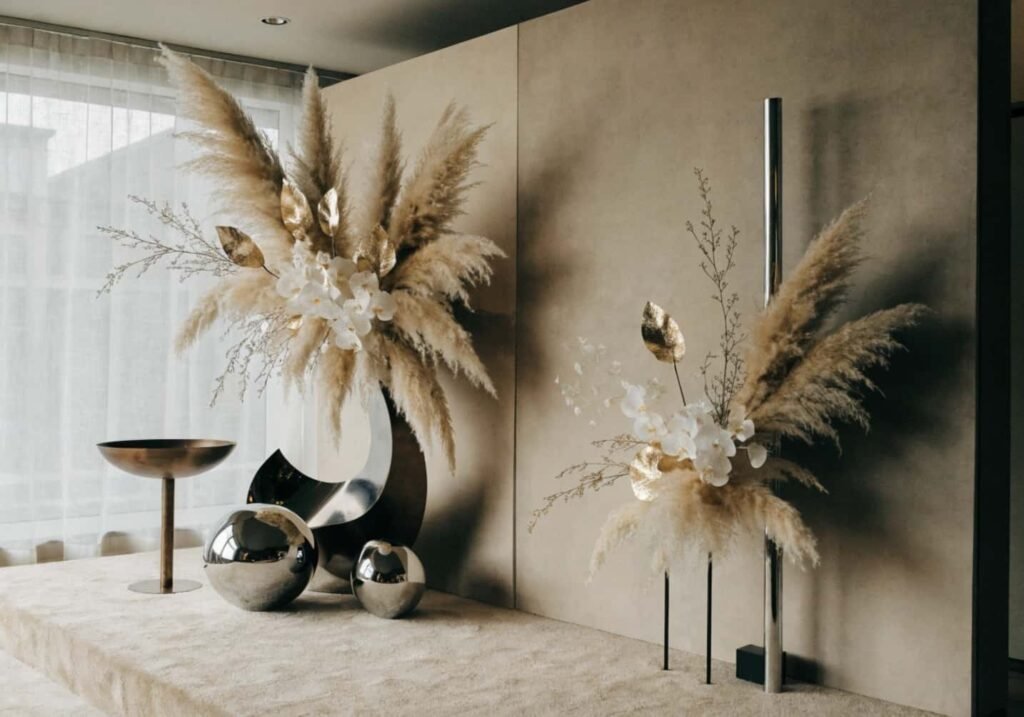
The clearest shift this year is away from dense, maximalist floral walls toward what florists are calling “structured minimalism” — fewer flowers, but arranged with visible intention, paired with sculptural elements like arched frames, ceramic vessels, or dried floral accents instead of all-fresh installations.
Muted, earthy palettes — terracotta, sage, dusty rose — are replacing the bright jewel tones that dominated a few years back, largely because they photograph better in natural light and translate well across both day and evening events. Mixed-metal accents (brass with matte black, rather than committing to gold or silver only) are also showing up more in stage and tablescape design.
The other real trend is practical, not aesthetic: more couples are asking decorators for modular setups — decor that can shift from ceremony configuration to reception configuration with minimal rebuilding — because venue turnaround windows have gotten tighter and rebuilding an entire stage in ninety minutes just isn’t realistic anymore.