17 Apartment Living Room Decor Ideas That Feel Bigger Without Drilling
Most rented living rooms feel smaller than they are. A bulky sofa eats the floor, blank white walls glare back, and the lease bans the screws and nails that would fix either problem in a house you owned.
The rooms that feel bigger follow one rule: keep every piece low, light, and lifted off the floor, then send the eye upward with height tricks that need no holes. Nothing is built in, and everything can leave with you.
These 17 living room decor ideas are made for a rented apartment, and most of them come together with basics you already own, a tension rod, or a roll of removable paper.
The Apartment Living Room Formula That Keeps Small Rooms Looking Open
- Start low and leggy: choose seating with a low back and raised legs so floor and wall stay visible around every piece.
- Keep the palette pale and warm: build on warm white, oatmeal, and light oak, then add one deeper accent color in small, movable doses.
- Use renter-safe fixings only: lean, tension, stack, and stick with removable adhesive so every change reverses in minutes with no filler or lost deposit.
- Build in one removable layer: add a throw, decal, or curtain panel you can swap or take down, so the room can change without new furniture.
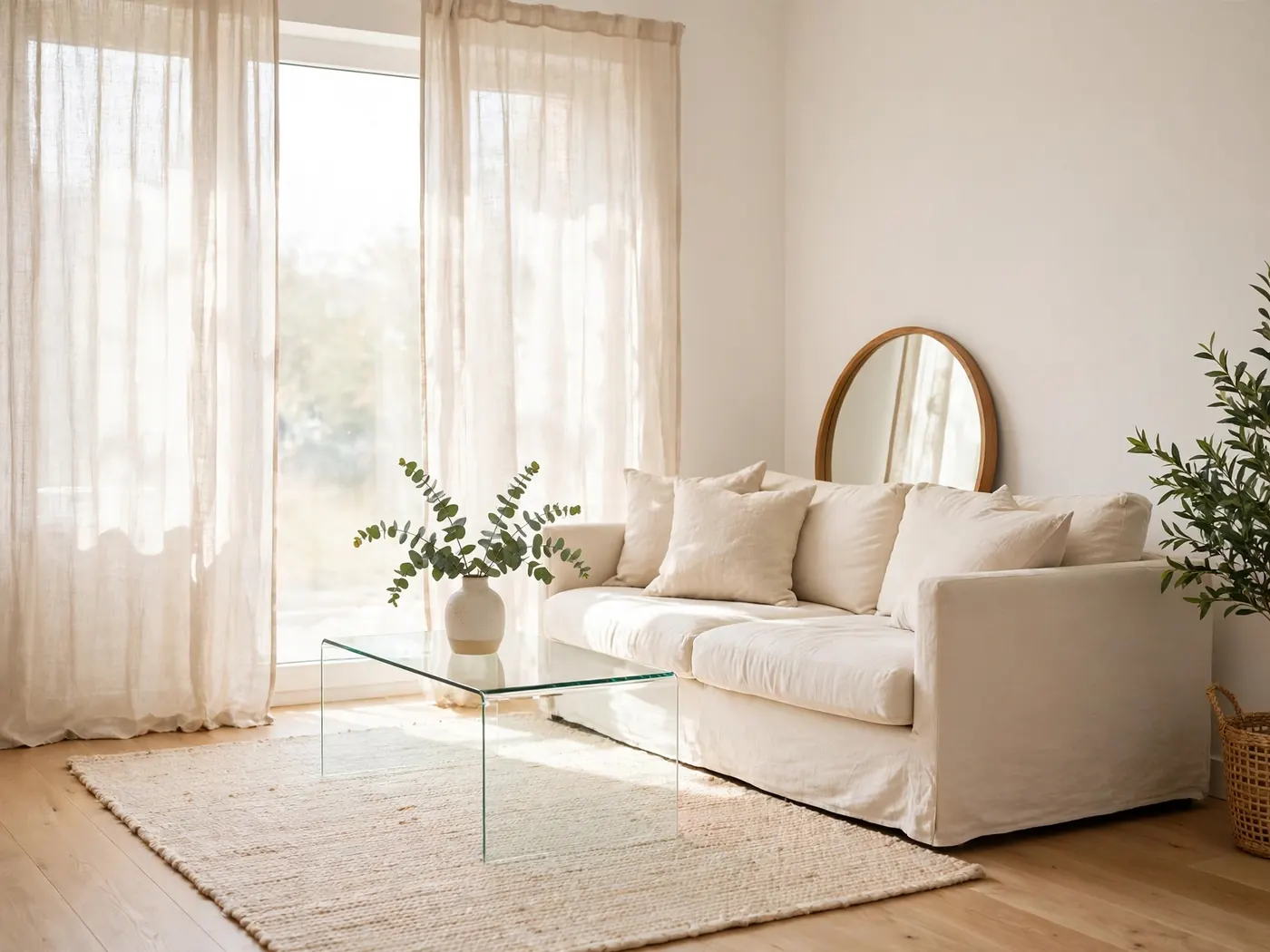
Picture an oatmeal low-back sofa on a cream jute rug, a leaning oak-framed mirror behind it, and sage linen curtains hung high on a black tension rod.
| # | Idea | Best For | Budget |
|---|---|---|---|
| 1 | A Low-Profile Sofa That Leaves Wall Above It | low-ceiling flats | $$ |
| 2 | Peel-and-Stick Wallpaper on One Wall Only | deposit-safe renters | $ |
| 3 | A Large Mirror Leaning, Never Hung | dark apartments | $$ |
| 4 | Leggy Furniture That Shows the Floor | tiny footprints | $$ |
| 5 | One Oversized Rug That Unites the Whole Room | open studios | $$ |
| 6 | Curtains Hung High on a Tension Rod | no-drill windows | $ |
| 7 | A Glass Coffee Table That Disappears | small seating groups | $$ |
| 8 | Removable Wall Decals as the Art Layer | blank white walls | $ |
| 9 | A Slim Console Behind the Sofa as a Divider | studio zoning | $ |
| 10 | Matching Baskets That Hide the Everyday Clutter | open storage | $ |
| 11 | A Single Tall Plant in the Dead Corner | awkward corners | $ |
| 12 | Fold-Down Wall Desk for a Work Corner | work-from-home renters | $$ |
| 13 | Light Linen Throws That Keep the Sofa Bright | dark sofas | $ |
| 14 | Stacked Art Books as a Side Table | no-room-for-tables | $ |
| 15 | A Plug-In Sconce Pair, No Electrician Needed | dim rentals | $$ |
| 16 | Clear Acrylic Shelves for a Floating Display | collectors | $ |
| 17 | A Room-Divider Curtain for Sleeping Zones | studio flats | $ |
1. A Low-Profile Sofa That Leaves Wall Above It
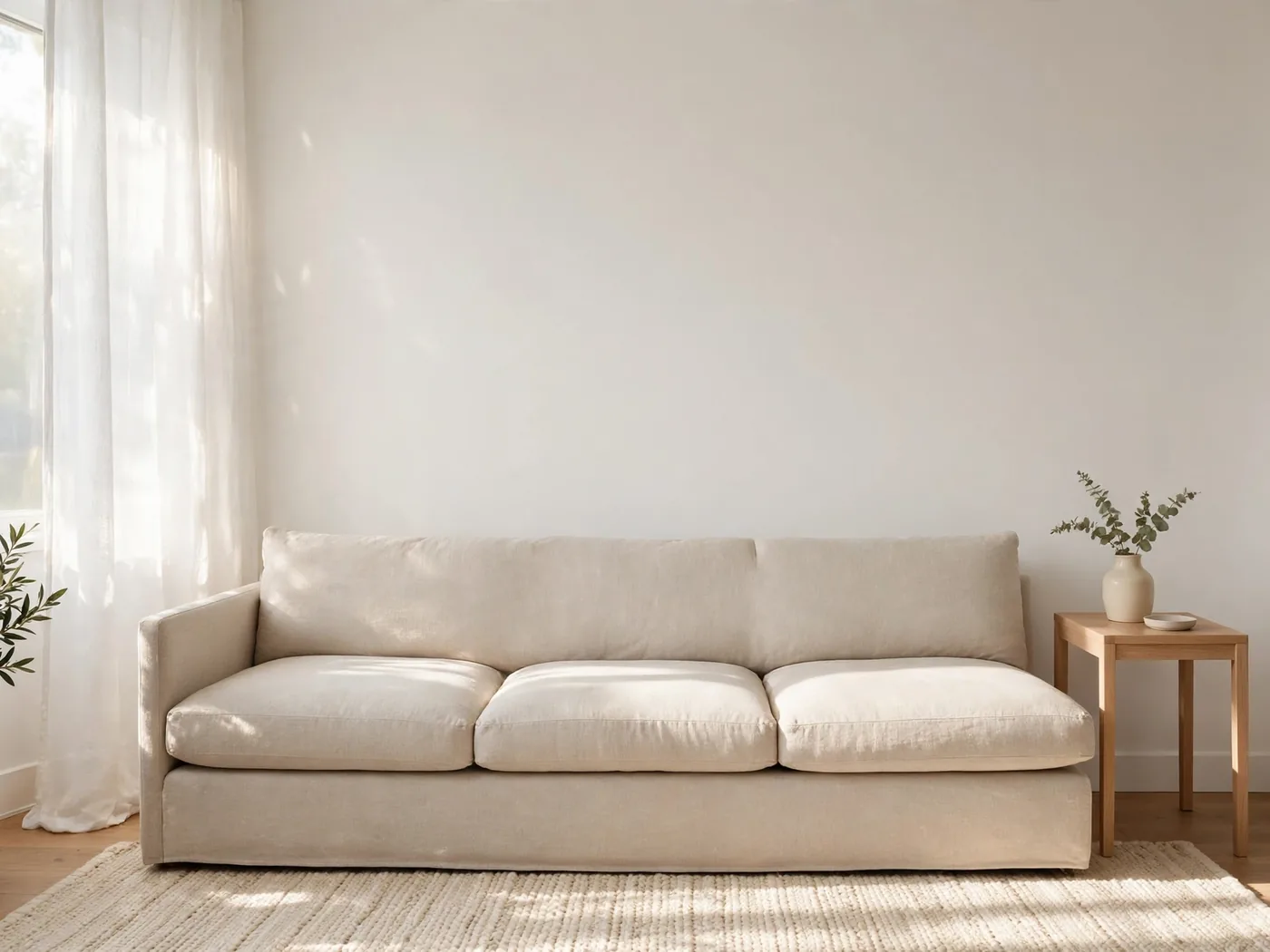
Choose a 78-inch sofa with a back no higher than 28 inches, in oatmeal linen with slim walnut legs. Push it against the longest wall and leave at least 20 inches of bare wall above the back cushions, so the room reads taller.
Get the look:
- Main piece: 78-inch low-back sofa in oatmeal linen
- Supporting piece: 16-inch walnut side table at one end
- Texture or material: cream woven jute rug under the front legs
- Finishing touch: one rust cushion, 18 by 18 inches
If your ceiling feels low, this single swap lifts it.
2. Peel-and-Stick Wallpaper on One Wall Only
Cover only the wall behind the sofa with peel-and-stick paper in a soft sage and cream stripe, or a faint off-white botanical print. One patterned wall gives the room a focal point, while the other three walls stay plain and light, so the space never closes in. Smooth each panel down with a credit card as you go.
Color note: Keep the pattern’s darkest tone one shade deeper than your sofa fabric, so the wall and seating read as one calm layer instead of competing blocks.
Renters who worry about the deposit can peel it off in one afternoon, and the wall underneath stays untouched.
3. A Large Mirror Leaning, Never Hung
Lean a full-length mirror, roughly 24 by 64 inches, against the wall opposite your main window, tilted back at a slight angle on a thin non-slip mat. A slim oak or matte black frame keeps it tailored, and the glass throws daylight across the floorboards all afternoon without a single screw. Rest its top edge flat and check the tilt from the doorway.
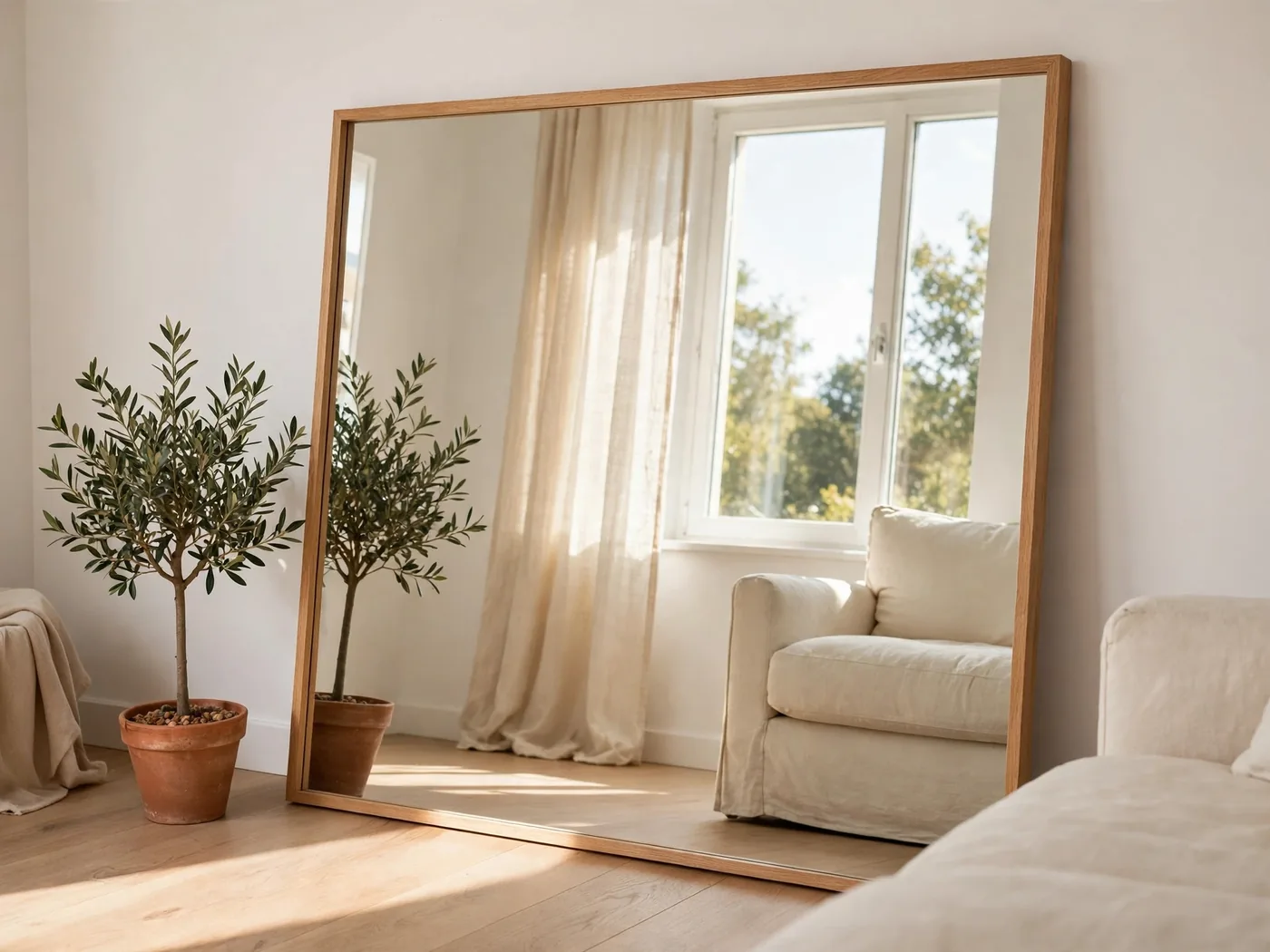
Texture note: Pair the smooth glass with rough neighbors, like a woven seagrass basket and a nubby wool throw, so the reflection feels warm rather than showroom cold.
4. Leggy Furniture That Shows the Floor
Swap solid, skirted pieces for furniture on legs at least 6 inches high: a mid-century style armchair in pale grey tweed, a light oak TV stand, a narrow side table in brushed brass. When you can see floor running underneath everything, your eye reads the full footprint of the room instead of a series of heavy blocks.
Best for: tiny footprints where every visible inch of floor makes the room feel wider.
Start with the biggest piece first, because the armchair or stand you raise changes the whole sightline.
5. One Oversized Rug That Unites the Whole Room
Lay one large rug, 8 by 10 feet in a small room, in a warm cream flatweave with a subtle border stripe. It should run under the front legs of the sofa and both chairs, with 8 to 12 inches of bare floor left around the edges, so the seating reads as one island instead of scattered pieces on wood.
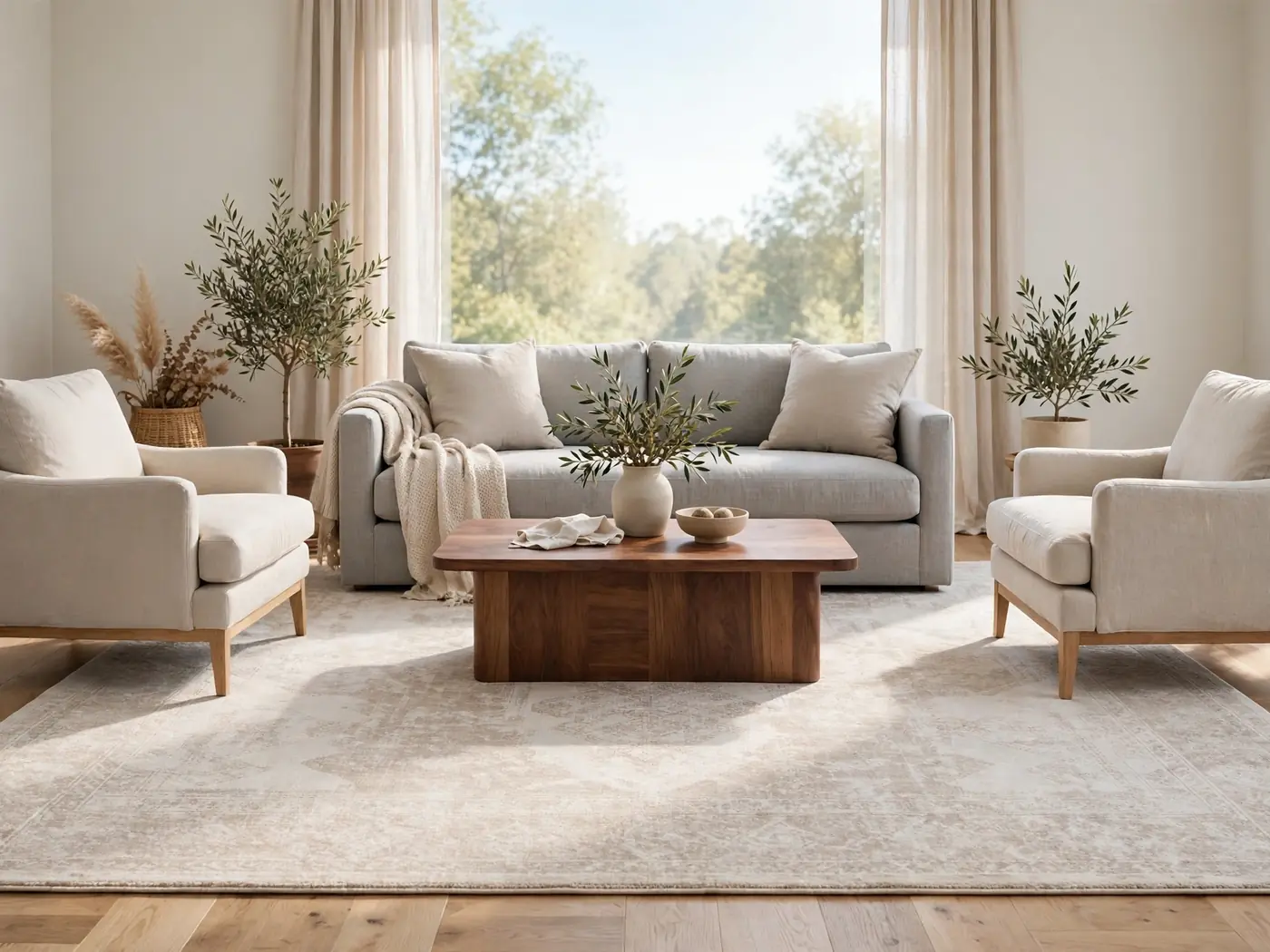
Space note: If the rug almost touches every wall, it is too big; that bare border of floor is what makes the room’s true size believable.
6. Curtains Hung High on a Tension Rod
Fit a black or brushed nickel tension rod inside the window recess, as high as it will sit, and hang full-length linen curtains in warm white so the hems just kiss the floor. Mounting the rod 4 to 6 inches above the frame line tricks the eye into reading a taller window and a higher ceiling behind it.
Fit check: Measure the recess width at the top, middle, and bottom first, and size the rod to the narrowest point so it grips without slipping.
On moving day the whole setup twists down in seconds, which is exactly the point.
7. A Glass Coffee Table That Disappears
Set a rectangular glass coffee table, about 40 by 20 inches, in the center of the seating group, its clear top on a slim light oak or chrome frame with rounded corners for tight walkways. Because you can see the rug straight through it, the floor plan stays unbroken, and the table still holds a tray, two coasters, and a small stack of magazines.
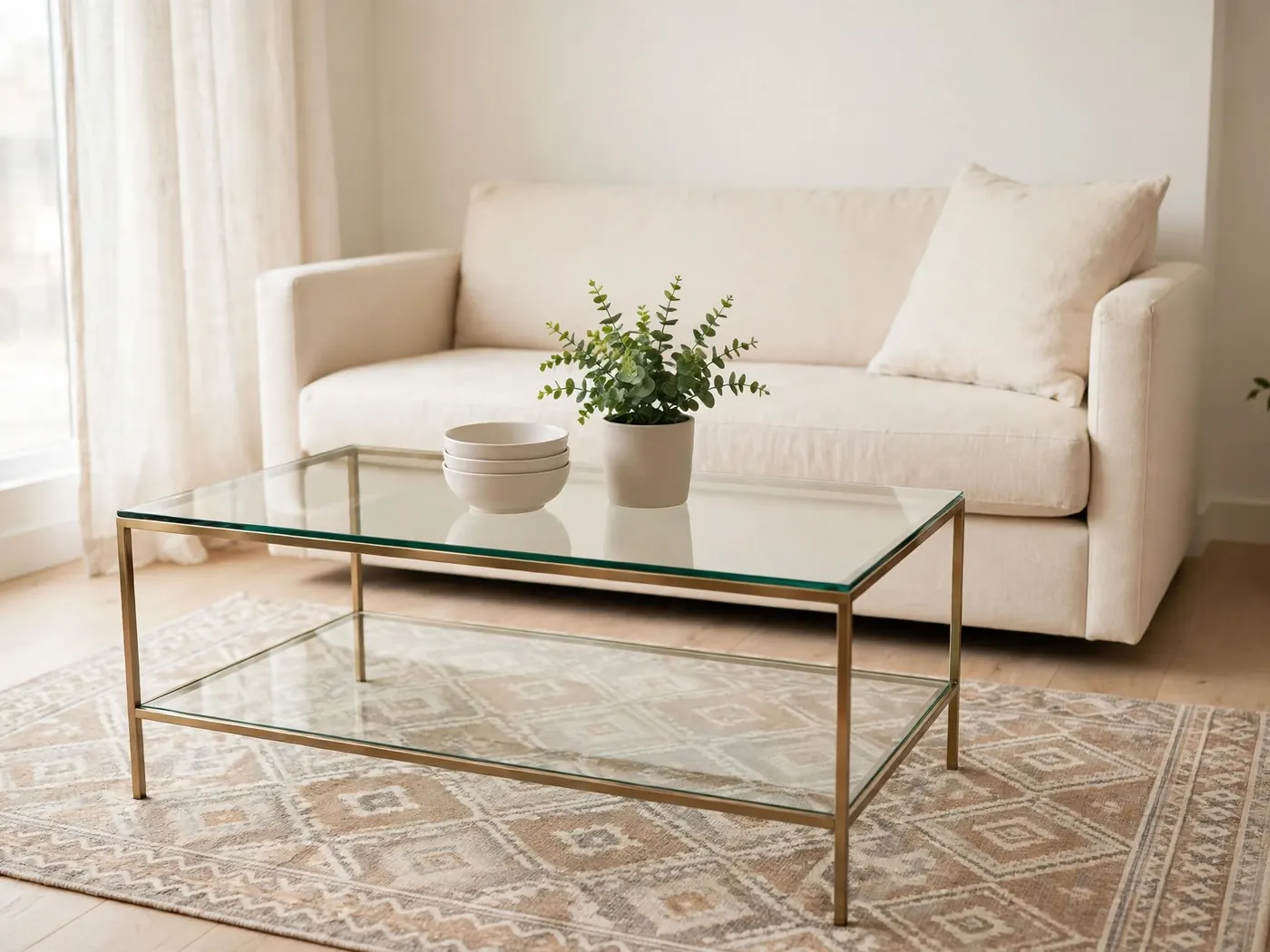
Style note: Style the top with one low, wide object, like a shallow ceramic bowl, so the surface looks deliberate instead of empty and forgotten.
8. Removable Wall Decals as the Art Layer
Arrange a set of matte vinyl decals, soft arches or thin line-art leaves in terracotta and sand, in a loose gallery cluster above the sofa. Space them 3 to 5 inches apart at eye level, stepping the arrangement up toward the corner, so the wall gains art, rhythm, and height with nothing heavier than a sticker.
Easy swap: Trade the arches for simple black line drawings when you want a sharper, more graphic mood in the same spots.
Anyone tired of staring at landlord white gets a gallery wall that peels away clean when the lease ends.
9. A Slim Console Behind the Sofa as a Divider
Float the sofa a foot off the wall and slide a slim console, 48 inches long and 10 inches deep in light oak, behind it. The top holds a small lamp and a stack of books, the lower shelf takes baskets, and it quietly marks where living ends and sleeping begins.
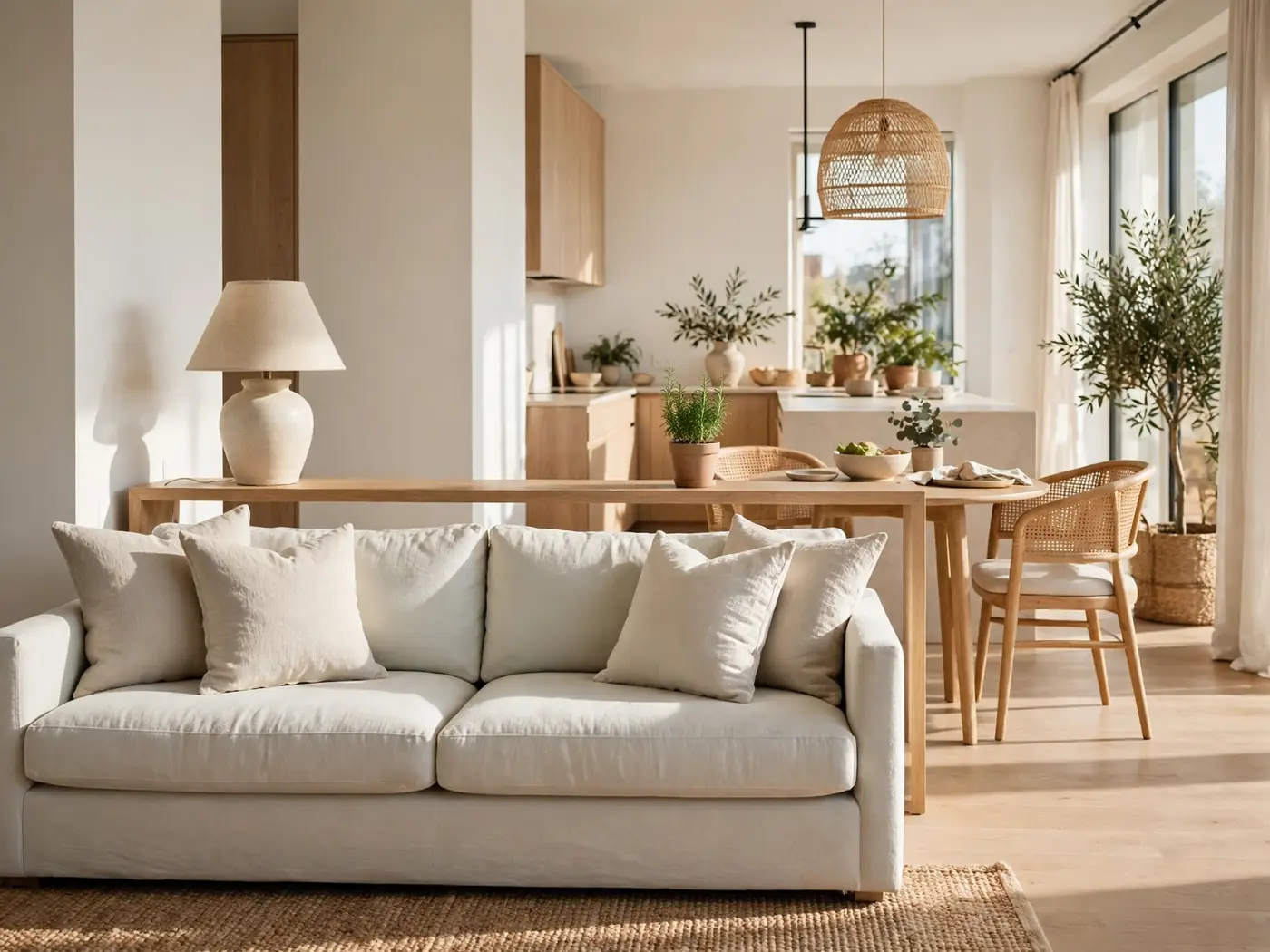
For more layouts, these console table with storage ideas show one narrow piece working in several rooms.
Seasonal swap: In winter, dress the console with a pine garland and two candle jars; in summer, clear it back to a single vase of tall grasses.
10. Matching Baskets That Hide the Everyday Clutter
Line up three matching seagrass baskets, each about 14 inches wide with cotton liners, along the bottom shelf of your stand or beside the sofa. One takes remotes and chargers, one takes blankets, and one catches mail and keys, so the everyday mess disappears behind one repeated texture instead of ten different containers.
Why it works:
- Matching shapes make stored clutter read as one calm design choice.
- Soft sides squeeze into gaps that hard boxes cannot use.
- Lids and liners keep small items hidden but still easy to grab.
When everything has a basket, the room stays photo-ready on ordinary Tuesdays too.
11. A Single Tall Plant in the Dead Corner
Fill the empty corner beside the sofa with one tall plant, a fiddle leaf fig or olive tree around 5 feet high, in a matte stone-effect pot raised on a low wooden stand. The height pulls the eye up into space you were not using, and the green softens the hard corner where two bare walls meet. In a rental, felt pads under the stand keep the floor mark-free and the deposit safe.
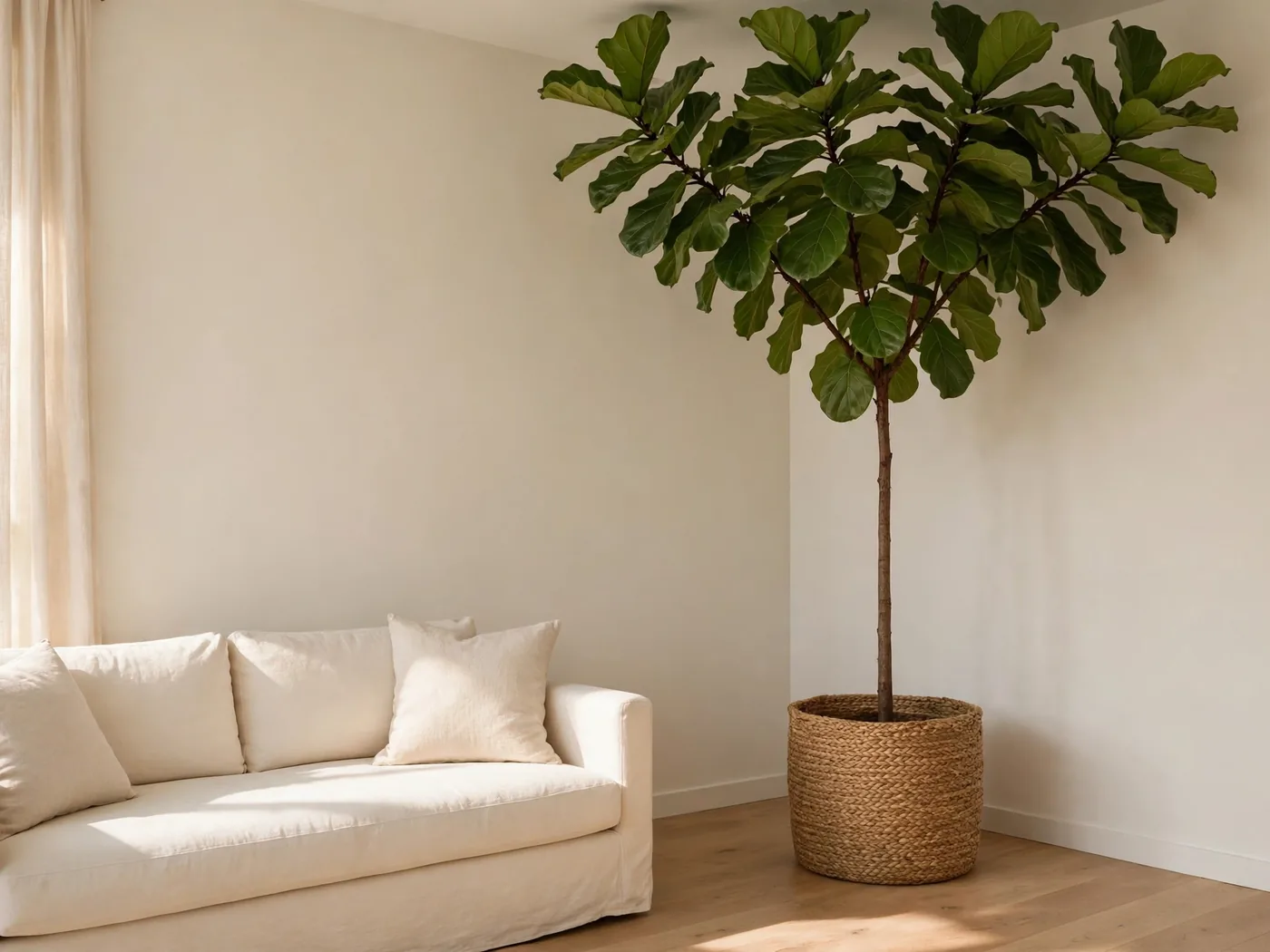
Budget note: A good faux olive tree costs less than a year of replaced real plants in a dark corner, and nobody can tell from the sofa.
12. Fold-Down Wall Desk for a Work Corner
Mount a fold-down desk, a 32 by 20 inch birch panel on removable heavy-duty brackets, on the short wall beside a window, or choose a free-standing folding version if your lease bans brackets entirely. Paint it warm white to match the wall, pair it with a slim grey chair, and fold the panel flat when work ends.
The formula: birch fold-down desk + slim grey chair + one clip-on lamp
If you work from the sofa now, a corner that closes away at five o’clock gives your evenings back.
13. Light Linen Throws That Keep the Sofa Bright
Drape two throws in washed linen, one warm white and one pale oatmeal, over the arms and back of a dark sofa, letting each fall in a long, bright fold. The dark base still grounds the room, but the eye lands on the bright layers first, so the seating block feels half its weight.

Get the look:
- Main piece: warm white washed linen throw, 50 by 60 inches
- Supporting piece: pale oatmeal throw folded lengthwise over one arm
- Texture or material: loose open weave with a short fringe edge
- Finishing touch: one small lumbar cushion in faded terracotta
14. Stacked Art Books as a Side Table
Stack three or four large hardcover art or travel books, each at least 11 by 14 inches, beside the sofa until the pile stands about 20 inches high. Square the spines in cream, black, and one muted red, set a small coaster and reading lamp on top, and you have a side table that costs nothing and moves in one trip.
Color note: Keep the top book pale, because a dark cover at lamp height pulls the corner of the room down visually.
Book lovers with no floor space to spare get storage and a table in the same square foot.
15. A Plug-In Sconce Pair, No Electrician Needed
Hang two plug-in wall sconces with matte black arms and warm white fabric shades, one each side of the sofa or mirror, using removable adhesive hooks rated for the weight. Set the shades about 60 inches from the floor. Run each cord straight down behind the furniture, switch them on at the socket, and the room gains the layered, hotel-style light that overhead bulbs never give.
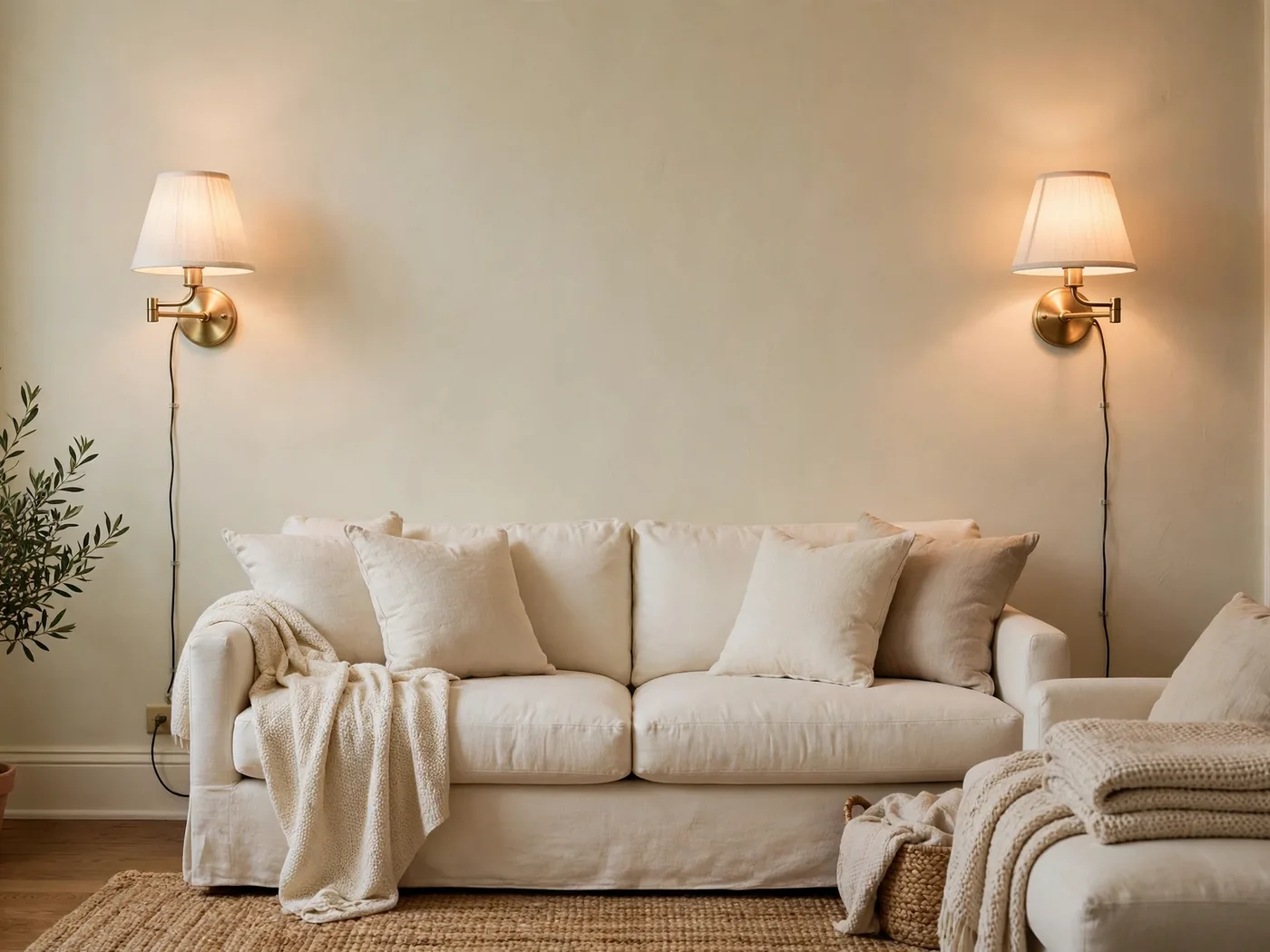
Texture note: Fabric shades soften the light against hard rental walls, while the black metal arms add just enough contrast to feel finished.
16. Clear Acrylic Shelves for a Floating Display
Fix two clear acrylic ledge shelves, each 24 inches long, to the wall above a console or beside the window with removable strips rated for frames. Line them with small ceramics, a trailing pothos in a white pot, and two leaning art prints in thin black frames, and the display floats with almost no visual weight of its own. For more layering moves like this, browse these decorating ideas for the home.
Best for: collectors who want pieces visible without heavy bookcases eating the floor.
17. A Room-Divider Curtain for Sleeping Zones
Stretch a spring tension rod or a ceiling-to-floor wire across the studio at the foot of the bed zone, and hang two panels of warm white linen, each 54 inches wide, so they meet in the middle. Drawn at night, the curtain gives the bed its own room; opened by day, it stacks into a soft column that takes almost no space.
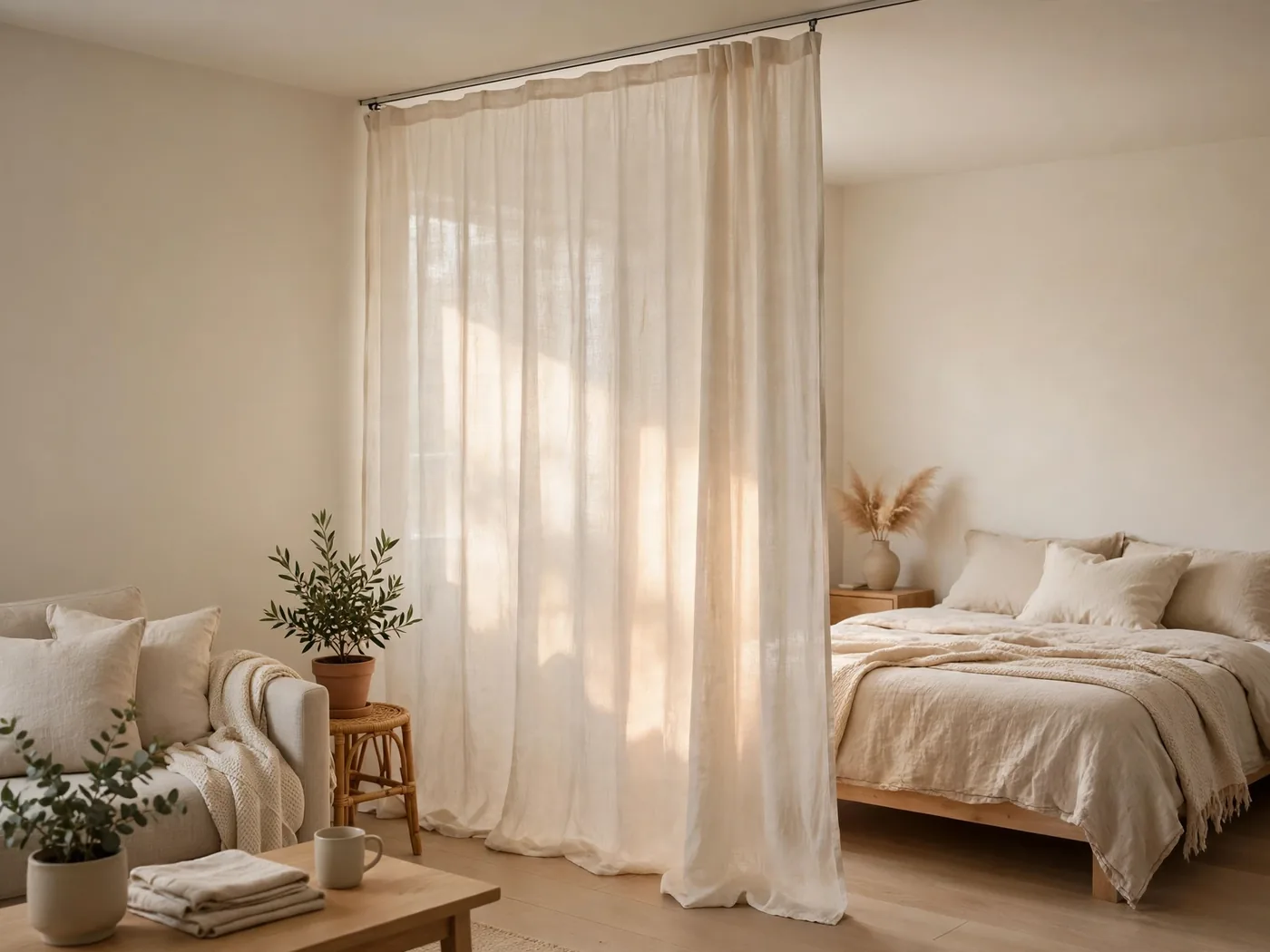
Space note: Leave 12 inches between the curtain line and the sofa back, so both zones keep a clear walking path and neither feels squeezed.
Studio dwellers who host friends can close the bed away in ten seconds, and the room instantly looks intentional.
None of these ideas needs a drill, a landlord’s permission, or a free weekend to undo. Start with the one change your room asks for loudest, live with it for a week, and add the next layer only when the first one feels like it was always there.