27 Decorating Ideas for the Home That Add Layers Without Big Spending
Most rooms do not look unfinished because they lack furniture. They look unfinished because everything sits flat and separate — a sofa, a rug, a lamp, none of them talking to each other — and buying one more thing only adds to the pile.
The rooms that feel collected are built in layers instead: a calm base, one color repeated on purpose, rough textures set against smooth ones, and a single focal point doing the talking. The same layering logic behind good living room decor ideas works in every room of the house.
Here are 27 decorating ideas that add those layers one at a time. Most cost nothing at all, and nearly all of them can be recreated with basics you already own.
The Layering Formula That Keeps Decorated Rooms Looking Collected
- Start with a calm base: keep the big pieces — sofa, rug, curtains — in quiet neutrals so the layers you add can actually be seen.
- Repeat one color and one texture: echo a single accent color in three places and pair every smooth surface with something rough beside it.
- Style for real life: every layer has to survive daily use, so choose washable fabrics, lidded storage and pieces that can be moved in minutes.
- Keep one layer removable: throws, cushions and rotated objects are the flexible layer you can swap with the season instead of redecorating.
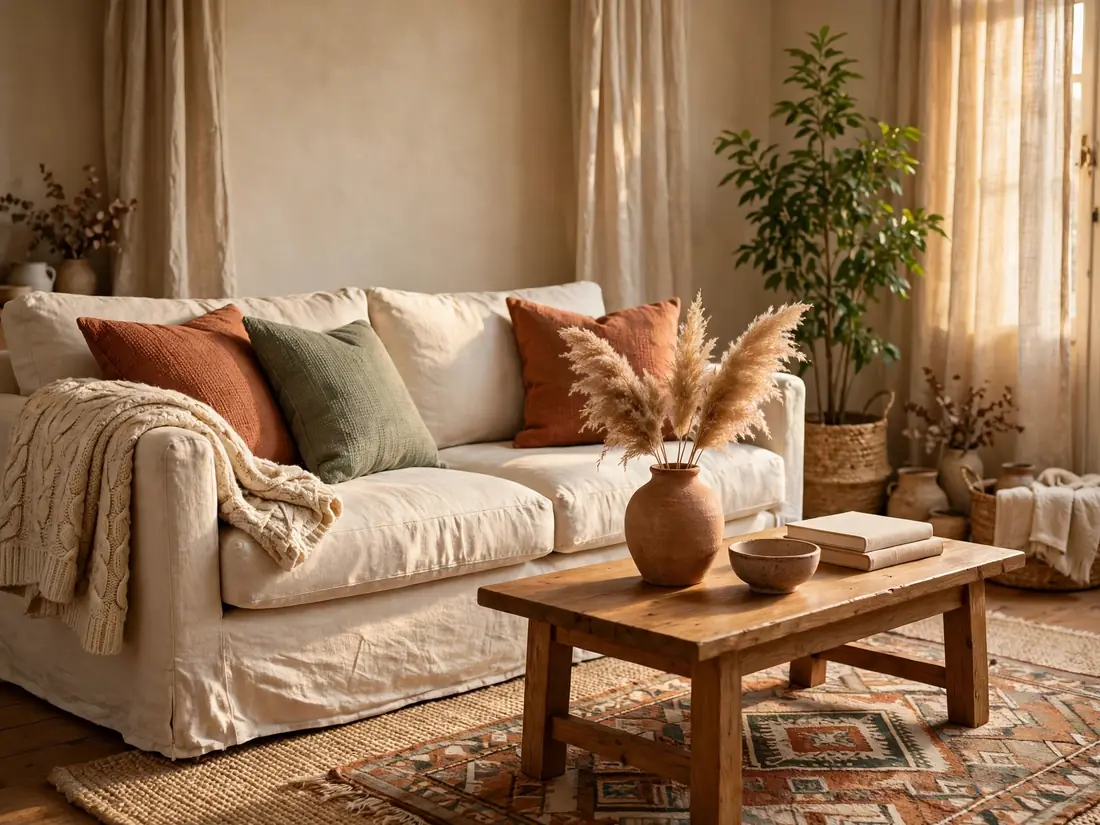
For example, an oatmeal linen sofa on a natural jute rug becomes a layered corner the moment you add a rust cushion repeated in a stoneware bowl and a framed print, a folded cream throw over one arm, and a trailing pothos on the side table.
| # | Idea | Best For | Budget |
|---|---|---|---|
| 1 | Group Objects in Threes at Different Heights | every shelf | $ |
| 2 | Echo One Color in Three Places in the Room | pulled-together rooms | $ |
| 3 | Layer a Small Rug over a Large Plain One | cold floors | $$ |
| 4 | Style a Tray on Every Flat Surface | styling beginners | $ |
| 5 | Lean Art Instead of Hanging It | commitment-free walls | $ |
| 6 | Mix One Shiny Surface into Matte Rooms | flat-looking rooms | $ |
| 7 | Stack Books Horizontally as Display Risers | book owners | $ |
| 8 | Hang Curtains at Ceiling Height | short windows | $$ |
| 9 | Repeat One Metal Finish Through the Room | mixed-hardware homes | $ |
| 10 | Add a Plant at Three Heights: Floor, Table, Shelf | lifeless rooms | $$ |
| 11 | Use Baskets as the Room’s Hidden Drawers | clutter-prone rooms | $ |
| 12 | Create One Focal Point and Quiet Everything Else | busy rooms | $ |
| 13 | Fold Throws with the Fringe Showing | sofa styling | $ |
| 14 | Follow the Two-Pillow-Per-Seat Formula | sofa owners | $ |
| 15 | Rotate Decor Monthly Instead of Adding More | over-decorated rooms | $ |
| 16 | Bounce Light with a Mirror Opposite a Window | dark rooms | $ |
| 17 | Style Shelves by Thirds: Books, Objects, Air | bookshelves | $ |
| 18 | Frame Doorways with Paint for Depth | plain hallways | $ |
| 19 | Pull Furniture off the Walls by a Hand’s Width | character seekers | $$ |
| 20 | Give Every Room One Black Accent | pale rooms | $ |
| 21 | Swap Hardware Before Replacing Furniture | tired kitchens | $ |
| 22 | Use Scent as an Invisible Layer | welcoming homes | $ |
| 23 | Repeat a Pattern at Two Scales in the Room | seasonal decorators | $ |
| 24 | Hang One Oversized Piece Instead of Many Small | gallery-wall fatigue | $$ |
| 25 | Match Wood Tones Within Two Shades | mixed-wood rooms | $ |
| 26 | Style the Top of Every Cabinet and Armoire | tall furniture | $ |
| 27 | Light Rooms in Three Layers: High, Middle, Low | evening rooms | $$ |
1. Group Objects in Threes at Different Heights
Walk to any shelf, mantel or side table and rebuild what is already there into a trio: one tall piece, one medium piece, one low piece. A 30 cm ceramic vase in matte sage, a stack of two cloth-bound books laid flat, and a small brass dish in front reads as a deliberate composition instead of three random objects. Keep a finger’s width of empty space between the pieces so each one casts its own small shadow, and align the group to one edge rather than the centre.
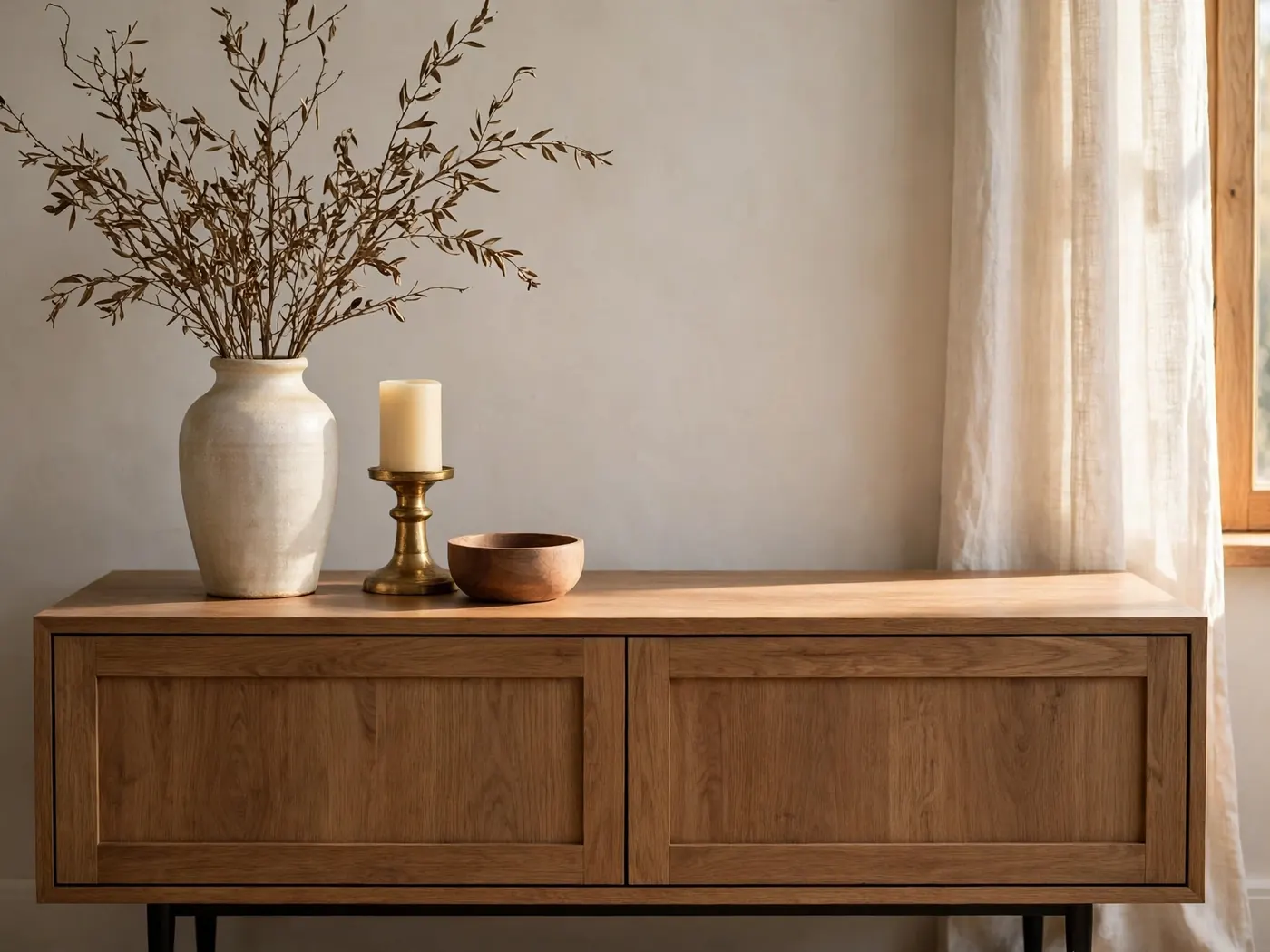
Budget note: This costs nothing at all — every piece comes from what you already own, just rearranged into a tighter, more deliberate group.
2. Echo One Color in Three Places in the Room
Pick one accent color already hiding in your room — the rust thread in a rug, the ochre stripe in a cushion — and repeat it in exactly three spots. A rust linen cushion on the sofa, a rust-glazed stoneware bowl on the coffee table, and a rust-framed print on the opposite wall pull the whole room into one conversation. Three repeats read as a plan; a fourth starts to look like a theme park, so stop at three and let neutrals fill the gaps between them.
The formula: rust linen cushion + rust-glazed stoneware bowl + rust-framed print
Once you see that triangle working, you cannot unsee how finished the whole room suddenly feels.
3. Layer a Small Rug over a Large Plain One
Start with a big, plain base rug in natural jute or flatweave wool, sized so the front legs of every seat sit on it. Over the centre, lay a smaller patterned textile rug — a 120 × 180 cm vintage-look piece in faded terracotta and indigo. The plain jute border showing on all four sides frames the pattern like a mat in a picture frame, and the double layer softens footfall on hard floors.
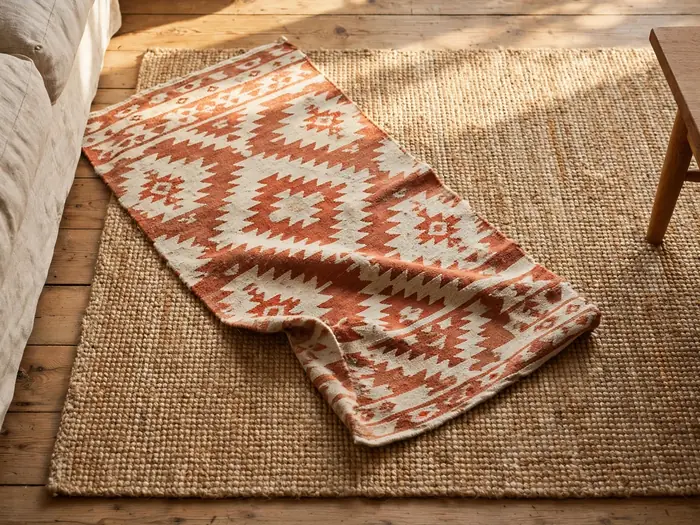
Get the look:
- Main piece: 200 × 290 cm natural jute base rug
- Supporting piece: 120 × 180 cm faded terracotta patterned rug on top
- Texture or material: rough jute beneath, soft low-pile wool above
- Finishing touch: front chair legs overlapping both layers
4. Style a Tray on Every Flat Surface
A tray turns scattered small things into one styled moment. On the coffee table, set a 40 cm round rattan tray holding a stack of two art books, a small fern in a terracotta pot, and a cream pillar candle in a glass hurricane. On the entry console, a rectangular black metal tray corrals keys, sunglasses and mail into one tidy footprint. Keep each tray about two-thirds full so the tray’s own rim still shows — that visible edge is what makes it read as styling, not storage.
Color note: Keep every tray in the same warm family — honey rattan, terracotta and blackened metal — so separate surfaces still feel related across the room.
5. Lean Art Instead of Hanging It
Skip the drill and lean your art instead. On a mantel or deep shelf, rest a large framed print — 50 × 70 cm in a thin oak frame — against the wall, then overlap its lower corner with a smaller 30 × 40 cm frame at a slight angle. On a sideboard, lean a canvas behind a lamp. The overlap creates depth a straight gallery hang never gives, and you can re-lean everything in minutes.
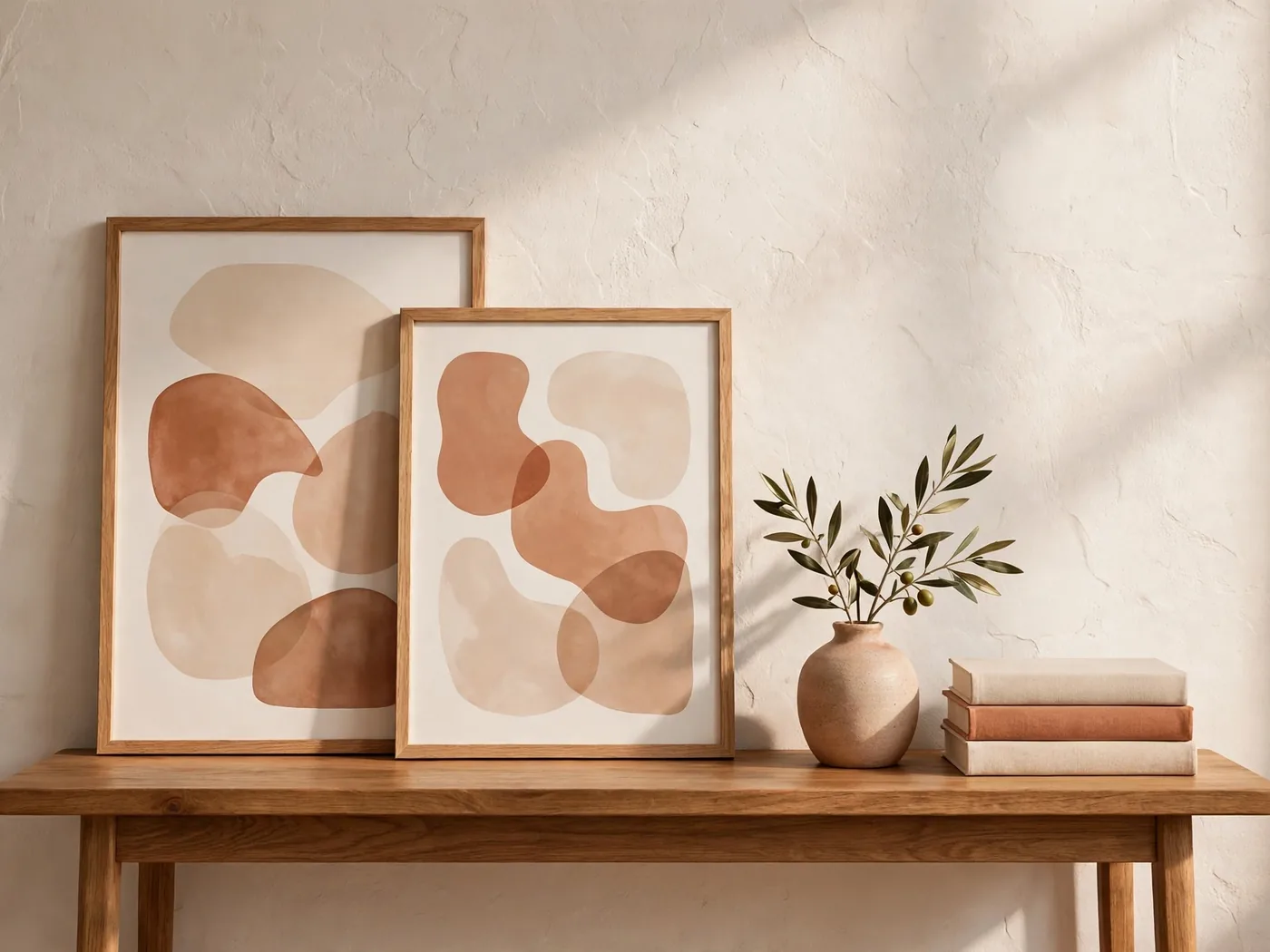
Texture note: Smooth frame glass against rough plaster or brick makes the lean look intentional; add one unframed canvas for a matte counterpoint.
If you are renting, this is wall styling you can undo on moving day without one filled hole.
6. Mix One Shiny Surface into Matte Rooms
Matte rooms — linen sofas, chalky paint, raw wood — can look dusty simply because nothing in them bounces light. Add exactly one reflective surface: a round polished-brass side table beside the sofa, a mirrored tray on the ottoman, or a glossy ceramic lamp base in deep bottle green. Place the shiny piece where daylight or lamplight actually hits it, near a window or beside a lamp, so it throws a small highlight across the matte textures around it. One gleam is enough; two start competing with each other.
Best for: north-facing living rooms and bedrooms that feel flat and grey by mid-afternoon.
7. Stack Books Horizontally as Display Risers
Flat stacks of books are free pedestals. On a bookshelf, lay three large hardcovers flat — spines aligned, covers in cream, charcoal and faded red — and stand a small ceramic bowl or a brass candlestick on top. On the coffee table, a two-book stack lifts a plant pot up to the height of the sofa arm. Keep stacks to two or three books so the display stays below seated eye level, and turn all the spines the same direction for a calm, squared-off look.
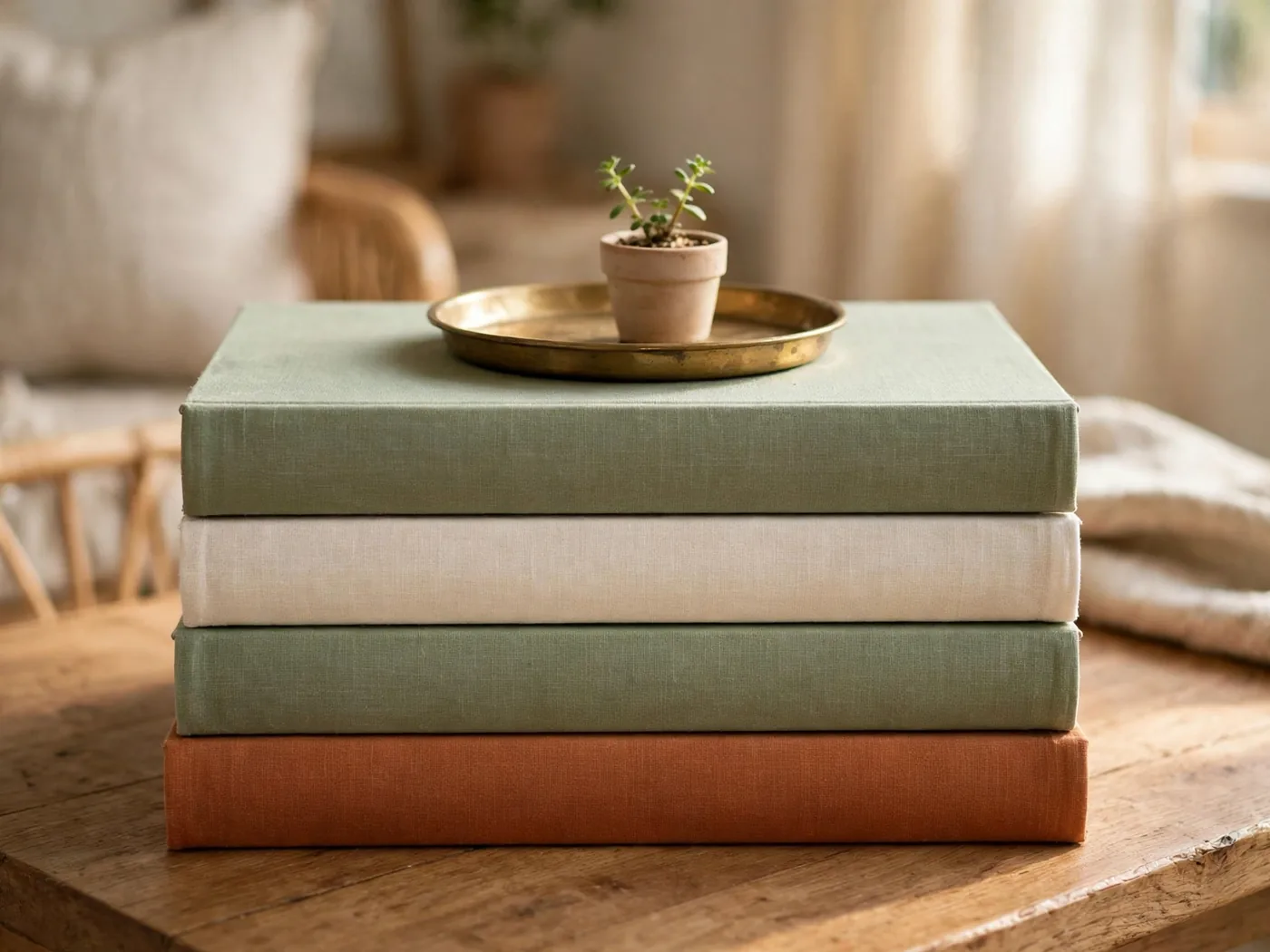
Space note: A stack raises an object by 6–9 cm; use one wherever a display piece disappears behind the piece standing in front of it.
8. Hang Curtains at Ceiling Height
Move the curtain rod up until it sits about 5 cm below the ceiling or crown molding, and let the panels fall to just kiss the floor. Ivory linen-look panels on a slim matte-black rod make a standard ceiling feel noticeably taller, because the eye follows one unbroken vertical line from top to bottom. Extend the rod 20 cm beyond each side of the frame so the open panels cover wall rather than glass, and the window itself reads wider than it really is.
Fit check: Measure from rod to floor twice before hemming anything; finished panels should break about 1 cm above the floor, never pooling and never hovering.
9. Repeat One Metal Finish Through the Room
Scattered metals — chrome here, brass there, black somewhere else — make a room feel assembled by accident. Choose one finish, say brushed brass, and repeat it in three quiet places: the curtain rod finials, the picture frame on the far wall, and the handles of the sideboard. Everything else can stay, but no new metal enters the room unless it matches. The repeats are small enough to miss individually, yet together they make the whole space feel deliberately finished.
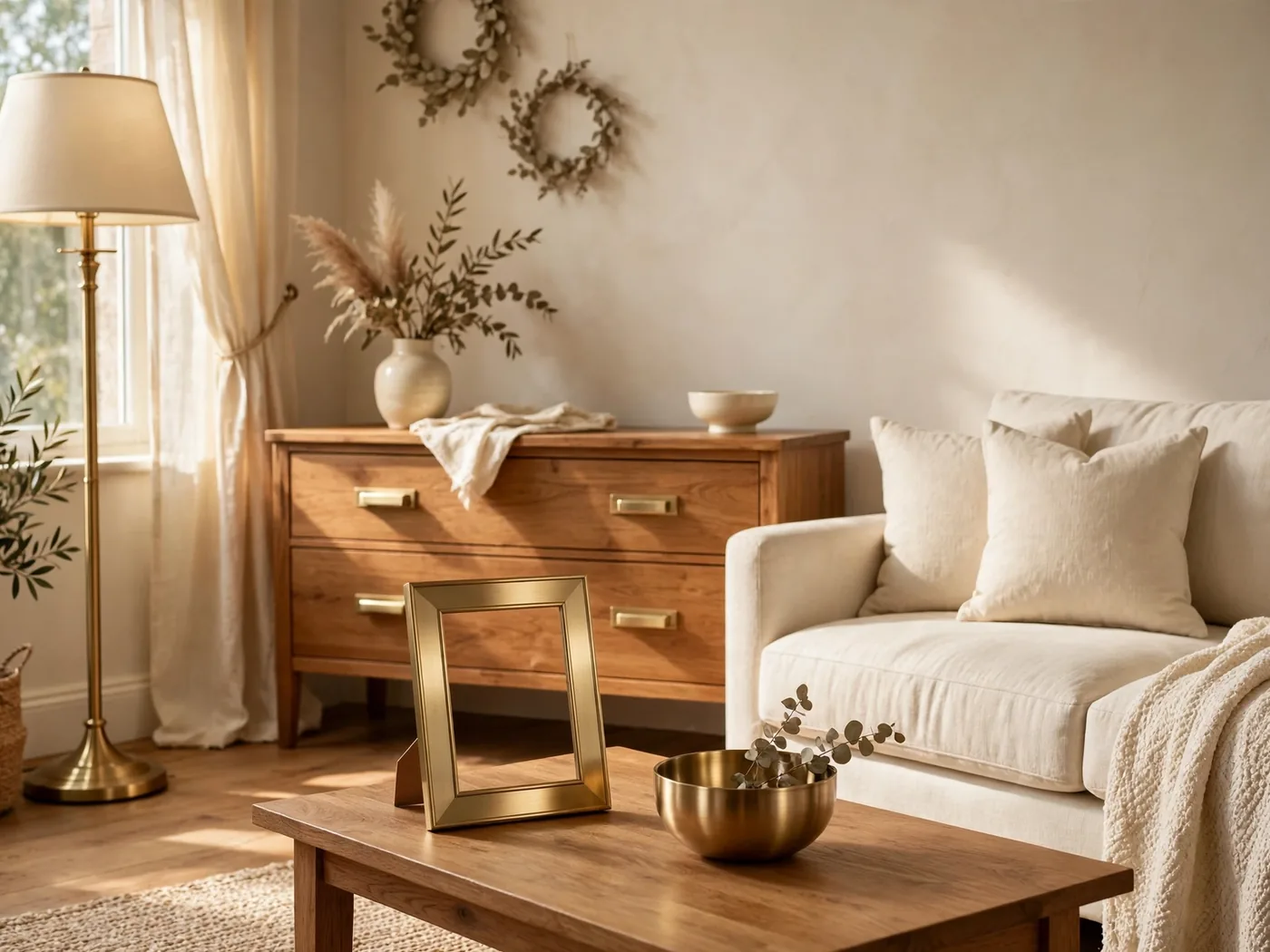
Style note: Brushed and satin finishes repeat more softly than polished ones, which can shout from clear across the room.
Guests never name this detail, but it is why some rooms feel expensive and others do not.
10. Add a Plant at Three Heights: Floor, Table, Shelf
One plant looks like an afterthought; the same greenery at three heights looks like a design decision. Put a tall fiddle-leaf fig or olive tree in a woven seagrass basket on the floor beside the sofa. Set a trailing pothos on the coffee table or a mid-height stand. Tuck a small fern or a string of pearls on the highest shelf so its leaves spill over the edge. Varied heights keep the green from lining up like soldiers.
Easy swap: swap any one of the three for a vase of dried grasses when watering three plants feels like one too many.
If the room feels bare, start with the floor plant — height is what the eye notices first.
11. Use Baskets as the Room’s Hidden Drawers
Woven baskets are drawers that need no furniture. Slide a lidded seagrass basket under the coffee table for remotes and chargers, stand a tall water-hyacinth basket beside the sofa for rolled magazines, and line a low shelf with three matching rattan baskets holding games, gloves and dog leads. Choose lids wherever the contents are ugly, and open tops where you want grab-and-go access. Matching the basket material across the room makes the storage read as one system rather than clutter in disguise.
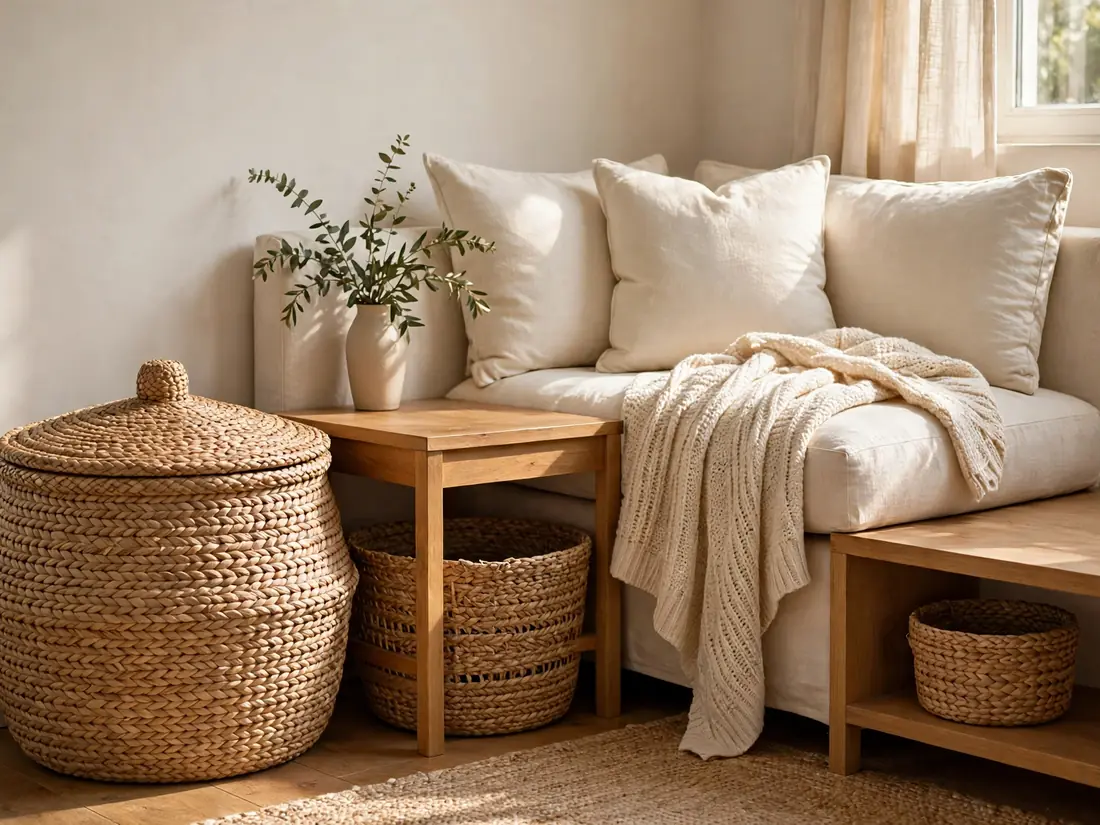
Seasonal swap: in winter the same baskets hold spare throws and firewood kindling; in summer they take beach towels and picnic gear instead.
12. Create One Focal Point and Quiet Everything Else
Every room needs one loud voice and a quiet chorus. Choose the strongest piece you own — a bold abstract canvas, a deep-green velvet armchair, a patterned rug — and give it the prime wall or the centre of the floor. Then deliberately quiet everything around it: swap busy cushion covers for plain linen, clear the mantel down to two objects, and keep the surrounding walls a single calm color. The eye lands on the hero first and reads everything else as support.
Why it works:
- The eye needs one resting place before it can enjoy the details.
- Plain surroundings make the hero piece look more expensive.
- Fewer competing patterns lower the visual noise in the whole room.
13. Fold Throws with the Fringe Showing
A throw tossed over a sofa arm looks accidental; the same throw folded looks styled. Fold a cream wool throw lengthwise into thirds, drape it over the arm so the fringed end hangs about 30 cm down the outside, with the fold kept crisp. On a reading chair, fold a rust-and-oatmeal striped throw into a neat rectangle over the back corner. Fringe and stripes are the decoration — folding shows them off instead of hiding them in a heap.
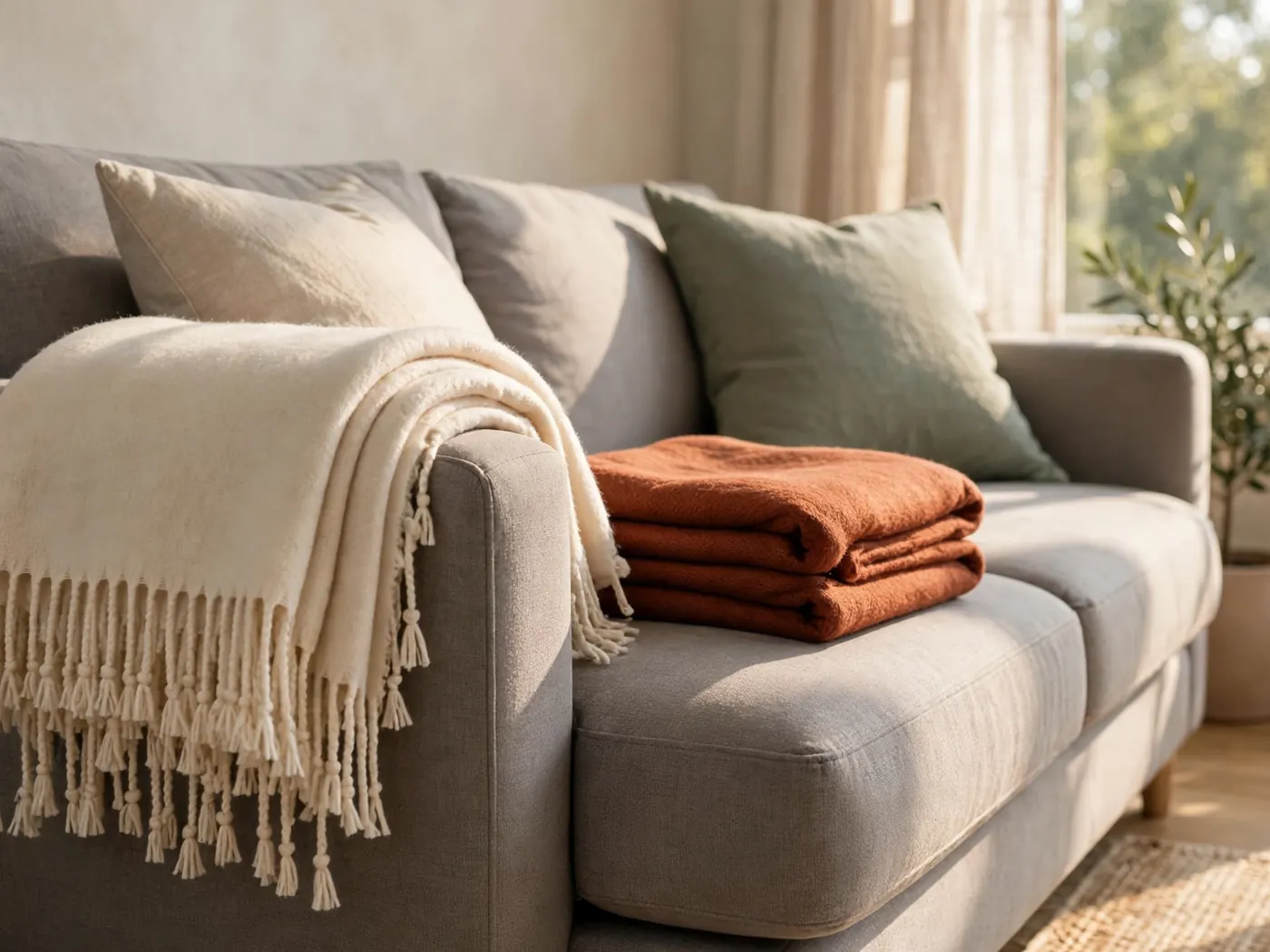
Budget note: folding is free styling — the throws you already own become the color and pattern layer, with no new purchase needed.
Ninety seconds of folding is the difference between a sofa that looks used and one that looks dressed.
14. Follow the Two-Pillow-Per-Seat Formula
Two cushions per seat is the ratio that looks generous without causing a nightly cushion avalanche. On each end of a three-seat sofa, place one 55 cm square cushion in a textured neutral — oatmeal boucle or natural linen — in front of one smaller 45 cm cushion in the room’s accent color or a stripe. Mirror the pairing at the other end and leave the middle seat empty, so someone can actually sit down without excavating first.
The formula: one large textured neutral + one smaller accent cushion + one empty middle seat
Chairs get the same treatment at half scale: one square cushion and one small lumbar, nothing more.
15. Rotate Decor Monthly Instead of Adding More
Your shelves already hold next month’s decor. Once a month, box up a third of the objects on display — the vases, bowls and candlesticks — and swap in pieces from cupboards and other rooms. It is the same trick behind fresh christmas living room decor ideas in December: the room feels new because the combinations are new, not the objects. Photograph each arrangement so a favorite can return exactly.
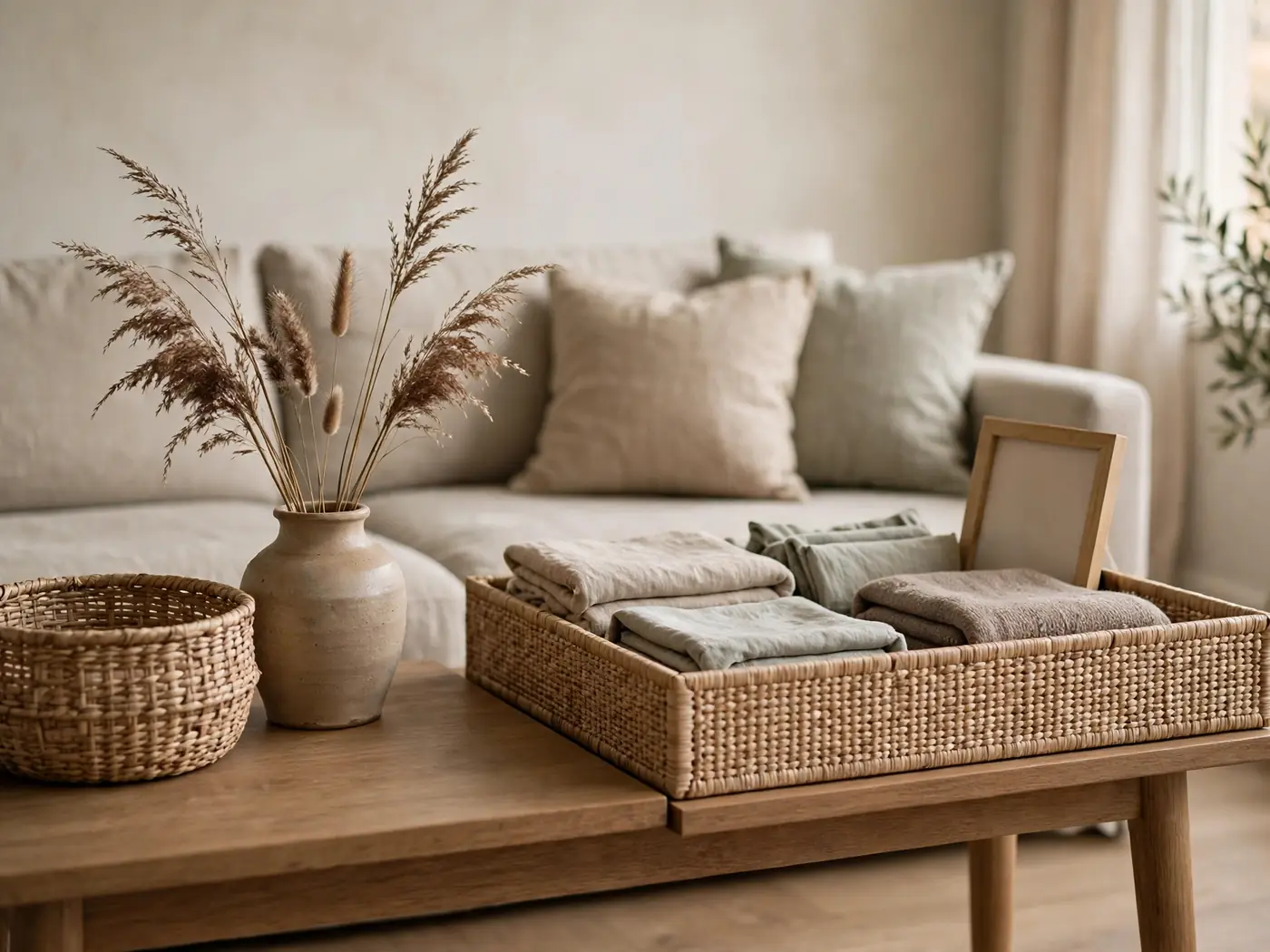
Get the look:
- Main piece: one storage box, labelled by room, for rotated pieces
- Supporting piece: a cupboard shelf cleared to receive this month’s display
- Texture or material: mix ceramic, wood and metal in every rotation
- Finishing touch: a phone photo taken before you dismantle each arrangement
16. Bounce Light with a Mirror Opposite a Window
Hang or lean a mirror directly across from the room’s brightest window and it will work like a second window. A round mirror, 80 cm across, in a thin black or natural oak frame reflects the sky and doubles the daylight reaching the darker half of the room. In the evening it catches lamplight and candlelight in exactly the same way. Keep the reflected view in mind as you place it — the mirror should face greenery or sky, not a blank wall or the bins.
Color note: a warm oak or brass frame keeps the reflected light feeling golden, while a chrome frame can make the same light look cold and blue.
17. Style Shelves by Thirds: Books, Objects, Air
Divide every shelf run into three kinds of space: a third books, a third objects, and a third genuine empty air. Stand books upright in one run, lay the next run flat as a low stack, then leave a gap before one object — a ceramic vase, a small framed photo, a brass bowl. The empty third is not wasted space; it is what lets the eye separate one idea from the next along the shelf.
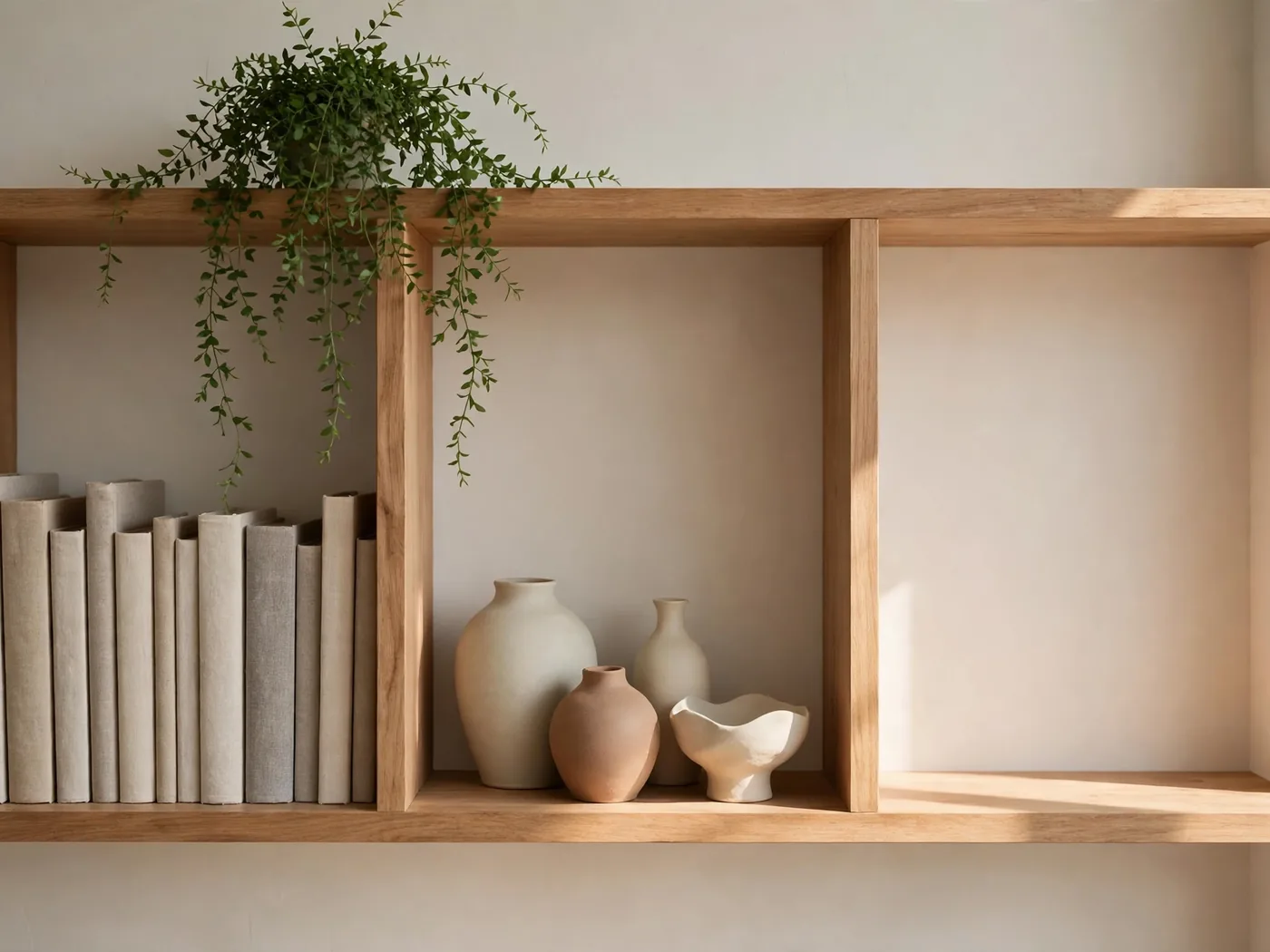
Work top down, stepping back after each shelf to check the thirds still balance.
Texture note: alternate rough and smooth along the shelf — matte ceramic beside glossy book jackets beside raw wood — so each third feels different to the eye.
18. Frame Doorways with Paint for Depth
Paint the wall band around a doorway in a deeper shade than the room, and a plain opening turns into architecture. In a hallway painted warm white, brush the 15 cm band around each door — and the door itself — in soft sage or dusty blue, keeping the ceiling and the remaining walls pale. The colored outline tricks the eye into reading depth and layers where there is only flat plaster. Use an eggshell finish on the painted band so light catches it slightly differently from the matte walls around it.
Best for: long, plain hallways and open-plan rooms that need zones without building walls.
19. Pull Furniture off the Walls by a Hand’s Width
It sounds like nothing, but floating the sofa about 10 cm off the wall changes the whole read of a room. The shadow gap behind the sofa and bookcase makes the walls feel farther away and the furniture feel chosen rather than shoved. This is a staple move in apartment living room decor ideas, where every centimetre of perceived space counts. Slide a slim console or a row of plants into the gap and the float becomes useful instead of dead space.
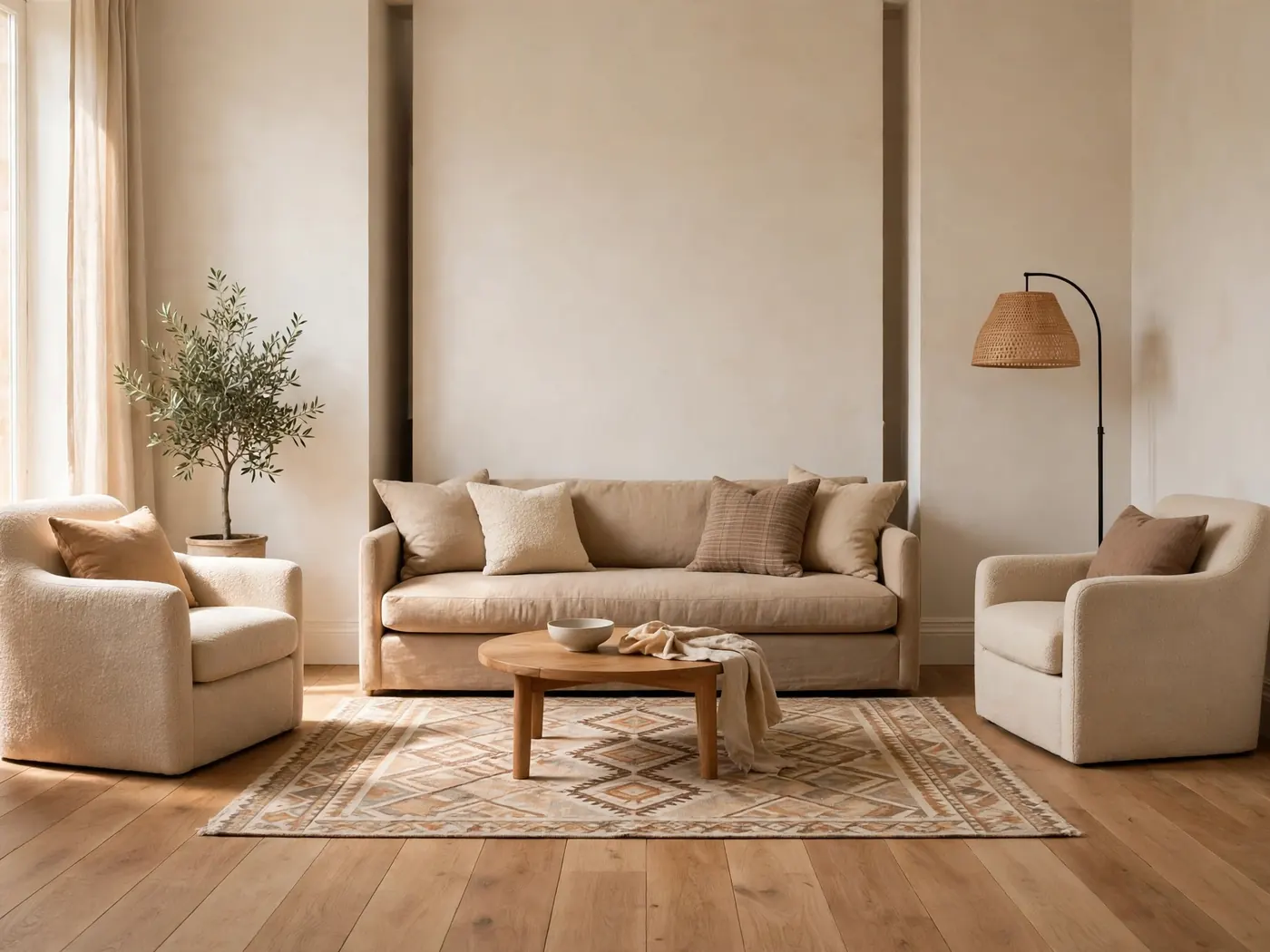
Space note: ten centimetres is enough to create the shadow line; more than twenty starts eating the walkway in small rooms.
20. Give Every Room One Black Accent
Pale, pretty rooms often seem to float away because nothing anchors them. Add one true-black accent per room — a matte-black picture frame, an iron candlestick, a black ceramic vase, the legs of a side table — and the pastels and whites suddenly look crisp by contrast. Black works like punctuation: a single full stop, not a whole sentence. Keep it to one or two pieces; a third starts a color scheme you never planned.
Fit check: hold the piece at arm’s length against the palest wall first; if it reads as a hole, not an anchor, go smaller.
Walk through your home tonight and you will spot the rooms that are missing their full stop.
21. Swap Hardware Before Replacing Furniture
Before you price up a new dresser or a kitchen run, change its handles. Swap dated chrome kitchen knobs for brushed-brass cup pulls, trade a dresser’s turned wooden knobs for black iron bar pulls, or fit tan leather pulls on a plain white wardrobe. The furniture itself fades from attention once the hardware looks current, because handles are what the eye and the hand actually meet every day. Keep every new handle in one finish per room, and photograph the old layout before you start.
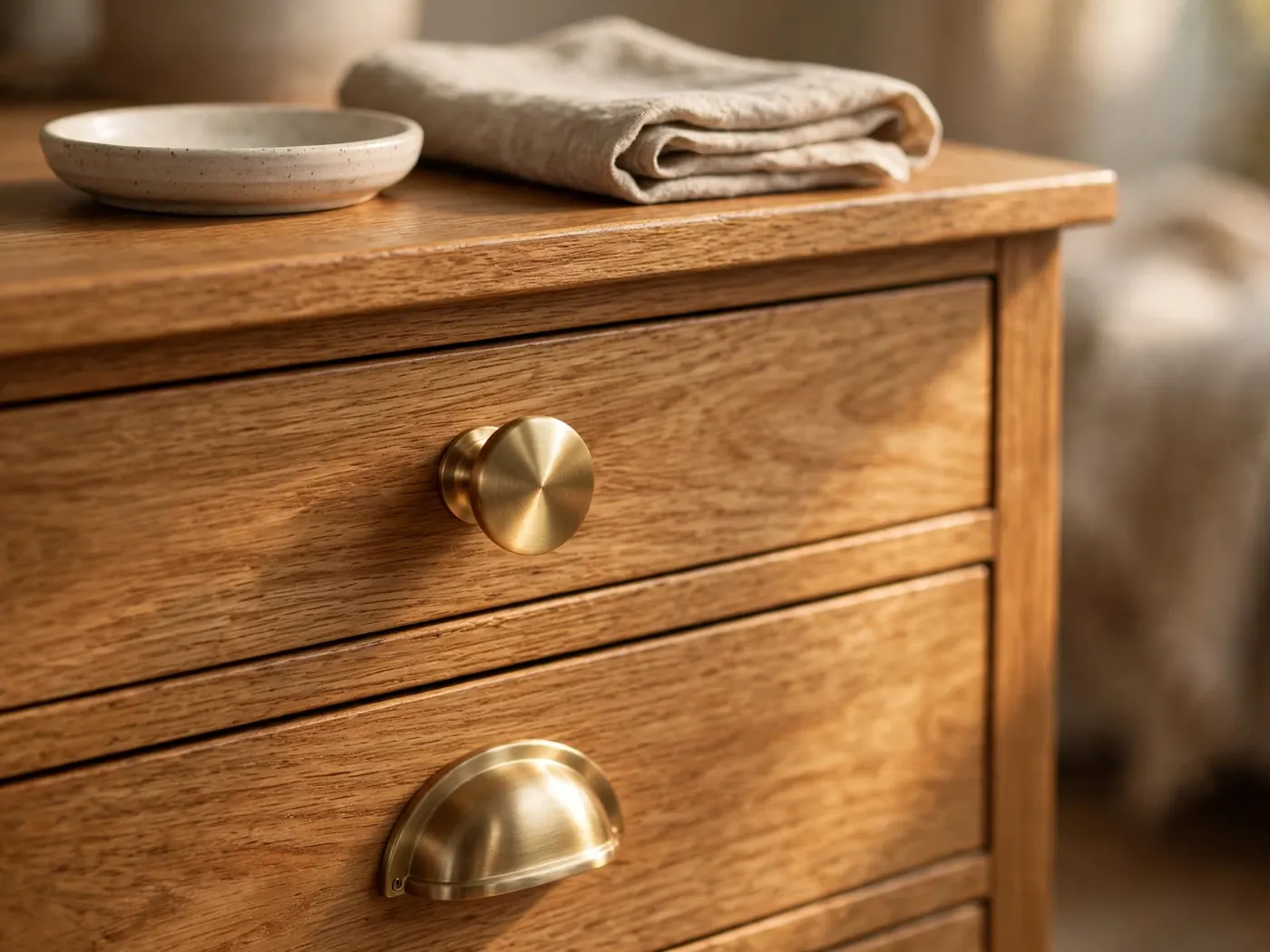
Style note: oversized handles — roughly a third longer than the ones they replace — make basic flat-pack furniture look bespoke.
22. Use Scent as an Invisible Layer
Rooms are decorated for the nose as much as for the eye. Set one scent source in each main room: a cedar-and-amber candle on the mantel, a eucalyptus reed diffuser on the entry console, a small bowl of dried lavender on the bathroom shelf. Choose scents from a single family — woody, green or citrus — so walking from room to room feels like one house, not a perfume counter. Keep flames where you can see them, and place diffusers where air actually moves, near doors rather than in corners.
Easy swap: swap the candles for orange peel and cloves simmering in water on the stove when you want scent with zero shopping.
23. Repeat a Pattern at Two Scales in the Room
One pattern used twice, at two different sizes, ties a room together without matching sets. If the rug carries a large cream-and-charcoal diamond, echo it in a cushion woven with the same diamond at a quarter of the scale. A wide stripe on the curtains can return as a fine pinstripe on a folded throw. The shapes rhyme while the sizes differ, so the room reads coordinated rather than bought in one trip. Keep both in the same colors and everything between them plain.
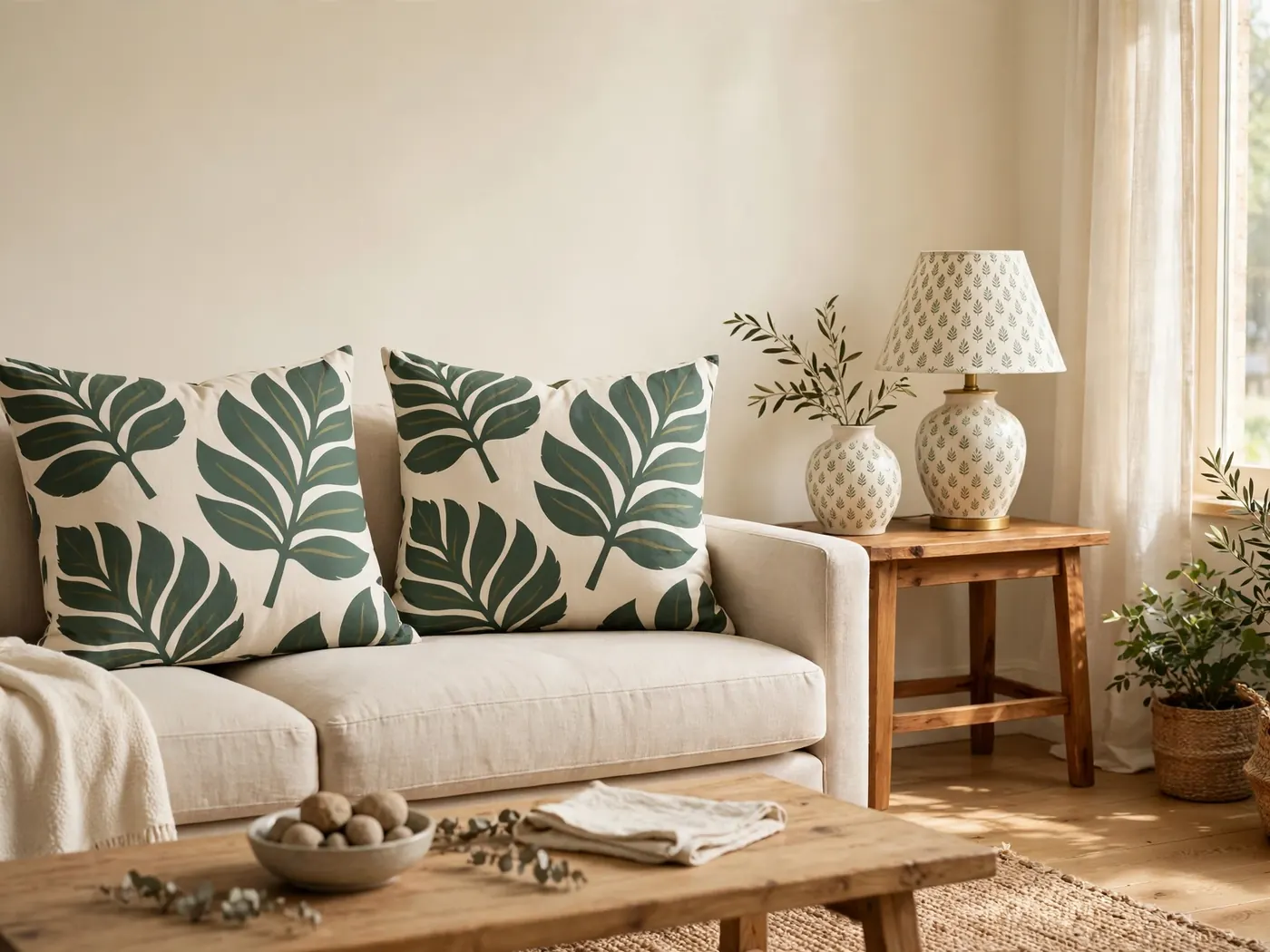
Seasonal swap: in December the small-scale echo becomes a plaid cushion; in spring it turns into a narrow ticking stripe.
Once your eye learns the rhyme, you will spot pairs for it everywhere.
24. Hang One Oversized Piece Instead of Many Small
If your gallery wall feels busy, replace it with one large piece. A single canvas or framed print at 100 × 140 cm, hung so its centre sits at eye level, covers the same wall with one calm gesture. Choose something with generous plain areas — a landscape under a big sky, an abstract in wide color fields — so the wall still breathes. Leave at least 20 cm of empty wall on each side; that margin is part of the artwork’s presence.
Why it works:
- One image gives the eye a single, restful place to land.
- Large scale makes standard rooms feel taller and more deliberate.
- Fewer frames mean fewer crooked lines to straighten every week.
25. Match Wood Tones Within Two Shades
Mixed wood looks collected when the tones are cousins and chaotic when they are strangers. Line up your room’s woods — floor, table, frames, shelves — and sort them into light, medium and dark. Keep the pieces in any one room within two neighbouring shades: pale oak floors sit happily with honey pine and light walnut, but jar against ebonised black and orange mahogany. Move the odd piece to another room rather than replacing it; most homes already own the right piece, just in the wrong room.
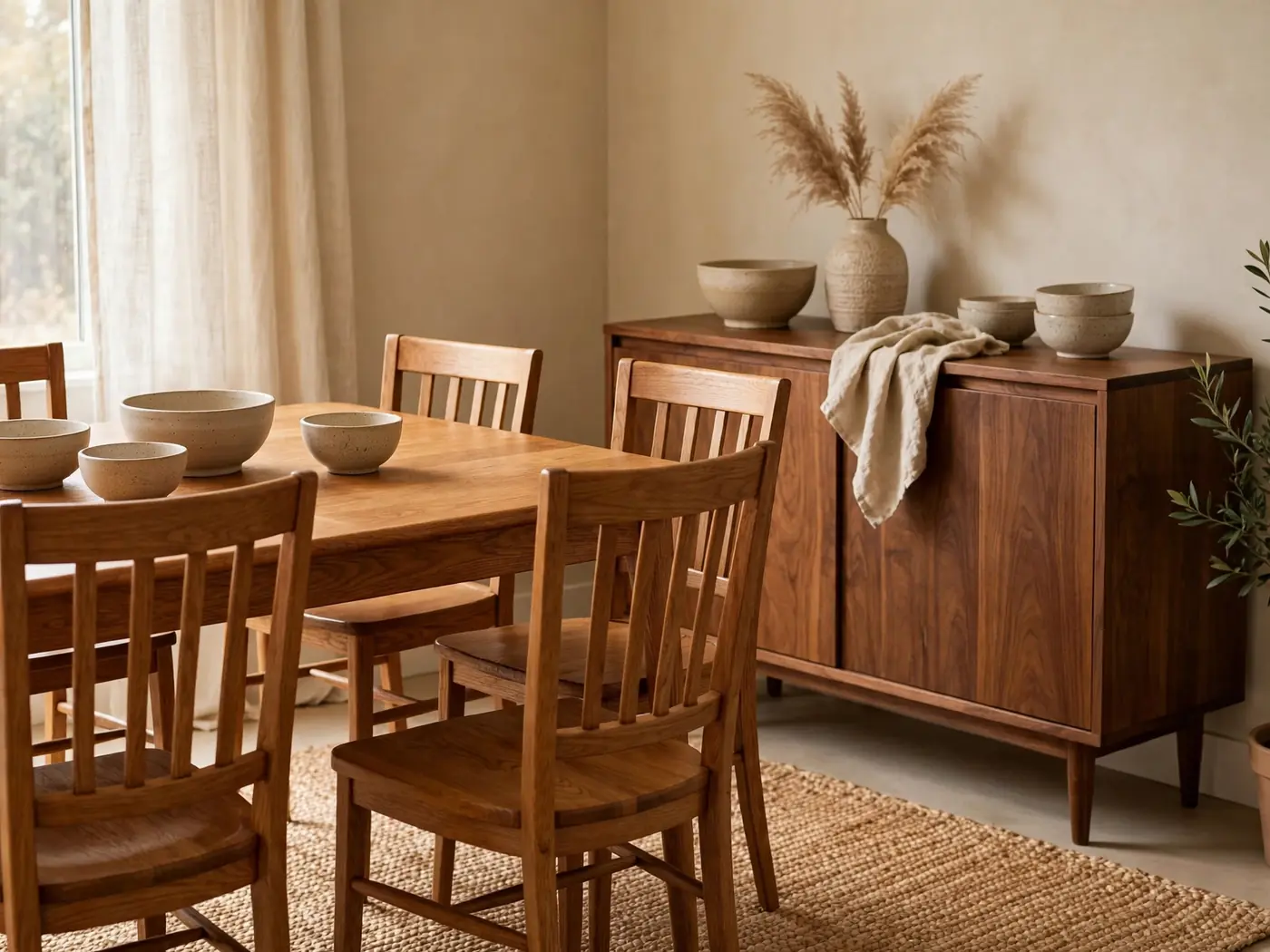
Budget note: re-homing a clashing piece costs nothing, and one tin of walnut-tone wood stain can pull a single stray piece into line.
26. Style the Top of Every Cabinet and Armoire
The flat top of a tall cabinet is a shelf you forgot you had. Style it like one: a low stack of two large books at one end, a trailing pothos in a terracotta pot set a little back, and one tall object — a ceramic urn or a pair of candlesticks — at the far end. Keep the grouping to two-thirds of the top, leaving a breathing gap, and judge it from the doorway, where the display is actually seen.
The formula: low book stack + trailing plant in a clay pot + one tall urn or pair of candlesticks
It is the easiest layer to add, since nobody dusts at that height anyway.
27. Light Rooms in Three Layers: High, Middle, Low
A single overhead light flattens every room. Build three layers instead: a ceiling pendant for general light, table lamps at sitting height for faces and books, and a low layer — a sideboard lamp, mantel candles, a picture light — near the floor line. Use warm-white 2700K bulbs in all three so they blend into one atmosphere; dimmers on the middle layer help. Rooms lit in layers look decorated even when the furniture is simple.
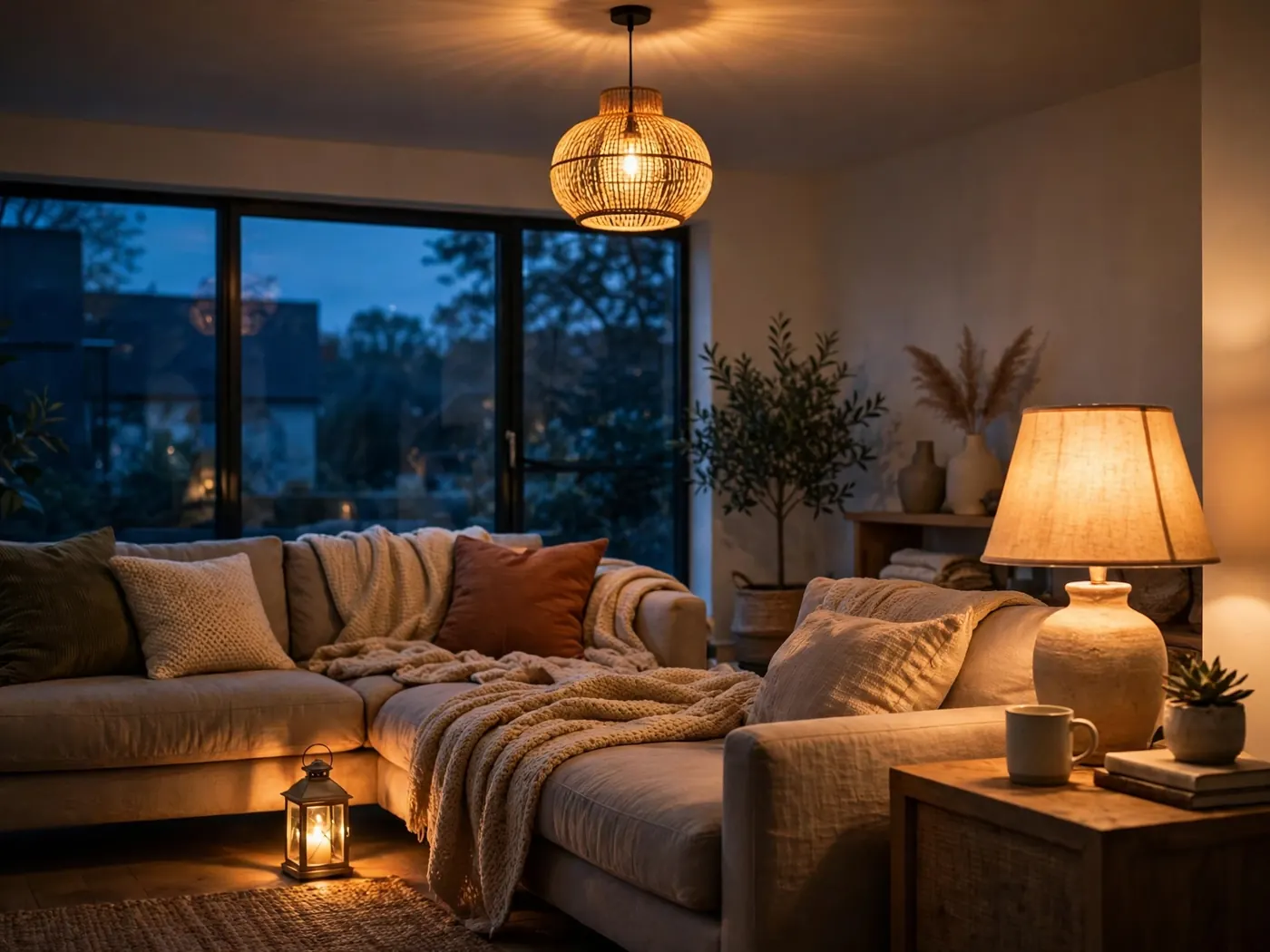
Get the look:
- Main piece: one ceiling pendant, warm-white at 2700K
- Supporting piece: two table lamps at sofa-arm height
- Texture or material: linen shades that soften and spread the light
- Finishing touch: candles or a picture light at the lowest level
None of these layers asks for a bigger budget — only for a second look at what your rooms already hold. Start with the free moves, the folding, grouping and rotating, and let each small layer settle before you add the next. A collected home is built exactly that way: slowly, on purpose, and mostly from your own shelves.