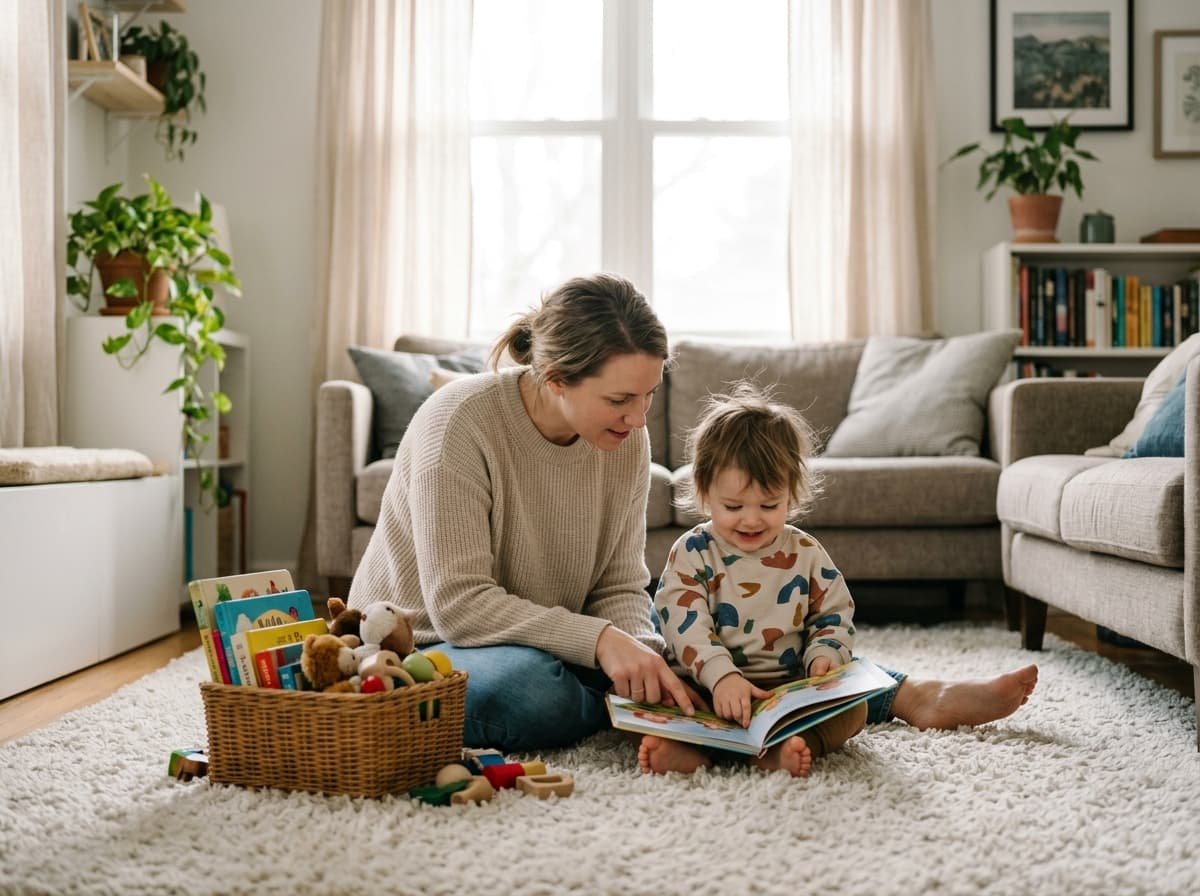
If you have ever tried to run “preschool at home” and ended up with a toddler who wandered off after four minutes, a living room covered in craft supplies, and a quiet sense that you were doing it wrong, you are in good company. Most parents start with big plans, a dozen printables, and a schedule that looks like a school timetable. By Wednesday, everyone is tired.
The fix is not more activities. It is a simple, predictable rhythm. A short daily routine gives your 3-year-old a clear sense of what comes next, and permits you to keep things small, playful, and doable. This guide walks you through a gentle preschool-at-home daily routine you can start tomorrow, with no special training and very little equipment.
Why a Daily Routine Works for 3-Year-Olds
Three-year-olds cannot read a clock, but they can read a pattern. When the day follows the same general order, such as hello song, story, activity, snack, outside, quiet time, your child begins to predict what is coming. Prediction feels safe, and a child who feels safe is far more willing to try new things.
A routine also cuts down on negotiation. Instead of “Do you want to do letters now?” (to which the answer is almost always no), the day simply moves forward: “After story time, we do our table activity.” The routine makes the decision so you do not have to argue about it.
Finally, a routine is not a rigid schedule. Think of it as a loose frame. The order stays familiar while the timing and the details stay flexible.
How Long Should Preschool at Home Take?
Shorter than you think. For most 3 year olds, one to two hours of gentle, structured time spread across the morning is plenty. Within that, each activity should last only as long as your child stays interested, often 10 to 20 minutes at a time. The rest of the day is for free play, meals, outings, and rest, which are all learning in their own right.
Quick Tip: If your child is still happy and engaged, keep going. If they start squirming, wrap up warmly and move on. Ending while it is still fun makes tomorrow easier.
Keep It Short and Playful
Turn tasks into games. Count steps as you walk to the table, hunt for the letter on a cereal box, or sort socks by color. Play is not a break from learning at this age. It is how learning happens.
Follow Your Child’s Interest
If your child is obsessed with trucks, build the day around trucks. Count them, draw them, find the first letter of “truck,” and make tracks in playdough. Interest keeps attention far better than any lesson plan.
Be Flexible on Busy Days
Some days the routine will shrink to a song, a story, and a walk. That still counts. A routine you can keep on hard days is worth more than a perfect one you abandon after a week.
Simple Preschool at Home Daily Schedule (Sample)
Use this as a template and adjust the times to fit your family.
| Time | Activity | Purpose |
|---|---|---|
| 8:30 AM | Welcome Time and Song | Gentle start, builds connection |
| 9:00 AM | Circle Time and Story | Listening, language, calendar |
| 9:30 AM | Learning Activity | Hands-on skills |
| 10:15 AM | Snack and Outdoor Play | Fuel and movement |
| 11:00 AM | Quiet Time and Free Play | Rest and independence |
8:30 AM: Welcome Time and Song
Greet your child with the same hello song each day. A familiar tune signals that “school time” has begun and helps even reluctant mornings start on a happy note.
9:00 AM: Circle Time and Story
Gather on a rug or cushion. Do a quick calendar check, talk about the weather, sing a song or two, and read one picture book. Keep this block lively and short.
9:30 AM: Learning Activity (Craft or Printable)
This is your one focused activity: a simple craft, a shape-matching game, or a printable page. Choose one thing, set it up before your child arrives, and let them explore it at their own pace.
10:15 AM: Snack and Outdoor Play
Snack gives a natural pause. Afterward, head outside to run, climb, dig, or look for bugs. Movement helps little bodies reset.
11:00 AM: Quiet Time and Free Play
End with calm. Offer books, blocks, or puzzles and let your child play alone for a while. This is where independence grows.
Morning Routine: Welcome Time and Calendar
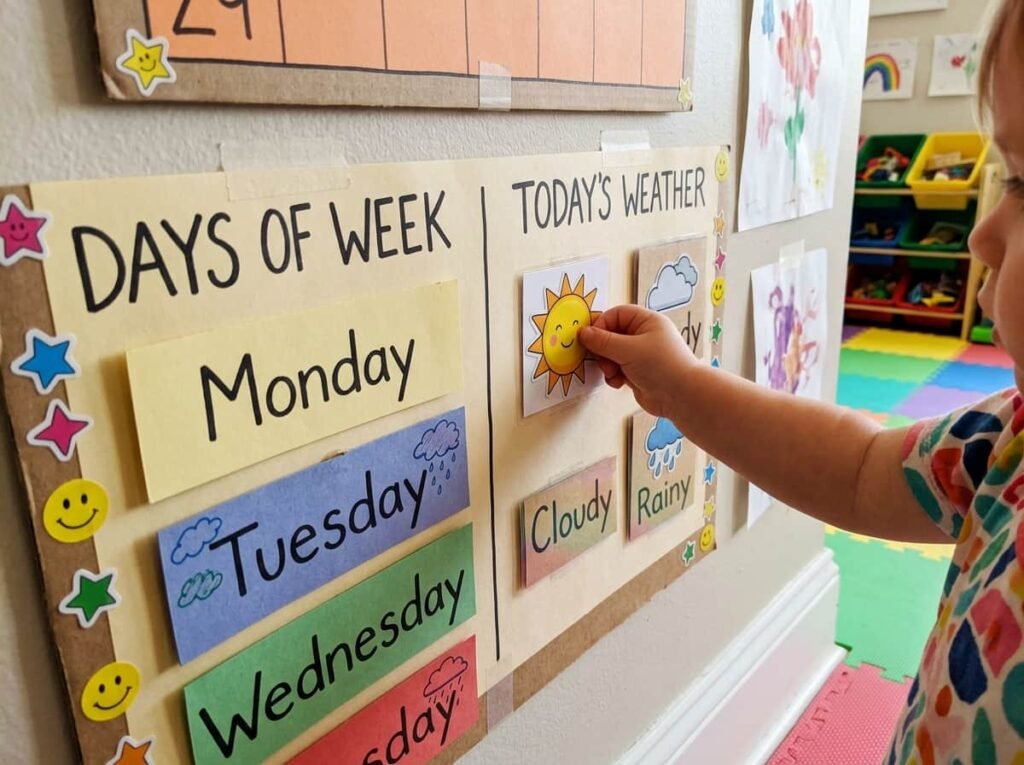
Start the same way every day. A hello song, a hug, and a quick look at “what day is it?” is enough. Use a simple wall calendar or a few picture cards for the days of the week.
You do not need your child to memorize the days. The goal is exposure and ritual. Let them place a sticker on today’s date, point to the weather picture, and tell you whether it is sunny or rainy. These tiny jobs make children feel like part of the day rather than passengers in it.
Circle Time Ideas for Toddlers and Preschoolers
Circle time is the heart of the routine, and it works best when it is brief and full of movement. Try mixing a few of these:
- Songs with actions: Wheels on the bus, head-and-shoulders songs, or finger rhymes.
- Story of the day: One picture book, read with expression. Pause and ask, “What do you think happens next?”
- Movement break: Hop like a frog, stretch like a tree, tiptoe like a cat.
- Feelings check: Ask, “How are you feeling today?” and let your child point to a happy, sleepy, or silly face.
- Show and tell: Let your child pick a toy or object to share.
Keep circle time to 10 or 15 minutes and stop before interest fades.
Hands-On Learning: Letters, Numbers and Shapes
At age three, early academics should feel like play, not worksheets. Use real objects wherever you can.
| Skill | Hands-On Idea | Why It Works |
|---|---|---|
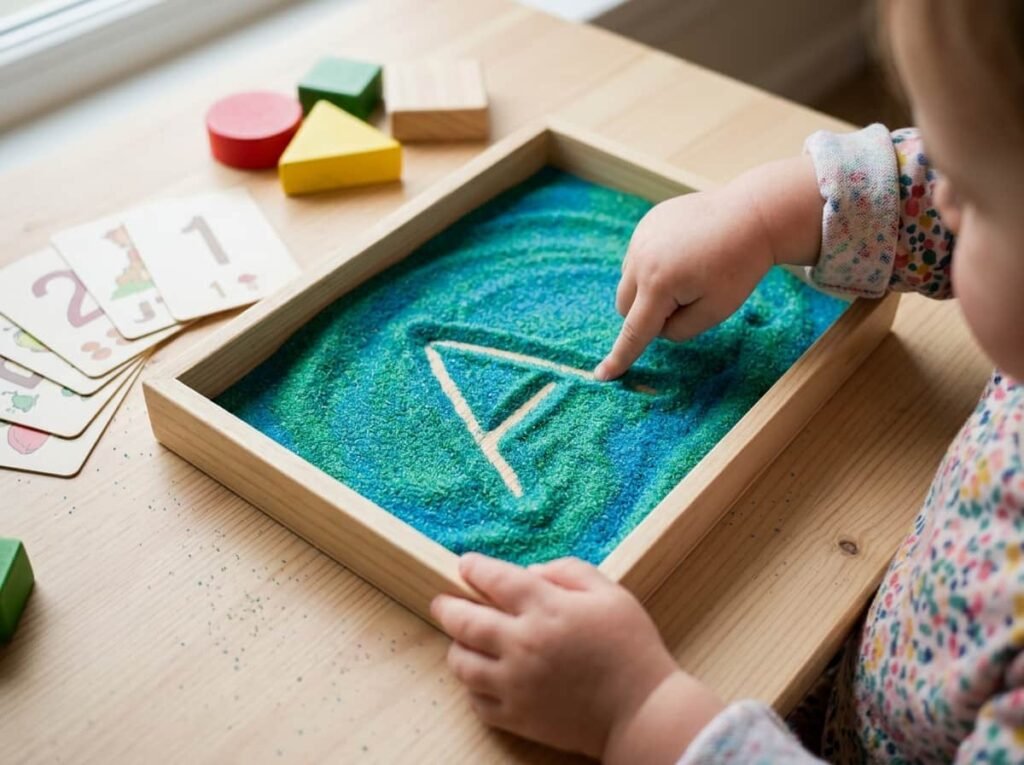
| Letters | Trace letters in a tray of salt or sand | Combines touch with shape recognition |
| Numbers | Count snacks, toys, or steps | Connects numbers to real life |
| Shapes | Shape hunt around the house | Turns learning into a game |
| Colors | Sort buttons, blocks, or socks | Builds matching and sorting skills |
Start with your child’s own name. It is the most meaningful word in their world, and the letters in it become familiar quickly. Introduce one or two new concepts at a time rather than rushing through the alphabet.
Fine Motor and Sensory Play Activities
Little hands need practice before they can hold a pencil. Fine motor and sensory play builds that strength in a way children love.
- Playdough rolling, squishing, and cutting
- Threading large beads or pasta onto string
- Using tongs or tweezers to move pom-poms
- Water play with cups, spoons, and sponges
- Sticker peeling and sticking
- Finger painting on a large sheet of paper
Sensory bins filled with rice, oats, or water beads (always with supervision for safety) offer open-ended exploration and are wonderful for building focus.
Pro Tip: Keep a “ready tray” of two or three fine motor activities on a shelf. When you need a calm moment, your child can choose one without any setup from you.
Outdoor Play and Nature Walk Time
Fresh air is part of the curriculum. After snack, head outdoors even if only for 20 minutes. Let your child run, jump, kick a ball, or dig in dirt.
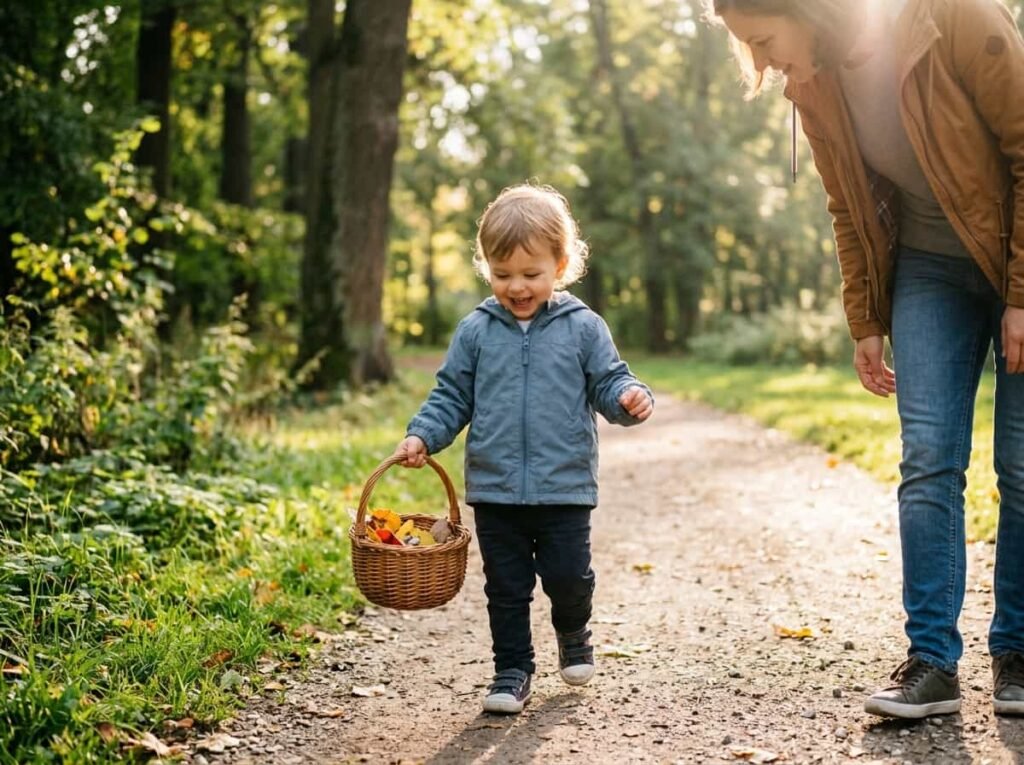
A nature walk adds a gentle learning layer. Bring a small bag and collect leaves, pebbles, or flowers. Talk about what you see: “This leaf is big. This one is small.” Back home, you can sort your treasures or glue them onto paper for a simple nature craft.
Quiet Time and Independent Play Ideas
Even if your child has outgrown naps, a quiet hour is valuable. It gives them space to play on their own, and gives you a breather.
Good quiet time options include:
- A basket of picture books
- Large floor puzzles
- Building blocks or magnetic tiles
- Drawing with chunky crayons
- Small-world play with animals or cars
Start with just 10 minutes and extend gradually. Setting out two or three choices in advance helps your child settle without needing you.
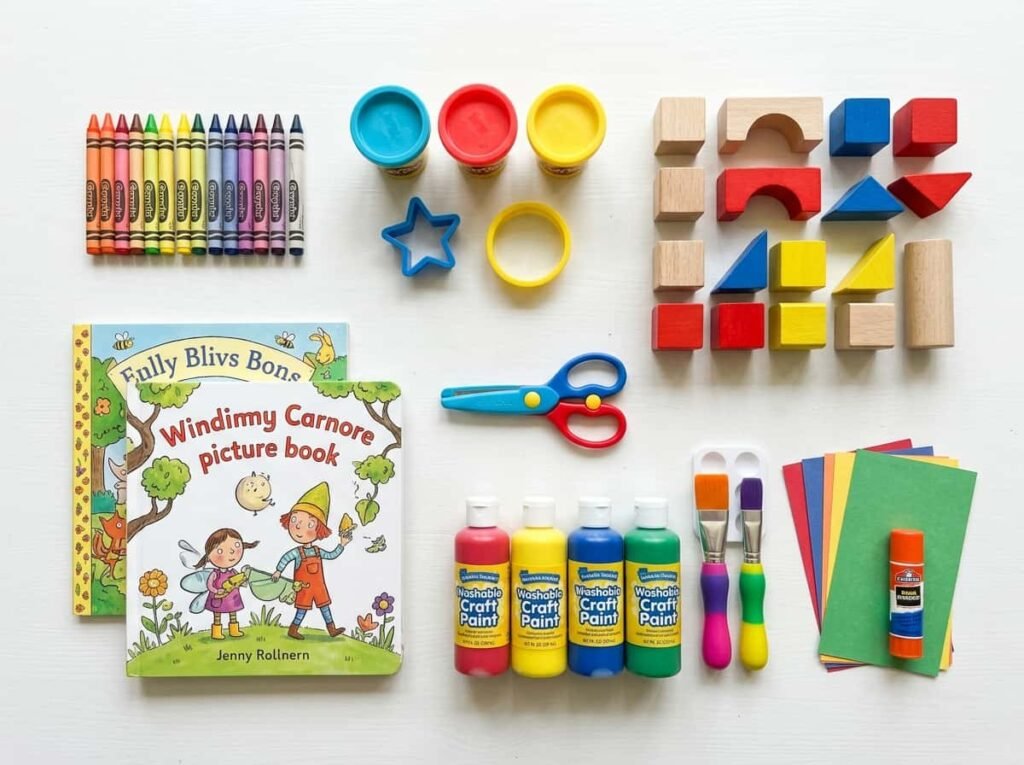
Materials You Need for Preschool at Home
You do not need a fully stocked classroom. A small, simple kit goes a long way.
| Item | What to Look For | Why It Works |
|---|---|---|
| Picture books | Bright, simple, repetitive text | Builds language and listening |
| Crayons and paper | Chunky, easy to grip | Supports early drawing |
| Playdough | Soft, non-toxic | Strengthens hand muscles |
| Blocks or puzzles | Large pieces, no choking hazards | Develops problem solving |
| Craft basics | Washable paint, child-safe glue, safety scissors | Encourages creativity |
Rotate a few items every week instead of putting everything out at once. Novelty keeps interest high with very little spending.
Free Preschool Activities Printable to Get Started
Printables are a helpful starting point, especially when you want ready-made ideas. Look for pages that match your child’s current interests, such as tracing lines, matching shapes, counting objects, or coloring simple pictures.
Keep a few tips in mind:
- Choose pages with large, clear images and lots of white space.
- Laminate or slip pages into a plastic sleeve so they can be reused with dry-erase markers.
- Treat printables as one tool among many, not the whole program.
- Let your child say “all done” without pressure.
A handful of well-chosen pages is plenty. The goal is enjoyment, not completion.
Frequently Asked Questions
Is preschool at home enough for a 3 year old?
For many families, yes. At this age, children learn best through play, conversation, stories, and everyday experiences, all of which you can provide at home. Add time with other children, such as playgroups or park meetups, to support social skills.
How many hours a day should a 3 year old learn?
Formal learning time can be quite short, often one to two hours in small blocks. Remember that your child is learning all day through play, meals, and outings, so you do not need to schedule every minute.
What if my toddler refuses to sit for activities?
Do not force it. Try shorter activities, standing or floor-based setups, or movement-based games. Let your child choose between two options, and follow their interests. If today is a no, try again tomorrow with a smaller step.
Start Small Today
A good preschool at home routine is not about doing more. It is about doing a few things, in a familiar order, with warmth. Pick one part of this routine, perhaps the hello song and a story, and try it tomorrow morning. Once it feels natural, add the next piece.