If you’ve ever handed a five-year-old a glue stick and walked away for three minutes, you already know craft time can go two ways: quiet concentration, or glitter in the carpet for six months. The good news is that most kindergarten crafts that actually build skills — fine motor control, hand-eye coordination, early math concepts — don’t need Pinterest-perfect execution to work. A lopsided paper plate lion still trains the same scissor grip as a neat one.
1. Why Crafts Matter in Early Childhood Learning
Cutting along a line teaches the same muscle control kids will later use to hold a pencil correctly. Gluing small pieces in place builds the pincer grip needed for buttoning a coat. Sorting buttons by color is basic pattern recognition, which shows up again in kindergarten math a few months later. None of this needs to be explained to a five-year-old — they just need the materials in front of them and about 15–20 minutes of uninterrupted time, which is roughly the attention span you can expect before someone starts eating the glue.
2. Paper Plate Craft Ideas
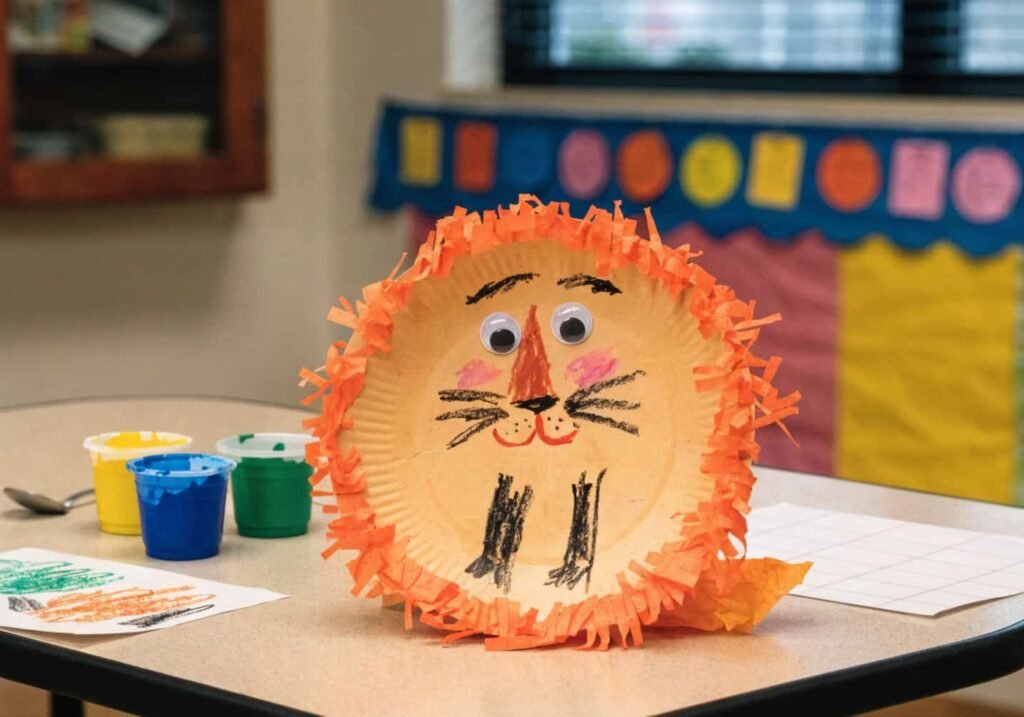
Paper plates are cheap (a pack of 100 uncoated plates runs about $4–6) and their round shape already does half the design work for animal faces, clocks, and sun crafts. For a paper plate lion, cut the outer 2 inches into fringe strips before the child starts — pre-cutting the border yourself saves the activity from turning into 20 minutes of just cutting fringe. Kids then paint the center face, glue on paper ears and a nose, and color the fringe orange or yellow for the mane. A paper plate clock works well for teaching numbers 1–12: write the numbers with the child rather than pre-printing them, since tracing over your handwriting is its own fine motor exercise.
3. Handprint and Footprint Art Projects
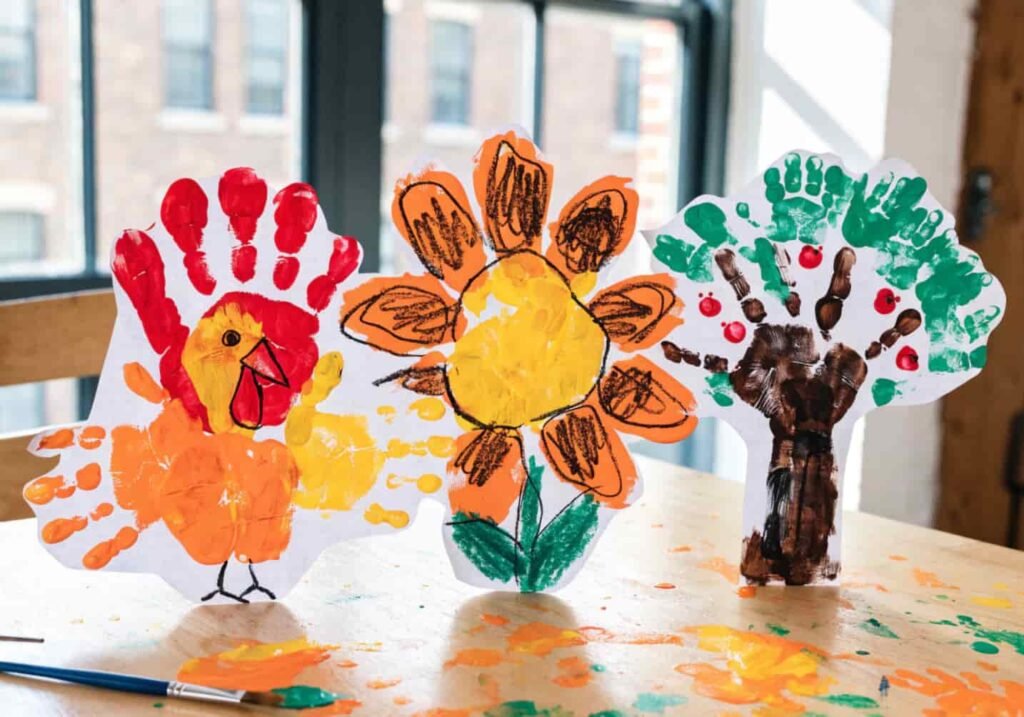
Skip liquid tempera paint for handprints if you can — it’s runny and smears the second small fingers wiggle. Tempera paint cakes (the solid, pan-style kind used with a wet brush) go on thicker and hold the print shape better, and they wash off skin faster too. Press the hand down once, firmly, without dragging — dragging is what turns a clean handprint into a smudge. Classic projects: a handprint turkey for fall, handprint flowers glued onto a paper stem, or a family handprint tree where each family member’s hand is a different color of “leaves.” Footprints work the same way but need a helper to hold the foot steady and roll it heel-to-toe in one motion — trying to press flat-footed usually blurs the toes.
4. Simple Cutting and Pasting Activities
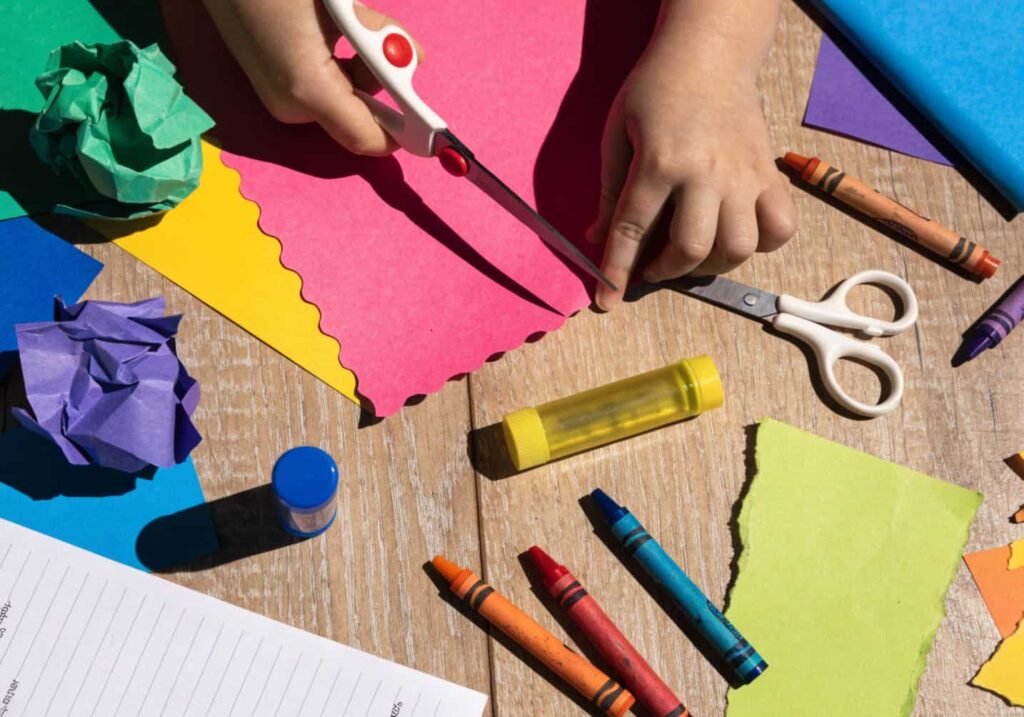
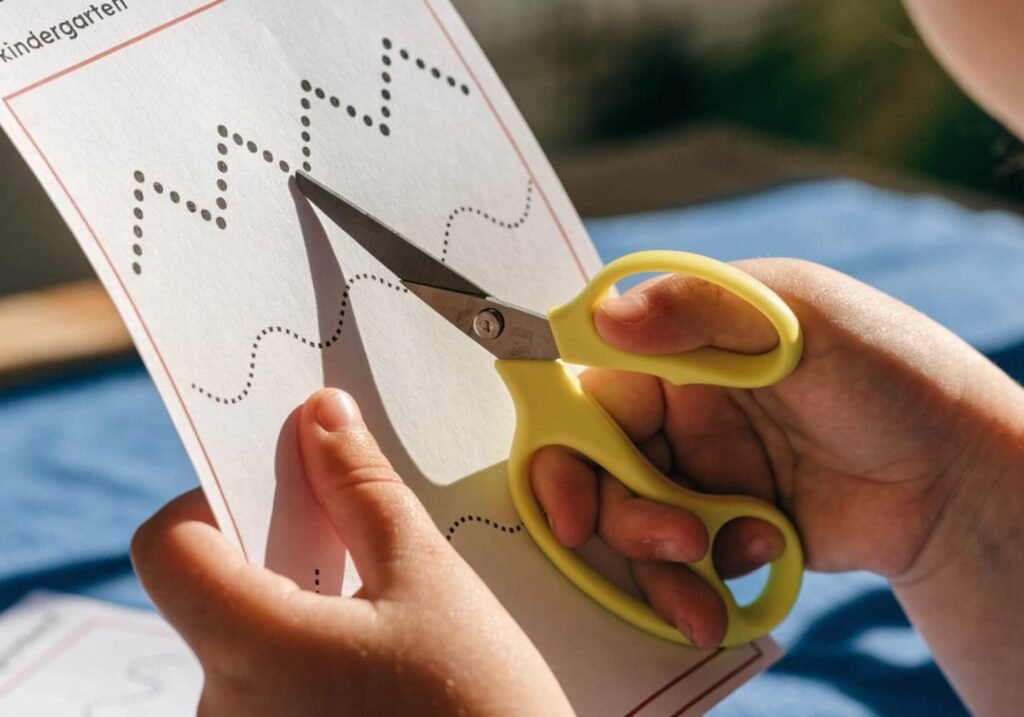
Straight lines first, then zigzags, then curves — that’s the actual skill progression, and skipping straight to curved lines is why a lot of first attempts at cutting circles look ragged. Draw three or four thick black lines (straight, zigzag, wave) across a sheet of card stock and have the child cut along each one before moving to a shape. For gluing, a glue stick beats liquid glue for kids under 6 almost every time — liquid glue bottles are hard to control and kids squeeze out way more than needed, which makes paper soggy and slow to dry. A simple “shape collage” — cutting pre-drawn triangles, squares, and circles and pasting them into a house or robot shape — combines both skills in one sitting.
5. Recycled Material Craft Ideas
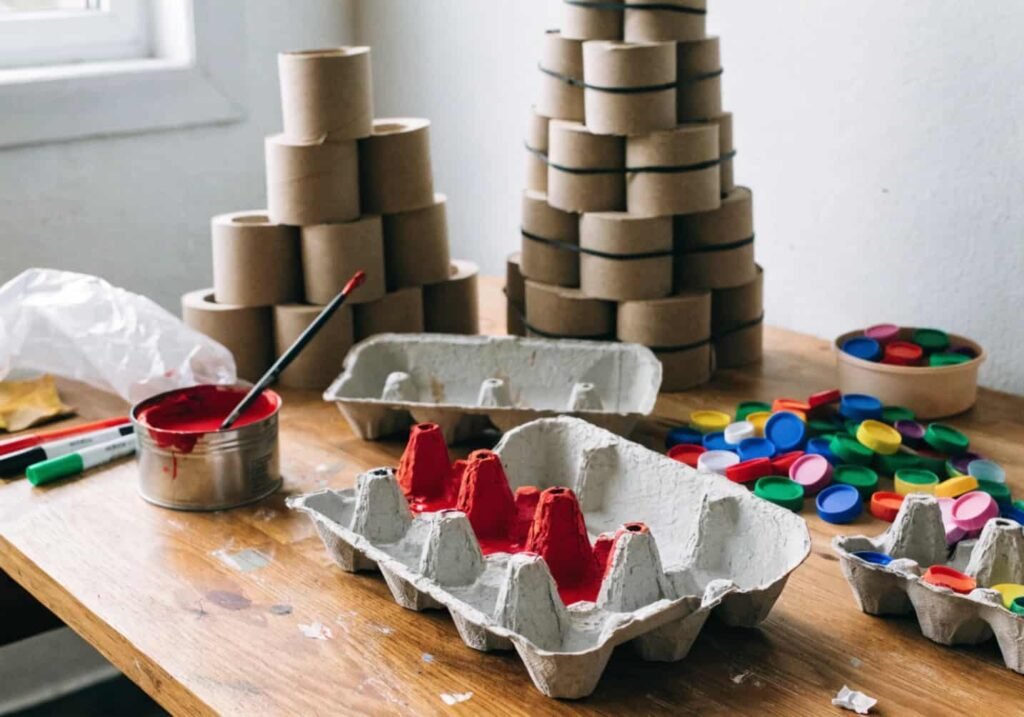
Toilet paper rolls, egg cartons, cereal boxes, and bottle caps are the four workhorses of low-cost craft time, and most classrooms already have a steady supply without buying anything. Egg cartons cut into individual cups make great caterpillar segments or paint-mixing trays. Toilet paper rolls stood upright and decorated become simple binoculars, rockets, or animal bodies. Cereal box cardboard is sturdy enough to cut into puzzle pieces or picture frames but still thin enough for a child to cut with safety scissors, unlike thicker packaging cardboard, which usually needs an adult to pre-cut. One thing worth knowing: rinse and fully dry egg cartons and bottle caps before storing them in a craft bin, or they’ll smell like sour milk or juice within a week.
6. Seasonal Craft Projects Throughout the Year
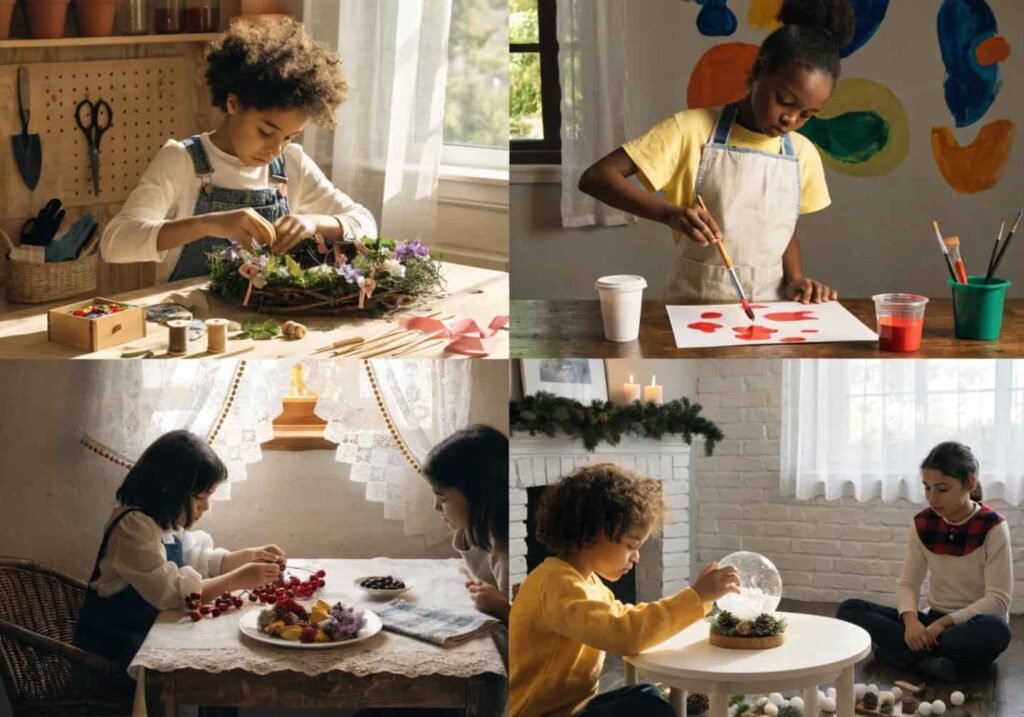
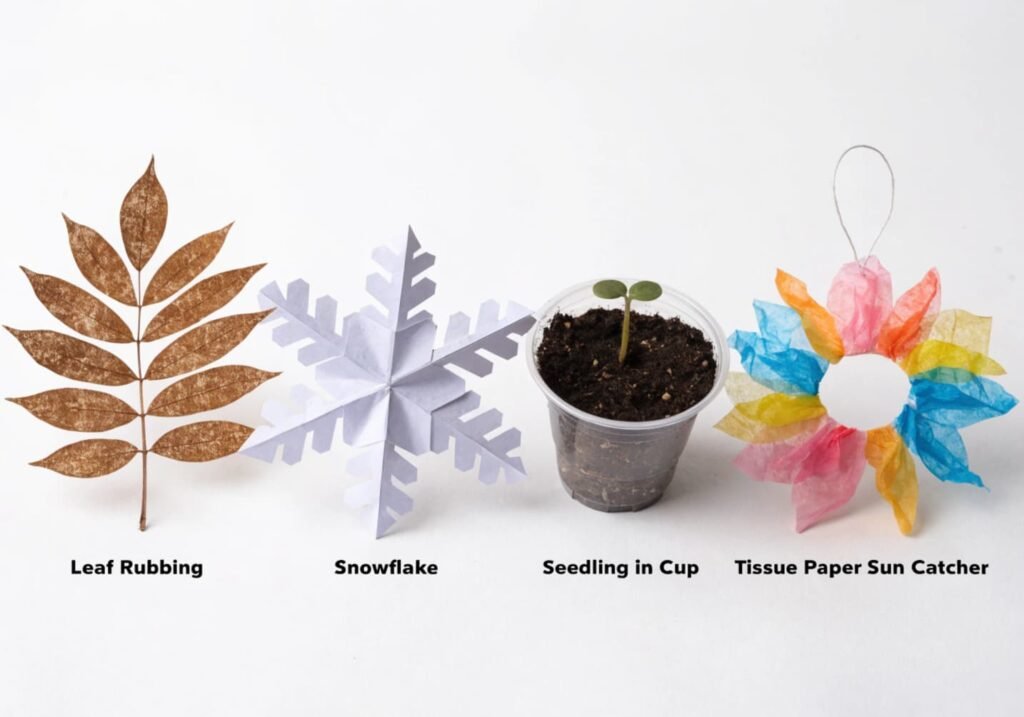
Rotating crafts by season keeps the activity list from feeling repetitive and gives kids a natural sense of the calendar. Fall: leaf rubbings using the side of a peeled crayon over a real leaf under paper — this works better than tracing, since the texture actually shows up. Winter: paper snowflakes folded and cut, which doubles as a symmetry lesson once you unfold it. Spring: seed planting in a clear plastic cup so roots are visible, paired with a simple growth-tracking chart. Summer: sun catchers made from contact paper and tissue paper scraps pressed between two sheets, taped to a window. None of these need more than five materials, which matters if you’re prepping for a classroom of 20 kids rather than one at home.
7. Crafts That Teach Colors and Shapes
Color sorting works better as a craft than a worksheet because kids remember what they built. A “color wheel plate” — gluing pom-poms or torn tissue paper onto the matching color section of a pre-drawn wheel — teaches primary and secondary colors without a lecture. For shapes, a “shape monster” made from one large circle (body), triangle (hat), and small squares (buttons) gets kids naming shapes out loud as they place them, which sticks better than pointing at a shape flashcard. A cheap trick that actually helps: use bingo daubers instead of paint for shape-stamping activities. There’s no brush to rinse, no paint to spill, and the dot shape naturally reinforces circles.
8. No-Mess Craft Ideas for Busy Teachers
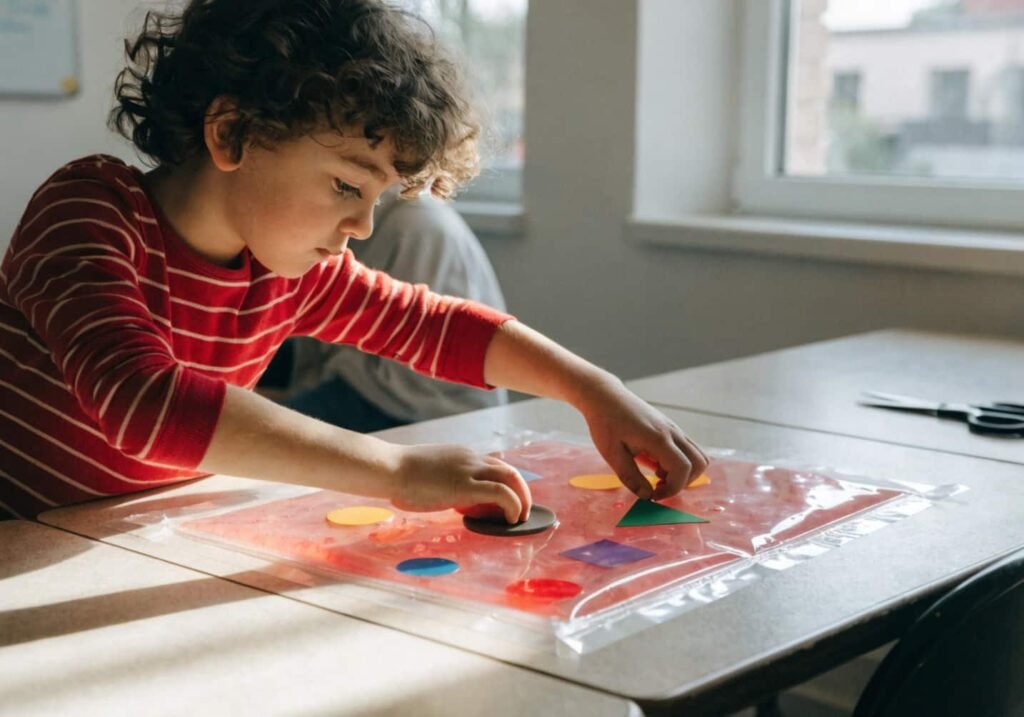
Sensory bags are the underrated option here: hair gel or clear washing-up gel sealed into a zip-lock bag (taped shut along the top for extra security) lets kids “finger paint” shapes or letters by pressing through the plastic — zero cleanup, reusable for weeks. Contact paper collages work the same way — sticky side facing out, taped to a table or window, and kids press on tissue paper, leaves, or felt scraps that stick without any glue at all. Sticker-based crafts (building a scene entirely from stickers on cardstock) are the fastest option when you’ve got 25 minutes and no time to set up paint stations. The trade-off is real, though: no-mess crafts are great for large groups or quick sessions, but they skip the actual paint/glue fine motor practice, so they shouldn’t replace messier crafts entirely — just balance them out on busy days.
9. Displaying Kindergarten Artwork Creatively
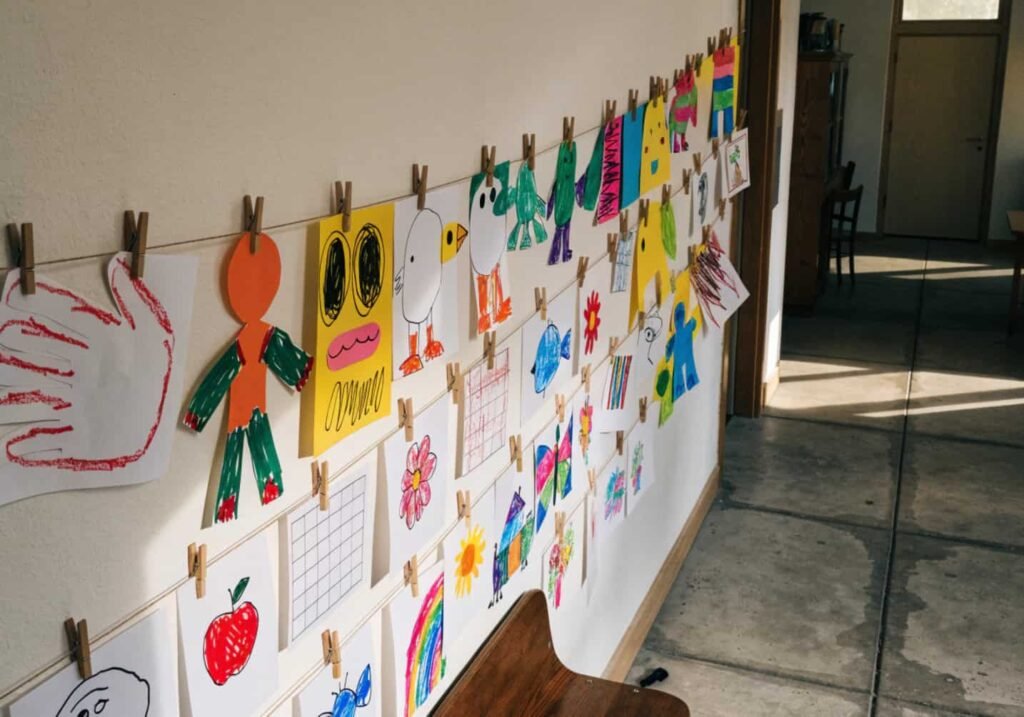
A clothesline strung along one wall with mini wooden clips beats a bulletin board for one simple reason: kids can rotate their own artwork in and out without needing an adult with a stapler. For families, a rotating “gallery wall” in a hallway using a few inexpensive clip frames (the kind without glass, around $5–8 each) means new art replaces old without wrecking the wall. If storage space is the real issue, take a photo of each piece before it gets recycled and drop it into a shared album — you keep the memory without keeping 200 paper plates in a closet. Genuinely useful piece of advice from a preschool teacher I know: label the back of each piece with the date and a one-line quote about what the child said while making it. Years later, that scribbled sentence means more than the drawing does.