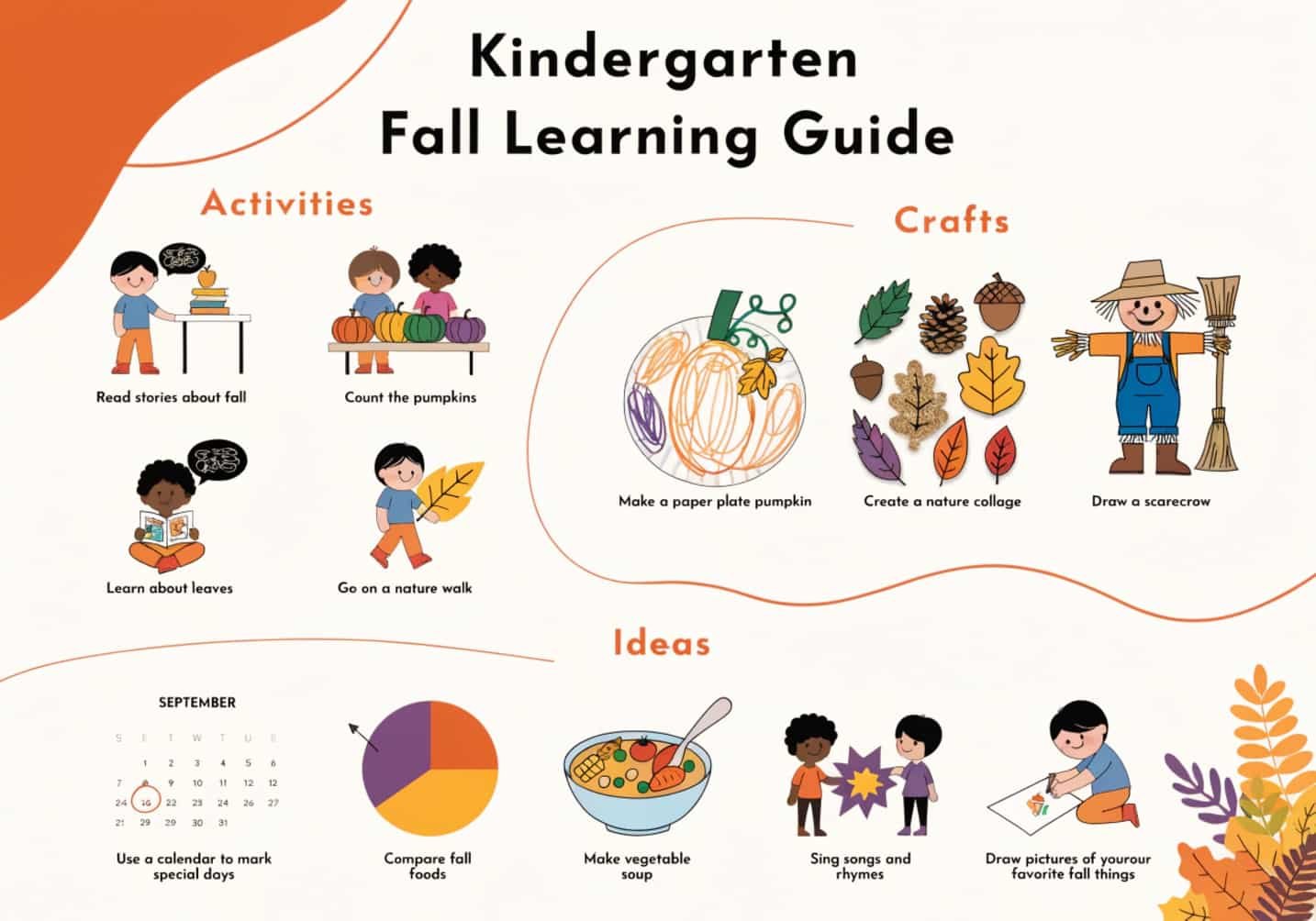
Fall is the one season Kindergarten Fall teachers actually look forward to planning for. The weather cools down enough that kids aren’t melting on the playground, there’s a built-in theme (leaves, pumpkins, harvest) that touches almost every subject area, and you don’t need a big budget — most of what you need is either free (leaves, acorns, pinecones) or already sitting in a grocery store bin. Below is a working guide, not a list of vague suggestions, with actual materials, timings, and a few things that trip teachers up the first time around.
1. Embracing the Fall Season in the Classroom
You don’t need to redecorate the whole room to make fall “land” with five-year-olds. Start with one sensory anchor — a bowl of real acorns on the science table, or a stack of actual pumpkins (mini ones, $2–4 each at most grocery stores in September/October) by the door — and let that be the thing kids touch every morning during arrival. The mistake a lot of new teachers make is going all-in on printable decorations and skipping the tactile stuff, which is actually what holds kindergarten attention. One physical object kids can pick up beats ten laminated leaf cutouts on a wall.
2. Fall-Themed Circle Time Ideas
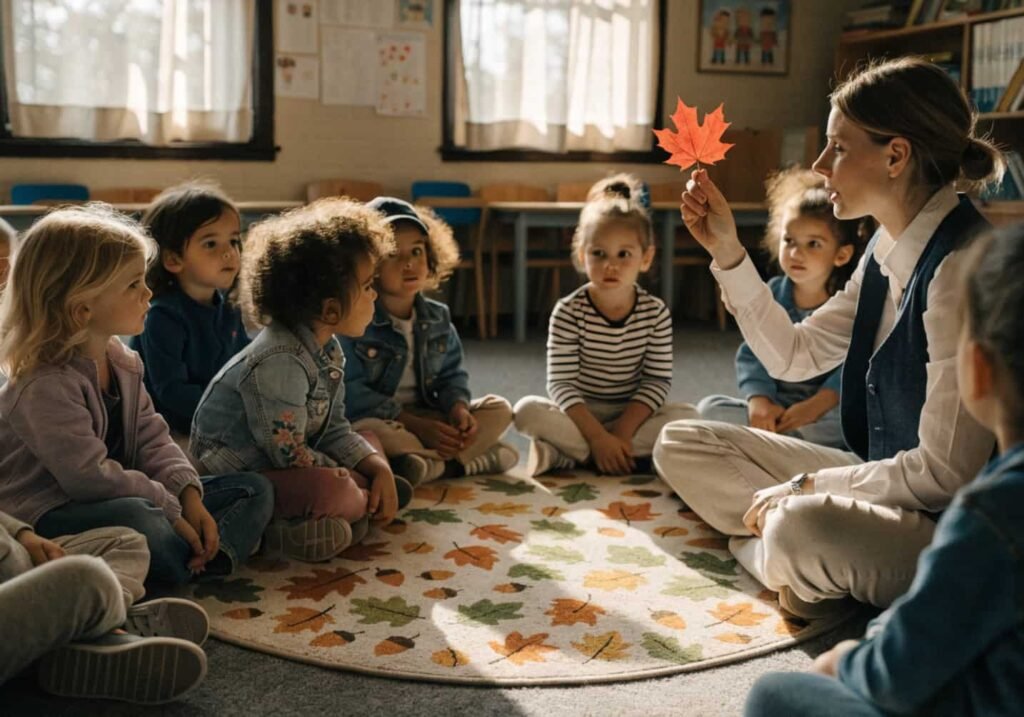
Circle time works best around 10–15 minutes for this age group, so pick one focused activity rather than three shallow ones. A reliable opener: pass around a real leaf, apple, or gourd and have each child say one word about how it feels (bumpy, smooth, cold, light). Follow with a short “what changes in fall” discussion using a visual weather wheel. Avoid open-ended “tell me about fall” prompts — kindergartners ramble and lose the group’s attention fast; a specific sensory or yes/no prompt keeps the pace moving.
 3. Teaching Colors Through Falling Leaves
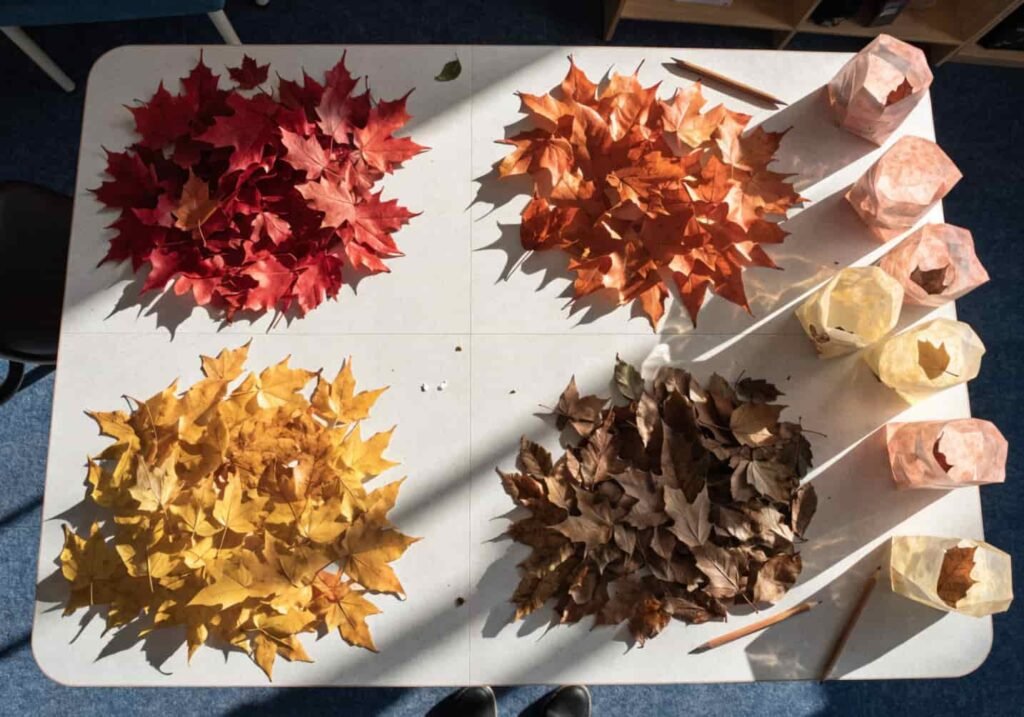
This is one of the few times color-matching feels genuinely connected to something real instead of a worksheet. Take the class outside with small paper bags and have them collect leaves in exactly four colors: red, orange, yellow, and brown/green. Back inside, sort into labeled baskets or a simple color-coded mat. A trick that works better than most people realize: laminate the leaves the same day you collect them (a $20 basic laminator pays for itself in weeks) — fresh leaves curl and crumble within 48 hours, and laminating flat while they’re still pliable keeps them usable all season instead of one afternoon.
4. Simple Pumpkin Life Cycle Lesson
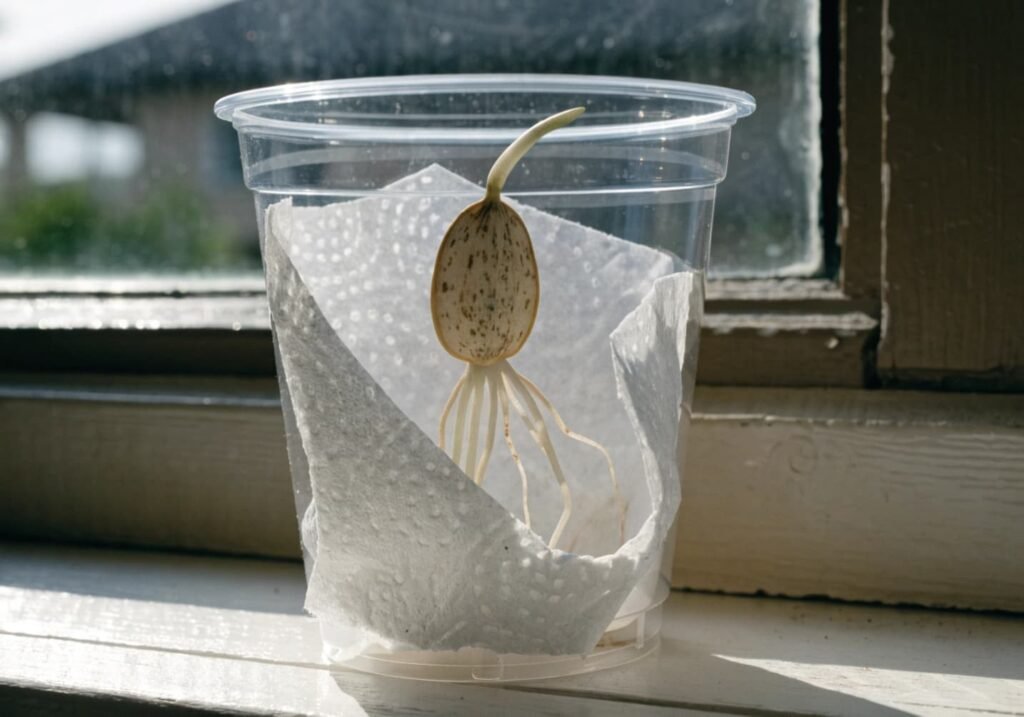
Skip the abstract diagram-only approach. Use a six-step visual sequence — seed, sprout, vine, flower, green pumpkin, orange pumpkin — and pair each step with an actual pumpkin seed the kids can hold at the “seed” stage. If your budget allows it, order a set of real or realistic plastic pumpkin life-cycle figures (around $10–15 online); kids retain the sequence far better manipulating physical pieces than pointing at a printed poster. Plant a few seeds in clear cups with damp paper towel on the inside of the cup wall — this lets kids literally watch roots form over about 5–7 days, which is the part that usually gets skipped in favor of just the poster.
5. Fall Vocabulary Words for Beginners
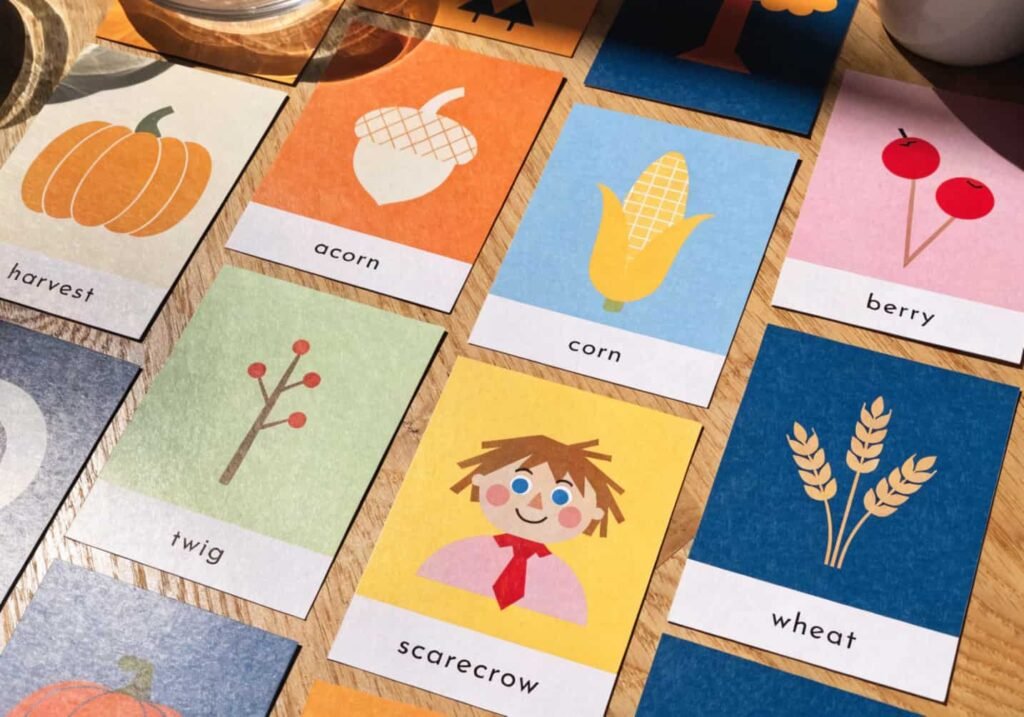
Keep the list to 8–10 words max for kindergarten — harvest, acorn, scarecrow, migrate, hibernate, crisp, crunchy, orchard, gourd, rustle. Trying to teach fifteen-plus words in a week just means none of them stick. Pair each word with a physical action or sound: “rustle” gets acted out by shuffling feet through a pile of leaves, “crunchy” gets an actual leaf stepped on. Words with a matching sound or motion get remembered; words that only exist on a flashcard mostly don’t.
6. Counting with Acorns and Pinecones
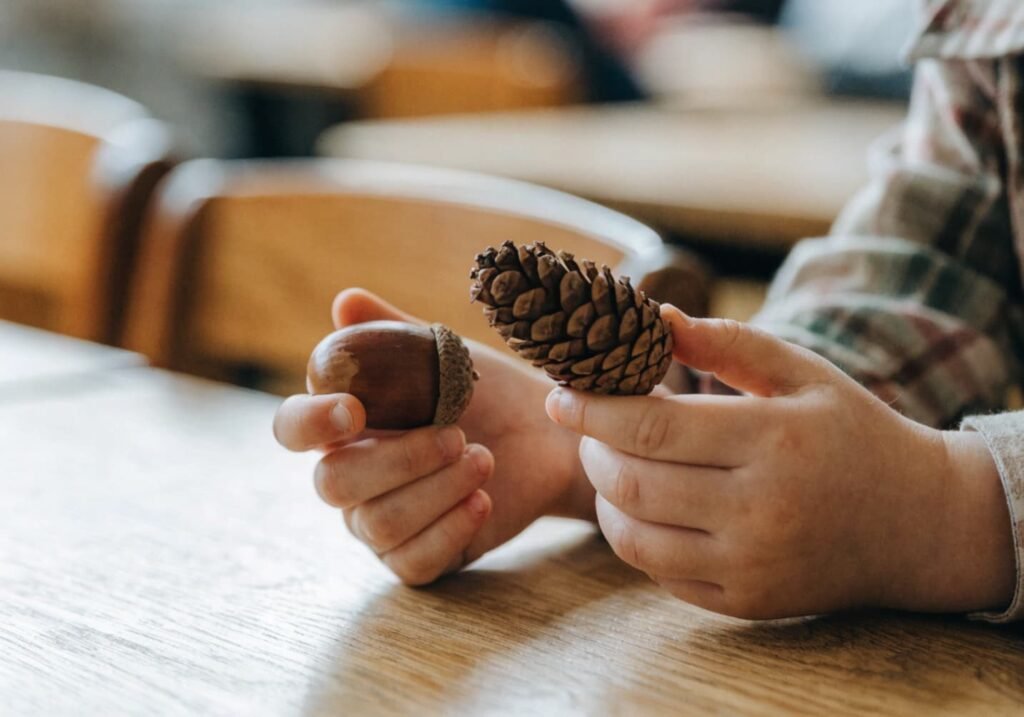
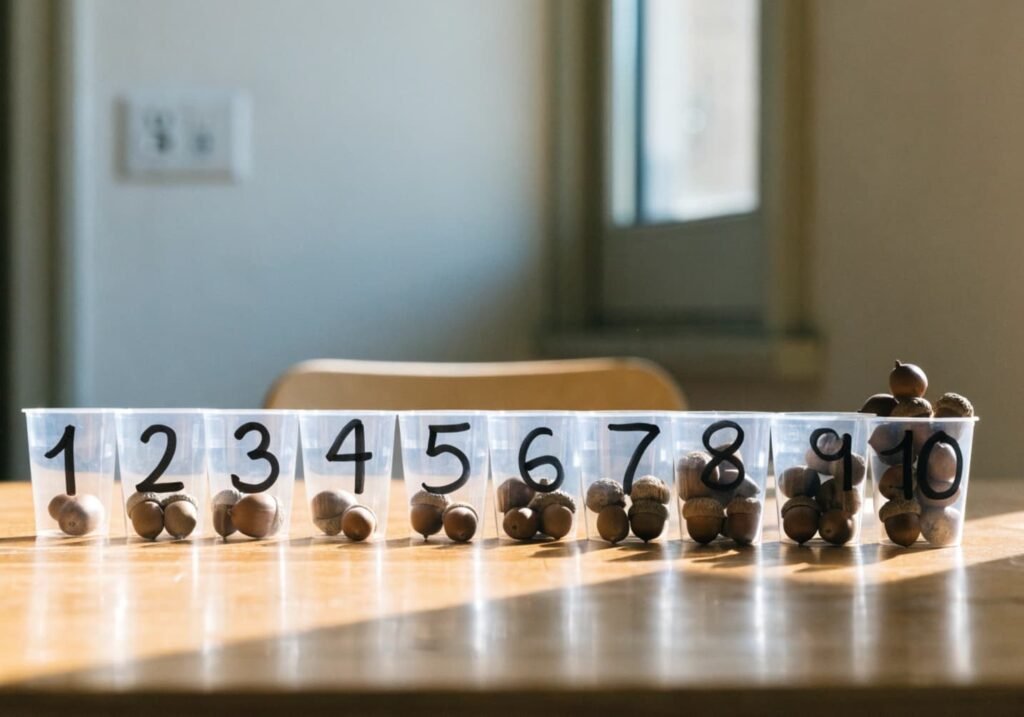
Natural materials make counting feel less like a worksheet and more like a game, mostly because they’re irregular — no two acorns are exactly the same size, which actually forces kids to count more carefully instead of pattern-matching by shape. Set up ten small cups labeled 1–10 and have kids fill each cup with the matching number of acorns. For a stretch activity with kids who are ahead, add simple addition using two small piles (“3 acorns plus 2 acorns, how many now?”). One practical note: boil collected acorns for about 2 minutes before using them indoors — this kills off any insect larvae that might be hiding inside, which is a step most fall-activity blogs skip entirely and then wonder why parents complain a week later.
7. Fall-Themed Sensory Table Setup
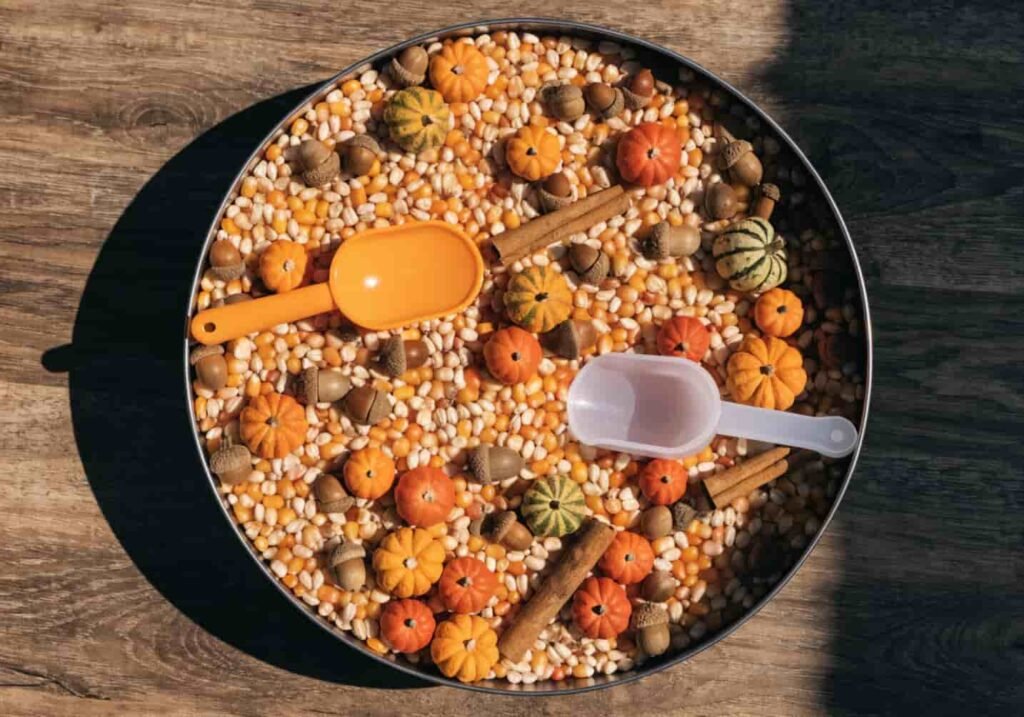
A good sensory bin isn’t just “dump leaves in a bin.” Layer it: base layer of dried corn kernels or shredded brown paper, then scatter mini pumpkins, acorns, pinecones, and a few small scoops and tongs. Rotate in cinnamon sticks or whole cloves for a scent element — it’s a small addition but it’s the one kids remember weeks later. Keep the bin shallow (2–3 inches of fill) rather than deep; kindergartners lose small items in deep bins and it becomes a cleanup problem instead of a learning one.
8. Story Time: Best Fall Books for Kids
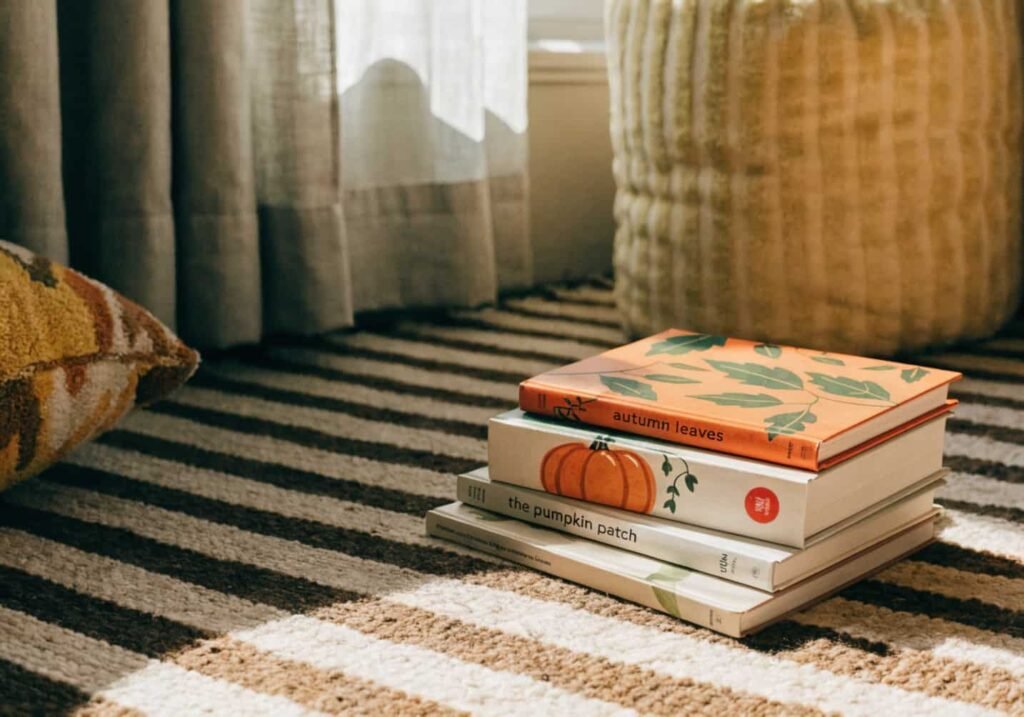
Rotate rather than repeat the same three books all season — kids disengage by week three if it’s the same rotation. A solid mix: one leaf-focused picture book (something like “Leaf Man” by Lois Ehlert), one pumpkin-focused story, and one about animals preparing for winter. Read the same book twice across the month, a week or two apart, rather than five different books once each — repetition is actually where kindergarten vocabulary retention happens, not variety.
9. Fall Nature Collage Craft
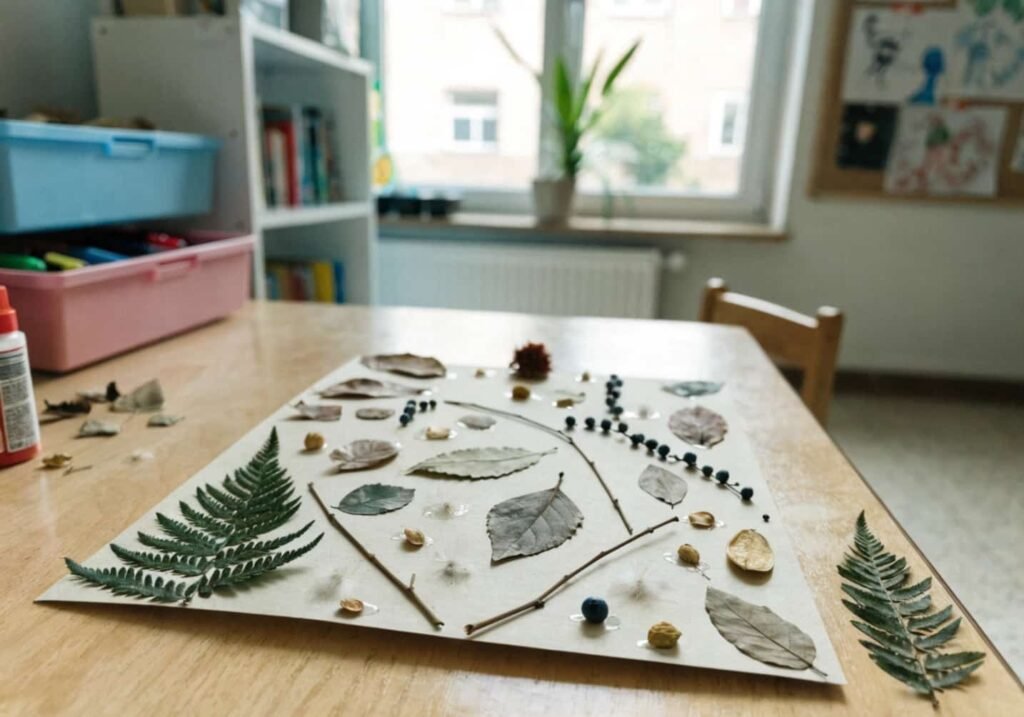
Cardstock backing, a glue stick (liquid glue tears the paper and takes too long to dry for a 30-minute activity block), and a mix of collected leaves, small twigs, and seeds. The trick that separates a good collage activity from a chaotic one: pre-sort the materials into small trays before kids start gluing, rather than one shared communal pile. A shared pile turns into a grabbing contest within the first two minutes; individual trays keep everyone working at their own pace.
10. Weather Observation Journal for Fall
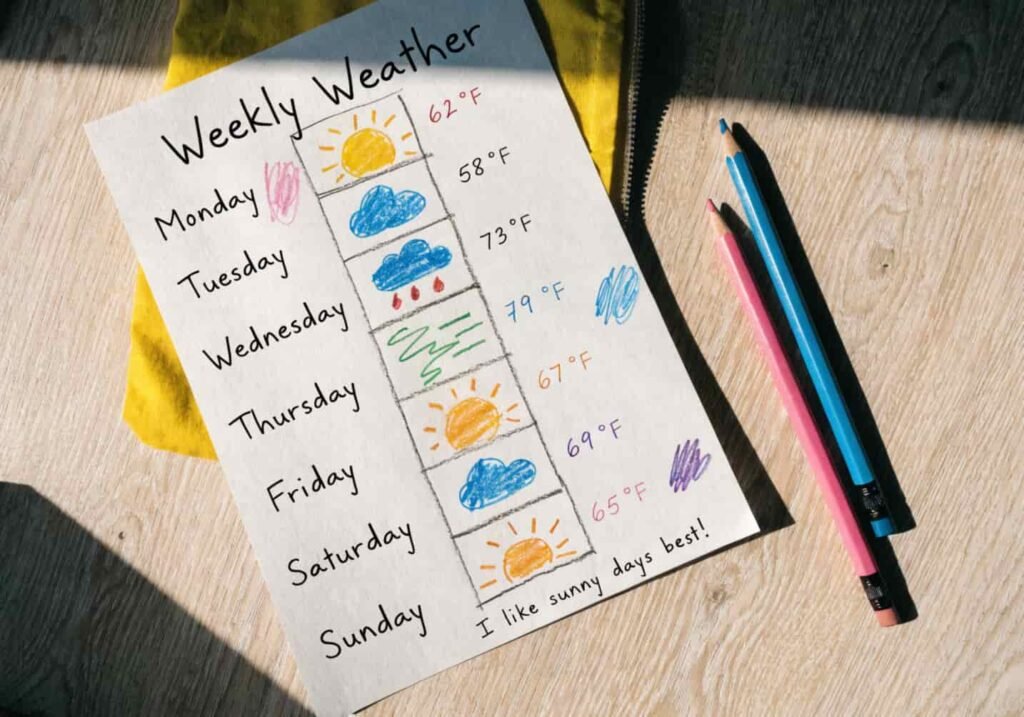
A simple weekly journal works better than a daily one for kindergarten — daily tracking becomes rote by day four and the observations get lazy. Use a one-page template with four boxes: sunny, cloudy, rainy, windy, plus a small line for temperature (hot/warm/cool/cold, not actual degrees at this age). Have kids check the same box and draw one thing they noticed outside that day. Over four to six weeks this builds a genuinely useful pattern kids can look back at and see the season actually shifting, which is more meaningful than a single day’s snapshot.
11. Fall Cooking or Snack Activities
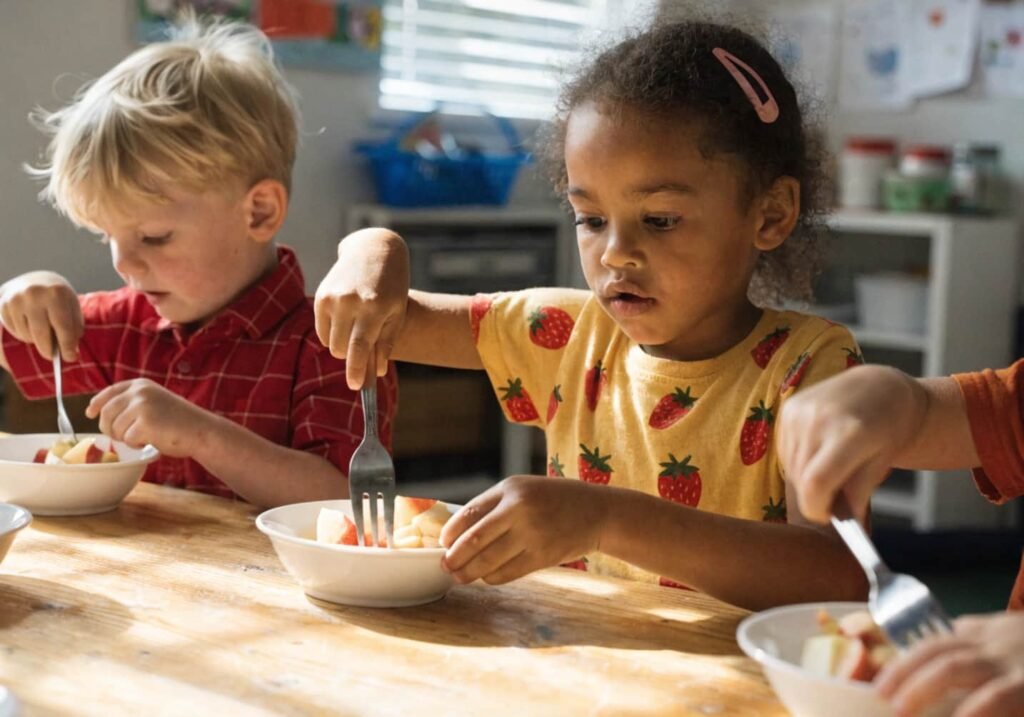
No-bake works best for a 30–45 minute classroom window. Applesauce made from peeled, pre-cut apple chunks kids mash themselves with a fork (no stove needed) is reliable and teaches a basic sequence: wash, mash, taste. Pumpkin seed roasting is another option, but it needs oven access and about 20 minutes of bake time, so it only works if you have a staff kitchen nearby — plan it as a half-day activity, not a quick one. Always check the class allergy list before either activity; tree nut cross-contamination on packaged cinnamon or spice mixes trips people up more than the actual apples or seeds do.
12. Music and Movement Fall Games
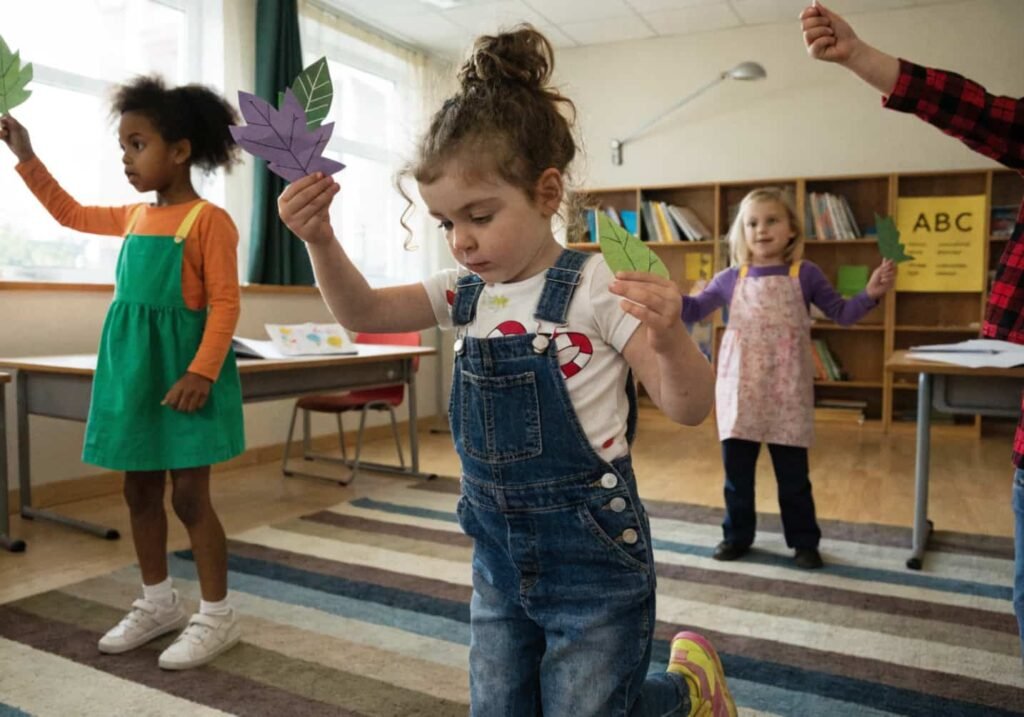
“Leaf freeze dance” works well: play music, kids dance holding a real or paper leaf, and when the music stops they freeze in place. Simple, but it burns energy without needing much setup. Another one that holds attention longer than expected: a “scarecrow says” version of Simon Says, where kids only follow instructions that start with “Scarecrow says.” It’s a listening exercise dressed up as a game, and it’s genuinely useful for kids who struggle with following multi-step directions.
13. Fall Field Trip Ideas
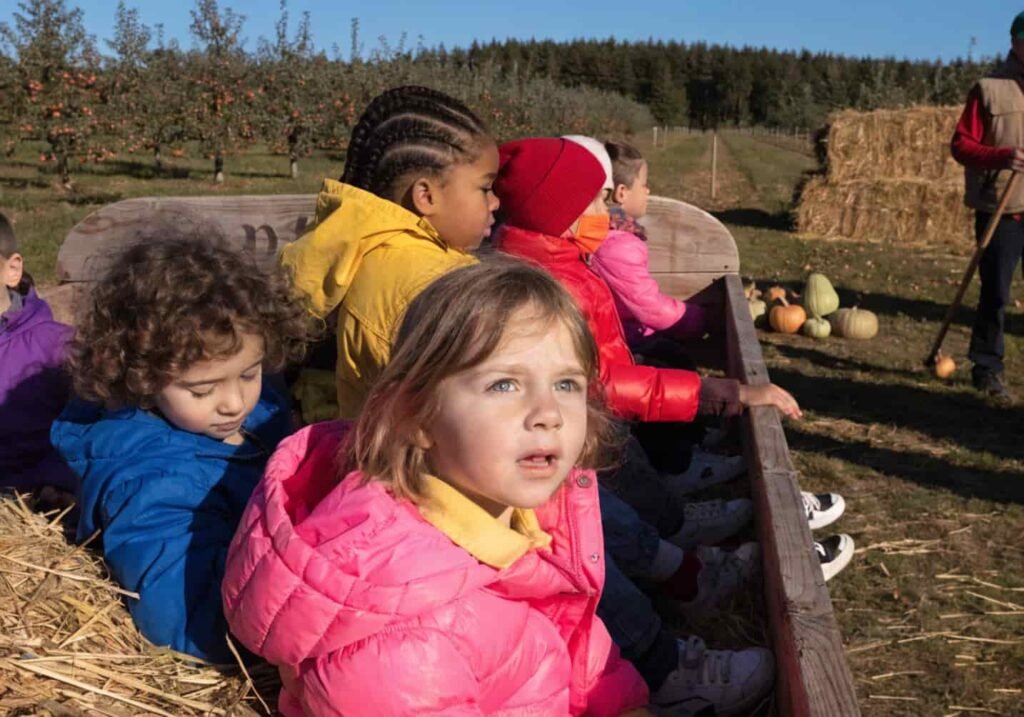
A working farm or orchard with a pick-your-own section beats a generic “fall festival” every time, because kids get a hands-on task (picking an apple, choosing a pumpkin) instead of just walking around looking at things. Budget wise, most local orchards run $8–15 per child for group visits including a hayride, which is usually cheaper than people expect. If a full trip isn’t feasible, a shorter walk to a nearby park to collect leaves and observe trees changing color covers a good chunk of the same learning goals for free.
14. Classroom Decoration Tips for Autumn
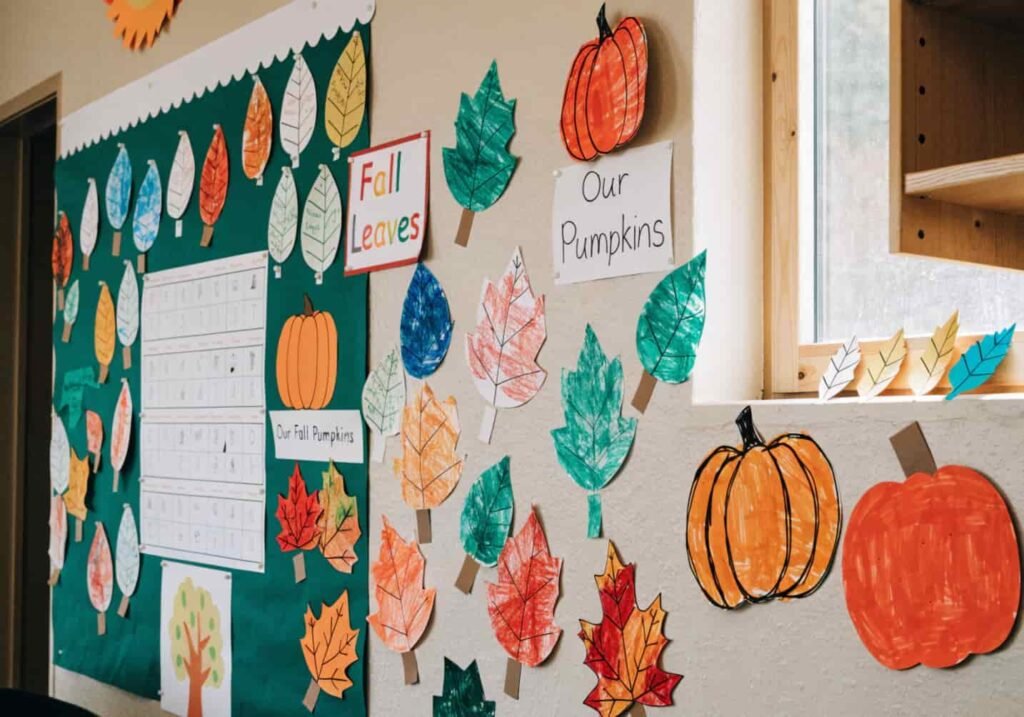
Skip buying a full decoration kit and instead build a rotating “kid-made” wall — every craft the class makes that week goes up, and last week’s comes down. It keeps the room feeling current instead of static, and it costs nothing beyond what you’re already making in craft time. If you do buy anything, a $15–20 set of reusable felt leaf garlands lasts multiple years and beats paper garlands that rip during takedown in November.
15. Closing Out the Fall Season with a Celebration
Keep the end-of-season celebration low-key rather than a full event — a 45-minute afternoon works fine. A simple structure: one snack (see the applesauce idea above), one movement game, and a short “share your favorite fall memory” circle where each child says one sentence. It doesn’t need costumes or a big production; the kids mostly remember whether they had fun and got to talk, not how elaborate the setup was.