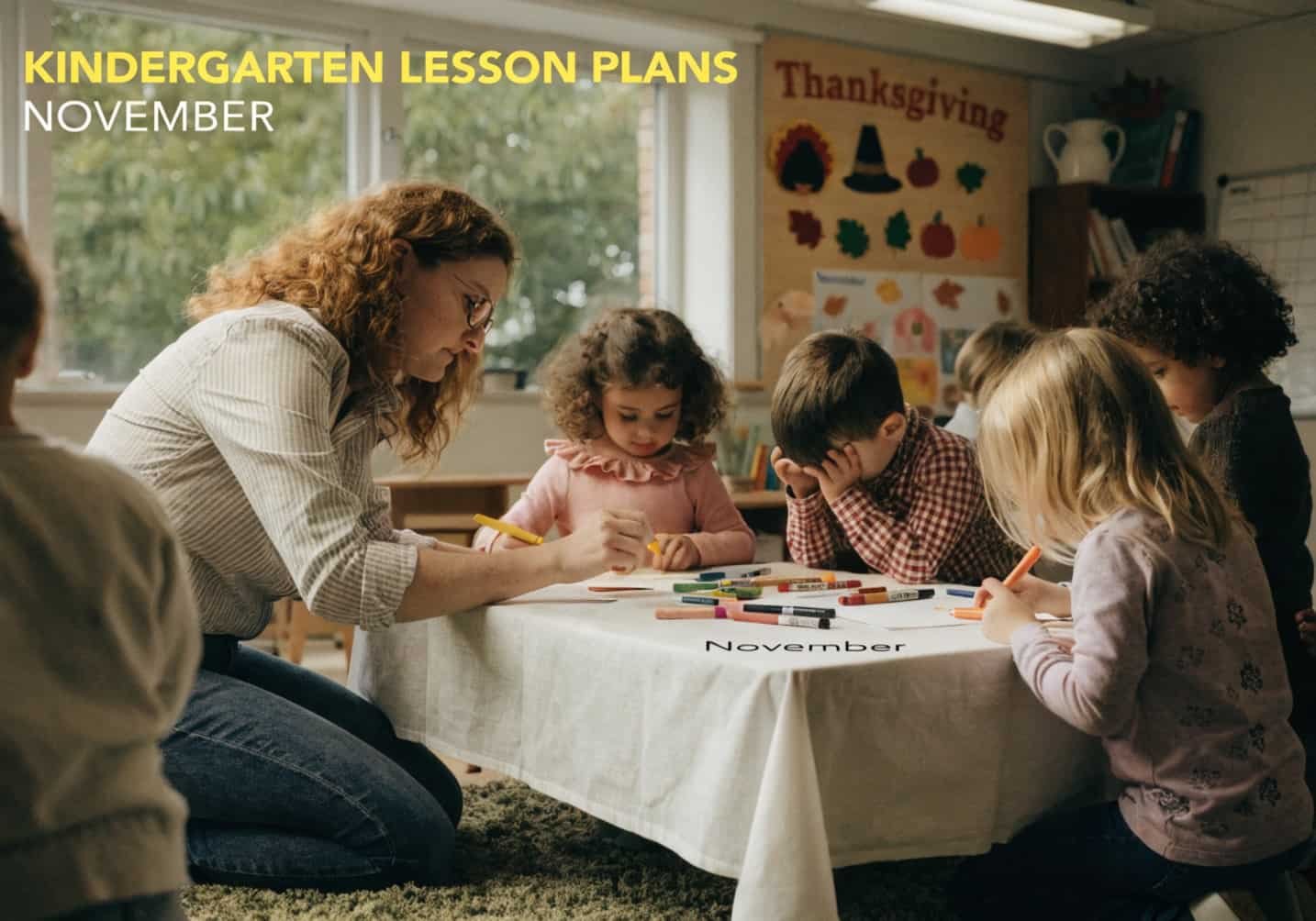
November in a kindergarten classroom is a strange stretch. The Halloween sugar high is gone, the holiday countdown hasn’t started yet, and the days are getting shorter right when five-year-olds need more movement, not less. If you’ve taught this age group for more than one year, you already know the third week is when attention spans fall off a cliff. This isn’t a generic “fall activities” roundup — it’s a month broken into pieces that actually work with how young kids function in Kindergarten November specifically.
1. Planning a Successful November in Kindergarten
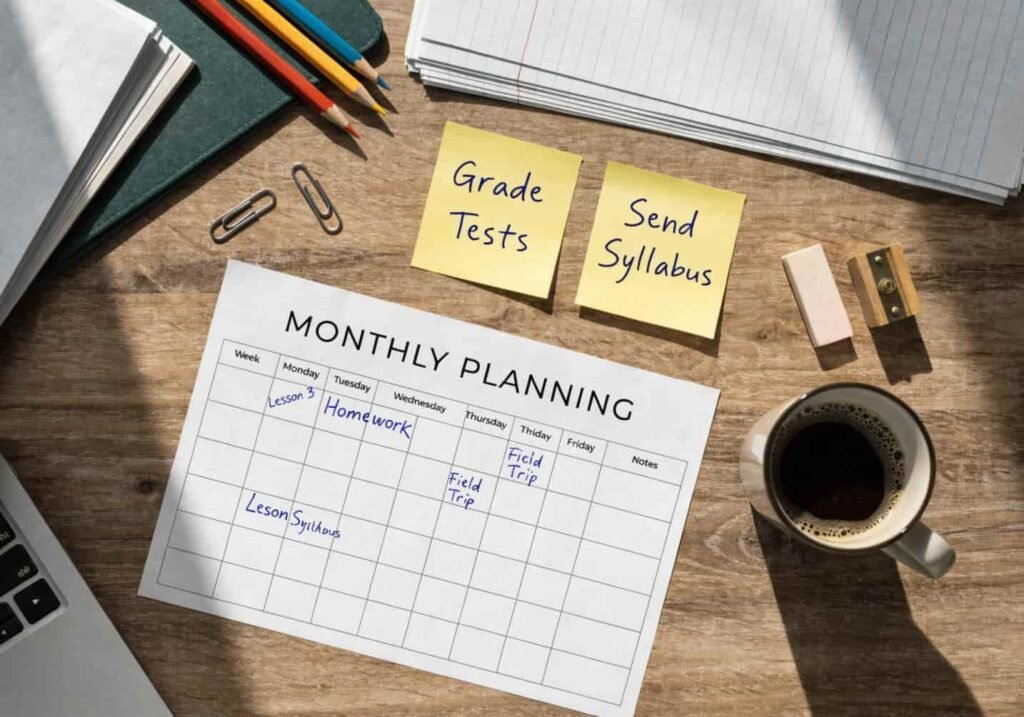
Start by mapping the month in three chunks instead of thinking of it as one long unit: weeks 1–2 (momentum), week 3 (the dip — plan lighter, more sensory activities here), and the final week before break (wind-down and reflection). Most teachers plan November as one continuous theme and then wonder why kids are climbing the walls by the 20th. A rough skeleton: 60% of your literacy and math time stays in your normal routine with a fall skin on it, 25% goes to one or two anchor projects (like the Thankful Tree below), and 15% is flex time for whatever the weather or the class mood demands. Print a one-page monthly grid and pin it near your teacher desk — not for the kids, for you, so you’re not reinventing the week every Sunday night.
2. Setting Learning Goals for the Month
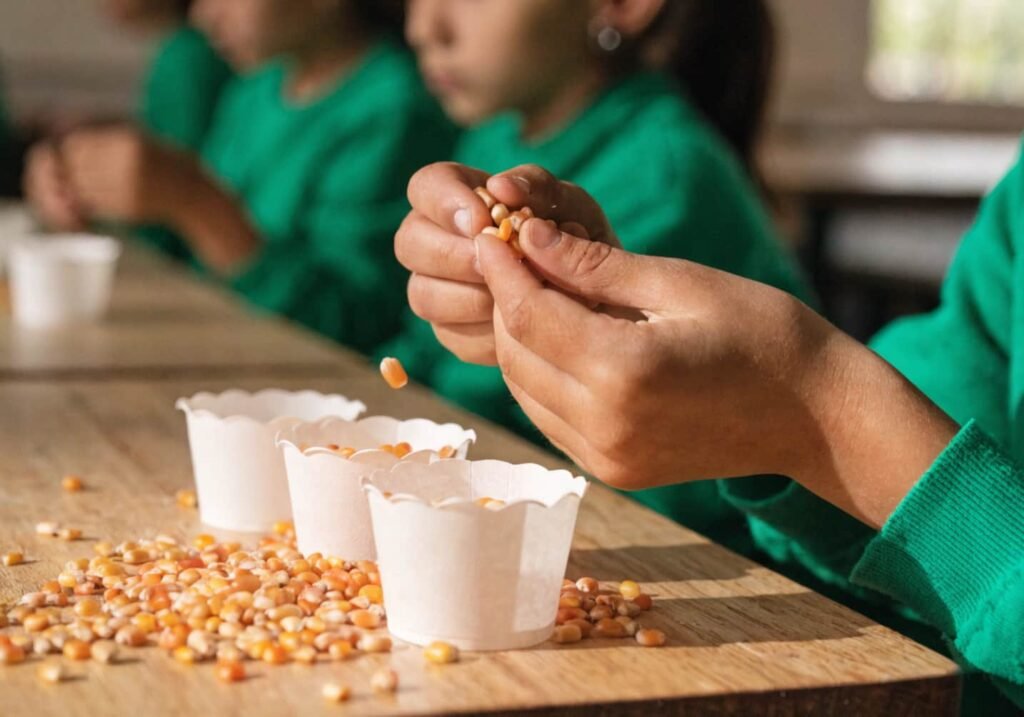
Kindergarten goals in November should be narrow, not broad. Instead of “improve literacy skills,” pick something measurable like “recognize and write 5 new sight words” or “count and write numbers to 20 without skipping.” Tie each goal to one November activity so it doesn’t feel bolted on. For example, if your goal is one-to-one correspondence in counting, have kids count kernels of dried corn or candy corn into small cups instead of counting abstract dots on a worksheet — same skill, more tactile, and it holds attention about twice as long based on what most K teachers report anecdotally. Write the 3–4 goals on an index card and tape it inside your lesson plan book; it keeps you from drifting into “cute but pointless” crafts for the sake of the season.
3. Thankful Tree Classroom Activity
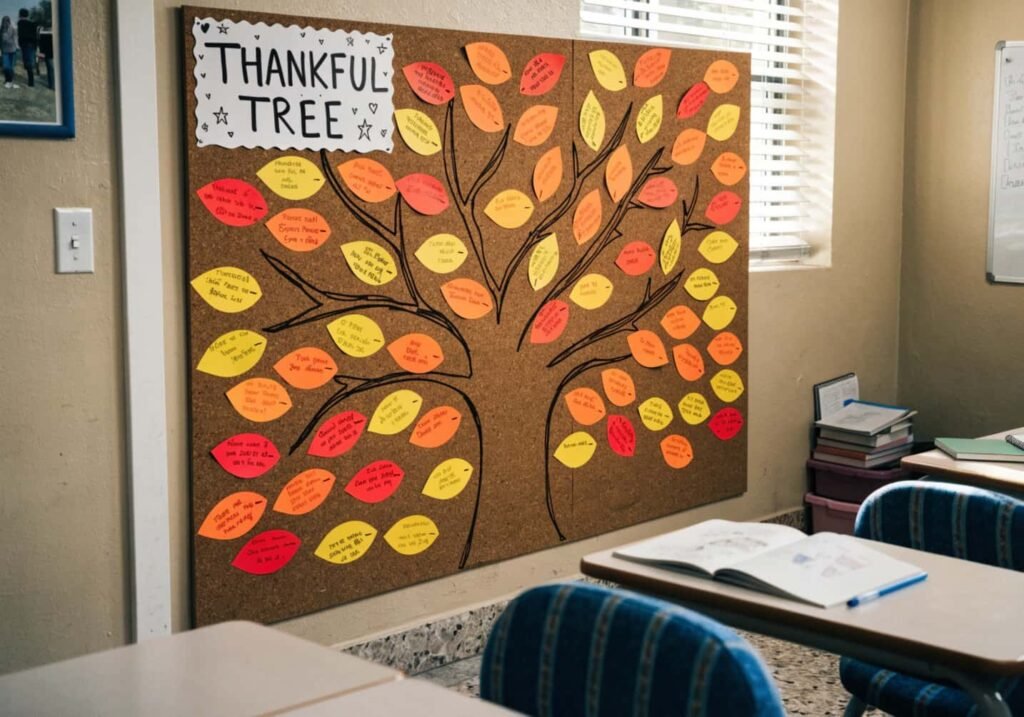
This is the one activity worth doing well instead of rushing. Cut a bare tree trunk and branches from brown butcher paper and mount it on a wall at kid height — roughly 3 to 4 feet tall works for most classrooms without eating your whole bulletin board. Each day, one or two students add a paper leaf (precut in red, orange, and yellow) with something they’re thankful for, either drawn or dictated to you if they can’t write yet. The trick most classrooms miss: don’t do all 20 kids in one sitting. Spread it across two to three weeks so the tree fills in gradually and stays a daily ritual instead of a one-off craft you forget about by the 10th. By Thanksgiving week you’ll have a full, colorful tree that’s genuinely theirs, not something assembled in an afternoon.
4. Letter and Number Practice with a Fall Twist
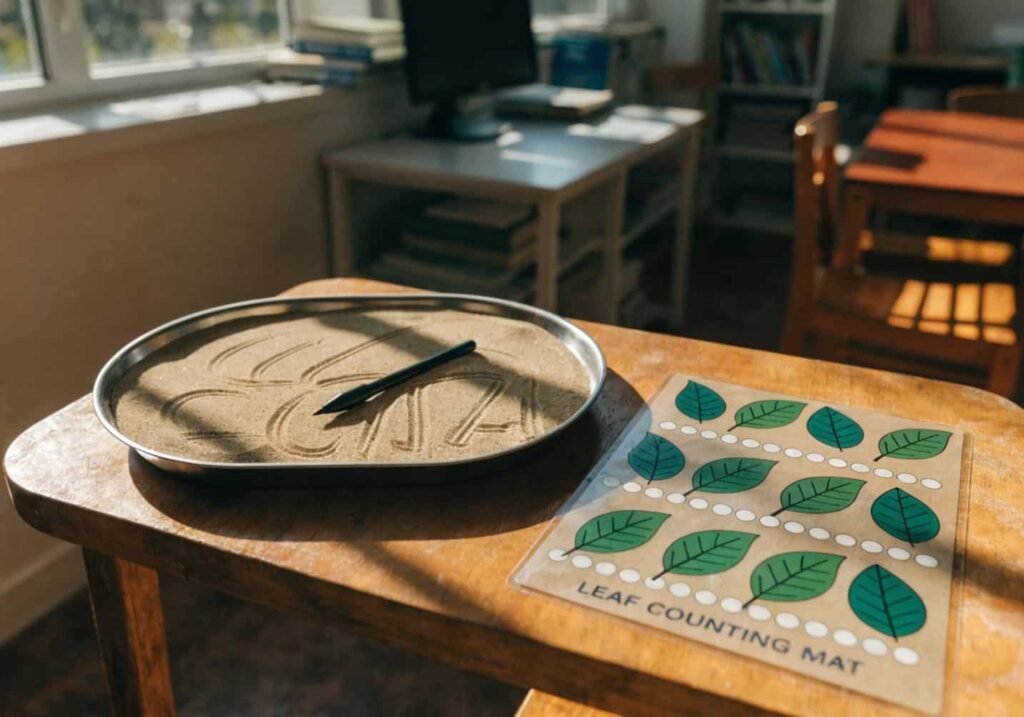
Swap your usual tracing sheets for tactile alternatives a couple times a week — salt trays, sand trays, or even a shallow bin of dried lentils work for letter formation practice and cost under $10 to set up per station. For numbers, acorn or leaf counting mats (laminated, reusable) hold interest longer than printed worksheets because kids physically move pieces. If your budget is tight, real dried leaves collected on a walk work just as well as store-bought manipulatives — just flatten them under books for a day first so they don’t crumble. Rotate two stations at a time rather than setting up five; kindergartners lose the thread when there are too many options at once.
5. Simple Science: Why Leaves Change Color
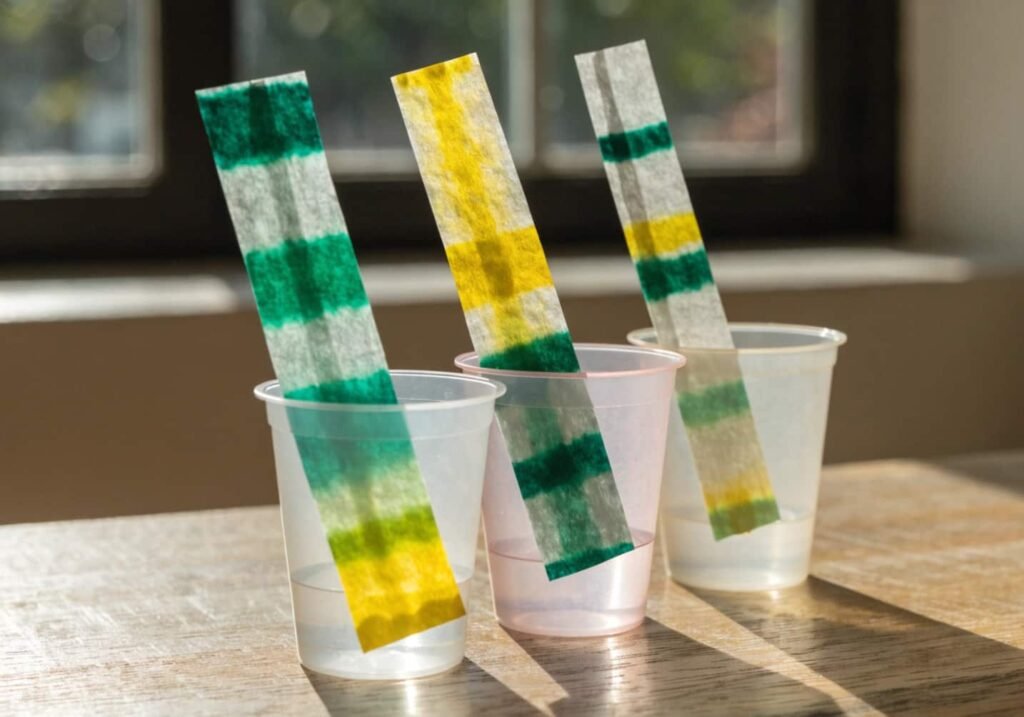
Skip the full chlorophyll-breakdown explanation — it’s wasted on five-year-olds and you’ll lose them at “photosynthesis.” The version that actually sticks: leaves have green, yellow, and orange color hiding inside them all along, but the green usually covers up the rest. When the weather turns cold, the tree stops making the green color, and the yellow and orange that were there the whole time finally show through. You can demonstrate this literally with chromatography — cut strips of coffee filter paper, smear a bit of crushed spinach leaf near the bottom, dip the tip in rubbing alcohol, and watch the green separate into yellow and green bands over about 15–20 minutes. It’s a real experiment, not a worksheet, and it matches the “hidden color” explanation kids can actually hold onto.
6. November Art Projects Using Natural Materials
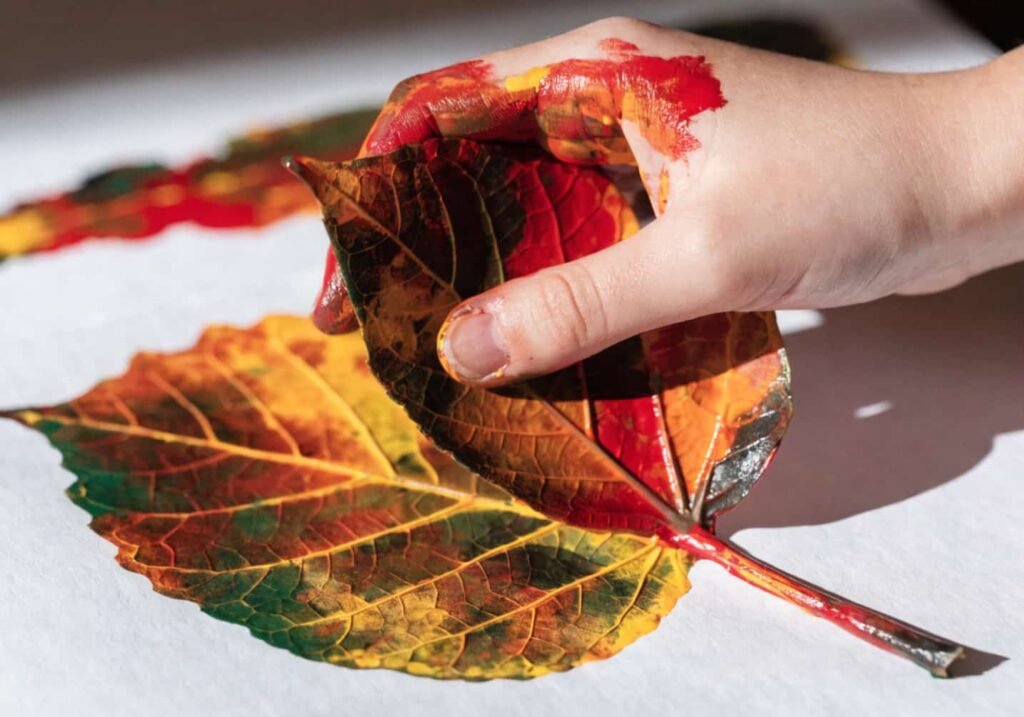
Send a note home a week ahead asking families to save one grocery bag of clean, dry leaves, small twigs, or acorns from a yard or park walk — you’ll get more usable material for free than you would buying craft-store fake foliage, and it gets parents slightly involved without asking much of them. Leaf rubbing with the flat side of a peeled crayon on regular paper is the reliable starter project because it works for kids with any level of fine motor skill. For something less common, try leaf printing with washable paint: paint the underside of a leaf (veins show up better), press it paint-side-down onto paper, and peel it back slowly. One real caveat — thin, dry leaves tear during this, so pick sturdier ones like oak or maple, not thin birch or ginkgo.
7. Circle Time Songs for November
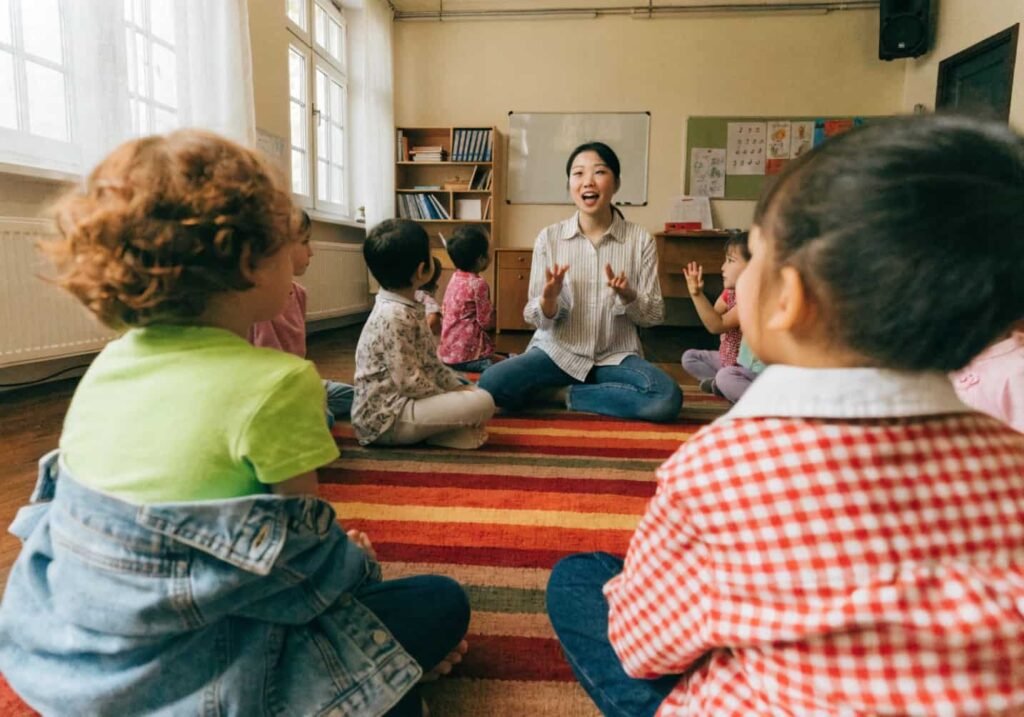
Two or three short songs on rotation beat a new song every day — kindergartners need repetition to actually learn the words, not novelty. A simple counting song about falling leaves (to the tune of “Ten Little Indians” works fine if you don’t have one memorized) covers both music time and number recognition. For a movement break specifically, a “freeze like a scarecrow” song where kids move and then hold still on cue burns energy and resets focus before a seated activity — use it right before transitions into literacy or math blocks, not after, since it works better as a settling tool than a reward.
8. Teaching Kindness and Sharing This Month
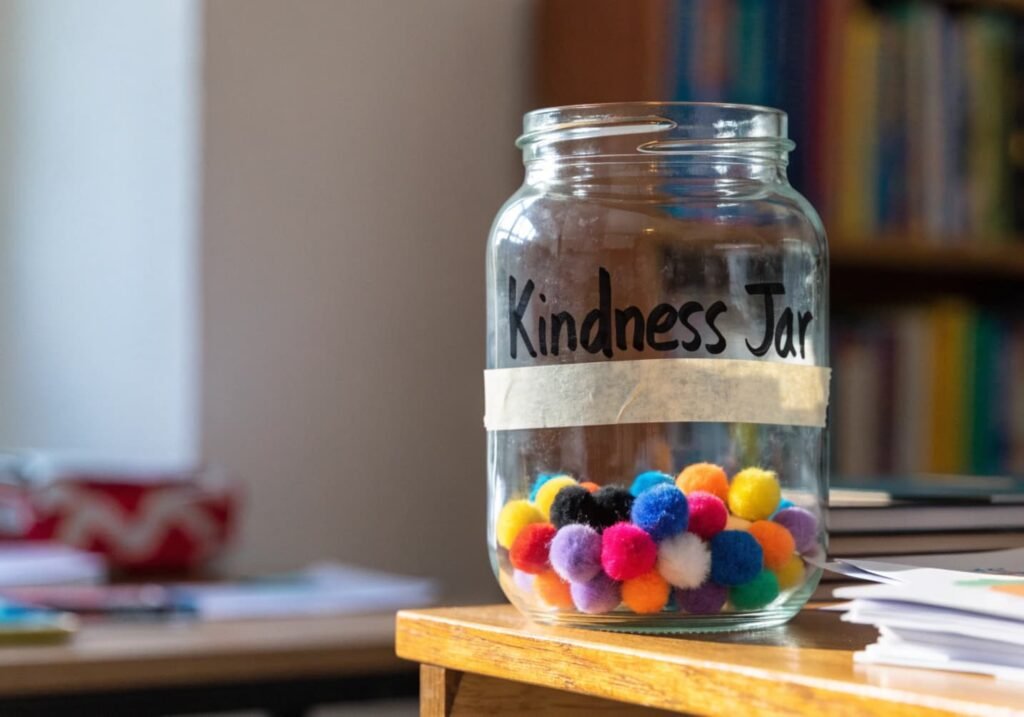
November naturally invites gratitude talk, but “be thankful” as a lesson is too abstract for five-year-olds without a concrete task attached. Try a “kindness jar” where you or the kids drop in a bean or pom-pom every time someone notices a kind act — sharing crayons, helping pick up a dropped folder, including someone at the sand table. Set a visible goal, like filling the jar to a taped line, and when it’s reached the whole class gets something small: an extra 10 minutes of free choice time, not a prize with a price tag. This works better than individual reward charts because it builds a “we did this together” feeling instead of kids competing against each other for stickers.
9. Fun Worksheets for Early Learners
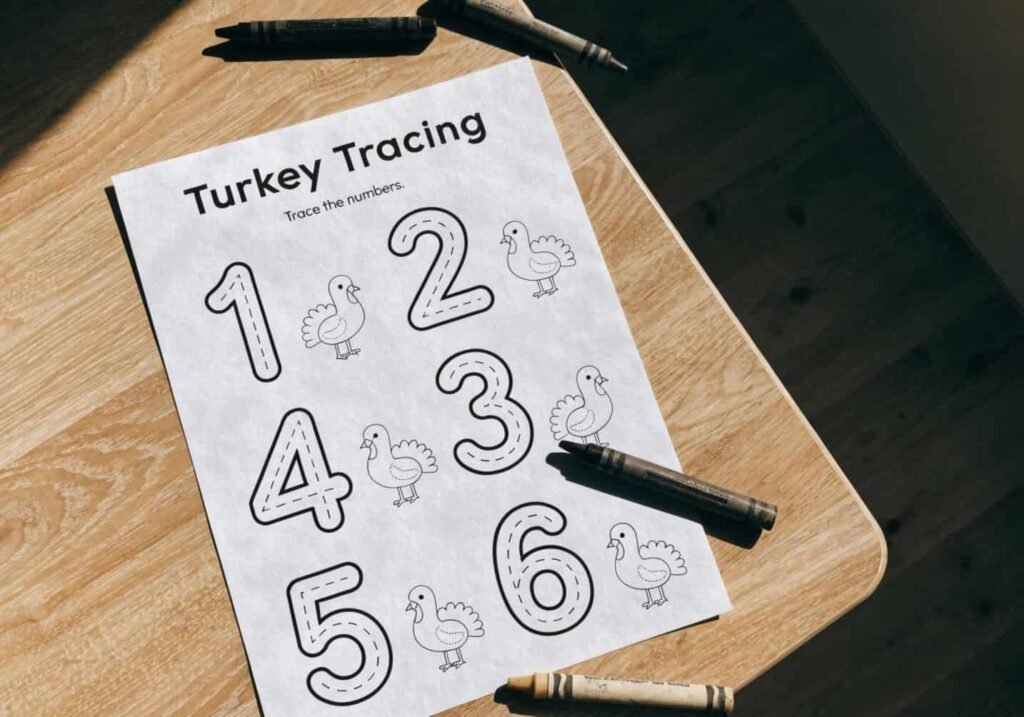
Worksheets aren’t the enemy, but in kindergarten they work best as a 5–10 minute independent task while you pull small groups, not as the main event. Keep the fall theme light on the page itself — a turkey-shaped number line, a pumpkin patch counting maze — so the seasonal art doesn’t compete visually with the actual letter or number the child is supposed to focus on. Busy backgrounds genuinely slow down recognition for kids who are still building visual discrimination skills. If you’re printing your own, black-and-white line worksheets that kids color themselves hold attention longer than pre-colored ones, since the coloring becomes part of the task instead of a distraction from it.
10. Class Party Ideas Before the Holidays
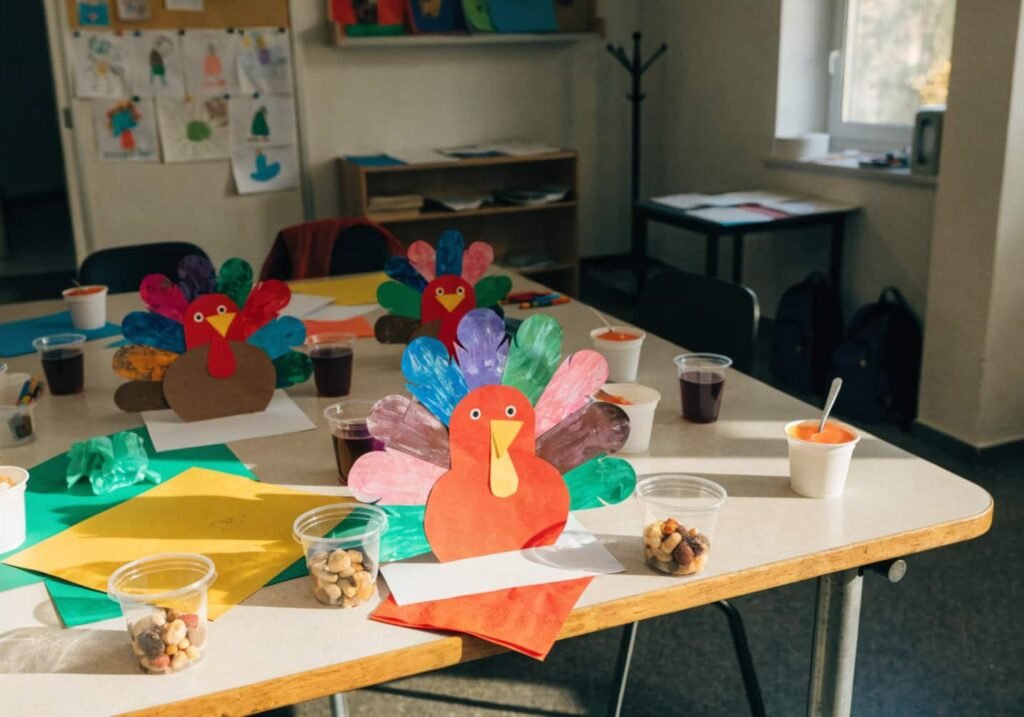
If your school does a pre-Thanksgiving class party, keep the actual “party” part under 30 minutes — kindergartners hit sugar-and-excitement overload fast, and a long party often ends with more meltdowns than fun. A simple rotation works better than one big activity: 10 minutes of a craft (paper turkey hand tracing is a classic for a reason — cheap, fast, everyone succeeds at it), 10 minutes of a snack that doubles as a counting activity (like sorting pretzels, raisins, and cereal pieces into a trail mix cup by color or type first, then eating), and 10 minutes of a simple movement game. Ask for parent volunteers to run one station each rather than running all three yourself — it’s the difference between a smooth 30 minutes and total chaos.
11. Parent Newsletter Ideas for November
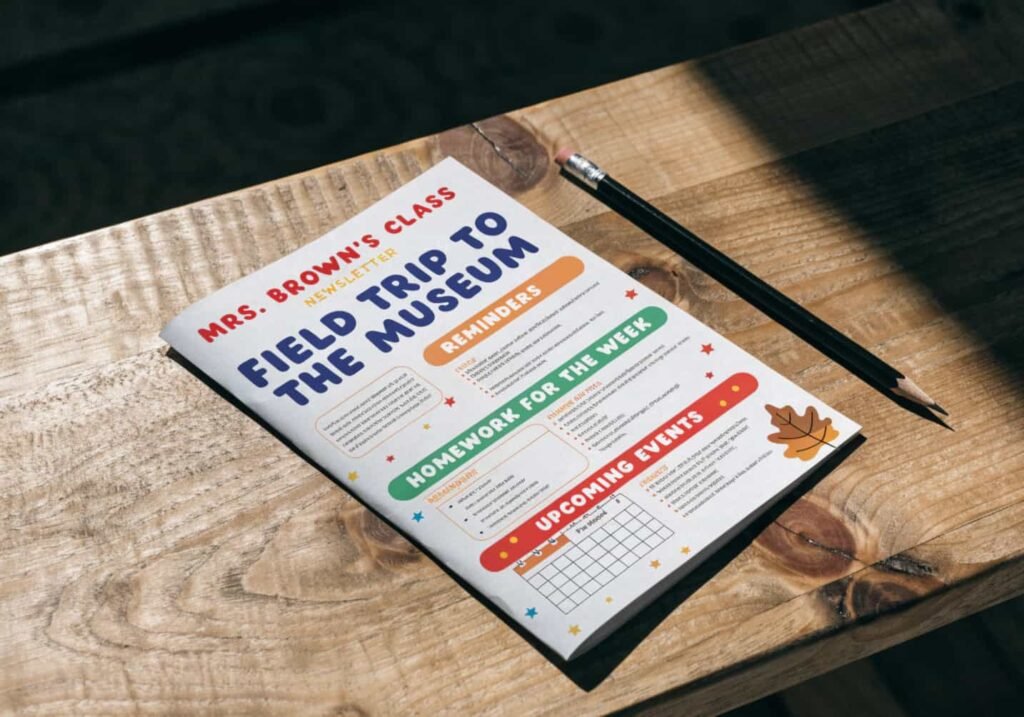
Skip the generic “we had a great month” newsletter — parents skim those and retain nothing. Instead, include one specific thing they can do at home that connects to what you’re teaching: “This week we’re working on counting to 20 — try counting stairs together, or grapes at snack time.” Add a short list of what to send in (clean leaves, acorns, empty egg cartons for a craft) with a real deadline, not “sometime this month.” And if you’re running the Thankful Tree, mention it by name so parents ask their kid about it specifically — it gives families a concrete conversation starter instead of the usual “what did you do at school today” dead end.
12. Managing Classroom Energy During Colder Months
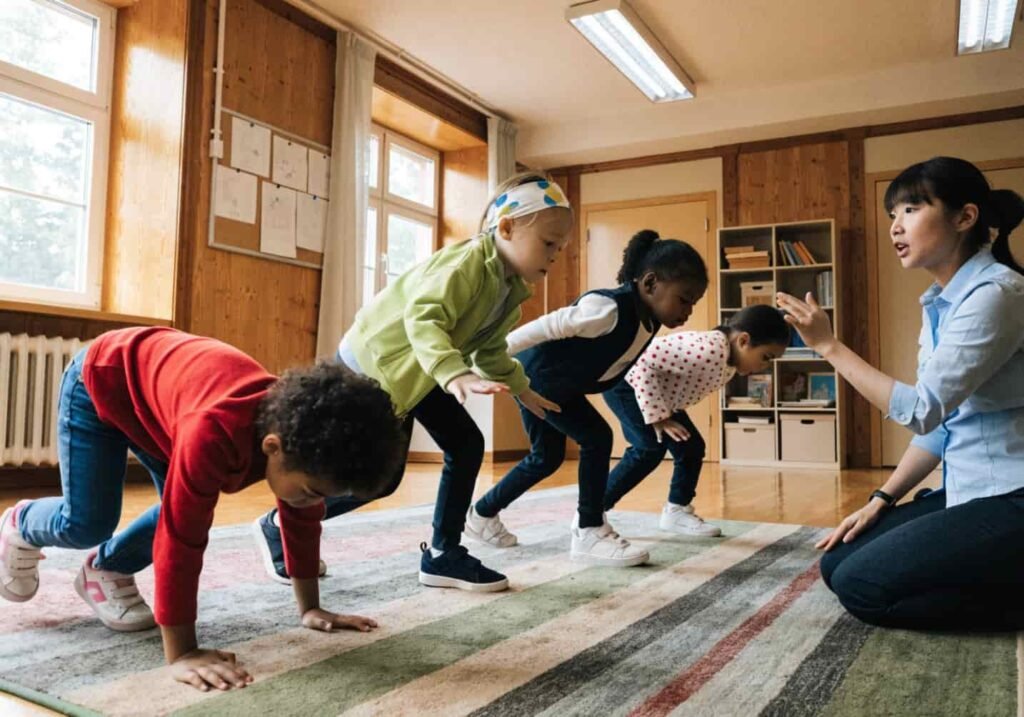
Less outdoor recess means you need indoor gross motor options built into your day, or the wiggles show up during your lesson instead. A 5-minute movement break between every major transition — not just before lunch — makes a bigger difference than one long recess substitute. Simple options that need zero equipment: animal walks across the rug (bear crawl, crab walk, frog jumps), a “freeze dance” with music you cut off randomly, or stretching in place while naming fall words. Also worth doing: lower your voice instead of raising it when the room gets loud. Kids often quiet down to match a softer voice faster than they respond to a louder one, especially by afternoon when everyone’s tired.
13. Reflecting on Growth by Month’s End
The last week of November is a good, low-pressure spot for a simple check-in rather than a formal assessment. Pull out something each child made in September — a name-writing sample, an early drawing — and compare it side by side with something from this week. Kids this age genuinely can’t judge their own progress without seeing it, so the visual comparison does the work no verbal explanation can. Keep a small folder per student all year for exactly this purpose; five minutes of filing in September saves you from scrambling to find comparison work in November. It also gives you something concrete and specific to say at parent conferences instead of “doing well.”