Fall walks into a Kindergarten Classroom with built-in lesson plans — color changes, texture differences, temperature shifts, harvest vocabulary — all of it sitting right outside the door. You don’t need a Pinterest board full of matching decor to make it work. You need about a dozen good activities, some cheap supplies, and a plan for the mess. Here’s what actually holds a five-year-old’s attention this time of year, and how to run it without losing your prep period.
1. Why Fall Is the Perfect Season for Kindergarten Learning
Kindergarten curriculum in September and October usually lines up with counting to 20, sorting by attribute, and early letter sounds — and fall gives you real objects for all three instead of laminated worksheets. A pile of 15 mixed leaves teaches counting, sorting by color or size, and even simple graphing (tally how many red vs. yellow) in one 20-minute sitting. Temperature drops also mean kids are more alert after recess than in the muggy first weeks of school, so this is a good stretch for introducing new routines or slightly harder tasks. One practical note: order or gather your fall materials (leaves, seeds, gourds) by the second week of October in most US regions — by Halloween, a lot of leaf variety is already gone or too brittle to handle.
2. Setting Up a Fall-Themed Classroom
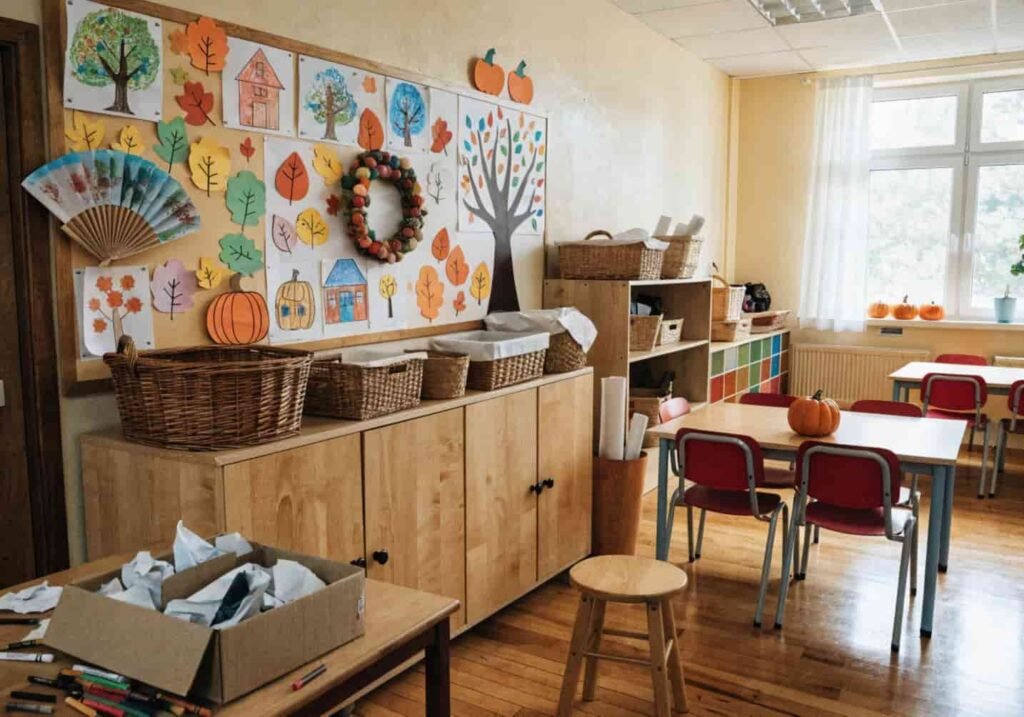
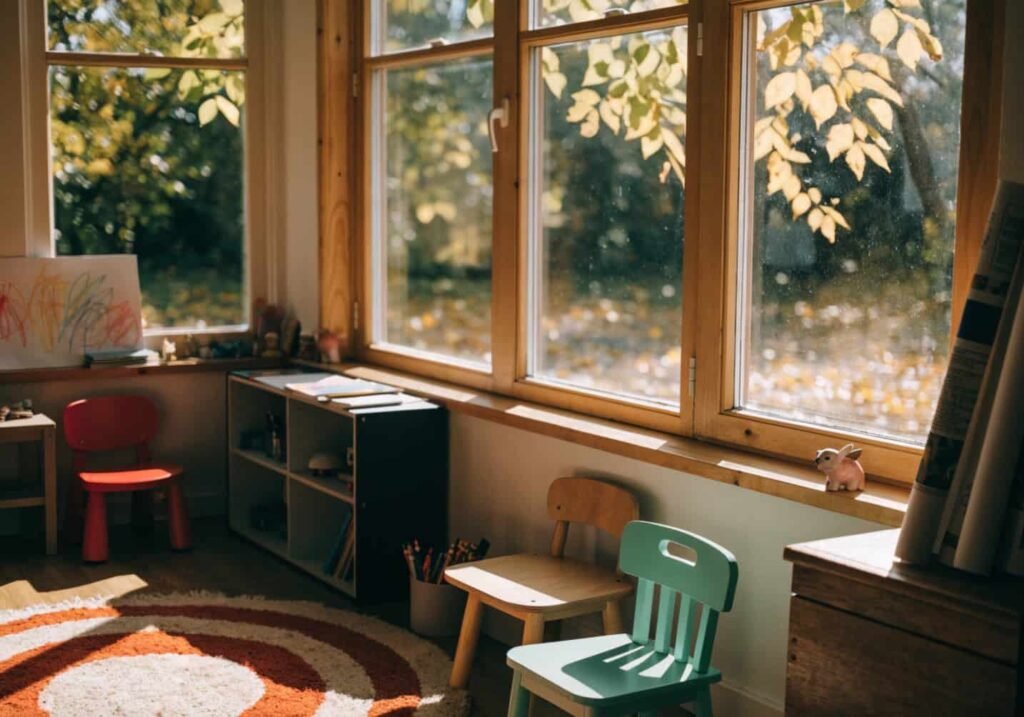
Skip the full room makeover—it eats a weekend, and kids tear half of it down within a week. Instead, pick three zones: a reading corner, a science table, and a bulletin board, and theme only those. A $15 roll of orange and brown craft paper covers a bulletin board and a reading nook backdrop. Use real dried leaves (pressed flat under books for 3–4 days) taped under contact paper instead of plastic craft-store leaves — kids notice the difference and it’s a free material. Battery tea lights ($8 for a 12-pack) inside mason jars make a nice reading-corner touch without any cords to trip over, which matters more than it sounds in a room of 20 five-year-olds.

3. Leaf Sorting and Counting Activities
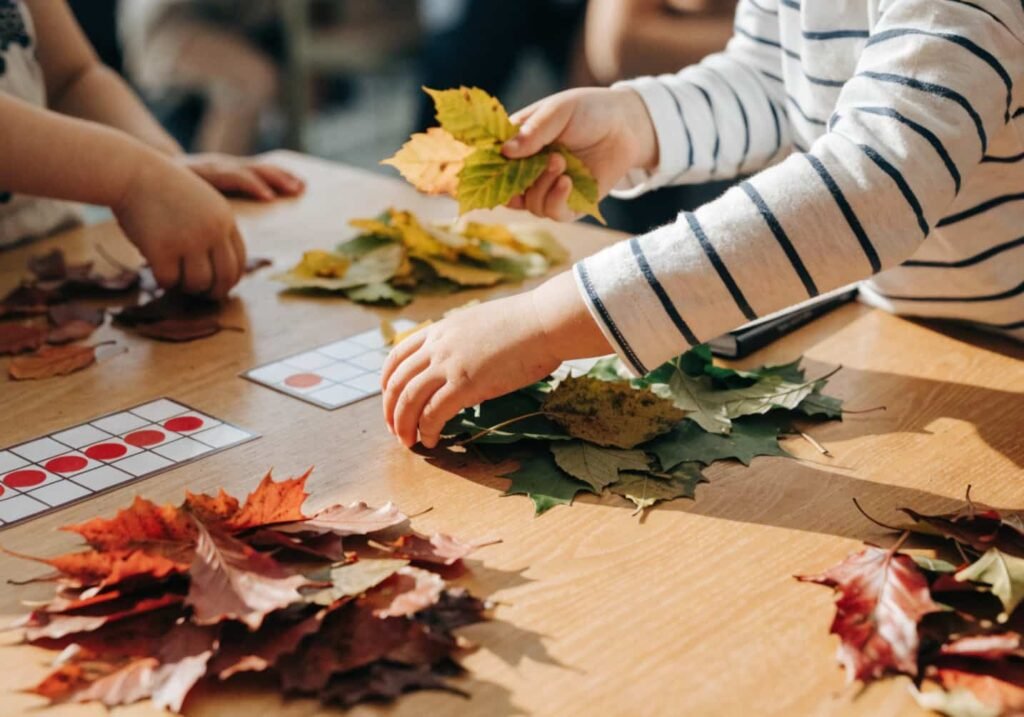
Collect 60–80 leaves from at least 4 different tree types before you start — oak, maple, and two others common in your area, so kids have real variation to sort by. The activity: give each table group a mixed pile of 15 leaves and ask them to sort first by color, then re-sort the same pile by size (small/medium/large), then by edge shape (smooth vs. jagged). Doing three different sorts on one pile, instead of three separate piles, is what actually teaches the concept of “attribute” rather than just matching identical items. For counting, laminated ten-frames work well — kids place one leaf per square, which naturally caps counting practice at manageable numbers instead of an overwhelming pile.
4. Fall Sensory Bins for Little Hands
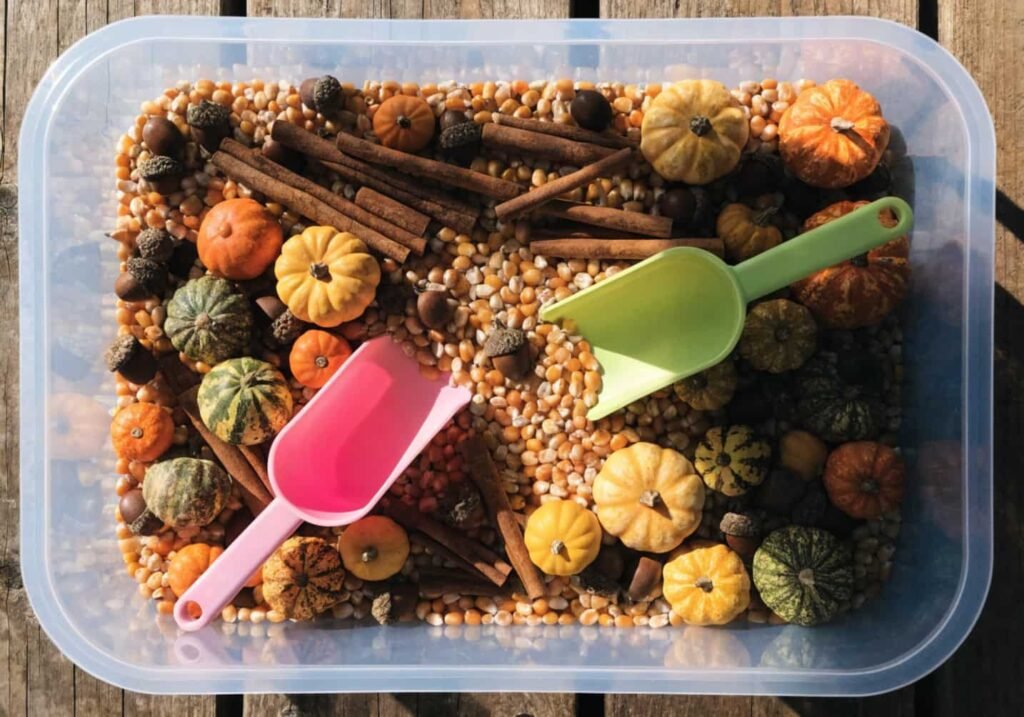
A basic fall sensory bin: a shallow under-bed storage bin (about 16″x28″), 4 cups of dried corn kernels or split peas as the base filler, then mixed in mini pumpkins, acorns, cinnamon sticks, and a few plastic scoops and cups. Cinnamon sticks matter more than people expect — the smell keeps kids engaged longer than a purely visual bin does. Budget for replacing the filler roughly every 3 weeks if it’s in daily rotation; dried corn holds up fine, but split peas start to crack and get dusty faster than most guides mention. One real trade-off: corn kernels are cheaper and last longer, but they’re louder and messier on hard floors; split peas are quieter and smoother for sensory-seeking kids but need replacing sooner. If your room has carpet, go with corn. If it’s tile or laminate, split peas.
5. Pumpkin-Themed Math Games
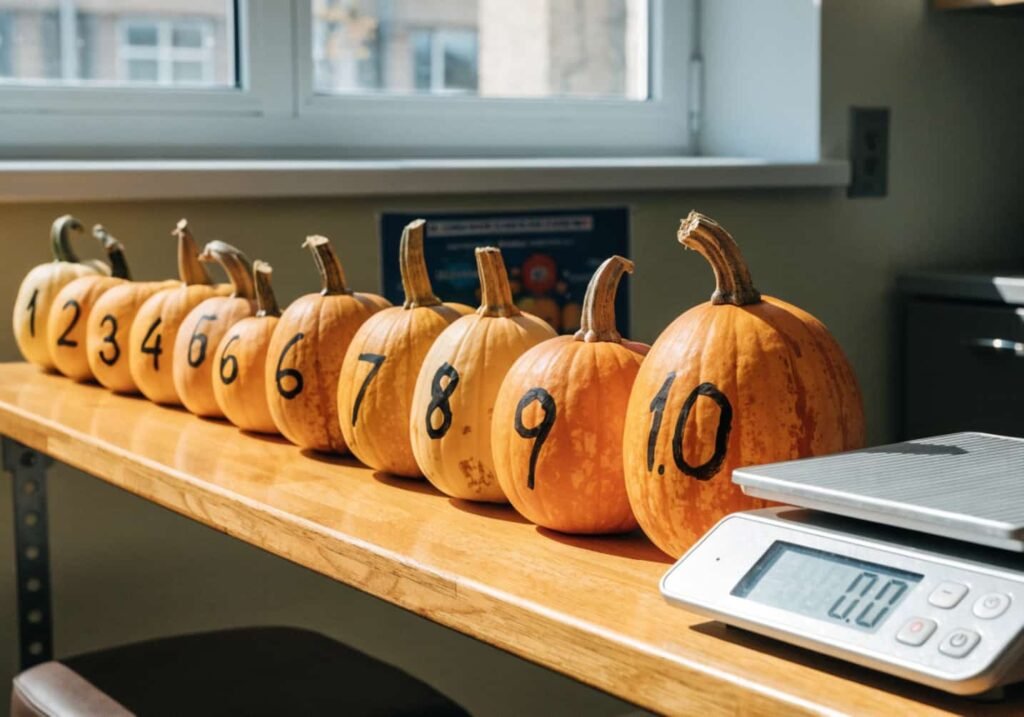
Real pumpkins beat pumpkin cutouts for math practice because they have weight and irregular shape, which makes estimation an actual skill instead of a guess. Buy 4–5 small pie pumpkins (not the big carving ones — too heavy and expensive) and run an estimation station: kids guess the weight on a kitchen scale, then guess the number of seeds inside, then you cut one open and count together. Counting pumpkin seeds in groups of 10 on a placemat is a natural intro to skip counting that most kids haven’t seen yet at this age. For a simpler center, number the pumpkins 1–10 with a paint pen and have kids order them by size on a shelf — cheap, reusable, and doubles as classroom decor for the month.
6. Apple Science Experiments for Kids
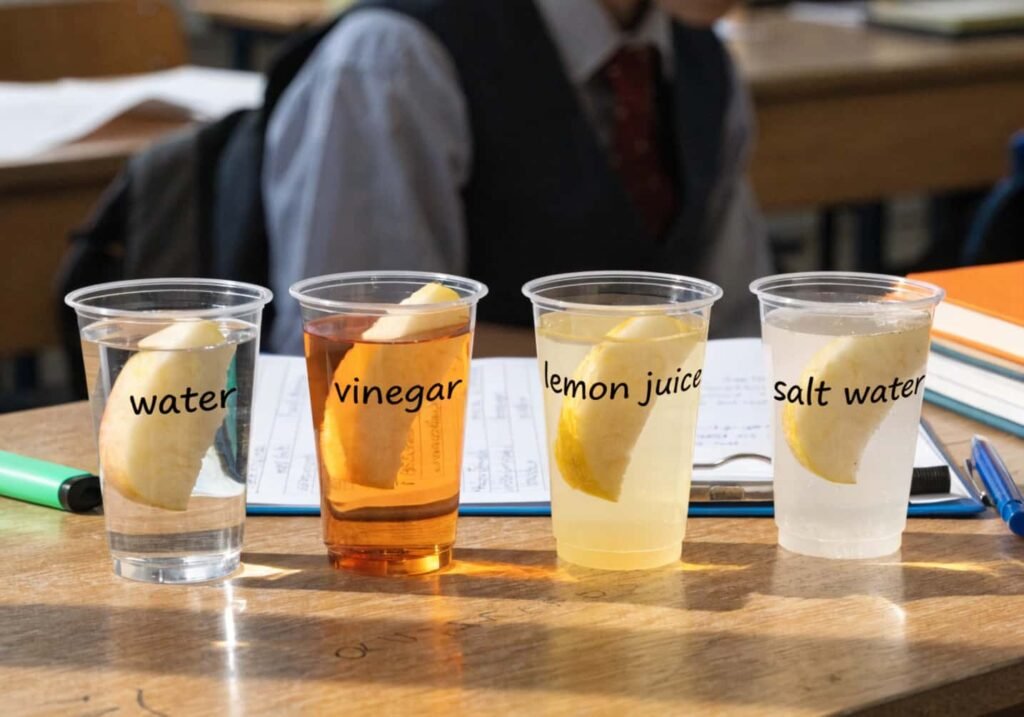
The classic apple-in-different-liquids experiment (water, vinegar, lemon juice, salt water) over 3–4 days teaches oxidation in a way kids can actually see, but most versions of this activity online skip the part that makes it work: cut all four apple slices from the same apple, at the same time, so you’re controlling for variety and freshness. Label the cups clearly and check them daily rather than just at the end — the day-by-day color change is the actual lesson, not the final result. A second option that needs almost no setup: the “apple taste test” graph, where kids try 3 apple varieties (Fuji, Granny Smith, Red Delicious work well and are easy to find) and vote for a favorite, then you build a simple bar graph on chart paper together. It’s five minutes of real data collection and gives you a math tie-in for free.
7. Fall-Inspired Story Time Picks
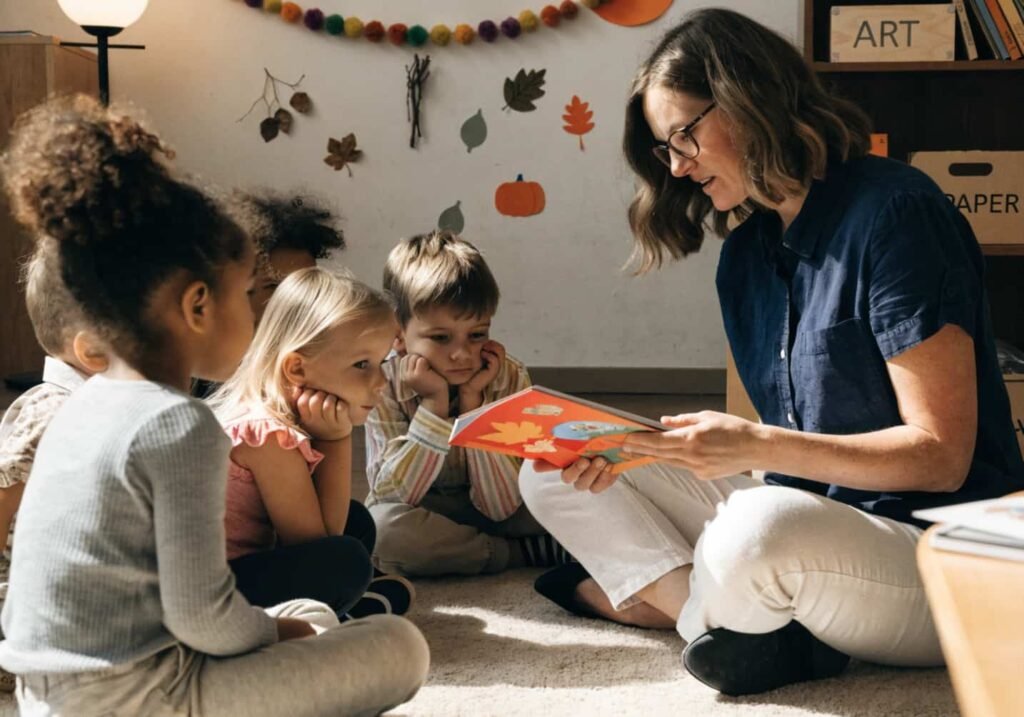
Rotate story time between a few formats instead of reading the same type of book every day — a wordless picture book (kids narrate the pictures themselves, which is great for language development), a rhyming book for phonemic awareness, and a nonfiction pick about how leaves change or how animals prepare for winter. Reading one nonfiction fall book per week, even a short 10-page one, gives kids vocabulary they’ll actually use during the science and nature-walk activities later in this list — the two reinforce each other. Keep read-alouds to 8–10 minutes for this age group; past that, attention genuinely drops regardless of how good the book is.
8. Outdoor Nature Walks and Scavenger Hunts
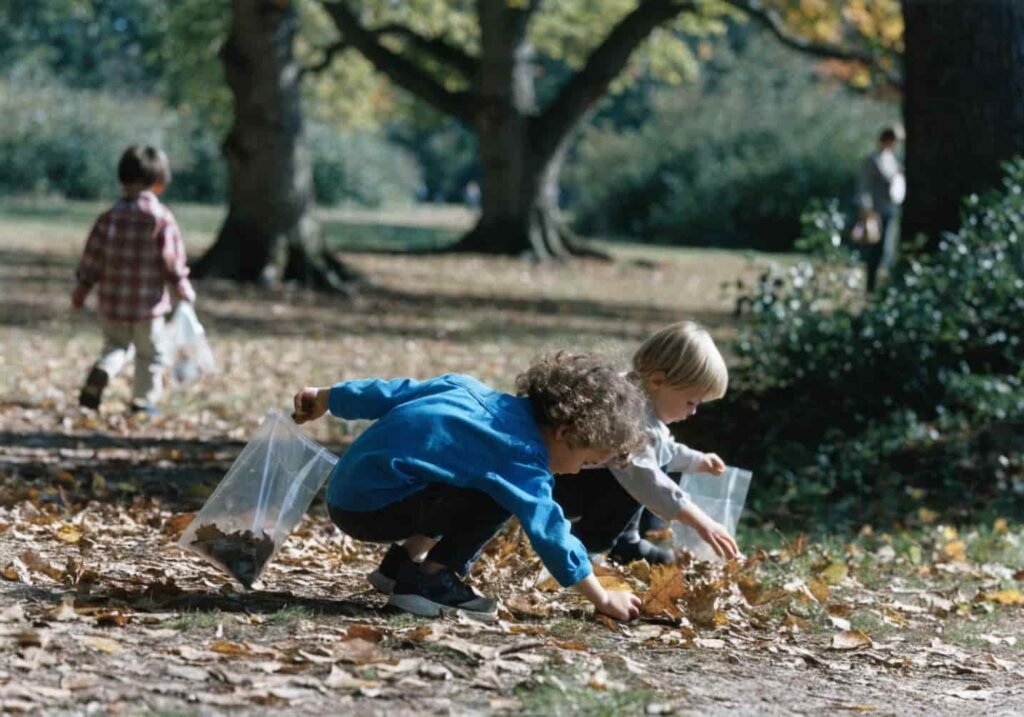
A scavenger hunt list works better as a checklist of 6–8 items max, not 15 — kindergartners lose focus past that and start collecting randomly. Good items: one red leaf, one yellow leaf, something rough, something smooth, an acorn, a pinecone, a stick shaped like a letter. That last one sounds gimmicky but it’s genuinely effective — kids search harder for a “stick shaped like a T” than for a generic stick, and it quietly reinforces letter recognition outdoors. Bring a few gallon zip-top bags per pair of kids rather than one shared bucket; it cuts down on the arguing over who’s holding the “good stuff,” which is a bigger management issue on these walks than most planning guides admit.
9. Simple Fall Songs and Rhymes
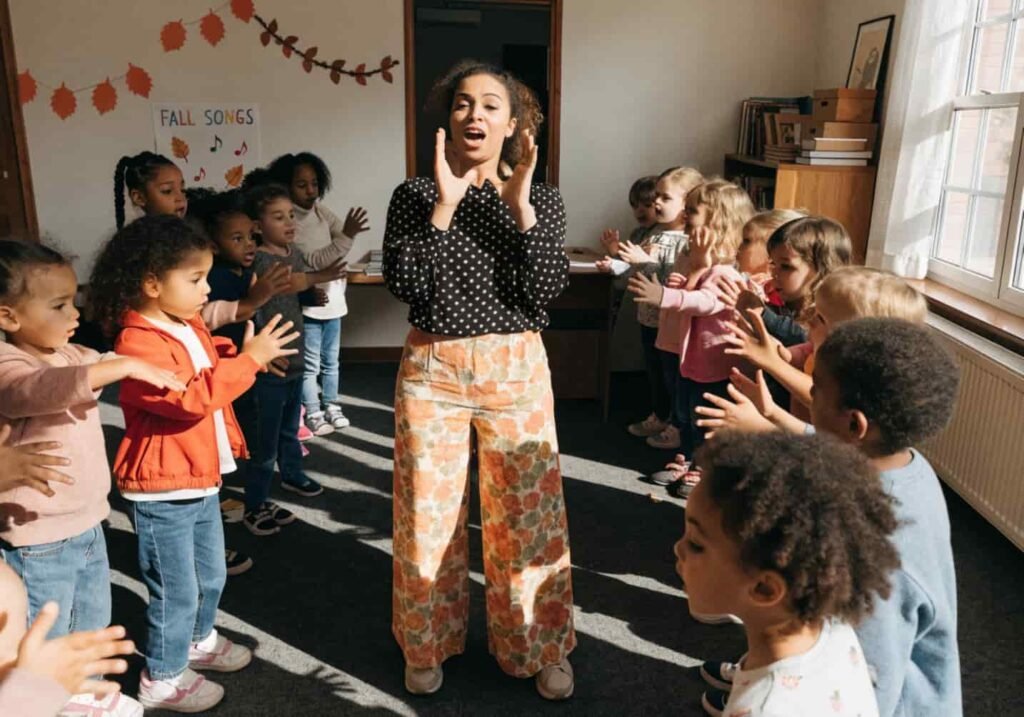
Songs with a physical action tied to each line stick better than ones that are just sung — kids remember the movement first, then the words attach to it. “Five Little Pumpkins Sitting on a Gate” works well because each verse has a clear gesture (rolling, running, stretching) that different kids can lead on different days. Keep a song rotation of 3–4 max for the season and repeat them daily rather than introducing a new one every week; repetition is what actually builds the vocabulary retention, not variety. If you want one with counting built in, “Five Little Leaves” (counting down from five) doubles as a subtraction intro without ever using the word “subtraction.”
10. Fine Motor Skill Crafts for Fall
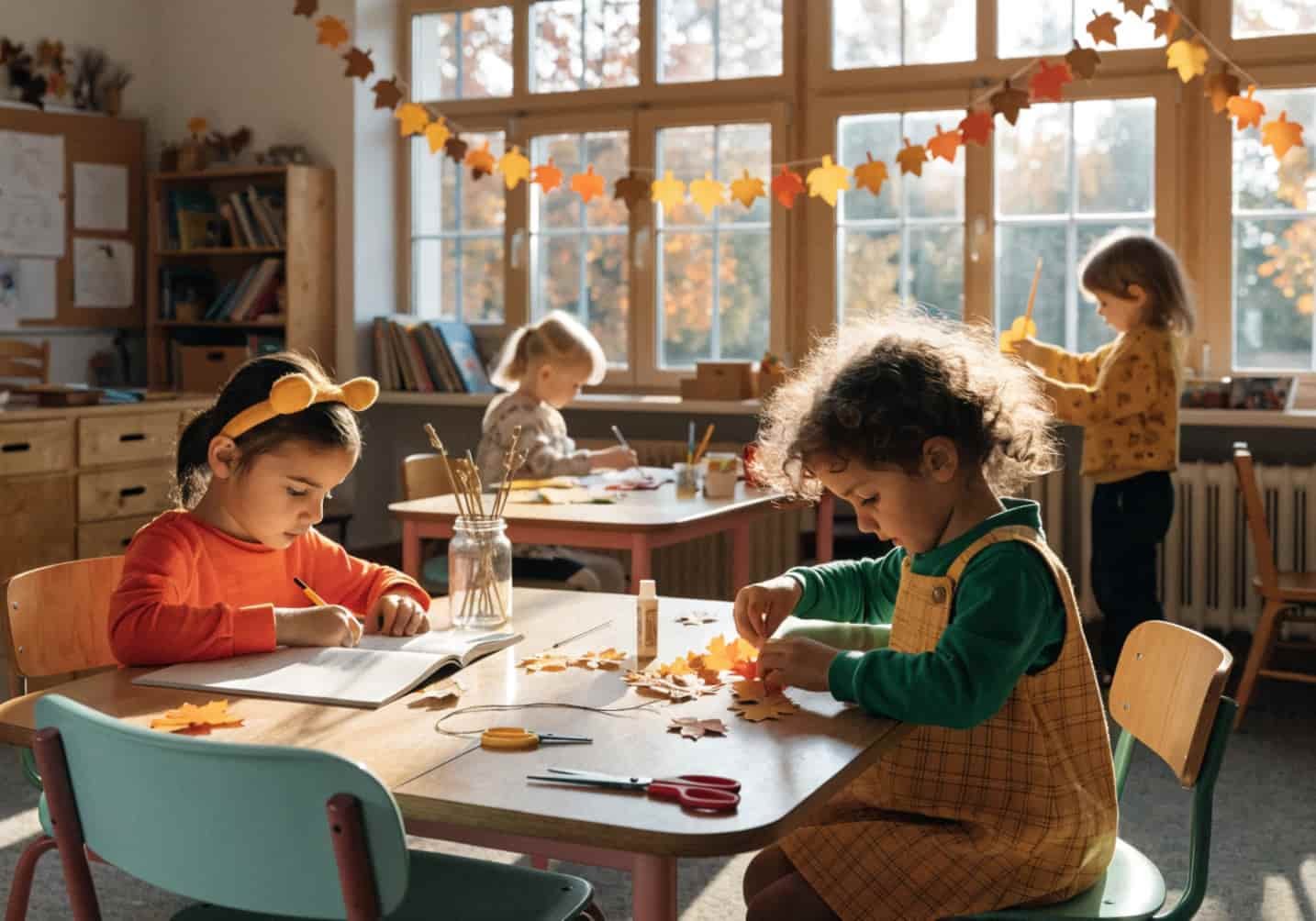
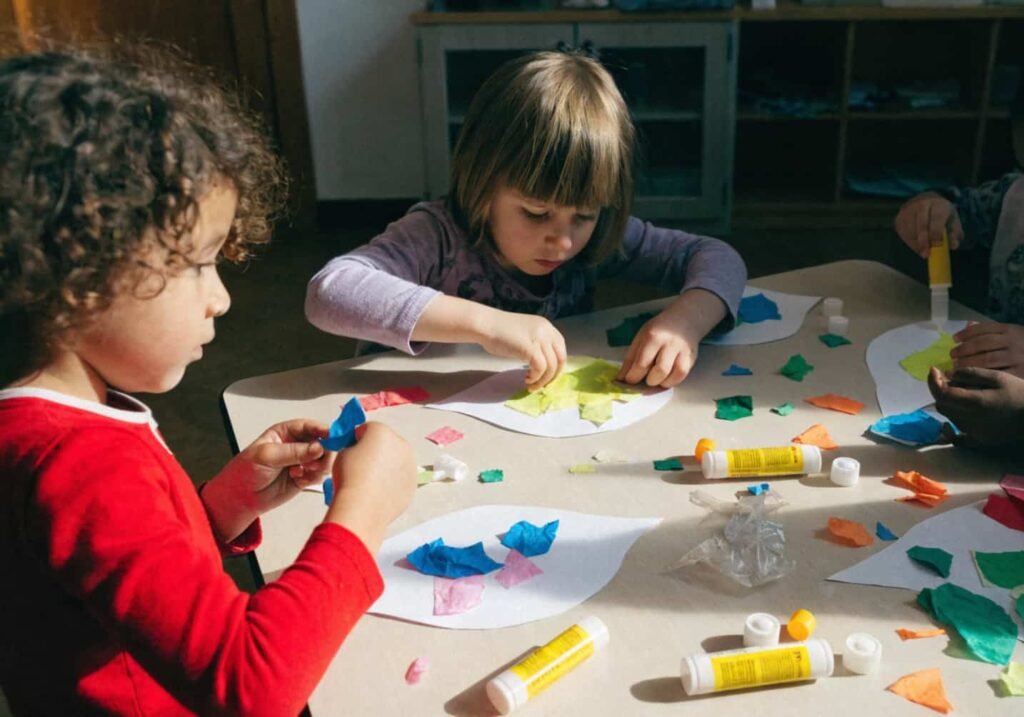
Tearing paper (not cutting) into small pieces for a leaf collage is an underrated fine motor exercise — it builds the same pincer grip strength kids need for pencil control, and it’s more forgiving for kids who aren’t confident with scissors yet. A simple project: draw a leaf outline on cardstock, have kids tear orange, red, and yellow tissue paper into small pieces, then glue them inside the outline. For kids who’ve moved past that skill level, lacing cards cut into leaf or acorn shapes with a hole punch and yarn work on the same muscles in a more controlled way. Budget about 20 minutes per craft including cleanup — glue crafts always take longer than the instructions estimate, mostly because of drying time between steps if you’re layering materials.
11. Fall Snack Ideas for Classroom Parties
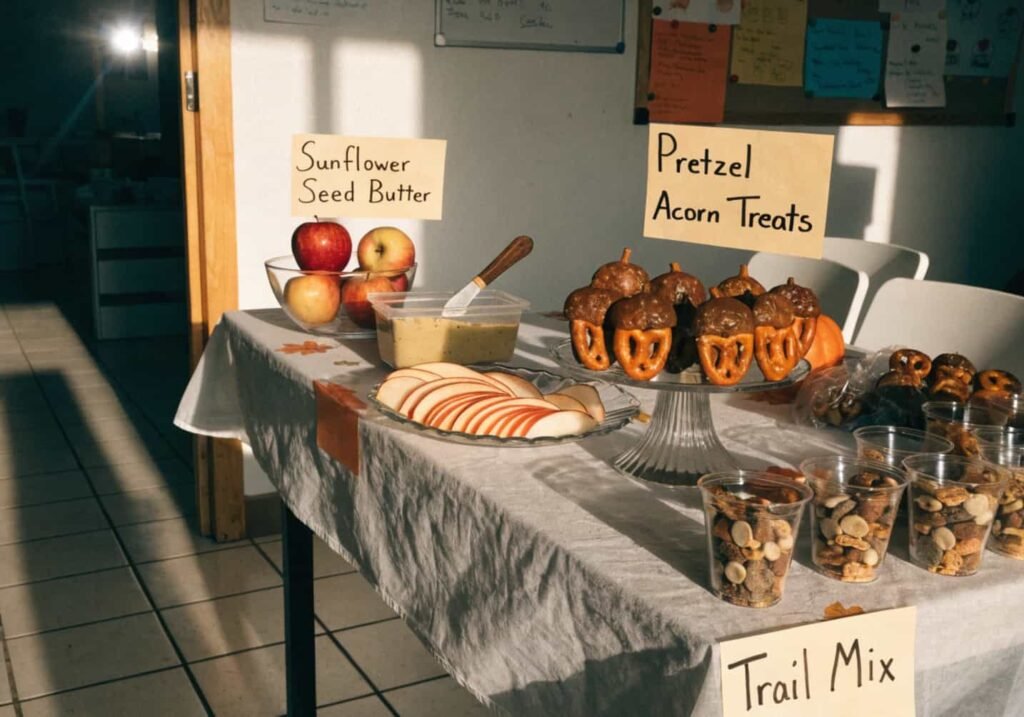
Check your class allergy list before planning anything — peanut butter and tree nuts show up in a lot of “cute” fall snack ideas (like apple-and-peanut-butter “mummies”) and they’re an easy miss if you’re pulling recipes straight from a blog. Safer, low-prep options that still feel seasonal: apple slices with sunflower seed butter instead of peanut butter, mini pretzel “acorns” (a Hershey kiss glued to a pretzel with a dab of frosting — skip if nut-free chocolate isn’t available at your store), and a trail mix of pumpkin seeds, dried cranberries, and cereal pieces that kids can portion themselves into small cups. Self-serve portioning, even messy, is worth it — it gives kids a fine motor task and cuts your prep time roughly in half compared to pre-plating everything.
12. Wrapping Up: Making Fall Memorable in Kindergarten
None of this needs to happen in one big themed week — spreading these activities across September and October, one or two a week, keeps the novelty from wearing off and gives you time to actually prep materials instead of scrambling. If you only have time for a handful, prioritize the ones with the most curriculum overlap: leaf sorting, pumpkin math, and the apple oxidation experiment cover counting, sorting, and basic scientific observation, which are the three skills most kindergarten report cards actually track this time of year. The rest — crafts, songs, snacks — are what kids remember, but the math and science pieces are what you’ll need to show progress on by conference time.