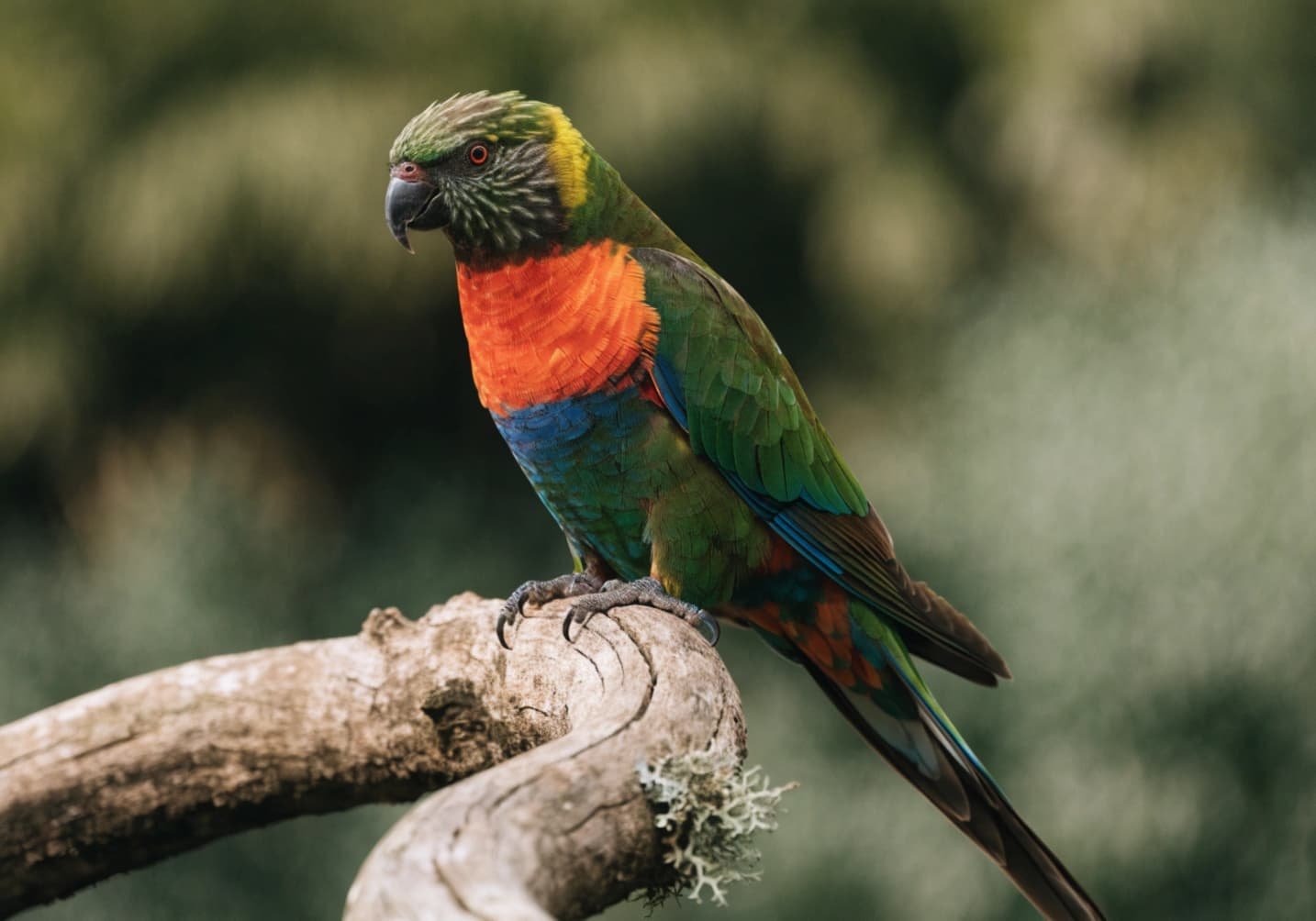
Introduction: A Bird Painted with Every Color
Picture this. You’re standing in a park somewhere in Australia, coffee in hand, and suddenly the sky above you explodes into color. Not fireworks. Birds. A whole flock of them, screeching and tumbling through the air like they own the place. That’s your first encounter with a rainbow lorikeet, and trust me, you never forget it. These birds look like someone dipped a paintbrush in every bright color available and just went wild. Blue heads, green backs, orange chests, the whole package. They’re loud, they’re proud, and honestly, they steal the show wherever they go. This article is your guide to everything about them.
What Exactly Is a Rainbow Lorikeet?
So what is this bird, really? The rainbow lorikeet, or Trichoglossus moluccanus if you want to sound fancy at a dinner party, belongs to the parrot family. But it’s not your average parrot. These guys are part of a smaller group called lorikeets, known for their brush-tipped tongues, which we’ll get into later because it’s genuinely one of the coolest facts about them. They’re medium-sized, roughly the length of your forearm, and they weigh about as much as a smartphone. What sets them apart from other parrots isn’t just the looks. It’s the personality. Curious, chatty, and never sitting still for long, they’re basically the extroverts of the bird world.
Native Habitat: Where Do They Live in Australia?
Rainbow lorikeets are true homebodies when it comes to Australia. You’ll find them hanging around the eastern and northern coastlines, from Queensland down through New South Wales and into parts of South Australia. They love coastal bushland, rainforests, woodlands, and here’s the surprising part, city parks and suburban backyards too. Honestly, if you’ve got a flowering gum tree in your garden, don’t be shocked if a noisy gang shows up uninvited. Unlike a lot of wild animals that avoid humans, these birds have adapted really well to city life. They’ve basically figured out that backyards with fruit trees and flowers are like an all-you-can-eat buffet.
Colors and Physical Features Explained
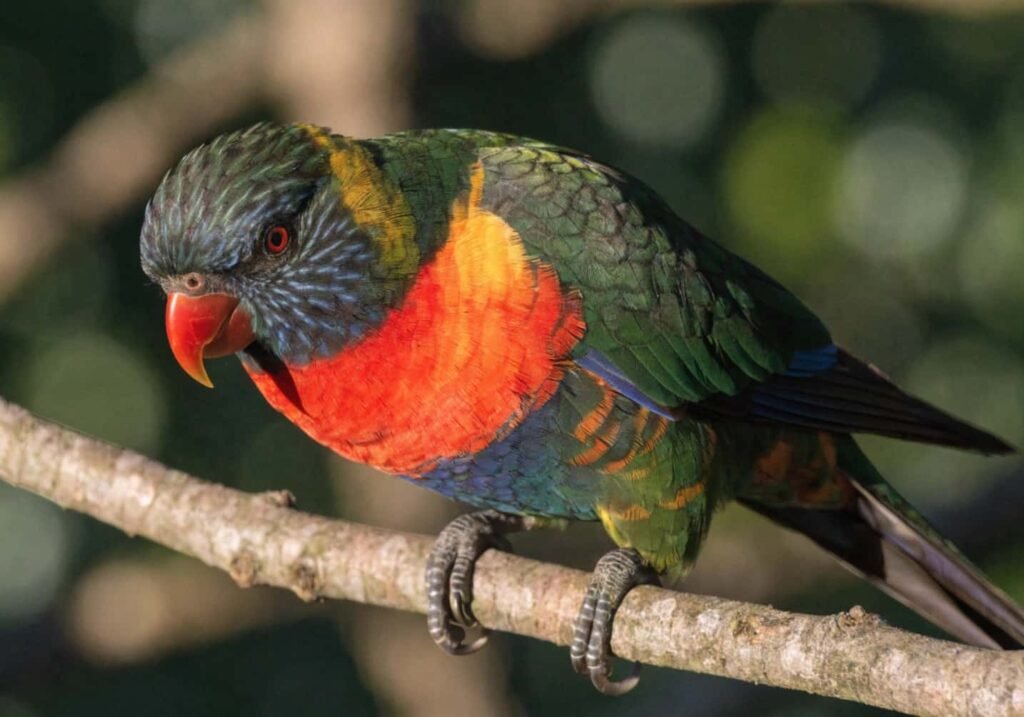
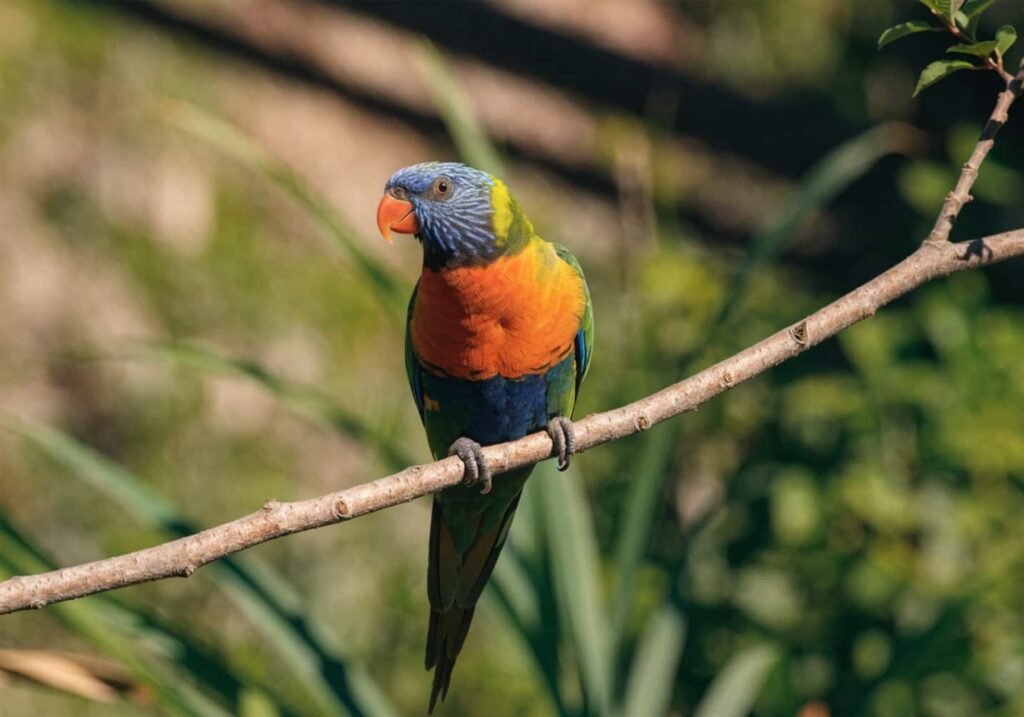
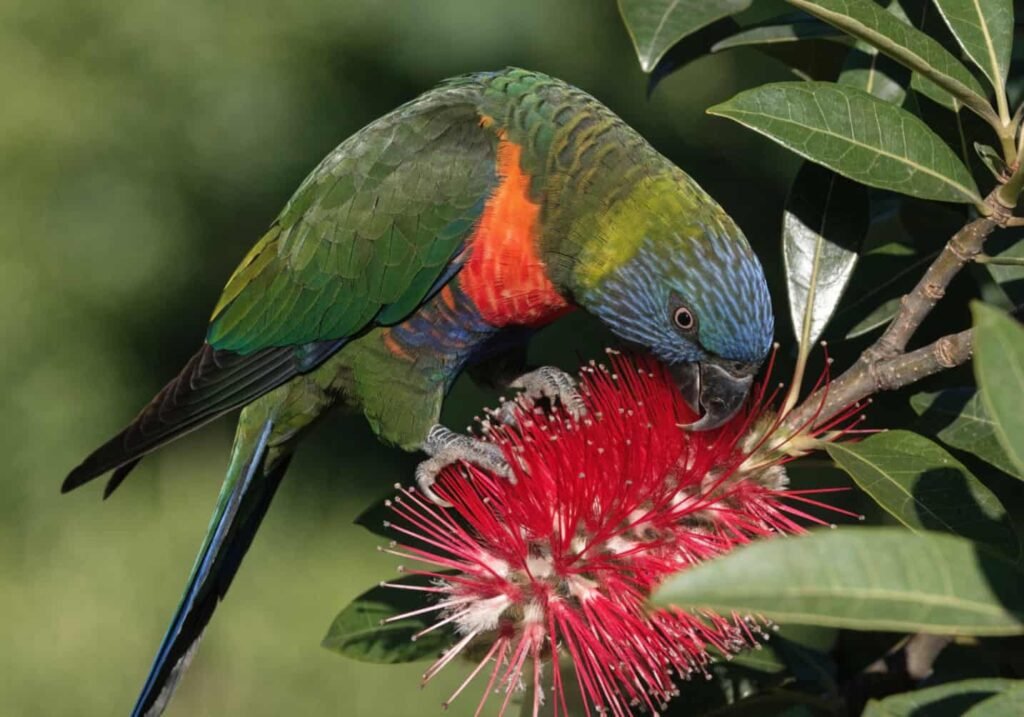
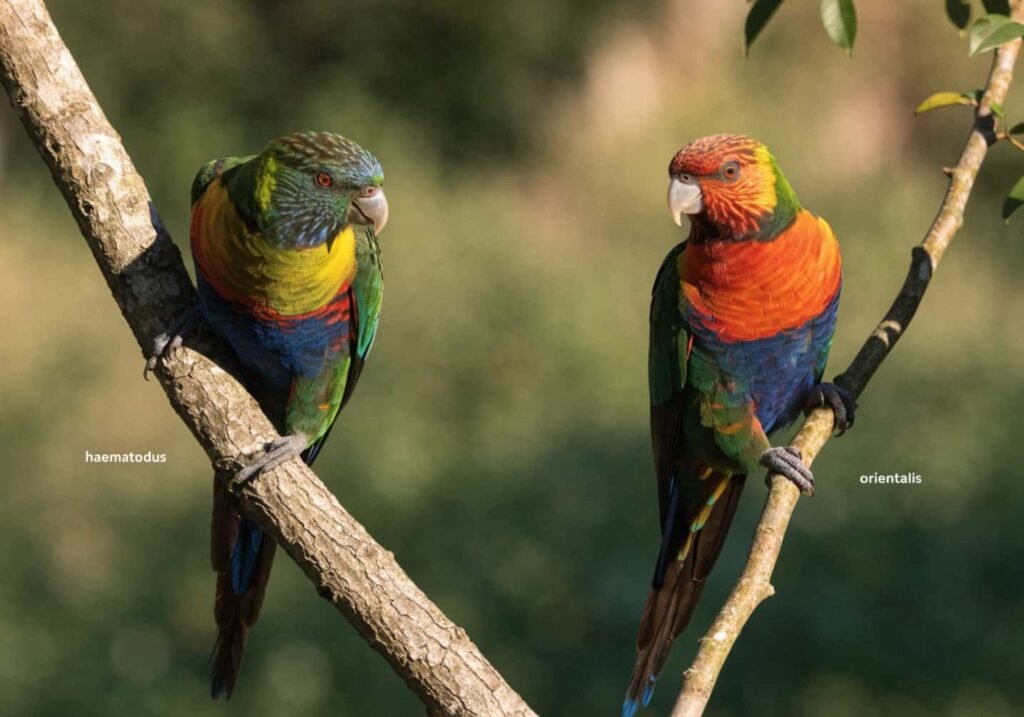
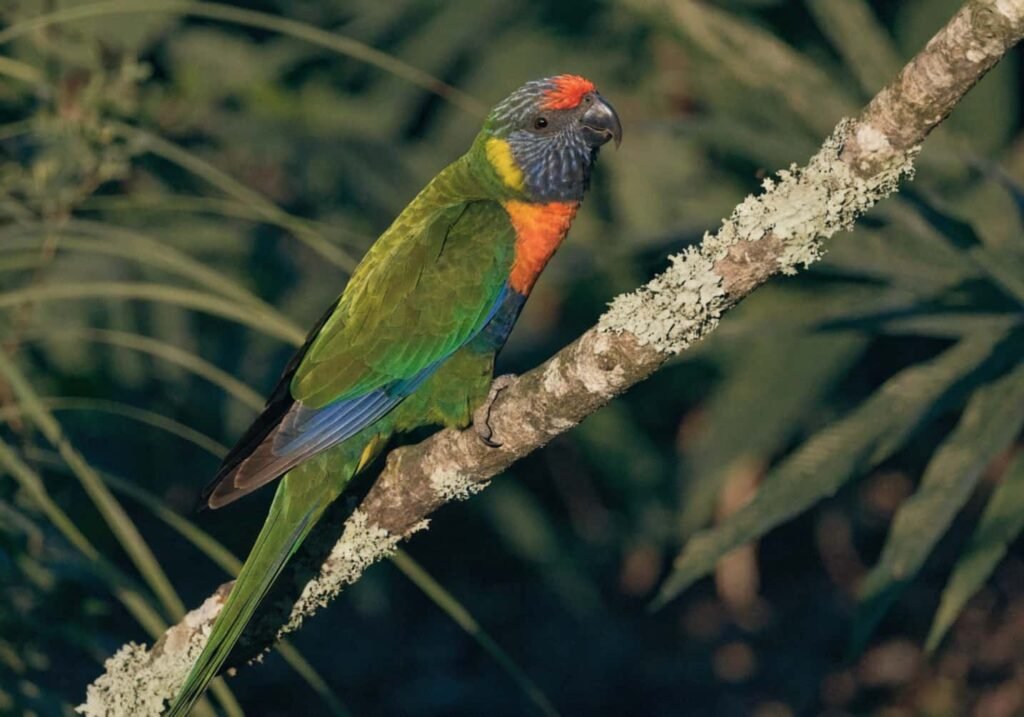
Let’s talk about the colors, because that’s what everyone notices first. The head is a deep, electric blue that almost looks unreal in the sunlight. Then there’s a bright green back and wings, an orange-red chest, and a yellow-green band across the belly. It’s a lot going on, but somehow it all works together. Their beak is bright orange too, curved just right for cracking open seeds and prying into flowers. And here’s something people miss: their eyes are a striking red-orange, which gives them this intense, almost mischievous stare. When the light hits their feathers just right, they genuinely look like a walking rainbow.
The Secret Diet: Why They Love Nectar and Pollen
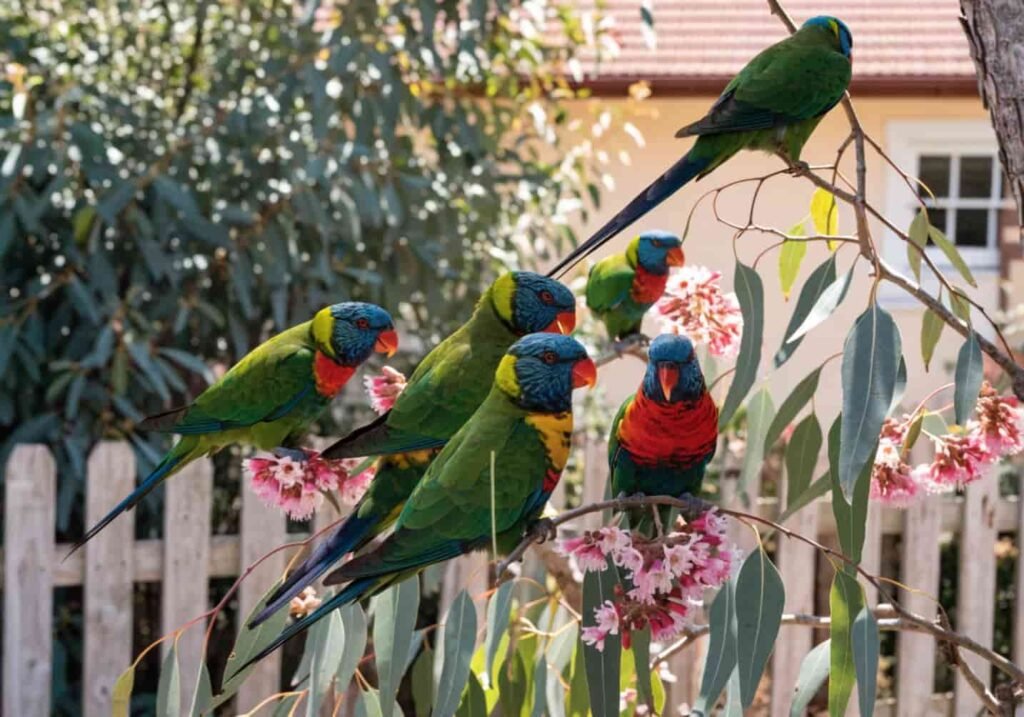
Here’s something that surprises a lot of people. Rainbow lorikeets don’t really eat seeds the way most parrots do. Their main diet is nectar and pollen, which is why their tongue looks nothing like a typical bird tongue. It’s tipped with tiny bristle-like structures, kind of like a mini brush, built specifically for scooping nectar out of flowers. They’ll also munch on fruit, blossoms, and the occasional insect if it’s around. This unusual diet means their digestive system works a bit differently too, processing sugary liquids instead of hard seeds. Next time you see one digging its face into a flowering tree, that’s exactly what it’s doing, drinking dinner straight from the source.
Social Behavior: Life in Noisy, Playful Flocks
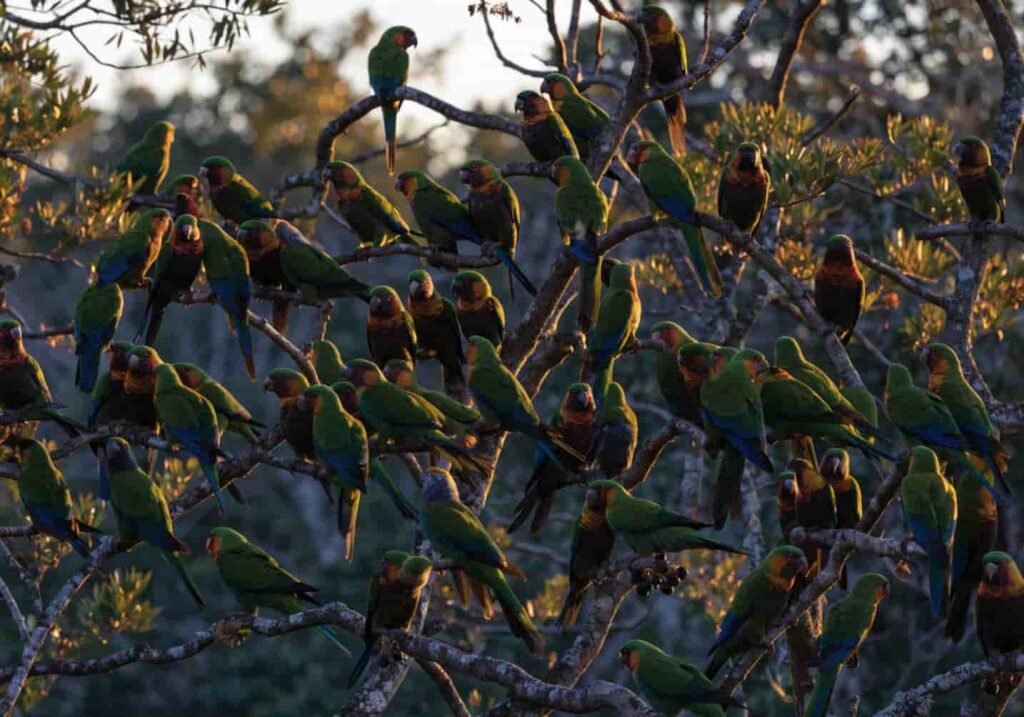
If you’ve ever wondered how such a small bird makes so much noise, wonder no more. Rainbow lorikeets are extremely social, and they almost never fly solo. They live in flocks that can range from a handful of birds to hundreds, especially around sunset when they gather at communal roosting trees. The noise at these gatherings is something else entirely, a constant chatter of squawks, chirps, and screeches that can be heard blocks away. They play, they squabble, they groom each other, basically acting like a big, chaotic family reunion every single evening. It’s chaotic, sure, but there’s something oddly comforting about watching them interact like old friends catching up.
How Rainbow Lorikeets Communicate
These birds are not quiet, and they don’t want to be. Rainbow lorikeets have a whole vocabulary of sounds, from sharp screeches that warn of danger to softer chattering noises used just for keeping in touch with the flock. Researchers have noted that different calls serve different purposes, almost like a basic language system. A screech might mean a predator is nearby, while a series of chirps could just be casual gossip between birds. They also communicate through body language, bobbing their heads, flicking their tails, or puffing up feathers to show excitement or annoyance. Honestly, spend enough time watching them and you start picking up on their moods pretty easily.
Breeding, Nesting & Raising Chicks
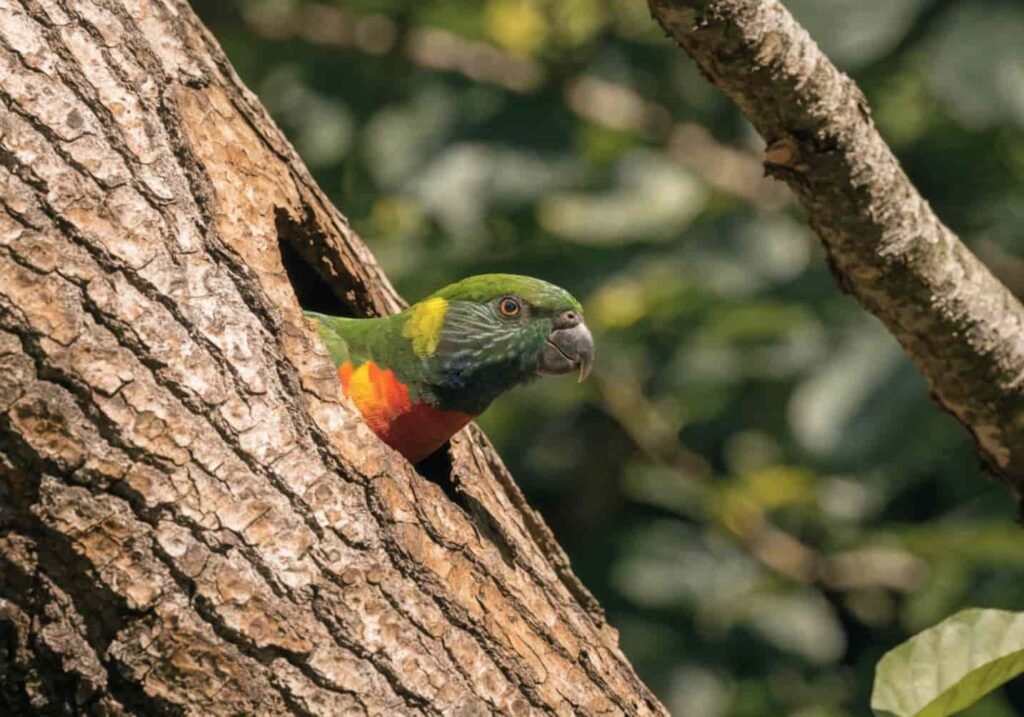
When it comes to raising a family, rainbow lorikeets keep things fairly simple but effective. They nest in tree hollows, usually high up, lined with nothing more than a bit of chewed wood dust. The female typically lays two eggs, and incubation takes around 25 days. Both parents pitch in once the chicks hatch, though the mother does most of the early feeding. Baby lorikeets stay in the nest for about seven to eight weeks before they’re ready to fledge. What’s interesting is that pairs often mate for life, sticking together season after season. It’s a nice reminder that even in the wild, loyalty and teamwork go a long way.
Rainbow Lorikeets as Pets: What to Know
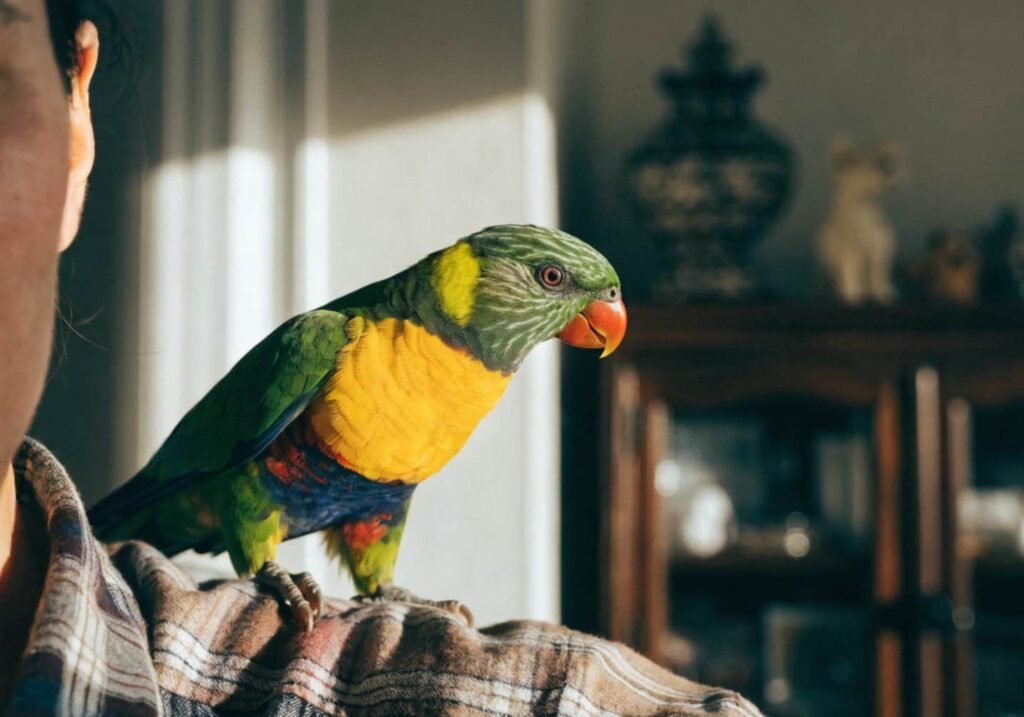
Thinking about keeping one as a pet? Slow down for a second. Rainbow lorikeets are intelligent, affectionate, and genuinely entertaining, but they’re also a serious commitment. They can live 20 to 30 years, so this isn’t a casual decision. They need a specialized diet, mostly nectar-based formulas, plus fresh fruit and flowers, and they’re loud, really loud, which isn’t great for apartment living. They also need mental stimulation, toys, and daily interaction, or they can become stressed and even develop behavioral issues. In many places, you’ll need a permit to own one legally too. If you’re prepared for the noise and the long-term commitment, they can be wonderfully loyal companions.
Common Myths About This Bird
There’s a lot of misinformation floating around about these birds, so let’s clear a few things up. Myth one, they’re just noisy pests with nothing else going on. Not true, their social structure is actually pretty complex. Myth two, all lorikeets look identical. Also false, there are several subspecies with slightly different color patterns depending on the region. Myth three, they’re easy pets because they’re small. Definitely not accurate, given how demanding they can be. And one more, people often assume they only eat fruit, when nectar and pollen make up the bulk of their diet. Getting the facts straight helps people appreciate them for what they actually are.
Predators, Threats & Conservation Status
The good news first: rainbow lorikeets are currently listed as a species of least concern, meaning their population is stable and even thriving in many urban areas. But that doesn’t mean life is easy for them. Natural predators include birds of prey, snakes, and some mammals that raid nests for eggs or chicks. Habitat loss from deforestation is a growing concern in certain regions, reducing the number of tree hollows available for nesting. There’s also competition with introduced species for food and nesting spots. Ironically, their adaptability to cities has actually helped them survive better than many native birds, though it’s created some conflict with local farmers over crop damage.
Conclusion: Why This Bird Steals the Spotlight
At the end of the day, it’s easy to see why the rainbow lorikeet holds such a special place in Australia’s wildlife scene. It’s not just the looks, though let’s be honest, the colors alone would be enough. It’s the personality, the noise, the chaos, and the tight-knit social bonds that make these birds so fascinating to watch. If you ever get the chance to visit Australia and spot one in the wild, take a moment to really watch it. Listen to the calls, notice the colors catching the light, and you’ll understand why so many people fall in love with this bird the second they see it.