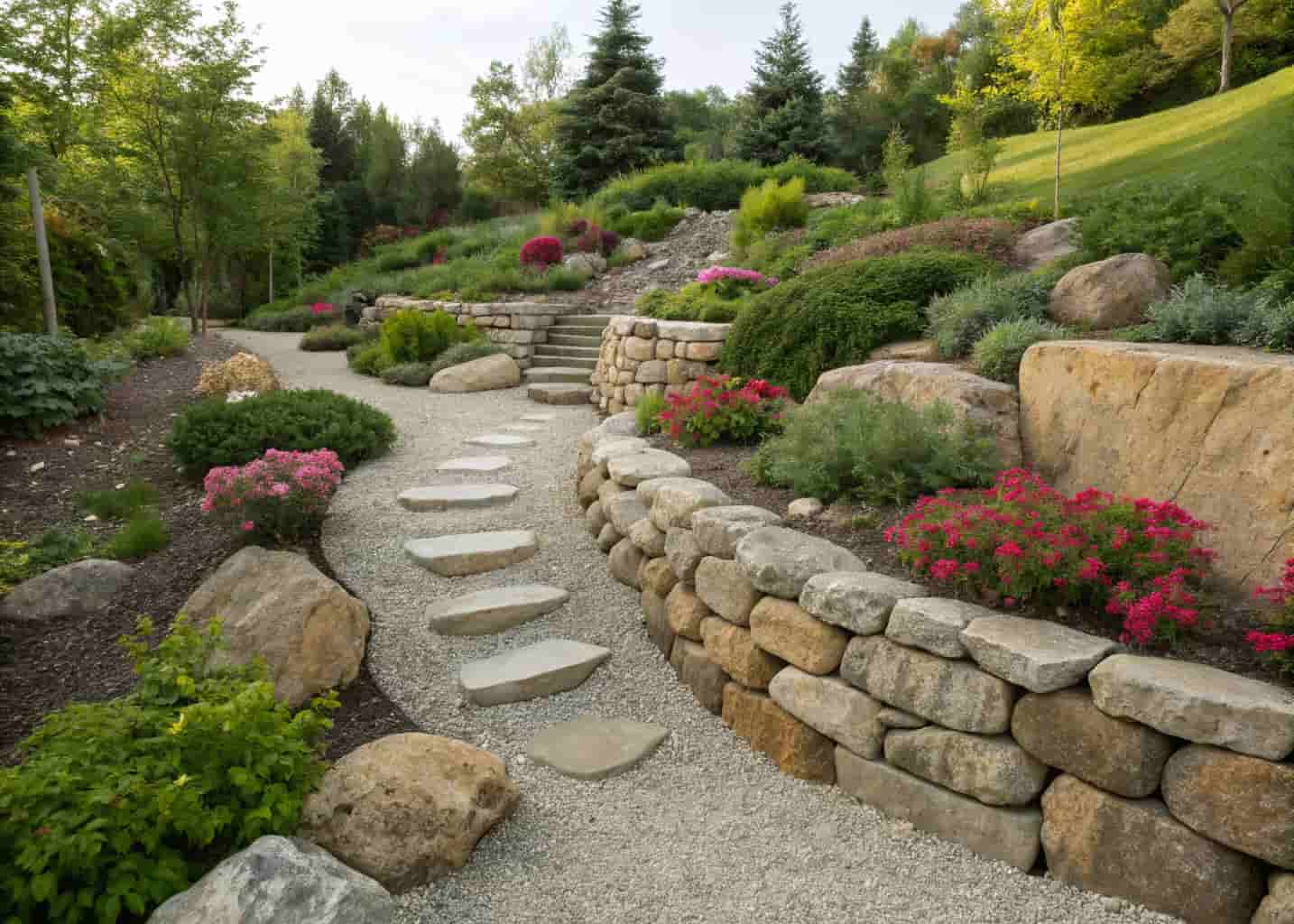
Soil erosion is one of the most common and frustrating problems homeowners deal with, especially on sloped yards or areas that get a lot of rain. When the topsoil washes away, it takes your plants, nutrients, and money with it. Rock garden landscaping is one of the smartest and most natural ways to fix this problem. It does not require expensive contractors or heavy machinery. Rocks hold soil in place, slow down water runoff, and add a clean, structured look to any yard. In this article, we will walk you through 13 practical rock garden solutions that are easy to set up and actually work long-term for controlling soil erosion.
1 Why Rock Garden Landscaping Works for Soil Erosion
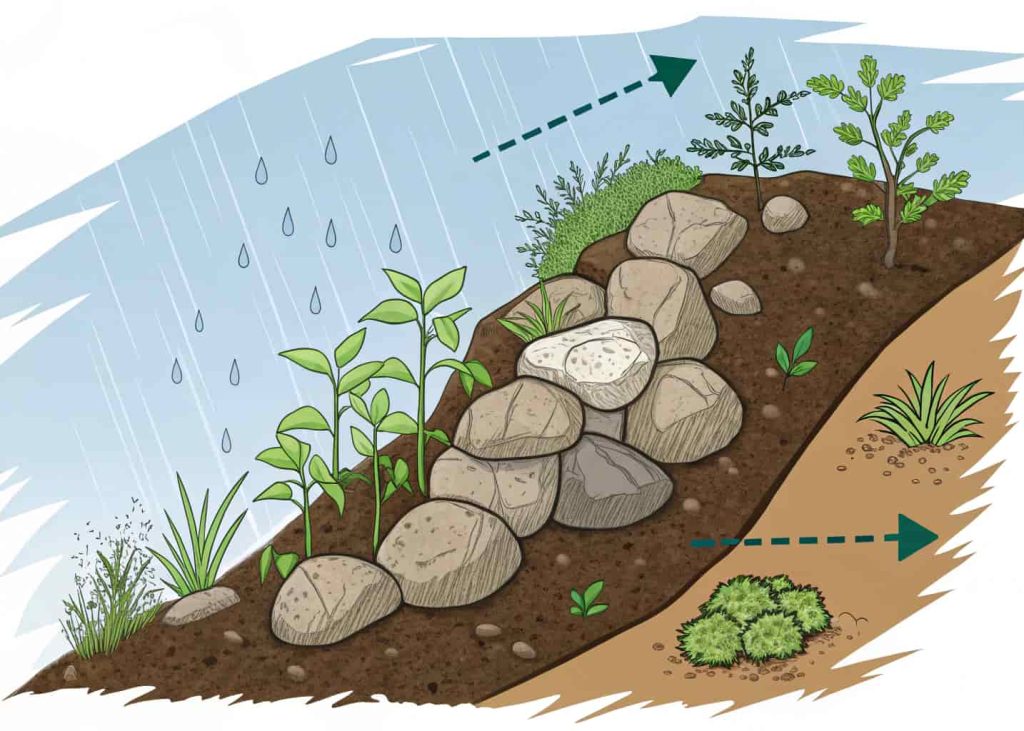
Before you start placing rocks, it helps to understand why this method actually works. Rocks are heavy, stable, and do not move when it rains. When you place them on slopes or around your yard, they slow down the speed of water as it runs across the surface. Slow water does not carry as much soil with it. Rocks also break the force of raindrops before they hit the bare dirt, which is one of the main causes of erosion. Over time, the rocks help organic matter build up around them, which strengthens the soil even more. Rock garden landscaping works with nature instead of fighting it, and that is why it lasts so long compared to other erosion control methods.
2 Choosing the Right Rocks for Your Garden
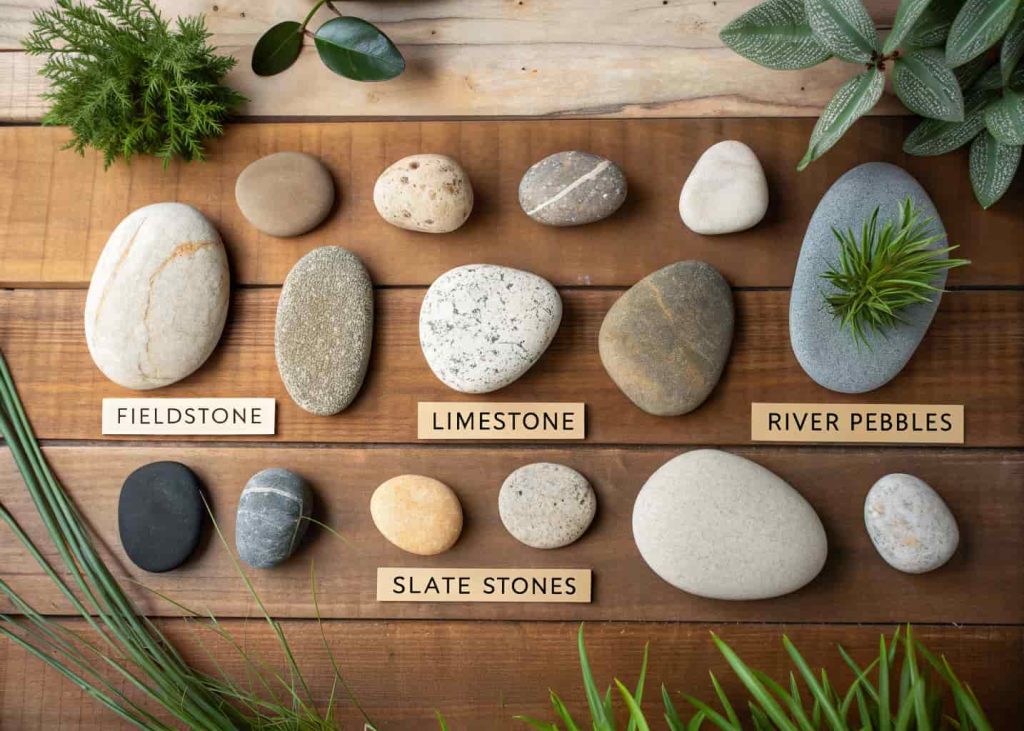
Not all rocks are equal when it comes to soil erosion control. The size, shape, and type of rock matter quite a bit. For most home gardens, natural fieldstone or limestone works very well because they are rough, heavy, and lock together easily. River rocks and river pebbles are smooth and better for decorative pathways or drainage channels. Large flat rocks are great for terracing and retaining walls. When picking rocks, think about your slope angle, soil type, and how much rain your area gets. For steeper slopes, go with heavier rocks that will not roll or shift. For gentler slopes, medium-sized rocks with a rough texture will grip the ground and stay in place through heavy rain and wind without any extra support needed.
3 Use Ground Cover Plants Between the Rocks
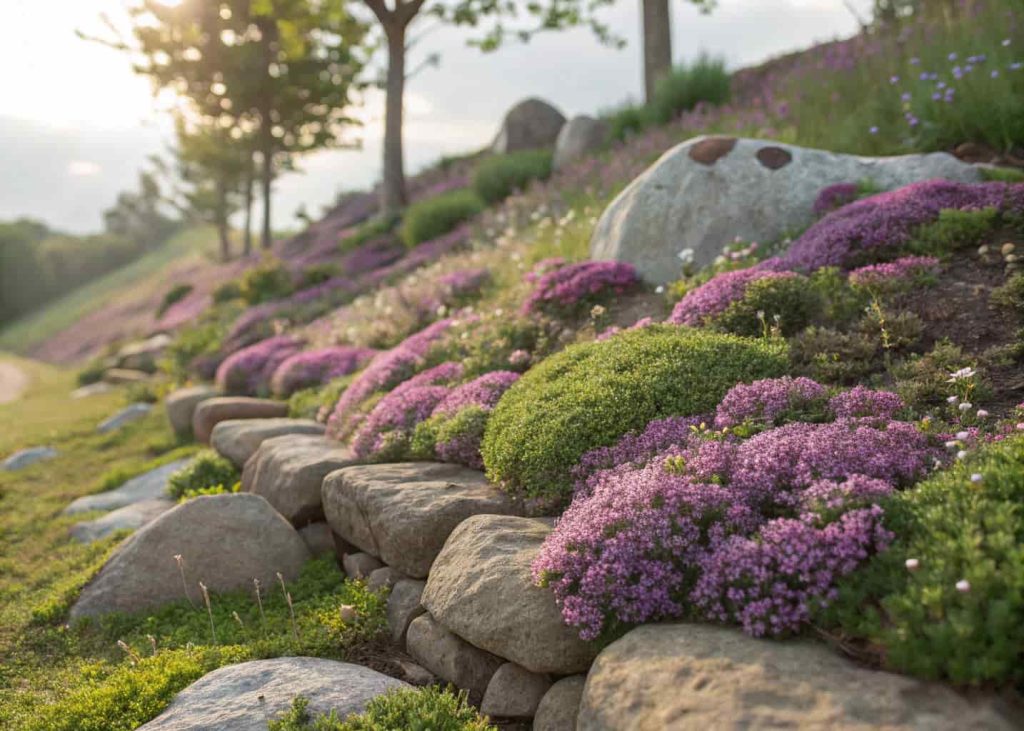
Rocks alone are great, but pairing them with the right ground cover plants makes your erosion control much stronger. Plants like creeping thyme, sedum, ice plant, and moss grow low to the ground and spread quickly between and around rocks. Their roots go deep into the soil, holding it firmly in place even during heavy downpours. The leaves also slow down rain as it falls, reducing the splash impact on bare soil. Ground cover plants are low maintenance, do not need much watering once established, and add a beautiful green texture to your rock garden. When you combine healthy plant roots with the physical weight of rocks, you get a very powerful erosion control system that looks natural and requires almost no ongoing work from you.
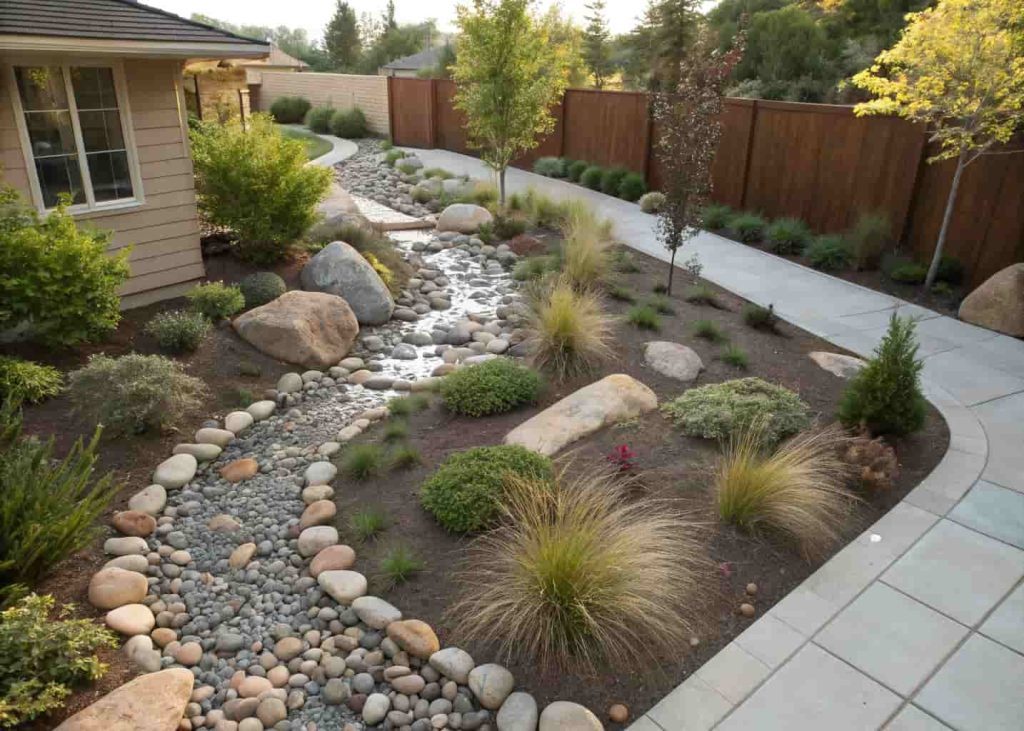
4 Build a Dry River Bed to Redirect Water
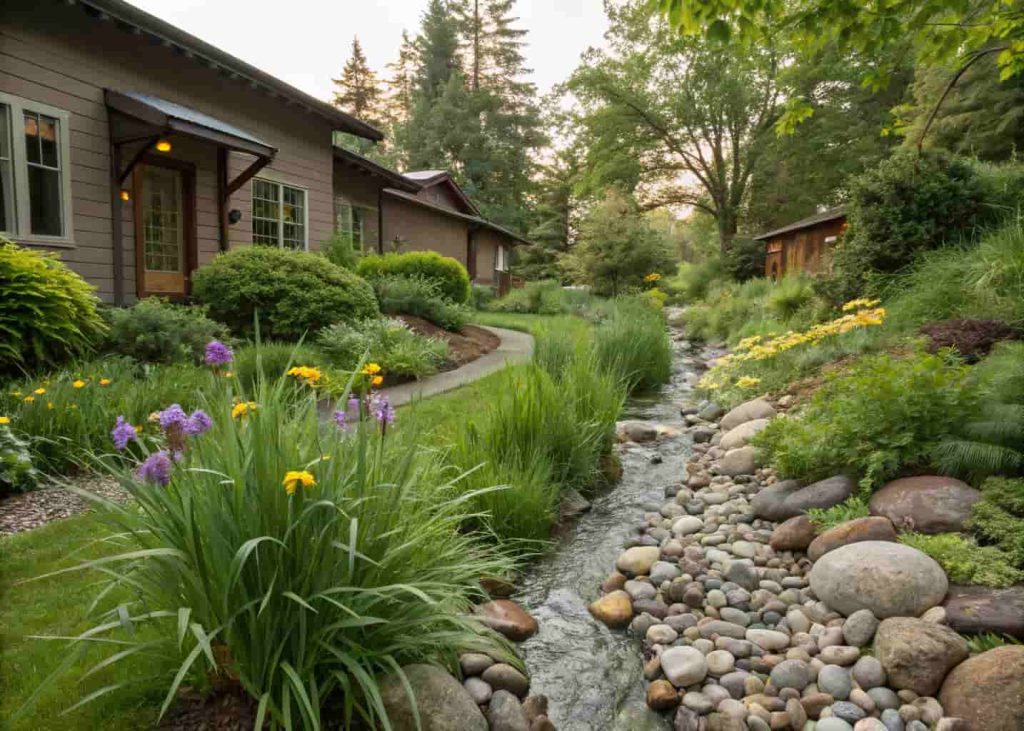
A dry river bed is one of the most effective and visually attractive rock garden landscaping ideas for managing erosion. It works by creating a defined channel filled with rocks that guides rainwater away from vulnerable soil areas toward a safe drainage point like a garden bed, lawn edge, or street drain. When it rains, the water follows the channel instead of spreading randomly and washing away your topsoil. You dig a shallow trench, line it with landscape fabric, and then fill it with river rocks or round pebbles of different sizes. Larger rocks on the outside and smaller ones in the middle look natural and work well. A dry river bed also adds a lot of visual interest to your yard, making it look like a natural stream even when it is dry.
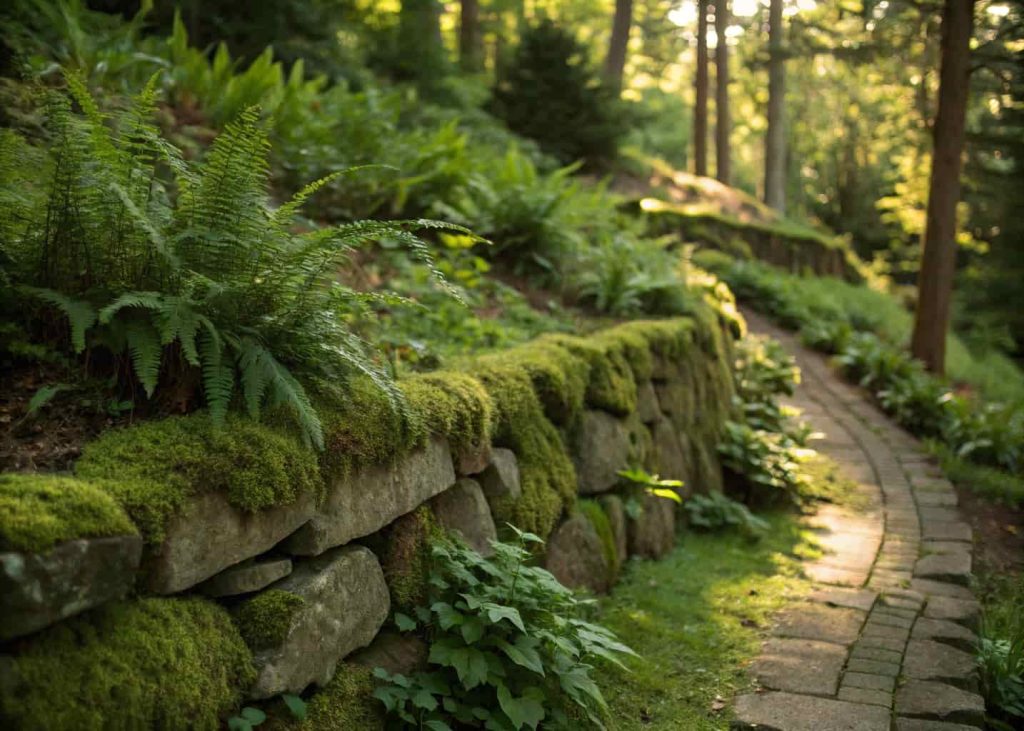
5 Build Low Retaining Rock Walls on Slopes
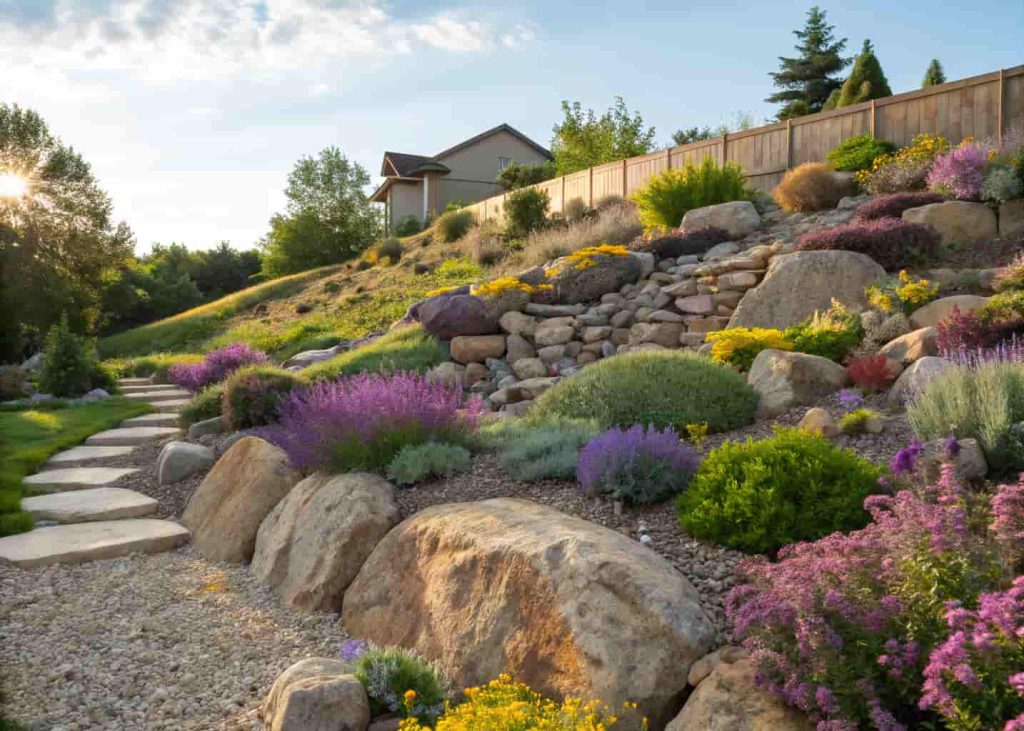
Retaining walls made from stacked natural stones are one of the oldest and most reliable methods of controlling soil erosion on slopes. You do not need mortar or cement for low walls under three feet. Simply stack flat rocks in slightly inward-leaning layers, with larger stones at the base and smaller ones toward the top. The wall holds back the soil on the upper side, preventing it from sliding or washing downhill during heavy rain. You can also plant between the wall stones for added root strength and beauty. Small ferns, sedums, and moss grow very well in the gaps between rocks. Retaining walls also create natural terraces on your slope, giving you flat planting areas that are much easier to garden in compared to a bare, steep hillside.
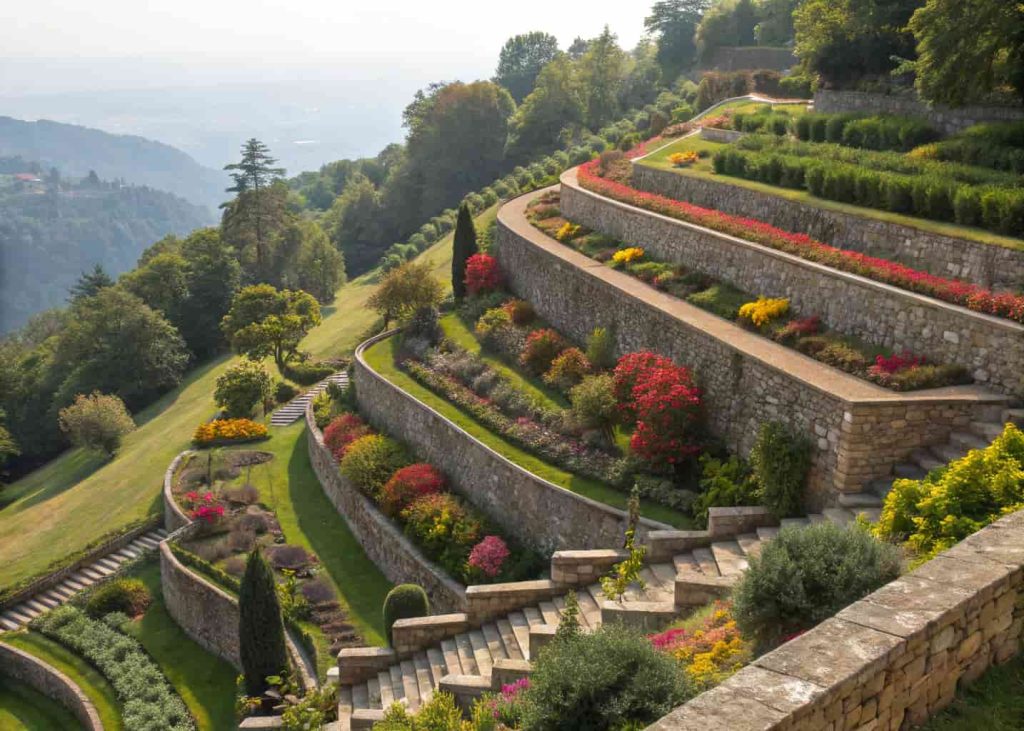
6 Create Terraced Rock Gardens on Hillsides
Terracing is a technique that has been used for thousands of years by farmers to grow crops on steep hillsides, and it works just as well in modern home gardens for stopping soil erosion. The idea is simple: instead of one continuous slope, you break the hill into a series of flat steps or platforms, each one held in place by a low rock wall or rock border. Each terrace slows water down as it moves downhill, giving it time to soak into the soil instead of rushing down and carrying dirt with it. You can plant each terrace with different plants, creating a layered, beautiful garden that is also highly functional. Terraced rock gardens work especially well for yards with a significant slope where flat landscaping is not possible without some kind of erosion control system in place.
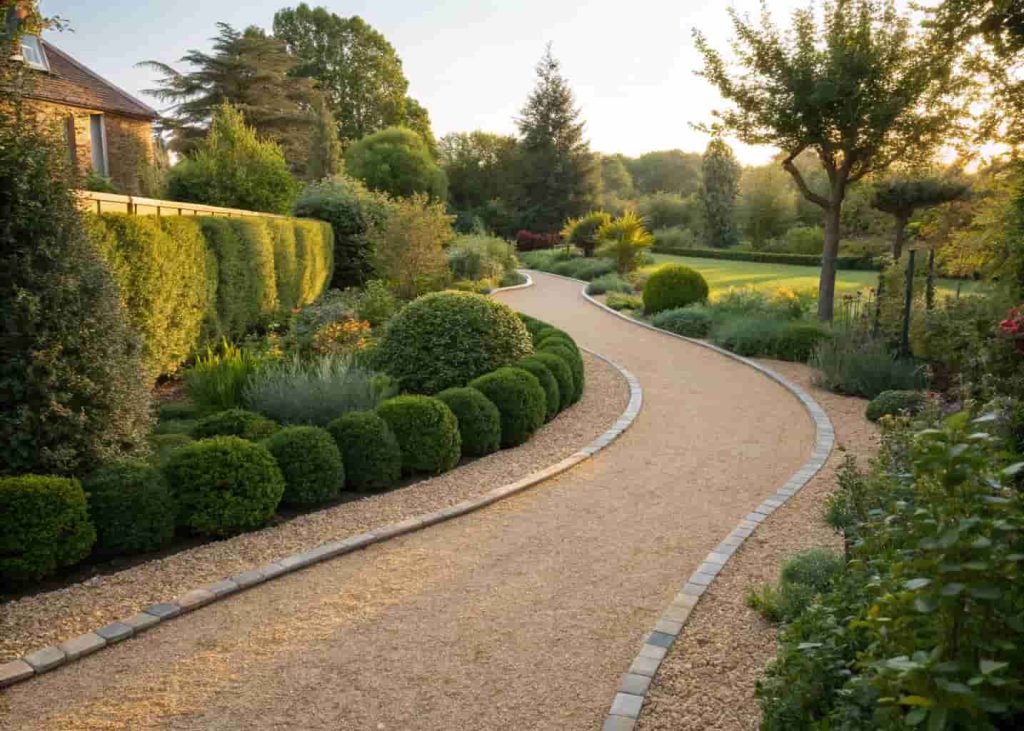
7 Add Gravel Pathways to Slow Water Runoff
Gravel pathways serve two purposes at once: they give you a clean, attractive walking surface and they help manage water runoff that would otherwise erode your garden soil. When rain falls on a gravel path, the water soaks down through the gaps between the stones rather than running fast along the surface. This slows down the overall flow of water across your yard and reduces the pressure on planted areas and bare soil zones. For the best results, use angular crushed gravel rather than round pebbles, because angular pieces lock together better and do not shift underfoot or wash away as easily. Lay landscape fabric underneath before adding the gravel to prevent weeds from growing up through it. Gravel pathways work especially well when combined with other rock garden landscaping elements like retaining walls and dry river beds.
8 Use Rock Mulch to Protect Bare Soil
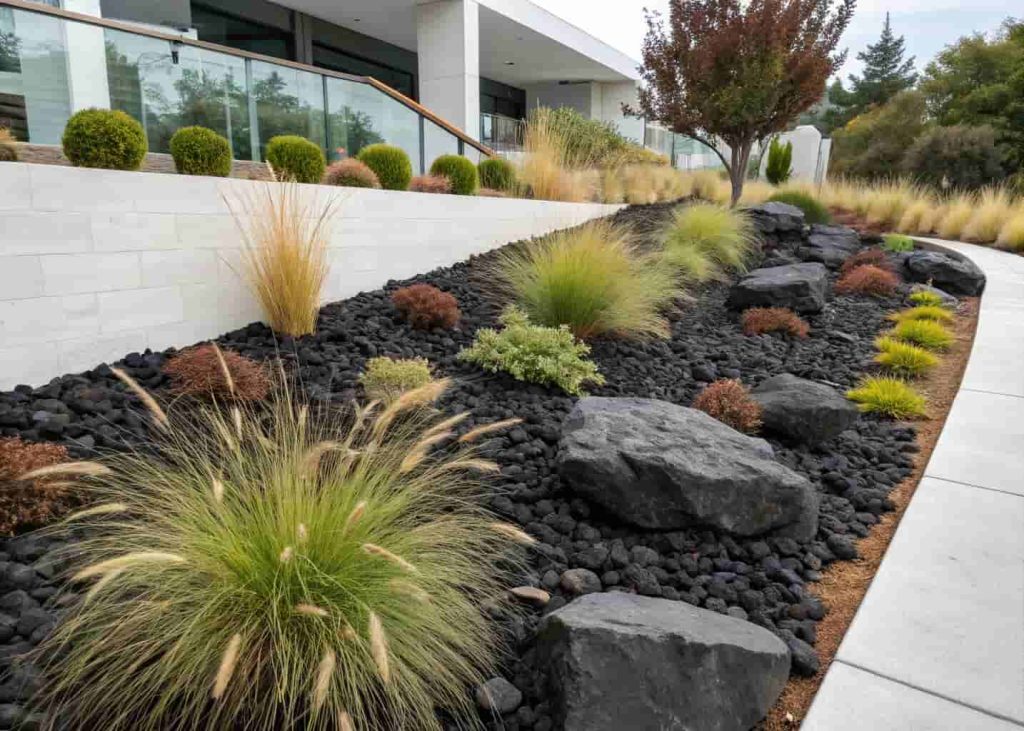
Rock mulch is a simple and very effective way to cover bare soil areas that are prone to erosion. Instead of traditional wood chip or bark mulch, you spread a layer of small stones or pebbles over the soil surface. This creates a physical barrier that protects the soil from direct raindrop impact, which is surprisingly one of the biggest causes of erosion. The rocks also hold the soil surface in place when water runs over it. Rock mulch does not decompose like wood mulch, so you will not need to replace it every year. It stays put, looks clean and tidy, and works year-round. Choose rocks that match the rest of your garden aesthetic. Pea gravel, lava rock, and decomposed granite are all popular choices for rock mulch in erosion-prone areas around trees, shrubs, and garden beds.
9 Use Large Boulders as Soil Anchors
Single large boulders placed strategically on a slope do more work than you might think. Because they are heavy and partially buried in the ground, boulders act as physical anchors that break the flow of water running downhill. Water hits the boulder, slows down, and splits around it, reducing the concentrated force that would otherwise carve channels into your soil. Boulders also create small sheltered spots where plants can establish easily because the soil around them stays more stable. When placing boulders, bury them at least one-third of their height into the ground so they look natural and will not tip over in heavy rains. A few well-placed boulders of different sizes scattered across a slope can dramatically slow erosion while also giving your yard a natural, rugged look that no other landscaping element can quite replicate.
10 Design a Full Slope Rock Garden
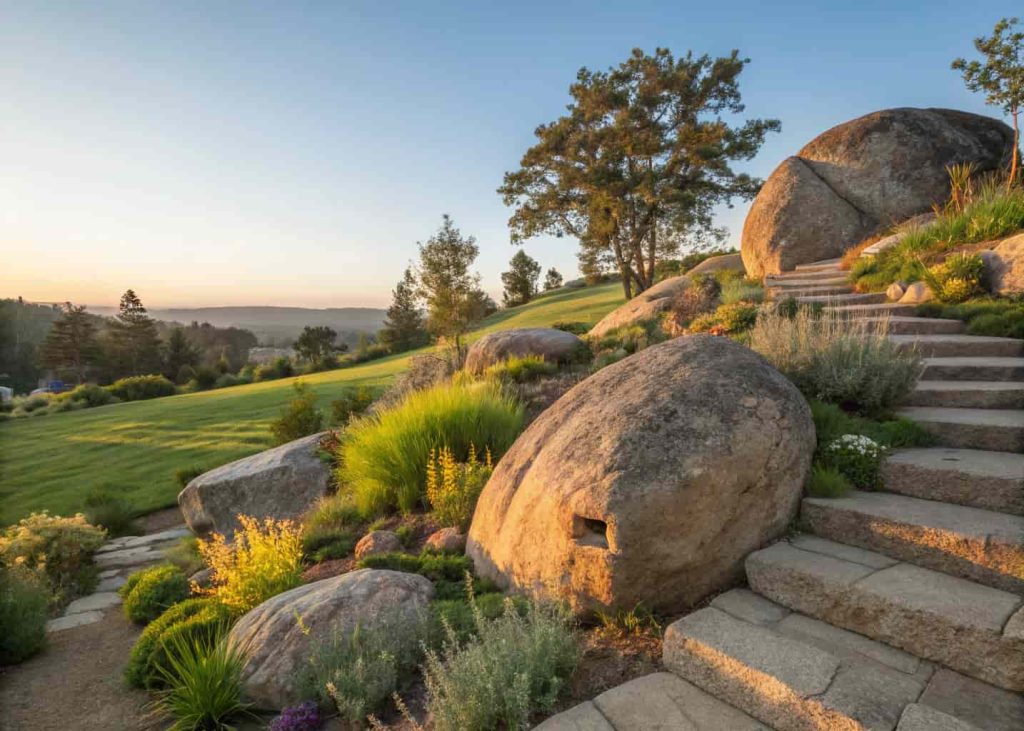
If your entire yard is on a slope, a full slope rock garden is one of the most comprehensive solutions available to you. This approach covers the whole hillside with a combination of rocks, boulders, gravel, and plants arranged in a way that mimics a natural rocky hillside. Start by placing the largest rocks first as anchors, then work down with medium rocks, gravel, and finally plants in between. Choose drought-tolerant plants like lavender, ornamental grasses, native wildflowers, and succulents that do well in rocky, well-draining soil. Once established, a slope rock garden practically takes care of itself. It stops erosion on all parts of the slope at once, requires very little watering, and provides excellent habitat for beneficial insects and birds. It is one of the best long-term investments you can make for a sloped yard.
11 Install a Rain Garden Lined with Rocks
A rain garden is a shallow, bowl-shaped depression in your yard designed to collect and absorb rainwater that would otherwise run off and erode your soil. When you line the edges and interior of a rain garden with rocks, it becomes even more effective. The rocks slow the incoming water, prevent the sides of the bowl from collapsing, and help filter the water as it soaks into the ground. You plant native water-tolerant plants inside the rain garden and taller plants on the edges. Rock-lined rain gardens are great for yards that have low spots where water naturally collects during storms. They turn a problem area into a functional, attractive feature that protects the rest of your yard from erosion and flooding while also recharging the groundwater under your property at the same time.
12 Use Gabion Baskets for Heavy Erosion Areas
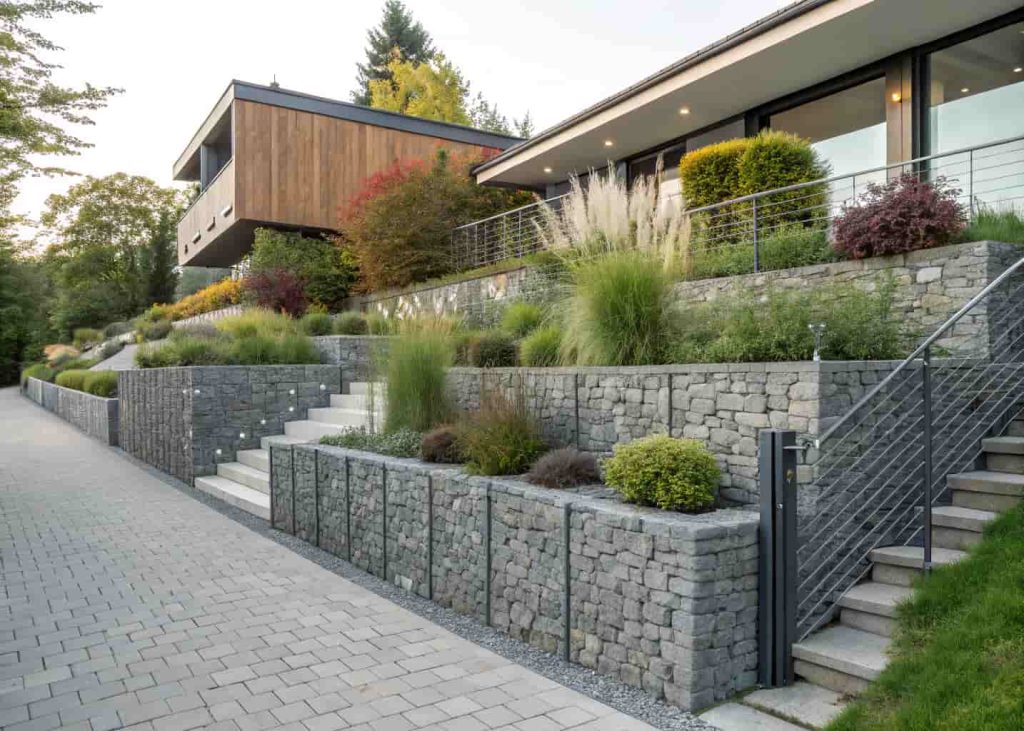
Gabion baskets are wire cages filled with rocks, and they are used in some of the toughest erosion situations where regular landscaping methods are not strong enough. Originally used in civil engineering for riverbanks and road construction, gabions have become popular in residential landscaping because they are durable, effective, and actually look quite stylish when used thoughtfully. You can stack them like building blocks to create strong retaining walls, use them as garden borders, or place them along drainage channels to slow water flow. Fill them with large decorative rocks, fieldstone, or even recycled concrete rubble. Gabion structures last for decades with very little maintenance. They are especially useful on steep slopes or in areas that receive very heavy rainfall where lighter erosion control methods tend to fail over time.
13 Create Rock Edging Borders Along Garden Beds
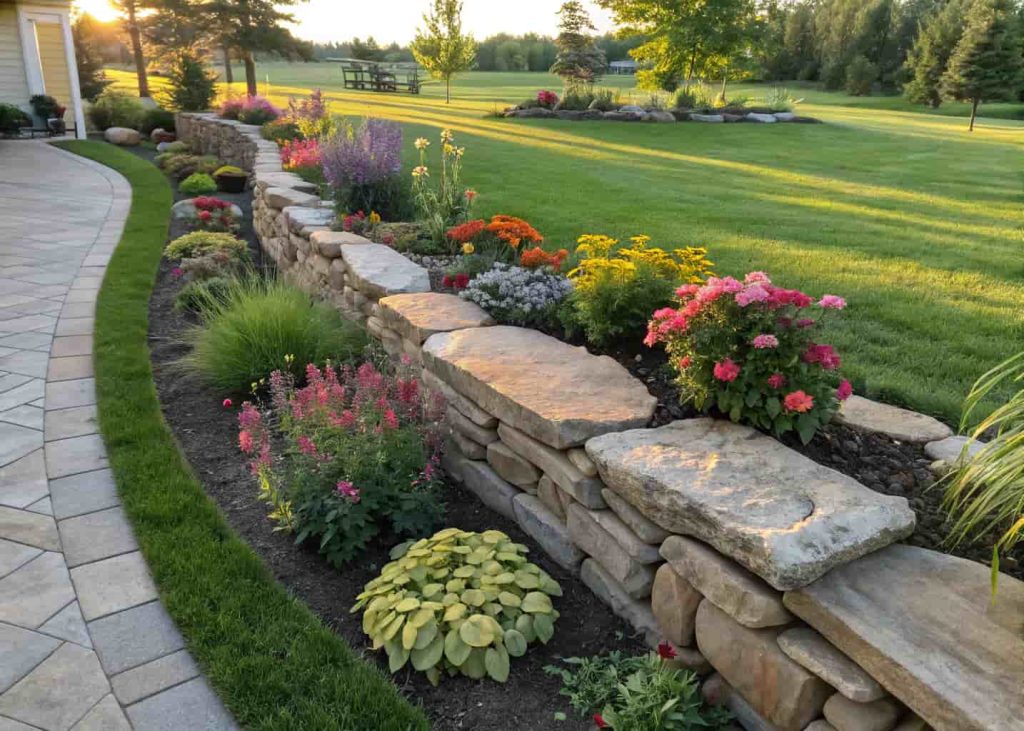
Rock edging is one of the simplest and most affordable rock garden landscaping ideas, but do not underestimate how much erosion control it provides. Placing a line of medium to large rocks along the edges of your garden beds creates a physical barrier that stops soil from washing out onto your lawn or driveway during heavy rain. It also defines the shape of your beds clearly, making your yard look neat and well-maintained. Stack two or three rocks high for better containment, and press them slightly into the soil so they stay put. Rock edging also stops grass from creeping into your garden beds, reducing your maintenance time. Use rocks that match your overall garden style. Smooth river rocks, jagged fieldstone, and flat flagstone pieces all work well and each give a very different aesthetic look to the finished border.
Conclusion
Soil erosion does not have to be a losing battle. As you can see from these 13 rock garden landscaping solutions, there are many practical, affordable, and attractive ways to protect your yard and keep your topsoil exactly where it belongs. Whether you start small with rock edging along a single garden bed, or go big with a full terraced slope rock garden, every step you take makes a real difference. The best part about using rocks for erosion control is that once the work is done, it largely takes care of itself. Rocks do not rot, they do not need watering, and they do not blow away in the wind. Combine them with the right ground cover plants and a smart water drainage plan, and you have a yard that will stay beautiful and stable for many years to come. Start with the solution that fits your budget and biggest problem area, and build from there.