
1. Rent It Out as Storage Space
Storage is a massive business. People always need somewhere to keep their stuff — seasonal furniture, sporting equipment, business inventory, you name it. If your garage has a working door, decent lighting, and stays dry, you already have something worth renting. Many homeowners charge between $100 to $300 a month just for storage space, depending on location. Apps like Neighbor.com make it easy to list your garage without much hassle. A family in Ohio started doing this after their kids left home and cleared an extra $200 monthly without lifting a finger. Clean it out, list it, and let someone else’s clutter pay your bills.

2. Convert It Into a Rental Suite
This one takes more upfront work, but the payoff is significant. A garage converted into a small studio apartment or guest suite can bring in $600 to $1,500 a month depending on your city. You’d need to add insulation, drywall, a bathroom, a small kitchen area, and proper ventilation. Yes, it costs money to set up — but most people recoup that investment within a year. In cities like Austin, Denver, or Los Angeles, these converted garage apartments are incredibly popular. Renters love the privacy. Landlords love the consistent income. Check local zoning laws first, but this is one of the highest-return garage conversions you can do.

3. Set Up a Home-Based Workshop Business
If you’re good with your hands, a garage workshop can become a real business. Carpenters, furniture makers, welders, and custom metalworkers often start right in their own garage. The overhead is low because you already own the space. One guy in Michigan started making custom wooden signs in his garage on weekends and eventually turned it into a full-time business selling on Etsy and at local markets. The key is having the right tools and a proper ventilation setup. You can charge premium prices for handmade, custom work. People genuinely love buying things made by a real person in a real workshop — there’s a story behind it, and that story sells.

4. Open a Garage Gym and Offer Personal Training
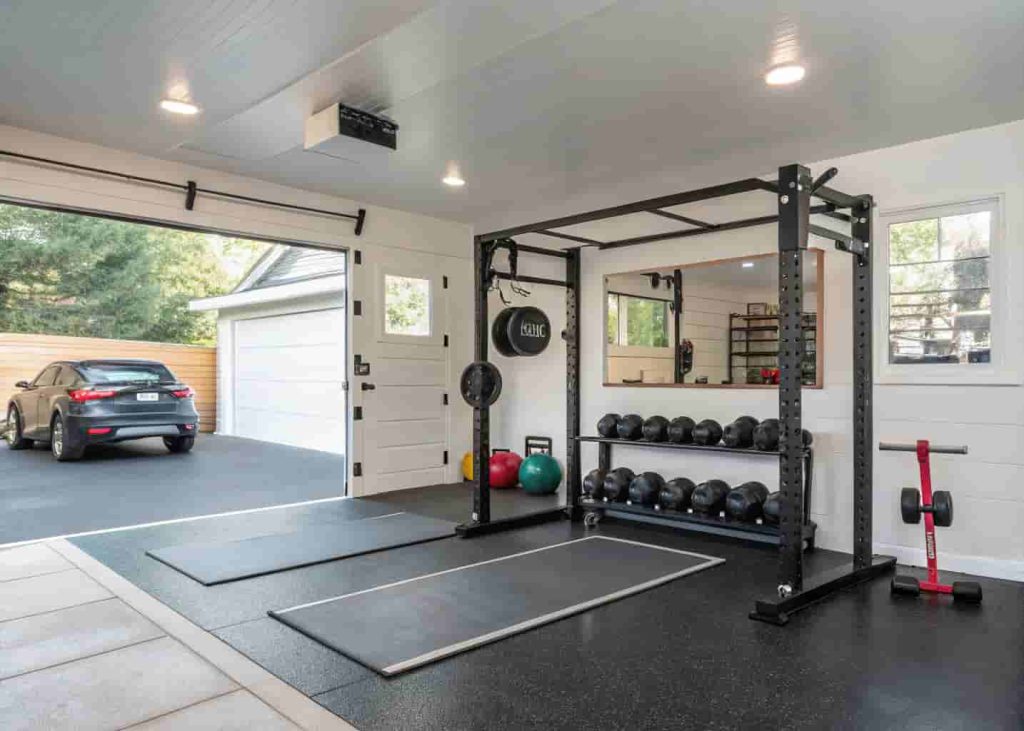
Fitness is booming, and gym memberships are expensive. If you convert your garage into a proper home gym with quality equipment — a rack, weights, cardio machines, mirrors — you can offer personal training sessions right there. Clients love the private, one-on-one feel compared to a busy public gym. Certified personal trainers doing this model often charge $50 to $100 per session. A trainer in Texas converted her two-car garage into a small boutique gym and built a client base of twelve regulars in just a few months purely through Instagram. You don’t need a massive space. You need good equipment, good energy, and word of mouth. The income potential here is very real.
5. Launch a Photography or Podcast Studio
Creative professionals constantly search for affordable studio space. A garage can be soundproofed and set up as a photography studio or podcast recording space relatively cheaply. Acoustic foam panels, proper backdrops, good lighting, and a solid mic setup can transform a plain garage into a professional environment. You can rent it out to local photographers, YouTubers, musicians, or podcasters by the hour or day. Rates typically run from $25 to $75 per hour depending on your area and equipment. Some studio owners in bigger cities make $1,000 or more per weekend just from bookings. Platforms like Peerspace let you list your creative studio space and connect with clients looking for exactly this.

6. Start a Car Detailing Business
If you love cars and have basic detailing skills, your garage is all you need to start. A professional car detailing service run from home has very low startup costs. A pressure washer, vacuum, polishing machine, and quality car care products can get you going for under $500. Detailing a single car can bring in $100 to $400 depending on the service level. Word spreads fast when someone’s car looks showroom-fresh. A teenager in Georgia started detailing cars in his family’s driveway on weekends and had a full client waitlist within two months just from posting before-and-after photos on social media. Scale it up, hire a helper, and you’ve got a real business operating right from your garage door.

7. Run a Home Daycare or After-School Program
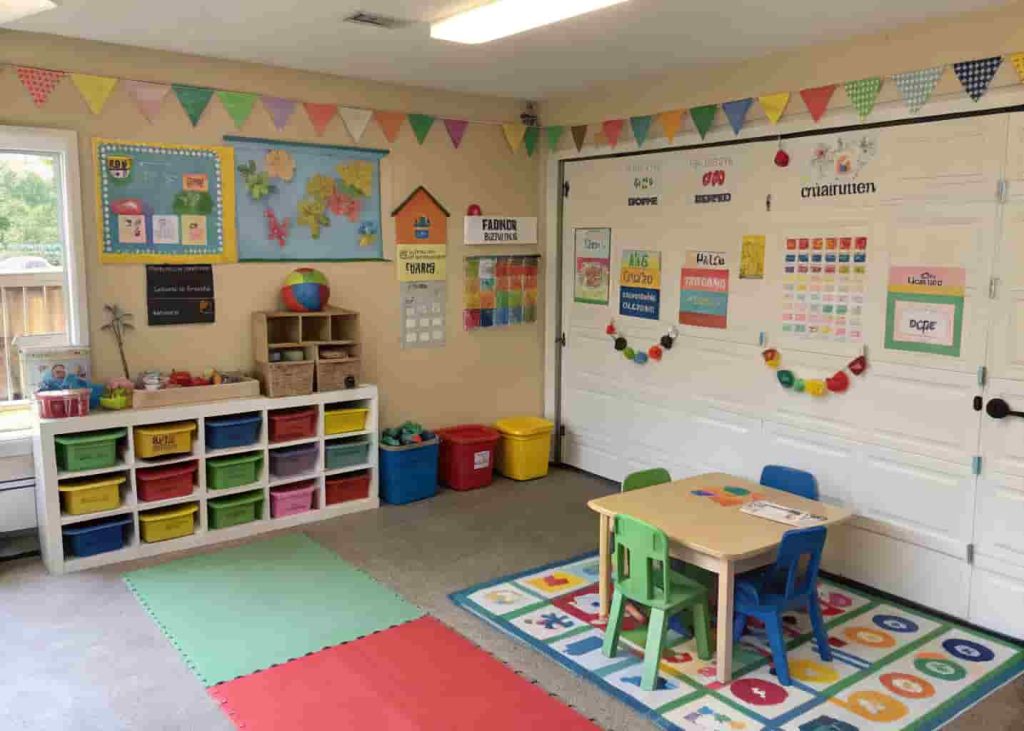
Parents are always hunting for affordable, trustworthy childcare close to home. If you have the right certifications and your garage can be safely converted into a warm, child-friendly space — this is a genuinely powerful income option. Bright colors, safe flooring, activity tables, and toy storage can make it feel like a proper daycare setting. Licensed home daycares can charge $800 to $1,200 per child monthly in many US states. Even with just four or five kids, you’re looking at serious income. Always check state licensing requirements first — they vary a lot. But this is one option where you’re earning income while genuinely helping your community. Families remember and appreciate good childcare, and referrals come naturally.
8. Create a Micro Retail Shop or Pop-Up Store
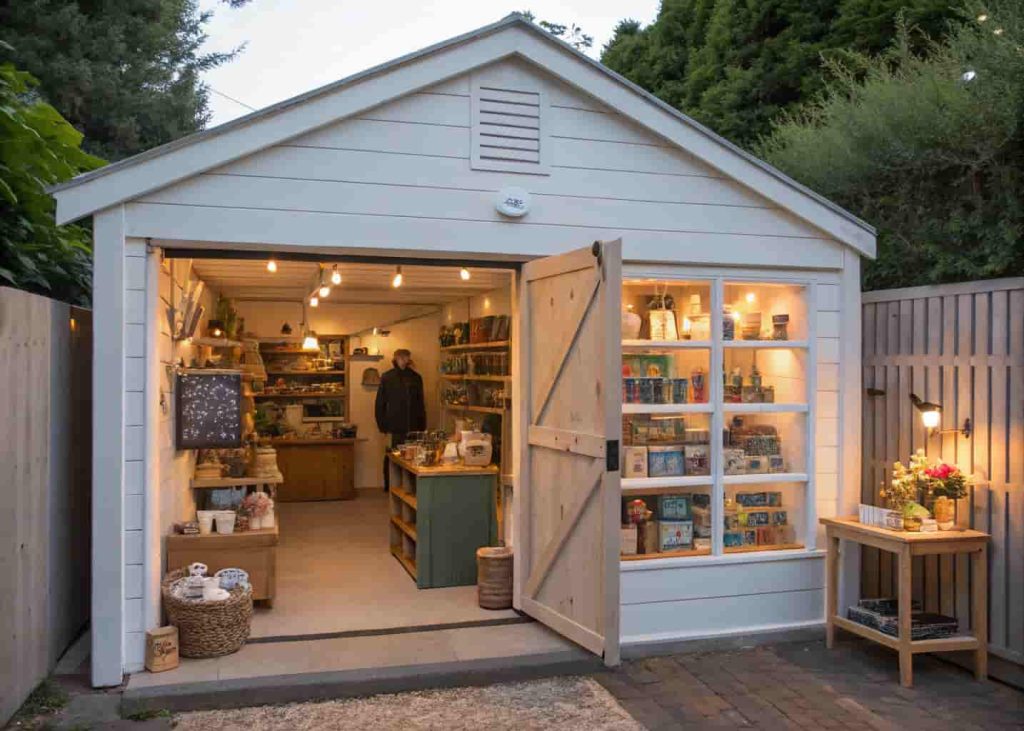
Retail doesn’t always need a mall. Plenty of successful small businesses operate out of garages — candle makers, soap sellers, vintage clothing curators, plant shops, bakers selling packaged goods. You can open on weekends, run seasonal pop-ups, or invite customers by appointment. It keeps overhead almost zero while giving you a real storefront vibe. A woman in Portland turned her garage into a weekend plant shop and now makes more on Saturdays than she did working full weeks at her previous retail job. Social media is your marketing engine here. Post consistently, build a following, and drive people to your garage door. It sounds casual, but people love the local, boutique feel — it’s exactly what big-box stores can’t offer.
9. Offer a Coworking Space for Remote Workers
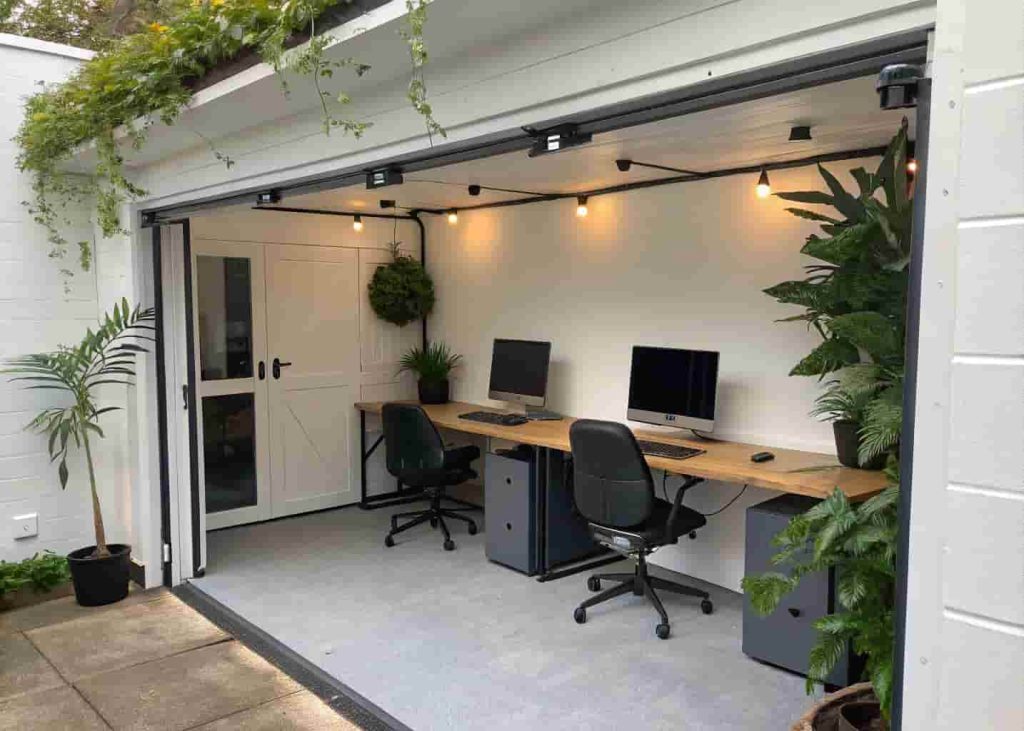
Remote work is normal now, and not everyone has a good setup at home. If your garage is spacious and you can furnish it with desks, fast Wi-Fi, good chairs, and proper lighting — you can rent desk space to remote workers looking for a quiet place outside their house. Charge a daily or monthly rate. Even two or three regular desk renters can bring in $300 to $600 per month with almost no ongoing effort. Some homeowners in suburban neighborhoods have built tight little communities this way — remote workers who show up daily, stay focused, and genuinely appreciate having a good spot to work. It’s a simple concept but fills a real gap, especially in areas far from proper coworking spaces.
10. Build a Home Bakery or Food Prep Kitchen
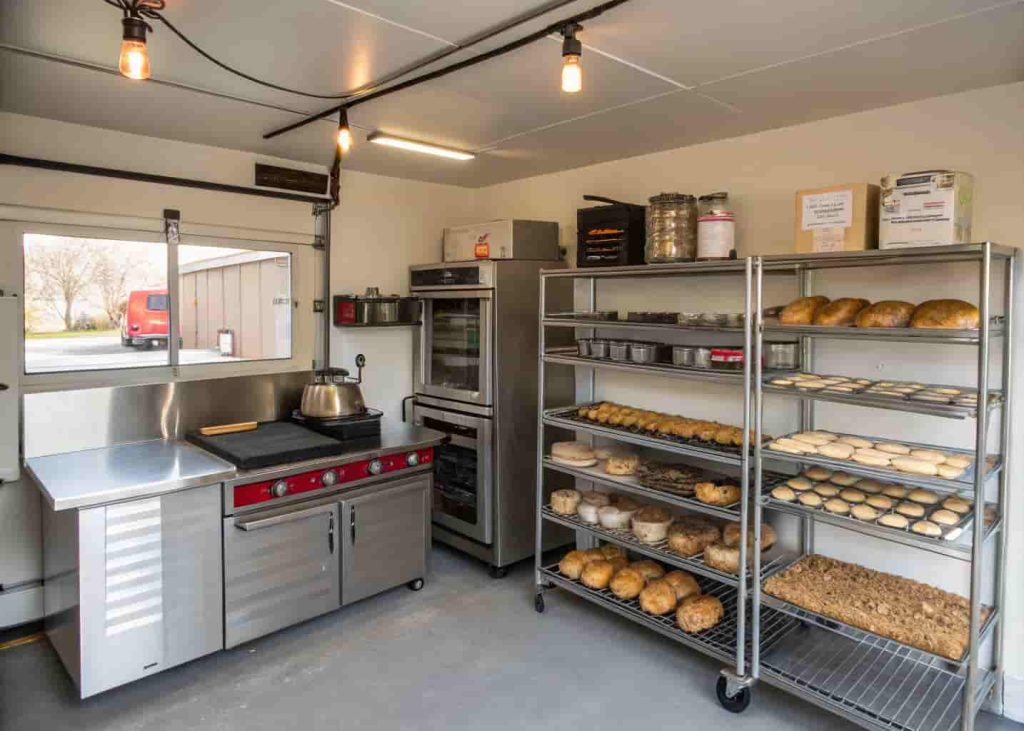
Food businesses are exploding, and a garage can legally serve as a commercial kitchen in many areas with the right permits and equipment. Custom cakes, meal prep services, catering prep, packaged snacks — the options are wide. A proper stainless steel prep area, commercial oven, ventilation hood, and NSF-approved storage can set you up for success. A mom in Texas started making custom birthday cakes from her garage kitchen and now books out three months in advance. Check your city’s cottage food laws — many states allow home-based food businesses with surprisingly few restrictions. The income ceiling here is high if you build a brand and loyal customer base. Food is emotional, personal, and people pay well for quality.
11. Turn It Into an Airbnb or Short-Term Rental
If your garage conversion is comfortable and well-designed, listing it on Airbnb can generate excellent short-term rental income — often far more per night than a long-term tenant would pay per month. Travelers love unique, affordable spaces. A well-styled garage suite in a good location can easily pull $60 to $150 per night. That adds up fast. A couple in Nashville converted their detached garage into a cozy Airbnb with a full bathroom and kitchenette and consistently earn more from it than their car payment and home insurance combined. The key is the photos, the listing description, and the little touches — good bedding, a welcome basket, clear instructions. Guests notice everything, and great reviews bring more bookings automatically.

12. Start a Tutoring or Music Lesson Studio
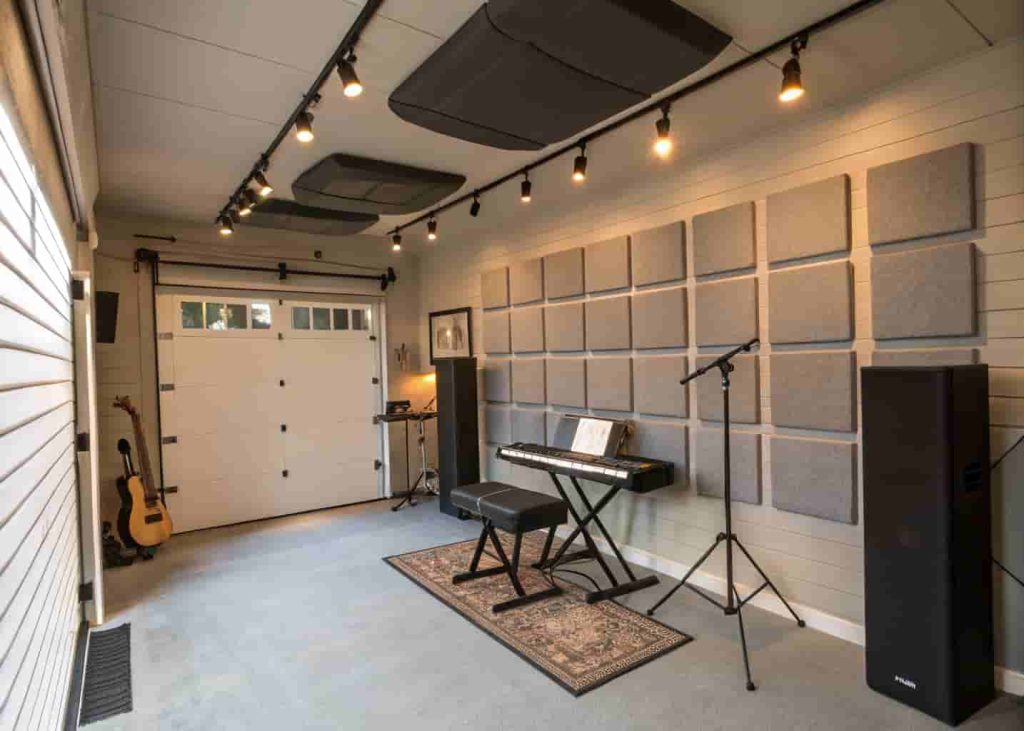
Teachers, musicians, and tutors need space. Your garage can be that space — for yourself or rented out to others. Set it up with a whiteboard, good acoustics, comfortable seating, and proper lighting. Music teachers in particular often struggle to find affordable practice and lesson spaces. Offering your garage as a dedicated lesson studio to a local guitar teacher or math tutor means steady monthly rental income without much management. Or run it yourself — if you’re a qualified tutor, teaching five students per day at $30 per hour each adds up to over $3,000 a month from your own driveway. Parents appreciate a calm, dedicated learning environment. It signals professionalism in a way that a living room couch just doesn’t.
Conclusion
Your garage doesn’t have to be a dumping ground. Every single idea on this list has been done by real people — ordinary homeowners who looked at an empty space and asked a simple question: what if? Some started small and stayed small. Others built businesses that changed their financial lives completely. The beauty of a garage conversion is that the space is already yours. You’re not paying extra rent. You’re not commuting. You’re just using what you already have more intelligently. Start with one idea that genuinely excites you, do your research on local permits and regulations, and take the first step. The extra income potential is sitting right there behind that garage door — you just have to open it.