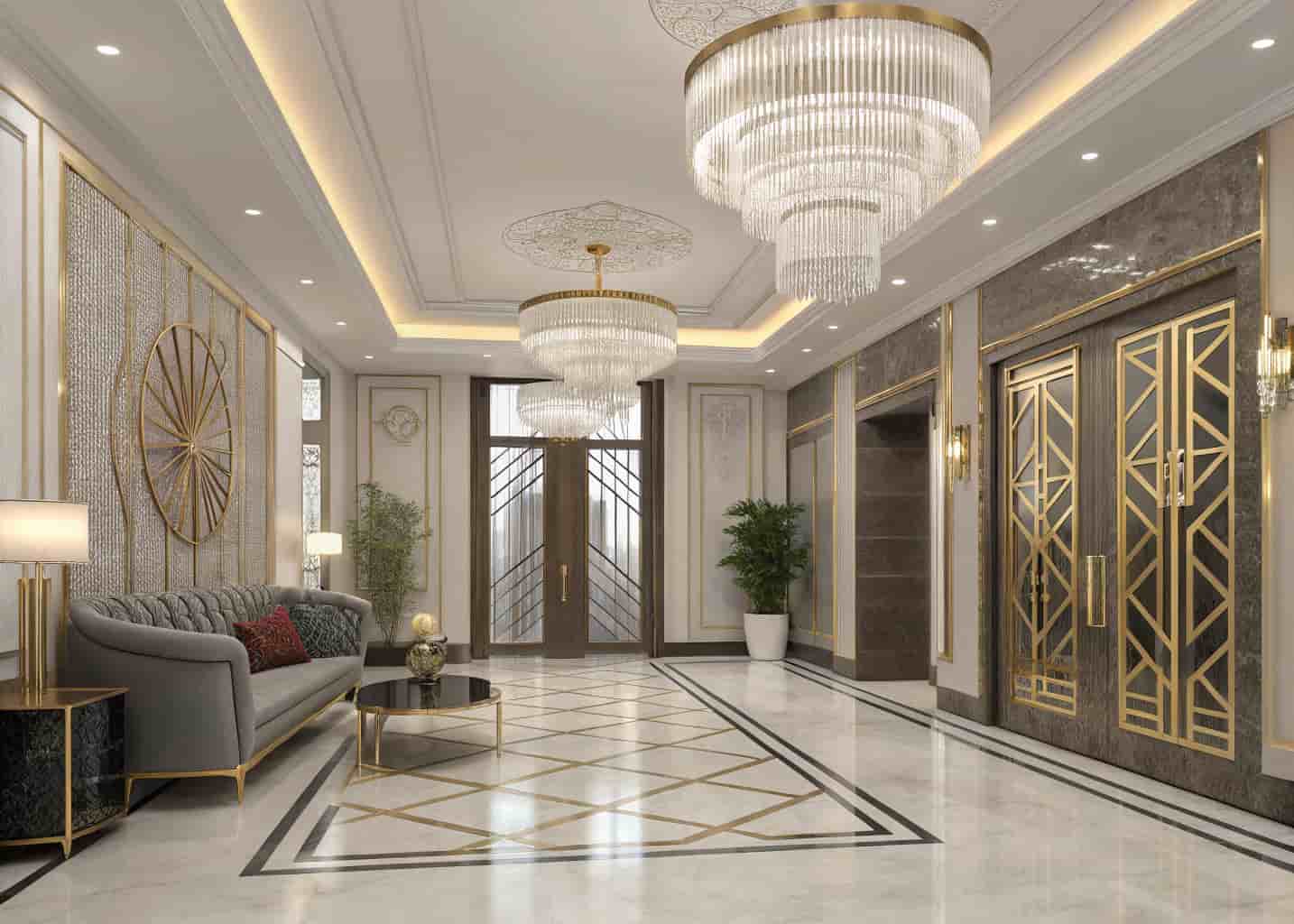
1. Gold Detailing for a Rich Vintage Feel
Gold detailing is probably the first thing that comes to mind when you think Art Deco interiors. This style was born in the 1920s and 1930s, right when Hollywood glamour was at its absolute peak. Think about those old black-and-white movies where every room looked like it belonged to a millionaire. That feeling came from gold. You don’t have to go overboard though. Even small touches like gold picture frames, brass cabinet handles, or a gilded mirror can completely change the vibe of a room. A friend of mine added gold trim to her ceiling moldings and it instantly looked like something out of a Gatsby party. The key is to use gold as an accent. Let it catch the light without overwhelming everything else around it.
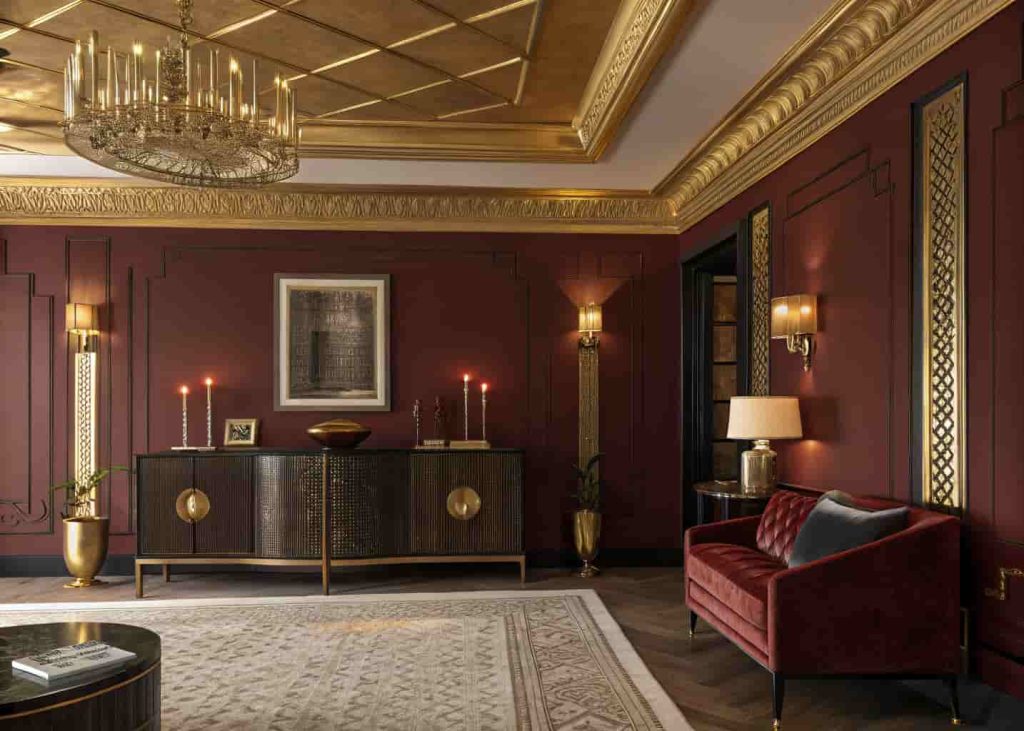
2. Geometric Wall Designs That Stand Out
Geometry is the backbone of Art Deco. Every line is sharp, every pattern is intentional, and nothing is random. When you look at classic Art Deco buildings, you will notice repeating shapes like fans, zigzags, sunbursts, and hexagons. You can bring that same energy into your home through a feature wall. Wallpaper with bold geometric patterns works beautifully, or you can paint the design directly on the wall if you are feeling creative. I once visited a home where the owner had painted a large sunburst pattern behind the sofa, and honestly it was the first thing every guest noticed. It does not have to cover the whole wall. Even a single panel of geometric design can make a room feel very intentional and stylish.
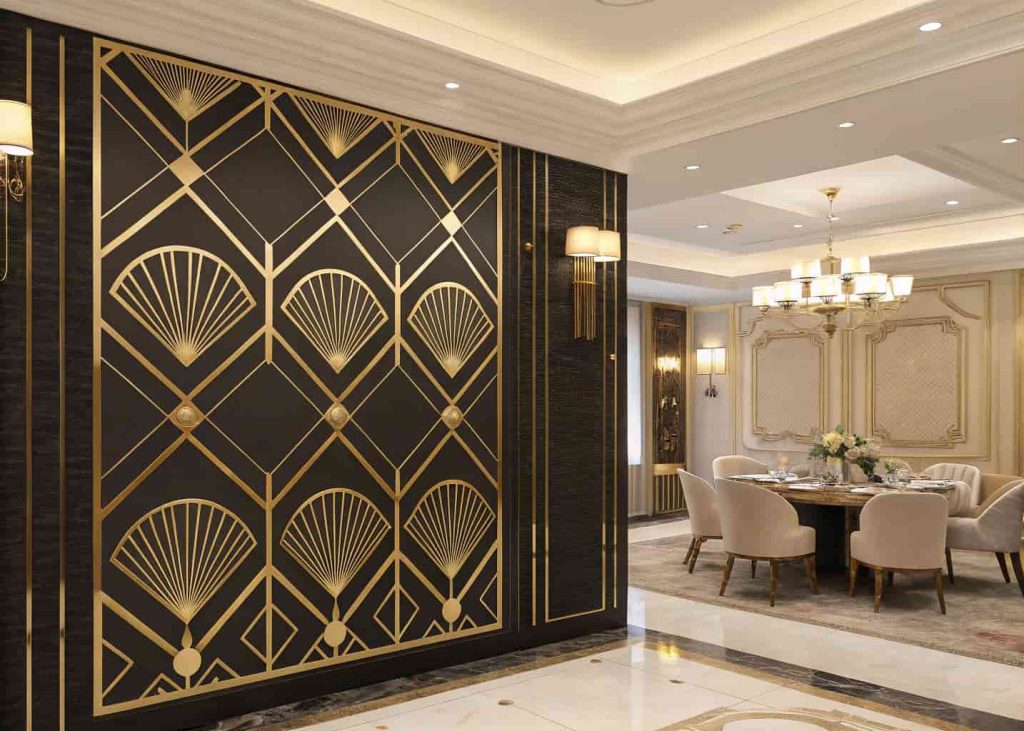
3. Velvet Sofas for Elegant Comfort
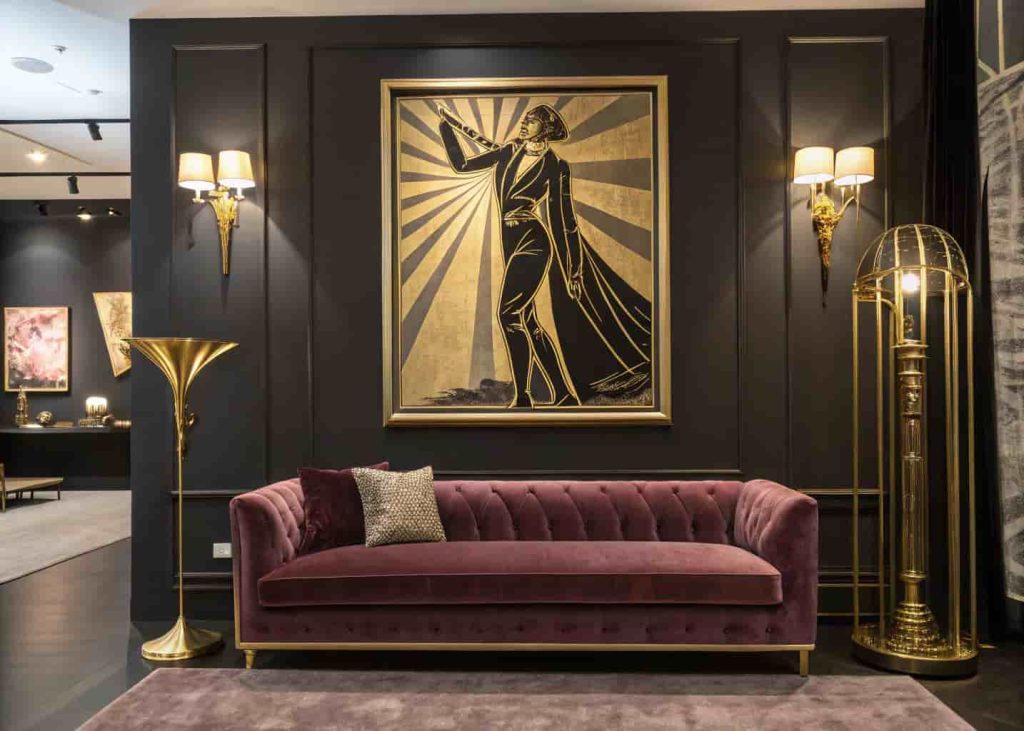
Nothing says luxury quite like a velvet sofa. The fabric has this soft sheen that catches light in the most beautiful way, and it instantly makes any sitting room feel more expensive. In Art Deco interiors, velvet was everywhere — on sofas, armchairs, headboards, and even curtains. The rich texture of velvet pairs perfectly with the bold colors and shiny metals that define this style. Deep emerald green, royal blue, or rich jewel tones work especially well. I remember walking into a boutique hotel lobby once that had a tufted dusty pink velvet sofa against a black wall with gold sconces, and I genuinely did not want to leave. That combination of softness and glamour is exactly what Art Deco is all about.
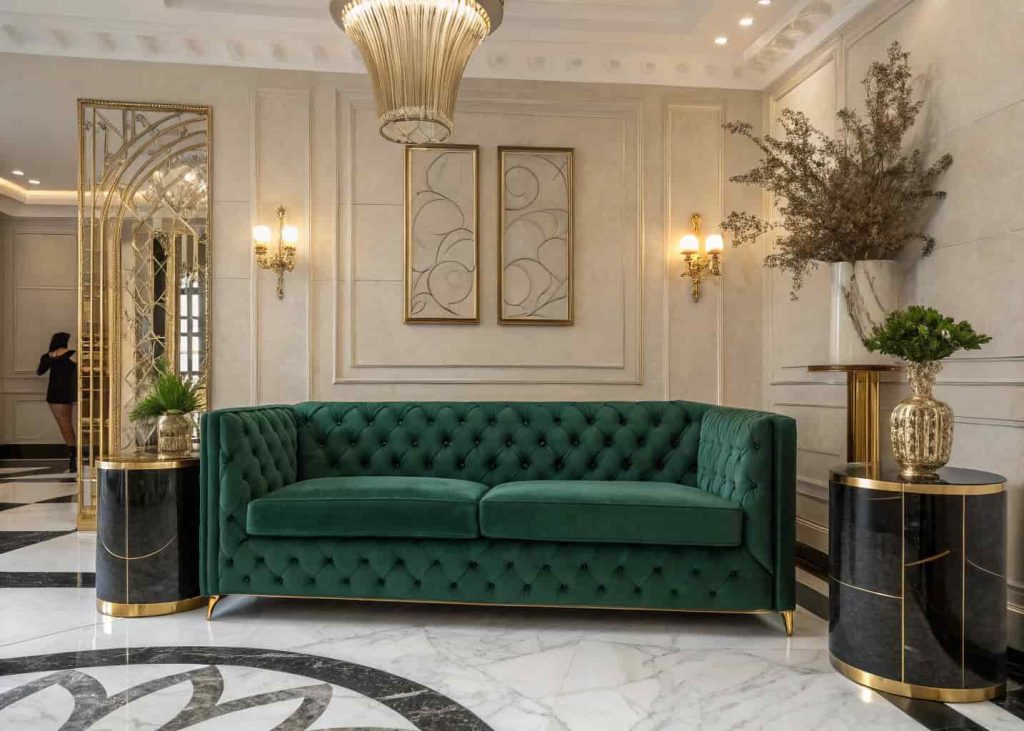
4. Crystal Chandeliers for Statement Lighting
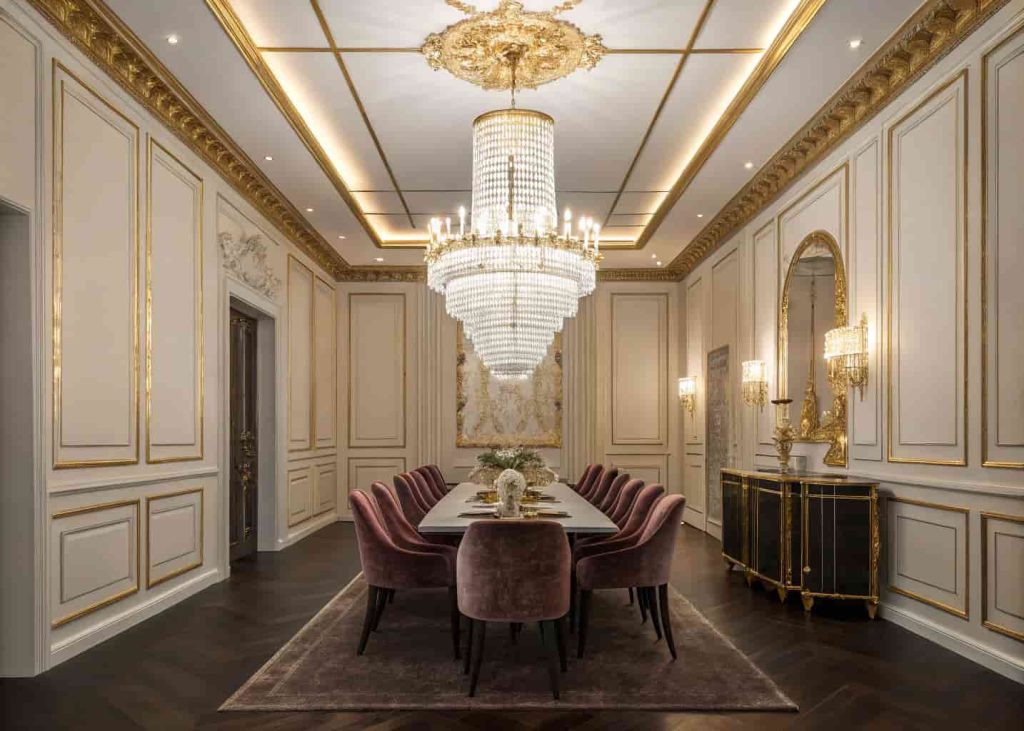
Lighting in an Art Deco home is never an afterthought. It is a statement. Crystal chandeliers were a staple of the era because they did two things at once — they lit up the room and they added visual drama. When light passes through crystal, it scatters into tiny rainbows across the walls and ceiling. That kind of effect is impossible to replicate with any other fixture. If a full chandelier feels too much for your space, a crystal pendant light above a dining table works just as well. My neighbor installed one in her small dining room last year and the whole space transformed overnight. Even at dinner parties, people kept looking up at the ceiling. That is exactly the kind of reaction good Art Deco lighting is supposed to create.
5. Marble Finishes for Timeless Beauty
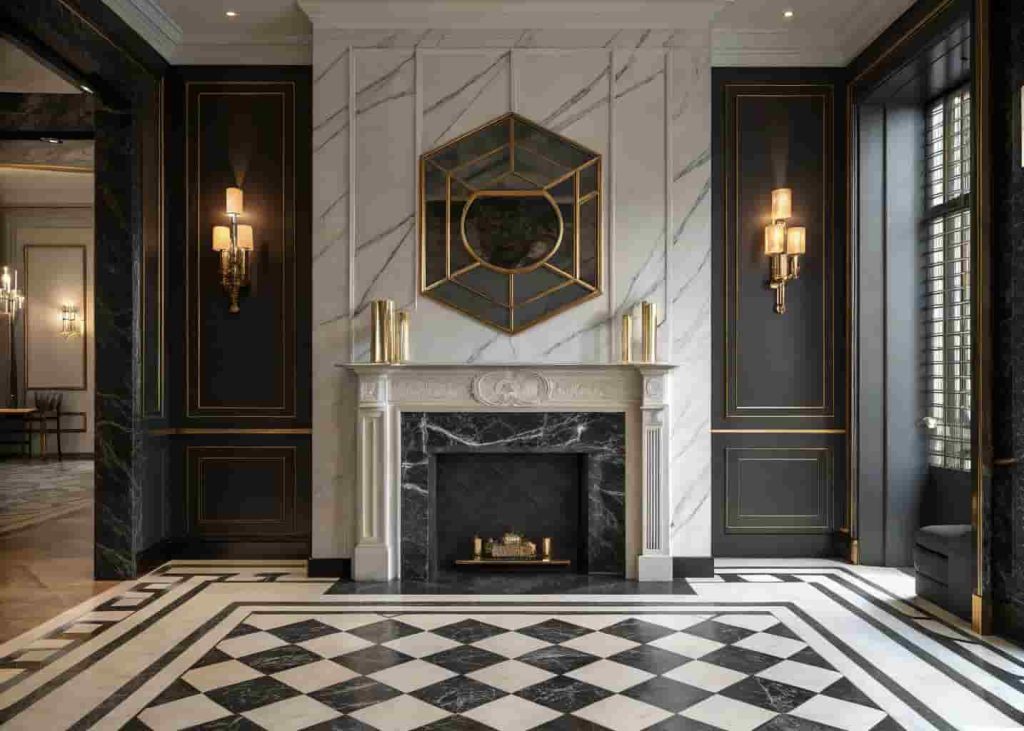
Marble never goes out of style. In Art Deco design, it was used on floors, countertops, fireplace surrounds, and even wall panels. The natural veining in marble has this organic elegance that balances out all the sharp geometry and hard metals in Art Deco spaces. Black and white marble is the most classic combination, but deep green or warm beige marble works beautifully too. You do not need to marble every surface to get the effect. A marble coffee table or a marble-topped console in the entryway is enough to anchor the whole room. I have seen small apartments completely elevated just by swapping out a plain white countertop for something with dark dramatic veining. The difference is night and day.
6. Sunburst Mirror as a Focal Point
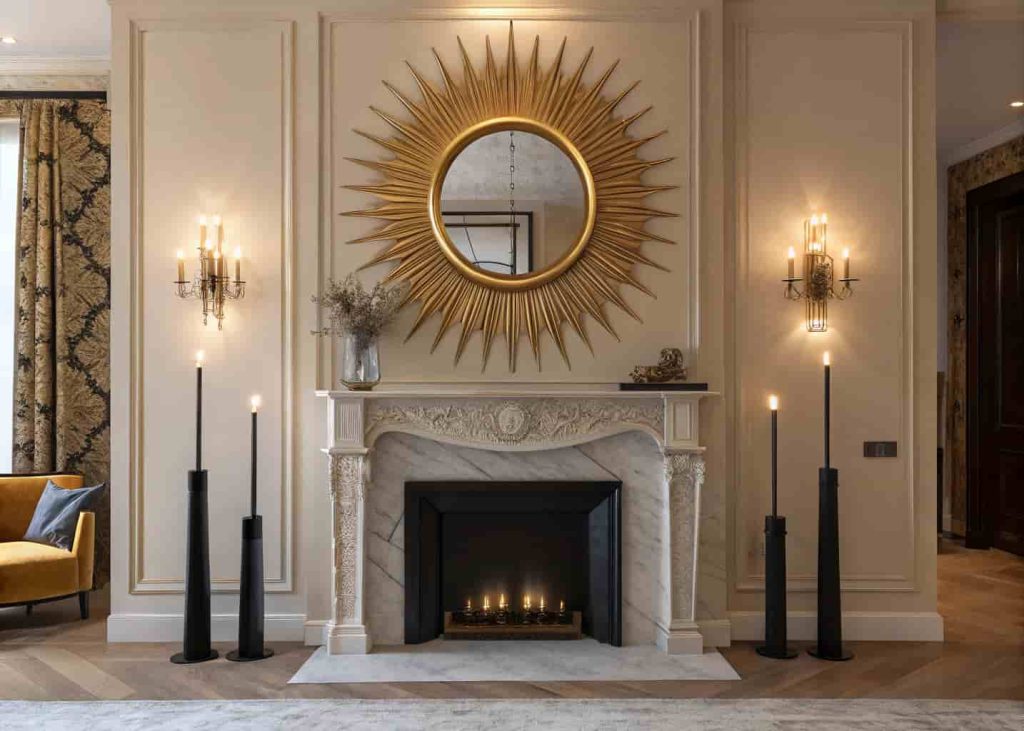
The sunburst mirror is one of those design pieces that never seems to get old. It is bold, it is graphic, and it works in almost any room. In Art Deco design, the sun motif was incredibly popular because it represented energy, optimism, and new beginnings. A large sunburst mirror above a fireplace or console table instantly becomes the focal point of the room. Everything else in the space naturally arranges itself around it. The rays of the mirror draw the eye outward, which also makes the room feel bigger and more open. If you want to go bold, choose a gold-finish sunburst mirror with long dramatic rays. If you prefer something more subtle, a smaller antiqued version works just as well without overpowering the space.
7. Black and Gold Luxury Color Scheme
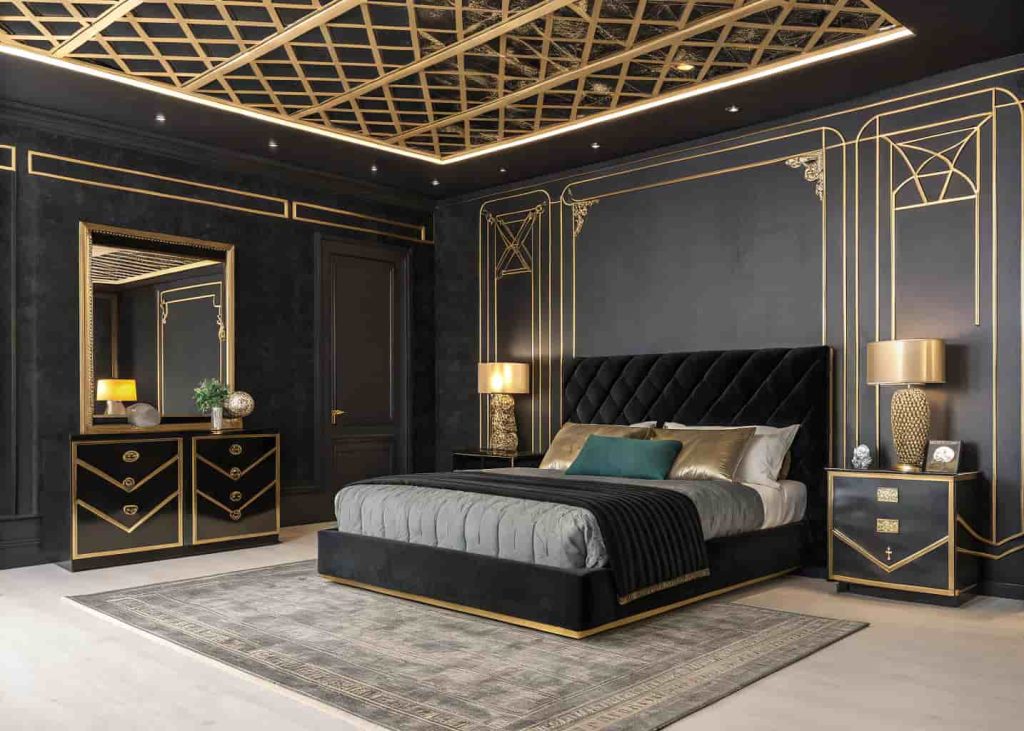
Black and gold is the ultimate Art Deco color combination. It is dramatic, it is timeless, and it works in every room of the house. Black grounds the space and gives it depth, while gold lifts it and adds warmth. Together they create this feeling of serious luxury that is hard to achieve with any other pairing. You can go all in with black walls and gold moldings, or keep it more subtle with black furniture against light walls and gold hardware throughout. Even a black and gold bathroom with matte black fixtures and brushed gold faucets looks incredibly high-end. I once redesigned a home office using just these two colors and the client said it felt like working inside a five-star hotel. That is the power of a committed color scheme done right.
8. Mirrored Furniture for Modern Glam
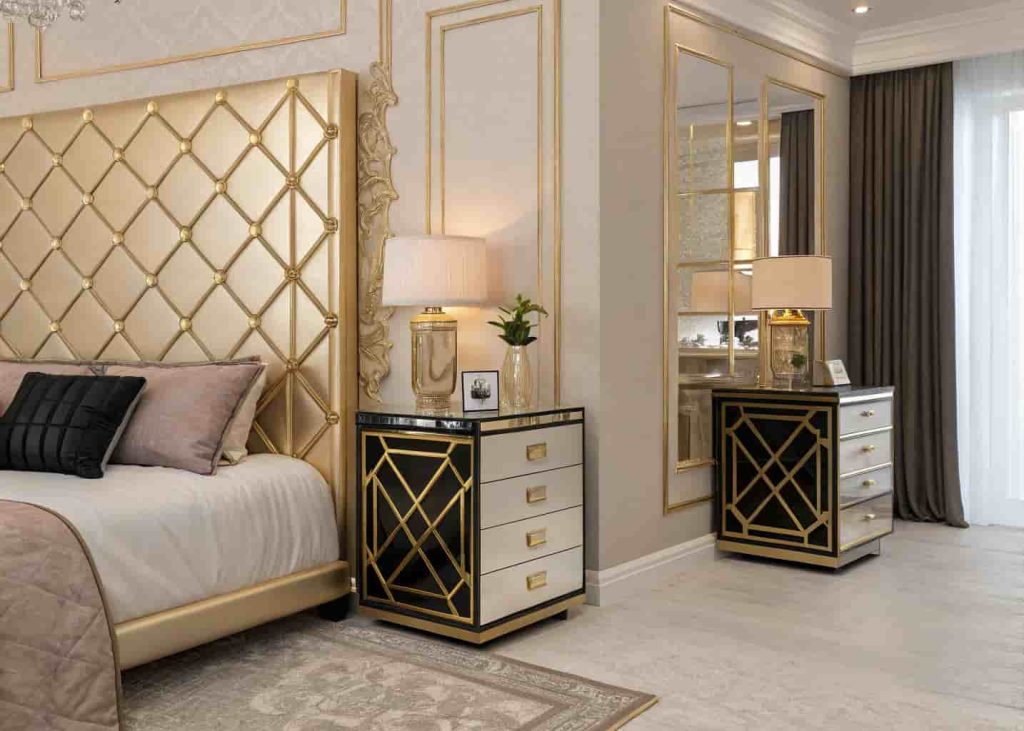
Mirrored furniture was a huge trend in the Art Deco era and it has made a serious comeback in modern luxury interiors. There is something almost magical about a mirrored dresser or side table. It reflects the room back at you, doubles the light, and adds this glamorous sparkle that regular furniture simply cannot. Mirrored pieces work especially well in bedrooms and dressing rooms where you want that old Hollywood vanity aesthetic. A mirrored bedside table paired with a crystal lamp is a combination that looks effortlessly luxurious. The trick is not to overdo it. One or two mirrored pieces per room is perfect. Too many and the space starts to feel like a funhouse instead of a home. Balance them with matte textures like velvet or dark wood to keep things grounded.
9. Jewel Tone Color Styling Ideas
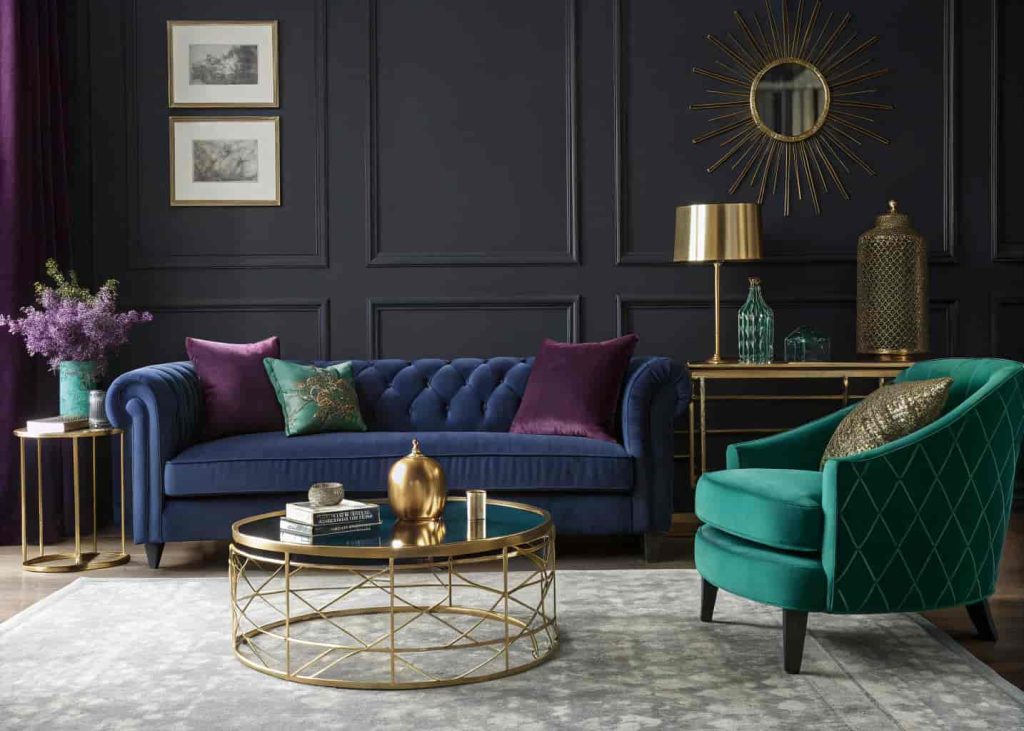
Jewel tones were everywhere in the Art Deco period. Sapphire blue, emerald green, amethyst purple, and ruby red — these deep rich colors were used on everything from upholstery to wallpaper to decorative accessories. They bring warmth and depth to a room in a way that pastels and neutrals simply cannot. The best part about jewel tones is how well they work with gold and black accents, which are already common in Art Deco spaces. A sapphire blue velvet armchair with gold legs next to a black lacquer cabinet is one of the most beautiful combinations you can put together. If you are nervous about using bold colors on walls, start with throw pillows, curtains, or a statement rug. Even one jewel-toned piece in a neutral room is enough to make the whole space feel curated and intentional.
10. Decorative Wall Panels with Classic Touch
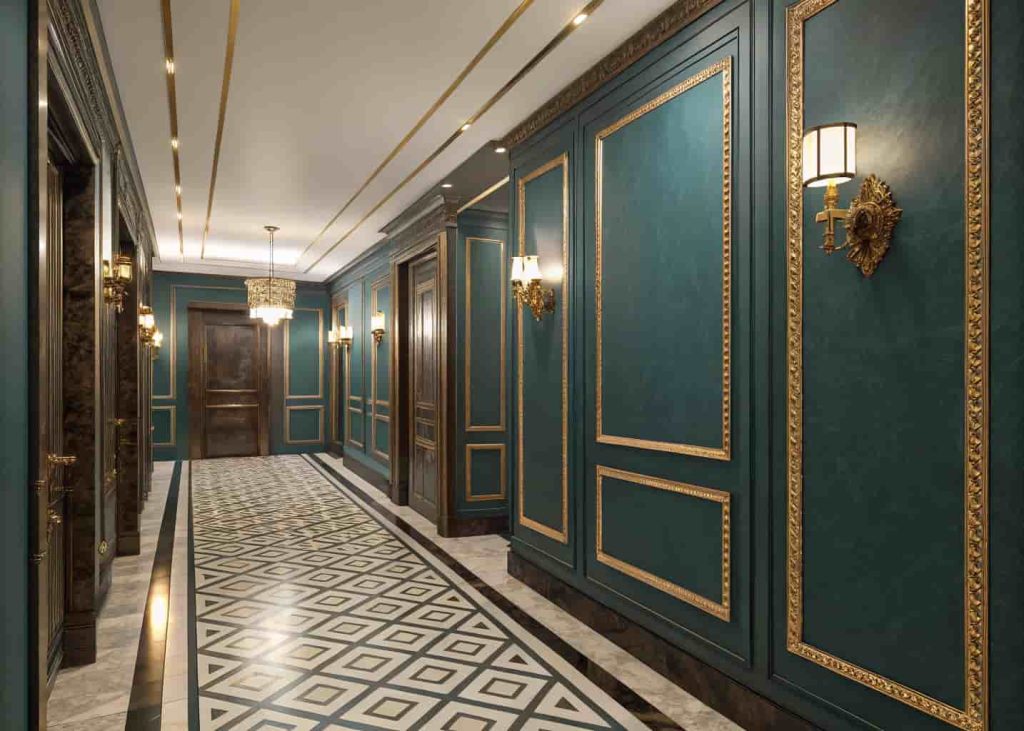
Decorative wall panels are one of the most underrated ways to bring Art Deco into a home. In the original era, these panels were made from lacquered wood, inlaid metal, or painted plaster, and they featured everything from geometric patterns to exotic nature scenes. Today you can get the same effect with modern materials at a fraction of the cost. Fluted wood panels, embossed wallpaper, or even painted wainscoting can all create that same layered, textured look. I visited a restaurant once that had full-height lacquered panels in deep teal with gold trim running along the top, and the effect was absolutely stunning. You could do something similar in a dining room or hallway to add real architectural interest. It turns a plain wall into something that tells a story.
11. Chrome and Glass Accents for Shine
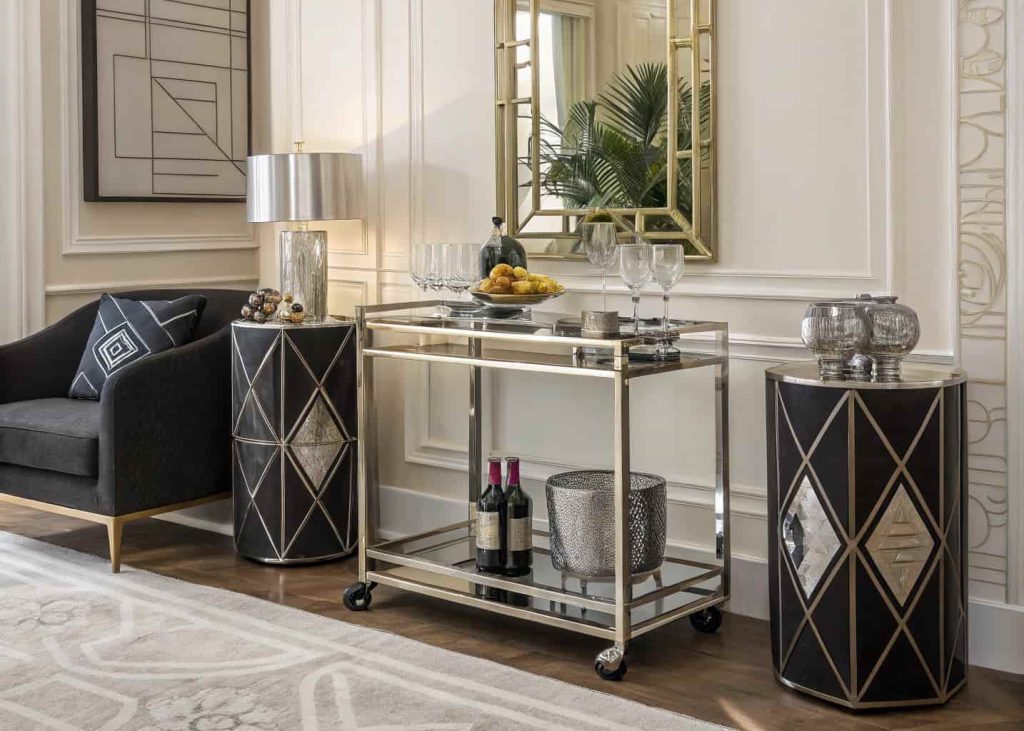
Chrome and glass were the modern materials of the Art Deco age. At a time when steel and industrial production were revolutionizing everyday life, designers brought those same materials into the home. Chrome gives a cooler, harder shine compared to gold, and it pairs beautifully with dark colors and mirrors. Glass-top tables, chrome lamp bases, and clear acrylic furniture all carry that spirit forward into contemporary interiors. The combination of chrome and glass also makes spaces feel lighter and more open, which is great for smaller rooms. A chrome and glass bar cart in a corner is a classic Art Deco touch that is also genuinely practical. It looks expensive and it is functional at the same time, which is exactly the kind of design thinking that made Art Deco so enduring in the first place.
12. Bold Art Pieces for Stylish Interiors
Art Deco interiors were never shy about hanging bold, dramatic artwork on the walls. The paintings, prints, and sculptures of the era were graphic, figurative, and full of energy. Think elongated figures, bold outlines, rich colors, and strong compositions. A large-scale Art Deco-inspired print above a sofa or fireplace can anchor the entire room and give it a real sense of personality. Original vintage posters from the 1920s and 1930s are still available and make fantastic statement pieces. If you prefer something more contemporary, look for artists who work in that same bold graphic style. The artwork does not have to match the era exactly — it just needs to share that confidence and visual strength. A room with one truly great piece of art will always feel more finished than a room covered in generic prints.
Conclusion
Art Deco is one of those design styles that never really goes out of fashion. It has this incredible balance of boldness and elegance, luxury and geometry, glamour and function. Whether you go all in with black walls and crystal chandeliers or just add a sunburst mirror and some gold accents, you are tapping into a design language that has been making spaces feel extraordinary for over a century. You do not need a massive budget or a huge home to pull it off. Start with one or two ideas from this list that feel right for your space, and build from there. The best interiors are the ones that feel personal, and Art Deco gives you plenty of room to make it your own.