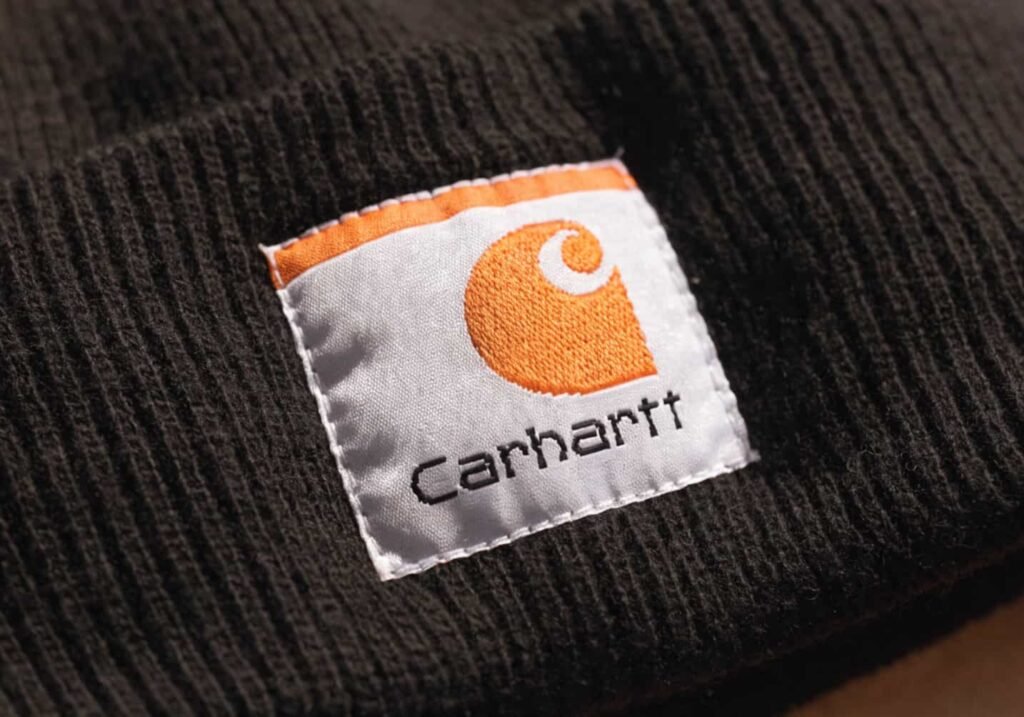
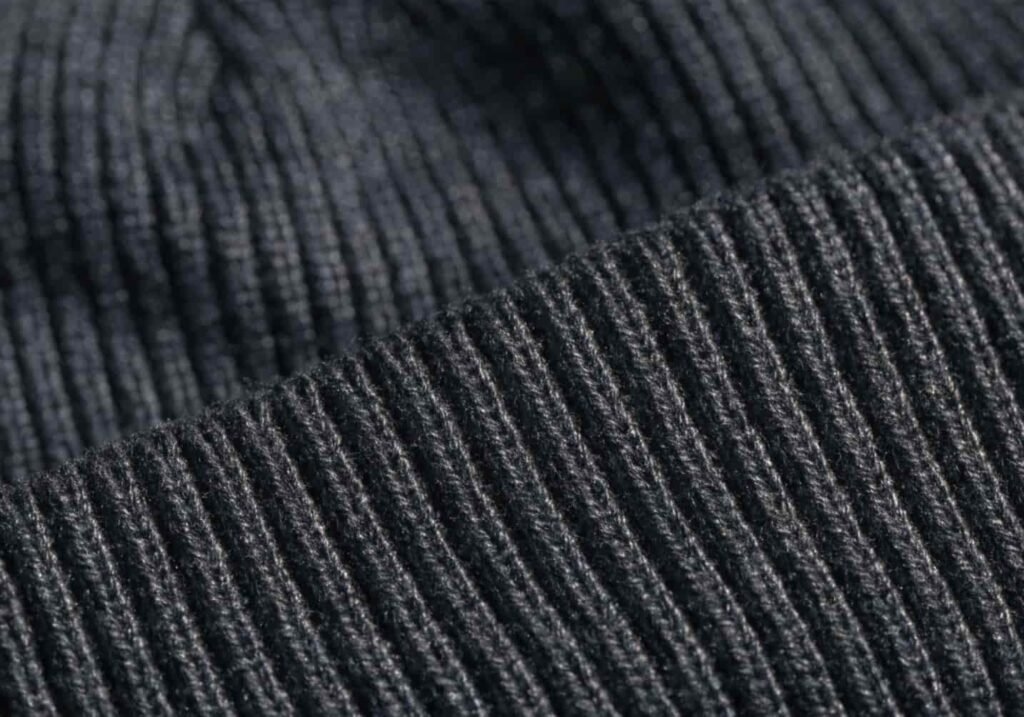
A Carhartt Beanie seems like the simplest piece of clothing you can own — it’s a tube of knit fabric closed at one end. Yet Carhartt’s version has outlasted dozens of fashion cycles and still shows up on job sites and runways at the same time. Most of that comes down to one design decision most people never notice: Carhartt uses a tighter knit gauge than typical mall-brand beanies, which is why theirs holds its shape after a year of daily wear while a $12 beanie from a fast-fashion store stretches out and sags within a few months.
1. Origin and Purpose of the Carhartt Beanie
Carhartt didn’t design the beanie as a fashion accessory — it came out of the same workwear logic as their jackets and overalls. Outdoor laborers, especially in construction and logging, needed something that stayed put under a hard hat and didn’t unravel after repeated machine washing. The acrylic knit construction was chosen specifically because it resists pilling better than wool at a lower price point, which mattered for a product meant to be replaced cheaply if lost or damaged on a job site. That utilitarian backstory is part of why it reads as “authentic” rather than trend-driven when people wear it today.

2. Material and Warmth Level Explained
Most Carhartt beanies are 100% acrylic, not wool. This surprises people who assume “warm winter hat” automatically means wool. Acrylic has some real advantages here: it dries faster than wool if it gets wet, it doesn’t itch the way cheaper wool blends do, and it holds color better over repeated washes. The trade-off is that wool insulates slightly better when actually wet (a soaked wool hat still retains some warmth; a soaked acrylic one doesn’t), so if you’re doing something like ice fishing or heavy snow work, a wool-blend option might serve you better than the standard acrylic line.
Carhartt does also make a few wool-blend and fleece-lined versions — check the tag before buying, since the product photos often look identical across materials.
3. Classic vs Cuffed Beanie Styles
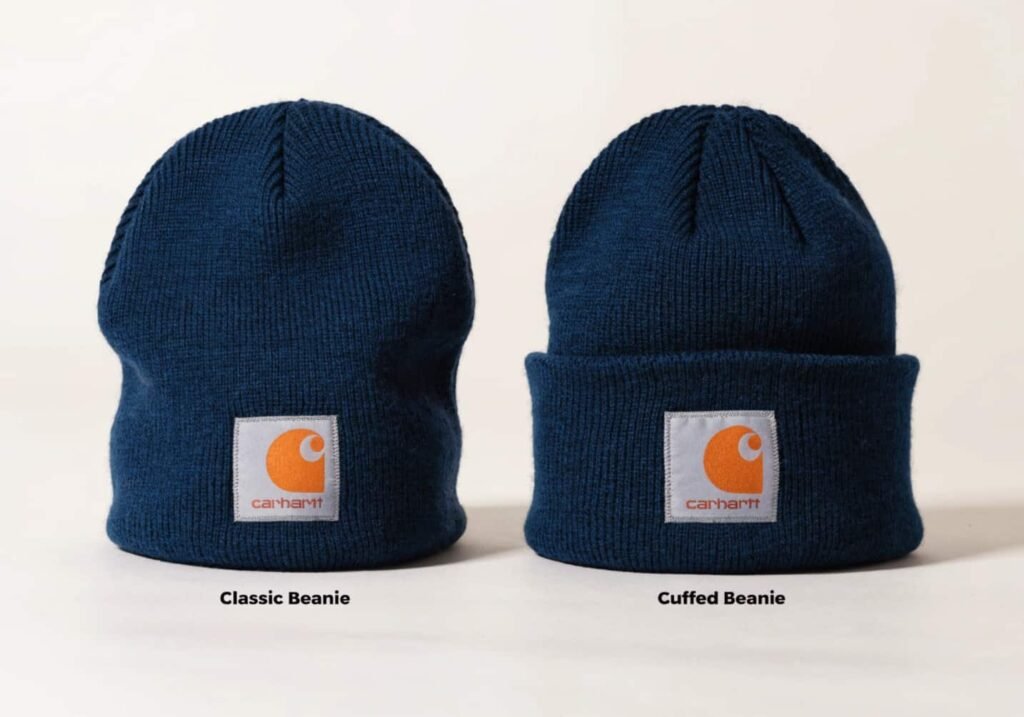
The two main shapes are the classic beanie (no fold, sits close to the head, tapers slightly at the crown) and the cuffed/watch cap style (has a folded brim, usually 2-3 inches deep). The cuffed version is warmer around the ears since you get a double layer of knit at the fold, and it’s the one most associated with the brand’s logo patch on the front. The classic style sits lower profile and works better under a hood or hard hat since there’s no extra bulk at the brim.
If you wear glasses, the cuffed style tends to sit better because the fold keeps the fabric from pulling down over your eyebrows the way an unfolded classic beanie can after a few washes loosen the knit.
4. How to Style a Carhartt Beanie
The cuffed style with the small rectangular logo patch is the one that’s become a streetwear staple, mostly because it pairs with almost anything without looking like you’re dressed for a job site. A few combinations that actually work rather than just “looks cozy”:
- Cuffed beanie + oversized flannel + slim jeans — keeps the silhouette from looking too boxy overall
- Classic low-profile beanie + a tailored coat — works for a smart-casual look since it doesn’t compete visually with a structured outerwear piece
- Cuffed beanie pushed slightly back off the forehead rather than pulled down to the eyebrows — this alone changes it from “keeping warm” to “styled” in most people’s eyes
Matching the beanie color to your jacket instead of your shirt tends to read more intentional, since outerwear is the first thing people notice in a winter outfit anyway.

5. Color Options and Trends
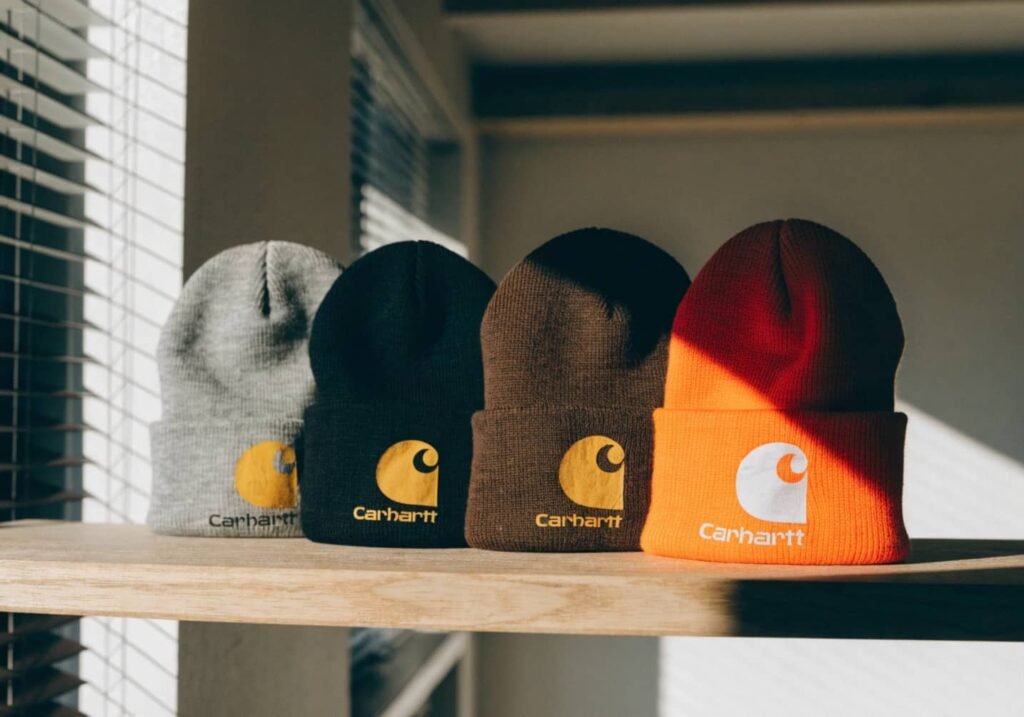
Carhartt’s beanie line runs deep — easily 20+ colorways at any given time between the mainline and Carhartt WIP labels. Charcoal gray, black, and a heathered brown are the steadiest sellers and tend to stay in stock longest. Brighter or seasonal colors (moss green, rust orange, a muted blue) sell out faster and often don’t get restocked once a season ends, so if you find one you like in an unusual color, that’s not really a “wait for a sale” situation.
Neutral tones dominate for a reason beyond fashion — they don’t show wear or fading as visibly as saturated colors do after repeated washing, so a black or gray beanie will look newer for longer than a bright red one.
6. Durability and Washing Tips
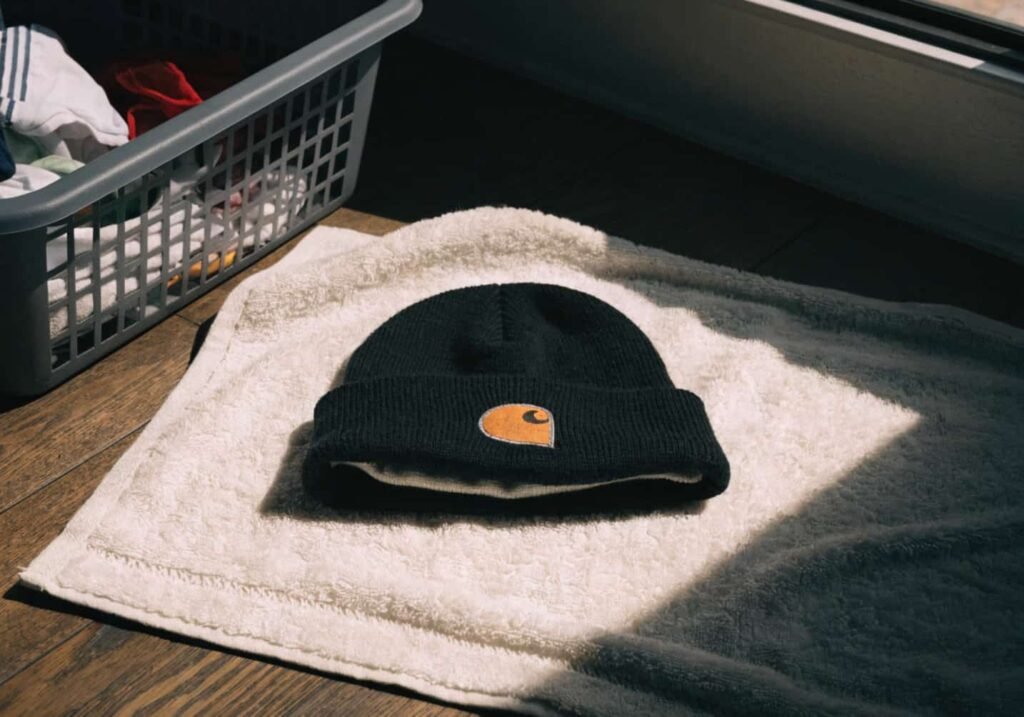
Acrylic knit is fairly low-maintenance, but there’s one mistake that ruins beanies fast: throwing them in a hot dryer. Heat causes acrylic fibers to lose elasticity permanently, which is why so many people end up with a beanie that’s stretched out and won’t sit snug anymore after just a few dryer cycles.
Better approach:
- Turn it inside out before washing to protect the logo patch and outer knit face
- Wash in cold water on a gentle cycle, or hand wash if you want to be careful
- Lay flat to dry — never hang it, since wet acrylic can stretch out of shape under its own weight if hung
- Reshape it gently while damp if it’s lost its form, then let it air dry undisturbed
Done this way, a Carhartt beanie easily lasts 3-5 years of regular winter use before the knit starts thinning at the fold line.
7. Gifting Idea: Why Carhartt Beanies Are Popular
At roughly $20-$30 retail, the beanie sits in a comfortable gift price range — enough to feel like a real gift, not so much that it’s an awkward amount for a coworker or casual friend. It also avoids the usual gifting problem of sizing, since beanies are effectively one-size-fits-most with some stretch built into the knit. The brand recognition helps too; unlike a lot of accessories, most people immediately recognize the small rectangular Carhartt logo patch, so it reads as a considered gift rather than a generic one.

8. Versatility for Both Men and Women
Carhartt doesn’t really design separate men’s and women’s beanie cuts — the knit construction is unisex by default, unlike their jackets where the women’s line has a genuinely different pattern. The only real variation across the catalog is size (standard vs. a slightly smaller “kids” cut) rather than gender. This is part of why it’s become such a shared wardrobe piece between couples or families — one beanie style works across almost anyone in the household without needing a separate size chart.

9. Where to Get Authentic Carhartt Beanies
Carhartt.com, major retailers like Amazon’s official Carhartt storefront, and farm/work supply stores like Tractor Supply Co. are reliable sources. Carhartt WIP versions are only sold through their own site or select streetwear retailers — if you see a “Carhartt WIP” beanie at an unusually low price on a third-party marketplace, that’s often a sign it’s either old stock being cleared out or, less charitably, not genuine.
Two quick authenticity checks: the logo patch should be a woven or embroidered label sewn on, not a printed graphic, and the knit should feel dense and slightly stiff new — if it feels loose and stretchy right out of the packaging, it’s likely a lower-quality copy rather than genuine acrylic knit at Carhartt’s usual gauge.